And You Thought You Might Have Had Delusions of Grandeur
Author: John
My blog is about my personal opinions only and do not reflect or represent any company that I work for either past, present or future. I will not hesitate to use the benefit of my experiences in telling the story of what goes on in the real world. beep/bop/boop
Once again, a failed hard disk for me. It reports to me as a disk read error under diagnostics, but visually, it won’t boot for me.
I worked in the disk drive industry so I know the value of back up and did so of my data. I also did have a pre 2004 machine that I’m currently blogging from.
It has not spared me from the inconvenience of not having the information I need to work, and it appears that working remotely requires me to do the diagnostics to find out the specific disk error before anyone will help me. Sure they’ll assign a case number, but helpful, not yet.
Let’s hope I get this resolved or I’m going to be an unhappy camper. For now, I’m going to be a data disabled user.
Truly a turning point in the history of man with the ushering in of the nuclear age. Fortunately, it hasn’t been used again, but we’ve lived under the threat of nuclear “mutual self destruction” since then. Through the cold war to the bullying threats of North Korea and Iran, it stays in the back of our minds that the splitting of the atom is either an environmentally useful source of energy or a terrible weapon.
While many died at Hiroshima and Nagasaki (the second bomb did not strike it’s intended target so casualties were less than the first bomb), historians agree that it saved civilian lives by stopping the invasion of Japan by the Allied forces from fighting an extended battle. The Japanese have a proud history of being great warriors going back to the times of the Samurai, so giving up was not in the battle plan. Their will to perservere had to be broken or the invasion was inevitable.
I ran across an archive of the story dated August 7, 1945 from the Orlando Sentinel when going through my father’s archives, which even then didn’t describe the magnitude due to the secrecy of this project. We had to hide the development from our enemy and use our ingenuity to create it before Hitler had the weapon, our then greatest fear.It’s a good thing the NY Times didn’t know about it and publish the story prior to attack. Interesting that it describes the target as an Army city.
It is known that the fuse for the bomb fuse was radio proximity technology, which my father helped develop during the war.
1. You accidentally enter your password on the microwave.
2. You haven’t played solitaire with real cards in years.
3. You have a list of 15 phone numbers to reach your family of 3.
4. You e-mail the person who works at the
desk next to you.
5. Your reason for not staying in touch with friends and family is that they don’t have e-mail addresses.
6. You pull up in your own driveway and use your cell phone to see if anyone is home to help you carry in the groceries.
7. Every commercial on television has a web site at the bottom of the screen.
8. Leaving the house without your cell phone, which you didn’t have the first 20 or 30 (or 60) years of your life, is now a cause for panic and you turn around to go and get it.
10. You get up in the morning and go on line before getting your
coffee.
11. You start tilting your head sideways to smile.
: )
12. You’re reading this and nodding and laughing.
13. Even worse, you know exactly to whom you are going to forward this message.
14. You are too busy to notice there was no #9 on this list.
15. You actually scrolled back up to check that there wasn’t a #9 on this list
On July 30, 1945, the USS Indianapolis was sunk after delivering the Hiroshima bomb on a super secret mission. So secret, it was days before it was even noticed missing.
When it was hit, 900 of the 1196 men went into the water. Less than 300 came out when they were sighted by accident and rescued after those horrible days. If you recall the movie Jaws, Quint told the story of what happened to the men. Although some died from the torpedo blast, most drowned or were taken by sharks. I always thought as a kid that being eaten was the worst way to go, but I was thinking Lion at the time.
I watched a show on the History Channel about this fateful voyage. Most of the men didn’t even know that they were delivering the “bumb” as Quint called it.
Here’s the description from the movie that tells the gruesome details:
Hooper: You were on the Indianapolis? Brody: What happened? Quint: Japanese submarine slammed two torpedoes into our side, Chief. We was comin’ back from the island of Tinian to Leyte… just delivered the bomb. The Hiroshima bomb. Eleven hundred men went into the water. Vessel went down in 12 minutes. Didn’t see the first shark for about a half an hour. Tiger. 13-footer. You know how you know that when you’re in the water, Chief? You tell by looking from the dorsal to the tail. What we didn’t know, was our bomb mission had been so secret, no distress signal had been sent. They didn’t even list us overdue for a week. Very first light, Chief, sharks come cruisin’, so we formed ourselves into tight groups. You know, it was kinda like old squares in the battle like you see in the calendar named “The Battle of Waterloo” and the idea was: shark comes to the nearest man, that man he starts poundin’ and hollerin’ and screamin’ and sometimes the shark go away… but sometimes he wouldn’t go away. Sometimes that shark he looks right into ya. Right into your eyes. And, you know, the thing about a shark… he’s got lifeless eyes. Black eyes. Like a doll’s eyes. When he comes at ya, doesn’t seem to be living… until he bites ya, and those black eyes roll over white and then… ah then you hear that terrible high-pitched screamin’. The ocean turns red, and despite all the poundin’ and the hollerin’, they all come in and they… rip you to pieces. You know by the end of that first dawn, lost a hundred men. I don’t know how many sharks, maybe a thousand. I know how many men, they averaged six an hour. On Thursday morning, Chief, I bumped into a friend of mine, Herbie Robinson from Cleveland. Baseball player. Boatswain’s mate. I thought he was asleep. I reached over to wake him up. Bobbed up, down in the water just like a kinda top. Upended. Well, he’d been bitten in half below the waist. Noon, the fifth day, Mr. Hooper, a Lockheed Ventura saw us. He swung in low and he saw us… he was a young pilot, a lot younger than Mr. Hooper. Anyway, he saw us and he come in low and three hours later a big fat PBY comes down and starts to pick us up. You know that was the time I was most frightened… waitin’ for my turn. I’ll never put on a lifejacket again. So, eleven hundred men went in the water; 316 men come out and the sharks took the rest, July the 30th, 1945. Anyway, we delivered the bomb.
Here is a picture of the Fat Boy bomb that was on the Indianapolis. I recently visited ground zero and the Hiroshima museum. It made it clear from the pictures of women, kids and old people who were being trained to fight as both sides anticipated an invasion.
Ground Zero where it was dropped:
Shortly after this, the bomb was dropped and the war in the pacific theater was over. God bless those men who made the ultimate sacrifice for peace and freedom. They saved millions of lives as the Japanese were preparing to kill or die in an invasion. Upwards of 2 million lives were saved.
Nagasaki was chosen as the next target as it was mainly occupied by military forces, so it was both strategic and civilian collateral damage was held back.
Further, evidence was found that the Japanese had their own nuclear bomb and tested it on the Island of Hungnam days after the “bomb” was dropped on Hiroshima. So this act not only saved millions of lives, it now appears to have stopped a nuclear war. Reporter David Snell has documented this.
DID IT SAVE LIVES?
If you look at the last battle before dropping the bomb which was Okinawa, it was one of the most bloody battles of the Pacific. Japan would have been worse for both the US and the Japanese.
There were also some 2 million Japanese soldiers fighting throughout the Pacific, China and Burma — and hundreds of thousands of Allied prisoners and Asian civilians being held in Japanese prisoner of war and slave labor camps. Thousands of civilians were dying every day at the hands of Japanese barbarism. The bombs stopped that carnage as well.
The Soviet Union, which signed a non-aggression pact with Japan in 1941, had opportunistically attacked Japan on the very day of the Nagasaki bombing.
By cutting short the Soviet invasion, the bombings saved not only millions more lives, but kept the Soviets out of postwar Japan, which otherwise might have experienced a catastrophe similar to the subsequent Korean War.
World War II was the most deadly event in human history. Some 60 million people perished in the six years between Germany’s surprise invasion of Poland on Sept. 1, 1939, and the official Japanese surrender on Sept. 2, 1945. No natural disaster — neither the flu pandemic of 1918 nor even the 14th-century bubonic plague that killed nearly two-thirds of Europe’s population — came close to the death toll of World War II.
Perhaps 80 percent of the dead were civilians, mostly Russians and Chinese who died at the hands of Nazi Germany and Imperial Japan. Both aggressors deliberately executed and starved to death millions of innocents.
World War II was also one of the few wars in history in which the losers, Japan and Germany, lost far fewer lives than did the winners. There were roughly five times as many deaths on the Allied side, both military and civilian, as on the Axis side.
It is fine for Secretary of State Kerry and President Obama to honor the Hiroshima and Nagasaki victims. But in a historical and moral sense, any such commemoration must be offered in the context of Japanese and German aggression. What the president forgot were these actions that were stopped at Hiroshima:
He forgot the Bataan Death March conducted by the peaceful Japanese war machine.
He forgot the Sandakan Death March
He forgot murder and cannibalism on the Kokoda Track.
He forgot conscripting women for sexual slavery in Japanese Army brothels.
He forgot the mutilation and murder of Dutch civilians in Borneo.
He forgot the murder and cannibalism of captured American pilots.
He forgot the murder of American pilots and air crew at Midway.
He forgot the bombing of the hospital ship Manunda.
He forgot the sinking of the hospital ship Centaur.
Nazi Germany and Imperial Japan started the respective European and Pacific theaters of World War II with surprise attacks on neutral nations. Their uniquely barbaric war-making led to the deaths of some 50 million Allied soldiers, civilians and neutrals — a toll more than 500 times as high as that of Hiroshima.
The crews that dropped the atomic bombs on Hiroshima and Nagasaki were seen by Americans as saviors for ending the war. But over the years, the morality of atomic warfare and the need for the bombings has been questioned.
Mr. Van Kirk joined his fellow crewmen in unwavering defense of the atomic raids.
“We were fighting an enemy that had a reputation for never surrendering, never accepting defeat,” he said. “It’s really hard to talk about morality and war in the same sentence.”
He continued: “Where was the morality in the bombing of Coventry, or the bombing of Dresden, or the Bataan Death March, or the Rape of Nanking, or the bombing of Pearl Harbor? I believe that when you’re in a war, a nation must have the courage to do what it must to win the war with a minimum loss of lives.”
Nowadays, many question whether those bombs were necessary. Given that they killed almost exclusively civilians and that the second of the two was dropped only two days after the first, many people have concluded that the attack was immoral. Today, the typical American is likely to react to the words “Hiroshima” and “Nagasaki” with a vague sense that our country did something wrong.
But the nuking of Japan was a moral act: war is hell for those who do the actual fighting, so those two bombs put an end to their suffering. This was true for the soldiers on both sides (even a Japanese soldier must have felt relieved to know he was going to survive unscathed). A purely theoretical model for explaining why dropping nukes was bad appeals only to those who have no skin in the game.
The Japanese war had already killed millions, most of whom were civilians. The two nukes killed 140,000. Do the math. It is a distasteful application of arithmetic, but it is an application that soldiers have to do all the time in their struggle to win a war.
Last week, IBM held the Idea Innovation Jam to develop ideas to move our company ahead. Included were all employees, their family and business partners. This was at least our 7th such jam over the years and it resulted in 75,000 people enrolled in the Jam; close to 28,000 ideas have been posted; and more than 2 million page views have been tallied.
We get dinged all the time for not being as hip as other companies, not being first (or best) to blog, but this is one heckuva participation in social computing. Along with our ever growing blogs and podcasts, I’d say we are making progress in this space.
Since I mentioned podcasting, I’ve combined with the communications team (ok they did the heavy lifting, Colleen and Stacy) but we’re starting an analyst podcast series called – Analyst Input and Outtakes.
I hope to have more analysts participate in the near future. I’m looking for likely candidates with an opinion on the industry, IBM or the competition….you know who you are.
I heard a lot about Mercury at the Rational Users Conference. How they had a good product but were having problems delivering on product promises…I’ll give them a pass there, all software and companies have issues.
It caught my attention not that they were acquired but by which company, HP of course. It is good in any number of ways that they did this. Sure Mercury is a big competitor of Rational, but if you’ve read any of my blogs, I like competition, it makes you better or your beaten. The fact that HP is strengthening it’s middleware to compete confirms to me that we are on the right track. You don’t copy a losers strategy hope to stay in business. I’m looking forward to the fight there.
It’s also good as it gives Rational some time to move forward during the HP/Merc aquisition and integration phase, always a time of slowdown while you evaluate how to integrate multiple HR, benefit, Accounting, manager redundancy issues to begin as one company. My favorite is marketing departments having to combine…talk about the department of redundancy department.
Companies acquire other companies all the time. Why I care about this one was that it was pointed out to me by a number of analyst’s that HP (specifically Carly) had IBM envy and specifically Lou (Gerstner) envy when they acquired Compaq. The reason given was for a play in the Services market that IBM had explored, developed and became the market leader. Now they are trying to be a middleware player. Back to trying who to emulate, IBM is a good role model if you do it right. I don’t see them as a Services force, albeit they are a player.
Not that Mercury was a bad acquisition, nor that trying to be a middleware player is bad either, but the 4.5 billion seemed excessive to me for a company that has problems like stock option issues, multiple acquistions recently, product delivery. Maybe I don’t know the rest of the story yet. Given they way overpaid for what they got out of Compaq (what happened to the iPaq sales?) it seems as though they pay too much for what they get.
Mark Hurd has done a great job fixing the screw ups that Carly created, but 4.5 billion is a lot of change….
I’ve known this one was coming for a while and I didn’t really know how to properly state the opening, there was too much to say.
Dave started Analyst Relations in Software Group, then honed it to one if not the best group there is. I haven’t done a bloggerview about someone I’ve worked for so this is a first also.
I’ll say that I learned more about how to deal with situations, executives and yes…analysts by taking hard situations to Dave and getting help solving the problems. Dave gave me a great opportunity to come to Software Group from the old PC division to enjoy some of the best years of my working career.
Dave discusses some of that and much more below. Here is an insight to the Analyst Relations discipline and a history lesson of IBM SWG that you couldn’t get anywhere else. Enjoy.
The SWG AR group was at the height of its performance when Dave retired. It was never better either before or after his departure. We executed well and our performance stood on its own. We didn’t have to create and dress up reports to try to make them prettier than the other groups as it wasn’t his style (he knew what was meaningful to the execs who already had enough reports on their business to read). It was no-nonsense action oriented process that got results and generated loyalty. I was never more proud of the analyst group than when he ran things. There were never fire drills even when there was intense pressure from Mills or Gerstner/Palmisano and he was always under control and unflappable like no other leader since. While others deflected the pressure to the rest of the group, Dave acted coolly and handled both the executives and the emergencies appropriately. Mike Bizovi has come the closest to Dave with respect to handling pressure while keeping his cool, and he seems destined to be the next leader of the IBM AR group.
One thing we chose to leave out when this was originally written was that it was our goal and intention to influence analysts, and we were able to do so without them knowing it. We actively tried and were able to change opinions and reports by our actions and Dave knew how to get that done. This was our intent going into meetings regardless of whether it was the CEO of Gartner, Forrester, IDC or from a lower tier analyst who had only one executive which supported him and was background noise.
Dave made sure all of our interactions were professional and regardless of whether we cared or not, we treated them with respect. Overall, our group collectively knew who was influential and we made sure those analysts issues were attended to.
What was your career history with IBM. You didn’t just work for 38 years in Analyst Relations?
I have been extremely fortunate to have had five different careers at IBM – manufacturing, sales, product marketing, solution marketing and analyst relations.
Manufacturing began in Rochester, MN where also worked in tool design and product test before becoming a self-taught programmer, designing and coding (Fortran and Assembler) an online report generator that on one of the very first time-sharing systems using video displays. The only problem: I simply HATED engineering.
In Chicago I was a client rep for Motorola, and sales manager for the Chicago-based steel companies.
My timing to join the division staff in San Jose for IBM storage systems couldn’t have been worse — just at the time IBM collapsed in that market. I moved east to White Plains to lead US storage marketing just as IBM regained storage leadership.
As part of the original core team under Mark Morin (who retired the same day I did) we created in less than five years an industry-leading “start up” with over 1,000 employees, IBM Image Systems. When the market for image document systems eventually cooled (there are thousands of ImagePlusR still installed), Steve Mills had just been named general manager of Software Solutions Division and asked if I could start an AR team for him. The rest, for the next 13 years, is history.
Talk briefly about your decision to retire. I always wanted to go out on top, but Michael Jordan couldn’t let go on the other hand. To me, it was the perfect way to do it?
Flattery will get you anywhere. Seriously, I spent a lot of time worrying that the world-class AR team built in IBM software would not remain a leader, frankly because of me. Hubris is a tough enemy. It’s one that thrives on a history of prior success.
But my decision to retire really had to do with me. My wife had retired 6 years earlier. I looked at the life she was leading and said to myself, “Self, that looks pretty good. How about we go get some of that for us?” Seriously, it was time and I was fortunate to be able to do so.
You retired from IBM in March, what have you been doing since then?
Ironically, I’ve been doing AR. A couple of clients have asked that I help them with various aspects of their programs. That said, I’m not interested in taking on operational responsibility. That’s why I retired. But I also don’t want anyone to think that I’m hanging out a shingle to compete with KCG, Forrester or Lighthouse. They are much more into AR operations, training, evaluation and surveys than I intend to be. If I had to classify my niche, it’s giving advice to senior executives on how AR teams can best deliver the value those executives want from them.
But it would be misleading to say that it’s been all work. There’s also been a lot of travel. That got easier when the kids were grown, but it’s a lot easier now without a 9 to 5 job. A week here, mid-week there, both in Europe and the US. Like all of us, sometimes that’s pure “get away”, but often it’s with my Blackberry.
Now that you’ve had time to think about it, what are your thoughts about analyst relations at IBM?
It was a terrific opportunity to build a function and a team. We started at zero, or as the analysts at now-defunct Meta Group said when asked, less than zero, closer to minus infinity as it were. The IBM software executive team gave AR an extraordinary level of support – people, money, and most importantly, their time. I’d like to think that over the course of those 13 years that the executive support was not blind, that they had plenty of opportunity to inspect whether the AR team had consistently demonstrated good stewardship of the resources entrusted to it and delivered value for the investment.
I also think IBM software AR has provided a valuable work environment for many people – both those who came and stayed as well as those who joined the team for a while and moved on. Everyone had opportunities to learn. For sure, whatever it is that the AR team became, it was the contributions of those many people who made it so.
Can you share some thoughts on the history of IBM analyst relations and how it has progressed? What was the hand of Dave Liddell on the direction over the years?
The start-up days were tough, not just for AR but for what was to become IBM Software Group two years later. There were no good models for AR, so we had to invent one built on basics: earn the trust of both analysts and executives; be fact-based in a world of hype; and be relentless in everything we did.
Perhaps, especially in the beginning when almost all relationships between analysts and IT suppliers were adversarial, that struck me as nonsense, if not irresponsible for both parties. In the end, we both existed because the customers wanted us to do so. No matter what traffic in money and knowledge passed between us, it was dwarfed by what customers – our mutual customers – expected of us.
Analysts needed product and technology skills that came to suppliers as a matter of course and suppliers needed the perspective that analysts generated also as a matter of course. None of that is to suggest that there aren’t opposing interests between suppliers and analysts, but those opposing interests are only an element of a very complex set of relationships.
What did we learn from our experiences?
This may be putting it too boldly, but we learned that it is possible to influence thinking. It’s a lot of hard work, often over months if not years. It is done with facts in an environment of candid communication and trust. A funny thing happened along the way. The more the IBM team became successful at influencing opinions, the more the team learned to learn from those same analysts. That’s the thing about the influence of facts, trust and communications on relationships. They are bi-directional.
Other than the obvious of contract negotiation and other administrivia, what did (do) you see your relationship with the analysts and the analyst firms?
The facts say my role directly with analysts and analyst firms was rather minor compared to what the AR team did. My job was more about creating the environment in which AR could work, and do so productively. That said, in hindsight I’d say my most typical personal role was to be a bridge (either way) when there was a misunderstanding between the software team and an analyst or firm. Relationship management, even in strong relationships, takes lots of work by everyone involved. Maybe it’s fair to say I also did a lot of prodding.
An analyst once said to me that the key to his success was immersion in the flow of information. Everything that is going on in a segment leads to better understanding of some other part of the segment. In that sense, with the large number of markets IBM software participates in, the very large community of analysts following IBM software and the thousands upon thousands of engagements created an environment in which I too was in a huge information flow. Simply said, I could act as a bridge (over troubled waters? between analysts and IBM because of that perspective.
What are you doing now? Could you give information about your company?
I’ve wondered for a long time what it would be like to say “this is MY company”. It feels pretty good.
Silvermine Brook LLC (silvermine@att.net, 203-966-4433) is now in its second quarter of operation — lawyers, accountants, tax codes, annual meetings, quarterly reports, the whole 9 yards. It’s not that I haven’t dealt with all of that over the years, I have, but I’d expect that anyone who owns a company appreciates that there is just a different feeling when all of that is very personally about “your” money. Anyway, it’s a kick, it’s different, and there are no pretensions that this is anything but a way keep a hand in the game. Well, maybe there is one more thing. Now that I’m at home much more it gives me something to work at, along the lines of that sage marital advice “For better or for worse, but not for lunch”.
Catch all question. What did I miss that you want to say?
The decision to retire was not one made quickly, but it was one I discussed with the executive team for nearly five years. Part of it was me making up my mind about what I wanted next, but a good part was to ensure there was a team and a management system that could run IBM software AR better than I ever did. I left with the full confidence that the best years for the AR team were yet to come.
I guess they chiseled press releases on stone at some point to promote the invention of fire. Later, parchment must have been sent out to document the parting of the Red Sea.
But the industrial revolution gave us good tools like the printing press and the typewriter, fax machines and let’s not forget the copy machine from the Xrocks corporation which allowed us to mail press releases an astonishing 2 weeks prior to the announcement, embargoed of course.
Then came email, the internet, instant messaging…I’m not going out on a big limb here history wise. Now with the push of a button, bingo – news everywhere.
So what’s the point here? I like to see trends and be an early adopter where possible. There have been times I wait for the technology to stabilize before I expose my backside to any corporate or public lashings, but for the most part, I like to be or know about what the next advantage possible to be gained. I remember using MCI Mail in the mid ’80’s to beat the big companies to the story (then my competition was, gasp – IBM). I was talking to Bill Howard, Bill Machrone and John Dvorak of PC Magazine when it seemed like there were about 25 email users total in the business world.
Despite my daughter’s ability to overwhelm me in Instant Messaging volume, I did use it as a communications tool to reach analysts in the ’90’s before others caught on.
I’ve been beaten to the punch more times than not on new trends, but I give credit to those that catch on before me and I try to learn to do things in a newer better way. Social Computing is such a trend that offers the next new world to those who have vision.
I originally called this the change/death/other titles here of PR, but that will never die, only morph. Those that adopt the new media approach which is happening now, which includes but is not limited to (good lawyer speak there) blogging, podcasting, videocasting, wiki and the various other components of Social Computing will beat others to the punch. (I was later to this game than I wanted to be, but still ahead of many I’m finding out as I beat my head against the wall here sometimes.)
While there was no moment of truth type revelation about why this is, I’ll give Charline Li the credit to why big companies are not always the leaders on this, it requires giving up control. Now tie this into the above stated PR change issue, as control is vital to shaping the message or dealing with the other large major media outlets. The quicker more nimble folks who already embrace Social Computing are moving ahead and larger companies are trying to figure it out and sometimes try to control it. I will say that IBM is conducting perhaps the largest social computing exercise ever right now, but the control issue prevents any details here until it is complete. I hope to blog about it soon, and I hope to start an analyst relations practice/position about Social Computing, send your positive references in now about me as I’ll be canvasing soon for a new frontier that I think we need here.
So I know people who were naysayers to email, IM and other trends and look what happened there. Social Computing will change the messaging capabilities, the way we will work and exchange information and that train is leaving the station, be on it or miss the chance.
True drama includes the hero touching the whiskers of defeat and having to climb a mountain to overcome adversity to achieve victory. He should slay the toughest dragon. The outcome of the contest should not be decided until the end to hold the audience in suspense and to pull for the hero in his travails.
The tour had all of this. 11 different changes in the lead, a TDF record. Floyd Landis had the tour in hand in the most celebrated stage – L’Alpe-D’uez only to suffer total defeat falling an unsurmountable amount of time behind with a total collapse in stage 16 and the Col du Galibier. His mountain to climb was himself and the doubts of failure where some would give up and the Stage 17 the very next day with 5 climbs including the Cole des Saisies. He slew the dragons and pulled himself from 11th place, virtually out of the race to only 30 seconds behind in the final time trial. It was described by as possibly the greatest stage ever at the TDF. All this after he disclosed the fact that his right hip was dead and he will have hip replacement surgery after the tour.
On this final competition day, he rode the solo time trial like a champion and took the yellow jersey, with the race being decided on indiviual talent. So the Maillot Jeune goes to the man with the biggest heart and will to win. It was a great story with a hero, a mountain to climb, a dragon to slay and suspense to the end.
Now 19 of 25 leaders who have led after the L’alpe-Duez have won the tour, they rode over 89 hours over 3800 KM from speeds of 8 to 90 KPH. And it was the Star Spangled Banner that played in Paris for the 8th year in a row and the 11th time in 21 years.
IBM hasn’t ceded any space in the America’s or Europe and is doing just fine there, that’s not the point.
Where we are doing well is in the new farmlands of the BRIC countries of Brazil, Russia, India and China (BRIC). According to the Economist, July 8-14, 2006 edition, Page 94:
GDP, Q1 2006, % of change from a year ago:
China, +10.3
India, +9.3
Russia, +5.5
Israel, +5.2
Brazil, +3.4
And, according to Boston Consulting Group in BusinessWeek the July 31 issue, BCG identified 100 emerging multinationals that appear positioned to “radically transform industries and markets around the world.” The 100 had a combined $715 billion in revenue in 2005, $145 billion in operating profits, and a half-trillion dollars in assets. They have grown at a 24% annual clip in the past four years.
I’ve been in countless briefings where it has been stated that we are doing well and companies are coming to us because we committed to open standards and software. It has been widely read that Germany has committed to Linux and development is picking up on open platforms.
What kills me is those that buck the trend. I was around for Token Ring, SNA, OS/2, Micro-Channel…don’t buck the trend. The markets decide by voting with their money. I’m not sure if it will be late software, SaaS, SOA security issues or just the overwhelming desire by people to want software to work and not care what their platform is as better written than I by Steve O’Grady.
So look out world, we see you growing and it shouldn’t be lost on those companies who want to succeed as markets ebb and flow that you need to be there. If you’re an analyst, count on us mentioning it, ask for proof.
I’ve been trying to get my house ready to sell and doing the startup and prep work required to move into a new residence. Needless to say, it has been far more that I imagined. One doesn’t realize the amount of “stuff” you collect in life. So mounds of trash later including software back to Win 98, I’m coming up for air.
It’s not that I haven’t been working, in fact I’ve been getting it done, but I’m going to be distracted tomorrow night when I watch the results of the next stage.
I’ve pretty much mentioned it in most of my TDF blogs so far. These are the defining moments in your career. In Formula 1 you look to Monaco as the jewel, Olympics for a lot of sports, Soccer/Futbol has the World Cup.
Winning the Tour is the overall goal, but the Yellow Jersey in Paris goes straight through L’Alpe-D’Huez. Stage 16 has a higher climb, but make or break for the winner should happen here. The Pyrenees were tough, but the Alps after 2 hard weeks of riding 6 hours a day are a killer.
The space shuttle Discovery is pictured on Pad 39B waiting for launch on mission STS-121 at the Kennedy Space Center in Cape Canaveral, Fla., Sunday, July 2, 2006.
The Space Shuttle hasn’t had the best track record of late. Right now, they are doing a visible inspection of the tiles that allow for proper re-entry, protecting the Shuttle from burn up when encountering the atmosphere. If you recall, these tiles fell off the wing of the Columbia when hit by foam on liftoff, ending in disaster.
When comparing the shuttle pictures to those 3 weeks prior to take off, they found white spots on the wing. Presumably in a similar place to where the aforementioned tile problem occurred. Upon closer inspection, it turns out to be bird poop. Having fished next to the shuttle recently, I can verify that there are many birds in this area as it is millions of acres of undisturbed land purchased in the 60’s.
So, the bird poop can survive vicious Florida thunderstorms that delayed the launch numerous times, thrust that can launch the bulk of the shuttle from zero to 17,500 MPH in minutes and make it into space. Maybe they should use bird poop instead of tiles to cover the Shuttle.
These mountains look like sharks teeth, and that is what it did to the riders today. Even Lance Armstrong said he wasn’t a fan of the Col du Tourmalet.
In the end, it was an American, Floyd Landis of Team Phonak in the lead, with another American Levi Leipheimer finishing 2nd in the stage to finally have a good stage at the tour.
Stupid move of the race? Thomas Voekler attacking from the peloton to try and get to the leaders, only to hit the wall like a bug against a truck (lorrie) at top speed and fall back and back and back.
So much for the Pyrenees, a flat stage today, then off to the Alps for more manly riding.
Today is the first stage up the mountains in the Tour de France. In other words, this is the first real day of the race. Sure we’ve had the time trials, prologue and a few sprints, but to contest for the yellow jersey, climbing mountains is the strategy de jour for winning.
Remember back when you were a kid on your bike and think of the biggest hill in your neighborhood. It was the most grueling few seconds you had on two wheels. Now, do that for 6 hours at 100 times the difficulty and you get what 170 of the best bike riders in the world will face. Then do it everyday for a week strait, it is a new definition of pain. This is when you have to reach inside yourself and ask how bad do you want something….like a yellow jersey.
No Lance this year. We’ll see who the new victor over self and mountain will be. Today they clime the Col de Soudet at 1540 meters in height. A minor 1000 meter climb up the Col de Marie Blanque after that should kill off any pretenders.
But it is stage 15 up the legendary L’alpe-D’Huez that will define the men vs. the boys, don’t miss it.
It became apparent when we looked for bloggers at IBM that the key attribute that caused success was passion. When someone had passion, they were tenacious and more likely to succeed. It became clear very quickly that this applied to other things in life also.
Ever since I was young, my mother always grew flowers. She won first place all the time at the flower shows with her then passion, hibiscus. She also grew vegetables and pretty much when you say green thumb, you are talking about my mom. So passion is not a flash in the pan, it’s been some 60+ years that she has been at this.
Her latest foray into planthood has been with Day Lillies. She, my sisters and a lot of her friends have been buying day lilies on-line and from nurseries.
Legacy:
Just this past week, one of the local nurseries created a new day lilly, featured above and named it the Faye Simonds. Since you can buy these around the world, it’s as easy to get this in Florida as it is Australia from the highly acclaimed Ladybug Daylilies.
Eisenhower, Reagan and Bush have ships named after them. Most people die with no legacy. My father has an engineering scholarship named after him at the University of Central Florida. Now my mom has a day lilly forever linked to her, the Faye Simonds, legal registration and everything. It is a ruffled orange day lilly 6.5 to 7 inches in diameter and will be in the 2007 collection.
Takeru Kobayashi defends his title for the 6th year in a row by downing a new world record 53 and 3/4 hot-dogs in 12 minutes, narrowly edging out Joey Chestnut (50 dogs) and maintain his status as the champion eater in the International Federation of Competitive Eating. Sadly for the viewers, there were no “Reversals of Fortune”. There are 17,120 calories, 830 grams of Fat and 24,075 mg of sodium, versus a daily recommended intake of 600 in that many dogs. Tour de France.
Through 3 stages of the tour, there has been 3 different Maillot Jeunes or yellow jerseys….That’s the leader for NASCAR fans. It will be back and forth until stage 7, the time trial. That’s the first separation of the men vs. the boys. Three riders fell and broke collar bones in today’s stage, the scourge of tour riders. Muslims rioted in Paris again. Riots, work boycotts, whatever.
I’m a patriotic guy. I think the USA is a great country and a great country to live in. I love hearing the Star Spangled Banner at sporting events, love the USA, USA chant at the Olympics, I think you get the picture. Most people want to come here when they think of opportunity and to get ahead in life. Heck, they even call it the American dream. There are some who bash us, but that just let’s me know where we stand, no one bad mouths #2.
But to my real point. I would have been patriotic anyway, but this year with the loss of my father, we of course didn’t celebrate my parents wedding anniversary, June 14. It made me realize that it was Flag day.
Tomorrow is July 4th, America’s Independence Day, but also my Mother’s birthday. Patriotism comes naturally, even though I never put these dates together with my strong feelings for my country. It was bred in my family.
So as they say in the Lee Greenwood song, God bless the USA.
Authors note: I forgot to mention that June 14, 1775 was the birthday of the US Army also.
Editor: It should be duly noted that Joey Chestnut, American has eclipsed Kobayashi as the champion of the world in many categories, especially hot dogs. While I give Kobayashi credit for making the sport famous, but there always is a bigger fish. Joey has decimated the other eaters.
Once again, the 4th of July comes around and we have that time honored tradition of patriotism, no wait, fireworks, no wait…..YES, the Nathans hot dog eating championship at Coney Island. I told Steve O’Grady and Teressa Jiminez at RSDC that I’d be blogging this on the 4th of July, but I may not be blogging on a holiday, no one would read it, and how would you know not to miss this if I didn’t give any warning?
Of course, the undisputed champion is the waif – Kobayashi from Japan. His streak of winning this contest includes:
He of course has other records including 67 hamburgers in 8 minutes, 83 vegetarian dumplings in 8 minutes, 100 steamed pork buns in 12 minutes, 69 krystal burgers in 8 minutes and 17.7 pounds of cow brains in 15 minutes.
He does it by swallowing the dogs without chewing. He breaks the dog in half, eats it then dunks the bun in water and puts that down.
THE COMPETITION:
Kobayashi will be up against other competitive eaters like Eric Badlands Booker ,Sonya “The Black Widow” Thomas who put down 37 dogs in her 105 pound frame last year and others who will try and lose to the Michael Jordan of eating. There is an outsider from America, Joey Chestnut who has downed 50 dogs in a qualifier.
DISQUALIFICATION AND HOW TO LOSE:
There is a point in which you can’t eat any more and that is like hitting the wall in the marathon. You just run out of space. Then there is the deadly “REVERSAL OF FORTUNE” in which the contents of your stomach come back to life. When I mentioned this to Steve and Teressa, they both agreed that the word reversal will never be the same and the visual will be with them for the rest of their life.
So, it will be broadcast on ESPN at 12:00 PM on July 4th, don’t miss it. It only lasts 12 minutes, but eating will never be the same for you.
I just read today in the Austin American Statesman that IBM has the fastest 3 computers in the world, and 243 of the top 500 fastest. Also stated was that we can do more when we need to.
I also read that Rational Application Developer tool set has achieved top rankings for the second year in a row, according to a market research study as reported by eWeek.
I sense a trend here, it looks like our technology and our programs are working well. I know that it has been IBM’s mantra to serve the customer, and much of that is relationship as well as good technology. I think we’re on the right track.
Well, it’s finally here, the crowning of the next king of cycling. The Tour de France start on July 1st, and fortunately for me, I have a DVR and can see it later on OLN tv…I just have to stay out of the blogs before I watch. It’s always funny to hear Bob Roll mispronounce the Tour dee France…
It was easy the last 7 years, we pretty much knew who was going to wind up with the yellow jersey, it was just a matter of when he wanted it to happen.
So will it be Ivan Basso winner of the Giro d’Italia, Jan Ulrich – the last Tour winner before Lance, Floyd Landis? Will it be Team Discovery, Phonak, Deutsch Telekom in the team championship?
The flat stages can be a bit boring, but the sprints at the end are good. The team time trials are a ballet of coordination and aerodynamics. The individual time trials are mano-o-mano, but the test of manhood is in the mountains. Anyone who has ridden a bike uphill knows it’s tough, but do it for 6 hours against the best in the world? The winner has a big set of stones.
Our WPLC (Lotus) announced Sametime 7.5 this week. I’ve been using it now for a while as a beta product. I use any number of instant messaging products depending on who it is and what they use. We at IBM use Sametime and up until now, instant messaging was IM to me, just another package to get work done. This announcement has the ability to change the direction of what IM is and how software can work together.
The fact that it is integrated into Microsoft applications, blackberry, Motorola Q and any Eclipse oriented environment changes things now. It just closed the world a bit for me. I’ve always wanted a one size fits all device and software that actually talked to each other. I view this as now headed in the right direction. We’ve even announced upcoming support for OSX Mac users. Don’t get me wrong that any one product should be a panacea, because I firmly believe that competition drives up quality and drives down price, but the point is to have things work together seamlessly.
Not trying to be a commercial here, but the audio and Video support brings in a whole new list of things to do on a device or through an IBM platform. Not that I think email is going away, but we are a society who wants things faster and better and Sametime 7.5 is a step in that staircase.
Note: Earlier this year, IBM announced that Sametime is connected to AOL, Yahoo and Google…I think most have heard of these companies.
Other Note: Good Technology also introduced a service for Domino users to remotely check email on any number of devices. Partners supporting your products and platforms are important factors for success (note to the micro channel marketing department there).
So more things appear to be working together, a good thing and maybe proof that our strategy for open standards is working. I find it interesting that IBM is reaching out into the Microsoft space to work with their software. I don’t think it’s as much an olive branch as it is a proof of what we are trying to do to get software to work together. It will be interesting to watch whether Microsoft closes the kimono more or opens up to us.
I can’t believe I’m the only one out here that wants to have things work together without getting a computer science degree first.
The executives call this Sam Time as Palmisano uses it to constantly stay on the ass of his direct reports. The best feature is DND which keeps people from bothering you and gives the appearance that you are there or in a meeting. Unfortunately, it is now used as a babysitter to see if you are working or not. Instead of a tool, you have to have it on so management can monitor you like a child, rather than trusting you to do your job.
With all respect to Thomas Friedman and his book, there are conditions that affect our ability to do our job sometimes. Technology has flattened things up to the point of social constraints.
For example, when we are trying to get a number of pre-briefs completed prior to an announcement, time has affected us. Mostly they are when we try coordinating a world wide event. We’ve dealt with the time zone issues via email and are able to live with a half day delay of communicating with the other side of the world, as long as it is straightforward. Every time you go back and forth there is the half day delay, but this is manageable. We even have a short window when we either get up early or stay late on both ends.
Now, it’s summer in Europe, and that means that many are taking advantage of the short periods of good weather (depending on how far north you live), so we come to a period where there are lengthy vacations. This changes the flatness of the availability. I’m not knocking vacation as the argument can be made that the quality of life is more important that 17 hour workdays. Half my family live in Europe and they think we Americans work far too much.
Nevertheless, it means there are certain geographies that can’t be addressed with the immediacy that the product owner desires.
A tangential issue of flatness occurs when we make a complicated announcement (I’m speaking for large companies and large analyst groups here) that can cross several ownership area’s on both sides. Analysts for the most part are very perceptive and ask deep and probing questions that affect other areas of our company, so we must bring in those respective areas….Again, geographical or political boundaries come into play. Then getting a hold of traveling execs or IBMers (I’ve Been in a Meeting) becomes an issue.
Conversely, we might be making a complex announcement that for large firms with specific areas, the analysts may not have expertise (or must also respect other analyst specialties or areas of coverage) outside of their focus. Small analyst groups can either be specific enough to a subject that the other information does not affect them, or are generalist enough (mostly they are educated enough and know more than us about a lot of our stuff) that this does not come into play. But put together a large company and a large analyst firm and you get complexity over a simple task.
Other speed bumps occur when an analyst (or the company person) shifts jobs or places. Then we have to try to hunt down the person(s) to solve the questions in hand.
Am I complaining? No way, that keeps us in a job to try and figure it out. But it just goes to show how technology can be overcome by social and people issues.
I’ve made the successful transition to a dual boot machine. I’m posting this blog from the linux side with relatively little content, but doing it in linux for the posterity of it.
Now I have to figure out the rest of of the OS, but I’ve successfully migrated my Lotus Notes as my first application.
I will have to go back and forth until I have all my data, some applications that are Windows only, that sort of thing…..but just like blogging, I’m off to a new frontier.
One of the things we did at the RSDC blogger meetup was sign a get well card for Grady. As you may know from his blog, he’s had medical issues and he was the original host of the meetup.
So all the folks at the meetup signed the card and we sent it to him….here it is at the beginning of the signing.
Just like why I’m blogging, I’m installing Linux. I figured that if I’m going to talk about it, I need to experience it.
Fortunately, IBM has a desktop install that I currently have underway, approximately 817 files to be downloaded and installed. The only issue for me is that I work remotely and I had to go into an IBM facility to load it. So I blog here from a cube farm in a building that is half IBM and half Lenovo.
But the good news is that I’ll work as much as I can from Linux, except for the Windoze only programs that I have to keep until I find a work around.
I’ll have to speak with Steve O’Grady to see how he migrated his iPod/iTunes to Linux, cause that’s one of the programs on the table for me.
Oh, I forgot to mention that one of the reasons I’m switching is the millions of blue screens of death I’ve experienced, the delay’s in operating system releases, the bugs, security, and some amount of arrogance. By the way, I’ve been at this since DOS 1.0, so I have experience with PC OS problems.
I also need to expand my boundaries technically. I can’t bear to sit back with the norm, it seems I have to push the envelope to test my abilities, hope I can pass the test.
A while back at a Software Group analyst relations team meeting, I had the chance to sit next to Barbara E. (last name held by request) and she was lamenting why her husband needed liked to fish so much. I gave a completely logical answer that we men need an outlet at middle age, and fishing is a whole lot better than skirt chasing at the bar scene. In fact, I encouraged her to support her husband to fish more.
Well just before I went to RSDC, I was able to take him out and help her with that generous support of her husbands activities which now includes his very successful website where he is the leading distributor of Chatterbaits. As for fishing? He skunked me from the back of the boat as I had a day of casting practice and he caught all the fish. Here is a picture of Karl with a Roland Martin 8 pounder….SON.
I also learned that another member of the A/R team played tennis for Rollins College and I dated one of her teammates in the 70’s….small world.
Here’s a picture of me on my boat. Part of Barbara’s question about fishing was, were all of the electronics on the boat necessary? I answered that I have 3 fishfinders on my boat, so yes they must be necessary. All is understood now. Fishing is good for husbands and their wives should support this activity.
I don’t really remember what we discussed at the meeting regarding analyst relations.
My favorite TV obsession show, 24 is now being slated for a movie.
This is either good or bad depending on how they do it of course. The show is compelling because everything is compressed into an hour per episode, so we must assume/accept some things and read between the lines due to time. Stretching it out allows for more travel between places, more detail (not always a good or interesting thing) and maybe we’ll finally get to see if Jack Bauer actually eats, sleeps or goes to the bathroom.
What I wonder is if it will go back into time where there were some really great characters and villains that would make for a gripping plot enhancement. Remember the plot is good guys vs. terrorists trying to use weapons of mass destruction (so far we’ve had nukes, chemical weapons and deadly viruses). President Palmer was great, Nina Myers was someone to really hate…..and so on.
Let’s not forget the pseudo 24 movie – The Sentinel staring Keifer Sutherland and Michael Douglas (I’m not linking to that loser) recently that made as big a splash as a small wave at Waimea Bay, Hawaii. (non surfers, it goes 20 feet high in the winter).
Most movies of TV shows are crappola, like more than half of the Star Trek movies, and I’m a major Trekkie. Let’s hope for the best.
IED – Intermittent Explosive Disorder, better known as road rage. Just renamed this week.
How can it be that these two have the same acronym? Maybe it is the result is the same – either death or destruction of property? I know when I lived in Miami, you had to be very careful about who you got mad at and gave the 1 finger salute to. Since there are a lot of drug bad guys there, people got shot for road rage. A lot of cars got run into and a lot of fights happened.
A study was released Monday in the June issue of the Archives of General Psychiatry, funded by the National Institute of Mental Health, and was based on a national face-to-face survey of 9,282 U.S. adults who answered diagnostic questionnaires in 2001-03. It showed that about 5 percent to 7 percent of the nationally representative sample had the IED disorder, which would equal up to 16 million Americans. That is higher than better-known mental illnesses such as schizophrenia and bipolar disorder, Coccaro said.
The average number of lifetime attacks per person was 43, resulting in $1,359 in property damage per person. About 4 percent had suffered recent attacks.
Lot’s of people, soldiers and civilians have died because of IED’s in the middle east. Seems to be a link between the two – bad guys and a bad attitude.
Now I’ve been as mad as anyone else at someone cutting me off, but I’ve learned that getting mad doesn’t do any good. But when it happens, some times I wish I had an IED for my IED behavior.
I was complaining discussing my travails with podcast alley and getting non itunes podcasts to my iPod. I’m happy to report that I found Juice off of sourceforge.net.
I’m feeling pretty good about it as I’m now getting feeds off of podcast alley, ipodder, podcast pickle and others with ease. Moreover, I’m pretty glad I went outside of my comfort zone and got what I needed to work. I’m equally happy I got it off of sourceforge.
Now, it’s time for a couple of sporting events that interest me. The Tour de France and the 24 hours of LeMans which until I just typed this, I didn’t realize the French connection. I hope there is a good podcast.
If not, there is always RadioLeMans which comes out of the UK of all places, and is quite good coverage. In fact, now that I’m really getting off topic, I find that auto racing coverage is usually best out of the UK. My favorite racing podcast is the chequered flag from BBC radio 5 Live.
I asked a number of analysts for their comments on the show. Some graciously provided their thoughts, others declined due to their firms comment (approval) policies. I always find them insightful and in the case of Carey Schwaber, very witty. for those who weren’t at the show, the Rational uniform was a blue polo shirt.
Here you go in no order other than how they sat in my email. Steve O’Grady – Redmonk
Perhaps the most interesting aspect of RSDC to me has been the focus on
ISVs; Rational has traditionally been supporters of both the Java
and .NET ecosystems, and the emphasis now appears to be growing the
overall ISV network aggressively. What would be interesting would be a
Rational that more aggressively embrace dynamic languages; that would be
an opportunity to grow a volume base of developers, and the ISVs would
likely follow.
Melinda Ballou – IDC
“The concept of open commercialization — applying community development
and some of the other benefits of open source to the evolution of
commercial products — is intriguing and engaging on many levels. How open
can a commercial vendor be about its bugs, its testing issues, its
performance? Yet focused community attention could be a potent force for
change and product evolution, as well as enabling closer attunement with
end-user direction. Given Eclipse’s past history in this context, we look
forward to seeing appropriate evolution of these same concepts in a new
context, and to seeing how far and how fully IBM Rational is able to apply
this radical concept to its commercial product line.”
Carey Schwaber – Forrester
This year IBM had an impressive amount of new functionality to release. The 7.0 version of Team Unifying Platform is a big step forward. And better yet, it’s also an indication of a really exciting product direction for IBM.
Also, I’d really appreciate it if IBM Rational employees would ALWAYS wear light blue polos. I can just imagine: You’re waiting for a latte at Starbucks and you think of a question about ClearQuest. What do you do? Ask the guy in the light blue polo waiting next to you.
We took the analysts on the showcase floor to have them review the product offerings from both the Rational and developerWorks Brands. Hats off to Diane Flis’ team of Monica Grace, Teressa Jimenez and Karen Moore who were there and pulled off another analyst event at RSDC.
Bola Rotibi, Ian Wesley and Clive Longbottom. Not featured for Ian’s sake, David Beckham. Your mutual agent ok’d the publishing rights for the photo.
Well, after all the anticipation, we finally had it last night at RSDC. Thanks go out to Steve O’Grady for giving us advice on this and for showing me the best comment related to the meetup which came from an unnamed IBMer who said he would go anywhere there were free drinks.
It was a success and step forward for IBM in progressiveness. As we’ve found with our partner programs, there’s nothing like face to face discussions, no matter how much you’re web enabled or connected through a myriad of devices.
My only regret was that Grady Booch who had agreed to be the host couldn’t make it. Please send him your best wishes. I’ll speak to his absentia presence at the meeting later this week.
Here are some photo’s from the meetup.
I’m taking a quick break from RSDC to pay homage to a very important day in history, without which we might not be here blogging at Disney. D-Day was a turning point in World War II where so much could have changed for the worse except for the bravery of so many men from many countries to fight for Freedom.
For History buffs, here is the battle plan. So much could have gone wrong, including the weather which didn’t cooperate. Many died in the surf never having made the beach due to the fortified Nazi bunkers. But soldiers who were high school students and factory workers just weeks ago, showed courage that in a way saved the world. They took the beach, then fought to Germany and secured the European theater.
Here is a visual of the battle plan.
So I salute those who made the ultimate sacrifice for the rest of us. May we be thankful for their efforts and appreciate their contribution to our freedom.
Today was the opening day at RSDC. If you go to the show blog page, you’ll be able to listen to podcasts of the keynote and of executives at the show. Quite a nice touch.
Above is the workroom for press and analysts.
We had 14 analysts and about 17 press attend for a total of 125 1:1 briefings with the executives of both Rational and developerWorks. Conversations were all over the board, so I encourage you to listen to the podcasts. Here were the analysts who are in attendance:
ZapThink Jason Bloomberg
Forrester Mike Gilpin
Forrester Carey Schwaber
Gartner Jim Duggan
Quocirca Clive Longbottom
Gartner Matt Light
IDC Melinda Ballou
Ovum Ian Wesley
Ovum Bola Rotibi
Redmonk Stephen O’Grady
EZInsight Liz Barnett
IDC Steven Hendick
CPDA Vasco Drescun
Burton Group Chris Howard
The evening provided a dinner at Shula’s restaurant for the analysts and the Execs. The press had their own get together to do the necessary shmoozing.
Tomorrow is another day of the same. Keynote, Press Conference, 1:1’s and Blogger meetup. A few links to it now besides mine come from Buell Duncan and Steve O’Grady.
Actually, my first day at RSDC started at 3:45 AM on the Friday before the show when I went fishing at the Mosquito Lagoon right in front of Cape Canaveral. This is a speckled trout that was caught on a root beer fluke, sort of a mullet/shrimp imitator.
Unlike the massive amounts of cellphones, crackberry’s, laptops and other technology here at the event, there was nothing on the lagoon other than a GPS and a depthfinder on the boat. It was quiet and beautiful. What was really great was that we fished right in front of the space shuttle and the Vehicle Assembly Building at the cape. (OK, there is a lot of technology at the Cape, but not the layman’s variety that we haul around on planes and at user conferences).
So today, you’ll read about the Rational announcements, and I’ll blog about the analyst interactions and what they like (and maybe dislike) about the event, but my first day was with my great friend Frank on his new boat, enjoying nature and clearing my mind.
Here’s Frank with a nice Redfish that was a rod bender.
The actual planning for the event started at the end of last year’s RSDC, getting a location, estimating the crowd, logistical things on getting a show site and such.
The Audience
For us in the communications world, we started in earnest around the PartnerWorld timeframe. There are many audiences at a customer event like this and many constituencies that intermingle. You’ll read from the other blogs about their lives and experiences at RSDC. Mine is working with the Analyst and Press, and the corresponding IBM AR and PR teams.
We first picked out the target list of analysts and press that follow Software Group, Rational or developerWorks. Then we went through the invitation process to get them there, knowing that there were a specified number of slots (other parameters defined this, but that is minutia not worth delving into). From there it was a match game on both sides. There was an interesting dynamic to this year’s planning as the SOA analyst event was at the end of last week, causing some decision making on the part of the analysts who follow both and the resources on our side knowing we had to staff and support both. SOA is an important initiative for us so careful planning to give it it’s due was appropriate.
The Scheduling
Once we had the audience, we had to do the scheduling of matching analyst (and press) interests and the right executives. There are times that execs are double and triple booked and it’s a logistical exercise that maybe the Pentagon could lend assistance to. The reality is that the actual scheduling goes on until the last 1:1 is held. Everyone is switching times and availability due to everything from an interesting briefing or customer they want to see to changing flight schedules. One has to be flexible to work out everything on the side of the Analyst/Press and the IBMers they are to meet with.
The Show Blog
Ever since developerWorks was the first external blog site, we’ve tried to push the envelope. Last year we held the first IBM coordinated show blog at an event and this year we are doing the same. We have both internal and external bloggers keeping you updated on their perspective of the event. We wanted to host the first meetup, but Lotus already did that….guess it pays to have your event first. I’m glad we as a company are having many factions working to keep current (or catch up) with the blogosphere. Nevertheless, we are having a meetup as I’ve gone on about ad nauseam on Tuesday night at the Dolphin bar from 6-8.
We had meetings for months getting the right people to blog and get them ready to do so. Some were already bloggers, some had to be registered to developerWorks and some, like mine are just links. We asked analysts to be a part of it and some did (thank you) and many declined for various reasons.
You’ll also be able to listen to podcasts of executives at the show. Here is the list:
Danny Sabbah, General Manager, Rational Software
Lee Nackman, Vice President, Product Development and Customer Support, Rational Software
Walker Royce, Vice President, IBM Software Services, Rational Software
Buell Duncan, General Manager, ISV and Developer Relations, IBM Software
Murray Cantor, Distinguished Engineer, Rational Software
Martin Nally, Chief Technology Officer, Rational Software
So you’ll get the range from newbies to veterans on this show blog. Pick your poison.
The Final Prep
Today is registration and final detail day. We’ll all get together this afternoon to go over last minute changes and who is covering what. Hopefully everyone will make it into town without flight delay and our planning will be complete. Then it’s blocking and tackling time. The most important capability in pulling these off is the ability to handle the proverbial monkey wrench. Someone can’t come, or is coming in a day late, or gets sick or whatever. The ability to deal with these issues and keep your cool is a valuable skill. Panic never helps.
So I look forward to seeing both my teammates for the first time in person regarding RSDC and the analysts I haven’t seen in a while, or in some cases since last year. Then it’s off to the races…
Today, I’m once again very privileged to speak to another of the leading technologist’s at IBM. As with all these bloggerviews, I try to look at the person and their background rather than just a bits and bytes conversation. I trust you’ll find Rod to be as interesting and enjoyable to read about as I did speaking with him. I always look forward to these discussions with the deep thinkers of IBM, and it continues to give me confidence that we have some of the best and brightest working for our future.
What is your job title (and what does that really mean as far as your job,)?
VP, Emerging Technologies-Software Group – What I was put in place for 10 years ago at IBM was to scope out emerging internet technologies that could have impact with our customers through their adoption, say 18/24 months out initially. One very important factor here is developing proof of concepts with customers to iterate and validate the business value. The other important part of my role is how do we then help the product team embrace these areas and continue maturing these technologies to be successful with the customers.
A good example of this is AJAX. Our customers have been asking us for a richer internet experience that would help drive more business, not flashy marketing ads as some folks first think. They appear to want something that is open, broadly supported by many companies in our industry, based on open standards or de facto standards – thru the browser, be it FireFox or IE or Safari for example. We have collaborating recently with other vendors on how we could achieve these goals. In fact, this week we met with over 30 vendors in Open Ajax summit. We worked on things like how we can create a place that customers could choose our products and feel safe doing so.
How do you describe what you do to your family and those who don’t work in our industry?
Most of the time i say I’m a Software Engineer – although I wish I had real time to code. It’s a Midwestern or blue collar upbringing I guess; We generally understate our jobs.
I try and keep it simple.
I do tell them that I work on technologies which they might be using on their desktop in a few years. Sometimes I can point to some that they are using today.
Can you tell us some work experience that you want to tell, how did you get to where you are today?
In college, I majored in Economics and then backed into computers & software. I was doing some econometric/demographic modeling and thought that software was more interesting. I hung out with a crowd that was always on the bleeding edge of technology, For example, they were doing ASCII based animation on vector Tektronix terminals – processing ASCII strings is very CPU intensive and very hard to do. If five folks were driving these terminals simultaneously, we could bring a DEC system to it’s knees. Lots of fun!
So in this crowd, learning new programming languages & then showing off what you could do – was huge fun. Back then, you showed your stripes by how many you could program in – which probably early on established my interest in diverse, new technologies. Then when I joined IBM it was right when the PC was introduced in the marketplace – and as you can imagine lots of new software possibilities.
Here’s an small fact, I’m a big Apple fan. I still have a 128k MAC and a LISA that IBM that we convinced IBM to buy – at $10 grand no less.
So what does learning the Mac or Lisa have to do with my IBM career? It taught me to continually get out of my comfort zone keep learning things that might not appear to have direct, immediate career value. This eventually it turned out to be a big asset – both in terms of technologies and what worked or didn’t in the marketplace. That is what helped me think about technology differently – keep them in context to marketplace adoption. Additionally, as you can imagine (an IBMer at a Mac developer conference for example) I made many external connections. Some of those folks now are VPs or CTOs who I can call on for their advice, opinions and many times industry collaborations.
For what it’s worth, I’m still use an Apple today. Probably one of the few that carries it openly in Armonk.
What are your hobbies or fun stuff you want to discuss?
1. I’m a avid music fan. I wish I could say that I’m a decent musician, I used to play guitar many years ago but work & life got in the way. So I’ve begun relearning guitar playing and I really enjoy it. When i don’t travel, I practice a lot because I find that music is inspiring. I’m teaching myself jazz and blues and enjoy it immensely.
I listen to a podcast – The Roadhouse, the finest blues you’ve never heard – very good material.
2. I’m a digital photographer. When I went to the Galapagos Islands, I became a big Photoshop fan, Now I’m also a wannabee graphics artist – you just get hooked doing all those cool Photoshop tricks. That is one reason why my presentations are so visual – hopefully they’re informative – but I do it because I really hate to bore folks, which is easy to do if you’re not thinking in terms of what your audience finds interesting. I know I wouldn’t want to be bored so i want to try & keep audience engaged.
What are the biggest challenges at IBM?
That is a tough question. One answer I’d give is getting technology adopted in our products. Our teams have hard, measured and valued requirements from our customers. I often challenge our team to work with customers early on to demonstrate our value of a technology, then build relationships with product champions, if you will, that can help understand & implement the customer needs.I don’t like to promote technology for technology’s sake. I want to do it in the context of it’s potential business value. This is where my discussions with analysts and reporters come into play to understand if it has or will have business or customer value.
Then, if we are right – then we rely on some luck and what we call demand pull – our product teams read the publications or analyst reports and then come to me and to talk about the opportunity.
Bottom line, if have decent enough insights into how technology will grow in adoption, but failed to get it into products, it doesn’t help IBM. Our loss.
Let me say that our products teams do listen, that is what differentiates us from competitors. They are excellent on execution.
Describe your relationship with analysts, how do they help you? It’s easy as a technologist to drink your own kool-aid. When I talk to analysts about emerging technology, I want to hear their unencumbered thoughts back to me which are objective. I want to know, am I off or am I close?
I know that Analysts hear from customers. There can be communication gaps between what think customer want and what customers are really saying. Analyst’s help me articulate & clarify the customer & business value. I also find they help me with clear messages to customers. They are good report card on whether I’m on the right track or not.
I value analysts thoughts & opinions a lot. I listen and if i don’t understand something they’ve said, I stop and dig in to internalize their value before I move on with either the messaging or the product.. Web services is an example – they helped in validating this technology direction that’s now blossomed into SOA. I remember doing a keynote interview with Daryl Plummer in 2001 on web services – a spur of the moment decision in front of 1200 folks – most of who had very little idea why they should interested! Daryl and I did an hour regarding the value towards lowering integration costs and new business opportunities; it was the first big talk on subject – before any of the technical conference picked it up. We got tremendous feedback from the audience.
Since analysts read this, what would you like to say to them about what you are doing right now?
Web 2.0 technology is starting to generate interest from customers – Ajax, Atom, Microformats, tagging and REST. Analyst see broader value of Web 2.0 and how enterprises are going to be writing applications in the future.
What is the next big announcement or product you are working on that you can talk about?
For mashups – we are working on mashup makers, we hope. We are using wiki technology to show how Mashup Maker can be used right to a browsers to assemble information. This is an area which is starting to evolve from infancy and we are going to continue exploring. Here’s an example of results from using this technology.
What are you looking forward to in the upcoming years, either product wise or how you will work differently? I’m excited about Skype & Gizmo especially around their toolkits. We need richer way of communicating, Audio and video conferencing still ties our hand behind our back. We need a richer environment where I can stay home and can have such a richer experience to work with people. It could save hours or days and improve my productivity to stay home instead of being on an airplane and then I could have the same impact.
I’ll be offline until this weekend as I’m leaving for RSDC.
I’ll get to see my Mom for the first time since my Dad’s funeral, so we will get to catch up on things.
Speaking of catching, I’ll do that tomorrow, see the previous blog.
Then it’s RSDC and blogging time. Besides the usual array of activities that include keynotes, analyst briefings, blogging and other show staples, we’ll have the meetup and a lot of material to cover.
So good luck to the SOA meeting today and tomorrow in NYC. Lots of things happening at IBM right now.
I had lamented that IBM was late to the party for meetups, but bragged that we were having a meetup at RSDC on Tuesday June 6th from 6-8 at the bar by the escalator at the Dolphin Hotel.
Well, the egg is on my face as blogger compatriot, Ed Brill let me know they’d already done it at Lotusphere. Way to go guys, you flew the flag for us.
So the good news is that IBM is not as behind as I described, and we’re still having ours hosted by Danny Sabbah, with the first round of drinks on IBM. I hope to see you there as there will be plenty to discuss from the first two days of the show and our blogging escapades.
And Steve O’grady, I hope to have fishing pictures by then as I’m going out on Friday to chase Redfish in Titusville with one of my best friends over the years. Here’s what we’re after.
.
Today is Memorial day here in the states. It is the day that we remember the 800,000+ who gave their lives, paying the ultimate sacrifice for the freedom of America and other countries. Although this is an American remembrance, many from other counties also died for our freedom.
I shed a tear in church yesterday, the first since my fathers funeral. They called up the soldiers who were in either the Army, Navy, Airforce, Coast Guard or Marines and played their theme song. I was very proud to be an American and thought of the many they served with who couldn’t make the walk to the front of the church. It was a wake up call that we live in the land of the free and the home of the brave. We were also reminded that another paid the ultimate sacrifice for us 2000 years ago on the cross for our freedom.
But today is the day we stop to recognize that freedom is not free. It is defended by those who are brave. Many went to serve their country and didn’t return so that we can think and say what we want without a cruel dictator or regime censoring it, and many have tried over the years. I for one am grateful.
I’m also lucky as two generations of soldiers before me served and lived so that I can type this. My Grandfather who was in the Calvary in WWI….
and my Father who served in WWII.
I was going through some old clippings and found one from the AP that documented my Dad’s efforts..
Today at 3 PM, there will be a moment of silence to honor and to remember these who didn’t ask to be chosen, but went anyway. Here is the text:
The White House Commission on Remembrance is an independent government agency whose missions include:
Promoting the spirit of unity and remembrance through observance of The National Moment of Remembrance at 3 PM local time on Memorial Day;
Ensuring the nation remembers the sacrifices of America’s fallen from the Revolutionary War to the present;
Recognizing those who served and those who continue to serve our great nation and reminding all Americans of their common heritage.
So while we splash in the pool, eat at a cook out and enjoy our activities, let us not forget that it was paid for with a heavy price.
I was watching qualifying for the Coca Cola 600 and the first car that came out had, no kidding, CatDaddy Carolina Moonshine as the sponsor. What a great combination.
Recalling history, during prohibition, moonshine was run through the backwoods of North Wilksboro, North Carolina by the forerunners of Nascar. They souped up their cars to beat the cops, then boys being boys had to see who was the baddest…
As it turns out, the company only has 3 employees, but the town turns out to help when it’s time to bottle up this years batch.
All attention for me from now till June 4th is on RSDC in Orlando. We have the next edition of the show blog by execs and analysts (we were the first IBM group to try this last year), we have podcasts. We’ll have the first IBM blogger meetup (see below). So it’s heads down and get the work done which includes all the announcement prep and analyst briefing.
This weekend is the Grand Prix of Monaco. A principality barely a mile long, but a tax free haven that sports more millionaires per square inch than perhaps anywhere in the world. It also has fantastic history and equally good names for corners. Nothing against Nascar 3 or Indy 1, but Mirabeau, Beau Rivage and Sainte Devote exude emotion from a race fan that has seen decades of mano-a-mano on this course. Nancy, there is better shopping here than anywhere you’ve been 😉
Most F1 courses have 100 kilometers of run off at turns for screw-ups or crashes. One wrong move here and it’s into the concrete wall, roughly a few hundred thousand to a few million dollars per wreck.
SOFTWARE SUPREME
There are also more computers in this cramped place and more lines of software code and specialty chips than most data centers. They can monitor a sixteenth of a pound of tire pressure from across the city as it inflates due to stress of improper setup. Budgets approach $1 billion including full computer car design, wind tunnel testing at 1/4 scale, aerodynamics and communications capability that rival all but a few countries.
So I wonder, how is it that when they hit a bump between Casino and Mirabeau at over 100 MPH that would knock your fillings out, these cars which are moving software machines don’t miss a beat. For sure they’re not powered by Window’s because there is no Ctrl-Alt-Del in the cockpit. I wonder if the teams consider uploading viruses to the launch control of their competitors? Symantec? Norton? no way.
I also wonder if there is a PHP script that monitors the traction control preventing wheel spin at 19,000 RPM’s? Is there a Perl script that handles shifting at close to a millionth of a second which is the reality of a F1 gearbox? Are the software programmers actually more valuable than mechanics, or are they the mechanics of the future? It’s likely the Unix center of the universe.
If you think I’m going to be worrying about software while cars scream through the streets of Monte Carlo, with scenery like million Euro yachts and beautiful women in the harbor….
I went from 7 days a week to almost cold turkey on the newspaper, and don’t seem to miss it much. I got the Raleigh News and Observer.
There are a number of reasons why:
The news was 24 hours late
I already knew most of it from the internet
I couldn’t believe what they wrote due to poor research or point of view
The weather prediction is a crap shoot
I couldn’t believe what was written
I’ve boycotted all the pro sports that boycotted me because they weren’t getting enough millions and were complaining
I get better news and points of views from the blogs or podcasts
I couldn’t trust whether it was true or not
If there was something I needed from the local paper, I got it the day of off the net rather than the next morning
I know I repeated myself in about 3 of the above points, on purpose.
I now take it on the weekends mainly because they have the coupons for saving money. It makes the subscription about free.
What do I miss?
The daily cartoons that I follow, but even they are on the internet if I really cared. Also, it was handy when I needed to take something to the reading room.
I have followed the decline of the subscription renewal rates for most of the written publications and they are going down faster than a truck without brakes on a mountain. Mostly from the reasons I stated above. My unscientific research looks like it’s a toss up between lack of timeliness and lack of believability now. I’ve followed this trend with the network news and most of the cable news also.
Update: here is how the blogs discover the truth, and the MSM doesn’t do proper jounalistic research:
Yes we are still having the meetup at the same time and same place, but our host will be Danny Sabbah due to the untimely surgery that Grady is having.
I hope you’ll all wish him good luck and keep him in your thoughts and prayers, and pay your respects at the meetup in his honor.
This is somewhat significant as we’re doing a meetup, but you’d expect a blogging company to do these things. Well, we weren’t the first company to blog either, but we’re in that game now. I’m just glad I had something do to with something that is a first, which at a company the size of IBM, is tough to do. In all fairness, Steve O’Grady helped us with it so we didn’t screw it up, thanks Steve – you were a big help.
Additionally, we’ll be hosting a blog during the show for executives and analysts and webcasts with the Rational and developerWorks Executives.
See you there, either in person or in the blogosphere.
….on last night’s episode. 107 on a Russian went down to centox nerve gas (a hidden container not previously accounted for), one American officer on the same sub and 12 special forces agents.
Next week is the 2 hour finale, and since the bad guys have 12 multiple warhead missles and are terrorists, Jack will have to save the world from wmd’s and terrorism in 120 minutes….
I can’t leave well enough alone. iTunes is manageable enough for me to deal with most of my iPod issues. I’m going to quickly dismiss the music issue as everyone has their favorite way of getting music, or in the case of some of those younger than me, stealing it which to me is wrong, but each to their own.
Podcasting is another issue. Back to the kids, iTunes is one way to get podcasts which I’ve done, but in my listening so far (I have 243 in queue right now), I’ve been directed to podcast alley. The kids say that is “what the cool kids do”. So I went there to check it out and found that this is in fact the truth. I found tons of stuff I can’t wait to listen to, if I could get it to my iPod.
So I went to Sourceforge and downloaded Genesis 7 as a player and I can listen to what I want to as long as it’s on my pc, but of course that’s not good enough for me, I want it on my iPod. So I now have to find an iTunes substitute to load content on my video iPod. Off to iPod Software iLounge and didn’t find the freeware I was looking for, so it looks like analog explorer for $25 is my leading contender.
So I’m hoping that someone has a good suggestion for moving podcasts – both audio and video to my iPod for my new podcasts or from podcast alley.
When I first got my iPod, I thought I’d be listening to my favorite songs and knew that I’d be looking at video’s which I still do. What I didn’t realize was that I’d quickly get addicted to some podcasts.
Before I got it, I made some off the cuff remarks that I’d listen to the Tour de France updates on the plane and technology updates. The part about the Tour is true, when it comes up later this year. I tried listening to a few technology podcasts and quickly found that it was both a lot like being at work, and most of the quality was in the 90% of Sturgeon’s Law.
I quickly went to my old and new interests, those being racing and the show 24 and found lots of other stuff I follow like Karate. Three different Formula 1 podcasts and 2.5 24 podcasts (one is not consistent) and many others come through constantly for me.
Now to the point of this blog. I was listening to The Chequered Flag by BBC Five Live this morning in the gym, and there was an unbelievably good description by a journalist riding in a DTMMercedes drive by current series leader Bernd Schneider, on one of the most famous stretches of road you can race on, the Nordschleife in Nuerburg Germany located in the Eifel mountains.
Tearing through the track at 200 mph, getting airborne, the tail of the car almost losing grip and incredible g-forces. I was jazzed, and this is what podcasting should do for you, get you involved and entertained. It’s worth a listen and it’s the podcast from 5/6/06 if you want to get it. It’ll make the hair on the back of your neck stick up and rip the tag off your shirt.
I get that if you are in college you can download the professor’s lecture if you missed class or need to re-listen, but Puleeze….spare me, blasting through the Karussell or hearing about organic chemistry 411, which one would you rather listen to? For me, I listen to the 10% of quality podcasting Sturgeon talked about that I’ve filtered through to get what I want.And yes, I pedaled much faster during the lap which is 14 miles, 170 bends and breathtaking.
A little while back, I asked the question, who would you like to see in the next bloggerview? Stefanie Sirc, one of my first ever bloggerview’s suggested today’s interviewee as one of the fascinating people she works with.
Jeff as you’ll find out is like many of the recent bloggerviews, one of the really smart guys who works for IBM, an inventor and someone who can fit two or three days worth of work into one. I found Jeff and his work to be very important and something I take a personal interest in, finding and dealing with bad guys. I’ve included a link to Jeff’s blog below so you can read more on how they use data to deal with things like cheaters in Vegas and how they can put the pieces together to link up events before 9/11.
For more on this, here’s a link to Jeff featured on The Discovery Channel talking about spotting relationships amongst thieves, an excellent discussion of Jeff’s work. What is your job title (and what does that really mean as far as your job)?
I am the Chief Scientist for IBM Entity Analytic Solutions and an IBM Distinguished Engineer. What does this mean you ask? I tell my parents my job is to invent new left hand columns. Here’s what I mean by that…
When organizations want to acquire technology they often place the capabilities/requirements in the left hand column and then the competing products across the top columns. This matrix is then used to evaluate technologies. My goal is to invent capabilities the customer has never even conceived of. Thus when they hear about the innovation, they say “I must have that!” and so it becomes a new left hand column. And they start telling everyone else about it. The best news of all though, is IBM already has it!”
Some work experience/background that you want can tell the readers?
Back in the early 80’s I worked a lot with credit bureaus/collection agencies. These organizations often had “skip tracing” units with trained staff who would use public records (and other tricks!) to locate people who had ducked out on their debt – doing their best to hide. Learning a bit about this technique turned out to be extraordinarily useful when asked by the gaming industry how to keep the unwanted out and later when asked by the government how to detect corrupt employees within.
How do you describe what you do to people who don’t know you or your industry, to the layman?
I help people find a few bad guys … and work awful hard to do this in a way that does not cast such a wide net as to trample the privacy and civil liberties of the innocent. Catching bad guys while upholding our Fourth Amendment values turns out to be a rather tricky activity.
What are good things about your job, what keeps you going?
My job is my hobby. I am constantly trying to figure out how to get more work done and I try to structure my life to be as productive as possible. Of course, I also have to do this in a way as to be a good Dad — I am a full-time single parent of three kids (two still in the house). What is so gratifying is when I get a call that says something like “you should be a proud American today” –then “click” they hang up. This means one of my systems somewhere in government helped in some material way!
What are your hobbies?
I am a triathlete in my spare time. I do several Ironman distance races a year. And while I am not very fast, I always seem to achieve my first two objectives — not being last and beating at least ONE girl! Last year I did two Ironman races, one in Zurich, Switzerland and the other in Western Australia. Because I work so much, I don’t have much time to train – for example, I only swam twice last year (each race) … that’s right no swim training at all! Not only does that make me a slow swimmer, but by the time I get out of the water my arms are so tired I can hardly get my wetsuit off under my own strength! 🙂
What are things you’d like to change either at your job or IBM?
I have so many ideas in my head — inventions, new left-hand columns – that it would take hundreds of IBM engineers to keep up with me. So in the meantime, I have to find the best one or two inventions a year to champion, while the rest lay in wait. As an innovator, this makes me feel a bit under utilized.
Briefly describe what Relationship Recognition is.
Let’s take a retailer for example. When the purchasing agent turns out to be roommates with the vendor — that can be a big problem (conflict of interest) if not previous disclosed. But how would the retailer ever know this? Relationship Resolution detects this by making sense of the data the retailer already has in its arms – albeit trapped in separate database silos.
Does that make you feel like a superhero?
From time to time I’ll suffer a brief “delusion of grandeur” moment, and then shortly thereafter I’ll get utterly humbled. So I’ve basically learned to be very cautious about a sense of greatness. And whenever I think I am at the top of some game, I find another group of people significantly more elevated. For example, I started thinking I was a privacy advocate myself. This lasted less than a month, then I met David Sobel, the general counsel of EPIC. I heard him speak. He was so inspirational and deep. I immediately demoted myself to a student of privacy and realize that is the most I can hope to be.
Where do you see your work going in 5 years, 10 years?
I am really interested in the area of “perpetual analytics” whereby the “data finds the data” and “relevance finds the user”. This is required as we cannot expect users to ask every smart question every day. I see computers beginning to deliver extraordinary new levels of useful information in such areas as improving healthcare outcomes. The trick will be advancing technology so that organizations and governments can compete in ways that stave off the “surveillance nation” end-state. In fact, my latest innovation to become a commercial product is this ability to have computers associate more data for better conclusions while handling only anonymized data. Such a breakthrough, whereby information can be robustly analyzed while remaining in its cryptographic form, may result in a world where it becomes common place to anonymize one’s data before sharing it. This is a better privacy story than prior information sharing alternatives.
What do you wish you could do now that you can’t and why?
I often feel that the way I see the world and the immense opportunities for improvement are trapped in my head. What kills me is I find it hard to get these ideas out of my head and into the hands of others in such a manner that they get the really big picture I am seeing. That is one reason that I started a blog. My goal has become to speak less and write more.
What is your relationship with analysts:
I brief analysts from time to time. Although names and affiliations are a bit of a blur, Mark Beyer at Gartner and I really see eye to eye!
What do you need to tell analysts about EAS that you’d like them to know?
There is this interesting capability that almost every system lacks called Sequence Neutrality. If Sequence Neutrality is present, the order the data arrives does not change the end-state once all the data has arrived. So many processes are designed to assume that all required data to make the decision is present within the system at the decision making point. But what are the odds of that? Sometimes no better that 50/50! Could that mean half the analytic answers produced by some systems are incorrect? Possibly!
One of my first entries in my blog (www.jeffjonas.typepad.com) is on Sequence Neutrality. And we are the only ones talking about and delivering solutions in this direction. And it is going to be a game changer when folks realize why it is so critical not only to accuracy, but also scalability and sustainability. Without sequence neutrality data warehouses drift from truth. With sequence neutrality they don’t drift at all. This means no periodic database refreshes are required. That means an organization does not have the wrong answer until the next database reload is completed. This is a BIG thing in itself.
As always, I really like doing these bloggerviews, this one especially. A lot of it is because I get to talk to some of the smartest people at IBM and in this case, the industry. For as much as he’s done, Grady has the right to enjoy celebrity status being an IBM fellow and a leader in the IT world, yet he is very down to earth and we had a very enjoyable conversation. I know you’ll enjoy reading this as much as I did learning from him.
A bit of history, when we first thought of the concept of the developerWorks Blog, the discussion came up that we needed blogger of rock star status to gain notoriety. The first name that came up was Grady. I knew when I started my blog, that this was one of the discussions I wanted to have, now you can too.
Note: Grady is hosting a blogger meetup at the Rational Users Conference June 6th from 6-8 pm, see you there.
Were you a rebel as a kid?
In a different way. I built my first computer from scratch when I was 12. I had borrowed a book called Computer Design, and used it as a manual to create my first computer. I saved my allowance to buy discrete transistors and so I built from scratch. My parents didn’t really know how to deal with me. In addition to the computers, I built my own laser and I was into model rockets. You could say I was a classical geek. In fact, I was a geek before it was cool to be a geek.
I built my computer because I really wanted to program. The computer did four function math and had 256 bits of memory. I thought it would be cool to program so before high school I wanted a job in computers and I went knocking on doors of all the local computer companies, to no avail. I then went to the local IBM sales office and a sales guy sat with me at a lunch table and gave me a book on Fortran. He probably thought that I would go away after reading it, but a week later, I came back with some programs I’d written and I asked for computer time. He got time for me on weekends on an IBM 1130 used by the Amarillo Public Utilities. My first program was a simulation of particles colliding at subatomic speed and a calculation of the release of energy. I still have the original deck of cards. Perhaps the one event that started me on computers was an article in Life magazine about a robot named Shaky built by Marvin Minsky. A few years ago, I approached the trustees at the Computer History Museum in California, urging them to also become a museum of software. While I was getting a tour of the emerging facility, John Toole told me to turn around too look at the original Shakey, sitting in a display behind me. That was so cool and it gave me a pleasant sense of closure.
One thing that my friends and their children are surprised at is these days that I always knew that I wanted to be a computer scientist.
How did your military career help you with what you do now?
So I was self taught until I went to the Air Force Academy. I had many scholarship offers including West Point, but chose USAFA because they had an incredible computer science program. Also, I knew that when I graduated, I would be involved with some amazing technology in the real world from which I could learn. Some of the things I did in my first assignment was to help build systems in support of missile programs such as the Minuteman, Titan and Shuttle. One of the last things I did was work on a range safety system for both the West and East coast military ranges. Through this work, in my early 20’s, I learned what it means to build complex systems. We had hundred’s of thousands of lines of code, running on distributed computers, and so the issues of scale and complexity hit me early.
I’m proud to report that in 1979 I had my first email address on the Arpanet..
Around that time, I was also doing some Ada work and got involved as an instructor at USAFA. I was asked by Larry Druffle who was involved with the Ada Joint Program Office and later went on to found the Software Engineering Institute to consider how one would apply modern software techniques to Ada. It at through this work that I coined the phrase object oriented design.
It has been a long journey for me with in complex software, far before it was an issue in industry.
You say on your blog that you like to read. What interests you in your book selection?
My book listings on my site are mostly professional books. I have a spreadsheet includes all the books and journals I read there. Frankly, one of the reasons I built my current home is that wife and I ran out of space for our over 8,000 books.
I enjoy writers who are good story tellers like Michael Chabon and Terry Pratchet. Right now I’m reading Wuthering Heights, and I just finished reading a book on the history of Islam and another on prayer. I’m attracted to authors who have a command of the language, such as Umberto Eco, and I try to learn from them. As a result, I think I’m a curious combination of a geek albeit an articulate one.
I read more nonfiction than fiction. I like history, especially covering medieval and renaissance periods. In fact I play the Celtic harp.
Why did you become a blogger and How did/does that affect your job?
I started blogging before IBM asked me to. It happened in conjunction with the handbook on software architecture I decided to write. Being involve as a software architect in a multitude of systems in various industries across the world, I wanted to fill a serious gap in the body of knowledge of software engineering, by codifying the architectural patterns that are used in the world. I realized it then that it would be a journey instead of a discrete issue, so thus the blog as a forum for discussion during that journey.
So I began the blog but I couldn’t find any software out there that did what I wanted, so I wrote my own blogging software so I could work on the Handbook anywhere in world. I added an RSS feed to push XML to the IBM developerWorks site, so now it posts to both that site and mine..
What blogs do you read?
This will certainly reflect my political views, but I read crooksandliars.com. Slashdot is also a must have. My Handbook site lists the many that I read from time to time.
Do you like Sci-Fi, for example are you a trekkie?
Yes actually, in my office every copy of Star Trek, the Next Generation, episode so you could say I’m a trekker.
What are your favorite video games?
This is interesting as I just came back from a gamer convention. I just finished Halo 2, and am currently stuck inside the gates of hell in Quake 3. All things being equal, though, I’d rather read a good book.
Speaking of the game community, I’m attracted to it because this is an industry that’s really discovering the problems of building complex software.
Your job Title is IBM Fellow, but what does that mean to the man on the street
It means two things. My role as a Fellow is to invent the future and to destroy bureaucracy, I’m a designated free radical for IBM, and it’s my job to disturb the norm, to think outside of the box, to make people uncomfortable with the status quo, plus have I have a license to do so. It is to IBM’s organizational credit that it recognizes it needs such people.
If you weren’t an IBM fellow, what other job would you be doing, or what company would you be working for?
Now there is an interesting question. I’d probably be an poor itinerate musician or a priest. Baring those more radical career choices, I’d otherwise still be in the software world, doing the same things as I am doing now. My professional passion is how to improve and reduce the distance between vision and execution in delivering complex software-intensive systems.
What are you working on now?
I work on many things, some I can talk about, most I can’t. The Handbook is an important project for me, I spend a lot of time with customers, I help to manage Rational’s relationship with IBM research, and that involves me in efforts about radical simplification and what to do when Moore’s law dies.
What do you talk to Sam Palmisano about?
I don’t talk to Sam that much – he runs the business and I’m essentially a geek – but I do work with Nick Donofrio who works directly for Sam, We talk about various customer engagements, improving industry/academic relationships, and various issues of technical strategy.
What is your vision of the future, next year, 5 years 20 years?
Software has been, and will be always be fundamentally hard, In the future, we’ll be facing yet greater complexity . Open source, the commodization of operating systems and middleware, disposable software (that which is created by non developers), the presence of pervasive devices are elements of this growing complexity. Furthermore, the world is flat. No political or geographical boundaries limit creativity and complexity in software-intensive systems, and thus it’s also increasingly a problem of collaboration.
How long do you see yourself doing what you do now?
Until my heart stops beating.
What is your relationship with analysts? What would you say to them?
I have an A/R handler, I go where they tell me to go, What i talk about though is where I spend my time, namely worrying about the future, the primary horizon being 3-5 years out, with consideration of the forces that are morphing us.hat we need to get us there.
If you could write your legacy, what would it be?
There is a question I’ve never been asked before. How about “he’s not dead yet.”
Seriously through, I hope people will have viewed me as kind and gentle man who lived fully.
Everything else is just details.
What’s on your iPod?
Surprisingly, I don’t have and iPod, but I do have 9 Macs along with a Google Mini and two terabytes of storage, on which I’ve ripped all my music. I’m currently listening to Adiemus, , Dead Can Dance, Tori Amos, Loreena McKinnett, and Twila Paris.
What is the final frontier for users?
It’s curious what we do as software developers: at its best, be build things that are invisible. If we do it right, our work evaporates into the background and remains unnoticed, yet still providing socially and individually useful functionality.
We’re in the fight for Partners, middleware, marketshare and mindshare.
There are many things in play. First of all, many of the middleware vendors (Microsoft, Oracle, SAP, IBM) are well established, especially in the traditional geography’s like the US and EMEA. The fight for standards is down to .Net vs Open (or NetWeaver I guess), I think each will have plenty of share, plus or minus some points along the way. The ISV community will have to make a decision on who to partner with or develop for, another decision being made.
So there is plenty of ties here and no clear winner so far, lots of the companies here are neck and neck in the established playing field, so who will take control? The caveat here is the established playing field. The opportunity is in the unplowed farmland which is the emerging markets.
Here is where I’m referring to. The BRIC countries are Brazil, Russia, India and China. Most have no real allegiance to any of the stated companies above, although there is considerable upside for open standards. There are many Asia Pacific and Eastern European countries who also tend to go to open, which doesn’t bode well for .Net or NetWeaver as they are more or less proprietary, Microsoft has a perception problem with monopolistic tendencies, Oracle won’t have a full fusion integration offering until 2007 and then there is IBM.
Sure my view is contaminated as I’m taking the IBM viewpoint, but I’m also a student of history and I’m for competition. I doubt that there will be a dominant player like there is in the operating system space, but I do know that the opportunity is in the masses or the Long Tail of the market. That is the many small players that make up the majority of the marketplace, especially in the emerging markets
Now that I have set the playing field, here is what we are going to do to in this space. IBM is pushing hard to localize the partner programs by region, by country. We’ve checked with the country and area managers to see who is their target ISV’s. We also have a resource that the competition doesn’t have, 40,000 sales reps to help the partners close sales.
So we will fight the good fight for the marketshare points in the traditional space. The ISV’s and customers will vote with their money and we’ll see who is the winner. The big win for us is the rest of the world, the emerging markets. We don’t see the other companies much there and we’re heads down on that space.
So I doubt that Ballmer or Ellison or Schwartz read my blog, but if they did, they’d know where we are gaining ground and where we are going to do our damage. Even if they did read this, do I think they’d listen? I’ll let you know if the recruiters call soon. I’ll bet that we continue to make progress and they’ll be playing catch up.
As I’ve stated before, kids don’t come with a manual. Most don’t like to eat vegetables either…there are a few exceptions, but by and large it’s a fair statement. It’s our job as parents to make sure that they eat well and have a balanced diet. I’ve read you should eat 5 servings of fruits and vegetables a day. This is tough enough for an a adult, let alone a child.
I developed this idea and built upon it with great success with my kids and even their picky friends. I hide the vegetables in pancakes and once the syrup goes on, they don’t mind eating it. I took the idea even farther to include other healthy things. Here is the recipe.
3/4 cup wheat flour
3/4 cup self rising flour
3-4 tablespoons of sugar
1 teaspoon salt
3/4 cup oatmeal
1/2 cup oatbran
1/2 cup wheat germ
1/2 cup flax seed (good source of omega 3 and 6)
3 tablespoons of smart balance (better than butter, no trans fats)
equivalent of 2 eggs from egg beaters (lower colesterol)
1 teaspoon almond or vanilla extract
2 tablespoons cinnamon
2 cups skim milk
1 cup applesauce
1 shredded carrot
1 shredded zucchini
1 shredded yellow squash
1 cup chopped pecans or your favorite nuts. chop very fine as it is hard to cook with big pieces
Note: you can use a food processor to grind up the vegetables very fine, you don’t want any chunks. You can use any veggies you want, as long as you shred them finely.
Cooking notes. It takes longer to cook these than regular pancakes. This recipe also makes enough for the 182nd airborne division, but what I do is freeze 4 of them in sandwich bags for quick breakfasts during the week. If you separate them on a plate and microwave for 2:30 minutes, they are as good as freshly cooked and an easy meal for rushed mornings.
When you pour them on the pan, you must smooth them around as the nuts and veggies will lump in the middle and it won’t cook evenly.
Give your kid a banana or some fruit and you’ve got 2 of the 5 servings knocked out before school and you know that you’ve given them a healthy start to the day. BTW, they taste great and you never taste the veggies.
I finally made the trek from Blogger to a hosted blog, from where I’ll be posting from now on.
I learned many things along the way, like I should keep my day job as I’m not going to make it as a web designer. I also learned that it is good to have friends that know what they are doing, like SSteve O’Grady who helped me get this done (read, did all the real work to get it to the hosted account). I also learned different Blog programs which was good for me.
I wonder if I lost readers, or through the promotion process of letting people know that I’m in a different place, I’ll get some pick up. I never was overly concerned about competing with Scoble or Instapundit anyway.
Learning is good. Now back to blogging. The good news is I have Not all Geeks are Wimps Part II ready to go and a bloggerview with Grady Booch just around the corner.
Part of my title says that I’ll blog about my escapades of trying to be a blogger. Here is one of those blogs.
Due to a number of reasons, I’m now on a quest to move my blog to WordPress. Here are a couple of those reasons:
1. I got complaints about Blogger’s comment ability by analysts.
2. It’s time for me to grow up as a blogger and go to a hosted account.
3. Having a blogger domain is sort of like an aol email.
4. Blogger is offline too much lately.
5. Many blogged a long time ago that you weren’t real unless you were hosted and not on a free account, have tags, trackbacks, etc. I agree with her on this.
I spoke to my RedMonk buddies and they gave me options. I went for WordPress hosted for my by 1and1. My first step was to get an account which I did today, it will be deladequacy.com, still Delusions of Adequacy. Public thanks to Steve O’Grady for helping with the process on how to do it different ways and why hosting it was the right thing to do.
I’m blogging this to put the pressure on me to get it done and convert. Yes, I was getting comfortable with the limitations of Blogger, but we all have to grow up sometime. Keep you posted.
Yes, the day before the attack on Pearl Harbor, Franklin Roosevelt signed the secret documents to not only fund the research for developing a nuclear bomb, but he changed the view of science, innovation and destiny. Now, humans had a means for self destruction. More important, it now focused the world on bringing scientists previously doing disparate research together to solve a situation. They had to take a theoretical concept to fruition.
Not only didn’t they know how to do it, they had to invent everything along the way such as the first reactor to test whether fission would even work, and did all of this under fear that the Nazi’s were ahead in this same project and would deliver the nuclear bomb to Hitler first. After only a year on December 2, 1942, the first test of a nuclear chain reaction was tested in unprotected blocks of graphite. Hiroshima was just around the corner.
If Leo Szilard and Enrico Fermi hadn’t delivered two letters to Roosevelt signed by Alfred Einstein declaring that this was not only feasible but possible (and Hitler might get it first and use it to control the world), the ways of innovation may have been different.
In 1961, John F. Kennedy declared that The United States of America would put a man on the moon by the end of the decade, at a time where less computing power was available than in today’s simple GPS units. Again, much would have to be invented and built just to be able take the next step. We went from not being able to put a Satellite to another of the greatest feats in innovation.
The US came from having only the V2 rocket remains and Werner Von Braun to putting Neil Armstrong and Buzz Aldrin on the moon in 1969. For what it’s worth, my father worked in White Sands, New Mexico preparing the site and delivering the V2, the beginnings of America’s space program. Along with Neil Armstrong stepping on the moon, we have velcro, microwaves, spandex, freeze dried food, wireless telecommunications and it sped up the progress of computers, all resulting from moon rocket innovation. Oh and IBM was instrumental in the design, development, innovation and execution of the moon rocket program.
Much of this focused discovery and innovation now is in the private sector. BusinessWeek just published a story on the World’s most Innovative Companies. In the top ten were companies you’d recognize like Apple, Research in Motion, 3M. Others were interesting picks like Toyota and BMW. Toyota for having developed the Prius and driving research down to the development cycle with suppliers to save on all parts. Untold in the story is the $500 million that it is spending in Formula 1, the testbed of development and innovation for cars.
A newby and somewhat interesting company was Starbucks, whose use of Ethnography to fuel it’s innovation.
Leading off the story and in the top 10 was IBM, but for a company that has been around for decades, it shows staying power. IBM has reinvented itself a number of times, for example when committing from a typewriter and tabulation to a computer company in late 50’s/early 60’s, long before most on the list were even companies.
IBM is so focused on innovation that it was the theme of this years Leadership Forum in Rome held recently. To quote Businessweek, “IBM CEO Samuel J. Palmisano had made the day before: “The way you will thrive in this environment is by innovating — innovating in technologies, innovating in strategies, innovating in business models.” This doesn’t mean relying on a status quo maintenance model of business, rather to be like the Manhattan project, gather the best minds and drive to success, inventing and developing along the way. Of the top 10, only IBM, P&G and Nokia had all three Product, Process and Business model best practices.
What is interesting to me is that the chips that are in most of the computers, cars and maybe even a coffee maker, much of the technology in the computers that did the design of the products and software development of the companies in the top 100, came from IBM.
I’ve always been a techie type. I used to build my own PC’s when you could actually save half the price by doing so, I have tech toys out the wazoo, I’m the only one that can use one of the two surround sound systems I have…and sometimes it erupts like it did this weekend.
It all started at BlackBelt Friday. I was asked to film the performance for a video podcast that will be on iTunes and produced by the same folks that did Karate for ESPN, and got to use a new mini DV Camcorder.
That started the bug. Man I’ve got to get one of these, record right to disk, Carl Zeiss lens and it has a USB 2.0 connection built in.
Then, knowing I have travel ahead of me, went and got an iGo with tips for my phone and ThinkPad with dual power charge at once capability, car and airplane connections also. It also reminded me that I have the same cellphone as Jack Bauer this season of 24, but I had it first.
Then, knowing I needed a backup, I went and got a WD external USB 2.0 hard drive and backed up all my iTunes and data from my ThinkPad. Backed up everything.
It got to be too much, I was ready to go get my pocket protector. It reminded me of the Dilbert strip where the manliness of the engineer was determined by how many accessories he could put on his belt. Just call me poindexter
Well Nancy, that was my shopping this weekend, not Coach or DKNY…again, but I got some satisfaction and I’m on a techie high.
I’ve blogged before about issues with customer service Dell Hell, or as consumer advocate Clark Howard coins it, customer NO service. Since I worked in the PC industry for 20 some years, it is easy for me to talk about it. I frequently compare selling PC’s to the used car world with their respective salesman and policies, but that might be giving used car industry a bad name with this next example.
Tiger Direct has a rebate scam going that is documented by the Better Business Bureau, and Bloggers, and to add salt in the wound, they are also selling your personal info. As of this post, 42,508 customers have requested a reliability report on Tiger Direct in the last 36 months according to the BBB.
I always maintain that customers vote with their dollars (or Euro’s, pounds, rubles, rupees, whatever.), I wonder if this will be the case or is the drive to somehow get an extra discount worth going through this poor example?
It’s time for the PC industry to stand up and offer quality service rather than just a next discount. After all, PC’s are on just about every office desk, at most homes and travel with most businessmen and women.
Here is the opportunity for the HP’s and Lenovo’s of the world to stand up and inject some integrity into the industry, I hope that between the customers and the manufacturers, they/we can weed out those who do this sort of thing.
…I present you this flag in recognition of your husband’s heroic service to our country. Please accept our deepest sympathies on the loss of your husband, a soldier of the United States of America. And as I think back on it, it is an honor that the President was George W. Bush, not the current president. These powerful and moving words were spoken at my Dad’s internment when the Veteran’s Administration gave an American flag to my Mom. Those who know me know I bleed Red, White and Blue, so this is particularly meaningful to me. Having faith in God and belief in where Dad went and why, I grieved at losing him, but I took comfort in his new happiness. I’d like to publicly thank everyone who was kind enough either via this blog, email or other forms of communication to offer their condolences to my family and me on the loss of my father. Almost to a person, each boldly offered thoughts and prayers, which for me was quite comforting and heartfelt in these PC days. For the record, it was as tough a thing to go through as any I’ve faced. In closing, here is the letter he received from Harry Truman for his service in WWII. “To you who answered the call of your country and served in its Armed Forces to bring about the total defeat of the enemy, I extend the heartfelt thanks of a grateful nation. As on of the nation’s finest, you undertook the most severe task one can be called upon to perform. Because you demonstrated the fortitude, resourcefulness and calm judgment necessary to carry out that task we look to you for leadership and example in further exalting our country at peace.”
My Father passed away today and I won’t be posting for a while. I’ll leave you with this story.
The Wooden Bowl
A frail old man went to live with his son, daughter-in-law, and four-year-old grandson. The old man’s hands trembled, his eyesight was blurred, and his step faltered.
The family ate together at the table. But the elderly grandfather’s shaky hands and failing sight made eating difficult. Peas rolled off his spoon onto the floor. When he grasped the glass, milk spilled on the tablecloth.
The son and daughter-in-law became irritated with the mess. “We must do something about Grandfather,” said the son. I’ve had enough of his spilled milk, noisy eating, and food on the floor.
So the husband and wife set a small table in the corner. There, Grandfather ate alone while the rest of the family enjoyed dinner. Since Grandfather had broken a dish or two, his food was served in a wooden bowl.
When the family glanced in Grandfather’s direction, sometimes he had a tear in his eye as he sat alone. Still, the only words the couple had for him were sharp admonitions when he dropped a fork or spilled food.
The four-year-old watched it all in silence. One evening before supper, the father noticed his son playing with wood scraps on the floor. He asked the child sweetly, “What are you making?” Just as sweetly, the boy responded, “Oh, I am making a little bowl for you and Mama to eat your food in when I grow up.” The four-year-old smiled and went back to work.
The words so struck the parents that they were speechless. Then tears started to stream down their cheeks. Though no word was spoken, both knew what must be done.
That evening, the husband took Grandfather’s hand and gently led him back to the family table. For the remainder of his days he ate every meal with the family. And for some reason, neither husband nor wife seemed to care any longer when a fork was dropped, milk spilled, or the tablecloth soiled.
On a positive note, I’ve learned that, no matter what happens or how bad it seems today, life does go on, and it will be better tomorrow.
I’ve learned that, regardless of your relationship with your parents; you’ll miss them when they’re gone from your life.
I’ve learned that making a “living” is not the same thing as making a “life.”
I’ve learned that life sometimes gives you a second chance.
I’ve learned that you shouldn’t go through life with a catcher’s mitt on both hands. You need to be able to throw something back.
I’ve learned that if you pursue happiness, it will elude you. But, if you focus on your family, your friends, the needs of others, your work and doing the very best you can, happiness will find you.
I’ve learned that whenever I decide something with an open heart, I usually make the right decision.
I’ve learned that even when I have pains, I don’t have to be one.
I’ve learned that every day; you should reach out and touch someone.
People love that human touch – holding hands, a warm hug, or just a friendly pat on the back.
I’ve learned that I still have a lot to learn.
Take a dominant company with a large market share with essentially a proprietary product and have it grow to a large enough size based on a subscription or renewal/upgrade model, and you have either pre-Gerstner IBM or Microsoft today.
I have questions after hearing Vista is delayed, like how long can you miss your product introductions and keep credibility happy customers before they search for options (Linux, Workplace, name your new desktop platform here)? Um Bill, when Lou Gerstner took the reigns, people who missed deadlines had a career decision made for them as opposed to the pre-Lou years when things just went as they went. Look where that got us.
How long before external issues begat internal strife? Mini-Microsoft describes some management issues here calling for the leadership to be fired now.
How long before it affects your other products like Office? (StarOffice, OpenOffice anyone?)
Peter would be rolling in his grave right now to see this happening all over again. IBM went through this and almost didn’t survive. I’m not predicting a company death here, but if something doesn’t change, the market will change it for them as we vote with our dollars. Doesn’t anyone learn from history?
There are too many competitors out there today Microsoft, I know Steve Ballmer is firing shots across the bow at IBM, but I think that Oracle, Apple, Google and a host of others have more marketshare in mind than gathering crumbs under the Microsoft Thanksgiving table. Next time you shoot at IBM, you should look in the mirror and think if the following words mean anything to you? They do to the customers, the industry and history…..
Proprietary, Monopolistic, Bureaucratic, Schizophrenic about the competition.
Competition is good. It promotes Innovation and lower prices, oh yeah, it delivers your products on time or you get a career decision made for you.
Why I care about This is because I spent a good part of my career in the storage industry.
When I first started at a small disk distributor, Core International, we sold IBM-AT replacement 40 MB drives for $2595.00. It had an average seek time of 26 milliseconds and fancy technology like a voice coil actuator, dedicated servo technology and auto park and lock. They were 5.25″ high and weighed a few pounds
Now you get 32 GB of instant data access for between $750 and $1000, talk about progress! And since it’s flash, it’s not subject to the failures of electrical and mechanical moving parts like a drive is….and who hasn’t had a drive crash on them.
I wonder if that is going to add clutter and more busy-ness to my day (Why I’m busy).
What I really want is my system to boot as soon as I hit the power button. We haven’t gotten any better at that, DOS booted faster than what I have now.
IBM buys lots of companies to add and fill out our middleware platforms. Today we announced the purchase of LAS or Language Analysis Systems. Here’s a quote from the announcement
Language Analysis Systems of Herndon sells software the government uses to check names in foreign languages against U.S. terror and other watch lists. The company released software last year that cleans up potential misspellings in databases, and shows the likelihood that a name is a match with a file on record.
The new software is designed for use in marketing, database management and compliance with financial regulations.
Language Analysis Systems grew revenue from $2.1 million in 2003 to $3.9 million in 2004, an 86 percent increase. The company generated $6 million in revenue with 20 employees in 2005, according to the Small Business Administration.
As readers may know, I’m not the reporter on IBM announcements, I see things from my own point of view, here’s a link to the story from TechWeb if you want to read the press version.
I liked cops and robbers as a kid and I like it when the good guys get the bad guys, like my current favorite – Jack Bauer of 24. I also am geeky and like technology so I like this one.
Check names and get terrorists from watch lists, I like the way that sounds. Maybe we would have found Mohammed Atta that way, maybe not.
Maybe Chloe can use it to find the bad guys this season, that would be cool.
It’s after PartnerWorld and the SOA partner train has left the station. So the next project is Software as a Service – as it relates to our Partnering efforts.
Rather than trying to describe the entire program in one blog, analogous to eating the entire elephant in one sitting, I’m going to work on it as it progresses. We’ve made the press announcement, now the real work begins.
Here’s how we’re going to do it. We’re “test marketing” our presentation to a number of constituancies to distill it properly. Then we’re going to roll it out as a total plan to the entire analyst and partner community. After that we’ll provide updates on how we are doing. So while the plan is baked, it’s how you lay it out to tell the long term story properly, because we’ll be held to it to see if we stacked up or not.
The key to working successfully within IBM is your ability to form matrix teams and get along with other groups, so the other group here is IGS/BCS. Briefings may be IDR or IGS or both together depending on what and when we are talking. Stay tuned.
Got up at 4 to get to the airport for an early flight. My favorite thing about Las Vegas is leaving. I’ve been coming here since the early 80’s for computer shows and the thrill is gone. To give you a perspective on how long I’ve been coming, my first recollection is the Comdex where the hot product was a Visicalc replacement named Lotus 1-2-3, then not an IBM SWG middleware division.
I passed the barely awake Barb Darrow of CRN checking out. I also passed a couple of blond beauties who were coming in as I was going out. I wondered if it was the walk of shame as they were carrying their shoes. Other than that, it was just me and the cleaning crew.
I type this from the BK lounge as that’s all that is open at 5:30 am. Since I didn’t smoke, drink or gamble once again, the worst thing I did was eat a grease bomb for breakfast, the first time in years for me.
The people watching is interesting. It’s easy to spot the travel regulars, early hours don’t faze them, they know the routine. It’s easy to tell who is still hung over as they can’t eat. There’s a guy behind me that “only” lost $1000 or so. I think I have better ways to spend that kind of money. The teenager in front of me continues to pick her thong out of uh, the place that it gets stuck, always a pleasant sight.
I don’t get why people bring their kids to Vegas, a theme park is a lot more healthy for their upbringing than the things that go on in this place. I had two professional ladies in my elevator this trip, kids don’t need to be exposed to this.
Back to PartnerWorld, most of the press and analysts are gone, so it’s just the partners that are left. Overall, it was SOA and SVI (channels) with the new PWIN program opening up Research to the partners making most of the news. Overall it was successful, although we should find a way to treat the analysts different from the press. It takes more time as the issues are just deeper and take more than 30 minutes to cover. Alas, it’s the press/analyst center, so like I told my colleagues, if you need more than 30 minutes, do your work prior to the show or go to dinner.
Finally, I always thank God that Las Vegas is in Nevada, a country’s travel away from me in North Carolina. This way, the scum of the earth that comes to this dump stays away from where I live.
We’re in the routine of Keynote, press conference, breakouts and 1:1’s. You’ll read about the news in CRN, VarBusiness, eWeek and the likes. I’d have never made it as a reporter.
Since we are a small staff, I get to cover other groups and their executives. I spent the day with Sandy Carter for SOA. Let me start out by saying that she’s a serious trooper. She broke her ankle in 5 places, 4 screws and a sprained knee ligament in her other leg, and didn’t miss a beat. She couldn’t even get up without help but never complained. I introduced myself to the analysts as Glenn Hintze (A/R manager for AIM). Sandy commented that somehow Glenn (me) had gotten much more handsome. Eat your heart out Glenn.
I thought that I was in a partner briefing as the SOA conversation was all about enabling partners, PWIN, and Sales Connections, all stuff we’d say in ISV/Developer Relations. It was clear that the partner story is permeating across the company. The most interesting question I got asked the whole day is what is Buell working on. Answer? Selling the partner programs inside of IBM and getting to the regional level by country around the world, and he’s getting it done.
PartnerWorld has changed alot for me since the old days. It used to be only strategic alliances, but now it’s partners all across spectrum around the globe. May not sound like much to you, but that is a mutli-billion dollar statement and the difference between 100 partners and 6000.
Today started with the keynote, if you don’t count the gym. I’ll skip the IBM stuff because it was good, but it’ll be widely written about by better writers than I.
Except for the new IBM product called the mobility connection. I’ve always felt the that the ultimate data entry device was voice. They showed getting email on an earpiece, with it sorting out the urgent and being able to answer. Voicing RSS feeds for MP3 devices, all the things you do on a keyboard, now by voice with it actually recognizing you. I’m ready for this, I was never much of a thumb typer. This was absolutely the coolest thing I’d seen. I’ve been an advocate of voice for data entry and manipulation for a long time. Now that the social stigma of looking like you are talking to no one while you’re carrying on a public conversation in an earpiece is gone, this is relevant.
What was way out good was Burt Rutan of Scaled composites and Spaceship 1. Since the theme is Innovation, he was perfect as a speaker. He described how all the major innovators in aviation were kids during the invention of the airplane, that there were no restrictions such as we have today, we are so afraid we might put a foot wrong that no real progress is made. We haven’t been to the moon in since the 79’s and when we go back, it’ll be with similar technology, not to innovate (remember velcro and tang?). In the early years of aviation, many new ideas tried and in 4 years the basic airplane was invented.
His words were Inspire to Dream, let kids invent. You have to have confidence in nonsense because people will say your ideas are nonsensical. Innovators can’t be dismayed by naysayers, which there will always be plenty of. If half of people say it’s impossible, it’s research, if not – it’s only development. and can you take the risk. What’s ironic is I heard the same words from a VP of research at IBM in a 1:1 later in the day. IBM separates Research from Development.
Where I agreed with him was that the most innovative plane ever invented was the SR-71 Blackbird, but that was in 1959, so he defended his innovation statement adroitly.
Humor came in when he said NASA screwed up mars exploration by landing lunar rover in dessert instead of downtown mars. If we’d seen the martians, we’d have been more likely to want to go there and would have done it..
Today’s innovators like Richard Branson, Paul Allen, Jeff Bezos were inspired by Apollo as children, back to his aeronautical references.
His most breakthrough aircraft and innovation was the spaceship 1, that when it re-enters the atmosphere it folds and rights itself making it safer than the Space Shuttle.
Relating to our industry, his first computer was an Apple II that he played games on. The reason computer got better was for fun, that it made us ripe for invention. He cracked a joke that thanks to Al Gore who invented the internet, that’s what spawned the capability to communicate and we had internet commerce.
He pointed out that we need competition. The original space race occurred because we were scared when the Soviets beat the Americans into space. Even now, the only place to buy a ticket to space is from Russia.
Burt predicted safe efficient high volume space flight, in next 15 years, at a value 5 times more valuable than the government NASA program. I agree with this that private enterprise provides the proper environment for competition creating a better product at a lower price.
His prediction – we’ll be able to buy a ticket and fly higher and faster than fastest military fighter today. That will inspire the military to improve and keep up (sub orbital capability). This will make space travel safer as it did for commercial air transportation where the risk is 1 in 4 million that you’ll have an accident. Right now it’s 1 in 62 for space flight. Space flight will be a growth industry. We’ll have a resort hotel in space, competition will drive it and we’ll see a resort trip around the moom and it will happen in his lifetime. Some won’t go back, people will go to colonize and take risk in hostile environment….something we’ve done throughout humanity.
Next there was the analyst conference with Donn Atkins.
Then the Press Conference,
Then 1:1’s which are always interesting, this is where the tough questions come.
That’s day one. Can’t wait for day 2, cause it’s the last one for me.
So here I sit in the Philadelphia Airport waiting for my connection to PartnerWorld in Vegas. Since I have time to reminisce about it, my thought go back to the ’90’s when it was known as BPEC, Business Partner Executive Conference. It was as big then as PW is now, but it seemed more enterprise focused then with respect to the customer. I think we had more channel conflict back then as we were selling applications until 99.
I also recall that each group had it’s own partnering program which caused them to align with either a division or a product, or two, or three. It was difficult as there might have been multiple programs with multiple sign on’s, but it was still good to go to market with IBM as we had a large salesforce to help.
We started to consolidate the partner programs in ’99 when we exited the business applications business and started Software Development Marketing, the precursor to what is now IDR. This finally happened in 2004 where there now is one program for all of IBM.
Through all of this partner history, we’ve had PartnerWorld. It has evolved as the Partner programs have evolved. One thing I’ve noticed is the groundswell of support and activity for and with the partners. I use the term groundswell as it is a surfing term. You paddle like crazy to keep up with the wave until the swell gathers you up to the wave. Once you catch it you either ride just ahead of the break and feed off the momentum of the wave, or get swallowed up, affectionately know as going over the falls.
The amount of activity and RESULTS has been very impressive. I fully expect this PartnerWorld to be just a move forward on the wave, and not over the falls.
I made it to Vegas only 12 hours after I started. Later in the evening, I went to a partner dinner and got to see many folks I work with, but due to different locations, I don’t get to see them much. Here’s some shots at the party.
Tomorrow is the Keynote and the beginning of the real show. Burt Rutan who built the first plane to fly around the world and the first private space travel ship is the guest speaker, can’t wait.
If IBM had as much IT power as the computers at CTU on 24 , and the expertise to use them, we’d be back in court for the monopoly trial.
I was sorry to see Edgar exit the show as I’m a huge 24 fan (starting to approach my trekkie tendencies). I can’t count the times he’s saved Jack by uploading satellite images of where the bad guys are or decoded something.
Now if tech support at most companies had Edgar qualities, a lot of things would have been solved a lot easier and faster.
What I’m going to miss the most though is I always held out for a Chloe/Edgar hookup….
IBM’s yearly get together with partners, this year in Las Vegas. Sure it happens next week, but the show began last year with planning and organizing. It’s a miracle that these things happen, we must pull off over a million action items to make four days work for the analysts, press, execs and most of all the Partners.
I already spoke of this event as planning a UN cruise for the Presidents of every country ….and that’s just the IBM’rs. We have 7000+ partners attending (ok, it’s a guess) who are there because they do business with IBM and…..EACH OTHER.
Yes, this isn’t the traditional meetup, but it is an opportunity for programs like Sales connections to proliferate (hint, this link is the key). This is where partners can take advantage of IBM and our programs to work with each other, or to buy advertising and promotion at up to 90% discount. But most of all, to work with the 40,000 IBM sales staff around the world to close business. After all, isn’t that why we are in business?
I’ve seen the partnering programs grow at IBM, and the momentum has taken an upturn. There is activity and programs for almost every place a partner could be from industry specific, from smb to enterprise….smb and IBM, we’ve come a long way to say that.
What it offers most is the hardest thing to do at IBM, find the needle in the haystack or the person that helps you get things done at IBM. Yes, once you accomplish that, having an advocate, you can really take advantage of what we have to offer, which is a lot. When you have this, it won’t guarantee success, but you stack the odds in your favor to go to market with the force that is IBM. No shill job here, there are too many partners figuring this out.
So yes, some will come and lose money, maybe drink too much and other vices offered there, but the savvy will see this for what it is, the opportunity to connect with IBM…come and see the show.
It seems like I’m obsessed with comparing IBM to ships, but it was only coincidental in analogies, but it may be truer than I thought.
Organizing the PartnerWorld event is like taking a cruise. You have to make your plans, reservations, decide which 30 of 5000 things you can do and work with a gigantic company to schedule it all. We’re far enough along with the planning (which started last year) that they are loosening the mooring ropes to set sail. Oh yeah, and it’s in Vegas, a minor distraction.
Internally at IBM, it is a coordination effort that makes the trip to the moon look like a trip to the store. It’s hard enough to do an event within your own brand, but cross many brands, include a bunch of high powered execs and it’s more like scheduling a trip for the UN, everyone is the president of their country.
We have to somehow mash schedules for the same executives for Press, Analysts and oh yeah, Partners….this is PartnerWorld. It is a logistics nightmare with most being real team players, but some are not. The prep meetings number in the hundreds with various players with topics ranging from booth duty to 1:1’s to chart prep, signage, getting hand held devices.
So in the end, we have to make it look seamless to the participant that they come in, pick up their schedule and somehow the meeting with an IBM’r comes off as if it were nothing, and all the while we are scheduling over ten thousand meetings with people from different countries, different agendas, different companies, somewhere near a thousand meeting rooms and it is a coordination masterpiece. We figure out what’s more important, SaaS, SOA, AJAX, LAMP, ISV….wait I almost have a Meeting Bingo
It’s a wonder how this ever gets done, but in the end the partners meet up and get ahead by working with us. We really have some great programs and getting people to understand and use them is a real asset to the partners. We’ve reviewed our progress with any number of analysts and we have in place what will help partners and make us a better company to work with. I’ll list them on another blog….someday.
Also, if you’re an analyst, you’ll get there, your meetings will be set and you won’t know the hell we went through negotiating the time with each other to make it happen. Everyone wants to talk to the same folks, that we make it happen is in insurance terms, is an act of God.
I sit hear blogging on Sunday afternoon while watching the Bassmasters Championship , later today I’m going to be watching NASCAR. I find this press release on my RSS feeder where I track both (to my employer, I only check these after work, I’m busy with only analyst relations issues 100% of the time): Racing Car Industry and Pro Fishing Have One Thing in Common — Fresh Fish TV about a new Fishing channel.
Great, all I need is another channel, but heck, last week on my – You know you’re a Redneck Calendar was if you tape fishing shows….which is what I’m watching as I type (ok it’s TIVO, but I was at church).
The killer was this line in the press release, “One thing the producer’s of the Fresh Fish TV show realized is that fishing market demographics are very much the same as NASCAR.” They go on to state that the fishing industry is a 41 billion dollar industry. I don’t know the facts on NASCAR, but I’m betting it’s twice that. That’s more than a lot of countries.
Let’s see, here’s a list of some demographics between the two, I wonder if you can draw any conclusions here.
Fishing is the largest participant sport there is with over 45 million fishermen (not sexist, a woman is a fisherman also), Racing had 19 of the top 20 spectator events last year.
Both take place outside
Both are predominantly Southern oriented
Both are family oriented
Both fan bases are patriotic
Both fan bases are loyal to country
Both fan bases are loyal to sponsors
Most fisherman like to hunt
Most race fans like to hunt
Both handle a GPS with the ease of a fork
Bar-b-que is a staple
Both understand meteorology and know how weather affects performance
Both like big motors that go fast
Both could survive without a grocery store
Both drink a lot of beer (not the drivers, at least when they are doing their job)
Sponsors are crucial
They know how to make big money (some discount these two as a redneck crowd, but the winner of today’s tournament picks up $500 thousand for winning, another $1-2 mil in sponsorship, Jimmy Johnson won $2.4 million for the Daytona 500 last week, not chump change).
Fishing TV ratings are on the increase
Racing TV ratings are not only on the increase, but are passing most other sports (advertisers are not lost on this fact at all)
Fishing competitors are fan friendly (no fights in the crowd or dissing the fans)
Racing competitors are fan friendly
So they find that there’s a similarity between the demographics? How could that be?
I just went the longest period of time without blogging since I began. I’ve missed days because I just didn’t have anything to talk about, but this streak has a different cause. Before I get to the point of discussion, let it be known that I really missed blogging. It causes me to focus on a subject and be lucid about it. This comes naturally to some, not to me. I also have to line up future blogs as I can’t just sit down and write all the time.
Advertisement: I lined up Grady Booch, Drew Clark (IBM VC programs) and my favorite PHP programmer , as well as I”m going to blog about an analyst event next week that has in part kept me too busy to write.
I’ve been too busy, a pretty lame reason I admit but true. Now that I have that out of the way, I knew this the entire time, and even talked about being too busy when speaking with several analysts and co-workers.
This brings me to why. When talking to the others, I got the same answer, yes they were busier than normal and no, they didn’t know why either. Here’s my hypothesis.
Bandwidth
A few years back, we said the answer to problems was bandwidth. It was cheap and getting cheaper and we should just throw bandwidth at a lot of situations and it may not be the perfect answer, but it would solve the problem. Now we have lots of connectivity, anywhere, anytime and while not instantaneous, we can get what we want, who we want and can pound away at enough doors, one will open.
Tools
Handhelds, access devices, instant messaging, cellphones…more ways to do more stuff and reach more people. This has turned the volume knob up also. Before, we’d send out a request and wait for an answer, now we get it right away and are distracted to answer these requests. How did we find our way for 1000’s of years without a GPS, or meet up with someone else without a cell phone?
Attitude
We are far less patient for things now. I fish and patience is a virtue. You have to wait for the right conditions, the fish to move up to your space, the weather, sticking with a pattern, whatever. Patience is a virtue they say. On the other hand, my son plays video games….it is an attention span zapper, but a sign of the times. So like the gamers, a lot of us at work are expecting more and more now in everything. If it doesn’t happen now, run and gun to something else. Even as I type this, I’m getting IM’d about decisions on bathroom decorating from my wife.
So am I getting more work done? Outside of blogging, yes. My real job is analyst relations and I’m getting more done and working at a faster pace, doing more and being more efficient. I have to.
It becomes clearer to me when I speak with analysts that IBM is a different company to work with. We’re some 300,000 + employees in over 160 countries and finding your way around IBM is difficult. Ok, I didn’t climb out on any limb here. If you look at revenues or patents, you quickly find IBM is also the largest IT company in terms of products and services.
So we have to find ways for people to try to negotiate inside of IBM. Heck, sometimes it’s hard for IBMers to do this, although we have some pretty terrific social networking products internally that we are trying to push out externally.
I often hear, “why don’t you just do this or that and it will fix your x problem”. That statement doesn’t take into consideration the breadth and depth of such a big company. If you consider a small company, compare it to a rowboat. One paddle forward to starboard and one backwards to port and you’ve made a 180 degree turn.
Not so with IBM, we’re an aircraft carrier. To launch planes, you turn it into the wind. An aircraft carrier is 30 stories high and has over 5000 people, a floating city. It doesn’t turn on a dime, but when it does, it has more firepower that some small countries.
Such is life at IBM. so we’re not as nimble as rowboat, but we bring some firepower. Unfortunately, we are often dinged for this inflexibility that handcuffs our communications. It is led by a paranoid team of New Yorker’s, who don’t understand social media and it’s power. The are stuck in a print minded world at the time of this post and lead a life that is sheltered from any reality other than serving the masters in Armonk. This is part of the short sightedness that causes IBM to move so slowly.
Now to my point. How the heck do you find the right person in a 300,000 person organization. A complex question with equally complex answers. I don’t have the magic bullet, but I am going to say that blogging will help.
Soon, we’ll have a launch page that takes you to the community that you are looking for. On developerWorks, there are zones for each of our software brands, there is a mainframe blog, Healthcare blog , open source, lots of communities.
Once you find the right person, or advocate you can be very effective. We have lots of programs for this, but even then it can be a formidable task.
So Admiral of the bridge, turn the Nimitz into the wind and launch the planes, let the blogging begin to help find out more about IBM and the person you need to find.
Here I am in San Francisco looking out over the bay waiting for a cross IBM meeting on SaaS. This is a big issue for us so this is a big Pow-Wow. They’ve brought together the technical, marketing, p/r, a/r and executives to map out our yearly activities.
I go to a thousand meetings, most of which cover a lot of topics. This one is special, so take from it that it’s IMPORTANT to us. More on that in later blogs.
I’m going to be on the road a lot until April, so I’ll try to post what we’re up to. There’s a big target on PartnerWorld the week of March 13.
On another note, IDC rated our developerWorks program number one (tied with Microsoft) which is good for us as we have only had the program for 5 years, and Microsoft has been in the game for 15 years.
Finally, I sat next to a fellow trekkie on one of my connecting links, so instead of climbing into my travel cocoon, I actually had a pleasant plane conversation.
A few years back, there was a request from management stating a lack of office space, requesting volunteers to transfer to working from home. I had my hand in the air like Arnold Horschack from Welcome Back Kotter was standing first in line.
Not that working at home is a big issue, rather it’s the discussions I have with others on their views of the subject. It invariably is the same conversation centering around whether they could do it or not and why. These subjects tell me two things immediately. Whether they are extroverts or introverts, and what are their pet sins.
Extroverts (as expected) speak up first with pretty much the same thought. I have to be around other people. It is caged in different words like, I need to have chit-chat, I want to know the office gossip, I get ideas from others or the general I need to be with my team. I will admit there are times that you can have hall meetings to get something done informally that is effective.
The introverts say I can get my job done better without the distractions and I contact the others with email, vmail, IM and phone enough to get my job done. Those that know me know that I’m absolutely the last person to ask if you want to know office gossip, most of it goes past me for reasons ranging from I don’t notice some things (one co -worker dyed her hair blonde 3 weeks before I noticed) to I really just don’t care what they did at the mall over the weekend. They also say I don’t miss the commute or the traffic (me here).
I’ve run it to both types who are very effective at their jobs and those who are lumps like Walley over there. I hear two things about working at home, I can’t leave my work alone and wind up working more because I’m at home and can’t leave it alone or……….
I couldn’t work at home because of my pet SIN!!!!!!!
The most common sins are:
I’d eat too much
I’d watch too much TV
I’d do housework
My kids keep me from working (small kids, before they go to school, then you have to look for another excuse)
I’d be a slob and never leave my pajama’s (I haven’t figured out the problem here)
So here’s the bottom line. You have to work at home like it was your office (except the chit-chat). You need to be disciplined, organized, dedicated and work like your boss is watching over you. We’re grown up’s here that have a job to do and a sense of responsibility to get it done.
You should be able to contact me and not know whether I’m in a cube, big corner office or at home in my sweats. As Larry the cable guy would tell you, Git-R-done.
Macslash reports that Apple picked Intel for it’s new processor because it was faster and they got more attention from Intel. Ok, I get that. What should they say, we picked it because it was the same?
Today I read stories from the WSJ, Financial Times, Reuters (sorry, they’re paid links, but the stories are all over the place) that IBM has a new Power chip that is clocking in at 6 Mhz and lower power and heat consumption. Just after the big Intel/Mac splash, here comes a chip revolution.
Was this a bad choice by Apple to switch? History will decide, but I’m thinking that since IBM has all the game boxes and there is a move to control the consumer market in the house for audio/visual/lights/AC that this is going run together. The person that controls the entertainment and the house from a pc is a winner.
So I ask, did Apple make a mistake going to Intel? Switching your OS to work with different hardware is no small feat, so there had to be some thought going into it. I thought when they made the switch, here comes another Intel box, and since it was vehemently denied, it’s probably truer than we were led to believe.
All the articles today say that the other chip makers are going to have to do some catch up to the new Power 6 chip, so who’s made the right decision here? Apple has made some good decisions before. I-Pod is a killer product, but more of a one off as more stuff is going to be integrated into the phone/mp3 player/thumb type email device. Palm was once dominant too, ask Blackberry users what they would rather have there.
So I’m going to be watching the Mac numbers and Apple spin.
Disclaimer: even though I’m and IBM’r, I love my video I-pod, and I’ve worked as an Apple dealer selling tons of Mac’s in a prior job. I have no affiliation with the chip division other than through working for the same company. I looked at this one as if I was an outsider.
I’ll state up front that Dave Barry should have written this, because I just can’t do it proper justice, but here goes.
I love going to the grocery store, not just because I get to buy stuff to eat, but it’s a people show extraordinaire. I pretty much hate shopping, it’s go get what I need and get out like most real guys. But the grocery store is different.
I first noticed that I liked going back when I lived in South Florida, where I spent most of my single years. People would get dolled up to go to the mall, out to dinner, the movies, anywhere. But ask them to go to the store and they’ll put anything on, anytime of day. I’ve seen some cuties that looked like death warmed over picking up something to eat. There was of course, some making the walk of shame picking up eats or coffee on the way home early in the morning.
Since it was South Florida, there were a few phenomenons. If you went to the store by the beach, people would shop in their bathing suits. Being a normal single male (walking hormone) at that time of my life, this made for quite a bit of entertainment. I’ll make only passing comments here about liking the frozen aisle.
The other phenomena there is that there were a lot of old retired cranky people, mostly moved down from New York which made for endless shopping entertainment. Where I lived in Delray Beach, they used to bus them in from the retirement villages, either Kings Point or Century Village, affectionally known as cemetery village. They’d hit the Publix en mass and raise the level of complaining to new highs. I varied between going to see this almost like going to a sporting event, and avoiding it because it could really grind on you. These folks could spend 30 minutes complaining to the manager about a 5 cent increase in the price of anything. If there was an advertised special, they moved faster to get there than the rest of the year, except maybe to the bathroom after prune breaks. Hitting each other with their shopping carts was hilarious until it happened to me. I politely informed the person that if they did it again, they’d wind up in the meat section.
You can tell pretty much the state of life they are in by what’s in their cart. The college kids usually had health food like cheez-its for breakfast, a frozen pizza and a case or two of beer, real cheap beer like old Milwaukee, Busch, Pabst or Schlitz when it was available. Young couples would have 40 cans of baby food and diapers. Middle age had progressively healthier food, the elderly’s had prune juice and polident.
The time of day that you shopped will vary the crowd also. The moms running households dominate the morning, Working moms and dads are on Saturday mornings. The folks picking up something for dinner after work are regulars from 5-7 PM. Anywhere from 10 PM on, especially are the partiers. Anyone after 10 in the twinkie aisle had the munchies.
Who don’t you want to see at the grocery store? Anyone you know usually, especially someone from work. Unless you’re already lunch buddies, the level of uncomfortableness increases dramatically with how far away they are from your cube. What’s really embarrassing is someone you know and forgot their name. People duck down the quickest escape route to avoid conversation like there was a nerve gas explosion for this one. I find it especially rewarding to see someone I know who looks like death warmed over at the store, but they spend extra time to be dolled up at work. I’ll always make it a point to say hello, even when I wouldn’t want to talk. One person whose name I’ll not mention does have her hair always perfect, I can’t figure this out. My son’s kindergarten teacher told us at orientation that seeing someone at the store was her least favorite place to see a parent as she would have to run down the kid’s behavior.
Back to South Florida, seeing someone you work with in a bathing suit at the store was like a touchdown and an extra point for me. Invariably, they acted like they were naked in public for which I got endless pleasure.
It’s a lot different now that I live in North Carolina and am married and running a household. It’s a contest to see if you can hit double or triple coupon day to see how much you can save. The old people are different here also. I heard the other day, “please get in front of me, you have a baby and I’m not in that big a hurry”.
Also, as I’ve mentioned, I have a dog, and we have to pick up the output when we take her for a walk. Only plastic (not paper) works for that. Since she goes for a walk about 20 times a day, we need a big supply of bags. So its always a struggle to get as many bags as possible for this while the store tries to cram every item you buy into as few as possible.
And about me, think I care what I look like? Think again. I’ll put on jeans and a hat and it’s off to funland, hunting for co-workers. Too bad we live inland now.
After making it through the start of the year, Lotusphere is under our belt, kickoff meetings mostly done, PartnerWorld planning in full gear, it’s time to get the nose back to the grindstone.
This means that one has to search out all of the analyst report opportunities for the year (done), identify the Brand/Group/Beat/whatever you’re a part of strategy and get going on it. This means SOA, SaaS and AJAX partnering issues for me, but everyone has their own issues. So we’re about to kick off the travel schedule of talking about our strategy (ok, we really started at the big A/R meeting in December) but you have to repeat any advertisement 3 times for it to have full effect.
If you were a single product company, that would be an easy issue, take Intel based servers, or a database product…..it would be cut and dried. Not at the Big Blue. We cross territories that range from hardware to software to services to research to this, that and the other. So the trick is finding the opportunities and building virtual teams. Oh yeah, there is the analyst side too when coverage area’s or industry trends change and you have to relearn their lineup.
Doing this properly requires talent at identifying opportunities, experience in working with others on similar things, a lot of elbow grease and a little luck sometimes. If you pull it off, you get to show IBM in it’s best light. We do a lot of things well for customers, remember they vote with their money….financials are out for the year…anyone can see who has been getting the votes and who is losing votes.
Not doing this properly is a missed analyst opportunity. I hate losing as much as anything so we’re trying always to get this right. It involves talking to the analysts (sometimes they’ll help by saying all of the angles of the focus of their study), asking a lot of questions and good organization.
IBM analyst relations is in as good of shape right now for this as I’ve seen. So maybe my vision isn’t 20/20 anymore, but I can tell when things are working and when their not. We’ve done some behavioral things correctly with the analyst groups and with the analyst teams to be able to perform well for the company. Kudos to the execs that have done this.
What I need most is space to work without IBM Corporate Communications getting in the way as they try to treat a/r like p/r. At least for now, they don’t have a clue what we do, so it’s easier to get a good job done than the crap they have to put up with on the PR side.
So onward to the projects, MQ’s, Waves, white papers, studies, focus groups, meetings, briefings, all the things we should be doing to properly tell the story that should be told. Remember the fable about the 5 blind men describing an elephant????? Well, we continue to open our eyes in analyst relations, and if you believe our past CEO’s and their successor’s, Elephants can dance.
I’m working on a couple of things that are taking longer than I thought, delaying any real issues I could be effectively writing here.
1. For ISV analyst issues, it’s going to be about SOA, SaaS and PartnerWorld in the next couple of months, watch this space and make requests to find out what we’re doing. I’ll be reaching out as we get closer, but you don’t need to be Sherlock Holmes to know what we’re up to.
2. Blogging, IBM is moving forward and we’ll have things to say about our company efforts as bloggers. Some tools came out at Lotusphere, but this will be more about how we organize our people efforts outwardly (jg and sog please contact me here).
3. Bloggerviews- I’ve asked Grady Booch and Rod Smith to participate. If I can get them, they should be good.
4. Not all Geeks are Wimps Part II. This has been one of the more difficult blogs I’ll have written. Some blogs come to me in my sleep, not this one. I’ve read 2 books for to prepare, and the respect I have for the person I’m writing about puts pressure on me to perform, which of course slows down the process.
5. An entire episode of 24 last night without Jack Bauer killing anyone. Hope he makes up for that next week.
Fond memories of childhood for me included going to Sports Car Races with my Dad. The first one he took me to was the 24 Hours of Daytona, which takes place this weekend.
Twice around the clock at breakneck speed testing both man and machine. As the preparation begins with the morning of the race, it really means that teams will be awake close to 40 hours straight to keep the cars running, fueled, mechanically maintained and ready for accidents or emergencies. This race kicks off the racing season which gives me endless TiVo delight.
Dad isn’t gone, but his memory is fading, so I’ll be the one with the memories of our time together while I watch as much of the race as I can.
Being a staunch Porsche fan, I’m thrilled that a Porsche powered car is on the pole, the first time since 1990. Porsche has 20 victories in this race, most of any manufacturer by a wide margin. They used to have an ad saying “Racing, the ultimate proof – Porsche”. We’ll see this weekend.
If you’ve read them all, nothing new here. But many have joined late to the game at Delusions and I thought I’d put a round up of the Bloggerviews I’ve done. Everyone is interesting in their own way. Note to readers here: who would you like to see bloggerviewed next at IBM?
JFK once stated, “Ask not what your country can do for you, ask what you can do for your country”. Today’s Bloggerview is with my teammate, Tom Morrissey. We work together on the cross brand initiatives, but have successfully solved analyst issues in Software Group for years.
As you read through this, you see that he has been and is willing to go above and beyond the call of duty both for analysts, our team and personally. Tom as you’ll read helped at ground zero after 9/11. There are some guys you want in your foxhole, I’d always want Tom in mine, for analyst relations or any other engagement… friend or foe.
What is your job title (and what does that really mean as far as your job)?
I’m an Analyst Relations professional in IBM’s Software Group, focused mainly on IBM solutions for the SMB market. What this really means is that I have an opportunity to work “cross-IBM” to brief and consult with Analyst Firms on IBM’s portfolio of Express offerings for our Business Partners serving mid-market customers. I get to work with good, talented people on both ends of the conversation…
Some work experience that you want to tell?
I’m a dot-com ‘boomerang’ IBM employee. I started with IBM in 1984 as a Large Systems Engineer on a team supporting a large insurance company. After different positions in Marketing and Product Management (I was Brand Manager for the under-appreciated IBM AntiVirus product), I left IBM in 1999 to join MAPICS and then a dot-com company. The dot-com experience was interesting. I was the Director of Marketing for a Job Board site for IT professionals.
I think I was the company’s eighth hire at the time so it was quite a contrast from my IBM days and even those at MAPICS. I learned a lot about Database Marketing, Cable TV advertising (we did two commercials and even contemplated a Super Bowl ad), and working for a CEO megalomaniac. True story: During one of the several occasions where the CEO was chewing me out for not being able to close business development deals with major partners, he angrily told me that he bet he could “pick up the phone right now and get a deal” and if he did he wanted me to “kiss his foot”. After coldly telling him that I hoped his statement was just a figure of speech, he backed off saying “you look like you want to kill me…”
In 2001, I returned to IBM (don’t ever burn your bridges) and, as you can imagine, I have been happy to be back. While I enjoyed my other experiences, I found that I took some things for granted at IBM which don’t necessarily always exists elsewhere. Like IBM’s culture of mutual respect and customer service. One of the reasons I had trouble “getting deals” when I was at the dot-com company is that the CEO wanted ‘win-lose’ deals. The notions of trusted relationships and true partnerships were alien to him.
How do you describe what you do to those not in our profession?
Analyst Relations is a Communications position so a lot of my day is on the phone with analysts to brief them on IBM announcements and strategies. Or I’m on the phone with other IBMers in various staff or project meetings.
What are good things about your job?
Being in IBM Software Group, I love being in the forefront of the changes currently occurring in the IT marketplace. Linux, Open Source, Software as a Service, SOA. And after spending so much time with analysts on the phone, its always enjoyable to talk to them face to face at conferences.
What are things you would change?
For all the “communicating”, I think there are still knowledge and relationship gaps between IBM and analysts. I think blogs are useful to bridge some of these gaps. I would like to find ways to increase the dialog and rapport that occurs at conference events and increase the opportunities for meaningful discussion.
Name a funny analyst story.
About a year ago, IBM AR had a conference call with an Analyst Firm to hear how IBM could get more involved in the blogging community. I had just started to read some blogs but did not fully understand tags. During the Q&A, I asked, “Could you tell me what delicious tags are?”
I give great credit to the analyst who managed to stifle his chuckle at my naivete…
Describe an analyst win situation for you.
As readers of this blog know, IBM has a very successful Business Partner program who we partner with to provide industry/customer solutions to the marketplace. Yet, with recent industry acquisitions and consolidation, some firms have questioned the viability of IBM’s partner-led application strategy. After several briefings with a leading firm/critic on this topic, it was a very satisfying last year to see IBM presented at a major firm conference as the “hidden” fourth player in the market on par with the other 3 major application vendors.
Describe an analyst disaster for you. (no names)
Prefer not to! It’s a new year afterall…
What would you like the analyst’s to do differently, suggestions of what would help both sides maybe.
I think every firm should publish/update their research agenda. More transparency of the agenda would make it easier to coordinate our briefings/consults with them at the right time. I think Forrester’s move to publish their research agenda on their web site should be a standard practice for all firms.
Can you talk about your military service, why you did it, what you did?
I enlisted in the Marine Corps Reserve in 1986 when I was 26 years old, college educated, and working at IBM. Notice I said enlisted. This meant that despite my age and education, I went to Parris Island for boot camp with 75 (about 48 graduated) other ‘pukes’ in my platoon as a Private.
I was older than most of my Drill Instructors who, for their part, were impressed (meaning I got to do more push-ups) that someone like me enlisted. But I wanted to know what the experience was like and how I would do. It was a personal test kind of thing for me. Of course, my parents and some of my friends thought I was crazy and, in fact, I was talked out of joining twice before I finally made the commitment. It took a while but I finally realized that I would regret NOT doing it more than I would doing it. That perspective was a decision-making breakthrough for me in dealing with unknown situations.
I’m often asked about boot camp and how difficult the Marine Corps training is. For me, it wasn’t really as physically difficult as I expected although I did train hard before going to Parris Island. However, it was much more mentally stressful than I expected. Having someone shout at you constantly day after day, week after week…the never-ever-satisfied demands of the Drill Instructors who constantly belittled your efforts…your total lack of control of your situation….Very difficult to take. Interestingly, the seventeen and eighteen year old’s didn’t seem to mind it – they were more challenged by the physical training, not the mental training (too young to know better, I told them – lol). But the mental stress part was indeed part of the training method and I can tell you that the ‘tear-down, build-up’ method is definitely effective in creating a highly motivated unit from heretofore dozens of diverse individuals.
Following boot camp , I became a Radio Operator which is essentially a grunt with extra radio gear to carry. By the time my 6 year reserve contract finished, I was a Sergeant and our unit had returned from 4 months active duty training in the Mojave Desert during Desert Storm in 1991. Our unit was supposed to part of the replacements troops following the Ground War but ultimately most Reserve Units were deactivated before reservists could attain Veteran status and the benefits that come with it. Needless to say, The first Gulf war was a much different situation than the troops are in today.
Are you really a Fireman currently also?
Yes, I’m a volunteer Firefighter in my hometown. My family teases me that I just like being in uniform. Actually, I like physical challenges and helping people. Five months after I joined the department in 1991, we were called to help the Rescue Effort at Ground Zero (many people forget that the fires burned underground for months). Most of the time, though, the alarm calls that I answer at night and on weekends are false alarms- fortunately- and I’m just a little more bleary eyed for the effort in the morning. And it’s always amusing when the false alarm is at a friends house who just burned their Thanksgiving turkey.
But the training is strenuous. To be a trained firefighter, you need to complete an 80 hour course with simulated and live fire training exercises. The turnout gear is heavy and hot even before going into a fire. When you’re inside a burning room with an air-tank, you can barely see or hear anything because of the noise and inherent confusion at each scene. Like my reserve experience with the military, my volunteer firefighter experience has taught me great respect for the Professional Firefighter. As a Volunteer Company, we train once a month and respond to calls when we can. Professional/Career Firefighters usually respond to several calls everyday – and at every hour of the day.
This is an advertisement for an IBM Podcast on crime that drew my interest.
The podcast is hosted by Ben Edwards and features a discussion between Dr. Charles Palmer, head of security and privacy for IBM Research, and Bob Bragdon, publisher of CSO Magazine.
Other IBM Podcasts range from banking, driving and online games.
IBM got dinged for being late to the blogging party (which I took exception to since I was as early to the game as anyone), but here’s some evidence that things are going in the right direction.


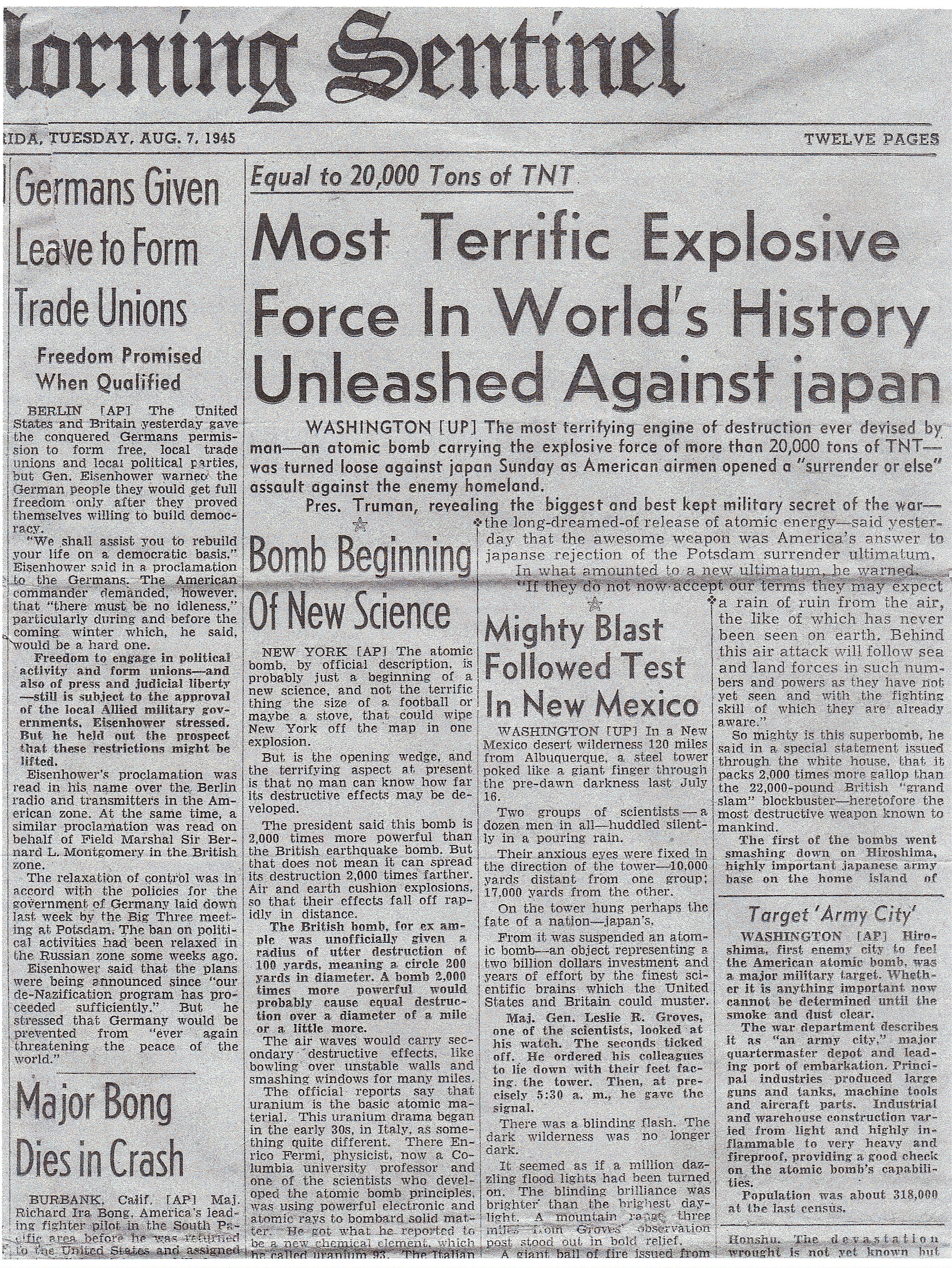








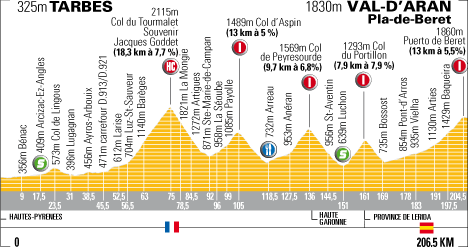


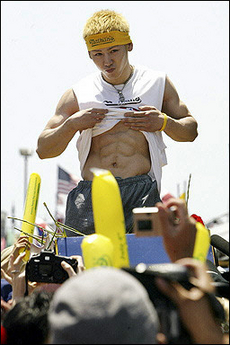







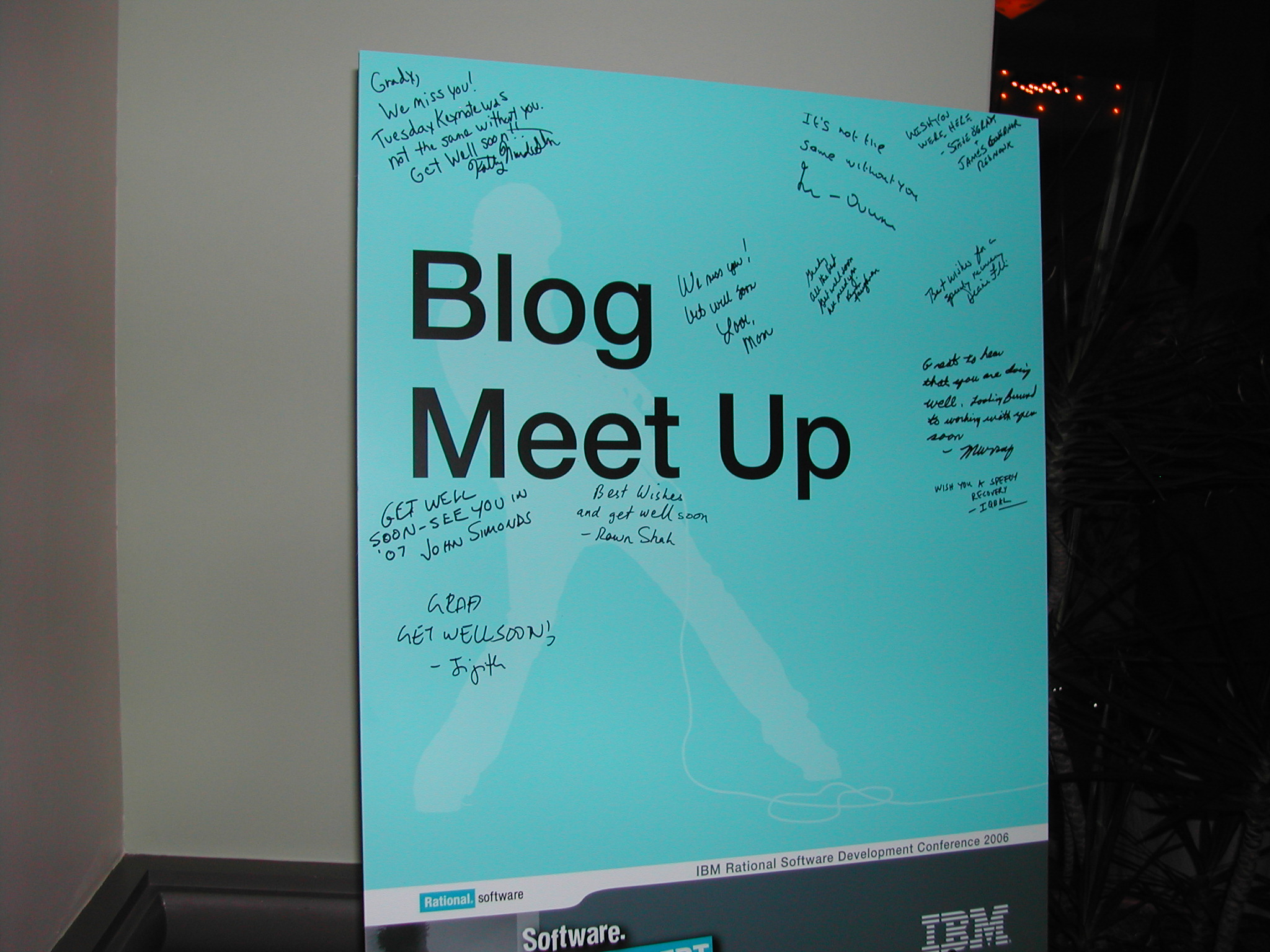


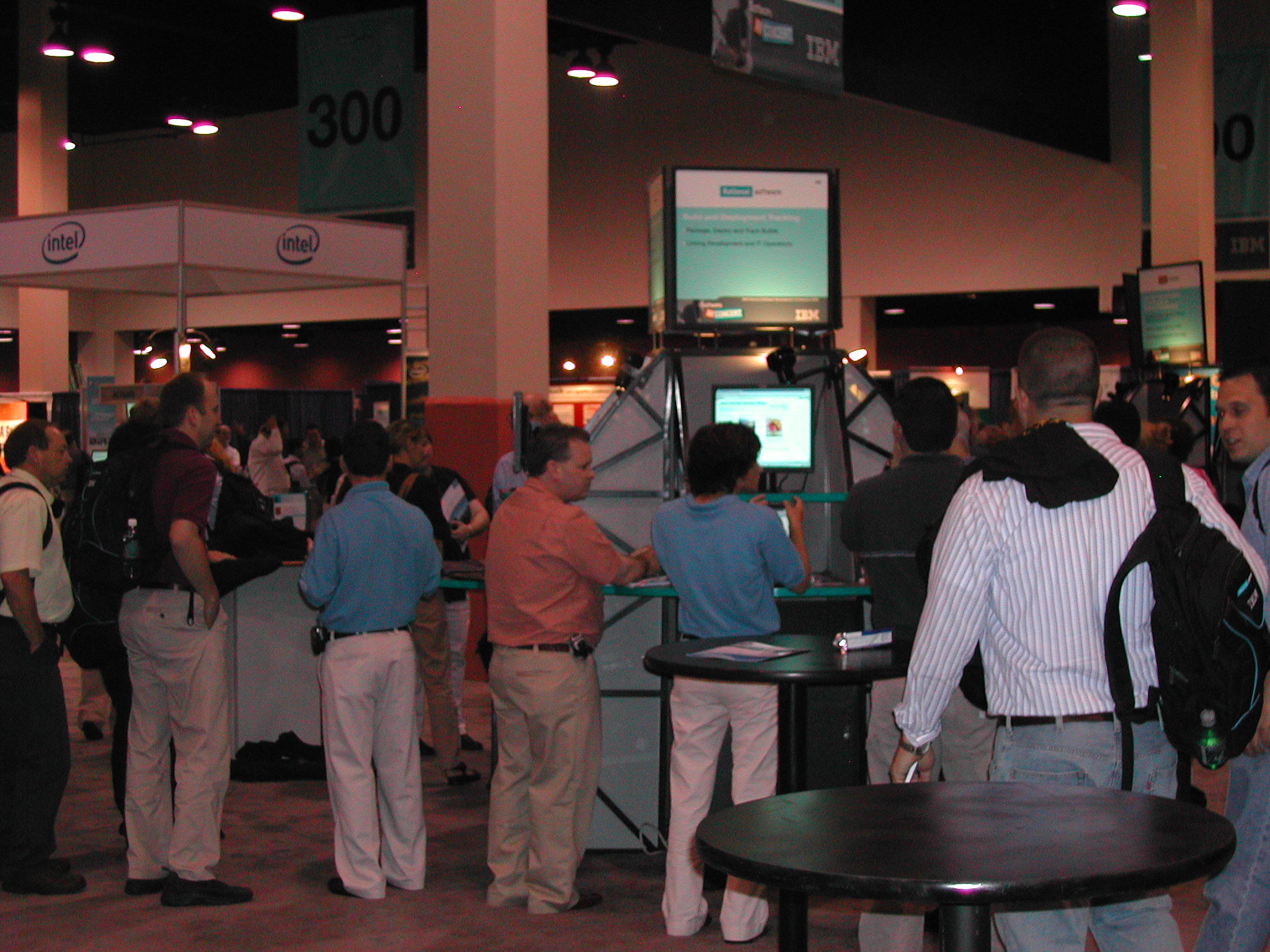

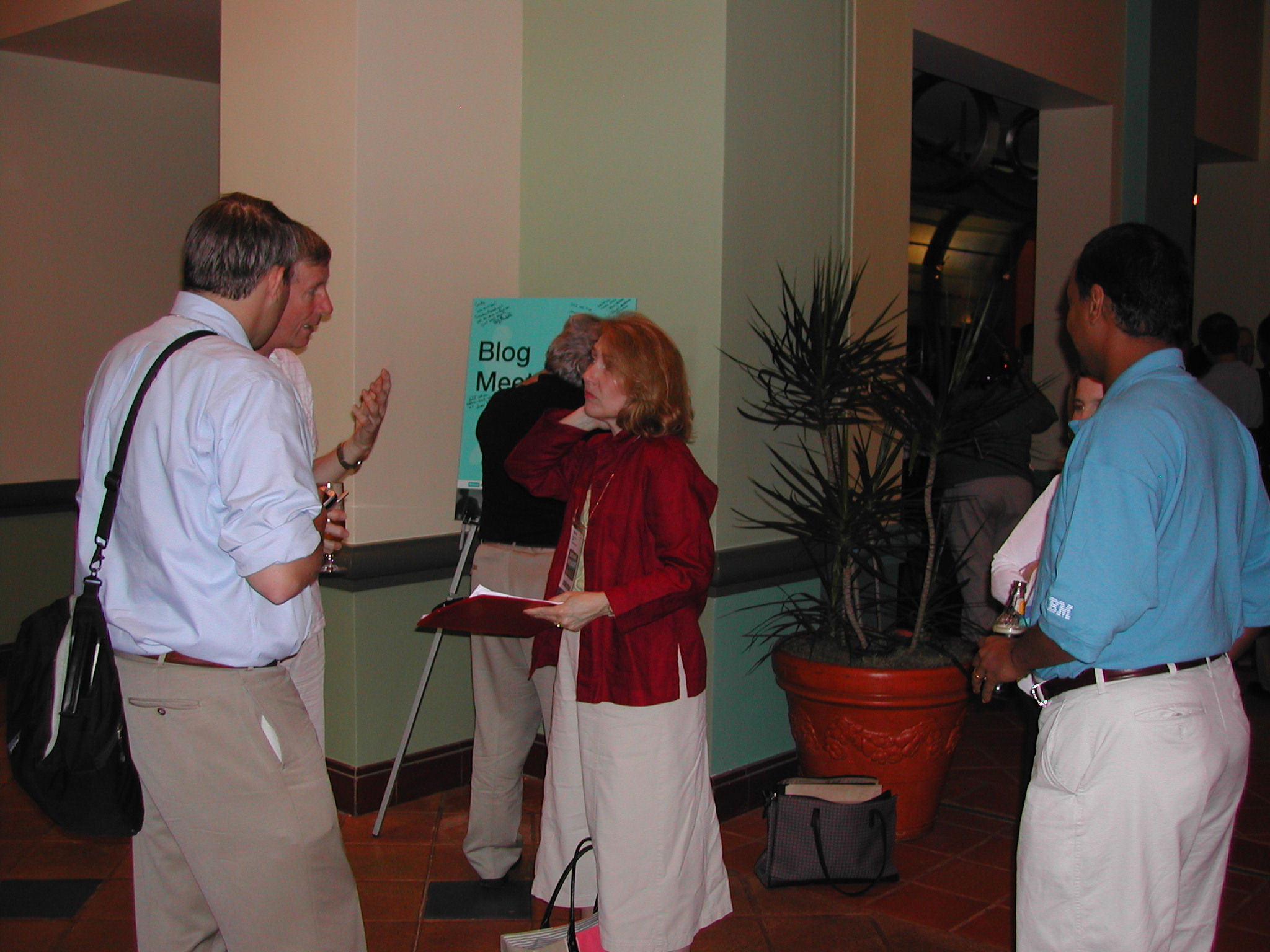

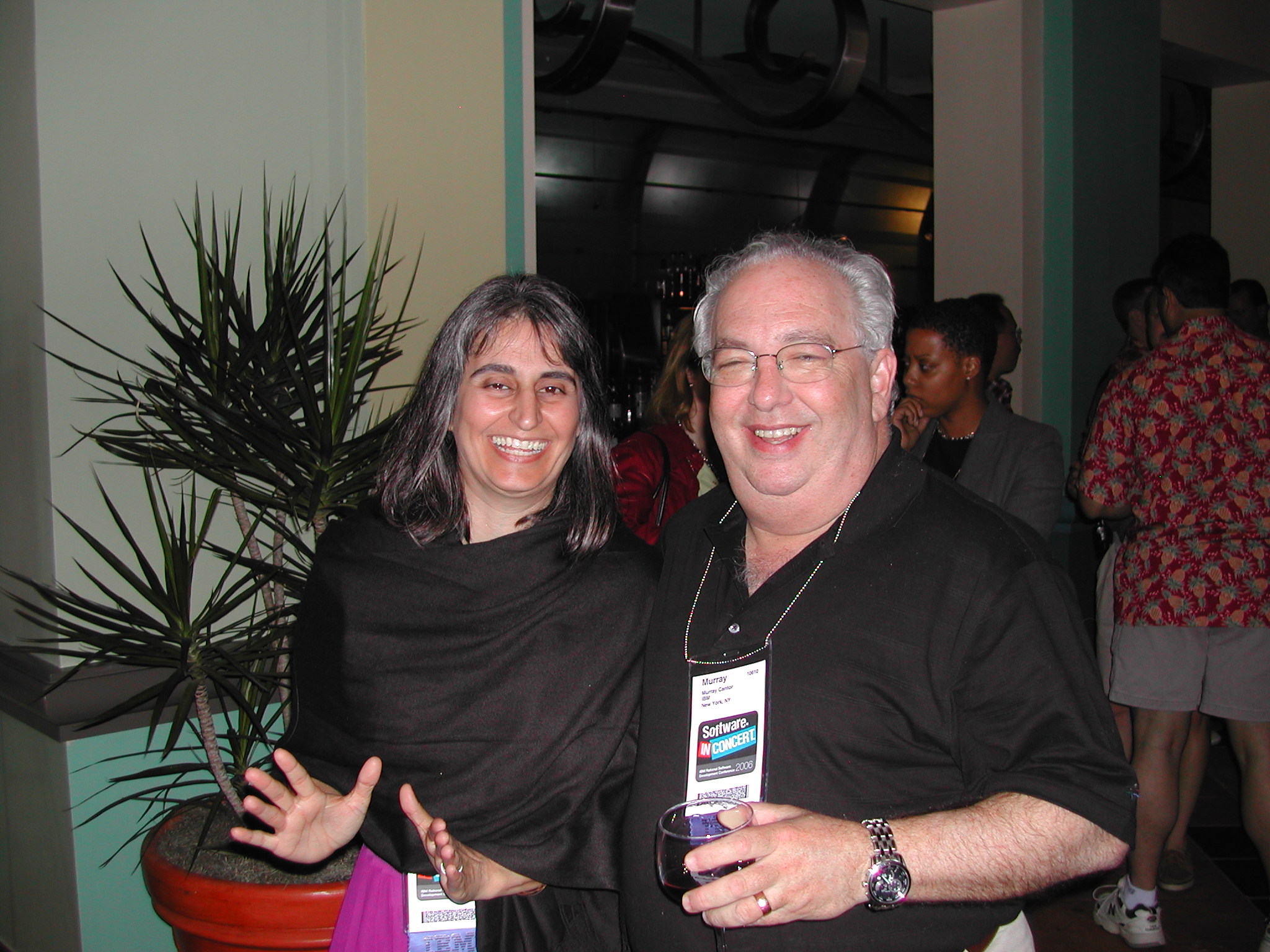


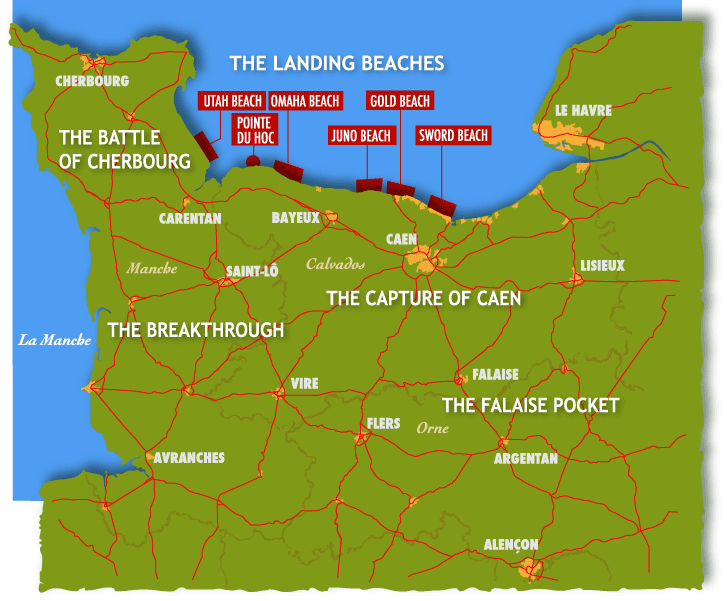






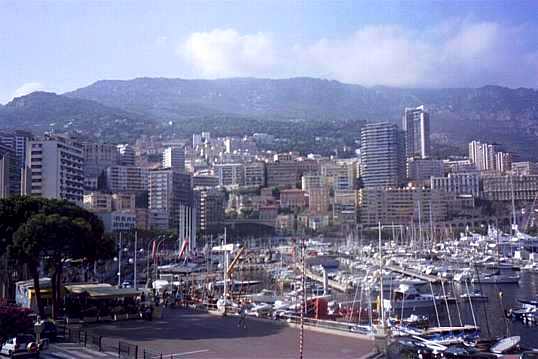


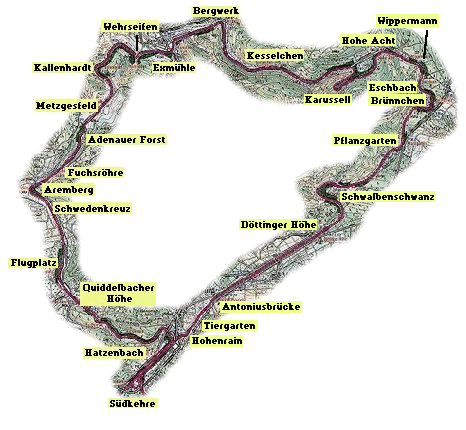










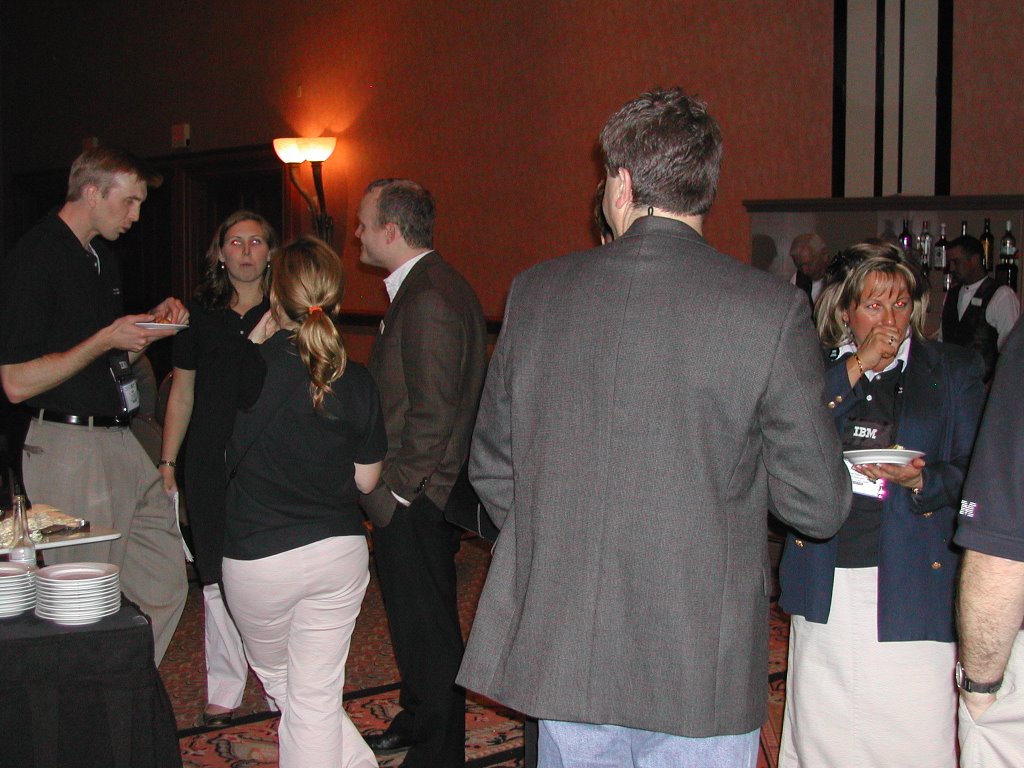




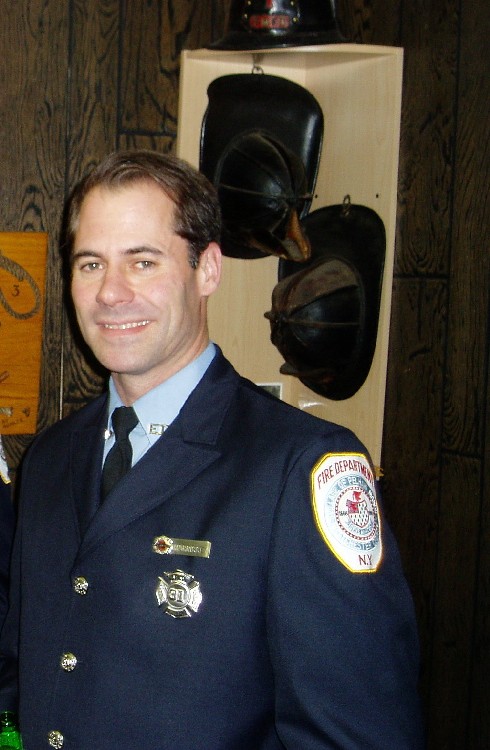


 Delusions of Adequacy