Poison People in the Office

This article was written by Sid Adelman and Larissa Moss.  I would recommend that you don’t be one of these, work for one of these or if you know one, stay away from them.  It’s still work, but enjoying it has a lot to do with those you interact with.

One of the biggest risks to any project manager is having people on the team with the wrong attitude, bad work habits or incompatible skills. Do not accept them on your team, even temporarily – a temporary assignment may outlast your tenure, and is likely to, if you accept these people. Your job is not to rehabilitate, but to implement your project. Have  a clear understanding with your boss of what your job really is. Your boss will only be successful when you are successful, so your boss should support your efforts.

The Poison People are not just dead wood, they infect the entire team, hurting morale, and hurting work habits. They will require time from both you and the other team members to deal with them, their problems and their incompetence. Good workers do not want to be on the same team with these people.
1.      Retired-on-the-job Rudy – Rudy may, in fact, be close to retirement or just a non-performer. Whatever skills he once had (autocoder and board wiring) are either rusty or of little use on your project.
2.      Bad Luck Bob – Bob has never worked on a project that has been successful. Disaster seems to follow him wherever he goes. His bad luck will undoubtedly rub off on the project.
3.      Obstructionist Orville – Orville finds fault with every approach suggested and will argue every minor point that could be debated.  By the time he is finally convinced (and then not convinced but grudgingly acquiesces) the project is way behind schedule or has been cancelled.
4.      Learning Lena  – Lena believes she can take on her assignments only if she attends classes (all scheduled in resort locations) for the next six months.
5.      Researcher Russ – Russ believes that we should not move forward until we have thoroughly evaluated every tool on the market, brought each one in for extensive  evaluation and testing and visited all the reference sites.
6.      Incompetent Ernie – Ernie couldn’t find his mouse at high noon with both hands.
7.      Oldie Goldie – Goldie has been with the company since the company was founded. She knows everything and everyone. She manages to stay employed by playing the politics very well and by working the minimum time. She does manage to look busy. It doesn’t matter what you assign her, she only works on tasks she enjoys doing. She has seen many project managers come and go and is willing to take her chances that she will outlast you.
8.      Gunslinger Gus – Gus doesn’t believe in following standards, rules or anything else. Version control is an annoyance and cramps his style. He’s pretty confident of the quality of his code and so his motto is “Testing is always an option.”
9.      Water Cooler Walt – Walt loves to discuss everything with the team, whether it’s relevant to the work or not. Unfortunately, he doesn’t just do it at the water cooler, he drops into the other team members’ cubicles and wastes their time and they don’t know how to get rid of him politely or otherwise.
10.  Big Idea Bernie – Bernie has read everything – and he believes everything he reads. He knows every web site and he attends every conference. Unfortunately, he’s too busy to actually do anything productive.
11.  Internet Ida – Ida surfs the net for everything. Very little of it applies to her job. She is an internet junky and, even though she has been urged to, she has not yet joined the 12 Step Program for Internets Anonymous.
12.  Safe Stan –  Stan has some mysterious connections that protect him from ever being fired. He may be the CIO’s wife’s idiot  son (by a previous marriage) or he may have some pictures that the Board’s Chairman would not want on the front page of the Evening Bugle.
13.  Insensitive Igor – Whenever Igor opens his mouth, he manages to offend everyone, and those that seem to be the most offended are the users. You hate to bring him to meetings for you know you will have to make amends later on.
14.  Saboteur Sam – Sam hates everything and everybody. He has an ax to grind and thinks the company has done him wrong. He does his best to sabotage every project he is on.
15.  Heat-seeker Henry – Henry know no fear. He will try anything and everything, as long as it is new and technical, even if he brings down a few systems in the process.
16.  Reminiscing Rena- Rena remembers the Good Ol’ Days and she reminds you of them constantly. Nothing ever lives up to her expectations, and it takes an act of God to get her to try something new.

So, you say, you can’t get rid of these people. What to do? Establish a gulag; separate them from the productive workers. Make the separation physical as well as by tasks. Separate them from the mainstream project. Give them work to do that will keep them out of trouble, will not detract from your project and will minimize contact with the rest of the team. Give them tasks such as reviewing all the code and reporting on standards violations – a complete review is always required when anyone makes even the slightest change in their code. You might also assign them to research obscure tools that have no chance of ever being chosen, but be sure that activity does not take up the vendors’ time as well.

This article is excerpted from a book titled Data Warehouse Project Management.

Will Apple Survive the Loss of Steve Jobs?

I’m not wishing any bad luck or premonitions to Steve, but conditions don’t look that good given he already had a liver replacement and he hasn’t been the picture of health at conferences.  I hope that he has a good recovery and stays at Apple keeping the industry hopping and keeps Apple bringing out newer and better products that make our lives free from Microsoft.

THOSE WHO SAY YES

There is enough in the pipeline with iPhone extending to new carriers like Verizon and any CDMA based companies.  The iPad is just beginning to take off and as soon as they resolve flash or HTML 5.0 or whatever video standard, it will be the de-facto standard.  The only drawback I can see is the keyboard is less than stellar, but I’m sure the form factor will change.  We can already see what the iPad has done to NetBooks, the next big notebook innovation that never happened.  It will likely kill most of the low to mid range PC sales.  I think the iPod has a lifespan that may be ending after a few more revisions, but there is just too many other options that make this redundant.

This doesn’t even count Macbook which shouldn’t be selling as well as it does at 3 times the price of a Windoze PC, but they have a following and a growing market share.  If they pattern it after the iPad, look out HP and Dell.

The Apple designers have enough Steve Jobs inspiration for 3-5 years of innovation and they have set the bar again and again.  As long as Tim Cook keeps the Jobs mantra viable, they will dominate.

Let’s not forget that Jobs created Next and sold it to Apple, and Pixar which made him one, if not the largest Disney stakeholder.  He is the creative mind who invented Apple and rejuvenated it.

THOSE WHO SAY NO

John Sculley came to mind as a corporate wizard who doesn’t get what Apple is.  It is a culture and a mindset that just isn’t GE or Pepsi or your standard fortune 100 company.  They need to keep Cook in place to keep things together, but will need an actual creative genius who will keep the juices flowing and create the next iSomething.  Otherwise, short the stock and move along.  Tim Cook is boring and will try to tread water, but will likely lead the company down the Political Correctness and climate drain of boredom and safety rather than innovation.  He seems more worried about diversity and the culture of appeasing political groups or his interests rather than how Jobs ran the company.

OTHER COMMENTS

Others like ZDNet weigh in:

There’s no doubt that Jobs played a big part in shaping Apple and helping it grow beyond that early base of cult followers and taking the company mainstream and beyond. Like Apple or not, you can’t dismiss the impact that the company has had on consumer electronics, music and movies. Jobs has done a marvelous job as CEO, and whether you own any Apple products or not, I’m certain that in some way Apple’s vision will have shaped and influenced some of the tech you have in your life. Apple shareholders should especially be grateful for the work he’s done and the effort he’s put into Apple.

So, given that Jobs has done so much for Apple, are the pundits right? Is Apple doomed without Jobs?

In a word, not yet.  It will slowly deteriorate with the next product cycles or iphone refresh rate.

When Science Triumphs Over Propaganda

After spending a year with the great minds of sustainability, I finally found a Global Warming Scientist that is correct and has some facts to back it up.

Piers Corbyn got laughed at when he made this prediction in November:

While he was laughed at and was told that the science was settled, he was proven right and called out why it is the Sun that is the correct predictor of the weather.

His Website shows how the facts are manipulated and as usual, follow the money….except that the carbon trading exchange has now been closed.

As always, history proves the truth.

I wonder what the next inconvenient truth will be?

UPDATE: I found out later from Tres idiots Tim O’Reilly, Tom Raftery and James Governor got on their high horses to claim the end of the world because of CO2 and AGW also.  They voice support for Hollywood celebrities who live in mansions, fly private jets to global warming conferences and believe all the Al Gore nonsense about settled science without a shred of evidence, hypotheses that could be proven true and not one prediction of a climate crisis that is correct.  It turns out that distribution of money to fake environmental causes was the real reason they bought into this along with the worship of earth as their god instead of The God of the Bible as their religion.  I hope this makes them feel better as they travel the road paved with good intentions that leads to you know where.


2010 in review

The stats helper monkeys at WordPress.com mulled over how this blog did in 2010, and here’s a high level summary of its overall blog health:

Healthy blog!

The Blog-Health-o-Meter™ reads Fresher than ever.

Crunchy numbers

Featured image

A Boeing 747-400 passenger jet can hold 416 passengers. This blog was viewed about 9,400 times in 2010. That’s about 23 full 747s.


In 2010, there were 19 new posts, growing the total archive of this blog to 283 posts. There were 38 pictures uploaded, taking up a total of 11mb. That’s about 3 pictures per month.

The busiest day of the year was December 7th with 122 views. The most popular post that day was Sunday, December 7th, 1941, a day that will live in Infamy.

Where did they come from?

The top referring sites in 2010 were stumbleupon.com, blog.softwareinsider.org, search.aol.com, twitter.com, and google.com.

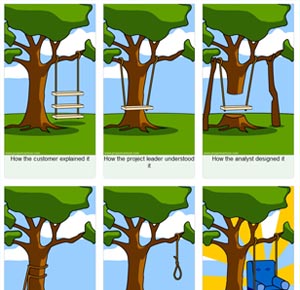
Some visitors came searching, mostly for what the customer wanted, euphemism for stupid, jeff jonas, dan marino, and gina smith.

Attractions in 2010

These are the posts and pages that got the most views in 2010.

1

Sunday, December 7th, 1941, a day that will live in Infamy December 2005
2 comments

2

Euphemisms for Stupid March 2006

3

Customer Service? Give the Customer what they want? October 2006

4

USS Indianapolis August 2006
17 comments

5

September 11, 2001, Good vs. Evil September 2006

“Gore effect” strikes Cancun Climate Conference 3 days in a row (via Watts Up With That?)

It seems like weather/nature/climate and facts are against Al’s claims to AGW.

"Gore effect" strikes Cancun Climate Conference 3 days in a row From the "weather is not climate department" – New record low temperatures set in Cancun for three straight days, and more new low temperature records are possible this week. Dr. Roy Spencer, who is in Cancun representing climate skepticism on behalf of CFACT writes on his blog: Today’s my first full day in Cancun at COP-16, and as I emerged from my hotel room I was greeted by a brisk, dry, cool Canadian breeze. It was 54 deg. F in Cancun this mo … Read More

via Watts Up With That?

Will the New Facebook Take Over Linkedin?

Not for me. There is already too much information available out there and Facebook just increased it. Regardless of the predictions, I don’t see it happening completely.  Some will like millennials, but boomers are much more conservative.  Also, a lot of youngsters don’t go to Facebook as their parents are on, enough reason to not put your life there.

I keep my professional life on Linkedin and my personal life on Facebook, family and real friends only. I like I assume others will keep it that way based on conversations I’ve had. I don’t want to have pictures of co-workers in compromising situations (guaranteed to happen) on my professional profile.

I can screw around a bit on Facebook, but even then I keep it tame as the world doesn’t need to know that much about me.

The Social Network, A Movie Review with Comparisons to Corporate Life

I’m rarely first in line to many movies and the Social Network is the same, I just saw it last Saturday night.  I realize that the movie didn’t tell the exact story, but I’m sure there were enough similarities to be close.

CAPITALISM, WHY OUR COUNTRY IS GREAT AND THE BEST ECONOMIC SYSTEM IN HISTORY

My first impressionism was thank the good Lord for Capitalism.  There may have been some rough issues with the ongoings of the start up, but that we can live in a country where entrepreneurship and the ability to start a company, create jobs  and have a shot at success should be celebrated.  I want an environment where you can make it, or make it big, which is what is great about this country….The American Dream.  The idea that we should re-distribute wealth because some do better than others is nonsense. One of the best lines in the movie came at the deposition when Zuckerberg answered if he stole Facebook from the Winklescarfs, “if you guys were the inventors of the Facebook, then you would have invented the Facebook”…ouch.  It took hard work, vision and of course a couple of lucky breaks, but would this come out of the current environments in Venezuela, Iran, North Korea….I’m open to any examples?.   That Zuckerberg had an idea and was able to become a billionaire gives real hope to everyone.  Build a better Mousetrap and the world will beat a path to your door………………………….but only in the free world.

<sarcasm>

WHY I’M GLAD IT TOOK PLACE IN hARVARD (lower case intentional)

<sarcasm/>


That (at least) the 2nd dropout from harvard (lowercase emphasis mine) became a billionaire shows that an Ivy League credential is not what it used to be, nor is it necessary or as prestigious as it once was (unless you are a dropout billionaire) .  Another great line in the movie that the Winkledoofuss’s were mad because they didn’t get their way such as they had all their pampered life was epic.  We don’t live in the entitlement world (or shouldn’t). I’ve worked with Finklehorsespatoots from all of the Ivy league skools (sp on purpose) as well as those like Duke, USC, UNC-CH, Notre Dame, columbia, princeton who take college snobbery to the wrong level.  Proud of your school is one thing, elitism is another….guess which one is appreciated or listened to? These institutions are reducing themselves to credentialed, not necessarily educated.  Guess which ones are laughed at and not considered worth the money they charge? For the most part, the extra money they paid for their education was a waste that could have been invested and would be worth more.  The reality is most are doing the same job for the same money.  It got to the point in one of my jobs at IBM when someone would brag that they had a harvard MBA, someone would comment in public what a waste of money that was for the person.  The rest of us would know to work around that person as they would just be a hindrance to our ability to get any work done.  They were almost pariahs to everyone else being the snowflakes they usually turned out to be.

It takes a dream and passion to see it to fruition, otherwise you are a lemming in the working world.  No degree earns you the right to do anything but try.  I also subscribe that things are not equal, nor should they be.   Some get more than others, be it because they are smarter, work harder or some combination of both.  If you get a lucky break, consider it a bone, but it’s not an entitlement.

The plaintiffs didn’t have the ability to pull off what Zuckerberg did and they wound up sucking on the hind teat of his success.  You could tell that the lawyers got as much as the clients he settles with through billing and retainers on that settlement.  Might as well include lawyers in the offended since it looks like I’m growing that list in this blog.  This brings me to another of my favorite scene’s, the best answer I’ve ever heard at a deposition.  I wish I’d said it although I’ve said something close I’ll admit.

HARD WORK

Facebook didn’t just succeed because of luck (maybe luck in the timing) and some who didn’t see it’s potential got left behind, but the key to it’s success like most things is ability and hard work.  Although I work for a big company now, I cut my teeth with entrepreneurs who gave every drop of blood, sweat and many times their personal life to make something they believed in a success.  Most are at least Millionaires now and I don’t begrudge a one of them.  They took the risk and deserve the reward.  I only wish more would make it so they could hire more people and reduce unemployment,  restart and grow the economy  This will be the turn around our current economic situation needs, and much faster than our present Keynesian politicians.

REALISM OF THE FILM

I thought they captured the timing and semantics of the period correctly  I was noticing the coding on screen, the Apache servers and that Zuckerberg edited his blog in HTML.  I even noticed that the cell phones were time period appropriate.  What hasn’t changed is College partiers.   Not that I know that much about college partying, but I’m sure some of that really happens.  Although they said he wasn’t an asshole, but that he tried so hard to be one was partly true.  He didn’t have to try.

REAL LIFE

It turns out that Zuckerberg is a suck up to the President to promote Facebook.  Why someone so smart would let himself be manipulated is beyond me.  He didn’t realize that he let a campaign go on for the youth vote who are so easily manipulated by MTV, The Comedy Channel and such outlets.   Older, wiser and those hurt more by the economy know better than to support this or be buffaloed by this sort of trick.  The fact that Fakebook is censuring political groups that are not liberal and letting terrorists plan attacks or post mendacious things about moral groups shows who they and Zuck really are, biased.

EPILOGUE

This was a good movie that shows you can still make it in the business world.  Bill Gates, Michael Dell, Steve Jobs and many others are all good examples of the American dream that Zuckerberg lives.  By now it is out on DVD, I even TiVo’d it the other day an watched it again just to see success.  I am glad we live in the part of the world where you have the chance to succeed or fail.  But if you succeed, you usually take others with you.  A rising tide floats all boats.

Changing Jobs, My New Job, Resurrecting Old Talents

Today I start a new job.  I’ll be working in external communications for IBM Global Finance.

I’ve been a part of Software Group at IBM for about 10 years in a number of A/R capacities, it was a good run, but like all good things….it came to an end.

I’ll be handling not only Analyst Relations, but also stepping back into previous careers.

What few know is that I majored in Accounting and actually started my career as one, so I have a good understanding of finance/accounting (debit is on the left).  Combine that with my personal interest in economics, and you can see how the stars aligned for this.

Upon considering this job opportunity, the obvious occurred to me.  These are tough economic times, customers have IT needs, the banks are fully financed with TARP money yet are not extending credit….and IBM is a major financing organization and is helping customers and partners with financing.  Voila, it was a no-brainer.

So I embark on a new journey within IBM which is a good fit.

For all that I have worked with, I’ll probably still be working with you as IGF works with all IBM divisions to help them, so again, this to me is one of THE BEST STORIES NOT TOLD ENOUGH at IBM.

From our web page:

On a smarter planet, the opportunities that can emerge from intelligent and interconnected systems are unlimited. Unfortunately, your budget is not. The challenge for many organizations is how to invest in smarter systems when the majority of the budget is going towards maintaining current systems.

Building a robust and flexible IT infrastructure often involves systemic transformation that can happen all at once or in phases, and typically requires a new generation of hardware, software, and services. An equally robust financing and asset management strategy can provide you the opportunity to leverage new technologies, and turn your ambitious vision into a tangible solution.

IBM Global Financing can help credit qualified clients develop a comprehensive investment strategy, allowing them to seize new opportunities and accelerate transformation solutions with:

We provide flexible financing options and low rates that can:

  • Turn large upfront costs into affordable and predictable monthly payments
  • Customize payment plans that align costs to projected benefits
  • Accelerate solution implementation, and improve ROI and payback
  • Lower total cost of ownership
  • Preserve cash and credit lines for strategic business investments
  • Reduce or even eliminate the risk of project delays and technology obsolescence

Smart financial decisions, cost-effective results

From simple loans to custom leases, we can finance your total solution – including IBM and non-IBM hardware, software and services – under a single contract.

Learn the Key Elements for why IBM Global Financing is your smartest choice to fund critical IT investments and propel your business forward.

The 65th Anniversary of the Hiroshima Bomb

August 6, 2010 is the 65th anniversary of the introduction to the nuclear age.  Since then, over 1000 nuclear bombs of various configurations have been detonated by multiple countries, but only 2 have been in wartime.

Some say it was barbaric, I’m taking the position that it saved millions of lives.  At that time “while the infrastructure and industrial capacity of Japan may have been ruined, the army was committed to and capable of suicidal resistance to the end.”

That is difficult to comprehend unless you understand the dedication to the emperor as a god, and the Samurai code of death by suicide before capture.  Even when the Allies fought the Germans in the European Theater, both sides wanted to live and many surrendered before death.  Not so in the Pacific theater where many Japanese were dropped off on Islands without provisions and told to live (as cannibals), documented in “Flyboys”.  In fact, very few Japanese prisoners were taken as they either died fighting, or committed seppaku.

History notes the use of the bomb was first and foremost used to end a war against an enemy who was determined never to surrender.

While the Americans and their fellow countries were preparing for the Japanese invasion, they predicted the loss of life on both sides to be north of 2 million.

Ultimately, there had to be a statement of finality to convince this mentality of the utter futile nature of continuing.  The bombs at Hiroshima and Nagasaki did this.  My uncle, then a B-29 Pilot told me that far more damage and more lives were lost by the fire bombing, but it didn’t break the will of the Japanese people.

Victor Davis Hanson explains:

Japan still refused to surrender and upped its resistance with thousands of Kamikaze airstrikes. By the time of the atomic bombings, the U.S. Air Force was planning to transfer from Europe much of the idle British and American bombing fleet to join the B-29s in the Pacific.

Perhaps 5,000 Allied bombers would have saturated Japan with napalm. The atomic bombings prevented such a nightmarish incendiary storm.

The bombs also cut short plans for an invasion of Japan — an operation that might well have cost 1 million Allied lives, and at least three to four times that number of well-prepared, well-supplied Japanese defenders.

World War II was the most deadly event in human history. Some 60 million people perished in the six years between Germany’s surprise invasion of Poland on Sept. 1, 1939, and the official Japanese surrender on Sept. 2, 1945. No natural disaster — neither the flu pandemic of 1918 nor even the 14th-century bubonic plague that killed nearly two-thirds of Europe’s population — came close to the death toll of World War II.

Perhaps 80 percent of the dead were civilians, mostly Russians and Chinese who died at the hands of Nazi Germany and Imperial Japan. Both aggressors deliberately executed and starved to death millions of innocents.

World War II was also one of the few wars in history in which the losers, Japan and Germany, lost far fewer lives than did the winners. There were roughly five times as many deaths on the Allied side, both military and civilian, as on the Axis side.

Further, evidence was found that the Japanese had their own nuclear bomb and tested it on the Island of Hungnam days after the “bomb” was dropped on Hiroshima. So this act not only saved millions of lives, it now appears to have stopped a nuclear war. Reporter David Snell has documented this.

American soldiers found and destroyed a cyclotron in Japan shortly after the attack.


So ultimately, the goal of all war and the way it should be fought was achieved, to win.  You fully defeat your enemy, then negotiate the terms of surrender.  I only wish that today’s political correctness would go away and we would let the soldiers do their job without the meddling of an incompetent congress and inexperienced leader and put in a man like Harry Truman who said “We will unleash a rain of terror from the air”.

We face this again and will continue to face it as everyone will challenge the top dog.  It is up to the free world to deliver what the architect of the Pearl Harbor attack knew.

This was both an important event in history and a lesson we should learn so that the next Hiroshima is not named New York.

Microsoft Facing A Critical Time In Their Business Direction, (or I wouldn’t want to be in Microsoft Communicaitons right now)

There are times in any business that you need to re-invent yourself.  Even if you are selling nuts and bolts, a bigger fish like Lowes or Home Depot can wreck your sales and pricing.  Nothing changes faster these days than the IT industry.

Microsoft is facing the situation that IBM has faced at least 3 times now.  The last one was a do or die decision to not break up the company and I credit one Lou Gerstner for such a great move.  Nevertheless, he reformed and reshaped the company from a hardware (mainframe) company to more of a services and software organization. Microsoft unfortunately didn’t invent everything it sells and is faced with a fork in the road on success or pack mediocrity.  I for one would not want to have to face the upcoming issues as a communications professional that Microsoft will face.

ORIGINS OF THE CASH COW’S

Microsoft got it’s start by buying an operating system and taking the Software PC business away from IBM.  Next, they “stole” the Windows idea from Apple, here is a bit of history from MG Siegler….

For nearly 25 years now, the story has lingered that Microsoft stole the idea of Windows from Apple (AAPL) while working to develop software for the Lisa and Macintosh operating systems. The stories you hear generally seem to be a mixture of truth, urban legend, and fanboy fabrications at this point — but the fact is that Apple did sue Microsoft in 1988 for copyright infringement on the matter. After four years worth of arguments, Apple lost. They also lost the subsequent appeal (and they even tried to take it to the U.S. Supreme Court, but that was denied). But they didn’t lose because Windows wasn’t thought to be similar to Apple’s operating systems. They lost because the judge ruled that you couldn’t protect the concept of a graphical user interface or the desktop metaphor idea. And more specifically, Apple ran into problems because of a decision that then-CEO John Sculley made in 1985 to sign an agreement licensing certain parts of Apple’s GUI to Bill Gates for use in what would become Windows 1.0 (presumably without realizing exactly what he was doing).

Siegler proves my point of re-inventing themselves here:

But now that idea is waning. Or rather, everyone is starting to recognize that the idea will be waning in the years to come. Make no mistake, Microsoft still makes a lot of money from Windows — and I do mean a lot. But Windows is not the future. By that I mean that the desktop metaphor GUI is slowly but surely being replaced by a rise of mobile and touchable devices. In other words, Microsoft needs a new idea.

The problem is that Microsoft hasn’t proven themselves to be capable of coming up with or executing such an idea on their own. Dozens of failed projects ranging from the original tablet PCs to SPOT watches to the Kin have been left in their wake. The fact that tablet computers are now exploding in popularity thanks to Apple’s iPad suggests that Microsoft, for whatever reason, has a hard time launching new, successful ideas on their own. Windows Mobile is another example of this. They were there early, much earlier than their main rivals. And now they’re getting trounced.

Instead, it may be time to piggyback off an idea again. To create a new inception, as it were. Lure someone in, take their idea — and take it to the next level. Microsoft has nothing if not a huge amount of resources. If they pick the right idea to take, they can once again transform the world — but they need that right idea.

BALLMER IS NO GERSTNER

I’ll go on record to say that Ballmer is no Lou Gerstner.  A company needs a visionary like a Gerstner or maybe in this case, a Steve Jobs.  Sam Diaz speculates his demise and that he might not even make it to CES to make the keynote.

Here is Diaz’s Ballmer scorecard:

  • Mobile: Clearly, the KIN was a flop. And, isn’t it kind of funny that references to the mobile landscape are always centered around iPhone, Android and BlackBerry. When was the last time you heard someone get excited about the forthcoming arrival of Windows Phone 7 and talk about how it will rock the mobile landscape? OK, putting Microsoft shareholders and employees aside, when was the last time you heard anyone else talk highly of Windows Phone 7?
  • Tablet: Well, Ballmer killed the Courier. Or someone at Microsoft did – but surely not without Ballmer’s permission. OK, so they killed a tablet PC project. Big deal. Isn’t that better than launching a loser (like they did with KIN)? But it wasn’t so much that they killed it as much as it was the extra line in the company’s official statement that declared “no plans to build such a device right now.” It seems that tablets are all the buzz right now, sparked largely by Apple’s iPad. And Microsoft has no plans for one?
  • Software/OS: Regardless of what you think about Google, the cloud and even the Mac, you cannot ignore the fact that Geese that lay Golden Eggs at Microsoft – Windows OS and Office – are getting old. There’s fresh competition from all over – and this isn’t just the Mac vs. PC sort of competition. There’s excitement around the launch of tablets running Google’s Chrome or Android OS. Clearly, Apple is gaining some ground from its switch campaign. And companies are being given real options for productivity software from online providers.

The point of all of this is that Ballmer, as the CEO of Microsoft, seems to have spent quite a bit of time riding on the successful coat tails of Bill Gates – but really hasn’t done much to elevate the company further, XBox being the exception.

My .02, he needs to go and they need new leadership to fend off Google, Oracle, Amazon and most of all Apple.  He is not the savior and they need a Gerstner.

Rob Enderle, one of the analysts I used to work with when I covered Analyst Relations for ThinkPad adds this nugget of perception:

Perception works both inside and outside the company. Recall that in the Apple turnaround, Steve Jobs started out with a company in deep trouble with products he had publicly called crap.  He started changing the perceptions surrounding the company because he knew this would give him the time he needed to rebuild it. At IBM, Louis Gerstner changed out the entire marketing department as one of his first accomplishments. He knew that if he couldn’t deal with the perception that IBM was failing, that perception would drive an unavoidable result.  In  both cases, by aggressively dealing with perceptions of unavoidable failure, both internally and externally, they bought time they needed to get  the real work done.

MINI-MICROSOFT WEIGH’S IN

One of the blogs I follow is Mini Microsoft as do many.  He’s got the biggest set of attachments that I know to write things like this:

And now Kin is killed *after* it has shipped in June 2010. You can bet Andy was involved in the development of Kin, the partnership agreements with the OEM, Verizon and most importantly the “ship it” approvals all along the way. And Microsoft discovers its a bad idea after it blows up in the broad market. Absolutely no thanks to any pro-active decision making on Andy’s part.

Now there is spin that Andy killed kin to put all the wood behind Windows Phone 7. Er, the guy was in charge for two years of Kin development. He could have made this decision far earlier.

Similarly Windows Phone 7 has two years of development under his watch. Based on his past performance, 99% chance this is also going to be a total catastrophe. It further doesn’t help that much of the Windows Phone 7 leadership team was kicked out of Windows when they screwed up Vista.

And finally, one Danger-employee’s point of view of why they became demotivated:

To the person who talked about the unprofessional behavior of the Palo Alto Kin (former Danger team), I need to respond because I was one of them.

You are correct, the remaining Danger team was not professional nor did we show off the amazing stuff we had that made Danger such a great place. But the reason for that was our collective disbelief that we were working in such a screwed up place. Yes, we took long lunches and we sat in conference rooms and went on coffee breaks and the conversations always went something like this…”Can you believe that want us to do this?” Or “Did you hear that IM was cut, YouTube was cut? The App store was cut?” “Can you believe how mismanaged this place is?” “Why is this place to dysfunctional??”

Please understand that we went from being a high functioning, extremely passionate and driven organization to a dysfunctional organization where decisions were made by politics rather than logic.

Consider this, in less than 10 years with 1/10 of the budget Microsoft had for PMX, we created a fully multitasking operating system, a powerful service to support it, 12 different device models, and obsessed and supportive fans of our product. While I will grant that we did not shake up the entire wireless world (ala iPhone) we made a really good product and were rewarded by the incredible support of our userbase and our own feelings of accomplishment. If we had had more time and resources, we would of come out with newer versions, supporting touch screens and revamping our UI. But we ran out of time and were acquired and look at the results. A phone that was a complete and total failure. We all knew (Microsoft employees included) that is was a lackluster device, lacked the features the market wanted and was buggy with performance problems on top of it all.

When we were first acquired, we were not taking long lunches and coffee breaks. We were committed to help this Pink project out and show our stuff. But when our best ideas were knocked down over and over and it began to dawn on us that we were not going to have any real affect on the product, we gave up. We began counting down to the 2 year point so we could get our retention bonuses and get out.

I am sorry you had to witness that amazing group behave so poorly. Trust me, they were (and still are) the best group of people ever assembled to fight the cellular battle. But when the leaders are all incompetent, we just wanted out.

So it is even internal that they know they need a change…..BUT HOW

Most of their products that were successful were others, what they invented except the xbox were largely irrelevant or unsuccessful.  They should have been a dominant phone player and got owned by Apple and Android.

And their big solution is this right now –

Microsoft: ‘If we don’t cannibalize our existing business, others will’

That’s not what companies do to reinvent themselves.  Take Apple, or IBM…that is what Microsoft needs to do.

I’ll give them this, they have a lot of money in the bank, but they are not positioning themselves as a dominant player for the future.

COMMUNICATIONS

In talking to the analysts and even the press from time to time, arrogant seems to be a trend.  They need to be humble and explain the situation.  Most of all, they need a product and a strategy to deal with.  I don’t envy them.

So far, they have emulated IBM in a lot of ways.  Re-Inventing themselves would be a good start.

Fixing moral would be good too….I’ll end with what Rob Enderle says:

The best way the take on these problems is for the management team to engage with employees by both listening to them and providing insight into the company’s strategic plans. Candor is critical; the goal is to get people working as a team again.  Employee surveys are generally ineffective because they aren’t trusted and the results don’t create the needed dialog.

Update: Their tablet strategy is labeled misguided and confusing.  Who would have guessed that?

Let the communications team explain this.

New Meeting Bingo Words

I always like this game.

Center Square this week is i-anything or cloud anything

Web 2.0 – still alive

Web 3.0

HTML 5

unified

legacy

responsive

enhanced

awareness

zero footprint

community

extensibility

widget pallette

full client

micro browser

vision

business transformation

pipeline

organizational productivity

rich anything (connection, client, business data, etc.)

collaboration

platforming

work experience

customer value

marketshare

cloud anything

alternative models of computing

virtualization

#ARchat, A New Paradigm for Analysts and Analyst Relations Professionals

There has been a new collaboration between both Analysts and Analyst Relations Professionals emerging on Twitter called #ARchat.  For the record, it occurs every Monday from1-2 ET. Here is a description for A/R professionals.

DESCRIPTION

ARchat is a weekly themed conversation on Twitter for business professionals that deal with Industry Analysts and Influencers. This includes Analyst Relations (AR), Public Relations (PR), Investor Relations (IR) and Marketing professionals (especially since many in small firms function as all of the above), not to mention Industry Analysts (IA) themselves. Our focus involves both best practices and pressing issues or trends. All tweets are tagged with #archat which makes following the discussion very easy with applications like TweetDeck, TweetChat, TweetGrid or Twitter Search.

I recall the days when even speaking with a person from a competitor would be grounds for dismissal (OK, I did start working when we were still building fires in caves) and now we are collaborating on best practices.  This doesn’t take the place of services like SageCircle (although they participate), rather it is the natural progression of social media in the Analyst Relations practice.  I give kudos to Fred McClimans (Twitter handle @fredmcclimans) and Stephen Loudermilk (Twitter handle @loudyoutloud).

We’ve discussed issues such as the proper social media tools and other best practices.

What is interesting to me is the back channel conversations I have with the other participants during the conversation about what is going on.  It makes the whole experience much richer.  While there is serious discussion of what is best for our practice, there is jocularity about certain analyst’s proclivities (tweotches) or habits like Ray Wang (@rwang0) staying up all day and night.

I invite all the analysts and A/R professionals to participate, learn and contribute to this discussion.

See you there, Aloha.

Doing a Joint Announcement With Your Competitors

Recently, I’ve done joint announcements with Oracle, SAP, HP, Tibco, Software AG and HP. As you can imagine, I’ve had varying relationships with each and I’m happy to report that the state of the A/R industry is good and that we can work together.

When I was in PR, it was cat fight supreme with territorial ism and turf wars. Most of the announcements I did with these companies when in Analyst Relations didn’t have that element. For the most part, the announcements were about standards, not products. So that went a long way towards working together. Still, if you include IBM, the companies I’ve named here aren’t known for being best buddies.

As and aside, I can say that the executives (who can be the source of most problems) all worked towards the cause of the best briefing possible.

Some things are given, like in a certain area (we just did SOA) the analysts know the exec’s by company and the exec’s know each other so I’m happy to report they acted like grown ups.

TURF WARS

With the typical name calling (from the CEO’s)and because of t the belief in your own products, the first issue to overcome is that the announcement is usually about a jointly create product or standard, not us vs. them.  That rule has to be set down first and if you don’t overcome that, you have no chance at building trust, the basis for working together.

DIVIDE THE DUTIES

One company can’t dominate the duties or or it is not a joint announcement.   This also forces the companies to work together to approve what the others have created as their part of the announcement.   There are analyst lists, invitations, charts, follow up issues and any number of duties that need to be attended to and dived up.  Once that is done, you must rely on each other and the level of trust inherently rises.

THE ANNOUNCEMENT

It’s important that the analyst see this as equal amongst the companies.  One company presenting more than another is a dead give away.  You can’t help Q and A as the analysts will direct the question directly to a company.

LESSONS LEARNED

You either put your differences aside and work together, or you’ll never get anything done.  It’s tough to do when your day job is to hammer the company that you are working with other than on the announcement.  These are the days of co-opetition though.  You learn to get along or you’ll never make it to announcement day.

Is Excel the Bane of Our Existance?

Dilbert.com

Microsoft office is mine.

Before I get to Excel, let me say how much of a time waster PowerPoint is. The executives I work with obsess over the charts ad nauseum only to have the analysts tear them apart. Some of our execs can only think in .ppt which in itself is a disease.

Now to excel.

It has many flaws, especially in very complicated or linked spreadsheets. Unfortunately, many company’s run their business off of it and I wonder how many have made fatal mistakes?

Gartner of all companies sums it up:

Excel hell is not an evil Microsoft plot, or some sort of madness that descends upon otherwise sane managers and knowledge workers when they open the PC.  It is the fault of enterprise software failing to provide an alternative.

Most of the users who use your software for a significant part of their day do so because they have to if they want to get paid: accounts payable experts, call centre agents, payroll administrators and returns clerks, for instance. They can’t get up in the morning and say, “Today, I’ll use Lawson or Oracle, because I didn’t really like the feel of the SAP application I used to process those invoices yesterday.”  Admin users are in an arranged marriage. On some rare occasions, love blossoms, especially in the payroll department. Most of the time though, they seethe with quiet loathing.

Most employees in an organization are voluntary users for the vast majority of processes. They don’t have to log onto the employee skills dashboard every week to check if their team is on track for their development goals. If once a year they log on to the HR application, complete the appraisals as fast as they can, and get out of there, they will. Many top sales people spend as little time as they possibility can in CRM systems. Many poor salespeople spend considerable time logged onto CRM applications.

Now you can draw up long valid lists of reasons why enterprise applications are better for business processes than Excel (an ideal use for Excel). You can deliver fire and brimstone warnings about the damnation that is Excel hell (use Facebook to attract others to your cause).

Gary Barnett of Bathwick makes an even stronger case

Excel-madness

We’ve all seen this – that faintly crazed look in a colleague’s eyes when they’re challenged on a point of data – You can see that they just want to shout “The number is 54.56% because the @$%$ spreadsheet says so!”. Who the hell are you to challenge the contents of cell 4987MP, What sort of messed up anarchist would challenge 4987MP?

If you look closer – into that person’s eyes – you will see their hidden desire to stab you in yours with their biro.

Question this number at your perilQuestion this number at your peril

And let’s face it – who the hell are you to challenge  this – Did you spend 110 hours over the last 7 days rushing to produce this analysis for the meeting? Did you grapple with the two dozen spreadsheets that have been linked and interlinked in order to get to this number?

This number is the truth, because the spreadsheet (which as the dweebs amongst you will have noted is OpenOffice Calc) says it is.

As John Mihalec tweeted to me in response to my tweet about writing this blog:

@thinkovation Because 2 + 2 is so obviously 4 that it lulls us into complacency re whether either 2 is even 2 at all.

Many key decisions (many of which have a profound effect on our lives) are made on the basis of data that is simply garbage

Computer Science 101 taught us “Garbage in, Garbage out” – and we’ve been collecting, polishing and re-packaging garbage ever since. But this stuff is different – Our retirement funds, savings, economic stability, even our understanding of climate change all depend on knowing the right things.

The financial crisis was caused by many many things – and I’m not discounting either “greed” or “stupidity” as major causal factors – but the absolutely tippy-top of the list cause of the crisis was the failure of pretty much everyone (except Warren Buffet and a small number of others) to appreciate the level of risk that was associated with all of the various financial instruments that were flying about.

The reason for that failure to understand the true level of risk lies in the way in which both the instruments themselves, and the tools people used to assess their risk, wrapped and wrapped the risk under layers and layers of complexity – It was a giant game of pass the parcel – with the outer wrappings  so numerous and shiny and neat,that the smell from the final parcel of dog do0-do0 was completely overlooked.

If you allow something to become en-mired in many layers of obfuscation, you have to accept that the “system” you create is going to become increasingly chaotic. If you can’t track the journey taken by a simple number through the myriad sections, tabs and linked files – You have to be prepared to factor in “chaos”.

The image below is hypothetical – but it’s not an exaggeration – there really are figures sloshing around that are derived from inter-linked hierarchies of spreadsheets that are a lot more complex than this one.

A simplified map of the spreadsheets involved in an analysisA simplified map of the spreadsheets involved in an analysis

Take this image as an example. Item A is the output spreadsheet – which combines the results from B, C and D – which each in turn depend on one or more “child” spreadsheets. Here are some boring questions one might ask –

  • How long ago was the data in J refreshed?
  • Has anyone audited the assumptions made in H?
  • Is there anyone in the organisation who could explain to an Actuary how come the number is 54.56%?

If you can’t provide sensible answers to these questions – then, it’s time to take your life in your hands and tell your excel-crazed, sleep deprived colleague that they may as well have arrived at that number using a lab-rat and a roulette wheel.

Incidentally – someone has trained rats to trade, and reckons his rodents can do at least as well as the majority of the top fund managers – check it out here

To sum it up, they are good tools for simple applications, but they have done more to ruin productivity and correctness than most other softwared.

Disclaimer: I hate powerpoint presentations more than a root canal.  It is time for a new paradigm of software that works better and stinks less.

Will Google Buzz be the Next Twitter?

I doubt it.

Update: Nope, It looks like a loser, there isn’t any buzz nor is there Google wave and I doubt that Google+ will make it either.

In the caveman days by technology standards, something would be the buzz and a behemoth like Microsoft would swoop in with a copy and take over the market.  Word/Wordperfect and Netscape/IE come to mind.

Anymore, the next buzz could only last months before the next buzz comes around.

Twitter is too established.  So much so that the next big thing is likely to overtake it, not a me too of the same thing.  If Buzz is as successful as Google Wave, it’s already DOA.  It’s too bad that Twitter has censored certain groups because of political bias and moral casualness and relativity.  They have become an untrustworthy platform.

Google’s problem is that it has a limited audience, Gmail users.  It’s big, but not big in comparison to the the marketplace worldwide.  Google has said do no evil, but their Chairman continually does so and interferes with political bias.  With their meddling worldwide and privacy invasion, they violate the do no evil so consistently and constantly that they can’t be trusted.

The only possibility is perhaps the advertising model, but if you are like me, I hate watching an ad when I’m trying get to a video.  That’s as annoying as popup’s and spam.

Twitter may have already have an advertising model.

As for me, I’m already looking for the next new grass roots product that isn’t overtaken by the masses.  That way the message gets through easier without the clutter and noise.  And there are a lot of annoying people on Twitter, almost as annoying as Twitter’s social policy stance.


A Couple of Green Reasons How You Can Justify Buying A Porsche

It turns out that owning a Porsche is Environmentally friendly.  Well, that’s one way to justify it.

Says Porsche:

Stuttgart. Dr. Ing. h.c. F. Porsche AG, Stuttgart, is supporting the generation of renewable energy. The manufacturer of sporty premium vehicles is making a 40,000-square-meter area on the roof top of its central spare parts warehouse in Sachsenheim (Baden-Wuerttemberg) available to the firm Goldbeck Solar GmbH, Hirschberg an der Berg-
strasse, in order to install and operate approximately 8,500 photovoltaic modules there. The system has a nominal output of two megawatts. The electricity will be fed into the grid of the energy provider E&W Eichwald GmbH, Bietigheim-Bissingen.

Well, if that isn’t enough, take this…

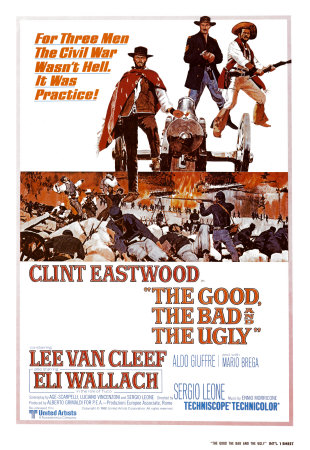
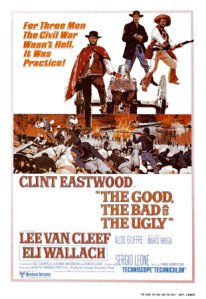
Managing Executive Ego’s; The Good, The Bad and the Ugly

I’ve worked at 8 different IT companies in my career and have seen many people in management roles. I’ll draw upon my career and the colorful stories for this discussion.

Managing Executives is a very sensitive issue.  This process is critical to the relationship and results with the press and Analysts.  Much of the time this is unseen externally, but the machinations exist under the covers for us to get to the discussion in an orderly manner.

Executives have many demands on their time and are pounded or pulled at from every angle, but they make the big bucks so butch up.  They might have come from a great meeting or one that they got machined gunned to death right before the analyst briefing.  Different people handle stress in different ways.

A common thread I’ve noticed is how much ego they bring, and how much control they have over it. Either way, the executive is the messenger and the content owner in the eyes of the audience.  It is our job to make sure they are best prepared, deal with the issues, understand the big picture and be as professional as possible to achieve results.  In some ways, we have to pull the strings and push the buttons behind the curtain to make successful analyst engagements happen.

As with the movie, I’ll take it in order.

THE GOOD

There are some executives that intrinsically get that analysts are deep thinkers, they have influence over customers, press and our reputation.  The media are rarely deep thinkers, but need to be managed and have influence, albeit less and less.

The really, really good ones know that the analyst can provide great input into the strategy and can point out any holes or landmines in our strategy.

The really, really, really good ones (Buell Duncan) understand that it is about creating a relationship and that no matter how much influence they have at IBM, they can put that aside and get the message out and deliver value to an analyst discussion.

One key is they can manage their ego’s and those of the analyst (not the point of this post, but it is related throughout).  The executive I’ve linked above always comes off as you’re smarter than I am, although it’s rarely true.  He also accepts that criticism is part of the deal and doesn’t take it personally.  I’m not sure if it was his basic nature or that he came from sales (I attribute a big piece to the fact that he’s from the south and is more polite than most) but no matter what the case, his briefings always were a home run.

These executives are of course the best to deal with.  Some have higher maintenance levels than others, but when you know your big gun is going to deliver, you want to make sure his gun is as loaded as possible with bullets.

There are always disagreements over issues, but when an executive can put their ego aside and listen to input, everyone wins.  These people are very perspicacious.
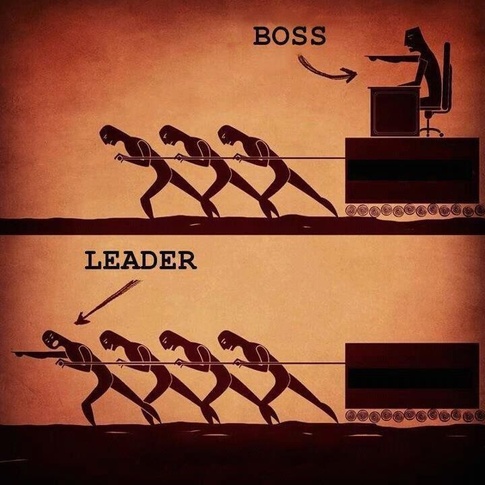
boss or leader

THE BAD

Everyone has a bad day.  That can precipitate a less than optimal discourse.  I’ve worked with some who just weren’t as good as others at dealing with media and analysts, although practice usually improved things.  Some executives just shouldn’t be doing briefings as it isn’t their strength.

As described in the GOOD section, I’ve seen good executives come off distracted as they just got chewed out, or a multi-million dollar contract is about to be lost….it happens.

Some need more coaching and preparation than others, that’s our responsibility in communications.  I’ll discuss this in the Executive Preparation post, yet to come.

There are some that are not cut out for analysts briefings.  They should not be put in this situation.  There is always someone else on the team who is the one really best suited for dealing with the  analysts.  They may not be as good with a P&L, but they get the strategy and the relationship issues.  I use them as much as possible as it produces results on both the analyst and the company side.

Some just don’t get give and take.  I don’t put them in the ugly as they just won’t budge on the fact that their solution is what it’s going to be, but many times they can be right. It is better for the company for them to make the tough choices and stick with our side of the argument.  It rarely makes for a successful analyst engagement, but I defer when history shows that they didn’t take the analyst advice and the company or division benefits.  Again, this a time where a lieutenant is best for dealing with the analysts.

I’ll bring up human nature here as I’ve been in a situation where an executive who is generally great at working with analysts has a beef with a person for some reason.  In one case, both the analyst and the executive described the other person in to me terms of a deification orifice.   Sometimes you just have to separate people and agree to disagree.  This situation is a challenge in communications.

Some of the bad are nitpickers.  The get caught up in details that are not relevant to the big picture.   They are a distraction and a lieutenant is again best.

Another category that could be BAD or could be UGLY are the quick triggers.  They fire off a response without considering the consequences.  The reason I put it into BAD instead of UGLY is you never know how it’s going to turn out.  It usually depends on the audiences’ response.  Either way it is high maintenance.  The quick witted exec’s can play this one well though, I’ll give them that.

I had to work with one entrepreneur who thought he knew more than anyone.  He managed to pick a fight over a lie that he was making a product (disk drive) that he bought from Control Data.  The reporters and analysts knew it and the company credibility was shot.  I had to tell one reporter not to equate me with him as I was not going to lie for him.

The last of the bad is the death by PowerPoint crowd.  They drone on and on and on and on without letting the analyst get a word in (when don’t analysts like to offer an opinion?) and everyone dreads these meetings.  Their objective is to get through the slide deck come hell or high water.

These executives are hard to work with, but sometimes you have to do it and get through it.

THE UGLY
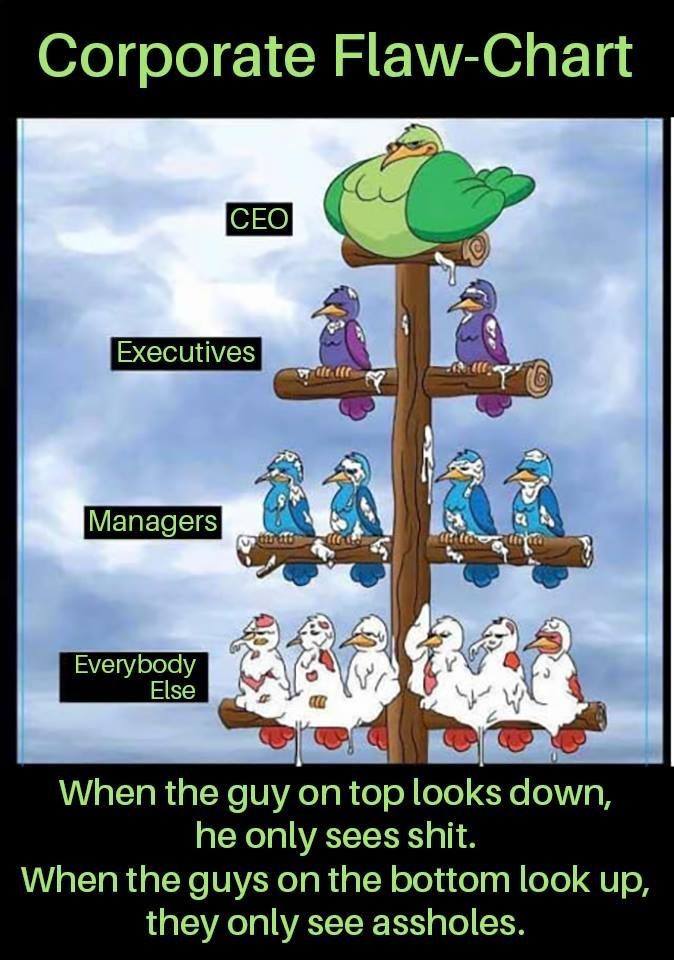
These are the worst experiences of anyone’s communications career.  They also regularly put the company behind the curve with the relationship with the analyst.  I have only experienced this a couple of times, but they are burned into my memory as times I don’t want to relive.  Fortunately, I don’t work for or with any of these people anymore.

It almost every instance, it  is fueled by the over estimation by the executives of the importance of themselves.  These people also come in various flavors.head_up_ass

The Ugly Flavors

The Suits – These are people who have made it through the system via the Peter Principle. They pontificate, but aren’t well respected by anyone on either side and as with everyone in this category, are difficult to work with.  They are found out quickly by the analyst and it hurts the cause to come to the table with them.  Once, he called his assistant before a Forrester briefing to see if he could change his flight out so he could be home early and asked me to cut the analyst meeting short.  This was less than professional and was very hard to explain to the analysts why he obviously was blowing them off.

Another Suit (A former head of NetFinity and IGF named Callies) incident came up when I had landed one of the highest level press interviews of my career.  It was major media headline quality “Article of the Year” that anyone with half a brain would throw their best people and research at.  I had to pull the speaker (his lieutenant) from the Suit’s “staff” meeting.  The lieutenant was the best speaker I may have worked with and the Suit was one of the worst.  Said Suit wouldn’t let the speaker go to the briefing threatening him with “it’s only your job if you leave”, or I’m more important than anyone else.  As it usually happens with these types, I had to work around him to get the job done and got our name up in lights despite his efforts to torpedo any progress.

A different flavor suit flavor is described by Lou Gerstner in his book “Who Says Elephants Can’t Dance?”  He describes an executive who wrote memo’s on how to deal with him including what type of gum to have and how to set the clocks (pg. 32).   These are unusually high maintenance people who want celebrity treatment.  There is a good song about this syndrome, watch the video here. Adios reality.

The Terrorists

\

These people give me nightmares.  Almost everyone has worked with or heard about these tyrants.  Nothing you can do is right, nothing is good enough and the analyst is wrong because they are right.  This is different than the BAD  situation from above.  The BAD executive there is making a tough choice not to go with the analyst view, but it is well informed choice.  The terrorist doesn’t really care about outcomes or just doesn’t know, rather it’s about what they want and their career, power and usually their insecurity.  Every company has one and the main IBM terrorist, Sandy Carter has many dead bodies behind her quest to climb the ladder.  She made it up the chain and managed via the Dark Side as a corporate climber who both played favorites and pitted employees against each other.  We in communications had a support group for those who survived a term working for her and kept their job.  Once, I even wrote a press release for one of her female employees  just so she wouldn’t get fired, even though it never went out.  She personally set back diversity according to the women who worked for her.  I’ve rarely seen less respect for an executive.  When she got promoted, her employees were high fiving in the hallway that she was leaving.

No matter what the SJW’s try to redefine diversity rules to, the smart companies promote the best performers.

Sandy used to bring us through about 50 revisions of Powerpoint charts.  Most if not all changes were bad, but were done precisely as she had demanded.  We were later castigated with “why did you do this, I didn’t ask for it?”   She didn’t command much respect with the Press and Analysts who saw through this level (lack) of competency.  It was embarrassing to be in a press conference with her.  Although being a promoter of WITI,  she internally hurt the path for many women, and certainly made many question affirmative action and diversity policies at IBM.

Having to sweat through every meeting prior to and with an analyst is counter productive and has never lead to the results that could be achieved.

I’ve noticed that the terrorist is found out by press or analysts by many means.  Sometimes it is inconsistency in charts, sometimes it is through unusual calls and/or requests by A/R, many times it is through colleagues and sometimes it is through working with them enough times that you both understand that the executive is a terrorist, like Sandy.  None of the Press or Analysts had any respect for her, just like her employees.

I’ve had one other terrorist who is now the VP of External Relations.  I called him to warn him of a problem that a reporter alerted me to.  It is expected that you let the person in charge of an area know if there is an issue so that they can deal with it as it is their turf.  I was being the good employee (in my first 4 months) so I left a voicemail explaining the situation and doing the hand off so that I wasn’t infringing on another person’s PR territory.

I got a call back from this type A New Yorker (a former Ed Koch employee) who lambasted me for my efforts.  Apparently, he was insecure as he kept reminding me that he was the boss and I was a nobody.  Let me point out that this was not a morale booster for a new hire who was trying to do a good job and be a team player.  Such is the life of working with terrorist Communications leaders.  I found out later that he regularly abused most people who worked there.  He deducted IQ points from those in the South which is another form of anti-diversity and discrimination.  Most just refused to help him or stayed away so as not to have to deal with the chewing out.  I’ve personally witnessed them confessing that they didn’t want to help him because of his temper.  What a shame.

I checked LinkedIn and he’s gone from IBM like almost everyone mentioned here.  It’s too bad for the employee’s at the new company who have to work with Ed.

Terrorist’s can come with unrealistic expectations.  I to this day am not sure how to handle them.  In both cases, I chose to move on and out as quickly as I could.

SUMMARY

To be effective with press and analysts, you must be able to manage the executives.  Executives come with many styles.  It is imperative that you learn the style and manage it for effectiveness.

Since people are different, one must adapt to each person.   Just hope you get the good, deal with the bad and escape the ugly.  As for the terrorist, I advise grabbing a parachute and jumping.  The plane is usually going to crash anyways.

Here is a quote that sums it up terrorists for me: “They are simply a shiver looking for a spine to run up.” – Paul Keating

Update: SageCircle links here with a good post on improving executives.

For you Clint fans and movie buffs, here is the song and movie opening video.

It’s Not Easy Being Green, Or getting the evidence of Global Warming – My Short Tenure at IBM in Sustainability

Note: I’ve edited this to accurately represent what really happened at the Green and Sustainability effort during my tenure at this job.  It has died because once the fury of Green passed by, nobody cared about it.  That accurately reflects the real position by everyone in the company that I worked with except the executive who got paid for running it.  I don’t think he cared either once the assaignment was over because he moved on and it was dropped.

I was given a stretch assignment for Green IT at IBM this year.   A stretch assignment means you get another job without the extra pay, or layoffs just happened and a person now has to do the work of 2 since they don’t want to backfill, or the powers that be don’t feel like you have enough to do so they use this as retribution. In this case it’s mostly the second one because they know I can deliver when others can’t, so they dump stuff on me frequently.

I have a lot ahead of me, thus the title of this blog post.  The hardest thing about this assignment is that I know that IBM doesn’t really believe in it (and there is only a small faction of nuts in the company trying to get buy in). The entire premise is almost 100% hype for corporate responsibility and image rather than any actual product or offering.  I really wasn’t given a choice whether I wanted to do it and I certainly will do my job, but as you can see in the details below, it’s hard to believe in something when it’s based on bullshit.  I see through it and I know that TPTB are just being politically correct to avoid the (very small but politically damaging) social justice warrior hostage taking out there.

During the Major Analyst Conference we did in November, I had to get this nonsense into all the Smarter Planet materials to show (SJW and PC) compliance (so as to not get the Jessie Jackson-ish extortion treatment by the Al Gore crowd).  It turns out to be a bunch of nonsense that is made up to try to fool the press and analysts into thinking IBM actually does something in the Green space.

It all started out with trying to be politically correct about global warming, since IBM really isn’t and has the carbon footprint of China (or Al Gore’s 2 houses and jet setting around the world).  Now, everyone has started shying away from the words “global warming” once the world saw through that as a lie and ineffective, they renamed it Sustainability.  That means you wrap up all the things that tangentially have something to do with being sustainable, since it is a nebulous name and concept and voila, you claim sustainability.

Once the word sustainability gets found out as a fraud as part of the global warming and money grabbing hoax, you then call it Smarter Planet or roll it up into that campaign and somehow you are politically correct, even if you aren’t really doing anything different (which IBM isn’t).  We had to sell this crock to the press and analysts who wanted so badly to be able to charge extort us for pretending to  buy our baloney of offering something in this space that resembled eco-friendliness.  They were compliant in our scam as long as there was money.

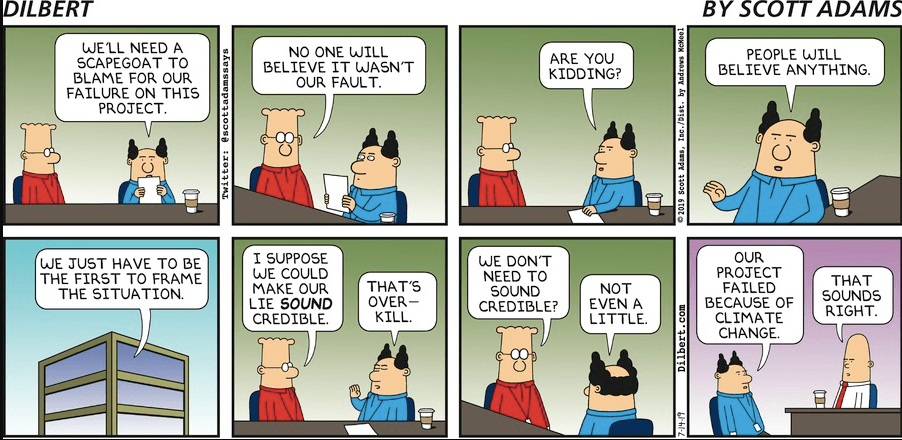
The worst thing is having to deal with the idiots out there who buy into this Gaia religion like Tom Raftery of Greenmonk and James Governor of Redmonk and Greenmonk.  Our executives in a briefing after a different Green Day analyst conference in London actually called James a wanker and Tom a whiner after the event due to their outbursts and views as they interrupted the entire day.  Greenmonk has since gone dormant for lack of money, facts and believable content on climate.  Their credibility was shot when they wanted a carbon tax at a dollar a pound.  James told me the real truth was he wanted to make money while trying pretend that they were doing it to save the planet, making money being the operative words (see the above extortion tactics).  I put the Dilbert cartoon in specifically for O’Reilly, Raftery and Governer – the 3 stooges.

The net of it is that IBM is pretending to be a player in this shell game but is a pseudo player.  Fortunately, the analysts and press who are pushing it are just bully’s, but know as we all do that the evidence is not there, so they make up new stories when the lack of facts expose the wild goose chase de jour.

Too bad it is all a farce and IBM’s offering is equally a load of hogwash.

al-gore-fire-300x222

THE WORLD IS FLATTER, BUT NOT LIKE YOU THINK.

That is right, the real flat earther’s are the one’s who buy into this farce of “sustainability” like Greenmonk whose job was to suck around for money. Another dissembler Tim O’Reilly, who couldn’t defend global warming with anything other than “climate science is hard” (or I have no real facts so I’ll call you names), while condemning those who don’t believe in it wrong without any proof of his position was another nut I had to deal with.  None of either’s positions are based on anything but computer climate predictions of which none have come even close. they based their position on the IPCC report.  It now comes out that The IPCC; Never Has So Much Been Made Out of So Little by So Many at So Great A Cost.  In other words it was a money transaction that had nothing to do with climate other than earth worshipping. Any other “climate facts” are 50 years in the future, which is an even bigger joke since real meteorologists can barely predict the weather next week.  I could be convinced of global warming if there was one little thing called evidence.  What I find unfathomable is the lack of backbone by IBM to stand up to this money grabbing extortion theme by these pseudo experts.

As it turns out, I had tweeted in response to Tim’s crisis about the rising tides that I didn’t believe him, but would accept his facts if he had any.  Like all good climate warriors, he made ad hominem attacks on me and in a more harmless statement, said that I got all my information from Fox News (I don’t watch any news as my career with the media already told me that the press are biased). The only real facts about the state of Climate issues are found at What’s up with That unlike Tim who had no facts like all climate warriors.

As it turns out, the tides are receding Tim and here is the evidence. The waters on the island of Tuvalu (the tidal benchmark) are receding.  This is one of the crisis places of the world that was supposed to be drowned along with the Statue of Liberty.  So Tim, your views are biased and calling people flat-Earther’s because they don’t sign up for the pseudo science you have bought into is ridiculous, like your views.

Epilogue:

I got out of this assignment because I couldn’t lie for the company, nor lie to myself by doing something I didn’t believe in and realized was a lie.  It’s lost its mojo because both the premise of Sustainability and climate change are based on predictive models that aren’t true. The fact that IBM doesn’t really do anything (other that trying to keep up with the Jones) was too much for me to take, and claim any sense of honesty.  My credibility is more important than getting a paycheck for lying.  I’d never make it as a politician.

I left the position right before a green conference where Al Gore was the speaker.  It was the second time in my IBM career that I made a conscious decision to avoid him so as to not listen to his spew about global warming, nor be disappointed in humanity by seeing so many people being fooled by this scam based on redistribution of money to the climate warriors.

I told James that it was good that Gore wasn’t president on 9/11/2001 as he couldn’t lead a lottery winner to any bank (other than his bank account), let alone a nation in a real crisis.  Being a good liberal, he was offended since he knew it was true and couldn’t defend his hero.  He, like Biden and Cheney were only impeachment insurance for their respective presidents.al gore Horses-Ass-Award

So having to lie to defend Climate anything, especially at IBM when I understood the facts makes it hard to be green.  I’ve moved on to something I can be honest about.

The position went away as it became “under the guise of everything is sustainable” – (more lies) that we didn’t need a person babysitting it anymore.  The real truth is that it didn’t develop into an issue like diversity that a company could be blackmailed into payment or bad PR due to non-compliance.  It just went away as did the fake committment to global warming by my employer.

Analyst Predictions for 2010. Everyone is Going Out On Basically The Same Limb

I’ve been keeping track of the analyst predictions waiting for enough time for them to post a listing of them.  I think that since it is the last day of 2010, and that there is a sufficient amount of them out there, it is time  to list them. Analysts are the prognosticators of the IT Industry and they should be right, but then meteorologists tell us about the weather, and they are great if they are only 50% right.  In reality, they can’t tell us what next week will really be and yet we are basing many decision on what 20 years from now will be.  I’m trusting that IT analysts are more accountable and have more tangible facts less subject to acts of God than the weather.

In reality, Carter Lusher and SageCircle is where you should go to get your A/R best practice as to what to do with these predictions, but I have to make some calls of my own.  Here is what I’m going to use the predictions for in addition to Carters recommendations:

  1. Use it as the basis for discussion with the analyst showing that I have been reading and following them.
  2. Using them as analysts to select for briefings and consults based on their area’s of concentration
  3. Good natured ribbing if they really blow it at the end of the year. (note: not necessarily an A/R best practice here)
  4. Use it as part of my A/R plans to present to the executives I support.

So here is my listing.  I’ll note that they are in no particular order as I’m getting them from my feed reader as they come  up.  I like and work with almost everyone on this list, so I am not going to show favorites in a listing order, it will be entirely random.  You will note a trend very quickly as to where most of them are going for the year.  See if you can pick it out.

Analyst Predictions for 2010

IIAR video of Gideon Gartner on the state of the IT Analyst Industry.  (Note that this is not a part of the trend, just that it came up first).

IDC Webcast by Frank Gens, Robert Mahowald and Henry Morris. It has a link to the video which is worth watching, but the theme begins here with the discussion of the Cloud.  I’m glad they consider the Hybrid model.

Laurie McCabe of Hurwitz Associates and her 2010 Top 10 SMB Technology Market Predictions. At least she waits until number 7 to get to Cloud, thanks Laurie.

Bruce Tempkin of Forrester discusses Gen Y.  While not really a 2010 prediction, there is no denying the fact that the attitude, social media ability of Gen Y’rs and their length of patience is a big HR issue we all face.  They will help define the workforce make up as boomers exit.

James Governor of Redmonk leads the list with 20 predictions.  Note the continuation of the trend as James has Cloud at numbers 1 and 12.  I admire him for also considering the hybrid model as the cloud is not one size fits all.  As I work with James quite a bit, I’m surprised to see Google and Green further down the list than I expected.

Carter Lusher reprimands the A/R Community to pay attention to Social Media or suffer the consequences.

Amy Wohl and you guessed it, 2010 Predictions on SaaS and the Cloud. Note the build up in the trend.  I still swear to random selection, but Cloud is getting a lot of attention.

Judith Hurwitz titles her predictions as: Predictions for 2010: Clouds, mergers, Social Network and Analytics.  I’ll give her credit for the Social Networks as I delve there in my predictions also.

Claire Schooley again talks about Gen Y.  While not an official 2010 prediction, there is no avoiding that we’ll  have to address the issues of this culture in the  workplace.

Rob Enderle in 2008 on 2009 highlighting Security. I’m including this as Security becomes an issue with the uptick in terrorist activity, both online and direct attack like flight 253.

Jonny Bentwood also covers this topic in his yearly round up. He actually gets to it first and we cross over quite a few, but I’m not going to use everything in his list so that you have a reason to to there and check out additional predictions I’m not covering.

Lee Odden’s 12 Digital Marketing Predictions. There is a lot of good Social Media info here to look at.

Rob Enderle checks in again with one of my beliefs, that the Private Cloud will Win over the Public Cloud Model. Anybody picking up the Cloud trend in predictions yet?

John Levitt from AnalystXpress on the Top 10 Wireless predictions for 2010. Of course Cloud makes number 3.

Chris Collins of Yankee Group posts a Webinar on 2010 predictions.  Cloud Computing is a tag needless to say.

David M Smith of Gartner discusses the Psychology of Predictions, a different way of looking at it starting with caring about being right.

Ray Wang and Jeremiah Owyang discuss what’s coming to 2010 in a video with Robert Scoble.

UPDATE: Laura Cecere and Alan Johnson Of AMR have come to the table with another set of predictions.  You need to be an AMR client for this one.  Here is a link to their press release.

2010 Client Virtualization by Benjamin Gray

So between my list and Jonny’s list, you have most of the predictions for 2010.  Will the analysts be as good or better than the weathermen?  Only the Shadow knows.

My Turn at Making Predictions

Since I’m listing others predictions, it’s only fair that I put out my own.  Disclaimer: I’m not an analyst, so I don’t feel any need to get to 10.

1. The Cloud is important, although I think the hybrid and private models are more important than the all everything public model

2. Twitter will continue to erode the number and quality of good bloggers.

3. We need to find a new Twitter as the current model has now been compromised in security, and there are just too many people on.  We need another back channel to connect with our real business contacts.  Plus, I’m an early adopter, so let’s find that new best method.

4. All predictions go out the window if there is another Terrorist attack.  The top prediction will be Security.

5. Success in the economy will be defined as less of a loss than we expected.

6. Who you hire from Boomers to Gen Y matters to your ability to connect to the tech crowd when considering hiring practices.

Final note.  At some point this year, I’m moving Delusions to a new host.  Mine is bad so obviously I’m publshing on a back up blog.  Stay tuned for that .

I Am The Planner for The Analyst Connect Event

I lost this post in the switch from Blogger to WordPress. I’m re-posting it with corrections to accurately represent the facts. I’m retired now and can tell the real story.

Intro:

It’s no secret that Software Group is doing well for IBM.  Analysts should be particularly interested in how and what we are doing, now more than ever. (This part is true, they actually cared back then)

We hold a yearly analyst conference in November to discuss our issues and give the analysts who follow our business the chance to listen to our leaders and ask what they may.

Running the Event:

Each year, one (un)lucky soul gets to be the A/R liaison for this event for logistics with the strategy team.  This year it is yours truly.   I did it once before and it is time consuming and the details are overwhelming.  It’s a job to add to your job.  For the record, I’m honored to do it.

Annotation here. I wasn’t honored to do it because it sucked. They stick this lousy job on someone that they don’t think is busy enough. I’d pulled it off once in 2006 and that was a rousing success. They used this event to fire a colleague (Tom B.). When my manager Amy Loomis told me I was doing it, I said nothing in response for almost half a minute of awkward silence until she said she thought I’d be honored, why I wrote the above. I knew she had it out for me as I made more money for less responsibility than her. I knew it got to her like it did Ray Gorman, two of my worst managers at IBM.

They call it a stretch assignment, but it is a bullshit term for work that they dump on the back of some unlucky person that needs an employee screwing. There were more than 40 A/R reps to take turns at running this and I got stuck with it twice in three years.

It’s a time suck and a thankless job that I didn’t want to do. I did the best job I could to not get fired, but was stymied at many crossroads.

The first one I ran was under Dave Liddell, the best Director of Analyst Relations we ever had. He was reasonable and expected results. This one was under Sarita Torres and Amy, which made the job twice as hard. They couldn’t make decisions and were constantly interfering in the progress in the guise of helping out and giving guidance. Many times I had to not tell them what I was doing to be able to make progress to get the job done. At times it seemed they got in my way or didn’t let me do the job when appearance was at stake.

They clearly were favoring female employees as they put incompetent mangers in place who were a spanner in the works. I missed Dave and Mike Bizovi tremendously during this time suck.

At the end of the conference, it was a party for the retirement of Jerrilyn Glanville, a co-worker. I liked her and she was one of the more competent reps we had. They went on for half an hour at the end of the conference with one brief mention of me running it. It may sound like sour grapes, but that actually worked for me as I hated attention. I was glad they had the girl fest so I could catch a plane to get out of there as quickly as I could. I knew it was thankless if I pulled it off. The only real attention I would have gotten would have been if it screwed up.

I pulled it off flawlessly with maximum social media coverage never seen before at the time. None of them understood it and that got ignored. I was playing the game by a different set of rules. The analysts knew as I was the leading A/R blogger and social media expert in the group. The rest of the A/R team barely understood Twitter at that point.

I had to work around Christy Pappas also. She was a control freak who thought she helped run it when she mostly processed PO’s and got office supplies. She was more of a speed bump I had to avoid to get the job done.

So I made sure that it was run right, regardless of the managerial interference and attempted back stabbing that came with it from management.

After this, my desire to over perform, as I’d done for decades was sucked out of me. I saw how the sausage was made and it stunk. I was glad to get it over with and asked never to do it again. I retired early only 4 years later, something they couldn’t understand.

I’d been saving and paying off every debt so that I could call the shots on when I want to go. When most of them got canned a few years later, they all said they wished they could go out on their own terms like I did. They all were neck deep in debt and mortgages and couldn’t understand how I did it.

Back to the original post.

I’ve decided to blog about it as part of the Social Media outreach.  There will be a second blog residing on My developerWorks (I”ll post the link in an additional blog) so that you can follow our progress and what tools we are going to use.

I’ve been working on it now for a few weeks, but we meet with the powers that be today which really kicks off the event in terms of work to do.

Request for Advice:

Since two way interaction is actual communication, I’m open for (reasonable) suggestions from the analysts who want to find out more and interact prior to the event.  It will only make for a better conference.

We’ll have a closed portal only to those who are registered, so sorry competition, there are some issues off limits.   We’ll provide tons of data and make the conference easier to attend and navigate than ever.

Wish us luck and don’t be afraid to send me suggestions.  Jsimonds@us.ibm.com

More annotation: I put the request for advice to be able to show the girls in charge that I was working with the analysts. That way I could do what I wanted under the guise of Analyst input. It was the only way I could get things done when the girls started meddling in my work. I set the agenda and made the rules to get it done so they couldn’t screw me like they did Tom.

They don’t hold it anymore because it turned into a gabfest. The analysts cared less and less because it was a show rather than an information exchange. I think Covid finally killed it along with firing all the employees who didn’t work at the home office.

At the end of the day, I was smart enough to not let them screw me. I gave them a highly successful and well organized conference. All the time I knew I had to go through the motions, but also knew it was bullshit from start to finish.

The Back Channel, My Most Important A/R Tool

Getting to the person you want to meet with or communicate with when you want to is vital.

Relationships ultimately are very important, but I find that an A/R best practice is knowing the Back Channel.

My First Back Channel

I’m skipping the phone in this discussion.  Most people screen calls.

Backing up a few years when I was in PR, I remember when public email first started.  We were using MCI Mail on DOS and  300 baud modems back in the mid 80’s to reach influential people in the industry like John Dvorak, Paul Sommerson, Bill Machrone and others.  I think there were about 10 of us using it.  I was beating the big PR agencies and they couldn’t figure out why, as I was working for a small company that shouldn’t have had the presence we had.  We were the inside club.

Email then of course became mainstream so we lost that advantage.

The Next Tool –  IM

It’s hard to believe that as much as we use instant messaging now,  that at the beginning of the technology not many were using it and again it was the way to reach those who were using it.  At this point, Email immunity was beginning to take hold and if you weren’t important, you fell quickly out of the realm of first responders.  I read a tweet from an analyst recently who noted his inbox was so far gone that he was about to delete everything and just start over.

IM also fell to everyone abusing it and we moved on.

Twitter:

Skip forward a few years and you have  Twitter.  This worked until the recent explosion of everyone being on the platform and it again became commonplace.  It still is somewhat effective if you are high on the other parties list.

The Point of this Post:

I was meeting with an very influential analyst a few nights ago and to be honest, I’m not that high on his list.  I decided to ask him, what is his back channel when I really need to reach him.   The condition was that I wouldn’t abuse it so that when I really was using it, I had something of value to speak about.   He was up front and gave me a personal address that he said he will look at.  Bingo.

It occurred to me that this is the best practice.  First, be high on the relationship, you will get through that way.  Next, find out how the analyst wants to be communicated with as a preference and DON”T abuse it.

When you use that method, you get to them and they answer.  Sure they will answer you anyway out of courtesy, but at some point, you have an I need it now, or you are on the road and don’t have your usual access.  In a way, it’s part of managing the relationship properly anyway.

End of the year, or really a new Beginning

We just completed the SWG analyst event. We took the position that this wasn’t a closing of the 2005 year, rather an opportunity to open up new possibilities for next year. This will come with BIG changes in the analyst group.

It is clear that SOA and Software as a Service are big issues for us in addition to the Open Standards road we travel on at IBM. I live in partner land, but I’m going to team with WebSphere a lot to begin the new year for messaging SOA to partners and why it matters.

Other opportunities are opening up to ISV and Developer Relations that only two years ago we struggled to get any visibility on. That is a pleasant turn of events.

On the developer side, all the acronyms will play, but AJAX seems to be wanting to nose ahead right now…don’t worry LAMP’rs, PHP’rs…lots of love left in the division still for you also.

The big personnel move was the retirement of Dave Liddell, whom I’ve had the pleasure of learning from for the last 5 years. Dave understood how to deal with the executives and the analysts from a big picture, without getting caught up in the weeds. He showed me lots of ways to deal with issues that I’m grateful for.

New at the helm will be Sarita Torres. This is my second go around with Sarita, as we worked together in the PC Group. She built a first class program for a division that was getting hammered by everyone, competitors and press alike. In the end, we had one of the best analyst programs in the PC industry and learned a lot of lessons. It is true that you have to try harder being number two….only we were really about number four back then. Nevertheless, I’m looking forward to working together again.

So instead of coming out of our biggest event with a year completed, we have tons to do, more for me than any other meeting. I can’t wait.

More on Twitter, the Positives/Negatives and Sturgeon, Now Refinement of Sources Makes It Powerful

Update: Now that a lot of social media pressure has cut the lunch/poop talk down, combined with multiple Twitter platforms, it has become a powerful tool.  I find myself opening Twitter as my first site now to find out what is going on.  I have refined it to include those people and topics that are meaningful to me and it gets me the information I need better than almost any other platform.

I get a lot of information from blogs still that I tweet or vice-versa and can know what is going on around the world on multiple issues.  Again, refinement is the key.

I define the refinement requires that I only follow what is crucial to my interests at the time.  Since what I’m following changes, so does my sources of information.  That is why I’m not too worried about who or how many I follow, nor who or how many follow me.  Attaining numbers is far different from attaining knowledge and information.

Platforms like this along help me eliminate bias which is killing former information platforms like the network news and print media.

I follow trends.  I’ve seen much about this platform recently that has caused me to think about it. I use it sparingly and don’t post that much as I’ve always maintained that no one cares that much about what I’m doing with my time.

As an Analyst Relations Best Practice, I find that it is good to know what the analyst is doing to be on familiar terms with what they are doing.  Additionally, when I can’t reach them, I direct message an analyst as a back channel and it is very reliable.

The first article I noticed though was by Zach Whittaker who wonders “Twitter, is there any point”?

I often wonder this as Twitter follows Sturgeon’s Law.  If you look at the comments of this blog, it laments that many talk about lunch, flights and bowel movements.

On the plus side, he notes: “Twitter is what we call an “Enterprise 2.0″ application; not only a web application which tells the world what you’re doing, but is highly influential in the way businesses run, keeping customers and partners informed and gaining feedback on services. ”

On the negative is: “Whilst it may be a next-generation application, I still struggle to see the point it makes, or the impact it has. With the API and development opportunities, it’s certainly made an impact in developing technologies such as Adobe AIR, but besides this I fail to see why I should continue to update mine; something I haven’t done in months.”

The next thread was the Mumbai terrorists following Twitter.  I’m not so sure it’s a good thing to tell them where you are if they are trying to kill you.  It is not as bad though as CNN ratting out citizens trying to hide.

Recently TPTB declined $500 from Facebook to buy Twitter, so I’m wondering if they know something I don’t about its value.  The jury is out for me other than as a tool to reach certain people, but I know that the hunter in me instinctually says look for cover, not expose yourself.

Getting Your Executives to Cut Down their Presentations

The first thing I read today was by Carter Lusher on this subject.  He calls it getting them to Change their presentations.

As always it is a good read and of importance to Analyst Relations.  After talking about this subject to analysts before, during and after presentations and conferences, I’ve developed my personal pet peeve list.

His example was an executive using a sales presentation for a deck which happens about 387 out of 365 days a year.

With that lead in, here is the list of issues I’ve thought about having done or been a part of close to 1000 analyst presentation decks (likely over that number).

1. Carter is right, don’t bring your sales presentation to the table, instant credibility loss.

2. If you can’t get your message delivered in 15 charts or less, you likely have clarification issues.

3. Analysts (most people) look at the number of charts and immediately judge what point they are going to listen to before they check email.

4. Send it in advance and ask what is clear and what is important to them to get to the point.  If you have to get through a couple of set up charts fine, but say that in advance.

5. No chart is golden, (many) could (should) be sacrificed.

6. Discussion about strategy and technology is a much better use of time than chart after chart preaching.

7. Don’t take offense in chartsmanship, most people aren’t that good at it.

8. If the analyst wants to go off the charts, be willing to go as long as you stay on topic.

9. Use A/R to speak to the analyst before the briefing/discussion/meeting/conference to see what is the analyst goal and actually make charts to answer the issues, not pound your chest on what your end of year rating is based on.

10. Accept criticism where appropriate, the analyst is right.

11. Never fail to have a chart to say, what do you think or are we on topic, message, right course or other to let the analyst offere advice or opinion.

12. Consider using web conferencing if your audience is over 10 people.

13. Personal opinion here – I hate powerpoint, it’s been used as a crutch for too long and we were able to get our job done well prior to it’s invention.  Please someone invent the next tool.

14. A presentation deck has a life.  Don’t recycle charts too long.  I’ve seen analyst eyes glaze over with “I’ve seen this before blaring in neon” on their face.

15. Be aware of your audience.  We at IBM run more conferences than months in the year by at least double.  I’ve seen the same charts at multiple conferences where I knew their were the same analysts (this is a similar comment to 14).

16. Leave time for questions at the end.  Don’t look at the time and gauge the number of charts you can cram into it.

17. Give the analyst a copy if you haven’t sent it to them upfront.  Sometimes there are circumstances that prevent one from sending early (the executive didn’t finish until 5 minutes before the presentation, been there and done that double digits).

18. If there are multiple executives presenting, have them compare notes prior to the briefing so they don’t conflict or aren’t redundant.

This is a time I’d almost rather be an Analyst

Don’t get me wrong, I very much enjoy my career in analyst relations, it’s just that the uncertainty of the times makes for endless opportunities to prognosticate.

Economic Downturn Cycles

This is the low hanging fruit.  Depending on the product set a company has or where it is on the technology lifecyle chart, it could be doomed, about to bust, ok for now, suffer in the second wave of non-buying or could surf into the annals of profitability.

Companies are clamping down on expenses buying and new technology investment.  The easist things to cut go first like travel.  So count the travel companies as first victims, except that they rely on technology so the companies they buy from get a deduction or a delayed deduction in the upcoming buying cycles.  I wouldn’t doom them as we are going to travel, but suffer would be appropriate.

Older technologies fall in two categories.  A lot of financial institutions have tons of legacy infrastructure that has to be maintained.  There is a trade off in the cost to maintain vs. the savings gained by using newer technology.  This is an easy decision on the lower security issues, but where privacy and security reign, don’t count on rip and replace.  The other category is replace any easy system that saves money or has broken, cut out the rest.

My datacenter experience has been that no matter what you are promised, the cost recovery is rarely there for the first years of a new technology implementation.  There is too much training, running dual systems for integrity, and of course the unknown.

The second slowdown wave is where contracts need to be renewed or lack of spending holds off sales.  These companies could be parts suppliers or those who have customers who aren’t buying.  That will be tough to tell as the first wave of immediate non buying will blend into this wave.  Earnings statements should give us an indication of this wave.

Finally, there are companies who have technology that makes sense (SaaS could be an example) where they will be in the right place at the right time and iff (iff is if and only if for you JCL and OCL types) you can show value, save money or help a company make money.  Everyone is watching their tails and hedging their bets so this is the sweet spot.

I thought of one last class, those companies who can manage to hang on long enough for the economy to turn around, but how many IBM’s, Microsoft’s, Google and Apples are there?  This is a good question for Yahoo to answer.

Analyst or Meteorologist

Everyone cracks the joke that being a Weathernan person is a great job as you can be paid even if you are wrong half the time (jokes here range from William Ayers to global warming).

This is where a good analyst earns their mettle.  How to forecast what is reality for which industry.  Eventually, except for examples like unstopping drains, there is IT involved so it gets back to our industry.

Predicting is next to impossible, advising and reporting are key elements of the analyst value to us right now.

WHY

There is a bigger chance to be wrong then right here, so why would I like to be an analyst on this one?  The challenge of finding out the answer is intruiging.  It is the thrill of the hunt, not the kill.   The endless amount of machinations of companies succeeding, treading water or drowning will happen at a rapid rate.

We’ll get to see who and what groups are what they say they are, the pundits.  No pressure right?

The Rumors of My Demise are a bit Previous

Frank Gens sent me this photo the other day, what a sense of humor.  What’s really funny is he pointed out that this guy had 2 wives.

That’s either 2 mother in law’s, twice the fun or twice the headache….or this guy was hard on wives.

Don’t ask my wife which it is, I’m not sure I want to know.

Anyway, for now I’m alive an kicking.

Talking to the Analysts vs. The Press

As I’ve noted before, I’ve worked almost all sides of this.  I’ve been in PR, in AR, I’ve been the content expert/spokesperson, the quiet informer (somehow deep throat just seems wrong) and I’ve been the writer.

This week, I’ve been at a customer conference where we have analysts giving supporting presentations on SaaS and the Cloud.  Most are the typical IT analysts, but there is one from a consulting group (nameless except that Lou Gerstner worked for them before IBM).

I had private conversations with the analysts at the event and we couldn’t wait to talk about what we are doing in 2009 and how everything from the credit crunch to IBM relationships are affecting what and how we are doing.

THE PRESS

Conversely, there were press at the same event only one day (they didn’t really care about the event, just the story) and we had to sequester them for interviews and likely spent more time trying not to say something wrong or reveal more than what our goals were.  In truth, the conversations we had with the analysts would have been above the technical level of most reporters, but that is why we tell the analysts.  They help explain it to the reporters.

What a difference.

So knowing your constituency really matters.  I’ve heard horror stories about when things got printed in the press that shouldn’t have been written.  I almost got into that doghouse once, saved only by the fact that the actual mistake was committed by an incompetent PR manager who works at the company we sold the PC division to.

WHY I LIKE ANALYSTS MORE

It’s because of the depth and transparency of the conversation.  Sure we get called to the floor more and are told far more often that we are wrong, off base, off message, off color, but when we go public, our messages rarely fail to improve.

The depth and breadth of the conversation goes from technology to economics to social implications.  All of this is very enjoyable and intellectually stimulating.

Are IT Technology Jobs Killing your Life (Slow down and get a life)

It may be.

I’ve stated before that technology is sucking more and more out of our personal lives.  We check email, crackberry’s, internet, blogs, twitter too much instead of life.

It turns out that that is today’s theme.

ComputerWorld writes of the health hazards of being an IT desk jockey.  Here’s the killer:

Finally, work-related stress, while motivating in manageable doses, can grind down your health over time. Undue stress can lower your immune defenses, increase the risk of heart disease and bring on anxiety, depression and difficulty sleeping, according to the Mayo Clinic.

Ziff Davis challenges us with:

Have we all become a bunch of anxious, depressed, sleep-deprived irritable stress-heads?

The story has the paragraph header:

ENOUGH!!!! TURN THE FREAKING COMPUTER OFF! PUT THE STUPID BLACKBERRY AND IPHONE DOWN!

IT workers, particularly those that are in IT service delivery or are in operational/support roles are constantly trying to meet employer and customer demands. We’re tied to email and instant messaging, and not just on our computers — we’re now permanently attached to our Blackberries and iPhones and other smart devices. We’re expected to be available at all times, and to be responsive, no matter where we are or what time of day it is……our synapses are firing like a V-12 Ferrari.

This is something to think about.  Work smarter, not harder or more.  Employees – you’ll be more productive, Managers – you’ll get more out of your employees…

Parents – shut down the video games and have a conversation with your kids.

Blogging and Analyst – SageCircle

I haven’t blogged much lately, because everything that I want to say, Carter has covered, or has said better than me.

He points out the obvious errors of my ways though with these facts.

Question:     I would read vendor AR blogs if they had relevant, useful, timely information (pick one)

  • 20% – Yes, regularly
  • 31% – Yes, occasionally
  • 26% – Yes, episodically related to major news or announcement coverage
  • 5% – No, because I do not read blogs
  • 8% – No, because I do not have time
  • 9% – No, because most vendor blogs are a waste of time
  • 1% – Undecided

I’ve been reluctant to blog on category 3 as I don’t want to be the site for here’s the latest IBM announcement, you can go to IBM.com to see that.

The key is relatively useful and timely.  The jury is out as to whether I’ve been useful, but timely is a very fine line for me.  Here’s why:

Timely for me is way before the news, that’s when I want to get to the analysts.  It shows the trust and the very personal relationship we have to hash out our future prodcts, pricing and plans.  That is diametrically opposed to how to blog, being transparent about what you are doing.

So what’s a mother to do?  I have found that I’ve been able to reach analysts via the blog, twitter, social media back channel for speaking to them.  Heck, I’ve had analysts say to me that they didn’t want to wind up in my blog for me trashing their competition for timeliness.  So it’s how you use it that counts. I’m use social media as an analyst relations tool and find it an advantage over my competition who don’t use it or use it out of etiquette.

I can’t argue the points above though.  Carter as usual is right on.  But then I break all the rules of good blogging anyway like staying on subject and consistency, so there you go.

IBM SaaS Partner/Customer Event

IBM has not tackled SaaS the traditional way (CRM/ERP…BPO), nor has it (yet) offered a PaaS solution.  Instead, we’ve enabled partners onto our platform, rolled out an appliance called the Blue Business Platform, offered some SaaS solutionsin the non traditional (CRM/ERP) space from some of our aquisitions like Sametime Unyte. Further, we have hosted virtually every SaaS vendor or application through our Services group….yes, even the market leaders we all know by name.

While I’ve personally been on over 100 analyst briefings for our SaaS offerings, it’s time to get to the customers and partners.  We will be holding a SaaS event named Accelerating Business Value on October 15/16 in NY.  Our story has been good and virtually every analyst we’ve spoken to has raved about our pricing structure, but now it’s put up or shut up in front of the buying audience.

Here is the tagline for the event:


Accelerating Business Value. Oct 15-16, 2008

Leverage Emerging Delivery Models to Accelerate Business Value – Bringing Line of Business Executives and Independent Software Vendors (ISVs) Together.

The schedule is as follows:On Day One, “ISV Day” – Software vendors will

  • Hear about IBM’s strategy for Blue Business Platform (BBP) and how they can engage as an IBM business partner
  • Ascertain best practices from analysts and successful SaaS ISVs. Learn how to leverage IBM’s SaaS Partner program
  • Discover how to grow their SaaS business by adding Business Intelligence and Collaborative capabilities
  • Network with IBM executives and other IBM business partners

On Day Two, “Customer Day” – Line of business executives and IT decision makers will

  • Learn how alternative IT delivery models can radically simplify the deployment of IT solutions
  • Gain insights from CIOs, analysts and IBM partners who have already successfully integrated these new delivery models
  • See demonstrations of relevant Software as a Service (SaaS) solutions from IBM SaaS partners
  • Network with peer executives and subject matter experts

It’s very interesting when you put yourself out there to be judged.  It was easy with the analysts as our story has been solid.  But this is going to be like asking the best looking girl out for a first date.  We’re putting our offering out there and inviting the top customers and partners to dance.

SWG Analyst Briefing: Emerging Tech Showcase

ets.JPG

My main assignment for the event was technology which resulted in the ETS.  It was the opportunity to show new technology from each of our area’s and the Lab’s and combine it with an opportunity to interact.  Early reviews from the analysts say it was a great success, especially because we had an open bar during the event.

mary and katharine ets.JPG

My favorite demo was the Second Life IBM 3D web experience shown here to Mary Taylor by Katharine Frase.  This was just way cool.  I’m going to get into this as there is just too much opportunity.  Not that the other demo’s weren’t great, as they were, but I got caught up in this.

Oh BTW, it was great to see many of my analyst friends and catch up.  I even got an autographed version of SOA for Dummies…..more on that next week.

SWG Analyst Briefing, 1:1's

chris and steve 1 on 1.JPG

Steve Graham and Chris Wong was one of the 1:1 briefings I attended.  I started to notice a theme with the analysts on the subject of Software as a Service which dominated the 1:1’s I was at.  We need to define what the SaaS framework is going to be and have the competition design their work to fit into the framework. If we’re late, we have to fit into someone else’s. So we’ll either be the skeleton or the skin.
I promise that SaaS will be a big issue for us in the upcoming few months and we’ll have much to say.

For now, it was Chris jumping into the foray of IDR analyst briefings and he held his own.  My job just keeps getting better getting to work on this type of strategy planning and getting good execs to work with.

SWG Analyst meetings 1:1’s

Since I’m in ISV and Developer Relations, I attended the Ecosystem Breakout hosted by Buell Duncan and Kristof Kloeckner.  When I think back on all the execs I’ve supported, Buell has to be one of the best.  He understands the value of analysts, how to speak with them and not at them and he knows his area WELL.

Having the Head of Strategy supporting the story by explaining how and why the ecosystem is important to IBM is just frosting on the cake.

Needless to say, it went well and the partner message that we work with them instead of competing with them continues to resonate.

SWG Analyst event underway

prep meeting.JPG

I’m sure you’ll hear about what the analyst’s say about our meeting, but the prep was a job in itself. Here’s a shot of the prep meeting where Catherine Manley and Sarita Torres laid out the meeting for everyone. I ran this meeting 2 years ago, and it’s a job by itself let alone your regular job in analyst relations.

rod and gary.JPG

Rod Smith and Gary Barnett taped a video podcast for Web 2.0 to be published in a series that Amy Loomis is putting together…more on that later.

All this and we haven’t even started the main event.

Analyst meeting Pre-Day one

analyst meeting prep.JPG

After months of preparation, we’re ready for the big event.  Here are the ladies getting everything ready for the IBM and the analyst teams.   Kudos go to Monica Wells Grace and Tom Morrissey who stayed up until 3 am getting the schedules ready, and to the entire resource team without whom the event wouldn’t run.

Today begins the “big show” with all the IBM SWG GM’s who will cover their area’s and Steve Mills who is the host of the event.

I wish everyone good luck and Godspeed John Glenn.

Beautiful Bikini’s at the beach

Once again, I’m satirically inspired. This post is brought to you by a walk on a beautiful beach in Florida, in a winter coat. These guys were the only other beach walkers besides us. We were hoping for a Jimmy Buffet oriented post like “The weather is here, I wish you were Beautiful“…but alas, not this year as the weather didn’t cooperate.

We’ll make up for it with a huge family gathering and shrimp boil today to catch up on everything, which is always a pleasure as was Thanksgiving with my Mom yesterday.

And next week I’ll be in the other summer wonderland of Stamford Connecticut for the SWG analyst briefing we’ve put so much blood, sweat and tears into. At least it’s hunting and striper season when I get home.

Happy Thanksgiving

I’m off to see the family for the rest of the week for the holiday, then will be at the SWG analyst event the following week.  I’ll see many of you there.

MAY YOUR STUFFING BE TASTY, MAY YOUR TURKEY BE PLUMP.
MAY YOUR POTATOES ‘N GRAVY HAVE NARY A LUMP,
MAY YOUR YAMS BE DELICIOUS,
MAY YOUR PIES TAKE THE PRIZE,
MAY YOUR THANKSGIVING DINNER
STAY OFF OF YOUR THIGHS.


If Linux is Open, Why do users Owe Microsoft?

Once again, in a show of misunderstanding about the meaning of Open, and a further misunderstanding about the where the future of license model vs. the implications of SaaS and where the industry is heading, the 8000 lb gorilla opens mouth and inserts body parts.

Greedy, Greedy, Greedy… or maybe Control, Control, Control

More on Blogger Relations

This seems to be a topic that has legs, as they say. I first noticed this on James Governer’s blog, then on Net-Savvy both in the context of Blogger Relations and Defining Social Media Relations.

This will involve a different way of thinking, mostly because blogging to be effective gives up control, which causes fear and uncertainty in the realm of traditional communications. It’s going to be about managing the process of the message coming to and from communities rather than the corporate marketing machine. It’s also going to be about how to communicate and integrate with the various blogging communities.

These communities (ok for IBM in this case) include the technically inclined group such as IT analysts, the Investor and Investor Relations crowd, IBM watchers from the outside, and making sure that it doesn’t become a part of the spin machine from the inside. Yes, PR has a place in the blogosphere, but one must be careful not to use it as a place to post a press release. So the ability to work with the communities on behalf of the company while respecting the social rules is imperative to this cause.

We have some very technically capable bloggers, some that are more brand specific, and well respected company leaders, so there is no shortage of IBM bloggers, but other than developerWorks, we haven’t coordinated as much as evolved. We’re blogging, podcasting, delivering web 2.0 tools, but I sense there is more work to do.

Having started blogging for Analyst Relations at IBM, and over seeing it’s initial growth, being made lead by John Mihalec, I was able to develop the program for IBM in it’s infancy.

So the deal will be how to speak to bloggers as bloggers, and deal with them on this basis, even if they have a job title of analyst or something else. I also sense that it is going to morph from just blogger relations to social relations and deal with social computing, web 2.0 at the tools, technology and social levels, and much more.

It will be interesting to watch the evolution. Stay tuned.

The Waterproof Cell phone – NOT

My last moving detail was to bring over the fish tank, without killing any fish. This required having them be in a bucket of water for the trip between old and new house. I carefully placed it next to me to avoid any issues, and anticipating the call asking when I’d get home, I got out my cell phone.

I’m sure you can figure out the rest…one quick stop, and cell phone goes for a swim with the fish. Since there was crummy coverage where I live, I switched from Nextel to Sprint to finish out my contract. But I had the Jack Bauer, season 5/Habib Marwan season 4 special which is now a paperweight. Instead, I have a used basic phone to get me to the end of my contract without the extra charges they kill you with.

This is the second phone to take a swim for me, the other went into the bilge in my boat. It didn’t survive either. My son says they need to invent a phone that’s waterproof and Dadproof.

A CEO with a Second Life

When you think of corporate culture or corporations, it’s hard not to mention IBM in that sentence. One doesn’t think usually think of having a CEO of a multi-billion dollar company as a facebook/myspace junkie, which ours is not, but I’m very pleased to find him with his own Avatar and living in Second Life which is well publicized in Business Week.

There is a range of CEO types from Corporate stiff to major geek (name your startup here) and a million and one flavors in between. I’ve been on record saying how good a job I thought Lou Gerstner did (an 18 billion dollar turnaround is nothing to sneeze at) and Sam is doing an equally good (or better) job, albeit different given the hand he was dealt being different than Lou’s.

What’s great about this is that he can cross over boundaries to understand Second Life and actually be in a virtual world is unknown to CEO’s in his class. How great is that. I think of the virtual reality/video games lifestyle as a generationally younger (probably hipper than me) characteristic, yet the head of a 90 Billion dollar global enterprise can understand and participate. One man’s opinion here, but I always saw how much he interacts with our customers to understand and work with them, and this to me is further proof he’s not an ivory tower hermit like some CEO’s.

I’ll still bet my son can beat him in From Dirt to Daytona, or Star Wars, Empire at War, but Sam could understand and talk to him (as he does customers – the big key here) about it with the fluidity he can with Services or System Z….

Happy Birthday Eclipse

Pretty grown up for a 5 year old.  Here are some details that describe it’s status:

Lotus Sametime 7.5, WebSphere Portal 6.0, and the upcoming IBM Lotus Notes “Hannover” release are all based on the Eclipse open source framework, helping to nurture a rich ecosystem of partners around these offerings.

Just last week Lotus announced Expeditor, a development platform for creating Eclipse-based and Web 2.0 applications that enables enterprises to integrate existing and new applications and deliver a personalized user experience across a range of devices.

The Eclipse Process Framework (EPF) is a resource for guidance on software development stemming from IBM’s contribution of portions of the Rational Unified Process to the Eclipse Foundation.  It comes as no surprise that the EPF has emerged as a widely trusted source for developers worldwide, with thousands of downloads recorded since the first EPF assets became available in February 2006.

IBM this year contributed software to both Eclipse and Mozilla Corp. that allows developers to work with and debug Ajax applications.

Higgins, another new Eclipse project this year, is the code base upon which IBM, Novell and others will build commercial ID management software so that it can integrate and interoperate within organizations.

In May, the Eclipse Modeling Project was formed to focus on the evolution and promotion of model-based development. More recently, IBM partnered with Cisco, Intel and others to propose the COSMOS project, which aims to provide an extensible, standards-based platform upon which software developers can create specialized, differentiated and inter-operable offerings of tools for system management.

IBM, along with other storage industry players including Brocade, Cisco, CA, Emulex, Engenio, Fujitsu, McDATA, Network Appliance and Sun Microsystems, announced the Aperi Project in October 2005 to promote the simplified management of storage infrastructures through an open source community.  The mission of the Aperi project is to create a standards-based, open source storage management framework and to cultivate an open source community and ecosystem for complementary products, capabilities, and services around the framework.

Blogger Relations, Where does it go?

I’m intrigued by a blog that James Governer wrote on Blogger Relations which he described as active tracking of blogs to identify and foster relations with influencers, traditional or not.

When I consider it for IBM (disclaimer, I am not the person who gets to decide this), the first question after what it is, is where does it sit (ok, the usual like mission, action, direction are assumed decided….defer to James here).  We have dedicated disciplines at IBM for Public Relations, Analyst Relations, Internal, Investor, Community and so on.

Unless you are at my blog for the first time, you know I sit in analyst relations.  AR has done more with the blogs than any of the other external communications functions.  This is due to the audience we deal with, desire to move this forward by John Mihalec, VP of IBM analyst relations to name a few.

So one would think that it belongs in AR, but the Internal and Corporate folks (remember when IBM introduced its blogging strategy – Corp. Communications did it and has an extensive function here).  So who’s to say?  I’d seek advice here.  If it is to attain equality to the other communications disciplines, it should be its own function.  If we are to stay where the focus is right now, it falls under A/R.

James points out that any good developer relations function has to have a good blogging capability.  Interestingly enough, I was in IBM developerWorks when we started the first IBM external blog site. So maybe it sits in development, it would depend on the mission once again.  I’d say this one is doubtful as there are too many issues covered by IBM bloggers at this point.

We put up blogging at developerWorks as IBM is too large to notice the minutia, and the communications, which is led by the PR flaks in Armonk who can’t see past the major publications.  This allowed us to put the site and develop such a following that dW was the defacto site for blogging for a long time as the nincompoops in corporate PR can’t get it together to understand what blogging really is.

I saw this trend far in advance of those enlightened New Yorkers.  They were still stuck in the land of print (and online print) and never saw this coming and dW was put up right under their noses.  It was sand in their gears that they couldn’t control everything and we produced vital messaging and forced them to work on our platform because of their moribund thinking.

IBM is a different animal as we are sometimes viewed as an octopus…8 arms in every direction, so anything we do usually has consequences in area’s that other companies do not even have products.  SAP and Oracle have no hardware or Server divisions.  Others  don’t have dedicated Finance divisions, and still others have no services.

Typically, on issues such as this, we start slow and get our feet wet, then get into the pool….our entries have been somewhere between Greg Louganis and a cannonball so no telling.

I’ll end by quoting James as he writes it well…”How should corporate communications respond? In a word flexibly.” (see the comments earlier about the inflexibility of Corporate Communications).

Swamped by the Perfect Storm

Moving, on top of multiple analyst reports, on top of being on the planning team for the SWG analyst event, on top of hunting season starts Saturday, on top of my regular job…..has made me an inconsistent blogger, a blogging sin I know.

The good news is I’m finally coming up for air, and I can get back to life. Although moving in is a 6 month ordeal, most of the stuff is out of boxes (over 200) except of course the specific item I need at the moment which is either unpacked or put somewhere I don’t know and can’t find it.

The after summer onslaught of work was twice as much as last year. I ask others and it appears to be the same, there is more to do to just to hold your ground, then more on top to stay ahead.

The SWG analyst event is changing this year for us. More concentration on personal meetings and less main tent combined with more exposure to our offerings has landed me as the lead of the technology for the event. If you had one product, you’d have the demo, the messaging, the logistics, etc. But at IBM, we have one of everything, so keeping things straight tangles the mind by itself. Oh yeah, we have the SMB analyst event next week, so double your fun.
Throw in a couple of analyst reports that your group is microscoped on and I’ve got more on my plate than I have time for….enough kvetching for now.

On the good side, I’m taking my son on his first hunt this weekend, the opening day of deer season. We took the hunter safety class together and found that this group is one of the most ethical, safety and environmentally conscious oriented groups I’ve seen. All the actions are about preserving what we have and passing it on. What was very interesting was how they actually put it into action and not just talked about it. Keeping the herd and the landscape healthy was a major concern. If you don’t take care of the land, there is nothing in the future. Keeping the herd population managed makes for a healthier and stronger offspring. They even have a program to provide meat for the poor and the unsheltered.
Anyway, he’s amped about it as he’s already a good fisherman and he’s increasing his outdoor skills…

Next week is back to work and heads down to stay ahead, and better blogging.

Note: I had a great conversation with Ed Brill about using Notes as your blogging platform…type offline and replicate..I may go there

Abbott and Costello on buying a Computer

ABBOTT: Super Duper computer store. Can I help  you?

COSTELLO: Thanks. I’m setting up an office  in my den and I’m thinking about buying a computer.
ABBOTT: Mac?

COSTELLO: No, the name’s  Lou.

ABBOTT: Your computer?

COSTELLO: I don’t own a computer. I want to buy  one.

ABBOTT: Mac?

COSTELLO: I told you, my name’s Lou.

ABBOTT: What about Windows?

COSTELLO: Why?  Will it get stuffy in here?

ABBOTT: Do you want a  computer with Windows?

COSTELLO: I don’t know.  What will I see when I look at the windows?

ABBOTT: Wallpaper.

COSTELLO: Never mind  the windows. I need a computer and software.

ABBOTT: Software for Windows?

COSTELLO:  No. On the computer! I need something I can use to write proposals, track  expenses and run my business.  What do you have?

ABBOTT: Office.

COSTELLO: Yeah, for my  office. Can you recommend anything?

ABBOTT: I  just did.

COSTELLO: You just did  what?

ABBOTT: Recommend  something.

COSTELLO: You recommended  something?

ABBOTT: Yes.

COSTELLO: For my office?

ABBOTT:  Yes.

COSTELLO: OK, what did you recommend for my  office?

ABBOTT: Office.

COSTELLO: Yes, for my office!

ABBOTT: I  recommend Office with Windows.

COSTELLO: I  already have an office with windows! OK, let’s just say I’m sitting at my  computer and I want to type a proposal.  What do I need?

ABBOTT: Word.

COSTELLO: What word?

ABBOTT: Word in  Office.

COSTELLO: The only word in office is  office.

ABBOTT: The Word in Office for  Windows.
COSTELLO: Which word in office for  windows?

ABBOTT: The Word you get when you click  the blue “W”.

COSTELLO: I’m going to click your  blue “w” if you don’t start with some straight answers.  What about  financial bookkeeping? You have anything I can track my money  with?

ABBOTT: Money.

COSTELLO: That’s right. What do you have?

ABBOTT: Money.

COSTELLO: I need money to  track my money?

ABBOTT: It comes bundled with  your computer.

COSTELLO: What’s bundled with my  computer?

ABBOTT: Money.

COSTELLO: Money comes with my computer?

ABBOTT: Yes. No extra charge.

COSTELLO: I  get a bundle of money with my computer? How much?

ABBOTT: One copy.
COSTELLO: Isn’t it  illegal to copy money?

ABBOTT: Microsoft gave us  a license to copy Money.

COSTELLO: They can give  you a license to copy money?

ABBOTT: Why not?  THEY OWN IT!

(A few days  later)

ABBOTT: Super Duper computer store. Can I  help you?

COSTELLO: How do I turn my computer  off?

ABBOTT: Click on  “START”………….

IBM Software Group Surpasses Oracle in SW sales to become Number 2

Usually, I wouldn’t view being in second place as something to brag about, but let me develop the thought.

The first point to this is that IBM is not a Software Company.  Although we have a good Software business, we are about solving customer problems with a myriad of solutions.  Unfortunately, upwards of 80% is legacy solutions that only works on an IBM mainframe.  That is the big lie not told.  I’m not looking to debate semantics here, we are a technology company, leader in Innovation,  IT player, call it what you want here.  I will say that customers have driven our business since Watson built it.

Next point, there was a long time that IBM was the largest SW company, but that was when we had proprietary solutions such as SNA and based a lot of revenue on maintenance.  What is interesting here is that the current leader is following the same path towards license based, proprietary offering.  I’ve been on record that Microsoft is going down a similar path as IBM in earlier years and the market/customers will ultimately rule or change the rules (name your open std or platform here).  They will then have to re-invent themselves as IBM has done a number of times.  Further, Software as a Service and the related SOA capability will likely take us away from the packaged application tradition….speculation here on my part.

Nuther point, acquisitions are in vogue, and Oracle bought their way to their postion.  IBM has made numerous acquisitions also, but they were based on a different model.  I don’t want to debate this issue in this blog, but going back to a Lou Gerstner quote, “you make acquisitions to position yourself for the next wave of growth and to protect yourself from economic fluctuations”.  That is a lot of what is behind the IBM strategy (my opinion only here) vs. what seems to be happening at Oracle who are buying marketshare (again, my opinion only).  Many of their acquisitions are neither technically nor customer related to their core business.  I realize you could argue this from a grand vision, but that is for greater minds or richer lawyers to do (or analysts).

So being number 2 isn’t really that bad.  In fact, when you are dealing in the multi-billions, and when software is only a piece of your overall business (IBM has services, hardware and financing for those that didn’t notice), it’s a pretty good number.  Given my statements on Microsoft’s issues, either IBM or Oracle (or SAP or some other) may be number one in the future.  I wonder if you added up all the open everything out there if that was really #1?

IBM and Amazon in Patent conflict, Goliath vs. Goliath

IBM has entered into litigation with Amazon over violation of Patents.  Here are the facts:

1. Some legal cases are complicated — but this one is very simple.  It’s about IBM not being compensated for the use of its R&D. IBM spends about $6 billion on R&D each year, and we’ve had more U.S. patents than any other company in the world for each of the past 13 years.  Last year IBM was granted nearly 3,000 patents for its inventions and innovations.

2. IBM has tried more than a dozen times since 2002 to get Amazon.com to pay for using these patents.  Amazon.com has refused every time.

3.  IBM has been a leader in sharing intellectual property in ways that foster collaborative innovation.   But a key tenet of IBM’s IP policy is “mutual respect for intellectual property rights.”  Other companies license and use these very same patents, and IBM is entitled to protect its inventions.

4. We would have preferred to deal with this without litigation… it’s not what we do.   In fact, many companies have licensed these high-quality patents from IBM, as well as other patents, in “field of use” patent licenses.  Those companies value the quality and innovation of these inventions.   To not enforce our patent rights would be a discredit to those who  have fairly and lawfully taken these licenses.

5. We did what we had to do to protect IBM’s interests. (yes it’s rhetorical, but facts are facts)
My personal view is that in drawn out cases, the only winners are the lawyers who bill.  This will be complicated as IP law is a specialty that few are experts in.  It appears from the early facts that IBM has a good case, as it also has had with SCO.

I’ve been a part of 2 separate IP cross licensing issues that started as patent infringements, once with a software company in Redmond and once with Cisco.  What started out not on the right foot ended up as a positive for both companies so I know that IBM tries very hard to work these out if both parties will cooperate.  This leads me to think that Amazon is not trying very hard, except to not cooperate.

These usually drag out over years and are not fun nor pretty nor are they a PR dream.  I wouldn’t keep any hopes up for a fast resolution.  I do know that having worked with the IP lawyers at IBM, they are some of the most competent and well versed groups you will find, so don’t look for any unturned stones on this one.

I’m sure there will be plenty of updates to follow, but if I had to pick sides, I’d like to be on the IBM version of this one.  I’m sure that Amazon has a big team of lawyers also, but ultimately it has to be settled, in front of a judge, or by working together.  There are too many instances of IBM trying to work these out…Amazon, are you listening?

If it’s Tuesday, I must be in Paris, no Chatham County

Well, I finally made it. We’re swimming in a sea of boxes of the stuff we’ve collected for decades, despite trying desperately to weed out any unnecessary items for months prior to the move.

It looks like it will take months to fully get moved in. When you’ve moved multiple times and owned multiple houses, you just seem to collect stuff.

I’ll post some before and after pictures just to get a feel for it, but due to DSL (all I can get in the country) downtime, I haven’t been online much. Stay tuned.

Lastly, for the testosterone fix, I’m getting a John Deere Tractor on Thursday, complete with front end loader, 62 inch mower and rotary cutter (bush hog) and tiller.

developerWorks Podcasts, Irving Wladawsky-Berger, Rod Smith, Gina Poole

Podcast:  developerWorks interviews Irving Wladawsky-Berger, Rod Smith, Gina Poole

Three critical players in alphaWorks history reflect on IBM’s highly regarded early adopter program
Live landing page
Review URL:
Live mp3 link

Podcast: alphaWorks devotee segments with Bob Schloss, John Feller, Chieko Asakawa, Marshall Schor
Four interviews with software architects whose applications and teams have benefited through alphaWorks

Live landing page
Review URL

And now, a small diversion from analyst relations and technology. The trailer for Season Six of 24!

There are times that it is good to clear your head, just so you can focus.  I rarely get to watch TV anymore (not that it clears my head, but it does keep me from obsessing about work), but I’m a fan of 24.  So here is the link to season six of 24.

Most disapointing to me is that the whole business of the Chinese capturing and interrogating, torturing, umm politely questioning Jack will not be explored.  Way to wimp out.
I like this show because like life, there are good guys and bad guys, and we have to deal with situations that confront us.

A new record for Windows patches, fixes? Screw ups?

Microsoft today sets a new record for 26 patches, many for security.  I’m for getting my system working and secure, but the installation kills my productivity.  How do you make something so faulty? (that’s my pointer to screw ups).
It’s not giving me a whole lot of confidence that my system will function right either.  Why can’t we have something that works?  Or better, let’s have an OS that hackers don’t find so easy to mess with, or find out why they hate the company that produces it so much they want to hack it.  My choice at work is Windoze, I’m stuck with this at work.  Home is going to be different if this keeps up.
Powerbooks are looking pretty good to my right now.

The Top 50+ Geek T-Shirt Slogans

1. Cannot find REALITY.SYS. Universe halted.2. COFFEE.EXE Missing – Insert Cup and Press Any Key

3. Buy a Pentium 586/90 so you can reboot faster.

4. 2 + 2 = 5 for extremely large values of 2.

5. Computers make very fast, very accurate mistakes.

6. Computers are not intelligent. They only think they are.

7. My software never has bugs. It just develops random features.

8. C:\WINDOWS C:\WINDOWS\GO C:\PC\CRAWL

9. C:\DOS C:\DOS\RUN RUN\DOS\RUN

10. <——– The information went data way ——–

11. Best file compression around: “DEL .” = 100% compression

12. The Definition of an Upgrade: Take old bugs out, put new ones in.

13. BREAKFAST.COM Halted…Cereal Port Not Responding

14. The name is Baud……, James Baud.

15. BUFFERS=20 FILES=15 2nd down, 4th quarter, 5 yards to go!

16. Access denied–nah nah na nah nah!

17. C:\> Bad command or file name! Go stand in the corner.

18. Bad command. Bad, bad command! Sit! Stay! Staaay..

19. Why doesn’t DOS ever say “EXCELLENT command or filename!”

20. As a computer, I find your faith in technology amusing.

21. Southern DOS: Y’all reckon? (Yep/Nope)

22. Backups? We don’ NEED no steenking backups.

23. E Pluribus Modem

24. >… File not found. Should I fake it? (Y/N)

25. Ethernet (n): something used to catch the etherbunny

26. A mainframe: The biggest PC peripheral available.

27. An error? Impossible! My modem is error correcting.

28. CONGRESS.SYS Corrupted: Re-boot Washington D.C (Y/n)?

29. Does fuzzy logic tickle?

30. A computer’s attention span is as long as it’s power cord.

31. 11th commandment – Covet not thy neighbor’s Pentium.

32. 24 hours in a day…24 beers in a case…coincidence?

33. Disinformation is not as good as datinformation.

34. Windows: Just another pane in the glass.

35. SENILE.COM found . . . Out Of Memory . . .

36. Who’s General Failure & why’s he reading my disk?

37. Ultimate office automation: networked coffee.

38. RAM disk is not an installation procedure.

39. Shell to DOS…Come in DOS, do you copy? Shell to DOS…

40. All computers wait at the same speed.

41. DEFINITION: Computer – A device designed to speed and automate errors.

42. Press — to continue …43. Smash forehead on keyboard to continue…..

44. Enter any 11-digit prime number to continue…

45. ASCII stupid question, get a stupid ANSI!

46. E-mail returned to sender — insufficient voltage.

47. Help! I’m modeming… and I can’t hang up!!!

48. All wiyht. Rho sritched mg kegtops awound?

49. Error: Keyboard not attached. Press F1 to continue.

50. “640K ought to be enough for anybody.” – Bill Gates, 1981

51. DOS Tip #17: Add DEVICE=FNGRCROS.SYS to CONFIG.SYS

52. Hidden DOS secret: add BUGS=OFF to your CONFIG.SYS

53. Press any key… no, no, no, NOT THAT ONE!

54. Press any key to continue or any other key to quit…

55. Go ahead, make my data!

I’m alright, don’t nobody worry ’bout me

Today’s music themed blog brought to you by Kenny Loggins is about the explosion that happened next to my house last night. Fortunately, we grabbed kids, dog, sleeping bags and high tailed it out of dodge (actually in a Dodge Truck).

The story says that 17,000 had to evacuate Apex, my hometown…and 4 of them included my family. Here’s what it looked like last night.
apex nc_plant_fire1.jpg

Here is a map of where the explosion took place. If you look just above ten-ten road and US 1, you’ll find hillsford lane, where I used to? live. so the net is it happend about a half a mile from my house. As I type this from another town, I have no idea whether my house is ok or when I can go home, but the net is my family and I are ok, thanks to my neighbor Perry who woke us up after midnight.

So I have very limited access to anything, in fact I’m blogging from an empty room right now where I’ll be for who knows how long.But I’m Alright……….

Talk about getting the 3rd degree.

I’ve been hesitant to blog about this, but at the request of some others and in the spirit of transparency, here goes.

Before:


I finally got promoted to 3rd degree black belt in Karate last Friday night. It’s been a long struggle and I’ve learned so much about myself, my ability to exceed perceived limits, tenacity and of course martial arts.

While it was a tough test consisting of many Kata’s, weapons Kata’s, many self defense sets, line drill, sparring and teaching requirements, the best part about it was that my Mom, Sister and Brother-in-law took the time to come to the promotion. I usually only practice with other karate students and keep everything in the dojo (where it belongs), but I was able to share a side of me that they hadn’t seen before.

After:

Finally, here is a break I did, just for fun.

Gina Smith; Author of iWoz, TV celebrity, Radio Personality, CEO, Journalist but most of all Friend


Photo Of Gina

As with all my bloggerviews, I try to talk to interesting people. Up until now, they were from IBM, but I ventured outside for this one as it goes back to my roots. Although we grew up in towns not very far apart in Central Florida, Gina and I met at Core International in Boca Raton, which Gina describes below. We were both young and worked together with some other talented folks who have gone on to many tech companies.

She has gone on to a fantastic career at Ziff Davis, IDG, ABC, MSNBC, CNBC, SF Chronicle, and was the youngest Female CEO of a tech company. Just last week, she released iWoz, the story of Steve Wozniak, inventor of the Apple Computer which she discusses. In one week, it shot to number 20 on Amazon and is still climbing. I recommend that you buy a copy and enjoy both the story and her talent. For more information and updates, check out her blog at http://ginasmith.typepad.com.

Gina was gracious enough to grant this interview and while we covered the questions, we caught up on life since CORE, friends and family and life’s experiences. She has always been down to earth and I’m proud to call her a friend.

Describe your life travel from a hometown girl from Ormond Beach to be a famous Good Morning America (GMA) personality, CEO, and Author?
I grew up in Ormond Beach, FL. Not far from where you grew up in Winter Park, John! I used to sit on the beach as a kid and squint, pretending the hotels were high-rises and that the sand was snow. My dream was to grow up and live in work in a major city like New York, Boston or San Francisco. I wanted out and up. And I’ve been lucky enough to live in all of those places!

How did it happen? Long story, but here’s the gist. Remember how I was working with you at CORE International as a tech writer making 14K a year? Thanks a lot for that great salary. Anyway, one day I wrote a press release and the tech journal PC Week ran almost without a change. I wrote a letter to the editor (on peacock blue paper — I was 23!) and enclosed copies of my press release and the article, saying they should hire me if they wanted a journalist who understood technology. To my total surprise they did hire me about a year later, and I covered the Microsoft beat at PC Week in Boston from 8/8/88 to 1993. (author – here is the actual story from my clipbook)
ct40.jpg

After that, I just worked non-stop. I covered hardware for PC/Computing in San Francisco, started a magazine for IDG called E2 (which in turn started the tradeshow E3), did a radio show with Leo Laporte (On Computers), wrote a column called Inside Silicon Valley for the SF Chronicle for about a dozen years, a bunch of things. Constant working! Then, one day, a producer asked me to come on a show then called Macneil Lehrer to debate Steve Ballmer about Windows 95, which was about to come out. I argued that Microsoft was not pointing out to people that their 1 MB PCs were not going to be able to run it, that they would need new apps and so on. A talent scout at ABC in New York saw it, and I ended up on Good Morning America, World News Tonight with Peter Jennings and Nightline for the next five years.

When did you know you had a talent for being in the media?
When the talent scout called me! : ) But I’ve always been a ham. And after talking tech to live callers on the radio about technology for so many years, I felt very comfortable with the subject when people like Diane Sawyer and Peter Jennings were throwing me softballs.

What were some of your experiences on GMA?
In the green room, where the celebrities wait before going on, I met such an amazing variety of people. I was able to ask the OJ Simpson trial jurors what they were thinking when they acquitted him. I met Milton Berle and told him a joke he laughed at. (Two atoms are walking down the street. One says, uh, oh, I think I lost an electron. The other says, are you sure? The first, says, I’m positive!) I was privileged to meet Harry Belafonte, whom my mother followed around for a bit as kind of a groupie in the 50s. And he remembered her! I met Bill Clinton, who was so impressive, so articulate and so much imposing and better looking in person than he was on TV. For Nightline, I had the amazing experience of working with Ted Koppel and his incredible producers. What they were doing over there was true broadcasting art. The night that show went off the air, something in journalism died.

What technology stories did you break that you felt were important?
I broke the first story on Windows 3.0 at PC Week, and also the first story about PM Lite (Presentation Manager Lite), which IBM was secretly producing to compete with Windows after Microsoft switched horses on them and started developing its apps for Windows instead of OS/2. I broke the first story about Pixar for the Chronicle. At ABC, I broke the story about those kids who committed suicide in Southern California, thinking they were going to reunite on a spaceship. I was the first to find the website they left. I broke lots of stories. It kind of became my specialty, to get THE story first.

Talk about your time as the youngest female CEO in the Tech industry.
It was tough. I was 33. Larry Ellison, whom I’d interviewed a few times, called me out of the blue and asked me to meet. When I arrived, he offered me the job as co-founder, CEO and president of his second business to build network computers (NCs). I said, “Why me?” He said of all the coverage he’d read on his network computer idea, I was the only one who seemed to understand it. He was right about that – I thought thin clients were the future and I still believe that. Anyway, he gave me a fat check and I restarted the company and renamed it NIC (New Internet Computer Company). We sold lots of computers and broke even – we never lost money – but though the idea was prescient, we were way too early. Lots of fellow journalists took potshots at me – assuming I was either a bitch or involved with Larry – but that is how it goes with women in power, I think. My husband was really hurt about it, but whatever. I used to tell people: If I were involved with (the then richest) man in the world, why would I be putting in 16 hour days? Ha! But in the end, it was the experience of a lifetime. I learned Mandarin (well, business Mandarin), traveled extensively in Asia for contract negotiations, managed a team of 70 people. And these were the brightest and nicest people you’ll ever meet. The NIC team was like no other. But when NIC went down at the dot com crash, an era was over me. That’s when I had my baby – Eric is now 3 – and I started once again doing both what I used to do and what I think I was born to do…. Write.

I finished The Genomics Age – a book that explains DNA sciences in plain English for business people – before Eric was one. That was my fourth book. My fifth is out now! It is the co-written autobiography of Steve Wozniak, iWOZ. (WW Norton 2006)

Where do you get your ideas for books?
When I am interested in something and I go to a bookstore and there are few or no books on the subject, I pitch a book. That’s how The Genomics Age happened. It is selling all over the world now.

You just completed the book iWoz. Talk about that book and Woz himself?
Steve Wozniak is unquestionably among the greatest living inventors today. He invented the personal computer, which so few people know. He was the first to combine a keyboard and screen with a computer – that’s the modern paradigm. To write the book, I met with him 54 times and interviewed him. Then, I took printed transcripts and used his words – he is a hilarious and plain-spoken guy – and wrote the book in his voice exactly. Some of his stories are just priceless. Especially the ones involving the early days with him and Steve Jobs building Blue Boxes, devices to make free phone calls. Also, the book talks about why Steve believes IBM overtook Apple with its IBM PC. Steve thinks the fault lied with the faulty Apple III, which was designed by committee.

What’s your next project?
You can see my series, Tech Tour, right now at www.techtour.msnbc.com. We are going city to city show-casing inventions. My next book is tentatively titled Five Threats to Global Civilization, but I am taking a bit of a break before starting that. I am also doing lots of work with Link TV, a satellite channel, on American Ramadan and other Arab-related issues. Most people don’t know this, but I am a major ethnic mix. My mother was half Muslim, my father was half Jewish and I was raised Catholic. So covering Islamic issues and other topics outside of science and technology is a real treat for me.

More on the Meet the Experts analyst relations tactics

ananlyst partner01.JPGananlyst partner02.JPG

I received a comment from ARonaut (see below) regarding whether our new tactic of putting analysts with our partners without us being in the room to monitor what was said. Since not everyone read comments on blogs, I decided to blog it instead.

Here is a list of comments from both the partners and analysts:

“excellent opportunity to speak with analysts” & “best part was partner one on ones”

“was excellent on all counts, I like the transparency – Very important!”

“this was probably one of the most high value initiatives of our IBM relationship so far”

“more time in each session”

“great one on one format; good opportunity for candid conversations”

I knew going in that there would be sticky subjects, which there were as there always is with analysts… like how big IBM is and how easy/hard it is to work with us on some things, what is the best model for SaaS, and others. That just made it real for everyone. We wouldn’t have been sincere if everyone was a shill for us and there weren’t any warts. So it worked because we talked real life experiences.

So net-net, it is a good model and we will use it again as it’s a forum for the open exchange of ideas and issues.

Different Analyst Relations Tactics – what can go right and wrong

I’m live blogging from an analyst event in Waltham which includes partners. We are using a different tactic which allows the analysts to have 1:1’s with the partners behind closed doors, without us being there. Our premise is, that if our programs are good enough, we should be able to leave them alone and the programs and partners will stand up for what they are. This is working.

What is not working is 2 hours before the end of the day before the event (yesterday) 2 analysts couldn’t make it for real reasons, a funeral and some legal issues that needed addressing. This left moi holding the bag trying to scramble. As luck would have it, we were able to ask some local analysts to fill in at the last minute (thanks Anne Thomas Manes) and it went off without a hitch.

I’ve never had this happen before. Sure one here or there can’t make it or just doesn’t show, but you usually know well in advance. Since we solved it, I’ll point to my manager who not only helped out and my co-worker Amanda Kingsbury. Someone told me anyone can do good when things are going good. It’s how you perform when the chips are down that makes you worth your salt.

Who said it?

“Here’s my strategy on the Cold War: We win, they lose.”

“The most terrifying words in the English language are: I’m from the government and I’m here to help.”

“Of the four wars in my lifetime none came about because the U.S. was too strong.”

“I have wondered at times about what the Ten Commandments would have looked like if Moses had run them through the U.S. Congress.”

“The taxpayer: That’s someone who works for the federal government but doesn’t take the civil service exam.”

“Government is like a baby: An alimentary canal with a big appetite at one end and no sense of responsibility at the other.”

“If we ever forget that we’re one nation under God, then we will be a nation gone under.”

“I’ve laid down the law, though, to everyone from now on about anything that happens: no matter what time it is, wake me, even if it’s in the middle of a Cabinet meeting.”

“It has been said that politics is the second oldest profession. I have learned that it bears a striking resemblance to the first. Government’s view of the economy could be summed up in a few short phrases: If it moves, tax it. If it keeps moving, regulate it. And if it stops moving, subsidize it.”

“Politics is not a bad profession. If you succeed there are many rewards, if you disgrace yourself you can always write a book.”

“No arsenal, or no weapon in the arsenals of the world, is so formidable as the will and moral courage of free men and women.”

More Social Computing Education and Analyst Relations

In an effort to keep our A/R team in Software Group as up to date as possible, we did another education call, this time on podcasting. We were joined by Steve O’Grady and Cote of Redmonk who presented on the subject, and members of our own communications team who do some excellent podcasts.
Besides having the education, we’re moving on to how we can use this in the A/R discipline. Among the usages are announcements, standards discussions and other related events where it can be either educational or directional. It becomes a piece of the informational package around a technology, standards or announcement info that can be downloaded.

We currently have a series that covers some analysts that we’ve done podcasts with on our Analyst Inputs and Outtakes, and hopefully, the creative minds in our a/r group will come up with more creative ways to use this and the other components of Social Computing. So far we’re blogging, podcasting, have a wiki and are part of the greater IBM social networking programs.

Billions of Blue Blistering Barnacles, It be Talk Like a Pirate Day.

pirate flag.jpg

Aye maties, it be that time o’ year again, arrrrr. Talk like a pirate day. For you sorry landlubbers, here’s yer video ta learn the proper way to speak.

Time’s takin it’s tole on modern day pirates. The only vessel we’re a sailin’ is a desk. Arrr, the only booty to be raided and pillaged is the supplies treasure chest. Sixteen men an’ a copier mess — yo, ho, ho and a bottle of toner doesn’t stir the scuppers like ye ole days when there were dubloons to fight for.

Things not to do, let yer cell phone or any other treasure fall to the bottom of Davy Jones Locker in the head. Know whether the relief room is on the port or starboard, lest ye risk an embarrasin’ encounter. In a long meeting, don’t be the scurvy who floated the air mead….Save that for the poop deck. Get caught and ye walk the plank.

Avast! A Team Builders meeting off our schedule’s port bow! Scuttle yer productivity, mateys, and prepare to be bored-ed! To arms, me lads! The spoils of the snack machine shall be ours, to each in a fortieth share!Arrrr Scalywags, here’s some links to other pirate logs for tlpd.

Pirate Dictionary.

Talk Like a Pirate Day.

Pirate Day Links.

Real Pirate Info.

A Relatively Unknown but Useful Keyboard Function (for the function key)

Normally, I would have put this in the comment section, but it was an obscure discovery that I thought few would know and many might want to know.

Thinklight.jpg

I recently did a bloggerview with David Hill. In the course of the discussion, the thinklight came up. It turns on by pressing the function key (left bottom key) and the PgUp key (upper right key). A very relevant comment came up that it would be good to not have to use two hands to turn on the light. I saw this as a handicap issue for some, but it was pointed out that holding coffee (or a beer for some of you) in one hand makes it also un-accessible.

I sent the note to David as a design issue, and the following came back from one of his team members from the design center. I’ve used PC’s now for 26 years and didn’t know this:
Fn key lock function
The Fn key lock function gives the same effect as pressing and holding the Fn key and then pressing a function key. Start the ThinkPad Configuration Program. Click the Accessibility Options button, and click Enable for Fn key lock. You can also set up by typing PS2 FNS E at the command prompt. If the Fn key is not locked, you must press and hold the Fn key while pressing a function key in order to perform certain tasks. If the Fn key is locked, you can use the function keys as follows:

  • Press the Fn key once. Then press a function key. You can get the same effect as if you had held the Fn key down while pressing the function key. The Fn key has to be pressed again each time you want to use the function.
  • Press the Fn key twice. Then, for the rest of your session, you can press any function key without pressing the Fn key again.

What I've learned about Analyst Relations, or Some Guidelines to do the Job Correctly

I’ve been going about my business of analyst relations for a while now, but a recent event told me all vendors are not the same when it comes to this job.

We are in the middle of a Partner Survey with one of the big 3 right now, and we were sent a questionnaire to fill out. We dutifully filled it out, having taken up the better part of a week and a half of 4 persons time to do so. We answered in as complete detail as was asked and it came to 20 pages. We then had a 2 hour briefing to go over our program with the lead analyst. We figured that our questionnaire was self explanatory and decided to concentrate on the highlights of our program via a presentation, and to counter what we felt the competition would ding us on.

My first question was how would this analyst be able to read 14 twenty page questionnaire’s from the vendors. Reality set in for me as the analyst stated that we were the only company to fill it out, with possibly one other company that might. He explained that most answered the questions on the call. This to me was underperforming on the job. You have the opportunity to do what we did in highlighting your good points, and still have the answers to the program written out.  Were I the analyst, I would have docked points just for style right there.

Maybe it’s naive of me to think this, but aren’t you supposed to do not only what is expected, but to try to give above and beyond? on your yearly rating report?

So here is what I’ve learned.

Not all AR programs are dedicated to Analyst Relations. Many companies have a communications person to do multiple disciplines. This to me is acceptable in a small company, but many of those other major vendors are multi billion dollar firms. You should have a dedicated a/r team if you are serious about analyst relations. I’ve worked in PR. It’s a balls to the wall stressed out job that leaves little time for other matters, especially at deadline time.

We have to go out of our way to answer what the analyst needs. When they ask us for information, we are obligated to get it for them, in a complete manner unless it violates corporate guidelines. We should be up front about that too if it is the reason for not answering. If they take the time to develop a questionnaire, or ask us questions, we need to find the answers or the right executive to answer the question.

We have to understand what the analyst wants and try to think outside the box to get that done, try to provide what they are looking for and make it easy for them to understand. You get a free pass for not knowing everything when you first take a job, but pretty quickly you had better understand what the area you are responsible for is and does. The analyst may not understand exactly how your group works, so you have to either find a way (or a person) to explain it, or figure out what they are looking for and find a way to get it.

Get the right executive who can answer the question. Don’t waste anybody’s time by just putting someone on the phone. Get the most qualified person to answer the question. Unless the analyst demands to speak to certain person, it’s not his/her responsibility to know your org chart.

Other rants about performing.

If you’re in an MQ, Wave or some other form of “bake off” comparison, figure out what your group does better and highlight it. Conversely, figure out what the competition does better and be ready to counter it.

Go a little further than the other guy. This goes with figuring out what the analyst is looking for. Present it in a factual way that shows your best side. Don’t just do what you are asked and think you are done. Anyone can do the minimum.

Skip the fluff. Analysts are smart people and know their subject, for sure a whole lot smarter than most AR people, and better than a lot of executives. They’ll see right through this one and yes, you are wasting there time. Save the marketing pitch for others.

So I’m calling out our profession (I’m tempted to say this loosely after what I heard this week) to do a better job. Just doing your job isn’t enough.

September 11, 2001, Good vs. Evil

Another day that will life in infamy? The comparisons are there. America was attacked, on our home soil, and we retaliated.

I like to watch human nature. Here are my observations. Bully’s attack the weak. No response to 8 separate terrorist attacks on US in 8 years starting in 1993 emboldens anyone to take the next step. They even declared war on the USA in 1996 with no response.

Cowards attack and run and hide, or surrender.

Hero’s stand for what is right and do the right thing, despite what naysayers will snipe at.

Here’s another comment on human nature, from the beginning of man (actually since the fall of Lucifer from Heaven, but I’ll keep it to man for non believers in God), there has been a struggle with good vs. evil and/or right vs. wrong. There is too much evidence permeating our archives of history to deny it. We all have to face it daily, you can look within yourself to see the internal struggle to know it exists.

The Parameters of Good and Evil

We judge based on what we are familiar with. Here is what the world generally views as the good side.

Here are three of the biggest mass murderers in history, who most generally view as evil.

Mao.jpg hitler.pngStalin1.jpg

Deliberately plotting to kill other innocent people without provocation or to protect oneself is evil (not to mention the 6th commandment). So I’ll put the act of 9/11 in the evil column. Now most don’t want to face this decision… that we shouldn’t judge. Worse, some want to politicize it or dream up conspiracy theory. But don’t most think that the murder of 6 million Jews as evil, or 10’s of millions of Russians or Chinese murdered at the hands of Stalin and Mao evil? So the evidence equates the hideous attack on the twin towers as evil with evil intent.

Here is a timeline to the attack of the Wold Trade Center Towers.

To many people are afraid to call evil evil, to excuse… or worse to forget. You have to treat a coward, a bully or evil the same. You must stand and fight back, to stay the course for right vs. wrong until you overcome and fully defeat it, or it will come back time and time again. So we either stop this evil or our way of life, freedom of religion, women’s’ rights, democratic society and yes, even the right to dissent will be gone, and we will wear burkas and cower to evil.

This is a tough fight that is not like a battle over borders. It is an enemy that peeks in and out of caves and safe houses. But we must overcome the political overtones and stay on the side of good and right, or suffer the fate of the alternative. Besides being evil, they clearly state that they want to kill Americans and all infidels (those that won’t convert to Islam). That’s all Americans (and other countries for that matter) regardless of race, creed, religion, gender or whether they are adult or child.

Not politically correct I know, but neither was 9/11. We have the chance to right a great wrong. Let’s not miss the opportunity.

What’s goin’ on

The Marvin Gaye themed Blog today.

7 more Windoze security updates today, bringing the total to well over 20 in just the past couple of weeks. I wonder if this happens to Sam, Mark Hurd, Michael Dell…they get paid a whole lot more than me per hour to sit and wait for updates.

Oil – went to $67.50 and it’s approaching a level that it could fall even more. This is good news/bad news right before an election. It was the main problem point in an otherwise good economy. So depending on your stance in the election, your point is either strengthened or weakened. One thing of note is a place in the Gulf of Mexico I’ve been following lately – area 181 that has more oil than we could need for a while. Combine that with the lack of hurricanes, diplomacy in Iran rather than threats to nuke Israel and summer travel being over, prices could go a lot lower. Environmental good news update, I found out that ocean floor oil seepage is far more than any oil spill, and nature has cleaned that up for thousands of years. Also, Katrina didn’t dump any oil into the water, though it did cripple oil production.

HP is under inquiry for board of directors leaks to the press leaks. Too bad, I thought that they were cleaning up the act. This looks more like “he looked at me, she’s on my side of the room, he/she touched me” kid fighting. All companies have issues and infighting, but you have to find a way to not air your dirty laundry. This is PR hell and takes the focus off of the good work they’ve done recently. Customers and analysts have long memories for this nonsense. This is a festering sore that has to be healed or will be a problem for a while.

The launch of Atlantis is on hold for a Fuel Cell problem. We need to keep making progress on our programs, but the reality is the moon mission is not being handled from the ISS.

The opening game for the NFL tomorrow night is the Steelers (fresh off of a Super Bowl Victory) vs. my team the MIAMI DOLPHINS! Ben or no Ben, everyone is picking the Steelers.

What is Apple up to on the 12th?

The same thing that Microsoft wants. Control of the Living room and the entertainment lifestyle. There will be announcements about a new iPod phone or a service but look at the Big Picture.

Here’s the big picture, check all that apply:

1. mickeymouse.jpg

2. check #1.

3. All of the above

Who is the largest Disney Stockholder? one guess.

Steve_Jobs.jpg

So look for code talk about new products, but read between the lines at how “lifestyle” and “entertainment” will change and how Apple is looking to “help” the media experience.. Don’t fall (too much) for the iPod phone with some downloads or a touch screen iPod. Yes that would be cool, but those are only building blocks. Look for how they want to compete for taking over the entertainment center and work their way back to the office (with Intel machines). It will be with better content and delivery.

And what better known content than Disney? They’re pretty much the King of entertainment (I take exception to Eisner’s view of entertainment, but over the years they have been solid). Apple has a better media interface than Windows, and from what I can tell Linux too.

Apple has been very profitable with the iPod/iTunes model. Sell both the hardware and software by controlling the content. Offer better content and DRM is still a nuisance, but you’ll put up with it a bit longer as Apple milks the cash cow. Move that model to the living room and you have the media center hardware and can sell iTunes like Disney movies, working better or cheaper with Apple. Oh, and Jobs collects on the Apple and Disney side. Hey, I don’t blame him, he personifies the American dream. Wish I’d thought of it.

So on the 12th we’ll see if it’s another lame announcement about an lame iPod docking speaker, or selling move movies and hardware. Note, I’ll give Microsoft a D at their try at this; xBox, windoze media software and a large install base and a whole bunch of Wintel boxes…they shoulda had a much better share of the consumer marketplace.

September 2, 1945, The End of the Pacific Theater, WWII

300px-MissouriSurrender.jpg

After a long battle with an enemy that would fight to the death rather than surrender, Japan signed an unconditional surrender to end WWII in the Pacific Theater.

Unlike the battle in the European theater which had previously ended, the Japanese fought on even when the result was known to both sides. It was a greater honor to die fighting, and the ultimate dishonor was to surrender. The US had to make an ultimate statement to convince Japan of the futility of fighting on, that total destruction awaited them if they didn’t give up the fight.

180px-Vjday_kiss.jpg

There was much happiness in the streets that it was over, but much work remained. The Allied forces occupied western Europe and Japan for some 10+ years (and still have a military presence) to help rebuild them and turn both into economic success stories as they embraced freedom, democracy and capitalism. I wonder if these lessons will be learned in the middle east?

Caught in a Time Tunnel

I haven’t blogged much this week as a very interesting experience happened to me and a number of people across the US. I have mentioned that I worked the storage industry 15 years ago. It was a small company in Boca Raton that capitalized on the success of the IBM PC. The company was bought out by the AIWA division of Sony and later folded. I lost track of most of my

co-workers, occasionally finding each other at trade shows, but a few of them contacted me via my blog.  I’d been as happy not to see them as the people I knew in high school, they acted the same.

The employees went to any number of companies that include Fujitsu, Compaq (HP), ADP, Ziff Davis and Good Morning America, Disney, LSI Logic, IBM, Lenovo, NetApp, Ingram Micro, Gucci and a few who started their own businesses. (Sorry if I missed some of your companies, not intentional).

The interaction exploded this week with an innocuous note about a reunion, and the communication shot out of a cannon. People added a couple of people they knew until a big list of ex employees were chatting as if the 15 years never happened. It was quite interesting hearing about what everyone was doing, almost like an online college reunion (something I loathe). I read other’s blogs and personal pages. It seems as if everyone has move on to bigger and better things. Who knew that we had that much talent while we were scrapping against the big boys of the industry!  Thank God we didn’t have a real reunion.  I don’t want to have to restart the clock since I last saw them and we didn’t get together on purpose.

There was a common thread to most of the communications, that being the owner of the company whom I’ll leave at eccentric (and everyone else called a cheapskate). They all had a story about him, and many had multiple stories. It was genuine book material which is what the corporate attorney told me when we worked there. From day one, he kept track of the bizarre behavior and was in disbelief at the antics, saying to me once that he should write about this one day.  There was the memo he sent that said to steal pens and safety clips at the bank to save money.  The bad office memo of the day (that got read over the radio) happened when we were told to go home, and then had to make up the time we didn’t work.

Everyone opens and closes chapters in their life. I was hoping that this one was closed, but was mildly interested that it returned briefly. As it turns out, others also study the martial arts, some changed careers, there was a funny story about engineers setting up an electric eye cam with speakers in their back room to know when the boss was coming (who said IT guys aren’t creative), and at least one went on to stay and prosper in the storage industry.  He told Hal and his henchman Robert Adamson that the reason he left was because of how they treated me when I left.

It brought me back to a different time in my life where I cut my teeth in a lot of PR techniques that I use today to get my job done.  It’s stuff they never teach you in IBM PR, because IBM was never that creative.  I amazed them when I got to IBM by doing tactical and strategic PR they had never heard of.  The press described IBM PR as moribund.  I was very creative at CORE and at IBM, as long as their corporate PR machine didn’t find out.

The story unfolded more this year, as I ran into the former owner of the company. While we had our differences, I decided to extend my olive branch and it was accepted. We discussed racing and life and he even commented on my postings and of the email remembrances. It was quite nice to see that through years, time and maturity (by some of the employees) we could reconnect as humans. Instead of employer/employee status, we were just guys at the track that day.  I, unlike others could put his antics behind me, even a lawsuit because he sued everyone.  I knew Adamson was behind it anyway.

One went on to be very famous (Gina Smith) and I was able catch up with at a conference and it was like we were still at CORE.  She was quite gracious and we enjoyed the short time we could spend together.

Unfortunately, it is more than I can say for one of the employees who couldn’t let her emotions go, nor could she grow up. One whom I pity was a misandrist who wouldn’t take the olive branch, Sondra Arkin.  The guys at CORE nicknamed her Barkin by this group because she was dog barking ugly.  Of all the girls I thought I’d want to have a fling with at work, I could never bring myself to think about it with her.  She went out of her way to not be feminine and it showed. Combine that with a whiny voice and she was a bag of unhappy and undesirable.

Like the story above, I offered to bury the hatchet to no avail.  Unsurprisingly, she sent me hate mail in response to my offer to move on in life.  She was in technical writing and actually worked for me in marketing for a while, but never was able to let go of her hate and responded with ad hominem attack which was very revealing. She didn’t mature from that period, and time stood still for her as far as we were concerned. The dichotomy of the situation was she wanted to be one of the boys while professing to be a feminist, but had a bipolar relationship with men.

It is funny to me that both of the above two spent time working for me.  I wrote a reference letter to PC Week to do what I could to help Gina.  Little did I know that she would go on to be very successful.  Conversely, despite any attempt to help Sondra, whom I also would have helped in her next endeavor were rebuffed.  That is the way life turns out.  She amounted to nothing.  We all had a great time with everyone else in the reminiscing of our days at CORE and the stories about our encounters with the owner.  Only one person couldn’t move on with life, but she wasn’t in the group chat anyway.  No one likes a sore loser or a spiteful person, like Sondra.

Anyway, as for the rest of us, it was good to catch up based on the time we had spent together earlier in life.

For me, it was also good that it ended as quickly as it started.  I’d closed them out of my life once and doubt that door will be re-opened again.

Thank God that these things end quickly and nothing else happened.

From technical to physical

hangman.jpg

Most of analyst relations for me right now is centered around Software as a Service and events, outside of the day to day partnering issues. We’re already planning the SWG A/R meeting, there is a Meet the Experts Partner/Executive day in Waltham, Ma., the SMB analyst event and any number of “mini” events including podcasts with analysts. Oh yeah, there is an annual report by one of the larger firms that will rate us against the other partnering programs, nothing to sneeze at there.

This weekend however, I’ll delve back into the world of martial arts as I test for my black belt in Jujitsu. While the translation is “gentle art/practice”, in reality it is anything but for me. I’ll throw someone or be thrown over a hundred times, test in wrist locks, arm bar’s, chokes, hold downs and escapes for hours. Needless to say, it will take my mind off of work.So assuming I survive, I’ll be back to my desk jockey position on Monday, albeit a bit worse for wear, but having accomplished a goal I set years back.

Here’s the definition:

jujitsu

Martial art that employs holds, throws, and paralyzing blows to subdue or disable an opponent. It evolved among the samurai warrior class in Japan from about the 17th century. A ruthless form of fighting, its techniques included the use of hard or tough parts of the body (e.g., knuckles, fists, elbows, and knees) against an enemy’s vulnerable points. Jujitsu declined in the mid-19th century, but many of its concepts and methods were incorporated into judo, karate, and aikido.

Podcast with Tim Berners-Lee

Not to mention that Tim is in the same Royal Society that Sir Issac Newton was the first member, but he has a lot of interesting ideas.

During this conversation with Scott Laningham of IBM developerWorks, Tim discusses his early history with the Web, opportunities and challenges of the present, emerging technologies, and his current project, the semantic web. He has a nice AJAX discussion on how and why he uses it.

This is part of the IBM developerWorks Podcast Series of interviews and discussions on topics vital to software developers. IBM developerWorks provides a wide range of free tools, code and educational resources to help developers build skills and deploy applications.The podcast can be found on developerWorks at this link.

I have a fond place for developerWorks as it hosted the first and for a long time the only IBM official blog page.

Happenings for August 22

This is National Truckers Week. It’s not a job I could do, but they move the products across the country that is the hearblood of our economy. Thank a trucker if you bought something at the store. If you want to see an artist at work, watch one back his/her rig into a tight space.

Today is the day the 12th Imam is supposed to show, ergo the predictions of end of times and nuclear war are out there.I’ll be testing for my black belt in JuJitsu this weekend.

I’m trying to schedule a podcasting education session with the SWG A/R team for next month. Go to Analyst Inputs and Outtakes for our series and let me know if you are an analyst that wants to participate.

Disk Drive Update

I have my T42 back, and thanks to the work of the IBM help center, most of my data was saved. Here is the synopsis?

Lost:

My Linux partition and data. Since it isn’t the standard image, I either have to rebuild it or forget about it. I got the Linux partition because I was getting tired of 6 Windoze security updates a day and software glitches and crashes. The Linux image that was available to me as a standard load was at best tough to work with. It didn’t have the right graphics drivers and the support was nonexistent as yet. I have to research this more and likely take a different Linux path than before.

Also lost was all of my “remembered” links and passwords and a lot of customization that I do to get the a machine to my liking. I’m a tinkerer and am finicky as to how I want it to work. This will take days if not weeks to get it to where I was before. Each time I visit a controlled place (inside the firewall at IBM for example), I am re-entering data. Some stuff I’ve had for so long, I can’t remember the sign in’s.

I’ll admit, as an option to Windoze when I retire, I considered Apple as it seems more stable and secure, it’s going to Intel, and my computer life is more media oriented at an increasing rate.

Saved:

All my music and podcasts, most of my recent data from the Windows partitition and anything that was on a server somewhere else of course.

Lessons learned:

Keep backing up, this saved me. Keep a spare computer as a back up and keep it current. Yes, your life is very disrupted when your computer crashes. We shouldn’t be that dependent on something so unreliable.

Disk and storage technology has changed in capacity (I once heard that 49 GB was the physical limit when I was in the storage industry) and size (cramming more and more into smaller disks), but is still mechanical and electrical, therefore the part most likely to fail.

Update: After I wrote this, I read this article from ZDNet, remarkably similar to my story, but I didn’t like the MAC failing also. Steve O’Grady also has recommended Ubunto to me also.

Doo Doo Doo – Lookin' Out My Back Door

mybackyard0006.JPG

With all respect to Creedence Clearwater Revival, I work at home and there is a road being constructed in my backyard which has challenged me in a number of ways. I took this picture “out my backdoor”.

You’ll notice that the machine on the right is a compactor which rattles my house as it pounds the dirt, usually about the time I need to make a serious call with an analyst.

Next, I am trying to sell my house and had it on the market for a couple of weeks before they decided that this road needed building. Mind you, I’ve lived in this house for 10 years with no hint of a need for a road. The actual development won’t open for 2 more years so there wasn’t a real rush for it to be now other than bad timing for trying to sell my house and general disruption.

So I’ll wait until they are done and will re-list my house, likely for less than I could have sold it for.

On the positive side, boys like toys and I get to see big toys first hand.   That part is fun.

I also get to view what could be the record for chewing tobacco.  These workers also have an unusually high testosterone level, maybe Floyd Landis could use that defense?

David Hill – Chief Lenovo Designer, a Man Who has Created Much, and Touched Millions

DHill-16-crop-small.jpg

Many years ago, I brought John Dvorak back to the ThinkPad design center for an interview with David. This is a room with more creative designs than most museums. Many items never make it out of this lab, yet they would make a lesser designer famous.

I never sensed that David yearned for fame, but it follows him nevertheless because of his work. If you’ve ever touched a Lenovo or IBM Personal Computer or Server product, David has touched your life, I’m guessing many hundreds of millions here. As you’ll read below, his design reaches out to you rather than you looking at it.

I always try to bloggerview interesting people, and this is as interesting as any I’ve done. While being quiet spoken, his thoughts and creativeness speak loudly. Go to David’s Blog to be informed. That was what I did and why I asked him to be a guest here.

I was speaking with Bill Howard at PC Magazine during his laptop roundup one year. He mentioned to me that while you see Dell’s or HP’s or whatever laptop in advertisements, if you go to the businesspersons working area or any airport’s premium flyers lounge, regardless of the airline, it is a ThinkPad convention. He said they were the best designed, most rugged and the most trusted laptop, enough said.

Briefly explain what you do for Lenovo, and is it the same thing that you did for IBM?
What I do for Lenovo is lead all of the design activity for the commercial products, ThinkPad, ThinkCenter, Lenovo 3000 and ease of use. I also am in charge of the corporate identity element for the company including building design, signage, storefront, business cards and the overall identity of the company beyond the products.

The job is similar to IBM except for the corporate element which has been exciting for me. We are designing a new Lenovo building in Perimeter Park near RTP. It is a new facility and I’m leading the architectural style and appearance. I’ve been working with an external architectural firm on the interior design, landscaping and courtyard.

What is your background and qualifications?
Early in my university education I was fortunate to meet a working industrial designer who brought in portfolio of products and talked about design of everything from household products to cars.

So I studied Industrial Design at the University of Kansas.

I worked for several years at a design consulting firm in Wichita, designing everything from underground trenching equipment to wristwatches. I worked with talented and interesting people there, but I always had desire to work in an environment where I had control. At a consulting firm, you might do a sketch (for example I designed a hand held spotlight) and then never see it again until it was a product. They changed the spotlight and it negated the design concept which compromised the product. I found that to be frustrating and realized that this wouldn’t work for me.

I looked for a company with strong internal design organization and a sense of history, and found IBM in Rochester MN, Interestingly, I took the job of a classmate from college who went back to school to get a PhD. I worked there on the systems product division, then known as the System 38 and 36. I led design for the AS/400 Advanced Series, which we changed from being beige, innocuous and drab products into powerful, black, purposefully designed servers. This design became pervasive throughout the entire server series from the initial 1994 product. The beige products were too “quiet”, we made design into bigger statement for the company.

What inspires you for your designs?
Design inspiration comes from many things, It comes from your own personal experience of using products, observing someone else using a product, market research, seeing interesting products at a store, a garage sale or a museum. It is difficult to pin down. I’m always looking at design and architecture, art and products to see what is interesting and why is it interesting.
thinklight.jpg
The thinklight which I blogged about recently for example. It was an invention in my head which came out of necessity (link to Friday blog). My son had book light made from a small led and batter and I saw the “light”. It came from necessity and constraint which were the inspiration. When sitting on a plane, you had to disturb the passenger next to you with the overhead light, or open and shut the monitor part of the ThinkPad to see. Ultimately, I couldn’t see the keyboard in the dark.

If someone said design a computer with no restraint for example, I would be at a loss. Constraint would be logical, a cost, a reason or a solution to a problem.

It is more challenging to design something that has to be better or fit into a smaller box.

What makes a design work or be successful?
I think that it is difficult to pin down, It can come in many ways, There are examples of great design which solves a problem, but are not a financial success. The ThinkPad 701C butterfly was such a product. It had tremendous brand building success which people talk about today. It had an element of creativeness and innovation that lives on in the ThinkPad design today.

What designs have surprised you as being more successful than you expected?
I never anticipated that the original work on the AS/400 Advanced Series would be so significant in changing the landscape to the entire line of servers, It later extended to NetFinity now System X for example. At first they weren’t rack mounted and had the same design problem as AS/400, they were uninspiring. It did work and was functional, but they were not exciting. We worked on extending the AS/400 to Netfinity in terms of design…then everything followed suit and finally the entire server line had a similar look. I never expected it to go that far. We changed the Rack mounts as the beginnings of what they are today.
system I.jpg

It was a big battle internally to get IBM to make the servers black…in fact it was a major controversy. Very early on in his tenure as chairman, Lou Gerstner came to visit the Rochester site, only his second visit, We had a room set up with the Advanced Series on one side and Beige Racks on the other. The plan was to bring him in and give him a history of the product, Then we were going to turn his attention to the advanced black model. The server folks thought it would be way to kill it and to “get David Hill out of the way”. Well, the entourage came in and the first thing Lou said was ” wow those are the coolest computers I’ve ever seen, you must have an industrial designer”. I stepped forward and said I’m in charge of industrial design and we had a nice talk about the product, then he left. Needless to say, that was the end of the beige/black issue.

Conversely, what designs didn’t work/sell as well as you thought?
The Butterfly. I thought it was the most amazing thing I’d seen, but it was too good to be true, It combined everything about great design, utility and value with a compelling aesthetic attribute, but when larger flat-panel displays dropped in price, the volumes didn’t take off and the design was never extended.

If someone were looking to be in the design field, what advice would you give them?
Be prepared for tremendous amount of hard work which on surface may not get any attribution. Art schools are filled with emotionally charged people. There were only 8 people in my graduating class, and thousands in business school. You would find that the lights were on 24/7 in the design school. They are emotionally connected to what they are doing. You can’t cram for final on design of building. I once designed the interior of a tractor cab in college. You couldn’t cram for that. I would say that this amount of time follows you wherever you go. It’s hard to turn design off and on. Once, I bought a TV and painted the knobs because i didn’t like them.

Why did you become a blogger?
Design is a core element of Lenovo’s strategy. It spans behavior, aesthetics, emotional, ease of use and human factor. As people believe products become commoditized, design changes its value. For example, if you go to an electronics store, there are rows of toasters. Some are long, some black, some lay down, some stand up, some mount under a cabinet and many other designs. A corkscrew is another product with design differentiators. There are whole museums on this subject. Design is a way we differentiate.

It’s also about solving problems. A blog gives us chance of making people aware of design and features and solicit feedback on what they have, what they like and what they don’t like. What may be the next inspiration of new ThinkPad. Dialogue on the subject of design and the human factor to a company. Lenovo should be easy to approach and work with and a blog that supports this will help. Many blogs are corporate communications inspired and are sanitized, and not written by a designer….my blog will help bring us closer to user.

I’m also going to post about the design of motorcycles. I’ve been associated with them since I was 13…would Dell do that? It’s about me talking about design. The television show “American Chopper” is fun to watch because of the interaction between father and son. The design of choppers is mysterious.

I hope to put a human face to Lenovo, and make people think design matters.

I look at modern architecture in friends house, some homes are designed some are cookie cutter houses. It’s the same way in our industry. Some computers are designed well and some are not…read between the lines on generic computers and generic companies here.

What are you looking at (other that what is on your blog) for future Lenovo design?
We are in brand building mode. While we are strong in china, outside of china we are still growing. I want to make it iconic. We have several ideas that will do this. Perhaps at some point i may blog about it.

More Dell Hell – Battery Recall

4 million batteries are being recalled by Dell. And it involves Sony who made the batteries.

Here’s another story about it from TechWeb.

I know we’ve all seen the exploding Dell Laptop in the Japanese boardroom. This is not a time I’d like to be in the PR department at Dell.

Since I have some close ties to Lenovo, I asked if they had the same problems. If you read the Ziff article about how they are dealing with it, you see that they are not having any of the same issues. I haven’t heard anything about HP, but since they are high profile, I’m sure it would appear quickly.

I think the issue is bigger than the battery. It is the R&D at Dell, one of the lowest in the business. They buy what is out there on a just in time basis at the lowest cost. This doesn’t give you either time to do proper quality control or allow you to use much of your own development, also vital in problem solving.

When I was in the Technology Group at IBM, we OEM’d a lot of parts to Dell. I think at one point, a Dell computer was half IBM cost wise when you included Intellectual Property. They’ve since gone to other sources as the patents for PC’s have expired and offshoring is cheaper for parts. What I learned was their MO for cheapness. The PC industry has always had price as the main reason for buying, to the point of vendors losing money and going out of business, but you get sick of quality problems and go away if the product doesn’t perform. As I go on ad nauseam, consumers vote with their money.

Since I worked in the PC division, I have seen that things like software and Design do make a difference. Lenovo is not having these Dell problems because they are better machines with seemingly the same parts.The cost of this is going to be far more than the replacement cost. It is a perception cost on quality which they don’t need right now. They should also incur a greater R&D in house cost to ensure that the proper design and testing of parts are insured.

Dell has had it’s time at the top. Most will tell you it’s harder to stay at the top than to get there. IBM has reinvented itself many times, all companies have to. We’ll see….