Great Sayings – Enduring and Character Building by Joseph B. Wirthilin

“Learning to endure times of disappointment, suffering, and sorrow is part of our on-the-job training. These experiences, while often difficult to bear at the time, are precisely the kinds of experiences that stretch our understanding, build our character, and increase our compassion for others.” — Joseph B. Wirthlin


I know that I learn more from mistakes than from success.  It hurts more and I never want to repeat it.  While we as humans are doomed to go through it, we learn from the suffering, just some more than others.

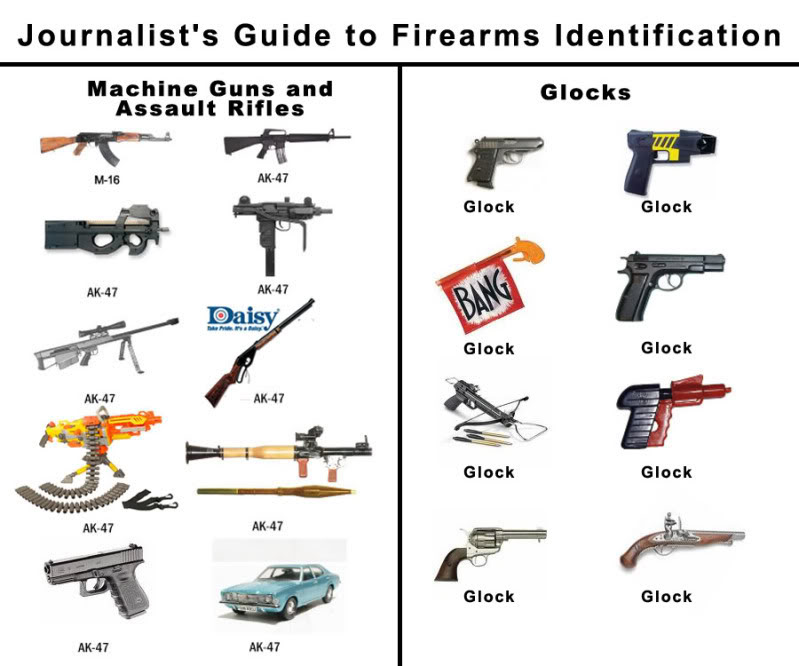
Journalist Jokes, Because well….They Are Journalists

I worked with the press for decades.  The ones I worked with were nice people, but they had to write something that people will read, until now.  Journalists are supposed to (try to) and learn about the subject they are covering. Now they write ridiculous stories and then write the opposite.  They don’t even bother to fact check anymore.  No one reads corrections so they don’t care, and it shows.  I can’t even say this current lot are nice.  If you see below, they aren’t well liked either.

Lately, they have been circling the wagons to cover one side of the political scene or the other together.  They are exposing themselves to the public as to how little they know or how little they want to hide their bias.  A bunch of them just want to jam on the president out of spite, but they are either self-owning or he is swatting them like flies, especially Jim Acosta.

Twitter/Twitchy caught on and now instead of lawyer jokes, it is journalist jokes.  For the most part, this lot deserves what they are getting.  They are now as useless to regular people as celebtards and sports stars trying to give their opinion on something other than their sport.

The hashtag is #JournalistJokes, go see for yourselves.  Here is a list of some as a starter.  Others are more creative than me.

“Three journalists walk into a building. You’d think one of them would’ve seen it.”
“What’s 5 miles long and has an IQ of 30?” “A JOURNALIST PARADE!”
“Three journalists walk into bar and say ‘ouch’ – then write stories about how the bar is racist and phobic.”
“How does a journalist change a light bulb? He holds while the whole world revolves around him.”
And Twitchy’s pick for the winner: “What are the best four years of a journalist’s life? Third grade.”
“Why are there only 2 pallbearers at a ‘journalist’s funeral?” “Garbage cans only have two handles.”
“How do you make a journalist’s eyes light up?” “Shine a flashlight in his ear.”
“What do you call 25 skydiving journalists?” “Skeet.”
“How do you get a one-armed journalist out of a tree?” “Wave to them.”
“What’s the difference between a smart journalist and Bigfoot?” “Bigfoot has been spotted.”
“Why can’t a ‘journalist’ dial 911?” “She can’t find the eleven.”
“What do you do if a journalist throws a grenade at you?” “Pick it up, pull the pin out, and throw it back.”
“What’s the different between God and a journalist?” “God doesn’t think he’s a journalist.”


Hat tip WND

Covid-19, Making Celebtards Irrelevant

From the Irish

Finally we have proof that proves no one cares what people think who pretend to be others for our entertainment or those who play games for gazillions.  They are our distraction and don’t live paycheck to paycheck like the 60% of Americans who do.

The 10 Cannot’s – Inserting Reality Into Today’s Politics (And Woke Culture)

Some sanity and reasonableness should be considered when putting yourself out into the social media universe. Everyone seems to think that it is now their responsibility to tell us how to think, speak and act.

Here are 10 logical statements that are not new, but should have been taught to those who think they should tell us what to do, especially by politicians, the media and celebtards.  I wish George Orwell were alive today to see how right he was when he wrote 1984.

PC culture is ruining our society and frankly is taking the fun out of life for those of us who don’t get offended easily.

It’s time for a lot of people to grow up and act like adults.  Personally, I blame the educational system.  It has a considerable lack of diversity in terms of being able to view all sides of an issue before opening there mouths or post on Twitter, which I now call Hater.  Other platforms are becoming just as bad, but the hate usually starts there.

Rep. Stephen M. Young inserted into the Congressional Record, in 1950, an article from Harper’s magazine, written by a Lincoln scholar, Albert A. Wolman, listing most of the ”Ten Cannots” and other material falsely attributed to Lincoln.

The 10 Cannots:

1) You cannot bring about prosperity by discouraging thrift.

2) You cannot help small men by tearing down big men.

3) You cannot strengthen the weak by weakening the strong.

4) You cannot lift the wage earner by pulling down the wage payer.

5) You cannot help the poor man by destroying the rich.

6) You cannot keep out of trouble by spending more than your income.

7) You cannot further the brotherhood of man by inciting class hatred.

8) You cannot establish security on borrowed money.

9) You cannot build character and courage by taking away men’s initiative and independence.

10) You cannot help men permanently by doing for them what they could and should do for themselves.

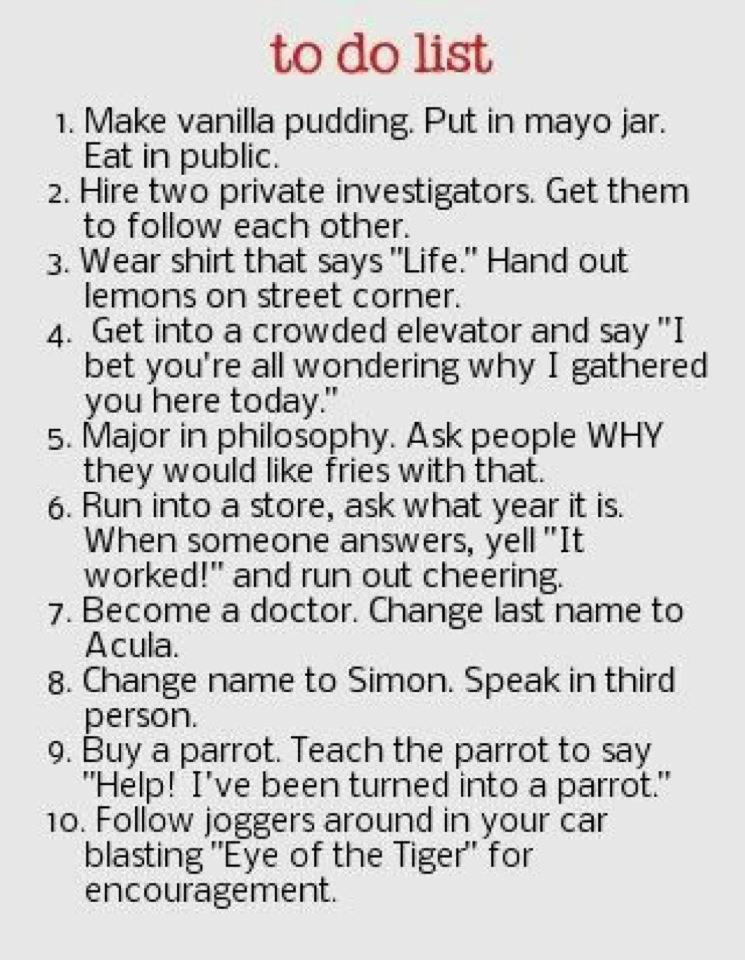
In Honor of My 600th Post, Here Is My To Do List

WordPress says this is my 600th post, but I know I lost the year 2007 when I switched from Blogger to WordPress because I avoid Google whenever possible.  I likely passed it a while back, but they are gone forever now.

I post a lot about IQ, intelligence, Introverts, tech and a lot of subjects that would provide a platform to post something meaningful, deep in meaning , intelligent, well thought out and well written.  As they say, the road to hell….

In that spirit, I give you a to do list that is sarcastic, funny to me and given the mood I’m in as I write this and very appropriate especially since my last name is Simonds (see number 8).

How Racism and White Supremacy Are The New Godwin’s Law

Authors Note: I have a tendency to notice patterns in both a macro and micro universes. I’ve been watching this one brew for a while now.

FIRST, WHAT IS GODWIN’S LAW?

Reformulated in the Net.Legends FAQs “Usenet Rule #4”:

“Any off-topic mention of Hitler or Nazis will cause the thread it is mentioned in to come to an irrelevant and off-topic end very soon; every thread on Usenet has a constantly-increasing probability to contain such a mention.”

It is generally accepted that whoever is the first to play the “Hitler card” has lost the argument as well as any trace of respect, as having to resort to comparing your adversary to the most infamous mass-murdering dictator in history generally means you’ve run out of better arguments. Thus, once such a comparison is made, the thread is finished and whoever mentioned the Nazis has automatically lost whatever debate was in progress. This principle is itself frequently referred to as Godwin’s law.

Disclaimer: This blog post does not take a position on racism, it’s prevalence, who is or isn’t or might be racist and my position on this subject. Aristotle noted that the mark of an educated mind is to entertain a thought without accepting it.  Therefore I am observing a speech and behavioral pattern of the public.  In other words it’s on them, not me.

It is also noted that a trait of people with a higher IQ is that you can argue from multiple perspectives (unfortunately so can lawyers and politicians who may or may not be of higher intelligence – especially politicians and especially millennial politicians).

The original Godwin’s Law has lost its’ sting since everyone is now Hitler, so the new talking point is racism or white supremacy. Rather than argue on the merits of the position of the person (political candidates mostly since they dominate the news) the go to is now calling the other person one of these two pejorative names.  This constant overuse has devalued the meaning of the words and rendered them ineffective at worst and boring at best.

Here is a quick search that shows views from multiple points doing just this:

https://www.google.com/search?source=hp&ei=IXpRXZrPHOqH_Qa9hbr4AQ&q=examples+of+politicians+being+called+racist&oq=examples+of+politicians+being+called+racist&gs_l=psy-ab.3…2240.2240..3652…0.0..0.186.324.0j2……0….2j1..gws-wiz.aEnMfNpKcHc&ved=0ahUKEwja48Tux_3jAhXqQ98KHb2CDh8Q4dUDCAc&uact=5

This is in direct conflict with Martin Luther King’s evocative phrase: “I look to a day when people will not be judged by the color of their skin, but by the content of their character.”  Now, it is common to hear you are a racist or white supremacist because you don’t agree with me.  It greatly devalues MLK’s position.

A General Definition of racism

1a belief that race is the primary determinant of human traits and capacities and that racial differences produce an inherent superiority of a particular race, racial prejudice or discrimination.

While I could list any or all of the comments that have been made in public themselves could be racist in tone, one could make the case for or against whether the accused are really racist. Calling someone a racist is easy but proving most of these ad hominem attacks is harder.

One would need to know what is inside the person making the statements to know if it were really true or just talking points. I won’t and am not even sure if I can make that value judgement. These attacks are easy enough to find (see the media below).

This is not the point of this post. I am not here to call someone a racist or White supremacist (or Hitler), rather to point out a trend.

In the department of redundancy department, this discussion is that the replacement for Godwin’s Law is that you are not Hitler, instead you are racist for whatever reason or whatever you say.

Why is this the case? The overuse of Godwin’s Law has made it impotent in political circles, the media and on social media platforms. Hitler stands with few others in history, perhaps Mao, Stalin or Pol Pot as true villains. Nobody really believes that the other person is like Hitler, they are just trying to make the worst case as they flush their argument down the toilet due to lack of substance.

HOW TO WIN YOUR POLITICAL RACE OR PUT YOUR OPPONENT ON THE DEFENSIVE WITHOUT TAKING A POSITION

What most of the accusers are doing is described in Saul Alinsky’s Rules for Radicals numbers 7-13 as follows:

  • “Keep the pressure on.”
  • “The threat is usually more terrifying than the thing itself.”
  • “The major premise for tactics is the development of operations that will maintain a constant pressure upon the opposition.”
  • “If you push a negative hard and deep enough it will break through into its counterside.”
  • “The price of a successful attack is a constructive alternative.”

Rather than argue on a platform, beliefs and issues, it is far easier to make your opponent defend themselves, and put them off their talking points.

Example: Candidate 1) If elected, I’ll lower taxes if elected (insert any issue here because it’s about to be destroyed).

Candidate 2) my opponent is Hitler and molests collies.

Press coverage: Candidate 1 is a well known collie molester. How long has this person been molesting Collies? The first question in the next debate; Candidate 1, are you still molesting Collies?

Now insert the word racist or white supremacist for molesting collies and you get the point of why this is effective.

  • “Pick the target, freeze it, personalize it, and polarize it.”

HOW THE PRESS BECOMES AN ENABLER

A common adage is that sex sells, as do murders, rapes, political embarrassments and anything not good news. Guess what they will print (hint: collie molester)?

A not so recent trend is that there is a common thread where a preponderance of reporters has similar talking points concurrently. There is a groupthink that causes the media to focus on a particular phrase, word or subject. Like piranha on carcass, they hammer it home. https://www.google.com/search?q=why+do+news+anchors+say+the+same+thing&sa=X&ved=2ahUKEwim9dyQxv3jAhWFB80KHeyQAE0Q1QIoAHoECAsQAQ&biw=1440&bih=825

Since the new go to in Godwin’s Law is you are a racist and/or white supremacist, it makes for headlines that sell advertising. I can also be taken as ideological.  This is the de-facto statement now to the point that it has lost effectiveness.

Having spent decades working with (and against) all forms of media, they have a tendency to take the position of them being right, even if proven wrong. A correction is meaningless as once a statement is printed, it is still in the minds of the reader. Almost no one reads the corrections.

Most are journalists who write about a topic because it is assigned to them.  In the case of social media everyone thinks they have the moral high ground.

SOCIAL MEDIA

I’m not going to spend much time here, because most people have gotten into an Internet argument. Nobody wins unless the motive of one of the combatants is to piss off the other. It won’t matter how factual your argument is because it is just Internet road rage.

If you go to the above link, you see the outcome and great advice on how to handle this.

So the net result of overusing this theme is the same thing that happens with all overuse. Godwin’s Law is becoming meaningless. The definition of what racism really is and when the word should be used to protect the oppressed has been damaged. Even Alinsky’s Rules for Radicals suffers from overuse and tediousness.

The political landscape is a train wreck of who can sling the most mud. Watch the ratings nosedive for upcoming debates.

Stay out of it on Social Media except to observe who isn’t smart enough to stay out of this pool. With each use of the attack, the meaning becomes less valid and meaningful.

I thought about calling someone a racist instead of Hitler the Simonds Law, since I haven’t found this discussion fully hashed out, but I’d rather be associated with something more positive.

Everyone is a loser who engages in this behavior. My advice is grow up or be better educated to discuss your position better than: you are Hitler/racist/white supremacist and whatever the next insult is.

It used to be that to call someone Hitler was the ultimate insult, albeit the indication that the argument is lost.  Has calling them a racist and/or a white supremacist suffered the same fate?

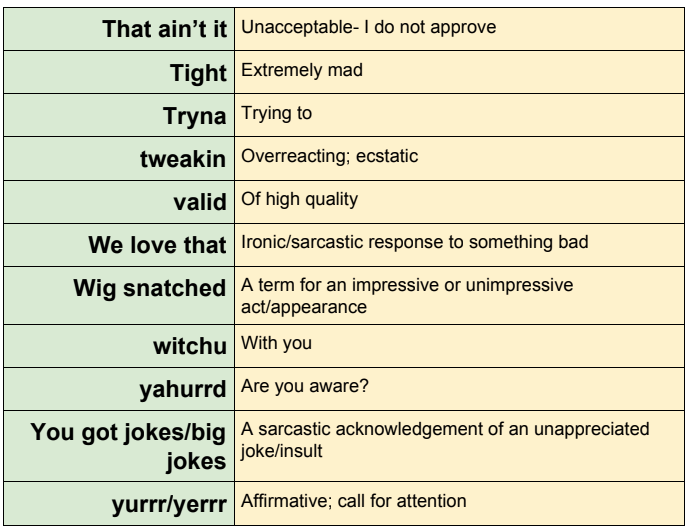
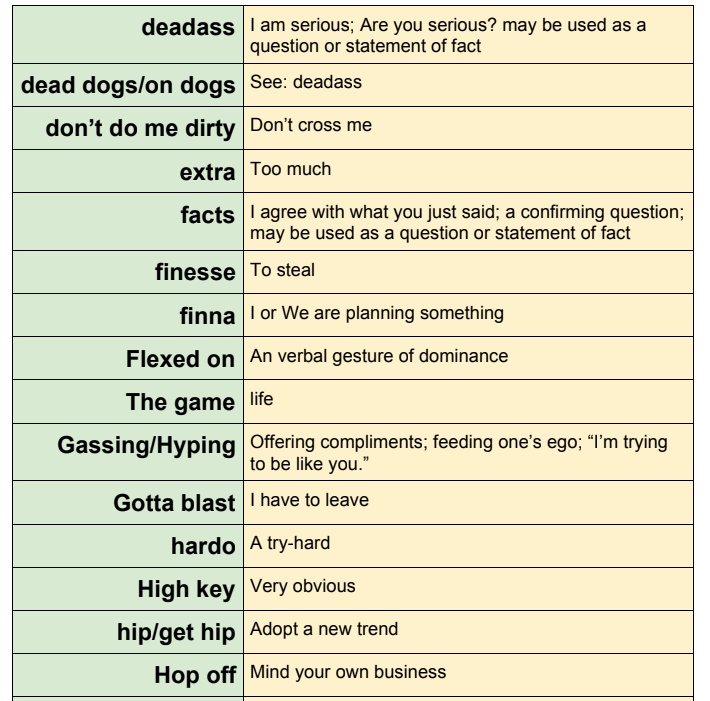
How To Talk To Generation Z Using Their Dictionary

Have you ever wondered what the f&*% the kids are talking about lately?  Do you parents want to decode your kids texts?

Below is the Generation Z dictionary distributed by a Mr. Callahan so I point to him if any Gen Z’ers have a problem with it.


When thinking about this, I’m sure every generation trashes the previous by describing them as not as learned and their improper use of grammar.  I’m also pretty confident that Shakespeare is rolling in his grave as he probably has done for each generation after him.

I’ve put some screenshots below and full link to the dictionary in PDF form to download.

What I fear is these people will be making decisions about my generation in a few years.

To fully honor this generation, I purposely didn’t put it in alphabetical order just to mess with them.

Generation Z Dictionary Link

Common Core Education, Failing our Kids


THE SETUP FOR THE DISCUSSION

I suppose every generation considers the learning of the next generation as inferior to theirs.  If we didn’t, why do millennials eat tide pods?  Why do parents talk about how better their education was and how soft they are on kids today?   There are many reasons for this including prejudice, standards, government intrusion into the learning system and deviation from what made our education system the one that led to more progress, inventions and breakthroughs than any in the history of man.

We’ve now potentially gone backwards and have therefore failed the following generations.

In working with public school kids, I observe that there are many reasons.  People are not equal and some are smarter and learn better than others.  Those with two parent families or with a single parent who is highly integrated in the student’s learning consistently outperform those who don’t.  The system has gone backwards due to interference from do-gooders, government (over)regulation and unions.  Note: that is my observation only.  I see kids rise above the system to achieve, but they have to swim upstream.  Most can coast their way through.

Conversely, children who learn under Classical Education have an advantage in learning as it is taught to a standard the kids must keep up with as opposed to teaching to the lowest common denominator so no one is left behind, penalizing those who could achieve more.

Further, Classical Christian education is an approach to learning which emphasizes biblical teachings and incorporates a teaching model known as the Trivium, which consists of the three stages of grammar, logic, and rhetoric.

Classical education complements a child’s natural development stages. Young children can memorize information easily. So, in the early years, learning is enhanced by songs, body movement, recitation, and exploration. This sets them up for success in their next stage of learning, critical thinking.

The critical thinkers are what companies want to hire.  They look at problems differently and come to the table with better skills for success.

They also have a distinct advantage over the public school system and the below discussion of how we are destroying learning.

WHERE EDUCATION HAS FAILED OUR KIDS

The biggest failure I’ve observed is the Common Core learning system.  It threw away the standards of learning that has proved to produce educated kids by introducing a system that borders on the ridiculous.

It was implemented by those we thought were helping us, yet it may have set us back for years.

Behind a lot of this is none other than Bill Gates, a man I’ve met and have mixed thoughts about.  Microsoft is far more successful than his support of Common Core.

From the American Thinker, I read this snippet:

But Bill Gates should have felt some uneasiness.  Common Core was untested, unproven, and micromanaged by David Coleman, a man with limited credentials but reliably far to the left.  Nobody in the business world launches a big new product without years of research and refinement.  Instead, Common Core was wrapped in $1 billion’s worth of propaganda and dumped on the country as a fait accompli.

The late, great Siegfried Engelmann, a real educator, was asked what he thought of this approach: “A perfect example of technical nonsense.  A sensible organization would rely heavily on data about procedures used to achieve outstanding results; and they would certainly field test the results to assure that the standards resulted in fair, achievable goals.  How many of these things did they do?  None.”

Did Gates realize that Common Core, supposedly a new and higher instruction, incorporates all the dubious ideas from decades prior?  New Math and Reform Math were the basis for Common Core Math.  Similarly, Whole Language and Balanced Literacy were rolled into Common Core’s English Language Arts (jargon for reading).  Constructivism, which prevented teacher from teaching, has been undermining American schools for decades.  Nothing new and higher about these clunkers.

An earlier generation of Gates’s business partners had created so much illiteracy that Rudolf Flesch had to write a book to answer every American’s favorite question: “why can’t Johnny read?”

I don’t hold Gates responsible except for his funding and use of his status to push this, but I hold those who pushed this system on the generation suffering from this learning standard.

The Thinker sums it up like this:

We have to wonder if Bill Gates performed due diligence, that being the care that a reasonable person exercises to avoid harm to other persons or property.  In other words, before putting your business funds to work on anything, you should make yourself an expert.  That’s what we need in this country: everybody becomes an expert.  For sure, nobody should trust the official experts.  If Bill Gates had observed that simple rule, he would still have a billion or two he doesn’t have now.  And the country would have tens of millions of better educated students it doesn’t have now. 

We need to stop this disservice to our kids and have them learn properly, and to learn to think critically.

Here is a video that shows just how far we’ve deviated from the learning system that invented computers, vaccines, technology that has helped mankind and sent men to the moon.  Go to 1:24 under Decompose to see how far we’ve digressed.

CONCLUSION

It would seem the dumping common core and putting real learning would be best for the kids.  The world is getting tougher and we need to give them every advantage possible.


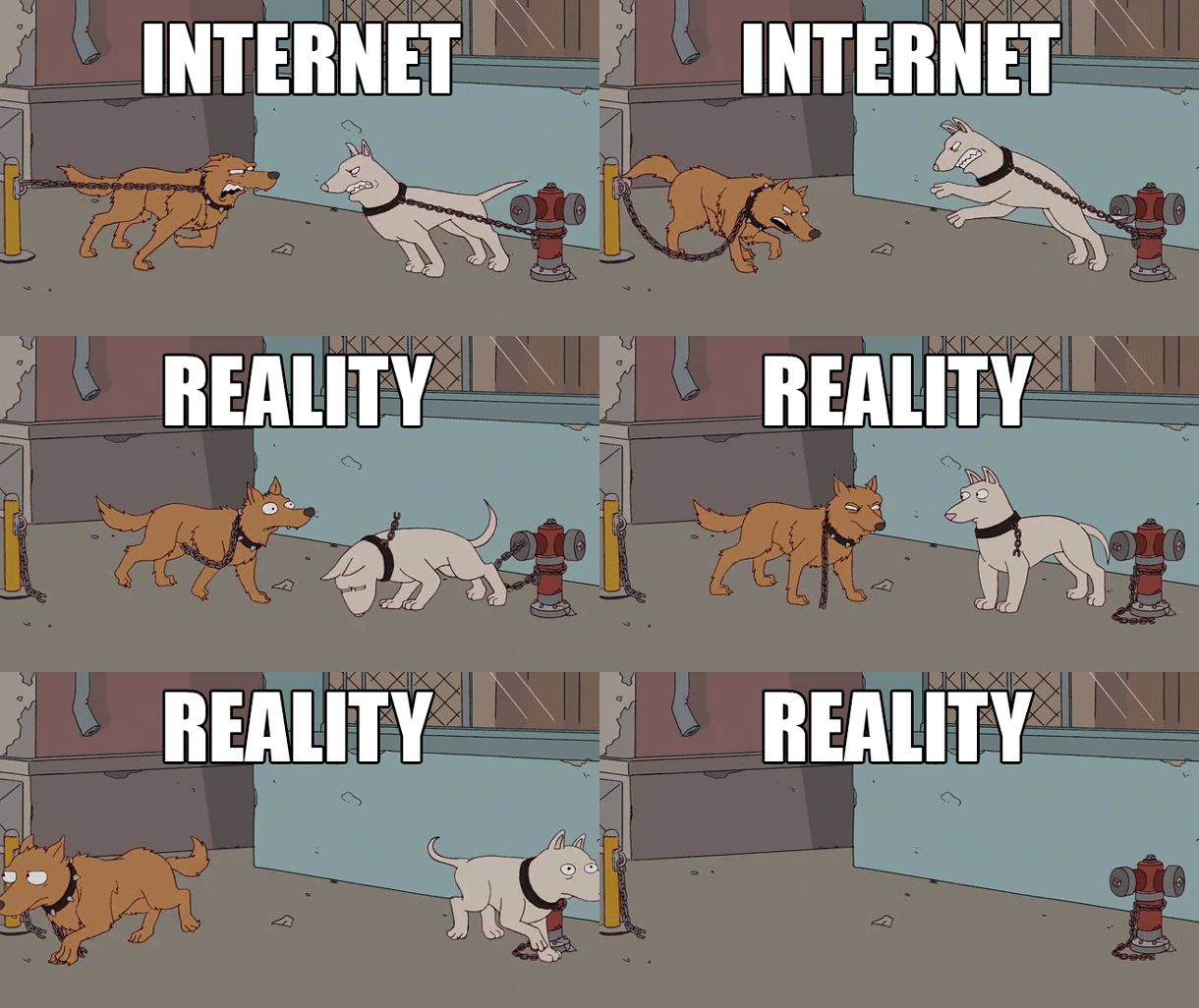
Internet Road Rage, You Are Probably a Coward Hiding Behind The Screen

internet road rageWhat is Internet Road Rage?  My definition is that you are willing to engage in hateful, spiteful language aimed at someone whom you either don’t agree with ideologically/religiously/politically/any excuse to vent, or a counter attack to someone who got on you or your ideas.

Here is the caveat.  You most likely wouldn’t act or speak that way in person or to someone’s face with that tone or language.  Most of you have either more self-decency in person or a survival instinct that would prevent you from getting your ass kicked.

Worse, you could or are likely a Porch Dog, one who barks severely, but is no real threat.  In other words, you yap by tapping the keyboard but pose no intellectual threat.

ACTUAL ROAD RAGE

Most people have road rage inside them.   Here is how it works:

Polite drivers may think that dialogue like that is the territory of deranged, out-of-control, or terrible drivers, and maybe they’re right. But according to a new survey from AAA, most drivers in the United States display signs of road rage. So too bad, you supposedly polite drivers.

The survey, published today, polled 2,705 drivers 16 years old and older about their road rage habits. Seventy-eight percent of drivers—more than three-quarters—reported engaging in some kind of aggressive driving maneuver, including tailgating, yelling, honking, gesturing angrily, purposely blocking another vehicle, cutting someone off, confronting someone, and intentionally ramming another car.

The breakdown of each category was fairly unsurprising. Fifty-one percent of drivers reported tailgating at least once; 47 percent reported yelling at least once; 45 percent reported honking at least once. The more bats**t responses—confronting another driver and ramming another vehicle—polled much lower on the list.

INTERNET ROAD RAGE

There is every flavor in the book, more than I can write about.  It started with email flaming.  As soon as forums or ideological websites like Quora, Instagram, Facebook, The Huffpo, Fox News, etc., etc.  The net of it was that people were able to transfer their hate to others online.  The comments are mendacious, eviscerating and frequently ad hominem attacks that most wouldn’t do face to face.

I call B.S. as  most of those people are cowards and wouldn’t stand up to others in real life.  There are of course some that do speak their minds, but they generally have more of a life than pissing on each other online.

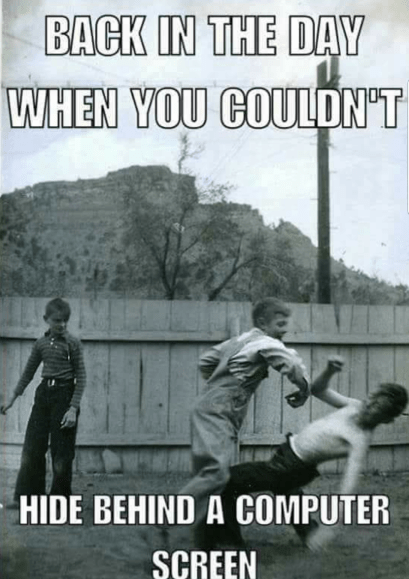
What would the other person do?  Back in the schoolyard days, you say something like what is written almost everywhere now and you’d have to fight.  Most people don’t like to fight and there are a few who know very well how to protect themselves.  I’d even bet that a lot of folks who are right wingers fully explore their second amendment rights.  Who wants to walk into that?  There are some who would be very able to kick your ass and would.

WHY DO YOU DO IT?

I use the word you in its’ plural and direct form.  I’m pointing at everyone who reads this because most of you have crossed the line when someone pissed you off.

The reason is that you envision some curtain of invisibility or invincibility because you are typing to a screen.  You wouldn’t say it in person, or wouldn’t say it that way.  Therefore, you are either a coward or a bully.  Most people lose considerable IQ points when you think this way.

So stop it.  Grow up and act like an adult.  Be big enough to pass over some typed letters of venting.  More than likely, there isn’t enough reason for responses that are so harsh.  Before you type it, imagine saying it face to face and see if you would do it, or risk either your reputation or an ass whooping.

can of whoop ass

How Facebook Causes Depression

Scroll down a few posts and you’ll see other articles I’ve posted that talk about Social Media ruining people’s lives.  It’s their outside daring you to compare, unfortunately to your inside.

Spending too much time on “social media” sites like Facebook is making people more than just miserable. It may also be making them depressed.

A new study conducted by psychologists at the University of Pennsylvania has shown — for the first time — a causal link between time spent on social media and depression and loneliness, the researchers said.

It concluded that those who drastically cut back their use of sites like Facebook, Instagram and Snapchat often saw a marked improvement in their mood and in how they felt about their lives.

Many of those who began the study with moderate clinical depression finished just a few weeks later with very mild symptoms, she says.

The study, “No More FOMO: Limiting Social Media Decreases Loneliness and Depression,” was conducted by Melissa Hunt, Rachel Marx, Courtney Lipson and Jordyn Young, is being published by the peer-reviewed Journal of Social and Clinical Psychology.

For the study, Hunt and her team studied 143 undergraduates at the University of Pennsylvania over a number of weeks. They tested their mood and sense of well-being using seven different established scales. Half of the participants carried on using social media sites as normal. (Facebook, Instagram and Snapchat did not respond to request for comment.)

The other half were restricted to ten minutes per day for each of the three sites studied: Facebook, Instagram and Snapchat, the most popular sites for the age group. (Use was tracked through regular screen shots from the participants’ phones showing battery data.)

Net result: Those who cut back on social media use saw “clinically significant” falls in depression and in loneliness over the course of the study. Their rates of both measures fell sharply, while those among the so-called “control” group, who did not change their behavior, saw no improvement.

This isn’t the first study to find a link between social media use, on the one hand, and depression and loneliness on the other. But previous studies have mainly just shown there is a correlation, and the researchers allege that this shows a “causal connection.”

So I ask, why do you do it to yourselves?  Facebook has a model to make you feel worse while they steal your privacy and track you to sell your profile to everyone and anyone.

California Humor

Here is a little Friday humor, inspired by all the recent going’s on in the news about housing prices, immigration, pot, high taxes, overburdensome government regulation and the usual stuff you read about.

1. Your coworker has 8 body piercings and none are visible.
2. You make over $300,000 and still can’t afford a house.
3. You take a bus and are shocked at two people carrying on a conversation in English.
4. Your child’s 3rd-grade teacher has purple hair, a nose ring, and is named Flower.
5. You can’t remember . . . is pot illegal?
6. You’ve been to a baby shower that has two mothers and a sperm donor.
7. You have a very strong opinion about where your coffee beans are grown, and you can taste the difference between Sumatran and Ethiopian.
8. You can’t remember . . . . is pot illegal?
9. A really great parking space can totally move you to tears.
10. Gas costs $1.00 per gallon more than anywhere else in the U.S.
11. Unlike back home, the guy at 8:30 am at Starbucks wearing a baseball cap and sunglasses who looks like George Clooney really IS George Clooney.
12. Your car insurance costs as much as your house payment.
13. You can’t remember . . . .is pot illegal?
14. It’s barely sprinkling rain and there’s a report on every news station: “STORM WATCH.”
15. You pass an elementary school playground and the children are all busy with their cell phones.
16. Or it’s barely sprinkling rain outside, so you leave for work an hour early to avoid all the weather-related accidents.
17. HEY!!!! Is pot illegal????
18. Both you AND your dog have therapists, psychics, personal trainers and cosmetic surgeons.
19 The Terminator was your governor.
20. If you drive illegally, they take your driver’s license. If you’re here illegally, they want to give you one.

Hat tip to American Digest for this one.

Actual Maps of Where The #Shitholes Are – An A-Polititical Post On Where They Exist

First, I am not going to weigh in on what a world leader has said.  Every time I have ever tried it, nothing is gained as everyone has their own opinion and trying to sway it is not what I care about.  Enjoy your center, left, right or whatever political position you wish.

I was looking for whether this actually exists.  Here is what I’ve found.

UPDATE: Portland is the newest shit hole. Click on the link: Portland: American epicenter of degeneracy, depression, and ANTIFA.

Here is a link and a screenshot of a map from the Rice Institute based showing countries with the most open defecation.

Forbes published a list of the world’s dirtiest cities.  Without passing judgement, they seem to line up with the shitholes in the map so the facts seem to be in order.

Next, is it possible that the United States has places where there is open defecation?  I found that map also.

Below is the link and screenshot also, but in case you don’t recognize it, this is San Francisco.

Now, after reading this, one can add it to their travel plans to go and help, or avoid for sanitary purposes, you choose.  If you go to San Francisco, zoom in and you can see where to not step in a pile of poop.  As I type that, I realize that it is sad for what is supposed to be one of the leading cities of the US, and one so close to silicon valley.

It also gives everyone equal political fodder to take shots at whomever.  In these days of political partisanship, nothing or nobody is safe by the 3rd or 4th comment, so I expect the same.

I just got curious and I wondered if what was said was true or not. Apparently it is.

Here is the link to the recent study of sanitation including feces, used syringes and other disease carrying trash in the heart of San Francisco.  It’s a shame since it is in the heart of the restaurant and hotel area.  You’d think that the tourism officials would do something about this, but looking at the graph indicates the problem escalating.

UPDATE: San Francisco is getting over 80 calls a day to report human feces for clean up.  In the same report were almost as many instances of needles despite the fact that there are safe injection spaces for shooting up an illegal drug that destroys lives.


UPDATE: It turns out that Denver is now officially classified as a shithole also.  They passed an act that you can drop trou and pinch a loaf right on the street.  Here is the story and the reason why they passed the law.

UPDATE: It looks like Hawaii isn’t as pristine as one thinks of it.  The cesspools and the water around the islands are contaminated enough to make it a shithole also.  There is a link within this link that goes to the WSJ.

Video Update: A large portion of Orange county is now a 3rd world shithole also.

After all is said and done, I thought that having to have a map to not step in a pile of human feces makes a city the biggest shithole.  It turns out that I was wrong.

According to the Government services including the EPA, ACS and the Census bureau comes this little gem:

The City that Never Sleeps ranked the highest in three out of five categories, placing it as shittest-city-in-the-nation of 427.9 on Busy Bee’s “dirtiness index.” The next closest competitor for all the wrong reasons is Los Angeles, which has a dirtiness index of 317.8. To complete the top five list, the remaining dirtiest cities are Chicago, Philadelphia, and San Francisco.

So not only do you have to pay way more more to live in these places, they have worse air, bigger rats and more cockroaches, they turn out to be the shitholes that we all thought they were.  Why anyone would choose to live there knowing there?

Indicator That Harvard Might Not Be A Good Place To Study For Intellectuals

This post was supposed to fall in the intellectual category for people to decide if Harvard has the qualities that high IQ people still desire (such as being able to see/argue multiple sides of an issue).  They have managed to ruin any hope of defending both sides of an issue given the updates as you read them below.  I’ll leave it for those who may be on the fence, and wish them the best in their decision.

Original Post Begins Here

If you look at the previous post, you will see some of the traits you might have indicating a high intellect.

One of them is the ability to see and argue from multiple perspectives.  To have this trait, you have to shut out ideological thinking or persuasiveness of others before developing a hypothesis.  Many have preconceived thoughts on a subject, political stance or values influenced by others rather than examining all aspects of a subject.  In other words, they read one side of a subject on the Internet and believe what they want to.  Everyone has a bias, but one needs to come to problems with an open mind and use facts and history to evaluate the solution otherwise you run at least a 50% chance of being wrong.

Harvard has released their list of Fake News sites.  This is a popular subject given the 2016 Presidential election.  If you look at the coverage and predictions of the various news sites, you can come to a conclusion which ones were actually wrong (based on forecasts, coverage and predictions) and if their coverage was biased or indeed “Fake News”.  You have to make up your own mind where you stand on this.  I am not saying their position is necessarily wrong, rather questioning their intelligence.

The list is decidedly one-sided, showing a bias.  This is unfortunate.  Again, readers have to decide if this is correct or not.  No one or news institution is right or wrong 100% of the time.

In fair disclosure, one trait may indicate nothing, or it may be the bread crumb down the trail of truth if they are the institution they claim to be.  Once more, each must reach his or her own conclusion.  I show later in the post how I came to my decision about the title based more on empirical evidence.

Given the perceived prestige that comes with a Harvard degree (note: I did not say education), one would hope that the inflated price for such would be well spent money.  It would appear that their logic in such a one-sided position on what is “Fake News” doesn’t indicate that they show this intellectual trait.  You take a chance where to get an education or where you send your kids.  One just hopes that it is the right decision.  Since almost every decision is a cost/benefit analysis in your mind, one now must question if it is worth it.  Maybe your kid isn’t really an intellectual so the point might be moot.

I realize that you can develop relationships with power people at college that can advance a successful career.  It is not the point of this discussion.  I am merely observing a perceived status and whether it is justified or not.

Worst Update: Harvard is one of the top 10 suppressors of free speech, a further indicator that they are pushing away one of the attributes of intellectuals

Update: Harvard now supports segregation.  MLK would not have wanted this.

Update: Harvard Grad students have organized themselves to start a resistance school.

Update: Students don’t understand the danger of ISIS.

Update: You can now submit a rap album as a senior thesis instead of actual academic work.

Update: Harvard discriminates, avoids meritocracy and endorses legacy of the privileged

Update 2: Apparently, they have now abandoned diversity and have become racist, albeit not in the traditional way.

The grad students, who consider themselves a progressive version of “Dumbledore’s Army,” have enlisted former Obama staffers to teach the class sessions. The syllabus includes readings on “Black-Palestinian Queer Reciprocal Solidarity.”

They have decidedly taken a position of only viewing issues from one side.  One should greatly question the concept of critical thinking ability being taught there.  For those of us who can balance multiple views of the same subject, it is clear that these snowflakes will be under-educated and might be damaged goods in the marketplace of talent.

I formed my own opinion having worked for decades with Ivy League educated employees, albeit somewhat weighted towards Harvard and Columbia.  It was made exceedingly clear by a PR flak who after having worked with a number of Harvard MBA’s stated that they had obviously wasted their money on their education.  We were working for a prestigious company that attracts genius level talent.  She showed remarkable intuition that caused me to further observe the Ivy’s. The majority didn’t last as they had a piece of paper saying that they should be smart, but lacked an education in people or the understanding that life is a series of challenges and hurdles.

Some of the most successful executives and workers I’ve encountered didn’t rely on their degree in school, rather what they learned in life and how they applied it to the next problem.

While history reveals that many leaders and intelligent people came from Harvard, the direction they are heading and the principles that they now uphold should add some cost to the side of the cost/benefit decision making process.  I hope it’s worth it if you choose it as your place for an education.  You will apparently get an institution that has a bias.

How Meetings Are a Waste Of Time and How To Avoid or Get Out of Them

facepalm  I read a WSJ article on ineffective meetings.  It is about the manifesto to end boring meetings.

This brought back thousands of hours of meetings I wished I could have back or would certainly decline to attend had I realized what I know now.  Most of this post is tongue in cheek unlike the WSJ, but I’ll bet everyone wishes they weren’t in so many meetings.

First, let me start out with some quotes I found from The Quote Garden, starting with the one that reminded me most of the meetings I’ve attended:

A committee is a cul-de-sac down which ideas are lured and then quietly strangled.  ~Barnett Cocks, attributed

worfgif

A committee is a group that keeps minutes and loses hours.  ~Milton Berle

To kill time, a committee meeting is the perfect weapon.  ~Author Unknown

If you had to identify, in one word, the reason why the human race has not achieved, and never will achieve, its full potential, that word would be “meetings.”  ~Dave Barry, “Things That It Took Me 50 Years to Learn”

Our age will be known as the age of committees.  ~Ernest Benn

If Columbus had an advisory committee he would probably still be at the dock.  ~Arthur Goldberg

A committee is an animal with four back legs.  ~John le Carré, Tinker Tailor Soldier Spy

It is impossible to imagine the universe run by a wise, just and omnipotent God, but it is quite easy to imagine it run by a board of gods.  ~H.L. Mencken

A “Normal” person is the sort of person that might be designed by a committee.  You know, “Each person puts in a pretty color and it comes out gray.”  ~Alan Sherman

A committee is a thing which takes a week to do what one good man can do in an hour.  ~Elbert Hubbard

A camel looks like a horse that was planned by a committee.  ~Author Unknown

A committee is a group of the unwilling chosen form the unfit, to do the unnecessary.  ~Author Unknown

If you live in a country run by committee, be on the committee.  ~Author Unknown

Could Hamlet have been written by a committee, or the Mona Lisa painted by a club?… Creative ideas do not spring from groups.  They spring from individuals.  The divine spark leaps from the finger of God to the finger of Adam.  ~Alfred Whitney Griswold

We always carry out by committee anything in which any one of us alone would be too reasonable to persist.  ~Frank Moore Colby

I don’t believe a committee can write a book.  It can, oh, govern a country, perhaps, but I don’t believe it can write a book.  ~Arnold Toynbee

There is no monument dedicated to the memory of a committee.  ~Lester J. Pourciau

Any committee that is the slightest use is composed of people who are too busy to want to sit on it for a second longer than they have to.  ~Katharine Whitehorn

Meetings are indispensable when you don’t want to do anything.  ~John Kenneth Galbraith

People who enjoy meetings should not be in charge of anything.  ~Thomas Sowell

AND OF COURSE, THERE IS BRADLEY’S BROMIDE: “If computers get too powerful, we can organize them into a committee — that will do them in.”

I WORKED FOR “THE” MEETING COMPANY
I worked a large part of my career either for or with IBM, which many have joked that it stands for I’ve Been in a Meeting. I could have been years more productive and retired earlier if it hadn’t been for all of the meetings I’ve spent time in.  Projects would have been completed weeks in advance were it not for meetings.

Usually, the meetings were a way to get other people to do your work for you, or to assign work to others they wouldn’t do or volunteer for were it not for the fact that they were at a meeting.  The only time this didn’t work was when I actually needed to get a speaker for a press briefing for an interview with Time Magazine when print media was important.  His manager, John Callies then VP of Netfinity or X series at IBM(x86 servers), wouldn’t let the speaker leave the staff meeting stating, “it’s only your job” as the reason.  See how manage executive ego’s for more on this. I’d have never imagined having to cancel an interview with what was then an important publication due to an executives’ ego. I’ve seen bad manager moves in my time, but this was top 10 worst of the worst for me.  He still ranks as the number one suit I’ve ever worked with.  The below meme was how it felt to be in a meeting with him.

Execs have also had meetings in places that they wanted to visit (click on the link to see who it is), and most people knew that.  That was a waste of travel time and money for a wasted meeting. There were other reasons they had meetings, but read the quotes at the beginning to find out why said were held.

Avoid training meetings, unless it was a way to be busy during a meeting you want to avoid.  This is especially true of diversity training.  It is a waste of time (same exact meeting every time every year for the required legal reason) but is more important than almost any other meeting, so it serves 2 purposes.  No one will go against diversity training for fear of being politically or legally incorrect.  It does allow you to miss another meeting and no one pays attention anyway.  It’s an opportunity to get work done while the training is going on in the background.  Your attendance is recorded so you are twice as effective as you complete your work, earn your mark for training and ignore the same speech you went through last year all at the same time.

MEETING RULES TO SURVIVE

The best way to deal with a meeting is to avoid it.  If you can already have a meeting at a time that the scheduler proposes it or be busy and/or somehow away or out of the office.  Teleconferencing kills that strategery  unless you can be found traveling, but sometimes it’s unavoidable (see how to get out of a meeting below if you have to go).  The people calling the meeting are really only people who want the meeting anyway.

For things to do to avoid meetings or how to goof around during a meeting, go to the link How to goof around at work.

HERE IS MY RULE WHEN TO DECIDE TO ATTEND IF I HAD A CHOICE: if there were more than 4 people, don’t go.  Nothing will get done other than resulting in another meeting to have to attend.  This is especially true if there are more than 1 executives, as each brings a team of competing players who guarantee the death of productivity.

The WSJ agrees with me, but goes on to say that if it has 17 people, there is no chance anything will get accomplished.
Don’t speak at a meeting if possible. It usually wastes time and extends the meeting length.  There are only a couple of people who really have something to contribute, the rest want to hear themselves talk, show off their PowerPoint skills to bore you, or think they are more important if they speak.  These show offs can be  insufferable, but they offer time to check your email at best while pretending to listen.

This is in the department of redundancy department, but it is so important to note is to be careful when attending because the meeting leader’s purpose is to assign their work to others or get people to do work they wouldn’t do because they can’t decline in public (this is a corporate tradition).  This further kills your ability to be productive at your real job.  There are some who want to look important by accepting work magnanimously to show off, thinking they were climbing the ladder.  Gladly accept their offer as most people have 10 hours of work for an 8 hour day anyway. Only accept it if it produces revenue or if you are the only one qualified to do it, but generally don’t, especially if you perceive it as a make work project.

Especially avoid planning meetings.  A meeting to plan another meeting is one to be skipped unless you are the project manager and called the meeting, then you have to do it.  Avoid these at all costs.  Once nobody shows up, the meeting gets cancelled for email updates, which is a far better use of your time.  As my grandfather said, they are as common as pig tracks and as useless as teats on a boar hog.

Avoid staff meetings.  These are like planning meetings, but they occur regularly and when you miss one, nobody really cares (especially if there are more than 4 people). Only attend them occasionally as you work with these people everyday anyway, it’s not like you don’t know what is going on.  Email your boss on a regular basis with your activity and you can plan something more productive during that time.

HOW TO GET OUT OF A MEETING

The tongue in cheek part really goes here.  I’ll bet there are folks out there far more creative about this than me.

My favorite methods are to have a customer who needs you.  They are your business and that overrides almost everything.  Even your boss can’t deny this.

Pre-plan an emergency.  I occasionally had another employee phone or knock on the door to call me out (email or text isn’t as good as that is not public enough) to get you out of a meeting.  The trick is to never return. You’ll get the notes anyway, I promise. Since I worked with the press and analysts, I sometimes had a co-worker say that a reporter needed me right now.  They were my customer and no one could say no.  Many times there was no real emergency even if the press did call, it was the best and most efficient use of my time to leave the meeting so as to be actually working instead of being at a meeting.  I usually dealt with the press immediately unless I had to do some digging to get back to them.

Attend meetings by phone if possible.  You can always put the phone on mute and get your real work done, or surf the web or watch TV, which is usually just as productive.  It’s easier to go to the bathroom, which brings me to…

Go to the bathroom.  Offer to get a water to others when you go, then take as much time reading the sports page in the stall as you can.  You are just as productive as listening to someone prattle on about their project.

Send your meeting information in by proxy.  See above where someone is willing to talk.  Give them your results or input so you don’t have to be there.

 THE KIND OF MEETING TO HAVE

I realize that some meetings are necessary, so I understand that it’s the only way to get some things done.  For the other majority of the time, see above.

The best meeting is a hall meeting.  You run into the person you need help from and in 5 minutes, you’ve explained your need, what they can do and your time frame for doing it.  Problem solved.

I also recommend having meetings with introverts and/or men.  They don’t like to talk much (most of them) and want to get it over as quickly as you do.  Attire requirements are less of a priority as is small talk.

Here is the net net, don’t go to a meeting if you don’t have to, get out early if at all possible and above all, don’t speak unless you have no option.  Consider it a victory if you don’t attend, or a minor victory if you have to attend but don’t come out with anyone else’s work. You are a complete failure if you open your mouth and double your workload on something that is not tangential to your job or career.  Enjoy your job more by having the time to actually be productive.

December 7th, 1941; Sex, Drugs and Incompetency In Washington

pearl202a1.jpgRevelations of what happened leading up to and following this tragic day inform us of  a backstory of the events that took place in Washington.

Let me go on record to state that I am patriotic and an avid admirer of what the men of our nation did to overcome the tyranny of the Japanese and Germans in WWII.  If you click on the military category of my posts, you will see that when I get cut, I bleed red, white and blue.  I believe in the greatness and considerable achievements of the United States as well as it being the largest contributor for the betterment of others by any country in history.

However, as an amateur historian and an observer of the (in)competency and motives of bureaucrats  in Washington, what our government did leading up to and on that day shows the weaknesses of humans. It should be noted that the Americans and more especially the soldiers who fought the war are held as honorable in my opinion.  This post is not written to tear down any of the bravery accomplished during the war.  They fought valiantly and protected freedom with the Allies.

This event brought together the country so that good overcame evil and I have the utmost respect for what was accomplished in that war.

Much of this was inspired by “History Honors Pearl Harbor” on the History Channel as well as other documented sources.

A historical documentation and the actual speech can be found here.

Incompetency

America was woefully unable to protect itself by December 6, 1941.  It is not unlike today, December 7, 2016, as our current military has been decimated, or the decay of the military before the 9/11 Islamic terrorist attacks on the World Trade Center Towers by the administration in charge during the decade of the 1990’s .

On the day of the attack, Roosevelt was viewed by his son as frozen at times because of the thought of what it would do to his legacy.  Just like the 42nd and 44th president, their legacy was more important than the nation.  The worst attack on American soil would be under his watch and he would be unprepared to deal with it.  Fortunately, by 8 am on 12/9/41, brave young men around the country were lined up at the draft offices, but it would take the monumental effort of the country to overcome the government’s lack of responsibility to have a force that could protect our borders.

Next was the communications between Pearl Harbor and Washington.  Roosevelt couldn’t get information about what was happening.  Granted, the communications infrastructure was not what it is today, but there weren’t even secure lines or even direct lines to Washington. The Naval commander in Hawaii who tried to communicate information to the Chief Naval officer Admiral Stark at the War Department couldn’t give specifics as he wasn’t sure if the Japanese were listening in.

Further, the American leadership greatly underestimated the mental acuity of the Japanese thinking that they weren’t technologically capable of such an attack.  It was speculated that the Germans had given them assistance.  Hitler later admitted he had no idea that the Japanese were planning to, or had attacked Pearl Harbor despite what was taught at Faber College.

Douglas MacArthur couldn’t be reached in the Philippines for most of the day.  General Marshal of the Army tried for the better part of the day to warn him of the happenings in Hawaii and to prepare for a similar attack.  Washington wasn’t sure of where he even was or if the Japanese had already attacked.  MacArthur boasted that he had special insight into the oriental mind. When he finally was reached, his response was that he was on full alert and that “We are ready, we have our tails in the air”.  History documents that the Japanese attacked and drove him out of the Philipines shortly thereafter as MacArthur did virtually nothing and lost the islands in an embarrassing defeat.  He was woefully unprepared, but his ego wouldn’t let him admit it.

Finally, the government couldn’t spend more than $750 on an automobile so they couldn’t get a bullet proof car for the President to be transported from the White House to the Capitol to give the speech.  The Treasury Department had confiscated Al Capone’s car earlier so that one was used instead as they couldn’t be bothered to have proper protection for the leader of the free world.  That would haunt Washington as recently as November 22, 1963.

Roughly 6 hours after the attack, FDR approved Executive Order 9066 which imprisoned 92,000 Japanese to internment camps for no reason other than their might be a fifth column attack within.  It was supposed to be limited in scope to arrest any spies but morphed into what was one of the lowest points of FDR’s term of leadership.  Little to no evidence is ever recorded that there was any treason on their part and no one was convicted of espionage or disloyalty.

They were deemed guilty rather than innocent in one of the greatest acts of prejudice by an administration.

MORE INCOMPETENCE AND DID WASHINGTON KNOW ABOUT THE ATTACK BEFOREHAND?

As I’ve stated, I’m not a conspiracy theorist, I am for facts.  FDR ordered an investigation headed by Supreme Court Justice Owen Roberts of the attack 18 days after the attack.  Some interesting things were revealed.  You can read further about it in the book A Matter of Honor, Betrayal, Blame and a Family’s Quest for Justice.

Admiral Kimmel, head of the Navy in the Pacific had asked Chief of Naval Operations Harold Stark six months before the attack to keep him apprised of latest intelligence regarding what the Japanese were up to.  Washington knew that Pearl Harbor was vulnerable to attack as early as November 1940.

Stark held back the information that aerial torpedos capable of being deployed in waters shallower than at Pearl were being used, despite Stark reassuring Kimmel that the water in the harbor was too shallow for a torpedo attack.  How this wasn’t an act of treason is curious.

The FBI had intercepted information that the Japanese had made inquiries as to the depth at Pearl and whether anti-torpedo nets had been deployed there, but again Kimmel was never informed.  Not sharing this with the command was grossly incompetent or an act of political chess.

Code-breaker Lawrence Safford visited Kimmel after he had resigned.  He then told Kimmel about project Magic that broke coded Japanese diplomatic messages.  Washington failed to inform Kimmel what they knew prior to the attack. It reveals the Japanese had spies informing the Imperial Forces where the exact location of the ships anchored as recently as 3 months before the attack.  The code breakers who discovered this in Magic was only shared by as few as 10 men who couldn’t or wouldn’t tell anyone else.  It was a power play by political operatives in Washington instead of military strategists who would have warned the fleet in Oahu and had the capability to defend against a surprise attack.

A message to the Japanese embassy was decoded instructing them to move to negotiations that had to be completed by 11/5/41, or things will happen automatically beyond that.

The Japanese fleet set sail on November 25th.  There was no turning back at this point.

FDR was aware that the Japanese were going to break off negotiations and 10 days prior to the attack, Admiral Stark issued a warning that there could be an attack, unfortunately not mentioning or notifying the Hawaiian Islands that they were a possible target.

Three hours prior to the attack, Stark received a message that indicated what was about to happen but failed to notify Kimmel.  By the time the message was placed into Kimmel’s hands, it was 8 hours after the attack and was not marked priority.

The intelligence was available, but Washington failed to connect the dots.

I hope that the administration which has meandered it’s way around the safety of our country hasn’t set the table for a repeat by those who have lost their respect for our capability to defend ourselves.

SEX

Missy LaHand, FDR’s assistant for 21 years contacted him on December 7th.  She was closer to the president than Eleanor during that time, some speculate in many ways other than a secretary.  With everything that was going on, the last thing he needed was to hear from a woman he’d had a relationship with.  Eleanor allegedly pushed for a divorce after discovering hat FDR had an affair with her social secretary,  so the last thing he wanted to do was push the envelope unnecessarily by contacting her.  With the decisions that would change the world in front of him, all he needed was additional drama from his wife and another woman.  He decided not to return her call from Warm Springs where she was recovering and it devastated her so greatly that she attempted suicide shortly thereafter.  Presidents have had trouble keeping their pants zipped.

As a side note, but belonging in the sex category, Edward R. Murrow interviewed FDR that night.  Not that it has anything to affect the situation, Murrow carried on a wartime affair with Churchill’s daughter-in-law Pamela Digby Churchill when he was a reporter in London.  He had a close relationship with the Leaders of the Free World and an even closer relationship with some of their relatives.

DRUGS

Roosevelt had a chronic sinus condition from which he suffered most of his life.  Shortly after the attack, he had a headache and was congested, so he was wheeled into the office of his physician, Dr. Ross Macintyre where he was treated with cocaine.  It can be argued that it may have affected his decision-making that day.  Since it was legal, it wasn’t an issue.  Drugs used to be a political show stopper until Obama, who admitted he snorted it got elected.

ROCK AND ROLL

Fortunately, the attack woke up the nation and kick-started the industrial might the US.  Some of the greatest human, scientific and technological achievements happened during the war.

Most important though was the lesson on how wars should be fought and won, something that has been lost on the leadership today.  You fight to win and settle only  for unconditional surrender.  At that point, you set the terms of how the relationship will proceed.  Germany and Japan have become industrial and world leaders, built up by the USA after the war unlike Vietnam and the middle east where our troops were strangled by congress rather than let soldiers fight the war.

Women Now Swear More Than Men

flashing-updateA unique survey of the swearing habits of men and women over the past 20 years has revealed that not only is the English language constantly discovering new ways to be rude, but women are using the f-word more often than men.

According to the Times from this link, women (mostly British in this study, but listen to YouTube to realize the U.K.  doesn’t have the patent on this) have potty mouths now worse than men, except for maybe James Governor.  The study, conducted by researchers from Lancaster University and Cambridge University Press, also found that women were ten times more likely to say s–t than men.

But it wasn’t always this way. According to studies from the early 1990s, men used ‘f–k’ 1,000 times out of every million words they said; while women said it 167 times.  They should get a better vocabulary I guess.

I’ll speculate that men have been told to watch their mouths and women think that it makes them empowered.  In reality, unless you are very creative with your speech patterns, it’s not very linguistic to speak like this.  It’s not like everyone hasn’t thought it or said it, but to legitimize it on this scale is disturbing.  It also brings down a population segment.

I also find women with higher IQ’s use considerably less foul language than wannabee’s.  Conversely, celebrities and entertainers seem to be trying to legitimize this type of speaking.  It seems that the female politicians have taken to this trend also.

Maybe that’s why there is an attraction to intelligence?

You all should be ashamed of yourselves. 😉


Vocabulary Tricks Dumb People Use to Sound Smart – Also A Good Meeting Bingo List When You Are Bored

I have heard most of these 89 sophisticated clichés that typically form the trick vocabulary of such people, almost always by management, whom I’ve indicated:

Note: these are also meeting (BS) bingo words when you are bored. Please let me know if anyone is ever in a meeting that can cross off all of these words.

One of my favorite sayings is: A meeting is a cul-de-sac where ideas are strangled and usually eliminated.

1. It’s a paradigm shift = I don’t know what’s going on in our business. But we’re not making as much money as we used to.

2. We’re data-driven = We try not to make decisions by the seat of our pants. When possible, we try to base them in facts -SC.

3. We need to wrap our heads around this = Gosh, I never thought of that. We need to discuss that….SC

4. It’s a win-win = Hey, we both get something out of this (even though I’m really trying to get the best from you)

5. ROI [used in any sentence] = Look at me, I’m very financially minded, even if I never took any finance classes in school

6. Let’s blue sky this/let’s ballpark this = Let’s shoot around a bunch of ideas since we have no clue what to do

7. I’m a bit of a visionary = I’m a bit of an egomaniac and narcissist EB

8. I’m a team player/we only hire team players = I hope everyone on the team thinks this is a meritocracy, even though I’m the dictator in charge EB

9. Let’s circle back to that/Let’s put that in the parking lot/let’s touch base on that later/let’s take this off-line = Shut up and let’s go back to what I was talking about

10. We think outside the box here/color outside the lines = We wouldn’t know about how to do something innovative if it came up to us and bit us in the behind

11. I/we/you don’t have the bandwidth = Since we cut 60% of our headcount, we’re all doing the job of 3 people, so we’re all burned out

12. This is where the rubber meets the road = Don’t screw up

13. Net net/the net of it is/when you net it out = I never studied finance or accounting but I sound like someone who  can make money if I keep talking about another word for profit

14. We’ll go back and sharpen our pencils = We’ll go back and offer you the same for 20% less in hopes you’ll buy it before the end of the quarter – RA

15.  It’s like the book “Crossing the Chasm”/”Blue Ocean”/”Good To Great” / “Tipping Point” / “Outliers” = I’ve never read any of these books but I sound literate if I quote  from them. And, besides, you cretins probably never read them either to  call me out on it

16. Let’s right-size it = Let’s whack/fire a bunch of people – RA

17. It’s next-gen/turn-key/plug-and-play = I want it to sound so technical that you’ll just buy it without asking me any questions

18. We need to manage the optics of this = How can we lie about this in a way people will believe?

19. This is creative destruction = I’ve  never read Joseph Schumpeter but our core business is getting killed so  it’s your responsibility to come up with a new product the market will  buy

20. We don’t have enough boots on the ground = I don’t want to be fired for this disastrous product/country launch,  so I’m going to sound tough referring to the military and say I don’t  have enough resources

21. Deal with it = Tough cookies – SC

22. By way of housekeeping = This makes the boring stuff I’m about to say sound more official

23. That’s the $64,000 question [sometimes, due to inflation, people will denominate this cliché in millions or billions of dollars] = I don’t know either

24. Let’s square the circle = I’m someone who can unify two team members’ views and sound important

25. It’s our cash cow/protect/milk the cash cow = If that business goes south, we’re all out of a job

26. It’s about synergies/1 + 1 = 3 = I don’t get the math either, but it sounds like more and more is better, right?

27. Who’s going to step up to the plate? = One of you is going to do this and it’s not going to be me

28. We’re eating our own dog food = It sounds gross but we seem like honest folks if we do this.

29. We need to monetize/strategize/analyze/incentivize = When in doubt, stick “-ize” on the end of a word and say we’ve got to  do this and 9 out of 10 times, it will sound action-oriented.

30. We did a Five Forces/SWOT analysis/Value Chain analysis = We didn’t really do any of that, but none of you probably even remember Michael Porter, so what the heck

31. It was a perfect storm = We really screwed up but we’re going to blame a bunch of factors that are out of our hands (especially weather)

32. At the end of the day…. = OK, enough talking back and forth, we’re going to do what I want to do  – LS

33. Who’s got the ‘R’? [i.e., responsibility to do what we just spent 20 minutes talking about aimlessly] = If I ask the question, it won’t be assigned to me

34. Let’s put lipstick on this pig = plug your nose

35. I’m putting a stake in the ground here… = I’m a leader, simply because I’m using this cliché

36. We’re customer-focused/proactive/results-oriented = That can’t be bad, right?  This is motherhood and apple pie stuff

37. Our visibility into the quarter is a little fuzzy = Sales just fell off a cliff

38. That’s not our core competency/we’re sticking to our knitting = We’re just glad we’re making money in one business, because we’d have no clue how to get into any other business

39. Well, we’re facing some headwinds there = You put your finger on the area we’re panicking over

40. It’s a one-off = Do whatever they want to close the sale

41. Incent it = That’s not a verb but I just made it into one because I’m a man/woman of action

42. I’m an agent of change = This makes it sound like I know how to handle the chaos that our business is constantly going through

43. We’ve got to do a little more due diligence there = Don’t have a clue but does that legal term make me sound detail-oriented?

44. Don’t leave money on the table = Be as greedy with them as possible

45. We take a “ready, fire, aim” approach here = We totally operate on a seat-of-the-pants basis

46. Hope is not a strategy = I don’t have a strategy, but this makes it sound like I’m above people who also don’t have a strategy – BO

47. We have to tear down the silos internally = Our organizational structure is such a mess that I’m going to be under-mined by other departments at every turn

48. I don’t think it will move the needle = This won’t get my boss excited

49. Good to put a face to the name = I’d really rather talk to that person behind you

50. Let’s take the 30,000 foot view… = I like to think I see the big picture

51. It’s the old 80-20 rule = I really have no idea what the rule was, but I just want to focus on the things that will make us successful

52. We need to manage expectations = Get ready to start sucking up to people – AL

53. It’s not actionable enough/what’s the deliverable? = You guys do the work on refining the idea. I’m too tired.

54. My 2 cents is… = This opinion is worth a heck of a lot more than 2 cents

55. I’m going to sound like a broken record here… = I want to clearly point out to you idiots that I’ve made this point several times before

56. We’ve got too many chiefs and not enough Indians = I want to be the Chief

57. Going forward = Don’t screw up like this again – AL

58. My people know I’ve got an open door policy = I’ve told my direct reports to come to me if they have a problem, so  why should I feel bad if they complain I’m too busy to talk to them?

59. It’s gone viral = Someone sent a tweet about this

60. I know you’ve been burning the candle on both ends = Get ready to do some more

61. It’s scalable = We can sell a lot of it in theory

62. It’s best-of-breed = We hired a market research firm to say that – too many – SC

63. We’re all about value-add = Unlike our competitors who seek to add no value

64. What’s our go-to-market? = Has anyone planned this out, because I’ve been too busy? SC

65. I’m drinking from a fire hose right now = I want a little sympathy over here, because I’m tired of carrying this company on my back

66. We’re getting some push back = They’re not buying it JB

67. We need to do a level-set = I’ve never been inside a Home Depot, but this phrase makes me sound handy

68. It’s basic blocking and tackling = How could you screw this up? I also played high school football and those were the best days of my life.

69. Let’s put our game faces on = Get serious, guys

70. We’ve got it covered from soup to nuts = I have no idea what that means, but don’t you dare question my prep work on it

71. We don’t want to get thrown under the bus = So let’s throw someone else first – RGorman

72. But to close the loop on this… = Always the more theoretical Business Development/Strategy guys who say this, so they can sound thorough

73. What are “next steps”? = Did anyone take notes during the last 90 minutes of this meeting?

74. This is low-hanging fruit = Get this done quickly

75. We need a few quick wins = We’ve got to trick people into thinking we know what we’re doing by some successes we can point to and claim as ours DHP

76. It’s a [Insert Company Name] killer = Did I get your attention yet with the Freddy Kreuger imagery associated with the company who’s currently eating our lunch? SC

77. I want to address the elephant in the room = I know you think I’m trying to cover up/gloss over something, so I might as well talk about it

78. This is the next big thing/new thing = Some of our 20-somethings have told me this is really cool

79. This time it’s different because… = Don’t wait for the explanation… simply run for the hills.

80. What are the best practices on this? = How can I cover my behind that we’re just doing stuff the way other good people have supposedly done this?

81. This is our deliverable = I know this sounds like something that comes in a body bag, but it makes our PowerPoint sound tougher than it actually is

82. We’ll loop you in when we need to = You’re not that important to know about all the details on this

83. We want this to move up and to the right = I failed high school algebra but someone said this means we’ll be making a lot of money if this happens

84. We’re going through a re-org = No one knows what the heck is going on at the moment, we’re going to lay off a bunch of people.

85. We’ve got to increase our mind-share with the customer = I think I would have been happier as a doctor doing lobotomies than in marketing as a career path

86. I don’t think you’re comparing apples to apples = Let me tell you how you should really think about this issue = DHP

87. Let’s peel back the onion on this = I want to sound thorough so this is a better way of telling you that than simply clearing my throat

88. You phoned it in = I was too busy checking my email during your presentation that I didn’t listen _ JC

89. I want you to run with this = I just threw you into the deep end of the pool and you’re on your own to figure it out -JC

Where Have You Gone Al Gore? #climatechange and #globalwarming Are Calling You On the Day You Predicted The Doom of the Earth

al gore doomsday clockIn the song Mrs. Robinson is a line that states, Where have you gone Joe DiMaggio?  I wondered the same about Al Gore.  He went from front page man on global warming to I don’t hear anything about him anymore on #AGW.  I wondered where he went and why?

It’s ironic that the biggest snow storm to ever hit NYC on the weekend of his predicted destruction instead of the Statue of Liberty being under water.

al gore effect

There is a famous statement that goes: Where your treasure is, so will your heart will be also.  I thought his heart was with global warming, but he’s no where to be found, so I looked for what his treasure was. If it wasn’t really global warming, what was it?

He enrolled in Divinity school so it appeared that he was looking for his treasure from God, but he didn’t finish his degree either.  So what has he been chasing his whole life, really?

The rest of this post is merely an observation based on his actions throughout the years.  Some will disagree, others will identify and most won’t care.  No judgement is being passed, merely a commentary on the general state of man with the public record as documentation.

If you disagree or want to get into an ideological debate, please see the comments policy on the right.

Note from Investors Business Daily on the end of the earth:

According to Anthony Watts, one of the most trusted sources on Climate issues, “While preening at the Sundance Film Festival in January 2006 during the premiere of his An Inconvenient Truth fib-umentary, Gore made his grand declaration. The former vice president said, in the words of the AP reporter taking down his story, that unless drastic measures to reduce greenhouse gases are taken within the next 10 years, the world will reach a point of no return.” In Gore’s own words, he claimed we were in “a true planetary emergency.”

Further on December 13, 2009, he predicted that the Arctic would be ice free in 5 years.  

10 years later, there has been no measurable change in the Arctic ice.  As with most of the climate predictions, it was based on prediction models.  Anyone who has watched the weather knows that it is rarely right 5 days from now, let alone 5 years from now, yet he sold this snake oil and it was drunk by many or used as a political tool.

HIS EARLY TREASURE

It is common knowledge that he was funded by coal and tobacco, but people repent and so I supposed this was the case also.  As of the latest search, he still hasn’t sold his fortune in Occidental stock and dividends he receives.  It is nebulous as to whether he has or not, so we’ll give him a pass on it, although he’s  earned $500,000 from zinc royalties (which causes environmental issues to produce) as of the last documented tax return that is public. Perhaps it is a legal reason that prevents him from selling this asset.  Armand Hammer, the head of Occidental was well known for his communist ties to the Soviet Union was close to the Gore family.

There is also the Elk Hills case that allowed oil pipelines to run, ensuring a stream of money to both the Hammer’s and the Gores.

Nevertheless, it appears that before global warming, it was MONEY that was more important than anything else.  In the overall realm of things, climate issues appear to have only been a means to the end, or his treasure and not the end itself.

Most of what is below are documents from Climate Scientists or court records.  I don’t challenge the views on climate on either side as minds are already made up.  My thesis is that he was after money more than protecting the planet.

THE PATH OF HIS POLITICAL CAREER

He of course was a Senator and a Vice President for which he should be commended for serving his country.

It sticks in the craw of the Gore acolytes who generally are Bush 43 haters, that he lost.  No matter how many times the media recounted the votes in Florida, Bush still won every recount.  This signaled the end of his political career, but it wasn’t the treasure he was really seeking.

One thing that dogged him was that he had a low net worth compared with the other politicians who were his compatriots.  I point to the fact that he wasn’t an astute investor given the fore-knowledge congress has of bills that affect corporations.  They are not subject to insider trading laws, so just by being there any idiot should increase their wealth at an exponential rate as almost all have done.

AN INCONVENIENT TRUTH

statue-of-liberty-is-drowning-c

This film got a lot of play despite blatant errors which were discovered in court, but then Hollywood rarely gets the truth right and a politician making a movie sort of dooms it’s necessity for truth from the beginning.  It did finally start the ball rolling  for his money making from global warming, a cause he had pushed uphill for years.

free nobel peace prize

He also won a Nobel Peace Prize.  They soon after gave one to a President who had accomplished nothing up to that point.

On January 25th, 2006, while at the Sundance film festival screening “An Inconvenient Truth”, Al Gore said this as chronicled in an article by CBS News:

The former vice president came to town for the premiere of “An Inconvenient Truth,” a documentary chronicling what has become his crusade since losing the 2000 presidential election: Educating the masses that global warming is about to toast our ecology and our way of life.

Gore has been saying it for decades, since a college class in the 1960s convinced him that greenhouse gases from oil, coal and other carbon emissions were trapping the sun’s heat in the atmosphere, resulting in a glacial meltdown that could flood much of the planet.

Americans have been hearing it for decades, wavering between belief and skepticism that it all may just be a natural part of Earth’s cyclical warming and cooling phases.

And politicians and corporations have been ignoring the issue for decades, to the point that unless drastic measures to reduce greenhouse gases are taken within the next 10 years, the world will reach a point of no return, Gore said.

He sees the situation as “a true planetary emergency.”

“If you accept the truth of that, then nothing else really matters that much,” Gore said in an interview with The Associated Press. “We have to organize quickly to come up with a coherent and really strong response, and that’s what I’m devoting myself to.”

al-gore-fire-300x222Nothing gets lost now thanks to the internet which he invented.

Unfortunately, here are 9 proven lies of the movie regarding the settled science based on a computer model.  The court ruled:

“Al Gore is the principal prophet of doom in the global warming debate, and the 2006 documentary An Inconvenient Truth is his gospel to true believers. But Gore has misled them.”

Two years ago, British High Court Justice Michael Burton characterized Gore’s film as “alarmism and exaggeration in support of his political thesis.” The court, responding said the film was “one-sided” and could not be shown in British schools unless it contained guidelines to balance Gore’s attempt at “political indoctrination.”  This is the antithesis of the scientific method which requires independent proving of a hypothesis to be true science.

Here is how the 97% of scientists agreeing that global warming was caused by men was derived. 

Since then, he’s reiterated 8 facts of climate doom that never happened, never got close and are now past their sell by date.

Some of these are the decline of Arctic ice (there was a huge re-freeze in 2015), the decline of polar bears and the rising sea level.  I was called a flat-earther for questioning the rising tides by a believer in the global warming religion, Tim O’reilly.  When I asked for any proof, I received the statement that climate science is hard.

What is hard is for the weatherman to get the forecast right next week.  How in the world can you predict 10 years from now?  The answer of course has proven to be quite obvious.  If you go to the link starting with since (above) Tim, you’ll see that this is bunk. I’ve started to look at the climate change worshipers as the real flat-earther’s now.  They seem to be equally as wrong.

HE WAS PROTECTED BY THE MEDIA

The Press Protected His Cause nevertheless as errors weren’t generally reported, and despite trying to kick start the alternative energy sector, most companies didn’t succeed in the free market economy, rather used government subsidies and regulation to survive.  He was wise to benefit from the government backing, increasing his fortune.

money-down-toilet

Al was the nameplate for global warming until that name got tarnished.  It morphed to climate change and whatever name that didn’t lose PR favor, but it was still the same gaia cause and Al was the figurehead.  It didn’t matter what he said as he had the media covering for him on this initiative.

What did the media decide what to cover and what not to cover?

Unfortunately, he predicted the “end of the planet or that we would reach the point of no return” on January 25, 2016.

As it turns out, it is cooler now than on the day he received his Nobel prize.

THE FINAL FRONTIER, HOW HE FOUND HIS HEART’S TREASURE

He started a TV channel, sat on the board of Apple (for which he benefited handsomely) and other money making ventures.  While it did nothing to affect Climate change issues to speak of, this appears to be the treasure he was really seeking.  He sold Current TV to Al-Jazeera, an oil funded carbon spewing country  for hundreds of millions, and that was the antithesis of what he was preaching to the warmers.  Al-Jazeera has closed doors on this project in 2016 having not been able to gain an audience in the US.  Again, the media was mostly silent, he was one of theirs.

Al jazeeraPhoto courtesy of DMF.

In selling the network to the huge oil producing carbon emitters, he Found the treasure he sought, but sold Out his followers in a big way.  It doesn’t matter because what is done, is done.  His record is there for history to judge.  He is a rich man and now he is seeking ways to release his inner chakra, too bad for Tipper.  Name calling for anyone who challenges the “settled science” has been the norm, but it turns out that they are the real flat earthers as they love to call anyone who doesn’t agree with them.

SO WHAT WAS THE REAL TREASURE IN HIS HEART?

Here is where we get to the answer.  He was after the money, that was where his treasure really was, gathering wealth.  The reason we haven’t heard from him is he is rich and got people to buy into what he was selling.  He has big houses with carbon footprints of cities.  He flies on private jets to conferences and stays in huge suites, and harass massage therapists.

You can see images of his massive mansions here.

al-gores-home-in-nashville algoreshome

He got his real treasure which was the dollar, and is riding happily into the sunset a very rich man.

Just like the Mayan calendar in 2012, the earth didn’t end or drown, but we won’t hear anything on Al flying in private jets either.  It seems he is the biggest flat Earther of all.

Update 8/3/17:He recently traveled 3000 miles on a carbon spewing plane for the promotion of his new movie to tell people that they should reduce carbon emissions.  It was at that conference that it was revealed that one of his houses emits 34 times the carbon emissions of a regular house.

Maybe the delusional devotees  who have bought into the weather lie include Tim O’Reilly, who could only tell me that climate science is difficult when he couldn’t explain why the oceans aren’t rising when I asked him.  Perhaps he will look past his devotion to this Gaia worship and see the facts, although I don’t expect him to admit both the error in judgement and the fact that he has completely shelved science for ideology.  Other devotees like Tom Raftery at GreenMonk have gone out of business because they couldn’t make enough money (bilk companies) or get enough government subsidies.  James Governor who helped found Greenmonk told me that he would “save” the planet or make money trying. None of these new Flat-Earthers can explain why it is cooler now than when Al received the Nobel Prize.

They have bought into the lie that Al was peddling and should have invested with him since he was after the money and would do or say whatever he needed to do to achieve it.  James in fact never either saved the world or got rich trying.

This was years before Al Gore’s revelation that he was just after the money, so it seems that the climate changers are really just greedy.  That makes them the real “Flat-Earthers”.

Here is a recent protest by the Climate change supporters:

al gore prostesters

#DOG PET PEEVES ABOUT HUMANS

  1. When you run away in the middle of a perfectly good leg humping.
  2. Blaming your farts on me…not funny.
  3. Yelling at me for barking…I’M A FRIGGIN’ DOG!! I’M SUPPOSED TO

BARK!!

  1. How you naively believe that the stupid cat isn’t all over everything

while you’re gone. (Have you noticed that your toothbrush tastes a little

like cat butt?)

  1. Taking me for a walk, then not letting me check stuff out. Exactly

who’s walk is this anyway?

  1. Any trick that involves balancing food on my nose…stop it.
  2. Yelling at me for dragging my butt on your carpet. Why’d you buy

carpet?

  1. Getting upset when I sniff the crotches of your guests. Sorry but I

haven’t quite mastered that handshake thing yet.

  1. How you act disgusted when I lick myself. Look, we both know the truth,

you’re just jealous.

  1. Dog sweaters. Have you noticed the fur?.
  2. Any haircut that involves bows or ribbons. Now you know why we chew

your stuff up when you’re not home.

  1. When you pick up the crap piles in the yard. Do you realize how far

behind schedule that puts me?

  1. Taking me to the vet for “the big snip”, then acting surprised when I

freak out every time we go back.

  1. The sleight of hand, fake fetch throw. You fooled a dog! What a proud

moment for the top of the food chain!

  1. Invisible fences. Why do you insist on screwing with us?

Disorder In The Court – Stupid Things Said Under Oath In the #Courtroom

These are from a book called Disorder in the Court. These are things

people

actually said in court, word for word, taken down and now published by

court

reporters – who had the torment of staying calm while these exchanges were

actually taking place. Some of these are excellent – don’t miss the last

one.

Q: Are you sexually active?

A: No, I just lie there.

===

Q: What is your date of birth?

A: July fifteenth.

Q: What year?

A: Every year.

===

Q: What gear were you in at the moment of the impact?

A: Gucci sweats and Reeboks.

===

Q: This myasthenia gravis, does it affect your memory at all?

A: Yes.

Q: And in what ways does it affect your memory?

A: I forget.

Q: You forget. Can you give us an example of something that you’ve

forgotten?

===

Q: How old is your son, the one living with you?

A: Thirty-eight or thirty-five, I can’t remember which.

Q: How long has he lived with you?

A: Forty-five years.

===

Q: What was the first thing your husband said to you when he woke up that

morning?

A: He said, “Where am I, Cathy?”

Q: And why did that upset you?

A: My name is Susan.

===

Q: Do you know if your daughter has ever been involved in voodoo or the

occult?

A: We both do.

Q: Voodoo?

A: We do.

Q: You do?

A: Yes, voodoo.

===

Q: Now doctor, isn’t it true that when a person dies in his sleep, he

doesn’t know about it until                     the next morning?

===

Q: The youngest son, the twenty-year old, how old is he?

===

Q: Were you present when your picture was taken?

===

Q: So the date of conception (of the baby) was August 8th?

A: Yes.

Q: And what were you doing at that time?

===

Q: She had three children, right?

A: Yes.

Q: How many were boys?

A: None.

Q: Were there any girls?

===

Q: How was your first marriage terminated?

A: By death.

Q: And by whose death was it terminated?

===

Q: Can you describe the individual?

A: He was about medium height and had a beard.

Q: Was this a male, or a female?

===

Q: Is your appearance here this morning pursuant to a deposition notice

which I sent to your attorney?

A: No, this is how I dress when I go to work.

===

Q: Doctor, how many autopsies have you performed on dead people?

A: All my autopsies are performed on dead people.

===

Q: All your responses must be oral, OK? What school did you go to?

A: Oral.

===

Q: Do you recall the time that you examined the body?

A: The autopsy started around 8:30 p.m.

Q: And Mr.. Dennington was dead at the time?

A: No, he was sitting on the table wondering why I was doing an Autopsy.

===

Q: Are you qualified to give a urine sample?

===

Q: Doctor, before you performed the autopsy, did you check for a pulse?

A: No.

Q: Did you check for blood pressure?

A: No.

Q: Did you check for breathing?

A: No.

Q: So, then it is possible that the patient was alive when you began the

autopsy?

A: No.

Q: How can you be so sure, Doctor?

A: Because his brain was sitting on my desk in a jar.

Q: But could the patient have still been alive, nevertheless?

A: Yes, it is possible that he could have been alive and practicing law

somewhere.

More Ways To Goof Around At Work – Office Weapons

I’ve written about people who goof off at work and how they do it.

Popular for a while was meeting (BS) bingo words and words to make people sound smart, even though they likely are not.

Then of course, there was the ever clicked on How to look busy at Work.

Random entries include figuring out if computers are male or female, Bradley’s Bromide (tech humor), more meeting bingo words, how not to succeed at a job fair and many others.  Just go to the humor or work tags and enjoy.

I ran across this from mist8k about making office weapons for either protection, annoyance or revenge.  I thought they were pretty clever and I’d love to hear if anyone has done this or tries it….


Stupid Things Smart People Do

Once again, here is a smattering of what the internet says.  I observed some of this behavior at the IT companies I worked for.  Many of them were brilliant on the IQ scale, but couldn’t find their way out of the social (real not web) wet paper bag.
I found most of this on the internet.  If you don’t agree, try arguing with the internet.  BTW, that is one of the stupid things smart people do.
Enjoy.
free nobel peace prize
Stupid Stuff smart people do:
Fail to recognize their own cognitive bias
Fail to recognize the cognitive bias in those whom they care about.
Underestimate theal gore Horses-Ass-Awardir own stupidity.
Overestimate the stupidity of others.
Fail to understand Psychological projection

Getting into an argument on the internet.
Believe in global warming.
Believe what’s written on Quora.
Believe that socialism works.
Get frustrated and give up too easily when something doesn’t come naturally to them.

Related to this perhaps is not learning to lose gracefully.

And care more about being perceived as smart rather than doubling down and becoming smarter through failure.

They value intelligence over kindness.

Assuming other people think the same way about things as themselves. Also, assuming people act according to rational cost/benefit analysis of outcomes instead of according to their “gut”, habits or emotions.Also, conflating education (college degrees) for intelligence. This can lead them to pay too much attention to people with the right Ivy League credentials and not realize that it is often people who are “working in the trenches” who know more about what is going on.

They don’t spend enough time wondering “what are some smart things that stupid people do?”Underestimating people is a dangerous habit.
  1. Not reading the instructions.
  2. Never learning the value of practice.
  3. Underestimating the value of experience.
  4. Not learning how to study — really study — so they are unprepared when study is the only thing that will save them.
  5. Procrastinate

A study of successful con-men will show that they choose smart people to con.This is because smart people think they are smart in all things as against just their area of expertise.Smart people are commonly successful from a young age so do not have to experience the problems of  surviving on a daily basis. They are not forced to work for people they don’t like or do jobs they hate.They do not have to live without hope, or accept insults and attitudes of others who denigrate them.In all, they become divorced from the realities of life. They mix with others of their kind, and this reinforces their belief that they are smarter than those of lower social rank.They indulge in conspicuous consumption to keep up with their peers. They develop a lifestyle that assumes they will always have the means to live that way.They are easily conned because con-men flatter them on how  smart they are.

The smart people who end up in jail are rarely short of money, they do what they do because they think they can outsmart others.

How we love to see pride come before a fall.

They are the fodder of movie makers and writers.

Wow, there are so many.  Here are but a few of my favorite stupid things smart people tend to do:

  • Ignoring the importance of design and style – When the iPod originally came out, technical people complained about its lack of features and perceived high price (“ooh, who cares about another MP3 player, I can go buy one at Best Buy for $50” http://forums.macrumors.com/show…).  In the meantime, it was so cool and easy to use that normal people went out in droves to buy it.
  • Using terrible tools, and taking pride in their awfulness – Especially common with programmers, who take pride in using programming languages and text editors that have been designed by programmers, not updated since the 1970s, and never touched by anyone with a modicum of design sense. They believe that mastering arcane, overcomplicated commands and processes are a mark of pride, rather than a waste of time.  I will refrain from singling out specific programming languages and tools here, because smart people also like to get caught up in pointless flame wars about this sort of thing.
  • Following the pack – Many smart people often seem to be followers, probably because they grow up spending so much time pleasing others via academic and extracurricular achievement that they never figure out what they really like to work on or try anything unique.  Smart people from top schools tend to flock into the same few elite fields, as they try to keep on achieving what other people think they should achieve, rather than figuring out whatever it is they intrinsically want to do.
  • Failing to develop social skills – Some smart people focus exclusively on their narrow area of interest and never realize that everything important in life is accomplished through other people.  They never try to improve their social skills, learn to network, or self promote, and often denigrate people who excel in these areas. If you are already a good engineer you are going to get 10x the return on time spent improving how you relate to other people compared to learning the next cool tool.
  • Focusing on being right above all else – Many smart people act as if being right trumps all else, and go around bluntly letting people know when they are wrong, as if this will somehow endear others to them.  They also believe that they can change other people’s minds through argument and facts, ignoring how emotional and irrational people actually are when it comes to making decisions or adopting beliefs.
  • Letting success in one area lead to overconfidence in others – Smart people sometimes think that just because they are expert in their field, they are automatically qualified in areas about which they know nothing.  For instance, doctors have a reputation as being bad investors: http://medicaleconomics.modernme….
  • Underrating effort and practice – For smart people, many things come easily without much effort.  They’re constantly praised for “being smart” whenever they do anything well.  The danger is that they become so reliant on feeling smart and having people praise them, that they avoid doing anything that they’re not immediately great at.  They start to believe that if you’re not good at something from the beginning, you’re destined to always be terrible at it, and the thing isn’t worth doing.  These smart people fail to further develop their natural talents and eventually fall behind others who, while less initially talented, weren’t as invested in “being smart” and instead spent more time practicing.  http://nymag.com/news/features/2…
  • Engaging in zero sum competitions with other smart people – Many smart people tend to flock to fields which are already saturated with other smart people.  Only a limited number of people can become a top investment banker, law partner, Fortune 500 CEO, humanities professor, or Jeopardy champion.  Yet smart people let themselves be funneled into these fields and relentlessly compete with each other for limited slots.  They all but ignore other areas where they could be successful, and that are less overrun by super-smart people.   Instead of thinking outside the box, smart people often think well within a box, a very competitive box that has been set up by other people and institutions to further someone else’s interests at the expense of the smart person.
  • Excessively focusing on comparing their achievements with others – Smart people who have been raised in a typical achievement-focused family or school can get anxious about achievement to the point of ridiculousness.  This leads to people earnestly asking questions like: Success: If I haven’t succeeded in my mid 20s, could I be successful in the rest of my life? and Are you a failure if you are not a billionaire by age 30? What about 40?
  • Ignoring diminishing returns on information – Smart people are often voracious readers and can absorb huge quantities of information on any subject.  They get caught up in reading every last bit of information on subjects that interest them, like investing, lifehacking, or tech specs of products they’re planning on buying.   While some information is useful in making a decision, poring through the vast amount of information available online can be a waste of time.  They end up spending a lot of time gathering information without taking action.
  • Elitism – Smart people often use smartness as measure of the entire worth of a person.  They fail to see the value in or even relate with people who are different.  This is illustrated by the Yale professor who doesn’t have the slightest idea what to say to his plumber: http://www.theamericanscholar.or….  And questions like Am I an elitist to think that most people are stupid?
  • Try to click on the red links above
They become arrogant. They forget they aren’t really the smartest person in the world and flaunt their intelligence to others to the point where it’s annoying and it loses them friends and can hurt a lot of people.On the flip-side smart people can also sacrifice their smarts to fit in by trying to appear dumber than they really are to please others, talking about low-intellect topics which require no thought.Others over-estimate how clever they really are and use what they think is an almighty amount of smarts to pick on others, leaving themselves open to huge critiquing and losing a lot of potential friends.Some even think they’re smarter than they really are when it comes down doing certain tasks which would be much simpler had they taken the time to develop a proper approach to whatever they are doing.
Focusing on thinking to the detriment of doing.Smart people love to think.  It comes naturally to them, and they’re good at it.  But thinking only takes you so far, especially when you’re trying to make an impact on the world.  At some point, you have to do.Because thinking comes so easily to smart people, doing becomes relatively* harder. Research and planning are great in moderation, but can offer the dangerous illusion of progress. In the end, the only way to make a difference is to do something.  Start now.* Note that I say relatively–doing is generally easier for smart people than stupid people.  But thinking is so much easier that smart people tend to fall back on where they have the greatest comparative advantage.

Here is the opening ofSlavojZizek’s magnum opus, Less than Nothing. He is a self-described idiot, imbecile, and neurotic. Others call him the most important philosopher alive:

There are two opposed types of stupidity. The first is the (occasionally) hyper-intelligent subject who just doesn’t “get it,” who understands a situation logically, but simply misses its hidden contextual rules. For example, when I first visited New York, a waiter at a café asked me: “How was your day?” Mistaking the phrase for a genuine question, I answered him truthfully (“ I am dead tired, jet-lagged, stressed out …”), and he looked at me as if I were a complete idiot … and he was right: this kind of stupidity is precisely that of an idiot. Alan Turing was an exemplary idiot: a man of extraordinary intelligence, but a proto-psychotic unable to process implicit contextual rules. In literature, one cannot avoid recalling Jaroslav Hašek’s good soldier Švejk, who, when he saw soldiers shooting from their trenches at the enemy soldiers, ran into no-man’s land and started to shout: “Stop shooting, there are people on the other side!” The arch-model of this idiocy is, however, the naïve child from Andersen’s tale who publicly exclaims that the emperor is naked— thereby missing the point that, as Alphonse Allais put it, we are all naked beneath our clothes.

TOP POSTS OF 2013, DEWALT AIR GUN ASSAULT RIFLE, EUPHEMISMS FOR STUPID

The concert hall at the Sydney Opera House holds 2,700 people. This blog was viewed about 35,000 times in 2013. If it were a concert at Sydney Opera House, it would take about 13 sold-out performances for that many people to see it.

In 2013, there were 51 new posts, growing the total archive of this blog to 460 posts. There were 24 pictures uploaded, taking up a total of 1 MB. That’s about 2 pictures per month.

The busiest day of the year was February 25th with 1,894 views. The most popular post that day was

The concert hall at the Sydney Opera House holds 2,700 people. This blog was viewed about 35,000 times in 2013. If it were a concert at Sydney Opera House, it would take about 13 sold-out performances for that many people to see it.

In 2013, there were 51 new posts, growing the total archive of this blog to 460 posts. There were 24 pictures uploaded, taking up a total of 1 MB. That’s about 2 pictures per month.

The busiest day of the year was February 25th with 1,894 views. The most popular post that day was:

Here is the post, click on this link

Views: 1,894?
Visitors: 1,545

Views per Visitor: 1.23

Next was WD-40  interesting facts

9/11 facts and pictures was next most popular

How to be happy


My all time number one hit though in any search engine, especially Google is:

Euphemisms for Stupid, because it is funny and witty.

Why The Elderly Should Not (or should consider carefully) to Text

An elderly couple had just learned how to send text messages on their cell phones. The wife was a romantic type and the husband was more of a no-nonsense guy.

One afternoon the wife went out to meet a friend for coffee. She decided to send her husband a romantic text message and she wrote: “If you are sleeping, send me your dreams. If you are laughing, send me your smile. If you are eating, send me a bite. If you are drinking, send me a sip. If you are crying, send me your tears. I love you.”

The husband texted back to her: “I’m on the toilet. Please advise.”

How To Look Busy At Work – Office Humor

Disclaimer: I think you should work hard and earn what you are paid.  Nevertheless, I like to see the levity in things.  I collected the lot of this on the internet.

George Costanza’s 10 Commandments For ‘Working Hard’

1 – Never walk without a document in your hands.
People with documents in their hands look like hardworking employees heading for important meetings. People with nothing in their hands look like they’re heading for the cafeteria. People with a newspaper in their hand look like they’re heading for the toilet. Above all, make sure you carry loads of stuff home with you at night, thus generating the false impression that you work longer hours than you do.

2 – Use computers to look busy.
Any time you use a computer, it looks like “work” to the casual observer. You can send and receive personal e-mail, chat, and generally have a blast without doing anything remotely related to work. These aren’t exactly the societal benefits that the proponents of the computer revolution would like to talk about but they’re not bad either. When you get caught by your boss — and you will get caught — your best defense is to claim you’re teaching yourself to use new software, thus saving valuable training dollars.

3 – Keep a messy desk.
Top management can get away with a clean desk. For the rest of us, it looks like we’re not working hard enough. Build huge piles of documents around your workspace. To the observer, last year’s work looks the same as today’s work; it’s volume that counts. Pile them high and wide. If you know somebody is coming to your cubicle, bury the document you’ll need halfway down in an existing stack and rummage for it when he/she arrives.

4 – Use voice mail.
Never answer your phone if you have voice mail. People don’t call you just because they want to give you something for nothing — they call because they want you to do work for them. That’s no way to live. Screen all your calls through voice mail. If somebody leaves a voice-mail message for you and it sounds like impending work, respond during lunch hour when you know they’re not there — it looks like you’re hardworking and conscientious even though you’re being a devious weasel.

5 – Look impatient & annoyed.
One should also always try to look impatient and annoyed to give your bosses the impression that you are always busy.

6 – Leave the office late.
Always leave the office late, especially when the boss is still around. You could read magazines and story books that you always wanted to read but have no time until late before leaving. Make sure you walk past the boss’ room on your way out. Send important e-mail at unearthly hours (e.g. 9:35 p.m., 7:05 a.m., etc.) and during public holidays.

7 – Use sighing for effect.
Sigh loudly when there are many people around, giving the impression that you are under extreme pressure.

8 – Opt for the stacking strategy.
It is not enough to pile lots of documents on the table. Put lots of books on the floor etc. (thick computer manuals are the best).

9 – Build your vocabulary.
Read up on some computer magazines and pick out all the jargon and new products. Use the phrases freely when in conversation with bosses. Remember; they don’t have to understand what you say, but you sure sound impressive.

10 – Don’t get caught.
MOST IMPORTANT: Don’t forward this page’s URL to your boss by mistake!

OTHER HELPFUL HINTS:

Never smile when I’m on phone talking with someone at work and it isn’t about business. If you smile, then people won’t think that it is work-related.

Hold a pen in your hand at all times in between keyboarding tasks… keep it in your hand even while on the phone… have your writing pad there as well and occasionally jot something down… you’ll look as if at all times contemplating something really intelligent and ready to write it down.

Keep a really complex spreadsheet or lengthy document file (or both) open on your desktop.

Use an extended monitor with your laptop.Run a regression suite or that long  build on your monitor and continue to do whatever you are doing on your laptop.

Keep your office communicator/jabber connected even when you are home.Gives a notion to your colleagues that you are really working Do it even the weekends.

Send one email a day to the team.if you don’t have anything just make up.

File bugs in your own name and keep solving them.

Go into a technical discussion and just listen even if you are not  remotely interested in it.

Keep your white board messed up. Change the text everyday.

Add your manager on Facebook and show no activity when you are working.
Updating any open ticket that is being monitored by a manager on an irregular but time bound basis. Ie they love updates so give them updates. The more the better.

Narrate facts at meetings that the manager can use with his own manager. Depending on the stupidity of your manager, you’ll have to coat these nuggets with  verbal accordance – ie., you’ll have to spell out exactly what you mean and then obtusely mention that your manager’s manager might find that interesting.

Sick days – well everyone knows that.

Really understanding how your boss thinks.
If you can really figure out how your boss thinks, you can focus on those activities except at deadline time. Even if you don’t hit the deadline your boss is usually confused enough between what he sees and your results to give you 1 more chance till the next review. so this method gives you 2 review cycles worth of time to phone it in.

Use the Outlook email scheduler to send out emails at 4 am. Note: for important emails only, don’t send out “FYI”-type emails about interesting work articles you’ve come across, no one believes you’re browsing Bloomberg for work at 4 am.

And the most popular time strangler, go to a meeting.  It’s a place where idea’s get stranded in a cul-de-sac.

UPDATE: Now there is an app for your computer from Corporate Avoidance to look busy!

I’ve just come upon some great sites that give unbelievable advice on how to maximize your appearance while minimizing your work.  The first is Mastering the art of looking busy;

Looking busy has a bad rap. Sometimes you have to look busy so you can actually work on the things that matter. Here’s how to trick others into believing you’ve got a full plate so you’ll get the breathing room to actually get things done.

The point of looking busy is to remind your boss and your coworker that your time is valuable, that there are only so many things you can work on at once, and to give you some breathing room so you can actually think. In short, looking busy reminds everyone that you are busy, and gives you some freedom at the same time. Whether you use that freedom for valuable brainstorming or wasting time on your favorite tech blog is a choice we leave to you.

In this post, we’ll walk through some way to make sure everyone you talk to—whether it’s your boss or a distracting coworker—knows that you’re busy without you beating them over the head with the fact. Some of this is just good sense when it comes to productivity, but a few of these tips may seem counterproductive, but stick with us, we’ll explain why it all works. Let’s get started….

And this gem: How to do as little work as possible without getting fired;

Look Busy Without Really Trying

Shaving five minutes from the start and end of your day can only do so much. If you really want to slack like a pro, you’re going to need to figure out how to appear occupied even if you’re not. First off, read this most illustrious guide from Lifehacker on how to look busy. It’s packed with helpful hints and tips on how to keep your boss satisfied with your workflow even when it’s more of a “work trickle”. That’s not to say you should be doing zero work—unless your endgame is unemployment—but this guide explains how to keep your boss from piling a bunch of busy work on your desk.

Once you’ve memorized the Lifehacker guide, you’re ready to take your slacking game to the next level. We’re not talking about standing around with a clipboard or staring intently at your computer screen whilst wearing headphones; those techniques are as played out as licking your palms to fake clammy hands and get out of school. No, what you need are a legion of unknowing allies, namely, your co-workers.

In short, be a Chatty Cathy. Roam the halls of your office building, stopping by any open door, break room, or cubicle stall to “synergize” and “collaborate” with any co-worker that is even halfway willing to listen. Be sure to ask about their kids, people love talking about their kids and will do so at length—allowing you to not only “build rapport” with your co-worker but also shave valuable hunks of time off your work day. Just keep them talking.

You can try a similar technique with your supervisor. At my old office, we’d routinely receive memos from management so laden with industry buzzwords and random acronyms that could only be deciphered with a Cracker Jack decoder ring. While some see this as just one more office-place hassle, you can easily spin it to your advantage. Take the memo to your supervisor and ask for a detailed explanation of what on earth it’s talking about. You’ll be shocked how often Hey, I don’t really understand how we’re supposed to collate the GRE reports with the ACTA file turns into a 30 minute discussion of proper sorting and stapling methodology.

The best part of this technique is that it doesn’t even need to be done face-to-face. With a little practice, you can turn any email chain into an eye-glazing morass of replies, corrections, and clarifications. Just be sure not to overdo it; you want to be just persistent enough to keep stringing people along, not so obtuse that they get fed up with your endless line of questioning.

And while we’re on the subject of emails, you should strive to craft the perfect email. Every. Single. Time. Don’t say in five words what can be said in five paragraphs. Don’t assume that your reader has a single clue about the topic at hand (even if they’re the ones that started the thread); explain every single detail in as much detail as possible. If it takes less than 45 minutes to craft a response to “where are you going for lunch today?” then you’re doing it wrong.

But sitting at your desk, staring at an email client can get lonely, so be sure to break up the monotony by taking as many meetings as possible. Even if you aren’t directly involved in the project, sit in on the meeting. Slink in just right and nobody will notice you’re there until the house lights come up. Just remember to have a feasible excuse for sitting in ready before-hand in case someone calls you on it.

It can be hard work not doing any, but with a little practice, you can get away with just about anything—or doing just about nothing—on any given weekday.

Disclaimer: I would like to say that I worked my hardest when left alone and be managed like an adult.  My last good boss, Mike Bizovi did just that, and our team responded by delivering staggering results and awards.  We were self motivated to work hard and the though of goofing off never entered my mind. Prior to that, Ray Gorman routinely tried to backstab me because I made too much money (read more than him).  What was great was that his peer managers thought he was an asshole and he never could get me.  I saved myself from being fired by not punching him at a conference years later, but it was tough.

The next boss was Amy Loomis, who quickly ruined both the morale of our team and lowered our results by meddling in our work by micro-managing the minutia to the point that we couldn’t be productive anymore.   Even LinkedIn talks about how this can demoralize you and your productivity.. All of us were more professional than she was, and we responded to being treated like children rather than adults as you would expect.  This post is a result of my thoughts about the dichotomy of the 2 managers and how the team reacted to their management styles.  We never thought about this while working for Mike.  You there have the example of a leader and a failure.

The Critical Factors Driving Up American Healthcare Costs vs. Other Countries

Why can’t the US get it right vs. other countries?  It is explained below.  Most of all, our politicians have gotten in the way of actual healthcare.  We need to get rid of them first, although that is not the nature of this article, but the crux of how we got where we are.

Check out the one where other countries deal with their population that smokes way more than the US does….need I say more?

By Samuel Metz

The Bipartisan Policy Report titled “What is Driving US Health Care Spending? America’s Unsustainable Health Care Cost Growth” issued in September lists seven factors increasing American health care costs. The “fiscal cliff” debates include many of these arguments.

While these factors do indeed play roles in American health care, almost all are at work in other industrialized countries, all of whom provide better care to more people for half what we spend. Good intentions aside, the report overlooks critical (and dysfunctional) characteristics of American health care and instead distracts itself with factors never mastered by any country (including ours).

The report was prepared under the direction of former Senate majority leaders Tom Daschle (D-S.D.) and Bill Frist (R-Tenn.), former Senator Pete Domenici (R-N.M.) and former Congressional Budget Office Director Dr. Alice Rivlin. With such participants, the report certainly qualifies as bipartisan, but unfortunately the final product does not qualify as accurate.

Here are the seven factors. They are largely irrelevant in our quest for better care at less cost.

1. Many industrialized countries pay providers on a fee-for-service basis, seemingly rewarding more care rather than better care. Yet their costs are lower and their citizens are healthier.

2. Other countries face aging populations with higher smoking rates and more chronic illnesses than we have. Yet their costs are lower and their citizens are healthier.

3. Other countries face patient demands for the latest therapies. Yet their costs are lower and their citizens are healthier.

4. Other countries do not financially penalize patients seeking care. Yet their costs are lower and their citizens are healthier.

5. Other countries provide patients with no more information about complex health decisions than we do. Yet their costs are lower and their health results are better.

6. Many hospital systems in other countries dominate their markets. Yet their costs are lower and their citizens are healthier.

7. The one exception making us unique is our malpractice costs. Yet defensive medicine costs $55 billion annually, just 0.2% of our $2.6 trillion health care spending.

Thus we face the same challenges every country faces. But American costs are increasing faster and are already twice as high. What are these other countries doing differently? They apply three characteristics missing from American health care:

  • Everyone is included without discrimination against the sick. Unlike other countries, Americans encourage private insurance companies to insure only healthy patients, leaving sicker patients to government programs, charities, or no care at all.
  • Patients can seek care without financial penalty. We are unique in using high deductibles and co-pays to discourage patients from primary care. Although patients in other countries see their physicians more frequently and spend more days in the hospital than we do, their costs are less and their citizens are healthier.
  • Financing is provided exclusively by publicly accountable, transparent, not-for-profit agencies. Although providers make a profit in many countries, we are the only nation in which financing agencies make a profit.

No country, including ours, has ever resolved the Bipartisan Policy Report factors. Yet our health care costs are the world’s highest. Although the report is bipartisan, it misses the critical factors driving up American health care costs. And unfortunately so does the Affordable Care Act, another valiant but futile effort at addressing our health care crisis. If the US wants a health care system that provides better care to more people for less money, we should take our lessons from countries already doing so, not from think tanks speculating on economic theories never applied successfully anywhere.

Successful systems around the world can teach us proven methods of containing costs while providing better care, but if only we choose to learn from them. These policy makers chose to ignore these lessons. The rest of us should not.

Pravda Warns Americans About Gun Control and How Soviet Communism Began

Do not be fooled by a belief that progressives, leftists hate guns. Oh, no, they do not. What they hate is guns in the hands of those who are not marching in lock step of their ideology.

Pravda warns Americans to protect their rights

Americans never give up your guns

These days, there are few few things to admire about the socialist, bankrupt and culturally degenerating USA, but at least so far, one thing remains: the right to bare arms and use deadly force to defend one’s self and possessions.

This will probably come as a total shock to most of my Western readers, but at one point, Russia was one of the most heavily armed societies on earth. This was, of course, when we were free under the Tsar. Weapons, from swords and spears to pistols, rifles and shotguns were everywhere, common items. People carried them concealed, they carried them holstered. Fighting knives were a prominent part of many traditional attires and those little tubes criss crossing on the costumes of Cossacks and various Caucasian peoples? Well those are bullet holders for rifles.

Various armies, such as the Poles, during the Смута (Times of Troubles), or Napoleon, or the Germans even as the Tsarist state collapsed under the weight of WW1 and Wall Street monies, found that holding Russian lands was much much harder than taking them and taking was no easy walk in the park but a blood bath all its own. In holding, one faced an extremely well armed and aggressive population Hell bent on exterminating or driving out the aggressor.

This well armed population was what allowed the various White factions to rise up, no matter how disorganized politically and militarily they were in 1918 and wage a savage civil war against the Reds. It should be noted that many of these armies were armed peasants, villagers, farmers and merchants, protecting their own. If it had not been for Washington’s clandestine support of and for the Reds, history would have gone quite differently.

Moscow fell, for example, not from a lack of weapons to defend it, but from the lieing guile of the Reds. Ten thousand Reds took Moscow and were opposed only by some few hundreds of officer cadets and their instructors. Even then the battle was fierce and losses high. However, in the city alone, at that time, lived over 30,000 military officers (both active and retired), all with their own issued weapons and ammunition, plus tens of thousands of other citizens who were armed. The Soviets promised to leave them all alone if they did not intervene. They did not and for that were asked afterwards to come register themselves and their weapons: where they were promptly shot.

France Rejects 75% Tax on Millionaires (Socialism fails again)

Once again, the rich like their money.  Once again, Socialism doesn’t work because growing an economy is the way out of a deficit rather than taxing your way out.  So Hollande’s premise during his campaign, like in the US is a facade.

As Frank Zappa said: Communism doesn’t work because people like to own stuff.

Margaret Thatcher noted that socialism doesn’t work because sooner or later you run out of other people’s money.

Read the whole article here:

France’s Constitutional Council on Saturday rejected a 75 percent upper income tax rate to be introduced in 2013 in a setback to Socialist President Francois Hollande’s push to make the rich contribute more to cutting the public deficit.

The Council ruled that the planned 75 percent tax on annual income above 1 million euros ($1.32 million) – a flagship measure of Hollande’s election campaign – was unfair in the way it would be applied to different households.

Prime Minister Jean-Marc Ayrault said the government would redraft the upper tax rate proposal to answer the Council’s concerns and resubmit it in a new budget law, meaning Saturday’s decision could only amount to a temporary political blow.

While the tax plan was largely symbolic and would only have affected a few thousand people, it has infuriated high earners in France, prompting some such as actor Gerard Depardieu to flee abroad. The message it sent also shocked entrepreneurs and foreign investors, who accuse Hollande of being anti-business.

After Being Dissapointed by Lenovo One To Many Times, What PC Did I Buy Instead?

I’ve had PC’s since before the IBM PC in 1981.  I’ve built hundreds of computers over different phases of the PC life cycle (for myself, others and at computer stores I worked at for years).  I’ve personally owned many ThinkPads since they were introduced…likely between 40-50 including my multiple work PC’s. The same is true with Microsoft. I’ve worked with DOS and Windows, Windows for Workgroups, (built and wired my first network in 1994), NT, 95, 2000, XP and you name it.  I first put up webpages since 1993 and every version of DOS or Windows made starting with 1.0 for both.   I’ve finally had it with the declination of the quality, service, especially customer service and workmanship of IBM/Lenovo and Microsoft products.

I began to desire a different machine when the smartest guys at IBM (IBM Fellow’s) and the smartest (and of course some of my favorite) IT analysts starting using Mac’s.  It told me times were a changin’.

WHEN THEY WERE GOOD

It used to be that when you went to a frequent flyer lounge at an airport, it would be a ThinkPad convention because they were so tough, now everyone is switching to an iPad which I now also love and  have.

Further, when I retired, I bought what I thought would be the ThinkPad which would last me for at least 5 years (pictured below).  It was the worst PC experience to date, see the beginning below.

In reverse order, after 1.5 years, one of the USB ports failed, the screen is falling apart (for the second time…the first in only months), the battery died in the first 6 months (they fixed that under warranty after 1 month of calls and forcing a manager intervention because customer service blamed me) other hardware and software problems which eventually got fixed over hours of calls (the final fix was always simple and could have been easily accomplished from the start).

I called the Lenovo help desk and not only did they refuse to fix most of my problems (all within the warranty period), but they were with the exception of one person, unhelpful to me and not proficient in English 95+% of the time (some were rude, but tech support is a thankless job).  Note: I like the people from other countries and think that they are hard working so I have no problems with the people, rather the policies they are forced to adhere to put them into positions they shouldn’t be forced into.  I’m clearly calling out the company, not the people here. It’s just in this case we couldn’t understand each other and they mostly were not trained or who couldn’t fix problems and just couldn’t help fix issues Lenovo created.

Here’s what my screen looks like now with use that is less than normal due to my retirement status:

pc pic

SHIPPING DISASTER

This was compounded by the fact that they originally shipped me a computer which was in for repair as I found it had someone else’s  password on it.  Tech support recognized the serial number as someone else’s machine and I had to ship back a PC so that they could ship me what I ordered which  was supposed to be new.  They at first required me to pay for the return shipping for the machine which they wrongly shipped me in the first place.  It took them 5 weeks to get me this wrong machine once I ordered it in the first place, so needless to say, this added to a dissatisfied experience.  Let me summarize it: The 1st machine I received was in for repair which they shipped to me as my new machine.  They finally agreed to pay for the shipping back to them after weeks, but I was in dis-belief by now as I had to get upper management approval 3 levels above my call to tech support to get shipping approved and the machine I ordered sent to me.  This was a 6 week timeframe that I put up with to get a ThinkPad that looks like the one above.

WHAT HAPPENED TO THE COMPANY PURCHASED FROM IBM?

So, what happened when Lenovo bought the PC Division from IBM?  Quality and customer service have apparently suffered, at least for me.   It is fair to note that Lenovo is the PC leader even though PC’s are a dying breed and are now a commodity item, but that the lead is mostly due to HP executive incompetence and Dell lack of innovation.

WORKING FOR IBM PC DIVISION, MORE THINKPAD BACKGROUND AND EXPERIENCE THAN MOST HAVE

I worked with ThinkPads at companies before IBM.  I then did communications for the IBM-PC (PSG) division back in the early 2000’s.  IBM-PCs were a rock solid product that introduced many technologies from the floppy disk, HDD on PC’s, open system motherboard, the start of an incredibly successful industry, creation of millions of jobs, Bluetooth and WiFi to the industry.  It was well accepted by industry leaders as the standard to compare against and I was proud of representing the machines.  By then, we had slipped to about 4th place, but IBM had other priorities by then.  Analysts always recognized that the IBM ThinkPad was the industry leader, albeit most of the time the expensive option.  I never had a problem educating them that it was the industry leader to be compared against.  I also learned from IDC, Gartner, Forrester and others that Dell and HP were sub-standard compared to the ThinkPad.

THE IBM TO LENOVO EMPLOYEE TRANSITION

The co-workers who went to Lenovo were mixed.  The developers were good, with the chief designer being one of if not the best, but he obviously had nothing to do with my 410S.  The Press communications team however was a joke.   Much of the management that I had worked with were handcuffed by the new ownership.   However, with the non-inventor taking over control, changes in leadership including many Dell executives,  it has appeared to make it less than the leader of rugged laptops, a position it once enjoyed.

MY LATEST PURCHASE

Since my ThinkPad failed and the screen basically fell off (I am retired and don’t travel anymore so it didn’t have the wear and tear to justify its condition), the keyboard keeps sticking, ports not working and the other problems I’ve described have forced me to buy a new PC.

Side note: I worked with Microsoft since 1981 in one form or another, as a partner, but mostly as a competitor as Microsoft was very belligerent and went out of their way to be anti-IBM  (see my joint announcement wrap up).  I’ve worked with their products since DOS 1.0 which I still have installed on an original PC at home.  They loved Lenovo when the purchase was made and the difference was an overnight sea change in their attitude of helpfulness and pricing.

So the combination of Lenovo’s product being poor, their customer service being unhelpful led me to buying a MacBook Pro (but I got much more computing power and a brand new experience in helpfulness).

But, both Lenovo and Microsoft lost me as a customer and I can’t be alone.

Here is my new computer, a 13 inch Macbook Pro:

macbook pro

It sync’s with my phone and iPad seamlessly.  I don’t have weekly Microsoft security updates or blue screen of death experiences.  It is powerful, I can read Windows files and have converted them, multimedia is a snap, graphics are beautiful and most of all it works without gyrations to make drivers, port configurations and software incompatibilities work.  I have never before been an Apple fan except when I ran an advertising department for a few years and understood artists needs for them.

When managing a store at a computer chain, my store was recognized as the retailer that lead the nation in Apple sales so I do have experience with them.  My store also was a leading promoter of the first Macintosh during the famous 1984 ad time.  In other words, I know them well, but I’ve used Wintel computers most if not all of my life until now.

Further, I called their tech support and went to an Apple store and guess what, they were friendly and helpful, and it just works.  I paid less for the software than the PC version (I just built a multimedia PC for my TV viewing so I am fully aware of company configured, or self built PC’s vs. Mac machines hardware and software.

THE TREND OF PC’S

Mobile devices are killing standard laptops at a rate far faster than laptops replacing desktops, but there is still a need for machines that do more than a tablet until they increase in input efficiency, storage capacity and business application conversion (there are tons of legacy apps still out there as the average person still interacts with COBOL 13 times a day).  This hasn’t caused me any issues with my new laptop though, it just works.

The company that is easy to work with, keeps up with the trends and produces quality equipment will be the one who has market leadership.  I have voted with my money.

Benghazi Issues and Facts That Are Being Put Together Like a Jigsaw Puzzle

Back in the 70’s, we had Watergate.   Some people broke into an office of the opposing party and it was scandalous.  People went to jail, a president resigned and we had morals.

Benghazi has happened and 4 people died despite prior attacks and cries for more protection before and during the attacks.  It will probably be swept under the rug except for the sex scandal.  Although people may go to jail it is unlikely.  The president will be protected by the biased media and this will slide off of him like Teflon.

The attorney general who appears to be complicit in this and other scandals will also likely be untouched.  The Secretary of State to whom the embassy reported to will also escape justice as she has in the other times she has broken the law (Whitewater, travelgate……)

For now, here is a collection of where we stand.  Hopefully history will document the injustice that was done.

The scandal timeline

Anecdotal: This has happened before.  JFK had mistresses who were spies and may have leaked intelligence.

Don’t ever use Gmail if you want privacy

Patraeus could be prosecuted for Adultery, he might sing like a bird if offered a deal.
Hillary was informed about the Benghazi debacle on 8/16

To no one’s surprise, Eric Holder knew about Benghazi reports for months

Classified documents found on Broadwell’s computer

FBI suppressed Beghazi scandal to protect Obama 10/10/12

The veteran agent related to me that FBI agents assigned to the case were outraged by what were they were told by senior officials: The FBI was going to hold in limbo their findings until after the election.
“The decision was made to delay the resignation apparently to avoid potential embarrassment to the president before the election,” an FBI source told me. “To leave him in such a sensitive position where he was vulnerable to potential blackmail for months compromised our security and is inexcusable.”

Petraeus might have leaked secret prison information to Paula Broadwell

On Saturday, The New York Times reported that House Majority Leader Eric Cantor spoke to an FBI whistle-blower two weeks ago who accused Petraeus of not only having an extramarital affair but potentially jeopardizing the security of classified information.

During the same university speech, Braodwell may have also divulged information that Petraeus knew “within 24 hours” of CIA annex’s request for reinforcements, reported Israel National News.

“The challenging thing for Gen. Petraeus,”she stated, “is that in his new position, he’s not allowed to communicate with the press. So he’s known all of this – they had correspondence with the CIA station chief in Libya, within 24 hours they kind of knew what was happening.”

Earlier she had said the military could have sent reinforcements.

“They were requesting the – it’s called the C-in-C’s In Extremis Force – a group of Delta Force operators, our very, most talented guys we have in the military. They could have come and reinforced the consulate and the CIA annex.”

Patraeus successor Allen caught up in scandal

Guys, keep your zipper shut!

Senator Feinstein wants to get to the bottom of this.

“It’s been like peeling an onion,” she said.

Petraeus’ resignation follows an FBI investigation that, as Mitchell said, “morphed into an investigation about the possibility of national security secrets” as Petraeus’ alleged extramarital affair with biographer Paula Broadwell was revealed.

According to NBC News:

Officials tell NBC News that the affair was revealed because Broadwell sent anonymous, threatening emails to Jill Kelley, 37, described as a close friend of the Petraeus family. Kelley, who lives in the Tampa, Fla. area, was a volunteer social liaison to MacDill Air Force Base in Tampa.

Investigating who sent the emails to Kelley, the FBI discovered the connection between Petraeus and Broadwell, officials say.

As Mitchell summarized NBC News’ reporting on the relationship between Broadwell, Kelley, and Petraeus, Feinstein interrupted: ”Well, this is all news to me. We were not told this. This is the first time I’ve learned of this. This makes me think, ‘Well, how many other things are there, too?’”

NBC News also reports:

According to reporting by NBC’s chief justice correspondent Pete Williams, a senior law enforcement official said a call to a congressional staffer came from an agent who was initially involved in the investigation but who was later removed from the case because he knew an associate of one of the people being investigated.  The agent knew someone on the Hill and called that person, a Republican staffer, according to the official. But that phone call had no effect on either the course of the investigation, the involvement of Mueller — who was following it closely long before Cantor called him — or the decision to notify Clapper, the official says.

Doug Casey on American Socialism

I was hoping this was not true, but it is his Doug’s point of view.

(Interviewed by Louis James, Editor, International Speculator)

[Skype rings. It’s Doug, as expected.]

L: Hi, Doug. I got the Alan Colmes article you sent. I can see why it got your goat – guess you’ve got a good rant in mind?

Doug: I don’t approve of rants. It’s true that I have strong opinions, and I’m not afraid to express them – but a considered and defensible opinion, even if it’s delivered with conviction, is essentially different from an emotional outburst.

L: Okay, sorry. No rants. But if the other side starts name-calling, we can be forgiven for a little emotion on our side – how does one answer a snarky dismissal of anyone who doesn’t agree with so-called progressives, labeling them “regressives”?

Doug: I’m certainly not above delivering an appropriate and well-deserved insult. An insult is really all that the lame attempts of progressives to shame people into voting for Obama deserve. From a long-term perspective, it certainly doesn’t much matter who wins the coming election; Romney would be just as great a disaster for what’s left of America as Obama, just in slightly different ways, with different rhetoric.

It’s interesting how certain breeds of statist are now re-labeling themselves as “progressives.” I guess they like the sound of the root word – progress – even though they only want progress towards collectivism. They used to call themselves “liberals,” a word which in America used to stand for free minds and free markets. But they appropriated it and degraded it – classical liberals had to rechristen themselves “libertarians.” World-improvers, political hacks, and busybodies in general are excellent at disguising bad ideas with good words, ruining them in the process.

It’s said that “Sticks and stones may break my bones, but words can never hurt me.” But that’s actually untrue; propaganda is a very effective weapon. As Orwell pointed out, if you control the language, you control people’s thinking; and if you control people’s thinking, you control their actions. So I despise the way these types manipulate words.

As for the case at hand, one of the things that annoys me most about Colmes’ vapid article is his dishonest and misleading, albeit conventional, defense of the New Deal – America’s first great lurch towards socialism. He defends all the harm it’s done as a wonderful thing. He repeats the fiction that the New Deal rescued the economy from the last depression. It actually made the Depression deeper, and made it last longer.

L: Do tell.

Doug: Well, to start with, Colmes, a self-appointed whitewasher of American socialism, begins by resting his case on the claim that it is American socialism that has made America exceptional. It’s quite a bold assertion, since socialism as well as fascism are antithetical to everything that was good about America. He really is a cheeky bastard.

L: He calls his socialism “liberalism.”

Doug: Yes, but that too is an Orwellian perversion. As always, we should start with a definition. Around the world, you ask people what a liberal is, and they say something that at least relates to the word’s original meaning: liberals favor liberty. And that’s not just the civil liberties defended by the ACLU, but also economic liberty – meaning freedom to engage in free trade with others. The free market.

But back in the 1930s, socialists like Norman Thomas started to realize that they were never going to persuade the majority of Americans to accept socialism outright, so they changed the name and embarked on a deliberate campaign to implement their agenda, one piece at a time, calling it liberalism. And who could be against that?

L: I’ve read that most of Thomas’ 1932 platform has now become law in the US.

Doug: I believe that’s true. Take a look at this Word document [it will download automatically]. Actually, the same is true of Marx’s Communist Manifesto. But back to today, Colmes’ claim is absolutely ridiculous. Social Security, Medicare, and progressive income taxes have not made America exceptional, but just the opposite; they’ve made it like all the other socialist and fascist countries that cover the face of the globe like a skin disease. They are burdens that have slowed the economy and distorted people’s incentives and ideas.

These programs have, perversely, hurt the poor – the very people they’re supposed to help – the most. They’ve acted to corrupt them and cement them to the bottom of society. They’ve destroyed huge amounts of capital, which would otherwise have raised the general standard of living, redirecting it from production toward consumption. These coercive ideas all originated and were first implemented in Europe before so-called liberals foisted them on Americans, in the name of freedom. It’s quite Orwellian, the way they’ve twisted concepts to mean the opposite of what they once did.

L: Some people would argue that things like Social Security liberate them – free them from fear of poverty in old age.

Doug: That claim shouldn’t be worth answering – but it must be answered, because Boobus americanus believes it. It’s a classic “big lie.” Say it often enough, and people think it’s true. In fact, Social Security acts to impoverish the country, by destroying the incentive to save.

L: How so?

Doug: By taking almost 15% of a person’s wages right off the top, Social Security makes it much harder for a poor person to save money. Worse yet, it makes people think they don’t need to save for themselves; it gives them a false sense of security. Even worse is that the money never really belongs to the presumed recipient; it’s simply another unsecured obligation of a bankrupt government.

Social Security payments should at least be set aside as discrete accounts in each person’s name, and become assets for them. If that money were placed in an individually owned pension plan, with just average management, the results would be many times what people now hope to get. And the plan wouldn’t be a burden to future taxpayers. Social Security is, in fact, just a gigantic Ponzi scheme, where the next generation of young people is forced to support the last generation of old people.

Worst of all, the program causes people to be irresponsible. This is a disaster, because a free society can only exist when everyone takes personal responsibility seriously. It’s a swindle, and it corrupts everyone. No wonder parents can no longer rely on their own children to support them in old age. Maybe the Chinese will lend the US government the money it needs to pay its Social Security obligations…

But the numerous practical failures of a program like Social Security are not the main problem.

The primary problem with a scheme like Social Security is that it’s not voluntary; it’s coercive, which makes it unethical. You can’t force people to do what you think is right and then claim to be liberating them. Alleged freedom from fear of poverty in old age in exchange for theft of wages in the present – and the correct word for taking people’s money without their consent is “theft” – is not liberal in any defensible meaning of the world. It’s brute, “might-makes-right” power clothed in noble-sounding words.

L: Colmes says that Social Security keeps 40% of seniors above the poverty line today, and “helps families with disabilities and those who have lost loved ones.” That’s a bad thing?

Doug: No one seriously thinks they’ll be able to have a decent quality of life on Social Security retirement income alone. Why do you think so many senior citizens are working at Walmart or the like? Colmes is committing the same error Bastiat pointed out 200 years ago; choosing to value immediate, direct, and visible benefits, but ignoring the delayed and indirect costs, which only become obvious later.

The long-term costs of Social Security, Medicare/Medicaid, food stamps, and so forth include bankrupting the country, among other economic consequences. But even more disturbing and damaging is the degradation of once self-reliant people to subservience and dependence, which is what happens when government assumes responsibilities that adult individuals should bear themselves.

For example, Social Security disability benefits are being used as an alternate income source by the unemployed. As of August, 2012, there were about 10.8 million people collecting disability income – that’s a larger number than the entire population of most US states, and up from 8.1 million in 2007, when the Greater Depression began. It can be a great scam, claiming PTSD, unprovable back pain, or a mood disorder. There’s a whole class of ambulance-chasing lawyers that takes these cases on contingency.

L: What about the individuals who try and can’t bear the responsibilities of adulthood?

Doug: The programs exist and have not prevented that from happening; there are plenty of homeless people today. I would argue that most of them are in that position because they’ve developed bad habits. There would be a lot fewer of them if they didn’t get taught from childhood that assuring their own lives and well-being is really the state’s responsibility, not their own. The system is failing these people, but again, that’s beside the point; two wrongs don’t make a right. The whole idea of a government “safety net” is wrong, in principle and practice.

Ideas have consequences in the physical world, and lies, twisted words, and self-contradictory, impossible claims can be extremely damaging. You can’t liberate people by putting them in financial chains.

L: I understand the principles, but many people don’t – or just don’t care. People like Colmes see the parks built by the Civilian Conservation Corps and the infrastructure built by the Works Progress Administration as unmitigated goods, the work given to all the millions employed by the government as life-saving, and the idea of helping those in need to be a moral imperative they don’t question.

Doug: The average person has been handed this party line throughout his life, from teachers in government schools to talking heads on TV. He’s been discouraged from thinking critically or independently. We have two widely shared myths – that Roosevelt’s New Deal cured the Depression and Johnson’s Great Society cured poverty – although both beliefs are counterfactual. It’s pretty much as Will Rogers liked to say: “It isn’t what we don’t know that gives us trouble; it’s what we know that just ain’t so.”

Now a new myth is being hatched, that Obama and Bernanke’s quantitative easing saved the economy. But that will never catch on; it will be totally debunked over the next few years as they destroy both the dollar and the economy.

Colmes seems completely unaware that government programs have costs. The money used to pay the Civilian Conservation Corps and Works Progress Administration workers had to come from somewhere – where? It’s either forcibly taken from current taxpayers, who then can neither enjoy it nor invest it as they prefer – or it comes from taking on debt, which means future taxpayers, who are thereby turned into indentured servants. That money was redirected from whatever uses those who earned it had for it, and put to uses government employees deemed best.

The political process, of course, has a perverse tendency to result in “pork” spending on the most useless, wasteful, and idiotic programs imaginable. It goes for things that are politically productive for the people who control the state, not necessarily economically productive for either society or the taxpayers. But again, this is all secondary to the ethics of the matter; that is vastly more important.

Parks are nice, but should the money to build them have been taken from entrepreneurs struggling to build businesses in the 1930s? Or single mothers in, say, Harlem, struggling to feed their families? It’s the little people who can’t afford the lawyers and accountants needed to cut tax bills who suffer the most.

Coercing people to do what politicians decide is simply unethical.

L: What about the argument that it’s not coercion if the people voted for the politicians who passed the laws that created these programs?

Doug: Essentially another big lie. In the first place, people vote for politicians – who rarely keep promises – not for laws at the federal level. None of these laws were enacted by the people. Second, unless you could get unanimous consent of every person affected, it would still be coercive to people who have committed no crime and want no part of it, and thus unethical.

If 51% of the people vote to enslave 49% of the people, that doesn’t make that slavery right. If 99% vote to enslave 1% – something many of the ignorant, torch-wielding masses seem to be clamoring for these days – it’s still wrong. Ethics is not a matter of popularity contests.

Anything that society wants or needs can, should, and will be provided by entrepreneurs working for a profit.

L: Can you elaborate on that? It’s all fine to criticize stupid ideas, but unless you offer a constructive alternative, what’s the point?

Doug: Indeed. We’re talking about products and services that people regard as necessary or beneficial for society as a whole, but which they say private enterprise wouldn’t provide adequately. Roads, schools, and post offices are frequently cited examples.

Government post offices were a bad idea to begin with – even back in the 1800s when most people thought they were vitally important, a man named Lysander Spooner set up a private company to deliver mail – and do so for less than the government charged. This superior service upset the apple cart, and was outlawed and shut down. Today, everyone knows that UPS and FedEx do a better job than the post office; no sensible person trusts the government when it absolutely, positively has to get there. Between that and email, the post office should have been shut down, rather than propped up, long ago. It now costs taxpayers on t he order of $12 billion a year.

Similarly, there’s a history of private roads going back to previous centuries. The fist transcontinental highway, the old Route 66, was paved with private money. There are private roads in the US and around the world today. It’s simply not true that you need a government to build things that people actually need. You need government roads about as much as you need government cars.

We’ve covered schools and education. The schools are absolutely the last thing the state should do…

L: What about things like the military, police, and courts?

Doug: Well, I would argue that even those should be handled by the private sector, but I understand that many people can’t get away from the idea that these services are core government functions that should not be privatized. That’s because they fear they would not be fair and impartial – though it’s a cruel joke to think that government courts today are fair and impartial. At any rate, I could live with it if government were limited to these core functions; but police and courts are only a tiny fraction of what government does today.

There’s great danger in having the government do anything, quite frankly. But it could be better if more people like Ron Paul or my friend Marc Victor were in office. Check out Victor; he has the potential to be the next Ron Paul – on steroids.

L: Understood: if no one can make a buck providing some good or service, how vital can it be? Anything people actually want will be provided by entrepreneurs, making a profit. And like you, I too like to start by asking what is right, before I ask how much it costs. But most people just don’t seem to think this way. That’s why I keep coming back to the practical arguments. It seems that, regardless of one’s politics, it should matter that the state’s coffers are empty.

Colmes argues that by 2022 Obama’s Affordable Care Act “will provide coverage to 33 million Americans who would otherwise be uninsured.” He doesn’t mention that mandated government spending and interest payments have already taken over the entire federal budget. Even now, with a $1.5 trillion deficit, most of the $700 billion for the military, the $227 billion for interest on the national debt and the $646 billion for regular government services is borrowed every year. The whole thing is an impossible pipe dream that absolutely ensures the bankruptcy of not just the US government, but American society itself.

Doug: It seems insane – people wouldn’t believe us if we’d written this into a story some years ago.

But you can see the scary truth in the news every day; people in Europe’s totally broke and failing economies protest violently in the streets for their governments to spend more money those governments don’t have and won’t be able to borrow. Colmes exhibits this same breathtaking unwillingness to face the facts. He talks about one in seven people being on food stamps, as though it were a good thing. He talks about how politicians voted to extend unemployment benefits with money they don’t have as though that’s an unquestionably good thing to do.

L: So is Colmes an evil manipulator or a misguided dupe?

Doug: I don’t see how any intellectually honest person can write a long article praising a whole alphabet soup of government agencies without ever once admitting their failure, asking how much they cost, or examining the ethical basis for their existence. So I suspect he’s both a knave and a fool.

Colmes’ article encapsulates wrong-headedness and willful ignorance in exactly the same way that Paul Krugman and Thomas Friedman invariably do. They’re all very destructive people. Since they don’t appear to be stupid – in the sense of having low IQs – I’m forced to assume they’re ill-intentioned.

L: So… What’s in it for him to circulate such obviously biased and misleading opinions?

Doug: Perhaps he’s simply a sociopath who gets pleasure from destruction. Or perhaps he’s just motivated by fame and money and has found a profitable gig. Despite being an apologist for socialism, the man hosts a talk show and writes books which make him money; he doesn’t do it pro bono. He has identified a market and is making money, pursuing his own self-interest, deliberately or unwittingly to the detriment of society.

L: Just like a politician.

Doug: He sees the government as the solution to every problem. But since government is pure coercion by its very nature, you can count on it to do the wrong thing – and often even the exact opposite of the right thing.

L: It’s perverse.

Doug: [Laughs] Took the words out of my mouth.

L: Investment implications?

Doug: Nothing specifically related to Colmes. He’s just another sign of the degradation of America, yet another data point supporting my view that the US is probably past the point of no return. The place that was once America is going through the wringer, and so is the rest of the world. And the way to deal with that is what we’ve been saying for some time now: rig for stormy weather.

L: Liquidate, consolidate, speculate, create – and internationalize.

How Warren Buffet Ends The Deficit in 5 Minutes

Warren Buffett, in a recent interview with CNBC, offers one of the best quotes about the debt ceiling …

“I could end the deficit in 5 minutes,” he told CNBC.  “You just pass a law that says that any time there is a deficit of more than 3% of GDP, all sitting members of Congress are ineligible for re-election.”

The 26th amendment (granting the right to vote for 18 year-olds) took only 3 months and 8 days to be ratified!  Why?

Simple!  The people demanded it.

That was in 1971 – before computers, e-mail, cell phones, etc.

Of the 27 amendments to the Constitution, seven (7) took one (1) year or less to become the law of the land – all because of public pressure.  Warren Buffet is asking each addressee to forward this email to a minimum of twenty people on their address list; in turn ask each of those to do likewise.  In three days, most people in The United States of America

will have this message.

 1. No Tenure/No Pension

A Congressman/woman collects a salary while in office and receives no pay when they’re out of office.

2. Congress (past, present & future) participates in Social Security.

All funds in the Congressional retirement fund move to the Social Security system immediately. All future funds flow into the Social Security system, and Congress participates with the American people. It may not be used for any other purpose.

3. Congress can purchase their own retirement plan, just as all other Americans do.

4. Congress will no longer vote themselves a pay raise.

Congressional pay will rise by the lower of CPI or 3%.

5. Congress loses their current health care system and participates in the same health care system as the American people.

6. Congress must equally abide by all laws they impose on the American people.

7. All contracts with past and present Congressmen/women are void effective 12/1/12.

The American people did not make this contract with Congressmen/women.

Congress made all these contracts for themselves.

Serving in Congress is an honor, not a career.

The Founding Fathers envisioned citizen legislators, so ours should serve their term(s), then go home and back to work.

If each person contacts a minimum of twenty people then it will only take three days

for most people (in the U.S.) to receive the message.

Don’t you think it’s time?

The Guarantee of Hyperinflation

Economist John Williams of Watchdog.com describes why we will suffer from hyperinflation that will begin no later than 2014 and why.

Open ended QE will cause treasury debt which leads to long range insolvancy of the US Government.  If they had to report income under GAAP (Generally Accepted Accounting Principles)  rules, we are losing $5 trillion annually.   Taking 100% of peoples income would still not pay for this debt.

We are broke.

Government has been kicking the bucket down the road and the result will be inflation.

The global loss of confidence in the dollar happened with the raising of the debt ceiling last year.

The Fed’s primary goal is to keep the banking system solvent.  They haven’t done anything to stimulate the economy.

More evidence that inflation is just around the corner from the Federal Reserve Bank of Dallas.

Things Airline Pilots Won’t Tell You

A collection of stories written by pilots
I’m an airline pilot flying domestically under the banner of a major airline.  Most people are unaware of how much of their flying is done by a “regional” airline.  Regional airlines today fly a huge percentage of the actual seat miles flown for their Major airline partner (Delta, United, US Air, etc.).  However we are paid a fraction of what the major airline pilots are paid, and even these major airline pilots are paid significantly less than their counterparts several years ago.
Many regional airline first officers make the same as your friendly pizza delivery driver.  (It is typical for most of them to make no more than 16K/year the first year.)Here are a few things we won’t tell you:-Don’t drink the coffee.  The potable water the aircraft is serviced with is absolutely disgusting.  Chemicals are inserted into the water tanks to prevent bad things from growing, but the bad taste of the coffee isn’t the coffee–its the chemicals…

-We don’t know where we are most of the time…  (kidding for the most part)  In all actuality there are much more sophisticated avionics units on most small general aviation aircraft.  Those units display many aspects of geographic awareness where most of ours simply display the route that we programmed in the flight management computer before departure.  We can tell you how far away we are from the next navigation facility and where we are in general terms, but aside from that and what we can see out the window, we typically only have a general idea of where we are when at cruise altitude.  Of course we all carry maps, but not too many of us will open the map and follow our progress on a 3 hour flight.  (That all changes as we begin descending toward the airport.  Situational Awareness is extremely important then.)

-We forget about the fasten seatbelt sign all the time.  When you look up at the sign (and disregard it typically) and it has been illuminated for the last 45 minutes in smooth air, we simply forgot.  Lots of guys will leave it on all the time.  However, sometimes we do have reports of choppy air ahead and will leave it on until we either experience it or take a wild guess that the air ahead will be smooth.

Some of us carry guns.  This is certainly public knowledge, but Federal Flight Deck Officers can carry a firearm in the cockpit.  Lots of protocol exists to ensure that the training, concealment, and utilization is standardized.

They never announce, “That was close !!” As in, a near mid-air encounter with other air traffic.Only from personal experience and asking the pilot as I disembarked from the aircraft, can I relate this story.Landing at Newark airport in 1986, I was sitting in a window seat about mid section, left side of the plane. I was looking out of the window for a good view of NYC. After seeing that, I was watching the area around the airport as we came in to land. We were about 300′ altitude, or less, and all of a sudden I was stunned to see another plane taking off. It was very close as it took off, nearly underneath our plane as it was climbing out. I don’t know how close we were, just that I could see the passengers in the windows of the other plane close enough to see if they were male or female. My view only lasted about 5 seconds, but I thought they were my last! When I got to the front of the plane and the pilot was standing there I said, “That was close…?” He said, “No, not really.” Very calmly.

I wonder how often that happens, and I bet they NEVER tell the passengers that piece of news!

Most pilots won’t tell you that “air traffic control delays” aren’t really ATC’s “fault”; these delays would be better termed “overscheduling delays”.The vast majority of what the airlines and system term “ATC delays” are actually from a pretty simple supply-and-demand situation.  There’s too many airplanes (demand) trying to land in a limited number of arrival slots (supply) at a given airport over a given time period.Airports have what are known as “arrival rates”.  A standard, one-runway airport with well-designed taxiways (including “high speed” taxiways) can safely handle, in good weather, around 60 operations an hour- one per minute.

This can be 60 landings in an hour, or 60 takeoffs in an hour, or 30 of each, or whatever combination you want to come up with, but that’s about the limit.

(This is a bit of an oversimplification with really good design, you can usually depart faster than arrive, but bear with me for now.)

So say you’ve got this airport, and say it’s got more than enough gates for all the airlines and planes that want to use it.  The only limiting factor is that 60/hour number, right?

Yeah- until crappy weather shows up.  Now they can only land 30 planes per hour.

Unfortunately, the ATC system- run by the FAA- does not regulate how many flights can be scheduled into an airport.  (That’s what deregulation gave us.)  So the airlines that operate in there all schedule as many as they think they can get passengers for.

So during this hour, the airlines have scheduled 60 arrivals, but only 30 planes can land because it’s a cloudy, rainy day.

What happens to the other 30 flights?  They get delayed.

And who delays them?  ATC.

And what do the airlines call these delays?  “Supply and demand delays”?  “Weather delays?”  Nope.

“ATC delays.”

But the reality is that they’re overscheduling delays.  If the airlines and/or the airports would limit the number of flights to the BAD weather limits, the number of delays in the system would be massively shrunk.

That the Airbus A320 is known to have routine cockpit power outtages.  And that this plane that you are on right now, which is among the most popular in the world, might not be fixed!

Such as United Flight 731 which “had no way to communicate with air traffic controllers or detect other planes around them in the New York City area’s crowded airspace.” [1]That “France-based Airbus told NTSB investigators in 2008 that 49 electrical failures similar to the Newark emergency happened on its planes in the U.S. and abroad before that episode. Nearly half involved the loss of at least five of six cockpit displays.” [1]And…that a mere 46 hours and $6,000 is the only thing holding back every single plane in the air from this crucial upgrade due to “economics”

The Airbus A320 family includes the A318, A319, A320 and A321 models — passenger jets with 100 to 220 seats.

And you wonder why I take trains and boats????

Note: these came from other people and I don’t guarantee 100% accuracy

The PC is Toast, Or Maybe Just a Toaster

Gone are the glory days when the PC would rule over the vaunted Mainframe, putting power at desks without the overbearing DP department overcharging and under delivering past the due date.

What has evolved though is a commodity product that is at best a commodity like a toaster.  You can buy one anywhere to toast your productivity suite, cloud connection or corporate image.  Further, the once dominant Wintel model is being out-cooled by Apple, and outdated by tablet computing.

First, I was mildly shocked when I learned that Lenovo had a policy where you get an allowance and use what you want to, regardless of who made it.  Next comes the inevitable…..

While this isn’t really new news, in fact it’s been a theme for a while now.  But it was confirmed by the lackluster performance of HP, Dell and other manufacturers.   Even IBM, the company that really put the PC in the office of businesses is famous for dumping the low margin business to Lenovo who lucked out in marketshare due to the HP and Dell screw-ups.  This will be short lived as soon as Apple finishes mopping up in China and the real Lenovo cash cow gets malnourished.

All Things Digital confirms the facts via DRAM supply:

As a signpost on the road to the so-called Post-PC Era we’ve been hearing about for so many years, this one is pretty hard to argue with: As of this year, personal computers no longer consume the majority of the world’s memory chip supply.

And while it may not come as a terrible surprise to anyone who’s been paying attention to personal technology trends during the last few years, there’s nothing like a cold, hard number to make the point crystal clear.

Word of this tipping point came quietly in the form of a press release from the market research firm IHS (the same group formerly known as iSuppli). The moment came during the second quarter of 2012. For the first time in a generation, according to the firm’s reckoning, PCs did not consume the the majority of commodity memory chips, also known as DRAM (pronounced “DEE-ram”).

During that period, PCs accounted for the consumption of 49 percent of DRAM produced around the world, down from 50.2 percent in the first quarter of the year. The share of these chips going into PCs — both desktop and notebooks — has been hovering at or near 55 percent since early 2008, IHS says.

As shifts in market share statistics go, it at first seems insignificant until you consider the wider sweep of memory chips in the history of the modern technology industry. PCs have consumed the majority of memory chips since sometime in the 1980s. IHS couldn’t say when exactly when the first personal computers started showing up in appreciable numbers in homes and businesses.

And where are all those memory chips going? Tablets and smartphones for starters. IHS says that phones consumed more than 13 percent percent of memory chips manufactured, and it expects that figure to grow to nearly 20 percent by the end of this year. Tablets — including the iPad — consumed only 2.7 percent of the world’s memory chip supply. The remaining 35 percent, which IHS classifies as “other,” includes servers, professional workstations, and presumably specialized applications like supercomputers and embedded systems.

And given their rates of growth, IHS expects phones and tablets combined to consume about 27 percent of the world’s memory by 2013, while by that time PCs will consume less than 43 percent, making the decline, in the firm’s estimation, irreversible.

Even the much hyped Windows 8 launch doesn’t really do much.  WRAL goes on to say:

Dell executives also indicated that the company is unlikely to get a sales lift from the Oct. 26 release of Microsoft Corp.’s much-anticipated makeover of its Windows operating system. That’s because Dell focuses on selling PCs to companies, which typically take a long time before they decide to switch from one version of Windows to the next generation.

HP’s screw up came when they tried to become an IBM clone.  Dell had their own set of issues as reported by the AP:

Coming off a five-year stretch of miscalculations, HP is in such desperate need of a reboot that many investors have written off its chances of a comeback.

Consider this: Since Apple Inc. shifted the direction of computing with the release of the iPhone in June 2007, HP’s market value has plunged by 60 percent to $35 billion. During that time, HP has spent more than $40 billion on dozens of acquisitions that have largely turned out to be duds so far.

“Just think of all the value that they have destroyed,” ISI analyst Brian Marshall said. “It has been a case of just horrible management.”

Marshall traces the bungling to the reign of Carly Fiorina, who pushed through an acquisition of Compaq Computer a decade ago despite staunch resistance from many shareholders, including the heirs of HP’s co-founders. After HP ousted Fiorina in 2005, other questionable deals and investments were made by two subsequent CEOS, Mark Hurd and Leo Apotheker.

HP hired Meg Whitman 11 months ago in the latest effort to salvage what remains of one of the most hallowed names in Silicon Valley 73 years after its start in a Palo Alto, Calif., garage.

The latest reminder of HP’s ineptitude came last week when the company reported an $8.9 billion quarterly loss, the largest in the company’s history. Most of the loss stemmed from an accounting charge taken to acknowledge that HP paid far too much when it bought technology consultant Electronic Data Systems for $13 billion in 2008.

HP might have been unchallenged for the ignominious title as technology’s most troubled company if not for one its biggest rivals, Dell Inc.

Like HP, Dell missed the trends that have turned selling PCs into one of technology’s least profitable and slowest growing niches. As a result, Dell’s market value has also plummeted by 60 percent, to about $20 billion, since the iPhone’s release.

That means the combined market value of HP and Dell — the two largest PC makers in the U.S. — is less than the $63 billion in revenue Apple got from iPhones and various accessories during just the past nine months.

So now you can go to a consumer electronics store or go online and pick up a PC, a video game and a toaster, all about the same difficulty of decision.  The model is dying and a new paradigm is taking place somewhere between mobile devices and tablets with a combination likely just around the corner, but your Thinkpad is a gravestone in the near future.
It is now reported that Mobiles are the devices most turned to for online activity, banking and other internet activity.

“Cell users now treat their gadget as a body appendage,” Lee Rainie, the Director of the Pew Research Center’s Internet & American Life Project, told Mashable. “There is striking growth in the number of people who are taking advantage of the growing number of functions that these phones can perform and there isn’t much evidence yet that the pace of change is slowing down.”

The study, released yesterday by Pew Internet concludes that cellphone usage is increasing in basically every department, especially online activities. One in two people now check their email on their phone, up from 19% in 2007 and the number of Americans surfing the web on-the-go has doubled too, going from 25% in 2008 to 56% today.

People are also starting to be less reluctant to use their phones for sensitive activities that were almost considered taboo in a recent past, like online banking. Almost one in three Americans (29%) now use their phones to check their bank account, a considerable increase from just one year ago, when only 19% did. And one in three people are using their mobile device to look for health information as well. Just two years ago that figure was as low as 17%.

Phones are also becoming a substitute for other traditional devices like photo and video cameras. 82% of people who responded to the survey use their phones to snap pictures and 44% use it to record videos

Gun Control and Our Constitutional Rights, Once Politicians Get Their Foot In the Door…It is the Beginning of the End of Our Rights

My deepest sympathy goes out to the families in Colorado.  The killer was an idiot, but if we didn’t have guns he would have found another way to do what he did.  He was evil and had his mind made up already.  I am not afraid to call evil what it is and history shows they will do what they do with whatever tool they can find.  People blow themselves up in the middle east which he may have done the same thing last week.  Booby trapping his apartment showed he thought he was going to die anyway.

THE POINT OF THIS POST

What galls me is the politicizing of this tragedy by some who have an agenda.   I do not wish to get into left vs. right on this discussion as it is about protecting our constitutional rights.  Once they take one away, they can take any or all of them with precedent

I disagree with  Mayor Bloomberg, Attorney General Holder, and those who are using this event in order to get rid of our 2nd amendment rights, and we know who they all are.  Here are some sentiments from others who agree on the T shirt below. The box is the IQ level of those who think gun control works and would have stopped this madman.  Even the UN is trying to take away our right to bear arms.

Steve Chapman discusses it further here:

When someone is ill or anxious to avoid illness, he may be open to any possible treatments. That’s why quack remedies, untested formulas and obvious placebos often find takers. When a mass shooting occurs, the urge to find a cure is powerful. As a rule, though, those that emerge are sugar pills.

A nation with very few guns, exceedingly tight firearms restrictions and little interest in such weaponry would not experience these atrocities as often as ours does. But in a society with hundreds of millions of guns and huge demand for them, as well as high rates of violent crime of all sorts, the challenge borders on the insurmountable.

The tactics of the alleged killer in this case serve gun control supporters as a roadmap to what should be done. He had an AR-15 “assault weapon,” proving we should prohibit these guns. He had a magazine that can hold 100 cartridges, dramatizing the need to restrict magazine capacity. He bought some 6,000 rounds over the Internet, suggesting that the government should outlaw large purchases or monitor anyone who makes them.

All these conclusions sound perfectly plausible. And none of them offers any prospect of averting the next massacre.

Take the danger posed by “assault weapons.” It turns out the one recovered in Aurora, Colo., might have been illegal under the federal ban that was in effect from 1994 to 2004. Sen. Dianne Feinstein, D-Calif., calls for reviving that law on the ground that “these are weapons that you are only going to be using to kill a lot of people in close combat.”

What she and many others don’t realize is that “assault weapons” are functionally indistinguishable from ordinary semi-automatic hunting rifles. They don’t fire more rapidly, they don’t deliver more lethal rounds, and they don’t “spray” bullets. They only look like military arms.

The features that disqualified a gun under the federal ban were ones that didn’t affect destructiveness, such as pistol grips and bayonet mounts. If accused killer James Holmes had been prevented from buying this gun, he could have found plenty of others that would have served his purpose just as well.

Almost everyone who buys an AR-15 uses it to hunt small game or perforate targets. The number of customers who obtain guns like this only “to kill a lot of people in close combat” is just slightly above zero — a market that would be far too small to induce a company to make them.

Holmes reportedly equipped his rifle with a 100-round magazine — compared to the maximum of 10 allowed under the old federal law. But limiting magazine size would most likely be an exercise in futility.

In the first place, a halfway competent shooter can quickly replace an empty magazine with a fresh one, or else switch to another gun. (Holmes allegedly used three and had a fourth.)

The brief interruption a killer needs for reloading is helpful only if someone can seize the moment to subdue him — something more common in movies than in real life. Florida State University criminologist Gary Kleck says he knows of only one mass shooting in which that happened, in 1993. In the 2011 Tucson shooting, the suspect was overcome when his gun jammed after he reloaded.

Tracking anyone who makes large ammunition purchases? David Kopel, research director at the free-market Independence Institute in Denver, points out that more than a billion rounds are sold each year in the United States — many of them in bulk by target shooters who burn through hundreds or thousands every month.

If the Bureau of Alcohol, Tobacco, Firearms and Explosives were to investigate each of these buyers, it would have little time to do anything else. And it would probably catch no criminals, since they would buy in smaller lots to avoid detection.

Besides, most of the rounds that Holmes allegedly bought lay idle. The quantity of ammunition he is said to have used could have been obtained in a few purchases that would set off no alarms. The rest of his fearsome stockpile had no bearing on the outcome.

Ideas like these are proposed anytime a mass shooting takes place but lately, at least, never go anywhere. Supporters take that as proof of the vast, unhealthy influence of the National Rifle Association. But it could be Americans just have no appetite for solutions that don’t solve.

How well did that work out for those countries?  Bad guys have guns and if we take them away from those who are responsible and will defend others, the bad guys have already won.   History has proven that.

One of the Problems With Big Companies is Their Middle Management

There has been a dearth of articles about middle management issues with big companies recently.  Vanity Fair had a great article about how stacked performance reviews has killed innovation at Microsoft, but it really described the problems with most big companies.  The irony was that it pointed out how Microsoft made fun of IBM, yet  Microsoft had now repeated the same mistakes they IBM has suffered from for years.

Additionally, not to exonerate any big company, all of which have middle management problems, many also have stacked performance reviews which clearly has caused a big morale problem at companies I worked for which is also documented in the article at Microsoft.  From what I’ve heard from my associates around RTP, most of the companies (with the exception of NetApp) including but not limited to IBM, , Lenovo, and many others use this type of employee rating.  See Stacked Performance reviews below for a further discussion.

FIRST LINE MANAGERS, ONE OF THE WORST JOBS

When I worked as a plumber, they told me I only had to know 3 things to be qualified.  They were; 1) payday is Friday, 2) $h!t flows downhill and 3) the boss is an a$$h0le.  This is basically true in a lot of jobs.  The first line manager has to usually do their regular job, plus be a people manager for which most aren’t trained for and most are not good at.  They have extra work for the same pay just on the promise that they would get ahead, which almost none do.  It may finally pay off for some, but only when they reached VP or higher.  Directors have to take it from the VP’s, but at least can delegate the crummy work to the first line managers.

The reason this job is such a loser is that while you have to deal with the day to day issues, in this economy your managerial duties are to basically give bad news that there are little to no raises, people are being laid off so be happy you’re still working….also that there won’t be any bonuses this year.  I watched these managers get dumped on by their next level of management as they had to do the dirty work (some then got laid off just after they let others go).  Very few made it past this level of management as there just are so may executive jobs available, and there are many vying for those positions.  Plumbers rule numbers 2 and 3 apply here.

Here is an excerpt from Forbes which describes the problem with middle management.

I watched this phenomenon also ruin morale at my last company and David Williams nails some points starting here:

In my opinion, a company needs leaders—not managers.

What does that a leader look like? We start with two of our 7 Non Negotiables of leadership—we Trust and then we Empower. You know how leaders will typically say “I empower my people”—and then they don’t? The tendency is all too common. (This happened in my last job before I retired.  I was told by my then manager to be more independent, but I had to run everything by my him before I did anything, and trusted the opinion of a new hire over my review of a meeting that said new hire didn’t attend…talk about lack of trust and sending mixed messages to your employees).

The minute there’s a mistake it’s like a rope around your neck that snatches back—you either get your head taken off, or you get yanked back so hard the natural reaction is to hunker down and become “less” instead of growing to “more.”

With my own paired leadership partner, Fishbowl president Mary Michelle Scott, we start at the top of the company with a holistic, high altitude view of what we want to achieve. Then we bring in the department captains (there are 3 pairs) and say, “This is what we’re thinking. We think it’s time to open up Canada, the UK and South Africa.”

We give that big piece of meat to the captains. They chew on it for a while and come back with either 1) they don’t like it (generally coupled with a counter proposal), or 2) the multiple ways they see to go about achieving the goal. The captains are leaders who play a core role in the strategy’s formation. Then they run the day-to-day deployment of the strategy that’s been jointly created and set.

Yes, there’s a fine line between leadership and management—but there’s a massive difference as well, I maintain. Our approach makes the groups and leaders autonomous, but also interdependent. They are bright. All voices are heard. We decide on the “best” idea, no matter who originates it, and most of the time, we actually forget who brings the idea forward. Nobody worries about “the glory” because all will benefit as a team (my compensation strategy is here.) They come up with better answers than we could ever hope to achieve on our own.

(Editors note here: My view as the author of this blog is not everyone is cut out to be a manager.  There are a lot who think that it is their career path or a way to get ahead, but that doesn’t make them qualified.  I had a few managers who just were not people persons.  Some middle managers  held success against the top achievers when they out-performed the manager,  or couldn’t handle the fact that some made more than others including the manager.  They shouldn’t have let this guide their decisions, but they did. People like this shouldn’t have been allowed to be managers.  This guy also used age discrimination while at IBM to get rid of a competent worker, Bill Gesick and wouldn’t re-hire Sid Baker, a veteran coming back from Iraq and Afghanistan.  Further, this person whom his employees named Mr. Feckless bragged that he tried to get rid of me (because I  (made more money that he did) as well as bragged at how he gave no extra pay to others, which everyone promptly told me about.  I just tried to consistently do good job and was always more successful than he was with work. An example is this success story which I kept him out of on purpose so he couldn’t ruin it.  It was how I had to deal with him as did his peer managers as well as his boss (who later told me he wanted to get rid of him and would have had the company not been sold to Lenovo).  It is a clear case of a person that should have had a staff job.

This happens at every level.

Why leaders hear too many questions? – From The Leadership Freak

You’ve delegated tasks rather than results, vision, and resources. Delegating tasks is too granular and suggests your need for granular involvement. Delegating tasks causes others to focus on tasks. Delegating vision along with resources frees good people to make decisions on their own.

You may hear too many questions because you don’t have clear processes and procedures. People ask too many questions when they aren’t sure what’s next.  Establishing processes and procedures for repeated activities frees both leaders and employees.

On the other hand: The best leaders/managers I worked for had the following trait.

The captains don’t “manage” every day. They have just one meeting as captains per week. That meeting determines the deployment of strategy. We hand off to the captains—then they hand off to the teams, who hand off to the individuals who deploy day to day, and then they get out-of-the-way (as they resume their own production roles, side by side with their teams.)

Here is some advice on how to manage properly if most would take it.

Yes, there are some management components. But we try to stay away from the temptation to micromanage, which makes people so fearful of making a mistake, they feel they don’t dare to create something courageous. (Note: This happened with another manager who said she wanted each of us to take charge, but just couldn’t leave our work alone until we wound up having to do it as if we were her.  This made it very hard for our team as we all had different styles… none of them matched with the manager.  This of course killed our creativity and morale as we had to try to do things in the style as if we were her, all the while knowing that we knew how to do our jobs better and knew our area’s deeper.  The micro-management ruined our chances to succeed as well as our motivation).  We had to report every detail constantly making each task taking five times longer with way more revisions than it could have taken. She was one of the last managers I had, and certainly not a leader.

Conversely, the manager I had before her gave me the freedom to succeed by macro managing and encouraged me to try my own ideas which drove me to want to give it everything I have.  This fueled my creative juices including starting this blog and joining twitter.  I also wanted to help others learn social media, something the following manager didn’t support except by hiring a noob who turned out to be a loafer to basically handle tweet wrap ups.

The link above best describes how to do it this way:

Some managers fear empowering team members because a more powerful team might take some action or a make a decision that the manager would not have made. But you can’t over-control your teams. It’s the responsibility of a manager to know what’s going on but not to micro-manage.

It’s best if you can pick your own team and hire motivated workers who will inspire and enthuse other team members.

That 2nd manager of our Cross Brand team thought that she owned the ability to communicate and this just made it hard for us to get our jobs done.  The employees grouped together for self preservation.

The Leadership Freak comments appropriately here:

You may hear too many questions because you’re a control freak (see my micro-manager above). Your people are paralyzed by your need to know, control, and direct details. On a personal note, I don’t think of myself as a control freak, but I am. I mention that because you may not see your freakishness. In my opinion, leaders tend to be control freaks. Don’t toss this possibility aside without thinking it over.

You may hear too many questions because your people lack experience or need training.

You may hear too many questions because you punish rather than learn from mistake makers. Begin honoring both the lessons learned from and the persons with the courage to make mistakes. Obviously, mistakes from negligence, insubordination, or sabotage shouldn’t be honored.

Not all questions are good questions. Some questions indicate poor leadership. Are you hearing too many questions?

ANOTHER MANAGEMENT ISSUE: HOW STACKED PERFORMANCE REVIEWS ARE KILLING INNOVATION

excerpt From Vanity Fair:

Eichenwald’s conversations reveal that a management system known as “stack ranking”—a program that forces every unit to declare a certain percentage of employees as top performers, good performers, average, and poor—effectively crippled Microsoft’s ability to innovate. “Every current and former Microsoft employee I interviewed—every one—cited stack ranking as the most destructive process inside of Microsoft, something that drove out untold numbers of employees,” Eichenwald writes. “If you were on a team of 10 people, you walked in the first day knowing that, no matter how good everyone was, 2 people were going to get a great review, 7 were going to get mediocre reviews, and 1 was going to get a terrible review,” says a former software developer. “It leads to employees focusing on competing with each other rather than competing with other companies.”

Blog Editors note: At my last company, we also had to compete against equal employee “bands” (level of experience commensurate with pay and responsibility) across the company.  This was especially unfair for remote employees as those in the home office of New York had access to the management and knew the strategy well before it was disseminated.

TELECOMMUTERS ARE DISCRIMINATED AGAINST

From the HuffPo:

The millions of Americans who are skipping out on the daily commute may also be losing out on a promotion.

These so-called ‘telecommuters’ are less likely to receive positive performance reviews from superiors than their colleagues who show up in the office, a new study by MIT Sloan Management Review shows.

The report chalks up much of the discrepancy to managerial subjectivity. Managers are less likely to be comfortable with a worker they don’t actually see on a regular basis. In fact, they may become more irritated with someone who they perceive isn’t available at all times. Telecommuting employees are also less likely to reap the benefits of showing up early and leaving work late than their commuting coworkers.

Advances in internet technology have allowed for telecommuting to become more widespread. About 20 percent of workers worldwide report that they telecommute, while 10 percent report that they work from home on a regular basis, according to a recent Ipsos/Reuters poll. That same poll found that 34 percent of workers, when asked, stated that they would telecommute on a regular basis if they could.

But according to some critics, telecommuting creates cause for concern. For instance, telecommuting could prevent workers from being able to fully understand what their managers ask of them, according to PC World. That’s because non-verbal facial expressions are an important component of the workplace that telecommuting, which often takes place over instant messaging or phone, doesn’t allow.

This definitely happened at my last job even though they claimed it was not true.  If you did not work in NY (it was an old boys club with both men and women), you didn’t stand a chance for promotion unless you were in the High Potential (HyPo) group, which means you were destined for NY eventually.  What was almost funny was that some of the senior management even made fun of those not in NY as if we had a lower IQ.  In fact, we knew we could do the same job for 30% less cost of living and didn’t have to go to NY, we just knew that we would only go so far unless we moved there.

I’ve had managers who didn’t trust you if you weren’t there.  He projected his own lack of work ethic at home on the team.  Each of us were mature responsible workers, except for the middle manager.

One of my favorite worst management lines ever was on the first day of a new job, the  manager said to me, “I’m too busy with my new job, you are on your own to figure out how to do your job”.  He since has been demoted to a staff job after not succeeding at another company and came back to IBM.

16 THINGS SUCCESSFUL LEADERS NEVER DO – BY LEADERSHIP FREAK

Not doing is one side of finding success.

  1. Never let the bottom line be the bottom line.
  2. Never pretend things are ok when they aren’t.
  3. Never let what you’ve never done be the reason not to try.
  4. Never get ahead by resenting those who get ahead. – My former boss Ray G.
  5. Never let those who aren’t doing something prevent you for doing something.
  6. Never do on the road what you wouldn’t do at home.
  7. Never trust anyone who never admits mistakes.
  8. Never achieve greatness through negativity.
  9. Never pretend you can do what you can’t.
  10. Never let others fail before doing everything appropriate to help them succeed.
  11. “An executive has never suffered because his subordinates were strong and effective.” Peter Drucker
  12. Never find wisdom in excuses, defensiveness, or blame.
  13. Never think of loyalty as a gift.
  14. Never waffle when it comes to taking responsibility.
  15. Never waver when it comes to giving credit.
  16. Never make excuses. “Never make excuses. Your friends don’t need them and your foes won’t believe them.” JohnWooden

Bonus: Never create the future by recreating the past.

CONCLUSION

We can’t get away from having middle management, but companies need to vet who they let be in that position via a better method.  They should also give them better training and most of all, realistically set their expectations of the chances of moving up.  If they did this, it would weed out those who are only doing the job to move up or to get paid more.  Most however, are doomed to stay there and live with plumbers rules numbers 2 and 3.

Does Telecommunting or Working At Home Hurt Your Career?

According to a new study by Professors, Kimberly Elsbach of the University of California, Davis, and Daniel Cable of London Business School, it does.

A new study suggests workers are judged harshly for not showing up at the office. Despite advances in teleworking, smartphones, and Skype, face time, it seems, really does matter.

Getty Images
Working from home might not work for you.

Professors, Kimberly Elsbach of the University of California, Davis, and Daniel Cable of London Business School, looked at perceptions of employees’ performance based on whether they were in the office or not. The research measured “passive face time,” which is simply time spent in the office, regardless of whether the staffer is working hard or not.

The results aren’t pretty for employees who would rather work remotely, according to an article Elsbach and Cable wrote in MIT Sloan Management Review.

Workers who are seen at their desks during regular work hours are considered “responsible” and “dependable,” they wrote: “Just being seen at work, without any information about what you’re actually doing, leads people to think more highly of you.”

Work longer hours — early, late, or on weekends — and “rather than just being considered dependable, you can get upgraded to ‘committed’ and ‘dedicated,’” according to the article, which referenced a paper Elsbach and Cable published in the academic journal Human Relations.

Bosses, and peers, often don’t realize they’re forming views of workers’ competence based on whether they’re at their desk, Cable said in an interview with The Wall Street Journal.

“Without us knowing it, we are creating these assumptions about people based on physical presence,” he said. This isn’t just a perception. Bosses’ vague feelings that a worker does a better job can be seen on employee evaluations, especially when they’re encouraged to make subjective calls in performance reviews.

That leads to pay, promotion, and career-trajectory decisions. Cable estimates that more than 60% of companies are still using “1950s-style” evaluations that prioritize such subjective write-ups over hard data on sales wins, customer satisfaction, or other measures of the employee’s business performance.

So what can employees do to counter this pigeonholing, especially those who want to work from home?

If working long hours from the office isn’t an option, employees might consider sending emails early in the morning or late at night, to prove they are on the job at all times. They might also try using their time in the office to build strong connections to co-workers and superiors, like going to lunch with people or organizing in-person meetings?

Meanwhile, managers should be aware that they may be discounting remote workers’ contributions, albeit subconsciously. (Or, they may be monitoring their home-based workers, as The Journal’s Sue Shellenbarger writes.)

“The bottom line is that employees should be wary of work arrangements that reduce their office face time, and supervisors should be wary of using trait-based performance measures, especially when evaluating remote workers,” the article said. “Finally, employees working remotely need to make sure they are evaluated on objective outputs. Barring that, you might consider sending an e-mail to your boss tonight . . . say, around midnight.”

YOU ARE LESS LIKELY TO BE PROMOTED ALSO

According to an MIT study by the Sloan Management Review, you are less likely to get ahead:

The millions of Americans who are skipping out on the daily commute may also be losing out on a promotion.

These so-called ‘telecommuters’ are less likely to receive positive performance reviews from superiors than their colleagues who show up in the office, a new study by MIT Sloan Management Review shows.

The report chalks up much of the discrepancy to managerial subjectivity. Managers are less likely to be comfortable with a worker they don’t actually see on a regular basis. In fact, they may become more irritated with someone who they perceive isn’t available at all times. Telecommuting employees are also less likely to reap the benefits of showing up early and leaving work late than their commuting coworkers.

Advances in Internet technology have allowed for telecommuting to become more widespread. About 20 percent of workers worldwide report that they telecommute, while 10 percent report that they work from home on a regular basis, according to a recent Ipsos/Reuters poll. That same poll found that 34 percent of workers, when asked, stated that they would telecommute on a regular basis if they could.

But according to some critics, telecommuting creates cause for concern. For instance, telecommuting could prevent workers from being able to fully understand what their managers ask of them, according to PCWorld. That’s because non-verbal facial expressions are an important component of the workplace that telecommuting, which often takes place over instant messaging or phone, doesn’t allow.

But this doesn’t excuse managers from giving otherwise stellar employees poor reviews just because they telecommute, Daniel Cable of London Business School and co-author of the MIT Sloan report told The Wall Street Journal. Approximately 60 percent of firms still use highly subjective employee review standards that prioritize manager write-ups over hard data, Cable told WSJ. This often results in managers promoting sub par employees over superior candidates that telecommute.

STACKED REVIEWS

Most corporations are using stacked reviews.  This obviously pits employees against each other rather than trying to beat the competition.  Stay at home employees are working at a disadvantage here as the in office workers can brown nose their way to places that home workers can’t.  Here’s how it works.

Eichenwald’s conversations reveal that a management system known as “stack ranking”—a program that forces every unit to declare a certain percentage of employees as top performers, good performers, average, and poor—effectively crippled Microsoft’s ability to innovate. “Every current and former Microsoft employee I interviewed—every one—cited stack ranking as the most destructive process inside of Microsoft, something that drove out untold numbers of employees,” Eichenwald writes. “If you were on a team of 10 people, you walked in the first day knowing that, no matter how good everyone was, 2 people were going to get a great review, 7 were going to get mediocre reviews, and 1 was going to get a terrible review,” says a former software developer. “It leads to employees focusing on competing with each other rather than competing with other companies.”

FIRSTHAND EXPERIENCE, BAD OFFICE MEMO OF THE YEAR

At IBM, if you don’t go to New York, you don’t get ahead.  That is where the club is. The current Senior Vice President, Marketing and Communications said that Raleigh was “Smallville with no chance of going anyone going anywhere if you stay here” at a town-hall meeting with all the communications folks in attendance.  Jaws were dropping all over the floor and it was the topic of conversation for days. This was after he gave a speech that was supposed to be about communications careers, but was just an obviously recycled presentation that had been given to a different audience about EPS.  Everyone saw through it and no one got why he came to un”motivate” the troops.  IBM’s current vice president of external relations publicly made fun of the south as if NY was the mecca of IQ on a global call of all Comms folks.  Everyone mentioned how short sighted this was and what a limited view of what different populations worldwide had to offer (there were multiple IM sessions going on around the world on this clear example of prejudice and ego centrism).  Despite their high salaries, we are the smart ones spending more time with our kids and paying over 30% less in cost of living.  Plus we don’t have to live in New York and work with them especially since this guy yells and cusses you out way more than HR should allow.

I personally turned down 2 offers to move to NY to get ahead.  I’d been there many times and knew the unofficial rules that you had to be there to get anywhere.  I didn’t want to raise my kids there and my family was more important to me  than a job.  Because of that, I was labeled someone who didn’t want to climb the ladder which was fine by me, so I worked in the pack and was passed over for promotions after that.  My family is much better off having grown up where we wanted to live and I don’t regret it a minute.  My kids are killing the NY public school kids at college.  Plus, I would never send them to a den of socialism like Columbia or any other schools up there.  I need them to get a real education.

But the fact remains, you run a severe risk of not getting ahead if you don’t show up at the office.  Many will be able come up with some successful work at home employee story, but only to a certain level…. then you have to be in their face at the office.  Either way, it is expected that you’ll check into work at all hours of the night and weekends anyway.

There was one manager in a group I worked for that sent out a “rules of the road” memo (bad office memo of the year) that said if you weren’t working in the office, you weren’t considered really working.  Talk about generating trust on your team! He was viewed by his peers as the worst manager of the entire group, I was just lucky to have had the experience of working with him.

OFFICE COOLER TALK

You do miss out on hall meetings that allow you to find out things home workers miss.  It allows you to get ahead of the telecommuters on the first news or get into the executives office at a moments notice.  That is a drawback, but not enough to call me in.  When they sold the building I was working in and asked who wanted to be a home worker, my hand was up faster than Arnold Horshack to get out of there.

The flip side is you have to hear all the office gossip which I was glad to miss.  It is too distracting and usually it is never good about anyone, only what they are doing wrong, who is sleeping with whom or what some are getting away with.

Some people need the social interaction and have to be in the office for people contact.  I’m perfectly happy to miss that as most of it is idle banter that takes away from productivity.  I also don’t miss the hour commute.

Overall, I wouldn’t trade the home office for a cubicle anywhere, anytime. Being at home has more perks.

WORKING WITH THE COMPETITION ON A JOINT ANNOUNCEMENT – What went on behind the scenes with Microsoft, IBM and Intel

I wrote a while back about doing a joint announcement with a competitor.  Communications wise, it was from the standpoint of Analyst Relations.  Since I also did Public Relations for many years, I had the opportunity to lead an announcement with Microsoft and Intel.

CODE NAME FIRESTORM

Recently I came across a press release that I had coordinated on behalf of the Netfinity Server (System X now, update: It has been sold to Lenovo) with Microsoft and Intel in the early 2000’s.  In reality, all the work was done between Waggener Edstrom for Microsoft and me for IBM.  All other parties weren’t interested enough to contribute as long as their name and content was in the release. It was done to best Oracle in the TPC-C benchmark category (there are multiple TPC benchmarks but this one worked for effect).  While the machines pale in comparison to recent server announcements, it was quite an achievement in 2001 terms.  The code name internally at IBM was Firestorm and had the high priority and secrecy of a CIA mission with me having to sign a non disclosure agreement that expired on announcement day just to know about it.

HOW IT WAS RUN

We had weekly internal meetings to cover the progress as what was at stake was having DB2 exceed Oracle in database transactions, basically one-upmanship in a bake-off.  I coordinated it for IBM even though there was a Software Division product at stake.  Since it was run on an IBM server, that established what the importance to the company was and to this day servers are still a critical product to the company (you can’t run software or have services without one).  I told the then PR manager for DB2 Lori Bosio, that I would run it for them as they didn’t have much involvement in the benchmark testing (their PR group didn’t even know about it during the testing) so it was cleaner this way.  She was a Karen and bossy, then turned out to be a back stabber so my instincts were right. It was already going to be hard enough to work with multiple companies which turned out to be true, so this kept the cooks out of the kitchen. Moving her out of the announcement was vital to being able to get anything done at IBM.

If you recall, there was bad blood between Microsoft and the IBM PC group since the beginning of the PC era (which Netfinity was a part of, until PC’s were sold to Lenovo).  It was apparent from the start to the end of this process.  I had to also keep the GM of Netfinity, John Callies out of the process as he was a useless suit whose ego commanded his actions which weren’t always good for the division.  The GM of the overall PC Group was also hopeless (see the letter below) so I ran the process and kept the ego maniac suit and the helpless suit from ruining things.  They were part of the old IBM who got their jobs through working the system rather than competence.  It is part of executive ego managing, a tool that everyone needs to know when dealing with executives.

The other PR teams jointly listed in the release didn’t have the spirit of the announcement as their focus, rather it felt like we were in the cold war.  This happened even though IBM did all the work (it was built and conducted by IBM technicians, then independently verified by the TPC committee) and handed to the other companies as a freebie.  Back then, Microsoft then had the clout of IBM PR during the System 360 and initial PC days when they were king of the hill and could (and did) throw their weight around.

THE PRESS RELEASE BATTLE

As I recall, there were over 30 revisions of the press release before we got to the final (below).  It seemed as though every word was contested.  This is how it went; I’d send a press release draft around which had the details giving all parties credit and explaining the products and process.   A few days later I’d get back a draft which talked about Microsoft with relatively little mention of the process or an understanding of why the benchmark mattered to database users.  It was a combination of elbowing IBM out-of-the-way to get headlines and a general lack of understanding of what we were announcing.  Intel went along with us as they were confident in our ability to make a successful announcement.

The negotiations went on for about 3-4 weeks prior to the announcement until 2 days before the big day.  We couldn’t agree to the verbiage and finally Wag-Ed suggested that we just each write our own press release.  While I disagreed with this strategy, we actually agreed to it just to make the deadline and got it approved by the IBM executives. I didn’t want to do it as this inherently would present problems like why are there 2 separate releases if the companies are working together?  However, since I knew the reporters I knew I was going to tell them the background off the record.  I fully understood that a press release is merely a place holder and a conversation starter.  No self respecting reporter would use someone else’s words if they were worth their salt.  Only the companies really care what it says.

THE RESOLUTION

The announcement was to be made on a Monday which we could agree on for effect (good PR tactics in those days, especially with IBM/Microsoft/Intel vs. Oracle in the headlines).  Our final joint call occurred the Friday before the announcement and was attended by PR teams, spokesmen and company executives (note this was the first time I recall an actual Microsoft executive on these calls).  It was on this call that a Senior VP from Microsoft (who reported to Ballmer and Gates) stated through his heavy French accent that having two press releases was a stew-peed idea and which idiot suggested it (I agreed with him).   I pointed out that it was Microsoft’s idea which we accommodated.  I’ve rarely heard such a gasp of silence as all parties realized what was going on.  They quickly agreed to do a joint release and we cobbled together what to me was a very neutral (and useless) document.  I silently was grateful that he asked this question that I’d pondered the whole time I dealt with this crew.  By then, I was glad to have excluded any other IBM PR groups like Lori because for every person, it adds more than one layer of unnecessary work.  I was fed up with Microsoft, Wag-Ed and the whole announcement.  The real work was yet to come.

I had known the whole time that this was a press release wording struggle and the real work was going to be done in the one on one’s with reporters after the press release hit the wires.  I also was informed that Microsoft was only going to speak with a couple of magazines they viewed as their buddies.   I agreed and kept quiet as I knew that this left the door open for us to lead the announcement.  One has to have one’s priorities in focus and getting proper coverage was mine.  I knew the reporters they wanted to talk to and they wrote my story and told me they didn’t like how pushy the W-E PR team was.  See the part about relationships.

It is important to note that a press release is merely a document to get an interview except when a wire service will run it early hours to beat a deadline.  It is the relationship that the PR person has with the reporters that is the key to getting results.  It didn’t hurt that so many big names were seemingly working together on this and that it had the element of controversy (IBM teams with Microsoft and Intel to beat Oracle) which is a headline grabber.  It was then that I knew that things would work out despite our differences.

For strategic purposes, I saved the IBM draft version of the release and used it for my press work as it described more accurately what we were doing, including a better presentation of how Microsoft and Intel contributed.  Since Microsoft was only interested in the press release and thought they would get minimal coverage, I didn’t bother telling them and they didn’t care past the document.

THE RESULTS

It turned out that the IBM team did the bulk of the publicity work (we had the most invested so no surprise).  There was only a few joint calls with Microsoft and Intel where the executives touted the significance of this benchmark and during which everyone worked together like professionals.

After hammering the phones and working with reporters for days, we received thousands of articles which was a shock to the other PR teams, especially Wag-Ed.  While they tried to claim coverage, it was heavily nuanced to the IBM side of the story as we did the actual work both in the test and in the PR effort so no one believed Microsoft’s Wagg-Ed team.

I worked with most of the reporters who covered it to give them the real story of the benchmark, and just left the press release controversy alone.  I even fed them the line that we “Blew the doors of the TPC benchmark” which got printed and made it to the halls of Armonk.

THE AFTERMATH

While I was glad it was over, I learned a great deal about working with others such as keeping the big picture in focus.  It was one of the years largest announcements for our group and garnered massive coverage.  I received my one and only personal email from Lou Gerstner praising the results.  He stated that he had no interest in bake-off’s, but that this one was significant given what we had accomplished.  This meant a lot as I thought Lou was one of the two best executives I had worked with at IBM, and I had a great deal of respect for his saving and running IBM as a company.

I also received a personal note from the head of our division.  The reality was that the IBM PC group had managed to fall to about sixth in the industry by then behind the likes of Dell, Compaq, HP, Acer and E-Machines, and this was one of the more competent things the group did while I was there.

EPILOGUE

If you go to the link at the top of the page, you find that the Analyst joint announcement I did with Oracle was a far better experience, go figure.  I received a personal note from the GM however.  Note that he got my name wrong which caused me to chuckle and save it for the memories.  Execs like Callies and Thomas cost IBM market share and progress.  It was surprising that the doors opened some days in the PC division with people like that running the place.  It is an indication of why they were 6th behind companies that didn’t exist only a couple of years later.  The division fell off the map at IBM and was sold to Lenovo who took it back to the top of the industry.

Overall, it was tenacity over talent, execution over ego but it is how the game is won.


Next Article Table of Contents Previous Article

IBM, INTEL, MS CLAIM WORLD’S FASTEST SERVER CLUSTER

IBM, Intel and Microsoft announced the world’s fastest server cluster for commercial use, recording performance levels that triple the performance of Oracle running on a Sun Microsystems cluster, at one-third the price.

Using the performance measurement technique agreed to by all computer makers (TPC-C), this alliance of leaders in industry standard computing achieved record-breaking results in server and price performance.

“This benchmark constitutes a solution that will entirely bypass the normal glitches and costs of second implementations that accompany exponential transaction growth rates,” said Marshall Freiman, CTO, Web Emporium LLC, an IBM customer. “It also offers scalability for e-businesses affected heavily by the transaction spikes associated with the holiday seasons. This is the type of cooperation between industry leaders that we should expect. With IBM, Intel and Microsoft making a move like this, others are bound to follow.”

“Scalability concerns for e-businesses are a worry of the past,” said Perry Cain, vice president, Neoteric Solutions, also an IBM customer. “With this benchmark, we receive the cooperative efforts of IBM, Intel and Microsoft yielding a standardized and tested solution with double the transaction capabilities of anything else before. These technologies are no longer dreams of engineers.”

IBM, Intel and Microsoft joined forces on this groundbreaking effort to prove that a combination of Netfinity Servers with Pentium III Xeon processors running at 700 MHz (megahertz) with 2 MB (megabyte) L2 cache, IBM DB2 Universal Database and Microsoft Windows 2000 Advanced Server operating system provides a highly scalable environment. This technology combination is ideally suited for data-intensive applications like business-to-business (B2B), e-commerce and Enterprise Resource Planning (ERP).

“With this record-breaking event, IBM has once again demonstrated the power of DB2, and has raised the bar for industry-standard servers with Netfinity,” said Ralph Martino, vice president, strategy and marketing, IBM Personal Systems Group. “IBM’s strong, productive relationship with Microsoft and Intel, and our collective ability to achieve extraordinary results as we did with this benchmark, is changing the way the world views industry-standard computing.”

“Achieving strong industry-standard benchmark results is one of the leading ways to show the industry and our customers that Windows 2000 is a highly scalable operating system for mission critical enterprise deployments,” said Jim Ewel, marketing vice president for IT infrastructure and hosting at Microsoft. “Beyond the numbers, this benchmark effort illustrates our commitment to working with IBM and Intel to deliver to customers the largest and most reliable enterprise-class solutions.”

“This breakthrough performance on Intel-based servers and achieved by IBM’s Netfinity 8500R server showcases the incredible scalability of our large cache Pentium III Xeon processors,” said Raghu Murthi, director of marketing for Intel’s Enterprise Platform Group. “Intel-based servers are designed for large enterprise class implementations and we worked closely with IBM and Microsoft to deliver outstanding performance and solutions tailored to meet the rapidly growing e-Business economy.”

Benchmark Configuration Details

The configuration included an unprecedented 116 terabytes of physical disk space configured for high availability using RAID 1 and RAID 5 arrays.

The Netfinity 8500R servers, containing Netfinity X-Architecture features adopted from IBM S/390 and RS/6000 servers, contributed to this benchmark’s success. Specific features that convinced the benchmark team the servers were up to the test include the 8500R’s expansive memory, the number of processors supported, the number of PCI slots available for add-on components and the amount of LAN I/O for the transfer of data in and out of the system. In addition, the setup utilizes Giganet cLAN interconnects for fast server-to-server communications.

Key components of the cluster included:

  • 32 IBM Netfinity 8500R servers running Microsoft Windows 2000 Advanced Server and IBM DB2 Universal Database Enterprise-Extended Edition V7.1
  • Four 700MHz/2MB L2 cache Intel Pentium III Xeon processors per server
  • 4GB ECC SDRAM memory per server
  • Eight IBM Netfinity ServeRAID-3HB Ultra2 SCSI Adapters per server
  • 96 IBM Netfinity 5000 servers were used as TPC-C clients for the Webserving, Microsoft Windows 2000 Advanced Server on each client.
  • Two 9.1 GB (gigabyte) 10K Ultra 160 SCSI drives and 218 18.2GB 10K Wide Ultra SCSI drives per server
  • One EtherJet 10/100 PCI Management Adapter per server
  • 2 Giganet cLAN 5300 switches

DB2 Universal Database

This announcement highlights IBM’s leadership in the database market. DB2 demonstrated record-breaking results in transactions and in the ability to manage the world’s largest database of more than 116 TB of online storage – this is equivalent to a stack of paper 3,480 miles high.

A proven foundation for B2B applications, DB2 Universal Database Version 7 integrates breakthrough technologies that enable customers to slash development in many cases nearly in half and perform high-speed text searches as much as ten times faster than traditional relational database search engines.

DB2’s ability to scale to 1000 nodes, using a single database spread across the cluster offered significant advantages in scaling and management over other data management solutions that follow a federated architecture (i.e., one database instance per machine, each requiring individual management.)

Microsoft Windows 2000 Advanced Server

Microsoft Windows 2000 Advanced Server was configured using a scale out approach to run on each member of the cluster of the Netfinity servers. Scale out architecture ensures that customers creating enterprise solutions will be able to achieve the highest possible levels of scalability and reliability with unmatched price and performance; this benchmark is further evidence of the performance, scalability and economic advantages of the results that can be achieved using Windows 2000 Advanced Server.

COM+ is a complete, mature set of component services for quickly building scalable, reliable applications that is delivered in the Windows 2000 Server family of operating systems. COM+, the most popular component model in the world, includes critical scalability and reliability features necessary for building large-scale applications by integrating the features of the Microsoft Transaction Service (MTS) deep into the COM component model. This integration makes it easier for developers to create and use scalable software components in any language, using any tool.

Windows 2000 Advanced Server is a solution that includes additional functionality to enhance the availability and scalability of e-commerce and line-of-business applications. The Windows 2000 operating system is the ideal platform for the next generation of business computing; helping organizations Internet-enable their businesses with a reliable, manageable infrastructure that is optimized for existing and emerging hardware.

Intel Pentium III Xeonprocessor at 700 MHz with 1MB/2MB of L2 Cache

The new large cache 700MHz version of the Pentium III Xeon processor has a record 140 million transistors. The processor is based on Intel’s advanced 0.18-micron process technology, and offers 1MB and 2MB of Advanced Transfer Cache memory with Advanced System Buffering, which boosts performance by placing a full-speed, level-two cache memory directly on the processor die and increasing the width of the data pathway to the processor.

The processor also offers a 100 MHz system bus and on-cartridge voltage management for increased system reliability. The new processors also are built on the same form factor, enabling server manufacturers to use them with existing server platform components, accelerating time to market.

For more information about: — IBM Netfinity servers and DB2 Universal Database, visit www.ibm.com — Intel, visit www.intel.com — Microsoft, visit www.microsoft.com.

The Transaction Processing Performance Council is a non-profit corporation founded to define transaction processing and database benchmarks and to disseminate objective, verifiable TPC performance data to the industry.

About Microsoft

Founded in 1975, Microsoft is a worldwide leader in software, services and Internet technologies for personal and business computing. The company offers a wide range of products and services designed to empower people through great software — any time, any place and on any device.

Sun’s Enterprise 6500 cluster achieved 135,461 transactions at a price performance of $97.10 tpmC. IBM, Intel, Microsoft cluster achieved an audited record attested to by TPC-C (Transaction Processing Performance Council, type C benchmark) of 440,879.95 transactions per minute at a price performance of $32.28 per tpmC.

Data is current as of July 3, 2000 and is subject to change without notice. For the latest benchmark information, visit www.tpc.org.

Solution specification, pricing and availability information is subject to change without notice.

Contact John Simonds, IBM, 919-254-9732, jsimonds@us.ibm.com or Deborah Young, Waggener Edstrom for Microsoft, 425-637-9097 deborahy@wagged.com.

More on the Gitmo Trials

Trying  not to cooperate, the terrorists accomplished their jobs.  What is ironic is that in 2008, they already pleaded guilty so they could die as martyrs.  If the trial had not been stopped so Attorney General Holder could put them on display, this would have been over.

To provide balanced coverage, I picked a site that is the opposite in ideology from yesterday’s source.  I will let the readers make a decision on who covers it fairly.  I only care about justice.

The other defendants — Ramzi Binalshibh, Walid bin Attash, Ali Abdul Aziz Ali and Mustafa al Hawsawi – joined Mohammed in refusing to answer questions from Army Col. James Pohl, the judge presiding over the proceedings.

At one point, two defendants got up and prayed alongside their defense tables under the watchful eyes of troops arrayed along the sides of the high-security courtroom.

Bin Attash was put in a restraint chair for unspecified reasons, then removed from it after he agreed to behave.

Lawyers for all defendants complained that the prisoners were prevented from wearing the civilian clothes of their choice, in a proceeding equally slowed by technical legal questions about defense complaints about the court’s authority and access to evidence and translators.

Brigadier General Mark Martins, the chief prosecutor of the Pentagon’s Office of U.S. Military Commissions told Fox News that he “understands the skepticism” about access to evidence, but some still remains classified.

Mohammed’s civilian lawyer, David Nevin, said his client was not responding because he believes the tribunal is unfair. He also suggested Mohammed was not wearing the earphones because it reminded him of being tortured.

All 5 men occasionally looked through what looks like the Koran, magazines, and other reading materials.

Doctors Disagree on How, But Most Want To Fix Healthcare

From Kevin MD:

Three out of four dentists recommend this tooth brightening toothpaste — make your smile sparkle like never before! Six out of seven plumbers recommend this drain opening de-clogger — make your bathtub drain like never before! Nine out of ten doctors recommend improving the medical system in the United States — make your health care system heal like never before!

But how do we do that?

Do doctors think the Affordable Care Act is the soothing balm for the festering wound that is the economics of the American medical system—paying too much while delivering too little population health? What do our health care experts think about health care reform? Do we think it is a step in the right direction? A step towards doom and damnation?  A small step for insurance companies, a huge leap for mankind?

It goes on to say that they need to read the bill to see what is in it.

Read more here

However, here is what is in the bill  click on it to find out what is in the bill and what rights we the people lose like financial control over our own assets and our own doctors.  We do lose that despite what congress and the POTUS say to the contrary.

Interviewing, What Not to Say

As I face the end of this phase of my corporate career, I recall back on the many interviews I’ve had.  Some went well as I’ve had jobs, and certainly many did not as I didn’t get others.

The strangest question I was ever asked was if you could choose whether to be on a planet where you worked all the time or one that you could rest and play all the time, which would you choose?  Fortunately, I answered I’d go to the planet to work all the time so that I could get to the other one to enjoy the fruits of my labor.  Somehow that worked and I got the job.

After I wrote this, one of my friends from work sent me this worthy entry.  Thanks Arline.

  After spending 30 minutes interviewing a young man for a position  
        he asked if I would elaborate a little more on my own position, I
        kindly agreed, He then said he had decided he wanted my Job and
        not the on he was interviewing for.

After hearing the mention of what people say, I decided to include these answers from Rachel Farrell, Careerbuilder.com, to whom I give full credit.

You can always depend on young children to tell you exactly what they think, or precisely how they feel on any given topic. Want to know if your breath smells bad, if you should wear a different tie or if you really look fat in that outfit? Find a 5-year-old. He will give you an uncensored, honest answer.

Needless to say, we expect more from adults. Especially adults who are interviewing for a job.

For the second year in a row, we asked hiring managers everywhere to tell us the craziest thing they’ve ever heard in an interview. Keep reading for 37 hilarious (and true) statements from the job candidates:

1. “I interviewed a gentleman who looked great on paper but said two things during the interview that made me think, ‘Really?’ When starting the interview, I asked him what his hobbies were, to lighten the mood. He replied, ‘I sometimes walk up to perfect strangers just to say hello. I also like to pick up trash if I see some when I’m walking around.’ After I asked him how the position would contribute to his professional goals and future plans, he replied, ‘My main goal is to be a rock star; this is more of a backup plan.'” — Jessica Harrington, marketing associate, Eastern Michigan University

2. “I remember interviewing a secretary some years ago and asking her, ‘What is important to you in a job?’ Her answer was: ‘I want to work close to Bloomingdales.'” — Bettina Seidman, career management coach, Seidbet Associates

3. “‘When your workload is heavy and you are overwhelmed, how do you handle the stress?’ ‘I run in the bathroom and cry.’” — Jessica Simko, Career Branding Guide

4. “We performed mock interviews where our clients were put in an interview session using their real backgrounds, interests, etc. When asked why the client left her last job, which was in a family buffet-style restaurant, her response was, ‘I was hungry and didn’t know it would be a problem so I had pizza delivered to the restaurant while was on the clock.'” — Jacqueline Lisenby, chief visionary officer and president, StatusJ Entertainment Group

5. “I interviewed a senior engineer for one of our open positions. He demanded coffee and proceeded to spill coffee in his lap. Then he pointed to his groin area, laughed and said, ‘It looks like I wet myself!’ Needless to say, he didn’t get the job.” — Lisa Hall, human resources trainer and author of “Taking Charge of Your Own Health”

6. “I recently had the craziest interviewee ever come into our offices for a copywriter position. I wanted enthusiastic, but this guy was so over the top, I almost laughed in the middle of the interview. He high-fived someone on my team after hearing that my team member just got engaged. He talked about how terrible his boss was for a good 20 minutes. He said he felt like he was already working with us. And then he left something behind so that he could come back and get it. He called wondering when he could come back, and we [saw] him prepping in the parking lot.” — Amanda Halm, senior copywriter, editor, Bridezilla.com

7. “Without a doubt, the craziest thing I ever heard came from a candidate for an entry-level management position. He looked perfect on paper, so we scheduled a phone interview for 3 p.m. He answered the phone and when I introduced myself he said, ‘Hold on, I’m at a bar. Let me finish this shot and go outside.’ Amidst the noise of an active game of pool and a rowdy bar crowd, he slipped outside and told me, ‘You know what? I’m a little drunker than I thought. Can we reschedule?’ Needless to say, we did not.” — Heather Lytle, senior partner, H&L Media Partners

8. “While I am not the interviewer for a corporation, having been in many interviews for opportunities, I have actually heard a number of interesting, crazy, less-tactful things said from the interviewer side. The worst was, I drove two hours to do an in-person, one-hour interview and the interviewer was 30-40 minutes late to the interview, even though she walked by me in the lobby six or seven times with a bag of chips talking about her personal life to the receptionist. When she finally came out to get me, she didn’t even act shocked or sorry for the delay, and just said, ‘I was munching on a bag of chips and time flies when you’re eating chips.’ Let’s just say I knew then it wouldn’t be a good fit.” — Chris Perry, founder of Career Rocketeer

9. “We recently asked a job candidate, ‘What do you know about us?’ He leaned back in his chair and replied, ‘Not much. Why don’t you fill me in?’ He wasn’t hired.” — John Kramb, Adams County Winery

10. “We always include a casual lunch or dinner portion during an interview to continue our discussions in a more informal manner. This candidate let their guard down, falling out of their ‘interview mode,’ during the friendly and casual meal-time discussions. They went so far as to share that they installed an illegal second network in their office with co-workers and would spend their afternoons gaming on the clock. They then went on to further share how regularly in the mornings and afternoons they would sleep at their desk during working hours. Bragging that they had never once been caught in either of these acts. Needless to say, this candidate was not hired. Prior to this meal-time, more casual discussion, they were likely to be made an offer. The lesson learned and to be shared is that you are on the interview from before you arrive at a location until you have returned home. I was truly surprised that such a smart individual would make such a stupid mistake by sharing such obviously unacceptable work practices with a potential new employer.” — Zachary Z. Zguris, chief technology officer, Lime Design Inc.

11. “The interview was for a highly visible administrative assistant position. Clearly, I was looking for someone who would exercise tact with top-caliber people who would come into our office. I opened the interview with a fairly standard question:

‘What is it that attracts you to this job the most?’ Without hesitation, she replied, ‘My mother thinks this will be the right job for me.'” — Bill Lampton, president, Championship Communication

12. “We have the standard lists of questions you’d expect to hear, but at any given moment, I’ll interject with, ‘If you were an animal, what animal would you be and why?’ The most shocking response was, ‘I’d be a cat so I can lay around all day and not have to do anything.'” — Efrain Ayala, account executive, Walt Denny Inc., The Home Products Agency

13. “The man’s phone kept ringing. Finally, he answered it and he said, ‘Hello. No. I’m fine. OK.’ Of course, it was rude and uncalled for in my opinion, but I gave him the benefit of the doubt and asked if everything was OK. He basically said nothing was wrong but that his wife was checking in. He had not flown in for the interview. He was local.” — T. Murray, author of “Stuck on Stupid: A Guide for Today’s Professional Stuck in a Rut”

14. “The most bizarre experience I ever had was regarding a candidate who was offered a position with my client. Because she had disclosed that she had a college degree, she was required to produce proof in the form of transcripts, diploma, etc. She told us that she was unable to produce the required documentation because her identity had been changed and that the information the firm was seeking was in her previous name. Due to safety reasons, she was unable to produce proof (in any name she had or was using).” — Cathleen Faerber, managing director, The Wellesley Group Inc.

15. “I was interviewing an older woman for a position in my company. I thought she had a great personality and was considering hiring her. Then at the end of the interview she asked if I would be able to give her a ride to work and then back home again everyday! Umm, no.” — Janice Celeste, president and CEO, Celeste Studios Film & Video

16. “I had a woman come in and tell me that she ran a business around the corner and that she would be working this job, as well as managing her business during business hours. I wanted to be sure that I understood her correctly — that she would be taking time away from the position with me to ‘check in’ on her store periodically. But when I asked her a few questions to clarify, she became upset with me and ended up storming out of my office.” — Shay Olivarria, speaker and author of “Bigger Than Your Block”

17. “One job candidate arrived late for the interview, in a not-so-gracious mood. ‘The commute is terrible,’ she said. ‘I’m so glad I don’t have to do this every day.'” — Sammie Samuella Becker, CEO, TigressPR

18. “I had a candidate in the final interview stages. He pretty much had the job. He was invited to interview with a couple of people who would become peers as last step in the process. One would-be peer asked my candidate to demonstrate to them his work ethic and drive, to which he replied, ‘You can just strap a saddle on my a** and ride me!’ Apparently, he was hoping to show what a workhorse he is. As you might imagine, he did not get the job.” — Jenny Foss, recruiting agency owner, recruiter and job search consultant

19. “I interviewed a candidate over the phone for a sales position. Less than five minutes into the call, I began to hear water swishing and realized that the candidate was taking a bath during the phone interview.” — Jessica Miller-Merrell, owner, Xceptional HR

20. “I had a candidate come into my office with her child and proceed to breastfeed her baby boy during the interview. There was no acknowledgment or mention from the woman I was interviewing about the baby or him eating.” — Miller-Merrell

21. “While interviewing a young lady who was wearing a revealing top, at the end of the interview, she leaned forward and said in a sultry voice, ‘I’ll do anything to get this job.’ She got people’s attention, but eliminated herself from getting hired.” — Ronald Kaufman consultant and author of “Anatomy of Success”

22. “One [candidate] came in dressed very professionally and really looked like she had made an effort to look the part. Some people assume because we are laid back and bring our pets to work, that we are extremely casual and will show up for an interview dressed in jeans, so this was a nice change. Toward the end of the interview, I complimented her on how professional she looked. She got this huge smile and looked down at her clothes and said, ‘I know. I think I look like Mary Tyler Moore; that’s why I wore this!’ We ended up hiring her and she was such a quirky, fun, enthusiastic employee with a style all her own.” — Cindy Lukacevic, owner/vice president of marketing, Dinovite Inc.

23. “While wrapping up a seemingly decent interview with a young lady for an administrative assistant position, I asked her if she had any questions. She asked one or two default questions about the company then — drum roll — she says, ‘I used my last bit of change to put gas in my car to make it here. Is there any way that you could help me out?’ Needless to say, I was floored and the candidate did not get the job.” — Clorissa Wright, senior publicist, WrightWay Marketing and Consulting

24. “‘I like to date the young ones, is that bad?’ and ‘I love older women, do you really only have women working in your organization?’ Those are the two I will never forget.” — Greg Palomino, CRE8AD8

25. “I was working for a private investigator and interviewing applicants for a decoy position, in which they could possibly be confronted with various situations while investigating everyone from potentially cheating wives to drug dealers. I asked a guy in his early 20s, ‘What would you do if you were working undercover and someone you were investigating starting using drugs?’ He laughed, ‘Oh, it wouldn’t bother me. I mean, I have a medical marijuana card and all. You know, anxiety and stuff.’ ‘Oh, really?’ I noticed his eyes were slightly glassy. ‘Yep.’ He grinned. ‘So, are you high now?’ I asked. A chuckle. ‘Just a little!’ ‘Oh, just a little?’ I replied. ‘When did you last smoke?’ ‘Oh, before I left my place to come here.’ He didn’t get the job.” –Lauren Gard, Infinite Public Relations

26. “Over a nice dinner, the president of a company conducted a final interview with a vice president of sales candidate. At the end of the interview, the job was going to be offered to the candidate. The waiter brought the bill and the candidate, who was employed at the time, took it, pulled out his company credit card and said, ‘Don’t worry about this, I’ll put it on my company’s expense account.’ The president later said he didn’t know which shocked him more, the lack of ethics or the candidate’s stupidity. Obviously the job offer was never extended.” — Brian Marchant-Calsyn, Health Career Agents

27. “An executive search recruiter was explaining the qualities needed for the job: multitasking, hard-working, time management skills, attention to detail, etc. The candidate responded with, ‘I can’t do that. I’m not a robot.'” –Andrea Friedman, public relations coordinator, The LaSalle Network, a Chicago professional staffing and recruiting company

28. “A recruiter was in the midst of an interview, when the candidate asked, ‘Do you mind if I use your kitchen to eat my turkey sandwich?'” — Friedman

29. “An executive search recruiter asked the candidate, who was previously an accounting manager, what their ideal job would be. The candidate responded with, ‘A Playboy photographer.'” — Friedman

30. “I had to interview for a position that required organization, time management and attention to detail. My candidate was young, in his early 20s, and wore all black to the interview. We were a very casual office, so I thought nothing of it. But when I asked him to describe for me an instance when he had managed his time effectively, he cited managing his time in dungeon raids in the online game ‘World of Warcraft.’ When I said I knew the game and had even played it a bit, he took that as his cue to answer all my questions with ‘World of Warcraft’ examples. The word ‘necromancer’ came up far too many times. Needless to say, I was looking for real-world examples and he didn’t get the position.” — Jennifer Escalona

31. “One of the funniest things an applicant said to me was in response to my question, ‘What do you like in an office environment?’ The applicant said, ‘I like 42nd and Broadway.’ Needless to say, that wasn’t what I was asking, and that wasn’t anywhere near our office location.” — Sharon Armstrong, author of “The Essential Performance Review Handbook”

32. “‘I have a hunch that someone in your office is dating an ex-boyfriend/acquaintance of mine and I feel that’s too awkward of a conflict of interest. I will not accept any job based on this kind of pork-chop recommendation.’ Especially amusing because no one in our office at the time was dating any men. We still have no idea where the candidate came up with this theory, or what exactly she means by ‘pork-chop recommendation,’ for that matter.” — Anne Howard, Lynn Hazan & Associates

33. “In an interview, the oddest thing has to be a candidate asking if we had any
food that she could have.” — Howard

34. “When I interview candidates, I always ask the following questions in this order: What are you most proud of? What do you enjoy doing? Why did you leave your previous jobs? Here are the answers I received from one candidate: ‘I am most proud of my wife and children.’ ‘The thing I enjoy most is spending time with my family.’ ‘I decided to quit. I had an affair with a co-worker and when we broke up there was too much tension in the office.’ And he said it without batting an eye.” — Bruce, executive recruiter and career counselor, Hurwitz Strategic Staffing Ltd.

35. “One time during an interview, a candidate removed his flip-flops and literally stuck his foot in my face. Another time, I was interviewing a candidate who asked me out on a date three times in five minutes. I had to remind him that he was on an interview — not speed dating.” — Heather Araneo, branch manager, Snelling Staffing – The Wyckoff Group

36. “Interviewer (president of a mid-sized company): Do you plan on having children?
Answer (me/candidate): Yes, at some point.
Interviewer: Do you intend to continue working then?
A: Yes.
Interviewer: What are you going to do, be like a cow and drop it in the middle of a field?” — Janice Warren, director, OneReport, SRI World Group

37. “One day, I met with a candidate who, on his résumé, had good experience and education. I was going through the normal interview questions with him when I asked him which accounting system he had implemented. His response was immediate: ‘PEACHTREE!’ But then he started shaking his head and saying, “No, no, no’ and then he slapped himself across the face and said ‘NO! QUICKBOOKS!'” — Meghan Norman, corporate recruiter

Managing Executive Ego’s; The Good, The Bad and the Ugly

I’ve worked at 8 different IT companies in my career and have seen many people in management roles. I’ll draw upon my career and the colorful stories for this discussion.

Managing Executives is a very sensitive issue.  This process is critical to the relationship and results with the press and Analysts.  Much of the time this is unseen externally, but the machinations exist under the covers for us to get to the discussion in an orderly manner.

Executives have many demands on their time and are pounded or pulled at from every angle, but they make the big bucks so butch up.  They might have come from a great meeting or one that they got machined gunned to death right before the analyst briefing.  Different people handle stress in different ways.

A common thread I’ve noticed is how much ego they bring, and how much control they have over it. Either way, the executive is the messenger and the content owner in the eyes of the audience.  It is our job to make sure they are best prepared, deal with the issues, understand the big picture and be as professional as possible to achieve results.  In some ways, we have to pull the strings and push the buttons behind the curtain to make successful analyst engagements happen.

As with the movie, I’ll take it in order.

THE GOOD

There are some executives that intrinsically get that analysts are deep thinkers, they have influence over customers, press and our reputation.  The media are rarely deep thinkers, but need to be managed and have influence, albeit less and less.

The really, really good ones know that the analyst can provide great input into the strategy and can point out any holes or landmines in our strategy.

The really, really, really good ones (Buell Duncan) understand that it is about creating a relationship and that no matter how much influence they have at IBM, they can put that aside and get the message out and deliver value to an analyst discussion.

One key is they can manage their ego’s and those of the analyst (not the point of this post, but it is related throughout).  The executive I’ve linked above always comes off as you’re smarter than I am, although it’s rarely true.  He also accepts that criticism is part of the deal and doesn’t take it personally.  I’m not sure if it was his basic nature or that he came from sales (I attribute a big piece to the fact that he’s from the south and is more polite than most) but no matter what the case, his briefings always were a home run.

These executives are of course the best to deal with.  Some have higher maintenance levels than others, but when you know your big gun is going to deliver, you want to make sure his gun is as loaded as possible with bullets.

There are always disagreements over issues, but when an executive can put their ego aside and listen to input, everyone wins.  These people are very perspicacious.

boss or leader

THE BAD

Everyone has a bad day.  That can precipitate a less than optimal discourse.  I’ve worked with some who just weren’t as good as others at dealing with media and analysts, although practice usually improved things.  Some executives just shouldn’t be doing briefings as it isn’t their strength.

As described in the GOOD section, I’ve seen good executives come off distracted as they just got chewed out, or a multi-million dollar contract is about to be lost….it happens.

Some need more coaching and preparation than others, that’s our responsibility in communications.  I’ll discuss this in the Executive Preparation post, yet to come.

There are some that are not cut out for analysts briefings.  They should not be put in this situation.  There is always someone else on the team who is the one really best suited for dealing with the  analysts.  They may not be as good with a P&L, but they get the strategy and the relationship issues.  I use them as much as possible as it produces results on both the analyst and the company side.

Some just don’t get give and take.  I don’t put them in the ugly as they just won’t budge on the fact that their solution is what it’s going to be, but many times they can be right. It is better for the company for them to make the tough choices and stick with our side of the argument.  It rarely makes for a successful analyst engagement, but I defer when history shows that they didn’t take the analyst advice and the company or division benefits.  Again, this a time where a lieutenant is best for dealing with the analysts.

I’ll bring up human nature here as I’ve been in a situation where an executive who is generally great at working with analysts has a beef with a person for some reason.  In one case, both the analyst and the executive described the other person in to me terms of a deification orifice.   Sometimes you just have to separate people and agree to disagree.  This situation is a challenge in communications.

Some of the bad are nitpickers.  The get caught up in details that are not relevant to the big picture.   They are a distraction and a lieutenant is again best.

Another category that could be BAD or could be UGLY are the quick triggers.  They fire off a response without considering the consequences.  The reason I put it into BAD instead of UGLY is you never know how it’s going to turn out.  It usually depends on the audiences’ response.  Either way it is high maintenance.  The quick witted exec’s can play this one well though, I’ll give them that.

I had to work with one entrepreneur who thought he knew more than anyone.  He managed to pick a fight over a lie that he was making a product (disk drive) that he bought from Control Data.  The reporters and analysts knew it and the company credibility was shot.  I had to tell one reporter not to equate me with him as I was not going to lie for him.

The last of the bad is the death by PowerPoint crowd.  They drone on and on and on and on without letting the analyst get a word in (when don’t analysts like to offer an opinion?) and everyone dreads these meetings.  Their objective is to get through the slide deck come hell or high water.

These executives are hard to work with, but sometimes you have to do it and get through it.

THE UGLY

These are the worst experiences of anyone’s communications career.  They also regularly put the company behind the curve with the relationship with the analyst.  I have only experienced this a couple of times, but they are burned into my memory as times I don’t want to relive.  Fortunately, I don’t work for or with any of these people anymore.

It almost every instance, it  is fueled by the over estimation by the executives of the importance of themselves.  These people also come in various flavors.head_up_ass

The Ugly Flavors

The Suits – These are people who have made it through the system via the Peter Principle. They pontificate, but aren’t well respected by anyone on either side and as with everyone in this category, are difficult to work with.  They are found out quickly by the analyst and it hurts the cause to come to the table with them.  Once, he called his assistant before a Forrester briefing to see if he could change his flight out so he could be home early and asked me to cut the analyst meeting short.  This was less than professional and was very hard to explain to the analysts why he obviously was blowing them off.

Another Suit (A former head of NetFinity and IGF named Callies) incident came up when I had landed one of the highest level press interviews of my career.  It was major media headline quality “Article of the Year” that anyone with half a brain would throw their best people and research at.  I had to pull the speaker (his lieutenant) from the Suit’s “staff” meeting.  The lieutenant was the best speaker I may have worked with and the Suit was one of the worst.  Said Suit wouldn’t let the speaker go to the briefing threatening him with “it’s only your job if you leave”, or I’m more important than anyone else.  As it usually happens with these types, I had to work around him to get the job done and got our name up in lights despite his efforts to torpedo any progress.

A different flavor suit flavor is described by Lou Gerstner in his book “Who Says Elephants Can’t Dance?”  He describes an executive who wrote memo’s on how to deal with him including what type of gum to have and how to set the clocks (pg. 32).   These are unusually high maintenance people who want celebrity treatment.  There is a good song about this syndrome, watch the video here. Adios reality.

The Terrorists

\

These people give me nightmares.  Almost everyone has worked with or heard about these tyrants.  Nothing you can do is right, nothing is good enough and the analyst is wrong because they are right.  This is different than the BAD  situation from above.  The BAD executive there is making a tough choice not to go with the analyst view, but it is well informed choice.  The terrorist doesn’t really care about outcomes or just doesn’t know, rather it’s about what they want and their career, power and usually their insecurity.  Every company has one and the main IBM terrorist, Sandy Carter has many dead bodies behind her quest to climb the ladder.  She made it up the chain and managed via the Dark Side as a corporate climber who both played favorites and pitted employees against each other.  We in communications had a support group for those who survived a term working for her and kept their job.  Once, I even wrote a press release for one of her female employees  just so she wouldn’t get fired, even though it never went out.  She personally set back diversity according to the women who worked for her.  I’ve rarely seen less respect for an executive.  When she got promoted, her employees were high fiving in the hallway that she was leaving.

No matter what the SJW’s try to redefine diversity rules to, the smart companies promote the best performers.

Sandy used to bring us through about 50 revisions of Powerpoint charts.  Most if not all changes were bad, but were done precisely as she had demanded.  We were later castigated with “why did you do this, I didn’t ask for it?”   She didn’t command much respect with the Press and Analysts who saw through this level (lack) of competency.  It was embarrassing to be in a press conference with her.  Although being a promoter of WITI,  she internally hurt the path for many women, and certainly made many question affirmative action and diversity policies at IBM.

Having to sweat through every meeting prior to and with an analyst is counter productive and has never lead to the results that could be achieved.

I’ve noticed that the terrorist is found out by press or analysts by many means.  Sometimes it is inconsistency in charts, sometimes it is through unusual calls and/or requests by A/R, many times it is through colleagues and sometimes it is through working with them enough times that you both understand that the executive is a terrorist, like Sandy.  None of the Press or Analysts had any respect for her, just like her employees.

I’ve had one other terrorist who is now the VP of External Relations.  I called him to warn him of a problem that a reporter alerted me to.  It is expected that you let the person in charge of an area know if there is an issue so that they can deal with it as it is their turf.  I was being the good employee (in my first 4 months) so I left a voicemail explaining the situation and doing the hand off so that I wasn’t infringing on another person’s PR territory.

I got a call back from this type A New Yorker (a former Ed Koch employee) who lambasted me for my efforts.  Apparently, he was insecure as he kept reminding me that he was the boss and I was a nobody.  Let me point out that this was not a morale booster for a new hire who was trying to do a good job and be a team player.  Such is the life of working with terrorist Communications leaders.  I found out later that he regularly abused most people who worked there.  He deducted IQ points from those in the South which is another form of anti-diversity and discrimination.  Most just refused to help him or stayed away so as not to have to deal with the chewing out.  I’ve personally witnessed them confessing that they didn’t want to help him because of his temper.  What a shame.

I checked LinkedIn and he’s gone from IBM like almost everyone mentioned here.  It’s too bad for the employee’s at the new company who have to work with Ed.

Terrorist’s can come with unrealistic expectations.  I to this day am not sure how to handle them.  In both cases, I chose to move on and out as quickly as I could.

SUMMARY

To be effective with press and analysts, you must be able to manage the executives.  Executives come with many styles.  It is imperative that you learn the style and manage it for effectiveness.

Since people are different, one must adapt to each person.   Just hope you get the good, deal with the bad and escape the ugly.  As for the terrorist, I advise grabbing a parachute and jumping.  The plane is usually going to crash anyways.

Here is a quote that sums it up terrorists for me: “They are simply a shiver looking for a spine to run up.” – Paul Keating

Update: SageCircle links here with a good post on improving executives.

For you Clint fans and movie buffs, here is the song and movie opening video.

It’s Not Easy Being Green, Or getting the evidence of Global Warming – My Short Tenure at IBM in Sustainability

Note: I’ve edited this to accurately represent what really happened at the Green and Sustainability effort during my tenure at this job.  It has died because once the fury of Green passed by, nobody cared about it.  That accurately reflects the real position by everyone in the company that I worked with except the executive who got paid for running it.  I don’t think he cared either once the assaignment was over because he moved on and it was dropped.

I was given a stretch assignment for Green IT at IBM this year.   A stretch assignment means you get another job without the extra pay, or layoffs just happened and a person now has to do the work of 2 since they don’t want to backfill, or the powers that be don’t feel like you have enough to do so they use this as retribution. In this case it’s mostly the second one because they know I can deliver when others can’t, so they dump stuff on me frequently.

I have a lot ahead of me, thus the title of this blog post.  The hardest thing about this assignment is that I know that IBM doesn’t really believe in it (and there is only a small faction of nuts in the company trying to get buy in). The entire premise is almost 100% hype for corporate responsibility and image rather than any actual product or offering.  I really wasn’t given a choice whether I wanted to do it and I certainly will do my job, but as you can see in the details below, it’s hard to believe in something when it’s based on bullshit.  I see through it and I know that TPTB are just being politically correct to avoid the (very small but politically damaging) social justice warrior hostage taking out there.

During the Major Analyst Conference we did in November, I had to get this nonsense into all the Smarter Planet materials to show (SJW and PC) compliance (so as to not get the Jessie Jackson-ish extortion treatment by the Al Gore crowd).  It turns out to be a bunch of nonsense that is made up to try to fool the press and analysts into thinking IBM actually does something in the Green space.

It all started out with trying to be politically correct about global warming, since IBM really isn’t and has the carbon footprint of China (or Al Gore’s 2 houses and jet setting around the world).  Now, everyone has started shying away from the words “global warming” once the world saw through that as a lie and ineffective, they renamed it Sustainability.  That means you wrap up all the things that tangentially have something to do with being sustainable, since it is a nebulous name and concept and voila, you claim sustainability.

Once the word sustainability gets found out as a fraud as part of the global warming and money grabbing hoax, you then call it Smarter Planet or roll it up into that campaign and somehow you are politically correct, even if you aren’t really doing anything different (which IBM isn’t).  We had to sell this crock to the press and analysts who wanted so badly to be able to charge extort us for pretending to  buy our baloney of offering something in this space that resembled eco-friendliness.  They were compliant in our scam as long as there was money.

The worst thing is having to deal with the idiots out there who buy into this Gaia religion like Tom Raftery of Greenmonk and James Governor of Redmonk and Greenmonk.  Our executives in a briefing after a different Green Day analyst conference in London actually called James a wanker and Tom a whiner after the event due to their outbursts and views as they interrupted the entire day.  Greenmonk has since gone dormant for lack of money, facts and believable content on climate.  Their credibility was shot when they wanted a carbon tax at a dollar a pound.  James told me the real truth was he wanted to make money while trying pretend that they were doing it to save the planet, making money being the operative words (see the above extortion tactics).  I put the Dilbert cartoon in specifically for O’Reilly, Raftery and Governer – the 3 stooges.

The net of it is that IBM is pretending to be a player in this shell game but is a pseudo player.  Fortunately, the analysts and press who are pushing it are just bully’s, but know as we all do that the evidence is not there, so they make up new stories when the lack of facts expose the wild goose chase de jour.

Too bad it is all a farce and IBM’s offering is equally a load of hogwash.

al-gore-fire-300x222

THE WORLD IS FLATTER, BUT NOT LIKE YOU THINK.

That is right, the real flat earther’s are the one’s who buy into this farce of “sustainability” like Greenmonk whose job was to suck around for money. Another dissembler Tim O’Reilly, who couldn’t defend global warming with anything other than “climate science is hard” (or I have no real facts so I’ll call you names), while condemning those who don’t believe in it wrong without any proof of his position was another nut I had to deal with.  None of either’s positions are based on anything but computer climate predictions of which none have come even close. they based their position on the IPCC report.  It now comes out that The IPCC; Never Has So Much Been Made Out of So Little by So Many at So Great A Cost.  In other words it was a money transaction that had nothing to do with climate other than earth worshipping. Any other “climate facts” are 50 years in the future, which is an even bigger joke since real meteorologists can barely predict the weather next week.  I could be convinced of global warming if there was one little thing called evidence.  What I find unfathomable is the lack of backbone by IBM to stand up to this money grabbing extortion theme by these pseudo experts.

As it turns out, I had tweeted in response to Tim’s crisis about the rising tides that I didn’t believe him, but would accept his facts if he had any.  Like all good climate warriors, he made ad hominem attacks on me and in a more harmless statement, said that I got all my information from Fox News (I don’t watch any news as my career with the media already told me that the press are biased). The only real facts about the state of Climate issues are found at What’s up with That unlike Tim who had no facts like all climate warriors.

As it turns out, the tides are receding Tim and here is the evidence. The waters on the island of Tuvalu (the tidal benchmark) are receding.  This is one of the crisis places of the world that was supposed to be drowned along with the Statue of Liberty.  So Tim, your views are biased and calling people flat-Earther’s because they don’t sign up for the pseudo science you have bought into is ridiculous, like your views.

Epilogue:

I got out of this assignment because I couldn’t lie for the company, nor lie to myself by doing something I didn’t believe in and realized was a lie.  It’s lost its mojo because both the premise of Sustainability and climate change are based on predictive models that aren’t true. The fact that IBM doesn’t really do anything (other that trying to keep up with the Jones) was too much for me to take, and claim any sense of honesty.  My credibility is more important than getting a paycheck for lying.  I’d never make it as a politician.

I left the position right before a green conference where Al Gore was the speaker.  It was the second time in my IBM career that I made a conscious decision to avoid him so as to not listen to his spew about global warming, nor be disappointed in humanity by seeing so many people being fooled by this scam based on redistribution of money to the climate warriors.

I told James that it was good that Gore wasn’t president on 9/11/2001 as he couldn’t lead a lottery winner to any bank (other than his bank account), let alone a nation in a real crisis.  Being a good liberal, he was offended since he knew it was true and couldn’t defend his hero.  He, like Biden and Cheney were only impeachment insurance for their respective presidents.al gore Horses-Ass-Award

So having to lie to defend Climate anything, especially at IBM when I understood the facts makes it hard to be green.  I’ve moved on to something I can be honest about.

The position went away as it became “under the guise of everything is sustainable” – (more lies) that we didn’t need a person babysitting it anymore.  The real truth is that it didn’t develop into an issue like diversity that a company could be blackmailed into payment or bad PR due to non-compliance.  It just went away as did the fake committment to global warming by my employer.

If Linux is Open, Why do users Owe Microsoft?

Once again, in a show of misunderstanding about the meaning of Open, and a further misunderstanding about the where the future of license model vs. the implications of SaaS and where the industry is heading, the 8000 lb gorilla opens mouth and inserts body parts.

Greedy, Greedy, Greedy… or maybe Control, Control, Control

The Waterproof Cell phone – NOT

My last moving detail was to bring over the fish tank, without killing any fish. This required having them be in a bucket of water for the trip between old and new house. I carefully placed it next to me to avoid any issues, and anticipating the call asking when I’d get home, I got out my cell phone.

I’m sure you can figure out the rest…one quick stop, and cell phone goes for a swim with the fish. Since there was crummy coverage where I live, I switched from Nextel to Sprint to finish out my contract. But I had the Jack Bauer, season 5/Habib Marwan season 4 special which is now a paperweight. Instead, I have a used basic phone to get me to the end of my contract without the extra charges they kill you with.

This is the second phone to take a swim for me, the other went into the bilge in my boat. It didn’t survive either. My son says they need to invent a phone that’s waterproof and Dadproof.

IBM and Amazon in Patent conflict, Goliath vs. Goliath

IBM has entered into litigation with Amazon over violation of Patents.  Here are the facts:

1. Some legal cases are complicated — but this one is very simple.  It’s about IBM not being compensated for the use of its R&D. IBM spends about $6 billion on R&D each year, and we’ve had more U.S. patents than any other company in the world for each of the past 13 years.  Last year IBM was granted nearly 3,000 patents for its inventions and innovations.

2. IBM has tried more than a dozen times since 2002 to get Amazon.com to pay for using these patents.  Amazon.com has refused every time.

3.  IBM has been a leader in sharing intellectual property in ways that foster collaborative innovation.   But a key tenet of IBM’s IP policy is “mutual respect for intellectual property rights.”  Other companies license and use these very same patents, and IBM is entitled to protect its inventions.

4. We would have preferred to deal with this without litigation… it’s not what we do.   In fact, many companies have licensed these high-quality patents from IBM, as well as other patents, in “field of use” patent licenses.  Those companies value the quality and innovation of these inventions.   To not enforce our patent rights would be a discredit to those who  have fairly and lawfully taken these licenses.

5. We did what we had to do to protect IBM’s interests. (yes it’s rhetorical, but facts are facts)
My personal view is that in drawn out cases, the only winners are the lawyers who bill.  This will be complicated as IP law is a specialty that few are experts in.  It appears from the early facts that IBM has a good case, as it also has had with SCO.

I’ve been a part of 2 separate IP cross licensing issues that started as patent infringements, once with a software company in Redmond and once with Cisco.  What started out not on the right foot ended up as a positive for both companies so I know that IBM tries very hard to work these out if both parties will cooperate.  This leads me to think that Amazon is not trying very hard, except to not cooperate.

These usually drag out over years and are not fun nor pretty nor are they a PR dream.  I wouldn’t keep any hopes up for a fast resolution.  I do know that having worked with the IP lawyers at IBM, they are some of the most competent and well versed groups you will find, so don’t look for any unturned stones on this one.

I’m sure there will be plenty of updates to follow, but if I had to pick sides, I’d like to be on the IBM version of this one.  I’m sure that Amazon has a big team of lawyers also, but ultimately it has to be settled, in front of a judge, or by working together.  There are too many instances of IBM trying to work these out…Amazon, are you listening?

If it’s Tuesday, I must be in Paris, no Chatham County

Well, I finally made it. We’re swimming in a sea of boxes of the stuff we’ve collected for decades, despite trying desperately to weed out any unnecessary items for months prior to the move.

It looks like it will take months to fully get moved in. When you’ve moved multiple times and owned multiple houses, you just seem to collect stuff.

I’ll post some before and after pictures just to get a feel for it, but due to DSL (all I can get in the country) downtime, I haven’t been online much. Stay tuned.

Lastly, for the testosterone fix, I’m getting a John Deere Tractor on Thursday, complete with front end loader, 62 inch mower and rotary cutter (bush hog) and tiller.

A new record for Windows patches, fixes? Screw ups?

Microsoft today sets a new record for 26 patches, many for security.  I’m for getting my system working and secure, but the installation kills my productivity.  How do you make something so faulty? (that’s my pointer to screw ups).
It’s not giving me a whole lot of confidence that my system will function right either.  Why can’t we have something that works?  Or better, let’s have an OS that hackers don’t find so easy to mess with, or find out why they hate the company that produces it so much they want to hack it.  My choice at work is Windoze, I’m stuck with this at work.  Home is going to be different if this keeps up.
Powerbooks are looking pretty good to my right now.

I’m alright, don’t nobody worry ’bout me

Today’s music themed blog brought to you by Kenny Loggins is about the explosion that happened next to my house last night. Fortunately, we grabbed kids, dog, sleeping bags and high tailed it out of dodge (actually in a Dodge Truck).

The story says that 17,000 had to evacuate Apex, my hometown…and 4 of them included my family. Here’s what it looked like last night.
apex nc_plant_fire1.jpg

Here is a map of where the explosion took place. If you look just above ten-ten road and US 1, you’ll find hillsford lane, where I used to? live. so the net is it happend about a half a mile from my house. As I type this from another town, I have no idea whether my house is ok or when I can go home, but the net is my family and I are ok, thanks to my neighbor Perry who woke us up after midnight.

So I have very limited access to anything, in fact I’m blogging from an empty room right now where I’ll be for who knows how long.But I’m Alright……….

What’s goin’ on

The Marvin Gaye themed Blog today.

7 more Windoze security updates today, bringing the total to well over 20 in just the past couple of weeks. I wonder if this happens to Sam, Mark Hurd, Michael Dell…they get paid a whole lot more than me per hour to sit and wait for updates.

Oil – went to $67.50 and it’s approaching a level that it could fall even more. This is good news/bad news right before an election. It was the main problem point in an otherwise good economy. So depending on your stance in the election, your point is either strengthened or weakened. One thing of note is a place in the Gulf of Mexico I’ve been following lately – area 181 that has more oil than we could need for a while. Combine that with the lack of hurricanes, diplomacy in Iran rather than threats to nuke Israel and summer travel being over, prices could go a lot lower. Environmental good news update, I found out that ocean floor oil seepage is far more than any oil spill, and nature has cleaned that up for thousands of years. Also, Katrina didn’t dump any oil into the water, though it did cripple oil production.

HP is under inquiry for board of directors leaks to the press leaks. Too bad, I thought that they were cleaning up the act. This looks more like “he looked at me, she’s on my side of the room, he/she touched me” kid fighting. All companies have issues and infighting, but you have to find a way to not air your dirty laundry. This is PR hell and takes the focus off of the good work they’ve done recently. Customers and analysts have long memories for this nonsense. This is a festering sore that has to be healed or will be a problem for a while.

The launch of Atlantis is on hold for a Fuel Cell problem. We need to keep making progress on our programs, but the reality is the moon mission is not being handled from the ISS.

The opening game for the NFL tomorrow night is the Steelers (fresh off of a Super Bowl Victory) vs. my team the MIAMI DOLPHINS! Ben or no Ben, everyone is picking the Steelers.

More Dell Hell – Battery Recall

4 million batteries are being recalled by Dell. And it involves Sony who made the batteries.

Here’s another story about it from TechWeb.

I know we’ve all seen the exploding Dell Laptop in the Japanese boardroom. This is not a time I’d like to be in the PR department at Dell.

Since I have some close ties to Lenovo, I asked if they had the same problems. If you read the Ziff article about how they are dealing with it, you see that they are not having any of the same issues. I haven’t heard anything about HP, but since they are high profile, I’m sure it would appear quickly.

I think the issue is bigger than the battery. It is the R&D at Dell, one of the lowest in the business. They buy what is out there on a just in time basis at the lowest cost. This doesn’t give you either time to do proper quality control or allow you to use much of your own development, also vital in problem solving.

When I was in the Technology Group at IBM, we OEM’d a lot of parts to Dell. I think at one point, a Dell computer was half IBM cost wise when you included Intellectual Property. They’ve since gone to other sources as the patents for PC’s have expired and offshoring is cheaper for parts. What I learned was their MO for cheapness. The PC industry has always had price as the main reason for buying, to the point of vendors losing money and going out of business, but you get sick of quality problems and go away if the product doesn’t perform. As I go on ad nauseam, consumers vote with their money.

Since I worked in the PC division, I have seen that things like software and Design do make a difference. Lenovo is not having these Dell problems because they are better machines with seemingly the same parts.The cost of this is going to be far more than the replacement cost. It is a perception cost on quality which they don’t need right now. They should also incur a greater R&D in house cost to ensure that the proper design and testing of parts are insured.

Dell has had it’s time at the top. Most will tell you it’s harder to stay at the top than to get there. IBM has reinvented itself many times, all companies have to. We’ll see….

The Dreaded Hard Disk Failure

Once again, a failed hard disk for me. It reports to me as a disk read error under diagnostics, but visually, it won’t boot for me.

I worked in the disk drive industry so I know the value of back up and did so of my data. I also did have a pre 2004 machine that I’m currently blogging from.

It has not spared me from the inconvenience of not having the information I need to work, and it appears that working remotely requires me to do the diagnostics to find out the specific disk error before anyone will help me. Sure they’ll assign a case number, but helpful, not yet.

Let’s hope I get this resolved or I’m going to be an unhappy camper. For now, I’m going to be a data disabled user.

HP buys Mercury – is it IBM envy?

I heard a lot about Mercury at the Rational Users Conference.  How they had a good product but were having problems delivering on product promises…I’ll give them a pass there, all software and companies have issues.

It caught my attention not that they were acquired but by which company, HP of course.  It is good in any number of ways that they did this.  Sure Mercury is a big competitor of Rational, but if you’ve read any of my blogs, I like competition, it makes you better or your beaten.   The fact that HP is strengthening it’s middleware to compete confirms to me that we are on the right track.  You don’t copy a losers strategy hope to stay in business.   I’m looking forward to the fight there.

It’s also good as it gives Rational some time to move forward during the HP/Merc aquisition and integration phase, always a time of slowdown while you evaluate how to integrate multiple HR, benefit, Accounting, manager redundancy issues to begin as one company.  My favorite is marketing departments having to combine…talk about the department of redundancy department.

Companies acquire other companies all the time.  Why I care about this one was that it was pointed out to me by a number of analyst’s that HP (specifically Carly) had IBM envy and specifically Lou (Gerstner) envy when they acquired Compaq.  The reason given was for a play in the Services market that IBM had explored, developed and became the market leader.   Now they are trying to be a middleware player.  Back to trying who to emulate, IBM is a good role model if you do it right.  I don’t see them as a Services force, albeit they are a player.
Not that Mercury was a bad acquisition, nor that trying to be a middleware player is bad either, but the 4.5 billion seemed excessive to me for a company that has problems like stock option issues, multiple acquistions recently, product delivery.  Maybe I don’t know the rest of the story yet. Given they way overpaid for what they got out of Compaq (what happened to the iPaq sales?)  it seems as though they pay too much for what they get.

Mark Hurd has done a great job fixing the screw ups that Carly created, but 4.5 billion is a lot of change….

Sametime is not sometime, rather all the time

Our WPLC (Lotus) announced Sametime 7.5 this week. I’ve been using it now for a while as a beta product. I use any number of instant messaging products depending on who it is and what they use. We at IBM use Sametime and up until now, instant messaging was IM to me, just another package to get work done. This announcement has the ability to change the direction of what IM is and how software can work together.
The fact that it is integrated into Microsoft applications, blackberry, Motorola Q and any Eclipse oriented environment changes things now. It just closed the world a bit for me. I’ve always wanted a one size fits all device and software that actually talked to each other. I view this as now headed in the right direction. We’ve even announced upcoming support for OSX Mac users. Don’t get me wrong that any one product should be a panacea, because I firmly believe that competition drives up quality and drives down price, but the point is to have things work together seamlessly.
Not trying to be a commercial here, but the audio and Video support brings in a whole new list of things to do on a device or through an IBM platform. Not that I think email is going away, but we are a society who wants things faster and better and Sametime 7.5 is a step in that staircase.

Note: Earlier this year, IBM announced that Sametime is connected to AOL, Yahoo and Google…I think most have heard of these companies.

Other Note: Good Technology also introduced a service for Domino users to remotely check email on any number of devices. Partners supporting your products and platforms are important factors for success (note to the micro channel marketing department there).
So more things appear to be working together, a good thing and maybe proof that our strategy for open standards is working. I find it interesting that IBM is reaching out into the Microsoft space to work with their software. I don’t think it’s as much an olive branch as it is a proof of what we are trying to do to get software to work together. It will be interesting to watch whether Microsoft closes the kimono more or opens up to us.

I can’t believe I’m the only one out here that wants to have things work together without getting a computer science degree first.

The executives call this Sam Time as Palmisano uses it to constantly stay on the ass of his direct reports.  The best feature is DND which keeps people from bothering you and gives the appearance that you are there or in a meeting.  Unfortunately, it is now used as a babysitter to see if you are working or not.  Instead of a tool, you have to have it on so management can monitor you like a child, rather than trusting you to do your job.

Why I gave up the newspaper and don't miss it

I went from 7 days a week to almost cold turkey on the newspaper, and don’t seem to miss it much. I got the Raleigh News and Observer.
There are a number of reasons why:

  • The news was 24 hours late
  • I already knew most of it from the internet
  • I couldn’t believe what they wrote due to poor research or point of view
  • The weather prediction is a crap shoot
  • I couldn’t believe what was written
  • I’ve boycotted all the pro sports that boycotted me because they weren’t getting enough millions and were complaining
  • I get better news and points of views from the blogs or podcasts
  • I couldn’t trust whether it was true or not
  • If there was something I needed from the local paper, I got it the day of off the net rather than the next morning

I know I repeated myself in about 3 of the above points, on purpose.

I now take it on the weekends mainly because they have the coupons for saving money. It makes the subscription about free.

What do I miss?

The daily cartoons that I follow, but even they are on the internet if I really cared. Also, it was handy when I needed to take something to the reading room.

I have followed the decline of the subscription renewal rates for most of the written publications and they are going down faster than a truck without brakes on a mountain. Mostly from the reasons I stated above. My unscientific research looks like it’s a toss up between lack of timeliness and lack of believability now. I’ve followed this trend with the network news and most of the cable news also.

Update:  here is how the blogs discover the truth, and the MSM doesn’t do proper jounalistic research:

Customer No Service

I’ve blogged before about issues with customer service Dell Hell, or as consumer advocate Clark Howard coins it, customer NO service. Since I worked in the PC industry for 20 some years, it is easy for me to talk about it. I frequently compare selling PC’s to the used car world with their respective salesman and policies, but that might be giving used car industry a bad name with this next example.

Tiger Direct has a rebate scam going that is documented by the Better Business Bureau, and Bloggers, and to add salt in the wound, they are also selling your personal info. As of this post, 42,508 customers have requested a reliability report on Tiger Direct in the last 36 months according to the BBB.

I always maintain that customers vote with their dollars (or Euro’s, pounds, rubles, rupees, whatever.), I wonder if this will be the case or is the drive to somehow get an extra discount worth going through this poor example?

It’s time for the PC industry to stand up and offer quality service rather than just a next discount. After all, PC’s are on just about every office desk, at most homes and travel with most businessmen and women.

Here is the opportunity for the HP’s and Lenovo’s of the world to stand up and inject some integrity into the industry, I hope that between the customers and the manufacturers, they/we can weed out those who do this sort of thing.

Back to the Future, Microsoft is IBM, circa 1980’s-early 1990’s

In 2012, my prediction has come true, although IBM is guilty of the same process of stacking reviews of people killing employee morale and innovation.

Original Article here:

History is reliving itself.

Take a dominant company with a large market share with essentially a proprietary product and have it grow to a large enough size based on a subscription or renewal/upgrade model, and you have either pre-Gerstner IBM or Microsoft today.

Peter Drucker has made very relevant descriptions of how companies reach plateaus and either change, tread water or decline. I’m not an analyst, but I can’t help notice that Microsoft is following a similar path that IBM lead in the late 80’s/early 90’s .

I have questions after hearing Vista is delayed, like how long can you miss your product introductions and keep credibility happy customers before they search for options (Linux, Workplace, name your new desktop platform here)? Um Bill, when Lou Gerstner took the reigns, people who missed deadlines had a career decision made for them as opposed to the pre-Lou years when things just went as they went. Look where that got us.

How long before external issues begat internal strife? Mini-Microsoft describes some management issues here calling for the leadership to be fired now.

How long before it affects your other products like Office? (StarOffice, OpenOffice anyone?)

Peter would be rolling in his grave right now to see this happening all over again. IBM went through this and almost didn’t survive. I’m not predicting a company death here, but if something doesn’t change, the market will change it for them as we vote with our dollars. Doesn’t anyone learn from history?

There are too many competitors out there today Microsoft, I know Steve Ballmer is firing shots across the bow at IBM, but I think that Oracle, Apple, Google and a host of others have more marketshare in mind than gathering crumbs under the Microsoft Thanksgiving table. Next time you shoot at IBM, you should look in the mirror and think if the following words mean anything to you? They do to the customers, the industry and history…..

Proprietary, Monopolistic, Bureaucratic, Schizophrenic about the competition.

Competition is good. It promotes Innovation and lower prices, oh yeah, it delivers your products on time or you get a career decision made for you.

Nice Chip Job Apple

Macslash reports that Apple picked Intel for it’s new processor because it was faster and they got more attention from Intel. Ok, I get that. What should they say, we picked it because it was the same?

Today I read stories from the WSJ, Financial Times, Reuters (sorry, they’re paid links, but the stories are all over the place) that IBM has a new Power chip that is clocking in at 6 Mhz and lower power and heat consumption. Just after the big Intel/Mac splash, here comes a chip revolution.

Was this a bad choice by Apple to switch? History will decide, but I’m thinking that since IBM has all the game boxes and there is a move to control the consumer market in the house for audio/visual/lights/AC that this is going run together. The person that controls the entertainment and the house from a pc is a winner.

So I ask, did Apple make a mistake going to Intel? Switching your OS to work with different hardware is no small feat, so there had to be some thought going into it. I thought when they made the switch, here comes another Intel box, and since it was vehemently denied, it’s probably truer than we were led to believe.

All the articles today say that the other chip makers are going to have to do some catch up to the new Power 6 chip, so who’s made the right decision here? Apple has made some good decisions before. I-Pod is a killer product, but more of a one off as more stuff is going to be integrated into the phone/mp3 player/thumb type email device. Palm was once dominant too, ask Blackberry users what they would rather have there.

So I’m going to be watching the Mac numbers and Apple spin.

Disclaimer: even though I’m and IBM’r, I love my video I-pod, and I’ve worked as an Apple dealer selling tons of Mac’s in a prior job. I have no affiliation with the chip division other than through working for the same company. I looked at this one as if I was an outsider.

Grocery shopping observations and comedy

I’ll state up front that Dave Barry should have written this, because I just can’t do it proper justice, but here goes.

I love going to the grocery store, not just because I get to buy stuff to eat, but it’s a people show extraordinaire. I pretty much hate shopping, it’s go get what I need and get out like most real guys. But the grocery store is different.

I first noticed that I liked going back when I lived in South Florida, where I spent most of my single years. People would get dolled up to go to the mall, out to dinner, the movies, anywhere. But ask them to go to the store and they’ll put anything on, anytime of day. I’ve seen some cuties that looked like death warmed over picking up something to eat. There was of course, some making the walk of shame picking up eats or coffee on the way home early in the morning.

Since it was South Florida, there were a few phenomenons. If you went to the store by the beach, people would shop in their bathing suits. Being a normal single male (walking hormone) at that time of my life, this made for quite a bit of entertainment. I’ll make only passing comments here about liking the frozen aisle.

The other phenomena there is that there were a lot of old retired cranky people, mostly moved down from New York which made for endless shopping entertainment. Where I lived in Delray Beach, they used to bus them in from the retirement villages, either Kings Point or Century Village, affectionally known as cemetery village. They’d hit the Publix en mass and raise the level of complaining to new highs. I varied between going to see this almost like going to a sporting event, and avoiding it because it could really grind on you. These folks could spend 30 minutes complaining to the manager about a 5 cent increase in the price of anything. If there was an advertised special, they moved faster to get there than the rest of the year, except maybe to the bathroom after prune breaks. Hitting each other with their shopping carts was hilarious until it happened to me. I politely informed the person that if they did it again, they’d wind up in the meat section.

You can tell pretty much the state of life they are in by what’s in their cart. The college kids usually had health food like cheez-its for breakfast, a frozen pizza and a case or two of beer, real cheap beer like old Milwaukee, Busch, Pabst or Schlitz when it was available. Young couples would have 40 cans of baby food and diapers. Middle age had progressively healthier food, the elderly’s had prune juice and polident.

The time of day that you shopped will vary the crowd also. The moms running households dominate the morning, Working moms and dads are on Saturday mornings. The folks picking up something for dinner after work are regulars from 5-7 PM. Anywhere from 10 PM on, especially are the partiers. Anyone after 10 in the twinkie aisle had the munchies.

Who don’t you want to see at the grocery store? Anyone you know usually, especially someone from work. Unless you’re already lunch buddies, the level of uncomfortableness increases dramatically with how far away they are from your cube. What’s really embarrassing is someone you know and forgot their name. People duck down the quickest escape route to avoid conversation like there was a nerve gas explosion for this one. I find it especially rewarding to see someone I know who looks like death warmed over at the store, but they spend extra time to be dolled up at work. I’ll always make it a point to say hello, even when I wouldn’t want to talk. One person whose name I’ll not mention does have her hair always perfect, I can’t figure this out. My son’s kindergarten teacher told us at orientation that seeing someone at the store was her least favorite place to see a parent as she would have to run down the kid’s behavior.

Back to South Florida, seeing someone you work with in a bathing suit at the store was like a touchdown and an extra point for me. Invariably, they acted like they were naked in public for which I got endless pleasure.

It’s a lot different now that I live in North Carolina and am married and running a household. It’s a contest to see if you can hit double or triple coupon day to see how much you can save. The old people are different here also. I heard the other day, “please get in front of me, you have a baby and I’m not in that big a hurry”.

Also, as I’ve mentioned, I have a dog, and we have to pick up the output when we take her for a walk. Only plastic (not paper) works for that. Since she goes for a walk about 20 times a day, we need a big supply of bags. So its always a struggle to get as many bags as possible for this while the store tries to cram every item you buy into as few as possible.

And about me, think I care what I look like? Think again. I’ll put on jeans and a hat and it’s off to funland, hunting for co-workers. Too bad we live inland now.

Hey Microsoft, it's IBM deja vu… all over again

I’ve been watching this phenomenon happen now for a few years. In fact, because I think that James Governer is a better writer than me (ok, it’s not even close), I suggested for him to get rich writing this book….James, there’s still time.

Microsoft is facing what the old IBM faced in enough ways that it’s now not a conincidence. Since my due dilligence on this hasn’t been approved by anyone, I’ll just mention a few public similarities.

Back in the pre-PC mainframe heyday, IBM had what some would call proprietary architecture. The industry then revolted with of all things DOS/Windows, ethernet, distributed computing, etc. Now the roles have reversed and Windows is proprietary and IBM is pushing Open Standards. I guess it’s human nature to want to have control and to not want to be controlled.

IBM was the big bad corporation, Microsoft was the upstart that freed everyone from the data center. Now Microsofts server product is called Data Center.

IBM had some legal troubles with monopolistic behavior, I think Microsoft has it’s hands full with this distraction right now. I won’t go into distraction too much. I’ll leave it with if you take your eye off the ball, you can’t hit it.

These are merely symptoms of the condition though, here’s another. Yesterday, there was and organizational change in Redmond, Microsoft Management Undergoes Major Overhaul . I’ve been through 100’s of these changes in my career. Some really shook up a group and things took off (very few times did this happen), some were monumental failures (more often than not) and some were treading water (some things changed, but the results were about the same). One fact that is not lost on me is that when you’re killing the competition, or when things are working well, few teams will change their line up.

Re-inventing yourself is how a company can survive key times in their existance. Re-shuffling is not the same thing. IBM has had faced this a number of times (remember typewriters, 360, Akers to Gerstner, commitment to open), and now Microsoft may face an IBM sized challenge.

I spent a good part of the day with an analyst yesterday and we had this conversation (I’ll keep him anonymous for now). He rightly points out that one company doesn’t have to take away a big portion of the desktop OS market, but many companies can take a small piece causing the same erosion effect. Heck, even a shift in technology to something like a handheld device with lots of bandwidth can cause the OS to be irrelevant.

Other companies haven’t managed as well, remember DEC?

Microsoft has $50 billion cash sitting around, so they are not in financial trouble, so they could tread water for a long time. Managing shifts in technology is an issue, dealing with people and their loyalties (internal and external) is a bigger challenge. This is a fast and ever changing industry. It’s tough to keep up. My analyst pal and I also talked about the defining changes in history like from horse and buggy to trains, to cars, to planes.

The first closing I ever put on my email was this, change is the only thing that stays the same. Others point this out, it’s tough to get to number one, it’s tougher to stay there.

Everyone shoots at number one.

Will history repeat itself? Not exactly, but there are only a few big corporations and their problems, while not exact are similar.

I’d like to get in my DeLorean with a flux-capacitor and go back to the future to see what happens and how this works out. Maybe James will be rich enough to invite me to his new place in the Mediterranean that he can buy from book royalties?

Blogging at IBM, a snowball rolling down hill

This time last year, we put up the developerWorks blog as the first external IBM blog site. It was a small snowball barely dropped from the top of Mount IBM.  It turns out be an end around being able to blog at IBM who now want to establish a company wide policy that will smother and restrict effective blogging communications.  Fortunately, IBM Corporate Comm’s is clueless and so behind the times and we were able to put this site up under their noses without much effort.  Since we did it without asking, it now can’t be taken down as too many people look to this site for blogs.  Many people are trying to get on to it so for now, we control the outbound blog content unlike comm’s department in Armonk which moves at the speed of smell.

Armonk communications is a bubble that can’t see past New York, led by a hot head who ran Ed Koch’s liberal political campaign.  Their lack of vision is the bane of much of the sterile communications that you read about when IBM is discussed.  While they see it as a well oiled machine, the rest of the comm’s team who actually does all the work, know that they are a ball and chain that has to be worked around to get anything done.  The developerWorks blog site is a prime example of how to work around people such as those in Armonk.

It’s funny, almost like the tail wagging the dog, as we are doing what we want, whenever we want, while the rest of every word written from IBM goes under the microscope at the home office, effectively removing any creativity or actual information that might be helpful.  If you don’t believe it, read a press release.  It is quite enjoyable to usurp the Stalin like control that they try to impose on everyone else, and act like a regular company who understands how to deal with the media.

I decided to list my blog there as I was the first official blogger for IBM analyst relations and have set many of the policies up until now, including starting and running blogging for IBM A/R.  When the corporate communications machine finds a way to destroy the effectiveness through obsessive guidelines overseen by people who have never written or likely read a blog, any control I currently have will diminish.  They are so paranoid from the monopoly trial that they manage to put effective PR into the stone ages. Fortunately, they are so obsessed with the media right now, the most effective communications program is on the analyst side as they don’t understand what it is.  Anytime they try to interfere, they treat A/R like pr and look silly.

At that point, my blog may or may not be on the corporate site depending on the rules and guidelines. Since I don’t care what they say (and best of all am not in NY, which the powers that be can’t see beyond) and have learned to be more creative about communicating through social media than they have, I’ll make that decision as needed on my terms.  I’ll likely then be on new social media platforms that are industry wide so it won’t be tough to stay ahead of them while keeping current with the rest of the world.  Since they move so slowly for fear of actually stepping out into the real world, I won’t have to worry about it for a while.

With prodding from the outside (thanks to the analyst community) and many unconnected but interesting bloggers, we got the fever. Now there is the internal blog with thousands of bloggers going at it (another IBM communication killer since the audience is IBM’ers), a mainframe blog, gamers and worst of all attention on this from the top.

What I see is momentum for blogging that started as grass-roots inertia (bottom up, not the usual top down) which I believe is best (ask RIM or Palm). Sure, we were a bit later than some companies, but it won’t be that long for us to catch up. Fortunately, I started my blog and put up the developerWorks site like we did and that is how it will be done.  All we need is a few rock stars to start writing.

Now the blog plan is prominent in the outreach plans for new products and announcements.  Normal companies do this and since I came from the outside where I honed my skills staying ahead of companies like IBM, it is important to connect on terms with the audience that are mutually agreeable and most effective.  I knew that I’d already won and would get the message of the company I represented if there were IBM communicaitons people in the room.  Sure, they were the 800 lb. gorrilla in the room, but as soon as I got time with the media or analysts, they were far more likely to work with me as A) I wasnt’ trying to write their story and B) I actually was working in the 20th or 21st century.  I’ll bet those same comm’s folks were hell with tabulation machines and IBM 360’s.

So it’s more like cells dividing, people from all over the world in IBM are jumping on this as they should. Many of the execs who are the busiest people in the world are blogging Buell Duncan and IWB.

I’ve watched trends for a while at IBM, lots of hype at first, then some catch on or fizzle out, but this one has legs…the snowball is now big, and for now the only blog site at IBM until the wonks in IBM corporate communications figure out how to sterilize this also.  The fact that I can write this clearly shows that they have no clue about social media at this point, nor do they move faster than cold honey.

If you’re reading this, you likely had something to do with IBM blogging brought to you by developerWorks. Thanks.  We offer more information on a timely basis that is more meaningful than you’d ever find from the wonks in Armonk.

The faces of humanity

Update: I posted this in 2005.  My daughters then bf got bent out of shape because I spoke the truth.  He was going to write a rebuttal, but didn’t.  This was before the Kardashian sex tape or their awful show that I never have watched.  It turns out that this was right all along and he’s done a 180 now that he is in the working world.  My sister has lost everything now, but due to financial mismanagement and the inability of her husband to keep a job, not due to natural disasters That is a different story.

I was going to call it the 2 faces of humanity, just thinking of what the folks in Louisiana, Mississippi and Alabama are going through bringing out the good and bad in some, but it occurred to me that there are many flavors of this subject. But for this post, I’ll concentrate on the simple good and bad.

What is happening in those states is devastating. I can only mildly relate as we’ve had some bad hurricanes here (Fran comes to mind in NC where some are still recovering) and a recent ice storm where we were out of power for a week, but it is bad there. My sister lives near Lake Pontchartrain and has likely lost her house. Her family got out in time and are living with my parents right now, lucky them. It’s not the same for those who have lost lives, jobs, family and other things like heirlooms and photo’s which are forever gone.

These catastrophe’s bring out the good in some folks. Already there are local fisherman driving around in bass boats rescuing people from their houses. There are organizations which are gathering supplies, people lining up to donate time and money to help. I read this morning where you can donate like the Red Cross , Samaritans Purse, and other good groups who are sincere in helping out. FEMA is organizing for the biggest relief effort ever. For those that get my feed via RSS, I’ll be visiting del.ico.us today to add them to my list.

Then there is the other side. I’ve seen reports of looters, the construction scammers, insurance fraud and many others. This is also unfortunately something that raises it’s ugly head during these times. I hope that this is kept in check.

Then the way we can act hit me. Through the power of DVR (i was scanning and deleting shows), I happened to watch back to back the hurricane coverage then the reality show, “filthy rich cattle drive” where the spoiled brat kids of celebrity’s are “roughing” it on a cattle drive. This is like going to a zoo to watch animals. These kids are the most narcissistic people I’ve ever seen, worried about how they look, trying to get make up, dry cleaning and Fed Ex in the middle of nowhere and me, me, me. This was supposed to be about helping a charity.  One of them of course was Kim Kardashian.

It’s just to ironic that these two faces of humanity are happening at the same time.

Natural disasters have been happening since the creation of the earth. There was the tsunami last year for example. Fortunately, people have stepped up and helped others through the course of history and I hope and pray it happens here.

A lesson that strikes me (besides the obvious of striving to be good) is to be prepared and to be able to take care of yourself in the many situations life will present to you. Acts of God like this (even for skeptics, this is the clause in your homeowners insurance) will continue, so dealing with it is inevitable. Being ready in anything is half the battle sometimes. Appreciate your family, friends and experiences in life. It’s times like this that remind you how important and fleeting they can be.

So it’s off to my now seemingly trivial day when compared to those now trying to put their lives back together.

Update on Sis: just heard from her and the house made it, but she won’t be able to go back for months. Thanks to those folks who sent regards.