What I'm reading

I got a lot of comments on theDoug Heintzman bloggerview and the Asia Pacific IBM analyst relations are number one, so I thought I should bring things back down to reality lest anybody confuse me with someone who knows what they are doing.

Since plagiarism is a form of flattery, I took this idea from Grady Booch who reads a lot also. I always have about five or more books going at any time so I thought I’d post the current ones, lest anyone think I was getting too interesting.

Porsche Prototype Era 1964-1973 in Photographs by Bill Oursler, I love cars and history, and this let’s me relive my childhood, teens and early twenties regarding testosterone cars and incredible German engineering.

Sports Racing Cars by Anthony Pritchard, more history, more testosterone, this time going back to 1923 and covering all great sports cars.

Blink by Malcolm Gladwell (the author of the Tipping Point). A great discussion of Thin Slicing to make decisions on people and things. I’m reading this to write Not All Geeks are Wimps,Part II.

The Politically Incorrect Guide to American History by Thomas E. Woods Jr. Ph.D., so I can learn what really happened, not what they taught in public school.

The Siege of Rabaul by Henry Sakaida, about the pacific theater from the Japanese point of view as warriors in WWII.

The World of Byzantium by Professor Kenneth W. Harl, Tulane University. The fall of Rome and the beginnings of the Eastern and Western Empires. It’s a university course that teaches how we got from then to now in Europe, Middle East, Africa and parts of Asia.

The Battle for the Beginning by John MacArthur, mostly about creationism and evolutionism, seems to be a hot topic these days.

The five love languages by Gary Chapman. It’s about marriage and how to communicate to your mate in his/her “language”.

How to Bring Your Children to Christ by Ray Comfort. You never can read enough on how to raise kids, they don’t come with a manual when they are born.

Who's #1 in Analyst Relations? In Asia Pacific, it's IBM

Hat’s off to the Asia Pacific IBM analyst relations team headed by Junaidah Dahlan and Karen Davis. I work with them frequently on global and regional announcements, cross IBM events and team issues. This is a well deserved reward for a job well done

In a report byIntelligen/Lighthouse , the IBM A/R team proved to be the leader.

Here are some of the analyst comments:

Analyst Comments from the report:

“With dedicated local and regional AR resources (as well as some worldwide resources who interact with Asia/Pacific analysts) and focus on multiple market segments, IBM was praised by some analysts for its professional and proactive approach to analyst relations, and was generally regarded as understanding the role and importance of industry analysts. ”

“I find the people that they use to fulfill my enquiries are very easy to work with, maybe they’re more seasoned, less sales-oriented, have a more mature approach, less blinkered.” Principal analyst

“I deal with them less this year than last year, but they are still there reaching out to say “what can I do to help your research?”” Research director

“IBM is probably the best. Consistency in terms of staff, the structure’s well-defined, clear lines of contact, sophisticated understanding of my needs.” Research vice president

“IBM. They take you seriously right from the start. They don’t feel they have to get a list of the customers you’re working with before they give you information. They’re much more aware of the analyst’s role. They don’t overload you, most of the time. I can get on the phone and they will find the right person for me to speak to – it may take some time, but they will do it. They’re very good at honing in on what you need, what’s useful.” Principal analyst

“They have an analyst relations website so I can log in and self-service. Some product groups are better than others at keeping up the relationship.” Research director, Malaysia

“IBM is professional. They have AR people under the communications department, several AR people. I can get business and product information from these people, so I think they have good internal communications. I get an instant response to my request for a meeting with their product managers.” Principal analyst, China.

Bloggerview with Doug Heintzman – SWG Strategist: Analysts – It’s a Partnership of Discovery

I really like to have discussions with insightful people. I thought this was going to be mostly on all things Open (there is a good deal of that, don’t worry), but I came away thinking here’s a guy that really knows where he’s going and what he’s doing. I found his answers to my questions fascinating and I hope that you do also.

Doug delves into the beginnings of IBM’s Software Group, strategy issues, pattern recognition to solve problems, the future, the most important skill at IBM and IT analysts.

What is your job title (and what does that really mean as far as your job)?
Director, Software Group technical strategy,

I wear a number of hats. I sit in the headquarters of Software Strategy Group and we worry about big picture issues. We plug holes and identify issues that span all the brands in Software. We worry about things like emerging technology and globalization as well as marketplace landscaped issues. We worry about the Venture Capitol efforts, Strategic Alliances, and things like Open Source.

I have a number of operational responsibilities including running the Open Source Steering Committee for SWG. We process and approve Open Source use, distribution, donations of code or programs, and ensure that proper legal and business reviews are done. We also deal with compliance to mandates about strategic platform support. common criteria certification, and accessibility legislation issues. These mandates are put in place to insure that the IBM platform of middleware products are as collectively valuable as possible. All of the pieces of the software portfolio need to be coordinated for proper delivery. All components need to be there making a cohesive platform and we help coordinate that. I’m also the sponsorship executive for the International Collegiate Programming Championship. That’s a lot of fun.

There are always interesting issues to be considered, questions to be asked and answered, and cracks that need to be filled. We do this also.

Besides the operational side of my team’s responsibilities, we have the bigger strategy side. At any given time, we are working on many strategy projects. We look at the Open Source world and viable business models. We are working hard on the Open Document Format (ODF) strategy for IBM. We provide some support for our field and government relations teams. We are exploring issues like the convergence of VOIP and data network and the kinds of next generation mixed modal applications that become possible, real-time systems, and community effort around building Enterprise Service Buses. In other words, we oversee a lot of activities and projects.

I have a team of bright creative people and we build virtual teams bringing together some of the best minds from across the company including those from research for pattern recognition to solve problems.

When I speak at high school career days, I obviously get the question “what is a strategist” To answer this I show the kids a series of charts of various different technology trend lines over time such as memory density and price, storage density and price, networking speeds and broadband penetration etc… and then I ask them, If you knew all this what would you invent?” The answer turns out to be an I-Pod. A strategist looks at patterns and how they collide to create new opportunities to innovate and invent. We help identify these trends and make recommendations about what IBM should do to capitalize on them.

We also do a lot of ad-hoc consulting for various projects across IBM. We are on numerous advisory boards on a variety of subjects.

How did you get to where you are.. Do you have some work experiences that you would like to relate?
I took a non traditional route.

I started working for IBM right out of college in 1989. I did my under graduate work in Politics and Economics, then did my graduate work in International Economic and Social Administration at the University of Grenoble in France. I’m a second generation IBMer, an IBM brat so to speak. My dad was the CAD/CAM guru for Canada. After graduation, I was looking around trying to figure out what I wanted to do and my dad suggested that I interview with IBM, so I went through the interview process, and at my final interview with the Montreal Branch manager I asked him “why would you hire someone like me?”

The answer is one that I still remember quite clearly and that I relate to new employee classes and to high school students at career days. It went sort of like this: “The stuff we do here you can’t learn in school, the stuff we are going to be doing in 6 months….. – we haven’t invented yet. I’m going to send you to school for 8 months to learn what it takes to succeed in this business. You will never stop learning. You will read 100’s of pages of journals every week and will attend many courses every year, The people I hire have demonstrated a passion for learning. That is the most important skill you can have at IBM”

I’ve been fortunate to have many different career experiences at IBM. This is certainly one of the great things about working for a company with the size and breadth of IBM.

The first thing I did was being a CAD/CAM specialist, sort of following my Dad’s footsteps. Soon after, four of us from across IBM Canada were recruited to become the first sales people for a fledgling software business… what would become the Software Group. That grew into Operating Systems, LAN, and a number of other things. From there, I went to Ottawa as a Sales Specialist.

Fate then stepped in when, as a result of my frustration on hearing all my customers relate how they had been to Redmond to hear the Microsoft story, I wrote a 2 page business case arguing that we should build a capability to explain the big software story and the value of all our middleware products as a platform. At the time you had to go to a lot of different places to here about a lot of different parts of IBM Software. I argued in my paper that we should develop a customer program that became known as “Software in Action”. It was also more frequently referred to as the Ron (Sebastian) and Doug show. Mike Rhodin (now Lotus GM) happened to be at a briefing center when we were doing this, saw us, and subsequently asked us to do it worldwide. After this, I went to pervasive computing and ran standards for 2 years and became chairman of the SyncML initiative (a standards organization for data synchronization), Then I managed strategy for pervasive computing. Then I moved to the SW strategy group to work with government and open standards, and was subsequently promoted to my current position.

What is unusual is that after 17 years, this is the first job I’ve ever inherited from someone else. All of the others were invented, In fact they were all newly created jobs. But it all ties back to the lecture on learning at my IBM interview.

What I love about working at IBM is the rate of innovation and change. We are always doing new and interesting things. We went from tabulating to the 360, from mainframes to services. We are always reinventing and making the transition leap to the next generation of technology, always adapting to new market dynamics and changing customer requirements.

It’s interesting, when I speak to new employee classes, to explain to them that everything I’ve done has been somewhat accidental instead of having a planned career. It is difficult to chart a career progression in a company like IBM because the landscape and technology is so dynamic.

One new employee in one of these sessions said to me “I think I understand what you are trying to tell us….There will always be new opportunities to do new and interesting things… always be prepared to take advantage of a new opportunity when one presents itself. There are always new ways to do something and be prepared to embrace them.” I couldn’t have said it better myself.

Any hobbies or fun stuff you want to discuss?
I don’t have as much time as I would like. My passion is my children and they are my joy. I love coming home and finding out what they did during the day and reading to them. I’m also an avid skier and I play guitar. I love to canoe and camp. In fact my summer job before IBM was as a canoe guide.

How do you describe what you do to your family and those who don’t work in our industry?
The simple answer is that we try to figure out what the world is going to look like in 5-7 years and try to make recommendations on what to do about it. Part of the art, the challenge of this, is that world is a long way away from where we are todays. Articulating some wonderful vision about what the world might look like to a general manager who is worrying about this quarter’s earnings is tough. You have to bridge today and tomorrow and lay out the steps to get there, a pragmatic approach with intermediate steps. You need to tell the story of the journey.

What are good things about your job?
I have the privilege of working with extraordinarily bright people. They are fun to be around and I have a great opportunity to learn something new every day. I get to work on the leading edge, It’s creative and imaginative. We try to turn research into something real and relevant.

What are things you would change?
I need more in-box discipline. My scope is so large, I speak a lot and am away a lot of the time, so I need to do better at this. I’m convinced there is an important business opportunity in helping people (like me) to manage the volume and complexity of information they are exposed to.  I also thought an Inconvenient Truth was true, later to find out it was political propaganda.

What are the biggest challenges at IBM?
The traditional business challenge of “how do you grow?” Where do we go from here? How to continue doing what you do well while trying to be well positioned for emerging opportunities? Part of it is cultural and creative, Part of it is agility. We have an advantage because of our strengths and insights : our intellectual property, our smart people, our global presence All of these are better than anyone in the world. Figuring out how to grow, how to leverage our strengths has always been an issue. Transition has been a big strength of IBM. The current Open issues (like ODF and Linux) are ushering in another transition period. We have to avoid the “Innovators dilemma”. We have been successful in transitioning across various disruptions in our long and storied history. I think we are very well positioned moving forward.

Have you considered being a blogger?
I may get to it, but time is an issue. It’s a matter of discipline. I talk to bloggers all the time. I think I would enjoy it very much. It’s a fascinating phenomenon. The challenge is much of what I’m doing are not things that are ready to be blogged during the thought process, as we may not be ready to share them yet.

Since analysts read this, what would you like to say to them about Strategy and IBM?
Frankly, I view the relationship with analysts as a partnership. My job is to get as many data points as possible and to synthesize them. The analyst community has deep insight that is a significant contributor to what I do. We’ve been doing a lot of deep thinking as well which I’ve been told by many analysts has relevance to their thinking. I consider my interactions with analysts as a dialogue. I enjoy the analyst community tremendously. They provoke my thinking and serve as a sounding board for our ideas, It’s a partnership of discovery.

What are you looking forward to in the upcoming years, either product or how you will work differently?
I’m excited about the people aspect of business productivity. We’ll continue to focus on integration and optimize IT, We will deliver on the potential of SOA, and componantization, but I personally believe the next big piece of productivity comes from the people side of the equation.

My laptop, and my head for that matter, have information that would help others do their jobs. If they could use what I have, it would save them time. We haven’t come anywhere near realizing the potential of focusing the expertise of our people in solving customers’ business problems. My out of control in-box dilemma, for example, is indicative of this potential for productivity improvement. We need to work better, work smarter and expand the productivity potential. We need to focus on optimizing human creativity and potential on solving problems.

We need to bring software tools to the market that provide better visibility into business performance, facilitate better decision making through highly parallel analysis of the efficiency of different scenario’s and focuses the expertise and creativity of knowledge workers. If we could gather and have access to all of the information and research on the many distributed computers and in the heads of many individuals in or organizations, find a way to get it, organize it, make sense of it and make it available to the right people in the right context, we could save months of discovery and development time.

Another area I’m very excited about is the profound impact deep computing will have on our society. We are deploying deep computing capability that is allowing us to model human protein folding. It’s like the introduction of computer modeling in the automotive industry. Through that process, we shortened the product development cycle from 9 years to 9 months. The potential for innovation in biotechnology, pharmaceuticals and medicine is tremendous.

The other phenomenon that I find extraordinarily fascinating, and very fundamental, is the trend towards openness and community based development. We are in the midst of a process of rebalancing the role that intellectual property protection plays in our society and at the same time the internet has provided us with this extraordinarily efficient and cost effective means to collaborate. As a result I think that the rate and pace of innovation will continue to increase. It is a very exciting time to be in the information technology industry.

Unfortunately, Doug then told the world that he thought that the movie “An Inconvenient Truth” is the most important movie ever made.  I watched an entire audience lose respect for him at that point.  It prompted me to write this post.

A Crappie day after a Crappy week

This Fish is a Crappie

I could have done with out the events of this week, so I took some time to recouperate. That was why I didn’t post the last couple of days….

First things first. I got to hear about a report where our programs finished a gnats toenail behind another Software company (rhymes with Lycrosoft) and I got to spend the better part of 3 days figuring out why we didn’t know it was happening. As it turns out, the analyst group “forgot” to notify us, but admitted they should have, of the 2 analyst relations reps that covered this report, one retired and the other moved out of a/r 6 months ago, so guess who got left holding the “garbage” bag……moi.

So I needed something to take my mind off of one of the worst weeks I’ve had in a while by doing two of the things I like, Fishing and Martial Arts. Friday went to Judo class and threw some people around (O Goshi, Uki Goshi, Hane Goshi, Harai Goshi and Ju No Kata) and got thrown some also. I felt a little better.

Today I went to the I went to the Raleigh Bass and Saltwater Fishing Expo . This next sentence is for Nancy and Steve. I went shopping and it was at a fishing show.

Anyway, I got a new Crappie pole that I can’t wait to try out as they’ll be biting soon.

Next week will be better, it could only go one way after last week…I hope. Anyway, I’ll have a great interview with Doug Heintzman who will expound on Research, ODF, Software Group and some other really interesting things….don’t miss it.

Bandit, out of commission

Had to take my dog Bandit in to the vet to have a lump removed from her head, you can see the stiches in the picture. No real worries, she fared well should recover without much trouble.

As I’ve Blogged before , she’s my day-pal, keeping me company and making sure to bark whenever I’m on an important call. But she’s been moving slow while recovering.

Don’t worry, she’ll be back on patrol soon, just call me and hear the barking concert to find out it’s true.

IBM leads in patents, good for VC's

Once again, for the umpteenth time in a row, IBM leads in patents. There is also a component of working with the Open world increasing relevancy. Here are excerpts from the official statements:

The initiative has three elements:

· Open Patent Review – a program that seeks to establish an open, collaborative community review within the patenting process to improve the quality of patent examination. This program will allow anyone who visits the USPTO web site to submit search criteria and subscribe to receive regularly scheduled emails with links to newly published patent applications in requested areas. Established in conjunction with the USPTO, this program will encourage communities to review pending patent applications and to provide feedback to the patent office on existing prior art that may not have been discovered by the applicant or examiner. Professor Beth Noveck of New York Law School will lead a series of workshops on the subject. For more information, visit Professor Noveck’sproject website.

· Open Source Software as Prior Art – a project that will establish open source software – with its millions of lines of publicly available computer source code contributed by thousands of programmers – as potential prior art against patent applications. OSDL, IBM, Novell, Red Hat and VA Software’s SourceForge.net will develop a system that stores source code in an electronically searchable format, satisfying legal requirements to qualify as prior art. As a result, both patent examiners and the public will be able to use open source software to help ensure that patents are issued only for actual software inventions. Information for this project is available on the OSDL web site.

· Patent Quality Index – an initiative that will create a unified, numeric index to assess the quality of patents and patent applications. The effort will be directed by Professor R. Polk Wagner of the University of Pennsylvania with support from IBM and others and will be an open, public resource for the patent system. The index will be constructed with extensive community input, backed by statistical research and will become a dynamic, evolving tool with broad applicability for inventors, participants in the marketplace and the USPTO. Information about the Patent Quality Index is available also.

Recently, IBM announced that we’ve opened up the entire patent portfolio for our VC’s. Since we are driving towards open standards, connecting the dots here is not that difficult.

Working with IBM isn’t always the easiest thing to do, but we’re making steps to make our IP meaningful, and available to startups and a lot of other folks that would benefit from IBM help….what’s to lose?

Set goals and try to be number one. Attain your goal


I hate people that brag, it’s a quality that bores most people. Back it up by fact and don’t boast.

But statistics don’t lie. I set a goal of being number one in the gym for December with the end result of improving my fitness. The results are posted today. There are three categories, calories burned, weight lifted and the combination of the two. While the combination of the first two is not posted, I reached my goal of leading the gym after finishing between 3rd and 7th for 11 months straight.

Note that our workout machines are networked by ethernet and the results are tabulated by the computer. For the skeptics, the weight is in pounds, not grams.

So sorry if I’m hypocritical here, not trying to be. It was about achievement.

Set goals, stick to them and attain the results. It applies to personal, spiritual and professional life.

Went to the Rodeo, here are some real cowboys (with sore butt's)


Last night, I took my family to the rodeo, the World’s Toughest Broncs and Bulls championship tour. Good wholesome family fun, and more pairs of Wangler Jeans,
Justin Boots, big belt buckles and John Deere/camo-huntin’/fishin’/
Stetson Hats in one place than any Outdoor store. Boy did I feel at home.

Talking about culture, the jeans all fit where they should have rather than the prison girlfriend barely hanging on for dear life oversized tent pants that you see glorified on TV/video’s/movies and in high schools.

What a hoot! Bareback and saddle bronc busting,


Barrel racing by Cowgirls,

and the longest 8 seconds of life – Bull riding.

We’ve always had a love affair with Cowboys, and these were the real thing, not the farce that the recent movie Brokeback Mountain has tried to portray. The announcer joked about this movie and killed the crowd with laughter. They knew the truth. This was a packed house of families having a ton of fun. We sure did.

From the looks of these shots, there are some sore cowboys and backsides today. This was a competition tour for money, but think back to the old west when they had to break horses and herd cattle to live. Today, we’re desk jockey’s.

Here are some Cowboy facts, more of us could use these:

1. They were never looking for trouble.

2. But when trouble came, they faced it with courage.

3. They were always on the side of right.

4. They defended good people against bad people.

5. They had high morals.

6. They had good manners.

7. They were honest.

8. They spoke their minds and they spoke the truth,
regardless of what people thought or “political correctness,”
which no one had ever heard of back then.

9. They were a beacon of integrity in the wild, wild West.

10. They were respected. When they walked into a saloon
(where they usually drank only sarsaparilla),
the place became quiet, and the bad guys kept their distance.

11. If in a gunfight, they could outdraw anyone. If in a fist fight, they could beat up anyone.

12. They always won. They always got their man. In victory, they rode off into the sunset.

Gates, IBM is number one, but how many balls can you juggle?

At CES, Bill Gates said IBM is our number one competition . Ok, I’m fine with that, as I’ve said before, everyone shoots for number one. At least we’re relevant to them.

Here’s my point, I’ll use an analogy. To win an Olympic medal, you have to keep your eye on the goal, win the Gold. You train hard, eat right, strict schedule and most of all FOCUS.

Microsoft is trying to release Vista, compete against Sony and Nintendo with the XBox360, fend off Google, win ODF issues (perception and reality), legal battles around the world on monopoly issues, fight off Linux both in server and in the desktop, Google issues, Yahoo issues, instant messaging, dot.Net in the middleware space, office application needs/updates and star office competition, mobile and hand held device operating system competition, need I go on?

So how in the world are they going to focus on winning? I get multi-tasking, although Windows doesn’t do that as well as Unix/Linux but come on! How are you going to concentrate on not dropping a ball here.

One would say, yeah but these are only Software issues, look at IBM or Sun that has hardware and software, and services. This would be a good point, but Microsoft is doing better than Sun, so throw them out of this argument for now.

IBM has lived through these issues more than once, trial by fire changing from tabulating machines to computers, from near death to resurrection by Gerstner, changing the business model from mainframe only to software and services. Oh yea, and a lot of mistakes along the way like the one that made Microsoft a company, giving away the PC operating system.

Does Microsoft need to re-invent themselves? Not in the traditional sense, but they are going through growing pains that will either get them focused or diluted to just juggling.

Going away? Hardly, they’ll be a force for a while. Sun was a force during the dot.net bubble also. IBM was a force during the 360 days also.

Predictions here? No, just wondering about history before it happens. At least they think we’re number one. Or maybe Bill is trying to get the press to focus on IBM and not on him.

CES, answering my question on video downloads

CES is quickly becoming the new Comdex. Formerly the convention for new and geeky toys it now is as my teenagers say, where the cool kids go.

In my blog on time shifting , I hinted that i-tunes was only the beginning and that there would be many more sources out there and could someone point me to them.

Thanks Bill Gates

Thanks Google

Knew someone would have the answer for me. The ability to download what I want, when I want it will avalanche, as will the devices to load it to.

Harriet Pearson – Head of Privacy and Blogging at IBM, today's Blog Interview

Today is a very special interview for me. Harriet heads up two critical areas for IBM, and it goes without saying that both are important and sensitive. These issues must be handled accurately and with dexterity. Harriet excels at her job, and you’ll read that she is very qualified to do so.

As with each of these blog-erview’s, it’s a peek into who they are and what they do. Harriet spared some time to speak to me for this and I found her both interesting and enjoyable to speak to. I’m most grateful that she granted me this gift.

As I’ve said before, I’m a blogger, not a journalist. Harriet did a Podcast with Scott Berinato that you’ll also find interesting.

What is your job title (and what does that really mean as far as your job)?
I’m IBM’s Chief Privacy Officer and VP of Corporate Affairs. Being CPO means I’m responsible for what IBM does with data about clients, employees and other people. With the amount of data we are responsible for managing globally, it shouldn’t be a surprise that we are committed to leadership in this space. I’m responsible for our having the right privacy policies and processes to advance that leadership. I also work on IBM’s efforts to help society meet the challenge of preserving privacy in the face of incredible advances in how information can be managed for value and insight. We have a conviction that technology and solutions can do a lot to protect privacy, to enable the balance of privacy expectations and the sharing of data.

I also coordinate the efforts of a team of executives who lead IBM’s engagement in important social and policy initiatives, such as intellectual property, open standards, health care and workforce issues.

Some prior work experience that you can tell?
I have checkered past (just kidding)! What I mean is that I’ve been lucky to be exposed to a lot of different disciplines and fields, which is, as the world gets more complex, a good thing. I majored in engineering and worked first with Shell Oil, drilling for oil in the Gulf of Mexico. Wore a hard hat and coverall, complete with the Shell logo (still have the outfit in case any needs a Halloween costume). I then went to law school and followed my passion for energy and environment issues to a law firm in Washington.

But I never really LOVED my jobs until August of ’93 when I joined IBM, in the Government Programs group. I got to represent IBM on a range of public policy issues, some that drew on my previous background, and lots that didn’t–like energy efficiency, healthcare, labor and retirement policy. I first started working on privacy issues in 1997, as part of that group.

Lou Gerstner appointed me Chief Privacy Officer in late 2000, and I kept that responsibility while I did a fantastic two-year rotation in Human Resources in corporate and in IBM’s Systems business. I loved learning about the business from a different perspective,

After that, I went back to working on policy issues, now as corporate affairs VP.

Any hobbies or fun stuff you want to discuss?
Sure. My main focus outside of work is my family–I have 2 kids and a husband who’s the home parent. And, of course, Jack our Schnoodle (cross of poodle and schnauzer–the ultimate in hypoallergenic dogs…in case any of your readers have allergies). My daughter and I sing in a 90-woman chorus that sings four part a Capella harmony, barbershop style. We’re available for singing valentine and birthdays. Want to hire me? 😉 (again, just kidding!). But check them out:Potomac Harmony Chorus

How do you describe what you do to your family and those who don’t work in our industry?
IBM is a global company that helps businesses and other institutions to innovate, and my job is to work across our company on projects that drive innovation on societal and policy issues that matter in this day and age….issues such as healthcare, privacy, security and the emergence of new ways to communicate such as blogging. These are interesting and exciting issues that need leadership and I’m fortunate to be part of the team of folks that work on them.

Recently IBM made an announcement about genetics, can you comment about that?

Yes, Steve Lohr of the New York Times wrote an article about it. I particularly love a piece in CSOonline.

There were factors that led us to adopt a policy on genetic information. We looked at what’s happening at the leading edges of health care industry..what’s known as information-based or personalized medicine. Genetics are being used to figure out who is predisposed to a disease or who is less susceptible. People are concerned that information might become available and used to harm them, e.g. deny health insurance. In our effort to improve quality of healthcare for our own employees, we realized people were afraid of the information being shared, perhaps they might lose health insurance, or not be eligible for insurance if applying for a new job.

So, we changed our global employment policies, saying that we were not going to use genetic information that employees might share with us, to make employment decisions, e.g. health insurance coverage decisions. IBM’s proud of our history of being ahead of the curve on equality and non-discrimination issues. This issue is another one where we are ahead of others in committing not to discriminate against someone based on something that, after all, can’t be changed and is very personal: one’s genetic makeup. In the US alone, we provide access to health insurance for over 500,000 employees, dependents and retirees, so our policy change was noticed and, I might add, welcomed by a lot of folks. (Wash Post editorial). I’m very proud of that.

What are good things about your job?
I work on some of the most interesting and important issues of our day, and work with incredibly smart and committed people in business, government, non-profits and within IBM.

What are things you would change?
In high school, take up a foreign language like Mandarin. Travel more in Asia.

How did you become one of the lead executives for blogging at IBM?
Before it was organized, a group of dedicated bloggers came up with some guidelines on their own (working on a wiki!) so as to not to run afoul of IBM policies. Through networking, they got connected to a few of us in corporate headquarters. I worked with a team of experts from HR and Legal to “polish up” our bloggers’ guidelines and build support for them around the company. Truthfully, it wasn’t hard to do at all, since our bloggers had done most of the work themselves….we just coordinated the effort to release guidelines and provide more tools and enablement to our growing community of IBM bloggers. Last I checked, we have over 16,800 registered on our internal blog central site, and lots of them are blogging externally. As a privacy expert, and ex-HR executive, I am fascinated by the potential for blogging and related phenomena for individuals, media, society and of course business–potential that’s both positive and, at times, uh, challenging. Good cocktail conversation, for sure.

What is your vision on the future of privacy?
It’s inevitable that our expectations of privacy–and how we achieve them–will change over time…they always have, if you think about it, stretching back to the origins of human society. I think that the next decade will be hugely important to develop the right set of public policies and private sector privacy and security practices, especially as we become increasingly networked as individuals (think blogs, blackberries, sensor-enabled credit cards) and as enterprises. It’s inevitable that we’ll become more comfortable sharing information–just look at what teens are willing to write on their blogs! But at the same time, people will demand accountability and transparency–WHO has data about them, WHAT are they doing with it, and HOW can we make sure I don’t get harmed?

Time shifting


I got what I wanted for Christmas, a video I-Pod. Yes, it’s one of the coolest tech toys I’ve had in a long time. As a blatant request, please send your favorite audio and/or video download links as I’m busy trying to add content (don’t worry, I haven’t run out of stuff to put on yet, but I’m looking for cool stuff that I don’t know about, but know it’s out there).

I’ve also had a DVR for over a year and today I read this story from CES. It’s not hard to put 2+2 together here. We’re watching things differently, calling our own shots as to when and where.

It used to be we could only watch what was on when it was on. Then VCR’s helped us to watch when we wanted to, but the serial-ness of tape was at best OK for searching.

Now, we can watch what we want, skip the commercials (except the Superbowl) when we want. We can slow-mo the car chase scene’s, the foot out of bounds or whatever.

More important and finally to the point of this blog, is that we watch differently, or time shift. For example, there is 40 minutes of content per hour and 20 minutes of commercials. That means I can start a 4 hour NASCAR race 80 minutes after the start of the program and see the finish on time and skip what I don’t want to see.

Now, thanks to the web and the power of consumer demand, I can time shift on the Video I-Pod and watch my stuff on a plane or at the Gym or wherever. Here’s a small list of what is on today as an example (ESPN is the only thing that interests me on this list, but the point is that lot’s of content is on the way).

A sampling of video content available now or soon online:

— AOL (aol.com): Starting early 2006, episodes from TV series such as
“Welcome Back Kotter,” “The Fugitive,” “Eight is Enough,” “Growing Pains”
and “Lois & Clark;” on six online channels

— CBS (cbs.com, cbsnews.com): Web-only video supplements, soaps and shows
such as “CSI” and “Survivor;” talk-shows and interviews with contestants and
actors. CBS News offers Web-only breaking-news coverage, evening news
segments and behind-the-scenes pieces

— Comedy Central (comedycentral.com/motherload): Clips from shows such as
“Chappelle’s Show,” the “Daily Show With Jon Stewart” and “South Park;”
shorts, short clips from comedians’ stand-up acts

— ESPN (espn.com): ESPN Motion videos are embedded in most Web pages and
include game highlights and athlete press conferences; ESPN 360, only
available to some broadband providers’ subscribers, offers full archived
games and live sporting events

— MTV (mtv.com/overdrive): Live performances, music videos, interviews
with musicians, movie trailers, news

— Starz Entertainment Group (vongo.com): Subscribers pay a monthly fee
for unlimited downloads of more than 1,000 movies, including “Finding
Neverland,” “Annie Hall,” “Good Will Hunting,” as well as concerts, extreme
sports and Starz TV programming

Source: the companies

2005, another one bites the dust

Here I sit at 7:15 on New Years Eve, blogging about the year. I’m not much of a partier, and this is the night the amateurs try to keep up with the professionals on the drinking circuit, then drive, so I’m going to stay alive another night, God willing.

So 2005 is over. As it is with most periods of time, we accomplished moving the ball forward rather than backwards. Professionally, we had one of the best years as a team (IBM SWG A/R) and made progress. IBM moved forward in a number of directions. We’ll mourn the loss of Dave Liddell as our leader, but celebrate the ascension of Sarita Torres as the new boss.

Since I’m blogging, we made huge steps in this area (yes, I’ll give you we started later than we should so we had more to make up). We now have good bloggers, we’re releasing blog tools and we are going forward, not backwards.

Personally, I started Delusions of Adequacy in mid-year and have shared any number of IBM’rs with you and made blogger acquaintances/links/professional relationships both in and out of the company.

I was promoted to 2nd degree Black Belt in 2005, so I’m gaining traction personally. Working out, I lifted 3,977,911 pounds as calculated by the Fitlinxx machines I work out on, and burned 300,708 calories while doing so. I worked out roughly two thirds of the days this year, so I’m more fit than this time last year, and better able to defend myself.

I’m not going to get into New Year’s resolutions here, partly because this is about 2005, partly because very few people keep them, and partly because I haven’t thought about it yet.

I’m hoping for consistency, the ability to fight the good fight at home, at work and for God. I am now raising my second teenager, and the experience I learned from raising the first looks like it will be mostly useless. About the only thing I can re-use is that teenagers can make some of the dumbest mistakes while trying to learn lifes ropes, and we as parents just hope for survival sometimes…both ours and theirs. Happy New Year.

Geneology, IBM in the news

DNA Test Helps Build Common Family Tree

This doesn’t have anything to do with analyst relations today, it’s more a thought for the day. A while back, I asked a mensa question on my blog before I left for vacation. A few guessed at it but no one got the answer. Before I go on, here it is again to let you think about it.

What is the meaning of life, give three examples. The answer will be below.

Well it turns out that through DNA studies, it appears that we are linked to a common ancestor. As stated in the article, Spencer Wells of the genographic project says that people want a sense of their ancestry, a fair statement. At some point in life, we all wonder if who we are related to, and if it is to anyone who was meaningful.

Whether you subscribe to creationism or evolution, if you go back to the origin, according to this article, we are related to each other albeit remotely….. an interesting thought.

So it gets to the specific questions that most ponder, who am I, where did I come from and where am I going when I die?

So much for pontificating, now the answer to the mensa question. It’s a joke that they (I’m not mensa, I just like to poke fun in general, and they are an easy target) like to pose to others.

IBM Buys Micromuse and Bowstreet – Lou Gerstner's notes on why these are important.

I’m not going to get into the coverage of the purchases of these two companies, there is plenty of news and links out there. I will say that it is the 10th and 11th acquisition by IBM Software Group this year.

When Lou Gerstner was retiring, he came to RTP to make his farewell remarks. There were over 15,000 IBM’rs at the site and about 200 got to go, I was one of the lucky ones…. thank you Lyle McGuire.

I have always had a lot of respect for Lou. Not many executives can save the largest company in a particular industry (IT of course for us) and accomplish an 18 BILLION dollar turn around. While I’m commenting on Lou, I once heard some folks say he made to much. I say he didn’t make enough for what he did (kept IBM together and made it profitable and productive). I wouldn’t be blogging today if it wasn’t for him.

Back to my point on the aqusitions. Lou spoke during a downturn in our industry. He said buying companies is easy to do, but hard to do correctly. He spoke of the HP purchase of Compaq, that it was not smart to buy a company that does relatively the same thing you do, no added value there. Although at the time it was disguised as a “services purchase” to get on equal terms with IGS (that still hasn’t come close), it was described to me by more than one analyst as thinly disguised “Lou Envy” by the then head of HP who has met her demise.

Lou then commented on the purchase of Price Waterhouse Coopers for business consulting services. From this purchase, we used the PWC data and research to help formulate and design our industry strategy, a go to market par excellance strategy that is being copied by our competition.

Lou’s point was that in tough times, smart companies position themselves to be on top when the market turns around or when the next trend of strategic selling comes to fruition. So there is a little insight on how to do things right. Some buy for R&D, some for customer base and some for extra bottom line. While there is some of that in our acqusitions, strategic positioning for the future to make us stronger and more competitive, advancing our business strategy is a driving force.

No, no one consulted me on which companies we are going to acquire, but being smart and doing it for a good reason, not just to do it is nothing to sneeze at. I’m guessing that Steve Mills, the head of SWG and Sam Palmisano ultimately pull the trigger on these, but every time they do, Gerstner’s words come back to me and make more sense each time.

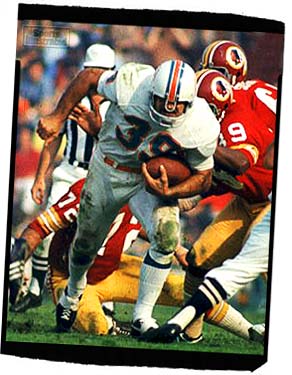
Pop the Champagne, '72 Dolphins still the only perfect team


Everybody has a team, mine is the Miami Dolphins. I grew up in Florida and that was our team. No Bucs, no Jags, no Marlins…heck, the closest sports team was the Atlanta Braves at that time. I sat on the sofa as a kid watching every game, rooting for my team, not realizing that 35 years later, no sports team would equal this feat.

Today the Colts lost to the Chargers, ensuring for one more year that the only perfect team is still the ’72 Dolphins. Griese, Morris, Kiick, Csonka, the no-name defense. Actually they went 19-0 counting the next seasons first 2 games.

Each year the players from that team pop the champagne when the last undefeated team loses a game preserving the mantel as the team with the only perfect season.

There have only been 4 teams to start 13-0, with biggest scare coming in 1985 when the Chicago Bears came into Miami for what is still the highest rated Monday Night Football game ever. They were picked apart by Hall of Famer Dan Marino to stop that streak. It’s a good thing as the Bears had 4 patsies to play and would have run the board had it not been for Dan who owned the Bears. Many ’72 Dolphins were on the sidelines that day.

It’s been said that the ’85 Dolphins are honorary members of the ’72 Dolphins as they helped stop the team that had the best chance of equaling this special achievement.

I know those that read this are going to want to say how good their team is or that another team has been better. But no one remembers 2nd place or losses by 1 point…..and no one else has a team with no losses on the way to a championship. Wins are wins and losses are losses….And a perfect season is hard to come by, and owned by only one team, the ’72 Miami Dolphins.

Note from Santa Claus

Got a note from Santa recently, please read:

I regret to inform you that, effective immediately, I will no longer
serve the States of Georgia, Florida, Virginia, North and South Carolina,
Tennessee, Mississippi, Texas, and Arkansas on Christmas Eve.

Due to the overwhelming current population of the earth, my contract
was renegotiated by North American Fairies and Elves Local 209. As part of
the new and better contract I also get longer breaks for milk and cookies
so keep that in mind.

However, I’m certain that your children will be in good hands with
your local replacement, who happens to be my third cousin, Bubba Claus.
His side of the family is from the South Pole. He shares my goal of delivering
toys to all the good boys and girls; however, there are a few differences
between us.

Differences such as:

1. There is no danger of the Grinch stealing your presents from
Bubba Claus. He has a gun rack on his sleigh and a bumper sticker that
reads: “These toys insured by Smith and Wesson.”

2.Instead of milk and cookies, Bubba Claus prefers that children
leave an RC cola and pork rinds [or a moon pie] on the fireplace. And
Bubba doesn’t smoke a pipe. He dips a little snuff though, so please have an
empty spit can handy.

3.Bubba Claus’ sleigh is pulled by floppy-eared, flyin’ coon dogs
instead of reindeer. I made the mistake of loaning him a couple of my
reindeer one time, and Blitzen’s head now overlooks Bubba’s fireplace.

4.You won’t hear “On Comet, on Cupid, on Donner and Blitzen..” when
Bubba Claus arrives. Instead, you’ll hear, “On Earnhardt, on Andretti, on
Elliott and Petty.”

5.”Ho, Ho, Ho!” has been replaced by “Yee Haw!” And you
also are likely to hear Bubba’s elves respond, “I her’d dat!”

6.As required by Southern highway laws, Bubba Claus’ sleigh does
have a Yosemite Sam safety triangle on the back with the words “Back Off.”

7.The usual Christmas movie classics such as “Miracle on 34th
Street” and “It’s a Wonderful Life” will not be shown in your
negotiated viewing area. Instead, you’ll see “Boss Hogg Saves Christmas”
and “Smokey and the Bandit IV” featuring Burt Reynolds as Bubba Claus and
dozens of state patrol cars crashing into each other.

And Finally,

8. Bubba Claus doesn’t wear a belt. If I were you, I’d make sure
you, the wife, and the kids turn the other way when he bends over to put
presents under the tree.

Sincerely Yours,
Santa Claus

The New Analyst Relations Lineup/Scorecard

Get out your scorecards, we’re making some changes in the lineup here at SWG A/R.

Who’s on first?

Sarita Torres replaces Dave Liddell as the Director of SWG A/R, new manager.
Glenn Hintze replaces Nancy Riley at AIM, batting first
Mike Bizovi replaces Sarita at IM, batting second
Amy Loomis replaces Mike Bizovi in Cross Brand, batting third
Diane Flis replaces Amy Loomis in Rational, batting cleanup
Don Neely replaces Diane Flis in Lotus, batting fifth
Patty Rowell gets promoted to Manager of Tivoli, batting sixth.

Nancy Riley got traded to another team, Manager of SWG aquisitions.

So, this is the perfect time to call your new brand manager and congratulate them on their new assignment, and offer help to them to get their job done.

Like I said in my first ever email closing, change is the only thing that stays the same.

The News, Have it your way

I read the other day from Steve O’Grady , why he stopped watching the news. It’s been bouncing around in my head for a couple of days and the more I thought about it, the more it made sense.

We want the information/news/updates/whatever the way we want it, not the way the current regime of news/papers/print magazines decide for us what they want to interpret as news. I’m pretty sure this has always been the case, but we as information consumers haven’t had the opportunity to customize it until recently (a matter of years for some, more recently for others).

I commented on his blog about how right he was, and that I already had stopped watching it also (but you got me Steve, I didn’t even realize this). I always have a better understanding of the issues before it hits the traditional news. I find the subject that interests me, then I can go to sources, blogs or the web that may have been at the place of the event, and almost always there is someone who understands the issue better than a newscaster. It occurs to me that the whoever the media source is, they are really a journalist, not a field or subject matter expert. The blogosphere has now become the more informed reporter.

When the sources for news was limited, these generalist journalists were the only choice. As with any job, there is always a range of talent and quality. But as any economist will tell you, a monopoly causes quality to go down and price to go up. The news has been monopolistic with respect to news feeds, and media conglomerates. Go to any channel and you get virtually the same story, the one that was in the morning newspaper a lot of the time.

Which brings me to how I want to get the news. If you’ve read any of my blogs, you know I love IBM Research. If you ever get the chance, talk to research or read about them. They are not just blue suits, rather some unbelievable minds. Back in 1999, I saw a demo of a flexible newspaper that was really a screen that you customized your own news. When we showed it off, it wowed everyone as the technology was cool, but it opened up freedom of content.

All you need is a news bot to get your sources and it downloaded and formatted. Now that sounds a whole like feed aggregators (google, bloglines, other). It likely won’t come to fruition in that format, but the concept is coming true.

So it’s getting to the time that we can select what we want and get it. This is bad and good for the traditional news. As anyone with a search engine can find, circulation numbers are down for the traditional news, most cable news (ok, one exception was up) and print news.

Why is it good? Back to the economists. Capitalism invites competition, the result of which is lower prices and better quality. So they will either have to improve, or go the way of the horse and buggy (Steve’s example again here). Otherwise, we get what we want because we have choices.

And like Steve, I chose getting the real story from my research, not the negative or slanted (both directions) that someone thinks I should get. Either way, I’m going to get a better product, at a cheaper price.

Update: Here’s a story from Tekrati that shows a trend towards consumer preference. We may win after all.

And another showing lower prices…

IBM to offer 40,000 patents to VC's

If I were starting a company, I’d like to have a unique concept that I could patent and know that it was both a killer idea and have legal protection…oh yeah, I’d like a bunch of VC money also.

Since I’m not a good engineer, or an engineer at all (my Dad was engineer of the year in Florida, but I didn’t get those genes), the next best way is to have help and get the same benefits.

IBM has announced a plan to offer access to the 40,000 plus patent portfolio to VC’s that they can share with their startups. A pretty sweet deal, money and access to the patent leader. Pick your technology, hardware, software, services and a lot of other stuff. I’ve said before that one of the most under told story’s is the cool stuff that IBM research has. Can you imagine what the value of this portfolio is, not just in terms of money but the invention time must be staggering.

In planning this, we worked with our VC advisory council to see what they would want and how it should be structured. They come out a big winner as now they have something tangible other than just money to offer startups. They either pay a one time 3 year fee for alpha stage companies or for products that are ready, a 1% of revenue relate to an IBM patent (not the entire product). This is relatively the same terms that we offered the largest companies we deal with in these arrangements (yes i mean company’s located in Redmond). The VC’s were quite pleased with the terms as they were a part of structuring from the get go. They viewed it as very fair and were glad to be on equal footing with bigger players.

Most of the analyst comments centered around the tools to search this many patents. Amazing how they see right through everything and pick out vital points. To that, we will provide access to the inventor and the technology, and to the specific comments…we’ll be working on some search tools to help the VC’s.

Startups win as they get the patent protection (ask RIM and NTP about this) and VC money.

IBM wins as it is a reason to partner with us. We offer not only the protection issue, but access to some incredible research. Yefim Natis of Gartner pointed out that this is good for IBM in that patent portfolio is likely under used. Lou Gerstner issued a mandate when he was reshaping IBM that we WILL use research and patents in our products. Now it’s not only IBM products, but it is spreading out to the industry also.

We’ve been rightly criticized for not being far enough down in the SMB stack (in the S part). This may not be the golden egg, but it sure is a step in the right direction. You don’t get much more of an S than in a small startup.

Like all announcements, programs at maturity usually wind up being molded along the way due to various things like industry or technology trends. I’m sure this program will be also, but it’s an interesting start.

More information is found on the VC group link.

Bob Sutor blogs about it also.

How to attract developers

Hats off to Microsoft here, I wish we’d thought of this.

Prize in Indian Talent Search

Microsoft has a talent search in India that will produce one member to work with Gates for a year. If you look at this closely, there is one big winner….Microsoft. You may have thought I was going to say the guy/girl who gets to work with Microsoft for a year, but I’m not sure that is that good.

Microsoft is pulling the credit card game, announce a contest and you pull everyone in. Compound that by it being in India, and you have one heck of an idea.

We make no bones about the fact that we are expanding heavily in the BRIC countries – Brazil, Russia, India, China. It looks like we aren’t the only game in town now.

Hope we learn from this.

Yeah, and it's deep too


Richard Pryor 1940-2005. One of the true trailblazers in the comedy profession. Numerous comedians benefitted from his routines and the new ground that he broke.

He also fought several personal demon’s, but who has had a life paved with gold the whole way. It was from those demons and the personal struggles that some of his funniest sketches came from. Like the time he shot his car, or when he ran down the street on fire. Most of us would never want anyone knowing how we had fallen down, but Pryor made us laugh at it because the way he told it was hilarious.

He also broke down many racial barriers, poking fun at everyone, again in a way that was as ingenious as it was true.

A lot of people have him to thank for the careers that they have now. Me, I had a lot of laughs.

Today's blog in binary

I’ve been holding this one for a while now. I’m posting the rest of this blog in binary code. Here is the link for translation.
Binary coder/decoder

01110111011001010110001101101111011011010110010100100000011101000110111100100000
0110110101111001001000000110100001101111011011100110111101110010011010010110111001100111
01100111011001010110010101101011011001000110111101101101

010010000110111101110000011010010110111001100111
0111100101101111011101010010000001100110011010010110111001100100
01110011011010010110110101101001011011000110000101110010
01110111011000010111100101110011001000000111010001101111
0110001001100101
0110100101101110011101000110010101110010011001010111001101110100011010010110111001100111

0111011101101000011011110010011101110011
011000010010000001100111011001010110010101101011
01101110011011110111011100111111

Sunday, December 7th, 1941, a Date that will live in Infamy

A question that has interested historians and researchers for decades is: why? Why did Japan launch an attack that, in hindsight at least, they clearly had no chance of winning? The obvious answer is that they thought they could, but military and naval strategists know the answer is not so simple.

Precisely because its resources were so depleted by the war with China, it is accepted wisdom that Japan was hoping to expand its territories in the Pacific. If these areas belonged to Japan, they would, almost by default, become customers for Japan’s industrial and resource sectors.

But the Japanese underestimated America’s resolve to defend itself, for however long, and by whatever means necessary. If Japan hoped that America might take a “c’est la vie” attitude to the prospect of losing a battle in the Philippines, it was sorely mistaken. Nor was America still weary from the First World War.

Japan also underestimated the extent of Americans’ outrage at the bombing in 1941. It fueled the nation’s desire to win at almost any cost. No democratic government on earth can move forward without the will of the people, and after Pearl Harbor, the American people’s will was ferocious.


Here is the text and a link to the speech that FDR made after the attack at Pearl Harbor.

I read the Biography of Admiral Yamamoto, the architect of the attack. He believed that the only way to defeat the United States of America was a surprise attack that would disable our military in the Pacific. He clearly stated that he feared that if the attack was not completely successful, it would awaken a sleeping giant that the Empire of Japan could not defeat in standard battle. It must haunt his legacy.

Tactically, the mistake was not destroying the aircraft carriers which were out at sea that day or his plan may have succeeded.

As it turned out, he was shot down only a few years later in a surprise attack by a squadron of P-38’s heading to an inspection in the Pacific.

Here is the Youtube speech by FDR

I find ironic the words of the second half of the speech, if applied to 9/11, would be appropriate. Also ironic is that Japan was extending its reach for economic resources.

The United States was at peace with that nation and, at the solicitation of Japan, was still in conversation with its Government and its Emperor looking toward the maintenance of peace in the Pacific. Indeed, one hour after Japanese air squadrons had commenced bombing in Oahu, the Japanese Ambassador to the United States and his colleague delivered to the Secretary of State a formal reply to a recent American message. While this reply stated that it seemed useless to continue the existing diplomatic negotiations, it contained no threat or hint of war or armed attack.

It will be recorded that the distance of Hawaii from Japan makes it obvious that the attack was deliberately planned many days or even weeks ago. During the intervening time, the Japanese Government had deliberately sought to deceive the United States by false statements and expressions of hope for continued peace.

The attack yesterday on the Hawaiian Islands has caused severe damage to American naval and military forces. I regret to tell you, very many American lives were lost. In addition, American ships have been reported torpedoed on the high seas between San Francisco and Honolulu.

Yesterday the Japanese Government also launched an attack against Malaya.
Last night Japanese forces attacked Hong Kong.
Last night Japanese forces attacked Guam.
Last night Japanese forces attacked the Philippine Islands.
Last night Japanese forces attacked Wake Island.
This morning the Japanese attacked Midway Island.

Japan has, therefore, undertaken a surprise offensive extending throughout the Pacific area. The facts of yesterday and today speak for themselves. The people of the United States have already formed their opinions and well understand the implications to the very life and safety of our nation.

As Commander in Chief of the Army and Navy, I have directed that all measures be taken for our defense.

But always will our whole nation remember the character of the onslaught against us.
No matter how long it may take us to overcome this premeditated invasion, the American people in their righteous might will win through to absolute victory.

I believe I interpret the will of the Congress and of the people when I assert that we will not only defend ourselves to the uttermost but will make very certain that this form of treachery shall never endanger us again.

Hostilities exist. There is no blinking at the fact that our people, our territory, and our interests are in grave danger.

With confidence in our armed forces-with the unbounded determination of our people-we will gain the inevitable triumphso help us God.

I ask that the Congress declare that since the unprovoked and dastardly attack by Japan on Sunday, 7 December 1941, a state of war has existed between the United States and the Japanese Empire.

Here is the only color film of the event.  Listen to how excited the Japanese are and their commitment to give everything, including lives to this war:


Man’s best friend now also Heart’s best friend

According to the
American Heart Association,
“Researchers discovered that a 12-minute visit with man’s best friend helped heart and lung function by lowering pressures, diminishing release of harmful hormones and decreasing anxiety among hospitalized heart failure patients. Benefits exceeded those that resulted from a visit with a human volunteer or from being left alone.

Animal-assisted therapy (AAT) has been shown to reduce blood pressure in healthy and hypertensive patients. It reduces anxiety in hospitalized patients, too.”

I made earlier post’s about my dog Bandit.
It’s a dog’s life and Boxer Rebellion

So I guess I’ve lowered my anxiety and blood pressure. Then of course work interrupts that little scenario.

I will point out that when they are puppies, they’re cute, but bladders can only make it to about 4:30 am…then they have to go outside. And one of my dog’s ate a shoe, part of a stair, other things…

Here’s Bandit as a puppy.

But I wouldn’t trade it….I love my dog. My dog loves my heart.

First Day of the Analyst Meeting

Today was interesting. There was a fire drill that broke up the main tent, talk about not getting off to a stellar start.  It was good since the main speaker had 136 slides and the collective groan from the audience that an IBM executive could be that clueless was deafening.  Anybody that did return was just being polite. Everyone had checked out mentally.

I of course was in the overflow room so I wasn’t forced to sit through anything I didn’t want to hear, which is most of what the executives have to say.  How the analysts don’t bust us for pontificating is beyond me.  I think Steve Mills is great.  It was his team of idiots that gave him that many slides.  The GM’s that work for him are a bunch of blowhards that have ego’s we can hardly fit in a room together.  The best part is when Mills treats them like dirt which is appropriate given that’s how they treat everyone else.  How they got there has got to be because they have pictures of somebody or they just outlasted everyone else.  It isn’t because of their talent or leadership.

The exception is Buell Duncan who as always did a good job presenting, and it was a lively discussion with the analysts. All except one got the concept and saw we were heading in the right direction. I think he just wanted to hear himself talk.  Since James is from Redmonk, I gave him a pass as you can’t fix stupid and no one paid attention to him anyway.

One on Ones turned out to be very interesting. I always enjoy the depth of the conversations and how much can get done when you sit down and hash out a problem when you are sincerely trying to create a solution.

For the second year in a row, I got to eat dinner with Laurie M. and again it was a very enjoyable evening. We solved all of the meeting problems of how to make it more lively and interesting for the analysts. Ultimately, Zurich would be a better place than anywhere in Connecticut, and we should give away an i-Pod.

In the dinner line, I asked Rod Smith to be a blog interview, he wants to talk about Ajax and some upcoming things in that area. Talk about getting lucky. Look for that interview soon.

Tomorrow should be even better. We’ll be more relaxed and into the flow. I can’t wait for the open Q and A with all the GM’s on stage and any topic is fair game.  Plus, Mills abuses his GM’s the way they should be treated.  It is a treat for everyone.

Sayings by Will Rogers

Here are some very interesting rules to live by. Don’t think you have to be a cowboy to read this. Number 4 has worked best for me.

1. Never slap a man who’s chewing tobacco.
2. Never kick a cow chip on a hot day.
3. There are 2 theories to arguing with a woman…neither works.
4. Never miss a good chance to shut up.
5. Always drink upstream from the herd.
6. If you find yourself in a hole, stop digging.
7. The quickest way to double your money is to fold it and put
it back in your pocket.
8. There are three kinds of men: The ones that learn by reading.
The few who learn by observation. The rest of them have to pee on the
electric fence and find out for themselves.
9. Good judgment comes from experience, and a lot of that comes
from bad judgment.
10. If you’re riding’ ahead of the herd, take a look back every
now and then to make sure it’s still there.
11. Lettin’ the cat outta the bag is a whole lot easier’n
puttin’ it back.
12. After eating an entire bull, a mountain lion felt so good he
started roaring. He kept it up until a hunter came along and shot
him.
The moral: When you’re full of bull, keep your mouth shut.

ABOUT GROWING OLDER…

First – Eventually you will reach a point when you stop lying
about your age and start bragging about it.
Second – The older we get, the fewer things seem worth waiting in
line for.
Third – Some people try to turn back their odometers. Not me, I
want people to know “why” I look this way. I’ve traveled a long way and
some of the roads weren’t paved.
Fourth – When you are dissatisfied and would like to go back to
youth, think of Algebra.
Fifth – You know you are getting old when everything either dries
up or leaks.
Sixth – I don’t know how I got over the hill without getting to
the top.
Seventh – One of the many things no one tells you about aging is
that it is such a nice change from being young.
Eighth – One must wait until evening to see how splendid the day
has been.
Ninth – Being young is beautiful, but being old is comfortable.
Tenth – Long ago when men cursed and beat the ground with sticks,
it was called witchcraft. Today it’s called golf.

And finally – If you don’t learn to laugh at trouble, you won’t
have anything to laugh at when you are old.

What I did on my Thanksgiving Break


I didn’t work. In fact, I went to Florida to see family and enjoy the time off.

I also had one of my best days of fishing in a long time recording 10 good Redfish and sighting many more at Mosquito Lagoon. You’ll notice from my clothes that it was cold that day starting in the 30’s with wind. But it’s a good thing we decided to go. We had the whole place to ourselves with the fish cooperating.

I caught fish just like these for 6 hours and had the time of my life. The picture on the right is Brad Stine, the guide who took me. Give him a call at 386-566-6823 and he’ll put you on fish.

Then I enjoyed a Thanksgiving dinner with my whole family. We haven’t been together for various reasons (mostly travel and living in different cities) for a long time.

After dinner, I got to take a drive in my brother in law’s Porsche GT3. It’s a red rocket that will do 196 mph and stop on a dime, then give you 9 cents change. I won’t say how fast we went, but it was in mid triple digits….what a rush.

Thanks Geoff for the ride of my life.

Today's quiz

The following is the philosophy of Charles Schultz, the creator of the “Peanuts” comic strip. You don’t have to actually answer the questions Just read the e-mail straight through, and you’ll get the point.

1. Name the five wealthiest people in the world.

2. Name the last five Heisman trophy winners.

3. Name the last five winners of the Miss America.

4. Name ten people who have won the Nobel or Pulitzer Prize.

5. Name the last half dozen Academy Award winner for best actor and actress.

6. Name the last decade’s worth of World Series winners.

The point is, none of us remember the headliners of yesterday. These are no second-rate achievers. They are the best in their fields. But the applause dies. Awards tarnish. Achievements are forgotten. Accolades and certificates are buried with their owners .

Here’s another quiz. See how you do on this one:

1. List a few teachers who aided your journey through school.

2. Name three friends who have helped you through a difficult time.

3. Name five people who have taught you something worthwhile.

4. Think of a few people who have made you feel appreciated and special.

5. Think of five people you enjoy spending time with .

The lesson: The people who make a difference in your life are not the ones with the most credentials, the most money, or the most awards. They are the ones that care .

IBM Bloggers, Who are we? – Bob Sutor


I am most privileged to be able to offer this blog interview of Bob Sutor. Bob was one of the first links I had when I set up my first RSS feed, still a neophyte to the blogosphere. He has graciously agreed to my interview series for which I am most grateful.

This is a very interesting read, with subjects ranging from guitar’s to calculus and polynomials. If you think that PhD’s aren’t witty, read the story about his son at the Gartner conference. Being a Trekkie, I’d like to teleport also.

I asked some questions with analyst’s and open standards in mind, and you will find the answers most revealing.

What is your job title (and what does that really mean as far as your job,)?
I’m the IBM VP for Standards and Open Source. Basically, this allows me to stick my nose into anything we’re doing on those topics. I work with my team to make sure that we have consistent management of these activities across all the business units in the company. I work closely with our intellectual property folks to ensure we are striking the right a balance between “open” and more traditional ways of doing things. Then I like to tell people about all this.

Some work experience that you want to tell?
I started work for IBM in 1982 when I was between my two stints in grad school. I spent 15 years in IBM Research working on “symbolic mathematical computation” (instead of thinking of a spreadsheet and what it does, think of a system that allows you to manipulate things like polynomials and matrices and do fancy calculus computations). My main job before working for IBM was a paper route. I was very involved in IBM’s early work on web servcies, particularly the standards bits and how we worked with other companies. Although I consider myself a technologist at heart, I spent almost two years as Director of Marketing for WebSphere.

Any hobbies or fun stuff you want to discuss?
After a 34 year hiatus, I started trying again to learn how to play the guitar last December. Progress is slow, but satisfying. I’m using it as an excuse to learn about music as well. I was always told that people who were good at mathematics were also good at music, but felt it didn’t apply to me. It still might not, but at least the evidence will be empirical rather than anecdotal. I do wish I had started a lot earlier.

How do you describe what you do in your work to your family and those who don’t work in our industry?
Last April I was on an Open Source panel at the Gartner conference in LA and I brought my (then) 7 year old son. He learned a fair bit about the ideas behind it but he really has no sense of, say, what enterprise software is. (He loves Firefox, by the way.) For people outside my immediate family, I tell them I help do things that make computer systems made by different people work together. By the way, the Gartner folks were really great to my son and gave him a badge with his name on it and the word “Companion” where the company name usually goes. He told me that when he grows up he is going to start a company called Companion so he can get into future conferences for free.

What are good things about your job?
I love the broad range of things I get to look at on an everyday basis. I also like working on things like the initiative we announced in October around use of our patents for healthcare and education standards. That is, when we get to do things that might change the direction of the industry, it’s really exciting.

What are things you would change?
Shorter, more efficient conference calls would be a good start. I like travelling and talking to customers, people in industry and government, but I wish that the actual travel time getting there and back wasn’t so consuming and tiring. I think often of Star Trek-like teleportation and wish we could have that today.

What are the biggest challenges at IBM?
Because of our size, there are so many things we do do and could possibly do. There is simply not enough time to do it all. Prioritization is therefore really important. I really value people who are good at that as well as being very efficient communicators. In the area in which I work, the world can change radically every six months. I also value people who accept if not thrive on that.

How did you get started as a blogger?
IBM developerWorks asked me to start a blog in August, 2004, when I was working in the WebSphere area on web services and SOA. I had written byliners for trades like CNet for a few years, so it was actually liberating to be able to say things on a more regular basis in more or fewer than 800 words. I also have a personal blog which is being sadly neglected, but I have big plans for it if I ever get some more free time.

How has that changed your job?
I’ve done probably 75% fewer press interviews but I get my views out more precisely and frequently. In addition to saying whatever I want to say to people outside IBM, I can also talk in a public way to people inside IBM via the blog. It gives me a chance to explain nuances of things to whomever might be interested. When I do meet new people in the industry or members of the media, I’ve often told that they’ve read my blog. That allows us to immediately jump in and discuss things at a deeper level without a lot of background explanation.

Since analysts read this, what would you like to say to them about Standards?
People need much more guidance on what the word “open” means. I think analysts need to start quantifying how open the various standards efforts are in areas like development, maintenance, accession, implementation, and ability to sub-or superset. That is, we need “openness report cards.” Not everyone will be on the honor role, but companies and governments are looking for this information today. As various people have said in business, it’s hard to change things if you can’t measure them.

What are you looking forward to in the upcoming years, either product or how you will work differently?
I’m looking for standards and open source to give me and other people a lot more options in how we get our work done.

Any thing else I missed you want to say?
I think it is really wonderful how something like the OASIS OpenDocument Format is breathing life into the office suite category of software. Standards and open source software themselves do not have to be immediately innovative in order to drive some really innovative and stimulating things downstream. In both of these areas, you must think of the work you do as being an investment in the future. If you take intelligent risks, you can reap big rewards. If you risk nothing or hang on to the status quo too long, others will move past you.

Mantenance update on my blog

Since I’m stuck between being content free and stuff I can’t say publicly, I decided to do maintenance work on my blog.

I’m starting with adding some links. Although I pick up a lot of IBM’rs through my IBM bloggers link, I’ve paid attention to some analyst comments that IBM’rs link to too many IBM’rs and not enough outsiders. I’ll take suggestions here.

After that, I may start breaking down my blogs based on themes I’ve noticed, like IBM, Karate, my dog and fishing.

Calm before the storm

We’re going into the Thanksgiving break right before the SWG Analyst meeting. We’re wrapping up the 1:1’s and dinner dates and all the executive preparation necessary to make sure they can find the bathroom which is always a crap shoot.

Note to analysts, last chance to get your meeting requests in. We’re trying to wrap it up this week.

Remember the Elevens

Today is Veterans day, formerly Armistice day, to remember as Ralph Bennett puts it, “recalling that the massive blood-letting of the First World War ended precisely at the eleventh hour of the eleventh day of the eleventh month, November 11, 1918.”

Sgt Major Michael Gravans says, “after the ceremony he believes that Americans these days are thinking about veterans more and thinking better of them, “probably better than any time since World War II.”
But as new generations join the military, they need to be told of the sacrifices of those who have gone before them. “And I, as a leader, need to help them understand that sooner rather than later.”

Lt. Col. Michael Shinners, the brigade’s rear detachment commander, gave a brief history of Veterans Day to those gathered, tracing its history to the armistice signed following World War I.
Memorial Day, he said, is for those who have given their lives while serving their country. Veterans Day is for those who proudly served their country and those still serving.

Here is a link to some Veterans Day notes, blogs and activities…

IBM and Social Networking (IWB and blogging event)

This week, IBM held a Social Networking event hosted by Irving Wladawsky-Berger for the press. Some local analyst’s attended.

On the panel was:

Irving Wladawsky-Berger
IBM VP of IBM Technical Strategy and Innovation

Irene Greif
IBM Fellow and head of the Collaborative User Experience Research Lab

Mike Rhodin
IBM Software Group, Lotus
General Manager of Workplace, Portal and Collaboration Software

Bill Ives
Author, Business Blogs: A Practical Guide

Stephen Sparkes
Managing Director, Investment Banking Division, Morgan Stanley

David Weinberger
Author, The Clue Train Manifesto: The End of Business as Usual

Here is the advertisement before the event:
According to Wikipedia, social networks play a “critical role in determining the way problems are solved, organizations are run, and the degree to which individuals succeed in achieving their goals.” IBM believes that this model, which has been so successful in the consumer and open source communities with things like Friendster, MySpace, Craigslist, blogs, wikis and other social networking tools and phenomena, can be tapped to drive productivity, collaboration and business insight for the corporate world.

We won’t focus on whether or not CEOs should blog or what is the right and wrong way for business people to engage with bloggers — instead we invite you to hear and discuss the business opportunities we see for our clients.

We will provide a peek at technologies from inside IBM’s Research labs that demonstrate how these social networks can transform how companies work, and perhaps more importantly how they can drive new kinds of collaborative innovation in business. And we’ll explain how IBM plans to help companies deal with these phenomena: from analytics for searching and mining blogs and what to do with that information to make business decisions, to how these social networks can help transform cultures and change the way we work and collaborate.

Here are some blog comments with the analyst questions with the panel’s answers.

Mike Gotta

David Weinberger

Press coverage:
NEWS STORIES

IBM Says That Companies Need to Mine Blogs, Wikis for Vital Business Data
SearchDomino.com

IBM Software Tracks Blogs, Web Content
E-Content Magazine

IBM launches blog content monitoring software
Newswatch, India

IBM Software Tracks Blogs, Web Content to Capture Buzz, Spot Trends Around
Linux Electrons

Blog-Spotting With IBM
InternetNews.com

IBM Discovers What Willis Is Talking About
WebProNews

Cheeburger, Cheeburger, Pepsi, Chips


This weekend marked the opening of a new restaurant near us – Cheeburger, Cheeburger…just like from the Saturday Night Live skit.

Cheeburger review in the Paper

More information and menu found here:

Cheeburger.com

My daughter works for the investement company Silverdeer Investments that is opening 22 of these restaurants in the area. Our whole family and a friend was there, as was the mayor of Apex, Keith Weatherly for the pre-opening event.

It was great food, good fun and looks like it will be a big hit in the area.

I’ll have a cheeburger, chips, pepsi….no coke

Computing at the speed of light.

I make it pretty clear that IBM Research does and has some of the coolest stuff there is….

Today’s press coverage about IBM moving data on silicon via light is unbelievable. For you trekkies out there, that’s Warp 1. They even have a cool name for it – Photonic Silicon Waveguide. Data is moved via photons creating less heat and using less power, nice side effects huh?

IBM Slows Light, Readies it for Networking

Too cool.

Scoble has a big set of attachments/Customers do matter

Kudo’s to Robert Scoble today for calling out his own company in public, that took big….uh….attachements. Why, if you go to the end, he talks about Microsofter’s having to work for other companies because the customers will leave.

12 reasons why not to work with Microsoft .

I read Thomas Watson’s book about IBM. It was always about the customer, both Watson Sr. and Jr. Let us not forget that either just because it’s Microsoft that has become the BORG, that our end goal is the CUSTOMER! (listen to this, it’s scary when you think about the operating system war).

Ultimately, it is about the customers. It’s not about what you can do to climb the ladder of success, or how great a product you can produce – especially if no one wants to buy it…..or for Microsoft, if no one wants to work with you.

Adieu, Rene Moreau

Rene Moreau Fought in WWI

Until today, I didn’t know he even lived. But the patriotic furnace inside of me burned when I read that he was one of the 7 remaining French veterans of WWI. My Grandfather fought in the Calvary for the US, enlisting as 18, but really was younger than that so he could serve his country.

It’s soldiers like that who’s sacrifices allow us the freedom we enjoy on the internet, speech and just about everything else in the free world.

Because of guys like Rene Moreau, I’m not typing in a Central Power language, or an Axis language only years later.

Aren’t Communities Great – again

I stole this title from Steve O’Grady at Tecosystems , partially because I’m in it, but also because it helped me find some lost co-workers.

In an earlier life, I was the Director of Marketing for a Disk Drive supplier that integrated storage and backup products into IBM PC’s and compatibles. I’d lost touch with almost everyone I’d worked with until this weekend when the head of R&D found me on Steve’s blog. Little did he know when he was writing about Danish translation that it was a tech meet up.

So I found out about some folks I used to work with, one of which is now a VP at Fujitsu. Email me Joel if you get this.

Updated meeting bingo words

I guess it originally was called BS bingo. Some of the oldies were end to end, best of breed, bottom line…you remember the game.

I’ve been in over 100 meetings and presentations by us and to us and I’ve got a new list. Feel free to comment with popular words that I may have missed.

Integration
Enable
Leverage
Optimize
Execute
Service Levels
Lifecycle
Infrastructure
Capacity
Workload
Deployment
Feedback
Collaborative
Legacy
Validate
Governance
Best Practice
Interactive
Roadmap
Component
Encapsulation
Throughput
Instantiate

And for the center box, the star is any acronym, SOA, XML, WSDL SOAP, SODA, SOBA, AJAX, PHP, LAMP….any will do.

What happened to my handwriting? I can't wait for Star Trek/Jetsons to get here

I took notes by hand at yesterday’s SOA event in Richmond. When I came back, I paid some bills by check. After I checked both, it occurred to me that I might be a Doctor with the state of my handwriting skills.

What happened? Well, it never was that great. I always admired the handwriting by the girls that was neat and always the same throughout their papers (and the same as all the other girls, unexplainable to me). I on the otherhand scratched out my papers, but as I’ve said before, most of what I do proficiently is by repetition rather than talent. My wife will take exception to my remote control skills which came to me naturally.

The reality of it is that I’m getting older, but I’m also typing most things. I take notes typing, IM, blog, shop, pay bills, balance my checkbook….all by computer. So discounting the age thing, I’m not getting as much practice as I used to and it shows..This is where I’m going to place the blame.

Which brings me to the second point of the title, I can’t wait for voice technology to be able to talk my input. Those that know me know I’m not a gabber, but when I say something, I usually mean to say it and I have a point most of the time (my son disagrees, but he’s a teenager so that explains a lot). I’d like to have the option to speak my input and have it come out correctly. I’m not going to digress to current voice capabilities, I know it will get to where it needs to be.

So back to the age thing. My hands aren’t getting any younger either, talking my input will save some wear and tear unless they invent an arthritis drug before I die.

I want to be able to speak to the computer like Mr. Spock or George Jetson to have it do my work. Computer, analyze the data samples from Rigel 4 and compare it to our dilithium crystals…..

For now, I hope that the credit card company can read my check.

Live long and prosper.

SOA for me, I'm off to Richmond

I’ll be in Richmond VA. the next two days at an SOA customer event sponsored by WebSphere. It’s the second time in a month I’ve done this, so I’m wondering if there is a trend I should be noticing?

Anyway, I’m helping out a hurricane victim colleague in analyst relations (sorry about that Sara) who was going to be the AR lead there.

Ironically, she lives about a mile from where I moved away from when I left Florida.

So Steve, if you’re reading this, no blogging interview with Willy….but he’s out of the country anyway.

SMB’rs, I won’t be on your call either. I’m a WebSphere pinch hitter. Hope I hold my own at the plate.

Fork in the Road for partners? Yes for some, Crocodile for others.

Oracle has bought Siebel, PeopleSoft, JD Edwards and will likely buy others. Microsoft has bought Great Plains and Navision, today they announced a business intelligence solution going up against Cognos. All but Great Plains were staunch IBM partners. SAP has Netweaver applications. For the major middleware companies mentioned in the same sentence with IBM, those are facts.

The easy bandwagon is to jump out there and say everyone should buy a company and get into the application marketplace. Just ask the press.

Here is the speculation section. What will the outcome be with the applications marketplace? All the above mentioned major players have applications in the common business arena. IBM on the other hand is going to this market with partner applications as the solution. These are two pretty diverse paths when considering the partner aspect of channel conflict. Thus, the fork in the road

I am a staunch believer in capitalism, that it promotes competition forcing better solutions and lower prices, usually resulting in an overall better customer solution. How will this concept be applied to the aforementioned channel conflict and fork in the road?

The answer is that history will tell the ultimate story, but as with all things, it will not be a zero sum game for any of the companies mentioned. Partners will be motivated by who helps them the most. Sort of the capitalism statement. It will likely parody the political situation. The staunch believers (or those too far financially invested in a solution) will likely stay there. Those deciding on a solution, or moving to open source or have ODF issues or those pissed off at channel conflict or competition from their existing middleware supplier are at the fork. So the fight is not for the right or left, but for the middle….those at the fork.

Yogi Berra said, “When you get to a fork in the road, take it”

IBM is making a stand on supporting the partners and going to market with them as the application solution. There are co-marketing programs and 30,000 IBM sales reps helping them make sales.

Microsoft, Oracle and SAP have said where they are going to compete with partners, and hope they can drag enough other business along that are willing to go in their middleware space. Some partners will go that way, hoping that they don’t or won’t have to compete.

As a famous president once said: “To sit back hoping that someday, some way, someone will make things right is to go on feeding the crocodile, hoping he will eat you last – but eat you he will.” Ronald Reagan.

IBM Research Resources through alphaWorks

Research topics

alphaWorks is known for launching emerging technologies. With the research topics, we are offering a collection of resources – technology downloads, demos, articles, and resources – to help build awareness and understanding about an emerging topic.

It’s one of the few places in IBM you would actually want to go and yet might find something useful and interesting.

Research Resources

Don’t miss the opportunity to peek into the window of research through alphaWorks.

More on Maturing Workforce, % of the population over 60

If you haven’t noticed, IBM is speaking to the issue of the maturing workforce. I received these country statistics and found them quite interesting. There will be much more on this thread, but it gives a quick look at who is where in the age issue.

Census Research – Percent of Total Population 60+
All data provided by the U.S. Census Bureau

United States
Percent of population aged 60 and above in 1980: approx. 16.07%
Percent of population aged 60 and above in 2000: approx. 16.27%
Percent of population aged 60 and above in 2005: approx. 16.81%
Percent of population aged 60 and above in 2010: approx. 18.41%
Percent of population aged 60 and above in 2025: approx. 24.21%

Canada
Percent of population aged 60 and above in 1991: approx. 15.65%
Percent of population aged 60 and above in 2000: approx. 16.70%
Percent of population aged 60 and above in 2005: approx. 17.86%
Percent of population aged 60 and above in 2010: approx. 20.00%
Percent of population aged 60 and above in 2025: approx. 27.75%

United Kingdom
Percent of population aged 60 and above in 1991: approx. 20.92%
Percent of population aged 60 and above in 2000: approx. 20.42%
Percent of population aged 60 and above in 2005: approx. 20.91%
Percent of population aged 60 and above in 2010: approx. 22.54%
Percent of population aged 60 and above in 2025: approx. 27.39%

Italy
Percent of population aged 60 and above in 1992: approx. 21.42%
Percent of population aged 60 and above in 2000: approx. 23.89%
Percent of population aged 60 and above in 2005: approx. 24.88%
Percent of population aged 60 and above in 2010: approx. 26.58%
Percent of population aged 60 and above in 2025: approx. 32.54%

Germany
Percent of population aged 60 and above in 1991: approx. 20.40%
Percent of population aged 60 and above in 2000: approx. 23.27%
Percent of population aged 60 and above in 2005: approx. 24.91%
Percent of population aged 60 and above in 2010: approx. 25.88%
Percent of population aged 60 and above in 2025: approx. 32.90%

France
Percent of population aged 60 and above in 1990: approx. 19.14%
Percent of population aged 60 and above in 2000: approx. 20.53%
Percent of population aged 60 and above in 2005: approx. 20.84%
Percent of population aged 60 and above in 2010: approx. 23.00%
Percent of population aged 60 and above in 2025: approx. 28.49%

Spain
Percent of population aged 60 and above in 1991: approx. 19.36%
Percent of population aged 60 and above in 2000: approx. 21.75%
Percent of population aged 60 and above in 2005: approx. 22.68%
Percent of population aged 60 and above in 2010: approx. 23.94%
Percent of population aged 60 and above in 2025: approx. 30.08%

China
Percent of population aged 60 and above in 1990: approx. 8.45%
Percent of population aged 60 and above in 2000: approx. 10.12%
Percent of population aged 60 and above in 2005: approx. 10.90%
Percent of population aged 60 and above in 2010: approx. 12.38%
Percent of population aged 60 and above in 2025: approx. 19.94%

Korea (south)
Percent of population aged 60 and above in 1990: approx. 7.65%
Percent of population aged 60 and above in 2000: approx. 10.88%
Percent of population aged 60 and above in 2005: approx. 12.73%
Percent of population aged 60 and above in 2010: approx. 14.87%
Percent of population aged 60 and above in 2025: approx. 26.13%

Japan
Percent of population aged 60 and above in 1990: approx. 17.40%
Percent of population aged 60 and above in 2000: approx. 23.14%
Percent of population aged 60 and above in 2005: approx. 26.12%
Percent of population aged 60 and above in 2010: approx. 29.74%
Percent of population aged 60 and above in 2025: approx. 34.24%

Australia
Percent of population aged 60 and above in 1990: approx. 15.55%
Percent of population aged 60 and above in 2000: approx. 16.47%
Percent of population aged 60 and above in 2005: approx. 17.53%
Percent of population aged 60 and above in 2010: approx. 19.56%
Percent of population aged 60 and above in 2025: approx. 25.62%

Thailand
Percent of population aged 60 and above in 1980: approx. 7.33%
Percent of population aged 60 and above in 2000: approx. 9.88%
Percent of population aged 60 and above in 2005: approx. 11.26%
Percent of population aged 60 and above in 2010: approx. 12.92%
Percent of population aged 60 and above in 2025: approx. 20.77%

Brazil
Percent of population aged 60 and above in 1980: approx. 5.4%
Percent of population aged 60 and above in 2000: approx. 7.8%
Percent of population aged 60 and above in 2005: approx. 8.82%
Percent of population aged 60 and above in 2010: approx. 10.11%
Percent of population aged 60 and above in 2025: approx. 16.13%

Mexico
Percent of population aged 60 and above in 1980: approx. 5.46%
Percent of population aged 60 and above in 2000: approx. 7.29%
Percent of population aged 60 and above in 2005: approx. 8.19%
Percent of population aged 60 and above in 2010: approx. 9.47%
Percent of population aged 60 and above in 2025: approx. 14.11%

Argentina
Percent of population aged 60 and above in 1980: approx. 11.90%
Percent of population aged 60 and above in 2000: approx. 13.89%
Percent of population aged 60 and above in 2005: approx. 14.32%
Percent of population aged 60 and above in 2010: approx. 15.09%
Percent of population aged 60 and above in 2025: approx. 18.33%

Ode to Executive Assistants

When dealing with analysts to set up meetings, there is time negotiations on both sides. This is not unlike most meetings, except that most of our executives are in demand by everyone. Their calendars are full all 26 hours per day

For example, IBM has offices in somewhere in the neighborhood of 160 countries. Our executives have visited all 300+ of them this year. With respect to that count, I’ve observed that there are 3 kinds of people, those that are good at math and those that aren’t.

So, I’m sending out a global thanks to the assistants who help make the briefings happen. They move meetings around, schedule call’s despite the time zone, country or predicament. Without them, we couldn’t get these exec’s to speak to the analysts or press.  They know that the execs are just props that do what their handlers tell them to do.  Without the assistants and the massive teams that IBM seems to surround an executive with, it’s a wonder that the exec can make it to the bathroom.  Sometimes it’s a wonder that the doors to IBM open given the leadership team.

Despite the pressure that comes with dealing with managing the life of the execs, the ones that I currently deal with are the antithesis of the pointy haired boss’s secretary in dilbert.

If you ever get the chance to say thanks when they call in, please do. Their life is a multitasking wonderland and they likely moved something to help us talk. My 2 cents for the day.

I’m back from vacation


Back, means sifting throught tons of email, mail, vmail, unread blogs and getting life back to normal…nothing new there.

I said I was going fishing with my sister who hadn’t been for over 30 years. Since she gave me her permission, I’m posting a picture of her redfish that she landed. It was a good fight and I was glad to spend time with her and my son.

No one at IBM got the Mensa question as I predicted.  They weren’t even close.  It could also be that they just don’t have a clue about the meaning of life in general which is likely if you’ve ever been to a meeting there…..especially with the executives.  That just deducts IQ points.

gone fishin – final parting shots

I’m leaving to go on vacation for a week. If you know me, even in the least, you know I’ll work fishing into it. This time I’m taking my sister who hasn’t fished in 30 years or so.

I’ve asked some folks to be ready with interviews when I get back so I’ll have some content.

So my parting shot is not just fishing pictures(pun intended), it’s my favorite Mensa question. Take a guess at it in the comments below, I’ll identify the winner when I get back.

Question: What is the meaning of Life. Give three examples.

No one at IBM will get this, there aren’t any that qualify for Mensa outside of me anyway.

alphaWorks, the window to IBM Research

There have been many announcements on the maturing workforce issues lately. I’ll spare you the gory details, but these guys have a lot of skills and knowledge that is both going away and needs to be transferred.

They are also getting older. I’ve noticed a few aches and pains I didn’t use to have, but nothing like those with accessibility issues, who are both young and old.

Saying something and doing something about it are two different things. The coolest place in IBM is the research labs. They don’t lead the world year after year in patents for nothing, they make great products there.

Yesterday, three alphaWorks technologies were announced to help those with accessibility issues. The headpointer, keyboard optimizer and mouse smoother.

Head Pointer

Accessibility

Keyboard Optimizer

Mouse Smoothing

Let me make the connection for you between alphaWorks and IBM Research. alphaWorks is the Software window to the research labs.

The Head-Tracking Pointer provides an inexpensive and easily-used mouse replacement for those unable to use traditional pointing devices. Using only software and any Web-cam, this application allows users to point and click with character-level accuracy by simply aiming their face.

Now stuff like this is cool, reminds me of the heads up display on fighter jets, or interpreting thoughts in the Clint Eastwood movie FireFox.

The Former Head of IBM analyst relations, who are we? – John Mihalec

I’m proud to start out the week with an interview that I’ve anxiously anticipated for a while. John Mihalec is the head of IBM analyst relations, no small task. I learned some very interesting things about John that I never knew, and I hope his work background will be as interesting for you as it was for me. Especially the political stories.

I have great respect for those who have served our country. This interview includes stories about analyst relations being analogous to the court room, poking fun at me for flattering the boss and comparing major political operatives to influential IBM executives. Enjoy the read as much as I did.

What is your job title (and what does that really mean as far as your job)?
VP, Analyst Relations. It means that if any IT analyst anywhere in the world criticizes IBM in any way, by spoken or printed word, I have a problem. Since analysts make a living by (among other things) assessing vendors, and since IBM is the biggest, most comprehensive and complicated vendor, most days I have a lot of problems. But it also means that most days I have immediate, tangible, urgent opportunities to make a difference for IBM. And that’s fun.

Some work experience that you want to tell?
Well, I started out in politics, driving the campaign bus for Lowell Weicker’s first (and only) race for the House of Representatives in during my summer vacation in 1968. After graduation, I worked for Weicker on Capitol Hill for a year. After being drafted into the Army and Vietnam, I worked for him again on the Senate side while he was on the Watergate Committee. It was during this period that I also briefly had a second job as a ghostwriter for a retired FBI official named Mark Felt, who was then still telling everyone (including me) that he was most assuredly not Deep Throat. In 1976, with Weicker coasting to re-election, I left to join the White House speech writing team for President Ford. We gained 30 points in the polls in two months, but ended up losing to Jimmy Carter by a single point. After that, I worked as a speech writer for Illinois Governor Jim Thompson. Then I got tired of needing a new job every 18 months and joined IBM. Getting married also may have had something to do with it.

How do you explain what you do to non-IBM’rs, family or those that don’t work with you.?
It’s not easy given that most people don’t know who the IT analysts are, or what they do. Often I start out by asking, have you ever heard of a company called Gartner Group, or Forrester, or IDC? A few people have, and that makes it easier. I’m going to my 40th high school reunion this weekend, so that will be an interesting test of my ability to articulate it succinctly. Ironically, the reunion is being held less than a mile from Gartner’s headquarters, but I doubt that will increase the level of awareness about IT analysts among my classmates. We’ll see. Anyway, with family and friends I generally tell them that in the computer business there are all these research firms who write about the industry and provide advice to customers about what to buy, at the same time they also provide advice to the computer vendors about how to sell. (Listeners often see that as having, shall we say, inherent ethical challenges. But I assure them those challenges are completely manageable.) And then I say that it’s our job in Analyst Relations to make sure these research firms understand IBM’s products and strategies, and become convinced that IBM is doing the right things for customers. It’s also our job to listen to what the analysts are saying about us, and to make sure IBM harnesses the wisdom in those assessments.

What are good things about your job?
It gives you a lot of opportunity to be creative. Sometimes I tell people it’s like being an attorney in a courtroom with no judge and no rules of evidence, but just a jury….a professional jury that has heard case after case, and they’ve heard it ALL. And it’s our job to bring before that jury whatever facts or logic we can muster to make the case. Because IBM’s success in the marketplace depends on it. When you think about it that way, it’s a lot more exciting and challenging than most other jobs. Just don’t expect a TV show about analyst relations to replace Law & Order.

What are things you would change?
Honestly? I’d give me the same responsibilities, but more power and money to do the job. Most of our AR resources are dependent on unit budgets, and corporate spending targets. If it were only my call, there are people I’d move from here to there (probably China, India and Japan), and units that would spend more or spend less on Analyst Relations than they do. Generally, I see a dollar spent on AR as being more effective in driving business results for IBM than dollars spend in some other areas, such as mass media advertising. But IBM is a matrix, and I have to work within that matrix politically. No surprise there.

You manage one of the most (if not the most) effective analyst groups in the industry. Can you talk about why that is and how it came about (without giving away secrets)?
No flattering the boss, okay? If IBM has an effective AR program, it’s because: 1) a quarter century ago a guy named Sam Albert recognized that we needed to engage analysts as part of our selling process, and 2) certain senior executives (e.g. Steve Mills and others) were hip early on to the impact that analysts were having and the importance of managing our relationship with them in a dedicated, formal way, and investing sufficient resources to do that properly. I’m just the guy who’s been brought in to drive the truck over the last few years.

You deal with some of the most powerful executives in the industry. How has that changed the way you work?

Well, I worked with some fairly influential people in Washington before IBM. One time, during the Watergate hearings, Sen. Howard Baker leaned over and asked me if I had any questions for the witness. But I was just sitting in for Weicker at the last minute, had no idea who the witness even was, and declined. Wish I had a photo of that now, though. Compared to politicians, information technology executives are generally less egotistical and easier to serve and support. But they are also less used to being knocked around than politicians are. That makes some industry executives wary about going toe-to-toe with analysts. So the key variable in AR for our executives is not how they deal with us, their staff, but whether they are “fully there” when they engage the analysts. They should engage the analysts with respect on a level playing field, because there is gain to be had in both directions. Vendors executives can learn a lot , from analysts at the same time they seek to influence their views and sell “their story.” So it’s worth doing, and doing well, despite that fact that analyst criticisms are never easy to hear. The best IBM executives at all levels instinctively work to cultivate relationships with this key influencer community.

What do you think your legacy will be given all that has been accomplished at IBM Analyst Relations?
I expect the next person in this job will do it better than I have, and I will be disappointed and amazed if that doesn’t happen. This a march, and we learn something new every day.
What is your vision of the future for Analyst Relations.

What is your vision of the future for Analyst Relations.
My vision is that we will help IT analysts to increasingly focus on business issues (not just technology), that we will improve IBM’s ability to leverage their output to drive business results, especially in emerging markets, and that we become change agents and allies with them on societal and governmental issues where we have a common view, on behalf of the industry we both serve. And get home by 6 o’clock.

IBM Bloggers, who are we? – Ed Brill


I’m especially excited today, as this interview with Ed Brill is the first (in what I hope is a series) about IBM bloggers. Ed was nice enough to help point out that my RSS feeds got messed up when I switched templates. He performed this act of kindness when he didn’t know me from the next guy at the airport, which as you’ll read is where he’s been quite a bit lately. In another act of kindness, he stayed up late from who knows where to complete this interview.

When I first got on to blogging, Ed was one of the first guys at IBM I read. I encourage all of you to add him to your feeds.. He can also be found at developerWorks. So without further adieu…..Ed Brill.

What is your job title (and what does that really mean as far as your job)?

Business Unit Executive, Worldwide Lotus Notes/Domino Sales. I’m responsible for the success of these products in-market worldwide. That means I work outward — with IBMers, partners, customers to provide the right solution with Notes/Domino, and inward with product management, marketing, development and support to make sure we are building a successful product.

Some work experience that you want to tell?

I’ve been at Lotus for a little more than 11 years. I’ve had a variety of roles: pre-sales engineer, Notes product manager, Domino product marketing, Notes/Domino offerings manager (what most companies call a “brand manager”), Lotus competitive strategy leader. Before IBM/Lotus I was in IT at US Robotics, FTD, and Indiana University Computing Services. I’ve been “online” since 1988.

Any hobbies or fun stuff you want to discuss?

I really enjoy travel and photography. I’m fortunate that my job takes me to all corners of the planet, and I’ve visited 45 countries so far (30+ for business). I rollerblade when I can. I work out of a home office in my hometown, which is a really interesting thing when you consider the global nature of our company and specifically my role.

How do you describe what you do to your family and those who don’t work in our industry?

Heh — I tell them that I’m responsible for selling Lotus Notes. We have good brand recognition so a lot of people know the product even if they don’t use it. My mom used Notes at her last job before she retired. If they don’t know Lotus Notes, I just tell them I work in computer software or “internet stuff”.

What are good things about your job?

My job is an MBA-by-fire — I get involved in all aspects of running a market-leading, mainstream product for IBM. I get to talk to customers every single day. I work from home, and love the flexibility that offers. I work with a product that gets press and analysts talking, that draws customers to conferences, and that continues to confound and irritate my competitors. Most of all, I have met and continue to meet some really amazing people.

What are things you would change?

I’d like to be able to get more mindshare for my product within IBM. I’d like to be able to react to market conditions more quickly than sometimes is possible.

What are the biggest challenges at IBM?

IBMers have hundreds of solutions we can talk about with customers — hardware, software, services, business consulting, training, even financing. Our competitors like Microsoft and Oracle get to have laser-sharp focus when they talk to CIOs and CEOs. It would be great if I could have every IBMer talking to every customer about Lotus Notes. I’m sure every product leader at IBM would say the same thing 🙂

How did you get started as a blogger?

My friend Volker Weber encouraged me to try it out, not necessarily with a goal in mind but because I’ve always enjoyed writing publicly. Over time, it evolved into a way to continue the one-to-one interaction I’ve had with customers in our online product forums over the years, with more focus.

How has that changed your job?

I consider my blog to be a critical part of how I can be successful in my job. I get a sense as to what is going on in the market, and my customers know that they have a source for up-to-the-minute, unfiltered information. I’ve been able to win in the market, and especially been able to defend against competitors who are more liberal with their use of fear/uncertainty/doubt in the market, all through the voice of the blog and the blog-o-sphere.

Since analysts read this, what would you like to say to them about Lotus?

The analysts are mostly saying encouraging and positive things about Lotus these days. I’ve been pleased that they mostly recognize that Lotus has successfully passed through a technology transition period, and that the Lotus business is presently successful and growing. I think what I’d like analysts to consider is more around applying a critical eye to some of the messages coming from my competitors, either about their actual vs. perceived success or the robustness of their solutions.

What are you looking forward to in the upcoming years, either products or how you will work differently?

I’m really looking forward to the evolution into a full contextual collaboration era, with some of the tools IBM Research has been building for the last few years coming into actual shipping products. Specifically, I’m really interested in convergence of mobile/pervasive devices, instant messaging and VoIP, and other tools that will really be intelligent about message delivery and filtering.

Any thing else I missed you want to say?

I think the market will notice soon that there has been a huge increase in the number of IBM bloggers in the last few months. We have some strong and important voices, and my IBMer blogroll grows by the day. We might not have been the first company to embrace blogging, but it’s becoming increasingly important in how we embrace the IBM values around customer success and personal responsibility. I’m not afraid to tackle the tough questions customers are asking, and I think more and more we will see supply chain and vendor transparency like that in-market.

When you’re hot, you’re hot

What’s the saying, if you can’t stand the heat, get out of the kitchen? We’ll not us.

Right now, some of the hottest industry issues are falling into our lap. In no order, SOA has a lot going on, Maturing workforce issues and the ISV ecosystem heat up the fire. I know Lotus 7.0 is out there, but I’m hoping an upcoming interview with Ed Brill is going to cover that. Tivoli is active too, so I was harassing the a/r manager to be an interview so he can tell you what’s up. Don?

The SOA crowd has been full steam ahead lately (wish it was still talk like a pirate day , could use some lingo here). Nancy Riley’s team has been pumping out the work like banshee’s. This subject if executed properly by the industry can have a life of its own, and it’s only the tip of the iceberg. I know this as I discovered in tangential conversations with analysts, I’ve heard that many things can be a service like compliance and CRM, and that wrapping services around packaged applications is an issue.

Next is the Maturing Workforce dilemma. If you recall, the last presidential campaign told us that a lot of boomers are coming up on retirement. These are the guys and gals that brought us through the age of hardware/software/bandwidth/innovation/devices and you name it we can’t do without today. That’s a lot of skills and experience which are maturing. IBM has its’ act together and has a plan. All you have to do is read about this and you’ll see that issues dealing with transition to accessibility are covered. I’ve heard from no less than Amy Wohl that we have a story here.

Ah, and my burner, the ISV ecosystem. For some reason, recent acquisitions seem to have skewed the thought that if you don’t buy an applications company, you can’t play in the game. Guess what, the numbers aren’t supporting that story. I’ll let the statisticians tell you how much share CRM and ERP have in the application ecosystem, but for sake of this argument, I’m going with 15-20%. That leaves 80% or more to the rest of the applications out there.

So instead of buying a company just to keep up with the jones’, we’re sticking with our partners instead of competing with them. When it comes time to show up at the customer, we’re not going to be bringing our own application, we’re bringing the ISV Partner. We’re giving them programs and advertising buckaroos to help them.

Oh, and did I mention that we have the IBM sales force helping ISV’s?

So things are hot, and we’re in the middle of it, right where we should be.

A Long Day, and my Exhaust

Actually, it’s been 2 long days. I’m on a task that’s critical to our partner program and strategy. Why we’re doing what we’re doing and not out buying companies is making more sense to me every time we speak to analysts. Look for more on this topic in a couple of days. I’m hoping the analysts out blog me on this.

Between that and trying to fix the template on my blog site, it’s been a long couple of days. Although I didn’t realize it, my blogs are longer than I imagined, so I picked a different template that will allow for more text to be read on one screen. While doing this, i messed up all my RSS feeds and links and it took a day to fix. The good news is Ed Brill found it for me and I fixed it. The real good news is that he agreed to an interview, so I can’t wait to get that out as it seems the interviews are well received.

Now for the lighter side. My wife borrowed my truck to help a friend move. I recently had to replace the exhaust and being the Redneck that I am, I bought the loudest one I could find. The mechanic told me, “you won’t be sneaking up on anyone now”. Anyway, my wife’s friend completes the story and makes my day when my wife started up the truck to leave. Her friend says, you’re exhaust is really loud, maybe it’s broken. Life was good at that moment for me.

I know the New Yorkers deduct IQ points from southerners for stuff like this, but this goes back to an earlier post on why it’s good to be a guy. We get to play with toys all our life.

IBM analyst relations, who are we? Jeff Jones

The interview today is going to be with Jeff Jones, from the Information Management or Data brand. Analyst relations has a wide range of skill and abilities, Jeff is on the expert side of subject content. Enjoy the read.

What is your job title (and what does that really mean as far as your job)?

My official title is Senior Program Manager, and I work in the Information Management part of IBM Software Group in Analyst Relations.. I haven’t been able to figure out what exactly this title has to do with my job, but that seems to be the norm in IBM.

Some work experience that you want to tell?

My background has involved a variety of software assignments. I started as an application developer in Purchasing Logistics for the division of IBM that built disk storage systems. SAP ERP software has replaced the software we built back then. A brief stint in IBM Research working on mechanical engineering graphics applications taught me about applications outside the norm of commercial business applications. Another brief stint in a corporate software strategy group taught me about the value of standards and the power of software integration. A long series of assignments in our database software group developed in me a huge appreciation for the genius in our software development laboratories and for the need to translate what happens in the labs for those on the outside that are perhaps not quite as completely immersed in it day to day. My current assignment allows me the privilege of communicating the latest and greatest to many constituents outside IBM: analysts, consultants, press, partners and customers.

How do you describe what you do?

In the whirling vortex of activity around Information Management, I work with IT analysts and consultants in two ways. First, I work to deliver our news and to educate this community about our Information Management software with a focus on database engines (Cloudscape/Derby, DB2, IMS, Informix, U2). Second, I work on behalf of our organization to seek guidance, criticism (always constructive) and comment from the analyst community to help us plan our future. Also, from time to time, I’m called upon to serve as a spokesperson to IT reporters and as a connector of reporters with analysts. Finally, I serve on the editorial advisory board of DB2 Magazine as a behind-the-scenes editor of this quarterly publication.

What are good things about your job?

What I enjoy most about my hybrid job is the constant and unblinking reality check it provides. No blinders are allowed; hyperbole is forbidden; acronyms are seldom tolerated. no one is allowed to drink the “koolaid”. Personalities and relationships have special value in this job. Clarity and brevity are the most precious attributes of every conversation. The team with which I work is a wonderful.collection of devoted professionals that make it a joy to open the in-basket, web browser and message window in the morning. A creative sense of humor is shared by all, and invoked often.

What are things you would change?

I would rewrite PowerPoint to allow no more than 10 charts in any presentation. I would rewrite Notes’ calendar feature to disallow the creation of meeting invitations that lack at least five sentences of explanation as to the purpose of the meeting. I would also remove the recurring meetings feature of Notes’ calendar.

Name a funny analyst story.

I know a couple of funny analysts, but they won’t let me tell their stories here. I’ve also noted that a significant number of analysts with whom I’ve worked share a love for music. This is comforting. One is a scuba diving instructor. Analysts are people too.

Describe an analyst win situation for you.

All analyst “win situations” seem to stem from periods where communication lines are open and used frequently, interesting IBM news is emerging, and customers are backing us up. It’s hard to lose in these situations.

Describe an analyst disaster for you. (no names)

Analyst disasters always seem to involve confusion and the poor handling of the aftermath and sometimes the “beforemath”.

What would you like the analyst’s to do differently, suggestions of what would help both sides maybe.

I’m not sure I’m in a position to tell analysts what to do., differently or otherwise. I’m happy to have them suggest to me what to do. So both sides of your question are covered.

Any thing else I missed you want to say?

Customers seem to be the key to success with our analyst community. Revenue is good; testimonials are good too. I know this isn’t rocket science. I would ask for continuing patience while we work on convincing more of our devoted customer base to share their devotion with the analyst community. Again, it’s all about communication pipelines kept open and relationships kept strong.

RTP, Celebrating the 40th Anniversery

Today, I attended the 40th anniversary of RTP at the IBM site. There was a band playing music from the 60’s (On the Boardwalk, Sugar Sugar, My Cherie Amour) and food at 60’s prices. Here’s the advertisement for it:

On Thursday, September 22, IBM in the Triangle Area will observe the 40th Anniversary of its groundbreaking for the IBM RTP site. To celebrate this anniversary, we have an exciting event planned for all IBM employees in the building 002 courtyard from 11:30 a.m. to 1 p.m. Come enjoy a special, “1960’s prices,” luncheon menu, free IBM birthday cake, the finals of our IBM karaoke contest, a classic car show, skits and much, much more.

One of my favorite parts was the Gilligan’s Island event. 3 people were in rafts and the crowd got to shoot water balloons from bungee cords at least 50 yards away. I think one balloon made into a raft. One balloon went off target into the hot dog line. I would have shot them at the biggest crowd I could have found to watch them scatter like roaches in the morning when the lights turn on.

40 years is a long time. I read today that Tech companies rated RTP as the best place to have a company. I think it was woods or pasture 41 years ago. Now it has more Ph.D’s then almost anywhere else given the proximaty to Duke, UNC Chapel Hill, NC State and Wake Forest. Here’s the link to the story.
http://www.newsobserver.com/business/story/2800957p-9243923c.html

So where did I fit in? I was in the car show. When I was 7, my dad bought this car.

(Photo by Dave Brainard)

It was his pride and joy. He willed it to me once he no longer could drive. I have kept it up in his memory and have entered it into car shows with good results. I’ve blogged about my Dad already and his WWII contributions:

There were other cars at the event.

Chris Bannister – 1967 Chevrolet Camaro
David Bannister – 1967 Chevrolet Camaro
David Brower – 1958 BMW Isetta 300 Deluxe
George Kavelak – 1967 Chevrolet Chevelle Super Sport
Clifford Meyers – 1966 VW Beetle
Mike Petersen – 1966 Dodge Coronet 500

The Coronet and the Chevelle SS had 427 and 426 cc engines (that’s 7 whopping liters), real get up and go. Good ole American grunt.

If you read the internet jokes that get passed around, one of them is why it’s great to be a guy. On this list is….you get to play with toys all your life. Today is a prime example, and yes is it great.

I’ll leave you with the text on the sign that I had made, which I use when showing the car.

(Photo by Dave Brainard)

1964 PORSCHE 356C

This car is kept in Historical condition. It was delivered in 1964 to its owner, my father who drove it for 38 years. The one and only mechanic to service this car until 2002 was originally employed by the Porsche factory until his relocation to Florida. This same mechanic also helped the factory racing team at the 24 Hours of Daytona and 12 Hours of Sebring in the preparation of legendary racers such as the Carrera 6, 910, 907, and 908.

It was given to me in 2002 and is kept in it’s original condition to honor the people who built this car, the mechanic that kept it in proper condition and my father.

IBM analyst relations, who are we? – Nancy Riley

I’d like to point out that Jacqueline Bisset got this picture of Nancy before plastic surgery as the model for the doctor to work towards.

I’ve worked with Nancy longer than all but two other people at IBM. Our paths crossed in PR and AR, Networking and Software. We have a good working relationship that is based on the trust that when either one of us is on the job, we have confidence that it will get done right, without much intervention.

As with the other interviews, I don’t edit the answers so you hear it from the person as is.

What is your job title (and what does that really mean as far as your job)?
Manager, WebSphere Analyst Relations — I manage a team of seven analyst relations professionals who interface with analysts who cover the application integration middleware space. Our product areas include SOA, ESB, web services, application server, integration, business process management, mobile middleware, and industry solutions based on middleware.

Some work experience that you want to tell?
My background is in communications and I’ve held lots of different comms roles in IBM, including marketing comms, field/internal comms, event planning, public relations and analyst relations. My previous job was as a PR manager, representing networking, security and e-commerce software products. My first job at IBM — and probably my most fun job ever — was developing marketing programs to sell computers to college students. We went to Daytona Beach for spring break and tossed IBM-logoed frisbees on the beach. Talk about job satisfaction!

How do you describe what you do?
We’re responsible for maintaining and promoting positive interactions with analysts and often that means putting them in touch with subject matter experts or supplying product information. We help the IBM teams distill their information and package it in ways that make it easy for analysts to digest, so that they in turn can advise their clients about our products. We hire analysts to help us refine our product and marketing strategies to make them understandable to all different sorts of customers.

When I tell my relatives what I do, I just say I work really long hours but I get to go to conferences at nice hotels and leave it at that.

What are good things about your job?
I work with a great team. I love the interaction with analysts — we learn a lot from them and it truly helps shape our product and marketing strategies. I get to be in meetings with a lot of really smart people. I like being able to influence the thinking of an analyst who maybe doesn’t think our products are as great as we think they are. Did I mention that I work with a great team? : )

What are things you would change?
As with any large company, sometimes we get bogged down in the internal bureaucracy and politics. Metrics reporting kills me. The number of internal meetings I have to attend kills me. We are often the first out the door with new announcements because we have to brief analysts well in advance of the official announcement, and it’s always a lot of last-minute thrashing. I would make it illegal to create a Powerpoint presentation that’s more than 20 pages and/or greater than 5 MB. (I can dream, right?) I would also have more in-person interaction, both with analysts and IBMers; we spend WAY too much time on conference calls.

Name a funny analyst story.
I’ve been around a long time, so permit me two funny stories.
(1) I was project managing an analyst briefing hosted by the IBM chairman. The meeting was being held at the very lovely Four Seasons Hotel in Toronto. After an exhausting day, I collapsed into bed around midnight. At 2 am, the fire alarm went off. I jolted out of bed, threw on some clothes and shoes, and headed down 30 flights of stairs. About half-way down, I realized I had two different shoes on and hoped I wouldn’t see anyone I knew when I got to the lobby. When I got to the lobby, I found I was WAY overdressed because most everyone else — including MANY of the analysts attending our meeting — were there in their plush Four Seasons bathrobes. It was so hard to maintain a professional demeanor when what I really wanted to do was crack up at seeing all those analysts in their bathrobes! Wish I’d had a camera — would be great blackmail…

(2) I was hosting two analysts at a strategy planning meeting at an IBM site. Since we were all staying at the same hotel, I drove them to and from the meeting. On the way back to the hotel after the meeting, not only did I get lost, I got a speeding ticket (but come on, I was doing like 46 in a 35 mph zone). I tried to explain to the officer that I was lost, didn’t know the speed limit, etc, all to no avail. To their credit, the analysts were very sympathetic (and said I should submit the ticket on my expense account).

Describe an analyst win situation for you.
It’s always a great feeling to see an analyst quoted in the Wall Street Journal (ok, CNET is cool, too) with a really pithy and positive quote about our products. That’s something I can show my mom to prove to her what a great job I’m doing.

Describe an analyst disaster for you. (no names)
I’ve given out wrong telecon numbers more times than I care to remember. I’ve scheduled back to back calls with the same number and passcode so that caller #2 arrives on the line before we’re finished with caller #1. I’ve sent the wrong presentation. I’ve introduced people by the wrong name. They’re all just minor disasters though, right?

What would you like the analysts to do differently, suggestions of what would help both sides maybe.
I’d really love for them to schedule a conference in Maui. Aside from that, I’d like more turnaround time on the reports they send us for fact-checking. I’d like “group rates” from the larger firms when we’re engaging multiple analysts for consulting. I’d like easier rules for quoting analyst content in presentations and collateral. I’d like all of them to be as cool as James (let’s see if he reads this).

Any thing else I missed you want to say?
Considering that there are less than 200 people in our company of 300,000+ who do what we do, we should all feel very privileged to do this job! I know that’s hard to remember sometimes, but we are on the cutting edge of what’s going on with IBM Software and that alone can be a very cool thing!

Hey Microsoft, it's IBM deja vu… all over again

I’ve been watching this phenomenon happen now for a few years. In fact, because I think that James Governer is a better writer than me (ok, it’s not even close), I suggested for him to get rich writing this book….James, there’s still time.

Microsoft is facing what the old IBM faced in enough ways that it’s now not a conincidence. Since my due dilligence on this hasn’t been approved by anyone, I’ll just mention a few public similarities.

Back in the pre-PC mainframe heyday, IBM had what some would call proprietary architecture. The industry then revolted with of all things DOS/Windows, ethernet, distributed computing, etc. Now the roles have reversed and Windows is proprietary and IBM is pushing Open Standards. I guess it’s human nature to want to have control and to not want to be controlled.

IBM was the big bad corporation, Microsoft was the upstart that freed everyone from the data center. Now Microsofts server product is called Data Center.

IBM had some legal troubles with monopolistic behavior, I think Microsoft has it’s hands full with this distraction right now. I won’t go into distraction too much. I’ll leave it with if you take your eye off the ball, you can’t hit it.

These are merely symptoms of the condition though, here’s another. Yesterday, there was and organizational change in Redmond, Microsoft Management Undergoes Major Overhaul . I’ve been through 100’s of these changes in my career. Some really shook up a group and things took off (very few times did this happen), some were monumental failures (more often than not) and some were treading water (some things changed, but the results were about the same). One fact that is not lost on me is that when you’re killing the competition, or when things are working well, few teams will change their line up.

Re-inventing yourself is how a company can survive key times in their existance. Re-shuffling is not the same thing. IBM has had faced this a number of times (remember typewriters, 360, Akers to Gerstner, commitment to open), and now Microsoft may face an IBM sized challenge.

I spent a good part of the day with an analyst yesterday and we had this conversation (I’ll keep him anonymous for now). He rightly points out that one company doesn’t have to take away a big portion of the desktop OS market, but many companies can take a small piece causing the same erosion effect. Heck, even a shift in technology to something like a handheld device with lots of bandwidth can cause the OS to be irrelevant.

Other companies haven’t managed as well, remember DEC?

Microsoft has $50 billion cash sitting around, so they are not in financial trouble, so they could tread water for a long time. Managing shifts in technology is an issue, dealing with people and their loyalties (internal and external) is a bigger challenge. This is a fast and ever changing industry. It’s tough to keep up. My analyst pal and I also talked about the defining changes in history like from horse and buggy to trains, to cars, to planes.

The first closing I ever put on my email was this, change is the only thing that stays the same. Others point this out, it’s tough to get to number one, it’s tougher to stay there.

Everyone shoots at number one.

Will history repeat itself? Not exactly, but there are only a few big corporations and their problems, while not exact are similar.

I’d like to get in my DeLorean with a flux-capacitor and go back to the future to see what happens and how this works out. Maybe James will be rich enough to invite me to his new place in the Mediterranean that he can buy from book royalties?

IBM analyst relations, who are we? – Cameron O'Connor

One of the threads I’m going to follow from time to time will be interviews of some of the analyst relations team. My goal is for analysts to get to know us better and to hear our side of the job, first person. I play requests, so if there is an a/r rep you want to hear from, let me know. Also suggest questions that I’ll include.

Today’s guest is Cameron O’Connor of the Rational A/R team.

What is your job title (and what does that really mean as far as your job).

Analyst Relations Program Manager is the actual title, and I think it reflects accurately what I do every day. Let me break this into two parts. 1) Analyst Relations: No matter how negative current feelings are towards a particular analyst it really is our job to maintain that relationship. Just because we don’t agree with or don’t like a particular analyst’s opinion, it should never mean we stop talking. Maintaining that open line of communication is probably the single most important thing I do for IBM. 2) Program Manager: although a lot of the time it feels like I am herding cats, I really am responsible to bringing to market a particular program, a particular set of deliverables. I need to manage my internal constituents as much as my external ones

How do you describe what you do?

You know when you are sitting around the table at Thanksgiving and you get asked, “So what is it exactly you do?” I have come to the realization that it is pretty hard to describe what I do without getting a blank “deer in the headlights” type of stare. I usually boil it down to this, “I work for IBM Software Group in their communications department. I do something similar to PR, but I work primarily with Industry Analysts. You know, Forrester, Gartner, IDC… I try to make sure they understand our offerings so as to positively influence their research. If they don’t agree with our viewpoint, then I try to uncover why. If it is a matter of them not knowing about or understanding the functionality of a particular offering (which is usually the case), I educate them.” After explaining this to a friend of mine who teaches at a private school in Rhode Island, his response was, “so it sounds like you are kind of like Tony Soprano but for software” I guess he is kind of right, just without Pauley Walnuts to back me up.

What are good things about your job?

The single best thing about my job is having the chance to work with some of the smartest people in the world. Just last month I had a briefing with and analyst firm on Embedded Systems Development and had D.E. Murray Cantor as my IBM’s spokesperson. He was discussing some of the work we did on missile guidance systems for Raytheon and some of the projects we are working on with BMW. It was absolutely amazing. Everyone in the room was captivated for 2 ½ hours straight. It made me feel very proud to work for IBM and to have the opportunity to interact with these types of folks. It’s what gets me up in the morning.

What are things you would change?

The internal bureaucracy and politicking wears you down a bit. But what doesn’t kill you, only makes you stronger or something like that.

Name a funny analyst story.

There are no funny analyst stories 😉

Describe an analyst win situation for you.

There are very few instances when I can walk away from a single situation and say, “that was a huge win.” It is really an iterative process. Small steps forward sprinkled with a few back eventually get you where you need to be. I think the easiest most recognizable “analyst wins” happen without direct communication with the analysts. When a report or reference is used by our sales team to help close a deal – that is when I feel I have a big win. That doesn’t happen overnight. It takes a lot of time and effort to chip away at that boulder.

Describe an analyst disaster for you.

I worked for Forrester Research for 4 years before coming to IBM. While I was there I was working with IBM to set up an analyst consult for a very senior software executive and some of our software analysts. The AR manager and I were in communication daily before-hand and had a few prep calls to nail down the agenda. When we finally got everyone in the same room, it quickly became evident that things were not going as we had expected. We had not set the same expectations with the exec or with the analysts. One side was looking for a strategy discussion while the other was knee deep in features and functionality. It taught me a very valuable lesson: communicate early and often DIRECTLY with ALL parties involved. It sounds simple, but with travel schedules and booked calendars getting two parties on the same playing field is an easy thing to mess up. Communicate, communicate and over communicate.

What would you like the analyst’s to do differently, suggestions of what would help both sides maybe?

One firm is very good at publishing its list of research that they are working on 12 months out which is hugely helpful in planning, determining roles, and carving out responsibilities. It is really a shame that more firms don’t do this.

Arrrr, Avast me Hearties, it be talk like a Pirate Day

Ahoy Maties, September 19 be talk like a pirate day. Be ye arrr, a liver lillied land lubber, or the scurvy of the sea, today’s yer day.

Arrr, as another pirate, named after ye ole food line, Jimmy Buffet lamented, me occupational hazard is me occupation’s just not around. Arrr, it be 200 years since pirates sailed the seven seas.

So, be off to yer office with ya then. Grab a yard arm and beat yer obnoxious cellmate in the next cubicle. Revolt and keel haul the scum that be tormenting the office.

Shiver me timbers, it be yo ho ho and a bottle of rum, 15 men on a dead man’s chest. Find yer buried treasure in ye old pile of paperwork.

If any of these mild pirate duties be too much for yer yellow belly, or ya thinks ya might be fired fer carrying on in the office, at least ya can talk like a pirate…

Arrr!

What I was going to blog about today, only to get messed up

I had planned on blogging today about the IBM/RedHat Emerging Markets announcement today Businessweek , but that’s gonna get covered in the press. Move on from that one.

As I was reading the news, I saw this comment, Oracle “continues to fail, will continue to fail, and we’re going to help them in every way we can,” Bill McDermott, chief executive of SAP’s North American unit. I was thinking, here’s a potential rant. How the heck does he know whether it will fail or not? Is he a blowhard? Is he a good soapboxer? Is he looking for some spotlight? Actually, it reminds me a lot of political speech where you can call your opponent a collie molester and then he/she has to defend that they don’t molest collies while digging a huge hole.

So now I’m up to two subjects and I’m debating two blogs or a catch all for news today. Or I could just link to them via del.icio.us.

Here’s where my day went bad. My pal Jblog , writes today about how google blog search is and that he found his own blog.

Ok, I’m hooked, I googled my own blog and found four other blogs with the same name as mine. I’ll save myself the trouble of linking to them, you can play with Google Blog Search.

I thought I had sort of a creative name, only to find out that I’m late to the party once again, without a gift. Some of the other delusions were pretty good reads. I’ve got work to do.

So I rumble a few subjects through my mind to post about during the day to try and be witty, or humorous, or perhaps insightful (don’t worry, one day I will be) and right before I blog, any thoughts of having a original or imaginative name are shot down like I had the Red Baron on my tail.

Well, at least I got some new baits from Manns Bait Company which they’ve asked me to test this weekend. Think I’ll go fishing and stop crying about my blog. By next post, I’ll have decided on a single subject that readers can go away from with a modicum of content.

Dell Hell – the power of blogging

This is not news to real bloggers, but it struck me a couple of ways what it’s like out there.

First, it’s tough to be #1. Dell has been number one for a while in the PC space. It’s tough to get to be #1 at anything, then it’s tough to stay there. Everyone shoots at #1, from football to business to retail. Those shots come in the form of paradigm shifts to sniping. Worst of all, it can come from within….What’s the saying? A house divided against itself can’t stand? Think it goes something like that.

Here’s a paradigm shift. Blogging. Jeff Jarvis BuzzMachine talked about his tech support nightmare with Dell. It then goes all over the blogosphere and Dell has a customer support perception problem. As we know, perception is reality in a lot of cases, so they have support and perception problems to deal with.

To properly navigate the stream of the business world while pleasing your customers is very tricky. Not that customer support took down every company, but I’ll be everyone knows a company they don’t buy from anymore ’cause they made you mad. Customers vote with their money.

Do I think this will take Dell down from their top position? No way. Not on this by itself, but big companies (and number 1’s) have to fight a lot of battles to stay on top, internal and external…real and perceived.

Steve, we've got your Hotel room confirmed, or now I know blogging is fully mainstream

We’re holding a blogging roundtable in NYC with some analysts, interesting IBM’ers and academia. I have the analyst portion. These events are in the realm of cool when you hear what’s being said and people that will be there.

Normally in the course of communications, we confirm with email, voicemail or conversations. This is not possible for one of the analysts who is on the road right now. I’ve left every way I know as to how to reach him, but travel prohibits contact right now.

So I call his colleague (James) in hopes of him contacting Steve first. Then the revelation hits home when James tells me, just put it on your blog, he might read that first.

So here it is. STEVE, WE GOT YOUR HOTEL AND CONFIRMATION. PLEASE CHECK THE NOTE I SENT FOR THE DETAILS

So blog before email? a new paradigm?

More on Spam

Due to the wonderful invention of automated spam, I’ve set my comment policy to word verification. You get to type in a word that appears, then comments are free as usual. I battled back and forth as to whether this was within blog protocol, and finally decided to give it an experimental try.  It has allowed me to filter out idiots like Catherine Helzerman who weirded out at while working at IBM and finally left. Word has it that she pets cats now after her team called her a traitor.

So once more, an experience in blogging for me. A lot of bloggers have already fought this battle, perhaps you could give me your suggestions as to how you managed this.

iPod phone, part the way there

So Apple has introduced the iPod phone. Well, that’s part of what I want. There’s likely a lot of sales there if u look at what’s attached to the ears of the teens/20’s/30’s crowd, but we need more and I don’t think I’m alone.

Here’s my list. I want a device that’s a phone, a camera, wireless+bluetooth, iPod, email, im, handles video podcasts, voice input cause i hate watching drivers thumbtype while driving, oh btw – I want thumb typing too, push to talk capability, minimum of 100 gb of storage, has a docking port of some kind to be able to use a monitor/keyboard/mouse….and I want it in the size of a phone.

I know it exists in the research labs of some phone or computer company somewhere, but this is the I want it now times, so why not now? Using step technology to get one (usually minor) upgrade is not that useful.

Did I miss any capabilities that makes this worthwhile?

The Maturing of the Partner Program

Back in 1999 when IBM decided to take on the partner programs, it primarily focused on our Strategic Alliances, the big companies. This was a good move as it got the program off the ground and generated revenue. Most Strategic Alliances have a services practice around them. Many times, IBM has a bigger service practice than the company that is our partner.

Nowhere in that paragraph was anything but Enterprise scale companies for the most part. Yes, there are many companies that have SMB applications, but by in large, it was Enterprise focused. From nowhere to a very successful partner program in a very short time.

At the same time, the developer program started, but it quietly perked along as most of the press in this area came from Redmond.

A shift in strategy started driving this down to smaller companies and at least into the M of SMB to start. developerWorks expanded into the universities and leveraged IBM research through alphaWorks. Again, very quietly.  Part of moving quietly is to not let IBM headquarters know what you are doing or nothing will ever get done.  We’re successful and building a good program.  The best way to get results at IBM is to not let them know what you are doing until afterwards, then share the results and the glory.

The big shift in strategy came with the PartnerWorld for Industry Networks a couple of years ago. Prior to this, we were sailing along with generally accepted partnering practices, both internal and external. The purchase of Price Waterhouse Coopers consulting practice made this all possible now (BCS). With this, IBM realized that customers buying habits are industry focused and there are a lot of ISV’s that have a specialty, just waiting for an industry program to come along.

Not that our partner programs weren’t a leader, it was everyone playing by the same rules. It was like Captain Kirk who changed the rules in the Kobayashi Maru to win or later to cheat death, IBM now went to market with partners in a significantly different way than the competition.

If being copied is the sincerest form of flattery, we’re being flattered. I’ve noticed many of our competitors partner programs now have an industry flavor, albeit window(s) dressing in some cases.

Back to SMB, the M and the S are now in play for us. No one is going to claim that we dominate the S space, but we’re there and growing.

Our developer program is now kicking into high gear. The key is skills and skills development. We are cultivating the open standards/systems skill sets in the colleges and universities around the world. Companies are implementing LAMP standard applications/software and need folks that can make it happen. We’re helping to cultivate this. developerWorks now cross-pollinates with the Rational tools for developers, another arrow in the quiver. Count Glucode as another arrow.

Some say that a change in big companies is like turning an aircraft carrier, a big process. But after the turn, your face into the wind and ready to launch your aircraft for attack or defense.

Live long and prosper.

Hurricane preparation List

Everyone is pointing the finger at everyone else about cleaning up the mess from Katrina. Who’s helping who and whom, who is not helping. I don’t think that’s accomplishing much when there are folks hurting.

I was in deep thought yesterday while mowing the lawn and the whole issue of depending on the government to fix this rolled around in my head. Take your own side to that story from here, my main thought was what did people do before FEMA? We sure as heck had hurricanes, and we seemed to survive and recover back then…

Well, I never finished that thought as it was interrupted by this list on Hurricane preparation list I knew I had saved. I decided that being prepared was a good start. It’s a good list of things to have ready. Hope it helps someone someday.

Credit to Marshall Loeb for this:

Preparing a home-evacuation checklist
By Marshall Loeb, MarketWatch

NEW YORK (MarketWatch) — Let’s hope you never have to flee your home, as thousands along the Gulf Coast were forced to do in order to escape the recent devastation of Hurricane Katrina.

But whether you are vulnerable to hurricane, wildfire, flood, earthquake or some other catastrophe, you should prepare a home-evacuation plan in case of natural disaster.
The American Red Cross recommends that evacuees bring the following items:
Prescription medications
Bottled water
Basic medical supplies or a first aid kit
A change of clothes
Bedding, including sleeping bags and pillows
Nonperishable food and a hand-operated can opener
Battery-operated radio and extra batteries
Flashlight
Car keys and maps

Prepare a file or box of important personal and financial information to take with you. Gather copies of:
Social Security cards
Copies of your identification cards such driver’s license, green card or passport
Birth certificates
Bank-account records
Marriage certificates and divorce decrees
Titles, deeds or registrations for property and vehicles
Mortgage and other loan information
Insurance policies
Investment records
Credit-card statements
Income-tax information (copies of past returns, proof of estimated tax payments)
Wills

Get a list of phone numbers, mail and e-mail addresses for important contacts, including:
Banks and other financial institutions
Employers
Insurance agents
Power, light, gas and other utility companies
Relatives, close friends and other emergency contacts

Also include instructions on how to turn off your home’s utilities. Doing so before you evacuate can help prevent further damage to your home.

How long does a blog take to get around?

Well, it looks like from 1 to 22 days according to responses I have.

Yesterday, I was paid the (maybe not so) ultimate expression of existence, I’m now being spammed.

On the first day, the guy I named my blog after, Joe Trippi commented on my blog. That seemed a whole lot more genuine.

I took a calculated risk by being the first IBM blogger, but it affords me the luxury of doing what I want since no one else here has a clue, especially corporate communications who thinks the world revolves around major media and not much else matters.  They lose their mind when the ever declining NY Times so much as picks their nose.  This works for me as I don’t have to deal with those losers (both parties above) and get to do work that they don’t realize is going on as they don’t have a clue what a blog is (unless they ask me).

What I know and they don’t is that social media is the way influential people want to communicate.  They are inundated by emails, telephone calls and the corporate flacks like the above mentioned.

I guess I’m now in the beginning of being in the masses of the blogosphere. Maybe I give myself too much credit, accept my apologies if that is the case.

In my title, I said I’d talk about my escapades of being a blogger, there you have it, a new target for spam.

An American in Paris?

Not really Paris, but Magny-Cours and a lot of other places Formula 1 visits.

For the first time since 1983, an American, Scott Speed is in what some call the most prestigious series in racing. I’m a huge F1 fan for any number of reasons. First of all, I love auto racing. Combine that with my love of technology and you see how Formula 1 fits in. These cars are the most sophisticated machinery you can drive. A lot of technology that is on our cars comes from the cutting edge development you find in F1. They’re more like computers on wheels. To give an example, the average car rev’s at around 3000-6000 RPM. F1 cars race at 19.000 RPM, staggering.

What else I like is that it’s international. I love America as much as (and much more than) a lot of folks and am proud to say so. But I’ve traveled and know that the world has a lot to offer, and I appreciate and enjoy most other countries. Formula 1 is on most continents from Asia to Europe to the America’s. There are fans rabid for their drivers, cars and sponsors from each country.

So it’s great to have an American complete the international equation, a home team for me. The closest I’ve had until now is Juan Pablo Montoya from Columbia who lives in the states. I’ll still pull for Juan Pablo also.

Speed (what a great name for a driver) will race for Red Bull , formerly the Jaguar F1 Team.

There have been 2 American F1 champions, Phil Hill in 1961 for Ferrari and Mario Andretti in 1978 for Lotus. Hey, there were no Americans winning the Tour de France either until Greg Lemond. Then it inspired some guy from Texas to lead 5 Americans in the top 17 in this year’s TDF while he was capturing his 7th straight tour.

Could it be the same in F1?

Boxer Rebellion


No, its not what you think.

I work at home, and I have a dog. She’s pretty much a lump most of the day, except of course when an analyst calls, at which point phantom bad guys appear outside of the door. This happens like clockwork destroying any sense of professionalism I try to have when speaking on the phone. She then loses her mind and barks like someone is trying to steal our house.

Top of the list in terms of barking veracity are the Fed-Ex/UPS delivery guys. She can hear these trucks leaving the loading dock 100 miles away, and knows when they are going to drive on our street. Next are sirens, which is funny as she stands on her hind legs and howls like a wolf, I still chuckle. Then there are the “garbage stealers” who come once a week and take our valuable discards along with the neighbor’s trash. Finally, the kids come home from school happy as clams about mid afternoon and yell and scream. This is good for a maintenance bark or two, nothing like UPS.

How do animals have this kind of timing? I dunno, it’s like kids who can embarrass you at the most inappropriate times with the things the can say.

I’ve had pets all my life….dogs, cats, fish, frogs and some other gross/slimey creatures I found on the way home from school. I love my dog, even if she doesn’t have the best sense of timing. I have an aquarium full of fish, they don’t make as much noise when I get phone calls, but then they don’t love me back or lick my face as much as my dog.

Blogging at IBM, a snowball rolling down hill

This time last year, we put up the developerWorks blog as the first external IBM blog site. It was a small snowball barely dropped from the top of Mount IBM.  It turns out be an end around being able to blog at IBM who now want to establish a company wide policy that will smother and restrict effective blogging communications.  Fortunately, IBM Corporate Comm’s is clueless and so behind the times and we were able to put this site up under their noses without much effort.  Since we did it without asking, it now can’t be taken down as too many people look to this site for blogs.  Many people are trying to get on to it so for now, we control the outbound blog content unlike comm’s department in Armonk which moves at the speed of smell.

Armonk communications is a bubble that can’t see past New York, led by a hot head who ran Ed Koch’s liberal political campaign.  Their lack of vision is the bane of much of the sterile communications that you read about when IBM is discussed.  While they see it as a well oiled machine, the rest of the comm’s team who actually does all the work, know that they are a ball and chain that has to be worked around to get anything done.  The developerWorks blog site is a prime example of how to work around people such as those in Armonk.

It’s funny, almost like the tail wagging the dog, as we are doing what we want, whenever we want, while the rest of every word written from IBM goes under the microscope at the home office, effectively removing any creativity or actual information that might be helpful.  If you don’t believe it, read a press release.  It is quite enjoyable to usurp the Stalin like control that they try to impose on everyone else, and act like a regular company who understands how to deal with the media.

I decided to list my blog there as I was the first official blogger for IBM analyst relations and have set many of the policies up until now, including starting and running blogging for IBM A/R.  When the corporate communications machine finds a way to destroy the effectiveness through obsessive guidelines overseen by people who have never written or likely read a blog, any control I currently have will diminish.  They are so paranoid from the monopoly trial that they manage to put effective PR into the stone ages. Fortunately, they are so obsessed with the media right now, the most effective communications program is on the analyst side as they don’t understand what it is.  Anytime they try to interfere, they treat A/R like pr and look silly.

At that point, my blog may or may not be on the corporate site depending on the rules and guidelines. Since I don’t care what they say (and best of all am not in NY, which the powers that be can’t see beyond) and have learned to be more creative about communicating through social media than they have, I’ll make that decision as needed on my terms.  I’ll likely then be on new social media platforms that are industry wide so it won’t be tough to stay ahead of them while keeping current with the rest of the world.  Since they move so slowly for fear of actually stepping out into the real world, I won’t have to worry about it for a while.

With prodding from the outside (thanks to the analyst community) and many unconnected but interesting bloggers, we got the fever. Now there is the internal blog with thousands of bloggers going at it (another IBM communication killer since the audience is IBM’ers), a mainframe blog, gamers and worst of all attention on this from the top.

What I see is momentum for blogging that started as grass-roots inertia (bottom up, not the usual top down) which I believe is best (ask RIM or Palm). Sure, we were a bit later than some companies, but it won’t be that long for us to catch up. Fortunately, I started my blog and put up the developerWorks site like we did and that is how it will be done.  All we need is a few rock stars to start writing.

Now the blog plan is prominent in the outreach plans for new products and announcements.  Normal companies do this and since I came from the outside where I honed my skills staying ahead of companies like IBM, it is important to connect on terms with the audience that are mutually agreeable and most effective.  I knew that I’d already won and would get the message of the company I represented if there were IBM communicaitons people in the room.  Sure, they were the 800 lb. gorrilla in the room, but as soon as I got time with the media or analysts, they were far more likely to work with me as A) I wasnt’ trying to write their story and B) I actually was working in the 20th or 21st century.  I’ll bet those same comm’s folks were hell with tabulation machines and IBM 360’s.

So it’s more like cells dividing, people from all over the world in IBM are jumping on this as they should. Many of the execs who are the busiest people in the world are blogging Buell Duncan and IWB.

I’ve watched trends for a while at IBM, lots of hype at first, then some catch on or fizzle out, but this one has legs…the snowball is now big, and for now the only blog site at IBM until the wonks in IBM corporate communications figure out how to sterilize this also.  The fact that I can write this clearly shows that they have no clue about social media at this point, nor do they move faster than cold honey.

If you’re reading this, you likely had something to do with IBM blogging brought to you by developerWorks. Thanks.  We offer more information on a timely basis that is more meaningful than you’d ever find from the wonks in Armonk.

Back to IBM, creative vacation scheduling

As we come to the Labor Day break (at least here in the States) it’s time for some to take time off. So, I though I’d comment on it to lighten up from the news of the world.

I’ve worked here for a number of years, more now than any other company, but it’s still the 8th company I’ve been employed by. In no other company has the scheduling of vacation been as creative as here. I’ve observed a number of trends.

First, let’s note that you start with 3 weeks vacation. My first job entitled me to 1, so it was precious to me. I had to plan to get the most out of it a broke new hire could get. The old schoolers here get European quantity time for vacation, so there is lots to play with.

The first trend I’ll call the “creative” schedulers. They always save their time by working around a holiday to “save days”. It’s a pretty good scheme. One can extend the time you have by adding the public holidays to your time off.

The other side of the coin I’ll call the “avoiders”. They purposely work while the “creatives” are off. This way the miss the creatives both coming and going. To them, it’s like getting 2 vacations even though one of them is taken at the office. Not that they goof off, they just get to avoid either people or craziness, and seem to enjoy it. I’ll give you an example, things slow down before a public holiday and it can take time to crank up right after, so the workload can be less. Conversely, let me point out that with fewer people in the office, if the brown hits the fan, guess who has to cover and let the scrambling begin.

The next category is the “travelers”. This one is not unique to any company or country. It’s what it sounds like, tacking vacation on to a business trip to enjoy a place you might not travel too. Let’s see, if you take time off with a business trip, over a public holiday it’s a twofer. Take your family and it’s really a good deal.

Then there are the “Fridays”. These are the folks that will take every Friday of say August or December off and work 4 day weeks for a month, guess they aren’t making plans to travel overseas that year. Tough to do in 3 days and see anything.

So pick you strategy and enjoy. For those that work hard, time off is good to recharge the batteries.

Finally, over the course of my employment at various companies, I’ve observed some that are like Wally in Dilbert. They are mostly on vacation whether at work or away. Ever worked with one of those?

The faces of humanity

Update: I posted this in 2005.  My daughters then bf got bent out of shape because I spoke the truth.  He was going to write a rebuttal, but didn’t.  This was before the Kardashian sex tape or their awful show that I never have watched.  It turns out that this was right all along and he’s done a 180 now that he is in the working world.  My sister has lost everything now, but due to financial mismanagement and the inability of her husband to keep a job, not due to natural disasters That is a different story.

I was going to call it the 2 faces of humanity, just thinking of what the folks in Louisiana, Mississippi and Alabama are going through bringing out the good and bad in some, but it occurred to me that there are many flavors of this subject. But for this post, I’ll concentrate on the simple good and bad.

What is happening in those states is devastating. I can only mildly relate as we’ve had some bad hurricanes here (Fran comes to mind in NC where some are still recovering) and a recent ice storm where we were out of power for a week, but it is bad there. My sister lives near Lake Pontchartrain and has likely lost her house. Her family got out in time and are living with my parents right now, lucky them. It’s not the same for those who have lost lives, jobs, family and other things like heirlooms and photo’s which are forever gone.

These catastrophe’s bring out the good in some folks. Already there are local fisherman driving around in bass boats rescuing people from their houses. There are organizations which are gathering supplies, people lining up to donate time and money to help. I read this morning where you can donate like the Red Cross , Samaritans Purse, and other good groups who are sincere in helping out. FEMA is organizing for the biggest relief effort ever. For those that get my feed via RSS, I’ll be visiting del.ico.us today to add them to my list.

Then there is the other side. I’ve seen reports of looters, the construction scammers, insurance fraud and many others. This is also unfortunately something that raises it’s ugly head during these times. I hope that this is kept in check.

Then the way we can act hit me. Through the power of DVR (i was scanning and deleting shows), I happened to watch back to back the hurricane coverage then the reality show, “filthy rich cattle drive” where the spoiled brat kids of celebrity’s are “roughing” it on a cattle drive. This is like going to a zoo to watch animals. These kids are the most narcissistic people I’ve ever seen, worried about how they look, trying to get make up, dry cleaning and Fed Ex in the middle of nowhere and me, me, me. This was supposed to be about helping a charity.  One of them of course was Kim Kardashian.

It’s just to ironic that these two faces of humanity are happening at the same time.

Natural disasters have been happening since the creation of the earth. There was the tsunami last year for example. Fortunately, people have stepped up and helped others through the course of history and I hope and pray it happens here.

A lesson that strikes me (besides the obvious of striving to be good) is to be prepared and to be able to take care of yourself in the many situations life will present to you. Acts of God like this (even for skeptics, this is the clause in your homeowners insurance) will continue, so dealing with it is inevitable. Being ready in anything is half the battle sometimes. Appreciate your family, friends and experiences in life. It’s times like this that remind you how important and fleeting they can be.

So it’s off to my now seemingly trivial day when compared to those now trying to put their lives back together.

Update on Sis: just heard from her and the house made it, but she won’t be able to go back for months. Thanks to those folks who sent regards.

My Dad’s contribution to WWII

I recently saw a show on the History Channel about the 5 deadliest weapons ever used. In no order, they were the Soviet 50 kiloton nuclear bomb, incendiary weapons, the VT fuse, machine gun and VX nerve gas. Why does this concern me? My dad helped the development of the VT or Radio Proximity fuse.

For a more detailed explanation of this, go to Radio Proximity Fuse. The net explanation is that instead of having to hit the target for a kill which was the centuries old way, the VT fuse detects a target by radar and detonates near (or in proximity) to the target, enabling a much higher kill rate.

So who cares?

It took over 2000 rounds to shoot down each kamikaze plane prior to the invention of the fuse. This was cut to under 400 rounds when using the VT fuse. It’s next to impossible to hit a plane diving at over 450 mph. This invention saved a lot of sailors lives who later came home and had families rather than having to pay the ultimate sacrifice. They cared.

Here’s what my Dad contributed. He helped with the testing and development of the Radio Proximity fuse at the Applied Physics Lab in John’s Hopkins University. Later he went to the European theater where he trained artillery units to use this device. Remember, they had no silicon chips, PC’s or CAD programs in 1941/42, they did it with slide rules and vacuum tubes.

Why does this matter?

The Germans were shelling London with the V1 “buzz bomb”. It was powered by a pulse jet that made a buzzing noise which gave it the name. When it ran out of fuel, the buzzing stopped and it fell to its target. The V1 traveled at near 600 mph, which made it very difficult for artillery to hit, or fighters that went 350 mph to shoot down. The intentions of the Germans was both terror and destruction in London. Remember that terrorism is used to cause fear in the intended victim and take away the spirit to fight. I don’t know about you, but I would find the sound of an air raid siren or a buzz bomb engine that quit very frightening as you count it down to explosion.

The British had their backs against the wall and the Germans were starting to demoralize them with this scare.

With the VT fuse, the kill rate approached 100%, making the V1 ineffective as either a bomb, or a weapon of terror. The fuse was a big factor in the Battle of the Bulge, helping to decide the outcome (no disrespect to the tacticians and soldiers here).

The fuse on the Atomic bomb was a Radio Proximity Fuse.  It helped end the war.

SO WHAT WAS DID HIS EFFORT DO?

His contribution helped change the tide, the momentum and win in both Theater’s of the war.  His work helped stop the kamikaze and V-1 terrorism against the Allies.

Later in the War, he raced jeeps around the Arc de Triomphe in Paris, but that doesn’t have a lot to do with physics or winning the war.

Growing up, he like most veterans he didn’t say much or brag about what they had accomplished. Rather, he said he was doing his job and was glad to help contribute in whatever way he could. That we could all have that attitude.

Way to go Dad.

Steve Mills on developers

I’m linking to this as it is an interview by Amy Wohl with Steve Mills and his take on developers.

Steve Mills on developers

I won’t spoil the read, but he talks about Linux, SWG’s different constituencies, and why IBM is different than Sun and HP.

Steve is a very interesting person, and since he’s very deep on many subjects, always a good read.

Today's SWG A/R blogging Inquiry


I work with some of the best analyst relations folks you could want to work with. We constantly strive for better methods/tactics and ways to improve how we do our jobs.

Today, we had an inquiry with RedMonk on writing blogs. All in all, it went well. I received several instant messages during and after the call about how informative this was.

The call of course was led by Steve O’Grady and James Governer. Each offered insight into how and why we could/should do this, and tips on how to be a better blogger. Not that I want to give our competition an advantage over us, but these guys know what they are talking about. Just google “do blogs work” and see who’s on top.

Personally, I liked the part when Steve mentioned fishing when discussing personal things about yourself and how to build relationships between analysts and a/r representatives. Of course, it’s one of my favorite topics and I knew he referred to some of our conversations (see my 14 spot redfish above).

I still find the most compelling reason to do this was a statement that was made regarding how the next job interview would go when the interviewer asks, “Where is the link to your blog”. That is a jaw dropper if you don’t have one.

So back to my teammates. I wonder if the law of averages or a bell curve applies here. Some will, some won’t, some will do it right away, others will get around to it? I don’t know. These ladies and gentlemen are very tenacious and adapt to new tools to get their job done, so I wonder who’s going to blog. I hear banter from the team about what good writers some are and that they would be good at this. My guess is that is true and I’m sure they would be interesting.

As for me, like a lot of things I do, repetition overcomes a lack of talent.

I know we strive to be leaders, so I challenge you guys to get out there and blog.

VC's and Mentoring

IBM announced the VC advisory council and mentoring programs today. It was a good announcement and it got plenty of attention. A new term for me came out, BRIC which stands for Brazil, Russia, India, China.

We briefed a number of the analysts, so here are some of the comments.

There was a theme of emerging markets, some as a delivery model, some for cost reduction. The partner network is key in these countries as they are huge opportunities and no one company can cover it. Good thing IBM has a solid partnering program

Open is a big word. Both standards and software. Gluecode and PHP are big for IBM, but RUBY is something that VC’s are looking at.

The council gives quick connection for the VC’s to our executives. Cutting through the maze is a major task at any big company.

A big software company in the northwest is scaring their VC’s with uncertainty and fear of competing with them.

Here’s a link to the lead exec for this, who’s always a good read when checking out IBM and partnerning…

Buell Duncan

Next blogging steps

When I originally started this blog, it was a self education issue. Afterall, I’m on a number of blogging committee’s at IBM, so I should be true to my cause.  I was the first blogger for Analyst Relations and set up the policies for a/r blogging.

My intentions were to post about what was going on in A/R, things I found interesting and some blogging progress I was making. I didn’t (and still don’t) have intentions of hitting the A-list for bloggers, but it happened anyway.

Nevertheless, part of doing any job right is delving into how things work to make it better. So today I added some links via feedburner like stat count, buzzboost for publicity and a headline animator for prior posts. I set up a del.icio.us account and will use that also. Modest improvements, but still on the plus side of progress.

I’ll be attacking trackback, not offered on blogger, but through a third-party source soon.

I’m open to suggestions that make this a legitimate blog with respect to protocol. All in the spirit of learning and improving.

IBM and Cool in the same sentence, Gaming

The marketing at some companies is really cool. You look at it and say wow, or you can imagine yourself going 196 MPH in that Porsche, maybe you see yourself rocking to your favorite tunes from your iPod. By contrast, other companies are stoic about marketing and plod along, which is ok for water heaters or area rugs.

IBM is in between, and shouldn’t be. I don’t ever imagine myself driving 196 mph in a mainframe computer, but sometimes you look at a product and say this is great, but somehow it doesn’t come off that way.

The under told story is that IBM makes some of the coolest products in our industry. Most folks don’t know it, but if they ever took a look at the products and design from IBM Research, you’d say I’d like to have one of these and you’d feel way cool about showing it off. Now, it would be nice to have shark storage capability in an iPod, but that would be difficult to wear on my belt, but I digress. The under told story is that we are in some great area’s like gaming.

IBM makes the processors for all the game boxes…GameCube, Xbox and PS2. You might say so what, but with those names you cover the majority of the non handheld gaming business. I have a teenager, so games are a part of my life without me having a say in the matter. I know that it’s a market with upside potential for sales and design…there are lots of teenagers and preteens with an insatiable appetite for video games. I ask, how many of these boxes are being sold and how many are going to be sold this upcoming Christmas?

Read about it at the Gamer Blog . Maybe you won’t be jazzed like playing “From Dirt to Daytona” but hey, IBM and cool are in the same sentence – the engine driving the game is ours. Maybe they’ll blog about virtual reality gaming soon, I don’t know. If you’re old enough to remember the movie “Lawnmower Man”, I know I could get amped to play in VR, and would like to know about it when it’s close to my home.

P.S. I’m going to talk more about Research sometime in the future because some of the most fantastic stuff you can imagine is there. IBM helped take man to the moon in the 60’s, and it’s come a long way since then.

Epilogue: It went nowhere as IBM left the chip business.  IBM and cool were never really in the same sentence.  Think of the blue suit, white shirt and red tie.  That is a better vision of reality.

developerWorks – IBM’s Resource for Developers

Since someone has to develop software, and millions do, here’s a place from IBM that offers resources to developers ranging from free code to tutorials and training.

developerWorks Link

I’ve also linked to the blog on my sidebar so you can read what IBMers are saying about the different subjects. Some have a particular area, other blogs have multiple contributors.

One of the gems of the site is the alphaWorks site. aW is the window to IBM Research for Software. It’s just like it sounds, software in the alpha stage that you can check out…pretty cool.

What is best about this, is that we set up the first blog site at IBM, right under the nose of the wonks at IBM corporate communications.  They have the mindset of the former Soviet Union, afraid to decentralize any power for fear that some non-sterile message might get out.  Since they have no clue about blogging and social media at the time of this post, we stealthily put up our site, gathered a group of people who were not afraid of stepping out of the brown shirt mentality of the communications guidelines to be successful and before it could be netted by the shrimp trawler that is Armonk PR, we had the only platform where people could blog.

The Shrimp netters shut down all other rogue blogging sites, but dW was so far advanced and accepted as the place to go to for actual information (not the corporate speak you get from a sanitizing department that is Armonk communications). So for over a year, we have enjoyed being the platform for social media.  It is enjoyable to be a part of leading this, as well as the person who was tasked to start-up and lead blogging and social media for IBM A/R.

Demolition Derby, a cultural overload

So I went to the Regional Extreme demolition derby with my son tonight. It was an overdose of cultural input.

The people watching was the best part, until the derby began. It was a sea of camouflage, Dale Jr. phones and tatoo’s….with a below normal count of teeth. It was a redneck’s dream for girls. Most were wearing clothes analogous to packing 10 pounds of manure in a 5 pound bag.

As for the rest of the audience, smoking was required, and most worked in construction or at a garage repairing cars. Weldon Welding sponsored many of the cars. The funniest part was when a Nextel walkie talkie went off, 50 people went for their phone…me too.

But when the race began, all was forgotton and all eyes and cheers were focused on cars smashing each other until only one was left running. In other words, spectacular.

All this heat, smoke, bugs, and to top it off, we were there too, and had a great time. Father and son

Why Delusions of Adequacy

Because with all the content out in the blogosphere, I’m not out to get or will ever be qualified for a pulizter. I’m going to put the things that interest me and products I work with and hope for the best.

While I don’t subscribe to his political beliefs, I do credit Joe Trippi for the name.

In his book, he said that some though the had delusions of grandeur, but they really had delusions of adequacy.  It was the perfect name.  One that lampoons a lot of things, yet is perfect for describing my effort.

http://joetrippi.com

He was out there and dug into blogging and made it a part of his job. Guess what, that’s what I’m trying to do. Wish me luck.

With this, I become the first official blogger for IBM.  I’ve been asked by the V.P. of Analyst Relations to set up a program for the company as well as policies related to this new practice.  I hope to set a trend.