



4th of July 2019 Tribute
It is the celebration of the birth of our nation. People died for our freedom to start a new country that would arguably become the greatest ever.
My mom was born on the 4th of July. Captain America, the comic book hero fittingly was also born on the 4th, in 1918.
Nothing is more patriotic to me than the Star Spangled Banner and the Stars and Stripe forever, so here they are.
God bless the USA
Share this:

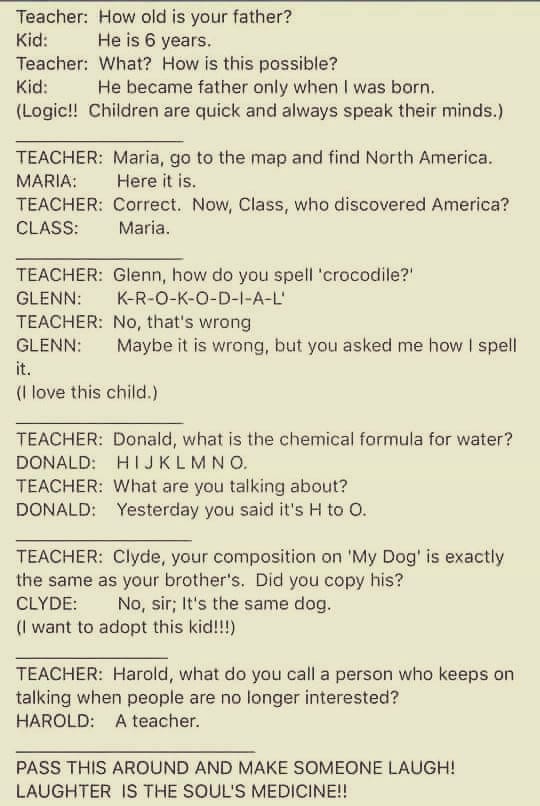
Responses By Kids Are Best Because They Are So Honest
Art Linkletter said he loved to interview kids and older people the most. Kids always told the truth and older people just didn’t care anymore and would say what they thought. Here is the Kids version.
Share this:

The Day My Son Became a Fisherman – A Father and Son Memory

This is a story about my young son trying to catch the biggest fish in the pond.
Fathers do things for their children. They take them places and (try to) teach them things.
I like to fish and wanted my son to also like it so we could fish together. I made sure that we went catching instead of fishing. For those who have gone a entire day fishing without catching anything, you know what I mean.
I took him to the fishing show one year to show him around. It is a place where they sell things mostly to catch fishermen’s wallets.
We started the show by dropping quarters into a large fish tank. If the quarter glided through the water and into the shot glass at the bottom, you were a winner with the prize being your choice of worms. He won on the first try and was very excited about it.
I knew his attention span was limited so we went to the trout pond to fish. When I say pond, I mean a temporary pool filled with fish. They were mostly small trout with maybe 3 big boys in the pond (actually the big ones are female). It came complete with plastic palm trees in the middle for décor. You paid your $2 and could keep anything you caught in 5 minutes. The poles were a 4-foot stick with a short line and small hook baited with a mostly inedible piece of plastic half the size of a fingernail.
The odds are with the fish on this one. Especially when they have seen the same bait for 3 days and got fed every night.
My goal was for him to catch anything while I wanted to get enough of the small guys for dinner. I told him that any fish was a good fish.
HUNTING MOBY DICK
Never the small dreamer, he spotted the biggest fish in the pool and said he was going after it. I feared he would be disappointed as everyone threw a line at it, but I knew I could just take him through the line again and tell him to go for something catchable.
I had landed about 3 of the small fish and was well on the way to having dinner by half the time allotted. He kept trying for the big fish (nicknamed Moby Dick).
As time was counting down and I had caught enough for dinner, I heard a huge splash beside me. I looked over and sure enough, my son had hooked Moby.
My new fear was that he would be crushed if the fish spit the hook. The hooks they provided were tiny and easy for the fish get off the line. I saw it happen to every kid before us. If you didn’t get one to the side in less than 15 seconds, it was pretty much over.
This fish was almost too strong for the small stick and line we were given. Over a minute into the fight, it was still on and I knew the odds were against us.
THE FIRST CHANCE TO LOSE THE FISH
Things took a turn for the worse as his fish got wrapped around one of the plastic palm trees. In my mind, I was already preparing to console him for his loss.
I knew I had to try something. After all, I was his Dad so I reached into the tank and grabbed the palm tree. The pond monitors weren’t happy with me but it was my son.
Anyone who ever had a fish on knows that if you get slack in the line, the fish is as good as gone once the line goes taut and the sudden tension pulls the hook out of the fish’s mouth.
To my surprise, Moby stayed on despite the tree incident and he was well past 2 minutes into the fight. Time was now over for that fishing session, but since he had one on we were allowed to finish. We had an audience as everyone waiting to fish and those who just finished could see that he had a good one on.
I decided that if by chance I could get my hands on this fish that I was willing to do anything to get it for my son. I didn’t want him to be disappointed after overcoming virtually everything that could go wrong, just to lose it at the last second. This wasn’t going to be easy, as anyone who has handled a trout knows they have a coating of slime. They are as slippery as greased ice. Landing them is usually done with a net, which we weren’t allowed to use.
PANIC AT THE MOMENT OF TRUTH
I thought nothing more could go wrong, but to my horror I could see that it was foul hooked (hooked on the body rather than the mouth). My sense of the odds of landing Moby were next to nothing now.
After what seemed like a million circles in the pond, Moby came within my reach and I stuck my hand under the fish and threw it out of the pond in one swoop.
On that day, he had landed the biggest fish in the pond, a Dad was proud and a small boy became a fisherman.
Here is a picture later in life of fishing together. He learned well

Share this:

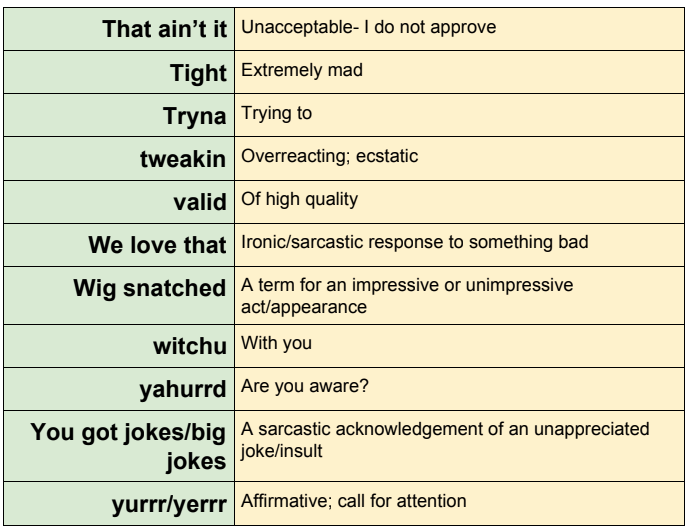
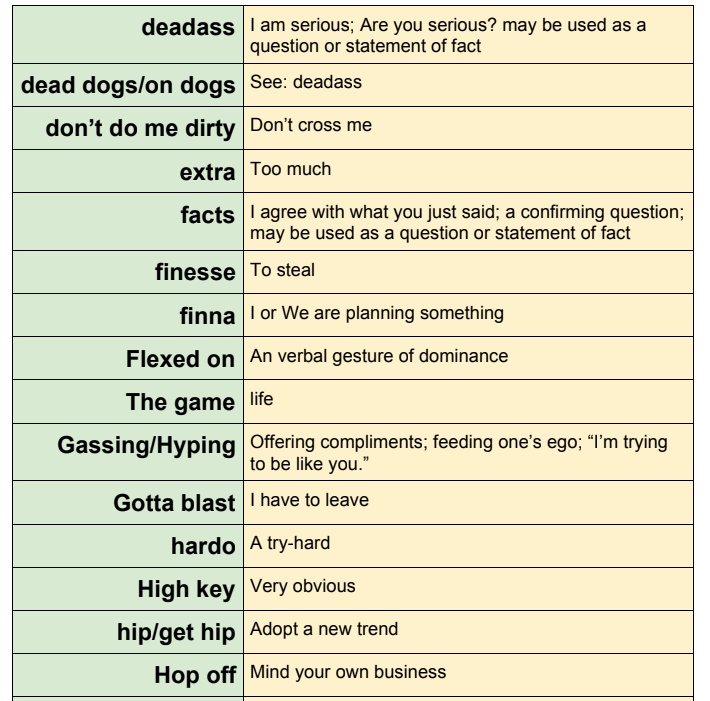
How To Talk To Generation Z Using Their Dictionary
Have you ever wondered what the f&*% the kids are talking about lately? Do you parents want to decode your kids texts?
Below is the Generation Z dictionary distributed by a Mr. Callahan so I point to him if any Gen Z’ers have a problem with it.
When thinking about this, I’m sure every generation trashes the previous by describing them as not as learned and their improper use of grammar. I’m also pretty confident that Shakespeare is rolling in his grave as he probably has done for each generation after him.
I’ve put some screenshots below and full link to the dictionary in PDF form to download.
What I fear is these people will be making decisions about my generation in a few years.
To fully honor this generation, I purposely didn’t put it in alphabetical order just to mess with them.


Share this:

Common Core Education, Failing our Kids
THE SETUP FOR THE DISCUSSION
I suppose every generation considers the learning of the next generation as inferior to theirs. If we didn’t, why do millennials eat tide pods? Why do parents talk about how better their education was and how soft they are on kids today? There are many reasons for this including prejudice, standards, government intrusion into the learning system and deviation from what made our education system the one that led to more progress, inventions and breakthroughs than any in the history of man.
We’ve now potentially gone backwards and have therefore failed the following generations.
In working with public school kids, I observe that there are many reasons. People are not equal and some are smarter and learn better than others. Those with two parent families or with a single parent who is highly integrated in the student’s learning consistently outperform those who don’t. The system has gone backwards due to interference from do-gooders, government (over)regulation and unions. Note: that is my observation only. I see kids rise above the system to achieve, but they have to swim upstream. Most can coast their way through.
Conversely, children who learn under Classical Education have an advantage in learning as it is taught to a standard the kids must keep up with as opposed to teaching to the lowest common denominator so no one is left behind, penalizing those who could achieve more.
Further, Classical Christian education is an approach to learning which emphasizes biblical teachings and incorporates a teaching model known as the Trivium, which consists of the three stages of grammar, logic, and rhetoric.
Classical education complements a child’s natural development stages. Young children can memorize information easily. So, in the early years, learning is enhanced by songs, body movement, recitation, and exploration. This sets them up for success in their next stage of learning, critical thinking.
The critical thinkers are what companies want to hire. They look at problems differently and come to the table with better skills for success.
They also have a distinct advantage over the public school system and the below discussion of how we are destroying learning.
WHERE EDUCATION HAS FAILED OUR KIDS
The biggest failure I’ve observed is the Common Core learning system. It threw away the standards of learning that has proved to produce educated kids by introducing a system that borders on the ridiculous.
It was implemented by those we thought were helping us, yet it may have set us back for years.
Behind a lot of this is none other than Bill Gates, a man I’ve met and have mixed thoughts about. Microsoft is far more successful than his support of Common Core.
From the American Thinker, I read this snippet:
But Bill Gates should have felt some uneasiness. Common Core was untested, unproven, and micromanaged by David Coleman, a man with limited credentials but reliably far to the left. Nobody in the business world launches a big new product without years of research and refinement. Instead, Common Core was wrapped in $1 billion’s worth of propaganda and dumped on the country as a fait accompli.
The late, great Siegfried Engelmann, a real educator, was asked what he thought of this approach: “A perfect example of technical nonsense. A sensible organization would rely heavily on data about procedures used to achieve outstanding results; and they would certainly field test the results to assure that the standards resulted in fair, achievable goals. How many of these things did they do? None.”
Did Gates realize that Common Core, supposedly a new and higher instruction, incorporates all the dubious ideas from decades prior? New Math and Reform Math were the basis for Common Core Math. Similarly, Whole Language and Balanced Literacy were rolled into Common Core’s English Language Arts (jargon for reading). Constructivism, which prevented teacher from teaching, has been undermining American schools for decades. Nothing new and higher about these clunkers.
An earlier generation of Gates’s business partners had created so much illiteracy that Rudolf Flesch had to write a book to answer every American’s favorite question: “why can’t Johnny read?”
I don’t hold Gates responsible except for his funding and use of his status to push this, but I hold those who pushed this system on the generation suffering from this learning standard.
The Thinker sums it up like this:
We have to wonder if Bill Gates performed due diligence, that being the care that a reasonable person exercises to avoid harm to other persons or property. In other words, before putting your business funds to work on anything, you should make yourself an expert. That’s what we need in this country: everybody becomes an expert. For sure, nobody should trust the official experts. If Bill Gates had observed that simple rule, he would still have a billion or two he doesn’t have now. And the country would have tens of millions of better educated students it doesn’t have now.
We need to stop this disservice to our kids and have them learn properly, and to learn to think critically.
Here is a video that shows just how far we’ve deviated from the learning system that invented computers, vaccines, technology that has helped mankind and sent men to the moon. Go to 1:24 under Decompose to see how far we’ve digressed.
CONCLUSION
It would seem the dumping common core and putting real learning would be best for the kids. The world is getting tougher and we need to give them every advantage possible.
Share this:

Things That Tell The Truth – Dogs Don’t Lie


What It’s Like To Have An Extremely High IQ?
Editors note: Since I published this, the comments have been coming in and are now far better than the blog post. I encourage you to read about the lives and struggles of those who have high IQ. Their stories are quite revealing.-> It’s in the comments, hint, hint, hint.
Authors disclosure: I won’t disclose where I am on the IQ chart, but I do have some in my family with very high IQ. My father had a gigantic IQ. Here are the stories of those with high IQ and their travails. See if you identify with any of them.
The blog post actually starts here. It is a compilation of individuals with their names mostly redacted who have written about the travails of a high IQ:
Johann Wolfgang von Goethe – “The intelligent man finds almost everything ridiculous, the sensible man hardly anything.”
Update: 10/3/16 from Alison Craig
It sounds like you are in the beginning stages of an existentialist crisis. http://plato.stanford.edu/entrie… I know the word “crisis” looks alarming, but it shouldn’t. In this case it just means you are examining the point of your own existence. Will I always be alone? Why am I here? Eventually you may even question all existence and come to the seemingly frightening conclusion that we’re all born alone and die alone and nothing in life has purpose.
“Well, that’s horrible! You’re depressing, why would you say such things?”
Again, I repeat- it is nothing to be alarmed about. Those things are true – to a degree. We are born alone and die alone, but we work to make connections with people who can support us, and that we can support in return. Intelligent or not, there will always be like minded people in the world somewhere and they are never easy to find for anyone. To me, making those connections is why I am here and is a large part of my purpose.
No matter how intelligent, wealthy or attractive a person is – it can always be difficult to find true connections so that all of the sharing and giving is not a one way street. Intelligent people may have stricter standards for making friends (in fashion or other), but so might a wealthy person, or a very attractive one. All people fear being used and some are just more cautious than others. An intelligent person can read books on understanding human nature ( Ten Keys to Handling Unreasonable & Difficult People), body language Psychology Today and other psychology tools to assist them in making life long connections with other people.
===============================================
From Shah Rukh Qasim on hiding your intelligence:
If you could generalize, the most common would be:
- You keep talking to a person, telling him something you think he doesn’t know. He keeps listening. Then he shares his insight which makes you think he has already known everything you told him. Smart people at often silent and active listeners.
Other signs will include:
- Good problem solvers. Not just mathematics problem. But even daily life problems. They’ll quickly find what’s wrong and take the best course of action to solve the problem.
- They’ll be different in views. And their views will always come with reason. A quote goes around: Small minds discuss people. Average mind discuss events. Great minds discuss ideas.
- “A fool thinks himself to be wise, but a wise man knows himself to be a fool.” – William Shakespeare
- They often look for reasons. It goes in four levels (worst to best):
- What?
- How?
=========================================
It sucked when I was younger, but these days it’s just awesome.
There is a very common pattern among highly gifted people, namely:
- When you’re young it’s very isolating, and it feels like everyone else is just stupid
- As you grow older, you realize your gift. You also realize that raw intelligence isn’t everything, and that things like social skills matter a lot. Plus, you meet others like you.
- Your social life improves as you get older and learn to connect on things other than intelligence or go to elite institutions where you can meet other highly gifted people.
Honestly, at this point in my life I feel like there are literally no downsides to having a high IQ. It’s like being born good looking or with great physical health: it’s not a silver bullet to a happy life, but it makes a lot of things much easier.
I only found out I had a high IQ (161) because my professional life was such a mess I had to see a psychologist.
If I had to sum it up in a few sentences, I would say that the most aggravating thing about being very intelligent is that you quickly see and understand things at a level of depth that most people don’t (or can’t), and it is very frustrating. You want to move on, you want to be pushed, you don’t want to spend time explaining the details of things you have already grasped, but no one else is caught up yet, so you have to pause. It is particularly painful when dealing with complex topics where the mental models involve feedback loops and non-linearities.
But that said, I’ve learned there is much more to life than intelligence, and being successful is more about hard work and good communication skills than anything else.
====================================================
“One of the indictments of civilizations is that happiness and intelligence are so rarely found in the same person.”
Working successfully in society and business is limited by some really important social choke points. One of them is that other people, even if they are intellectually slower, must be treated with respect. Another is that even if you are correct you will have difficulty getting people to act on your insights until they understand why you are correct. A third thing is that most important activities are done as a team and so taking action requires breaking down your insights into something that your slower peers and employees can understand. If you try to blow past these choke points you will destroy relationships and even if you are right, your career will languish. I try to remind myself that being successful is not well correlated to being right.
My career is going pretty well now that I’ve understood these constraints. It is possible to turn intelligence to practical life-advantage but our educational system doesn’t really give a blueprint for this. I left school thinking that it mattered that I understood things 5 minutes or 5 years before my classmates did. It doesn’t. Most people’s functioning adult lives are not spent solving tough problems. They are spent going through well established rituals and patterns of relating to each other punctuated by an occasional tough problem. In most cases, people can even skip the tough problems and still do okay in life. So how do you convert a parlor trick (like knowing the ending of a movie after 5 minutes) into something that will make you happier? Mostly, you don’t. Use it when it’s valuable and relax a little when it’s not.
There’s a great Dilbert where someone invites him to join the company’s Mensa chapter and Dilbert asks why people who are so smart continue to work at the company. The president of the Mensa chapter answers, “Intelligence has much less practical application than you’d think.”
==========================================
In a word, I find it alienating.
Extremely so, in fact.
And I think this is not only because of what makes me “smart”, but also because of what my brain has to sacrifice to be “smart” in that way. (More on that in a sec.)
For the record, my IQ was measured (years ago) at 178. [ETA: Just looked up the percentile, and that’s about 1 in 2 million, for some perspective.] I have 3 advanced degrees and a solid career. But I’m still single and spend very little time around other people.
It took me some time as a young kid to figure out that the people around me weren’t interested in the same things I was. And that, often, to talk about the things I found interesting turned people away.
So I hid that.
When they announced that I was valedictorian of my high school, I was in 1st period art class, and one of my classmates refused to believe that they’d said my name.
But I never felt like I belonged anywhere, and I still don’t.
I don’t have kids, TV doesn’t interest me, I don’t follow celebrities or watch sports. My time is spent with my work, and researching the things that are important to me — astrophysics, particle physics, consciousness research, and although this might seem strange to some people, Biblical scholarship (tho I’m not a believer).
As a result, chit-chat is impossible for me, or else it’s so boring that it becomes impossible.
But like I said, the problem isn’t only that my brain is interested in things that most other brains aren’t. It’s also what my brain can’t do.
There’s only a certain amount of space in the brain, and if one area is eating up the real estate with more neural power, some other part of the brain is likely losing out.
For me, it’s some of the automatic social functioning which tells you, for example, what emotion another person is feeling based on their facial expression, or whether someone’s being sarcastic or not. (Sarcasm is a minefield for me, and meeting another person in a hallway is a nightmare — I cannot interpret when to look, or not, what to say, or not, etc.)
That said, I have an enormously rich life, and I’ve adjusted to it. When I stopped trying to fit in, things got better.
=============================================
HOWEVER…..STUPID IS AS STUPID DOES
The smart can do stupid things such as:
- Ignoring the importance of design and style – When the iPod originally came out, technical people complained about its lack of features and perceived high price (“ooh, who cares about another MP3 player, I can go buy one at Best Buy for $50” http://forums.macrumors.com/show…). In the meantime, it was so cool and easy to use that normal people went out in droves to buy it.
- Using terrible tools, and taking pride in their awfulness – Especially common with programmers, who take pride in using programming languages and text editors that have been designed by programmers, not updated since the 1970s, and never touched by anyone with a modicum of design sense. They believe that mastering arcane, overcomplicated commands and processes are a mark of pride, rather than a waste of time. I will refrain from singling out specific programming languages and tools here, because smart people also like to get caught up in pointless flame wars about this sort of thing.
- Following the pack – Many smart people often seem to be followers, probably because they grow up spending so much time pleasing others via academic and extracurricular achievement that they never figure out what they really like to work on or try anything unique. Smart people from top schools tend to flock into the same few elite fields, as they try to keep on achieving what other people think they should achieve, rather than figuring out whatever it is they intrinsically want to do.
- Failing to develop social skills – Some smart people focus exclusively on their narrow area of interest and never realize that everything important in life is accomplished through other people. They never try to improve their social skills, learn to network, or self promote, and often denigrate people who excel in these areas. If you are already a good engineer you are going to get 10x the return on time spent improving how you relate to other people compared to learning the next cool tool.
- Focusing on being right above all else – Many smart people act as if being right trumps all else, and go around bluntly letting people know when they are wrong, as if this will somehow endear others to them. They also believe that they can change other people’s minds through argument and facts, ignoring how emotional and irrational people actually are when it comes to making decisions or adopting beliefs.
- Letting success in one area lead to overconfidence in others – Smart people sometimes think that just because they are expert in their field, they are automatically qualified in areas about which they know nothing. For instance, doctors have a reputation as being bad investors: http://medicaleconomics.modernme….
- Underrating effort and practice – For smart people, many things come easily without much effort. They’re constantly praised for “being smart” whenever they do anything well. The danger is that they become so reliant on feeling smart and having people praise them, that they avoid doing anything that they’re not immediately great at. They start to believe that if you’re not good at something from the beginning, you’re destined to always be terrible at it, and the thing isn’t worth doing. These smart people fail to further develop their natural talents and eventually fall behind others who, while less initially talented, weren’t as invested in “being smart” and instead spent more time practicing. http://nymag.com/news/features/2…
- Engaging in zero sum competitions with other smart people – Many smart people tend to flock to fields which are already saturated with other smart people. Only a limited number of people can become a top investment banker, law partner, Fortune 500 CEO, humanities professor, or Jeopardy champion. Yet smart people let themselves be funneled into these fields and relentlessly compete with each other for limited slots. They all but ignore other areas where they could be successful, and that are less overrun by super-smart people. Instead of thinking outside the box, smart people often think well within a box, a very competitive box that has been set up by other people and institutions to further someone else’s interests at the expense of the smart person.
- Excessively focusing on comparing their achievements with others – Smart people who have been raised in a typical achievement-focused family or school can get anxious about achievement to the point of ridiculousness. This leads to people earnestly asking questions like: Success: If I haven’t succeeded in my mid 20s, could I be successful in the rest of my life? and Are you a failure if you are not a billionaire by age 30? What about 40?
- Ignoring diminishing returns on information – Smart people are often voracious readers and can absorb huge quantities of information on any subject. They get caught up in reading every last bit of information on subjects that interest them, like investing, lifehacking, or tech specs of products they’re planning on buying. While some information is useful in making a decision, poring through the vast amount of information available online can be a waste of time. They end up spending a lot of time gathering information without taking action.
- Elitism – Smart people often use smartness as measure of the entire worth of a person. They fail to see the value in or even relate with people who are different. This is illustrated by the Yale professor who doesn’t have the slightest idea what to say to his plumber: http://www.theamericanscholar.or…. And questions like Am I an elitist to think that most people are stupid?
Share this:

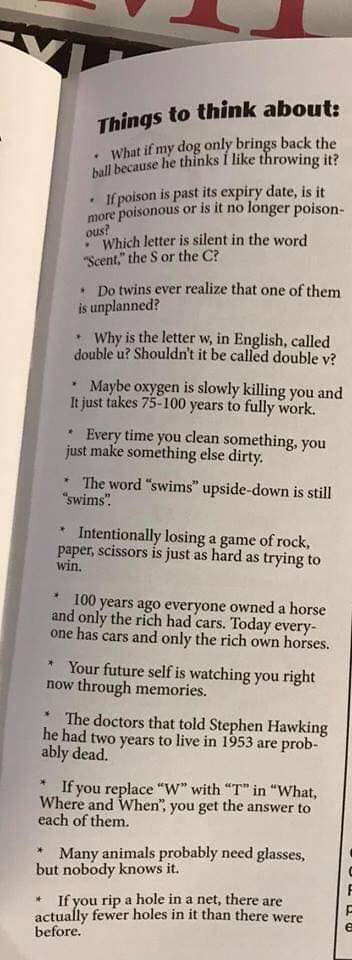
Things To Ponder Like Swims Is the Same Upside Down
Share this:

Why Dogs Are Happier


More IKEA humor – The Less Successful Trojan Horse

Share this:

Humor – Buying a Book From IKEA

Share this:

Cyclic Numbers, Interesting Math Fun
Not really a joke … just a tiny bit of math fun.
142857 is a cyclic number – its digits always appear in the same order but will rotate around when multiplied by any number from 1 to 6:
142857 x 1 = 142857
142857 x 2 = 285714
142857 x 3 = 428571
142857 x 4 = 571428
142857 x 5 = 714285
142857 x 6 = 857142Pretty cool, huh? Now multiply 142857 by 7. (Spoiler below.)
142857 x 7 = 999999
Share this:

Prehistoric Googling

Share this:

What Are The Top 10 Things You Should Be Informed Of In Life
Again, these are not my answers, but are an interesting read on people. It will offend some, but God is number one for me. The rest of the lists below should offend someone or many.
1. Human psychology. It’s a young field, and no one has all the answers yet. But you can get a better understanding of why other people do what they do — and how to thread your way through life’s complexities — by studying at least a little of this field.
2. The basics of accounting. This will greatly reduce your chances of being swindled in life. It also will make it much easier for you to do some systematic planning, while keeping track of how you’re doing vis a vis your plans.
3. Music. It will calm you. It will inspire you. It will build bridges to a more interesting set of friends.
4. Your own family’s story. Where did your parents grow up, and how did that shape who they are? What are the formal or informal communities that help define your identity? (“We are athletes … we are Irish … we are restless spirits who move from city to city.”) Having an enduring sense of identity that goes beyond the ups and downs of your own life will be a source of comfort and motivation all your life.
5. The way your government really works. Find out why some laws are tightly enforced and others aren’t. Learn the best ways of influencing your government — whether it’s on matters of national significance or something as personal as winning a zoning variance for the cafe you run. Finally, gain some non-bitter insights about why society doesn’t always work the way you’d like.
6. Good nutrition and how to incorporate it into your life. Mike Leary is right. In a poor society, this is the difference between life and death. In a rich society, it’s — surprise! — the difference between a long, robust future and chronic illness that can turn deadly far too soon.
7. Different cultural values. If you’re going to be effective outside a small cluster of people like you, you’ll need to understand and appreciate how other tribes work, too.
8. How to communicate your ideas to the wider world. Justin Freeman is right. Learn how to speak clearly and persuasively. Or to write well. Or to create useful and appealing computer code, video, music, etc. Pick the medium that works best for you, and make sure you don’t go through life being mute.
9. Effective parenting. Just because your parents didn’t quite get it right (no one ever does!) doesn’t mean that you can’t do better. Find your own style, stick with what works … but keep refining your approach as you learn from others. You owe it to the species.
10. Quora. It’s one-stop shopping for biased crap! Be aware of what’s on Quora, and you’ll know what not to believe.
Here’s another:
- Realize that nobody cares, and if they do, you shouldn’t care that they care. Got a new car? Nobody cares. You’ll get some gawkers for a couple of weeks—they don’t care. They’re curious. Three weeks in it’ll be just another shiny blob among all the thousands of others crawling down the freeway and sitting in garages and driveways up and down your street. People will care about your car just as much as you care about all of those. Got a new gewgaw? New wardrobe? Went to a swanky restaurant? Exotic vacation? Nobody cares. Don’t base your happiness on people caring, because they won’t. And if they do, they either want your stuff or hate you for it.
- Some rule breakers will break rule number one. Occasionally, people in your life will defy the odds and actually care about you. Still not your stuff, sorry. But if they value you, they’ll value that you value it, and they’ll listen. When you talk about all of those things that nobody else cares about, they will look into your eyes and consume your words, and in that moment you will know that every part of them is there with you.
- Spend your life with rule breakers. Marry them. Befriend them. Work with them. Spend weekends with them. No matter how much power you become possessed of, you’ll never be able to make someone care—so gather close the caring.
- Money is cheap. I mean, there’s a lot of it—about forty thousand billion dollars floating around the world, largely made up of cash whose value is made up and ascribed to it, anyway. Don’t engineer your life around getting a slightly less tiny portion of this pile, and make your spirit of generosity reflect this principle. I knew a man who became driven by the desire to amass six figures in savings, so he worked and scrimped and sacrificed to get there. And he did… right before he died of cancer. I’m sure his wife’s new husband appreciated his diligence.
- Money is expensive. I mean, it’s difficult to get your hands on sometimes—and you never know when someone’s going to pull the floorboards out from under you—so don’t be stupid with it. Avoid debt on depreciating assets, and never incur debt in order to assuage your vanity (see rule number one). Debt has become normative, but don’t blithely accept it as a rite of passage into adulthood—debt represents imbalance and, in some sense, often a resignation of control. Student loan debt isn’t always unavoidable, but it isn’t a given—my wife and I completed a combined ten years of college with zero debt between us. If you can’t avoid it, though, make sure that your degree is an investment rather than a liability—I mourn a bit for all of the people going tens of thousands of dollars in debt in pursuit of vague liberal arts degrees with no idea of what they want out of life. If you’re just dropping tuition dollars for lack of a better idea at the moment, just withdraw and go wander around Europe for a few weeks—I guarantee you’ll spend less and learn more in the process.
- Learn the ancient art of rhetoric. The elements of rhetoric, in all of their forms, are what make the world go around—because they are what prompt the decisions people make. If you develop an understanding of how they work, while everyone else is frightened by flames and booming voices, you will be able to see behind veils of communication and see what levers little men are pulling. Not only will you develop immunity from all manner of commercials, marketing, hucksters and salesmen, to the beautiful speeches of liars and thieves, you’ll also find yourself able to craft your speech in ways that influence people. When you know how to speak in order to change someone’s mind, to instill confidence in someone, to quiet the fears of a child, then you will know this power firsthand. However, bear in mind as you use it that your opponent in any debate is not the other person, but ignorance.
- You are responsible to everyone, but you’re responsible for yourself. I believe we’re responsible to everyone for something, even if it’s something as basic as an affirmation of their humanity. However, it should most often go far beyond that and manifest itself in service to others, to being a voice for the voiceless. If you’re reading this, there are those around you who toil under burdens larger than yours, who stand in need of touch and respect and chances. Conversely, though, you’re responsible for yourself. Nobody else is going to find success for you, and nobody else is going to instill happiness into you from the outside. That’s on you.
- Learn to see reality in terms of systems. When you understand the world around you as a massive web of interconnected, largely interdependent systems, things get much less mystifying—and the less we either ascribe to magic or allow to exist behind a fog, the less susceptible we’ll be to all manner of being taken advantage of. However:
- Account for the threat of black swan events. Sometimes chaos consumes the most meticulous of plans, and if you live life with no margins in a financial, emotional, or any other sense, you will be subject to its whims. Take risks, but backstop them with something—I strongly suspect these people who say having a Plan B is a sign of weak commitment aren’t living hand to mouth. Do what you need to in order to keep your footing.
- You both need and don’t need other people. You need others in a sense that you need to be part of a community—there’s a reason we reflexively pity hermits. Regardless of your theory of anthropogenesis, it’s hard to deny that we are built for community, and that ‘we’ is always more than ‘me.’ However, you don’t need another person in order for your life to have meaning—this idea that Disney has shoved through our eyeballs, that there’s someone out there for all of us if we’ll just believe hard enough and never stop searching, is hokum… because of arithmetic, if nothing else. Establish your own life—then, if there’s a particular person that you can’t help but integrate, believe me, you’ll know.
- Always give more than is required of you.
Go to the link above, there is more.
Add more in comments if you have a better suggestion than these.
Share this:

Are High IQ People Better Off With Fewer Friends?
So says an article published by the Washington Post.
Having discussed high IQ people including those with a perceived higher intelligence a number of times (this one with the highest Google ranking), I like to ponder on these things.
The first in this article tends to reference dwelling among all people as it relates to happiness:
They use what they call “the savanna theory of happiness” to explain two main findings from an analysis of a large national survey (15,000 respondents) of adults aged 18 to 28.
First, they find that people who live in more densely populated areas tend to report less satisfaction with their life overall. “The higher the population density of the immediate environment, the less happy” the survey respondents said they were. Second, they find that the more social interactions with close friends a person has, the greater their self-reported happiness.
Why would high population density cause a person to be less happy? There’s a whole body of sociological research addressing this question. But for the most visceral demonstration of the effect, simply take a 45-minute ride on a crowded rush-hour Red Line train and tell me how you feel afterward.
One would tend to think that if you weren’t in such a densely populated area, that it might lead to greater happiness. No wonder New York, Chicago and other highly populated cities have such low rankings in this category.
THE NEED TO BE ALONE
I can’t prove it, but there is a tendency for “Smart People” to be either introverted or have a need to spend time alone to gather their thoughts when making contributions to inventions, theorem’s, calculations and other notable achievements. (Note: the link above describes things introverts won’t tell you, but you should know).
Being an author, I know that I prefer quiet to gather my thoughts and increase the powers of concentration on what I am trying to write. It’s hard to clear your mind when there is a bombardment of distractions either from people, social media or other causes.
The article does state the obvious, long commutes, traffic, waiting in line and crowds are tedious, monotonous, and can grate on anyone over time. The infrastructure is usually older (see the lead in the water in Flint, Mich.) I’ve often wondered why anyone would want to live in a place like that if they really had a choice. Maybe that is why there is such a large population outflow to Florida upon retirement.
Kanazawa and Li’s second finding is a little more interesting. It’s no surprise that friend and family connections are generally seen as a foundational component of happiness and well-being. But why would this relationship get turned on its head for really smart people?
I posed this question to Carol Graham, a Brookings Institution researcher who studies the economics of happiness. “The findings in here suggest (and it is no surprise) that those with more intelligence and the capacity to use it … are less likely to spend so much time socializing because they are focused on some other longer term objective,” she said.
Think of the really smart people you know. They may include a doctor trying to cure cancer or a writer working on the great American novel or a human rights lawyer working to protect the most vulnerable people in society. To the extent that frequent social interaction detracts from the pursuit of these goals, it may negatively affect their overall satisfaction with life.
The article and researchers discuss a “Savannah theory of happiness” which is a bit of a reach since there weren’t iPhones for cavemen, although an ability to deal with new challenges seems obvious.
FEAR OF MISSING OUT OF SOMETHING FOR SOME, LOATHING PEOPLE FOR OTHERS
There is a need for many in the general population to gain happiness from their social interactions. I have relatives who suffer from FoMo syndrome, generally indicating that they derive their happiness and/or satisfaction from others or the perception of others.
When drilling down and specifically targeting high IQ people, there is a distinct difference from the last sentence in the above quote:
Second, they find that the more social interactions with close friends a person has, the greater their self-reported happiness.
But there was one big exception. For more intelligent people, these correlations were diminished or even reversed.
“The effect of population density on life satisfaction was therefore more than twice as large for low-IQ individuals than for high-IQ individuals,” they found. And “more intelligent individuals were actually less satisfied with life if they socialized with their friends more frequently.”
Let me repeat that last one: When smart people spend more time with their friends, it makes them less happy.
Again, an observation from the high IQ group and personal introspection, there seems to be less of a need to find your happiness in others or what others think of you in this space. It might be in the above stated pursuit of goals:
Hell might actually be other people — at least if you’re really smart.
That’s the implication of fascinating new research published last month in the British Journal of Psychology. Evolutionary psychologists Satoshi Kanazawa of the London School of Economics and Norman Li of Singapore Management University dig in to the question of what makes a life well-lived. While traditionally the domain of priests, philosophers and novelists, in recent years survey researchers, economists, biologists and scientists have been tackling that question.
There’s a twist, though, at least as Kanazawa and Li see it. Smarter people may be better equipped to deal with the new (at least from an evolutionary perspective) challenges present-day life throws at us. “More intelligent individuals, who possess higher levels of general intelligence and thus greater ability to solve evolutionarily novel problems, may face less difficulty in comprehending and dealing with evolutionarily novel entities and situations,” they write.
It appears that the high IQ might actually have another less socially accepted skill that is less politically correct as defined by the masses. They may just have thought out that they are able to be happier or more satisfied while being alone rather than by having to try and satisfy others definition of their happiness.
Conversely, they might find being around other people annoying, especially the chatty or needy.
Once you are able to happy alone, the ability to be happy with others is icing on the cake, but shouldn’t be the definition of the cake.
Share this:

Internet Road Rage, You Are Probably a Coward Hiding Behind The Screen
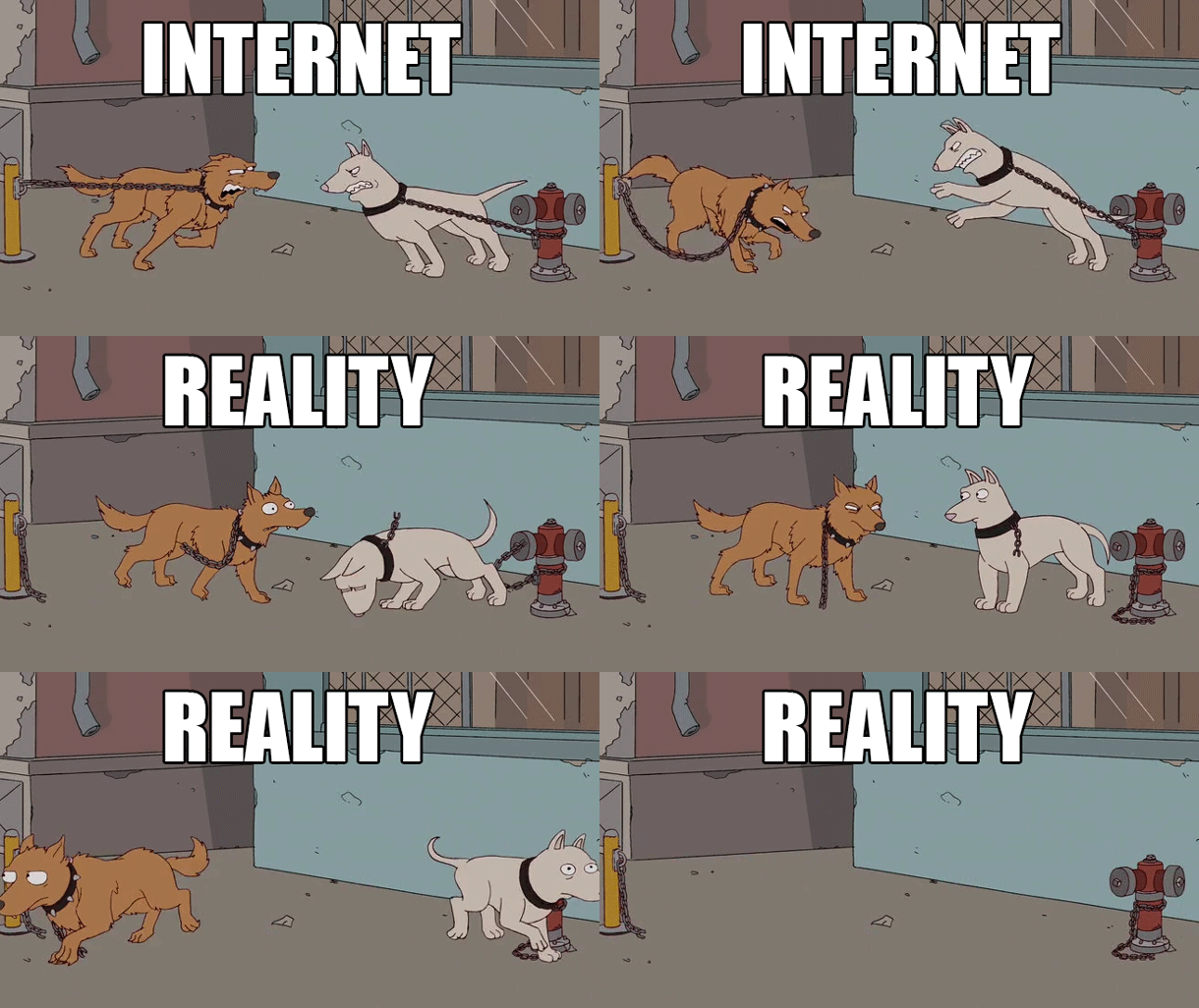 What is Internet Road Rage? My definition is that you are willing to engage in hateful, spiteful language aimed at someone whom you either don’t agree with ideologically/religiously/politically/any excuse to vent, or a counter attack to someone who got on you or your ideas.
Here is the caveat. You most likely wouldn’t act or speak that way in person or to someone’s face with that tone or language. Most of you have either more self-decency in person or a survival instinct that would prevent you from getting your ass kicked.
Worse, you could or are likely a Porch Dog, one who barks severely, but is no real threat. In other words, you yap by tapping the keyboard but pose no intellectual threat.

ACTUAL ROAD RAGE
Most people have road rage inside them. Here is how it works:
Polite drivers may think that dialogue like that is the territory of deranged, out-of-control, or terrible drivers, and maybe they’re right. But according to a new survey from AAA, most drivers in the United States display signs of road rage. So too bad, you supposedly polite drivers.
The survey, published today, polled 2,705 drivers 16 years old and older about their road rage habits. Seventy-eight percent of drivers—more than three-quarters—reported engaging in some kind of aggressive driving maneuver, including tailgating, yelling, honking, gesturing angrily, purposely blocking another vehicle, cutting someone off, confronting someone, and intentionally ramming another car.
The breakdown of each category was fairly unsurprising. Fifty-one percent of drivers reported tailgating at least once; 47 percent reported yelling at least once; 45 percent reported honking at least once. The more bats**t responses—confronting another driver and ramming another vehicle—polled much lower on the list.
INTERNET ROAD RAGE
There is every flavor in the book, more than I can write about. It started with email flaming. As soon as forums or ideological websites like Quora, Instagram, Facebook, The Huffpo, Fox News, etc., etc. The net of it was that people were able to transfer their hate to others online. The comments are mendacious, eviscerating and frequently ad hominem attacks that most wouldn’t do face to face.
I call B.S. as most of those people are cowards and wouldn’t stand up to others in real life. There are of course some that do speak their minds, but they generally have more of a life than pissing on each other online.
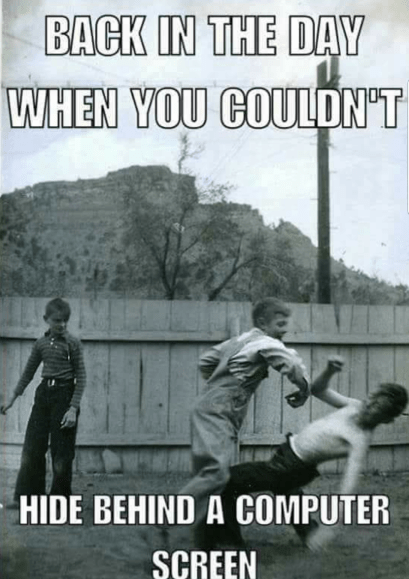
What would the other person do? Back in the schoolyard days, you say something like what is written almost everywhere now and you’d have to fight. Most people don’t like to fight and there are a few who know very well how to protect themselves. I’d even bet that a lot of folks who are right wingers fully explore their second amendment rights. Who wants to walk into that? There are some who would be very able to kick your ass and would.

WHY DO YOU DO IT?
I use the word you in its’ plural and direct form. I’m pointing at everyone who reads this because most of you have crossed the line when someone pissed you off.
The reason is that you envision some curtain of invisibility or invincibility because you are typing to a screen. You wouldn’t say it in person, or wouldn’t say it that way. Therefore, you are either a coward or a bully. Most people lose considerable IQ points when you think this way.
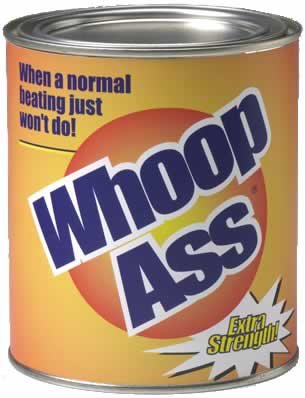
So stop it. Grow up and act like an adult. Be big enough to pass over some typed letters of venting. More than likely, there isn’t enough reason for responses that are so harsh. Before you type it, imagine saying it face to face and see if you would do it, or risk either your reputation or an ass whooping.
Share this:

How Do High IQ People Read Books
Note: intelligent people generally read a lot. There are many ways to read a book. Authors read for story arc’s, character profile and emotional connection.
Many people learn from textbooks, but for general reading, here is a good list I found on how high IQ people read:
1) Find a personal angle: You need to relate to what you’re reading
2) Get a bird’s eye view: Get the basic outline of the book by skimming through the table of contents (and the rest of the book); try finding a central theme
3) Drum up curiosity: Draft a few “curiosity questions” based on the theme; consider these questions as you read the book
4) Create your own structure: Identify key points in the book and leave space for you to take in-depth notes
5) Record key insights: Take in-depth notes based on the elements you mentioned in Step 4; think about what the “Takeaway Message” is.
6) Review your notes: Now that you have a summary you have created in your own words, it’s now time to review; try to remember the details related to the messages you recorded 10 minutes, 2 days, 1 week after finishing the book.
7) Repeat with another book.
Here is the link to this list.
Share this:

High IQ Humor – Acute Joke Geometry Style

Share this:

How Facebook Causes Depression

 Scroll down a few posts and you’ll see other articles I’ve posted that talk about Social Media ruining people’s lives. It’s their outside daring you to compare, unfortunately to your inside.
Spending too much time on “social media” sites like Facebook is making people more than just miserable. It may also be making them depressed.
A new study conducted by psychologists at the University of Pennsylvania has shown — for the first time — a causal link between time spent on social media and depression and loneliness, the researchers said.
It concluded that those who drastically cut back their use of sites like Facebook, Instagram and Snapchat often saw a marked improvement in their mood and in how they felt about their lives.
Many of those who began the study with moderate clinical depression finished just a few weeks later with very mild symptoms, she says.
The study, “No More FOMO: Limiting Social Media Decreases Loneliness and Depression,” was conducted by Melissa Hunt, Rachel Marx, Courtney Lipson and Jordyn Young, is being published by the peer-reviewed Journal of Social and Clinical Psychology.
For the study, Hunt and her team studied 143 undergraduates at the University of Pennsylvania over a number of weeks. They tested their mood and sense of well-being using seven different established scales. Half of the participants carried on using social media sites as normal. (Facebook, Instagram and Snapchat did not respond to request for comment.)
The other half were restricted to ten minutes per day for each of the three sites studied: Facebook, Instagram and Snapchat, the most popular sites for the age group. (Use was tracked through regular screen shots from the participants’ phones showing battery data.)
Net result: Those who cut back on social media use saw “clinically significant” falls in depression and in loneliness over the course of the study. Their rates of both measures fell sharply, while those among the so-called “control” group, who did not change their behavior, saw no improvement.
This isn’t the first study to find a link between social media use, on the one hand, and depression and loneliness on the other. But previous studies have mainly just shown there is a correlation, and the researchers allege that this shows a “causal connection.”
So I ask, why do you do it to yourselves? Facebook has a model to make you feel worse while they steal your privacy and track you to sell your profile to everyone and anyone.
Share this:

11th Hour of the 11th Day of the 11th Month
 On the 11th hour of the 11th day of the 11th month the sounds of the guns went silent
Today is Veteran’s Day. the 100th anniversary
World Leaders gather to mark the 100th anniversary of WW1
The commemoration is the centerpiece of global tributes to honor the 10 million soldiers killed during the 1914-18 war and mark the moment the Armistice, signed in northeastern France, came into effect at 11 a.m. on Nov. 11, 1918.
World leaders, including Trump, German Chancellor Angela Merkel and Russian President Vladimir Putin, will be seated under a glass canopy at the foot of the Arc de Triomphe, built by Emperor Napoleon in 1806, for the ceremony.
Macron is expected to speak and light a flame in honor of an unknown soldier who was killed in the war and whose remains are buried with others under the triumphal arch. Afterwards, Macron will host a lunch for the dignitaries at the Elysee.
We honor and remember those who fought for the Freedom of our country and fought side by side with those who are now or were friends of ours.
It is important to never forget that Freedom isn’t Free. 
Man has been at war since he was put on the face of the earth.
We appear to be on that track until the end of our existence. While I don’t advocate war, pacifism has always lead to tragedy because of the ruthlessness of those who seek power, ignore borders and human rights.
Here are links to Veterans Day that I found interesting:
From John Ray: Click on it to see these pictures.
The 11th of November in 1918 was when the First World War officially came to an end. And that day has been formally marked every year since in remembrance of those who died. When I was growing up it was known as Armistice Day in Australia and I still think of it as that. It is however now formally Remembrance Day. It is Veterans Day in the USA. It is perhaps a little more significant this year as the 90th anniversary of the event. Britain certainly seems to have been engaging in more than the usual amount of commemoration in the last few days.
Anything by Blackfive (a 4 part series this time)
A great Picture from Knowledge is Power
Dedicating the Intrepid. A Carrier that saw plenty of action and sacrifice.
Share this:

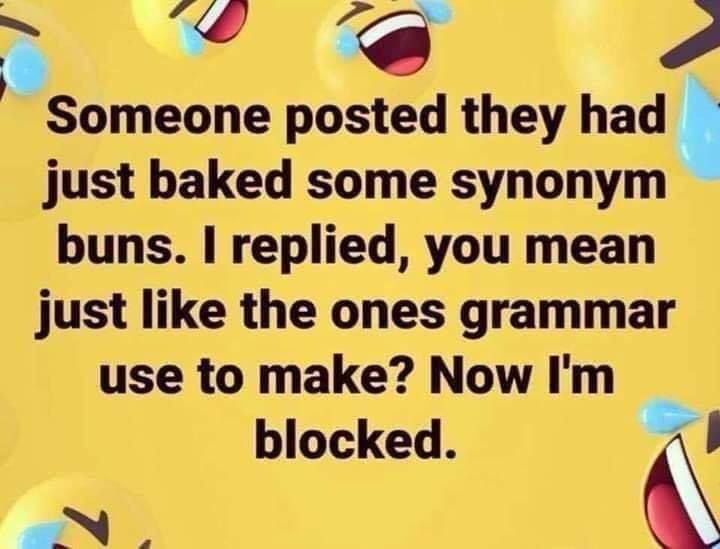
Grammar Humor
Share this:

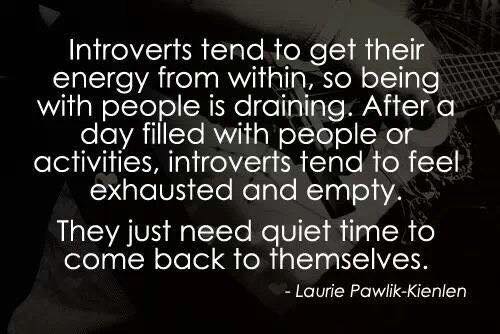
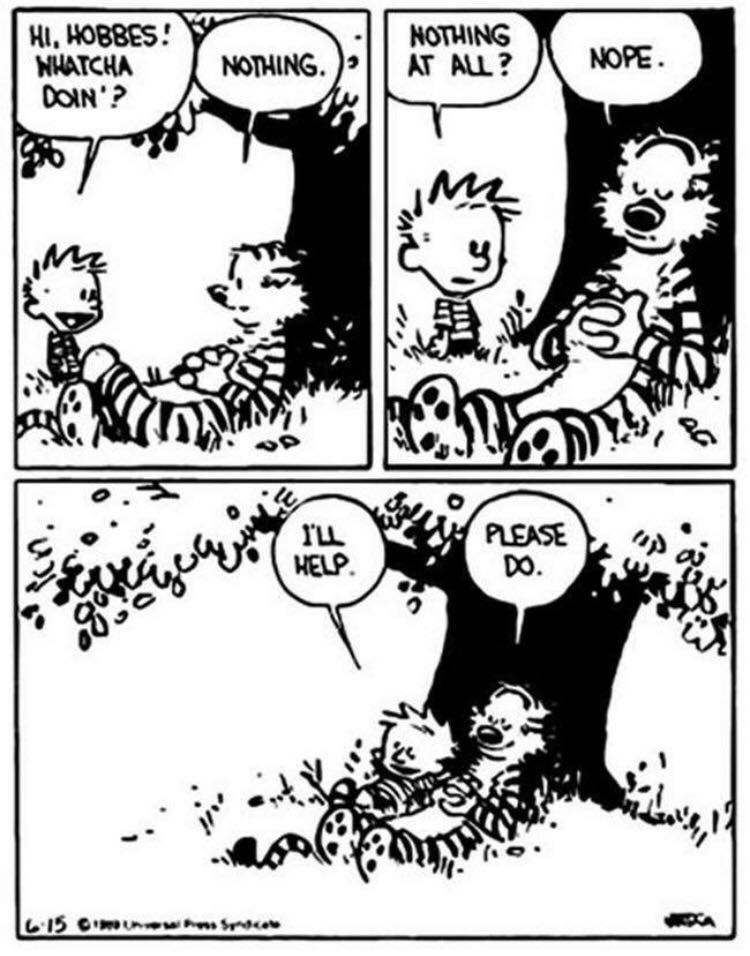
Introvert Meme’s and Cartoons, But They Say Everything Extroverts Should Know (stop trying to change us)




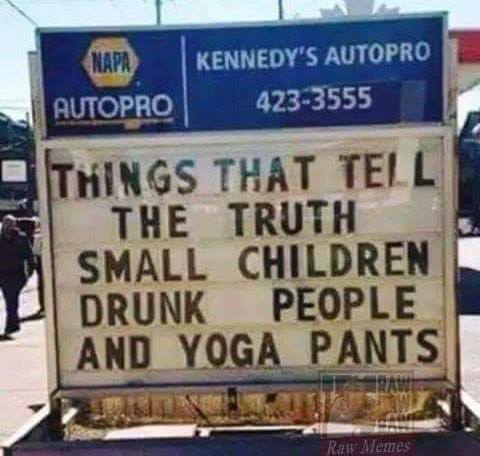
Things That Tell The Truth – Humor
Share this:

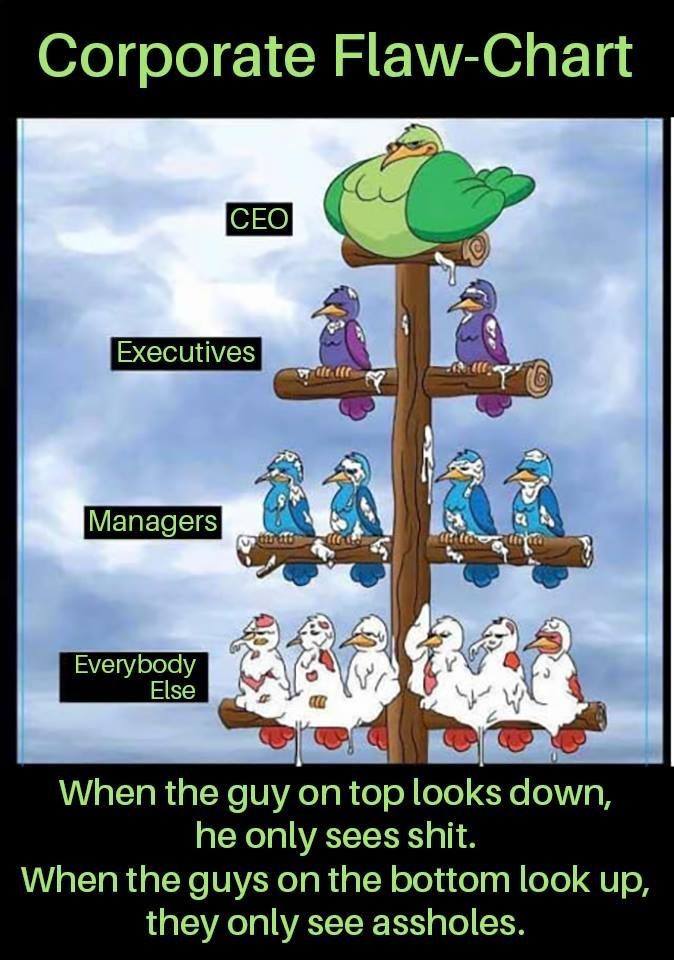
Corporate Flow Chart
Share this:

A Lot of People Are Going To Be Disappointed When They Discover The Center of The Universe


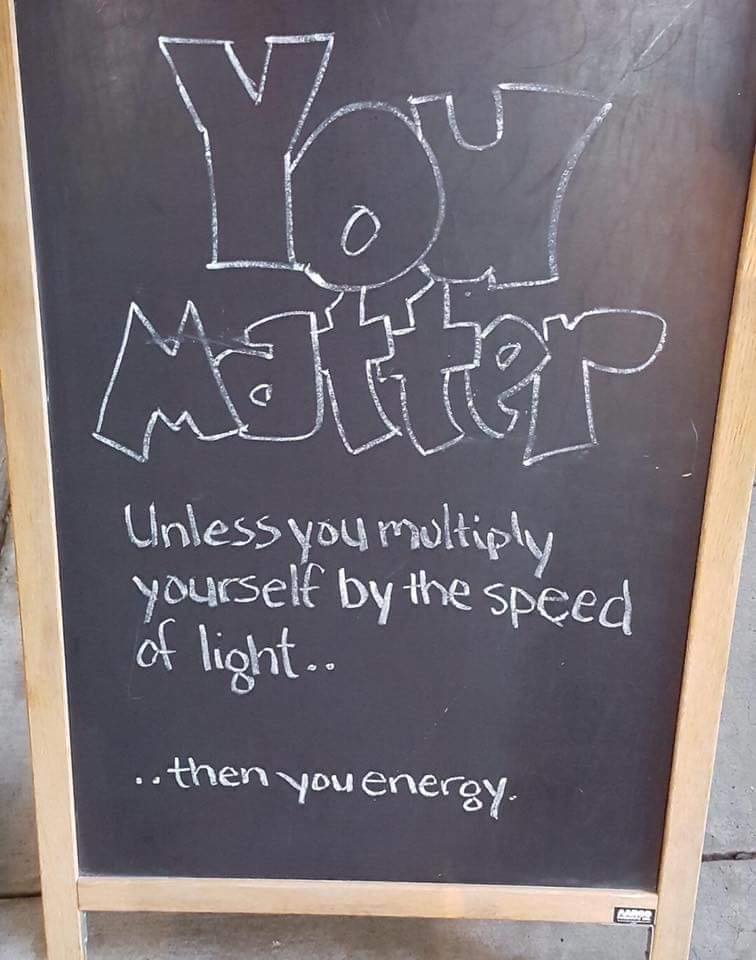
High IQ Humor – You Matter
Share this:

Great Moments in Philosophy

Share this:

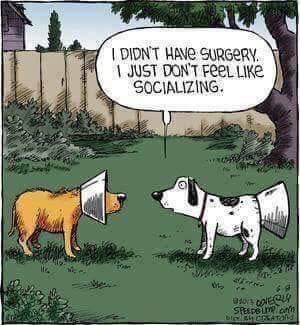
Introvert Animal Humor
Share this:

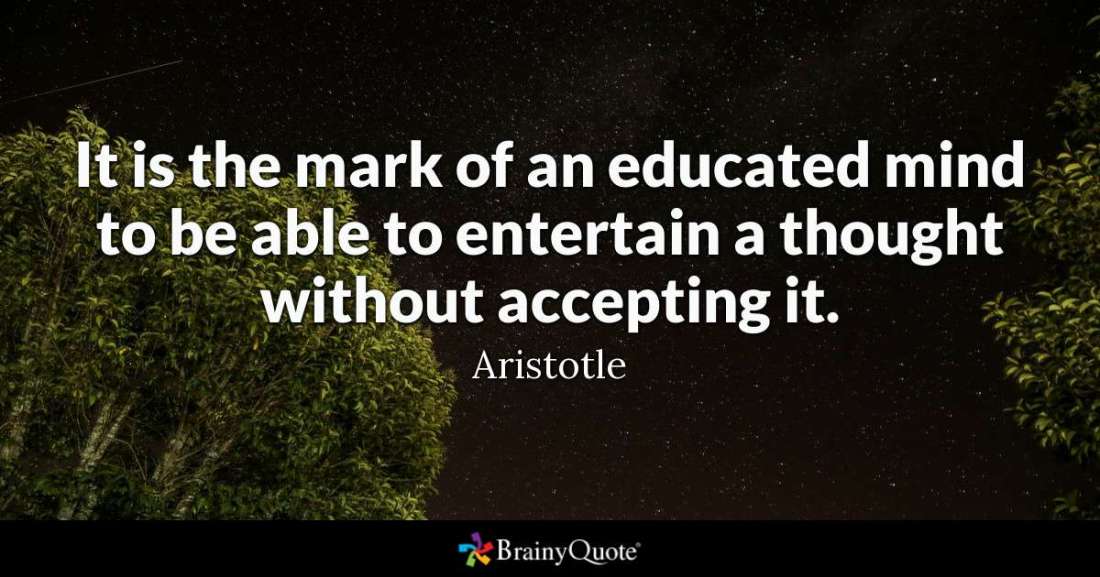
Aristotle Comments On How We Should Observe Politics, Social Media and Most Things That People Want To Be Offended From
Share this:

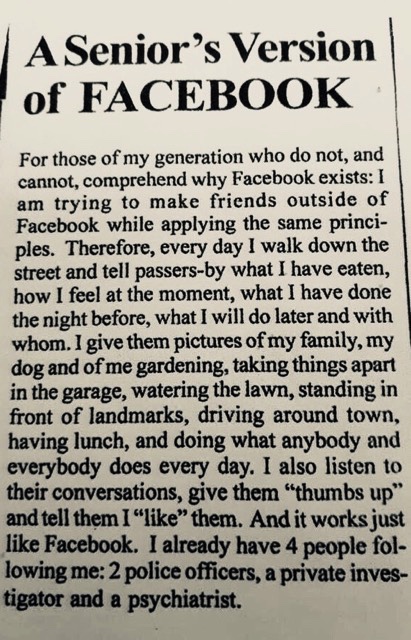
A Senior’s Version Of Facebook

The Circle Game – Childhood Games That Are Still Fun, Punch You I Will
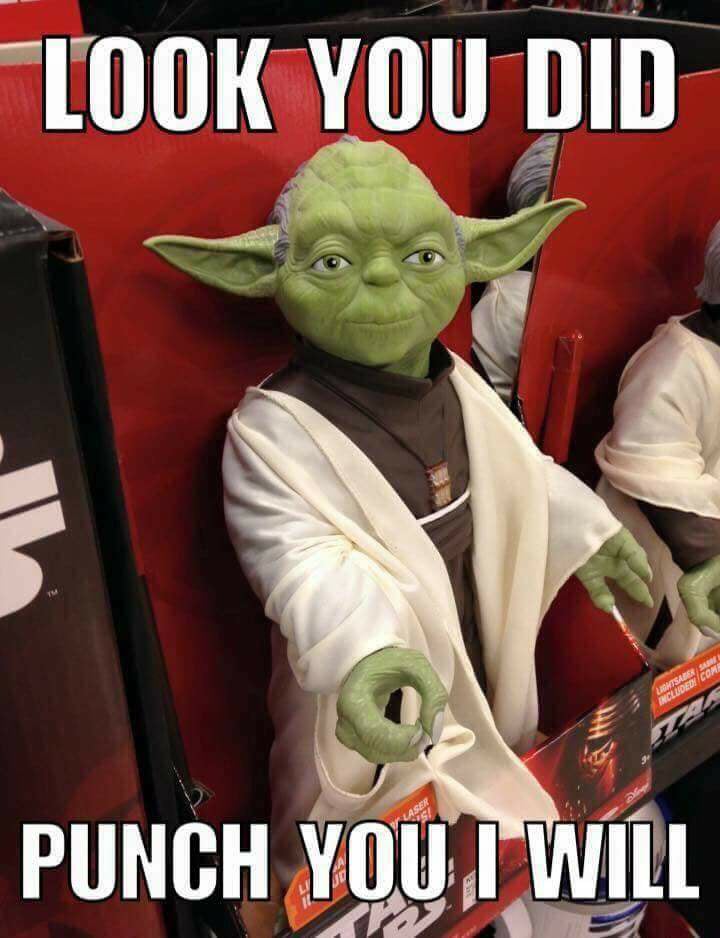
Even though I like to write about intellectual subjects, this one will have nothing to do with that.
Disclaimer: This game has been around for decades. It is not the somehow now bad OK sign that the evil PC police have condemned. When it was invented, no one cared about the OK sign. FWIW, the circle is upside down in this game. The PC SJW’s are dumbasses because a Reddit joke that trolled people by saying it was some supremacist sign. The woke fell for it immediately because they want to cancel any fun.
If you know or have played the game, you will get this whole post without reading it, but I’m posting for those who do not get it.

I searched this on the Interweb and it stated that this started in the 1980’s. Since I was in middle school way before this I’m calling BS and guessing that those before me have played it for 50 years.
So when I saw these examples, I knew what it was and it took me back to childhood, but I understood it without explanation.
The rules of the game are here:
Basically, you get someone to look at the circle below your waist against their will and you get to punch them.
It’s a game designed to be able to hit your friends and have them be ok with it.
The link provides other instructions like breaking the circle and not brushing it off, but they are just variations on being able to punch your friend.
We took it to all kinds of limits like drawing circles on the floor and other variations, but it’s simple.
I like all of these meme’s, but Darth Vader is my favorite. Readers like the volleyball girl the best if you look at how many times it’s been downloaded off this post.

I think the girl is giving a sign as to the play to make, but if not, it’s a really good Internet punch.

The Walmart guy is funny on many lev els.
els.
The black hole circle is a Universal punch.

The duck is just funny.


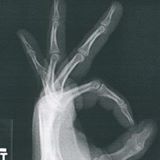
I found a new one that isn’t really meant to be in the circle game, but is.

Share this:

10 Canine Commandments
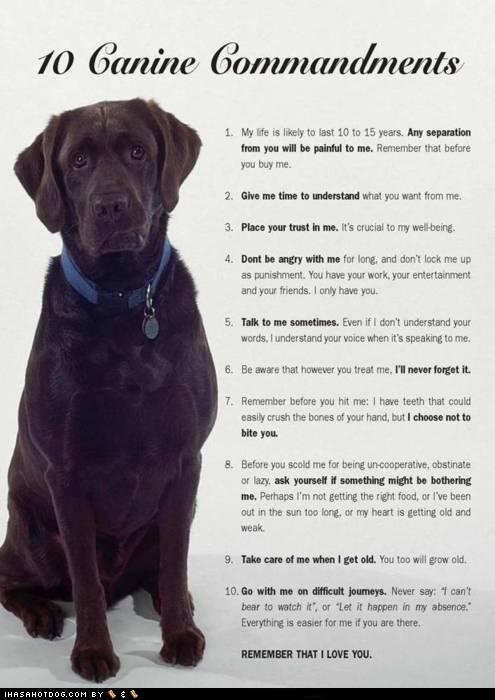 I read 100’s of blogs a day. I’m sorry I don’t have an attribution for this, but will give it to the person who posted it first.
The point is that Dogs are faithful friends that are with us for a much too short of time. Treat the well and they will be your best friend
Share this:

Social Media, Ruining Your Life Part 2
I recently posted how Social Media is probably making your life worse, especially those who have to look anything up to know everything. Even more, those whose lives and feelings are governed by their online image and how many likes they got vs. others are losing out on life to a device.
The other issue is having your face buried in your phone while walking. You are clueless to the world around you. See the video above.
UPDATE: Getting Cosmetic Surgery for Snapchat Dysmorphia
This is by far the most narcissistic thing I’ve read. People (tide pod eaters) are getting surgery to look like the filters they use on their Snapchat because they don’t look good enough in life because it is wreaking havoc on their self-esteem. The report in the journal JAMA Facial Plastic Surgery claims that these filters can sometimes trigger body dysmorphic disorder, a mental illness that can lead to compulsive tendencies and unnecessary beauty procedures, among other negative outcomes.
A study in the American Journal of Preventive Medicine found that people who were regular users of social media were twice as likely to feel lonely than those that were light users.
Another study released found that social media, especially Instagram, deepened feelings of anxiety and inadequacy for 15 to 24 year olds.
Go play outside and leave your phone in your pocket. Also, don’t live your life on social media and you won’t be so self-obsessed.
UPDATE: A study came out stating that good social media don’t out weigh the bad:
(Reuters Health) – For young adults, the adverse effect of negative social media experiences on mental health outweigh any potential benefits of positive experiences, a study of university students suggests.
Each 10 percent increase in a student’s negative experiences on social media was associated with a 20 percent increase in the odds of depressive symptoms, researchers found.
But positive experiences on social media were only weakly linked to lower depressive symptoms. Each 10 percent increase in positive social media interaction was associated with only a four percent drop in depressive symptoms – a difference so small that it might have been due to chance.
“This is not inconsistent with the way we see things in the offline world . . . The negative things we encounter in the world count more than positive ones,” said study leader Brian A. Primack, director of the Center for Research on Media, Technology and Health at the University of Pittsburgh in Pennsylvania.
“If you have four different classes in college, the fourth class that you did poorly in probably took up all your mental energy,” he told Reuters Health by phone.
Primack said he believes social media lends itself to negativity bias because it is saturated with positive experiences that leave people jaded.
YOU ARE BEING WATCHED
I talked with friends at the gym who are or were in law enforcement In cop terms they are always made by others because they are constantly looking around. They are aware of their environment, potential danger, potentially dangerous people and escape routes. As you can see in the video of fails, these people are vulnerable to all of the above.
Guess how else you are vulnerable with your head buried in a screen? It doesn’t take a genius to know that Facebook, Google, Amazon and every other site is not only tracking your clicks, but are tracking where you go and what you do.
We used to have instructions, a map and intuition to get where we were going and for the most part, we got there. millennial’s can’t get to the 7-11 without Google Maps now. It’s also funny how they can know everything, but have knowledge of very little. Take away their phone and not only would they not run into things, they’d have to actually learn about how things really work and how to navigate (I’m not discriminating here, I know directionally challenged relatives my age who fall into this category). Looking up something on your phone doesn’t make you smart.
YOU ARE GIVING THE PERV’S A FREE TICKET
I’m not in law enforcement, but I put my phone away and watch others, especially those watching girls. It’s almost a sport. It used to be if a guy was looking in the wrong part of a girl, they got busted immediately. It was like watching a tennis match seeing the heads turn when a cute girl walked by. They had to use mirrored sunglasses and just glance when they could and not let their wives/girlfriends catch them. Now, instead of having to glance behind sunglasses, the perv’s just look down or up (or up and down) anyone they want and modesty just goes out the window. It’s truly tasteless, but if you had your head out of the phone, you wouldn’t be getting eyeballed so lasciviously.
GET A LIFE
It’s amazing to watch people now escape to their phone in what used to be a social situation. So stop running into things and get a life.
FACEBOOK IS DESIGNED TO EXPLOIT HUMAN VULNERABILITIES
Recently, former Facebook president Sean Parker pointed out how Facebook is hurting people.
When Facebook was getting going, I had these people who would come up to me and they would say, ‘I’m not on social media.’ And I would say, ‘OK. You know, you will be. And then they would say, ‘No, no, no. I value my real-life interactions. I value the moment. I value presence. I value intimacy.’ And I would say, … ‘We’ll get you eventually.’
Parker discussed the possible psychological effects of social media and Facebook in particular, especially for children who are now growing up in a digitally connected age:
I don’t know if I really understood the consequences of what I was saying, because [of] the unintended consequences of a network when it grows to a billion or 2 billion people and … it literally changes your relationship with society, with each other … It probably interferes with productivity in weird ways. God only knows what it’s doing to our children’s brains.
The former Facebook President discussed the company’s initial aim, which was mainly centered around drawing in and building their audience:
The thought process that went into building these applications, Facebook being the first of them, … was all about: ‘How do we consume as much of your time and conscious attention as possible?’ And that means that we need to sort of give you a little dopamine hit every once in a while, because someone liked or commented on a photo or a post or whatever. And that’s going to get you to contribute more content, and that’s going to get you … more likes and comments.
Parker described Facebook’s appeal as a “social-validation feedback loop” which exploits human psychology to keep users coming back to the app:
It’s a social-validation feedback loop … exactly the kind of thing that a hacker like myself would come up with, because you’re exploiting a vulnerability in human psychology. The inventors, creators — it’s me, it’s Mark [Zuckerberg], it’s Kevin Systrom on Instagram, it’s all of these people — understood this consciously. And we did it anyway.
Parker also briefly discussed how his vast wealth is likely to allow him to live longer than the average person due to advances in medical science
Share this:

Social Media, Making Your Life Worse Just By Using It, And it Proves Sturgeon’s Law
I tend to notice trends early. I quit Twitter 4 years ago as soon as work didn’t (unofficially) require it. Almost every time I used it, the conversation degraded by the 3rd or 4th tweet into something political, followed by unsubstantiated name calling. You have to have a thick skin and a terse personality to want to survive out there.
A few years later I tried helping a friend get on Facebook and we both decided that it was like a high school reunion, or being in high school where you make up stuff to seem like your life is better than others. He finally told me to stop and to not put him on. At that point it dawned on me that most of social media falls under Sturgeon’s Law:
Sturgeon’s Law: 90% of everything is crap.
There might be a corollary that 99% of social media is crap.
The trend I noticed besides people acting false was that I never felt better after being on twitter and I loathe Facebook for the same reason. This was 5-8 years ago and now the studies are coming out proving what I noticed.
A recent article in the USA today talked about another high schoolish trend, mob mentality.
Social media also has polluted our more general life, with the ability to form online mobs increasing, as Prof. Glenn Reynolds aka Instapundit recently wrote in USA Today:
People enjoy forming mobs. Mobs allow people to do things they’d be afraid to do on their own, to steal, to hurt and kill, to burn and destroy — and also to feel set free from the bonds of civil society, to experience a kind of atavistic catharsis, a feeling of power and a solidarity with their fellow rioters, in a way that’s otherwise difficult to achieve, especially without suffering serious consequences….
But now there’s a new kind of mob, an online mob. And judging by the events of the past week, this new mob is becoming a more frequent problem. Part of that is because it’s easier (and safer) to be part of an online mob than one in the real world.
Joining a real mob requires you to leave your house, go somewhere else, and experience risks and discomforts. Joining an online mob can be done from an easy chair at home.
There are times that I post something and bizarre comments come it, so much so that I have to moderate them according to the policy on the sidebar. Some just violate the policy too much. It’s like twitter, if it can get political it usually does. Since I’ve posted a lot about the military and patriotism, I caught a lot of crap.
I read a blog post by Legal Insurrection that noted the increase in suicides and the link that may exist between the two.
A New, More Rigorous Study Confirms: The More You Use Facebook, the Worse You Feel
Social Media and Teen Depression: The Two Go Hand-In-Hand
Rise in teen suicide connected to social media popularity: study
Suicide rate’s increase can be tied to social media, technology: Dr. Marc Siegel
Using Many Social Media Platforms Linked With Depression, Anxiety Risk
Why don’t people just put it down? It looks to be like the new next cigarette, just as addictive and equally as bad for you.
As for me, I can go about my day enjoying not getting into useless tweet storms and having my head glued to my phone. Hell, I won’t even put Facebook on because I don’t want them in my life.
I’d like to say the higher IQ people would be immune to this, but it’s not true. They are just as susceptible to this and it goes under things they shouldn’t do.
WHAT FACEBOOK KNOWS AND IT ISN’T TELLING YOU
It preys on Women’s emotions and other mind altering and interfering techniques and the company KNOWS THAT IT IS DOING IT.
Even former Facebook President Sean Parker realizes the pitfalls of Facebook:
The former Facebook President discussed the company’s initial aim, which was mainly centered around drawing in and building their audience:
The thought process that went into building these applications, Facebook being the first of them, … was all about: ‘How do we consume as much of your time and conscious attention as possible?’ And that means that we need to sort of give you a little dopamine hit every once in a while, because someone liked or commented on a photo or a post or whatever. And that’s going to get you to contribute more content, and that’s going to get you … more likes and comments.
Parker described Facebook’s appeal as a “social-validation feedback loop” which exploits human psychology to keep users coming back to the app:
It’s a social-validation feedback loop … exactly the kind of thing that a hacker like myself would come up with, because you’re exploiting a vulnerability in human psychology. The inventors, creators — it’s me, it’s Mark [Zuckerberg], it’s Kevin Systrom on Instagram, it’s all of these people — understood this consciously. And we did it anyway.
Comments such as this from Facebook former President, combined with Facebook’s mishandling of user data, has led to a greater level of distrust around the company. What was previously seen as just a website by many users was becoming better known as a data collection company.
It turns out that platforms like Facebook are the “Junk Food For the Soul”. In other words crap that isn’t good for you.
THE CESSPOOL OF HATE AND DISCRIMINATION BY TWITTER
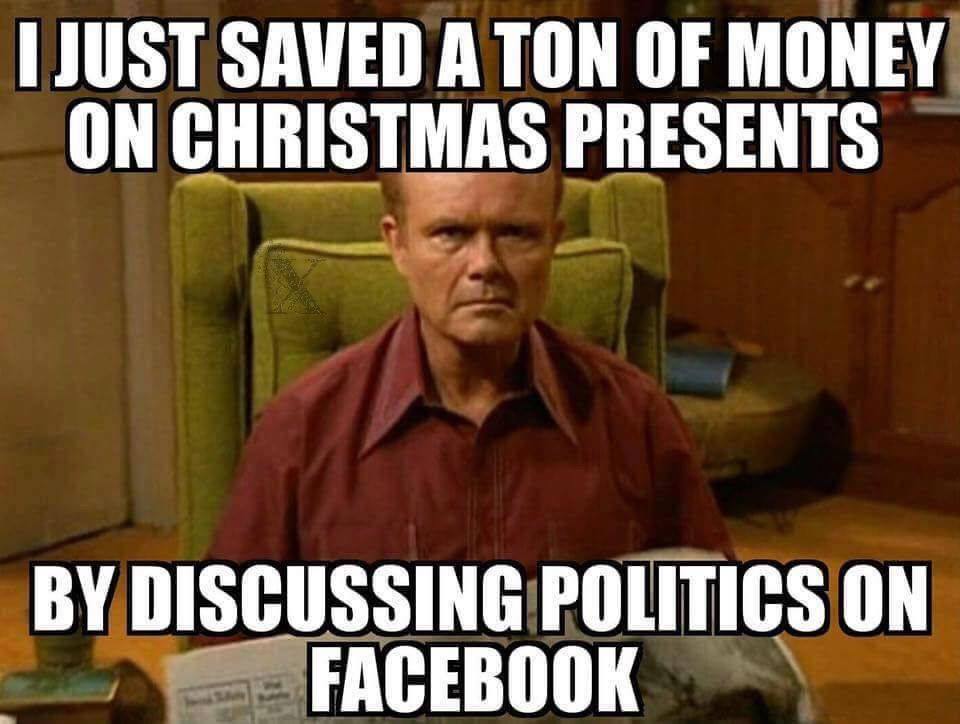
Just say something, anything and pretty soon it can turn into a hate storm if you offend someone or anyone. I saw someone post here’s a picture of a rock, let the arguing begin just to prove it and it did.
When I check I often find that a user who has blocked me is someone I have never interacted with. So why the block? Often, it’s due to being on a block list created by a liberal activist group. Twitter supports block lists and makes it easy for users to mass-block entire universes of people they don’t even know.
But Twitter now uses factors such as the number of people who have blocked an account to determine whether to classify it as “low quality” content. The company also uses the number of complaints or reports on the account. If the number of these exceeds certain thresholds, an account can be deemed low quality and access to tweets from that user are severely diminished.
I couldn’t wait to leave that platform of time-wasting and hate and my life is better because of it.
Share this:

High IQ Humor – Math Version
 Hat tip to What’s Up With That
Share this:

Possibly The Worst Website Names One Could Pick Or How NOT to Combine Words

Share this:

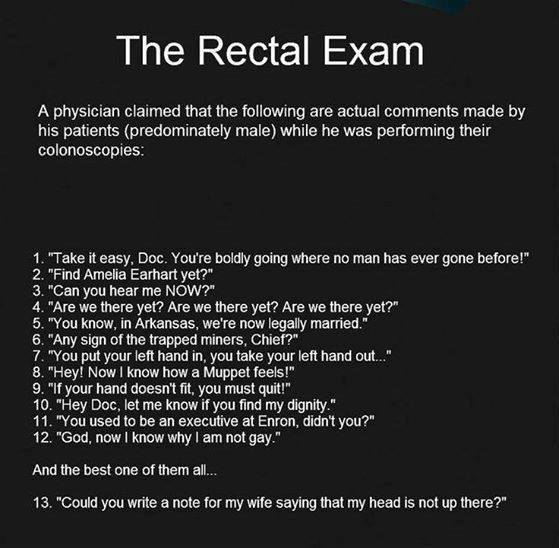
Things Men Have Said During A Rectal Exam – Humor
Something to laugh at, especially if you are a many over 40 and go through this yearly. I choose women doctors because they have smaller hands and fingers and are more compassionate.
Share this:

Reflections On Growing Older
I’ll bet if you ask most people of a certain age, they are going to realize that this is true. I remember asking my father for life advice on his 75th birthday. He answered, “where did it all go so fast?” You’ll find that one below also.
Read and learn if you are young, commiserate if you agree.
#1 – I talk to myself because there are times I need expert advice.
#2 – I consider “In Style” to be the clothes that still fit.
#3 – I don’t need anger management. I need people to stop pissing me off.
#4 – My people skills are just fine. It’s my tolerance for idiots that needs work.
#5 – The biggest lie I tell myself is, “I don’t need to write that down. I’ll remember it.”
#6 – I have days when my life is just a tent away from a circus.
#7 – These days, “on time” is when I get there.
#8 – Even duct tape can’t fix stupid – but it sure does muffle the sound.
#9 – Wouldn’t it be wonderful if we could put ourselves in the dryer for ten minutes, then come out wrinkle-free and three sizes smaller?
#10 – Lately, I’ve noticed people my age are so much older than me.
#11 – “Getting lucky” means walking into a room and remembering why I’m there.
#12 – When I was a child, I thought nap time was punishment. Now it feels like a mini-vacation.
#13 – Some days I have no idea what I’m doing out of bed.
#14 – I thought growing old would take longer.
#15 – Aging sure has slowed me down, but it hasn’t shut me up.
#16 – I still haven’t learned to act my age and doubt I’ll live that long.
Unfortunately, these are all sadly true!
Share this:

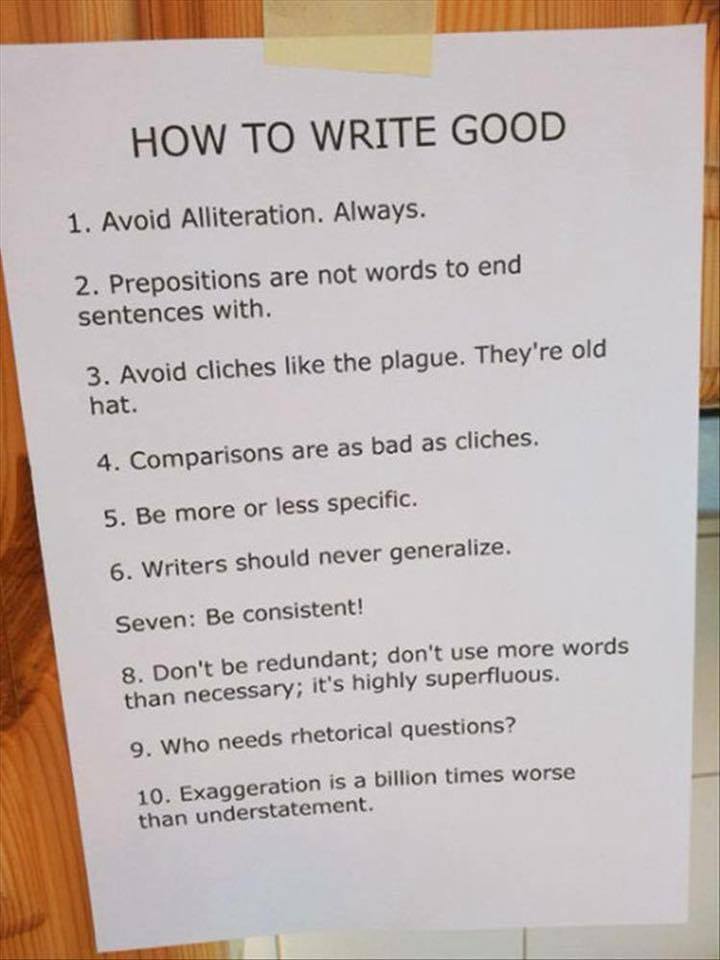
Humor – How to Write More Better
Share this:

California Humor
Here is a little Friday humor, inspired by all the recent going’s on in the news about housing prices, immigration, pot, high taxes, overburdensome government regulation and the usual stuff you read about.
1. Your coworker has 8 body piercings and none are visible.
2. You make over $300,000 and still can’t afford a house.
3. You take a bus and are shocked at two people carrying on a conversation in English.
4. Your child’s 3rd-grade teacher has purple hair, a nose ring, and is named Flower.
5. You can’t remember . . . is pot illegal?
6. You’ve been to a baby shower that has two mothers and a sperm donor.
7. You have a very strong opinion about where your coffee beans are grown, and you can taste the difference between Sumatran and Ethiopian.
8. You can’t remember . . . . is pot illegal?
9. A really great parking space can totally move you to tears.
10. Gas costs $1.00 per gallon more than anywhere else in the U.S.
11. Unlike back home, the guy at 8:30 am at Starbucks wearing a baseball cap and sunglasses who looks like George Clooney really IS George Clooney.
12. Your car insurance costs as much as your house payment.
13. You can’t remember . . . .is pot illegal?
14. It’s barely sprinkling rain and there’s a report on every news station: “STORM WATCH.”
15. You pass an elementary school playground and the children are all busy with their cell phones.
16. Or it’s barely sprinkling rain outside, so you leave for work an hour early to avoid all the weather-related accidents.
17. HEY!!!! Is pot illegal????
18. Both you AND your dog have therapists, psychics, personal trainers and cosmetic surgeons.
19 The Terminator was your governor.
20. If you drive illegally, they take your driver’s license. If you’re here illegally, they want to give you one.
Hat tip to American Digest for this one.
Share this:

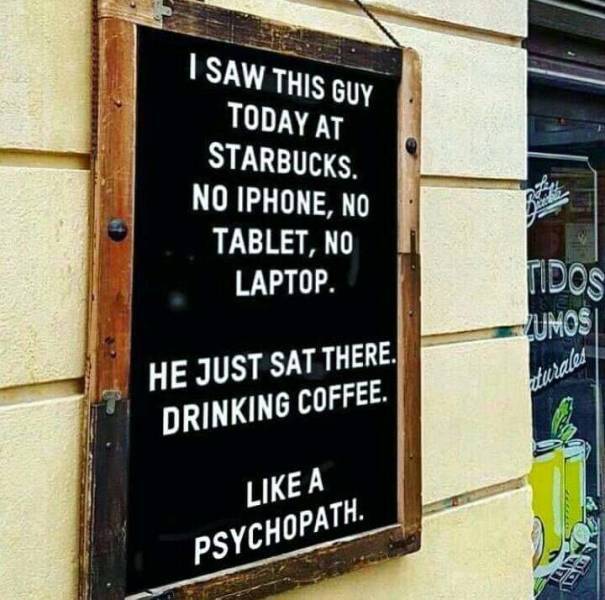
What Is The World Coming To? – Humor
Share this:

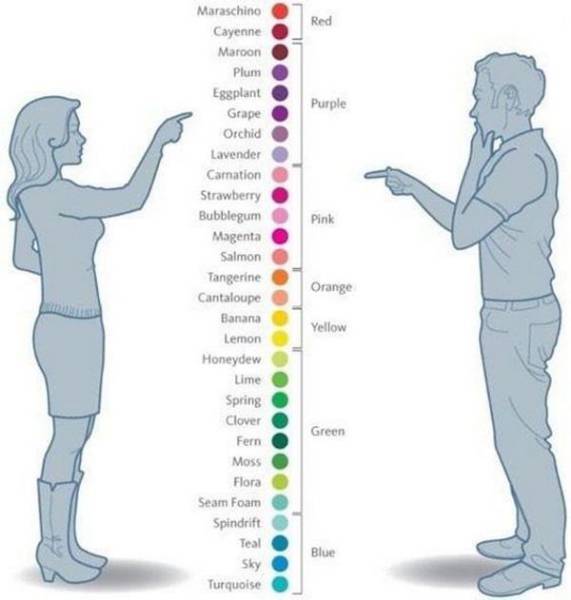
How Men and Women See Colors Differently
Share this:

Being Rude To Others At Work; Who is Worse, Men or Women?
I love controversial subjects, especially among the sexes. Nothing gets the hackles up quicker than something that offends what you hold close to your heart. I’ve worked with the media for decades and sensationalism is what sells. It’s sex, death, murder, immorality, bankruptcy, divorce and other vices that can be cherry picked to place on the headline. This is not real life, like…..
Ye old workplace.
It is a petri dish of human interaction that has been infected by #MeToo, harassment, incivility, sexism, partiality, affairs and occasionally competent work and results. I’ve already discussed if Men and Women can work together here, and Women now swear more than men, so I found this article and it looked either like a headline maker or a trend. I decided to find out.
Having sat through weeks of diversity training that is beyond boring and is a CYA for the legal department, I’ve been told that you can’t say certain things, act in a ways that could be demeaning or sexually suggestive or anything outside of plain vanilla. I choose to keep to myself and observe. That is why this study caught my eye. The behavior is far outside of my diversity training, yet it goes on unabated.
WHO ARE THE BIGGEST OFFENDERS?
A recent study shows that women are reporting that it is other women who are the most rude and uncivil towards women. It goes like this:
In terms of how it is acted out:
“Across the three studies, we found consistent evidence that women reported higher levels of incivility from other women than their male counterparts,” Gabriel says. “In other words, women are ruder to each other than they are to men, or than men are to women.
“This isn’t to say men were off the hook or they weren’t engaging in these behaviors,” she notes. “But when we compared the average levels of incivility reported, female-instigated incivility was reported more often than male-instigated incivility by women in our three studies.”
THE QUEEN BEE SYNDROME
The article at the link above states:
The phenomenon of women discriminating against other women in the workplace—particularly as they rise in seniority—has long been documented as the “queen bee syndrome.” As women have increased their ranks in the workplace, most will admit to experiencing rude behavior and incivility.
Who is at fault for dishing out these mildly deviant behaviors? Has the syndrome grown more pervasive?
“Studies show women report more incivility experiences overall than men, but we wanted to find out who was targeting women with rude remarks,” says Allison Gabriel, assistant professor of management and organizations in the University of Arizona’s Eller College of Management.
I worked with a female named Sandy. No one was harder to understand or trust as a senior manager than she. My friends would dread working for her and it was a success not to get fired before your term was complete. Everyone tried to get out as fast as they could, or would not seek a promotion just to not work for or with her.
I WANTED TO KNOW SO I ASKED THEM IF IT WAS TRUE, WHAT THEY SAID, PERHAPS NSFW
I like to look at things from the point of view of how would an intellectual view this. Normally, this would entail a scientific study without bias, with control groups and so forth. My observation is that people’s behavior is not scientific when it comes to emotions and I’ve been told by those of the female persuasion that they are more likely to be emotional. I couldn’t argue the point, nor did I care to.
Therefore, I figured that asking some females if this was correct and what they’ve seen at work would be my best estimate as to whether this is true. Please note that some of the comments while stated verbatim are not always complimentary and some are off-color. Commenters: Note, if you get pissed off, these are answers by women to a question I asked about working with females and is the study accurate. If you just want to hate, please go elsewhere as if it’s directed at me, it’s a fart in the wind and that’s how I’ll treat it.
Here are some responses:
Females can be bitchy, catty. other names.
She slept her way to her position.
She got there because of her looks (or tits), not her ability.
She dresses like a whore.
There is one bitch who leans over in front of guys to get her way.
Women are the biggest backstabbers.
Sure there is an occasional guy who bugs me or tries to hit on me, but girls are far worse as a group.
Sure she was nice when she was one of us, but as soon as they gave her a little power, she turned on us like we’d done something to her.
She’s great to work for if you are female. She only promotes women and you can get your way over any guys.
Women here can only manage 2 inches in front of their face. They don’t get the big picture or work towards the company’s goals.
Once you make it clear you aren’t going to sleep with them, the men are much easier to work with or for. The mission and strategy are clear and they can focus on that.
Guys will either just not say anything or will tell you how it is. The girls say something to your face and f__k you over behind your back if you aren’t in their group.
Guys handle success and failure better than the girls I work with. One of them always takes it personally and spends weeks trying to get back at you instead of trying to get work done.
I can never trust what a woman says to me. Guys don’t lie as much or as well as girls do unless they want in your pants.
Women talk too much and I can’t get my work done.
When aunt Flo comes calling honey you better hide from that bitch.
Just get more than one female together in a group and watch the fireworks.
Guys are used to joking, I think they learned it in a locker room or something. They can cuss each other out in a meeting and it’s like a punch in the arm and then go have a beer. A woman will hold something you say to her against you for the rest of your life.
Enough! Most of these I got multiple times, which is why they made the list. I stopped asking because this attitude was overwhelming me.
CONCLUSION
I can only surmise that it is tough for women to work with women. I didn’t give it much thought until I read this study, but it does appear that women are more difficult towards other women at the workplace
Share this:

High IQ Humor, Or Grammar Junkies

Share this:

All The National Lampoon Covers

Fun Facts Like Betty White IS older than Sliced Bread, A Break from The News, Fake News and Shitholes
With all the crap that is in the news today, I’m taking a break of levity with some interesting facts. Since I got this from someone else, some of it could be disputed, like peas on pizza, but it’s a hell of a lot closer to the truth than you’ll read in the news.
1. A strawberry isn’t a berry but a banana is.
2. Avocados and watermelon are berries, too.
3. Cashews grow on trees like this:
2. Avocados and watermelon are berries, too.
3. Cashews grow on trees like this:

4. And Brussels sprouts grow in long stalks like this:

Flickr / Creative Commons / Katy Stoddard / Via Flickr: 68067047@N00
5. Chocolate milk was invented in Ireland.
6. Ketchup used to be sold as medicine.
7. Carrots were originally purple.
6. Ketchup used to be sold as medicine.
7. Carrots were originally purple.

8. McDonald’s sells 75 hamburgers every second of every day.
9. Yams and sweet potatoes are not the same thing
10. Ripe cranberries will bounce like rubber balls.
11. An average ear of corn has an even number of rows, usually 16.
12. Betty White is actually older than sliced bread.
9. Yams and sweet potatoes are not the same thing
10. Ripe cranberries will bounce like rubber balls.
11. An average ear of corn has an even number of rows, usually 16.
12. Betty White is actually older than sliced bread.

Alberto E. Rodriguez / Getty Images for TV Land
13. Humans share 50% of their DNA with bananas.
14. Honey never spoils. You can eat 32,000-year-old honey.
15. Peanuts are not nuts. They grow in the ground like this, so they are legumes.
14. Honey never spoils. You can eat 32,000-year-old honey.
15. Peanuts are not nuts. They grow in the ground like this, so they are legumes.

16. Vending machines are twice as likely to kill you than a shark is.
17. Coconuts kill more people than sharks every year. So do cows.
18. Pound cake got its name from its original recipe, which called for a pound each of butter, eggs, sugar, and flour.
17. Coconuts kill more people than sharks every year. So do cows.
18. Pound cake got its name from its original recipe, which called for a pound each of butter, eggs, sugar, and flour.
19. The probability of you drinking a glass of water that contains a molecule of water that also passed through a dinosaur is almost 100%.
20. Honey is made from nectar and bee vomit.
20. Honey is made from nectar and bee vomit.

21. Pineapples grow like this:

22. Quinoa is the seeds of this plant:

23. Kiwis grow on vines:

Bignai / Getty Images
24. Ginger is the root of a plant:

25. And cinnamon is just the inner part of this tree:

Flickr / Creative Commons / Abby Flat-coat / / Via Flickr: 22912005@N06
26. And artichokes are flowers that are eaten as buds. This is what they look like when flowered:

Flickr / Creative Commons / Wayne Marshall
27. “Spam” is short for spiced ham.
28. Popsicles were invented by an 11-year-old in 1905.
29. Apples, like pears and plums, belong to the rose family.
30. The official state vegetable of Oklahoma is the watermelon.
31. Peas are one the most popular pizza toppings in Brazil:
28. Popsicles were invented by an 11-year-old in 1905.
29. Apples, like pears and plums, belong to the rose family.
30. The official state vegetable of Oklahoma is the watermelon.
31. Peas are one the most popular pizza toppings in Brazil:

32. There are over 7,500 varieties of apples throughout the world, and it would take you 20 years to try them all if you had one each day.
33. The twists in pretzels are made to look like arms crossed in prayer.
34. Canola oil was originally called rapeseed oil, but renamed by the Canadian oil industry in 1978 to avoid negative connotations. “Canola” is short for “Canadian oil.”
35. And no matter what color Froot Loop you eat, they all taste the same.
33. The twists in pretzels are made to look like arms crossed in prayer.
34. Canola oil was originally called rapeseed oil, but renamed by the Canadian oil industry in 1978 to avoid negative connotations. “Canola” is short for “Canadian oil.”
35. And no matter what color Froot Loop you eat, they all taste the same.
 |
Share this:

Actual Maps of Where The #Shitholes Are – An A-Polititical Post On Where They Exist
First, I am not going to weigh in on what a world leader has said. Every time I have ever tried it, nothing is gained as everyone has their own opinion and trying to sway it is not what I care about. Enjoy your center, left, right or whatever political position you wish.
I was looking for whether this actually exists. Here is what I’ve found.
UPDATE: Portland is the newest shit hole. Click on the link: Portland: American epicenter of degeneracy, depression, and ANTIFA.
Here is a link and a screenshot of a map from the Rice Institute based showing countries with the most open defecation.
Forbes published a list of the world’s dirtiest cities. Without passing judgement, they seem to line up with the shitholes in the map so the facts seem to be in order.
 Next, is it possible that the United States has places where there is open defecation? I found that map also.
Below is the link and screenshot also, but in case you don’t recognize it, this is San Francisco.
Now, after reading this, one can add it to their travel plans to go and help, or avoid for sanitary purposes, you choose. If you go to San Francisco, zoom in and you can see where to not step in a pile of poop. As I type that, I realize that it is sad for what is supposed to be one of the leading cities of the US, and one so close to silicon valley.
It also gives everyone equal political fodder to take shots at whomever. In these days of political partisanship, nothing or nobody is safe by the 3rd or 4th comment, so I expect the same.
I just got curious and I wondered if what was said was true or not. Apparently it is.
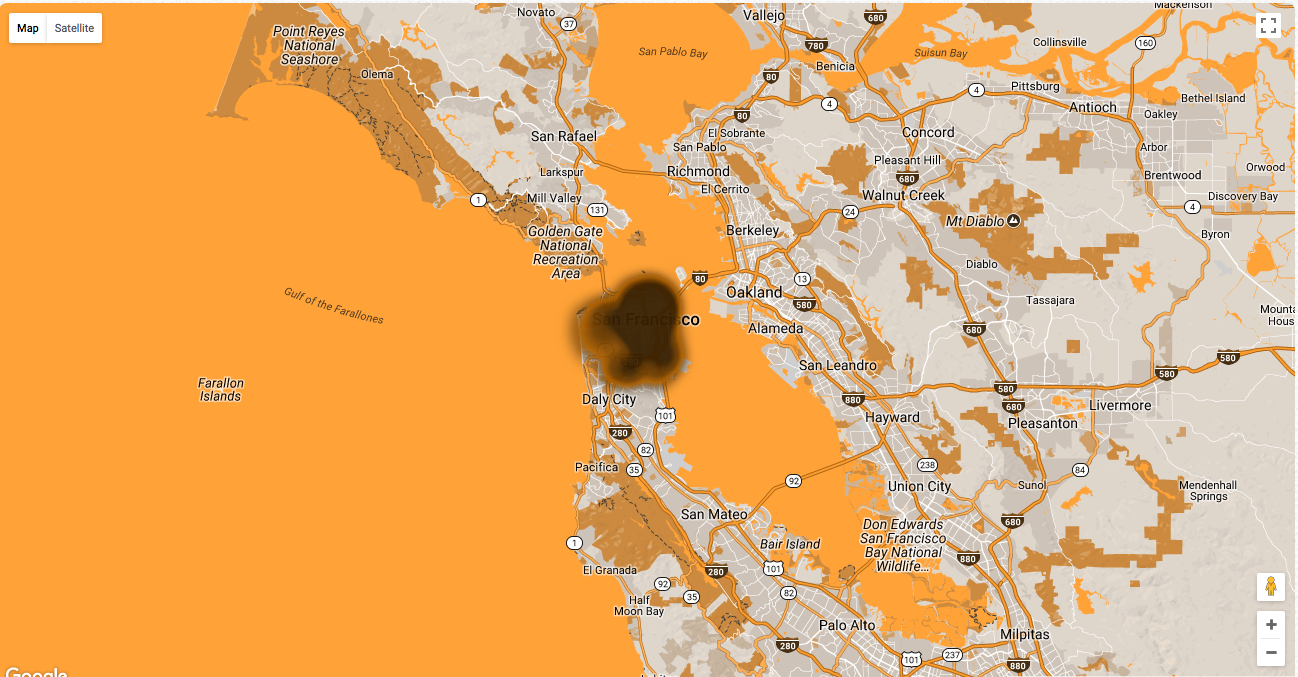
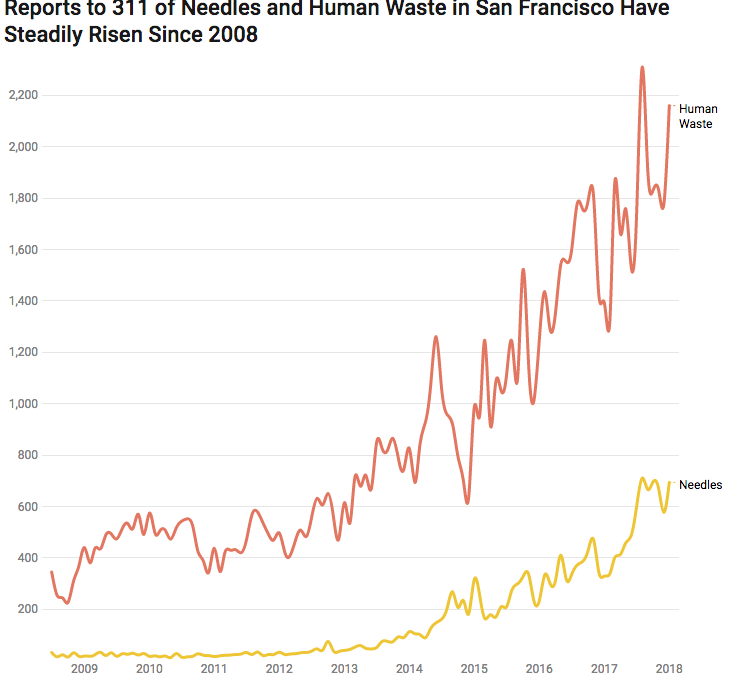 Here is the link to the recent study of sanitation including feces, used syringes and other disease carrying trash in the heart of San Francisco. It’s a shame since it is in the heart of the restaurant and hotel area. You’d think that the tourism officials would do something about this, but looking at the graph indicates the problem escalating.
UPDATE: San Francisco is getting over 80 calls a day to report human feces for clean up. In the same report were almost as many instances of needles despite the fact that there are safe injection spaces for shooting up an illegal drug that destroys lives.
UPDATE: It turns out that Denver is now officially classified as a shithole also. They passed an act that you can drop trou and pinch a loaf right on the street. Here is the story and the reason why they passed the law.
UPDATE: It looks like Hawaii isn’t as pristine as one thinks of it. The cesspools and the water around the islands are contaminated enough to make it a shithole also. There is a link within this link that goes to the WSJ.
Video Update: A large portion of Orange county is now a 3rd world shithole also.
After all is said and done, I thought that having to have a map to not step in a pile of human feces makes a city the biggest shithole. It turns out that I was wrong.
According to the Government services including the EPA, ACS and the Census bureau comes this little gem:
The City that Never Sleeps ranked the highest in three out of five categories, placing it as shittest-city-in-the-nation of 427.9 on Busy Bee’s “dirtiness index.” The next closest competitor for all the wrong reasons is Los Angeles, which has a dirtiness index of 317.8. To complete the top five list, the remaining dirtiest cities are Chicago, Philadelphia, and San Francisco.
So not only do you have to pay way more more to live in these places, they have worse air, bigger rats and more cockroaches, they turn out to be the shitholes that we all thought they were. Why anyone would choose to live there knowing there?
Share this:

SR-71 Speed Story: Aspen 30, I show you at 1990 Knots Across the Ground
Share this:

Ferrous Wheel – High IQ Humor
I saw this on the Interweb. Those either quirky enough, with a certain strain of humor; or perhaps Chemistry, Geology or similar majors will get it.
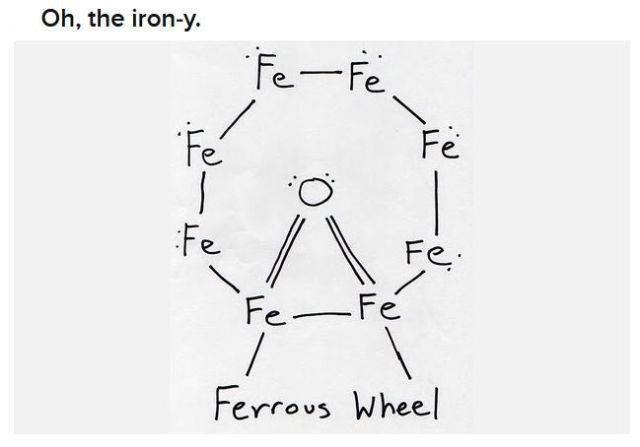
Share this:

Schaeffer’s Law’s of the Digital Age – The Non-Racial Master/Slave Paradigm Through Digital Monitoring
Schaeffer’s First Law of the Digital Age:
The Global Digital Infrastructure (GDI) connects all human life on the planet into a single, giant, metastasizing organism throbbing with incredible potential for advancing human good, expanding knowledge exponentially, invading our lives with unimaginable malice and evil, and transforming unsuspecting users into helpless and obedient cyborgs.
Schaeffer’s Second Law of the Digital Age:
Each breakthrough in utility deriving from advances in the Global Digital Domain is accompanied by equal or greater vulnerabilities and potential detriments to quality of life. Anything that can do amazingly great things for you can almost always do terribly awful things to you as well.
Schaeffer’s Third Law of the Digital Age:
It’s impossible to make or enforce laws to guard the people against the dangers of global digital power and impossible to prevent exponential growth in this power. The Zuckerbergs and Bezoses and Googles of the world may propose to use their power benevolently, but they plan to use it and grow it without limit. They claim they’ll be good masters, but they mean to be masters.
I’m not a conspiracy person, rather an observer of trends and patterns. Haven’t we been down this path before in history where there are classes of people? This time, they start as digital helpers like Alexa, Echo, Google assistant or Siri, but at what point are they re-directing our lives? Aren’t there always people who try to control your lives thus enriching their lives both in money and power.
Since there are hackers constantly attacking the cloud, where your data is stored and accessible, when you lose control over your life? The digital hacks can be found at Krebsonsecurity.com.
It has already begun with your digital footprint being tracked, monitored and being sold off to advertisers, but where does it stop, the Jetson’s?
I advise that you carefully monitor who is monitoring you, even the government.
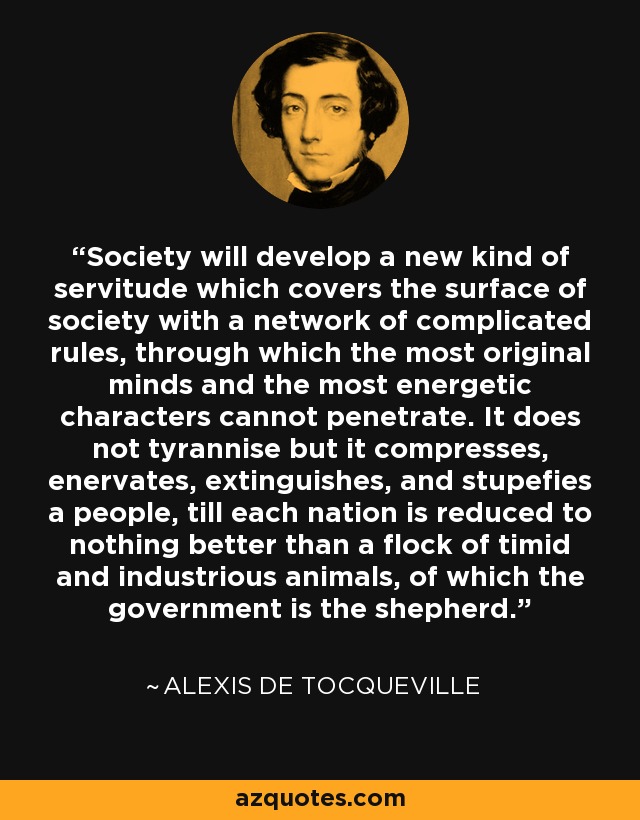
Now for fun, why is that in the movies that the robots always try to take over the world and kill humans?
Share this:

Ronald Reagan Reviews The Book What Happened, by Hillary Clinton

Share this:

Nobody Cares About Celebrities Opinions, Or For Celebrities For That Matter
 This post was inspired by Candace who states:
Actors are people who are famous for being able to imitate and to pretend. This does not qualify them for NASA, Weather Condition determination or basically anything else. They are something to look at, listen to on-screen and forget. Rinse and repeat.

They used to be respected more when they cared for their country, their fans and people in general. Social media, fame and fortune have convinced them that someone actually cares what they think. There have been some who actually contributed to the betterment of the world, but most of them were in the WWII class.
These days, they seem to have a delusion that their opinion on politics, climate change, gender identity, what to eat and anything else would actually matter to someone outside of Hollywood. They are a part of the do as I say, not as I do crowd. In fact they are the president of the club.
TRAIN WRECK

The basic nature of people is that they care about people who think like they do or conversely, are looking for a train wreck. Celebrities and now many sports figures fit into these categories.
People are tired of them pontificating about anything or their pet cause, even if it is noble. Shut up and act and don’t tell us what to do. Most of us who live real lives are smarter and have more common sense.
SPORTS ALSO
The overpaid sports stars are now getting into the act by trying to inform us on how we are to act with respect to our personal patriotism. Again, shut up and play the game. They are entertainment for us to distract us from daily life at best. We don’t care about your personal vendetta’s that you thrust upon us because somehow your millions don’t make up for your perceived injustice.
How do I know this? The NFL is now worried about dwindling numbers both at the stadiums and the TV numbers. Go to the link and find one team who can’t even sell out a 27,000 seat stadium.
Some of the athletes think that we care what they think because they can play a kids game.
I read this at Diogenes Middle Finger and found it enlightening on the subject as he called out the assholiness of LeBron James. BTW, you should follow DMF, a blog I read daily and recommend it.
It’s not as if we’re talking about some of the real heroes in sports of my youth, here. The Lebron James’ of the world did not have to struggle, and in the process, advance the character and quality of American Life by their example, like some of my childhood heroes did. Lebron James is no Hank Aaron, suffering death threats for being good enough to threaten a cherished record, or being a — maybe THE — visible symbol of the pernicious, past influence of racism.
James wouldn’t be judged worthy to hold Muhammad Ali’s jockstrap, on his best day. He certainly couldn’t make you think about a common humanity, couldn’t be a universal symbol of hope, like Ali did and was.
Jim Brown would run Lebron James over and trample him into the dirt, demanding respect. Just respect. James will never have the grace, the quiet dignity, or garner the universal love, of a Gayle Sayers.

In fact, James is most likely the visible symbol of the moral decay and decadence of the Modern Athlete, and symptomatic of the greater trend in society wherein people who obviously couldn’t find their own asses with both hands and a road map consistently have microphones shoved in their faces with an expectation that they will — as if by magic — make some profound statement that will occupy the intellect and nourish the soul.
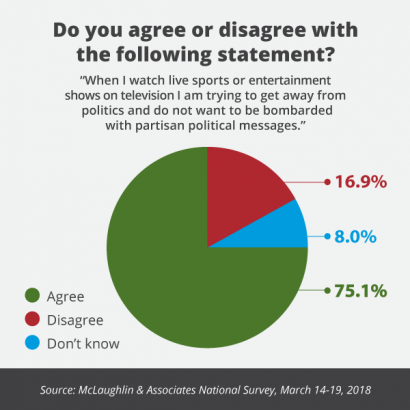
VOTING WITH OUR WALLETS
The net of it is that movie sales are declining, there are fewer attendees in sports and the only people who care about actors are other actors, and I’ll bet they don’t like each other that much either.
WHEN CELEBTARDS ARE BETTER NOT TALKING BECAUSE THEY DON’T THINK
Barbra Streisand should just stick to singing, or retiring.
Update: The 2018 Oscars were last night. They went on about #MeToo, yet it was their ilk that were the worst offenders of moral debauchery. Instead, they chose to reduce their likeability and their relevance by again making it political. I wonder how they justify in their minds that the rest of the country actually cares what they think about anything (except millineals who believe anything and eat Tide pods). Jennifer Lawrence, with her 8th grade education is going to save democracy while she is taking a year off from acting.
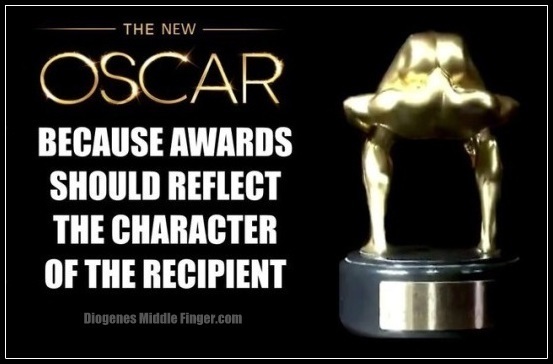
The most relevant tweet of the event was this one:

Share this:

The Real Nature Of Freedom, Economic and Political and the Interrelationship Between The Two
In these days of divisiveness, there are some facts based on economics that are hard to refute, even if you don’t want to admit it. I enjoy discussion by people of high IQ and of great wisdom, something the world of Political Correctness is sadly overlooking.
Share this:

What Is the Hierarchy of Identity Politics?
The 2008 and 2012 election showed that a coalition of minorities was the winning formula. As for 2016, not so much.
With all the minority identity groups out there vying for political power, social media control, fund raising and media presence; how do they stack up when they compete for hierarchy? At some point, when the power and money is being doled out, the queue is determined by some order. Who are these groups and how do they vie for power?
Author disclaimer: I have no dog in this hunt. I am a pattern watcher and try to learn from them. Human nature is hard to understand and explain due to it’s ever changing allies and favored group status depending on circumstances. I was watching the groups at the last election and wondered how you coalesce a group of disparate people with conflicting causes as a voter block.
Who are they?
While this isn’t a comprehensive list and I am not discriminating as I just Googled it, the last election revealed the groups of Black Lives Matter (BLM), LGBTQ (apologies if I omitted a letter), Islam (including ISIS), socialists, Antifa, environmentalists and feminists. They each compete for their cause and have usually selected an enemy with whom they are opposed to, but are now conflicting with each other in the power grab. They for the most part have an ideological position (some more than others) and garner the lion’s share of media attention.
What happens when the identity groups who desire to command the headlines conflict for attention and finances?
Before the haters come out, I write this post because of my position that one of the characteristics of a higher IQ is the ability to argue from multiple positions on a subject. I will proceed with this post from that premise.
I also am merely an observer of trends. The consolidating power of the above listed groups is becoming a relevant discussion regardless of where you source your information. I’ve excluded the typical mainstream media as sources of information on both sides as their coverage is either too conservative or liberal. Their inherent bias excludes them from this conversation. I also excluded Hollywood and celebrities since they have a limited integration with the real world and often spout declarations for others which they do not adhere to. When you get to the heart of their talent, they pretend to be others and to take their opinions seriously is difficult at best.
Here are non-comprehensive, yet representative examples of identity group disagreements.
BLM vs. LGBTQ
I first noticed this when BLM shut down a gay pride parade.
These are two significant voter populations when added together.
What surprised me that it was during the last election cycle and both groups made up a voting block for the same candidate. From said article:
BLM held Toronto Pride hostage, unless their demands, which included excluding police from the parade, were immediately met.
(Pride parades typically have contingents of LGBT cops and firefighters, and booths set up by the local LGBT officers’ group at the accompanying street festival.)
Judging by their success in forcing Toronto Pride to capitulate, I suspect we’ll see Black Lives Matter groups protesting more Pride parades in the future. And as a longtime national and international LGBT rights activist, I have a problem with that.
In my internet search for protests, it seems that BLM also protested and shut down Bernie Sanders and Hillary whom they supported. It goes without saying that they all protested Trump, but that is not the point of my curiosity as I assumed this was a given. This alone is surprising since both are a part of the coalition of voters candidates need to be elected per the aforementioned 2008/2012/2016 campaigns.
ISLAM vs. Feminists and LGBTQ
I later observed the Muslim and ISIS positions that women are treated poorly and that homosexuals were declared wrong and being executed. On a side point, they also considered most pets as unclean and black dogs should be killed (animal cruelty), which brings in the animal rights group, but they don’t be as significant as the other groups currently. Apparently, women don’t have the same rights as men and must be subservient.
Then there is the recent Linda Sansour dust up revealing this dichotomy:
- What the West needs to know is that in the Muslim world, jihad is considered more important than women, family happiness and life itself. If we are told, as Linda Sarsour said, that Islam stands for peace and justice, what we are not told is that “peace” in Islam will come only after the whole world has converted to Islam, and that “justice” means law under Sharia: whatever is inside Sharia is “justice;” whatever is not in Sharia is not “justice.”
- Rebelling against Sharia is, sadly, for the Muslim woman, unthinkable. How can a healthy and normal feminist movement develop under an Islamic legal system that can flog, stone and behead women? That is why Sarsour’s jihadist kind of feminism is no heroic kind of feminism but the only feminism a Muslim woman can practice that will give her a degree of respect, acceptance, and even preferential treatment over other women. In Islam, that is the only kind of feminism allowed to develop.
It further goes on to say:
Sarsour apparently identifies as a feminist. Sarsour’s kind of feminism, however, embraces the most oppressive legal system, especially for women: Islamic religious law, Sharia. Sarsour’s feminism is supposedly for empowering women, but it twists logic in a way similar to how Muslim preachers do when they claim that beating one’s wife is a husband’s way of honoring her.
Here is the dichotomy:
Pro-Sharia feminism is a perverted kind of feminism that could not care less about the well-being of oppressed Muslim women. Sarsour’s logic concerning women does not differ much from that of Suad Saleh, an Egyptian female Islamic cleric, who recently justified on Egyptian TV the doctrine of intentional humiliation and rape of captured women in Islam. Saleh said, “One of the purposes of raping captured enemy women and young girls was to humiliate and disgrace them and that is permissible under Islamic law.” There was not even a peep in Egypt’s civil society about such a statement.
On 7/25/17 a direct conflict happened when this occurred: An Oakland Muslim plotted to attack a gay club in San Francisco and talked about killing thousands of innocents on behalf of ISIS.
Finally, there is this non-sequitur that I can’t fathom:
“Feminist” Muslim women calling beatings by their husbands a “blessing from Allah”!
Who wants a beating?
ISLAM (ISIS) vs. Antifa
I don’t fully understand this one. It has the trappings of a sibling quarrel at best. ISIS is claiming that Antifa has culturally appropriated their uniforms, that being their black flag and terrorist tactics.
Here are some details:
Based on this proof, we hereby request that the UNHRC’s CESCR begin an immediate investigation into this matter, and, if you concur that ANTIFA is culturally appropriating ISIS, that you use all means at your disposal to put a stop to it. You could start by visiting this ANTIFA website, which contains links to many of its affiliates throughout the world.
Sincerely,
ISIS High Command
PS: You might mention to the ANTIFA punks that in quite a few aspects, we are at war with the very same people, organizations and ideas, and, in fact, Western civilization itself. So, if you could arrange a sit-down over tea with us, and them, it might serve all of our interests, and provide a holistic, inclusive resolution to our complaint.
Islam appears to have support from the media and the left side of the political sphere as does the other listed minorities claiming status. One can see the obvious conflicts.
Socialists
It appeared that quite a bit of traction was gained by the Bernie Sanders crowd. It seemed to have enough momentum to be a winning group within its’ primary. Somehow, it was defeated by a political machine by what is being revealed as suspicious activities.
Nevertheless, a discussion of the socialism movement by Ross Wolf summarizes some of my points:
Ross Wolfe argues in The Charnel House, the identity politics that arose in the 1960s, ‘70s and ’80s developed in reaction to the identity politics of actually-existing socialism itself:
The various forms of identity politics associated with the “new social movements” coming out of the New Left during the ’60s, ’70s, and ’80s (feminism, black nationalism, gay pride) were themselves a reaction, perhaps understandable, to the miserable failure of working-class identity politics associated with Stalinism coming out of the Old Left during the ’30s, ’40s, and ’50s (socialist and mainstream labor movements). Working-class identity politics — admittedly avant la lettre — was based on a crude, reductionist understanding of politics that urged socialists and union organizers to stay vigilant and keep on the lookout for “alien class elements.” Any and every form of ideological deviation was thought to be traceable to a bourgeois or petit-bourgeois upbringing. One’s political position was thought to flow automatically and mechanically from one’s social position, i.e. from one’s background as a member of a given class within capitalist society.
Questions I Have
If you are courting one group, how do you avoid alienating another group if there is acrimony? At some point you step on the wrong toes.
If there is limited money, how does the donor decide who gets it without upsetting other groups?
How do you herd this group of cats to vote together when trying to win an election? It worked twice, but failed recently and there is finger pointing as to why.
What is Racist?
In Seattle, they can’t clean the sidewalks with pressure washers because it could be racist.
Council member Larry Gossett said he didn’t like the idea of power-washing the sidewalks because it brought back images of the use of hoses against civil-rights activists.
It seems that non-black people using gifs are being racist also. I don’t understand this one though.
Finally, who wins this victim’s game?
The criteria used to judge that is two-fold: the perceived grievance and victimhood status of the group (more = better), and the amount of room within it for ideological and political pluralism (more = worse).
So I guess you have out victim everyone else. By doing so, it disrupts the coalition of identities required by one of the political parties to win elections. I suppose it is a popularity contest to win the money and the status.
My final observation is that human nature is the constant here. People are selfish enough to grab power and money when possible. Most do not have the ability to argue from multiple positions on the same subject and are ideologues for their cause.
This alone is going to make a coalition such as the one that voted in the president in 2008 difficult. Being a female wasn’t enough of a victim status in the 2016 election.
These are things I ponder as we wind our way down the path of being a country.
Share this:

What You Had To Know In 1910 To Pass The 8th Grade Test
For my fellow High IQ readers, see how you would do on this test. It’s not are you as smart as a 5th grader. No, it’s much tougher. No wonder that our public school system is turning out under educated students. It appears that not only did our ancestors have to walk to school in the snow, they had to actually learn more than google on a smart phone.
Perhaps if they could pass this test, they wouldn’t have as much time to spend on Facebook, Instagram and Snapchat.
Press on.

Share this:

Happy Pi Day

Share this:

Indicator That Harvard Might Not Be A Good Place To Study For Intellectuals

This post was supposed to fall in the intellectual category for people to decide if Harvard has the qualities that high IQ people still desire (such as being able to see/argue multiple sides of an issue). They have managed to ruin any hope of defending both sides of an issue given the updates as you read them below. I’ll leave it for those who may be on the fence, and wish them the best in their decision.
Original Post Begins Here
If you look at the previous post, you will see some of the traits you might have indicating a high intellect.
One of them is the ability to see and argue from multiple perspectives. To have this trait, you have to shut out ideological thinking or persuasiveness of others before developing a hypothesis. Many have preconceived thoughts on a subject, political stance or values influenced by others rather than examining all aspects of a subject. In other words, they read one side of a subject on the Internet and believe what they want to. Everyone has a bias, but one needs to come to problems with an open mind and use facts and history to evaluate the solution otherwise you run at least a 50% chance of being wrong.

Harvard has released their list of Fake News sites. This is a popular subject given the 2016 Presidential election. If you look at the coverage and predictions of the various news sites, you can come to a conclusion which ones were actually wrong (based on forecasts, coverage and predictions) and if their coverage was biased or indeed “Fake News”. You have to make up your own mind where you stand on this. I am not saying their position is necessarily wrong, rather questioning their intelligence.
The list is decidedly one-sided, showing a bias. This is unfortunate. Again, readers have to decide if this is correct or not. No one or news institution is right or wrong 100% of the time.
In fair disclosure, one trait may indicate nothing, or it may be the bread crumb down the trail of truth if they are the institution they claim to be. Once more, each must reach his or her own conclusion. I show later in the post how I came to my decision about the title based more on empirical evidence.
Given the perceived prestige that comes with a Harvard degree (note: I did not say education), one would hope that the inflated price for such would be well spent money. It would appear that their logic in such a one-sided position on what is “Fake News” doesn’t indicate that they show this intellectual trait. You take a chance where to get an education or where you send your kids. One just hopes that it is the right decision. Since almost every decision is a cost/benefit analysis in your mind, one now must question if it is worth it. Maybe your kid isn’t really an intellectual so the point might be moot.
I realize that you can develop relationships with power people at college that can advance a successful career. It is not the point of this discussion. I am merely observing a perceived status and whether it is justified or not.
Update: Harvard now supports segregation. MLK would not have wanted this.
Update: Harvard Grad students have organized themselves to start a resistance school.
Update: Students don’t understand the danger of ISIS.
Update: You can now submit a rap album as a senior thesis instead of actual academic work.
Update: Harvard discriminates, avoids meritocracy and endorses legacy of the privileged
The grad students, who consider themselves a progressive version of “Dumbledore’s Army,” have enlisted former Obama staffers to teach the class sessions. The syllabus includes readings on “Black-Palestinian Queer Reciprocal Solidarity.”
They have decidedly taken a position of only viewing issues from one side. One should greatly question the concept of critical thinking ability being taught there. For those of us who can balance multiple views of the same subject, it is clear that these snowflakes will be under-educated and might be damaged goods in the marketplace of talent.
I formed my own opinion having worked for decades with Ivy League educated employees, albeit somewhat weighted towards Harvard and Columbia. It was made exceedingly clear by a PR flak who after having worked with a number of Harvard MBA’s stated that they had obviously wasted their money on their education. We were working for a prestigious company that attracts genius level talent. She showed remarkable intuition that caused me to further observe the Ivy’s. The majority didn’t last as they had a piece of paper saying that they should be smart, but lacked an education in people or the understanding that life is a series of challenges and hurdles.
Some of the most successful executives and workers I’ve encountered didn’t rely on their degree in school, rather what they learned in life and how they applied it to the next problem.
While history reveals that many leaders and intelligent people came from Harvard, the direction they are heading and the principles that they now uphold should add some cost to the side of the cost/benefit decision making process. I hope it’s worth it if you choose it as your place for an education. You will apparently get an institution that has a bias.
Share this:

Are You Intelligent, Or Just Think You Are? – The 5 Indicators That You Can’t Fake
Most people think the are smarter than they are but usually are wrong. This has nothing to do with whether they have a high IQ or have trained extensively in an area (discussed throughout). These are indicators of whether you possess intelligence, but does not discuss whether you use it.
You can go anywhere on the Internet and find any research you want, but here are 5 indicators that show that you have potential for intelligence.
- You learn from mistakes
- You read for fun
- You can argue from multiple perspectives
- You think before you speak
- You don’t care what others think
I saw this at My Domaine which show 3 of them you can’t fake.
You Learn From Your Mistakes
Intelligent people are able to accept their own failures and re-purpose them into lessons for future success. In fact, a study on decision-making skills reports that critical feedback from a mistake results in better performance the second time around. So while errors and setbacks can be frustrating, highly intelligent people are able to perceive them as growth opportunities.
It could of course be argued that humans are not that intelligent to begin with as we’ve continued to make the same mistakes throughout history.
I would argue that you learn more from a mistake than success. In giving one of my prodigy advice for life, I told him I didn’t remember every success because I expected it. I remembered every failure as it hurt and I vowed never to do it again. Some however never learn. They reveal narcissistic behavior which prevents them from admitting they were wrong.
You’re an Avid Reader
If someone doesn’t cite their sources but insists upon an opinion regardless of evidence, they’re likely exaggerating expertise. A simple way to check is by asking them what they do for fun. Beyond being a good way to gain knowledge about history or experiences that are different from your own, research shows that reading increases memory function, communication skills, and focus.
I am intrigued to talk with people with good vocabularies. To a person, they are readers of books, not social media.
One of the most intelligent fellows I’ve met was an avid reader, but couldn’t put life together due to lack of common sense. That is another subject altogether. He was obviously intelligent, but he couldn’t make good life decisions.
I see people in the gym taking selfies (or at the party, or anywhere) to garner likes on their Instagram or Fake Book (ok Facebook, but it is edited and acts a lot like a high school reunion). Those who are contemplating intelligent thoughts aren’t as concerned about likes or emoji’s. They are enjoying a book.
You See Both Sides of an Issue
When someone can articulately and convincingly argue every angle of an argument, they’re genuinely smart. Travis Bradberry, author of Emotional Intelligence 2.0, reveals the issues with assumptions; if someone is thoughtful and well-informed, they’re probably not faking their intelligence to get ahead. So while they’re really passionate and well-versed on a topic from their own perspective, if they haven’t evaluated all sides of an issue, they don’t understand it (or how to respond to it effectively).
This to me is one of the biggest indicators. The less intelligent can become so fixated on being right that they fail to observe the whole issue. You can intrinsically know what is correct by understanding which part of the subject being discussed is not correct or what part is flawed. The logic presents itself when you view it in its entirety.
I exempt lawyers here. Some of them may actually be intelligent, but they are trained to argue any side of an issue. Training is not an indicator that you are intelligent other than that you can learn.
You think before you speak
Truly intelligent people have a brain that is quicker than their mouth.
If you take your time to answer people’s questions and think them through to provide a genuine answer that you’ve thought about, you’re one step ahead.
It is also related with being overly concerned with what others think of you and the idea that you must be right. Many times, it is best to hear everything that is to be said before you respond. This point helps clarify celebrity behavior. They more often than not speak before they think or hear what is being said and then not thinking out the entirety of a subject. Combined with living in a bubble, the few that are intelligent are overshadowed by the celebtards who have to be heard. They expose themselves by opening their mouths, most often without their brain in gear.
You don’t care what others think
Seriously intelligent people don’t consider other people when making decisions.
They don’t think about how others will feel as a result of their own actions and do things regardless of other people’s judgement.
The net of it is look at yourself or your behavior. If you have these traits, you are likely more intelligent.
There are lists that say more intelligent people are messy and swear more, but I’d rather look for good qualities in people.
Share this:

How Meetings Are a Waste Of Time and How To Avoid or Get Out of Them
 I read a WSJ article on ineffective meetings. It is about the manifesto to end boring meetings.
This brought back thousands of hours of meetings I wished I could have back or would certainly decline to attend had I realized what I know now. Most of this post is tongue in cheek unlike the WSJ, but I’ll bet everyone wishes they weren’t in so many meetings.
First, let me start out with some quotes I found from The Quote Garden, starting with the one that reminded me most of the meetings I’ve attended:
A committee is a cul-de-sac down which ideas are lured and then quietly strangled. ~Barnett Cocks, attributed

A committee is a group that keeps minutes and loses hours. ~Milton Berle
To kill time, a committee meeting is the perfect weapon. ~Author Unknown
If you had to identify, in one word, the reason why the human race has not achieved, and never will achieve, its full potential, that word would be “meetings.” ~Dave Barry, “Things That It Took Me 50 Years to Learn”
Our age will be known as the age of committees. ~Ernest Benn
If Columbus had an advisory committee he would probably still be at the dock. ~Arthur Goldberg
A committee is an animal with four back legs. ~John le Carré, Tinker Tailor Soldier Spy
It is impossible to imagine the universe run by a wise, just and omnipotent God, but it is quite easy to imagine it run by a board of gods. ~H.L. Mencken
A “Normal” person is the sort of person that might be designed by a committee. You know, “Each person puts in a pretty color and it comes out gray.” ~Alan Sherman
A committee is a thing which takes a week to do what one good man can do in an hour. ~Elbert Hubbard

A camel looks like a horse that was planned by a committee. ~Author Unknown
A committee is a group of the unwilling chosen form the unfit, to do the unnecessary. ~Author Unknown
If you live in a country run by committee, be on the committee. ~Author Unknown
Could Hamlet have been written by a committee, or the Mona Lisa painted by a club?… Creative ideas do not spring from groups. They spring from individuals. The divine spark leaps from the finger of God to the finger of Adam. ~Alfred Whitney Griswold
We always carry out by committee anything in which any one of us alone would be too reasonable to persist. ~Frank Moore Colby
I don’t believe a committee can write a book. It can, oh, govern a country, perhaps, but I don’t believe it can write a book. ~Arnold Toynbee
There is no monument dedicated to the memory of a committee. ~Lester J. Pourciau
Any committee that is the slightest use is composed of people who are too busy to want to sit on it for a second longer than they have to. ~Katharine Whitehorn
Meetings are indispensable when you don’t want to do anything. ~John Kenneth Galbraith
People who enjoy meetings should not be in charge of anything. ~Thomas Sowell
I WORKED FOR “THE” MEETING COMPANY
I worked a large part of my career either for or with IBM, which many have joked that it stands for I’ve Been in a Meeting. I could have been years more productive and retired earlier if it hadn’t been for all of the meetings I’ve spent time in. Projects would have been completed weeks in advance were it not for meetings.
Usually, the meetings were a way to get other people to do your work for you, or to assign work to others they wouldn’t do or volunteer for were it not for the fact that they were at a meeting. The only time this didn’t work was when I actually needed to get a speaker for a press briefing for an interview with Time Magazine when print media was important. His manager, John Callies then VP of Netfinity or X series at IBM(x86 servers), wouldn’t let the speaker leave the staff meeting stating, “it’s only your job” as the reason. See how manage executive ego’s for more on this. I’d have never imagined having to cancel an interview with what was then an important publication due to an executives’ ego. I’ve seen bad manager moves in my time, but this was top 10 worst of the worst for me. He still ranks as the number one suit I’ve ever worked with. The below meme was how it felt to be in a meeting with him.
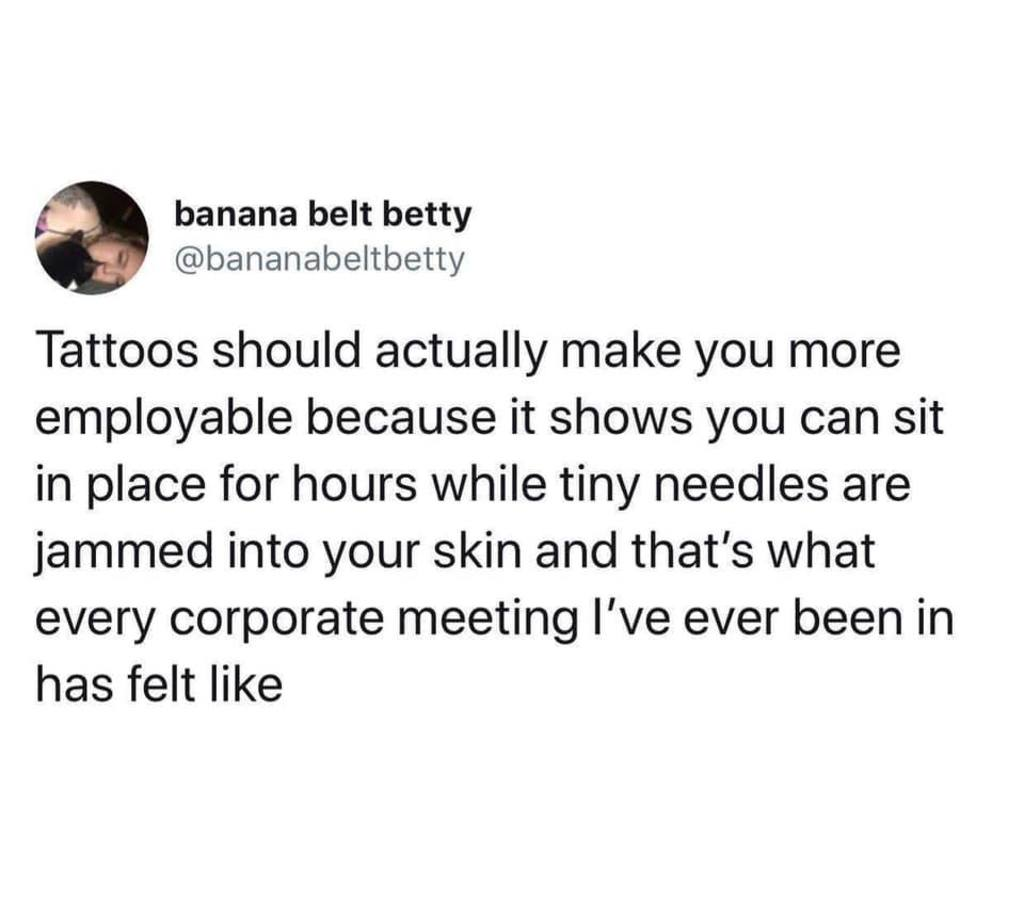
Execs have also had meetings in places that they wanted to visit (click on the link to see who it is), and most people knew that. That was a waste of travel time and money for a wasted meeting. There were other reasons they had meetings, but read the quotes at the beginning to find out why said were held.
Avoid training meetings, unless it was a way to be busy during a meeting you want to avoid. This is especially true of diversity training. It is a waste of time (same exact meeting every time every year for the required legal reason) but is more important than almost any other meeting, so it serves 2 purposes. No one will go against diversity training for fear of being politically or legally incorrect. It does allow you to miss another meeting and no one pays attention anyway. It’s an opportunity to get work done while the training is going on in the background. Your attendance is recorded so you are twice as effective as you complete your work, earn your mark for training and ignore the same speech you went through last year all at the same time.
MEETING RULES TO SURVIVE
The best way to deal with a meeting is to avoid it. If you can already have a meeting at a time that the scheduler proposes it or be busy and/or somehow away or out of the office. Teleconferencing kills that strategery unless you can be found traveling, but sometimes it’s unavoidable (see how to get out of a meeting below if you have to go). The people calling the meeting are really only people who want the meeting anyway.
For things to do to avoid meetings or how to goof around during a meeting, go to the link How to goof around at work.
HERE IS MY RULE WHEN TO DECIDE TO ATTEND IF I HAD A CHOICE: if there were more than 4 people, don’t go. Nothing will get done other than resulting in another meeting to have to attend. This is especially true if there are more than 1 executives, as each brings a team of competing players who guarantee the death of productivity.
The WSJ agrees with me, but goes on to say that if it has 17 people, there is no chance anything will get accomplished.
Don’t speak at a meeting if possible. It usually wastes time and extends the meeting length. There are only a couple of people who really have something to contribute, the rest want to hear themselves talk, show off their PowerPoint skills to bore you, or think they are more important if they speak. These show offs can be insufferable, but they offer time to check your email at best while pretending to listen.
This is in the department of redundancy department, but it is so important to note is to be careful when attending because the meeting leader’s purpose is to assign their work to others or get people to do work they wouldn’t do because they can’t decline in public (this is a corporate tradition). This further kills your ability to be productive at your real job. There are some who want to look important by accepting work magnanimously to show off, thinking they were climbing the ladder. Gladly accept their offer as most people have 10 hours of work for an 8 hour day anyway. Only accept it if it produces revenue or if you are the only one qualified to do it, but generally don’t, especially if you perceive it as a make work project.
Especially avoid planning meetings. A meeting to plan another meeting is one to be skipped unless you are the project manager and called the meeting, then you have to do it. Avoid these at all costs. Once nobody shows up, the meeting gets cancelled for email updates, which is a far better use of your time. As my grandfather said, they are as common as pig tracks and as useless as teats on a boar hog.
Avoid staff meetings. These are like planning meetings, but they occur regularly and when you miss one, nobody really cares (especially if there are more than 4 people). Only attend them occasionally as you work with these people everyday anyway, it’s not like you don’t know what is going on. Email your boss on a regular basis with your activity and you can plan something more productive during that time.
HOW TO GET OUT OF A MEETING
The tongue in cheek part really goes here. I’ll bet there are folks out there far more creative about this than me.
My favorite methods are to have a customer who needs you. They are your business and that overrides almost everything. Even your boss can’t deny this.
Pre-plan an emergency. I occasionally had another employee phone or knock on the door to call me out (email or text isn’t as good as that is not public enough) to get you out of a meeting. The trick is to never return. You’ll get the notes anyway, I promise. Since I worked with the press and analysts, I sometimes had a co-worker say that a reporter needed me right now. They were my customer and no one could say no. Many times there was no real emergency even if the press did call, it was the best and most efficient use of my time to leave the meeting so as to be actually working instead of being at a meeting. I usually dealt with the press immediately unless I had to do some digging to get back to them.
Attend meetings by phone if possible. You can always put the phone on mute and get your real work done, or surf the web or watch TV, which is usually just as productive. It’s easier to go to the bathroom, which brings me to…
Go to the bathroom. Offer to get a water to others when you go, then take as much time reading the sports page in the stall as you can. You are just as productive as listening to someone prattle on about their project.
Send your meeting information in by proxy. See above where someone is willing to talk. Give them your results or input so you don’t have to be there.
THE KIND OF MEETING TO HAVE
I realize that some meetings are necessary, so I understand that it’s the only way to get some things done. For the other majority of the time, see above.
The best meeting is a hall meeting. You run into the person you need help from and in 5 minutes, you’ve explained your need, what they can do and your time frame for doing it. Problem solved.
I also recommend having meetings with introverts and/or men. They don’t like to talk much (most of them) and want to get it over as quickly as you do. Attire requirements are less of a priority as is small talk.
Here is the net net, don’t go to a meeting if you don’t have to, get out early if at all possible and above all, don’t speak unless you have no option. Consider it a victory if you don’t attend, or a minor victory if you have to attend but don’t come out with anyone else’s work. You are a complete failure if you open your mouth and double your workload on something that is not tangential to your job or career. Enjoy your job more by having the time to actually be productive.
Share this:

The Electoral College Has Made A Decision

Hat tip to Curmudgeon, a blog that I like and follow
I like the Microsoft slant as humor.
Share this:

Dear Introvert, Why Are You So Quiet? Introvert, Here Is Why
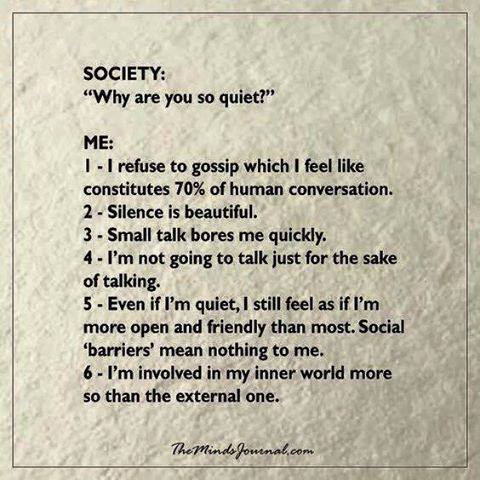
Share this:

December 7th, 1941; Sex, Drugs and Incompetency In Washington
 Revelations of what happened leading up to and following this tragic day inform us of a backstory of the events that took place in Washington.
Let me go on record to state that I am patriotic and an avid admirer of what the men of our nation did to overcome the tyranny of the Japanese and Germans in WWII. If you click on the military category of my posts, you will see that when I get cut, I bleed red, white and blue. I believe in the greatness and considerable achievements of the United States as well as it being the largest contributor for the betterment of others by any country in history.
However, as an amateur historian and an observer of the (in)competency and motives of bureaucrats in Washington, what our government did leading up to and on that day shows the weaknesses of humans. It should be noted that the Americans and more especially the soldiers who fought the war are held as honorable in my opinion. This post is not written to tear down any of the bravery accomplished during the war. They fought valiantly and protected freedom with the Allies.
This event brought together the country so that good overcame evil and I have the utmost respect for what was accomplished in that war.
Much of this was inspired by “History Honors Pearl Harbor” on the History Channel as well as other documented sources.
A historical documentation and the actual speech can be found here.
Incompetency
America was woefully unable to protect itself by December 6, 1941. It is not unlike today, December 7, 2016, as our current military has been decimated, or the decay of the military before the 9/11 Islamic terrorist attacks on the World Trade Center Towers by the administration in charge during the decade of the 1990’s .
On the day of the attack, Roosevelt was viewed by his son as frozen at times because of the thought of what it would do to his legacy. Just like the 42nd and 44th president, their legacy was more important than the nation. The worst attack on American soil would be under his watch and he would be unprepared to deal with it. Fortunately, by 8 am on 12/9/41, brave young men around the country were lined up at the draft offices, but it would take the monumental effort of the country to overcome the government’s lack of responsibility to have a force that could protect our borders.
Next was the communications between Pearl Harbor and Washington. Roosevelt couldn’t get information about what was happening. Granted, the communications infrastructure was not what it is today, but there weren’t even secure lines or even direct lines to Washington. The Naval commander in Hawaii who tried to communicate information to the Chief Naval officer Admiral Stark at the War Department couldn’t give specifics as he wasn’t sure if the Japanese were listening in.
Further, the American leadership greatly underestimated the mental acuity of the Japanese thinking that they weren’t technologically capable of such an attack. It was speculated that the Germans had given them assistance. Hitler later admitted he had no idea that the Japanese were planning to, or had attacked Pearl Harbor despite what was taught at Faber College.
Douglas MacArthur couldn’t be reached in the Philippines for most of the day. General Marshal of the Army tried for the better part of the day to warn him of the happenings in Hawaii and to prepare for a similar attack. Washington wasn’t sure of where he even was or if the Japanese had already attacked. MacArthur boasted that he had special insight into the oriental mind. When he finally was reached, his response was that he was on full alert and that “We are ready, we have our tails in the air”. History documents that the Japanese attacked and drove him out of the Philipines shortly thereafter as MacArthur did virtually nothing and lost the islands in an embarrassing defeat. He was woefully unprepared, but his ego wouldn’t let him admit it.
Finally, the government couldn’t spend more than $750 on an automobile so they couldn’t get a bullet proof car for the President to be transported from the White House to the Capitol to give the speech. The Treasury Department had confiscated Al Capone’s car earlier so that one was used instead as they couldn’t be bothered to have proper protection for the leader of the free world. That would haunt Washington as recently as November 22, 1963.
Roughly 6 hours after the attack, FDR approved Executive Order 9066 which imprisoned 92,000 Japanese to internment camps for no reason other than their might be a fifth column attack within. It was supposed to be limited in scope to arrest any spies but morphed into what was one of the lowest points of FDR’s term of leadership. Little to no evidence is ever recorded that there was any treason on their part and no one was convicted of espionage or disloyalty.
They were deemed guilty rather than innocent in one of the greatest acts of prejudice by an administration.
MORE INCOMPETENCE AND DID WASHINGTON KNOW ABOUT THE ATTACK BEFOREHAND?
As I’ve stated, I’m not a conspiracy theorist, I am for facts. FDR ordered an investigation headed by Supreme Court Justice Owen Roberts of the attack 18 days after the attack. Some interesting things were revealed. You can read further about it in the book A Matter of Honor, Betrayal, Blame and a Family’s Quest for Justice.
Admiral Kimmel, head of the Navy in the Pacific had asked Chief of Naval Operations Harold Stark six months before the attack to keep him apprised of latest intelligence regarding what the Japanese were up to. Washington knew that Pearl Harbor was vulnerable to attack as early as November 1940.
Stark held back the information that aerial torpedos capable of being deployed in waters shallower than at Pearl were being used, despite Stark reassuring Kimmel that the water in the harbor was too shallow for a torpedo attack. How this wasn’t an act of treason is curious.
The FBI had intercepted information that the Japanese had made inquiries as to the depth at Pearl and whether anti-torpedo nets had been deployed there, but again Kimmel was never informed. Not sharing this with the command was grossly incompetent or an act of political chess.
Code-breaker Lawrence Safford visited Kimmel after he had resigned. He then told Kimmel about project Magic that broke coded Japanese diplomatic messages. Washington failed to inform Kimmel what they knew prior to the attack. It reveals the Japanese had spies informing the Imperial Forces where the exact location of the ships anchored as recently as 3 months before the attack. The code breakers who discovered this in Magic was only shared by as few as 10 men who couldn’t or wouldn’t tell anyone else. It was a power play by political operatives in Washington instead of military strategists who would have warned the fleet in Oahu and had the capability to defend against a surprise attack.
A message to the Japanese embassy was decoded instructing them to move to negotiations that had to be completed by 11/5/41, or things will happen automatically beyond that.
The Japanese fleet set sail on November 25th. There was no turning back at this point.
FDR was aware that the Japanese were going to break off negotiations and 10 days prior to the attack, Admiral Stark issued a warning that there could be an attack, unfortunately not mentioning or notifying the Hawaiian Islands that they were a possible target.
Three hours prior to the attack, Stark received a message that indicated what was about to happen but failed to notify Kimmel. By the time the message was placed into Kimmel’s hands, it was 8 hours after the attack and was not marked priority.
The intelligence was available, but Washington failed to connect the dots.
I hope that the administration which has meandered it’s way around the safety of our country hasn’t set the table for a repeat by those who have lost their respect for our capability to defend ourselves.
SEX
Missy LaHand, FDR’s assistant for 21 years contacted him on December 7th. She was closer to the president than Eleanor during that time, some speculate in many ways other than a secretary. With everything that was going on, the last thing he needed was to hear from a woman he’d had a relationship with. Eleanor allegedly pushed for a divorce after discovering hat FDR had an affair with her social secretary, so the last thing he wanted to do was push the envelope unnecessarily by contacting her. With the decisions that would change the world in front of him, all he needed was additional drama from his wife and another woman. He decided not to return her call from Warm Springs where she was recovering and it devastated her so greatly that she attempted suicide shortly thereafter. Presidents have had trouble keeping their pants zipped.
As a side note, but belonging in the sex category, Edward R. Murrow interviewed FDR that night. Not that it has anything to affect the situation, Murrow carried on a wartime affair with Churchill’s daughter-in-law Pamela Digby Churchill when he was a reporter in London. He had a close relationship with the Leaders of the Free World and an even closer relationship with some of their relatives.
DRUGS
Roosevelt had a chronic sinus condition from which he suffered most of his life. Shortly after the attack, he had a headache and was congested, so he was wheeled into the office of his physician, Dr. Ross Macintyre where he was treated with cocaine. It can be argued that it may have affected his decision-making that day. Since it was legal, it wasn’t an issue. Drugs used to be a political show stopper until Obama, who admitted he snorted it got elected.
ROCK AND ROLL
Fortunately, the attack woke up the nation and kick-started the industrial might the US. Some of the greatest human, scientific and technological achievements happened during the war.
Most important though was the lesson on how wars should be fought and won, something that has been lost on the leadership today. You fight to win and settle only for unconditional surrender. At that point, you set the terms of how the relationship will proceed. Germany and Japan have become industrial and world leaders, built up by the USA after the war unlike Vietnam and the middle east where our troops were strangled by congress rather than let soldiers fight the war.
Share this:

Women Now Swear More Than Men
 A unique survey of the swearing habits of men and women over the past 20 years has revealed that not only is the English language constantly discovering new ways to be rude, but women are using the f-word more often than men.
According to the Times from this link, women (mostly British in this study, but listen to YouTube to realize the U.K. doesn’t have the patent on this) have potty mouths now worse than men, except for maybe James Governor. The study, conducted by researchers from Lancaster University and Cambridge University Press, also found that women were ten times more likely to say s–t than men.
But it wasn’t always this way. According to studies from the early 1990s, men used ‘f–k’ 1,000 times out of every million words they said; while women said it 167 times. They should get a better vocabulary I guess.
I’ll speculate that men have been told to watch their mouths and women think that it makes them empowered. In reality, unless you are very creative with your speech patterns, it’s not very linguistic to speak like this. It’s not like everyone hasn’t thought it or said it, but to legitimize it on this scale is disturbing. It also brings down a population segment.
I also find women with higher IQ’s use considerably less foul language than wannabee’s. Conversely, celebrities and entertainers seem to be trying to legitimize this type of speaking. It seems that the female politicians have taken to this trend also.
Maybe that’s why there is an attraction to intelligence?
You all should be ashamed of yourselves. 😉
Share this:

How The Income Inequality Jihad Will Likely Hurt the Poor
The brilliant John Hawkins presents the facts about this subject. It is to be the 2014 top priority from our executive branch. Readers should evaluate the facts and judge for yourself if this is good for the country or not. Park your ideology at the door (regardless of its source) and think through the argument. Your beliefs are yours, just make sure to check with history to see what information it supports
The truth is that income inequality is of minimal importance in a nation like America, where so many people already move between classes, where the poor are doing so much better than they used to, and where our poor already do so well compared to the rest of the world. “Among children from families in the bottom fifth of the income distribution, 84 percent of those who go on to get a college degree will escape the bottom fifth, and 19 percent will make it all the way to the top fifth.” During the Great Depression, more than 60% of Americans were living below the poverty line. Over the last 50 years, that number has generally ranged between 12%-15% — and even that dramatically overstates the number of poor Americans because it doesn’t take into account government assistance that’s being paid out. On top of all that, liberals get so angry when people point out that more than 80% of poor Americans have cell phones, televisions and refrigerators while “most Americans living below the official poverty line also own a motor vehicle and have more living space than the average European.” Yet, they don’t take into account the fact that almost half of the world’s population still lives on less than $2.50 a day. In other words, if you are poor, you can live better and have more opportunity to advance in America than you will anywhere else. That’s why immigrants all across the world still want to come to this country.
1) The higher the government mandated minimum wage/living wage, the more people it prices out of jobs: When you force businesses to pay people more than they can return in value with their work, companies tend to respond either by hiring better quality people, replacing the jobs with automation, moving the posts overseas or by looking for opportunities to get rid of the positions entirely. The higher the wages and benefits the government insists on, the more stagnant it makes the labor market for the people who need to build their skills the most. If your goal were to deliberately put as many young, unskilled single mothers out of work as possible, the best politically feasible way to do it would be to jack the minimum wage up into the stratosphere.
2) It emphasizes making people more comfortable, not helping them succeed: There is no shame in taking any honest job, but you’re not supposed to make a living pressing the button that drops the fries into the grease at McDonald’s. If you work long enough at an entry-level job to worry about raising the minimum wage, you’re failing your family, your society and yourself. Instead of encouraging minimum skill workers to demand that the government force businesses to give them more money than they’re currently worth, we should be encouraging people to build their skills and move up, move on or start their own business. Want poor people to be eligible for more education or training? Want to give them micro-loans? Want to make it easier for them to create small businesses? Those are policies that make poor Americans more valuable. That’s good for them and the country. On the other hand, trying to redistribute income ultimately brings everyone down, especially the poor Americans who lose their drive after becoming dependent on it.
3) The more government becomes involved, the more it stagnates the economy: As John F. Kennedy said, “A rising tide lifts all boats.” The stronger the economy is, the more jobs it creates and the more everyone — poor, middle-class, or rich — benefits. How do you make the economy stronger? You keep the government small, taxes low, and regulations light. That’s a proven formula that has worked time and time again. On the other hand, if you want to constipate the economy, you make the government bigger, increase taxes and pour on the regulations. How did that latter set of “solutions” work out for Detroit?
4) The more the government focuses on income inequality, the harder it is to get ahead: As Thomas Sowell likes to say, “There are no solutions; there are only trade-offs.” You can see this very clearly with Obamacare, where a few people are getting subsidized care, while tens of millions more are losing their health care and paying considerably more to make up for it. It works the same way with income inequality. Want to make Wal-Mart pay all its employees twice as much? Then that means all the poor Americans who shop at Wal-Mart will have to spend more of their limited incomes to pay for it. Want to give more tax dollars to the poor? Then the rich and middle class will have to pay more in taxes. So, the moment that poor American is making enough money to get into the middle class, he’s hit with a bigger tax bill that makes it harder for him to ever get ahead. In other words, the more resources we put into “helping” the poor, the harder we ultimately make it for those very same people to ever permanently escape poverty and live the American Dream.
5) It ignores the real causes of poverty: The real causes of lasting poverty in America are not greed, the rich, racism, America being “unfair,” or any of the other excuses that you hear so often. Instead, the harsh truth that so many people don’t want to hear is that if you stay poor in America, it’s usually because you made bad life choices. Via Walter Williams, here’s what you have to do in order to avoid poverty in America.
“Complete high school; get a job, any kind of a job; get married before having children; and be a law-abiding citizen. Among both black and white Americans so described, the poverty rate is in the single digits.”
Instead of lying to destitute Americans and telling them that the rich became wealthy by stealing the money that the poor never had in the first place, why not tell people the truth? Yes, it might make some poor Americans feel bad, but do you think welfare, food stamps, and living in a housing project do wonders for people’s moods?
Share this:

What Alexis de Tocqueville Said About America, The USA
It is interesting to think of what he observed in the mid 1800’s vs. the country we have in 2014. Here are his comments based on a visit:
Upon my arrival in the United States, the religious aspect of the country was the first thing that stuck my attention; and the longer I stayed there, the more I perceived the great political consequences resulting from this new state of things.
In France I had almost always seen the spirit of religion and the spirit of Freedom marching in opposite directions. But in America I found they were intimately united and that they reigned in common over the same country.
Religion in America…must be regarded as the foremost of the political institutions of that country; for if it does not impart a taste for freedom; it facilitates the use of it. Indeed, it is in this same point -of -view that the inhabitants of the United States themselves look upon religious belief.
I do not know whether all Americans have a sincere faith in their religion—for who can search the human heart? But I am certain that they hold it to be indispensable to the maintenance of republican institutions. This opinion is not peculiar to a class of cities or a party, but it belongs to the whole nation and to every rank of society.
The sects that exist in the United States are innumerable. They all differ in respect to the worship which is due to the Creator; but they all agree in respect to the duties which are due from man to man.
Each sect adores the Deity in its own peculiar manner, but all sects preach the same moral law in the name of God.
Moreover, all sects of the United States are comprised within the great unity of Christianity and Christian morality is everywhere the same.
In the United States the sovereign authority is religions…there is no country in the world where the Christian religion retains a greater influence over the souls of men than in America, and there can be no greater proof of its utility and its conformity to human nature than that its influence is powerfully felt over the most enlightened and free nation of the earth.
In the United States, if a political character attacks a sect [denomination], this may not prevent even the partisans of that very sect, from supporting him; but if he attacks all the sects together [Christianity], everyone abandons him and remains alone.
I do not question that the great austerity of manners that is observable in the United States arises, in the first instance, from religious faith…its influence over the mind of woman is supreme, and women are the protectors of morals. There is certainly no country in the world where the tie of marriage is more respected than in America or where conjugal happiness is more highly or worthily appreciated.
In the United States, the influence of religion is not confined to the manners, but it extends to the intelligence of the people…
Christianity, therefore, reigns without obstacle, by universal consent; the consequence is, as I have before observed, that every principle of the moral world is fixed and determinate…
I sought for the key of greatness and genius of America in her harbors…; in her fertile fields and boundless forests; in her rich mines and vast world commerce; in her public school system and the institutions of learning. I sought for it in her democratic Congress and in her matchless Constitution.
Not until I went into the chutes of America and heard her pulpits flame with righteousness did I understand the secret of her genius and power.
America is great because America is good, and if America ever ceases to be good, America will cease to be great.
The safeguard of morality is religion, and morality is the best security of law as well as the surest pledge of freedom.
The Americans combine the notions of Christianity and of liberty so intimately in their minds that it is impossible to make them conceive the one without the other.
Christianity is the companion of liberty in all of its conflicts–the cradle of its infancy, and the divine source of its claims.
They brought with them…a form of Christianity, which I cannot better describe than by styling it in a democratic and republican religion…From the earliest settlement of the emigrants, politics and religion contracted an alliance which has never been dissolved.
The Christian nations of our age seem to me to present a most alarming spectacle; the impulse which is bearing them along is so strong that it cannot be stopped, but is not yet so rapid that it cannot be guided; their fate is in their hands; yet a little while and it may be no longer.
Read the rest of this PolitiChicks.tv article here: http://politichicks.tv/column/2014-alexis-de-tocqueville-esque-year-restoration/#5ulfUJKsDb9hcb3G.99
Share this:

What Is Happiness?
Happiness has a lot of definitions depending on who you are. Here is one that is not the only answer, just a good thought.
Mathematically speaking, it looks like this….
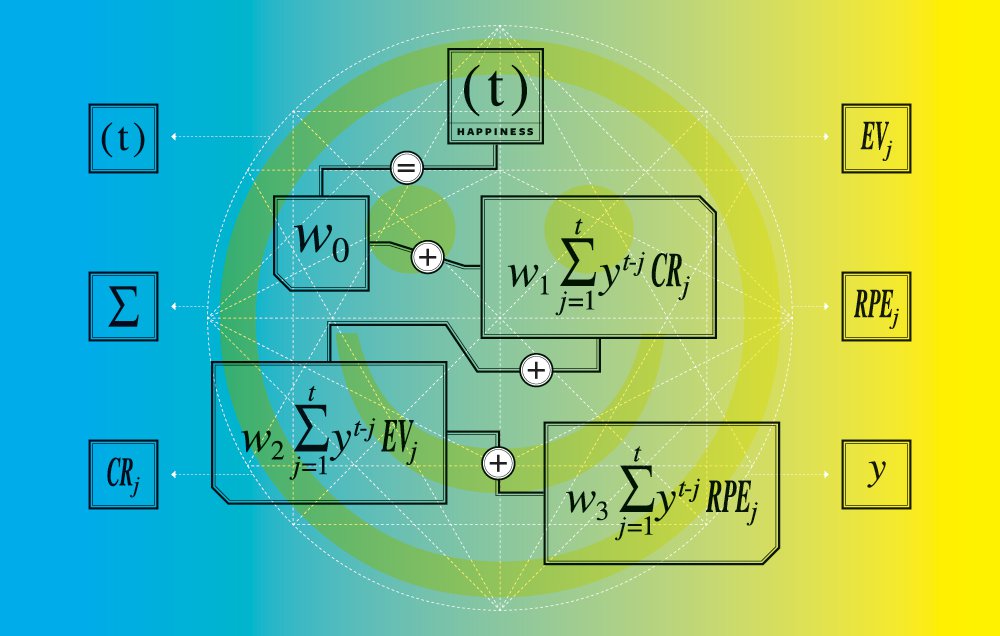
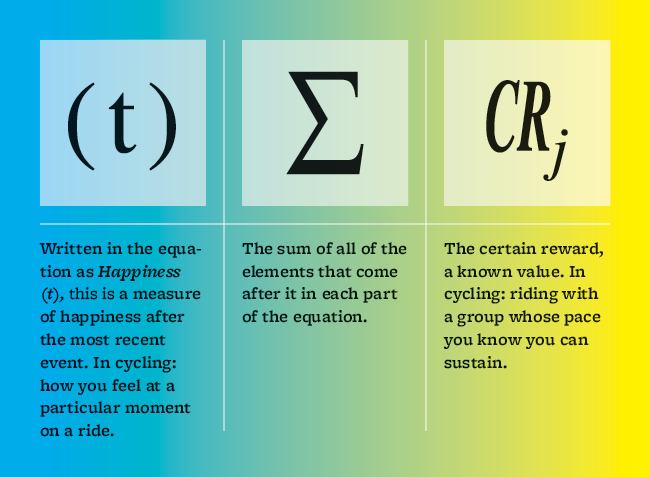
Share this:

Vocabulary Tricks Dumb People Use to Sound Smart – Also A Good Meeting Bingo List When You Are Bored

I have heard most of these 89 sophisticated clichés that typically form the trick vocabulary of such people, almost always by management, whom I’ve indicated:
Note: these are also meeting (BS) bingo words when you are bored. Please let me know if anyone is ever in a meeting that can cross off all of these words.
One of my favorite sayings is: A meeting is a cul-de-sac where ideas are strangled and usually eliminated.
1. It’s a paradigm shift = I don’t know what’s going on in our business. But we’re not making as much money as we used to.
2. We’re data-driven = We try not to make decisions by the seat of our pants. When possible, we try to base them in facts -SC.
3. We need to wrap our heads around this = Gosh, I never thought of that. We need to discuss that….SC
4. It’s a win-win = Hey, we both get something out of this (even though I’m really trying to get the best from you)
5. ROI [used in any sentence] = Look at me, I’m very financially minded, even if I never took any finance classes in school
6. Let’s blue sky this/let’s ballpark this = Let’s shoot around a bunch of ideas since we have no clue what to do
7. I’m a bit of a visionary = I’m a bit of an egomaniac and narcissist EB
8. I’m a team player/we only hire team players = I hope everyone on the team thinks this is a meritocracy, even though I’m the dictator in charge EB
9. Let’s circle back to that/Let’s put that in the parking lot/let’s touch base on that later/let’s take this off-line = Shut up and let’s go back to what I was talking about
10. We think outside the box here/color outside the lines = We wouldn’t know about how to do something innovative if it came up to us and bit us in the behind
11. I/we/you don’t have the bandwidth = Since we cut 60% of our headcount, we’re all doing the job of 3 people, so we’re all burned out
12. This is where the rubber meets the road = Don’t screw up
13. Net net/the net of it is/when you net it out = I never studied finance or accounting but I sound like someone who can make money if I keep talking about another word for profit
14. We’ll go back and sharpen our pencils = We’ll go back and offer you the same for 20% less in hopes you’ll buy it before the end of the quarter – RA
15. It’s like the book “Crossing the Chasm”/”Blue Ocean”/”Good To Great” / “Tipping Point” / “Outliers” = I’ve never read any of these books but I sound literate if I quote from them. And, besides, you cretins probably never read them either to call me out on it
16. Let’s right-size it = Let’s whack/fire a bunch of people – RA
17. It’s next-gen/turn-key/plug-and-play = I want it to sound so technical that you’ll just buy it without asking me any questions
18. We need to manage the optics of this = How can we lie about this in a way people will believe?
19. This is creative destruction = I’ve never read Joseph Schumpeter but our core business is getting killed so it’s your responsibility to come up with a new product the market will buy
20. We don’t have enough boots on the ground = I don’t want to be fired for this disastrous product/country launch, so I’m going to sound tough referring to the military and say I don’t have enough resources
21. Deal with it = Tough cookies – SC
22. By way of housekeeping = This makes the boring stuff I’m about to say sound more official
23. That’s the $64,000 question [sometimes, due to inflation, people will denominate this cliché in millions or billions of dollars] = I don’t know either
24. Let’s square the circle = I’m someone who can unify two team members’ views and sound important
25. It’s our cash cow/protect/milk the cash cow = If that business goes south, we’re all out of a job
26. It’s about synergies/1 + 1 = 3 = I don’t get the math either, but it sounds like more and more is better, right?
27. Who’s going to step up to the plate? = One of you is going to do this and it’s not going to be me
28. We’re eating our own dog food = It sounds gross but we seem like honest folks if we do this.
29. We need to monetize/strategize/analyze/incentivize = When in doubt, stick “-ize” on the end of a word and say we’ve got to do this and 9 out of 10 times, it will sound action-oriented.
30. We did a Five Forces/SWOT analysis/Value Chain analysis = We didn’t really do any of that, but none of you probably even remember Michael Porter, so what the heck
31. It was a perfect storm = We really screwed up but we’re going to blame a bunch of factors that are out of our hands (especially weather)
32. At the end of the day…. = OK, enough talking back and forth, we’re going to do what I want to do – LS
33. Who’s got the ‘R’? [i.e., responsibility to do what we just spent 20 minutes talking about aimlessly] = If I ask the question, it won’t be assigned to me
34. Let’s put lipstick on this pig = plug your nose
35. I’m putting a stake in the ground here… = I’m a leader, simply because I’m using this cliché
36. We’re customer-focused/proactive/results-oriented = That can’t be bad, right? This is motherhood and apple pie stuff
37. Our visibility into the quarter is a little fuzzy = Sales just fell off a cliff
38. That’s not our core competency/we’re sticking to our knitting = We’re just glad we’re making money in one business, because we’d have no clue how to get into any other business
39. Well, we’re facing some headwinds there = You put your finger on the area we’re panicking over
40. It’s a one-off = Do whatever they want to close the sale
41. Incent it = That’s not a verb but I just made it into one because I’m a man/woman of action
42. I’m an agent of change = This makes it sound like I know how to handle the chaos that our business is constantly going through
43. We’ve got to do a little more due diligence there = Don’t have a clue but does that legal term make me sound detail-oriented?
44. Don’t leave money on the table = Be as greedy with them as possible
45. We take a “ready, fire, aim” approach here = We totally operate on a seat-of-the-pants basis
46. Hope is not a strategy = I don’t have a strategy, but this makes it sound like I’m above people who also don’t have a strategy – BO
47. We have to tear down the silos internally = Our organizational structure is such a mess that I’m going to be under-mined by other departments at every turn
48. I don’t think it will move the needle = This won’t get my boss excited
49. Good to put a face to the name = I’d really rather talk to that person behind you
50. Let’s take the 30,000 foot view… = I like to think I see the big picture
51. It’s the old 80-20 rule = I really have no idea what the rule was, but I just want to focus on the things that will make us successful
52. We need to manage expectations = Get ready to start sucking up to people – AL
53. It’s not actionable enough/what’s the deliverable? = You guys do the work on refining the idea. I’m too tired.
54. My 2 cents is… = This opinion is worth a heck of a lot more than 2 cents
55. I’m going to sound like a broken record here… = I want to clearly point out to you idiots that I’ve made this point several times before
56. We’ve got too many chiefs and not enough Indians = I want to be the Chief
57. Going forward = Don’t screw up like this again – AL
58. My people know I’ve got an open door policy = I’ve told my direct reports to come to me if they have a problem, so why should I feel bad if they complain I’m too busy to talk to them?
59. It’s gone viral = Someone sent a tweet about this
60. I know you’ve been burning the candle on both ends = Get ready to do some more
61. It’s scalable = We can sell a lot of it in theory
62. It’s best-of-breed = We hired a market research firm to say that – too many – SC
63. We’re all about value-add = Unlike our competitors who seek to add no value
64. What’s our go-to-market? = Has anyone planned this out, because I’ve been too busy? SC
65. I’m drinking from a fire hose right now = I want a little sympathy over here, because I’m tired of carrying this company on my back
66. We’re getting some push back = They’re not buying it JB
67. We need to do a level-set = I’ve never been inside a Home Depot, but this phrase makes me sound handy
68. It’s basic blocking and tackling = How could you screw this up? I also played high school football and those were the best days of my life.
69. Let’s put our game faces on = Get serious, guys
70. We’ve got it covered from soup to nuts = I have no idea what that means, but don’t you dare question my prep work on it
71. We don’t want to get thrown under the bus = So let’s throw someone else first – RGorman
72. But to close the loop on this… = Always the more theoretical Business Development/Strategy guys who say this, so they can sound thorough
73. What are “next steps”? = Did anyone take notes during the last 90 minutes of this meeting?
74. This is low-hanging fruit = Get this done quickly
75. We need a few quick wins = We’ve got to trick people into thinking we know what we’re doing by some successes we can point to and claim as ours DHP
76. It’s a [Insert Company Name] killer = Did I get your attention yet with the Freddy Kreuger imagery associated with the company who’s currently eating our lunch? SC
77. I want to address the elephant in the room = I know you think I’m trying to cover up/gloss over something, so I might as well talk about it
78. This is the next big thing/new thing = Some of our 20-somethings have told me this is really cool
79. This time it’s different because… = Don’t wait for the explanation… simply run for the hills.
80. What are the best practices on this? = How can I cover my behind that we’re just doing stuff the way other good people have supposedly done this?
81. This is our deliverable = I know this sounds like something that comes in a body bag, but it makes our PowerPoint sound tougher than it actually is
82. We’ll loop you in when we need to = You’re not that important to know about all the details on this
83. We want this to move up and to the right = I failed high school algebra but someone said this means we’ll be making a lot of money if this happens
84. We’re going through a re-org = No one knows what the heck is going on at the moment, we’re going to lay off a bunch of people.
85. We’ve got to increase our mind-share with the customer = I think I would have been happier as a doctor doing lobotomies than in marketing as a career path
86. I don’t think you’re comparing apples to apples = Let me tell you how you should really think about this issue = DHP
87. Let’s peel back the onion on this = I want to sound thorough so this is a better way of telling you that than simply clearing my throat
88. You phoned it in = I was too busy checking my email during your presentation that I didn’t listen _ JC
89. I want you to run with this = I just threw you into the deep end of the pool and you’re on your own to figure it out -JC
Share this:

The official words to Louie Louie
From time to time, from fraternity parties to listening in the car, most have thought about what the real words to this song are, for at least seconds or until something equally insignificant diverts our attention…….
“Louie Louie, me gotta go. Louie Louie, me gotta go. A fine little girl, she wait for me. Me catch the ship across the sea. I sailed the ship all alone. I never think I’ll make it home. Louie Louie, me gotta go . Three nights and days we sailed the sea. Me think of girl constantly. On the ship, I dream she there. I smell the rose in her hair. Louie Louie, me gotta go. Me see Jamaican moon above. It won’t be long me see me love. Me take her in my arms and then I tell her I never leave again. Louie Louie, me gotta go.” (By Richard Berry. Copyright 1957-1963 by Limax Music Inc.)
Share this:

Goals For 2016
I included this in my diet as I laughed my a$$ off when reading it.
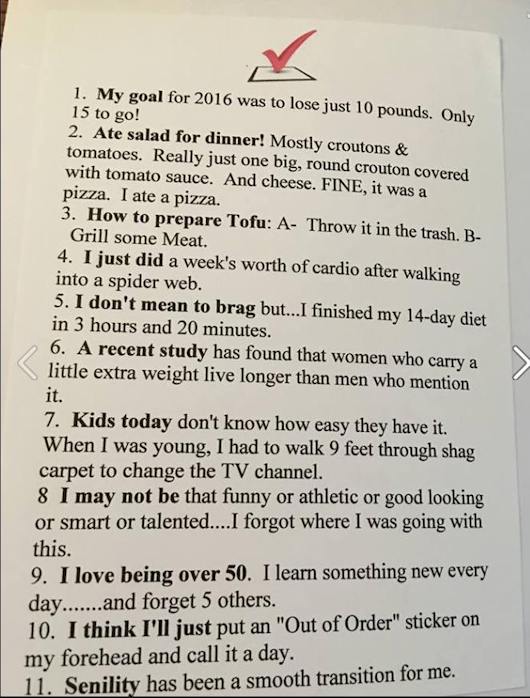
Got this from Curmudgeonly and Skeptical
Share this:

Bradley’s Bromide – Tech Humor
“If computers get too powerful, we can organize them into a committee — that will do them in.”
Share this:

WD-40, Interesting Facts – it even helps catch fish

 For the full list of 2000
 uses, go here
I thought that you might like to know more about this well-known WD-40 product.
When you read the “shower door” part, try it. It’s the first thing that has cleaned that spotty shower door. If yours is plastic, it works just as well as glass. It’s a miracle.
Then try it on your stovetop, it’s now shinier than it’s ever been.
The product began from a search for a rust preventative solvent and de-greaser to protect missile parts. WD-40 was created in 1953 by three technicians at the San Diego Rocket Chemical Company. Its name comes from the project that was to find a “Water Displacement” compound. They were successful with the Fortieth formulation, thus WD-40.
The Corvair Company bought it in bulk to protect their Atlas missile parts. The workers were so pleased with the product they began smuggling (also known as “shrinkage” or “stealing”) it out to use at home. The executives decided there might be a consumer market for it and put it in aerosol cans. The rest is hist-ory. Ken East (one of the original founders) says there is nothing in WD-40 that would hurt you.
Here are a few of the 1000s of uses:
~Protects silver from tarnishing.
~Cleans and lubricates guitar strings.
~Gets oil spots off concrete driveways.
~Gives floors that ‘just-waxed’ sheen without making ! them slippery.
~Keeps flies off cows.
~Restores and cleans chalkboards.
~Removes lipstick stains.
~Loosens stubborn zippers.
~Untangles jewelry chains.
~Removes stains from stainless steel sinks.
~Removes dirt and grime from the bar-becue grill.
~Keeps ceramic/terra cotta garden pots from oxidizing.
~Removes tomato stains from clothing.
~Keeps glass shower doors free of water spots.
~Camouflages scratches in ceramic and marble floors.
~Keeps scissors wo! rking smoothly.
~Lubricates noisy door hinges on vehicles and doors in homes.
~Gives a children’s play gym slide a shine for a super fast slide.
~Lubricates gear shift and mower-deck lever for ease of handling on riding mowers.
~Rids rocking chairs and swing! s of squeaky noises.
~Lubricates tracks in sticking home windows and makes them easier to open.
~Spraying an umbrella stem makes it easier to open and close.
~Restores and cleans padded leather dashboards and vinyl bumpers.
~Restores and cleans roof racks on vehicles.
~Lubricates and stops squeaks in electric fans.
~Lubricates wheel sprockets on tri-cycles, wagons and bicycles for easy handling.
~Lubricates fan belts on washers and dryers and keeps them running smoothly.
~Keeps rust from forming on saws an! d saw blades, and other tools.
~Removes splattered grease on stove.
~Keeps bathroom mirror from fogging.
~Lubricates prosthetic limbs.
~Keeps pigeons off the balcony. (they hate the smell)
~Removes all traces of duct tape.
~I have even heard of folks spraying it on their arms, hands, and knees to re-lieve arthritis pain.
~Florida’s favorite use was “cleans and removes love bugs from grills and bumpers”.
~WD-40 protects the Statue of Liberty from the elements.
~WD-40 attracts fish. Spray a LITTLE on live bait or lures and you will be catching the big one in no time. It’s a lot cheaper than the chemical attractants that are made for just that purpose. Keep in mind though, using some chemical laced baits or lures for fishing are not allowed in some states.
~Keeps chiggers away from the kids.
~Use it for fire ant bites. It takes the sting away immediately, and stops the itch.
~WD-40 is great for removing crayon from walls. Spray on the mark and wipe with a clean rag.
~Also, if you’ve discovered that your teenage daughter has washed and dried a tube of lipstick with a load of laundry, saturate the lipstick spots with WD-40 and re-wash. Lipstick is gone.
~If you sprayed WD-40 on the distributor cap, it would displace the moisture and allow the car to start. (If I knew what a distributor cap was, it might help.)
~WD-40, long known for its ability to remove leftover tape smunges (sticky label tape), is also a lovely perfume and air freshener! Sprayed liberally on every hinge in the house, it leaves that dis-tinctive clean fresh scent for up to two days!
~Seriously though, it removes black scuff marks from the kitchen floor. Use WD-40 for those nasty tar and scuff marks on flooring. It doesn’t seem to harm the finish, and you won’t have to scrub nearly as hard to get them off . Just remember to open some windows if you have a lot of marks.
~Bug guts will eat away the finish on your car if not removed quickly. WD-40 will remove them.
10 more just came out, some are similar:

10 Surprising Uses for WD-40 (and 5 Places It Should Never Be Sprayed)
Brett Martin
Everybody knows WD-40 is the go-to product for silencing squeaks, displacing moisture, preventing rust, and loosening stuck parts. You probably have a can sitting in your garage right now. It has a ton of uses, but it’s no panacea. In fact, there are a some jobs that the lube will absolutely ruin.
Your house is the biggest gadget of all. A Gizmodo Home Mod shows you how to recharge it, clear its cache, and update its operating systems.
Use WD-40 To:
1. Lube a shovel. Spray WD-40 on a shovel, spading fork, hoe or garden trowel. The soil slides right off—especially helpful when digging in clay.
2. Clean tile. The spray removes spilled mascara, nail polish, paint and scuff marks from tile floors, and also help you wipe away grime from the grout lines. Clean up with soapy water.
3. Scrub stains from stainless steel sinks.
4. Unstick gum. A squirt makes it easier to pull gum out of carpet and even hair. It’s better than cutting out the gum and leaving patchy carpet or a bad haircut.
5. Soften leather. Oil can help break in a stiff leather tool belt.
6. Free stuck LEGOs. Your kids will thank you.
7. Erase crayon. When crayon ends up on toys, flooring, furniture, painted walls, wallpaper, windows, doors, and television screens. Spray on WD-40 and wipe it off.
8. Prevent flowerpots from sticking when stacked together.
9. Get rid of rust. Spray and rub away rust from circular saw and hacksaw blades. It can also clean blades of tar and other gunk.
10. Remove goo. Unstick gooey residue from price tags, duct tape, and stickers.
Share this:

MY FAVORITE PR STUNT OF ALL TIME – THE WORLD’S FIRST LOW TECHNOLOGY ARTIFICIAL REEF

HOW IT STARTED
This story actually began with the unplanned running aground of the Mercedes I in Palm Beach. It desecrated the private holy grounds of the hoity toity for over a hundred days in late 1984. They eventually towed it away and made an artificial reef making almost everyone happy.
About the same time IBM introduced the PC-AT, billed as the most powerful personal computer ever built. It had one problem though as internally sat a 20 MB disk drive made by CMI. It was based on stepper motor technology and it both failed at alarming rates and was as slow as cold honey. It was that flaw which helped give birth to the drive aftermarket in the PC industry and caused one of the biggest black eye’s to the PC’s reputation.
CORE INTERNATIONAL TO THE RESCUE
A small storage company in Boca Raton – the home of the IBM PC saw the obvious problem and created a marketing campaign which recalled the IBM drive. It then sold you a 40 MB drive made by Control Data Corporation and rebadged as CORE product for $2,595, gave you a $1000 rebate and ran an ad claiming it was going to build an artificial reef out of the CMI drives (you can buy gigabytes now for less that $100). CORE was making over 100% profit so the perception of value is greater than reality. The users still paid one of the highest cost per byte of storage possible.
 Here is a portion of the ad which created a sensation in the print media, as both IBM and the PC had been infallible up to this point.
PC MAGAZINE CATCHES ON
At this point Paul Sommerson, Bill Machrone, Bill Howard and other writers contacted CORE and asked for pictures of the reef being built. The company owner confided in me that he had a contract to send the drives back to CMI for a rebate and to not lose too many, we staged the entire event. We took his boat, the MEGABYTE out of Jupiter (not Boca) and made it look like we were really dumping the drives into the water. I’m sure the Nanny state EPA would have been all over us had we really done it, but the rest of the story is that we only dumped the drives in the picture (note the false bottom). We tried hard to drop a drive on a string while posing with the box in the picture, but all that produced were lame results. I finally convinced him that we needed to actually throw some drives overboard and that one shot is now etched into PC history. It was the last picture on the roll of film (if you remember film). We tried fishing for sharks after the shoot to put a drive in one of their mouths for the table of contents. We had one on, but it bit through the line and we ran out of time.
The film was immediately Fed-ex’d to NY as they were on deadline for what is known as the Fire Ax issue. The title was “Is Your PC Safe”, but there was a fire ax coming down on a PC-AT and the picture was in both the table of contents and the article.
It should be noted that neither CORE nor PC Magazine was trying to attack IBM products. The owner at CORE was excellent at marketing and had big balls to do this stunt. It paid off handsomely both in dollars and visibility. PC Magazine was at the height of their prowess as journalistic leader of the PC industry. Kudos should be given to Bill Machrone for approving a story that would never have a chance at seeing the light of day in this day and age. He was a visionary at the publication. IBM did themselves in by releasing a defective product and not being nimble enough to deal with the issues.
Both parties were able to take advantage of the arrogance (some say ignorance) on IBM’s part for not ensuring quality control of their product and suppliers. Further, the moribund IBM PR machine, having used their death grip to the throat of PC journalism to direct results they wanted (because they were the 800 lb. elephant in the room) didn’t know that the journalists were ripe for this. They never saw this coming and were ill-equipped to deal with it. The result was that both the reputation of the PC and IBM PR was tarnished.
It should be noted that the Wilmott’s were related to the Ziff’s, who owned PC Magazine. It took me 30 years to make that connection,
THE AFTERMATH
As I mentioned earlier, the boom of peripherals was starting and this poured gasoline on that fire. CMI went out of business after losing their contract with IBM and CORE shipped hundreds of drives while becoming famous.
I personally conducted many interviews discussing drive technology and the stunt (if I recall, the story became far better than the actual event) and the owner had to move his boat. He had rented a slip from an IBM’er in Boca, but due to the kerfuffle he was asked to find another docking space.
IBM had a PR nightmare on its hands now. I’m told that Lou Gerstner’s personal speech writer was called in to clean up the mess. CORE (meaning me as I handled all of PR by this point) got years of mileage from this event. I developed relationships with the leaders in PC journalism as they were happy to have a person to talk to rather than an army of IBM suits that outdid the White House press corps in obfuscation. We even took a drive to trade shows and put it into a fish tank with fish. Everyone in the industry knew about it and we even had hats made up saying things like:
My drive won’t stay up, I built the PC that IBM didn’t, My Drive is bigger than your drive and others.
We gave away thousands. In fact I think we invented the show hat give away in the mid 80’s (one time while leaving the show, we saw a drunk bum outside a convention center at with a CORE hat on).
 The owner made show participants suffer through a sales pitch they didn’t care about, but the rest of us just gave them away.
EPITAPH
It is funny to me that I was hired by IBM to do PR for them 14 years later, and even did a stint in the PC division. I wonder if they had known it was me that helped cause one of the great PR nightmares for them, would I have gotten the job?
IBM had dropped to 6th place in PC’s by then and the PC PR department was led by two nincompoops when I got there (Mike Corrado and Ray Gorman). I always chuckled when the story came up at IBM and enjoyed the looks on their faces as they found out my part in this event. I was never involved with anything this creative while doing PR at IBM (see the moribund part), although I used some tactics from this event to be successful, so long as I didn’t tell IBM communications “leaders” about it until after the fact.
Now, did anyone read to here and notice that for a while I misspelled artificial in the title? It was a PR project for you.
Share this:

Scientific Jokes or Jokes by Those In Science
Scientists tell us their favourite jokes: ‘An electron and a positron walked into a bar…’
Science is a very serious business, so what tickles a rational mind? In a not very scientific experiment, we asked a sample of great minds for their favourite jokes

Statisticians: not totally reliable.
Physics
■ Two theoretical physicists are lost at the top of a mountain. Theoretical physicist No 1 pulls out a map and peruses it for a while. Then he turns to theoretical physicist No 2 and says: “Hey, I’ve figured it out. I know where we are.”
“Where are we then?”
“Do you see that mountain over there?”
“Yes.”
“Well… THAT’S where we are.”
I heard this joke at a physics conference in Les Arcs (I was at the top of a mountain skiing at the time, so it was quite apt). It was explained to me that it was first told by a Nobel prize-winning experimental physicist by way of indicating how out-of-touch with the real world theoretical physicists can sometimes be.
Jeff Forshaw, professor of physics and astronomy, University of Manchester
■ An electron and a positron go into a bar.
Positron: “You’re round.”
Electron: “Are you sure?”
Positron: “I’m positive.”
I think I heard this on Radio 4 after the publication of a record (small) measurement of the electron electric dipole moment – often explained as the roundness of the electron – by Jony Hudson et al in Nature 2011.
Joanna Haigh, professor of atmospheric physics, Imperial College, London
■ A group of wealthy investors wanted to be able to predict the outcome of a horse race. So they hired a group of biologists, a group of statisticians, and a group of physicists. Each group was given a year to research the issue. After one year, the groups all reported to the investors. The biologists said that they could genetically engineer an unbeatable racehorse, but it would take 200 years and $100bn. The statisticians reported next. They said that they could predict the outcome of any race, at a cost of $100m per race, and they would only be right 10% of the time. Finally, the physicists reported that they could also predict the outcome of any race, and that their process was cheap and simple. The investors listened eagerly to this proposal. The head physicist reported, “We have made several simplifying assumptions: first, let each horse be a perfect rolling sphere… ”
This is really the joke form of “all models are wrong, some models are useful” and also sums up the sort of physics confidence that they can solve problems (ie, by making the model solvable).
Ewan Birney, associate director, European Bioinformatics Institute
■ What is a physicist’s favourite food? Fission chips.
Callum Roberts, professor in marine conservation, University of York
■ Why did Erwin Schrödinger, Paul Dirac and Wolfgang Pauli work in very small garages? Because they were quantum mechanics.
Lloyd Peck, professor, British Antarctic Survey
■ A friend who’s in liquor production,
Has a still of astounding construction,
The alcohol boils,
Through old magnet coils,
He says that it’s proof by induction.
I knew this limerick when I was at school. I’ve always loved comic poetry and I like the pun in it. And it is pretty geeky …
Helen Czerski, Institute of Sound and Vibration Research, Southampton
Biology

A blowfly: not to be laughed at (read below). Photograph: Alamy
■ What does DNA stand for? National Dyslexia Association.
I first read this joke when I was an undergraduate as a mature student in 1990. I’d just come to terms with my own severe reading difficulties and neurophysiology was full of acronyms, which I always got mixed up. For example, the first time I heard about Adenosine Triphosphate it was abbreviated by the lecturer to ATP, which I heard as 80p. I had no clue what she was talking about every time she mentioned 80p. And another thing, how does Adenosine Triphosphate reduce to ATP? Where’s the P?
Peter Lovatt, lecturer in psychology of dance, University of Hertfordshire
■ A new monk shows up at a monastery where the monks spend their time making copies of ancient books. The new monk goes to the basement of the monastery saying he wants to make copies of the originals rather than of others’ copies so as to avoid duplicating errors they might have made. Several hours later the monks, wondering where their new friend is, find him crying in the basement. They ask him what is wrong and he says “the word is CELEBRATE, not CELIBATE!”
I first heard this maybe more than 10 years ago in conjunction with the general theme of “copying errors” or mutations in biology.
Mark Pagel, professor of biological sciences, University of Reading
■ A blowfly goes into a bar and asks: “Is that stool taken?” BLOWFLY JOKE HERE
No idea where I got this from!
Amoret Whitaker, entomologist, Natural History Museum
■ They have just found the gene for shyness. They would have found it earlier, but it was hiding behind two other genes.
Stuart Peirson, senior research scientist, Nuffield Laboratory of Ophthalmology
Math
 Mathematics: can it add up to a killer punchline?■ What does the ‘B’ in Benoit B Mandelbrot stand for? Benoit B Mandelbrot.
Mathematician Mandelbrot coined the word fractal – a form of geometric repetition.
Adam Rutherford, science writer and broadcaster
■ Why did the chicken cross the Möbius strip? To get to the other… eh? Hang on…
The most recent time I saw this joke was in Simon Singh’s lovely book on maths in The Simpsons. I’ve heard it before though. I guess its origins are lost in the mists of time.
David Colquhoun, professor of pharmacology, University College London
■ A statistician is someone who tells you, when you’ve got your head in the fridge and your feet in the oven, that you’re – on average – very comfortable.
This is a joke I was told a long time ago, probably as a high school student in India, trying to come to terms with the baffling ways of statistics. What I like about it is how it alerts you to the limitations of reductionist thinking but also makes you aware that we are unlikely to fall into such traps, even if we are not experts in the field.
Sunetra Gupta, professor of theoretical epidemiology, Oxford
■ At a party for functions, ex is at the bar looking despondent. The barman says: “Why don’t you go and integrate?” To which ex replies: “It would not make any difference.”
Heard by my daughter in a student bar in Oxford.
Jean-Paul Vincent, head of developmental biology, National Institute for Medical Research
■ There are 10 kinds of people in this world, those who understand binary, and those who don’t.
I think this is just part of the cultural soup, so to speak. I don’t remember hearing it myself until the mid-90s, when computers started getting in the way of everyone’s lives!
Max Little, mathematician, Aston University
■ The floods had subsided, and Noah had safely landed his ark on Mount Sinai. “Go forth and multiply!” he told the animals, and so off they went two by two, and within a few weeks Noah heard the chatter of tiny monkeys, the snarl of tiny tigers and the stomp of baby elephants. Then he heard something he didn’t recognise… a loud, revving buzz coming from the woods. He went in to find out what strange animal’s offspring was making this noise, and discovered a pair of snakes wielding a chainsaw. “What on earth are you doing?” he cried. “You’re destroying the trees!” “Well Noah,” the snakes replied, “we tried to multiply as you bade us, but we’re adders… so we have to use logs.”
Alan Turnbull, National Physical Laboratory
■ A statistician gave birth to twins, but only had one of them baptised. She kept the other as a control.
David Spiegelhalter, professor of statistics, University of Cambridge
Chemistry

Chemistry seems to have produced some laughs at Imperial College London. Photograph: Linda Nylind for the Guardian
■ A chemistry teacher is recruited as a radio operator in the first world war. He soon becomes familiar with the military habit of abbreviating everything. As his unit comes under sustained attack, he is asked to urgently inform his HQ. “NaCl over NaOH! NaCl over NaOH!” he says. “NaCl over NaOH?” shouts his officer. “What do you mean?” “The base is under a salt!” came the reply.
I think I heard this when I was a student in the early 1980s.
Hugh Montgomery, professor of intensive care medicine, University College London
■ Sodium sodium sodium sodium sodium sodium sodium sodium Batman!
This is my current favorite. It comes from my daughter, who is a 17-year-old A-level science student.
Tony Ryan, professor of physical chemistry, University of Sheffield
■ A weed scientist goes into a shop. He asks: “Hey, you got any of that inhibitor of 3-phosphoshikimate-carboxyvinyl transferase? Shopkeeper: “You mean Roundup?” Scientist: “Yeah, that’s it. I can never remember that dang name.”
Made up by and first told by me.
John A Pickett, scientific leader of chemical ecology, Rothamsted Research
■ A mosquito was heard to complain
That chemists had poisoned her brain.
The cause of her sorrow
Was para-dichloro-
diphenyl-trichloroethane.
I first read this limerick in a science magazine when I was at school. I taught it to my baby sister, then to my children, and to my students. It’s the only poem in their degree course.
Martyn Poliakoff, research professor of chemistry, University of Nottingham
Psychology

Deluded? It depends on your point of view.
■ A psychoanalyst shows a patient an inkblot, and asks him what he sees. The patient says: “A man and woman making love.” The psychoanalyst shows him a second inkblot, and the patient says: “That’s also a man and woman making love.” The psychoanalyst says: “You are obsessed with sex.” The patient says: “What do you mean I am obsessed? You are the one with all the dirty pictures.”
I have no idea where I first heard this joke. I suspect when I was an undergraduate and was first taught about Freudian psychology.
Richard Wiseman, professor of public understanding of psychology, University of Hertfordshire
■ Psychiatrist to patient: “Don’t worry. You’re not deluded. You only think you are.”
I heard this joke from my husband, my source of all good jokes. It is a variation of the type of joke I particularly like: a paradoxical twist of meaning. Here the surprising paradox is that you can at once be deluded and not deluded. This links to an aspect of my work that goes under the label “mentalizing” and involves attributing thoughts to oneself and others. It’s a mechanism that works beautifully, but the joke reveals how it can go wrong.
Uta Frith, professor in cognitive neuroscience, University College London
■ After sex, one behaviorist turned to another behaviorist and said, “That was great for you, but how was it for me?”
It’s an oldie. I came across it in the late 1980s in a book by cognitive science legend Philip Johnson-Laird. Behaviorism was a movement in psychology that put the scientific observation of behaviour above theorizing about unobservables like thoughts, feelings and beliefs. Johnson-Laird was one of my teachers at Cambridge, and he was using the joke to comment on the “cognitive revolution” that had overthrown behaviorism and shown that we can indeed have a rigorous science of cognitive states. Charles Fernyhough, professor of psychology at the University of Durham
Multidisciplinary
■ An interviewer approaches a variety of scientists, and asks them: “Is it true that all odd numbers are prime?” The mathematician rejects the conjecture. “One is prime, three is prime, five is prime, seven is prime, but nine is not. The conjecture is false.” The physicist is less certain. “One is prime, three is prime, five is prime, seven is prime, but nine is not. Then again 11 is and so is 13. Up to the limits of measurement error, the conjecture appears to be true.” The psychologist says: “One is prime, three is prime, five is prime, seven is prime, nine is not. Eleven is and so is 13. The result is statistically significant.” The artist says: “One is prime, three is prime, five is prime, seven is prime, nine is prime. It’s true, all odd numbers are prime!”
Gary Marcus, professor of psychology, New York University
■ What do scientists say when they go to the bar? Climate change scientists say: “Where’s the ice?” Seismologists might ask for their drinks to be “shaken and not stirred”. Microbiologists request just a small one. Neuroscientists ask for their drinks “to be spiked”. Scientists studying the defective gubernaculum say: “Put mine in a highball”, and finally, social scientists say: “I’d like something soft.” When paying at the bar, geneticists say: “I think I have some change in my jeans.” And at the end of the evening a shy benzene biochemist might say to his companion: “Please give me a ring.”
Professor Ron Douglas of City University and I made these feeble jokes up after pondering the question: “What do scientists say at a cocktail party”. Of course this idea can be developed – and may even stimulate your readers to come up with additional contributions.
Russell Foster, professor of circadian neuroscience, University of Oxford
Share this:

Quotes On Writing By Famous Authors
“There are three rules for writing the novel. Unfortunately, no one knows what they are.”
Robert Benchley
“It took me fifteen years to discover that I had no talent for writing, but I couldn’t give it up because by that time I was too famous.”
Jerome K. Jerome
“It is always the best policy to speak the truth–unless, of course, you are an exceptionally good liar.”
Daphne du Maurier
“Writers should be read, but neither seen nor heard.”
“Americans detest all lies except lies spoken in public or printed lies.”
Henry David Thoreau
“Men have become the tools of their tools.”
Philip G. Hamerton
“Have you ever observed that we pay much more attention to a wise passage when it is quoted than when we read it in the original author?”
Share this:

Hell Explained by an Engineering Student
So this one has been around, but funny is funny, plus my dad was an engineer.
The following is a question given on a Thermodynamics exam: Bonus Question: Is Hell exothermic (gives off heat) or endothermic (absorbs heat)? Most of the students wrote proofs of their beliefs using Boyle’s Law (gas cools when it expands and heats when it is compressed) or some variant. One student, however, wrote the following:
First, we need to know how the mass of Hell is changing in time. So we need to know the rate at which souls are moving into Hell and the rate at which they are leaving. I think that we can safely assume that once a soul gets to Hell, it will not leave. Therefore, no souls are leaving. As for how many souls are entering Hell, let’s look at the different religions that exist in the world today. Most of these religions state that if you are not a member of their religion, you will go to Hell. Since there is more than one of these religions and since people do not belong to more than one religion, we can project that all souls go to Hell. With birth and death rates as they are, we can expect the number of souls in Hell to increase exponentially. Now, we look at the rate of change of the volume in Hell because Boyle’s Law states that in order for the temperature and pressure in Hell to stay the same, the volume of Hell has to expand proportionately as souls are added. This gives two possibilities:
- If Hell is expanding at a slower rate than the rate at which souls enter Hell, then the temperature and pressure in Hell will increase until all Hell breaks loose.
- If Hell is expanding at a rate faster than the increase of souls in Hell, then the temperature and pressure will drop until Hell freezes over.
So which is it? If we accept the postulate given to me by Teresa during my Freshman year that, “It will be a cold day in Hell before I sleep with you,” and take into account the fact that I slept with her last night, then number two must be true, and thus I am sure that Hell is exothermic and has already frozen over. The corollary of this theory is that since Hell has frozen over, it follows that it is not accepting any more souls and is therefore, extinct—leaving only Heaven, thereby proving the existence of a divine being which explains why, last night, Teresa kept shouting “Oh my God.”
The student received an A+.
Share this:

10 Reasons Why It’s Great To Be A #Dog
- If it itches, you can reach it. And no matter where it itches, no one will be offended if you scratch it in public.
- No one notices if you have hair growing in weird places as you get older.
- Personal hygiene is a blast: No one expects you to take a bath every day, and you don’t even have to comb your own hair.
- Having a wet nose is considered a sign of good health.
- No one thinks less of you for passing gas. Some people might actually think you’re cute.
- Who needs a big home entertainment system? A bone or an old shoe can entertain you for hours.
- You can spend hours just smelling stuff.
- No one ever expects you to pay for lunch or dinner. You never have to worry about table manners, and if you gain weight, it’s someone else’s fault.
- It doesn’t take much to make you happy. You’re always excited to see the same old people. All they have to do is leave the room for five minutes and come back.
- Every garbage can looks like a buffet to you.
Share this:

The Next Financial Crisis Worse than 2008? Which Politician Will Expose it?
I have always been warned of the great wealth transfer from the middle and lower class to the wealthiest. I first thought it would be through the devaluation, then revaluation of gold, but I didn’t realize that it was engineered through Washington programs, financial crisis, stock compensation and accounting tricks.
I have been reading and found this. Attribution is below and comments should consider this if you get upset, especially if you lose your shirt. Here are some excerpts:
“Corporate earnings reports for the fourth quarter are pretty much in the books. The deception, falsification, accounting manipulation, and propaganda utilized by mega-corporations and their compliant corporate media mouthpieces has been outrageously blatant. It reeks of desperation as the Wall Street shysters attempt to extract the last dollar from their muppet clients before this house of cards collapses.”
“The previous all-time high in stock buybacks occurred in 2008 at the previous peak. That brilliant strategy led to 50% shareholder losses in a matter of months. No Board of Directors fired any CEO for these disastrous strategic blunders. These cowardly ego maniacs didn’t buy back any stock in 2009 and 2010 when they could have made a killing with valuations at decade lows. After the stock market recovered by 100%, these stooges then began borrowing and buying. It has now reached another all-time high crescendo.

Dividends and stock buybacks in 2015 topped $1 trillion for the first time according to S&P Capital IQ Global Markets Intelligence. As CEOs have borrowed billions to buyback their inflated overvalued stock, they have put the long-term sustainability of their firms at extreme risk.”
“The 2008 Wall Street created financial crisis will look like a walk in the park compared to what’s coming down the pike now. We now have a bond bubble, stock bubble, housing bubble, commercial real estate bubble and central banker confidence bubble all poised to pop simultaneously. The negative interest rate and banning of cash schemes will be dead on arrival, driving a stake into the heart of the Fed vampire.”
“
Even the billionaire oligarch crony capitalist Warren Buffett addressed this despicably flagrant flaunting of basic accounting principles to mislead shareholders in his annual letter last week:
It has become common for managers to tell their owners to ignore certain expense items that are all too real. “Stock-based compensation” is the most egregious example. The very name says it all: “compensation.” If compensation isn’t an expense, what is it? And, if real and recurring expenses don’t belong in the calculation of earnings, where in the world do they belong?
Wall Street analysts often play their part in this charade, too, parroting the phony, compensation-ignoring “earnings” figures fed them by managements. Maybe the offending analysts don’t know any better. Or maybe they fear losing “access” to management. Or maybe they are cynical, telling themselves that since everyone else is playing the game, why shouldn’t they go along with it. Whatever their reasoning, these analysts are guilty of propagating misleading numbers that can deceive investors…. When CEOs or investment bankers tout pre-depreciation figures such as EBITDA as a valuation guide, watch their noses lengthen while they speak.
Buffett’s words are borne out in the chart below. Based on fake reported earnings per share, the profits of the S&P 500 mega-corporations were essentially flat between 2014 and 2015. Using real GAAP results, earnings per share plunged by 12.7%, the largest decline since the memorable year of 2008. Despite persistent inquiry it is virtually impossible for a Wall Street outsider to gain access to the actual GAAP net income numbers for all S&P 500 companies. With almost $500 billion of shares bought back in 2015, the true decline in earnings is closer to 15%.”
I do not support any politician in my blog. I’m generally not happy with any of the current crop. One is called out in the following paragraph that causes problems with Wall Street….
“The establishment is aghast that Donald Trump is storming towards the presidency. They are blind to the fact their unconcealed felonious actions rise to the level of treason in the eyes of average hard working Americans. The fabric of this country is being torn asunder by a contemptible class of corporate fascists, ego maniacal bankers, shadowy billionaires, and media titans. They have reaped billions of profits since 2009 as the Fed and politicians in D.C. rolled out “solutions” designed to enrich them. They are confident their failures will be shifted to the American people again. The American people may have a different opinion this time. Pitchforks and torches are being readied.”
I found this article from The Burning Platform which was entitled the Great Corporate Earnings Fraud.
Share this:

How Much Weight Can You Lose by Taking a Dump? Can You Weigh Farts? Everything You Wanted To Know About Your PooP
UPDATE: The 7 Reasons Farting is Good For You
Dropping a deuce, pinching a loaf, laying pipe, reading the sports page, seeing a man about a horse, all are names for the same thing.
But how much does it weigh? Can you lose weight by taking laxatives or giving birth to a legend size turn monster? How much does a fart weigh? Do women fart as much as men? Let’s look into it.
How much your poop weighs
According to thrill list health:
To find out how much our stool adds to the scale, researchers (serious poop
researchers do exist, folks) collected samples from people living in 12
different countries to get a comprehensive overview.
They discovered that poop weighs between 2.5oz and 1lb, on average.
To find out how much our stool adds to the scale, researchers (serious poop
researchers do exist, folks) collected samples from people living in 12
different countries to get a comprehensive overview.
Have you ever weighed yourself before and then after taking a dump?
Of course you have! Who hasn’t? The best part is seeing the scale budge
in your favor after dropping the kids off at the pool.
So it stands to reason that if you could poop more, you’d lose weight, right?
Same for farting — gas has mass, after all. Could pooping and farting
be legit weight-loss secrets, or is it all just a lot of hot air?
Unsurprisingly, Westernized populations have the lowest poop weights,
thanks to a severe lack of fiber that comes with a fast-food diet. Western
samples only averaged between 3-4oz, which isn’t nearly enough to
make a difference in your skinny jeans.
How much do farts weigh? And how do you even weigh farts?
Very, very carefully. Gastroenterologists in England tried to determine
a fart’s weight by giving study participants 200g of baked beans in
addition to their normal diet. Even scientists know beans are a magical
fruit. To measure the toots these beans are known for, they used rectal
catheters over the course of 24 hours, which raises serious concerns
about the mental stability of the participants.
Despite the method, the data collected may surprise you more.
Scientists learned that the farts weighed between 16-50oz per day.
That’s right: You’re holding as much gas in your system as a small
Sweetums soda. And in case you’re wondering (you’re obviously
wondering), “Women and men expelled equivalent amounts,”
according to science. That’s right. Your sweet little cupcake is
cutting the cheese and stinking up the room just as much as you are.
Pooping to lose weight is actually a really bad idea
Of course, there are those out there who see “poop can weigh a pound”
and will try to up their poop game by taking laxatives. Bad idea.
Robert Herbst, an 18-time world-champion powerlifter and one of
the drug-testing supervisors at the Rio Olympics, says laxative-driven
weight loss happens even at the highest levels of sport, and it isn’t pretty.
Herbst confirms that dropping a deuce will in fact budge the number
on the scale, though it won’t alter your body composition or muscle
percentage, saying, “One pound in does not guarantee one [pound] out,”
because food is metabolized differently. Certain foods are absorbed
more efficiently, while others pass right through (looking at you, corn).
So while a pound of lettuce may work its way out to the porcelain
water slide, a pound of pie will most likely stick to your thighs.
Pooping isn’t a total elimination of all the calories you eat, since that
wouldn’t make any sense. Your body needs energy, so it’s not going
to shit it all out.
On top of that, Herbst’s experience monitoring weigh-ins taught
him that no one’s going to see Biggest Loser-type results. He says
you may see a 5lb drop (if that), depending on how much you currently
weigh. If you’re a big dude, you’re going to expel more in weight and
volume because you’re already eating more.
The majority of people will only be able to look forward to a mere
1-2lb difference (at most) if you’re an active person. Those losses
aren’t worth canceling your gym membership, and in extreme
cases, excessive laxative use can lead to all sorts of nasty medical complications.
What About Competitive Eaters?
I watch the July 4th Nathans Hot Dog Eating Contest yearly. Joey Chestnut
knocked down 70 dogs in 10 minutes. I’m not sure how much that
weighs, but given the average Joe spits out almost 2 pounds after a
few dogs at most, does that mean that Joey is somewhere between a
Saint Bernard and an elephant the day after the contest?
I found this gem THE 8 TYPES OF POOP YOU SHOULD NEVER
IGNORE because it means you have a problem
What Does Your Poop Say About You?
I found this gem at did you know your facts?

And finally, go to this link to evaluate your poop and pooping habits because you should examine your deuce to see if you are unhealthy or have a problem.
Share this:

Where Have You Gone Al Gore? #climatechange and #globalwarming Are Calling You On the Day You Predicted The Doom of the Earth
 In the song Mrs. Robinson is a line that states, Where have you gone Joe DiMaggio? I wondered the same about Al Gore. He went from front page man on global warming to I don’t hear anything about him anymore on #AGW. I wondered where he went and why?

There is a famous statement that goes: Where your treasure is, so will your heart will be also. I thought his heart was with global warming, but he’s no where to be found, so I looked for what his treasure was. If it wasn’t really global warming, what was it?
He enrolled in Divinity school so it appeared that he was looking for his treasure from God, but he didn’t finish his degree either. So what has he been chasing his whole life, really?
The rest of this post is merely an observation based on his actions throughout the years. Some will disagree, others will identify and most won’t care. No judgement is being passed, merely a commentary on the general state of man with the public record as documentation.
If you disagree or want to get into an ideological debate, please see the comments policy on the right.
Note from Investors Business Daily on the end of the earth:
According to Anthony Watts, one of the most trusted sources on Climate issues, “While preening at the Sundance Film Festival in January 2006 during the premiere of his An Inconvenient Truth fib-umentary, Gore made his grand declaration. The former vice president said, in the words of the AP reporter taking down his story, that unless drastic measures to reduce greenhouse gases are taken within the next 10 years, the world will reach a point of no return.” In Gore’s own words, he claimed we were in “a true planetary emergency.”
Further on December 13, 2009, he predicted that the Arctic would be ice free in 5 years.
10 years later, there has been no measurable change in the Arctic ice. As with most of the climate predictions, it was based on prediction models. Anyone who has watched the weather knows that it is rarely right 5 days from now, let alone 5 years from now, yet he sold this snake oil and it was drunk by many or used as a political tool.
HIS EARLY TREASURE
It is common knowledge that he was funded by coal and tobacco, but people repent and so I supposed this was the case also. As of the latest search, he still hasn’t sold his fortune in Occidental stock and dividends he receives. It is nebulous as to whether he has or not, so we’ll give him a pass on it, although he’s earned $500,000 from zinc royalties (which causes environmental issues to produce) as of the last documented tax return that is public. Perhaps it is a legal reason that prevents him from selling this asset. Armand Hammer, the head of Occidental was well known for his communist ties to the Soviet Union was close to the Gore family.
Nevertheless, it appears that before global warming, it was MONEY that was more important than anything else. In the overall realm of things, climate issues appear to have only been a means to the end, or his treasure and not the end itself.
Most of what is below are documents from Climate Scientists or court records. I don’t challenge the views on climate on either side as minds are already made up. My thesis is that he was after money more than protecting the planet.
THE PATH OF HIS POLITICAL CAREER
He of course was a Senator and a Vice President for which he should be commended for serving his country.
It sticks in the craw of the Gore acolytes who generally are Bush 43 haters, that he lost. No matter how many times the media recounted the votes in Florida, Bush still won every recount. This signaled the end of his political career, but it wasn’t the treasure he was really seeking.
One thing that dogged him was that he had a low net worth compared with the other politicians who were his compatriots. I point to the fact that he wasn’t an astute investor given the fore-knowledge congress has of bills that affect corporations. They are not subject to insider trading laws, so just by being there any idiot should increase their wealth at an exponential rate as almost all have done.
AN INCONVENIENT TRUTH

This film got a lot of play despite blatant errors which were discovered in court, but then Hollywood rarely gets the truth right and a politician making a movie sort of dooms it’s necessity for truth from the beginning. It did finally start the ball rolling for his money making from global warming, a cause he had pushed uphill for years.

He also won a Nobel Peace Prize. They soon after gave one to a President who had accomplished nothing up to that point.
On January 25th, 2006, while at the Sundance film festival screening “An Inconvenient Truth”, Al Gore said this as chronicled in an article by CBS News:
The former vice president came to town for the premiere of “An Inconvenient Truth,” a documentary chronicling what has become his crusade since losing the 2000 presidential election: Educating the masses that global warming is about to toast our ecology and our way of life.
Gore has been saying it for decades, since a college class in the 1960s convinced him that greenhouse gases from oil, coal and other carbon emissions were trapping the sun’s heat in the atmosphere, resulting in a glacial meltdown that could flood much of the planet.
Americans have been hearing it for decades, wavering between belief and skepticism that it all may just be a natural part of Earth’s cyclical warming and cooling phases.
And politicians and corporations have been ignoring the issue for decades, to the point that unless drastic measures to reduce greenhouse gases are taken within the next 10 years, the world will reach a point of no return, Gore said.
He sees the situation as “a true planetary emergency.”
“If you accept the truth of that, then nothing else really matters that much,” Gore said in an interview with The Associated Press. “We have to organize quickly to come up with a coherent and really strong response, and that’s what I’m devoting myself to.”
 Nothing gets lost now thanks to the internet which he invented.
“Al Gore is the principal prophet of doom in the global warming debate, and the 2006 documentary An Inconvenient Truth is his gospel to true believers. But Gore has misled them.”
Two years ago, British High Court Justice Michael Burton characterized Gore’s film as “alarmism and exaggeration in support of his political thesis.” The court, responding said the film was “one-sided” and could not be shown in British schools unless it contained guidelines to balance Gore’s attempt at “political indoctrination.” This is the antithesis of the scientific method which requires independent proving of a hypothesis to be true science.
Here is how the 97% of scientists agreeing that global warming was caused by men was derived.
Some of these are the decline of Arctic ice (there was a huge re-freeze in 2015), the decline of polar bears and the rising sea level. I was called a flat-earther for questioning the rising tides by a believer in the global warming religion, Tim O’reilly. When I asked for any proof, I received the statement that climate science is hard.
What is hard is for the weatherman to get the forecast right next week. How in the world can you predict 10 years from now? The answer of course has proven to be quite obvious. If you go to the link starting with since (above) Tim, you’ll see that this is bunk. I’ve started to look at the climate change worshipers as the real flat-earther’s now. They seem to be equally as wrong.
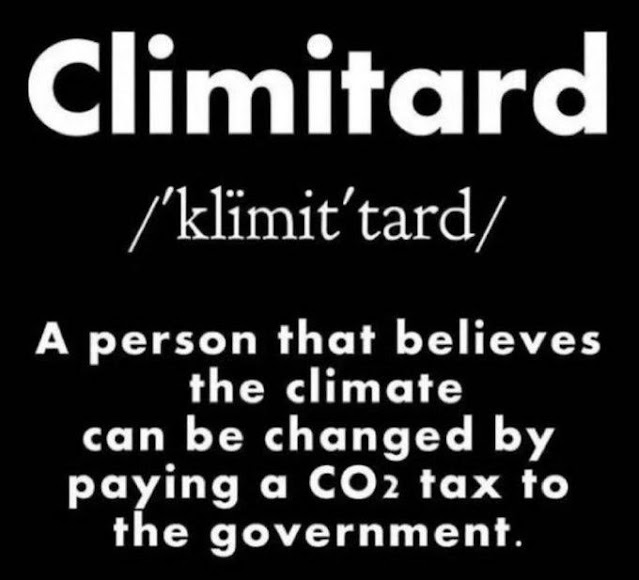
HE WAS PROTECTED BY THE MEDIA
The Press Protected His Cause nevertheless as errors weren’t generally reported, and despite trying to kick start the alternative energy sector, most companies didn’t succeed in the free market economy, rather used government subsidies and regulation to survive. He was wise to benefit from the government backing, increasing his fortune.
Al was the nameplate for global warming until that name got tarnished. It morphed to climate change and whatever name that didn’t lose PR favor, but it was still the same gaia cause and Al was the figurehead. It didn’t matter what he said as he had the media covering for him on this initiative.
What did the media decide what to cover and what not to cover?
As it turns out, it is cooler now than on the day he received his Nobel prize.

THE FINAL FRONTIER, HOW HE FOUND HIS HEART’S TREASURE
He started a TV channel, sat on the board of Apple (for which he benefited handsomely) and other money making ventures. While it did nothing to affect Climate change issues to speak of, this appears to be the treasure he was really seeking. He sold Current TV to Al-Jazeera, an oil funded carbon spewing country for hundreds of millions, and that was the antithesis of what he was preaching to the warmers. Al-Jazeera has closed doors on this project in 2016 having not been able to gain an audience in the US. Again, the media was mostly silent, he was one of theirs.

In selling the network to the huge oil producing carbon emitters, he Found the treasure he sought, but sold Out his followers in a big way. It doesn’t matter because what is done, is done. His record is there for history to judge. He is a rich man and now he is seeking ways to release his inner chakra, too bad for Tipper. Name calling for anyone who challenges the “settled science” has been the norm, but it turns out that they are the real flat earthers as they love to call anyone who doesn’t agree with them.
SO WHAT WAS THE REAL TREASURE IN HIS HEART?
Here is where we get to the answer. He was after the money, that was where his treasure really was, gathering wealth. The reason we haven’t heard from him is he is rich and got people to buy into what he was selling. He has big houses with carbon footprints of cities. He flies on private jets to conferences and stays in huge suites, and harass massage therapists.
You can see images of his massive mansions here.


He got his real treasure which was the dollar, and is riding happily into the sunset a very rich man.
Just like the Mayan calendar in 2012, the earth didn’t end or drown, but we won’t hear anything on Al flying in private jets either. It seems he is the biggest flat Earther of all.
Update 8/3/17:He recently traveled 3000 miles on a carbon spewing plane for the promotion of his new movie to tell people that they should reduce carbon emissions. It was at that conference that it was revealed that one of his houses emits 34 times the carbon emissions of a regular house.
Maybe the delusional devotees who have bought into the weather lie include Tim O’Reilly, who could only tell me that climate science is difficult when he couldn’t explain why the oceans aren’t rising when I asked him. Perhaps he will look past his devotion to this Gaia worship and see the facts, although I don’t expect him to admit both the error in judgement and the fact that he has completely shelved science for ideology. Other devotees like Tom Raftery at GreenMonk have gone out of business because they couldn’t make enough money (bilk companies) or get enough government subsidies. James Governor who helped found Greenmonk told me that he would “save” the planet or make money trying. None of these new Flat-Earthers can explain why it is cooler now than when Al received the Nobel Prize.
They have bought into the lie that Al was peddling and should have invested with him since he was after the money and would do or say whatever he needed to do to achieve it. James in fact never either saved the world or got rich trying.
This was years before Al Gore’s revelation that he was just after the money, so it seems that the climate changers are really just greedy. That makes them the real “Flat-Earthers”.
Here is a recent protest by the Climate change supporters:

Share this:

#Barbie Update Since She is Now Middle Aged, Plus: San Francisco Barbie With Homeless Kit
Finally a Barbie to relate to! At long last, here are some new Barbie dolls to coincide with her (and our?) aging gracefully. These are a bit more realistic…
If you are easily offended, stop and go away. This is a joke that was sent to me and there is sarcasm and political incorrectness for some below. Save the hate comments, you’ve been warned.
For those with a sense of humor, please continue.

- Bifocals Barbie. Comes with her own set of blended-lens fashion frames in six wild colors (half-frames too!), neck chain and large-print editions of Vogue and Martha Stewart Living.
- Hot Flash Barbie. Press Barbie’s bellybutton and watch her face turn beet red while tiny drops of perspiration appear on her forehead. Comes with hand-held fan and tiny tissues.
- Facial Hair Barbie. As Barbie’s hormone levels shift, see her whiskers grow. Available with teensy tweezers and magnifying mirror.
- Flabby Arms Barbie. Hide Barbie’s droopy triceps with these new, roomier-sleeved gowns. Good news on the tummy front, too — muumuus with tummy-support panels are included.
- Bunion Barbie. Years of disco dancing in stiletto heels have definitely taken their toll on Barbie’s dainty arched feet. Soothe her sores with the pumice stone and plasters, and then slip on soft terry mules.
- No-More-Wrinkles Barbie. Erase those pesky crow’s-feet and lip lines with a tube of Skin Sparkle-Spackle, from Barbie’s own line of exclusive age-blasting cosmetics.
- Soccer Mom Barbie. All that experience as a cheer-leader is really paying off as Barbie dusts off her old high school megaphone to root for Babs and Ken, Jr. Comes with minivan in robin-egg blue or white, and cooler filled with doughnut holes and fruit punch.
- Mid-life Crisis Barbie. It’s time to ditch Ken. Barbie needs a change, and Alonzo (her personal trainer) is just what the doctor ordered, along with Prozac. They’re hopping in her new red Miata and heading for the Napa Valley to open a B&B. Includes a real tape of
“Breaking Up Is Hard to Do.”
- Divorced Barbie. Sells for $199.99. Comes with Ken’s house, Ken’s car, and Ken’s boat.
- Recovery Barbie. Too many parties have finally caught up with the ultimate party girl. Now she does Twelve Steps instead of dance steps. Clean and sober, she’s going to meetings religiously. Comes with a little copy of The Big Book and a six-pack of Diet Coke.
- Post-Menopausal Barbie. This Barbie wets her pants when she sneezes, forgets where she puts things, and cries a lot. She is sick and tired of Ken sitting on the couch watching the tube, clicking through the channels. Comes with Depends and Kleenex. As a bonus this year, the book “Getting In Touch with Your Inner Self” is included.
And finally,

Share this:

What Name or #Gender Has the Highest Number of #Geniuses and High #IQ?
Somebody else calculated it. Go see the results here and whether your name is on the list.
Most common first name of geniuses.
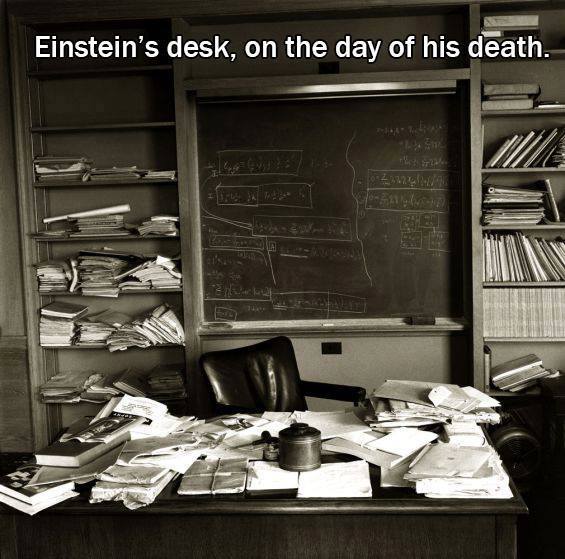
Share this:

Jihadi John

One of my favorite blogs to read is Proof Positive. I’ve even borrowed some content like a version of the comments rules because it is one of the best. This re-post is just good because toilet humor is very often funny and this is a good example.
I hope he doesn’t mind. I also hope that I’ve pushed some traffic to him as I love the satire.
I’ll be honest, I wouldn’t be very concerned about my aim when going if this was real. There are at least 2 targets to hit. I could play the drone game while peeing.
Share this:

What #SuccessfulPeople do Vs. What Unsuccessful People DO
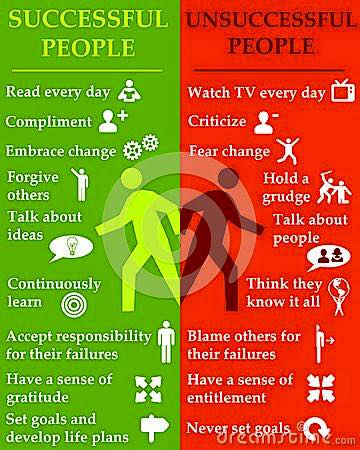
8 Basic Truths Even the Smartest People Forget
This is the Background for my Facebook page, the reason I thought this article was so interesting. Perhaps you will also. Even the person some regard as the smartest surely forgot some things, especially on his desk.
Even the smartest people out there sometimes forget some of those obvious concepts:
1. Not feeling ready can be a good thing
Opportunities rarely come when we are 100% ready to seize them. They are more likely to knock on your door when you feel insecure with your preparation, knowledge and skills. But that doesn’t mean you should be ignoring them until you feel ready. Most of our lifetime opportunities force us to grow both emotionally and intellectually. They push us to give the best of ourselves, even if that means getting out of our comfort zones. But sacrificing our comfort can give us the chance for personal growth. If you want to change your life for the better, you should open yourself to the opportunities that arise, even if you don’t feel 100% ready.
2. Success and failure go hand in hand
Often times people tend to misinterpret the meaning of the word “failure”. Why are we so afraid of failure? It is just as natural as succeeding. Failure doesn’t mean not succeeding. It is actually a part of the circle of success. And success itself shouldn’t be measured by the achievement of a particular goal. Success is a state of being and therefore everyone can feel successful.
3. Action is the key for all success
We often hear that knowledge is power. But it only is power if you use it. Knowing how to do something and actually doing it are two completely different things. It doesn’t matter if ,for example, you read books and articles on fighting procrastination, and take no particular action to overcome that problem. Knowledge and intelligence are useless without action.
4. Even mistakes mean progress
If you look back in your life, maybe you will realize that the mistakes you have done in the past have taught you valuable lessons. So why should we be scared of making mistakes, if they help us grow stronger and wiser? Every mistake you make on the way to a particular goal brings you one step closer to achieving it. It is highly possible that the mistake you will regret the most in your life is not taking action because of the fear of making mistakes. This way you will always be wondering what could have happened, if you hadn’t been so scared. And most importantly- you wouldn’t have made any progress. So don’t be afraid of feeling uncertain about something- give it a try and see what happens.
5. Making decisions is impeded when there are too many options
We live in times when there are so many opportunities for us to choose from when it comes to determining our career and life paths. But when we have so many choices before us, we can often times get confused and indecisive. Business and marketing studies prove that when a consumer has more product choices, he’s predisposed to buy less. If you think about it, choosing one product out of three product choices feels much easier than choosing one out of three hundred. Most people will give up easily, if the buying decision process is tough.
6. Success doesn’t necessarily mean happiness
Many people believe that they can only be happy if they accomplish a particular goal. In my opinion, we can choose to be happy every day, no matter where on the path to our goals we are at the moment. “The monk who sold his Ferrari” by Robin Sharma is one of the most inspiring books I have ever read. One of the main ideas shared by the author is that you don’t have to wait to accomplish your dreams to be happy. The main character was one of the most successful layers in the country but even though he had everything he ever wanted, he wasn’t a happy person. The most important thing is to cherish every moment of every day and to be thankful for who you are and what you have now.
7. You can be the best at something even if you don’t like doing it
Some people say that in order to be good at doing something, you should love doing this thing. In my opinion, this isn’t necessarily true. If a person devotes their time and effort to learn a particular skill, they can become excellent at it. How they feel about the activity doesn’t determine their success in it.
8. What we see in others exists in us
When we have a problem with someone, this can actually help us learn more about ourselves. It can help us learn why we see that problem in the other person, and the reason can be that we hold it inside of us, too, and seeing it exposed before us can be frustrating. But acknowledging that what we see in others is a reflection of ourselves, can help us overcome our unsolved issues.
Hat tip to Intelligence.com
Share this:

Air Conditioning, #Migration, and #Climate-Related Wage and Rent Differentials; or why Northerners Moved South
This is an abstract of a piece that being the son of an air conditioning pioneer in Florida, I can relate to. Before you skip to the link, notice his comments as he contributed a great deal of the original building code for Florida in an area when this technology first was implemented.
ABSTRACT This paper explores whether the spread of air conditioning in the United States from 1960 to 1990 affected quality of life in warmer areas enough to influence decisions about where to live, or to change North-South wage and rent differentials. Using measures designed to identify climates in which air conditioning would have made the biggest difference, I found little evidence that the flow of elderly migrants to MSAs with such climates increased over the period. Following Roback (1982), I analyzed data on MSA wages, rents, and climates from 1960 to 1990, and find that the implicit price of these hot summer climates did not change significantly from 1960 to 1980, then became significantly negative in 1990. This contrary to what one would expect if air conditioning made hot summers more bearable. I presented evidence that hot summers are an inferior good, which would explain part of the negative movement in the implicit price of a hot summer, and evidence consistent with the hypothesis that the marginal person migrating from colder to hotter MSAs dislikes summer heat more than does the average resident of a hot MSA, which would also exert downward pressure on the implicit price of a hot summer.
The link is here, his comments begin now.
He told me that he felt responsible, if not guilty that the d–m yankee’s relocated to the south, especially Florida. This is particularly ironic as his parents migrated from Boston in the 1920’s, but this was decades before air conditioning. That meant he spent his childhood growing up in an unairconditioned house in central Florida, a virtual hot house and the location of near 100% humidity. As a side note, I spent a part of my childhood in an unairconditioned house also, but kids don’t care about what they don’t know. We played outside in those days.
As he was a part of the team that designed the Epcot HVAC also, tourism wouldn’t have invaded and transformed the south either. It’s too bad they didn’t figure out AC for the outdoors given the sweltering heat waiting in long lines at tourist attractions.
One can track the swelling of population to the south, particularly Florida to the invention of AC. One side of the state tends to favor the mid-west (the more polite side) and the east southeast portion is now almost a southern borough of New York City.
He reckoned that what was once a polite southern state had become a haven for the same people that gave the USA a bad name abroad for their brash manners and self centered nature. He also observed the voting dynamics being changed by the northeastern influence.
Conversely, the south would not have grown near as quickly business and tourism wise had it not been for this technological improvement. I did enjoy one of the first air conditioned houses, but the heat combined with the imported people caused me to ultimately leave as the city I departed from (in south Florida) earned it’s reputation as the rudest city in the US the year before I left.
Additionally, it did raise wages in the south, although not enough for the liking of those who moved there. It also turned sleepy little towns into booming tourist traps creating numerous jobs.
Worst of all he said was the level of complaining. While the snowbirds moved there to get out of the cold, they then complained how everything was much better from (name the state or city) and how it was so hot outside. Not the most political fellow, he invited them to move back occasionally.
One final difference was that in the south, people let you in when there is traffic. Up north it is a sport to cut someone off.
Public Speaking #Words One Shouldn’t Use or Say #PublicSpeaking
Note to readers: Please add to this list, either words I’ve left out or those that bother you or piss you off. I’d like to get a collection of things not to say. I listen to people speak all the time. I’ve done it myself. Almost everyone is guilty of not speaking properly unless they are reading a teleprompter. The less practiced you are, the more likely you are to say them. I’ve been keeping a collection of them and have perused the internet to get some others. They are filler words and take up time and space, don’t use them. Here goes:
Um – women more than men
Uh – men more than women
Huh
Okay
Right
Totally
Oh by the way – I particularly hate this one
You know what I mean? You know what I’m sayin’?
You know
Shape, form or fashion
Finger quotes in the air
There and there abouts
To be honest/If I’m hones with you – (what, are you lying to me otherwise?)
Any expletives – James Governor, this is for you
It’s all good – my current pet peeve
Ah
Like, so like, so I’m like – mostly used by younger people, especially teenage girls
Er
Quite honestly, (were you lying up until now?)
Cracking – as of this date, the current most annoying UK adjective. It is overused by the announcers at Radio LeMans as an example. Everything used to be brilliant, but now it’s cracking.
True story
Advanced filler words: just, very, really, mostly An apparently meaningless word, phrase, or sound that marks a pause or hesitation in speech. Also known as a pause filler or hesitation form.
Here is a list I got from the Blacksheeponline. 10.) “Ya know?”: If you have to end your thought by asking the person if they “know” what it is you’re saying, then it’s either painfully obvious or totally obscure. Either way you’re not making it any clearer, ya know? 9.) “Really”: “Really” is the least descriptive adjective in the English language. “How bitchy was she?” “Really bitchy.” Okay now we got it. We can’t all be Poet Laureate, but words are awesome! They’re like how we can communicate really well and stuff. 8.) “Literally”: This word should be erased from everyone’s vocabulary. Anything that is not a figurative statement is a literal statement. “It’s literally like a million degrees out.” Even if we lived on the sun you still wouldn’t be right. 7.) “I guess”: “Houston are we clear for takeoff?” “Yeah, I guess.” We can’t be afraid to show a little conviction. We’re in college now. It’s time to stop guessing and start knowing. 6.) “Or whatever”: Yeah we know it’s cool to not give a shit, but saying “whatever” at the end of every sentence makes everyone else give less of a shit. It’s the ultimate badge of apathy and kills the whole point of making conversation. But, whatever… ya know? 5.) “I mean”: If you’re talking then people can only assume that you mean to say something. People shouldn’t have to try to understand what you’re saying. If you mean what you say, you shouldn’t have to say what you mean. 4.) “Idonknow” (phonetic: I-dunno): There’s nothing wrong with not knowing something, but you should never follow up an “Idonknow” with an explanation. “Why are you tired? Idonknow, I guess I stayed up too late,” Okay, so you do know. 3.) “So…”: Sorry, we couldn’t tell if you were finished. Using a coordinating conjunction at the end of the sentence without a follow-up clause is like writing a perpetual cliffhanger, and cliffhangers may be all right, but we’re all here for the climax anyway. 2.) “Um/Uh”: “Um” and “Uh” have become a means of kick starting our sentences. Even when asked the simplest questions we can’t help but let out an “Um.” “What did you say your name was?” “Um… S**t!” 1.) “Like”: The granddaddy of them all. “He was like… And then I was like…” When did “like” become a substitute for “said?” Instead of saying how everything is like something else, simply say what it actually is. Why do we even use it so much? When you listen to your parents talk, they’ll rarely use the word, and definitely not to the extent to which we use it. It’s the most normal way to talk these days, and it feels so natural to use it. If you can talk for five minute without saying the word “like” once, you are the prodigal leader, like, the one mankind has been waiting for.
15 Things That #Introverts Would Never Tell You, But You Should Know
 I read this article and could hardly believe it. It was me. I’ll editorialize between the lines based on past and current experiences, but people should realize that people are different and here is one group that is virtually unnoticed but should be understood.
The link is now broken, but here is the annotated article:
-
Introverts catch a lot of shit for being introverted. The whole world seems
so enamored by extroverts – the people we know who just want
to be around people all the time. While we introverts might
not want that, it doesn’t mean we’re depressed or
suicidal or anything wacky like that. There are
some things you should know about us.
1. Small talk sucks.
We’re just not very good at it. We’re typically the big-thinking types.
We like big ideas and theories. Small talk is uncomfortable.
We don’t care about the weather or how
your cat has been doing.
It is very annoying because it mostly is useless to us.
If you need to share so badly,
check with an extrovert who can’t wait to share back.
You just won’t get good
feedback from us.
2. Being alone is fine.
Seriously, we’re doing okay, even if we hole up in our houses for a while.
We don’t need other people for stimulation. We find that ourselves.
We’d almost always rather be alone. We don’t want to be hermits,
but we are good at keeping ourselves busy and this is
our comfort zone for life.
We don’t have to be with a crowd to do something,
although we might come
along once in a while.
3. We aren’t rude or uptight.
We might seem like that at first, but get to know us. We’re still a fun bunch
of friends, we just don’t always acclimate to unfamiliar settings and people
so quickly.
Mostly because you are loud and want to be the center of attention,
something we can’t relate to. When we find out who you really are
behind the facade, it’s easy to get to know us, unless you are phony.
4. Sometimes, we swing both ways.
We might be introverts, but sometimes we are just so the life of the
party. We do this willingly when we’re up to it, but we can’t always
keep that kind of energy going. If we throw a party, great! But give
us some time to recover.
Recover is the key word. We can be with or in a crowd, but afterwords,
we need time alone.
5. We have friends. And they like us! Probably.
People hear the word ‘introvert’ and think of the goth kid sitting alone
at the food court. That’s a whole different thing entirely. We love having
friends, and our friends love having us! We put in a conscious effort for
people we think are worth it.
We see through those who are not worth it and move on as those who
have a constant self centered need for attention aren’t real people,
and likely are far more insecure than we are.
6. When with the right people, we feel safe.
Having the right people in our lives is amazing. we really give our
best selves to the best people. We shine in the right company.
But sometimes it takes a while to find those people.
7. We like to write things out.
Writing is easier than talking for us sometimes. Email is the best
because it helps us get the thoughts out of our heads without
being interrupted. Thinking about giving us a call? Try a text or email instead.
8. We’re super productive.
Sometimes at least. Usually in our alone time, we’re able to really
rock and roll on projects that we need to finish. The solitude helps us,
as we tend to be a bit more distractible than most.
Especially when you constantly talk about nothing just to talk. At work,
the people who have to comment on everything are the worst as
it usually isn’t productive. See small talk.
9. If we don’t like you, you won’t know it.
It’s the truth of the matter. We hate conflict. So even if we don’t like you,
we’ll still be nice. It’s a lot easier than being real with you. Especially if
your feelings are inconsequential enough that confronting you on your
bullshit isn’t even worth the time. Sorry. Well, not sorry.
And we move along without you as you just aren’t worth it.
10. Networking events suck.
Seriously. Is there a mailing list we need to opt out of? There are few
things more uncomfortable than a networking party. Except maybe a
dentist’s networking party that we’ve just been accidentally invited to.
Yes, so why do extroverts keep trying to drag us into this nightmare?
11. We don’t like crowds.
Though I find that after a few beers, I can tolerate it. Introverts tend to
get overstimulated easily, so big crowds are tough to deal with.
It’s just not worth it. Those who have MOP (miss out phobia)
have to be with the crowd, not us. See number 2.
12. Sorry, we probably weren’t listening to your story.
We care deeply about our friends, but people outside of that
circle will have a tough time maintaining our attention. It’s not
that we have ADD or anything like that, we just don’t really
care about you. On the plus side, we won’t judge you, so feel
free to tell us all the fucked up things you said to your ex.
People will tell me anything and everything because
I won’t repeat it. But usually won’t remember it either.
13. Don’t make a fuss out of our birthdays.
For the longest time, I had a great deal of difficulty
understanding why I hated my birthday so much.
Everyone I ever knew would come out and party
with me! But then I realized: that’s the problem!
We don’t need to make a fuss out of our birthdays,
so please don’t do it to us.
Or any holiday for that matter. It’s just another day.
14. We don’t want to make a fuss out of your birthday.
We can quietly honor the annual birthday, right?
It’s your day. You have everyone else making a big deal about it.
Let them.
15. If we’ve chosen to be friends with you, appreciate it.
We value our alone time. If we see you often, it means that we
really love you. Just don’t get too bummed out when we
don’t hang for a week at a time sometimes.
We’ll likely be the most reliable friend you have, the one
you can call on when your loud friends let you down.
But visitors are like fish, they smell after 3 days.
Hat tip to Higher Perspective.
What they might not tell you but you need to know is that they are good for your business.
- Bonus: How to date and introvert, by an introvert.
How Fast Will You Abandon Your #NewYearsResolutions ?

Social Justice of Theft BY #SJW
 It’s mostly for idiots like Thomas Woosley from the UK who generalizes all people from the US as “Yanks”, even though this works everywhere in the world.
So for people like Thomas, America is a continent, not a country.


