Great Sayings – When the Storm is Over, Haruki Murakami

“And once the storm is over, you won’t remember how you made it through, how you managed to survive. You won’t even be sure, whether the storm is really over. But one thing is certain. When you come out of the storm, you won’t be the same person who walked in. That’s what this storm’s all about.” — Haruki Murakami


We will be different when the China/Wuhan/Covid-19/whatever virus has run its’ course.  Some will act differently like washing their hands more or social distancing.  Some may travel less. The smartest of these will stay off cruise ships.  The wisest will decide who and what they believe in to as the rock to anchor their life on.

Great Sayings – Fearlessness and Readiness by Friedrich Neitzsche

“The higher man is distinguished from the lower by his fearlessness and his readiness to challenge misfortune.” — Friedrich Nietzsche


This is not a rating system based on grief, rather how one acts in the face of things not going their way.  Everyone has ups and downs despite what they post on social media.  We all have the choice to give up, or pulling up our trousers and moving ahead.  Note: it doesn’t say we won’t grieve or suffer, rather how we persevere.

Sayings – Do Humans Learn From Their Mistakes?

Douglas Adams – “Human beings, who are almost unique in having the ability to learn from the experience of others, are also remarkable for their apparent disinclination to do so.”


I guess not.  I wonder what lessons we will have from the Corona/Covid/China/Wuhan/Whatever virus?  Probably not to trust the media and to carefully evaluate if Congress is working for us or themselves.

Another Great Saying About Winning, And Why We Try

Pain is only temporary, victory is forever -Jeremy H. Winning


No one wakes up and is the best at what they do by accident.  It takes training, study and perserverance.  The worst place in any competition isn’t last, it’s second because that is the first loser.  This goes with the Vince Lombardi quote a few days ago.

We as humans want to do our best, but some strive harder than others.  I’m not desparaging those who try their hardest, but someone was better, but no one remembers who lost the presidential elections, or got silver medals at the Olympics.

I know I strive to win anything I do.  I try to win practice for anything I compete in, not just the event.  I’ve even beaten the Kobayashi Maru, thanks to Captain Kirk.

Coved-19 and Essential Jobs


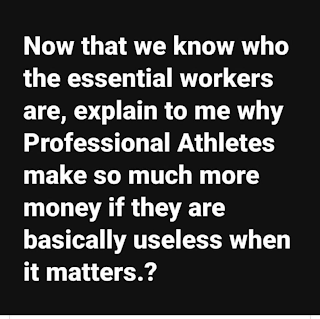
I love sports as much as any other red blooded American male.  I love both playing them and watching the best compete against each other.  I just wish they’d realize that with a very few exceptions, athletics is all they are qualified to pontificate on.  I’m tired of being lectured about their position on anything other than their sport.  I’m willing to bet that I’m not alone and in the majority.

I’ve already posted here that actors (celebtards) are the same. 

Even though the meme points to their salary, I don’t have a problem that they make a lot of money.  It doesn’t make them smart or qualified to tell the people with essential jobs how we should think though.  I’m glad that they worked their way to the top based on their skill and God given talent that they worked hard to perfect.  They should be grateful that they were born in a time and a place that allows them to succeed.  When anyone succeeds, the tide rises for all boats so good for them.

They are getting a lesson that while we enjoy being distracted watching them, we don’t miss their soapbox spoutings and are managing to survive just fine without them.

I hope they don’t forget that it’s the fans who pay them.  They work for the fans, not the other way around.

Great Sayings – Richard M. Nixon

“We must always remember that America is a great nation today not because of what government did for people but because of what people did for themselves and for one another.” Richard Nixon


Sure, things didn’t work out so well for him at the end, but he’s not wrong about America or government.

Covid-19, Making Celebtards Irrelevant

From the Irish

Finally we have proof that proves no one cares what people think who pretend to be others for our entertainment or those who play games for gazillions.  They are our distraction and don’t live paycheck to paycheck like the 60% of Americans who do.

Great Sayings – Jordan Peterson

“A harmless man is not a good man. A good man is a very dangerous man who has that under voluntary control.” — Jordan Peterson


Self control is a good trait.  The baddest man in the room never has to prove it, but should be able to defend himself and the weak when necessary.  This is not just a bare knuckles statement.  Being intellectually strong as well as spiritually sound are also strengths one needs.

None of these come for free.  You must work on them, and work on them constantly.  The world doesn’t stop and neither does evil.  Now go out and be dangerous to evil.

Covid-19, It’s Another Pearl Harbor – We’ve Been Through This Before And We Do It Best

Update:  On April 5th, the Surgeon General compared the Corona Virus to Pearl Harbor.

There are events in history that cause a divided nation to come together.

Some have been pandemics and others have been wars, but there are times defined by history that people put their selfishness aside and gather to do what is best.

As an example, I could pick the Spanish Flu, SARS, MERS, H1N1, Y2K, the Swine Flu, the Space Race to the Moon or any number of events, but I’m going to use Pearl Harbor.

I wasn’t there, but our nation was divided as to whether we should enter another World War or isolate ourselves and hope the problem would go away or others would solve it.  This all changed on December 7, 1941 when our country was forced into the events of the world.

We could have cowered to the attack and ask them not to do it again.  Neville Chamberlin tried to appease Hitler this way and it didn’t work out so well.

THE MIGHT OF THE USA

Admiral Yamamoto, the architect of Pearl Harbor knew that a surprise attack to take out our Navy was the only real chance for Japan to stop the USA so they they could expand their reach in the Pacific Rim.  After all, he had studied and lived in the USA and knew that our forces were depleted after WWI.  He also knew that he couldn’t attack us on our own soil.

What also turned out to be true was that if the attack didn’t work, that he would awaken the might of the greatest industrialized nation in the world and unite our country to defeat evil.

On December 8th 1941, men young and old were lined up to enlist to fight for our survival.  They knew that they would be leaving loved ones behind and there was a distinct possibility that they wouldn’t return alive.  They put their fears aside and were willing to fight for our survival and the future that we enjoy today.

Not long after, women went to work in the factories.  We had to ration rubber and metal for war supplies, but everyone did their part.

Companies changed their direction.  Auto makers went from making cars to building bombers.  Scientists invented new weapons to win, not to just survive and suffer.  Our nation came together as one because we had a cause to fight for.

After the war, the greatest achievements in technology, medicine and space exploration happened at a speed heretofore never accomplished.

WE’VE BEEN COMPLACENT AND DIVIDED

All of that progress created wealth, comfort and abundance and we lost our focus.  It’s no secret that we’ve been a divided country.  I’m not here to point fingers because there is enough of that going on through the tradional news and social media.  All of it has a bias one way or the other and it has been pulling us apart.

We haven’t had a common enemy to rally against since the downfall of the Soviet Union.  Instead, we’ve been feeding on ourselves instead of pulling together.  There is a strain of hatred for what we have been that defies the achievements that built our country.  I have read celebtards and sports figures that say we have never been great.  This just proves that they have no appreciation for the sacrifice and achievements that gave them the fame and fortune to preach from their soapboxes.  It also denies our ability to do it again.

We as humans need a cause to believe in and to fight for, whether we are handed or invent it ourselves.  Conversely, politicians have been poisoning us with their desire for power and control.  They have been playing a game of capture the flag on their own islands and haven’t put the good of the country and the people first.  They have been building their power base by taking away our freedom through regulation.

Our government was set up with a system of checks and balances to ensure that no one had the power like the monarchy who we defeated to become what we are.  We now potentially suffer from what the history of the world has suffered from since the beginning of time.  That is the selfishness, greed and desire for power that has aflicted man since the expulsion from the Garden of Eden.

There also has been a faction for globalization that has tried to deplete our greatness by moving manufacturing offshore to the point that we could be held hostage for medical supplies.  Our spirit of nationalization has been tested by the border fight and ideology fueled by hate of the President.  It has ratcheted up these last few years in a power struggle because there was no enemy other than from within.

We have been eating ourselves instead of fighting together.

THE CORONA/COVID-19/CHINA/WUHAN/WHATEVER VIRUS

We now have a new Pearl Harbor.  We have been attacked by a new enemy who ambushed us again.  It is time for us to realize that we have a fight on our hands  Opportunity for success or failure knocks at the door of the fate of our country.

To do that, we need to go back to the spirit of 1941.  It was the people who came together in both the public and private sector, not the control of the Government that helped us save ourselves.

We can go back to being the humans that have struggle to fight against, rally together and overcome (both the virus and the overbearance of the governement regulations).

THE SILVER LINING

There is a great opportunity if we do the same as our forefathers.  Manufacturing in America again can help us right ourselves to help reunite our country and help other countries as we’ve done before.

We are beginning to see the automakers making ventilators, factories starting to make facemasks and other birth pains of our possible re-emergance to self-sustainment.  It can be done.

Before you manufacture in the USA instead of cheap labor offshore, there needs to be a construction boom to prepare production facilities.  After that, the job creation of made in in America is limitless, profitable and will help us help ourselves and others if they want it.

We already have become energy independent by producing enough oil so as to not be dependent on countries who hate us.

Our pharmacuticals are all made offshore by countries that have threatened to cut us off.  We need to do the same in the drug industry to continue our trend of independence and strength.  Through this can we help the rest of the world and save our nation from being held hostage for needed medical supplies and energy.

Most of all, we need fix our goverment and make them serve us instead of us serving them.  Companies and individuals need to be let loose to invent, design and create to defeat this latest Pearl Harbor instead of being told when and what we can or can’t do.  It’s time to limit their power and continue the greatness that history proves is inside of us.

Great Sayings – George Patton

“I don’t fear failure. I only fear the slowing up of the engine inside of me which is saying, ‘Keep going, someone must be on top, why not you?’” — George S. Patton Jr.


Love him or hate him, he got things done and was feared by the enemy, so much so that they had a respect for his command.  In these times of the Covid-19 virus, we need to keep going and not give up.  Stay on top and don’t give up.

Great Sayings – Abraham Maslow

“If I were dropped out of a plane into the ocean and told the nearest land was a thousand miles away, I’d still swim. And I’d despise the one who gave up.” — Abraham Maslow


I’ve been in some dark places before either in life or just competition.  They say in the Marines that there is always an end to whatever pain you are going through so don’t give up.  You’d be amazed at what you can accomplish.

They train Seals until exhaustion, but it’s said that they are only at their 60% level and have a reserve.  How do I know?  If someone pointed a rifle at them, they could still run some more.  It’s said if you get to your end and someone offered you $100 to go 30 seconds more, almost everyone can and will do it.


Great Sayings – Orison Swett Marden

“There can be no failure to a man who has not lost his courage, his character, his self-respect, or his self-confidence. He is still a King.” — Orison Swett Marden


A lot can be said for the person who is has not lost his courage, even if he is afraid.  You can have both at the same time, just don’t let the one out do the other.  As for character, that will be what others talk about when they speak of you either behind your back or at your funeral.

Great Sayings – Vince Lombardi

I’ve heard him being quoted with different versions of this one, so I’ll put in the ones that I’ve heard.


“Winning isn’t everything, but wanting to win is.” — Vince Lombardi

If winning isn’t important, why do they keep score?

Winning isn’t everything, it’s the only thing.

It’s not whether you win or lose, it’s whether you win.

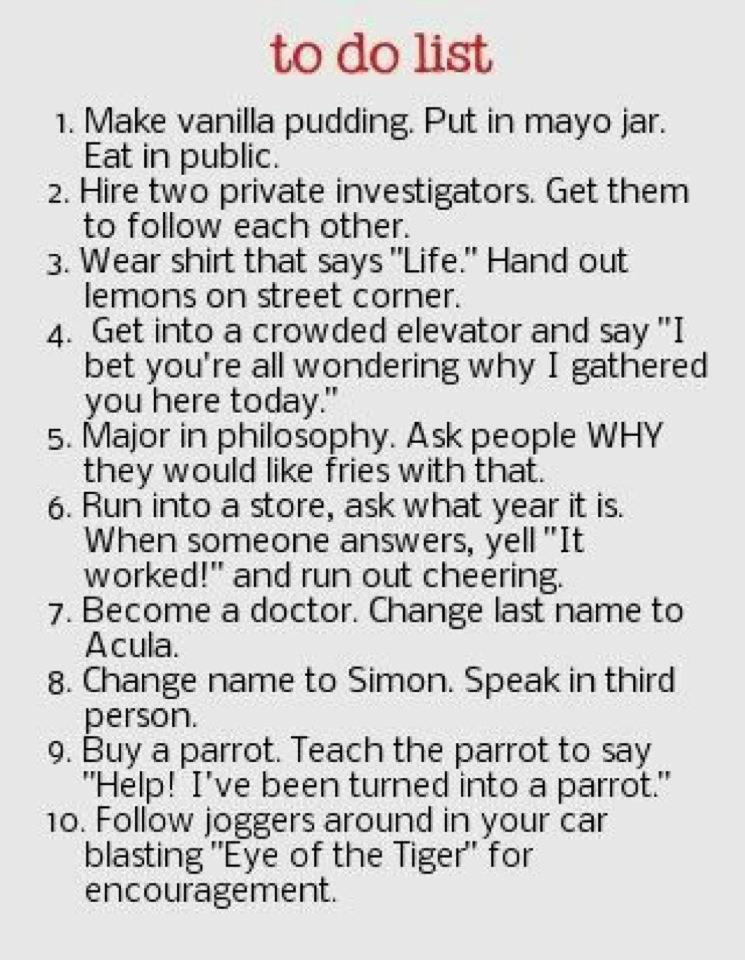
In Honor of My 600th Post, Here Is My To Do List

WordPress says this is my 600th post, but I know I lost the year 2007 when I switched from Blogger to WordPress because I avoid Google whenever possible.  I likely passed it a while back, but they are gone forever now.

I post a lot about IQ, intelligence, Introverts, tech and a lot of subjects that would provide a platform to post something meaningful, deep in meaning , intelligent, well thought out and well written.  As they say, the road to hell….

In that spirit, I give you a to do list that is sarcastic, funny to me and given the mood I’m in as I write this and very appropriate especially since my last name is Simonds (see number 8).

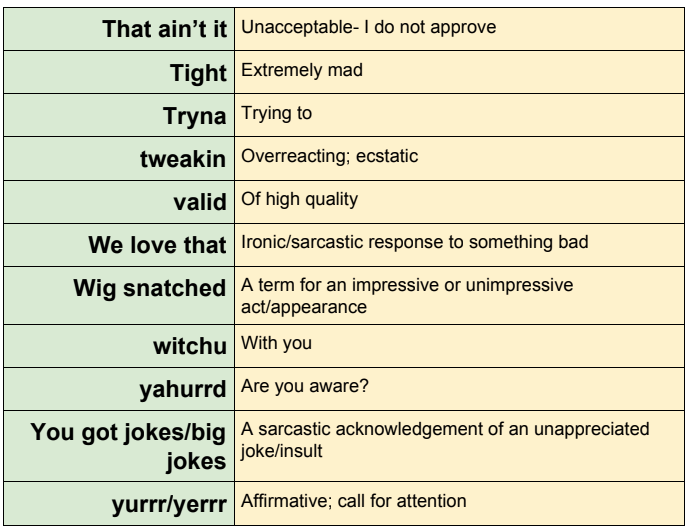
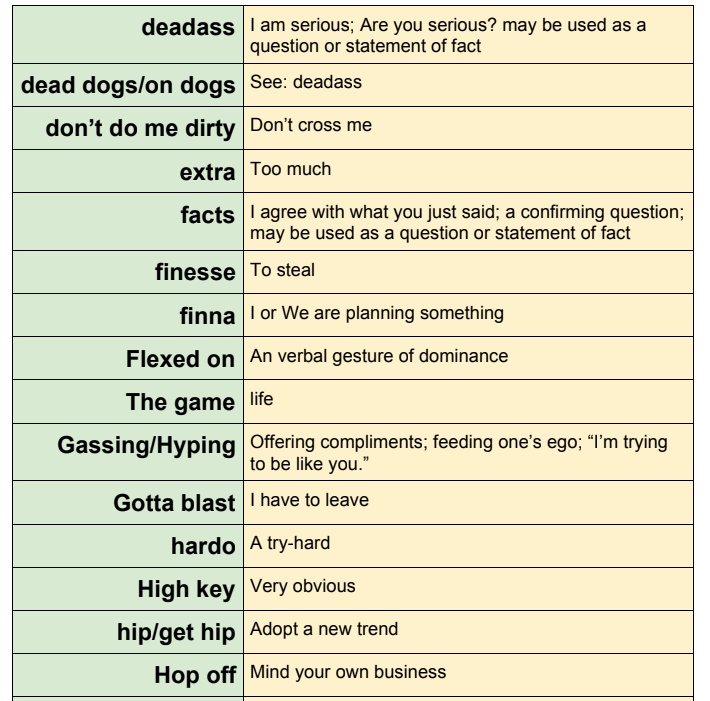
How To Talk To Generation Z Using Their Dictionary

Have you ever wondered what the f&*% the kids are talking about lately?  Do you parents want to decode your kids texts?

Below is the Generation Z dictionary distributed by a Mr. Callahan so I point to him if any Gen Z’ers have a problem with it.


When thinking about this, I’m sure every generation trashes the previous by describing them as not as learned and their improper use of grammar.  I’m also pretty confident that Shakespeare is rolling in his grave as he probably has done for each generation after him.

I’ve put some screenshots below and full link to the dictionary in PDF form to download.

What I fear is these people will be making decisions about my generation in a few years.

To fully honor this generation, I purposely didn’t put it in alphabetical order just to mess with them.

Generation Z Dictionary Link

Common Core Education, Failing our Kids


THE SETUP FOR THE DISCUSSION

I suppose every generation considers the learning of the next generation as inferior to theirs.  If we didn’t, why do millennials eat tide pods?  Why do parents talk about how better their education was and how soft they are on kids today?   There are many reasons for this including prejudice, standards, government intrusion into the learning system and deviation from what made our education system the one that led to more progress, inventions and breakthroughs than any in the history of man.

We’ve now potentially gone backwards and have therefore failed the following generations.

In working with public school kids, I observe that there are many reasons.  People are not equal and some are smarter and learn better than others.  Those with two parent families or with a single parent who is highly integrated in the student’s learning consistently outperform those who don’t.  The system has gone backwards due to interference from do-gooders, government (over)regulation and unions.  Note: that is my observation only.  I see kids rise above the system to achieve, but they have to swim upstream.  Most can coast their way through.

Conversely, children who learn under Classical Education have an advantage in learning as it is taught to a standard the kids must keep up with as opposed to teaching to the lowest common denominator so no one is left behind, penalizing those who could achieve more.

Further, Classical Christian education is an approach to learning which emphasizes biblical teachings and incorporates a teaching model known as the Trivium, which consists of the three stages of grammar, logic, and rhetoric.

Classical education complements a child’s natural development stages. Young children can memorize information easily. So, in the early years, learning is enhanced by songs, body movement, recitation, and exploration. This sets them up for success in their next stage of learning, critical thinking.

The critical thinkers are what companies want to hire.  They look at problems differently and come to the table with better skills for success.

They also have a distinct advantage over the public school system and the below discussion of how we are destroying learning.

WHERE EDUCATION HAS FAILED OUR KIDS

The biggest failure I’ve observed is the Common Core learning system.  It threw away the standards of learning that has proved to produce educated kids by introducing a system that borders on the ridiculous.

It was implemented by those we thought were helping us, yet it may have set us back for years.

Behind a lot of this is none other than Bill Gates, a man I’ve met and have mixed thoughts about.  Microsoft is far more successful than his support of Common Core.

From the American Thinker, I read this snippet:

But Bill Gates should have felt some uneasiness.  Common Core was untested, unproven, and micromanaged by David Coleman, a man with limited credentials but reliably far to the left.  Nobody in the business world launches a big new product without years of research and refinement.  Instead, Common Core was wrapped in $1 billion’s worth of propaganda and dumped on the country as a fait accompli.

The late, great Siegfried Engelmann, a real educator, was asked what he thought of this approach: “A perfect example of technical nonsense.  A sensible organization would rely heavily on data about procedures used to achieve outstanding results; and they would certainly field test the results to assure that the standards resulted in fair, achievable goals.  How many of these things did they do?  None.”

Did Gates realize that Common Core, supposedly a new and higher instruction, incorporates all the dubious ideas from decades prior?  New Math and Reform Math were the basis for Common Core Math.  Similarly, Whole Language and Balanced Literacy were rolled into Common Core’s English Language Arts (jargon for reading).  Constructivism, which prevented teacher from teaching, has been undermining American schools for decades.  Nothing new and higher about these clunkers.

An earlier generation of Gates’s business partners had created so much illiteracy that Rudolf Flesch had to write a book to answer every American’s favorite question: “why can’t Johnny read?”

I don’t hold Gates responsible except for his funding and use of his status to push this, but I hold those who pushed this system on the generation suffering from this learning standard.

The Thinker sums it up like this:

We have to wonder if Bill Gates performed due diligence, that being the care that a reasonable person exercises to avoid harm to other persons or property.  In other words, before putting your business funds to work on anything, you should make yourself an expert.  That’s what we need in this country: everybody becomes an expert.  For sure, nobody should trust the official experts.  If Bill Gates had observed that simple rule, he would still have a billion or two he doesn’t have now.  And the country would have tens of millions of better educated students it doesn’t have now. 

We need to stop this disservice to our kids and have them learn properly, and to learn to think critically.

Here is a video that shows just how far we’ve deviated from the learning system that invented computers, vaccines, technology that has helped mankind and sent men to the moon.  Go to 1:24 under Decompose to see how far we’ve digressed.

CONCLUSION

It would seem the dumping common core and putting real learning would be best for the kids.  The world is getting tougher and we need to give them every advantage possible.


Cyclic Numbers, Interesting Math Fun

Not really a joke … just a tiny bit of math fun.

142857 is a cyclic number – its digits always appear in the same order but will rotate around when multiplied by any number from 1 to 6:

142857 x 1 = 142857
142857 x 2 = 285714
142857 x 3 = 428571
142857 x 4 = 571428
142857 x 5 = 714285
142857 x 6 = 857142

Pretty cool, huh? Now multiply 142857 by 7. (Spoiler below.)

142857 x 7 = 999999

Are High IQ People Better Off With Fewer Friends?

So says an article published by the Washington Post.

Having discussed high IQ people including those with a perceived higher intelligence a number of times (this one with the highest Google ranking), I like to ponder on these things.

The first in this article tends to reference dwelling among all people as it relates to happiness:

They use what they call “the savanna theory of happiness” to explain two main findings from an analysis of a large national survey (15,000 respondents) of adults aged 18 to 28.

First, they find that people who live in more densely populated areas tend to report less satisfaction with their life overall. “The higher the population density of the immediate environment, the less happy” the survey respondents said they were. Second, they find that the more social interactions with close friends a person has, the greater their self-reported happiness.

Why would high population density cause a person to be less happy? There’s a whole body of sociological research addressing this question. But for the most visceral demonstration of the effect, simply take a 45-minute ride on a crowded rush-hour Red Line train and tell me how you feel afterward.

One would tend to think that if you weren’t in such a densely populated area, that it might lead to greater happiness.  No wonder New York, Chicago and other highly populated cities have such low rankings in this category.

THE NEED TO BE ALONE

I can’t prove it, but there is a tendency for “Smart People” to be either introverted or have a need to spend time alone to gather their thoughts when making contributions to inventions, theorem’s, calculations and other notable achievements. (Note: the link above describes things introverts won’t tell you, but you should know).

Being an author, I know that I prefer quiet to gather my thoughts and increase the powers of concentration on what I am trying to write.  It’s hard to clear your mind when there is a bombardment of distractions either from people, social media or other causes.

The article does state the obvious, long commutes, traffic, waiting in line and crowds are tedious, monotonous, and can grate on anyone over time. The infrastructure is usually older (see the lead in the water in Flint, Mich.)  I’ve often wondered why anyone would want to live in a place like that if they really had a choice.  Maybe that is why there is such a large population outflow to Florida upon retirement.

Kanazawa and Li’s second finding is a little more interesting. It’s no surprise that friend and family connections are generally seen as a foundational component of happiness and well-being. But why would this relationship get turned on its head for really smart people?

I posed this question to Carol Graham, a Brookings Institution researcher who studies the economics of happiness. “The findings in here suggest (and it is no surprise) that those with more intelligence and the capacity to use it … are less likely to spend so much time socializing because they are focused on some other longer term objective,” she said.

Think of the really smart people you know. They may include a doctor trying to cure cancer or a writer working on the great American novel or a human rights lawyer working to protect the most vulnerable people in society. To the extent that frequent social interaction detracts from the pursuit of these goals, it may negatively affect their overall satisfaction with life.

The article and researchers discuss a “Savannah theory of happiness” which is a bit of a reach since there weren’t iPhones for cavemen, although an ability to deal with new challenges seems obvious.

FEAR OF MISSING OUT OF SOMETHING FOR SOME, LOATHING PEOPLE FOR OTHERS

There is a need for many in the general population to gain happiness from their social interactions.  I have relatives who suffer from FoMo syndrome, generally indicating that they derive their happiness and/or satisfaction from others or the perception of others.

When drilling down and specifically targeting high IQ people, there is a distinct difference from the last sentence in the above quote:

Second, they find that the more social interactions with close friends a person has, the greater their self-reported happiness.

But there was one big exception. For more intelligent people, these correlations were diminished or even reversed.

“The effect of population density on life satisfaction was therefore more than twice as large for low-IQ individuals than for high-IQ individuals,” they found. And “more intelligent individuals were actually less satisfied with life if they socialized with their friends more frequently.”

Let me repeat that last one: When smart people spend more time with their friends, it makes them less happy.

Again, an observation from the high IQ group and personal introspection, there seems to be less of a need to find your happiness in others or what others think of you in this space.  It might be in the above stated pursuit of goals:

Hell might actually be other people — at least if you’re really smart.

That’s the implication of fascinating new research published last month in the British Journal of Psychology. Evolutionary psychologists Satoshi Kanazawa of the London School of Economics and Norman Li of Singapore Management University dig in to the question of what makes a life well-lived. While traditionally the domain of priests, philosophers and novelists, in recent years survey researchers, economists, biologists and scientists have been tackling that question.

There’s a twist, though, at least as Kanazawa and Li see it. Smarter people may be better equipped to deal with the new (at least from an evolutionary perspective) challenges present-day life throws at us. “More intelligent individuals, who possess higher levels of general intelligence and thus greater ability to solve evolutionarily novel problems, may face less difficulty in comprehending and dealing with evolutionarily novel entities and situations,” they write.

It appears that the high IQ might actually have another less socially accepted skill that is less politically correct as defined by the masses.  They may just have thought out that they are able to be happier or more satisfied while being alone rather than by having to try and satisfy others definition of their happiness.

Conversely, they might find being around other people annoying, especially the chatty or needy.

Once you are able to happy alone, the ability to be happy with others is icing on the cake, but shouldn’t be the definition of the cake.


Internet Road Rage, You Are Probably a Coward Hiding Behind The Screen

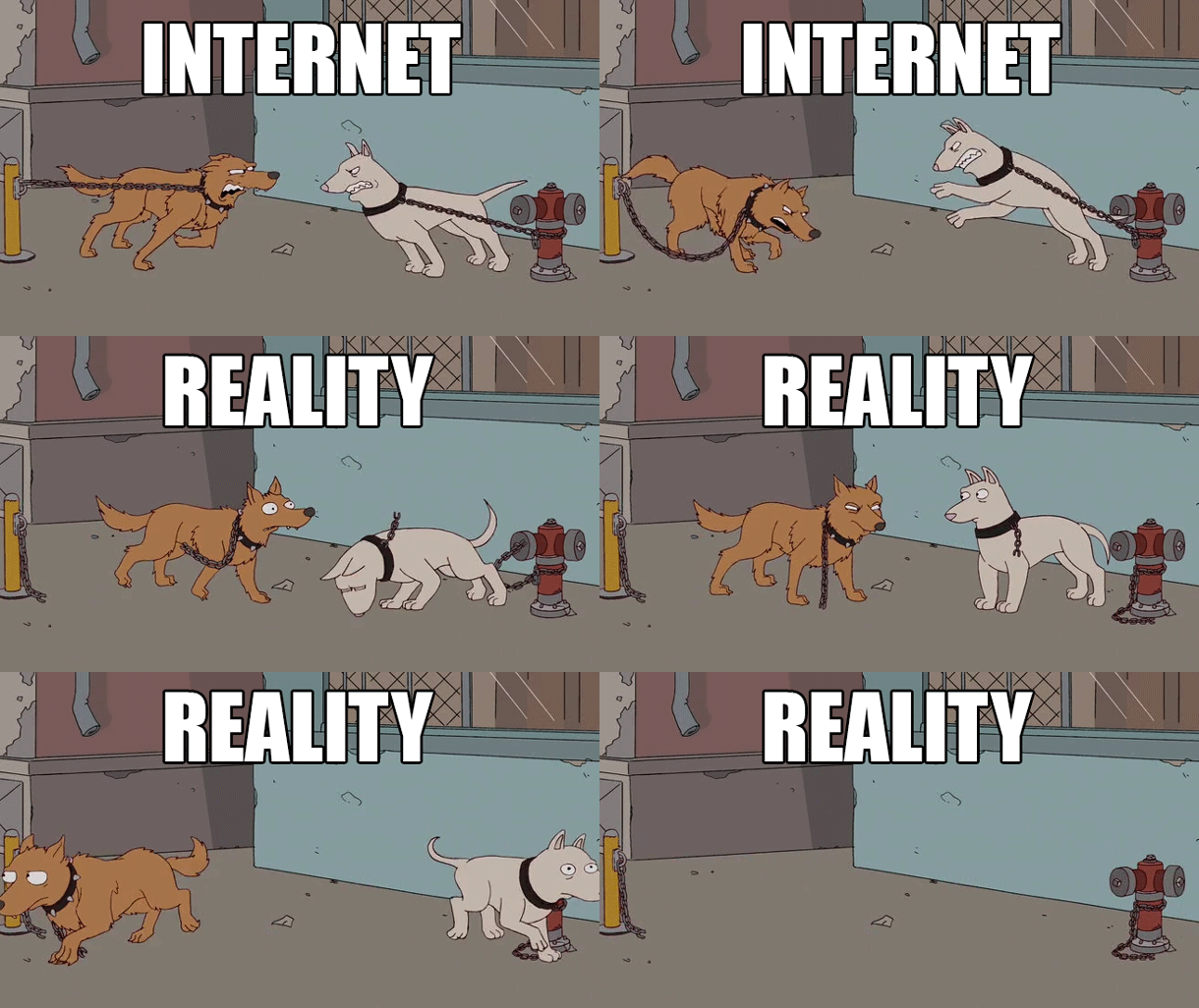
internet road rageWhat is Internet Road Rage?  My definition is that you are willing to engage in hateful, spiteful language aimed at someone whom you either don’t agree with ideologically/religiously/politically/any excuse to vent, or a counter attack to someone who got on you or your ideas.

Here is the caveat.  You most likely wouldn’t act or speak that way in person or to someone’s face with that tone or language.  Most of you have either more self-decency in person or a survival instinct that would prevent you from getting your ass kicked.

Worse, you could or are likely a Porch Dog, one who barks severely, but is no real threat.  In other words, you yap by tapping the keyboard but pose no intellectual threat.

ACTUAL ROAD RAGE

Most people have road rage inside them.   Here is how it works:

Polite drivers may think that dialogue like that is the territory of deranged, out-of-control, or terrible drivers, and maybe they’re right. But according to a new survey from AAA, most drivers in the United States display signs of road rage. So too bad, you supposedly polite drivers.

The survey, published today, polled 2,705 drivers 16 years old and older about their road rage habits. Seventy-eight percent of drivers—more than three-quarters—reported engaging in some kind of aggressive driving maneuver, including tailgating, yelling, honking, gesturing angrily, purposely blocking another vehicle, cutting someone off, confronting someone, and intentionally ramming another car.

The breakdown of each category was fairly unsurprising. Fifty-one percent of drivers reported tailgating at least once; 47 percent reported yelling at least once; 45 percent reported honking at least once. The more bats**t responses—confronting another driver and ramming another vehicle—polled much lower on the list.

INTERNET ROAD RAGE

There is every flavor in the book, more than I can write about.  It started with email flaming.  As soon as forums or ideological websites like Quora, Instagram, Facebook, The Huffpo, Fox News, etc., etc.  The net of it was that people were able to transfer their hate to others online.  The comments are mendacious, eviscerating and frequently ad hominem attacks that most wouldn’t do face to face.

I call B.S. as  most of those people are cowards and wouldn’t stand up to others in real life.  There are of course some that do speak their minds, but they generally have more of a life than pissing on each other online.

What would the other person do?  Back in the schoolyard days, you say something like what is written almost everywhere now and you’d have to fight.  Most people don’t like to fight and there are a few who know very well how to protect themselves.  I’d even bet that a lot of folks who are right wingers fully explore their second amendment rights.  Who wants to walk into that?  There are some who would be very able to kick your ass and would.

WHY DO YOU DO IT?

I use the word you in its’ plural and direct form.  I’m pointing at everyone who reads this because most of you have crossed the line when someone pissed you off.

The reason is that you envision some curtain of invisibility or invincibility because you are typing to a screen.  You wouldn’t say it in person, or wouldn’t say it that way.  Therefore, you are either a coward or a bully.  Most people lose considerable IQ points when you think this way.

So stop it.  Grow up and act like an adult.  Be big enough to pass over some typed letters of venting.  More than likely, there isn’t enough reason for responses that are so harsh.  Before you type it, imagine saying it face to face and see if you would do it, or risk either your reputation or an ass whooping.

can of whoop ass

The Circle Game – Childhood Games That Are Still Fun, Punch You I Will

Even though I like to write about intellectual subjects, this one will have nothing to do with that.

Disclaimer: This game has been around for decades.  It is not the somehow now bad OK sign that the evil PC police have condemned.  When it was invented, no one cared about the OK sign.  FWIW, the circle is upside down in this game.  The PC SJW’s are dumbasses because a Reddit joke that trolled people by saying it was some supremacist sign.  The woke fell for it immediately because they want to cancel any fun.

If you know or have played the game, you will get this whole post without reading it, but I’m posting for those who do not get it.

I searched this on the Interweb and it stated that this started in the 1980’s.  Since I was in middle school way before this I’m calling BS and guessing that those before me have played it for 50 years.

So when I saw these examples, I knew what it was and it took me back to childhood, but I understood it without explanation.

The rules of the game are here:

Basically, you get someone to look at the circle below your waist against their will and you get to punch them.

It’s a game designed to be able to hit your friends and have them be ok with it.

The link provides other instructions like breaking the circle and not brushing it off, but they are just variations on being able to punch your friend.

We took it to all kinds of limits like drawing circles on the floor and other variations, but it’s simple.

I like all of these meme’s, but Darth Vader is my favorite.  Readers like the volleyball girl the best if you look at how many times it’s been downloaded off this post.

I think the girl is giving a sign as to the play to make, but if not, it’s a really good Internet punch.

The Walmart guy is funny on many levels.

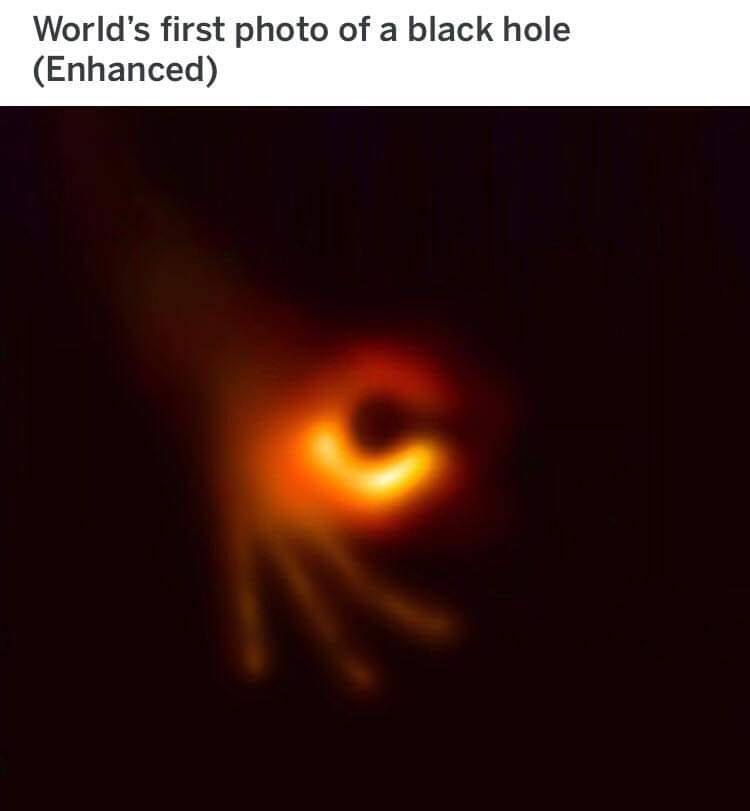
The black hole circle is a Universal punch.

The duck is just funny.

I found a new one that isn’t really meant to be in the circle game, but is.

Social Media, Ruining Your Life Part 2

I recently posted how Social Media is probably making your life worse, especially those who have to look anything up to know everything.  Even more, those whose lives and feelings are governed by their online image and how many likes they got vs. others are losing out on life to a device.

The other issue is having your face buried in your phone while walking.  You are clueless to the world around you.  See the video above.

UPDATE: Getting Cosmetic Surgery for Snapchat Dysmorphia

This is by far the most narcissistic thing I’ve read.  People (tide pod eaters) are getting surgery to look like the filters they use on their Snapchat because they don’t look good enough in life because it is wreaking havoc on their self-esteem.  The report in the journal JAMA Facial Plastic Surgery claims that these filters can sometimes trigger body dysmorphic disorder, a mental illness that can lead to compulsive tendencies and unnecessary beauty procedures, among other negative outcomes.

A study in the American Journal of Preventive Medicine found that people who were regular users of social media were twice as likely to feel lonely than those that were light users.

Another study released found that social media, especially Instagram, deepened feelings of anxiety and inadequacy for 15 to 24 year olds.

Go play outside and leave your phone in your pocket.  Also, don’t live your life on social media and you won’t be so self-obsessed.

UPDATE: A study came out stating that good social media don’t out weigh the bad:

(Reuters Health) – For young adults, the adverse effect of negative social media experiences on mental health outweigh any potential benefits of positive experiences, a study of university students suggests.

Each 10 percent increase in a student’s negative experiences on social media was associated with a 20 percent increase in the odds of depressive symptoms, researchers found.

But positive experiences on social media were only weakly linked to lower depressive symptoms. Each 10 percent increase in positive social media interaction was associated with only a four percent drop in depressive symptoms – a difference so small that it might have been due to chance.

“This is not inconsistent with the way we see things in the offline world . . . The negative things we encounter in the world count more than positive ones,” said study leader Brian A. Primack, director of the Center for Research on Media, Technology and Health at the University of Pittsburgh in Pennsylvania.

“If you have four different classes in college, the fourth class that you did poorly in probably took up all your mental energy,” he told Reuters Health by phone.

Primack said he believes social media lends itself to negativity bias because it is saturated with positive experiences that leave people jaded.

YOU ARE BEING WATCHED

I talked with friends at the gym who are or were in law enforcement  In cop terms they are always made by others because they are constantly looking around.  They are aware of their environment, potential danger, potentially dangerous people and escape routes.  As you can see in the video of fails, these people are vulnerable to all of the above.

Guess how else you are vulnerable with your head buried in a screen?  It doesn’t take a genius to know that Facebook, Google, Amazon and every other site is not only tracking your clicks, but are tracking where you go and what you do.

We used to have instructions, a map and intuition to get where we were going and for the most part, we got there.  millennial’s can’t get to the 7-11 without Google Maps now.  It’s also funny how they can know everything, but have knowledge of very little.  Take away their phone and not only would they not run into things, they’d have to actually learn about how things really work and how to navigate (I’m not discriminating here, I know directionally challenged relatives my age who fall into this category).  Looking up something on your phone doesn’t make you smart.

YOU ARE GIVING THE PERV’S A FREE TICKET

I’m not in law enforcement, but I put my phone away and watch others, especially those watching girls.  It’s almost a sport.   It used to be if a guy was looking in the wrong part of a girl, they got busted immediately.  It was like watching a tennis match seeing the heads turn when a cute girl walked by.  They had to use mirrored sunglasses and just glance when they could and not let their wives/girlfriends catch them.   Now, instead of having to glance behind sunglasses, the perv’s just look down or up (or up and down) anyone they want and modesty just goes out the window.  It’s truly tasteless, but if you had your head out of the phone, you wouldn’t be getting eyeballed so lasciviously.

GET A LIFE

It’s amazing to watch people now escape to their phone in what used to be a social situation.  So stop running into things and get a life.

FACEBOOK IS DESIGNED TO EXPLOIT HUMAN VULNERABILITIES

Recently, former Facebook president Sean Parker pointed out how Facebook is hurting people.

When Facebook was getting going, I had these people who would come up to me and they would say, ‘I’m not on social media.’ And I would say, ‘OK. You know, you will be. And then they would say, ‘No, no, no. I value my real-life interactions. I value the moment. I value presence. I value intimacy.’ And I would say, … ‘We’ll get you eventually.’

Parker discussed the possible psychological effects of social media and Facebook in particular, especially for children who are now growing up in a digitally connected age:

I don’t know if I really understood the consequences of what I was saying, because [of] the unintended consequences of a network when it grows to a billion or 2 billion people and … it literally changes your relationship with society, with each other … It probably interferes with productivity in weird ways. God only knows what it’s doing to our children’s brains.

The former Facebook President discussed the company’s initial aim, which was mainly centered around drawing in and building their audience:

The thought process that went into building these applications, Facebook being the first of them, … was all about: ‘How do we consume as much of your time and conscious attention as possible?’ And that means that we need to sort of give you a little dopamine hit every once in a while, because someone liked or commented on a photo or a post or whatever. And that’s going to get you to contribute more content, and that’s going to get you … more likes and comments.

Parker described Facebook’s appeal as a “social-validation feedback loop” which exploits human psychology to keep users coming back to the app:

It’s a social-validation feedback loop … exactly the kind of thing that a hacker like myself would come up with, because you’re exploiting a vulnerability in human psychology. The inventors, creators — it’s me, it’s Mark [Zuckerberg], it’s Kevin Systrom on Instagram, it’s all of these people — understood this consciously. And we did it anyway.

Parker also briefly discussed how his vast wealth is likely to allow him to live longer than the average person due to advances in medical science

Being Rude To Others At Work; Who is Worse, Men or Women?

I love controversial subjects, especially among the sexes.  Nothing gets the hackles up quicker than something that offends what you hold close to your heart.  I’ve worked with the media for decades and sensationalism is what sells.  It’s sex, death, murder, immorality, bankruptcy, divorce and other vices that can be cherry picked to place on the headline.  This is not real life, like…..

Ye old workplace.

It is a petri dish of human interaction that has been infected by #MeToo, harassment, incivility, sexism, partiality, affairs and occasionally competent work and results.  I’ve already discussed if Men and Women can work together here, and Women now swear more than men, so I found this article and it looked either like a headline maker or a trend.  I decided to find out.

Having sat through weeks of diversity training that is beyond boring and is a CYA for the legal department, I’ve been told that you can’t say certain things, act in a ways that could be demeaning or sexually suggestive or anything outside of plain vanilla.  I choose to keep to myself and observe.  That is why this study caught my eye.  The behavior is far outside of my diversity training, yet it goes on unabated.

WHO ARE THE BIGGEST OFFENDERS?

A recent study shows that women are reporting that it is other women who are the most rude and uncivil towards women.  It goes like this:

In terms of how it is acted out:

“Across the three studies, we found consistent evidence that women reported higher levels of incivility from other women than their male counterparts,” Gabriel says. “In other words, women are ruder to each other than they are to men, or than men are to women.

“This isn’t to say men were off the hook or they weren’t engaging in these behaviors,” she notes. “But when we compared the average levels of incivility reported, female-instigated incivility was reported more often than male-instigated incivility by women in our three studies.”

THE QUEEN BEE SYNDROME

The article at the link above states:

The phenomenon of women discriminating against other women in the workplace—particularly as they rise in seniority—has long been documented as the “queen bee syndrome.” As women have increased their ranks in the workplace, most will admit to experiencing rude behavior and incivility.

Who is at fault for dishing out these mildly deviant behaviors? Has the syndrome grown more pervasive?

“Studies show women report more incivility experiences overall than men, but we wanted to find out who was targeting women with rude remarks,” says Allison Gabriel, assistant professor of management and organizations in the University of Arizona’s Eller College of Management.


I worked with a female named Sandy.  No one was harder to understand or trust as a senior manager than she.  My friends would dread working for her and it was a success not to get fired before your term was complete.  Everyone tried to get out as fast as they could, or would not seek a promotion just to not work for or with her.

I WANTED TO KNOW SO I ASKED THEM IF IT WAS TRUE, WHAT THEY SAID, PERHAPS NSFW

I like to look at things from the point of view of how would an intellectual view this.  Normally, this would entail a scientific study without bias, with control groups and so forth.  My observation is that people’s behavior is not scientific when it comes to emotions and I’ve been told by  those of the female persuasion that they are more likely to be emotional.  I couldn’t argue the point, nor did I care to.

Therefore, I figured that asking some females if this was correct and what they’ve seen at work would be my best estimate as to whether this is true.  Please note that some of the comments while stated verbatim are not always complimentary and some are off-color.  Commenters:  Note, if you get pissed off, these are answers by women to a question I asked about working with females and is the study accurate.  If you just want to hate, please go elsewhere as if it’s directed at me, it’s a fart in the wind and that’s how I’ll treat it.

Here are some responses:

Females can be bitchy, catty. other names.

She slept her way to her position.

She got there because of her looks (or tits), not her ability.

She dresses like a whore.

There is one bitch who leans over in front of guys to get her way.

Women are the biggest backstabbers.

Sure there is an occasional guy who bugs me or tries to hit on me, but girls are far worse as a group.

Sure she was nice when she was one of us, but as soon as they gave her a little power, she turned on us like we’d done something to her.

She’s great to work for if you are female.  She only promotes women and you can get your way over any guys.

Women here can only manage 2 inches in front of their face.  They don’t get the big picture or work towards the company’s goals.

Once you make it clear you aren’t going to sleep with them, the men are much easier to work with or for.  The mission and strategy are clear and they can focus on that.

Guys will either just not say anything or will tell you how it is.  The girls say something to your face and f__k you over behind your back if you aren’t in their group.

Guys handle success and failure better than the girls I work with.  One of them always takes it personally and spends weeks trying to get back at you instead of trying to get work done.

I can never trust what a woman says to me.  Guys don’t lie as much or as well as girls do unless they want in your pants.

Women talk too much and I can’t get my work done.

When aunt Flo comes calling honey you better hide from that bitch.

Just get more than one female together in a group and watch the fireworks.

Guys are used to joking, I think they learned it in a locker room or something.  They can cuss each other out in a meeting  and it’s like a punch in the arm and then go have a beer.  A woman will hold something you say to her against you for the rest of your life.

Enough!  Most of these I got multiple times, which is why they made the list.  I stopped asking because this attitude was overwhelming me.

CONCLUSION

I can only surmise that it is tough for women to work with women.  I didn’t give it much thought until I read this study, but it does appear that women are more difficult towards other women at the workplace


Actual Maps of Where The #Shitholes Are – An A-Polititical Post On Where They Exist

First, I am not going to weigh in on what a world leader has said.  Every time I have ever tried it, nothing is gained as everyone has their own opinion and trying to sway it is not what I care about.  Enjoy your center, left, right or whatever political position you wish.

I was looking for whether this actually exists.  Here is what I’ve found.

UPDATE: Portland is the newest shit hole. Click on the link: Portland: American epicenter of degeneracy, depression, and ANTIFA.

Here is a link and a screenshot of a map from the Rice Institute based showing countries with the most open defecation.

Forbes published a list of the world’s dirtiest cities.  Without passing judgement, they seem to line up with the shitholes in the map so the facts seem to be in order.

Next, is it possible that the United States has places where there is open defecation?  I found that map also.

Below is the link and screenshot also, but in case you don’t recognize it, this is San Francisco.

Now, after reading this, one can add it to their travel plans to go and help, or avoid for sanitary purposes, you choose.  If you go to San Francisco, zoom in and you can see where to not step in a pile of poop.  As I type that, I realize that it is sad for what is supposed to be one of the leading cities of the US, and one so close to silicon valley.

It also gives everyone equal political fodder to take shots at whomever.  In these days of political partisanship, nothing or nobody is safe by the 3rd or 4th comment, so I expect the same.

I just got curious and I wondered if what was said was true or not. Apparently it is.

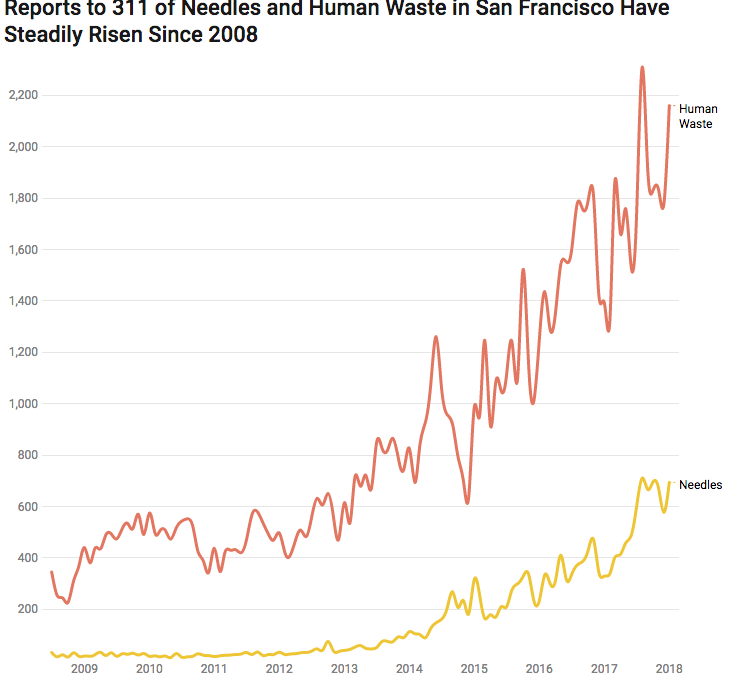
Here is the link to the recent study of sanitation including feces, used syringes and other disease carrying trash in the heart of San Francisco.  It’s a shame since it is in the heart of the restaurant and hotel area.  You’d think that the tourism officials would do something about this, but looking at the graph indicates the problem escalating.

UPDATE: San Francisco is getting over 80 calls a day to report human feces for clean up.  In the same report were almost as many instances of needles despite the fact that there are safe injection spaces for shooting up an illegal drug that destroys lives.


UPDATE: It turns out that Denver is now officially classified as a shithole also.  They passed an act that you can drop trou and pinch a loaf right on the street.  Here is the story and the reason why they passed the law.

UPDATE: It looks like Hawaii isn’t as pristine as one thinks of it.  The cesspools and the water around the islands are contaminated enough to make it a shithole also.  There is a link within this link that goes to the WSJ.

Video Update: A large portion of Orange county is now a 3rd world shithole also.

After all is said and done, I thought that having to have a map to not step in a pile of human feces makes a city the biggest shithole.  It turns out that I was wrong.

According to the Government services including the EPA, ACS and the Census bureau comes this little gem:

The City that Never Sleeps ranked the highest in three out of five categories, placing it as shittest-city-in-the-nation of 427.9 on Busy Bee’s “dirtiness index.” The next closest competitor for all the wrong reasons is Los Angeles, which has a dirtiness index of 317.8. To complete the top five list, the remaining dirtiest cities are Chicago, Philadelphia, and San Francisco.

So not only do you have to pay way more more to live in these places, they have worse air, bigger rats and more cockroaches, they turn out to be the shitholes that we all thought they were.  Why anyone would choose to live there knowing there?

The Real Nature Of Freedom, Economic and Political and the Interrelationship Between The Two

In these days of divisiveness, there are some facts based on economics that are hard to refute, even if you don’t want to admit it.  I enjoy discussion by people of high IQ and of great wisdom, something the world of Political Correctness is sadly overlooking.

What You Had To Know In 1910 To Pass The 8th Grade Test

For my fellow High IQ readers, see how you would do on this test.  It’s not are you as smart as a 5th grader.  No, it’s much tougher.  No wonder that our public school system is turning out under educated students.  It appears that not only did our ancestors have to walk to school in the snow, they had to actually learn more than google on a smart phone.

Perhaps if they could pass this test, they wouldn’t have as much time to spend on Facebook, Instagram and Snapchat.

Press on.

Are You Intelligent, Or Just Think You Are? – The 5 Indicators That You Can’t Fake

Most people think the are smarter than they are but usually are wrong.  This has nothing to do with whether they have a high IQ or have trained extensively in an area (discussed throughout). These are indicators of whether you possess intelligence, but does not discuss whether you use it.

You can go anywhere on the Internet and find any research you want, but here are 5 indicators that show that you have potential for intelligence.

  1. You learn from mistakes
  2. You read for fun
  3. You can argue from multiple perspectives
  4. You think before you speak
  5. You don’t care what others think

I saw this at My Domaine which show 3 of them you can’t fake.

You Learn From Your Mistakes

Intelligent people are able to accept their own failures and re-purpose them into lessons for future success. In fact, a study on decision-making skills reports that critical feedback from a mistake results in better performance the second time around. So while errors and setbacks can be frustrating, highly intelligent people are able to perceive them as growth opportunities.

It could of course be argued that humans are not that intelligent to begin with as we’ve continued to make the same mistakes throughout history.

I would argue that you learn more from a mistake than success.  In giving one of my prodigy advice for life, I told him I didn’t remember every success because I expected it.  I remembered every failure as it hurt and I vowed never to do it again.  Some however never learn. They reveal narcissistic behavior which prevents them from admitting they were wrong.

You’re an Avid Reader

If someone doesn’t cite their sources but insists upon an opinion regardless of evidence, they’re likely exaggerating expertise. A simple way to check is by asking them what they do for fun. Beyond being a good way to gain knowledge about history or experiences that are different from your own, research shows that reading increases memory function, communication skills, and focus.

I am intrigued to talk with people with good vocabularies.  To a person, they are readers of books, not social media.

One of the most intelligent fellows I’ve met was an avid reader, but couldn’t put life together due to lack of common sense.  That is another subject altogether.  He was obviously intelligent, but he couldn’t make good life decisions.

I see people in the gym taking selfies (or at the party, or anywhere) to garner likes on their Instagram or Fake Book (ok Facebook, but it is edited and acts a lot like a high school reunion).  Those who are contemplating intelligent thoughts aren’t as concerned about likes or emoji’s.  They are enjoying a book.

You See Both Sides of an Issue

When someone can articulately and convincingly argue every angle of an argument, they’re genuinely smart. Travis Bradberry, author of Emotional Intelligence 2.0, reveals the issues with assumptions; if someone is thoughtful and well-informed, they’re probably not faking their intelligence to get ahead. So while they’re really passionate and well-versed on a topic from their own perspective, if they haven’t evaluated all sides of an issue, they don’t understand it (or how to respond to it effectively).

This to me is one of the biggest indicators. The less intelligent can become so fixated on being right that they fail to observe the whole issue.  You can intrinsically know what is correct by understanding which part of the subject being discussed is not correct or what part is flawed.  The logic presents itself when you view it in its entirety.

I exempt lawyers here.  Some of them may actually be intelligent, but they are trained to argue any side of an issue.  Training is not an indicator that you are intelligent other than that you can learn.

You think before you speak

Truly intelligent people have a brain that is quicker than their mouth.

If you take your time to answer people’s questions and think them through to provide a genuine answer that you’ve thought about, you’re one step ahead. 

It is also related with being overly concerned with what others think of you and the idea that you must be right.  Many times, it is best to hear everything that is to be said before you respond.  This point helps clarify celebrity behavior.  They more often than not speak before they think or hear what is being said and then not thinking out the entirety of a subject.  Combined with living in a bubble, the few that are intelligent are overshadowed by the celebtards who have to be heard.  They expose themselves by opening their mouths, most often without their brain in gear.

You don’t care what others think 

Seriously intelligent people don’t consider other people when making decisions.

They don’t think about how others will feel as a result of their own actions and do things regardless of other people’s judgement.

The net of it is look at yourself or your behavior.  If you have these traits, you are likely more intelligent.

There are lists that say more intelligent people are messy and swear more, but I’d rather look for good qualities in people.

How Meetings Are a Waste Of Time and How To Avoid or Get Out of Them

facepalm  I read a WSJ article on ineffective meetings.  It is about the manifesto to end boring meetings.

This brought back thousands of hours of meetings I wished I could have back or would certainly decline to attend had I realized what I know now.  Most of this post is tongue in cheek unlike the WSJ, but I’ll bet everyone wishes they weren’t in so many meetings.

First, let me start out with some quotes I found from The Quote Garden, starting with the one that reminded me most of the meetings I’ve attended:

A committee is a cul-de-sac down which ideas are lured and then quietly strangled.  ~Barnett Cocks, attributed

worfgif

A committee is a group that keeps minutes and loses hours.  ~Milton Berle

To kill time, a committee meeting is the perfect weapon.  ~Author Unknown

If you had to identify, in one word, the reason why the human race has not achieved, and never will achieve, its full potential, that word would be “meetings.”  ~Dave Barry, “Things That It Took Me 50 Years to Learn”

Our age will be known as the age of committees.  ~Ernest Benn

If Columbus had an advisory committee he would probably still be at the dock.  ~Arthur Goldberg

A committee is an animal with four back legs.  ~John le Carré, Tinker Tailor Soldier Spy

It is impossible to imagine the universe run by a wise, just and omnipotent God, but it is quite easy to imagine it run by a board of gods.  ~H.L. Mencken

A “Normal” person is the sort of person that might be designed by a committee.  You know, “Each person puts in a pretty color and it comes out gray.”  ~Alan Sherman

A committee is a thing which takes a week to do what one good man can do in an hour.  ~Elbert Hubbard

A camel looks like a horse that was planned by a committee.  ~Author Unknown

A committee is a group of the unwilling chosen form the unfit, to do the unnecessary.  ~Author Unknown

If you live in a country run by committee, be on the committee.  ~Author Unknown

Could Hamlet have been written by a committee, or the Mona Lisa painted by a club?… Creative ideas do not spring from groups.  They spring from individuals.  The divine spark leaps from the finger of God to the finger of Adam.  ~Alfred Whitney Griswold

We always carry out by committee anything in which any one of us alone would be too reasonable to persist.  ~Frank Moore Colby

I don’t believe a committee can write a book.  It can, oh, govern a country, perhaps, but I don’t believe it can write a book.  ~Arnold Toynbee

There is no monument dedicated to the memory of a committee.  ~Lester J. Pourciau

Any committee that is the slightest use is composed of people who are too busy to want to sit on it for a second longer than they have to.  ~Katharine Whitehorn

Meetings are indispensable when you don’t want to do anything.  ~John Kenneth Galbraith

People who enjoy meetings should not be in charge of anything.  ~Thomas Sowell

AND OF COURSE, THERE IS BRADLEY’S BROMIDE: “If computers get too powerful, we can organize them into a committee — that will do them in.”

I WORKED FOR “THE” MEETING COMPANY
I worked a large part of my career either for or with IBM, which many have joked that it stands for I’ve Been in a Meeting. I could have been years more productive and retired earlier if it hadn’t been for all of the meetings I’ve spent time in.  Projects would have been completed weeks in advance were it not for meetings.

Usually, the meetings were a way to get other people to do your work for you, or to assign work to others they wouldn’t do or volunteer for were it not for the fact that they were at a meeting.  The only time this didn’t work was when I actually needed to get a speaker for a press briefing for an interview with Time Magazine when print media was important.  His manager, John Callies then VP of Netfinity or X series at IBM(x86 servers), wouldn’t let the speaker leave the staff meeting stating, “it’s only your job” as the reason.  See how manage executive ego’s for more on this. I’d have never imagined having to cancel an interview with what was then an important publication due to an executives’ ego. I’ve seen bad manager moves in my time, but this was top 10 worst of the worst for me.  He still ranks as the number one suit I’ve ever worked with.  The below meme was how it felt to be in a meeting with him.

Execs have also had meetings in places that they wanted to visit (click on the link to see who it is), and most people knew that.  That was a waste of travel time and money for a wasted meeting. There were other reasons they had meetings, but read the quotes at the beginning to find out why said were held.

Avoid training meetings, unless it was a way to be busy during a meeting you want to avoid.  This is especially true of diversity training.  It is a waste of time (same exact meeting every time every year for the required legal reason) but is more important than almost any other meeting, so it serves 2 purposes.  No one will go against diversity training for fear of being politically or legally incorrect.  It does allow you to miss another meeting and no one pays attention anyway.  It’s an opportunity to get work done while the training is going on in the background.  Your attendance is recorded so you are twice as effective as you complete your work, earn your mark for training and ignore the same speech you went through last year all at the same time.

MEETING RULES TO SURVIVE

The best way to deal with a meeting is to avoid it.  If you can already have a meeting at a time that the scheduler proposes it or be busy and/or somehow away or out of the office.  Teleconferencing kills that strategery  unless you can be found traveling, but sometimes it’s unavoidable (see how to get out of a meeting below if you have to go).  The people calling the meeting are really only people who want the meeting anyway.

For things to do to avoid meetings or how to goof around during a meeting, go to the link How to goof around at work.

HERE IS MY RULE WHEN TO DECIDE TO ATTEND IF I HAD A CHOICE: if there were more than 4 people, don’t go.  Nothing will get done other than resulting in another meeting to have to attend.  This is especially true if there are more than 1 executives, as each brings a team of competing players who guarantee the death of productivity.

The WSJ agrees with me, but goes on to say that if it has 17 people, there is no chance anything will get accomplished.
Don’t speak at a meeting if possible. It usually wastes time and extends the meeting length.  There are only a couple of people who really have something to contribute, the rest want to hear themselves talk, show off their PowerPoint skills to bore you, or think they are more important if they speak.  These show offs can be  insufferable, but they offer time to check your email at best while pretending to listen.

This is in the department of redundancy department, but it is so important to note is to be careful when attending because the meeting leader’s purpose is to assign their work to others or get people to do work they wouldn’t do because they can’t decline in public (this is a corporate tradition).  This further kills your ability to be productive at your real job.  There are some who want to look important by accepting work magnanimously to show off, thinking they were climbing the ladder.  Gladly accept their offer as most people have 10 hours of work for an 8 hour day anyway. Only accept it if it produces revenue or if you are the only one qualified to do it, but generally don’t, especially if you perceive it as a make work project.

Especially avoid planning meetings.  A meeting to plan another meeting is one to be skipped unless you are the project manager and called the meeting, then you have to do it.  Avoid these at all costs.  Once nobody shows up, the meeting gets cancelled for email updates, which is a far better use of your time.  As my grandfather said, they are as common as pig tracks and as useless as teats on a boar hog.

Avoid staff meetings.  These are like planning meetings, but they occur regularly and when you miss one, nobody really cares (especially if there are more than 4 people). Only attend them occasionally as you work with these people everyday anyway, it’s not like you don’t know what is going on.  Email your boss on a regular basis with your activity and you can plan something more productive during that time.

HOW TO GET OUT OF A MEETING

The tongue in cheek part really goes here.  I’ll bet there are folks out there far more creative about this than me.

My favorite methods are to have a customer who needs you.  They are your business and that overrides almost everything.  Even your boss can’t deny this.

Pre-plan an emergency.  I occasionally had another employee phone or knock on the door to call me out (email or text isn’t as good as that is not public enough) to get you out of a meeting.  The trick is to never return. You’ll get the notes anyway, I promise. Since I worked with the press and analysts, I sometimes had a co-worker say that a reporter needed me right now.  They were my customer and no one could say no.  Many times there was no real emergency even if the press did call, it was the best and most efficient use of my time to leave the meeting so as to be actually working instead of being at a meeting.  I usually dealt with the press immediately unless I had to do some digging to get back to them.

Attend meetings by phone if possible.  You can always put the phone on mute and get your real work done, or surf the web or watch TV, which is usually just as productive.  It’s easier to go to the bathroom, which brings me to…

Go to the bathroom.  Offer to get a water to others when you go, then take as much time reading the sports page in the stall as you can.  You are just as productive as listening to someone prattle on about their project.

Send your meeting information in by proxy.  See above where someone is willing to talk.  Give them your results or input so you don’t have to be there.

 THE KIND OF MEETING TO HAVE

I realize that some meetings are necessary, so I understand that it’s the only way to get some things done.  For the other majority of the time, see above.

The best meeting is a hall meeting.  You run into the person you need help from and in 5 minutes, you’ve explained your need, what they can do and your time frame for doing it.  Problem solved.

I also recommend having meetings with introverts and/or men.  They don’t like to talk much (most of them) and want to get it over as quickly as you do.  Attire requirements are less of a priority as is small talk.

Here is the net net, don’t go to a meeting if you don’t have to, get out early if at all possible and above all, don’t speak unless you have no option.  Consider it a victory if you don’t attend, or a minor victory if you have to attend but don’t come out with anyone else’s work. You are a complete failure if you open your mouth and double your workload on something that is not tangential to your job or career.  Enjoy your job more by having the time to actually be productive.

Women Now Swear More Than Men

flashing-updateA unique survey of the swearing habits of men and women over the past 20 years has revealed that not only is the English language constantly discovering new ways to be rude, but women are using the f-word more often than men.

According to the Times from this link, women (mostly British in this study, but listen to YouTube to realize the U.K.  doesn’t have the patent on this) have potty mouths now worse than men, except for maybe James Governor.  The study, conducted by researchers from Lancaster University and Cambridge University Press, also found that women were ten times more likely to say s–t than men.

But it wasn’t always this way. According to studies from the early 1990s, men used ‘f–k’ 1,000 times out of every million words they said; while women said it 167 times.  They should get a better vocabulary I guess.

I’ll speculate that men have been told to watch their mouths and women think that it makes them empowered.  In reality, unless you are very creative with your speech patterns, it’s not very linguistic to speak like this.  It’s not like everyone hasn’t thought it or said it, but to legitimize it on this scale is disturbing.  It also brings down a population segment.

I also find women with higher IQ’s use considerably less foul language than wannabee’s.  Conversely, celebrities and entertainers seem to be trying to legitimize this type of speaking.  It seems that the female politicians have taken to this trend also.

Maybe that’s why there is an attraction to intelligence?

You all should be ashamed of yourselves. 😉


What Alexis de Tocqueville Said About America, The USA

It is interesting to think of what he observed in the mid 1800’s vs. the country we have in 2014.  Here are his comments based on a visit:

Upon my arrival in the United States, the religious aspect of the country was the first thing that stuck my attention; and the longer I stayed there, the more I perceived the great political consequences resulting from this new state of things.

In France I had almost always seen the spirit of religion and the spirit of Freedom marching in opposite directions. But in America I found they were intimately united and that they reigned in common over the same country.

Religion in America…must be regarded as the foremost of the political institutions of that country; for if it does not impart a taste for freedom; it facilitates the use of it. Indeed, it is in this same point -of -view that the inhabitants of the United States themselves look upon religious belief.

I do not know whether all Americans have a sincere faith in their religion—for who can search the human heart?  But I am certain that they hold it to be indispensable to the maintenance of republican institutions. This opinion is not peculiar to a class of cities or a party, but it belongs to the whole nation and to every rank of society.

The sects that exist in the United States are innumerable. They all differ in respect to the worship which is due to the Creator; but they all agree in respect to the duties which are due from man to man.

Each sect adores the Deity in its own peculiar manner, but all sects preach the same moral law in the name of God.

Moreover, all sects of the United States are comprised within the great unity of Christianity and Christian morality is everywhere the same.

In the United States the sovereign authority is religions…there is no country in the world where the Christian religion retains a greater influence over the souls of men than in America, and there can be no greater proof of its utility and its conformity to human nature than that its influence is powerfully felt over the most enlightened and free nation of the earth.

In the United States, if a political character attacks a sect [denomination], this may not prevent even the partisans of that very sect, from supporting him; but if he attacks all the sects together [Christianity], everyone abandons him and remains alone.

I do not question that the great austerity of manners that is observable in the United States arises, in the first instance, from religious faith…its influence over the mind of woman is supreme, and women are the protectors of morals. There is certainly no country in the world where the tie of marriage is more respected than in America or where conjugal happiness is more highly or worthily appreciated.

In the United States, the influence of religion is not confined to the manners, but it extends to the intelligence of the people…

Christianity, therefore, reigns without obstacle, by universal consent; the consequence is, as I have before observed, that every principle of the moral world is fixed and determinate…

I sought for the key of greatness and genius of America in her harbors…; in her fertile fields and boundless forests; in her rich mines and vast world commerce; in her public school system and the institutions of learning. I sought for it in her democratic Congress and in her matchless Constitution.

Not until I went into the chutes of America and heard her pulpits flame with righteousness did I understand the secret of her genius and power.

America is great because America is good, and if America ever ceases to be good, America will cease to be great.

The safeguard of morality is religion, and morality is the best security of law as well as the surest pledge of freedom.

The Americans combine the notions of Christianity and of liberty so intimately in their minds that it is impossible to make them conceive the one without the other.

Christianity is the companion of liberty in all of its conflicts–the cradle of its infancy, and the divine source of its claims.

They brought with them…a form of Christianity, which I cannot better describe than by styling it in a democratic and republican religion…From the earliest settlement of the emigrants, politics and religion contracted an alliance which has never been dissolved.

The Christian nations of our age seem to me to present a most alarming spectacle; the impulse which is bearing them along is so strong that it cannot be stopped, but is not yet so rapid that it cannot be guided; their fate is in their hands; yet a little while and it may be no longer.

Read the rest of this PolitiChicks.tv article here: http://politichicks.tv/column/2014-alexis-de-tocqueville-esque-year-restoration/#5ulfUJKsDb9hcb3G.99

Scientific Jokes or Jokes by Those In Science

Scientists tell us their favourite jokes: ‘An electron and a positron walked into a bar…’

Science is a very serious business, so what tickles a rational mind? In a not very scientific experiment, we asked a sample of great minds for their favourite jokes

Bookies

Statisticians: not totally reliable.

Physics

■ Two theoretical physicists are lost at the top of a mountain. Theoretical physicist No 1 pulls out a map and peruses it for a while. Then he turns to theoretical physicist No 2 and says: “Hey, I’ve figured it out. I know where we are.”
“Where are we then?”
“Do you see that mountain over there?”
“Yes.”
“Well… THAT’S where we are.”

I heard this joke at a physics conference in Les Arcs (I was at the top of a mountain skiing at the time, so it was quite apt). It was explained to me that it was first told by a Nobel prize-winning experimental physicist by way of indicating how out-of-touch with the real world theoretical physicists can sometimes be.
Jeff Forshaw, professor of physics and astronomy, University of Manchester

■ An electron and a positron go into a bar.
Positron: “You’re round.”
Electron: “Are you sure?”
Positron: “I’m positive.”
I think I heard this on Radio 4 after the publication of a record (small) measurement of the electron electric dipole moment – often explained as the roundness of the electron – by Jony Hudson et al in Nature 2011.
Joanna Haigh, professor of atmospheric physics, Imperial College, London

■ A group of wealthy investors wanted to be able to predict the outcome of a horse race. So they hired a group of biologists, a group of statisticians, and a group of physicists. Each group was given a year to research the issue. After one year, the groups all reported to the investors. The biologists said that they could genetically engineer an unbeatable racehorse, but it would take 200 years and $100bn. The statisticians reported next. They said that they could predict the outcome of any race, at a cost of $100m per race, and they would only be right 10% of the time. Finally, the physicists reported that they could also predict the outcome of any race, and that their process was cheap and simple. The investors listened eagerly to this proposal. The head physicist reported, “We have made several simplifying assumptions: first, let each horse be a perfect rolling sphere… ”

This is really the joke form of “all models are wrong, some models are useful” and also sums up the sort of physics confidence that they can solve problems (ie, by making the model solvable).
Ewan Birney, associate director, European Bioinformatics Institute

■ What is a physicist’s favourite food? Fission chips.
Callum Roberts, professor in marine conservation, University of York

■ Why did Erwin Schrödinger, Paul Dirac and Wolfgang Pauli work in very small garages? Because they were quantum mechanics.
Lloyd Peck, professor, British Antarctic Survey

■ A friend who’s in liquor production,
Has a still of astounding construction,
The alcohol boils,
Through old magnet coils,
He says that it’s proof by induction.

I knew this limerick when I was at school. I’ve always loved comic poetry and I like the pun in it. And it is pretty geeky …
Helen Czerski, Institute of Sound and Vibration Research, Southampton

Biology

Blowfly

A blowfly: not to be laughed at (read below). Photograph: Alamy

■ What does DNA stand for? National Dyslexia Association.

I first read this joke when I was an undergraduate as a mature student in 1990. I’d just come to terms with my own severe reading difficulties and neurophysiology was full of acronyms, which I always got mixed up. For example, the first time I heard about Adenosine Triphosphate it was abbreviated by the lecturer to ATP, which I heard as 80p. I had no clue what she was talking about every time she mentioned 80p. And another thing, how does Adenosine Triphosphate reduce to ATP? Where’s the P?
Peter Lovatt, lecturer in psychology of dance, University of Hertfordshire

■ A new monk shows up at a monastery where the monks spend their time making copies of ancient books. The new monk goes to the basement of the monastery saying he wants to make copies of the originals rather than of others’ copies so as to avoid duplicating errors they might have made. Several hours later the monks, wondering where their new friend is, find him crying in the basement. They ask him what is wrong and he says “the word is CELEBRATE, not CELIBATE!”

I first heard this maybe more than 10 years ago in conjunction with the general theme of “copying errors” or mutations in biology.
Mark Pagel, professor of biological sciences, University of Reading

■ A blowfly goes into a bar and asks: “Is that stool taken?”  BLOWFLY JOKE HERE

No idea where I got this from!
Amoret Whitaker, entomologist, Natural History Museum

■ They have just found the gene for shyness. They would have found it earlier, but it was hiding behind two other genes.
Stuart Peirson, senior research scientist, Nuffield Laboratory of Ophthalmology

Math

Mathematics teaching, blackboard Mathematics: can it add up to a killer punchline?■ What does the ‘B’ in Benoit B Mandelbrot stand for? Benoit B Mandelbrot.

Mathematician Mandelbrot coined the word fractal – a form of geometric repetition.
Adam Rutherford, science writer and broadcaster

■ Why did the chicken cross the Möbius strip? To get to the other… eh? Hang on…

The most recent time I saw this joke was in Simon Singh’s lovely book on maths in The Simpsons. I’ve heard it before though. I guess its origins are lost in the mists of time.
David Colquhoun, professor of pharmacology, University College London

■ A statistician is someone who tells you, when you’ve got your head in the fridge and your feet in the oven, that you’re – on average – very comfortable.

This is a joke I was told a long time ago, probably as a high school student in India, trying to come to terms with the baffling ways of statistics. What I like about it is how it alerts you to the limitations of reductionist thinking but also makes you aware that we are unlikely to fall into such traps, even if we are not experts in the field.
Sunetra Gupta, professor of theoretical epidemiology, Oxford

■ At a party for functions, ex is at the bar looking despondent. The barman says: “Why don’t you go and integrate?” To which ex replies: “It would not make any difference.”

Heard by my daughter in a student bar in Oxford.
Jean-Paul Vincent, head of developmental biology, National Institute for Medical Research

■ There are 10 kinds of people in this world, those who understand binary, and those who don’t.

I think this is just part of the cultural soup, so to speak. I don’t remember hearing it myself until the mid-90s, when computers started getting in the way of everyone’s lives!
Max Little, mathematician, Aston University

■ The floods had subsided, and Noah had safely landed his ark on Mount Sinai. “Go forth and multiply!” he told the animals, and so off they went two by two, and within a few weeks Noah heard the chatter of tiny monkeys, the snarl of tiny tigers and the stomp of baby elephants. Then he heard something he didn’t recognise… a loud, revving buzz coming from the woods. He went in to find out what strange animal’s offspring was making this noise, and discovered a pair of snakes wielding a chainsaw. “What on earth are you doing?” he cried. “You’re destroying the trees!” “Well Noah,” the snakes replied, “we tried to multiply as you bade us, but we’re adders… so we have to use logs.”
Alan Turnbull, National Physical Laboratory

■ A statistician gave birth to twins, but only had one of them baptised. She kept the other as a control.
David Spiegelhalter, professor of statistics, University of Cambridge

Chemistry

Student in a chemistry laboratory at Imperial College London

Chemistry seems to have produced some laughs at Imperial College London. Photograph: Linda Nylind for the Guardian

■ A chemistry teacher is recruited as a radio operator in the first world war. He soon becomes familiar with the military habit of abbreviating everything. As his unit comes under sustained attack, he is asked to urgently inform his HQ. “NaCl over NaOH! NaCl over NaOH!” he says. “NaCl over NaOH?” shouts his officer. “What do you mean?” “The base is under a salt!” came the reply.

I think I heard this when I was a student in the early 1980s.
Hugh Montgomery, professor of intensive care medicine, University College London

■ Sodium sodium sodium sodium sodium sodium sodium sodium Batman!

This is my current favorite. It comes from my daughter, who is a 17-year-old A-level science student.
Tony Ryan, professor of physical chemistry, University of Sheffield

■ A weed scientist goes into a shop. He asks: “Hey, you got any of that inhibitor of 3-phosphoshikimate-carboxyvinyl transferase? Shopkeeper: “You mean Roundup?” Scientist: “Yeah, that’s it. I can never remember that dang name.”

Made up by and first told by me.
John A Pickett, scientific leader of chemical ecology, Rothamsted Research

■ A mosquito was heard to complain
That chemists had poisoned her brain.
The cause of her sorrow
Was para-dichloro-
diphenyl-trichloroethane.

I first read this limerick in a science magazine when I was at school. I taught it to my baby sister, then to my children, and to my students. It’s the only poem in their degree course.

Martyn Poliakoff, research professor of chemistry, University of Nottingham

Psychology

psychology

Deluded? It depends on your point of view.

■ A psychoanalyst shows a patient an inkblot, and asks him what he sees. The patient says: “A man and woman making love.” The psychoanalyst shows him a second inkblot, and the patient says: “That’s also a man and woman making love.” The psychoanalyst says: “You are obsessed with sex.” The patient says: “What do you mean I am obsessed? You are the one with all the dirty pictures.”

I have no idea where I first heard this joke. I suspect when I was an undergraduate and was first taught about Freudian psychology.
Richard Wiseman, professor of public understanding of psychology, University of Hertfordshire

■ Psychiatrist to patient: “Don’t worry. You’re not deluded. You only think you are.”

I heard this joke from my husband, my source of all good jokes. It is a variation of the type of joke I particularly like: a paradoxical twist of meaning. Here the surprising paradox is that you can at once be deluded and not deluded. This links to an aspect of my work that goes under the label “mentalizing” and involves attributing thoughts to oneself and others. It’s a mechanism that works beautifully, but the joke reveals how it can go wrong.
Uta Frith, professor in cognitive neuroscience, University College London

■ After sex, one behaviorist turned to another behaviorist and said, “That was great for you, but how was it for me?”

It’s an oldie. I came across it in the late 1980s in a book by cognitive science legend Philip Johnson-Laird. Behaviorism was a movement in psychology that put the scientific observation of behaviour above theorizing about unobservables like thoughts, feelings and beliefs. Johnson-Laird was one of my teachers at Cambridge, and he was using the joke to comment on the “cognitive revolution” that had overthrown behaviorism and shown that we can indeed have a rigorous science of cognitive states. Charles Fernyhough, professor of psychology at the University of Durham

Multidisciplinary

■ An interviewer approaches a variety of scientists, and asks them: “Is it true that all odd numbers are prime?” The mathematician rejects the conjecture. “One is prime, three is prime, five is prime, seven is prime, but nine is not. The conjecture is false.” The physicist is less certain. “One is prime, three is prime, five is prime, seven is prime, but nine is not. Then again 11 is and so is 13. Up to the limits of measurement error, the conjecture appears to be true.” The psychologist says: “One is prime, three is prime, five is prime, seven is prime, nine is not. Eleven is and so is 13. The result is statistically significant.” The artist says: “One is prime, three is prime, five is prime, seven is prime, nine is prime. It’s true, all odd numbers are prime!”
Gary Marcus, professor of psychology, New York University

■ What do scientists say when they go to the bar? Climate change scientists say: “Where’s the ice?” Seismologists might ask for their drinks to be “shaken and not stirred”. Microbiologists request just a small one. Neuroscientists ask for their drinks “to be spiked”. Scientists studying the defective gubernaculum say: “Put mine in a highball”, and finally, social scientists say: “I’d like something soft.” When paying at the bar, geneticists say: “I think I have some change in my jeans.” And at the end of the evening a shy benzene biochemist might say to his companion: “Please give me a ring.”

Professor Ron Douglas of City University and I made these feeble jokes up after pondering the question: “What do scientists say at a cocktail party”. Of course this idea can be developed – and may even stimulate your readers to come up with additional contributions.
Russell Foster, professor of circadian neuroscience, University of Oxford

How Much Weight Can You Lose by Taking a Dump? Can You Weigh Farts? Everything You Wanted To Know About Your PooP


UPDATE: The 7 Reasons Farting is Good For You

Dropping a deuce, pinching a loaf, laying pipe, reading the sports page, seeing a man about a horse, all are names for the same thing.

But how much does it weigh? Can you lose weight by taking laxatives or giving birth to a legend size turn monster? How much does a fart weigh?  Do women fart as much as men? Let’s look into it.

How much your poop weighs

According to thrill list health:

To find out how much our stool adds to the scale, researchers (serious poop

researchers do exist, folks) collected samples from people living in 12

different countries to get a comprehensive overview.

They discovered that poop weighs between 2.5oz and 1lb, on average.

To find out how much our stool adds to the scale, researchers (serious poop

researchers do exist, folks) collected samples from people living in 12

different countries to get a comprehensive overview.

Have you ever weighed yourself before and then after taking a dump?

Of course you have! Who hasn’t? The best part is seeing the scale budge

in your favor after dropping the kids off at the pool.

So it stands to reason that if you could poop more, you’d lose weight, right?

Same for farting — gas has mass, after all. Could pooping and farting

be legit weight-loss secrets, or is it all just a lot of hot air?

Unsurprisingly, Westernized populations have the lowest poop weights,

thanks to a severe lack of fiber that comes with a fast-food diet. Western

samples only averaged between 3-4oz, which isn’t nearly enough to

make a difference in your skinny jeans.


How much do farts weigh? And how do you even weigh farts?

Very, very carefully. Gastroenterologists in England tried to determine

a fart’s weight by giving study participants 200g of baked beans in

addition to their normal diet. Even scientists know beans are a magical

fruit. To measure the toots these beans are known for, they used rectal

catheters over the course of 24 hours, which raises serious concerns

about the mental stability of the participants.

Despite the method, the data collected may surprise you more.

Scientists learned that the farts weighed between 16-50oz per day.

That’s right: You’re holding as much gas in your system as a small

Sweetums soda. And in case you’re wondering (you’re obviously

wondering), “Women and men expelled equivalent amounts,”

according to science.  That’s right.  Your sweet little cupcake is

cutting the cheese and stinking up the room just as much as you are.

Pooping to lose weight is actually a really bad idea

Of course, there are those out there who see “poop can weigh a pound”

and will try to up their poop game by taking laxatives. Bad idea.

Robert Herbst, an 18-time world-champion powerlifter and one of

the drug-testing supervisors at the Rio Olympics, says laxative-driven

weight loss happens even at the highest levels of sport, and it isn’t pretty.

Herbst confirms that dropping a deuce will in fact budge the number

on the scale, though it won’t alter your body composition or muscle

percentage, saying, “One pound in does not guarantee one [pound] out,”

because food is metabolized differently. Certain foods are absorbed

more efficiently, while others pass right through (looking at you, corn).

So while a pound of lettuce may work its way out to the porcelain

water slide, a pound of pie will most likely stick to your thighs.

Pooping isn’t a total elimination of all the calories you eat, since that

wouldn’t make any sense. Your body needs energy, so it’s not going

to shit it all out.

On top of that, Herbst’s experience monitoring weigh-ins taught

him that no one’s going to see Biggest Loser-type results. He says

you may see a 5lb drop (if that), depending on how much you currently

weigh. If you’re a big dude, you’re going to expel more in weight and

volume because you’re already eating more.

The majority of people will only be able to look forward to a mere

1-2lb difference (at most) if you’re an active person. Those losses

aren’t worth canceling your gym membership, and in extreme

cases, excessive laxative use can lead to all sorts of nasty medical complications.

What About Competitive Eaters?

I watch the July 4th Nathans Hot Dog Eating Contest yearly.  Joey Chestnut

knocked down 70 dogs in 10 minutes.  I’m not sure how much that

weighs, but given the average Joe spits out almost 2 pounds after a

few dogs at most, does that mean that Joey is somewhere between a

Saint Bernard and an elephant the day after the contest?

I found this gem THE 8 TYPES OF POOP YOU SHOULD NEVER

IGNORE because it means you have a problem

What Does Your Poop Say About You?

I found this gem at did you know your facts?

And finally, go to this link to evaluate your poop and pooping habits because you should examine your deuce to see if you are unhealthy or have a problem.

8 Basic Truths Even the Smartest People Forget

This is the Background for my Facebook page, the reason I thought this article was so interesting.  Perhaps you will also.  Even the person some regard as the smartest surely forgot some things, especially on his desk.

10982462_10153638113558797_8847922298755759730_n


Even the smartest people out there sometimes forget some of those obvious concepts:

1. Not feeling ready can be a good thing

Opportunities rarely come when we are 100% ready to seize them. They are more likely to knock on your door when you feel insecure with your preparation, knowledge and skills. But that doesn’t mean you should be ignoring them until you feel ready. Most of our lifetime opportunities force us to grow both emotionally and intellectually. They push us to give the best of ourselves, even if that means getting out of our comfort zones. But sacrificing our comfort can give us the chance for personal growth. If you want to change your life for the better, you should open yourself to the opportunities that arise, even if you don’t feel 100% ready.

2. Success and failure go hand in hand

Often times people tend to misinterpret the meaning of the word “failure”. Why are we so afraid of failure? It is just as natural as succeeding. Failure doesn’t mean not succeeding. It is actually a part of the circle of success. And success itself shouldn’t be measured by the achievement of a particular goal. Success is a state of being and therefore everyone can feel successful.
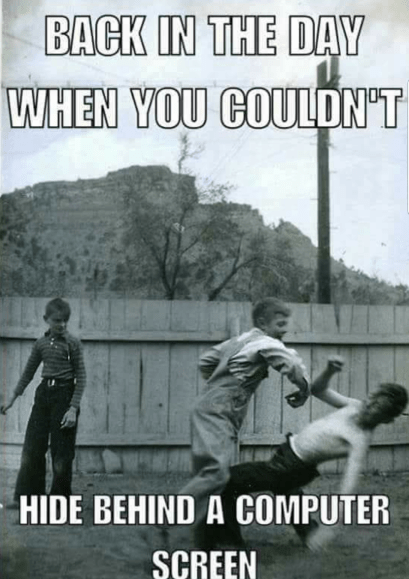
3. Action is the key for all success

We often hear that knowledge is power. But it only is power if you use it. Knowing how to do something and actually doing it are two completely different things. It doesn’t matter if ,for example, you read books and articles on fighting procrastination, and take no particular action to overcome that problem. Knowledge and intelligence are useless without action.

4. Even mistakes mean progress

If you look back in your life, maybe you will realize that the mistakes you have done in the past have taught you valuable lessons. So why should we be scared of making mistakes, if they help us grow stronger and wiser? Every mistake you make on the way to a particular goal brings you one step closer to achieving it. It is highly possible that the mistake you will regret the most in your life is not taking action because of the fear of making mistakes. This way you will always be wondering what could have happened, if you hadn’t been so scared. And most importantly- you wouldn’t have made any progress. So don’t be afraid of feeling uncertain about something- give it a try and see what happens.

5. Making decisions is impeded when there are too many options

We live in times when there are so many opportunities for us to choose from when it comes to determining our career and life paths. But when we have so many choices before us, we can often times get confused and indecisive. Business and marketing studies prove that when a consumer has more product choices, he’s predisposed to buy less. If you think about it, choosing one product out of three product choices feels much easier than choosing one out of three hundred. Most people will give up easily, if the buying decision process is tough.

6. Success doesn’t necessarily mean happiness

Many people believe that they can only be happy if they accomplish a particular goal. In my opinion, we can choose to be happy every day, no matter where on the path to our goals we are at the moment. “The monk who sold his Ferrari” by Robin Sharma is one of the most inspiring books I have ever read. One of the main ideas shared by the author is that you don’t have to wait to accomplish your dreams to be happy. The main character was one of the most successful layers in the country but even though he had everything he ever wanted, he wasn’t a happy person. The most important thing is to cherish every moment of every day and to be thankful for who you are and what you have now.

7. You can be the best at something even if you don’t like doing it

Some people say that in order to be good at doing something, you should love doing this thing. In my opinion, this isn’t necessarily true. If a person devotes their time and effort to learn a particular skill, they can become excellent at it. How they feel about the activity doesn’t determine their success in it.

8. What we see in others exists in us

When we have a problem with someone, this can actually help us learn more about ourselves. It can help us learn why we see that problem in the other person, and the reason can be that we hold it inside of us, too, and seeing it exposed before us can be frustrating. But acknowledging that what we see in others is a reflection of ourselves, can help us overcome our unsolved issues.

Hat tip to Intelligence.com

Can Men and Women Work Together, Happily Without Sexual Tension?

In a WSJ  article today entitled, “Men and Women at Work: Unhappy, But Productive“, I couldn’t help but recall some observations I’ve made over the years at multiple companies in many situations.  If you are the PC police, save your hostilities as most of this is common sense.

The article states this:

When women and men work together on teams, the results are good for business—but they don’t enjoy it much.

That, at least, is the experience of employees in one company, a large US professional services firm studied by economists at Massachusetts Institute of Technology and George Washington University.

Researchers looked at eight years of the firm’s revenue data and employee surveys, measuring satisfaction, cooperation, morale and attitudes toward diversity.  That included data from offices or teams that were entirely male or entirely female, along with data from teams that were more evenly mixed.

On surveys, individual employees reported higher levels of job satisfaction when they were on teams that were mainly staffed with people of their own gender. Those on more diverse teams reported lower levels of happiness, trust and cooperation–consider this Journal essay on what men don’t know about women at work  – although revenue figures showed they were more productive and better performing—by a lot.

“People are more comfortable around people who are like them,” says study co-author Sara Fisher Ellison, of MIT.

It may be that members of homogenous groups “socialize more and work less,” Ellison notes. Mixed groups may lack social capital, but varied perspectives and skills may help a unit perform better. The researchers posit that shifting an all-female or all-male team to a coed one would increase revenues by 41%.

Also, researchers found that workers seemed to appreciate the idea of a diverse workplace more than they liked diversity in practice. According to employee surveys, workers gave gender and racial diversity high marks for boosting morale, trust and employee satisfaction, but those who actually worked on diverse teams tended to report lower levels of those traits.

My take so far…..

This prompted some thoughts that many have made  about the differences between men and women.  It’s likely that women have kept men from wiping each other off the planet in the adult version of kill the man with the ball, or who wants to be king.  Conversely, men have killed each other over a woman (OK, women have killed over men also to a lesser degree) but that isn’t the same as competition in the workplace.

The sexes still are created differently.  Little boys can make a gun out of sticks and play war.  A majority of younger girls have a greater preference to play with dolls.  Not long after, more boys begin in sports, even if on the street level.  This activity encourages them to play your position as a team to win the game.  While an increasing number of girls are playing sports, those that do appear to decline in numbers when social engagements take priority.  It’s been observed that women enjoy shopping far more than men, but there is no winning the game in dolls or shopping.  There certainly are a great number of outstanding female athletes, but the trends and volume of numbers still appear to favor men.  Men on the other hand generally fail at these more social activities which women exceed at.  It manifests itself in social behavior later in life where women can tend to be far more social than men.

This has to do with corporate behavior.  Men get a rush out of hitting the walk off home run, catching or throwing the winning touchdown, scoring the winning goal or getting the biggest hit in the game.  Delivering the crushing hit isn’t as big of a priority to most women.  The workplace is a place of competition, even in a teamwork situation.  You work together to kill the competition for market share.  There traditionally has been a disproportionate number of women in the marketing and communications disciplines which by nature are more social.  While there is an increasing number of female executives, one still notices that the skill of hitting the walk off is a learned practice, not ingrained and salivated for by testosterone driven executives.

Having observed these early differences, the article goes on to state the following:

There is a “mismatch between the kind of workplace people think they would like and the actual workplace that makes them happier,” says Ellison, and that may suggest employers could do more to help workers embrace differing backgrounds and viewpoints.

The researchers only studied one firm, Ellison cautions, so the results don’t necessarily translate to other companies. Other studies have found similar results — a positive relationship between gender diversity and firm performance, and higher satisfaction and trust among groups composed of similar people. What’s unusual about this study is that the researchers found both effects in the same firm.

The paper, Diversity, Social Goods Provision, and Performance in the Firm, recently published in the Journal of Economics and Management Strategy,  is by Ellison and Wallace P. Mullin, an economist at George Washington University.

THE DIFFERENCES BETWEEN MEN AND WOMEN AROUND EACH OTHER

Men act differently with each other when women aren’t around as I’ve been assured that women also do.  We punch (physically or verbally), snap each other with towels and so forth.  Women tend to act more grown up around each other, except that they can be harder on each other, especially behind other women’s backs.  Men will hand your a$$ to you right to your face.

SEXUAL TENSION

There is another issue I’ve observed, sexual tension.  Both sexes are genetically encoded to reproduce.  This behavior requires some level of courtship ranging from drunken hookups to abstinence until marriage, but it exists.  When you put men and women together, generally something is going to go on.  I have yet to see an office where it hasn’t happened.  When you stick opposite sexes together, or worse on extended business trips, guess what goes down?  This almost always gets in the way in the form of nepotism while it’s going on, to retribution afterwords.  The army saying is don’t s–t in your own foxhole.

PUSHING IT TOO FAR

Why the PC police are forcing the military to make the sexes cooperate in tight spaces like a submarine where you are guaranteed deserted island behavior is beyond me.  The recent incident where men have filmed women in the shower on a sub is no surprise.  That is asking for something to happen.  You can only push the bubble so far before it breaks.  This is quarters that are just too close.  Someone is going to hop into the sack.

I also get diversity and have been through hours of training.  It’s the same boring training year after year on what you can and can’t do and how to act so that the company doesn’t get sued or blame you for the easy way out.  I’m for hiring the most talented and best candidate for a position rather than a quota based system.  It can result in distorted statistics that the racial and feminist overlords use against companies, but the idea is to create the optimal team be the most competitive and win.  Sometimes that creates teams of men and women, sometimes it’s dominated by more of one sex than the other.  When it’s time for battle though, you put your best team on the field, and that is determined by meritocracy.

So do men and women like working together?  For the most part to a person will say they do.  Behind the others backs or in the back of their mind, the differences are there and likely go unspoken or not thought of until the instinct to crush the opponent is instinctual or learned.  You can point the gun, but can you pull the trigger.

CRYING

I saw an article on LinkedIn about women crying more than men.  You can read the article here and draw your own conclusion, but it appears that there are clear differences between the two sexes emotionally.

And…..women tell me the difference between women and men is women have 2000 web pages open at once and work them all.  Men have one page open, but know every inch of it.

So in conclusion, no.

6th Grade History Provides Insight Into The Mind of 6th Graders

The following were answers provided by 6th graders during a history test. Watch the spelling! Some of the best humor is in the misspelling.


Ancient Egypt was inhabited by mummies and they all wrote in hydraulics. They lived in the Sarah Dessert. The climate of the Sarah is such that all the inhabitants have to live elsewhere.


Moses led the Hebrew slaves to the Red Sea where they made unleavened bread, which is bread made without any ingredients. Moses went up on Mount Cyanide to get the Ten Commandments. He died before he ever reached Canada.


Solomon had three hundred wives and seven hundred porcupines.


The Greeks were a highly sculptured people, and without them we wouldn’t have history. The Greeks also had myths. A myth is a female moth.


Socrates was a famous Greek teacher who went around giving people advice. They killed him. Socrates died from an overdose of wedlock. After his death, his career suffered a dramatic decline.


In the Olympic games, Greeks ran races, jumped, hurled biscuits, and threw the java.


Julius Caesar extinguished himself on the battlefields of Gaul. The Ides of March murdered him because they thought he was going to be made king. Dying, he gasped out: “Tee hee, Brutus.”


Joan of Arc was burnt to a steak and was canonized by Bernard Shaw.


Queen Elizabeth was the “Virgin Queen.” As a queen she was a success. When she exposed herself before her troops they all shouted “hurrah.”

It was an age of great inventions and discoveries. Gutenberg invented removable type and the Bible. Another important invention was the circulation of blood. Sir Walter Raleigh is a historical figure because he invented cigarettes and started smoking.


Sir Francis Drake circumcised the world with a 100-foot clipper.


The greatest writer of the Renaissance was William Shakespeare. He was born in the year 1564, supposedly on his birthday. He never made much money and is famous only because of his plays. He wrote tragedies, comedies, and hysterectomies, all in Islamic pentameter. Romeo and Juliet are an example of a heroic couple. Romeo’s last wish was to be laid by Juliet.


Writing at the same time as Shakespeare was Miguel Cervantes. He wrote Donkey Hote. The next great author was John Milton. Milton wrote paradise Lost. Then his wife died and he wrote Paradise Regained.


Delegates from the original 13 states formed the Contented Congress. Thomas Jefferson, a Virgin, and Benjamin Franklin were two singers of the Declaration of Independence. Franklin discovered electricity by rubbing two cats backward and declared, “A horse divided against itself cannot stand.” Franklin died in 1790 and is still dead.


Abraham Lincoln became America’s greatest Precedent. Lincoln’s mother died in infancy, and he was born in a log cabin which he built with his own hands. Abraham Lincoln freed the slaves by signing the Emasculation Proclamation. On the night of April 14, 1865, Lincoln went to the theater and got shot in his seat by one of the actors in a moving picture show. They believe the assinator was John Wilkes Booth, a supposingly insane actor. This ruined Booth’s career.


Johann Bach wrote a great many musical compositions and had a large number of children. In between he practiced on an old spinster which he kept up in his attic. Bach died from 1750 to the present. Bach was the most famous composer in the world and so was Handel. Handel was half German, half Italian, and half English. He was very large.


Beethoven wrote music even though he was deaf. He was so deaf he wrote loud music. He took long walks in the forest even when everyone was calling for him. Beethoven expired in 1827 and later died for this.


The nineteenth century was a time of a great many thoughts and inventions. People stopped reproducing by hand and started reproducing by machine. The invention of the steamboat caused a network of rivers to spring up. Cyrus McCormick invented the McCormick raper, which did the work of a hundred men. Louis Pasteur discovered a cure for rabbits. Charles Darwin was a naturalist who wrote the Organ of the Species. Madman Curie discovered the radio. Karl Marx became one of the Marx Brothers.

The Perks of Being Over 50


facepalmchimp

  1. Kidnappers are not very interested in you.
  2. In a hostage situation you are likely to be released first.
  3. No one expects you to run into a burning building.
  4. People call at 9 PM and ask, “Did I wake you?”
  5. People no longer view you as a hypochondriac.
  6. There is nothing left to learn the hard way.
  7. Things you buy now won’t wear out.
  8. You can eat dinner at 4 P.M.
  9. You can live without sex but not without glasses.
  10. You enjoy hearing about other peoples operations.
  11. You get into heated arguments about pension plans.
  12. You have a party and the neighbors don’t even realize it.
  13. You no longer think of speed limits as a challenge.
  14. You quit trying to hold your stomach in, no matter who walks into the room.
  15. You sing along with elevator music.
  16. Your eyes won’t get much worse.
  17. Your investment in health insurance is finally beginning to pay off.
  18. Your joints are more accurate meteorologists than the national weather service.
  19. Your secrets are safe with your friends because they can’t remember them either.
  20. Your supply of brain cells is finally down to manageable size.
  21. You can’t remember who sent you this list.

Gross and Icky Stuff You Still Will Read About Like Snot and Poop Color, and Do You Eat Boogers?

Why snot is green or yellow, or other color.  Click to read more.

Mucus is clear when you’re healthy and have no serious invaders. However, when bacteria or viruses attack, it will turn yellow or green due to the influx of iron-containing enzymes including myeloperoxidases, other oxidases and peroxidases. These enzymes are used by white blood cells, namely polymorphonuclear granulocytes, to help ingest and deactivate bacteria through an oxidative process. The combination of dead white blood cells, used up enzymes and eaten bacteria, all of which still contain a fair amount of iron, results in the green or yellow color.

Notably, the longer snot stays in your sinuses, the greener it will get.

Is eating boogers healthy for you? Click to read.

That said, while it may seem gross to those of us who’ve never tried (or don’t remember- nearly all children do this at one point or another), according to the sparse few studies that have been conducted on booger eaters, the vast number of people who eat their nasal mucus find it palatable, which probably isn’t a surprise to anyone as if they didn’t, they’d likely just stop. As SidneyTarachow in a 1966 report oncoprophagia (the compulsive eating bodily secretions) noted, “persons do eat nasal debris, and find it tasty, too!”

So to sum up, at least to date, there is no scientific proof that ingesting snot by passing it through your mouth is beneficial.  That said, it is plausible that the snot we do all ingest all the time is benefiting us in the way snot-eating proponents suggest.  It’s just that we don’t need to put it into our mouths to see the benefit, if such a benefit does exist as hypothesized.

In the end, though, as long as you’re careful, picking and eating is not generally going to hurt you, and many find it tasty… so, if that’s your thing, bon appétit!

Why is poop brown?  Click to read more.

Poop is brown due to bile from your gall bladder being metabolized by the bacteria in your intestines.  This results in a byproduct called stercobilin, which, in turn, makes poop look brown-ish.

Without this stercobilin, your poop would typically look grey-ish/white.  Because of this, a sure sign you are having problems with bile production, such as a blocked bile duct by a gall stone or something more serious like pancreatic cancer, is if you notice your poop is this white/grey-ish color.

In the end *pun intended*, brown poop is a pretty good sign you are a relatively healthy individual.  Some other common poop colors that generally aren’t a good sign of health are as follows:

  • If you notice your poop is red, this could be a sign of internal bleeding or could just mean you’ve recently eaten beets.  If the cause is bleeding and the bleeding is from your stomach or throat, however, your poop won’t be red, but rather black and will smell worse than that time you decided you should eat a box of Twinkies and a box of Cheesy Handi-Snacks all in one sitting.
  • Yellow poop means there is a lot of fat in your feces.  This is not a good sign.  Consider turning this into a positive by making poop candles with your fatty deposits. Yellow poop also has a very strong odor, which will give your poo-candles that little something extra.
  • Green poop is an indicator of some sort of bacterial infection or that you are a vegetarian and eat way too much leafy foods for your own good.  Seriously, try some bacon.  It’s delicious.

Bonus Facts:

  • When you see corn in your poop, this isn’t the whole kernel, though it may look like it.  What you are actually seeing is the outer yellow part, which is mostly cellulose and indigestible (fiber).  The inside of the kernel will have been digested as it is primarily starch.
  • Poop generally stinks because of the sulfur-rich organic compounds produced by bacteria, such as indole, skatole, and mercaptans.  Another contributing factor is an inorganic gas that is produced, hydrogen sulfide.
  • Poop of meat eaters smells worse than the poop of vegetarians.  You win this round, hippie.
  • Bird poop is white due to their kidney’s extracting nitrogenous wastes from their bloodstream and subsequently excreting it in the form of uric acid, which has a very low solubility in water and emerges as a white paste-like substance.
  • Animals such as dogs, rabbits, rodents, gorillas, etc often eat their poop to maintain proper health.  For animals such as rabbits who eat a lot of plants, their poop contains quite a bit of undigested plant matter; so eating their poop is a nice easy way to get more out of the food they eat.  For some animals, their poop can be very vitamin rich with the bacteria in their intestines producing vitamins they wouldn’t get otherwise.  For animals such as dogs, poop can be a good source of these vitamins and protein.  This is why dogs are so fond of cat poop; it is very high in protein.  Pro-tip, cut down on how much you need to clean your cat litter by allowing dogs and vegetarians access to it.  The dogs/vegetarians get a lot of protein (in the latter case something they are deprived of due to their hippie ways)  and you never have to clean poop from the liter; it’s win/win.
  • The word “poop” comes from the onomatopoeia poupen or popen, which originally meant “fart”.  “Poop” came into its current meaning around 1900.
  • You can tell an amazing amount of information about a person based on their poop.  Extraterrestrial enthusiasts theorize this is why when Aliens abduct humans they go straight to anal probing.
  • In South Asia and South-east Asia, it is common to find showers in the toilet room for cleansing one’s self after pooping.
  • With Islam, post-pooping requires a ritual cleansing.  One should enter the toilet room with the left foot first; ritually cleanse your butt-hole with water using your left hand; then step out of the toilet room with your right foot first.  As an aside, in many Muslim countries, toilet rooms are considered “Houses of Satan”.
  • In India, rather than use toilet paper, it is typical to simply use your left hand.
  • If you think that is bad, in Ancient Rome, a wet sponge on a stick was used.  That sounds all well and fine until you find out that that after being used, the sponge was placed back in a tub of salt water to await the next person to come along and wipe with it.  Suddenly the “left hand” method isn’t sounding so bad.
  • About 3/4 of an average piece of poop is made of water.  Of the remaining 1/4, about 1/3 of it is dead bacteria from your intestines; another 1/3 is fibrous matter; the remaining amount is made up of fats, phosphates, living bacteria, dead cells, mucus, protein, etc.

There of course are many links in these pages that lead to other gross stuff.  Enjoy.


70th Anniversary of #D-Day – Round Up of Coverage #DDAY

On the anniversary of one of the most historic battles and largest amphibious landing, here is a round up of coverage and events taking place.

I’ll be adding links throughout the day.  If you have a suggestion, please leave a comment and I’ll add it.


Remembrances of the men who were there

The War that had to be won to make D-Day a success

D-Day photo’s still haunting after the invasion

WSJ – D-Day Veterans Gather to remember

D-Day Memorial Anniversary Events

WWII Vets Travel To Normandy to Remember

BBC –  Staged Landing and Remembrances Event

D-Day Historic Battle Re-created

Videos of D-Day Anniversary

70th Anniversary Parade

The Darkroom, pictures and video’s of D-Day

Blackfive – The President’s Prayer, Eisenhower 

Blackfive – Courage beyond measure

France will never forget what it owes these soldiers

What does D-Day Stand for and other facts?

The eyes of the world were upon us on the longest day

One of the finest speeches ever delivered at Pointe-du-hoc

93 year old re-creates parachute jump over Normandy

89 year old veteran sneaks out of nursing home to attend ceremony

WSJ – The debt owed to the hero’s of D-Day

WSJ – The last of the D-Day veterans battle time to bear witness, moving from personal experience to history.

University of Texas at Austin 2014 Commencement Address – Admiral William H. McRaven

This is not only very inspiring, it is some of the best advice on the Interweb. For those in a good way, it will make you better, for those in a bad way it will show you how to begin to pick yourself up.  If you are young, it is a good lesson in how to live your life.

Navy SEAL Admiral Bill McRaven University Texas Austin Commencement Hook 'Em

AP Photo/The University of Texas at Austin, Marsha Miller

UT alum Adm. William H. McRaven gives students the “hook ’em horns” at the university’s commencement last week.


U.S. Navy admiral and University of Texas, Austin, alumnus William H. McRaven returned to his alma mater last week to give seniors 10 lessons from basic SEAL training when he spoke at the school’s commencement. 

McRaven, the commander of the U.S. Special Operations Command who organized the raid that killed Osama bin Laden, stressed the importance of making your bed every morning, taking on obstacles headfirst, and realizing that it’s OK to be a “sugar cookie.”

All of his lessons were supported by personal stories from McRaven’s many years as a Navy SEAL.

“While these lessons were learned during my time in the military, I can assure you that it matters not whether you ever served a day in uniform,” McRaven told students. “It matters not your gender, your ethnic or religious background, your orientation, or your social status.”


What Is The Best Way To Learn, Or Learn How To Learn?

Once again, a smattering from many on this subject, but I can vouch for many of these techniques.

The quickest way to learn anything is by Positive Transference of Learning.
Transfer of learningIt means transferring the skills you have learned in one field to something else.

Some obvious examples.

  • If you learn one instrument you can learn another easier than the first.
  • If you have learnt a new language it is easier to learn another quicker than the first.

But there are other aspects of it.

If you have learned to play the piano, you will be able to learn touch typing easier. This is because learning touch typing requires a rhythm and hand-and-eye motor skills.

If you have learnt to draw well you will generally be more observant.

You can use Venn diagrams to see what skills have in common.

Let’s imagine you want to learn three different subjects of:
Touch Typing
Piano
French

Also assume you were a beginner in each, and had only an hour a day to learn.

  • Typing and piano both require hand practice (the overlapping skill)
  • Touch Typing requires typing out words. You can choose to type out french words from french songs. So words are the common element.
  • Piano requires learning songs. You can choose to learn french songs..

You can now use your practice hour in the following way.

  1. Practice your typing for twenty minutes. This will get your hands warmed up, and increase your french vocabulary.
  2. Then practise the piano for twenty minutes. Try singing the french words to the songs you are learning.
  3. Now practice your french by learning new french songs.

This is only an indication of how skills can be transferred. We do it all the time in lesser ways, but it can be worked out systematically.

In my own case I once worked as a sailor.

I transferred that skill to helping run a diving boat. I was able to get free diving lessons for doing this.

Once I had learned to dive, I took up underwater photography. I now used my diving skills to get photos.

Once I got photos I sent them to magazines, so used my photo skills to get into journalism.

Once I got into journalism I wrote travel articles about diving.

I then expanded my journalistic skills to other subjects.

In most cases I simply learned enough to do the job required, so I was never particularly good at any of them, but good enough to achieve my purpose.

From an outside view I appeared to be a quick learner with many skills, whereas I was a normal learner with adequate skills applied in a systematic way.


  • Positive Attitude/Wishful Thinking
    : I simply make myself think that the subject matter is actually easier than it is (“other people can learn, so can I” attitude) and imagine myself actually know the topic well or the answers.  I know it sounds silly, but the reason to do so is to help you get rid of any anxieties or stress you may have about learning the subject.
  • 3 I’s approachIntroduce, Isolate (concept), Integrate (into current project or life).
    Integration or applying what you learn is really key to making what you learn stick. What you learn has to be valuable or you’ll forget it.
  • Mind-mapping: I try to mind-map everything I read/study. It’s a great way to take note and also see how the different concepts connect to each other.  It makes easier to retrieve/remember the information later.
  • Diagram/Pictures: Drawing things out on a whiteboard makes me see what I learn in different ways. Check out the Dan Roam books (back of a napkin and blah, blah, blah) on how to do it.
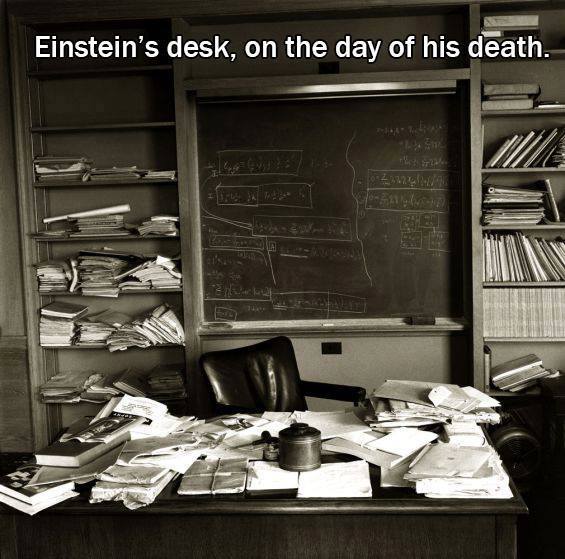
  • Deep understanding through 5 why’s:  That main concept or issue you have a difficulty in understanding – ask why 5x, and try to get the answer. If you go 5 levels deep, you’re more than like to really understand the subject matter.
Learning has two components…- The ability to create the correct neural pathway (Short-term memory)
– And the ability to fire the same neural pathway with the right associated pathway (Recall)

Repetition leads to synaptic conditioning – the brain is plastic, and it allows the neural pathway to fire at a faster pace than before. That’s why repetition over a long period of time creates an instantaneous recall – that’s why you can recite your ABCs and 123s.

Try reciting your ABCs in the opposite way, and you’ll have a bigger difficulty than doing it forward.

What’s important is that you must realize that memories aren’t intangible – they are, as a matter of fact, physically touchable. They are simply patterns of neurons in different ways – just like how you would join the dots on a dot puzzle in a specific manner.

There’s another way:

Psychologists call it conditioning and some call it anchoring – but associating a very powerful previous neural pattern to your new memory is almost always going to give a very powerful trigger.

For example, you see it demonstrated in “memory techniques”…

You know your 1, 2 and 3s. But let’s say you peg them to RHYME with a certain word…

1 = bun
2 = shoe
3 = tree
4 = door
5 = hive
6 = sticks
7 = heaven
8 = gate
9 = line
10 = hen

Once you’ve gone through it a few times, it should be nearly impossible for you to forget the rhymes. Since each word is linked to your already powerful neural construct of numbers, each of these words get triggered once you think of each number and the methodology of rhyming.

And this is called “priming”. One thought leads to another – almost certainly.

Think about it…

When you think of a “bun”, you don’t simply think of the word. The image of a bun inevitably floats out. The smell maybe. The associated memories with it floats up.

But it doesn’t end there. The image might lead to something else. The smell might lead to something else. It’s an endless chain.

It’s a train of thoughts.

That’s how the Journey method works too. This method works on journeys you go on everyday, like a walk back to your home from your workplace or school. Obviously, you will be able to know what’s on your journey back home as well as your ABCs. And linking your memories is a method the Greeks used in the past.

Same with the Room method.

If you notice, “memory techniques” are almost all based on connections. Because that’s how the brain works.

—-

I’m not just talking about memory here. It’s your whole approach to the brain. We’re leaping from thousands of thoughts per second to thousands of thoughts per next second. We’re only conscious of a few.

When you learn something, you immediately try to relate it to a past, strongly connected neural pathway (past memory).

Think about it. The first time you saw a four-legged animal, as a toddler, you might learn that it is a dog. But when you see a cat with four legs, you might understand that there are differences, but you might still call it a dog. When someone else corrects you, you build a new memory on that past memory that allows you to differentiate a cat and a dog.

We learn from contrast and connections. Imagine your brain to be extremely non-linear. It’s extremely random, and the only way to consciously organize it is to create non-entropic “tree branches”.

A similar technique known as the “Mind-map” is based off this. You can Google it.

—-

Now that the background information is out-of-the-way, let’s talk about learning new stuff.

New stuff = Creating contrast from old memories

That’s it. And to do that, you need to ensure that the old memory that you’re “piggy-backing” off is strongly connected.

For example, for a pro tennis player, practice has allowed him/her to do a strong volley stroke on a tennis ball as proficiently as he can spell out his ABCs. That’s the meaning of a strong connection. (Again: The more you repeat it, the more conditioned the synapses.)

—–

To learn something, you need to understand that the people who created these ideas also have had “past memories”. The timeline looks something like this…

Basic Info… -> Background Info… -> “Your new information”

It’s kind of what I’ve done above. I’ve lined out the background information so you can somewhat better understand my post here.

What you do… is you go way back to that person’s basics. Then you go to the background information. Then you go to your new information and soak it up like a sponge.

It’s kind of like a dartboard. You start from the outside (the easier foundation thoughts)… and slowly move in and zone in (your new concept).

It’s kind of an upside-down approach to the “WHY? WHY? WHY?” approach that a lot of people are advocating. It works, and it’s still going from the basic info -> new information.

—-

To go a step even higher, you start to apply it on a lateral perspective.

You go sideways.

For example, there are tons of theories that can be applied to thousands of other seemingly unrelated scenarios.

Think of examples of the concept happening.

For example, the chaos theory says that the smallest things can create a huge difference in the results.

Classic example: Butterfly flaps its wings, creates a tornado in another part of the world.

You research: Tiny molecule contacts body cell, triggers over hundreds and thousands of chain reactions.

Or: 1 gene mutation creates a huge radical change in a body, leading to early death.

And if you actually go deeper, you’ll see that it correlates to other fields like economics… physics… chemistry… mathematics… sociology… anthropology…. literature…..

Well yeah.

The gist was “Connections using old connections”. But I hope the exemplification helped.

No trick or gimmick will transform you into a ‘fast learner.’ When I started at university, I was struck by how quickly top students were able to understand and apply new concepts. Now, I understand that fast learning is an illusion – these students had encountered similar concepts in the past, and were modifying and combining old ideas to figure out new ones. They were always looking to learn new things, draw new connections, and develop their intuitions.One answer cites Scott Young, a blogger who ‘completed’ four years of MIT coursework in one year, as an example of a fast learner. But did the blogger really learn? On closer inspection, you’ll find that he wasn’t even able to tell that several of his solutions were incorrect! (see his solution to 6.042 problem 4a – his example graphs are not even isomorphic).

My advice is to not worry about time, learn something, and learn it well. Build your intuition – ask questions like, “Does this make sense?” “How does this fit in with everything I already know?” Make this a habit, and one day I guarantee someone will take you as a fast learner.

Mark HarrisonRunning technology at FundingKnight (British Peer to Business – P2B – lending) 

1: Put it into practice – do some worked examples. mind map the application of it to something you’re currently doing,  You can’t learn golf from a book, you need to swing a club at a ball. You can’t learn Ruby on Rails from a book – you need to put together a site.2: Find someone who knows how, and has a reputation for being good at explaining things. Ask them to explain something. Buy them lunch if needed.  If you don’t understand something, ask them to repeat it. If you don’t understand it then, ask them to explain it a different way. If they can’t, or they won’t, or you still don’t understand, find someone else to explain it.

3: Find someone else who is keen to learn about the same subject, and arrange to get together with them regularly (online or in meatspace), to run through how things are going.

4: Each month, go and buy a magazine in a category you’ve never bought before. I don’t care what – Interior Design, Fishing, Cooking, Sports Cars, anything really. Read it – you may pick up a ‘pattern’ that resonates with something else, elsewhere, and much of learning is about patterns. (Even if you don’t, you’ll learn something, so the day won’t be a waste.)

5: If you are in a meeting situation (class, business, club, whatever), don’t be afraid to put up your hand and say ‘Sorry, can you just explain why…’ a bit more. Stupid people will think you are stupid. Intelligent people will admire you. This helps discover who the people to start networking with are.

6: Accept that mastery takes time and practice…. and isn’t a constant upwards curve. Learn to love the plateaus.

7: If you are having trouble getting something, write it out, longhand (not on a computer) on a pad of paper, just before you are going to bed. (Ideally, wait until you are in bed, do it, then close your eyes and go to sleep). You don’t actually need the conscious mind to be involved to internalize a lot of things.

Robert FrostProfessional instructional systems designer and author of a training course and manual on the learning process 
The key to quicker learning is to understand how learning happens and then taking advantage of that process.If we study how neurons work in our brains, we can reach two conclusions:

  1. Learning occurs because of repetition
  2. Learners must connect new knowledge to previous knowledge in order to learn

The first one is pretty straightforward.  Repeatedly think about something and the neurons related to that something will grow dendrites and make associations with other neurons, making it easier for us to remember and recall that something, when needed.  We all know how to learn or memorize by repetition.

The second is the more complicated one.  Our brains store information by context and association based on existing mental models (AKA schema).  If we want to learn new information successfully we need to either find an existing mental model that will associate with the new information or we need to build a new mental model in which the new information will fit.

The quick learner determines the analogous existing mental model or realizes when they don’t have an existing acceptable mental model and they back-off and build a new mental model before trying to absorb the concept that is new.  Building new mental models can be done by outlining or mind-mapping.  Start with the central new concept and branch off to the key features of that concept.  Keep branching off until you reach a point where you have existing knowledge that can connect to the new knowledge.

Here is a crude example.  Let’s assume we wanted to learn how to play chess:

By making the association between the shape of the Bishop piece and a picture of a bishop’s hat we will have a neural association that will make it easy for us to recognize which piece is the Bishop.

Using images wherever practical is a benefit, because our brains are better at remembering images than words.

Much more on this subject is found at this link.

#24, #LiveAnotherDay and Why the Story Writing Matters

After eight seasons, 24 ended…or so we thought.  Maybe it was the cult following, perhaps it was the ad revenue potential, more than likely it was a lack of good copycat shows but most of all it was the quality of the script, storyline, premise and character interaction that made it come back.

Most “sequels”, movie adaptations of TV shows and re-creations of TV successes (especially in the 60’s and 70’s before reality TV) are rarely successful and/or entertaining.  Further,  Hollywood’s meddling based on their belief that they knew what the masses want rather than what the audience desires has delivered mindless drivel and repeat stories that were mostly re-hashing a previously successful (or profitable) series (namely 24).

On Monday the 5th, Fox is bringing back counter terrorist bad boy Jack Bauer and 24 for twelve episodes in Live Another Day.  Let me disclose that this genre is one if not my favorite to watch.  That being said, there have been many opportunities to watch knock offs, but they haven’t captured the essence of 24.  I attribute this to the writing, screenplay, conflict, reaching out to grip the audience’s emotional involvement and reality of what this show represents.  Specifically it is good vs. evil, but is complicated by the personal strife and loss and moral decisions suffered by the lead character in his quest.

The storyline is to save the day in 24 hours, a simple premise.  Numerous roadblocks get in the way many caused by the protagonist’s employer, not to mention having to decide which is the right path given limited information which must be sifted and decided on by experience and gut instinct.  Jack does his job to protect the world despite whatever collateral damage happens to anyone near him

Where the writers excel though is in the interaction between characters.  They frequently must choose to either go with Jack or against him based on orders they obey or disobey.  This incriminates them legally or emotionally and inhibits their ability to help the cause of dealing with the bad guys.

Some may have issues with the violence or the all to realistic depictions of interrogation.  From a micro point of view it can be intimidating, but from the macro level and overall storyline perspective it is as much a part of the story as any character would be.  It peels back the layers of a person who will go to any length to protect the greater public, or a specific person (usually a politician of high ranking) which revels in right vs. wrong decisions.  Jack has a crappy day and has to live through it.


It is a classical example of Ironist writing.  The last act climax is both positive and negative.  Jack always saves the day, yet he loses his family, relationships, job and other personal parts of his life.

Is Jack there to save or assassinate the president? That is what we will be led to be confused by when it starts.  Nevertheless, he is willing to risk his life and freedom to avert yet another global disaster.

So hats off to Evan Katz and Manny Coto who wrote and produced it.  Also Howard Gordon is the lead writer who worked on many other episodes and I admire his work.

Besides enjoying the good vs. evil in this years story, I will be closely watching how the writers build the tension, connect to the audience and develop the story to the last act climax.


Stupid Things Smart People Do

Once again, here is a smattering of what the internet says.  I observed some of this behavior at the IT companies I worked for.  Many of them were brilliant on the IQ scale, but couldn’t find their way out of the social (real not web) wet paper bag.
I found most of this on the internet.  If you don’t agree, try arguing with the internet.  BTW, that is one of the stupid things smart people do.
Enjoy.
free nobel peace prize
Stupid Stuff smart people do:
Fail to recognize their own cognitive bias
Fail to recognize the cognitive bias in those whom they care about.
Underestimate theal gore Horses-Ass-Awardir own stupidity.
Overestimate the stupidity of others.
Fail to understand Psychological projection

Getting into an argument on the internet.
Believe in global warming.
Believe what’s written on Quora.
Believe that socialism works.
Get frustrated and give up too easily when something doesn’t come naturally to them.

Related to this perhaps is not learning to lose gracefully.

And care more about being perceived as smart rather than doubling down and becoming smarter through failure.

They value intelligence over kindness.

Assuming other people think the same way about things as themselves. Also, assuming people act according to rational cost/benefit analysis of outcomes instead of according to their “gut”, habits or emotions.Also, conflating education (college degrees) for intelligence. This can lead them to pay too much attention to people with the right Ivy League credentials and not realize that it is often people who are “working in the trenches” who know more about what is going on.

They don’t spend enough time wondering “what are some smart things that stupid people do?”Underestimating people is a dangerous habit.
  1. Not reading the instructions.
  2. Never learning the value of practice.
  3. Underestimating the value of experience.
  4. Not learning how to study — really study — so they are unprepared when study is the only thing that will save them.
  5. Procrastinate

A study of successful con-men will show that they choose smart people to con.This is because smart people think they are smart in all things as against just their area of expertise.Smart people are commonly successful from a young age so do not have to experience the problems of  surviving on a daily basis. They are not forced to work for people they don’t like or do jobs they hate.They do not have to live without hope, or accept insults and attitudes of others who denigrate them.In all, they become divorced from the realities of life. They mix with others of their kind, and this reinforces their belief that they are smarter than those of lower social rank.They indulge in conspicuous consumption to keep up with their peers. They develop a lifestyle that assumes they will always have the means to live that way.They are easily conned because con-men flatter them on how  smart they are.

The smart people who end up in jail are rarely short of money, they do what they do because they think they can outsmart others.

How we love to see pride come before a fall.

They are the fodder of movie makers and writers.

Wow, there are so many.  Here are but a few of my favorite stupid things smart people tend to do:

  • Ignoring the importance of design and style – When the iPod originally came out, technical people complained about its lack of features and perceived high price (“ooh, who cares about another MP3 player, I can go buy one at Best Buy for $50” http://forums.macrumors.com/show…).  In the meantime, it was so cool and easy to use that normal people went out in droves to buy it.
  • Using terrible tools, and taking pride in their awfulness – Especially common with programmers, who take pride in using programming languages and text editors that have been designed by programmers, not updated since the 1970s, and never touched by anyone with a modicum of design sense. They believe that mastering arcane, overcomplicated commands and processes are a mark of pride, rather than a waste of time.  I will refrain from singling out specific programming languages and tools here, because smart people also like to get caught up in pointless flame wars about this sort of thing.
  • Following the pack – Many smart people often seem to be followers, probably because they grow up spending so much time pleasing others via academic and extracurricular achievement that they never figure out what they really like to work on or try anything unique.  Smart people from top schools tend to flock into the same few elite fields, as they try to keep on achieving what other people think they should achieve, rather than figuring out whatever it is they intrinsically want to do.
  • Failing to develop social skills – Some smart people focus exclusively on their narrow area of interest and never realize that everything important in life is accomplished through other people.  They never try to improve their social skills, learn to network, or self promote, and often denigrate people who excel in these areas. If you are already a good engineer you are going to get 10x the return on time spent improving how you relate to other people compared to learning the next cool tool.
  • Focusing on being right above all else – Many smart people act as if being right trumps all else, and go around bluntly letting people know when they are wrong, as if this will somehow endear others to them.  They also believe that they can change other people’s minds through argument and facts, ignoring how emotional and irrational people actually are when it comes to making decisions or adopting beliefs.
  • Letting success in one area lead to overconfidence in others – Smart people sometimes think that just because they are expert in their field, they are automatically qualified in areas about which they know nothing.  For instance, doctors have a reputation as being bad investors: http://medicaleconomics.modernme….
  • Underrating effort and practice – For smart people, many things come easily without much effort.  They’re constantly praised for “being smart” whenever they do anything well.  The danger is that they become so reliant on feeling smart and having people praise them, that they avoid doing anything that they’re not immediately great at.  They start to believe that if you’re not good at something from the beginning, you’re destined to always be terrible at it, and the thing isn’t worth doing.  These smart people fail to further develop their natural talents and eventually fall behind others who, while less initially talented, weren’t as invested in “being smart” and instead spent more time practicing.  http://nymag.com/news/features/2…
  • Engaging in zero sum competitions with other smart people – Many smart people tend to flock to fields which are already saturated with other smart people.  Only a limited number of people can become a top investment banker, law partner, Fortune 500 CEO, humanities professor, or Jeopardy champion.  Yet smart people let themselves be funneled into these fields and relentlessly compete with each other for limited slots.  They all but ignore other areas where they could be successful, and that are less overrun by super-smart people.   Instead of thinking outside the box, smart people often think well within a box, a very competitive box that has been set up by other people and institutions to further someone else’s interests at the expense of the smart person.
  • Excessively focusing on comparing their achievements with others – Smart people who have been raised in a typical achievement-focused family or school can get anxious about achievement to the point of ridiculousness.  This leads to people earnestly asking questions like: Success: If I haven’t succeeded in my mid 20s, could I be successful in the rest of my life? and Are you a failure if you are not a billionaire by age 30? What about 40?
  • Ignoring diminishing returns on information – Smart people are often voracious readers and can absorb huge quantities of information on any subject.  They get caught up in reading every last bit of information on subjects that interest them, like investing, lifehacking, or tech specs of products they’re planning on buying.   While some information is useful in making a decision, poring through the vast amount of information available online can be a waste of time.  They end up spending a lot of time gathering information without taking action.
  • Elitism – Smart people often use smartness as measure of the entire worth of a person.  They fail to see the value in or even relate with people who are different.  This is illustrated by the Yale professor who doesn’t have the slightest idea what to say to his plumber: http://www.theamericanscholar.or….  And questions like Am I an elitist to think that most people are stupid?
  • Try to click on the red links above
They become arrogant. They forget they aren’t really the smartest person in the world and flaunt their intelligence to others to the point where it’s annoying and it loses them friends and can hurt a lot of people.On the flip-side smart people can also sacrifice their smarts to fit in by trying to appear dumber than they really are to please others, talking about low-intellect topics which require no thought.Others over-estimate how clever they really are and use what they think is an almighty amount of smarts to pick on others, leaving themselves open to huge critiquing and losing a lot of potential friends.Some even think they’re smarter than they really are when it comes down doing certain tasks which would be much simpler had they taken the time to develop a proper approach to whatever they are doing.
Focusing on thinking to the detriment of doing.Smart people love to think.  It comes naturally to them, and they’re good at it.  But thinking only takes you so far, especially when you’re trying to make an impact on the world.  At some point, you have to do.Because thinking comes so easily to smart people, doing becomes relatively* harder. Research and planning are great in moderation, but can offer the dangerous illusion of progress. In the end, the only way to make a difference is to do something.  Start now.* Note that I say relatively–doing is generally easier for smart people than stupid people.  But thinking is so much easier that smart people tend to fall back on where they have the greatest comparative advantage.

Here is the opening ofSlavojZizek’s magnum opus, Less than Nothing. He is a self-described idiot, imbecile, and neurotic. Others call him the most important philosopher alive:

There are two opposed types of stupidity. The first is the (occasionally) hyper-intelligent subject who just doesn’t “get it,” who understands a situation logically, but simply misses its hidden contextual rules. For example, when I first visited New York, a waiter at a café asked me: “How was your day?” Mistaking the phrase for a genuine question, I answered him truthfully (“ I am dead tired, jet-lagged, stressed out …”), and he looked at me as if I were a complete idiot … and he was right: this kind of stupidity is precisely that of an idiot. Alan Turing was an exemplary idiot: a man of extraordinary intelligence, but a proto-psychotic unable to process implicit contextual rules. In literature, one cannot avoid recalling Jaroslav Hašek’s good soldier Švejk, who, when he saw soldiers shooting from their trenches at the enemy soldiers, ran into no-man’s land and started to shout: “Stop shooting, there are people on the other side!” The arch-model of this idiocy is, however, the naïve child from Andersen’s tale who publicly exclaims that the emperor is naked— thereby missing the point that, as Alphonse Allais put it, we are all naked beneath our clothes.

When You Are A Lame Duck, You Are A Delusion of Adequacy

I originally named this blog Delusions of Adequacy after a political campaign that described themselves as not having delusions of grandeur.  I have decided (for now) to write about people, places and things that are delusional as a category.  I borrowed the idea from F1Rejects, although my writings will not be about rejects, just those who don’t realize that they fall short in others eyes.

So when do you have only delusions of adequacy?

LAME DUCKS

I read this story in the WSJ about those who were retiring/resigning and were they lame ducks.  Having witnessed it throughout my career in business and socially on a constant basis, I realized that the minute you have announced your intention to move on the perception of reality is that you are a lame duck.  Additionally, when you are not effective in others eyes, again you are a lame duck or just perhaps lame.

The article states:
despicable me photo: Despicable Me despicable-me-header.jpg

Steve Ballmer above.

Steve Ballmer tried hard to show he was no lame duck after announcing last summer that he would step down as Microsoft Corp.’s MSFT -0.59% chief executive within a year.

“If you are a lame duck, your company is not moving forward,” he said in a March 17 interview. “You don’t want to get into an inaction period.”

Amid a spate of executive departures announced many months in advance, top bosses at big companies are figuring out how to stay in charge during their long goodbyes. These lengthy lead times give boards extra time to find replacements, but they also create uncertainty within a company as workers wonder who is actually in charge and would-be successors publicly jockey for attention.

Regardless of what he says, people are sucking up to the new leader and don’t care nearly as much about Steve the minute he said he’s leaving.  Folks I know at Microsoft couldn’t wait for him to go, not to mention a good portion of the tech industry.

NOT EVEN THE PRESIDENT IS EXEMPT

Except for the liberal portion of the Democrat party, people are backing away from Obama. Those running for election, most notably Kay Hagen and Hillary Clinton who can’t get far enough away from him to get elected.

As far as getting any legislation he wants passed, the opposition controls only 1/2 of 1/3rd of the power yet he can’t get anything accomplished since his re-election.  Most presidents are lame ducks only after an election that he doesn’t win or can’t run for, but he was labeled a lame duck almost as soon as the 2012 election was complete.

Leaders around the world, most notably Iran President Rohani and Vladimir Putin aren’t showing any respect with nuclear proliferation and the Crimea respectively.  Even smaller countries like Belgium are making fun of him.  Putin has a 35 point advantage in approval and he is a criminal.

Remember the red line in Syria?  He refused to back it up.  Now leaders and terrorist factions know he is all talk.  That is an example of lame duck actions.  It also could be interpreted as all talk no action, but that is a road I don’t want to go down in this post.  Let the reader decide for themselves.

CONCLUSION

As stated by many, perception is reality.  When there is any doubt that you are a lame duck, you are.  It undermines your ability to lead and be respected.  Sometimes you announce that you are leaving, sometimes it happens because you are ineffective.  Either way, it is real.

What is it Like to Have a Photographic Memory?

Below are the discussions of people who have a photographic memory including both pros and cons.  I’ve met some (none below) in my life. They were great at taking tests and can be valuable in some situations, like people with a high IQ they have weaknesses in other situations (when they rely on the memory only and it requires input from multiple sources to navigate a situation (many times social) successfully.  Common sense is underrated sometimes as is street smarts.  Nevertheless, it is a unique gift that is quite handy.  Attribution is at the end.
Well if you’re anything like me you won’t be aware that you have it until others repeatedly point it out and you have an aha moment that it maybe true. Up until a psychiatrist recently documented it on paper I thought it was just a personality quirk. LolI’ve spent the majority of my life trying to both unconsciously and consciously block this ability so I’m not certain how far it extends for me today. However from my experience I can still remember when my parents got remarried in a roman style basilica looking church to the last detail. I can recall its stain glassed windows and the figures etched across them, the echo that bounced off its wall, the color and style of my mother’s long flowing dress, and the types of flowers she put in my hair when I sat on her lap. I was 4 years old at the time.

I can put a face to every teacher, friend, bf, acquaintance, and stranger Ive met along the way in every country and every city beginning the age of 5. I can also still recall names, dates, and lifelong back stories if I was paying attention and often times even when I wasn’t.

I never forget something people tell me directly including the words you use and the order by which they use them. If you use a different word to relate to the same meaning I’ll note the disparity in my head.

I can remember all major highways, streets, and directions in any given country and any given city for an extension of I would say of about 65 miles within a week if I was the one driving. If I go back there 10 years later I can still recall it. E.V.E.R.Y.  L.A.S.T  D.E.T.A.I.L

I can remember anything by touch, sound, taste, smell and feel better than I can if you tell me something more specific like your name. But I’ll remember the name by a trigger of one of the other senses. The senses thing will trigger any memory at any given time for me – a scent of a perfume, a sound of an airplane, the touch of a material.

If I read a textbook or do something for work or if I look at the actual page which I try not to most of the time I’ll remember enough that when I go to sleep at night I’ll dream of the page and read it in my sleep and even turn the pages as I’m dreaming… Which is a little creepy. I’m not going to lie. Lol

I’ve never studied. Partially because I’m ADD and partially because I knew I never had to.

But for all the reasons this can sound exciting and useful at times it is as much of a burden, responsibility, and even tormenting if you don’t train yourself to block out as much of it as you can. I can recall every bad thing I’ve ever done, every moment someone has hurt me, every memory I’ve hurt someone else. You’re burdened with the responsibility that not only do people realize you remember these things but more importantly that you also understand them. It’s the understanding that will drive you up a wall. I can connect things where most others can’t and can experience things others never will forcing you into a reality few can live by and most will never see.

Painful. I remember every detail of every second of every day perfectly. I can tell you the license plate number, make, and model of every car I have ever driven behind.
There are some pretty amazing benefits, I store an amazing amount of information, I can remember every book I have ever read, and I have read thousands.
I remember every person I have ever seen, I walk through a crowded mall, and remember people that I have only glimpsed once before. I remember every conversation I have ever had. When I say in perfect detail, I do not exaggerate. I do not remember, I relive. To me memories are as real as current time, it’s hard to differentiate real life from memories. This is because I remember every feeling, smell, taste, sound, everything I see, every thought I have. Time really has no meaning I can never really tell what is real unless I experience something really truly new, something I don’t have a memory for.
I don’t have to study, never have. I read a textbook, and I never forget it. I spend my time instead constantly searching for new information, new experiences. I almost hunger for knowledge.But what people don’t understand Is that unlike their memories, my memory doesn’t put any more weight on one memory than another. Most people only remember what their brain deems is important. I remember everything. Driving to school everyday is considered as important as my most treasured memories. My brain doesn’t stress anything. To find a memory, I have to look through a lifetime of memories. Memories that include reliving memories. I remember remembering. Needless to say this makes thinking confusing.
Another thing is I don’t dream. I’m incapable of dreaming, instead all night I replay my memories from the previous day. It should go without saying that I’m an insomniac.
I’ve never met anyone else who shares my memory type, and frankly it’s lonely. I feel like I am nothing like those who surround me and even in a crowded room I feel painfully alone. I am trapped in a world of memory, alone, and questioning what is real.
Sure there are some great benefits, but living with it has been a constant battle.


Juliette Creech, Currently writing my thesis to complete my MA in Counseling Psychology

I have a semi-photographic memory in that I can remember the content of most anything I’ve read and sometimes visually remember where the information is on the page or how far into the book/article it is.  I don’t generally remember the names of the author or possibly the article/book but can usually find it with the specific information I do remember.  I have almost no autobiographical/experiential memory ability and that usually feels like an unfair price to pay :-)What is it like?  It’s complicated.

There are certainly positive ramifications:

  • In college; I’ve never had to study as long as I took notes during lectures and I didn’t have to buy textbooks unless they were going to be used for independent reading and/or were interesting enough for me to want to buy them. I usually get 100% or thereabout on any test and if I miss any questions its usually because I missed a class or got lazy and didn’t take notes one day. I don’t experience any test anxiety because I know I will get an A. I can answer most people’s questions with some degree of certainty and back up my response with a reference to the research or source of my answer. I can write research papers more quickly than most people because I have the info in my head and know which references I need to collect in order to cite/back up my ideas. Professors tend to enjoy me as a student because I am knowledgeable about the topics and can participate in well-informed and interesting conversations about their work/research. I easily generate original ideas for projects and papers because I can remember and connect information from different fields and studies related to the topic.
  • In regular life; I don’t get lost (photographic navigational memory). I can provide accurate information to friends and family about topics ranging from legal problems, medical problems, psychological problems, investments, business, parenting, nutrition, politics, fashion, etiquette, art, crafts, and anything else I’ve been interested enough to research (I research for fun and relaxation). I know how to fix things. I’m useful to have around and this helps me socially. I can generally come up with a relevant and amusing quote or anecdote from history or current events to amuse people with, I rock at karaoke, and no one can beat me at word games (except my brother whose strategy skills blow me out of the water during scrabble).

It’s not all good though, on a personal and emotional level its quite costly.

  • In college; I feel guilty about getting As on tests I didn’t study for when really hard workers struggle to pass. I feel guilty about ruining the curve in classes that have one (and sometimes negotiate with the teacher to be removed from the curve equation, even if it might lower my scores). I hate working in groups because I end up doing more work when I have to not only carry more of the burden but also figure out how to make sure everyone looks like they’ve done an equal amount of work on the project. I hate working in groups because it takes me more time to complete projects when I generally have to spend a fair amount of time providing my group-mates with the information I have that they don’t. I am popular as a group member (particularly with average and below average peers) because working with me pretty much guarantees an A on the project– this is a disadvantage to me because I’d rather work alone but am afraid of hurting others’ feelings if I refuse to work with them.  I am unpopular as a group member with better students (usually those who actually work hard to earn their grades) because I choose unconventional projects and make them very anxious with my disorganization and procrastination.I have TERRIBLE study skills because I’ve never had to develop them and I fear it will one day bite me in the ass. I am a crazy perfectionist because I know what I am capable of and will punish myself severely for failing to get an A on a test or project. I find it hard to make friends because many people dislike me since I have an “unfair” advantage and don’t have to work to get the grades they struggle to approach. I find it hard to make friends because many people who like me in spite of my “unfair” advantage find it difficult to relate to me on a personal level and seem to feel like I have super-powers or am otherwise alien. I find it hard to make friends because I don’t fit in with most other people and they find it hard to comprehend that I research for fun and would rather spend a Friday night intensely discussing potential solutions to unsolvable problems than going out to drink and socialize with random people.

    Some professors dislike me because I ask questions that they don’t have the answers to or related to research on the topic that they haven’t yet read. Some professors dislike me because they feel like I am “too big for my britches,” and I often feel guilty for asking questions during class (so many questions) that are related to the topic but beyond the scope of what is being presented and often beyond the ability of others to understand when they haven’t accumulated as much information as I have about the subject.

  • At work:  I get bored easily because I have an insatiable drive for new information and most jobs are repetitive. I piss off my managers because they often feel like I’m making them “look dumb” and I don’t know how to keep my mouth shut if I have pertinent information. I piss off my managers because my coworkers often come to me for information and assistance instead of them. I have trouble working in groups because I usually have too much more information and I can easily dominate the discussion or make people feel like I’m being pushy. I have trouble working with other people because I often have more knowledge about any given topic we’re working on and its not actually a good thing to “always be right” about things because you can’t not remember what you remember.  I have trouble making friends at work because many peers find me odd, difficult to understand, and/or feel like I threaten their chances of advancing as much as they’d like.I have a lot of trouble even deciding on a career path because I am “really good at” (and really educated about) too many subjects and in order to choose one path I would have to give up my dreams and passion for the other paths I’m not taking. At 38 I haven’t yet been able to establish a track record or formal evidence of expertise in any particular field because my memory (and number of topics I’m passionate about) makes me have high aptitude for too many things and prevents me from being able to focus on one thing long enough to make tangible progress.  Worst of all, I have difficulty following through on projects because my memory is such that thinking through the problem (and figuring it out) seems like having done it completely and I then find it hard to muster motivation to take the time to finish it in real life.
  • The personal costs are what I hate the most: I have trouble in relationships because I’m “always right” when it comes to facts & information that I’ve accumulated knowledge about (non experiential) and have not yet figured out how to let other people “be right” without compromising my intellectual principles and/or unfairly hoarding information I could have shared. I have trouble finding people who connect with me intellectually because while many people are as or more informed than me in their particular domain of interest it seems impossible to find others who are equally informed in a wide range of domains of knowledge. I have trouble connecting with others because I often end up feeling guilty or becoming aware of the frightening potential of manipulating or unduly influencing others when they unquestioningly accept my input as fact due to my wealth of information about everything that I am compelled to learn about– It’s frightening to feel responsible for being infallible when you know you actually are not.I am disorganized because everything I experience internally or externally triggers a memory and demands that I contemplate the connection /relationship and I am rendered effectively incapable of reliably noticing the organization/cleanliness of my home or office. I lose track of time and days because I am distracted by associative memories triggered by anything; I forget to pay my bills & cannot properly manage money because I am usually stuck in my head and lose track of time or lose the bills in the clutter I’m failing to notice. Other problems associated with being constantly reminded of something that is potentially related to whatever: I can’t keep a schedule, I forget to eat, I forget to shower (or that I forgot to eat or shower), I forget important dates like birthdays and anniversaries,  I often have insomnia, I lose everything (If I were a man I’d be very grateful not to have a detachable penis), and I am always anxious that I’ve forgotten some important deadline or other task I usually forget.

    I can’t remember experiences like my 21st birthday, special times with my daughter (I think its a trade off for my other kind of memory ability), my first kiss or the first time I had sex, friends and lovers I have fallen out of contact with (I somehow completely forget many people which makes me sad), or most any personal accomplishment that would probably look really good on my resume.

    I feel really guilty about not being grateful for my “gifts.”  I feel really guilty for not using my ability as much as I could or should have.  From childhood, people have told me that I am responsible for using my gifts to improve the world, I don’t feel I have honored that responsibility and so feel guilty for letting “the world” down (irrational, I know).  I fear I am arrogant; I fear that others think I’m arrogant.  I struggle to achieve greater humility but have little success on that count.  I sometimes worry that I’m a “bad person” because I have failed to use my abilities or live up to the potential this memory gives me.

    The single worst thing for me, though, is that I feel like I’m not quite human.  I don’t have many experiences others have, have not developed skills that others have developed because they require repetition or other tools to remember information, and I have many experiences that others do not have due to the differences in how my brain works. If I could feel like I “belong” somewhere or that I am really “connected” to another human being then I might feel like all the other negatives are worth it for the benefits I experience.

I don’t know if this actually answers “what it is like” to have this type of memory because it seems more like I’m simply listing the effects it has on my life.  However, I don’t know what its like to NOT have this memory of mine and since this type of question requires a comparison between the two experiences… I think the question could only REALLY be answered by someone who has both had and not had this type of memory ability.


On the one hand :

I can remember nearly everything I’ve ever read, sometimes even how it is layed out on the page. Many of my answers are straight from my head as I remember my studies especially well. With my obsessive topics of interest (yay autism) I can remember EVERYTHING.

I can remember many conversations (except over the phone) verbatim for years, movies and song lyrics also stick.

If I hear a song on the radio I can recall the day of the week, the weather, and the location of where I was when it last played. I can “replay” or visualize past occurrences…
I can visualize maps in my head.

On the other hand:

I have face blindness. If I see a person out of context (like my sons speech therapist at the grocery store) I do not recognize them.

Under stress I cannot recall simple familiar information- like my address, pin number, children’s birth dates, and aquaintances/people I do not see every day names – I’m very bad at names

I cannot memorize formulas, dates, or anything with numbers.

Even though music sticks, I cannot attend to audio books or remember things read to me.

downsides:
Like a previous answerer, I to have felt sad to have a cherished memory no one else recalls

Having ptsd I can be visualizing a traumatic situation in mere seconds of a trigger.

Allan Nielsen, Omnischolar

I do not think I fall into the “eidetic memory” category, although I have a superb photographic and auditory memory.There are of course several pros, but there are also quite a few cons.

Let me just clarify what kind of memory I actually have.

I can vividly recall sight and sounds, into the tiniest detail. Without even concentrating, I can visualize people I have seen for as little as 5 minutes.
I can recall such small details as jewelry, hairstyle, make-up, etc.
Out of the approximately 80 persons I meet regularly (at least once a week), I can recall eye-colour, maybe around 5 different sets of clothing each have worn, including for example jewelry and tattoos.

I can picture people, myself, and even whole scenes in fine detail, walk through them, look at them from bird-perspective. I am even able to visualize the schoolyard from 1st grade, which is a 14 year old memory.

For me, the best thing is that I can remember what people have said to me, even years after. Almost every conversation I’ve had is stored in my memory, not matter how trivial they are.

Sounds great, right?

Well, the downsides are as many as the upsides.

Sometimes I can’t control when I visualize memories. The first notes of a song with which I have attached a memory, can trigger a full memorization.

I sometimes tend to visualize the equations and formulas my math teacher present in class, in real time. That can easily make me want to visualize the equations with various different combinations, and therefore render me much less active in lessons.

I can remember a lot of joyful experiences with my family that they can’t remember. It hurt me quite a bit the first time I mentioned a memory that they did not recall.

Only a few of my friends know that I have this kind of memory, and they all ask me the classic: Why aren’t you getting A grades all the time, in everything?
The simple answer is, that the “photographs” in my memory are so fragmented, and so cluttered that it consumes a whole lot of my energy just to memorize one thing in detail.

Edited Friday 3rd of January 2014.

Mike Sellers, Entrepreneur, game designer, AI researcher, dad

I don’t have “superior autobiographical memory” by a long shot, but I do have some degree of eidetic memory. I’m afraid it’s faded from when I was a teenager, when it seems to have been strongest, but it’s still there.I remember things visually very clearly. I used to be able to take a quote from a page I had read by “re-reading” it in my mind; occasionally I can still do that (it was great for studying in high school and college!). More often now it’s more of “the quote I’m looking for is on the left-hand page in the first column, about an inch below the diagram on that page.” That sort of thing. I remember images, artwork, visual events in my life very clearly (but I don’t think I remember many more of these events than is typical). I’ve been able to draw scenes or images long after having seen them with good to excellent correspondence (and sometimes, perfect correspondence in what might seem like odd details, but which my brain for some reason latched onto).

Oddly, while I can’t do this with sounds or music (anymore than is typical, again; people seem to have strong memory for music and lyrics anyway), I have a great sense and memory for smells and flavors. I think it verges into a bit of synesthesia, as I tend to think of and remember flavors and smells as colored shapes. Sounds strange I know. (Emotions also have color to me, but I’ve been doing work on using color to represent emotions for years now, so I’m not sure if that’s just part of me or a result of my research. 🙂 )

Andy Manoske, Observer on PlayHaven and BandPage BoD

I have an exceptional memory. I have the ability to recall things like patterns (patterns of numbers, words, etc.), images, and experiences with pretty strong detail.I’ve used it in things like memorizing speeches, quiz bowl, acting as a GPS for my friends and family in places I’ve driven, and spelling bees: as long as I’ve read or heard that word before on somewhere like Wikipedia or an encyclopedia I can usually just read you the letters from memory.

I also might have tried charming girls in college at parties by tipsily recalling to them Latin poetry from books I read in high school from memory. Unsurprisingly, this was rarely successful.

Just because I have a strong memory doesn’t mean that I have an eidetic memory. True photographic and eidetic memory is extremely uncommon. There’s absolutely an exceptional few who have an eidetic memory in the strictest degree in that they literally can recall vivid details about any random day or moment in their life, but this minority is extremely small. Most people sit somewhere in the middle of being Dustin Hoffman’s character in Rain Man and being Guy Pierce’s characer in Momento.

With regards to my experiences and creating a hopefully entertaining Quora read, I want to note a few things that you don’t get from having an exceptional memory.

  • Memory != Intelligence. Just because I have a strong memory doesn’t mean I’m a super genius. I’m a pretty decently smart guy and being able to read you passages from science books in my head might be a cool parlor trick. But that doesn’t mean that I understand everything I recall.For me, the combination of letters and words is really just a pattern that I interpret to be text, speech, a math problem, etc. I can remember phrases in a language by recalling the feeling it makes to contort my mouth into saying that phrase or equations from some math textbook because they “feel” like a certain pattern. But my ability to recall them doesn’t mean that I speak that language or understand what that equation means.

    Learning is about both memory and comprehension. I’ve got to do a lot of grunt work in learning the semantics and architecture behind what I’m saying, and that’s I feel like that process is independent of my ability to remember things.

  • Memory is an unjournaled, non-optimized file system. This is one of the reasons why I don’t have an eidetic memory. Even though I can probably tell you a lot about what went on a certain day with pretty strong detail (particularly if there was anything significant that happened then), I still need to take time to figure out what a day or period of time was – how it correlates to my sensory information of the event.E.g.: if you were to ask me what I did on on September 12th of this year I’d have to realize that it was a week ago, work back through my memory of the last 7 days, and then I could probably tell you what happened then.

    The level of detail I can muster for an day or event really depends on how important it was to me. I can still muster a decently vivid description of what I did random days, but given that I don’t have an eidetic-grade memory I wonder how much of it is pure memory and how much of it is curve-fitting that my brain is doing to “fill in the blanks.”

    This is one of the reasons why it’s easier for me to remember things like passages from books and numbers. Usually these are associated with some kind of emotional or physical anchor that help me quickly “source” said passage or number. I can quote from the Things They Carried because I was touched by the book. I can pretty easily recall Aeneid I in Latin because I first read it in full right before I asked out a girl to prom.

    In fact, whenever I start going off on my “Arma virumque cano…” that memory usually comes with a little bit of anxiousness and the feel and smell of warm, recently photocopied paper. I was reading/hiding behind my sheaf of copied Virgil right until I mustered the courage to vomit out a “willyougotopromwithme”.

  • You are still human. This is one I learned about in college. I may have a pretty good memory, but I’ll still forget details on what goes on during a night of heavy drinking and partying. Alcohol inhibits aspects of the hippocampal function of the brain that govern short term and long term memory. I’ll still be asking “what went on last night” alongside everyone else if there was an aggressive consumption of Tequila involved. Also, if I’m really fatigued I find it difficult to capture a lot of the fine details of a scene in memory or to recall vividly events in general.
Barbara Buckley, Animal lover, Constant seeker of knowledge

I have a semi-eidectic visual memory. I can visualize my written notes on any subject, long after I have written them. This has been advantageous when taking tests in school or remembering geographic or historic data and visual details. I also believe and have been told that I can remember details of my life and of those I have come in contact with as far back as when I was 2 years of age.I have read thousands of books and have a visual memory of the covers and pages. I began reading the newspaper at 4 years of age. I am now 51, and seem to have an intact visual memory. I do not have the same ability with numbers, engineering, architectural drawing, or artistic ability. I am a competent and interesting writer (so I have been told and have been published.)

What does this mean? I have a lot of useless material clogging up my brain so I have an immediate need to discover a good storage or filing system for it!

I don’t have a photographic memory, but I do have the ability to remember most conversations. I can remember, word for word, conversations that happened as long as fifteen gets ago.Some say this is a gift, but it is more like a curse. When you remember every word, you realize quickly that almost everybody lies. Their stories change from week to week or even day to day.

When I first realized I had this “gift”, I would often call people out when I noticed a discrepancy in something they’ve said in the past and what they are saying at the time. Them I realized that this was not the way to win friends. It’s hard to know somebody is lying and nog say anything.

Fred Landis, Investigative Reporter

The only good thing to come out of the 60 Min show which focused on Marilou Henner is that the people were normal and successful, rather than like the movie Rainman. But the focus is still on a particular kind of eidetic memory which focuses on dates.
Christopher Hitchens, despite the drinking, could produce exact quotes in the heat of live debate.
For 10 years I hosted a live debate at the U of Ill at Urbana, in the Student Union, that lasted over 10 hours, once a month. At any given time there were 200-300 participants. At that time I could not only give exact quotes, I could see the page. I could see the book and locate where on the page the quote was from.I did not view this as peculiar until one person declared this an unfair advantage.This still worked as late as 15 years ago when I took a cruise on Celebrity Cruises and there was a quiz show where I not only knew the answer but could see the page.
I have almost 3000 answers here 99% off the top of my head, but was very much put off by an error concerning a Herblock Cartoon of Barry Goldwater during the 1964 campaign. I had him coming out of  a Goldwater Dept Store and insulting a poor mother and child on the stairs, someone found the original and it was of him walking in front of their home in a poor neighborhood. Frankly my version is more credible. What would Barry Goldwater be doing walking alone in the slums?
My memory is of images, not words and certainly not numbers.
The first time I saw Lawrence of Arabia I remembered the whole thing. I knew something unusual was going on here and told the head of the psychology department.
Update: In Ridley Scott’s latest film, Promethius, he has an android who is obsessive about the movie Lawrence of Arabia.
I believe there is some relation among eidetic memory, Aspergers, synesthesia, and savant syndrome.I have every confidence that in the immediate future brain research will prove this.
The first day of the first grade I wore a red blazer, grey shorts,and carried a leather backpack. It was part of an obligatory uniform that could not be purchased, it had to be hand-made from required materials.

Sashwat Mishra, Analyzing people since 1991.

Well, here’s my contribution to this. I have a very strong photographic memory, and maybe an eidetic memory just a bit over most others. Eidetic memory includes recollection of experiences involving other senses as well. To me this has been a boon, the only bane being that I get irritated when I cannot recollect something trivial.I will approach this from two sides: Academics and Life.

Academics:
There are some subjects like History, Geography, and maybe even Biology that I just couldn’t understand completely in school. For most of these subjects, I have used a combination of my photographic memory and some random brain mapping to score high in exams. I remember the words by actually looking at an image of the page and the column the text was on. I am going to take a random example here to illustrate this:
Question: Define crevasses.
Processing: I recollect that this word was in bold on the left page of the first chapter on Glaciers in my Geography book. It was in a paragraph containing 4 lines. Now, I use my memory to recollect what those four to five lines were, and put them in my answer. The word crevasse might not always be clearly visible in the photo inside my brain, but I can recollect its location because, the length of the word and the characters match the blurred image in my brain. This has not worked flawlessly, but it is the major reason I have scored high even in subjects mentioned above. There have been times in Engineering, as well when I have used this processing to score high in subjects like Manufacturing and Technology, machining and Metrology, Advanced Physical Metallurgy from my undergraduate education. There have been times in a few subjects when I have felt awkward about the fact that I have scored perfectly on theoretical questions in an exam as compared to numerical ones.

Life:
This is the part where it gets awesome. I feel very much in control of my life because, I recollect perfectly even incidents from when I was 3 irrespective of their importance, and my memory here has failed me only few times.

  1. Roads and Streets in cities I visit.
  2. Bus routes once taken are never forgotten.
  3. Train and most Bus Schedules, even the local passenger trains. Helps me plan out trips perfectly.
  4. Faces. And most names associated with faces.(As long as I don’t have difficulty pronouncing the name. :P)
  5. Once I set up my calendar, I actually don’t need it anymore. I remember even non-recurring events once I have made an entry into the calendar. the events remain in my mind with the exact color coding as in my calendar.
  6. Searching through my mailbox or history is easy.
  7. I am a foodie. So I have to mention this. I recollect the prices of almost all items at food chains that I frequently go to.
  8. I catch people lying about incidents in the past(Well sometimes, they just forget). I usually can recall the entire context visually.

I usually surprise people with the ability to remember random incidents precisely. I wish my eidetic memory was stronger and as good as my photographic memory, but I guess the only other sense that is as well remembered as my Sight is Smell. So far, I haven’t found any use of having a good eidetic memory for smells.

I’ve been able to clearly recall several days (to the date) of every week of my life since I was roughly twelve or thirteen, although this baseline age increases with time. It hasn’t really helped me with much, or impacted me at all, other than propagate my compulsion to order everything in my life chronologically and feel mental stress when I cannot correctly connect a cause-and-effect situation. It also makes a good party trick. People often throw dates at me (“January 26, 2008!”) and I am able to say with certainty which day of the week it was, what I did (or anything eventful that happened that week, as sometimes nothing happens at all in high school—although I remember all my class schedules), what I was wearing, sometimes even specific conversations I’ve had with people.Sometimes I play games in which I try to recall what I was doing, on this current date, one year ago, two years ago, three years ago. I guess this helps refresh my memory reserves but I draw a lot more enjoyment out of this sort of thing than other people when I try to involve them.

Ross Cohen, just a guy with lots of interests

I have a very good memory. I wish it was eidetic but sadly it’s not. However, I can tell you a little about having an above average memory.Here are a few points that come to mind…

I can remember things from every year of school. I can picture each of my teachers, my classrooms, some of my classmates and where they sat, things we argued about, games we played, stories we were read, strange beliefs we had, specific lessons from the teacher,assignments we had,  tests we took, wrong answers I gave, etc. I don’t remember every single one of them, but certainly far more than you’d expect. I can probably tell you dozens of stories and details from every year of grade school. I didn’t always understand that everyone couldn’t do this and only recently discovered that my friends can’t remember anything from some of these years.

I once made an offhand reference to a silly game I used to play with one of my best friends growing up and he looked at me like I had six heads. He really had no clue what I was talking about. I was shocked. Shocked! It seems so clear to me.

I can remember lyrics to songs I wrote for the fake band I had with my neighbor at 7 years old. I know some of the lyrics and melodies I had to learn for our school chorus for 3rd grade, 5th grade, 7th grade, even some with foreign languages I don’t speak. Not just popular songs either, but songs I haven’t heard since. I can tell you the phone numbers of friends and family growing up, even the elementary school’s number. I recall the name of the character I played in a 4th grade Halloween play and it wasn’t an important part; I literally had one line. I remember the unit number of the patrol car a police officer showed us in 2nd grade.

I remember getting lost following my dog out an open door when I was 2; sticking my hand into the pretty blue blow torch flame when I was 4; and marching in my nursery school graduation (among other details, like playing in their kid sized kitchen and learning to sing “Frère Jacques”). I can picture the workbooks I used to learn the alphabet in kindergarten, the area of the room where we had show and tell and story time, playing post office, substitute teachers, on and on.

In first grade on the first day of school I went to the wrong room and was there until the principal came and got me. I remember projects we had, quirks about the teacher, even another kid throwing up all over our reading workbooks. I really can add another page of details from just that year. And the next. And the next.

I haven’t been to Disney World since I was 6 years old but I can recount many details from the trip…and not just the exciting stuff but stupid things like carrying around a belly bag and putting crispy chinese noodles in it. I went to the Statue of Liberty once when I was 8 or 9 and yet I still remember what the tour guide said about its height (22 stories). I have no other reason to know that but I just Googled it to confirm.

I have an obscenely encyclopedic knowledge of movie and tv quotes and the ability to call them up instantly. Everything reminds me of something I’ve seen on TV. It’s hard to know which things someone will get and so I alternate between being that weird guy that makes random references that need to be explained and being that awesome guy that’s always quick with the perfect reference.

In many high school classes I would rarely take notes. Sometimes it caused problems. Not problems with grades, problems with teachers and other students. I went virtually the entire year getting A’s in 8th grade math without taking a single note before the teacher one day noticed my empty desk and asked why I wasn’t taking notes today, as if I ever had. I don’t think anyone had ever called me out before and I didn’t know what to say, so I said “Oh!” and just acted like I totally forgot. I felt like the entire class was laughing at me and I think one girl said “what an idiot” or something like that. This situation repeated itself many times in other classes over the years and I tried many different tacts depending on the teacher and how bold I was feeling. Sometimes I would just fake it when I was actually doodling. Usually I was sitting there with a blank page the entire time, but angled so they couldn’t see. Other times I was more blatant about it and invited the confrontation. To one teacher, I was kind of a jerk and said outright, “I will if you want me to but it would just be for you.” She was actually really cool about it and said I didn’t have to, but then several of my classmates hated me (not truly, just friendly envy) and always tried to see how I did on the tests. I was not a consistently straight A student (mostly because I skipped a lot of homework) but happened to be in that class, except I would lie to the girls I sat next to and tell them I got Bs so they wouldn’t feel bad. No fewer than 3 of them wrote about it in my yearbook.

Not every teacher was as understanding. My biology teacher demanded that I take notes, despite my insistence that I learn better if I can fully think about what’s being said and not worry about writing it down. She was so adamant that I can’t possibly learn better that way that she vindictively changed the grading system for the entire class and began regularly collecting and grading everyone’s notes to spite me. I was super popular in that class too.

In college my friend joked that I had a “universal notebook” because I carried the same one to every class. I did jot down some notes depending on the class, but the same one would usually last me the entire semester with room to spare. I’m not talking about one of those thick “5 subject” notebooks but a fairly thin legal pad, except letter sized.

Having a really strong memory can also make you socially awkward at times. I don’t mean that in the conventional sense, I socialize just fine, but you have to tone down how sure you are about things that you remember perfectly. It’s a little like the way I learned to consciously dumb down my vocabulary, but that’s for another question.

Another negative is that I can vividly recall every time I said or did something stupid. Believe me, there have been many, many times over the years and I feel a strong sense of regret with all of them. You’d be surprised how inconsequential these things are. I remember sitting on line waiting to leave gym class in fifth grade and our teacher wasn’t there yet so the gym teacher had to kill time by quizzing us on current events in sports. It was 1994 and the winter olympics were going on that year so she asked who won an event the night before. I knew the answer was Australia but had recently heard of Austria for the first time and thought it was just a cool way of saying Australia, so I wanted to be cool and say it the shorter way. I raised my hand and got it wrong. Big deal, right? Well, I felt stupid and so it goes in the memory bank. I have no earthly reason to remember that but I obviously do, along with 600 other totally insignificant “regrets” on that level.

So what do you think? Do you want my memory? I don’t feel like it’s that special but it seems to be pretty unusual relative to others.

With all this said, my memory is so far from eidetic it’s not worth thinking about. Despite remembering the lyrics from songs I learned more than 20 years ago, I’m actually not good at learning the lyrics to songs I hear all the time. I have just as much trouble as anyone else memorizing lists, scripts, poetry, directions, quotes from books, etc. I’m terrible with names of people I just met and am no better than anyone else at remembering faces. I’m not especially good with numbers and can’t keep too many in my head at once– but I can tell you George Washington’s birthday because I did a report on him in third grade and Abe Lincoln’s birthday because they said it in Bill & Ted’s Excellent Adventure. You’d want me on your pub trivia team, but it’s not good for much else.

Anonymous

It’s great, but it can also be awkward when flirting with people who don’t have that level of mental capacity. Especially when they say they don’t remember some time you spent with them recently. Having an eidetic memory can be especially awkward when trying to relate to people who are obviously highly intelligent but clearly do not have an eidetic memory. They tend to think you’re crazy for your recollections and give you this look like you’re nuts or even creepy for allegedly remembering everything you’ve ever seen. Heaven forbid. This level of being a somewhat visual person can be taken for granted and misunderstood.Also, I have ADD, and it took years before I realized that I had an eidetic memory and that this eidetic memory was apparently not something that everybody has. I always thought having a photographic memory meant being able to memorize what I saw on paper instantaneously, but quite frankly, having an eidetic memory means recalling in vast detail what I’ve experienced and seen and what I know. My mind filters through what I don’t understand, although with time, my memory and its accuracy improves (probably because the vastly detailed memory of what I’ve seen becomes more clear with added understanding of that memory, which can only be achieved with time). This has all been confirmed by a neuropsychiatrist by the way, although that really doesn’t matter now, does it?

Bruce Feldman, Amateur speculator.

There are supposedly 6 people in the US (that are known) who can recite what happened on ANY day of their life (some have a limit back to age 11 or so) if you just give them a date. Marilou Henner (Taxi show) is one of these people. They have immediate access to their SCM file cabinet to recall events from morning to night of any day chosen at random.They did tests with these people..well…you can watch it at http://www.cbsnews.com/8301-5048…. It opens the door to further awareness of how the SCM organizes data and functions in memory. Plus, other studies of SCM. This is fascinating.

Neto Sosa, I have a heavy interest in personality disorders and have done a lot of layman reading

I’ve read all the answers and I’m really happy that I did. I don’t have eidetic memory, but my memory, like a few posters is above average. I have very vivid memories that date back to before I could talk. I believe my oldest one is getting vaccinated. I always believed this must have been six months but now that I’m a parent, I know it could have possibly been 3, 6, or 9 months. I remember my father walking me into a clinic. I remember sitting in his lap in a white room, I remember the white tile speckled with gold, the layout of the chairs, and on on my left there was a doorway. I remember parents taking in their children and coming out sometime later. I very specifically remember at one point, a child completely freaking out beyond that doorway(it must have been a hallway) and a staff member walking out and smiling at the parents before shutting the door. At the time I was just observing but when I was older, I realized she was jokingly smiling at the parents before shutting the door because the screaming kid was bound to make the other kids uneasy. I recall her face so vividly. It’s a surreal memory because her communication to me was delayed by several years. Like she was “speaking” in a code that I would know how to decipher later. It was just body language. I don’t remember the walk into the room where I was vaccinated but I know the next memory was the same day, because I was the same size, and my father was wearing the same blue checkered shirt. My clothes were removed and I remember my father holding me down. The nurse and my father said a few words I don’t remember but then the lady pricked me. THE FREAKING LADY PRICKED ME!!!! OMG I remember feeling like WTF and I stared at this lady confused, with burrowed eyebrows and raging eyes. I remember the feeling, the glare, and the grunt. I can still make it even today. I did not cry. She immediately smiled the biggest smile and said “oohh, what a brave little boy.” I did not know what she was saying at the time. I grew up speaking spanish, but sometime in first or second grade I recalled the memory(I had recalled it a number of times up until then), and there was a moment where I finally realized what she had said. She had called me a brave little boy. Again, the sounds, the syllables, the cadence of her voice, was a code that I wouldn’t break for many years.  She was honestly happy when I didn’t cry and my mistrust faded a little. I know I received more shots but I don’t remember if I cried or not. It was the clinic, the initial first shot, and her voice and words that were so vivid. I recalled this memory often when i was young, but now it’s just a memory of a memory.I also remember dreams I had from this period. Possibly around 1-2. I remember my parents were naked in a car driving and my mother had this donut shaped ring around her waist, like a giant fruit loop. The loop belonged to my father, and my mother’s wearing of it implied some kind of ownership by my father. My mother was happy and smiling to be wearing it. I remember in the dream my parents took my fathers orange car to a car wash but they did’t wash the car(my father never had an orange convertible but he did in this dream). I know that the car belonged to my father and not my parents. It was one of those do it yourself car washes. They got out happy and then they were under the carwash in suds…laughing. Despite the laughing the dream implied ownership and dominance, and submission on my mothers part, and spoke of male and female sexuality. I know I was still in diapers when I had this dream and I couldn’t talk. There was no talking in the dream, just feelings.

I remember walking in on my parents having sex around this time too. My father had yelled at me to get out. “get out. Get out!” he had been very angry. I was clearly upset at his yelling and my mother seeing my face quickly rebuttaled
him saying “oh leave him be, he’s just a baby” (in spanish). Also  a code I would understand later. I remember when I was eight telling my mother and my aunt that I knew what sex was because I had seen my parents have it. They both laughed at me and said I was ridiculous. My mother had probably forgot that one incident(there might have been others). But then I told them about the memory and described what I had seen. My mother was flabbergasted and embarrased.

“I would have never let you in my room while I was with your father!”

“No, mom. It’s because I was still very little. My dad tried to kick me out but you even said “Oh leave him be. He’s just a baby.”

Another memory I have from that time period was the first time I got spanked, sometime between the age of 2 and 3. I had woken up early at my aunts house and my cousins had just finished a bowl of cereal. She sat me down in a chair and poured me a bowl and also poured second bowls for my cousins. I ate my cereal and then requested seconds. My aunt poured me a little more cereal but then ALSO POURED THIRDS FOR MY COUSINS!! I was immediately upset. NO, NOT THEM> THEY ALREADY HAD TWO BOWLS! I pointed upset at their bowls saying NO. NO. and whining. Eventually my parents had also come to the kitchen table. My father must have done some scolding because I remember eating my bowl and seeing my cousins eat their third bowl. After finishing I requested my fairly due third bowl. This time I must have been a little demanding. The adults had a discussion about what to do and at some point my father requested my aunt serve me, but then also serve my cousins. None of the adults understood that I was upset because the count was off, they just saw a bratty selfish toddler wanting to be the only one with cereal at the table. When I realized my aunt was also pouring cereal for my cousins I threw a fit. NO, NO. I was no longer backing down. I pushed my cereal away and started pointing and whining and saying NO. My father pushed the cereal bowl back in front of me and demanded I eat. I back handed that bowl with all my might and it went flying off the table, milk, cheerios, and spoon all over my aunts floor and possibly all over my father. I can see that moment in slow motion. FUCK THAT. Keep your charity cereal this is about JUSTICE!!! The adults all gasped, my cousins stared at me open mouthed and wide eyed, after a slight pause my father pulled me from one arm out of the chair and apparently I got spanked. I don’t remember that part. But sometime when I was a teenager my mom, again with my aunts, were reminiscing while I was with them. They were laughing about something, and then my mom turned to me and said. “Do you remember that? that was the first time your father spanked you. Wanting cereal all to yourself god you were throwing a tantrum. Do you remember? You threw the cereal on the floor and your fathe;r wooo he spanked you!!! And he made your aunt pour you another and stood there making sure you ate that one.” By this time my mother was somewhat aware of my memory, which is why she thought it appropriate to ask me if I remember something from when I was two or three. I replied. “I wasn’t trying to be the only one with cereal. My aunt had already fed art and christy. They were one bowl ahead of me. I was just trying to get it to be fair.” Statements like these always made my mother feel very uncomfortable. What are you suppose to feel when you realize your teenage son remembers you having sex in detail; that the first time you let his father spank him he had been completely right to be upset?

I have many other memories from childhood. Often they are tied to pretty strong emotions; regret, triumph, loss, love, beauty. I also have the trait of not having to study for tests that involve memory. I don’t have to take notes. Hearing it once, or reading it once is enough. For a lot of exams, I would even wait till 20 minutes before a test and skim through a friends notes that they had been laboring and studying with for days. I would go into the exam and come out with a perfect score while my friend would get a B.

My memory usually deals with facts that I’m passionate about and want to remember or it is tied to strong emotions. I’m awful with names. I’m awful with little things like my keys or my phone or my wallet. I forget something important like that daily. I don’t know what I ate yesterday morning. I don’t know what I wore two days ago. I don’t remember casual conversations. This last one is a big one with girlfriends who often feel I’m ignoring them. “I told you that LAST WEEK!!”  The girlfriend thing is tough. My last girlfriend,( well every girlfriend I’ve had)…I remember the very first time I saw her…what she wore, where she sat, what she said to the skinny indian guy next to her, what he said. I remember the very first time I spoke with her, the way she looked, how she was so eager to show me the way to the exam room. I remember her excusing herself to use the restroom and coyly turning as she walked through the door to smile back at me. Those memories are vivid and clear and I have tons of them. During our relationship it was difficult to bring some of these happy memories up and realize she had no clue what i was talking about. It’s like the opposite of dating someone with Alzheimer’s. It’s not that they’re forgetting these beautiful moments, but your just remembering too many of them! or at least too many details. We broke up 3 months ago. Try getting over an ex with a memory like that. I can close my eyes and relive an amazing experience I had with her like it was just yesterday, except I haven’t talked to her in months. :/

Adisa Nicholson, lone ranger

I do not remember everything in my life, and I don’t have direct access to the things I remember. So if you asked me what Keyshia Cole looks like, I couldn’t give you answer, although I’ve seen her over 5 years ago on some R&B music video. I also can’t tell you the 6 halogens in the Periodic Table are, if you asked me what they were.So in that sense, my memory is just like yours.

However, I see a blurry image in my mind for the things that I do remember. This only helps me in 2 rare aspects of my life.

  • Every time I tell you a piece of information, I can tell you what medium I read it from, and what it was called. So I could mention something I read from a newspaper in conversation, and tell you what newspaper I read it from. This has got me nicknamed encyclopedia at times
  • In exams when I’m answering questions, if I have revised for the exam beforehand using an old exam paper, I will see a blurry image with some of the words, including the words I wrote on the page, to help me answer the question.

This comes with disadvantages.
It is hard for me to take in lots of information at once.

  • When revising for 2 exams at once, everyone revised 75-100% of the old exam paper. I could only revise a third of it. I failed both exams and now have to resit those modules. I am absolutely rubbish at exams, and I have to revise 2 months in advance to have a chance of passing them. I couldn’t meet the 40% pass mark, getting 1 or 2 marks off, a maximum of 15 questions. I don’t know how I’m going to pass university.
  • I am rubbish at remembering numbers. Yet I remember important phone numbers and my pin code because they’re important.
  • When talking to me with lots of words about new stuff, you might notice that there’s a part of your message that I obliviously skipped. Some of the sentences I know you’ve said, don’t actually compute in my brain. It takes me a while to realise that I’ve overlooked something, so I have to think back to remember what I’ve overlooked.
  • I am not observant in any way. I walked out the Fish and Chip shop and dropped my change on the grey concrete. It was right in front in my face right next to the copper coin I picked up. I couldn’t find the silver 20p coin, no matter how hard I looked. I’m rubbish at noticing changes in things. Another time some Muslim girl in my class had a newly acquired headscarf on, to dedicate herself to her religion. Her and some other girl asked me to spot what was different about her. I couldn’t get it no matter how many guesses I did. The irony is that I had trouble recognising her when she said hello to me earlier, because her face was covered. My brain just skips that sort of stuff.

So I would like to say, that there are no advantages or disadvantages to having my type of memory. It takes with one hand, and gives with the other. It’s really good at certain things, but it makes up for it in other ways.

PS. If you’ve ever had a comment thread with me on this website or anything, I haven’t forgotten what you’ve said to me, because I have made an active effort not to forget any of your words to me. That’s how good my memory is. I just don’t have direct access to it now. I hope Gary Rutz doesn’t reply to this answer and talk about Gringotts.

It can be an advantage and a disadvantage, depending on how it’s used.
I have a photographic memory, but I don’t always have film in the camera, to paraphrase Steven Wright.  Some days I don’t use the flash or forget to take the lens cap off.I can remember as a baby–less than a year old–being bathed in the kitchen sink after dinner. I recall the sounds (but not the meaning) of the conversation, the details of the room and how I comprehended certain features that seemed to make no sense as a child of that age but would be completely sensible to someone older.

For example, the kitchen sink had two large windows (large from the perspective of a very small child) in front of them.  The windows were like two glossy black monoliths. My baths would take place in the early evening, when the sun had gone down, but the blinds had not yet been drawn–this was mid-winter. So it was pitch black outside and the windows reflected back to me only the light and contents of the room–including the movement of people. I thought that there were two versions of my family members: those that I could see in the kitchen itself and those who appeared in the monoliths’ reflections–I didn’t understand the idea of a reflection, but I can still see them as clearly as the screen on which I’m typing.

My family members don’t believe that I can remember these details, given my age at the time, even when I describe in detail the event that they remember as children and teenagers.  It’s a completely accurate retelling of events that happened frequently during the first winter of my life, but for them there’s no way I could have known about them then or remember them now.

The fact that you can provide an accurate first-hand account of an event that you witnessed and have others disbelieve you is one of the challenges you face everyday in different ways–some times trivially and sometimes tragically.

When you remember something that others don’t remember the same way or that suggests that their sense of the world is being challenged or is at risk of being rewritten, typically you don’t find a sympathetic listener.
At an important level, by challenging what others remember you’re challenging their identity, the way they understand the world, and the ways they seek, construct and find meaning.

When you remember every single moment like other people remember what they were doing when Kennedy was shot, or the Challenger exploded, or towers were attacked, you can unsettle people, to say the least. You become acutely aware of the depth and breadth of cognitive dissonance that people employ (and not necessarily on purpose either).  If you should accidentally or on purpose reflect back to people that they exhibit forms of cognitive dissonance, they get frustrated and angry. You become the trouble maker, a source of disruption, arrogant, and argumentative. On the one hand, its a really interesting area to understand about your family, friends, and co-workers–where the deeper you go to explore this the more you can learn about a person.  At the same time, it’s incredibly dangerous and potentially deadly when it comes to building strong, lasting relationships.

One positive exception–there was a girl I used to see in a class I took that I never talked to during the entire term. She was attractive and smart and funny, and yet I never talked to her even though I wanted to because I was introverted and shy. When she walked out of the final exam, I thought that would be the last time I ever saw her. But it wasn’t. A few years later I ran into her, quite by chance. I asked her if she was in a certain class with a certain professor and of course she remembered that, yes, in fact she was.  For whatever reason, with the distance between the two events I was able to tell her what I had thought of her younger self and that I had so wished I had had the courage/ sense to tell her back then. Not surprisingly, she was very taken by my recollection and the genuine emotion that I shared. She was always thirty seconds late, always flustered coming in, always had a large coffee from Incredible Edibles, always had a paisley scarf that was in the process of coming off, and always sat in the back, towards the aisle in a crowded room. You can dwell in detail and emotional states from the past with the full intensity of that moment, while at the same time having something of the self-reflective distancing that time passing provides.

It’s a form of emotional time travel: everything you felt and thought comes back to you but you’ve got everything you’ve felt and learned since then to help better deal with or process a past that you may have wanted to change or redress. Most of the time, there’s no opportunity to change that past.  This time there was.  In 24 hours we were dating.

You also realize how much people repeat themselves, how they tell the same stories and anecdotes again and again, regardless of whether or not you’ve heard them before. Initially I thought that some older people I knew were simply forgetful, but I find it’s the case with people of all ages, just more common as you get older and there are more narratives that tend to get calcified in their recounting. I used to be bothered by this and have even told the teller that they’d already shared the tale.  I don’t do this anymore, realizing that people aren’t telling you a story singularly for your benefit, but for their benefit as well–or even most importantly.  The story of “the time I got that scar” shows that the teller had a life of adventure, that they’re funny and perhaps wistful, and that they’re fated to be who they are. My letting them know that this is the seventh time they’ve told me that story in the history of our relationship (and, worse, the context of the earlier six tellings) doesn’t help them.  You can’t even easily talk about the fact that people repeat themselves a lot without family and friends getting defensive about what they share with you.  People over 35 typically have about 10-12 stories, 5-6 theories, and 3-4 things that they really hate/ love that they keep coming back to, circling around regarding their own lives.
Depending on their age and experience, they may extend their set of stories about themselves to stories of their parents, their co-workers, their partner, their kids.  But even those stories are almost always about them processing their own 10-12 stories.

On a trivial level–literally speaking–when the board game Trivial Pursuit came out my friends and family loved playing the game, at least for their first turn. And then, at some point, I got my turn. I  answered question after question to the point that in some games my first turn would be the last turn of the game. In no time, I couldn’t find anyone who wanted to play the game.  I was the jerk, the cheater, or the fanatic who must have spent days memorizing the answers just to show off. I was the person who wrecked the game for everyone else.
There’s a bar room version of the game, the TNT network. Some jerk winning every game in a bar is not a happy outcome for the other folks in the bar.

Part of my studies included a course on Milton and his epic poem, Paradise Lost. The poem is over 10,000 lines long. One test in the course was simply to identify lines from the poem–including the speaker, the Book, line, and dramatic context. Milton was a blind poet who had memorized his primary texts: The Bible,and the Classics, etc. before going blind and in part, the test was a lesson in humility: Milton was great. We were not Milton and never would be.  No one was expected to get every answer right. The test was 80 minutes long. I finished in 20 minutes. It was like asking someone to list the numbers from 1-50 and then the letters of the alphabet in alphabetical order.

One strange wrinkle is that I can remember details in dreams very clearly as well.  Once I dreamed I was on stage with The Cult playing their song, She Sells Sanctuary.  I’m not a big fan of the band and while I had heard the song on the radio and in clubs, I had never tried playing it. But there I was–in a dream–playing it with the band. The next morning I got up, went to work and arrived home nine hours later.  That evening, as I was heading out the door with a friend, I mentioned my dream and picked up my guitar to see if what I played in the dream was anything like the song (having remembered the fingering and fretting).  To our surprise, I was playing the song from memory, note for note, but without every having attempted to play the song before.
In another dream just days before a PhD exam (Renaissance Drama) I dreamed that I was taking the exam and the exam demanded that I perform the role of Hamlet. So I did. From memory.  I told a friend about the dream and his response was . . . but you didn’t actually play the role, you just dreamed that you did.  I responded by performing Hamlet’s opening scene.

Liza Saha, inquisitively curious…

I don’t have an eidetic memory. What I have is a ‘better than average’ memory, which I had promptly overlooked until many of my friends and relatives pointed it out to me! Let me explain how my memory map works. I can recount early childhood memories as far as when I was one and a half years old and my aunt had bought me some expensive chocolates, which I absolutely hated. I can also recall the events of the first day of my pre-school as fresh as yesterday, including what i was wearing down to the last detail. I can also remember a lot of other ordinary stuff that happened in school. This is not a very exciting thing as most of my friends forget what happened that long ago, and give me blank stares when i ask them if they remember such and such event from the 2nd standard etc. and this frustrates me to no end.I have always been a voracious reader, especially fiction and whenever i read a book or watch a movie or anything else on tv, i can remember the names of all the characters and their story arc. However, recently I do struggle once or twice to remember a name and i really feel like tearing my hair over this.

One of the few cool things that I CAN do is that whenever I lose something, I can play out the events leading to it (like, where it was last kept before losing it, why it was taken from that place etc) in my mind and 98% of the time, I usually find it. I can also remember tastes and smells, in a large range and I usually associate them with a lot of memories.

During my early school days, I could remember the entire text from a chapter along with the diagrams and charts and stuff and had no problem replicating it with a few or no alterations just by reading it once or twice. But now I can only remember the gist of  a certain text along with the diagrams, but I can tell, on which part of the book you can find the answer (yeah, not much helpful this way :P)

Also, I can always,always remember a face long time after I have seen it but a few times, I have trouble associating a name with the face and that few times drives me mad!

The fact is, having a ‘better than average’  memory has its perks but the need to connect certain things (such as a place with a memory, a name with a face, an event  etc) can be really overwhelming and it sometimes (all the times) drives me to obsession. I keep thinking about the unconnected things even in my dreams and during important events, like exams, even if I dont want to!! Also, it’s very painful to visit old places (like our first home, my first classroom etc) and finding out that they are no longer similar to what they are in my vivid memory and  it really bugs me several days on end. There are also a LOT of useless information lying around my head which I wish I could erase somehow. All in all, having this kind of memory is in no way, considered by me to be ‘ a gift’. I would rather have a normal memory, that allows me to carry out all my duties  without driving me to unnecessary brooding and obsession every other day


Anonymous

cons:1.  People constantly tell me that normal people can’t remember things like that.  This makes it hard for me to gauge how much background explanation to provide and I have to learn through trial and error.
2.  I can’t forget things — passage of time has very little effect.  Memories are always fresh in my mind.   I have to use rules of thumb, e.g., one year is a long time for most people, etc.

 
I don’t technically have photographic memory, but everything I listen to, I can always recall nearly all the details. Until very recently I thought it was very normal. My teacher pointed out that I remembered a lot more historical events and scientific theories than everyone in the class added together. Even though in daily life it might make you look very smart, there are many disadvantages.Positive side:

In school, just because I can give many examples to support my arguments in essays and in exams. in one debate speech I used more than 20 examples to justify my stance. In science subjects, I can memorise and recall every formula I have learnt since 1st grade. I don’t really need to study for maths or sciences. When my classmates have a problem, they come to me for the answer and that makes you look really smart. I also remember every phone number I ever dialled.

From another person’s point of view it looks really good, but there are several problems:

1. Every time I see something disgusting or horrifying, I remember it forever. Since the age of 6, I have been collected these scary moments. Sometimes on the street I recall one of them and it sends chills down my spine. I still remember being scared in a circus when I was 8. Only until very recently have I manage to overcome the fear.

2. I have very serious ear worms. I listen to half a song in the car and the song is stuck inside my head, until I replace it with another song. The problem is, because I only know half the song, my head constantly replays the last line of the music before I got off the car. It disturbs me allot.

3. Visual memories pop up at the wrong time. During my exams I suddenly recall a full scene from movies. I remember the entire scene, the way it was edited, the dialogue. Only last Monday when I was in my history exam my brain replayed the entire Siege of Gondor from Lord of the Rings, which lasted around 30 minutes. I could not concentrate and ended up writing much less than I usually do.

4. I can never go to bed. Once my head hits the pillow I start replay recent events. Since I am very fond of audiobooks, I replay them in my head when I try to sleep. I go to bed at eleven, but in the past two weeks I have been constantly reciting the process of German Unification and Bismarck’s diplomatic victories. That is not particularly helpful when there is a maths exam the next day.

So I hope you don’t get too excited about photographic memory. It does make you look cool when you manage to recite a phone number or a random scientific theory; but when you are alone the bad memory starts to freak you out. By the way, sometimes I look at the picture and a skimmed over it briefly and I didn’t study the entire thing, the fragmented pictures consumes a lot of my energy to fill in the missing bits.


It means that the way you remember things are visual.
When it comes to learning a new language, I prefer to learn reading and writing first, because then when I learn new words, new phrases, in my mind I ‘spell’ it. (Ex: Instead of seeing an apple, when learning a new word for an apple, I instead in my mind see how it’s spelled A-P-P-L-E)It means that if I want to consciously remember dates and facts, I easily can. It’s stored somewhere in my brain, and when years later, a date, or a fact is presented again, if it was extremely vague, I feel like I know it, and if it’s something I thought was unique/interesting, then I recall it.

I remember everyone‘s faces I come into contact with. EVERYONE. If you tell me your name, most likely I’ll remember it too. In Vegas, I ran into an old classmate I haven’t seen for six years, I instantly recognized him, as a small example. It also means I get easily annoyed because I remember everyone’s faces, and I get irritated when I can’t remember everyone’s names.

Believe it or not, although I’m the queen of typos on the Internet, it means I’m a good speller and very nitpicky about spelling(in real life). It led me to the fact that before I knew perfect English, I already did  well in spelling bee, because spelling to me, in terms of  words, feels “right”.

If  I paid attention to something, I will remember these specific details. My friends say I remember the most random non obvious details–but that’s only if I made some kind of a note of it. I can remember years later.

I wasn’t too good in math, but not surprisingly, I did well in geometry and enjoyed geometry.

History and poli sci classes were not too difficult in terms of dates, facts, and remembering what happened, I absolutely loved it and grasped that quickly  ^ ^

I’m not super human or posses super special abilities, but I do have to some degree a photographic memory.


Margaret Weiss, will try anything once

i believe i have photographic memory: not sure how the average is defined.. but mine serves me rather well :)studying – school and college – was a breeze; like Mike Sellers mentioned, all that’s needed is reading the material and then “calling it back” when needed..

HEY!
it is the original Google Glass!.. lol..

some examples: during exams, all i had to do was to reproduce the answers/pages of the book from memory.. VERY handy if you ask me..

but i would say that’s even more useful now, in my adult life:
– at work: reading contract and legal briefs, making notes on legislative changes, etc..
– at home: it is invaluable.. as any other parent/spouse would confirm, many times the house appears to turn into the Bermuda triangle and things go missing.. so all that’s needed is just retrace steps and recall mental pictures of the environment, and voila! – i think i am the walking-and-talking “Lost and Found” department.. haha


Anonymous

I didn’t mind it at school or work. I took a very analytic path so I couldn’t rely on my memory too much (I do quant/problem solving all day). However, it gets awkward when I meet people I have met before. I can recall all details about them. For instance, if I met you in nursery school, I’ll recall your house, your parents occupations and random other tidbits. It can make people uncomfortable.


Shantnu Mathuria, An amateur amateur

I have a photographic memory and there are lots of advantages of it –

  • I remember books in the form of pictures and hence it’s pretty easy for me to retrieve the important parts which I prefer to keep in my mind. I can remember the location of a line in a page of a book (basically which side of the page does it lie) apart from its color, size and vertical position in the page.
  • Sometimes it gets weird for others to understand. Ex – while searching for a place I would start giving directions just because I had seen that electric pole or a particular house, or a hoarding the last time we came here on that route. These easily passable things get fed into my mind even though I never try to absorb them.
  • I never forget faces, I’ll tell you a funny instance about it. When I got hooked to FB, I started looking for all my long lost friends, one of whom I had last met 12 years ago. Luckily she was there on FB, I sent her a message furnishing details about us like  our school’s name, class and teacher’s name. She first refused to acknowledge these details as a proof that I was her genuine classmate. After that I had to tell her the color of hairband, the types of shoes she used to wear and our common friend. She was a bit puzzled knowing all these fine details but she accepted my request. We still talk to each other and she still does not know who I am.
  • Similarly, I caught hold of one my friends who had lost contact with me many years ago. We were travelling in a bus and I could not shake away the feeling of seeing that face before and bam it struck me! Unlike the case above, he got easily convinced.
  • This also helps in improving my sports abilities. ex – I would keep playing a particular shot, swing in my memory until I feel that it has become perfect and it could be executed as it is. It is quite exhausting but benefits are worth reaping.
  • Things are also painful for me. I have to run a cycle of pictures on my bed before I go sleep. If I wake up in the middle of the night, the same process has to be repeated. Unlike Christian McConnell, I dream every night and can retain very specific dreams for a very long time. I often wake up quite exhausted in the morning since I feel that dreaming too involves mind  engagement.


Paul Ferris, web developer, graphic designer and games developer. Too young for industry employment 😦

Interesting. It feels like a bit of a superpower sometimes, and other times you don’t really notice. These are the things I can do atm:- Instantly memorise spellings (When someone says a word I instantly “see” it in my mind [as white on a black background], and I can go backwards and check the spelling, as well as change how that “copy” of the word is spelt for use in usernames, etc)

– Go backwards through memories as if I’m reading a book (I need to stare straight ahead and sort of “fade out” of conscious reality for this to work, but it let’s me “tab” through each memory until I find what I want. I’d call it a memory palace, but it isn’t quite detailed enough for that)

– Rewind memories (Same as above, but in video form. I simply focus on a specific point in time and play around with it. Around about last year I managed to go through the very recent past [~1-5 minutes ago], and I can now do that somewhat reliably. Clips of memory can be viewed in third person, but they normally take the form of ~1080p unless I’m in a very, very peaceful environment)

– Navigate regularly-visited environments as if I’m viewing them through a camera w/ perfect (aka human-eye level) display (This needs to be somewhere I visit more than once or twice a week, but I can see literally anything I’ve looked at i that area. I proved having an eidetic/photographic memory to a friend by reciting features of a school art room from memory)

– See myself in third person (requires TOTAL AND ABSOLUTE CALM or extreme boredom. Otherwise, I just hit a lot of mental fog and don’t really get anywhere. Doing it intentionally in realtime is f*cking terrifying, so I generally avoid that)

– SUPER OMG EXTREME lucid dreams, including one where I was a fish. Every single human sense except sight experienced the dream (this happened when I was in the bath, and it’s actually the only one of these I’ve ever had. I’m sure I could trigger one again though, if I took the right steps.)

– Lucid dreaming (Been possible for a long time, possibly since I was born)

Tradeoffs

– Repeated night terrors in the form of visual hallucinations + paranoia. They might contain sound, smell and hearing one day, but they haven’t yet.

– Almost useless memory for names and a possibly poorer than average one for words.

– I’ll sometimes spend entire days “out”, unable to really participate in any maths despite being very strong creatively. This is going away now and becomes less common alongside stress + lack of sleep, so it might just be normal tiredness.

Unrelated to topic (aka random bragging because why not):

– Manipulating pain/perceived temperature

– Deep (aka non-thinking) meditation (only experienced so far during cold baths in Winter [I live in Melbourne, don’t worry], so this could have been temporary hypothermia).


I think the benefits outweigh the downside for my semi-eidetic memory.  Remembering information learned from books and lectures allows greater associational exploration between disciplines.  As an alpine ski racer from age 5 through twenties, all winter long I’d be having to memorize slalom courses.  We would climb the course in reverse and memorize by sequence.  With good memory, I could “run” the course many times mentally and clock my finish time to within a second. “Knowing” the course is critical when you then ski it in real time at high speed.  This helped me become VT junior champion as a teen.
As described by others here, I can remember where a topic is covered and the figures for math and physics textbooks from 30 years ago.  I traveled to Europe with my mother and brother at age 11, and I can remember everything we saw, from the Munich science museum to the catacombs under Rome.
Growing up in the woods, I learned to remember orientational changes, grade changes, etc.  I never get lost and can remember long sequences of changes in compass direction.  I prefer a quick glance at target location with Google maps versus GPS, because the whole map sticks in my head.
One benefit is rarely losing anything.  My office is total clutter, but I know where everything was last thrown, underneath which pile.  I know where I last saw something, or last used something.  I often find things by running the day in reverse to determine the possible places an item could have been deposited.  Calculatus eliminatus!
Some downside: Problems in relationships owing to my partners not remembering life correctly.  They change reality and it drives me buggy.  My wife forgets that she’s told me things before, but I remember all the details, so I have to hear things over and over.  I don’t like watching movies or TV shows a second time, because I remember everything that happened and it’s not as enjoyable.  Because so many shows are formulaic, my associative skills give me a very strong ability to predict a plot twist.  It’s fun, but movies are then less surprising.
The ADHD thing others mentioned is a problem for me, too.  The thirst for NEW information is voracious, as is my ability to relate new information to the many subjects I’ve studied.  So I’m eminently distractable and very easily bored by tasks that don’t involve exploratory learning.
For all those similarly afflicted, and others interested, I’ve found a community of “different minds” at the Polymathic Institute and Polymathica group on Facebook (go to “…com/groups/Polymathica/). There are over 2000 people conversing there.  Brain research and memory are often popular topics.


I don’t have eidetic memory but I do have a very good memory that I started to train as soon as I realized that I had a kind of “rare” skill.I can recall a huge amount of information without even trying to.

For example, I don’t have the best orientation and I can guarantee that I’m not the guy to guide you through an unknown location. However, having a good memory helps a lot by recalling the exact path and locations to actually draw a map in my mind without any effort, and being a motorcycle rider I can say that on the streets I rely a lot on my memory.
This skill also helps me a lot in my work as well. Being a software developer it’s really a huge time saver to recall the little things everyone has forgotten.

One of the disadvantages I often see is that for example everyone in the classroom or in a work meeting has their little notebooks to type information or write down ToDo’s and stuff like that. Of course, you, having a good memory, are just sitting there without writing down anything and this may cause bad impressions of people who doesn’t know about you and your memory. The first impression is that you might be uninterested in your education or your work.

Some boss I had once tested my memory because of this. He didn’t buy the idea of me remembering the details of the meeting, so we record the next meeting and we did some tests. I repeated the entire dialog while he was hearing the recording with one headphone. He didn’t bother me again.
But still, for me was a problem, so I bought a little notebook to “write down important things” (that I’d never read again, I didn’t want to spoil my memory :))

Another important disadvantage is the amount of information since anything could fire a lot of different visualizations, sounds, images, etc. It’s a problem that you might not notice while you’re a kid but it tends to annoy you when you have a lot of worries in your mind. Meditation helps with this issue, sometimes it feels like a “reset” of your brain.

Everyone would want to forget the bad things you lived through, however this it’s impossible for people who has a good memory, and it can really annoy you. When you have bad experiences, you would probably remember them, and it can be sad and annoying. But, when you can remember them in detail, then things feels wrong.
The opposite it’s also true, you can recall great experiences in detail, even when people already forgot them, and despite this being a good thing, sometimes it feels a little sad…

And last but not least, one of the major disadvantage is that when people know about your skill, they think you can remember anything at will and it really doesn’t work that way. You just have the skill there, like a receptor storing memories and a good index to get them back, but you can’t just say “I want to recall the entire cities in the world right now”, at least not with my brain.

For that I started to use some memory techniques like http://en.wikipedia.org/wiki/Met…  that can really improve your memory even you have a really bad one. With these techniques I learned to control it a little bit, by knowing how my memory works. Despite that there’s a lot of things science doesn’t know about the brain and the memory process, you tend to do the recall process consciously when you have to, and it feels fantastic.

I would have to change many things in my life if one day I loose my memory. Of course, eventually I will, but let’s hope that I’ll be old enough to care!


It sucks… it really does.I spend more time trying to forget things that I have seen or heard than I care to admit. Having worked in computer support, meant me having to remind people to never tell me their passwords.. sadly some people refuse to listen.

I have become a book of secrets with the only advantage of being able to provide facts if needed.

There are many many memories that I would love to have erased from my brain.. yeah.. it sucks a lot.


Wen Shi Di, Perpetual Explorer

\
Memory comes in many shades, a bit like sexuality.  I think that there are many different levels and variations depending upon upbringing, environment etc.
I myself am very lucky to possess a very good spatial memory that is almost photographic.  I can recall locations that I have been through and do walkthroughs in my mind and hardly ever get lost, even in big complicated cities.  I understand that Australian Aboriginals have similarly advanced skills although they are seen as backward in other respects.
I tend to think that my own skill comes mainly from practice.  As a travel writer, I am exploring all the time and very rarely stay in one place for long.  I would not be surprised if my skills disappeared if I were to lead a more sedentary lifestyle.
Overall, I hope someone puts together a wiki on these answers as it is raising some very important points about the multi faceted nature of intelligences.


Bradley Mattice, Armchair commenter.

It has it’s definite pros and cons, many of which have been mentioned here.Some cons for me:
Basically I have to really enjoy a film in order to watch it more than once. A positive aspect of this is that the first time I watch a film, I make an effort to really enjoy it. I’ll usually watch it again shortly afterward just to freshen my perspective, and then that’s it. Oftentimes I may think I want to watch a film, only to turn it off after a few minutes because there is nothing new for me to see, and I’m almost immediately bored with it. It will be years before I feel ready to review it, but it’ll only be to verify that I haven’t misplaced a detail, in essence.

Same problem applies to books. I typically read it twice, then it will rarely be read again. If it wasn’t that great or was rather simple, I’ll read it once and it will go back on the shelf. Ask me to recall the plot line and I’ll give you a summary of the entire story, and can expound on points throughout.

Then there’s things I’d rather not remember. Unfortunately, forgetting for me is not an easy thing, so I consider it a miracle when I can finally avoid dredging up a memory I would rather never recall again. Not to mention that often the slightest thing can essentially bring up the entire file cabinet related to that item, so to speak. It can be handy when someone needs information, or it can be a royal pain.

But it has it’s pros: I can count on one hand the times I’ve actually studied for an exam, at least longer than a simple 10 minute review. That’s not always a good thing, I suppose, but I really haven’t needed it.

If someone has a question on anything, I’m usually the one they turn to.

I also find it useful and nice to be able to simply picture a memory, and review it as if my mind were a DVR with no storage limit.

I can also recall conversations with ease.

That being said, it all requires a good deal of tact, and learning when to correct and when to let it pass. It’s something I’m still working on, as my personality type (INTJ) tends toward being poor at recognizing emotions, as well as being forthright.

I manage.

Wouldn’t trade the memory ability, though. Very glad to have it.


I don’t have much of a superb memory but one thing i noticed about myself was that i associated every memory with a scent or smell, I still remember the scent of the biscuit i used to eat when i was around 5 years old, i remember the scent of the road back at my home town, i remember the scent of my room when i first moved in with my uncle, and all these scents trigger memories. some good, some bad.


My memory isn’t eidetic to the degree some have described here, but is sufficiently retentive and flexible to allow me to recall events from age three or four with full visual, auditory, and sometimes olfactory components. For instance, my earliest memory is of being disappointed that my afternoon cartoons weren’t on TV at their usual time, and of my mother explaining it was because President Kennedy had been shot (while describing this I’m visualizing the room, furniture, images on TV, and so forth in full technicolor detail). I was just under three years old at the time.I recall teaching myself how to read, at age four, by associating the letters of a word my brother had spelled out to me the week before (“comet”) with a similar word in a different book (both were on space travel). From that point onward I could read at a very high level, and was consuming books on history and economics, as well as Mark Twain and other authors, in first grade. I can’t see the pages visually, but remember concepts from most of them and often the cover or “feel” of the book.

In school, I barely had to study since I took highly structured notes and, while reviewing them for a test, could envision and recall everything the instructor said during that discussion. I’ve also studied a wide range of topics, from history to computer science, and have a strong ability to recall and synthesize information from all these disciplines. The only learning issue I’ve ever had involved higher math (surprisingly) because my talent seems more focused on the written and spoken word than on numbers. That said, I can recall phone and other numbers along with the people and addresses with which they’re associated. Many of these date from high school or earlier and are just as fresh in my memory as the day I learned them.

I also can recall details of maps and locations, which is very handy when traveling. If I look at a map of a major city for maybe half an hour, I then no longer need it and can visualize the structure with a high degree of accuracy.

Likewise, I can recall details of mechanical devices I’ve worked on. If I disassemble something (I restore old radios as a hobby) my brain automatically maps the steps, so I don’t need a diagram in order to re-assemble it correctly even if dis-assembly happened months or years earlier.

One good thing is that, unlike some who simply cannot sort through memory by relevance, my own storage is prioritized and context driven. I’m not constantly re-living memories unless they’re relevant to a given situation, and can then recall what’s needed. The bad part of it is that, if reminded of anything “bad” I’ve ever done (from early childhood onward) I immediately re-experience the event and the attached negative emotion as if it’s in real time.

From a personal perspective, people find this ability both fascinating and somewhat intimidating or uncanny. People who know me well are used to my recall abilities, but new acquaintances often find them creepy or off-putting. When my mother passed away, family members were sorting through her things when one found a small shell ornament she owned. This person mused “where did she ever get this?” because my mother never traveled. I reminded her that SHE had bought the ornament as a gift for my mother, adding the year and in what context. She looked at me like I’d just sprouted a second head.

My ability to recall nearly accurate quotes is very handy in debate, but I have to consciously control its use in social contexts so as not to offend people.


Anonymous

Memory is multi-faceted. In addition to the typical photographic memory I also have a perfect memory for color. I can look at a color and match it exactly months or years later. I sing with perfect pitch because I remember musical sounds exactly. I can replay entire symphonies in my head, or replay scenes from my favorite movies, so I rarely get bored. In my earlier life I soaked up everything indiscriminately. As I got older I learned to turn it off and on. Unfortunately, I can’t remember faces and sometimes embarrass myself by introducing myself to people I already know well. I once had a rather lengthy conversation with a woman I believed was my grandmother, but who was actually my next-door neighbor. (I had known the neighbor for years and my grandmother all my life.) Yes, I also have Aspergers.
So you take the good with the bad…

Reading your apparent honest answer to the question makes me feel a tiny bit better.  The reason is that I am just the opposite—I have a terrible memory. I have always found it easy to understand things and then a few days later cannot remember how to say, do, or perform them.  My work has always been aviation related.  Joined the airforce when 18 years old during world war two and then an airline after it was over.  I always did my job fairly well but really had to work at it. For example, I had one job instructing pilots how all the aircraft’s systems worked but usually had to study the night before in order to explain them. When I was navigating or pilot, where repetitive procedures were required, I could perform quite well and happy while doing so.
I have always envied those persons with a great memory and never realized the down side until I read some of the remarks re this subject.
I am now 89 years old, always liked my job, happily married, have great children and 31 years of retirement.
Phil

 
I can remember books I read as a young child, word perfect.  Along with characters and colour backgrounds.  This of course lead to longer and longer stories – The Lord of the Rings at age 12.  Becoming a bit of a teachers pet simply by retaining and regurgitating what was in the book.  The same thing with movies – dialogue, scenes, costumes.  Friends have commented that this isn’t normal behaviour.These skills completely fail me when it comes to social queues and meeting people.  I can remember the text of a conversation but not the tone.  I have difficulty remembering the faces of people I have met, often more than once, especially if there has been some time between meetings.  Some people get locked in, and others don’t.  Walking into a party and introducing myself to someone who says ‘I remember you’ is a frequent occurence

For roughly the last five years I’ve been on medication for depression, and have definately noticed an effect on my memory.  Many things that would previously have been laser-etched in my memory are now vague and fuzzy.  I think its mainly effecting newer memories than old.  I’m still unable to reread a book without mouthing words or mentally preparing for the updoming scene tho.

I will say that being on the meds is better than being off them, as a subjective judement call.  Even if they are changing me, me on them is better than me off them.


I don’t have an eidietic memory per se, not as strong as some people who have commented but I have what I call as “halfway there”. I don’t recall every single number plate as Christian does but I am very good at reliving past events, being able to play what I have seen previously through my head like inserting a DVD. It just flows. I have no problems with it and find it thoroughly advantageous in many aspects of my life (work, hobbies, uni etc).
The only downside of it is that I am often quite surprised to see how most people I know don’t have this ability to recall loads of information at the drop of a hat and remember dates and times and whatever occurrences etc and I express that and then I come across as a bit egotistical- but that’s something I can work on.


Jon Rodriguez, EpiphanyEyewear.com

I tend to vividly remember the spatial layout of the room or scene where most of the scenes in my memory took place. I have lots and lots of memories stretching back to my childhood where I don’t remember what was said, and I don’t really remember visual colors or textures, but I do remember where everyone was and what actions everyone was doing. I can also often replay the walk/drive that took me from one of these memories to another.For remembering the “photographic” details of scenes in my life (details beyond just the spatial layout), I’ve started wearing Epiphany Eyewear smart glasses that record my experiences from my perspective! For example, here is my memory of an intense fast/upside-down theme park ride from the LA County Fair:


Andrew Rump, Software Engineer

I recognize people if they have made an impression on me some time in my life – any kind of impression like when I walked down a road in Copenhagen and recognized a young woman who was walking towards me. I greated her before I realized that I actually didn’t know her and when she stopped – waiting for an apologi for my lame attempt to talk to her I realized that I had seen her the day before on another street in the city with a beautiful scarf. When I described the scarf to her I was immediately pardoned! 🙂
I have also several times in my life recognized people I haven’t seen for 15-30 years. I don’t always remember where I have seen them before but I know right away that I know them and we just have to figure out by going back in time until we find were our paths have crossed in the past.


Horia Tudosie, Nexialist when not programming

I can recognize a movie I’ve seen before (long before) seeing just 2-5 seconds (assuming I have seen those 2-5 seconds of it the first time and most of the movie itself.) I may not remember its title, but I surely remember the subject and the outcome!
It does not affect my life in any way… I still like to re-watch a good movie many times, I hate when scenes are missing from more recent versions.


Anonymous

When I was 5 I had seen a couple in my neighbourhood have sex. I remember it vividly. Even the color of their clothes lying on the blue carpet.
When I was 7, I joined school. Being home schooled until then it was weird when they asked me learn a poem in 30 minutes. My mom used to let me glance at it once. I kept yawning for 30 minutes.
When I was 13, I went to watch my first movie in theater. The guy seated across me had a feather tattoo on his shoulder and a dragon fly earring on. I found him more intriguing than the movie.
When I was fifteen my first crush wrote me a letter. I don’t have it anymore but I remember all the words. He tucked it in my bag while blushing profusely. His t shirt matched his eye color that day. He walked away hanging the blue fast track bag on his back.
When I was 18 , The lecturer refused to give me extra marks on the chemistry theory paper. I had written exact words as given in the notes. He pointed his index finger, which had a plain gold ring on, onto my answer and asked me explain the equation. I couldn’t. Always hated chemistry. He took out his blue Reynolds pen and entered 60 in the yellow covered register. Asshole.
When I was 20 I was out shopping like always. I stood in front of the reception at pantaloons and asked them why did they shift their computers near the manequins. They were amused that I noticed. A thin lady wearing blue eye shadow explained how they were blocking the voltas ac.
I’m 22 now. I’m a programmer. Everybody who works with me loves me because I remember the line number of the code they were supposed to correct, among a lot many other things.


Ayan Lim, Quorean

The answer to this question can be found in Jorge Luis Borges’s short story, ‘Funes the Memorious.’ I recommend this if you want to know what would be like to have a “perfect” memory.Edit: There is also an interesting article in Scientific American on Borges’s work and the “first properly documented case of extraordinary memory,” which “is that of Solomon Shereshevskii, studied by the celebrated Russian psychologist Alexander Luria starting in the 1920s”.

http://www.scientificamerican.co…

Wikipedia article on Funes the Memorious: http://en.m.wikipedia.org/wiki/F…

Anonymous
It is a boon and a bane. Sometimes, I feel like I am cursed with it. Sometimes I feel blessed.I have an unreal photographic memory. I can remember events from the time I was 2 years old. I’m 23 now; and have insane amount of memories in my head.

The happy memories are fun. I love thinking of my 4th birthday, watching black and white tv shows, singing and taking care of my baby sister when mom took a quick shower, climbing trees with my cousin brothers, the wrinkles on my granma’s face when she smiles warmly, the french fries I shared with my uncle, my sister being born and me sleeping with my mom’s blanket while she was in the hospital, watching cartoons, eating cake and chips watching Captain Planet. I smile, as I fondly think of these and type out my answer. Having a photographic memory is so good, right? Not always.

The bad memories are the worst. I sometimes hate that I cannot forget some terrible events, even though I really want to. What’s worse is that, every time I think of it, it still brings back same amount of anger, hatred and pain. Not to mention tears. It’s strange. I’ve come to terms with it. Trying to forgive the people who caused you pain isn’t all that easy (especially when you can remember words, actions, thoughts through your head, your crying and sadness so very clearly, as if it just happened 5 minutes ago). But life is good. At least, I try to think of it that way.

Also, sometimes it’s sad when you remember important events and others.. well.. don’t. But it’s all cool. I love these people anyway. 🙂

I am thankful for my “gift”. Wouldn’t have it any other way.


I see patterns.  For example, I can look down at a huge patch of clover in the grass, and the four-leaders stick out to me.  It’s disconcerting.
Having a photographic memory can be a life saver. Being blessed with this talent has help me with everything from passing a class to getting home. I can go some where one time and remember everything vividly. However my memory isn’t the best, so if something was a while ago I won’t remember.


Elena van der Meer, art of life
If you know how to use it , your life change. It is up to you how much information you will take and process and how you use them in future. Sometimes you just have to switch it off and delete. It sound impossible but with every up and then upgrate you archive only the part of the memory you want to keep and the other one might be temporary forgoten. The tricky think about it is, your brain work 24/7 and we all design to sleep well to rest and get energy for the following day..with photographic memory you might get some trouble sleeping and that’s the negative point of it.


Michael Ioffe, Student
I remember almost every song I’ve listened to, and can recall tiny details such as the fact that the intro to “The Man” by Aloe Blacc is the same as part of the riff in Wonderwall by Oasis (“Yeah I can tell nobody feels the way I do” versus “And you can tell everybody, I’m the man”). I visually remember most books and scenes in movies, as well as the most random things. I remember events back to age three and some to age two, although some memories I can’t recall at all. I remember people who often don’t remember me, and remember events and make connects that nobody remembers or believes. Which can be kinda annoying sometime. That being said, I’m not necessarily photographic in my memory. It’s an interesting feeling 🙂
Anonymous

While we wait for 1st person perspective, I’ll share a story from an old classmate of mine.As a kid, he was given a book with random pictures and words and random associations between them.  He can still remember the contents of those pages and the associations.
However, he had some disability that allowed him to take extra time on tests and standardized tests.

His life didn’t seem that different but maybe he just hadn’t learned to take full advantage at the time.


Well I can tell you what its like to have a poor memory, and how that leads to being taken advantage of every single day. I can’t keep a mobile phone,I can and have lost the item within one day, the same thing with my wallet, and keys for my car. This means I no longer carry a phone, and carry only  a small amount of cash and no wallet on me. I lose my bank card at least 3 times in past year. The amount of planning it takes to overcome this. Multiple bank cards, cash stashed for emergency use, several duplicates of every key I use and I communicate only by e-mail so there are written records. Also finding places while driving is very hard, so anywhere new I always use google maps.Right now I was lend a work laptop, which I cannot find will have to replace out of my own pocket.
Life is very hard. I do not remember my childhood, other than some fleeting images here and there. I wish I had 10% the capability of a eidetic memory.

I’m 30 something.  Now I do have the ability to read large amounts of information and scan it for keywords, it is if my brain is very selective on what it stores, like a filter.


Anonymous

What is it…how is it called the ability …….once you see a new face you recall another person you have meet in your life or seen in TV with similar features…..let’s say the same eyes, same laughter, identical lips or whatever they have in common. It comes to me like two photos in the same page of the book….computer desk. Friends and family say kept saying until I run into your discussion.

I too have an eidetic memory. I remember the normal and day to day events in my life very clearly. I can still picturize my childhood days. For me its a blessing.
I cant remember anything unless I am prompted, then it comes back into my knowledge. It is like I am a blank until I remember it. I have forgotten lots of my life because I have not been prompted to remeber it. I know this. I think this is how I hold so much. Disclaimer: Any online notes or journals are strictly for the peruse of my SO. They are not meant to be shared unless he deems them so. In addition, unnecessary knowledge which may lead to harm will be censored rather than recorded. Thank you.
The full discussion can be found at quora here.

Grocery shopping observations and comedy

I’ll state up front that Dave Barry should have written this, because I just can’t do it proper justice, but here goes.

I love going to the grocery store, not just because I get to buy stuff to eat, but it’s a people show extraordinaire. I pretty much hate shopping, it’s go get what I need and get out like most real guys. But the grocery store is different.

I first noticed that I liked going back when I lived in South Florida, where I spent most of my single years. People would get dolled up to go to the mall, out to dinner, the movies, anywhere. But ask them to go to the store and they’ll put anything on, anytime of day. I’ve seen some cuties that looked like death warmed over picking up something to eat. There was of course, some making the walk of shame picking up eats or coffee on the way home early in the morning.

Since it was South Florida, there were a few phenomenons. If you went to the store by the beach, people would shop in their bathing suits. Being a normal single male (walking hormone) at that time of my life, this made for quite a bit of entertainment. I’ll make only passing comments here about liking the frozen aisle.

The other phenomena there is that there were a lot of old retired cranky people, mostly moved down from New York which made for endless shopping entertainment. Where I lived in Delray Beach, they used to bus them in from the retirement villages, either Kings Point or Century Village, affectionally known as cemetery village. They’d hit the Publix en mass and raise the level of complaining to new highs. I varied between going to see this almost like going to a sporting event, and avoiding it because it could really grind on you. These folks could spend 30 minutes complaining to the manager about a 5 cent increase in the price of anything. If there was an advertised special, they moved faster to get there than the rest of the year, except maybe to the bathroom after prune breaks. Hitting each other with their shopping carts was hilarious until it happened to me. I politely informed the person that if they did it again, they’d wind up in the meat section.

You can tell pretty much the state of life they are in by what’s in their cart. The college kids usually had health food like cheez-its for breakfast, a frozen pizza and a case or two of beer, real cheap beer like old Milwaukee, Busch, Pabst or Schlitz when it was available. Young couples would have 40 cans of baby food and diapers. Middle age had progressively healthier food, the elderly’s had prune juice and polident.

The time of day that you shopped will vary the crowd also. The moms running households dominate the morning, Working moms and dads are on Saturday mornings. The folks picking up something for dinner after work are regulars from 5-7 PM. Anywhere from 10 PM on, especially are the partiers. Anyone after 10 in the twinkie aisle had the munchies.

Who don’t you want to see at the grocery store? Anyone you know usually, especially someone from work. Unless you’re already lunch buddies, the level of uncomfortableness increases dramatically with how far away they are from your cube. What’s really embarrassing is someone you know and forgot their name. People duck down the quickest escape route to avoid conversation like there was a nerve gas explosion for this one. I find it especially rewarding to see someone I know who looks like death warmed over at the store, but they spend extra time to be dolled up at work. I’ll always make it a point to say hello, even when I wouldn’t want to talk. One person whose name I’ll not mention does have her hair always perfect, I can’t figure this out. My son’s kindergarten teacher told us at orientation that seeing someone at the store was her least favorite place to see a parent as she would have to run down the kid’s behavior.

Back to South Florida, seeing someone you work with in a bathing suit at the store was like a touchdown and an extra point for me. Invariably, they acted like they were naked in public for which I got endless pleasure.

It’s a lot different now that I live in North Carolina and am married and running a household. It’s a contest to see if you can hit double or triple coupon day to see how much you can save. The old people are different here also. I heard the other day, “please get in front of me, you have a baby and I’m not in that big a hurry”.

Also, as I’ve mentioned, I have a dog, and we have to pick up the output when we take her for a walk. Only plastic (not paper) works for that. Since she goes for a walk about 20 times a day, we need a big supply of bags. So its always a struggle to get as many bags as possible for this while the store tries to cram every item you buy into as few as possible.

And about me, think I care what I look like? Think again. I’ll put on jeans and a hat and it’s off to funland, hunting for co-workers. Too bad we live inland now.

Sunday, December 7th, 1941, a Date that will live in Infamy

A question that has interested historians and researchers for decades is: why? Why did Japan launch an attack that, in hindsight at least, they clearly had no chance of winning? The obvious answer is that they thought they could, but military and naval strategists know the answer is not so simple.

Precisely because its resources were so depleted by the war with China, it is accepted wisdom that Japan was hoping to expand its territories in the Pacific. If these areas belonged to Japan, they would, almost by default, become customers for Japan’s industrial and resource sectors.

But the Japanese underestimated America’s resolve to defend itself, for however long, and by whatever means necessary. If Japan hoped that America might take a “c’est la vie” attitude to the prospect of losing a battle in the Philippines, it was sorely mistaken. Nor was America still weary from the First World War.

Japan also underestimated the extent of Americans’ outrage at the bombing in 1941. It fueled the nation’s desire to win at almost any cost. No democratic government on earth can move forward without the will of the people, and after Pearl Harbor, the American people’s will was ferocious.


Here is the text and a link to the speech that FDR made after the attack at Pearl Harbor.

I read the Biography of Admiral Yamamoto, the architect of the attack. He believed that the only way to defeat the United States of America was a surprise attack that would disable our military in the Pacific. He clearly stated that he feared that if the attack was not completely successful, it would awaken a sleeping giant that the Empire of Japan could not defeat in standard battle. It must haunt his legacy.

Tactically, the mistake was not destroying the aircraft carriers which were out at sea that day or his plan may have succeeded.

As it turned out, he was shot down only a few years later in a surprise attack by a squadron of P-38’s heading to an inspection in the Pacific.

Here is the Youtube speech by FDR

I find ironic the words of the second half of the speech, if applied to 9/11, would be appropriate. Also ironic is that Japan was extending its reach for economic resources.

The United States was at peace with that nation and, at the solicitation of Japan, was still in conversation with its Government and its Emperor looking toward the maintenance of peace in the Pacific. Indeed, one hour after Japanese air squadrons had commenced bombing in Oahu, the Japanese Ambassador to the United States and his colleague delivered to the Secretary of State a formal reply to a recent American message. While this reply stated that it seemed useless to continue the existing diplomatic negotiations, it contained no threat or hint of war or armed attack.

It will be recorded that the distance of Hawaii from Japan makes it obvious that the attack was deliberately planned many days or even weeks ago. During the intervening time, the Japanese Government had deliberately sought to deceive the United States by false statements and expressions of hope for continued peace.

The attack yesterday on the Hawaiian Islands has caused severe damage to American naval and military forces. I regret to tell you, very many American lives were lost. In addition, American ships have been reported torpedoed on the high seas between San Francisco and Honolulu.

Yesterday the Japanese Government also launched an attack against Malaya.
Last night Japanese forces attacked Hong Kong.
Last night Japanese forces attacked Guam.
Last night Japanese forces attacked the Philippine Islands.
Last night Japanese forces attacked Wake Island.
This morning the Japanese attacked Midway Island.

Japan has, therefore, undertaken a surprise offensive extending throughout the Pacific area. The facts of yesterday and today speak for themselves. The people of the United States have already formed their opinions and well understand the implications to the very life and safety of our nation.

As Commander in Chief of the Army and Navy, I have directed that all measures be taken for our defense.

But always will our whole nation remember the character of the onslaught against us.
No matter how long it may take us to overcome this premeditated invasion, the American people in their righteous might will win through to absolute victory.

I believe I interpret the will of the Congress and of the people when I assert that we will not only defend ourselves to the uttermost but will make very certain that this form of treachery shall never endanger us again.

Hostilities exist. There is no blinking at the fact that our people, our territory, and our interests are in grave danger.

With confidence in our armed forces-with the unbounded determination of our people-we will gain the inevitable triumphso help us God.

I ask that the Congress declare that since the unprovoked and dastardly attack by Japan on Sunday, 7 December 1941, a state of war has existed between the United States and the Japanese Empire.

Here is the only color film of the event.  Listen to how excited the Japanese are and their commitment to give everything, including lives to this war:


The faces of humanity

Update: I posted this in 2005.  My daughters then bf got bent out of shape because I spoke the truth.  He was going to write a rebuttal, but didn’t.  This was before the Kardashian sex tape or their awful show that I never have watched.  It turns out that this was right all along and he’s done a 180 now that he is in the working world.  My sister has lost everything now, but due to financial mismanagement and the inability of her husband to keep a job, not due to natural disasters That is a different story.

I was going to call it the 2 faces of humanity, just thinking of what the folks in Louisiana, Mississippi and Alabama are going through bringing out the good and bad in some, but it occurred to me that there are many flavors of this subject. But for this post, I’ll concentrate on the simple good and bad.

What is happening in those states is devastating. I can only mildly relate as we’ve had some bad hurricanes here (Fran comes to mind in NC where some are still recovering) and a recent ice storm where we were out of power for a week, but it is bad there. My sister lives near Lake Pontchartrain and has likely lost her house. Her family got out in time and are living with my parents right now, lucky them. It’s not the same for those who have lost lives, jobs, family and other things like heirlooms and photo’s which are forever gone.

These catastrophe’s bring out the good in some folks. Already there are local fisherman driving around in bass boats rescuing people from their houses. There are organizations which are gathering supplies, people lining up to donate time and money to help. I read this morning where you can donate like the Red Cross , Samaritans Purse, and other good groups who are sincere in helping out. FEMA is organizing for the biggest relief effort ever. For those that get my feed via RSS, I’ll be visiting del.ico.us today to add them to my list.

Then there is the other side. I’ve seen reports of looters, the construction scammers, insurance fraud and many others. This is also unfortunately something that raises it’s ugly head during these times. I hope that this is kept in check.

Then the way we can act hit me. Through the power of DVR (i was scanning and deleting shows), I happened to watch back to back the hurricane coverage then the reality show, “filthy rich cattle drive” where the spoiled brat kids of celebrity’s are “roughing” it on a cattle drive. This is like going to a zoo to watch animals. These kids are the most narcissistic people I’ve ever seen, worried about how they look, trying to get make up, dry cleaning and Fed Ex in the middle of nowhere and me, me, me. This was supposed to be about helping a charity.  One of them of course was Kim Kardashian.

It’s just to ironic that these two faces of humanity are happening at the same time.

Natural disasters have been happening since the creation of the earth. There was the tsunami last year for example. Fortunately, people have stepped up and helped others through the course of history and I hope and pray it happens here.

A lesson that strikes me (besides the obvious of striving to be good) is to be prepared and to be able to take care of yourself in the many situations life will present to you. Acts of God like this (even for skeptics, this is the clause in your homeowners insurance) will continue, so dealing with it is inevitable. Being ready in anything is half the battle sometimes. Appreciate your family, friends and experiences in life. It’s times like this that remind you how important and fleeting they can be.

So it’s off to my now seemingly trivial day when compared to those now trying to put their lives back together.

Update on Sis: just heard from her and the house made it, but she won’t be able to go back for months. Thanks to those folks who sent regards.