
Category: delusions

Nobody Cares About Celebrities Opinions, Or For Celebrities For That Matter

 This post was inspired by Candace who states:
Actors are people who are famous for being able to imitate and to pretend. This does not qualify them for NASA, Weather Condition determination or basically anything else. They are something to look at, listen to on-screen and forget. Rinse and repeat.

They used to be respected more when they cared for their country, their fans and people in general. Social media, fame and fortune have convinced them that someone actually cares what they think. There have been some who actually contributed to the betterment of the world, but most of them were in the WWII class.
These days, they seem to have a delusion that their opinion on politics, climate change, gender identity, what to eat and anything else would actually matter to someone outside of Hollywood. They are a part of the do as I say, not as I do crowd. In fact they are the president of the club.
TRAIN WRECK

The basic nature of people is that they care about people who think like they do or conversely, are looking for a train wreck. Celebrities and now many sports figures fit into these categories.
People are tired of them pontificating about anything or their pet cause, even if it is noble. Shut up and act and don’t tell us what to do. Most of us who live real lives are smarter and have more common sense.
SPORTS ALSO
The overpaid sports stars are now getting into the act by trying to inform us on how we are to act with respect to our personal patriotism. Again, shut up and play the game. They are entertainment for us to distract us from daily life at best. We don’t care about your personal vendetta’s that you thrust upon us because somehow your millions don’t make up for your perceived injustice.
How do I know this? The NFL is now worried about dwindling numbers both at the stadiums and the TV numbers. Go to the link and find one team who can’t even sell out a 27,000 seat stadium.
Some of the athletes think that we care what they think because they can play a kids game.
I read this at Diogenes Middle Finger and found it enlightening on the subject as he called out the assholiness of LeBron James. BTW, you should follow DMF, a blog I read daily and recommend it.
It’s not as if we’re talking about some of the real heroes in sports of my youth, here. The Lebron James’ of the world did not have to struggle, and in the process, advance the character and quality of American Life by their example, like some of my childhood heroes did. Lebron James is no Hank Aaron, suffering death threats for being good enough to threaten a cherished record, or being a — maybe THE — visible symbol of the pernicious, past influence of racism.
James wouldn’t be judged worthy to hold Muhammad Ali’s jockstrap, on his best day. He certainly couldn’t make you think about a common humanity, couldn’t be a universal symbol of hope, like Ali did and was.
Jim Brown would run Lebron James over and trample him into the dirt, demanding respect. Just respect. James will never have the grace, the quiet dignity, or garner the universal love, of a Gayle Sayers.

In fact, James is most likely the visible symbol of the moral decay and decadence of the Modern Athlete, and symptomatic of the greater trend in society wherein people who obviously couldn’t find their own asses with both hands and a road map consistently have microphones shoved in their faces with an expectation that they will — as if by magic — make some profound statement that will occupy the intellect and nourish the soul.
VOTING WITH OUR WALLETS
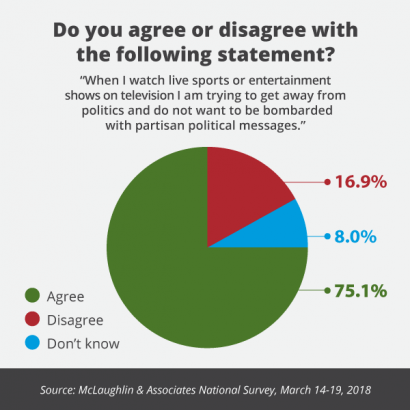
The net of it is that movie sales are declining, there are fewer attendees in sports and the only people who care about actors are other actors, and I’ll bet they don’t like each other that much either.
WHEN CELEBTARDS ARE BETTER NOT TALKING BECAUSE THEY DON’T THINK
Barbra Streisand should just stick to singing, or retiring.
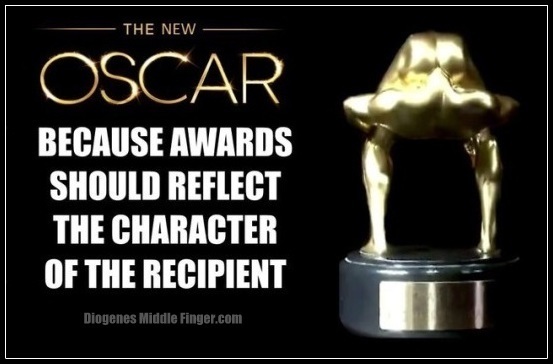
Update: The 2018 Oscars were last night. They went on about #MeToo, yet it was their ilk that were the worst offenders of moral debauchery. Instead, they chose to reduce their likeability and their relevance by again making it political. I wonder how they justify in their minds that the rest of the country actually cares what they think about anything (except millineals who believe anything and eat Tide pods). Jennifer Lawrence, with her 8th grade education is going to save democracy while she is taking a year off from acting.
The most relevant tweet of the event was this one:

Share this:

Indicator That Harvard Might Not Be A Good Place To Study For Intellectuals

This post was supposed to fall in the intellectual category for people to decide if Harvard has the qualities that high IQ people still desire (such as being able to see/argue multiple sides of an issue). They have managed to ruin any hope of defending both sides of an issue given the updates as you read them below. I’ll leave it for those who may be on the fence, and wish them the best in their decision.
Original Post Begins Here
If you look at the previous post, you will see some of the traits you might have indicating a high intellect.
One of them is the ability to see and argue from multiple perspectives. To have this trait, you have to shut out ideological thinking or persuasiveness of others before developing a hypothesis. Many have preconceived thoughts on a subject, political stance or values influenced by others rather than examining all aspects of a subject. In other words, they read one side of a subject on the Internet and believe what they want to. Everyone has a bias, but one needs to come to problems with an open mind and use facts and history to evaluate the solution otherwise you run at least a 50% chance of being wrong.

Harvard has released their list of Fake News sites. This is a popular subject given the 2016 Presidential election. If you look at the coverage and predictions of the various news sites, you can come to a conclusion which ones were actually wrong (based on forecasts, coverage and predictions) and if their coverage was biased or indeed “Fake News”. You have to make up your own mind where you stand on this. I am not saying their position is necessarily wrong, rather questioning their intelligence.
The list is decidedly one-sided, showing a bias. This is unfortunate. Again, readers have to decide if this is correct or not. No one or news institution is right or wrong 100% of the time.
In fair disclosure, one trait may indicate nothing, or it may be the bread crumb down the trail of truth if they are the institution they claim to be. Once more, each must reach his or her own conclusion. I show later in the post how I came to my decision about the title based more on empirical evidence.
Given the perceived prestige that comes with a Harvard degree (note: I did not say education), one would hope that the inflated price for such would be well spent money. It would appear that their logic in such a one-sided position on what is “Fake News” doesn’t indicate that they show this intellectual trait. You take a chance where to get an education or where you send your kids. One just hopes that it is the right decision. Since almost every decision is a cost/benefit analysis in your mind, one now must question if it is worth it. Maybe your kid isn’t really an intellectual so the point might be moot.
I realize that you can develop relationships with power people at college that can advance a successful career. It is not the point of this discussion. I am merely observing a perceived status and whether it is justified or not.
Update: Harvard now supports segregation. MLK would not have wanted this.
Update: Harvard Grad students have organized themselves to start a resistance school.
Update: Students don’t understand the danger of ISIS.
Update: You can now submit a rap album as a senior thesis instead of actual academic work.
Update: Harvard discriminates, avoids meritocracy and endorses legacy of the privileged
The grad students, who consider themselves a progressive version of “Dumbledore’s Army,” have enlisted former Obama staffers to teach the class sessions. The syllabus includes readings on “Black-Palestinian Queer Reciprocal Solidarity.”
They have decidedly taken a position of only viewing issues from one side. One should greatly question the concept of critical thinking ability being taught there. For those of us who can balance multiple views of the same subject, it is clear that these snowflakes will be under-educated and might be damaged goods in the marketplace of talent.
I formed my own opinion having worked for decades with Ivy League educated employees, albeit somewhat weighted towards Harvard and Columbia. It was made exceedingly clear by a PR flak who after having worked with a number of Harvard MBA’s stated that they had obviously wasted their money on their education. We were working for a prestigious company that attracts genius level talent. She showed remarkable intuition that caused me to further observe the Ivy’s. The majority didn’t last as they had a piece of paper saying that they should be smart, but lacked an education in people or the understanding that life is a series of challenges and hurdles.
Some of the most successful executives and workers I’ve encountered didn’t rely on their degree in school, rather what they learned in life and how they applied it to the next problem.
While history reveals that many leaders and intelligent people came from Harvard, the direction they are heading and the principles that they now uphold should add some cost to the side of the cost/benefit decision making process. I hope it’s worth it if you choose it as your place for an education. You will apparently get an institution that has a bias.
Share this:

What Is Happiness?
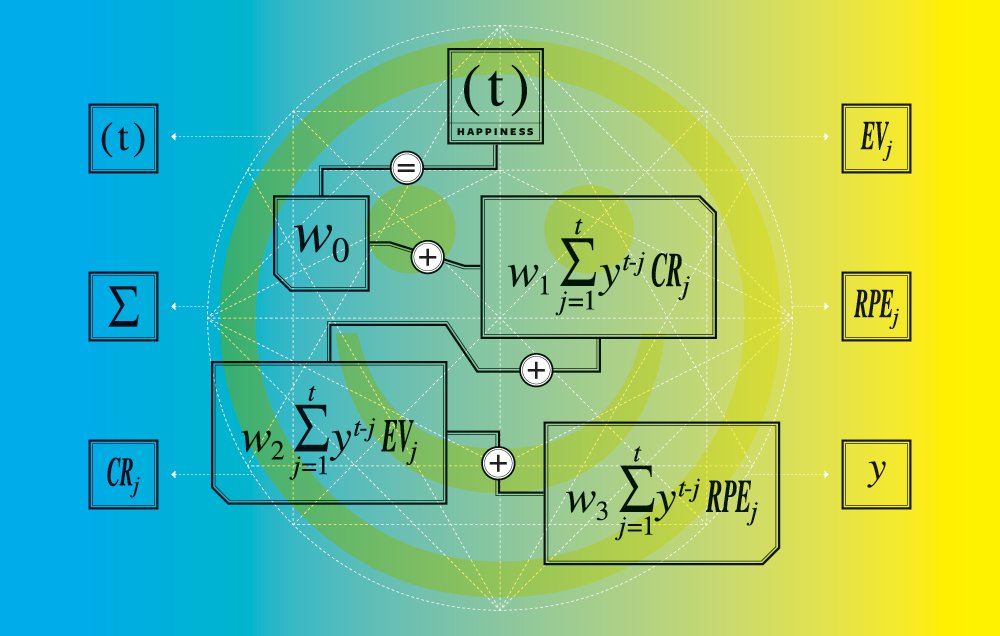
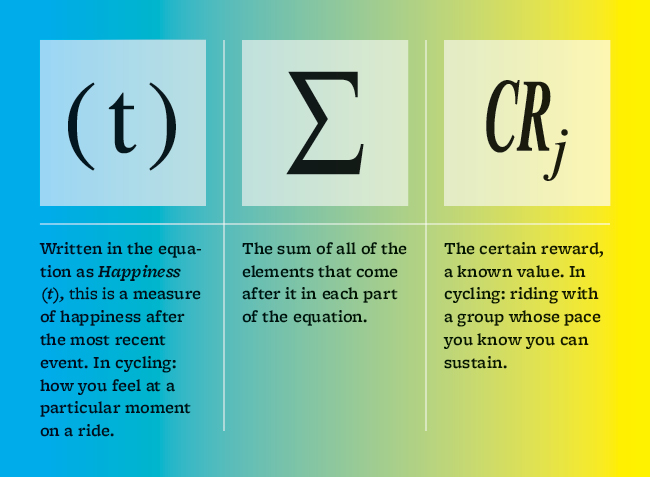
Happiness has a lot of definitions depending on who you are. Here is one that is not the only answer, just a good thought.
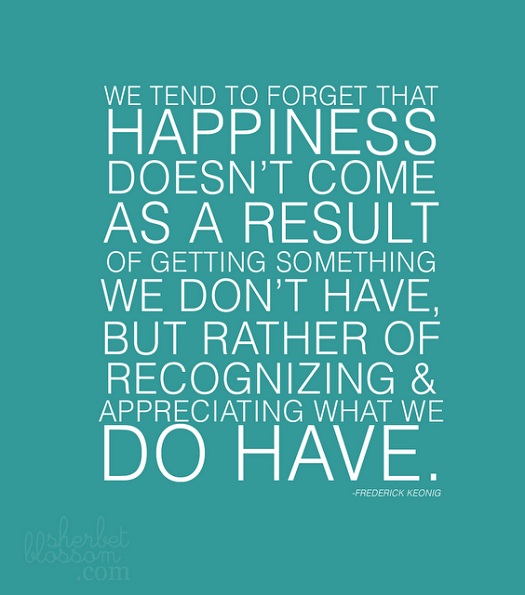
Mathematically speaking, it looks like this….
Share this:

WD-40, Interesting Facts – it even helps catch fish

 For the full list of 2000
 uses, go here
I thought that you might like to know more about this well-known WD-40 product.
When you read the “shower door” part, try it. It’s the first thing that has cleaned that spotty shower door. If yours is plastic, it works just as well as glass. It’s a miracle.
Then try it on your stovetop, it’s now shinier than it’s ever been.
The product began from a search for a rust preventative solvent and de-greaser to protect missile parts. WD-40 was created in 1953 by three technicians at the San Diego Rocket Chemical Company. Its name comes from the project that was to find a “Water Displacement” compound. They were successful with the Fortieth formulation, thus WD-40.
The Corvair Company bought it in bulk to protect their Atlas missile parts. The workers were so pleased with the product they began smuggling (also known as “shrinkage” or “stealing”) it out to use at home. The executives decided there might be a consumer market for it and put it in aerosol cans. The rest is hist-ory. Ken East (one of the original founders) says there is nothing in WD-40 that would hurt you.
Here are a few of the 1000s of uses:
~Protects silver from tarnishing.
~Cleans and lubricates guitar strings.
~Gets oil spots off concrete driveways.
~Gives floors that ‘just-waxed’ sheen without making ! them slippery.
~Keeps flies off cows.
~Restores and cleans chalkboards.
~Removes lipstick stains.
~Loosens stubborn zippers.
~Untangles jewelry chains.
~Removes stains from stainless steel sinks.
~Removes dirt and grime from the bar-becue grill.
~Keeps ceramic/terra cotta garden pots from oxidizing.
~Removes tomato stains from clothing.
~Keeps glass shower doors free of water spots.
~Camouflages scratches in ceramic and marble floors.
~Keeps scissors wo! rking smoothly.
~Lubricates noisy door hinges on vehicles and doors in homes.
~Gives a children’s play gym slide a shine for a super fast slide.
~Lubricates gear shift and mower-deck lever for ease of handling on riding mowers.
~Rids rocking chairs and swing! s of squeaky noises.
~Lubricates tracks in sticking home windows and makes them easier to open.
~Spraying an umbrella stem makes it easier to open and close.
~Restores and cleans padded leather dashboards and vinyl bumpers.
~Restores and cleans roof racks on vehicles.
~Lubricates and stops squeaks in electric fans.
~Lubricates wheel sprockets on tri-cycles, wagons and bicycles for easy handling.
~Lubricates fan belts on washers and dryers and keeps them running smoothly.
~Keeps rust from forming on saws an! d saw blades, and other tools.
~Removes splattered grease on stove.
~Keeps bathroom mirror from fogging.
~Lubricates prosthetic limbs.
~Keeps pigeons off the balcony. (they hate the smell)
~Removes all traces of duct tape.
~I have even heard of folks spraying it on their arms, hands, and knees to re-lieve arthritis pain.
~Florida’s favorite use was “cleans and removes love bugs from grills and bumpers”.
~WD-40 protects the Statue of Liberty from the elements.
~WD-40 attracts fish. Spray a LITTLE on live bait or lures and you will be catching the big one in no time. It’s a lot cheaper than the chemical attractants that are made for just that purpose. Keep in mind though, using some chemical laced baits or lures for fishing are not allowed in some states.
~Keeps chiggers away from the kids.
~Use it for fire ant bites. It takes the sting away immediately, and stops the itch.
~WD-40 is great for removing crayon from walls. Spray on the mark and wipe with a clean rag.
~Also, if you’ve discovered that your teenage daughter has washed and dried a tube of lipstick with a load of laundry, saturate the lipstick spots with WD-40 and re-wash. Lipstick is gone.
~If you sprayed WD-40 on the distributor cap, it would displace the moisture and allow the car to start. (If I knew what a distributor cap was, it might help.)
~WD-40, long known for its ability to remove leftover tape smunges (sticky label tape), is also a lovely perfume and air freshener! Sprayed liberally on every hinge in the house, it leaves that dis-tinctive clean fresh scent for up to two days!
~Seriously though, it removes black scuff marks from the kitchen floor. Use WD-40 for those nasty tar and scuff marks on flooring. It doesn’t seem to harm the finish, and you won’t have to scrub nearly as hard to get them off . Just remember to open some windows if you have a lot of marks.
~Bug guts will eat away the finish on your car if not removed quickly. WD-40 will remove them.
10 more just came out, some are similar:

10 Surprising Uses for WD-40 (and 5 Places It Should Never Be Sprayed)
Brett Martin
Everybody knows WD-40 is the go-to product for silencing squeaks, displacing moisture, preventing rust, and loosening stuck parts. You probably have a can sitting in your garage right now. It has a ton of uses, but it’s no panacea. In fact, there are a some jobs that the lube will absolutely ruin.
Your house is the biggest gadget of all. A Gizmodo Home Mod shows you how to recharge it, clear its cache, and update its operating systems.
Use WD-40 To:
1. Lube a shovel. Spray WD-40 on a shovel, spading fork, hoe or garden trowel. The soil slides right off—especially helpful when digging in clay.
2. Clean tile. The spray removes spilled mascara, nail polish, paint and scuff marks from tile floors, and also help you wipe away grime from the grout lines. Clean up with soapy water.
3. Scrub stains from stainless steel sinks.
4. Unstick gum. A squirt makes it easier to pull gum out of carpet and even hair. It’s better than cutting out the gum and leaving patchy carpet or a bad haircut.
5. Soften leather. Oil can help break in a stiff leather tool belt.
6. Free stuck LEGOs. Your kids will thank you.
7. Erase crayon. When crayon ends up on toys, flooring, furniture, painted walls, wallpaper, windows, doors, and television screens. Spray on WD-40 and wipe it off.
8. Prevent flowerpots from sticking when stacked together.
9. Get rid of rust. Spray and rub away rust from circular saw and hacksaw blades. It can also clean blades of tar and other gunk.
10. Remove goo. Unstick gooey residue from price tags, duct tape, and stickers.
Share this:

Delusions of Adequacy, My Meme Has Become Famous
Via Proof Positive, a Blog I follow and enjoy posted this today:
To be truthful, I don’t fully get it, but I’m just happy when things work your way. Proof Positive is huge, especially when compared to me.
Click on the link above to go there.
Share this:

Stupid Things Smart People Do
Once again, here is a smattering of what the internet says. I observed some of this behavior at the IT companies I worked for. Many of them were brilliant on the IQ scale, but couldn’t find their way out of the social (real not web) wet paper bag.
I found most of this on the internet. If you don’t agree, try arguing with the internet. BTW, that is one of the stupid things smart people do.
Enjoy.

Stupid Stuff smart people do:
Fail to recognize their own cognitive bias
Fail to recognize the cognitive bias in those whom they care about.
Underestimate the ir own stupidity.
Overestimate the stupidity of others.
Fail to understand Psychological projection
Fail to recognize the cognitive bias in those whom they care about.
Underestimate the
ir own stupidity.Overestimate the stupidity of others.
Fail to understand Psychological projection
Getting into an argument on the internet.
Believe in global warming.
Believe what’s written on Quora.
Believe that socialism works.
Get frustrated and give up too easily when something doesn’t come naturally to them.
Related to this perhaps is not learning to lose gracefully.
And care more about being perceived as smart rather than doubling down and becoming smarter through failure.
They value intelligence over kindness.
Assuming other people think the same way about things as themselves. Also, assuming people act according to rational cost/benefit analysis of outcomes instead of according to their “gut”, habits or emotions.Also, conflating education (college degrees) for intelligence. This can lead them to pay too much attention to people with the right Ivy League credentials and not realize that it is often people who are “working in the trenches” who know more about what is going on.
They don’t spend enough time wondering “what are some smart things that stupid people do?”Underestimating people is a dangerous habit.
- Not reading the instructions.
- Never learning the value of practice.
- Underestimating the value of experience.
- Not learning how to study — really study — so they are unprepared when study is the only thing that will save them.
- Procrastinate
A study of successful con-men will show that they choose smart people to con.This is because smart people think they are smart in all things as against just their area of expertise.Smart people are commonly successful from a young age so do not have to experience the problems of surviving on a daily basis. They are not forced to work for people they don’t like or do jobs they hate.They do not have to live without hope, or accept insults and attitudes of others who denigrate them.In all, they become divorced from the realities of life. They mix with others of their kind, and this reinforces their belief that they are smarter than those of lower social rank.They indulge in conspicuous consumption to keep up with their peers. They develop a lifestyle that assumes they will always have the means to live that way.They are easily conned because con-men flatter them on how smart they are.
The smart people who end up in jail are rarely short of money, they do what they do because they think they can outsmart others.
How we love to see pride come before a fall.
They are the fodder of movie makers and writers.
Wow, there are so many. Here are but a few of my favorite stupid things smart people tend to do:
- Ignoring the importance of design and style – When the iPod originally came out, technical people complained about its lack of features and perceived high price (“ooh, who cares about another MP3 player, I can go buy one at Best Buy for $50” http://forums.macrumors.com/show…). In the meantime, it was so cool and easy to use that normal people went out in droves to buy it.
- Using terrible tools, and taking pride in their awfulness – Especially common with programmers, who take pride in using programming languages and text editors that have been designed by programmers, not updated since the 1970s, and never touched by anyone with a modicum of design sense. They believe that mastering arcane, overcomplicated commands and processes are a mark of pride, rather than a waste of time. I will refrain from singling out specific programming languages and tools here, because smart people also like to get caught up in pointless flame wars about this sort of thing.
- Following the pack – Many smart people often seem to be followers, probably because they grow up spending so much time pleasing others via academic and extracurricular achievement that they never figure out what they really like to work on or try anything unique. Smart people from top schools tend to flock into the same few elite fields, as they try to keep on achieving what other people think they should achieve, rather than figuring out whatever it is they intrinsically want to do.
- Failing to develop social skills – Some smart people focus exclusively on their narrow area of interest and never realize that everything important in life is accomplished through other people. They never try to improve their social skills, learn to network, or self promote, and often denigrate people who excel in these areas. If you are already a good engineer you are going to get 10x the return on time spent improving how you relate to other people compared to learning the next cool tool.
- Focusing on being right above all else – Many smart people act as if being right trumps all else, and go around bluntly letting people know when they are wrong, as if this will somehow endear others to them. They also believe that they can change other people’s minds through argument and facts, ignoring how emotional and irrational people actually are when it comes to making decisions or adopting beliefs.
- Letting success in one area lead to overconfidence in others – Smart people sometimes think that just because they are expert in their field, they are automatically qualified in areas about which they know nothing. For instance, doctors have a reputation as being bad investors: http://medicaleconomics.modernme….
- Underrating effort and practice – For smart people, many things come easily without much effort. They’re constantly praised for “being smart” whenever they do anything well. The danger is that they become so reliant on feeling smart and having people praise them, that they avoid doing anything that they’re not immediately great at. They start to believe that if you’re not good at something from the beginning, you’re destined to always be terrible at it, and the thing isn’t worth doing. These smart people fail to further develop their natural talents and eventually fall behind others who, while less initially talented, weren’t as invested in “being smart” and instead spent more time practicing. http://nymag.com/news/features/2…
- Engaging in zero sum competitions with other smart people – Many smart people tend to flock to fields which are already saturated with other smart people. Only a limited number of people can become a top investment banker, law partner, Fortune 500 CEO, humanities professor, or Jeopardy champion. Yet smart people let themselves be funneled into these fields and relentlessly compete with each other for limited slots. They all but ignore other areas where they could be successful, and that are less overrun by super-smart people. Instead of thinking outside the box, smart people often think well within a box, a very competitive box that has been set up by other people and institutions to further someone else’s interests at the expense of the smart person.
- Excessively focusing on comparing their achievements with others – Smart people who have been raised in a typical achievement-focused family or school can get anxious about achievement to the point of ridiculousness. This leads to people earnestly asking questions like: Success: If I haven’t succeeded in my mid 20s, could I be successful in the rest of my life? and Are you a failure if you are not a billionaire by age 30? What about 40?
- Ignoring diminishing returns on information – Smart people are often voracious readers and can absorb huge quantities of information on any subject. They get caught up in reading every last bit of information on subjects that interest them, like investing, lifehacking, or tech specs of products they’re planning on buying. While some information is useful in making a decision, poring through the vast amount of information available online can be a waste of time. They end up spending a lot of time gathering information without taking action.
- Elitism – Smart people often use smartness as measure of the entire worth of a person. They fail to see the value in or even relate with people who are different. This is illustrated by the Yale professor who doesn’t have the slightest idea what to say to his plumber: http://www.theamericanscholar.or…. And questions like Am I an elitist to think that most people are stupid?
- Try to click on the red links above
They become arrogant. They forget they aren’t really the smartest person in the world and flaunt their intelligence to others to the point where it’s annoying and it loses them friends and can hurt a lot of people.On the flip-side smart people can also sacrifice their smarts to fit in by trying to appear dumber than they really are to please others, talking about low-intellect topics which require no thought.Others over-estimate how clever they really are and use what they think is an almighty amount of smarts to pick on others, leaving themselves open to huge critiquing and losing a lot of potential friends.Some even think they’re smarter than they really are when it comes down doing certain tasks which would be much simpler had they taken the time to develop a proper approach to whatever they are doing.
Focusing on thinking to the detriment of doing.Smart people love to think. It comes naturally to them, and they’re good at it. But thinking only takes you so far, especially when you’re trying to make an impact on the world. At some point, you have to do.Because thinking comes so easily to smart people, doing becomes relatively* harder. Research and planning are great in moderation, but can offer the dangerous illusion of progress. In the end, the only way to make a difference is to do something. Start now.* Note that I say relatively–doing is generally easier for smart people than stupid people. But thinking is so much easier that smart people tend to fall back on where they have the greatest comparative advantage.
Here is the opening ofSlavojZizek’s magnum opus, Less than Nothing. He is a self-described idiot, imbecile, and neurotic. Others call him the most important philosopher alive:
There are two opposed types of stupidity. The first is the (occasionally) hyper-intelligent subject who just doesn’t “get it,” who understands a situation logically, but simply misses its hidden contextual rules. For example, when I first visited New York, a waiter at a café asked me: “How was your day?” Mistaking the phrase for a genuine question, I answered him truthfully (“ I am dead tired, jet-lagged, stressed out …”), and he looked at me as if I were a complete idiot … and he was right: this kind of stupidity is precisely that of an idiot. Alan Turing was an exemplary idiot: a man of extraordinary intelligence, but a proto-psychotic unable to process implicit contextual rules. In literature, one cannot avoid recalling Jaroslav Hašek’s good soldier Švejk, who, when he saw soldiers shooting from their trenches at the enemy soldiers, ran into no-man’s land and started to shout: “Stop shooting, there are people on the other side!” The arch-model of this idiocy is, however, the naïve child from Andersen’s tale who publicly exclaims that the emperor is naked— thereby missing the point that, as Alphonse Allais put it, we are all naked beneath our clothes.
Share this:

When You Are A Lame Duck, You Are A Delusion of Adequacy
I originally named this blog Delusions of Adequacy after a political campaign that described themselves as not having delusions of grandeur. I have decided (for now) to write about people, places and things that are delusional as a category. I borrowed the idea from F1Rejects, although my writings will not be about rejects, just those who don’t realize that they fall short in others eyes.
So when do you have only delusions of adequacy?
LAME DUCKS
I read this story in the WSJ about those who were retiring/resigning and were they lame ducks. Having witnessed it throughout my career in business and socially on a constant basis, I realized that the minute you have announced your intention to move on the perception of reality is that you are a lame duck. Additionally, when you are not effective in others eyes, again you are a lame duck or just perhaps lame.
The article states:

Steve Ballmer above.
Steve Ballmer tried hard to show he was no lame duck after announcing last summer that he would step down as Microsoft Corp.’s MSFT -0.59% chief executive within a year.
“If you are a lame duck, your company is not moving forward,” he said in a March 17 interview. “You don’t want to get into an inaction period.”
Amid a spate of executive departures announced many months in advance, top bosses at big companies are figuring out how to stay in charge during their long goodbyes. These lengthy lead times give boards extra time to find replacements, but they also create uncertainty within a company as workers wonder who is actually in charge and would-be successors publicly jockey for attention.
Regardless of what he says, people are sucking up to the new leader and don’t care nearly as much about Steve the minute he said he’s leaving. Folks I know at Microsoft couldn’t wait for him to go, not to mention a good portion of the tech industry.
NOT EVEN THE PRESIDENT IS EXEMPT
Except for the liberal portion of the Democrat party, people are backing away from Obama. Those running for election, most notably Kay Hagen and Hillary Clinton who can’t get far enough away from him to get elected.
As far as getting any legislation he wants passed, the opposition controls only 1/2 of 1/3rd of the power yet he can’t get anything accomplished since his re-election. Most presidents are lame ducks only after an election that he doesn’t win or can’t run for, but he was labeled a lame duck almost as soon as the 2012 election was complete.
Leaders around the world, most notably Iran President Rohani and Vladimir Putin aren’t showing any respect with nuclear proliferation and the Crimea respectively. Even smaller countries like Belgium are making fun of him. Putin has a 35 point advantage in approval and he is a criminal.
Remember the red line in Syria? He refused to back it up. Now leaders and terrorist factions know he is all talk. That is an example of lame duck actions. It also could be interpreted as all talk no action, but that is a road I don’t want to go down in this post. Let the reader decide for themselves.
CONCLUSION
As stated by many, perception is reality. When there is any doubt that you are a lame duck, you are. It undermines your ability to lead and be respected. Sometimes you announce that you are leaving, sometimes it happens because you are ineffective. Either way, it is real.
Share this:

TOP POSTS OF 2013, DEWALT AIR GUN ASSAULT RIFLE, EUPHEMISMS FOR STUPID
The concert hall at the Sydney Opera House holds 2,700 people. This blog was viewed about 35,000 times in 2013. If it were a concert at Sydney Opera House, it would take about 13 sold-out performances for that many people to see it.
In 2013, there were 51 new posts, growing the total archive of this blog to 460 posts. There were 24 pictures uploaded, taking up a total of 1 MB. That’s about 2 pictures per month.
The busiest day of the year was February 25th with 1,894 views. The most popular post that day was
The concert hall at the Sydney Opera House holds 2,700 people. This blog was viewed about 35,000 times in 2013. If it were a concert at Sydney Opera House, it would take about 13 sold-out performances for that many people to see it.
In 2013, there were 51 new posts, growing the total archive of this blog to 460 posts. There were 24 pictures uploaded, taking up a total of 1 MB. That’s about 2 pictures per month.
The busiest day of the year was February 25th with 1,894 views. The most popular post that day was:
Here is the post, click on this link
Views: 1,894?
Visitors: 1,545
Views per Visitor: 1.23
Next was WD-40 interesting facts
9/11 facts and pictures was next most popular
My all time number one hit though in any search engine, especially Google is:
Share this:

C.S.S. John Simonds Was a Confederate Ship
I have half of my relatives on one side of the Civil War and half on the other. I have equal respect for both.
I searched my name and was surprised to find a ship with my name. It fell on the Confederate side of my family.
John Simonds, a 1024-ton side-wheel river steamer, was built at Freedom, Pennsylvania, in 1852. The Confederate Army used her as a support ship on the Mississippi River, where she was sunk off the fortress at Island Number Ten on 7 April 1862. It was sunk to prevent it from being used by the Union forces.
You should search yourself to see what is in your background.
Share this:

Why Newspapers and The News Are Not Only A Dying Model, But Dead
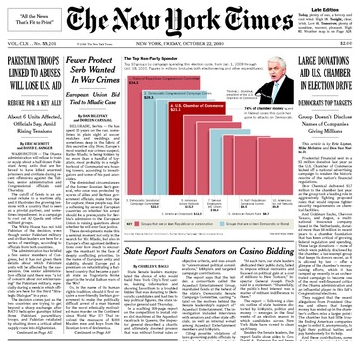
“I do not take a single newspaper, nor read one a month, and I feel myself infinitely the happier for it.” – Thomas Jefferson
I don’t subscribe to the newspaper anymore, but I got one this morning. I’m sure that it was a teaser to try to get me to subscribe. Upon reading it, I realized I already knew everything in the paper except the local high school football scores from games after I went to bed.
A DYING MODEL
The subscription rates to newspapers are dying, not even a slow death. Similarly, the evening news is also a dinosaur. They report what we knew as much as a full day before.
I am on twitter and read blogs all day long. I occasionally go to the news sites, but as I discuss below, their bias (I hold both left and right guilty equally here) usually makes me fact check what I’m trying to find out which defeats the purpose of fact-finding, especially if it involves politics. That subject is pretty much unavoidable these days.
Nevertheless, I enjoy many other subjects which you could read about it on other blog entries if you have nothing better to do, and I find good information about them that is interesting and INSTANT.
I’m a boomer, although a technically savvy one having been in the IT industry all my life. The Gen X,Y, millennials, and whomever follows them demand even more instantaneous everything virtually dooming the news model of our prior generation. Thank you Internet.
THE END OF THE BASTIONS OF NEWS

We have establish that we are now used to getting information instantaneously. The other reason that the model is dying is that they are biased. This is ok if you are a neo-con or a loony lefty, but for everyone else (the other 80% given 10% on the edges of left and right) we don’t trust them anymore.
Once, these two sources were the basis of our world and local information. Besides being static rather than dynamic, they also have stopped being factual sources of information, rather they are partisan, with Fox on one side and CBS, NBC, ABC, CNN, NBC, MSNBC, NYT, WAPO, LA TImes, Reuters, AP, HuffPo, Local News, Local Papers and most other news sources on the other side of issues. All are positioned in a place that position the facts from a point of view. Some of them blatantly lie. Reporting was supposed to be the facts of the story that let the reader make up their mind on their position.
We’ve actually learned that the news has been biased for at least as long as there has been television, we just didn’t have the instant fact checking that the internet and the other sources have provided.
There is a joke from Bernie Goldberg that said if they had been reporting on Moses at Mt. Sinai, the headline would read “Moses get the 10 Commandments from God, and here are the two that we think are important to you”.
Walter Cronkite said that the Viet Nam war was lost during the time that we were winning. LBJ said that if he’d lost Cronkite, he’d lost America. We’ve since learned that the then “most trusted man in America” was also one of the most biased.
LIFE MOVES ON
Other things have died and we have lived and moved on. Black and white TV, network only channels vs. cable TV and landline phones vs. mobile (cell for those in the US) phones. Such is the fate of newspapers and TV network news. Here is just one fact concerning the NYT declining rates. I’m sure you could find somewhere that their subscriptions are increasing, but this would seem deceitful given the nature of digital delivery.
So am I disturbed by this trend? Actually I didn’t even notice it until I saw the paper in my yard this morning. I haven’t subscribed for news in many years (note: I get the Sunday paper for the coupons as long as they pay for the 1 day delivery – my sister calls me a tightwad but it leads to becoming this).
I get my news from the above stated sources and know more about what is going on than the anchors have time to present in their biases manner.
So as they say, life moves on.
Share this:

Happy Birthday to My Dog




It is now a year later and my dog is 12 today. The average lifespan of Boxer according to my vet is “around” 8-10 years, so I’m living on borrowed time.
I named her after the dog in Jonny Quest because she had a black face like the dog in the cartoon.
Since I’ve worked at home the whole time we’ve had her, she has been my day pal. Now that my son has gone off to college, she is definitely my dog and I’m very attached to her.
Recently, I watched Marley and Me and I couldn’t bear the thought of losing her. Fortunately, she is still full of energy and looks like she’ll be around for a while.
I’ve posted about her over  the years, some of them being the most read entries I’ve written.
After the story of Shoep and John here is the link I am especially sensitive to her longevity and day to day life. She has had cancer surgery and still has the energy to love my family, although she is especially attached to me. It is mutual.
Here are some of the best of links:
Share this:

How An Average Joe Can Be A Millionaire By Doing Simple Principles
 Notice that I didn’t use the words becoming rich. Having a full life, belief in God, friends, family or a passion for doing something is rich. Becoming a millionaire is about money.
Next, this subject has been addressed by the more knowledgeable than I, but I’m going to talk to the average Joe like me, which is the likely reader here.
Finally, I don’t claim to know it all, nor do I claim to be in any financial category. I do observe trends and try to learn from them. Hopefully I’m eating my own dogfood.
HOW IT IS DONE
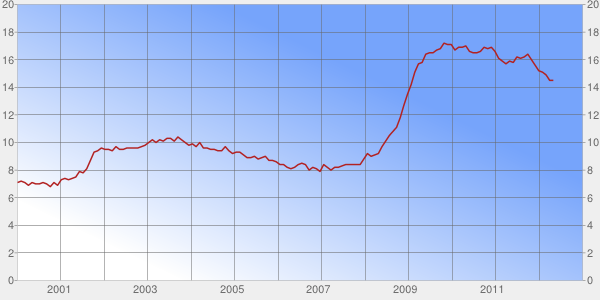
It is simple math. You either make money or spend less, or a combination of the two. I realize that we have a burdensome government, a tough economy and a next to impossible IRS tax code. In fact the real unemployment number is not what you read in the main stream media, but the U6 rate which as of this writing is 14.5%.
For the purposes of becoming a millionaire, we will assume employment. That means get a job instead of living on entitlements, because that will disqualify you from this discussion.
Sure it is easy to have received Facebook stock or have invented Facebook, but the average millionaire doesn’t have that at their discretion.
USE YOUR MONEY TO MAKE MONEY
This means compounding what you have in ways other than just putting it in the bank. I had a roommate who was a stockbroker and he told me many stories of secretaries making minimum wage who came to him at retirement with 7 figure 401K accounts. They saved in a way that maximized the return on their investment. This usually involves a company match and some diversification. It also assumes that you take risk when you are younger and seek advice or study investing voraciously as it is a mystery to most….despite the fact that everyone thinks they know about it.
Part of your diversification also means not putting everything in the stock market. As an example, real estate has just undergone a busted bubble (thanks to the Community Reinvestment Act which never should have been enacted), but it means there are properties to be had for a song right now and are ripe for the picking. They will grow and become more valuable. My advice is no different from what you’d expect. Start out small and work your way up. That process allows you to learn about what value really is, and compound your earnings into larger investments that have bigger payoffs.
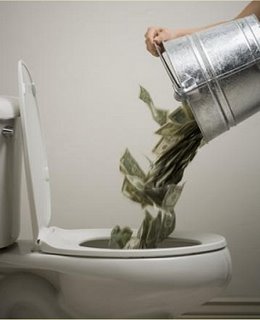
There are many other ways, but the concept is the same, save and invest wisely by starting small and growing your profits and portfolio. You must also study and read or you could throw your money down the drain if you think you know everything. It also involves patience. If you recall the story from my roommate, it was saving and investing over a lifetime
HOW TO LEARN
There are articles ad-infinitum to read about the aforementioned. The other way is to talk to people who have done this. I suggest that you start with Dave Ramsey or Crown Financial Ministries if you are starting out (or are in trouble, or anywhere in between). It is a tried and true method of handling you money.
Who you talk to also matters. There are people who talk in $10’s of thousands, $100’s of thousands, millions or Zuckerberg’s and Gates’. I suggest you seek out those who are in the highest category possible as you need to think big in making and investing. I don’t have coffee with Warren Buffet, but his advice is readily available.
Find those who are successful and ask them how they did it. I’m betting that you’ll find there is no secret code or magic key, they just worked at it and kept their long-term goals of financial independence in mind, and kept check over their human nature.
SAVE YOUR MONEY
The other side of the equation is savings. In other words you need to spend less and when you do, spend wisely. Of the people I worked with at my last job, many were high salaried executives who were in debt because they had a keeping up with (or passing) the Jones mentality. This was especially true of those in the New York area for some reason (but demographics shouldn’t really matter). They had big houses with unfurnished rooms because they were house poor. Living within your means is important which is my next segue.
NEED VS. WANT
Including the basics of food, clothing and shelter, one has to look at the way one buys things. Most buy what they want rather than what they need. If you adopt the buy it tomorrow instead of now mentality, you likely will realize that you don’t really want it as badly as you think.
There is the adequacy (not delusions of adequacy ;-)) vs. luxury mentality also. A Casio, Timex or Seiko watch tell as good of time as does a Rolex, so unless you have money to burn, why are you buying the Rolex? This applies to cars, clothes or virtually any tangible item. Ask yourself, self do I need this/do I need to have the very best/am I showing off or would what I can really afford what I have? I have relatives who have to have the very best, but have wasted as much money as I’ve earned on things to show off.
My son said that some people need to wear their paycheck. You can see them coming down the road in cars that are raised with shiny rims and a 24 thousand watt stereo. Others have to order the best wine, food and show off at restaurants (my brother-in-law).
Back to the person who knows this better than most, here is a story about expensive car drivers:
But what if Ranger Rich is like many people who define rich in terms of income instead of net worth? Certainly many drivers feel the need to display their socioeconomic achievements by acquiring prestige makes of motor vehicles. They may think that those who are successful in generating high incomes drive luxury brands. And correspondingly drivers of more common makes have dull normal income credentials. But the hard data suggest that the level of prestige of a car and the income of its driver are not anywhere near being perfect correlates. In fact, many drivers of luxury makes have neither the levels of income nor net worth which would qualify them as high economic achievers.
Along these lines, Joann Muller, writing for Forbes.com, poses “what the rich people really drive.” She defines rich people in terms of income, not net worth.
. . . the richest people were the most likely to buy luxury brands [39% for people with household income above $250,000 vs. 8% for those people who earn less than $100,000 a year].
. . .61% of people who earn $250,000 or more aren’t buying luxury brands at all.
Her analysis indicates that those households with high incomes are more likely to drive luxury cars. But just because someone is driving a luxury brand it does not necessarily mean that the driver has a high income or a high net worth, for that matter.
Further, here is a story about how the average millionaire deals with car buying.
You have to spend on things that will appreciate, not sparkle. Again, my relatives are the worst offenders who have overspent on toys, baubles, cars and anything else they can waste their money on. It baffles me. When they bought real estate, they over paid, over leveraged and bought for show instead of ROI.
DEBT AND LEVERAGE
This gets most people in trouble. If you can’t pay off your credit card each month, you effectively are paying more for what you bought (because of the interest). Compounding works for debt in the same way as it does for savings. It is the accumulation that is the issue. I’m not just picking on credit cards, anything can be substituted here. If you saved first, you could buy it for less and your want will likely decrease.
For housing, it used to be that you had to put at least 10% down, but due to the above mentioned CRA (can you tell I loathe that legislation?) one could buy a house they couldn’t afford because they were told they qualified for it…. with no money down. You were PLAYED for a fool on this. Living below your means is the best policy.
If you care to splurge on something, it’s OK….just don’t borrow.
The same can be said for leverage. I’ll stay on housing here. Banks will always want you to buy more as the more you borrow, the richer they get. Typically one is paying at least 3 times the amount for a big-ticket item buy leveraging which brings me to my next segue.
PAY OFF YOUR HOUSE
The wisest know that man can not serve two masters. When you have a huge mortgage hanging over your head, it is your boss/master/slave driver/keep you up at night worry/cause of divorce or many other calamities. The bank won’t be calling on you to take your home away nor will you have to file bankruptcy (again, my relatives).
Besides owning a house within or below your means, paying it off early is the best way to get out of debt and improve your cash flow. Take out a mortgage less than 30 years, pay more than the minimum and do everything you can to pay it off early.
Forget the argument that it is a tax deduction. Congress is aiming at trying to take that away as I type. Also, any money you get back on taxes is just an interest free loan to the government at your expense.
By doing this, for most people it will likely be one of the best long-term financial decisions they can make.
CONTROL YOUR DESTINY
Note: I am quoting Dr. Thomas Stanley here. It is better told than I could say it, but it clearly is the moral to the story and what I would have said:
In The Millionaire Next Door I quoted the words of a corporate sales professional, a millionaire whom I interviewed. He like other self made millionaires said that he had a “go to hell fund. . . just in case my employer suggests (insists) that I leave Austin for corporate headquarters in Rottenchester.” He never had to leave Austin and he added, “PTL.” In other words, [the millionaires next door] have accumulated enough wealth to live without working for ten or more years.
I was reminded of these words of wisdom after reviewing an email from Ms. F who currently resides in a lovely community in the Southern United States:
I went to my local library this morning, hoping to borrow The Millionaire Next Door. However, the only available book was in Spanish, so I borrowed “Millionaire Women Next Door” instead. By the time I completed the second paragraph on page 8, I had collapsed in a fit of “craughter” – simultaneously crying and laughing at my sad truth. My newest work assignment is no less than 8,200 miles, 18 hours of flying time and 12 time zones away from everyone who means the most to me in this world. Simply put, the situation stinks, but I had convinced myself that it was necessary to pay the bills. Suffice it to say that I have renewed by concerted efforts to become a cultivator of wealth, and I plan to share my transformation with you soon. Thank you for creating this compilation of evidence-based encouragement!
What precipitated Ms. F “crying and laughing?” Consider the words from Millionaire Women Next Door:
Aren’t you growing tired of being among the ranks of hunter-gatherers? Do you enjoy your hyper consumption lifestyle so much that you must fly out of town every week to earn a paycheck to pay your bills? . . . begin making the transformation to a cultivator of wealth. Think about that the next time you are ten thousand miles from home, surrounded by strangers, and flying in dreadful weather. It is up to you. Do you want to spend your life as a hunter and gatherer of income, earning a million mileage points? . . . those financially indpendent folks. . . . They make their own decisions about their next destination. Right now, you and your career are essentially corporate property. Neither one of you has the luxury of self-determination.
I also stated that:
The [millionaire business] women profiled herein will not tolerate such an existence. They are free. They are cultivators of wealth and satisfied with life. They are in control of their own destiny.
INCOME AS A PERCENTAGE OF WEALTH
More from Frank Stanley, their income is only 8.2% of their wealth:
People who believe that they will never become wealthy generally fulfill this hypothesis. I explained to Brit, who was once a member of the ultimate income statement affluent club, that he has an excellent chance of becoming a millionaire next door type and that the typical millionaire next door is 57 years old. The Bible states that those with faith and hope can achieve a great deal. Even those with faith the size of a grain of mustard seed will likely reach their intended goals.
The will and discipline that this couple demonstrated in paying off its considerable debt is telling. The same determination can be used in setting aside at least 15% of their income for savings and investing.
What should you anticipate as a typical member of the millionaire next door fraternity? One, given the calculation via the Wealth Equation, actual net worth exceeds its expected value by a factor of 2 or more. Two, the market value of the home is less than 20% of net worth. Three, debt totals the equivalent of less than 5% of net worth. Four, annual income tax is the equivalent of about 2% of net worth. Five, total annual realized income is approximately 8.2% of net worth [median], or the equivalent of $8.20 of income for about every $100 of wealth.
This $8.20 figure from my own research is fairly congruent with the findings of other researchers. For example, three scholars employed by the Treasury Department, Johnson, Raub and Newcomb, compared the wealth characteristics of millionaires via 36,352 federal estate returns who passed away in 2007 with the incomes of these decedents when they were living. Those millionaires who were married and under the age of 70 [like the large majority of the millionaire next door types that I have surveyed] realized the equivalent of $8.45 for every $100 of their net worth. This figure is within approximately 3% of the dollar figure ($8.20) that was determined from my surveys.
IN CONCLUSION
There is no conclusion, just work and keep your long term goal in mind. I may talk later about other basic ideas that contribute to this like paying cash instead of credit (briefly mentioned here), couponing, buying the store brand instead of the premium name brand and other tricks. Nevertheless, adhering to the above puts you well on your way to being the average Joe millionaire.
My relatives laughed at me all my life for watching what I spent, how I lived and called me a skinflint. I knew that I had a long term plan for financial security. Today, at retirement age, they work just to keep up. Who’s laughing now?
Share this:

Changes and Trends in Communications
I guess they chiseled press releases on stone at some point to promote the invention of fire. Later, parchment must have been sent out to document the parting of the Red Sea.
But the industrial revolution gave us good tools like the printing press and the typewriter, fax machines and let’s not forget the copy machine from the Xrocks corporation which allowed us to mail press releases an astonishing 2 weeks prior to the announcement, embargoed of course.
Then came email, the internet, instant messaging…I’m not going out on a big limb here history wise. Now with the push of a button, bingo – news everywhere.
So what’s the point here? I like to see trends and be an early adopter where possible. There have been times I wait for the technology to stabilize before I expose my backside to any corporate or public lashings, but for the most part, I like to be or know about what the next advantage possible to be gained. I remember using MCI Mail in the mid ’80’s to beat the big companies to the story (then my competition was, gasp – IBM). I was talking to Bill Howard, Bill Machrone and John Dvorak of PC Magazine when it seemed like there were about 25 email users total in the business world.
Despite my daughter’s ability to overwhelm me in Instant Messaging volume, I did use it as a communications tool to reach analysts in the ’90’s before others caught on.
I’ve been beaten to the punch more times than not on new trends, but I give credit to those that catch on before me and I try to learn to do things in a newer better way. Social Computing is such a trend that offers the next new world to those who have vision.
I originally called this the change/death/other titles here of PR, but that will never die, only morph. Those that adopt the new media approach which is happening now, which includes but is not limited to (good lawyer speak there) blogging, podcasting, videocasting, wiki and the various other components of Social Computing will beat others to the punch. (I was later to this game than I wanted to be, but still ahead of many I’m finding out as I beat my head against the wall here sometimes.)
While there was no moment of truth type revelation about why this is, I’ll give Charline Li the credit to why big companies are not always the leaders on this, it requires giving up control. Now tie this into the above stated PR change issue, as control is vital to shaping the message or dealing with the other large major media outlets. The quicker more nimble folks who already embrace Social Computing are moving ahead and larger companies are trying to figure it out and sometimes try to control it. I will say that IBM is conducting perhaps the largest social computing exercise ever right now, but the control issue prevents any details here until it is complete. I hope to blog about it soon, and I hope to start an analyst relations practice/position about Social Computing, send your positive references in now about me as I’ll be canvasing soon for a new frontier that I think we need here.
This is not just a company/industry or PR issue either. Smaller and more nimble analyst firms are leading the way and are way ahead of 800 pound gorillas here.
So I know people who were naysayers to email, IM and other trends and look what happened there. Social Computing will change the messaging capabilities, the way we will work and exchange information and that train is leaving the station, be on it or miss the chance.
Share this:

Hosted, At Last
I finally made the trek from Blogger to a hosted blog, from where I’ll be posting from now on.
I learned many things along the way, like I should keep my day job as I’m not going to make it as a web designer. I also learned that it is good to have friends that know what they are doing, like SSteve O’Grady who helped me get this done (read, did all the real work to get it to the hosted account). I also learned different Blog programs which was good for me.
I wonder if I lost readers, or through the promotion process of letting people know that I’m in a different place, I’ll get some pick up. I never was overly concerned about competing with Scoble or Instapundit anyway.
Learning is good. Now back to blogging. The good news is I have Not all Geeks are Wimps Part II ready to go and a bloggerview with Grady Booch just around the corner.
Share this:

My quest to switch my Blog
Part of my title says that I’ll blog about my escapades of trying to be a blogger. Here is one of those blogs.
Due to a number of reasons, I’m now on a quest to move my blog to WordPress. Here are a couple of those reasons:
1. I got complaints about Blogger’s comment ability by analysts.
2. It’s time for me to grow up as a blogger and go to a hosted account.
3. Having a blogger domain is sort of like an aol email.
4. Blogger is offline too much lately.
5. Many blogged a long time ago that you weren’t real unless you were hosted and not on a free account, have tags, trackbacks, etc. I agree with her on this.
I spoke to my RedMonk buddies and they gave me options. I went for WordPress hosted for my by 1and1. My first step was to get an account which I did today, it will be deladequacy.com, still Delusions of Adequacy. Public thanks to Steve O’Grady for helping with the process on how to do it different ways and why hosting it was the right thing to do.
I’m blogging this to put the pressure on me to get it done and convert. Yes, I was getting comfortable with the limitations of Blogger, but we all have to grow up sometime. Keep you posted.
Share this:

Cutting Comments, The Best Insults
Yes, once again, my blog name gets dissed. First it was Euphemism’s for stupid, now it’s cutting comments by famous people, see below.
A List of Insults from Famous People
A List of Insults from Famous People
“A graceful taunt is worth a thousand insults.” -Louis Nizer (1902 – 1994)
1994)
“I feel so miserable without you, it’s almost like having you here.” – Stephen Bishop
“He is a self-made man and worships his creator.” – John Bright
“He has all the virtues I dislike and none of the vices I admire.” – Winston Churchill
“A modest little person, with much to be modest about.” – Winston Churchill
“I’ve just learned about his illness; let’s hope it’s nothing trivial.” – Irvin S. Cobb
“I have never killed a man but I have read many obituaries with great pleasure.” – Clarence Darrow
“He has never been known to use a word that might send a reader to the dictionary.” William Faulkner (about Ernest Hemingway)
“Poor Faulkner. Does he really think big emotions come from big words?” – Ernest Hemingway (about William Faulkner)
“He has sat on the fence so long that the iron has entered his soul.” – David Lloyd George
“Thank you for sending me a copy of your book; I’ll waste no time reading it.” – Moses Hadas
“His ears made him look like a taxicab with both doors open.” – Howard Hughes (about Clark Gable)
“He is not only dull himself, he is the cause of dullness in others.” – Samuel Johnson
“He is simply a shiver looking for a spine to run up.” – Paul Keating
“He had delusions of adequacy.” – Walter Kerr
“There’s nothing wrong with you that reincarnation won’t cure.” – Jack E. Leonard
“He can compress the most words into the smallest idea of any man I know.” – Abraham Lincoln
“You’ve got the brain of a four-year-old boy and I bet he was glad to get rid of it.” – Groucho Marx
“I’ve had a perfectly wonderful evening. But this wasn’t it.” – Groucho Marx
“He has the attention span of a lightning bolt.” – Robert Redford
“They never open their mouths without subtracting from the sum of human knowledge.” – Thomas Brackett Reed
“He loves nature in spite of what it did to him.” – Forrest Tucker
“Why do you sit there looking like an envelope without any address on it?” Mark Twain
“A solemn, unsmiling, sanctimonious old iceberg who looked like he was waiting for a vacancy in the Trinity.” – Mark Twain
“I didn’t attend the funeral but I sent a nice letter saying I approved of it.”- Mark Twain
“His mother should have thrown him away and kept the stork.” – Mae West
“Some cause happiness wherever they go; others whenever they go.” – Oscar Wilde
“He has no enemies but is intensely disliked by his friends.”- Oscar Wilde
“He has Van Gogh’s ear for music.” – Billy Wilder
“He uses statistics as a drunken man uses lamp-posts–for support rather than illumination.” – Andrew Lang (1844-1912)
Share this:

32 Gigabyte Flash disk

Why I care about This is because I spent a good part of my career in the storage industry.
When I first started at a small disk distributor, Core International, we sold IBM-AT replacement 40 MB drives for $2595.00. It had an average seek time of 26 milliseconds and fancy technology like a voice coil actuator, dedicated servo technology and auto park and lock. They were 5.25″ high and weighed a few pounds
Now you get 32 GB of instant data access for between $750 and $1000, talk about progress! And since it’s flash, it’s not subject to the failures of electrical and mechanical moving parts like a drive is….and who hasn’t had a drive crash on them.
I wonder if that is going to add clutter and more busy-ness to my day (Why I’m busy).
What I really want is my system to boot as soon as I hit the power button. We haven’t gotten any better at that, DOS booted faster than what I have now.
Share this:

Finally able to blog again, like missing a friend. Can I be that busy?
I just went the longest period of time without blogging since I began. I’ve missed days because I just didn’t have anything to talk about, but this streak has a different cause. Before I get to the point of discussion, let it be known that I really missed blogging. It causes me to focus on a subject and be lucid about it. This comes naturally to some, not to me. I also have to line up future blogs as I can’t just sit down and write all the time.
Advertisement: I lined up Grady Booch, Drew Clark (IBM VC programs) and my favorite PHP programmer , as well as I”m going to blog about an analyst event next week that has in part kept me too busy to write.
I’ve been too busy, a pretty lame reason I admit but true. Now that I have that out of the way, I knew this the entire time, and even talked about being too busy when speaking with several analysts and co-workers.
This brings me to why. When talking to the others, I got the same answer, yes they were busier than normal and no, they didn’t know why either. Here’s my hypothesis.
Bandwidth
A few years back, we said the answer to problems was bandwidth. It was cheap and getting cheaper and we should just throw bandwidth at a lot of situations and it may not be the perfect answer, but it would solve the problem. Now we have lots of connectivity, anywhere, anytime and while not instantaneous, we can get what we want, who we want and can pound away at enough doors, one will open.
Tools
Handhelds, access devices, instant messaging, cellphones…more ways to do more stuff and reach more people. This has turned the volume knob up also. Before, we’d send out a request and wait for an answer, now we get it right away and are distracted to answer these requests. How did we find our way for 1000’s of years without a GPS, or meet up with someone else without a cell phone?
Attitude
We are far less patient for things now. I fish and patience is a virtue. You have to wait for the right conditions, the fish to move up to your space, the weather, sticking with a pattern, whatever. Patience is a virtue they say. On the other hand, my son plays video games….it is an attention span zapper, but a sign of the times. So like the gamers, a lot of us at work are expecting more and more now in everything. If it doesn’t happen now, run and gun to something else. Even as I type this, I’m getting IM’d about decisions on bathroom decorating from my wife.
So am I getting more work done? Outside of blogging, yes. My real job is analyst relations and I’m getting more done and working at a faster pace, doing more and being more efficient. I have to.
I need to find some more time to fish.
Share this:

Miscellany
I’m working on a couple of things that are taking longer than I thought, delaying any real issues I could be effectively writing here.
1. For ISV analyst issues, it’s going to be about SOA, SaaS and PartnerWorld in the next couple of months, watch this space and make requests to find out what we’re doing. I’ll be reaching out as we get closer, but you don’t need to be Sherlock Holmes to know what we’re up to.
2. Blogging, IBM is moving forward and we’ll have things to say about our company efforts as bloggers. Some tools came out at Lotusphere, but this will be more about how we organize our people efforts outwardly (jg and sog please contact me here).
3. Bloggerviews- I’ve asked Grady Booch and Rod Smith to participate. If I can get them, they should be good.
4. Not all Geeks are Wimps Part II. This has been one of the more difficult blogs I’ll have written. Some blogs come to me in my sleep, not this one. I’ve read 2 books for to prepare, and the respect I have for the person I’m writing about puts pressure on me to perform, which of course slows down the process.
5. An entire episode of 24 last night without Jack Bauer killing anyone. Hope he makes up for that next week.
Share this:

Mantenance update on my blog
Since I’m stuck between being content free and stuff I can’t say publicly, I decided to do maintenance work on my blog.
I’m starting with adding some links. Although I pick up a lot of IBM’rs through my IBM bloggers link, I’ve paid attention to some analyst comments that IBM’rs link to too many IBM’rs and not enough outsiders. I’ll take suggestions here.
After that, I may start breaking down my blogs based on themes I’ve noticed, like IBM, Karate, my dog and fishing.
Share this:

A Long Day, and my Exhaust
Actually, it’s been 2 long days. I’m on a task that’s critical to our partner program and strategy. Why we’re doing what we’re doing and not out buying companies is making more sense to me every time we speak to analysts. Look for more on this topic in a couple of days. I’m hoping the analysts out blog me on this.
Between that and trying to fix the template on my blog site, it’s been a long couple of days. Although I didn’t realize it, my blogs are longer than I imagined, so I picked a different template that will allow for more text to be read on one screen. While doing this, i messed up all my RSS feeds and links and it took a day to fix. The good news is Ed Brill found it for me and I fixed it. The real good news is that he agreed to an interview, so I can’t wait to get that out as it seems the interviews are well received.
Now for the lighter side. My wife borrowed my truck to help a friend move. I recently had to replace the exhaust and being the Redneck that I am, I bought the loudest one I could find. The mechanic told me, “you won’t be sneaking up on anyone now”. Anyway, my wife’s friend completes the story and makes my day when my wife started up the truck to leave. Her friend says, you’re exhaust is really loud, maybe it’s broken. Life was good at that moment for me.
I know the New Yorkers deduct IQ points from southerners for stuff like this, but this goes back to an earlier post on why it’s good to be a guy. We get to play with toys all our life.
Share this:

More on Spam
Due to the wonderful invention of automated spam, I’ve set my comment policy to word verification. You get to type in a word that appears, then comments are free as usual. I battled back and forth as to whether this was within blog protocol, and finally decided to give it an experimental try. It has allowed me to filter out idiots like Catherine Helzerman who weirded out at while working at IBM and finally left. Word has it that she pets cats now after her team called her a traitor.
So once more, an experience in blogging for me. A lot of bloggers have already fought this battle, perhaps you could give me your suggestions as to how you managed this.
Share this:

How long does a blog take to get around?
Well, it looks like from 1 to 22 days according to responses I have.
Yesterday, I was paid the (maybe not so) ultimate expression of existence, I’m now being spammed.
On the first day, the guy I named my blog after, Joe Trippi commented on my blog. That seemed a whole lot more genuine.
I took a calculated risk by being the first IBM blogger, but it affords me the luxury of doing what I want since no one else here has a clue, especially corporate communications who thinks the world revolves around major media and not much else matters. They lose their mind when the ever declining NY Times so much as picks their nose. This works for me as I don’t have to deal with those losers (both parties above) and get to do work that they don’t realize is going on as they don’t have a clue what a blog is (unless they ask me).
What I know and they don’t is that social media is the way influential people want to communicate. They are inundated by emails, telephone calls and the corporate flacks like the above mentioned.
I guess I’m now in the beginning of being in the masses of the blogosphere. Maybe I give myself too much credit, accept my apologies if that is the case.
In my title, I said I’d talk about my escapades of being a blogger, there you have it, a new target for spam.
Share this:

Next blogging steps
When I originally started this blog, it was a self education issue. Afterall, I’m on a number of blogging committee’s at IBM, so I should be true to my cause. I was the first blogger for Analyst Relations and set up the policies for a/r blogging.
My intentions were to post about what was going on in A/R, things I found interesting and some blogging progress I was making. I didn’t (and still don’t) have intentions of hitting the A-list for bloggers, but it happened anyway.
Nevertheless, part of doing any job right is delving into how things work to make it better. So today I added some links via feedburner like stat count, buzzboost for publicity and a headline animator for prior posts. I set up a del.icio.us account and will use that also. Modest improvements, but still on the plus side of progress.
I’ll be attacking trackback, not offered on blogger, but through a third-party source soon.
I’m open to suggestions that make this a legitimate blog with respect to protocol. All in the spirit of learning and improving.
Share this:

Why Delusions of Adequacy
Because with all the content out in the blogosphere, I’m not out to get or will ever be qualified for a pulizter. I’m going to put the things that interest me and products I work with and hope for the best.
While I don’t subscribe to his political beliefs, I do credit Joe Trippi for the name.
In his book, he said that some though the had delusions of grandeur, but they really had delusions of adequacy. It was the perfect name. One that lampoons a lot of things, yet is perfect for describing my effort.
He was out there and dug into blogging and made it a part of his job. Guess what, that’s what I’m trying to do. Wish me luck.
With this, I become the first official blogger for IBM. I’ve been asked by the V.P. of Analyst Relations to set up a program for the company as well as policies related to this new practice. I hope to set a trend.

 Delusions of Adequacy