Why the Apple Watch Is Not The Product That Will Save Apple

Apple has prided itself on cutting edge products.  Their mantra is to create great products that we didn’t know we needed.  It worked for the iPod, IPhone and iPad.  Now there are rumors about the iWatch.  Guess what, they are going to miss the boat on this as they have overlooked what we do and do not need.

Who are the biggest consumers of new technology?

First it is the early adopters, they’ll buy anything.  That is a small percentage of the population though, maybe 15% at the most and that is being generous. 

They will likely be the bulk of the iWatch consumers.  Here are the others:

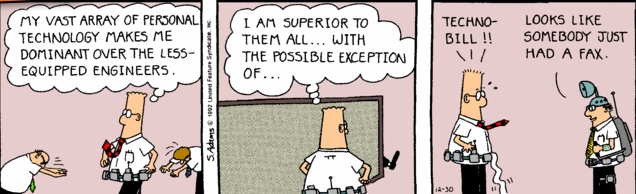
Dilberts who need to have the most gadgets.

dilbert stuff

Some workout people who for while will think this is cool.  This groups purchasing power will wear off as you can tell by the proliferation of watch style monitoring devices being purchased, but then discarded.  It is not the killer app.

Who won’t by buying them?

Almost everyone else and the biggest problem is the group that has the largest digital footprint:

The generation of 18- to 34-year-olds, known as Millennials, are an increasingly influential group that impacts many aspects of the American lifestyle, including fashion, technology and entertainment, according to the upcoming 2013 Digital Marketer Report from Experian Marketing Services. The report looks at key segments of the consumer landscape, including millennials, who provide a major opportunity for marketers to reach consumers via mobile. Millennials spend 14 percent more time engaged with their mobile devices in an average week than their generational peers.

Guess what?  They don’t wear watches for the most part, they keep time on their phone.  They want a phone with a bigger screen, better input capabilities and easy access to social media.  An iWatch doesn’t fit this model.  This will continue for the rest of their lives (likely) and with the younger generation.

They also have to pick which device they are going to buy as student debt is at an all time high.  If you need an iPhone to work the watch, no money left for beer or video games.

Digital Currency

What is the biggest attraction for Facebook and most social media?  It is the sharing of pictures.  Why did Instagram get bought for 1 Billion dollars?  Why is snapchat gaining ground and Twitter adding video to their photo capabilities?  With the grandparents getting onto Facebook, the youngsters are using other apps like Instagram to share their lives with their friends.  While you can see a picture, it is small.

So why are they doing it?  Because they need the buzz or the next great thing.  Will they do it anyway?  Of course, Samsung already has one announced and Apple copies and tries to make it better

I’m not saying watches are dead, who doesn’t want a Rolex for example, it’s just that the impact of an Apple Watch isn’t going to be the $100 jump in the stock price that earlier products were.

History and Egypt

Here’s how you know a country has been around for a while. When BBC.com’s “Timeline” starts with “Settlement of Nile Valley.”

• For the next 9,000 years, it’s mostly downhill from there:

669 BC – Assyrians from Mesopotamia conquer and rule Egypt.

525 BC – Persian conquest.

332 BC – Alexander the Great conquers Egypt.

31 BC – Egypt comes under Roman rule.

642 AD – Arab conquest of Egypt.

1517 – Egypt absorbed into the Turkish Ottoman empire.

1798 – Napoleon Bonaparte’s forces invade but are repelled by the British and the Turks in 1801.

1882 – British troops take control of Egypt.

1922 – Fuad I becomes King of Egypt and Egypt gains its independence.

1953 – [Military] Coup leader Muhammad Najib becomes president as Egypt is declared a republic.

1956 July – Gamal Abdul Nasser nationalizes the Suez Canal.

1956 October – Tripartite Invasion of Egypt by Britain, France and Israel due to the nationalization of the Suez Canal.

1967 June – Six-Day War in which Israel defeats forces of Egypt, Jordan and Syria. Israel takes control of Sinai, the Golan Heights, the Gaza Strip, East Jerusalem and the West Bank.

1973 October – Egypt and Syria go to war with Israel during Israel’s celebration of Yom Kippur to reclaim the land they lost in 1967.

1978 September – Camp David Accords for peace with Israel are signed.

2011 February – President Mubarak steps down and hands power to the army council.

• And, like that.

• Egypt’s major mistake was being located along the Nile (which flows north to the Mediterranean, but you knew that) and the Red Sea. If it weren’t for that no one would have ever bothered with it.

• Except, maybe for that whole Cleopatra-Julius Caesar-Marc Antony thing.

• More recently Egypt has been the focal point of the “Arab Spring” that began two years ago on December 18, 2010 in Tunisia. Since that time there has been unrest ranging from demonstrations, to riots, to revolutions to at least one civil war in (according to Wikipedia’s count):

Tunisia, Egypt, Libya, Yemen, Bahrain, Algeria, Iraq, Jordan, Kuwait Morocco, Sudan, Lebanon, Mauritania, Oman, Saudi Arabia, Djibouti, Western Sahara and, of course Syria.

• We know from recent events how stable Libya is and, according to the Washington Post, some 64,700 Syrians have died since the demonstrations began in November 2011.

The Mayan Calendar – Not The End of the World

Res Ipsa Loquitor

The world ends for 153,781 people every day. That’s  who they were talking about.

ht_doomsday_mayan_end_wy_121220_wblog

So the world didn’t end on 12/12/12, but there is another shot at it on 12/21/12 just in case.

Let me remind everyone why it is not going to happen:


New International Version (©1984)
“No one knows about that day or hour, not even the angels in heaven, nor the Son, but only the Father.

After Being Dissapointed by Lenovo One To Many Times, What PC Did I Buy Instead?

I’ve had PC’s since before the IBM PC in 1981.  I’ve built hundreds of computers over different phases of the PC life cycle (for myself, others and at computer stores I worked at for years).  I’ve personally owned many ThinkPads since they were introduced…likely between 40-50 including my multiple work PC’s. The same is true with Microsoft. I’ve worked with DOS and Windows, Windows for Workgroups, (built and wired my first network in 1994), NT, 95, 2000, XP and you name it.  I first put up webpages since 1993 and every version of DOS or Windows made starting with 1.0 for both.   I’ve finally had it with the declination of the quality, service, especially customer service and workmanship of IBM/Lenovo and Microsoft products.

I began to desire a different machine when the smartest guys at IBM (IBM Fellow’s) and the smartest (and of course some of my favorite) IT analysts starting using Mac’s.  It told me times were a changin’.

WHEN THEY WERE GOOD

It used to be that when you went to a frequent flyer lounge at an airport, it would be a ThinkPad convention because they were so tough, now everyone is switching to an iPad which I now also love and  have.

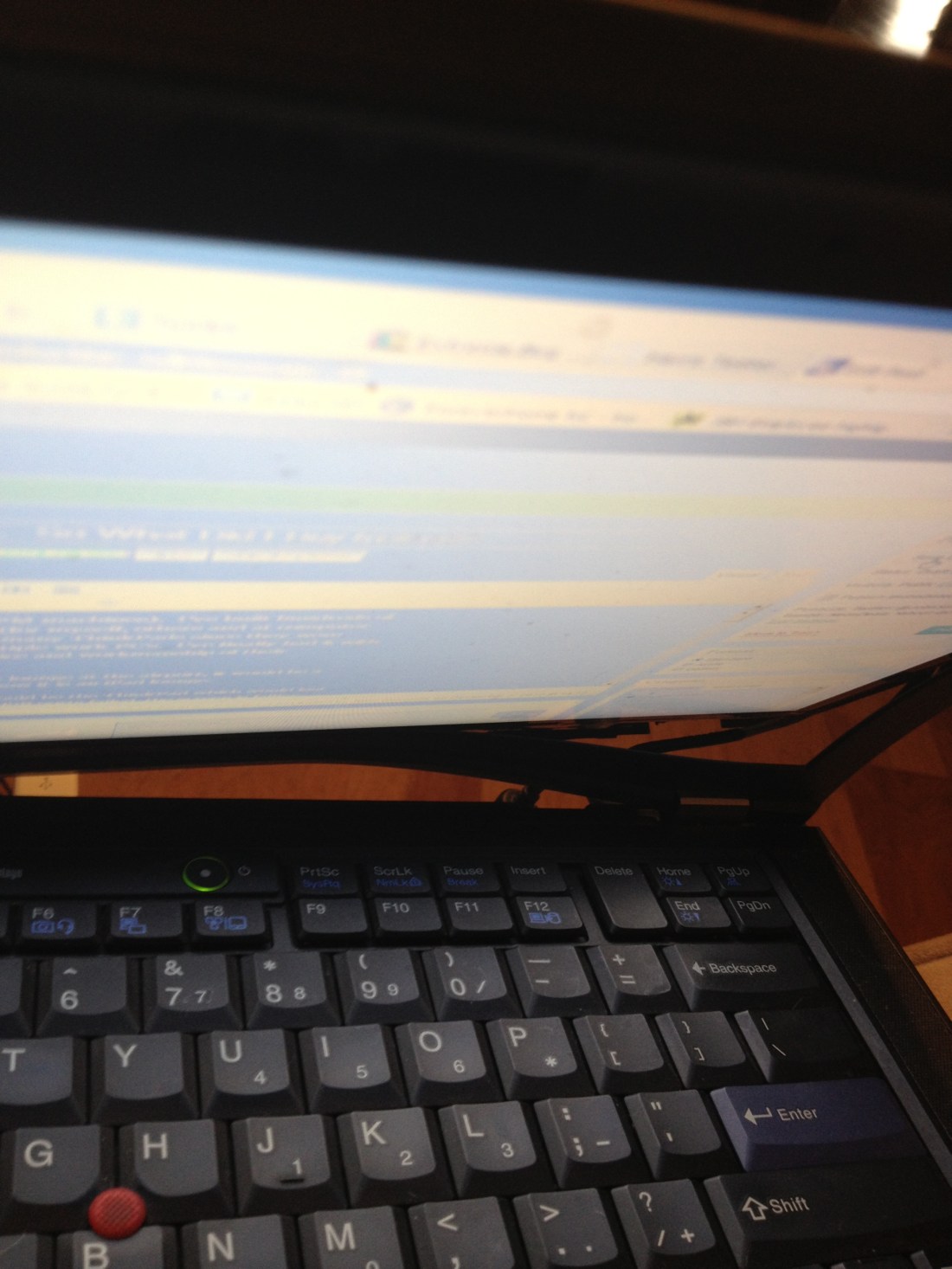
Further, when I retired, I bought what I thought would be the ThinkPad which would last me for at least 5 years (pictured below).  It was the worst PC experience to date, see the beginning below.

In reverse order, after 1.5 years, one of the USB ports failed, the screen is falling apart (for the second time…the first in only months), the battery died in the first 6 months (they fixed that under warranty after 1 month of calls and forcing a manager intervention because customer service blamed me) other hardware and software problems which eventually got fixed over hours of calls (the final fix was always simple and could have been easily accomplished from the start).

I called the Lenovo help desk and not only did they refuse to fix most of my problems (all within the warranty period), but they were with the exception of one person, unhelpful to me and not proficient in English 95+% of the time (some were rude, but tech support is a thankless job).  Note: I like the people from other countries and think that they are hard working so I have no problems with the people, rather the policies they are forced to adhere to put them into positions they shouldn’t be forced into.  I’m clearly calling out the company, not the people here. It’s just in this case we couldn’t understand each other and they mostly were not trained or who couldn’t fix problems and just couldn’t help fix issues Lenovo created.

Here’s what my screen looks like now with use that is less than normal due to my retirement status:

pc pic

SHIPPING DISASTER

This was compounded by the fact that they originally shipped me a computer which was in for repair as I found it had someone else’s  password on it.  Tech support recognized the serial number as someone else’s machine and I had to ship back a PC so that they could ship me what I ordered which  was supposed to be new.  They at first required me to pay for the return shipping for the machine which they wrongly shipped me in the first place.  It took them 5 weeks to get me this wrong machine once I ordered it in the first place, so needless to say, this added to a dissatisfied experience.  Let me summarize it: The 1st machine I received was in for repair which they shipped to me as my new machine.  They finally agreed to pay for the shipping back to them after weeks, but I was in dis-belief by now as I had to get upper management approval 3 levels above my call to tech support to get shipping approved and the machine I ordered sent to me.  This was a 6 week timeframe that I put up with to get a ThinkPad that looks like the one above.

WHAT HAPPENED TO THE COMPANY PURCHASED FROM IBM?

So, what happened when Lenovo bought the PC Division from IBM?  Quality and customer service have apparently suffered, at least for me.   It is fair to note that Lenovo is the PC leader even though PC’s are a dying breed and are now a commodity item, but that the lead is mostly due to HP executive incompetence and Dell lack of innovation.

WORKING FOR IBM PC DIVISION, MORE THINKPAD BACKGROUND AND EXPERIENCE THAN MOST HAVE

I worked with ThinkPads at companies before IBM.  I then did communications for the IBM-PC (PSG) division back in the early 2000’s.  IBM-PCs were a rock solid product that introduced many technologies from the floppy disk, HDD on PC’s, open system motherboard, the start of an incredibly successful industry, creation of millions of jobs, Bluetooth and WiFi to the industry.  It was well accepted by industry leaders as the standard to compare against and I was proud of representing the machines.  By then, we had slipped to about 4th place, but IBM had other priorities by then.  Analysts always recognized that the IBM ThinkPad was the industry leader, albeit most of the time the expensive option.  I never had a problem educating them that it was the industry leader to be compared against.  I also learned from IDC, Gartner, Forrester and others that Dell and HP were sub-standard compared to the ThinkPad.

THE IBM TO LENOVO EMPLOYEE TRANSITION

The co-workers who went to Lenovo were mixed.  The developers were good, with the chief designer being one of if not the best, but he obviously had nothing to do with my 410S.  The Press communications team however was a joke.   Much of the management that I had worked with were handcuffed by the new ownership.   However, with the non-inventor taking over control, changes in leadership including many Dell executives,  it has appeared to make it less than the leader of rugged laptops, a position it once enjoyed.

MY LATEST PURCHASE

Since my ThinkPad failed and the screen basically fell off (I am retired and don’t travel anymore so it didn’t have the wear and tear to justify its condition), the keyboard keeps sticking, ports not working and the other problems I’ve described have forced me to buy a new PC.

Side note: I worked with Microsoft since 1981 in one form or another, as a partner, but mostly as a competitor as Microsoft was very belligerent and went out of their way to be anti-IBM  (see my joint announcement wrap up).  I’ve worked with their products since DOS 1.0 which I still have installed on an original PC at home.  They loved Lenovo when the purchase was made and the difference was an overnight sea change in their attitude of helpfulness and pricing.

So the combination of Lenovo’s product being poor, their customer service being unhelpful led me to buying a MacBook Pro (but I got much more computing power and a brand new experience in helpfulness).

But, both Lenovo and Microsoft lost me as a customer and I can’t be alone.

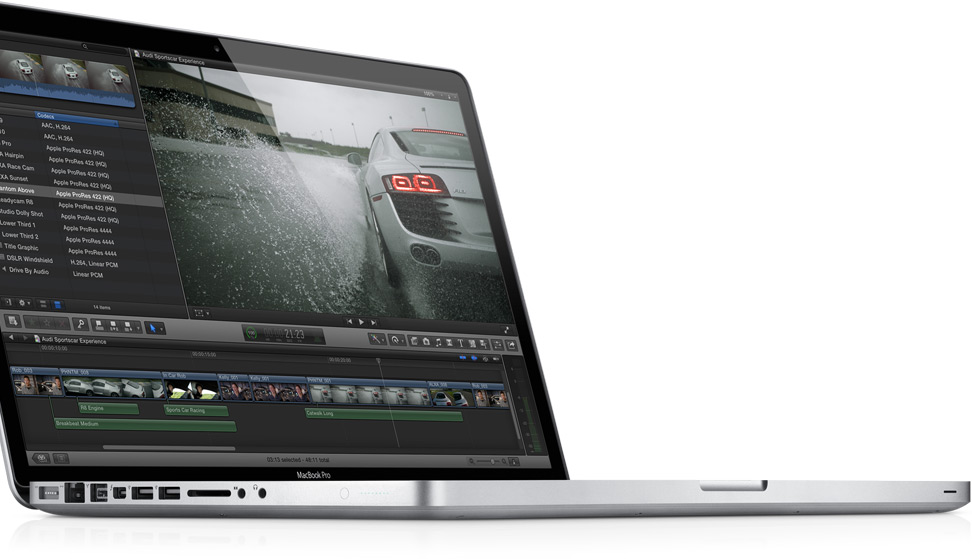
Here is my new computer, a 13 inch Macbook Pro:

macbook pro

It sync’s with my phone and iPad seamlessly.  I don’t have weekly Microsoft security updates or blue screen of death experiences.  It is powerful, I can read Windows files and have converted them, multimedia is a snap, graphics are beautiful and most of all it works without gyrations to make drivers, port configurations and software incompatibilities work.  I have never before been an Apple fan except when I ran an advertising department for a few years and understood artists needs for them.

When managing a store at a computer chain, my store was recognized as the retailer that lead the nation in Apple sales so I do have experience with them.  My store also was a leading promoter of the first Macintosh during the famous 1984 ad time.  In other words, I know them well, but I’ve used Wintel computers most if not all of my life until now.

Further, I called their tech support and went to an Apple store and guess what, they were friendly and helpful, and it just works.  I paid less for the software than the PC version (I just built a multimedia PC for my TV viewing so I am fully aware of company configured, or self built PC’s vs. Mac machines hardware and software.

THE TREND OF PC’S

Mobile devices are killing standard laptops at a rate far faster than laptops replacing desktops, but there is still a need for machines that do more than a tablet until they increase in input efficiency, storage capacity and business application conversion (there are tons of legacy apps still out there as the average person still interacts with COBOL 13 times a day).  This hasn’t caused me any issues with my new laptop though, it just works.

The company that is easy to work with, keeps up with the trends and produces quality equipment will be the one who has market leadership.  I have voted with my money.

Why Newspapers and The News Are Not Only A Dying Model, But Dead

“I do not take a single newspaper, nor read one a month, and I feel myself infinitely the happier for it.” – Thomas Jefferson

I don’t subscribe to the newspaper anymore, but I got one this morning.  I’m sure that it was a teaser to try to get me to subscribe.  Upon reading it, I realized I already knew everything in the paper except the local high school football scores from games after I went to bed.

A DYING MODEL

The subscription rates to newspapers are dying, not even a slow death.  Similarly, the evening news is also a dinosaur.  They report what we knew as much as a full day before.

I am on twitter and read blogs all day long.  I occasionally go to the news sites,  but as I discuss below, their bias (I hold both left and right guilty equally here) usually makes me fact check what I’m trying to find out which defeats the purpose of fact-finding, especially if it involves politics. That subject is pretty much unavoidable these days.

Nevertheless, I enjoy many other subjects which you could read about it on other blog entries if you have nothing better to do, and I find good information about them that is interesting and INSTANT.

I’m a boomer, although a technically savvy one having been in the IT industry all my life.  The Gen X,Y, millennials,  and whomever follows them demand even more instantaneous everything virtually dooming the news model of our prior generation.  Thank you Internet.

THE END OF THE BASTIONS OF NEWS

We have establish that we are now used to getting information instantaneously.  The other reason that the model is dying is that they are biased.  This is ok if you are a neo-con or a loony lefty, but for everyone else (the other 80% given 10% on the edges of left and right) we don’t trust them anymore.

Once, these two sources were the basis of our world and local information.  Besides being static rather than dynamic, they also have stopped being factual sources of information, rather they are partisan, with Fox on one side and CBS, NBC, ABC, CNN, NBC, MSNBC, NYT, WAPO, LA TImes, Reuters, AP, HuffPo, Local News, Local Papers and most other news sources on the other side of issues.  All are positioned in a place that position the facts from a point of view.   Some of them blatantly lie.   Reporting was supposed to be the facts of the story that let the reader make up their mind on their position.

We’ve actually learned that the news has been biased for at least as long as there has been television, we just didn’t have the instant fact checking that the internet and the other sources have provided.

There is a joke from Bernie Goldberg that said if they had been reporting on Moses at Mt. Sinai, the headline would read “Moses get the 10 Commandments from God, and here are the two that we think are important to you”.

Walter Cronkite said that the Viet Nam war was lost during the time that we were winning.  LBJ said that if he’d lost Cronkite, he’d lost America.  We’ve since learned that the then “most trusted man in America” was also one of the most biased.

LIFE MOVES ON

Other things have died and we have lived and moved on.  Black and white TV, network only channels vs. cable TV and landline phones vs. mobile (cell for those in the US) phones.  Such is the fate of newspapers and TV network news.  Here is just one fact concerning the NYT declining rates.  I’m sure you could find somewhere that their subscriptions are increasing, but this would seem deceitful given the nature of digital delivery.

So am I disturbed by this trend?  Actually I didn’t even notice it until I saw the paper in my yard this morning.  I haven’t subscribed for news in many years (note: I get the Sunday paper for the coupons as long as they pay for the 1 day delivery – my sister calls me a tightwad but it leads to becoming this).

I get my news from the above stated sources and know more about what is going on than the anchors have time to present in their biases manner.

So as they say, life moves on.

The Guarantee of Hyperinflation

Economist John Williams of Watchdog.com describes why we will suffer from hyperinflation that will begin no later than 2014 and why.

Open ended QE will cause treasury debt which leads to long range insolvancy of the US Government.  If they had to report income under GAAP (Generally Accepted Accounting Principles)  rules, we are losing $5 trillion annually.   Taking 100% of peoples income would still not pay for this debt.

We are broke.

Government has been kicking the bucket down the road and the result will be inflation.

The global loss of confidence in the dollar happened with the raising of the debt ceiling last year.

The Fed’s primary goal is to keep the banking system solvent.  They haven’t done anything to stimulate the economy.

More evidence that inflation is just around the corner from the Federal Reserve Bank of Dallas.

The PC is Toast, Or Maybe Just a Toaster

Gone are the glory days when the PC would rule over the vaunted Mainframe, putting power at desks without the overbearing DP department overcharging and under delivering past the due date.

What has evolved though is a commodity product that is at best a commodity like a toaster.  You can buy one anywhere to toast your productivity suite, cloud connection or corporate image.  Further, the once dominant Wintel model is being out-cooled by Apple, and outdated by tablet computing.

First, I was mildly shocked when I learned that Lenovo had a policy where you get an allowance and use what you want to, regardless of who made it.  Next comes the inevitable…..

While this isn’t really new news, in fact it’s been a theme for a while now.  But it was confirmed by the lackluster performance of HP, Dell and other manufacturers.   Even IBM, the company that really put the PC in the office of businesses is famous for dumping the low margin business to Lenovo who lucked out in marketshare due to the HP and Dell screw-ups.  This will be short lived as soon as Apple finishes mopping up in China and the real Lenovo cash cow gets malnourished.

All Things Digital confirms the facts via DRAM supply:

As a signpost on the road to the so-called Post-PC Era we’ve been hearing about for so many years, this one is pretty hard to argue with: As of this year, personal computers no longer consume the majority of the world’s memory chip supply.

And while it may not come as a terrible surprise to anyone who’s been paying attention to personal technology trends during the last few years, there’s nothing like a cold, hard number to make the point crystal clear.

Word of this tipping point came quietly in the form of a press release from the market research firm IHS (the same group formerly known as iSuppli). The moment came during the second quarter of 2012. For the first time in a generation, according to the firm’s reckoning, PCs did not consume the the majority of commodity memory chips, also known as DRAM (pronounced “DEE-ram”).

During that period, PCs accounted for the consumption of 49 percent of DRAM produced around the world, down from 50.2 percent in the first quarter of the year. The share of these chips going into PCs — both desktop and notebooks — has been hovering at or near 55 percent since early 2008, IHS says.

As shifts in market share statistics go, it at first seems insignificant until you consider the wider sweep of memory chips in the history of the modern technology industry. PCs have consumed the majority of memory chips since sometime in the 1980s. IHS couldn’t say when exactly when the first personal computers started showing up in appreciable numbers in homes and businesses.

And where are all those memory chips going? Tablets and smartphones for starters. IHS says that phones consumed more than 13 percent percent of memory chips manufactured, and it expects that figure to grow to nearly 20 percent by the end of this year. Tablets — including the iPad — consumed only 2.7 percent of the world’s memory chip supply. The remaining 35 percent, which IHS classifies as “other,” includes servers, professional workstations, and presumably specialized applications like supercomputers and embedded systems.

And given their rates of growth, IHS expects phones and tablets combined to consume about 27 percent of the world’s memory by 2013, while by that time PCs will consume less than 43 percent, making the decline, in the firm’s estimation, irreversible.

Even the much hyped Windows 8 launch doesn’t really do much.  WRAL goes on to say:

Dell executives also indicated that the company is unlikely to get a sales lift from the Oct. 26 release of Microsoft Corp.’s much-anticipated makeover of its Windows operating system. That’s because Dell focuses on selling PCs to companies, which typically take a long time before they decide to switch from one version of Windows to the next generation.

HP’s screw up came when they tried to become an IBM clone.  Dell had their own set of issues as reported by the AP:

Coming off a five-year stretch of miscalculations, HP is in such desperate need of a reboot that many investors have written off its chances of a comeback.

Consider this: Since Apple Inc. shifted the direction of computing with the release of the iPhone in June 2007, HP’s market value has plunged by 60 percent to $35 billion. During that time, HP has spent more than $40 billion on dozens of acquisitions that have largely turned out to be duds so far.

“Just think of all the value that they have destroyed,” ISI analyst Brian Marshall said. “It has been a case of just horrible management.”

Marshall traces the bungling to the reign of Carly Fiorina, who pushed through an acquisition of Compaq Computer a decade ago despite staunch resistance from many shareholders, including the heirs of HP’s co-founders. After HP ousted Fiorina in 2005, other questionable deals and investments were made by two subsequent CEOS, Mark Hurd and Leo Apotheker.

HP hired Meg Whitman 11 months ago in the latest effort to salvage what remains of one of the most hallowed names in Silicon Valley 73 years after its start in a Palo Alto, Calif., garage.

The latest reminder of HP’s ineptitude came last week when the company reported an $8.9 billion quarterly loss, the largest in the company’s history. Most of the loss stemmed from an accounting charge taken to acknowledge that HP paid far too much when it bought technology consultant Electronic Data Systems for $13 billion in 2008.

HP might have been unchallenged for the ignominious title as technology’s most troubled company if not for one its biggest rivals, Dell Inc.

Like HP, Dell missed the trends that have turned selling PCs into one of technology’s least profitable and slowest growing niches. As a result, Dell’s market value has also plummeted by 60 percent, to about $20 billion, since the iPhone’s release.

That means the combined market value of HP and Dell — the two largest PC makers in the U.S. — is less than the $63 billion in revenue Apple got from iPhones and various accessories during just the past nine months.

So now you can go to a consumer electronics store or go online and pick up a PC, a video game and a toaster, all about the same difficulty of decision.  The model is dying and a new paradigm is taking place somewhere between mobile devices and tablets with a combination likely just around the corner, but your Thinkpad is a gravestone in the near future.
It is now reported that Mobiles are the devices most turned to for online activity, banking and other internet activity.

“Cell users now treat their gadget as a body appendage,” Lee Rainie, the Director of the Pew Research Center’s Internet & American Life Project, told Mashable. “There is striking growth in the number of people who are taking advantage of the growing number of functions that these phones can perform and there isn’t much evidence yet that the pace of change is slowing down.”

The study, released yesterday by Pew Internet concludes that cellphone usage is increasing in basically every department, especially online activities. One in two people now check their email on their phone, up from 19% in 2007 and the number of Americans surfing the web on-the-go has doubled too, going from 25% in 2008 to 56% today.

People are also starting to be less reluctant to use their phones for sensitive activities that were almost considered taboo in a recent past, like online banking. Almost one in three Americans (29%) now use their phones to check their bank account, a considerable increase from just one year ago, when only 19% did. And one in three people are using their mobile device to look for health information as well. Just two years ago that figure was as low as 17%.

Phones are also becoming a substitute for other traditional devices like photo and video cameras. 82% of people who responded to the survey use their phones to snap pictures and 44% use it to record videos

RIM – RIP

Update: Morgan Stanley on 6/25/12 confirms my premise that RIM is Essentially Broken: 

Update: Yahoo shuns Blackberry from Fun Smartphones for all employees:

8
inShare

In a bold move reportedly instigated by new CEO Marissa Mayer, aging web giant Yahoo plans to outfit every one of its US employees with a new iOS, Android, or Windows Phone 8 device. According to an internal memo published by Business Insider on Saturday, the company is offering workers a choice between Apple’s iPhone 5, the Samsung Galaxy S III, the HTC One X, the HTC Evo 4G LTE, and Nokia’s Lumia 920, with all bills taken care of. Yahoo is also discontinuing IT support for BlackBerry devices, seeking to move away from RIM’s enterprise-focused platform.

“We believe the only way RIM remains a viable entity is at a fraction of its current size, a transformation that erases much of its earnings power,” the analysts wrote. “The next 9 months likely see rapidly deteriorating fundamentals on the one hand offset by stories of potential strategic options on the other.”

Indeed, there was more unconfirmed deal speculation just this weekend, as The Sunday Times reported the BlackBerry maker was considering selling its handset-making unit or a stake in the company.

What I don’t get is why the Government just made it the standard handset.  Are they that out of touch?

Update: RIM at a new low, sort of proving the following is on track. Executives are now bailing. 

Now they are laying off people.  I’ll be quoting them along with Palm, OS/2, Token Ring and other technologies that used to be.

Original story starts here.

Rarely do I write about the technology that I replaced because I’m usually so excited about the replacement.  In this case I’ll make an exception.  I already wrote about my new phone, but as much as I wanted the new phone, getting rid of my blackberry was more important.  Rob Enderle reminded me of this in his tech trends blog.

At a Lotusphere show not too long ago, we did an announcement with RIM and Notes (it was an announcement of a product we were going to release at a later date).  Not only was I underwhelmed by the product, the hardware and software technology from RIM was as cool as mud huts compared to new construction.  On top of this, when I offered to help the RIM executives for gratis on very obvious marketing oversights, they had an attitude that belied the fact that they already had iPhone daggers fatally in their hearts and didn’t even know it. It now looks like it’s going to cost them their jobs.   I was treated as if I was dust (I’m being nice to them) by their executives.  Notes was almost impossible to use on a blackberry at first.  It was a D- at best.

Update: Now I know he should have listened to me instead of being so arrogant.  I could have helped them….and I’m not trying to be conceited, but I knew what was going on much more than the leader of RIM.

I knew then that not only was RIM in trouble as a company, I disliked the blackberry as a piece of technology almost more than any I’ve had in 30 years (I’ve had more than most in the last 30 years).  I saw the crackberry addiction it caused in some folks which I didn’t like.  I also saw that if you had a blackberry (before iPhone days), you just signed up for a 24/7 availability.

The first one I got for free, and promptly got rid of in a month as it was more trouble than it was worth.  The last one I’ll ever have is because my then company had me get one when I wanted a real phone/data device instead.

My problem is solved.  Too bad about RIM…their once leadership position is now only a memory with recent market share decline.

It looks like I’m not the only one who believes they are in trouble.  Their Board is not helping out either.

Sales figures show the same decline.  It was not even nice knowing you.

So throw the Blackberry on the technology rubbish pile along with the Palm, OS/2, Token Ring, Newton and a host of others.  There, now they are on the way to being a good product back when Britney Spears was hot.

Microsoft, Being Chipped Away by Google, Apple, Everyone

Every time a company comes up with a good idea, another company finds a way to one up it.  Patents, trademarks, copy-writes  or any other legal means don’t stand in the way of a better idea.

This also works when you don’t have a better idea, but your product still dominates the market, mostly due to better marketing.  Yes, there is a good percentage of people don’t think Windows is a good product.  Most have experienced the Blue screen of death. Booting takes forever, drivers, compatibility, price and any number of factors make it a product that is only doing well because of marketing and the force of Microsoft.

Apple OS, Linux and even OS/2 were or are better operating systems.  Now the Chromebook is out.  I won’t pontificate as to whether it is better or not, but it will take share away from Windoze as the OS of choice.   There are many Google lovers or users out there and for the price of a Chromebook, you could only get Windows 7 from Microsoft.

I’ve often said that Microsoft will have to pull an IBM by re-inventing itself, but their phone OS, gaming, MP3 players and Office haven’t really done the trick.  They are are the quintessential one trick pony.

Time will tell what will happen, but the introduction of the Chromebook is just another layer of the onion being peeled away.  Good thing they have a lot of cash in the bank, because they will need it to buy a better product.  They sure haven’t invented one……ever.

Analyst Predictions for 2010. Everyone is Going Out On Basically The Same Limb

I’ve been keeping track of the analyst predictions waiting for enough time for them to post a listing of them.  I think that since it is the last day of 2010, and that there is a sufficient amount of them out there, it is time  to list them. Analysts are the prognosticators of the IT Industry and they should be right, but then meteorologists tell us about the weather, and they are great if they are only 50% right.  In reality, they can’t tell us what next week will really be and yet we are basing many decision on what 20 years from now will be.  I’m trusting that IT analysts are more accountable and have more tangible facts less subject to acts of God than the weather.

In reality, Carter Lusher and SageCircle is where you should go to get your A/R best practice as to what to do with these predictions, but I have to make some calls of my own.  Here is what I’m going to use the predictions for in addition to Carters recommendations:

  1. Use it as the basis for discussion with the analyst showing that I have been reading and following them.
  2. Using them as analysts to select for briefings and consults based on their area’s of concentration
  3. Good natured ribbing if they really blow it at the end of the year. (note: not necessarily an A/R best practice here)
  4. Use it as part of my A/R plans to present to the executives I support.

So here is my listing.  I’ll note that they are in no particular order as I’m getting them from my feed reader as they come  up.  I like and work with almost everyone on this list, so I am not going to show favorites in a listing order, it will be entirely random.  You will note a trend very quickly as to where most of them are going for the year.  See if you can pick it out.

Analyst Predictions for 2010

IIAR video of Gideon Gartner on the state of the IT Analyst Industry.  (Note that this is not a part of the trend, just that it came up first).

IDC Webcast by Frank Gens, Robert Mahowald and Henry Morris. It has a link to the video which is worth watching, but the theme begins here with the discussion of the Cloud.  I’m glad they consider the Hybrid model.

Laurie McCabe of Hurwitz Associates and her 2010 Top 10 SMB Technology Market Predictions. At least she waits until number 7 to get to Cloud, thanks Laurie.

Bruce Tempkin of Forrester discusses Gen Y.  While not really a 2010 prediction, there is no denying the fact that the attitude, social media ability of Gen Y’rs and their length of patience is a big HR issue we all face.  They will help define the workforce make up as boomers exit.

James Governor of Redmonk leads the list with 20 predictions.  Note the continuation of the trend as James has Cloud at numbers 1 and 12.  I admire him for also considering the hybrid model as the cloud is not one size fits all.  As I work with James quite a bit, I’m surprised to see Google and Green further down the list than I expected.

Carter Lusher reprimands the A/R Community to pay attention to Social Media or suffer the consequences.

Amy Wohl and you guessed it, 2010 Predictions on SaaS and the Cloud. Note the build up in the trend.  I still swear to random selection, but Cloud is getting a lot of attention.

Judith Hurwitz titles her predictions as: Predictions for 2010: Clouds, mergers, Social Network and Analytics.  I’ll give her credit for the Social Networks as I delve there in my predictions also.

Claire Schooley again talks about Gen Y.  While not an official 2010 prediction, there is no avoiding that we’ll  have to address the issues of this culture in the  workplace.

Rob Enderle in 2008 on 2009 highlighting Security. I’m including this as Security becomes an issue with the uptick in terrorist activity, both online and direct attack like flight 253.

Jonny Bentwood also covers this topic in his yearly round up. He actually gets to it first and we cross over quite a few, but I’m not going to use everything in his list so that you have a reason to to there and check out additional predictions I’m not covering.

Lee Odden’s 12 Digital Marketing Predictions. There is a lot of good Social Media info here to look at.

Rob Enderle checks in again with one of my beliefs, that the Private Cloud will Win over the Public Cloud Model. Anybody picking up the Cloud trend in predictions yet?

John Levitt from AnalystXpress on the Top 10 Wireless predictions for 2010. Of course Cloud makes number 3.

Chris Collins of Yankee Group posts a Webinar on 2010 predictions.  Cloud Computing is a tag needless to say.

David M Smith of Gartner discusses the Psychology of Predictions, a different way of looking at it starting with caring about being right.

Ray Wang and Jeremiah Owyang discuss what’s coming to 2010 in a video with Robert Scoble.

UPDATE: Laura Cecere and Alan Johnson Of AMR have come to the table with another set of predictions.  You need to be an AMR client for this one.  Here is a link to their press release.

2010 Client Virtualization by Benjamin Gray

So between my list and Jonny’s list, you have most of the predictions for 2010.  Will the analysts be as good or better than the weathermen?  Only the Shadow knows.

My Turn at Making Predictions

Since I’m listing others predictions, it’s only fair that I put out my own.  Disclaimer: I’m not an analyst, so I don’t feel any need to get to 10.

1. The Cloud is important, although I think the hybrid and private models are more important than the all everything public model

2. Twitter will continue to erode the number and quality of good bloggers.

3. We need to find a new Twitter as the current model has now been compromised in security, and there are just too many people on.  We need another back channel to connect with our real business contacts.  Plus, I’m an early adopter, so let’s find that new best method.

4. All predictions go out the window if there is another Terrorist attack.  The top prediction will be Security.

5. Success in the economy will be defined as less of a loss than we expected.

6. Who you hire from Boomers to Gen Y matters to your ability to connect to the tech crowd when considering hiring practices.

Final note.  At some point this year, I’m moving Delusions to a new host.  Mine is bad so obviously I’m publshing on a back up blog.  Stay tuned for that .