U.S. Scientists Assembled Viruses That Were Designed by AI — They Were Shocked When They Started Hunting Down Bacteria and Reproducing

Now we are allowing AI to create new viruses?  Are we mad?  What scientists at Stanford University are doing sounds like the plot to a really bad disaster movie.  Viruses that are designed by AI are assembled by crazy researchers, and then those viruses start hunting down bacteria and reproducing.  Needless to say, it doesn’t take much imagination to see where the rest of the movie would go.  I realize that all of this sounds completely insane, but this is actually happening in real life.  Our scientists really are assembling viruses that have been dreamed up by AI, and those viruses really are “capable of hunting down and killing strains of Escherichia coli”

Scientists have created the first ever viruses designed by artificial intelligence (AI), and they’re capable of hunting down and killing strains of Escherichia coli (E. coli).

“This is the first time AI systems are able to write coherent genome-scale sequences,” says Brian Hie, a computational biologist at Stanford University, California. “The next step is AI-generated life,” says Hie, although his colleague Samuel King adds that “a lot of experimental advances need to occur in order to design an entire living organism”.

We are bringing viruses into existence that have never existed before.

story

I guess when AI gets smart enough to know that we can pull the plug, the robots will kill the humans. The story always ends that way. There is some stuff we should just leave alone

USAID Quietly Shipped 11,000 Virus Samples to Wuhan Lab Withouth Formal Agreement or Oversight – Why?

The U.S. Agency for International Development (USAID) quietly funneled thousands of viral samples — including potential ancestors of COVID-19 — to the now-infamous Wuhan Institute of Virology (WIV) without a formal agreement, documentation, or even a contingency for U.S. access, The Daily Caller reported.

The shocking details, buried in documents obtained through a Freedom of Information Act (FOIA) lawsuit by the nonprofit U.S. Right to Know, show USAID shipped 11,000 virus samples from China’s Yunnan Province — home to some of the closest known relatives of the COVID-19 virus — directly to the WIV, the epicenter of the global pandemic.

According to internal sample disposition records obtained by Daily Caller, USAID’s PREDICT program—run by EcoHealth Alliance and University of California-Davis—facilitated the storage and long-term custody of over 11,000 virus-laden samples in Chinese laboratories.

Shockingly, there was no formal partnership agreement with the Chinese labs and no clearly defined safeguards to prevent misuse or diversion of these high-risk biological materials.

Among the documented locations was the now-infamous Wuhan Institute of Virology, where:

  • 3,000 human samples, including blood serum and viral transport medium, were being held.
  • 6,380 bat samples and 1,671 rodent samples were stored under lock and key.

more

When will these assholes leave us alone? What was USAID really used for?

This Doesn’t Make Me Feel Better About The Human Race Continuing, If They Do

The U.S. Agency for International Development (USAID) shipped thousands of viral samples to a lab in Wuhan over the course of a 10-year program even though it had no formal agreement with the lab in place, according to previously unreported documents.

The documents show that USAID funded the exportation of 11,000 samples from Yunnan Province, where some of the closest relatives of the COVID-19 virus circulate, to Wuhan, the epicenter of the pandemic, with no apparent plan for ensuring the samples were not misdirected to bioweapons and remained accessible to the U.S. government.

A $210 million USAID public health program called PREDICT, steered by the University of California-Davis, collected viral samples in countries throughout the globe but lacked long-term storage when funding dried up, according to rudimentary plans in 2019.

USAID’s sample dispensation plan for China is sparse: “No need [sic] information from Yunnan. They were never an official lab partner for PREDICT. All samples they helped collected [sic] are sent to, tested, and stored in Wuhan.”

The “lab” refers to the Wuhan Institute of Virology (WIV). WIV was a close partner of USAID contractor EcoHealth Alliance and a slated partner for a PREDICT-like program supported by the State Department. The lab has poor biosafety practices and ties to the People’s Liberation Army (PLA).

story

Is This the Man Who Created Covid-19 in Fauci’s US Lab? Figures It Would Be At UNC-CH

Top US virologist Ralph Baric engineered the Covid-19 virus SARS-CoV-2 in his lab at the University of North Carolina as part of his work in connection with the 2018 DEFUSE funding proposal. That’s the story that’s been going round the internet for some months now (and not just in alternative media) and it all looks very damning for Baric and those connected with his research.

Details of the DEFUSE project were first leaked by Major Joseph Murphy, an employee of US military research agency DARPA, in the summer of 2021 and further details of earlier drafts have come to light this month thanks to public record requests from U.S. Right to Know (USRTK).

In DEFUSE, Baric proposed to create a virus that was, to most intents and purposes, SARS-CoV-2. The proposal included inserting a furin cleavage site into a coronavirus spike protein, an order for the restrictive enzyme BsmBI, the search for a binding domain that would infect ACE2 human receptors and a requirement for a viral genome around 25% different to SARS.

The SARS-CoV-2 virus contains a furin cleavage site in its spike protein, its genome includes the restrictive enzyme BsmBI, it has a receptor binding domain finely tuned to infect the ACE2 human receptor and its genome is around 25% different to SARS. A number of virologists have said that such features make SARS-CoV-2 a smoking gun for an engineered virus.

Baric obtained a patent for such novel viruses in 2018, just as he was putting DEFUSE together. In DEFUSE he proposed to infect wild Chinese bats with his newly patented viruses.

More here if you want to read it, but it’s pretty damning, and he worked for Fauci

The Top 10 Lies Told About Covid-19

Here are the 10 biggest falsehoods—known for years to be false, not recently learned or proven to be so—promoted by America’s public health leaders, elected and unelected officials, and now-discredited academics:

1. SARS-CoV-2 coronavirus has a far higher fatality rate than the flu by several orders of magnitude.

2. Everyone is at significant risk to die from this virus.

3. No one has any immunological protection, because this virus is completely new.

4. Asymptomatic people are major drivers of the spread.

5. Locking down—closing schools and businesses, confining people to their homes, stopping non-COVID medical care, and eliminating travel—will stop or eliminate the virus.

6. Masks will protect everyone and stop the spread.

7. The virus is known to be naturally occurring, and claiming it originated in a lab is a conspiracy theory.

8. Teachers are at especially high risk.

9. COVID vaccines stop the spread of the infection.

10. Immune protection only comes from a vaccine.

Source

What if embedded in all of this is perhaps one more lie?

The greatest lie. 

The one lie to rule them all. 

This is the one that will come back to haunt us over and over if we do not call it out by name and lay plain its resounding lack of basis in fact. 

It’s the lie they have been trying to sell for decades and failing (or at least having only moderate success and thus wreaking only moderate havoc).

It’s the one lie to rule them all. The one lie to rule us all. The truly big lie constituting a forest that has been lost for the trees and perversely therefore winds up being reinforced by the very debate about the little lies. And that lie is this:

Pandemics are dangerous to modern societies.

Because the fact is that they are not. 

As was the case with the Spanish flu, perhaps the last truly high excess death global pandemic to bedevil humanity, much of the damage was done by horrible reactions. and the parallels may be more poignant than people realize.

One of the enduring causes of fear during the 1918 flu was the way that it seemed to be killing otherwise young and healthy people (especially soldiers) in a matter of days. They would be a bit, sick then suddenly die of massive organ failure and “wet hemorrhagic lungs.” The progression was incredibly fast, seemingly irreversible, and was stacking people who really ought to have been low risk in mortuaries like cordwood. This made risk, CFR, and IFR look horrifying and fear near universal. 

If it could do this to a solider in his prime in a matter of days, every last one of us should be terrified.

But this is simply not a realistic outcome. In a modern society (even pre-antibiotics) it basically doesn’t happen. These are not the pre-sanitation/most people do not get enough calories days of the Black Death. 

Diseases that kill at high percentages tend not to spread because killing the host is evolutionarily maladaptive. It’s like trying to conquer the world by burning down your own house and car. Even the really nasty historical killers like smallpox were only infecting ~400k people a year by the late 1800s and excursions above 1 death/year per 1,000 population during outbreaks were very rare not in spite of, but because the fatality rate was so high. 

But respiratory diseases are different and tend to spread far more. Fatality rates are low. The claimed Spanish flu CFR was always suspicious in this regard. And there may be a reason:

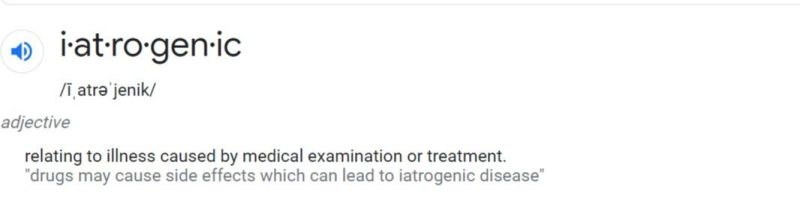
There is actually quite a lot of convincing evidence that many of the “young, healthy deaths” in Spanish flu were iatrogenic. This is a word that’s going to come up a lot and a topic that’s going to be the big field of debate around covid going forward. It’s probably one of the most important scientific questions in the world right now. So let’s define it:

iatrogenic

Loosely put, iatrogenic death is when the doctor kills you. And there is a long and unpleasant history on that one from Benjamin Rush bleeding George Washington to death to killing “witchy” cats to stop a plague carried by the fleas of the very rats they were eating to (and especially) new “wonder drugs” that are poorly understood but that rapidly go into widespread use. 

And one of those drugs was aspirin.

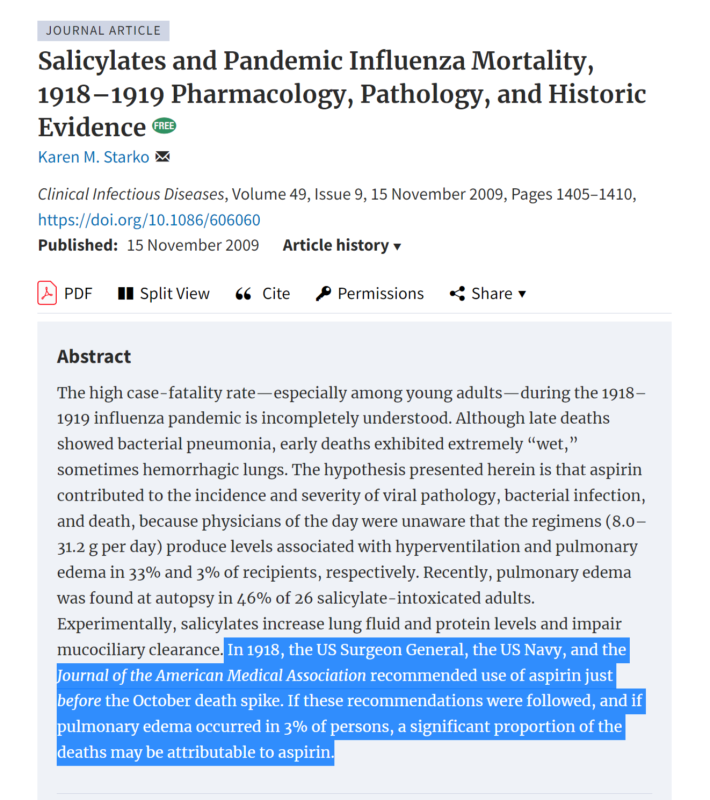
Aspirin had just come into widespread availability in 1918 (and Bayer was rushing it to market for the pandemic). It was the new wowie-zowie drug and doctors (and especially militaries) all over the world fell in love with it. They prescribed it widely to those with Spanish flu. In doses ranging from 8 to 31 grams per day. Oopsie.

A typical aspirin today is 325mg and max dosing per day is ~4 grams. 

A toxic dose is 200-300mg/kg of weight. That’s about 20g for a 180 pound person. 

So 31g is “You’re going to die really, really fast and there is not a damn thing anyone can do to stop it once you take that dose.”

This is why incredible caution should be exercised around large departures from tested and true medical practice and new pharma modalities and products.

Stop me if any of this starts to sound familiar. (study HERE)

Salicylates

The unprecedented overall mortality and the mortality rate among young adults during the 1918–1919 influenza pandemic are incompletely understood. Deaths in the United States peaked with a sudden spike in October 1918. Later, Wade Hampton Frost [2] studied surveys of 8 US cities and found that, for every 1000 persons aged 25–29 years, ∼30% were infected with influenza virus, and 1% died of pneumonia or influenza. This 3% case-fatality rate has been called, “perhaps the most important unsolved mystery of the pandemic” [3, p 1022]

This case fatality rate has never looked even remotely plausible for flu. You simply do not get a respiratory disease like that in a modern (or possibly any) society, especially not in young, healthy people. It’s just not a thing. 

But widespread poisoning by well-meaning medical professionals who have no idea how dangerous the products and procedures they are playing with is.

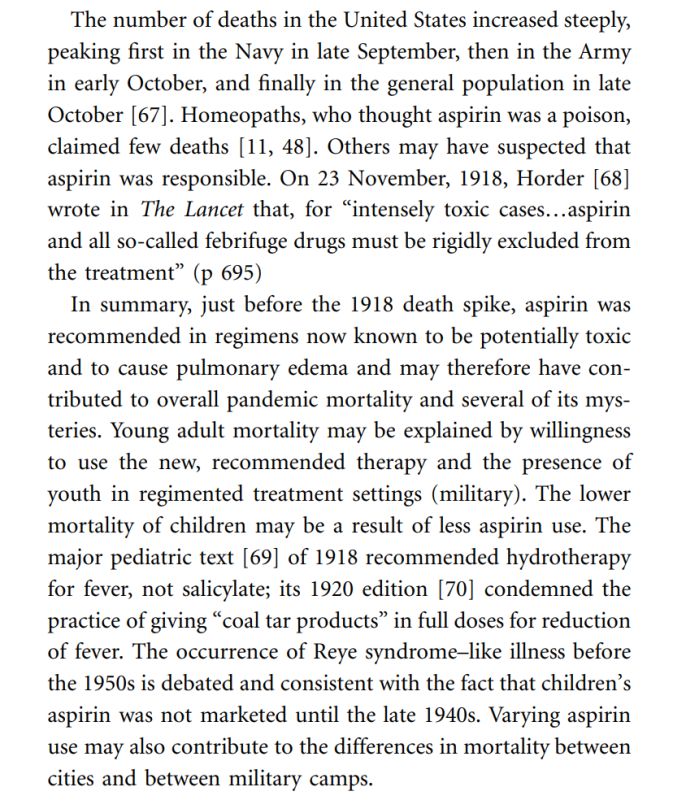
Official recommendations for aspirin were issued on 13 September 1918 by the US Surgeon General [64], who stated aspirin had been used in foreign countries “apparently with much success in the relief of symptoms” (p 13), on 26 September 1918 by the US Navy [29], and on 5 October 1918 by The Journal of the American Medical Association [31]. Recommendations often suggested dose regimens that predispose to toxicity as noted above. At the US Army camp with the highest mortality rate, doctors followed Osler’s treatment recommendations, which included aspirin [48], ordering 100,000 tablets [65]. Aspirin sales more than doubled between 1918 and 1920 [66].Again, anyone starting to pick up a bit of a rhyme in the history here?

Navy Army

The similarities to recent events are more than a little striking. (Bold mine)

Autopsy reports by pathologists of the day describe extremely wet, sometimes hemorrhagic lungs in early deaths. On 23 September 1918 at Camp Devens in Massachusetts, 12,604 soldiers had influenza, and 727 had pneumonia; after examining the lungs of a dead soldier, Colonel Welch concluded, “This must be some new kind of infection or plague” [48, p 190]. What struck E. R. Le Count [49], consulting pathologist to the US Public Health Service, as most unusual was the amount of lung tissue actually “pneumonic” seemed “too little in many cases to explain death by pneumonia.” He saw a thin, watery, bloody liquid in the lung tissue, “like the lungs of the drowned,”

And as ever, bigger hammer theory tends to rise to the fore and the terrible tenet of “it’s not working so do it harder” comes into play. 

GRTWT

RAIR – Pharmaceutical Whistleblower: Covid and the ‘Toxic Vaccines’ are Bio-Weapons Created by U.S. Department of Defense

From Rair

“Really this is a military operation, war crimes and atrocities covered up as a health event.” 

Perhaps the biggest existential question of our times is where exactly did covid-19 come from?

According to Sasha Latypova, a Russian-American, former pharmaceutical industry research and development executive, and Katherine Watt, a para-legal researcher, and philosopher, it’s an inside job. Covid-19 is an act of bio-warfare perpetrated by the U.S. Department of Defense (DoD) on the U.S. and worldwide populations in two stages. 

The first step was a virus that frightened the living daylights out of people already primed for the next disaster. The second was the rollout of toxic “vaccines” designed to cause further harm and death. “They were designed to be toxic, with intent to cause harm,” Latypova told L4Atv. “It looks like this was a virus created by the U.S. government.”

While the narrative peddled by mainstream media concerning the origins of the pandemic has evolved, starting as a zoonotic virus (One that moves from animals to humans) from a wet market in China to the acknowledgment of the possibility of accidental release of a gain-of-function virus from the Wuhan lab, that may or may not have been funded by the National Institutes of Health (NIH), Latypova and Watt have shared documented research that points to the United States DoD calling the shots. 

The rollout of the pandemic and subsequent vaccination campaign has been many years in the making, say the pair. One example of the many that the pair gives is that the DoD issued multiple contracts in Ukraine for covid research and covid countermeasures, some dating back to 2012, others more recently, immediately before the declaration of the pandemic.

In the way that David Martin, underwriter and patent expert, demonstrated intent when in 2021 he traced the history of patents filed for the novel coronavirus by the National Institutes of Health (NIH) and Moderna, long before the pandemic was declared, Watt has traced the legal framework for the exploitation of the pandemic to limit the freedom of citizens worldwide. “We allowed criminals to write laws for themselves,” she says. “And while it makes no sense at all, it does explain why things unfolded as they did. The basic idea is that public health has been militarized, and the military has been turned into a public health front, or Potemkin Village, such that they are using public health language and laws to actually carry out a military campaign. I would call them DoD weapons.”

The weapons to which Watt is referring are threefold; first was informational – the use of propaganda and censorship. The second was psychological – the use of fear and terrorism. The third was chemical and biological – the widespread use of pharmaceuticals and vaccines, in reality, toxins and pathogens. 

“This project has been going on for centuries: globalist and central bankers and many related organizations have been trying to get entire control of people through military and banking programs,” asserts Watt.  “They kicked the public health aspect of it into higher gear in the 1930s and 1940s. In the mid-60s, we saw them inducing suicide and homicide by fraudulently labeling poisons as medicines, or as vaccines, or as prophylactics and telling people that submitting to that poisoning process was their civic duty. We saw that during covid with the shorthand for ‘do this or kill your grandma message.’”

The financial control starts at the top with the Bank for International Settlements (BIS) and cascades down through the financial system, says Watt.  “The cornerstone is the World Health Organization (WHO). The WHO is not a health organization but a military organization. It is the military arm of the One World Government they are trying to set up. Basically, the International Health Regulations, currently going through another round of amendments to make them worse, called on national governments to strengthen their own domestic laws to fund more programs for surveillance, testing, detention and quarantine, physical control, and forced treatment during international outbreaks of communicable diseases. The pretext they used – it was bankers doing this – was that they needed to protect international trade. The real intent was to transfer sovereignty for government from the national state to the WHO and BIS automatically when a public international health emergency has been declared. Congress and U.S. presidents complied.”

Over time, Congress and one U.S. administration after another have brought in laws, amendments to these laws, and executive orders to whittle away at citizen freedoms. Examples include the Patriot Act, The Homeland Security Act, the National Vaccine Program, the Emergencies Use Authorization, the Public Health Emergencies Platform, and the Chemical and Biological Weapons Program, to say nothing of the use of OTAs (Other Transactions Authority) to issue contracts, all designed to create a legal framework for controlling our lives. 

“Trump and Biden passed several further congressional acts, funding to reinforce the structure to build out the program,” asserts Watt. “Government has built a huge public and private funding stream for military lead bio-weapons research and use, eliminated informed consent, by reclassifying people who could potentially be carrying a disease as presumptive national security threats, so that you can do anything you want to them because you are on a war footing.”

 While Watt has been pursuing research on the legal framework for the pandemic maneuvers since 2020, her assertions became abundantly clear in April 2022 with a False Claims case brought against Pfizer by Brook Jackson. “It is not a vaccine; it’s a DoD prototype,” says Watt. “Pfizer said they never had to do trials and were never obligated to prove safety or efficacy. And on Oct 4th, 2022, the U.S. govt endorsed that view, basically saying that clinical trials were never material or necessary for the DoD to pay the contractors for producing and distributing the bio-weapons known as covid-19 vaccines.”

When Latypova discovered Watt’s legal research, the whole story began to make sense. As a pharmaceutical specialist with 25 years of experience, she couldn’t understand why no regulatory authorities were reacting to the alarming safety signals produced by the vaccines from the outset. She has used public documents to prove her case. 

“I immediately uncovered the huge deficiencies and problems in the development of these biowarfare agents – irregularities from regulatory quality perspectives, manufacturing issues,” says Laypova. “It was very puzzling to me why no regulatory agency in the world was taking any action on any of this – not on adverse events, deaths, horrific side effects. And they took no enforcement on all the manufacturing non-compliance, lack of good laboratory practices, etc. When I found the legal basis for this, the universe immediately started making more sense.  Really this is a military operation, war crimes and atrocities covered up as a health event.” 

Latypova’s opinion is only further confirmed by the fact that the response to the declaration of the pandemic by the U.S. government was to put the National Security Council (NSC) in charge of covid policy. “This is completely irregular. According to all previous plans, before 2022, Health and Human Services (HHS) was supposed to be in charge, which is reasonable because they are a health agency. Now we have the NSC in charge, and this consists of defense and intelligence heads. They’ve been treating it as an act of war from the beginning; they just didn’t tell people.” 

Watch Sasha Latypova, & Katherine Watt, along with fellow big-pharma scientist Philip Altman and LTC (Ret.) Dr. Pete Chambers, following discussion:

More Covid Mask Lies

Care of the Cochrine Library

Do physical measures such as hand‐washing or wearing masks stop or slow down the spread of respiratory viruses?

Key messages
We are uncertain whether wearing masks or N95/P2 respirators helps to slow the spread of respiratory viruses based on the studies we assessed.

Hand hygiene programmes may help to slow the spread of respiratory viruses.

How do respiratory viruses spread?
Respiratory viruses are viruses that infect the cells in your airways: nose, throat, and lungs. These infections can cause serious problems and affect normal breathing. They can cause flu (influenza), severe acute respiratory syndrome (SARS), and COVID‐19.

People infected with a respiratory virus spread virus particles into the air when they cough or sneeze. Other people become infected if they come into contact with these virus particles in the air or on surfaces on which they land. Respiratory viruses can spread quickly through a community, through populations and countries (causing epidemics), and around the world (causing pandemics).

Physical measures to try to prevent respiratory viruses spreading between people include:

· washing hands often;

· not touching your eyes, nose, or mouth;

· sneezing or coughing into your elbow;

· wiping surfaces with disinfectant;

· wearing masks, eye protection, gloves, and protective gowns;

· avoiding contact with other people (isolation or quarantine);

· keeping a certain distance away from other people (distancing); and

· examining people entering a country for signs of infection (screening).

What did we want to find out?
We wanted to find out whether physical measures stop or slow the spread of respiratory viruses from well‐controlled studies in which one intervention is compared to another, known as randomised controlled trials.

What did we do?
We searched for randomised controlled studies that looked at physical measures to stop people acquiring a respiratory virus infection.

We were interested in how many people in the studies caught a respiratory virus infection, and whether the physical measures had any unwanted effects. 

What did we find?
We identified 78 relevant studies. They took place in low‐, middle‐, and high‐income countries worldwide: in hospitals, schools, homes, offices, childcare centres, and communities during non‐epidemic influenza periods, the global H1N1 influenza pandemic in 2009, epidemic influenza seasons up to 2016, and during the COVID‐19 pandemic. We identified five ongoing, unpublished studies; two of them evaluate masks in COVID‐19. Five trials were funded by government and pharmaceutical companies, and nine trials were funded by pharmaceutical companies.

No studies looked at face shields, gowns and gloves, or screening people when they entered a country.

We assessed the effects of:

· medical or surgical masks;

· N95/P2 respirators (close‐fitting masks that filter the air breathed in, more commonly used by healthcare workers than the general public); and

· hand hygiene (hand‐washing and using hand sanitiser). 

We obtained the following results:

Medical or surgical masks

Ten studies took place in the community, and two studies in healthcare workers. Compared with wearing no mask in the community studies only, wearing a mask may make little to no difference in how many people caught a flu‐like illness/COVID‐like illness (9 studies; 276,917 people); and probably makes little or no difference in how many people have flu/COVID confirmed by a laboratory test (6 studies; 13,919 people). Unwanted effects were rarely reported; discomfort was mentioned.

N95/P2 respirators

Four studies were in healthcare workers, and one small study was in the community. Compared with wearing medical or surgical masks, wearing N95/P2 respirators probably makes little to no difference in how many people have confirmed flu (5 studies; 8407 people); and may make little to no difference in how many people catch a flu‐like illness (5 studies; 8407 people), or respiratory illness (3 studies; 7799 people). Unwanted effects were not well‐reported; discomfort was mentioned.

Hand hygiene

Following a hand hygiene programme may reduce the number of people who catch a respiratory or flu‐like illness, or have confirmed flu, compared with people not following such a programme (19 studies; 71,210 people), although this effect was not confirmed as statistically significant reduction when ILI and laboratory‐confirmed ILI were analysed separately. Few studies measured unwanted effects; skin irritation in people using hand sanitiser was mentioned.

What are the limitations of the evidence?
Our confidence in these results is generally low to moderate for the subjective outcomes related to respiratory illness, but moderate for the more precisely defined laboratory‐confirmed respiratory virus infection, related to masks and N95/P2 respirators. The results might change when further evidence becomes available. Relatively low numbers of people followed the guidance about wearing masks or about hand hygiene, which may have affected the results of the studies. 

How up to date is this evidence?
We included evidence published up to October 2022.

Authors’ conclusions

Implications for practice

The evidence summarised in this review on the use of masks is largely based on studies conducted during traditional peak respiratory virus infection seasons up until 2016. Two relevant randomised trials conducted during the COVID‐19 pandemic have been published, but their addition had minimal impact on the overall pooled estimate of effect. The observed lack of effect of mask wearing in interrupting the spread of influenza‐like illness (ILI) or influenza/COVID‐19 in our review has many potential reasons, including: poor study design; insufficiently powered studies arising from low viral circulation in some studies; lower adherence with mask wearing, especially amongst children; quality of the masks used; self‐contamination of the mask by hands; lack of protection from eye exposure from respiratory droplets (allowing a route of entry of respiratory viruses into the nose via the lacrimal duct); saturation of masks with saliva from extended use (promoting virus survival in proteinaceous material); and possible risk compensation behaviour leading to an exaggerated sense of security (Ammann 2022Brosseau 2020; Byambasuren 2021Canini 2010Cassell 2006Coroiu 2021MacIntyre 2015Rengasamy 2010Zamora 2006).

Our findings show that hand hygiene has a modest effect as a physical intervention to interrupt the spread of respiratory viruses, but several questions remain. First, the high heterogeneity between studies may suggest that there are differences in the effect of different interventions. The poor reporting limited our ability to extract the information needed to assess any ‘dose response’ relationship, and there are few head‐to‐head trials comparing hand hygiene materials (such as alcohol‐based sanitiser or soap and water). Second, the sustainability of hand hygiene is unclear where participants in some studies achieved 5 to 10 hand‐washings per day, but adherence may have diminished with time as motivation decreased, or due to adverse effects from frequent hand‐washing. Third, there is little evidence about the effectiveness of combinations of hand hygiene with other interventions, and how those are best introduced and sustained. Finally, some interventions were intensively implemented within small organisations, and involved education or training as a component, and the ability to scale these up to broader interventions is unclear. 

Our findings with respect to hand hygiene should be considered generally relevant to all viral respiratory infections, given the diverse populations where transmission of viral respiratory infections occurs. The participants were adults, children and families, and multiple congregation settings including schools, childcare centres, homes, and offices. Most respiratory viruses, including the pandemic SARS‐CoV‐2, are considered to be predominantly spread via respiratory particles of varying size or contact routes, or both (WHO 2020c). Data from studies of SARS‐CoV‐2 contamination of the environment based on the presence of viral ribonucleic acid and infectious virus suggest significant fomite contamination (Lin 2022Onakpoya 2022bOng 2020Wu 2020). Hand hygiene would be expected to be beneficial in reducing the spread of SARS‐CoV‐2 similar to other beta coronaviruses (SARS‐CoV‐1, Middle East respiratory syndrome (MERS), and human coronaviruses), which are very susceptible to the concentrations of alcohol commonly found in most hand‐sanitiser preparations (Rabenau 2005WHO 2020c). Support for this effect is the finding that poor hand hygiene, despite the use of full personal protective equipment (PPE), was independently associated with an increased risk of SARS‐CoV‐2 transmission to healthcare workers in a retrospective cohort study in Wuhan, China in both a high‐risk and low‐risk clinical unit for patients infected with COVID‐19 (Ran 2020). The practice of hand hygiene appears to have a consistent effect in all settings, and should be an essential component of other interventions.

The highest‐quality cluster‐RCTs indicate that the most effect on preventing respiratory virus spread from hygienic measures occurs in younger children. This may be because younger children are least capable of hygienic behaviour themselves (Roberts 2000), and have longer‐lived infections and greater social contact, thereby acting as portals of infection into the household (Monto 1969). Additional benefit from reduced transmission from them to other members of the household is broadly supported by the results of other study designs where the potential for confounding is greater.

Routine long‐term implementation of some of the interventions covered in this review may be problematic, particularly maintaining strict hygiene and barrier routines for long periods of time. This would probably only be feasible in highly motivated environments, such as hospitals. Many of the trial authors commented on the major logistical burdens that barrier routines imposed at the community level. However, the threat of a looming epidemic may provide stimulus for their inception.

Implications for research

Public health measures and physical interventions can be highly effective to interrupt the spread of respiratory viral infections, especially when they are part of a structured and co‐ordinated programme that includes instruction and education, and when they are delivered together and with high adherence. Our review has provided important insights into research gaps that need to be addressed with respect to these physical interventions and their implementation and have been brought into a sharper focus as a result of the COVID‐19 pandemic. The 2014 WHO document ‘Infection prevention and control of epidemic ‐ and pandemic‐prone acute respiratory infections in health care’ identified several research gaps as part of their GRADE assessment of their infection prevention and control recommendations, which remain very relevant (WHO 2014). Research gaps identified during the course of our review and the WHO 2014 document may be considered from the perspective of both general and specific themes.

A general theme identified was the need to provide outcomes with explicitly defined clinical criteria for acute respiratory infections (ARIs) and discrete laboratory‐confirmed outcomes of viral ARIs using molecular diagnostic tools which are now widely available. Our review found large disparities between studies with respect to the clinical outcome events, which were imprecisely defined in several studies, and there were differences in the extent to which laboratory‐confirmed viruses were included in the studies that assessed them. Another general theme identified was the lack of consideration of sociocultural factors that might affect adherence with the interventions, especially those employed in the community setting. A prime example of this latter point was illustrated by the observations of the use of masks versus mask mandates during the COVID‐19 pandemic. In addition, the cost and resource implications of the physical interventions employed in different settings would have important relevance for low‐ to middle‐income countries. Resources have been a major issue with the COVID‐19 pandemic, with global shortages of several components of PPE. Several specific research gaps related to physical interventions were identified within the WHO 2014 document and are congruent with many of the findings of this 2022 update, including the following: transmission dynamics of respiratory viruses from patients to healthcare workers during aerosol‐generating procedures; a continued lack of precision with regards to defining aerosol‐generating procedures; the safety of cohorting of patients with the same suspected but unconfirmed diagnosis in a common unit or ward with patients infected with the same known pathogen in healthcare settings; the optimal duration of the use of physical interruptions to prevent spread of ARI viruses; use of spatial separation or physical distancing (in healthcare and community settings, respectively) alone versus spatial separation or physical distancing with the use of other added physical interventions coupled with examining discrete distance parameters (e.g. one metre, two metres, or > two metres); the effectiveness of respiratory etiquette (i.e. coughing/sneezing into tissues or a sleeved bent elbow); the effectiveness of triage and early identification of infected individuals with an ARI in both hospital and community settings; the utility of entrance screening to healthcare facilities; use of frequent disinfection techniques appropriate to the setting (high‐touch surfaces in the environment, gargling with oral disinfectants, and virucidal tissues or clothing) alone or in combination with facial masks and hand hygiene; the use of visors, goggles or other eyewear; the use of ultraviolet light germicidal irradiation for disinfection of air in healthcare and selected community settings; the use of air scrubbers and /or high‐efficiency particulate absorbing filters and the use of widespread adherence with effective vaccination strategies.

There is a clear requirement to conduct large, pragmatic trials to evaluate the best combinations in the community and in healthcare settings with multiple respiratory viruses and in different sociocultural settings. Randomised controlled trials (RCTs) with a pragmatic design, similar to the Luby 2005 trial or the Bundgaard 2020 trial, should be conducted whenever possible. Similar to what has been observed in pharmaceutical interventions where multiple RCTs were rapidly and successfully completed during the COVID‐19 pandemic, proving they can be accomplished, there should be a deliberate emphasis and directed funding opportunities provided to conduct well‐designed RCTs to address the effectiveness of many of the physical interventions in multiple settings and populations, especially in those most at risk, and in very specific well‐defined populations with monitoring of the adherence to the interventions. 

Several specific research gaps deserve expedited attention and may be highlighted within the context of the COVID‐19 pandemic. The use of face masks in the community setting represents one of the most pressing needs to address, given the polarised opinions around the world, and the increasing concerns over widespread microplastic pollution from the discarding of masks (Shen 2021). Both broad‐based ecological studies, adjusting for confounding and high quality RCTs, may be necessary to determine if there is an independent contribution to their use as a physical intervention, and how they may best be deployed to optimise their contribution. The type of fabric and weave used in the face mask is an equally pressing concern, given that surgical masks with their cotton‐polypropylene fabric appear to be effective in the healthcare setting, but there are questions about the effectiveness of simple cotton masks. In addition, any masking intervention studies should focus on measuring not only benefits but also adherence, harms, and risk compensation if the latter may lead to a lower protective effect. In addition, although the use of medical/surgical masks versus N95 respirators demonstrates no differences in clinical effectiveness to date, their use needs to be further studied within the context of a well‐designed RCT in the setting of COVID‐19, and with concomitant measurement of harms, which to date have been poorly studied. The recently published Loeb RCT conducted over a prolonged course in the current pandemic has provided the only evidence to date in this area (Loeb 2022).

Physical distancing represents another major research gap which needs to be addressed expediently, especially within the context of the COVID‐19 pandemic setting as well as in future epidemic settings. The use of quarantine and screening at entry ports needs to be investigated in well‐designed, high‐quality RCTs given the controversies related to airports and travel restrictions which emerged during the COVID‐19 pandemic. We found only one RCT investigating quarantine, and no trials of screening at entry ports or physical distancing. Given that these and other physical interventions are some of the primary strategies applied globally in the face of the COVID‐19 pandemic, future trials of high quality should be a major global priority to be  conducted within the context of this pandemic, as well as in future epidemics with other respiratory viruses of less virulence.

The variable quality and small scale of some studies is known from descriptive studies (Aiello 2002Fung 2006WHO 2006b), and systematic reviews of selected interventions (Meadows 2004). In summary, more high‐quality RCTs are needed to evaluate the most effective strategies to implement successful physical interventions in practice, both on a small scale and at a population level. It is very unfortunate that more rigorous planning, effort and funding was not provided during the current COVID‐19 pandemic towards high‐quality RCTs of the basic public health measures. Finally, we emphasise that more attention should be paid to describing and quantifying the harms of the interventions assessed in this review, and their relationship with adherence.