
1
2
3
4
5

6
7
8
9
10

11
12
13

14
Cars
What Now for Honda After Ditching EVs and First Annual Loss? – The latest manufacturer to come to their senses and stop the EV stupidity
Baseball
11 MLB Records That Will Never Be Broken
Food
Texas Woman Buys Chicken Tenders At Whataburger For Her Toddler. Then She Takes A Bite Of One First. She’s Horrified By What She Discovers – why are you eating there to begin with? You’re more of a Popeye’s type.
Nude Spa
‘This is a case about swinging dicks’ – Trump Judge goes viral for comments against trans males…
Face Fat Removal
Why Hollywood Celebs Are Destroying Their Faces With Buccal Fat Removal…
Double Tap Dating
‘It’s Becoming A Social Cue’: Austin Man Goes To Cocktail Lounge. Then He Gets Asked If He’s The ‘Double Tap’ Guy – Double tap means 2 in the head with a .38 or .45 to me.
Sex
The 14 Best TV Shows To Watch If You Actually Want To Get Lucky Tonight – just get drunk like everyone else
Athletes
Ranking 15 Of The Most Dramatic Pro Athlete Body Transformations
Fishing
Georgia Fishing Guide Lands Record Longnose Gar That Looks Like A Prehistoric Creature
Cryogenics
Frozen brains REAWAKEN in astonishing medical breakthrough – I think there are a lot of people waiting for this, Walt Disney and Ted Williams.
Social Media
Research Finds College Student Loneliness Tied to Heavy Social Media Usage
Danes Want to Buy California
Hundreds of Thousands of Danes Sign Petition to Buy California From the U.S. – you can have it. The US would be better off without them. Trade for Greenland although they get the worst of the deal.
Liberal White Women Step In It Again
Not Satire: Liberal White Women Lecture Black ICE Agent About Race and History – WTF do they know about Race and history. WTF do they know about anything really
Home Sales
U.S. Pending Home Sales Crash Most Since Covid, Back Near Record Lows
Cars
Camaro Comeback? – Let’s hope so. Bring back all the pony cars and give them big gas powered engines that are loud and fast.
Sports
7 Backup QBs That Made Their First Starts Of The Year In NFL Playoffs And How They Fared
Social Media
Texas Man Says This One Social Media Habit Means You’re Poor. People Aren’t Mad At It: ‘I’m Afraid He Ate’ – people tell a lot about themselves online, most shouldn’t
James Bond
The 11 Highest-Rated ‘James Bond’ Films Of All-Time – close enough
Hell Freezes Over
NATO General Secretary Mark Rutte Tells Davos Audience, “Trump is Right” – While he is right, for the elitists to admit it is the bigger shock
Racism because of Liberal White Women
Virginia Introduces Bill That Discriminates Against White Men in Government Contracting – Like Immigrants and muslims, they destroy everything they touch. Eliminating some of the best will have you ruining your state in no time.
Hypocrisy at Davos
Good Grief: They Want To Phase Out Fossil Fuels In Davos – I guess they didn’t get the memo that climate change wasn’t a problem anymore. Building energy producing plants for AI is the bigger issue and yes, it will generate C02. Nobody cares
WEF Speaker Says, ‘AI Will Take Over Religion’… – No, it won’t, but thanks for letting us know how disillusioned you are.
And Nothing Will Happen To Them
House committee finds Bill and Hillary Clinton in contempt of after skipping Epstein depositions…
FAFO
NEW: BLM Activist Nekima Armstrong Perp Walked – Charged with Conspiracy Against Rights – next time, stay out of churches with your demonstrations to bring attention to yourself
Davos
Watch: Scott Bessent Unleashes on Gavin Newsom at Davos, Gives Him a Painful New Nickname – Ouch, he said Newsom knows less about Economics than Kamala, who we all know is clueless. Sparkle Beach Ben (Barbie and Ken)
Education and Liberal White Women
BASED Minnesota Student TORCHES Woke Teacher Who Calls Him “Stupid” and Melts Down Over ICE: “Just Because You’re Yelling Doesn’t Mean You’re Winning the Argument!” – This is the trash that is teaching kids now.
Calling a Bluff
Trump Will “Wipe Iran Off The Face Of The Earth” If It Ever Tries To Assassinate Him – I’m pretty sure he would
Artificial Intelligence Crap
The Quiet Spread Of AI-Generated ‘Brainrot’ Across Social Media – dump more garbage onto the interweb. AI learns from the net so it’s going to learn a bunch of fake shit
Cars
Here come da Judge
Ram Air III, 400 CI V-8 engine, 4-Speed
I’m a huge Jeopardy fan, going back decades. It was the one show where we could escape into the land of trivia and intellect without politics.
Now This:
There was a time when Americans could count on at least a few cultural spaces to remain blissfully free of partisan rot.
“Jeopardy!” was one of them — a half hour of trivia, curiosity, and shared knowledge that didn’t care who you voted for. You tuned in to learn something, shout answers at the TV, and unwind.
Politics, mercifully, stayed far away from the show.
Current “Jeopardy!” host Ken Jennings seems determined to end that truce.
Instead of respecting the implicit bargain that viewers come for clues, not cues from a partisan scold, Jennings has chosen to inject raw, punitive politics to taint a space that was never meant to carry it.
For contrast, what made the legendary former “Jeopardy!” host Alex Trebek an institution wasn’t just his intelligence or his cadence — it was restraint.
Trebek understood that entertainment works best when it unites rather than lectures, when it elevates rather than agitates. He welcomed everyone into the room, regardless of ideology, and never let his personal politics seep into what he did.
That neutrality wasn’t cowardice; it was professionalism.
Jennings, by contrast, appears eager to trade that legacy for the cheap thrill of partisan applause.
Jennings — tellingly — took to liberal haven Bluesky to rage about the administration of President Donald Trump after an admittedly chaotic week.
Thanks for ruining one of the few things we had left that was neutral. And Ken, 86 million people voted for Trump. Your audience isn’t that big. I know you are from Seattle, a poisoned liberal domicile, but even Michael Jordan said republicans buy sneakers too when he wouldn’t step into the political pile of dog shit.
For this, you are the Asshole of the Week. Also, your legacy is now tarnished by being a leftist hack. All you had to do was say nothing, and the world would have been your oyster.

There is a lot of low hanging fruit this week.
Jimmy Kimmel had another attack of TDS for the capture of a narco terrorist whose actions killed thousands of Americans by supplying drugs. Just yesterday, hundreds of political prisoners were freed, but Trump lives rent-free in his brain, and that is all he has anymore.
Other Hollywood types showed up like Mark Ruffalo, Mia Farrow and Steven King, all compared Trump to Hitler for the same life-saving action. The lack of understanding of who the Nazi’s really were is staggering. They also suffer tremendous TDS so much that they show how little they know and how isolated from the real world celebrities really are. They are pissants, though, so that makes them below an asshole.
Also in the loser bracket was this one: The Maduro Raid Has Keith Olbermann Crying Again. Such a waste of a life, Keith. You and Dan were so good on SportsCenter.
You can read about them here, but it’s not worth it.
Some won’t agree with me here, but here’s how you try to be an asshole. Making a specific trip, deliberately blocking traffic, obstructing ICE, ignoring the law that tried to direct her out of this mess, trying to run over an officer who’d been dragged 300 feet last year by another road rage protester, ultimately got herself shot. She left behind a family, but none of it had to happen. It could have been avoided multiple times. As for ICE, they were protecting decent citizens by arresting criminals, rapists, and child molesters, as well as thieves who defrauded the taxpayers of at least $9 billion. Was this worth running over an officer?
Here it is, her hitting the officer, giving him no option.
New Video Shows Moment ICE Agent Was Rammed by Renee Good From Officer’s POV
They chose to do what they did, and one got a Darwin Award.
JD Vance accurately describes the media distortion here.
I’m sorry for her family, but the real story will reveal itself, and you’ll see how bad everyone was except ICE in this.
It’s hard to hate the media worse than celebtards protesters, but sometimes you have to. A lot of people chose to be the real AOTW. None of them had to do what they did.
OMISSION: Nets Suppress Reports of Renee Nicole Good’s Anti-ICE ActivismWalsh: Renee Good Died “Protecting 68 IQ Somali Scammers Who Couldn’t Give Less of a Damn About Her” [VIDEO]
What do I see? Assholes everywhere.
Taxes
What The Top 1% Richest Americans Pay In Taxes Across The US
Coffee and Caffine
Caffeine Myths Debunked: What Science Really Says About Your Daily Coffee Habit
What’s in Your Coffee? Unexpected Facts Behind Your Morning Cup
Cars
This Manual NSX Was Driven Less Than 270 Miles A Year
1969 Ford GT40 MkIII – The last unfinished GT40 that was finished at a later date – bet it goes for well over 1 million
SNAP Grifters
38-Year-Old Able-Bodied Man Irate After Losing Food Stamps Under Trump – you’re able to work at something, get a job
Seal Teams
Every DEVGRU Squadron Explained: SEAL Team 6 [VIDEO]
Hooters
Technology
Watches
Is Rolex secretly developing its toughest watch yet?
War
Europe Continues To Interfere In Ukraine’s Last Chance For Peace – Why do they seem to be in the middle of trouble again? Didn’t they learn their lesson from the last century, twice?
Biking while drunk
BUI? Biking While Drunk Will Cost You as Countries Crack Down on Intoxicated Cyclists – They’re gonna try less crazy tricks now. No more hold my beer, watch this.
Who’s racist now?
Bass Pro Shops
Woman Gives Birth at Bass Pro Shops Aquarium in Missouri – now their going to have to clean the tank. It’s good thing it wasn’t the salt water tank where they have the sharks.
Energy
Norway Avoids ‘Green’ Energy Quicksand – a good reason not to join the EU, the church of climate science lies
Air Travel Sucks
I wrote about the callousness of females in dating, how they think they deserve everything, and then can have a family, but that is not how things work out for the best if you look at history.
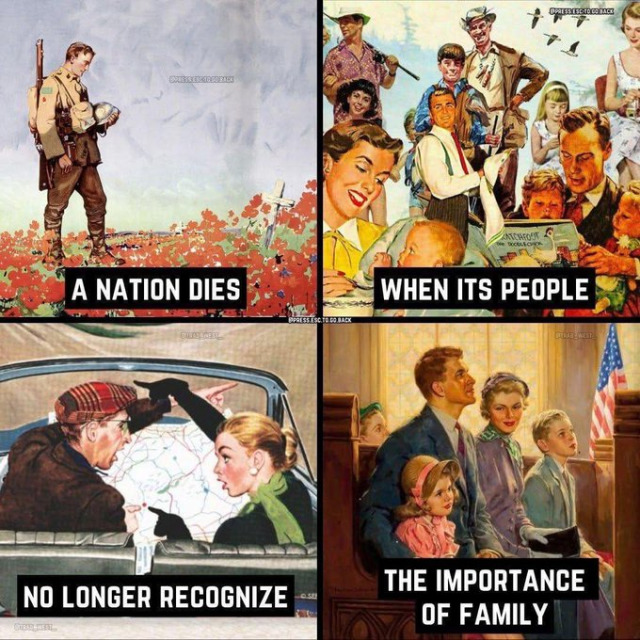
It turns out that Children are the measure of a Society.
“The test of the morality of a society is what it does for its children.” These words, attributed to Dietrich Bonhoeffer, echo like a warning bell across generations. They are not merely poetic, they are prophetic. If we dare to measure our society by this standard, we must confront a painful truth: we are failing.
At the heart of this failure lies the collapse of the nuclear family. Once the cornerstone of civilization, the family, father, mother, and children bound by love and duty, has been systematically dismantled. In its place, we find broken homes, single-parent households, and blended families struggling to find emotional equilibrium. The consequences are not abstract, they are measurable, generational, and devastating.
As Ronald Reagan once said, “The family has always been the cornerstone of American society. Our families nurture, preserve, and pass on to each succeeding generation the values we share and cherish.” When that cornerstone crumbles, so too does the moral architecture built upon it.
Today, the majority of children are raised without both biological parents. Fatherlessness has become a defining feature of modern childhood. Studies consistently link father absence to increased rates of poverty, incarceration, substance abuse, and suicide. Children raised in single-parent or stepparent homes often face emotional instability, identity confusion, and a longing for roots that were never planted.
Feminism takes a lot of the blame:
The takeaway? Messing with nature has unintended, adverse consequences. Legions of females are practically cultists. Many are as barren as the Sahara.
Basic biology: young women are hardwired to bear children. Yet, that simple fact is shrugged off by progressives. Instead of having kids, too many females are adopting malignant social causes.
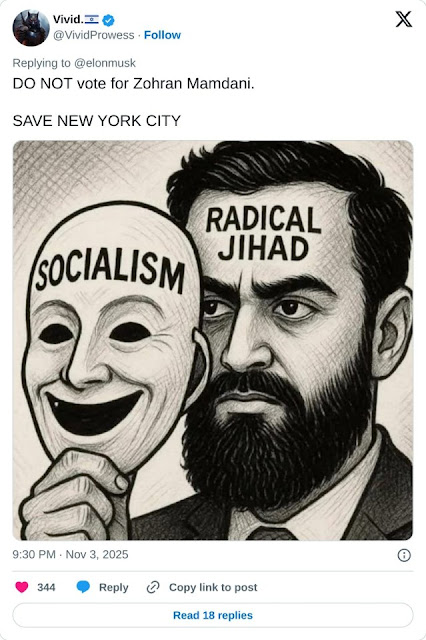
“Manmade” climate change is one such cause, as Weinstein cites. Woke ideology is another. Socialism? Mamdani won the NYC mayorship in no small measure thanks to younger voters, particularly younger women, who backed him lopsidedly. What about “fascist” Charlie Kirk’s assassination? Left-leaning females were in the forefront, cheering Kirk’s murder on social media. Not only is that creepy, but it exposes a growing social pathology.
Government has become a spouse substitute for self-proclaimed empowered females. Government may provide some protection — in terms of a social safety net — though little in the way of emotional sustenance and meaning.
A feminist tenet is that not only can women do anything that men do but do it better — and do it without men. In a common-sense world, that’s good for laughs.
Eschewing nature and evolutionary development are conceits. The interdependence — the complementary nature — of the male-female bond are dismissed. Humans are putty. Gender is assigned at birth. Differences between the sexes? Only if feminists care to assert female superiority. Do hardcore feminists despise men? Appears so.
Go to the first link in this post and you’ll see why feminism has made women ruin themselves and now our society
1
2
3
4

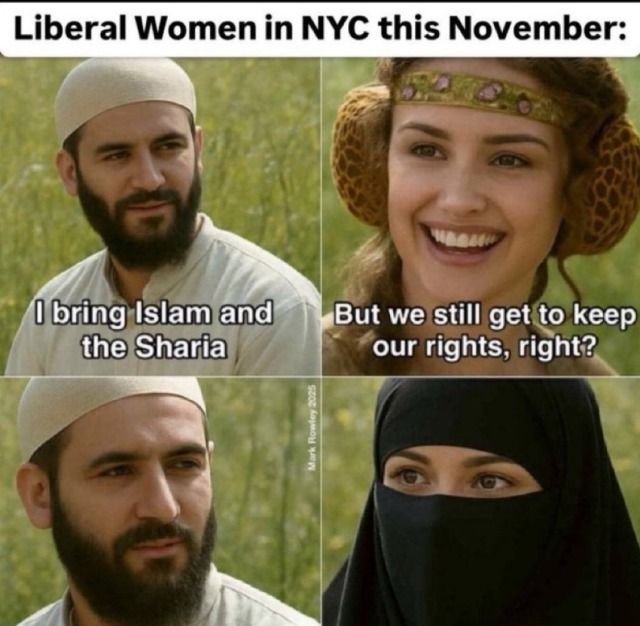
5 – I’m laughing at the girls in NYC. They will pay for their act of treason.
6
7
8
8
9
10

11

12
13
15
16

17

18
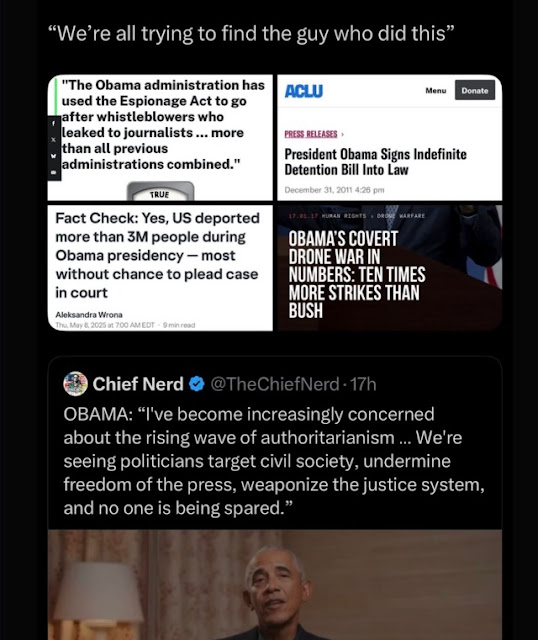
19 – LIberals are 2 faced
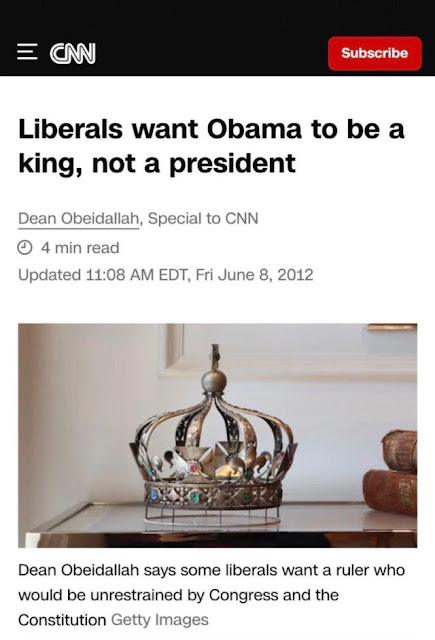
SCOOP: Trump Official Reveals Criteria for Investigating Left-Wing NGOs After Kirk Assassination
Heartwarming: Watch Madison County Destroy 7 Wind Turbines with Explosives
The Dangerous Myth Of Managing Earth’s Climate
As Birth Rates Decline, Here’s How To Boost Fertility
IDIOCRACY – And Diversity Of Thought Is Greater on The Right
Florida Woman, Possibly Drunk, Blocks Popeyes Drive-Thru Trying to Order a Baconator
Europe
German State Media Have Systematically Slandered Charlie Kirk Since His Assassination
Only Half Of Brits Think Monarchy Is Important
Why The Hardest Money Always Wins
CEOs Of Discord, Steam, Twitch, Reddit Summoned To Washington Over Online Radicalization
It’s Not the Technology: The Left’s Descent into Ideological Radicalism…
DHS: 2 million illegals out of US since Trump took office – 38 million to go
China
Claim: Chinese Dismiss Climate Issues as Elitist, “Western Values”
• China’s Regulatory Recalibration: Drops Google Antitrust Probe, Crosshairs Now On Nvidia
Russia
More Than 10 Russian Refineries Have Been Hit By Ukrainian Drones Since Early August
After 4 decades, Islam is weakening in Iran
Visualizing Global Gold Production By Region
2-in-5 Young Adults Are Taking on Debt for Social Image, to Impress Peers
American Airlines Pilots Caught Celebrating Kirk’s Assassination Have Been Removed From Service
To End Political Violence, the Marxist Framework That Legitimizes It Must Be Rooted Out
6 Illegals Arrested Following Fatal Hit-and-Run in Florida
Charlie Kirk’s Murder Reshaped America . . . and the World
Kim Jong Un’s Sister Warns Against US Joint Drills
Why is America so polarized? I can tell you
Most ICE Deportation Flights Are To Central America
Europe
WATCH LIVE: 1 MILLION Patriots Flood London to Honor Charlie Kirk at ‘Unite the Kingdom’
When it comes to marine life and being amazed, octopuses have to be near the top of the list. But if you see one while out on the beach, that doesn’t mean that you mess with it. Even experts will tell you to leave it the hell alone.
One moronic influencer had to learn this little tidbit the hard way.
Emeka (@emekaajr), a TikTok user with three million followers, recently went viral after he posted a video of him lip-syncing while having an octopus on his head.
Captioning the video “Aquaman,” it has pulled in more than 75.6 million views.
You can see the original clip here.
TIkTok and YouTube have turned people into morons.
I asked AI to tell me about the state of the application. To be transparent, I loathe it and find it full of Facebook behavior and cringeworthy posts about how their jobs are better than they actually are. When you are forced to act positive to pay your bills, you’ll do a lot of things and say a lot of things. I won’t, which is why I make fun of it.
When it went woke, I changed personal information like I now attended Faber College (Knowledge Is Good) and was in the Delta Tau Chi Fraternity. I rarely go there as I never liked many of the people I had to work with. I’m connected to people who I don’t even know who they are now.
If they read this and kick me off the platform, my life will stay the same.
Anyway…..
LinkedIn is widely known as the premier professional networking platform, but it has several notable downsides that users frequently criticize. Here are some of the major negative aspects of LinkedIn:
.
Decline in Professionalism: As LinkedIn incorporates more social media-style features, posts often mix personal anecdotes, motivational quotes, memes, and other non-professional content. This shift can clutter users’ feeds and make it harder to find truly valuable industry insights
.
Engagement Fatigue: LinkedIn pushes frequent posting and interaction, which can cause burnout. Users may feel pressured to constantly share updates or personal stories, leading to diminished quality of engagement or avoidance of the platform altogether
.
Privacy Concerns: LinkedIn collects extensive personal and professional data that can be accessed by many parties, including third-party apps and advertisers. Despite privacy settings, users’ work histories and contact info may be visible to unintended audiences, raising concerns about data security and professional repercussions
Recruiter Messages and Spam: Users often receive generic or overly persistent messages from recruiters offering “amazing opportunities” without clear details. The recruitment process on LinkedIn sometimes feels impersonal and overbearing, causing frustration
.
Paid Features and Double-Dipping: LinkedIn charges employers for job postings but also offers paid options for applicants to appear higher in candidate lists. This “pay-to-win” approach can erode trust in the fairness of job applications and make desperate applicants look vulnerable
.
Inauthentic Endorsements: The endorsements feature, meant to validate skills, is often abused through reciprocal endorsement schemes, leading many to distrust their legitimacy. Users prefer direct personal references over these watered-down public endorsements
.
Pressure to Maintain a Polished Professional Image: Users may feel stressed to constantly portray an idealized version of themselves, leading to a lack of authenticity and anxiety around online presence. This pressure can create a gap between true skills and the curated profile displayed
.
Content Overload and Quality Decline: In the race for visibility, some users share low-value or repetitive posts, which reduces overall content quality. Finding useful and relevant information amid the noise becomes challenging
.
Algorithmic Bias and Networking Barriers: LinkedIn’s reliance on connections can disadvantage users with smaller networks, creating barriers to access jobs and professional opportunities. Networking pressure and algorithmic choices may favor some profiles over others unfairly
.
Customer Service and Billing Issues: Some users report unexpected charges, difficulty canceling paid services, and poor customer support responsiveness regarding billing disputes, contributing to user dissatisfaction
.
Annoying or Irrelevant Connection Requests: Many LinkedIn users receive random or spammy connection requests, often from salespeople or automated bots, which undermines the platform’s professional integrity
.
Toxic Positivity and Questionable Content: The platform sometimes promotes overly optimistic or non-substantive posts, which can feel disingenuous or out of place for a professional network
These points highlight that while LinkedIn is a powerful tool for professional networking and career development, it is not without significant flaws. Users must navigate issues with privacy, content quality, network authenticity, and platform commercialization while managing their own professional image carefully. Being aware of these challenges can help users better leverage LinkedIn’s benefits while avoiding its pitfalls.
Created by Perplexity except the lead in
I refuse to use them. I think they are childish and don’t add anything to the text, no matter how cute you think you are. I deduct man points if a guy sends me one who’s over 30.
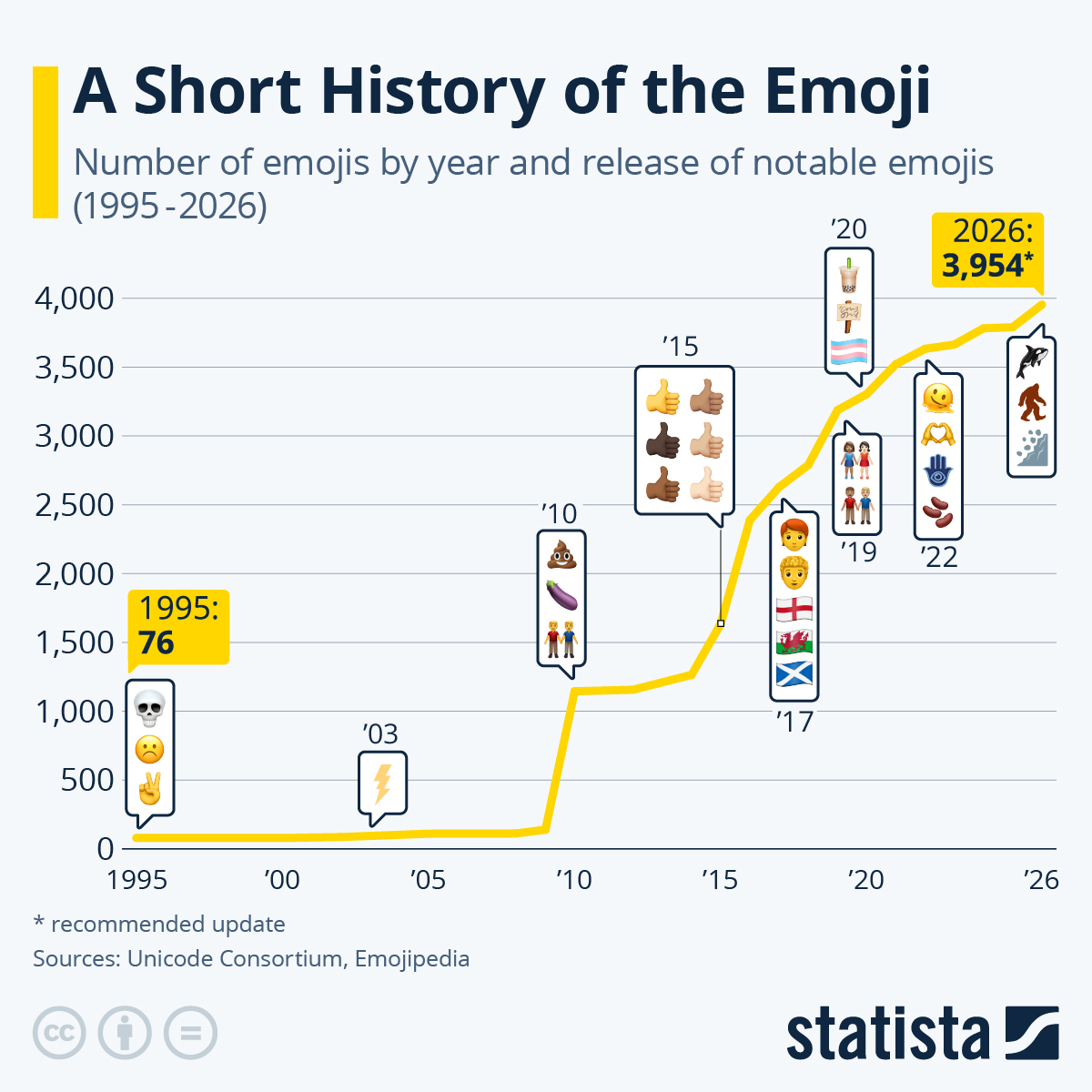
Emojis have become a staple of electronic communication since their inception in the 1990s and people of all ages and on all continents use them. While their number keeps on growing every year due to new releases by the Unicode Consortium, the pictograms are increasingly vying for users’ attention as other forms of visual communication – think gifs, stickers and avatars – are experiencing their heyday.
With myriads of emojis released over the previous years, new batches have become somewhat smaller.
As Statista’s Katharina Buchholz reports, a recently suggested update that would grow the number of emojis to almost 4,000 next year contains 164 additional pictograms, but only nine completely new ones.
While 2022 had seen the release of 112 new emojis, that number was just 31 in 2023. The figure rose again to 118 in 2024 due to emojis that allow users to pick different skin colors or genders (which are counted individually), before falling to an all-time low of eight in 2025. The number of non-customizable emojis has meanwhile decreased with almost every release.
I’ve written about things similar to this, like What Does HA! Mean On A Text? (Or the Worst Single Word Answers)
This one interested me because we both agree that K is pretty much the equivalent to F/U on a text, while being polite

A study reveals that the one-letter reply “K” is more damaging than being ‘left on read.’
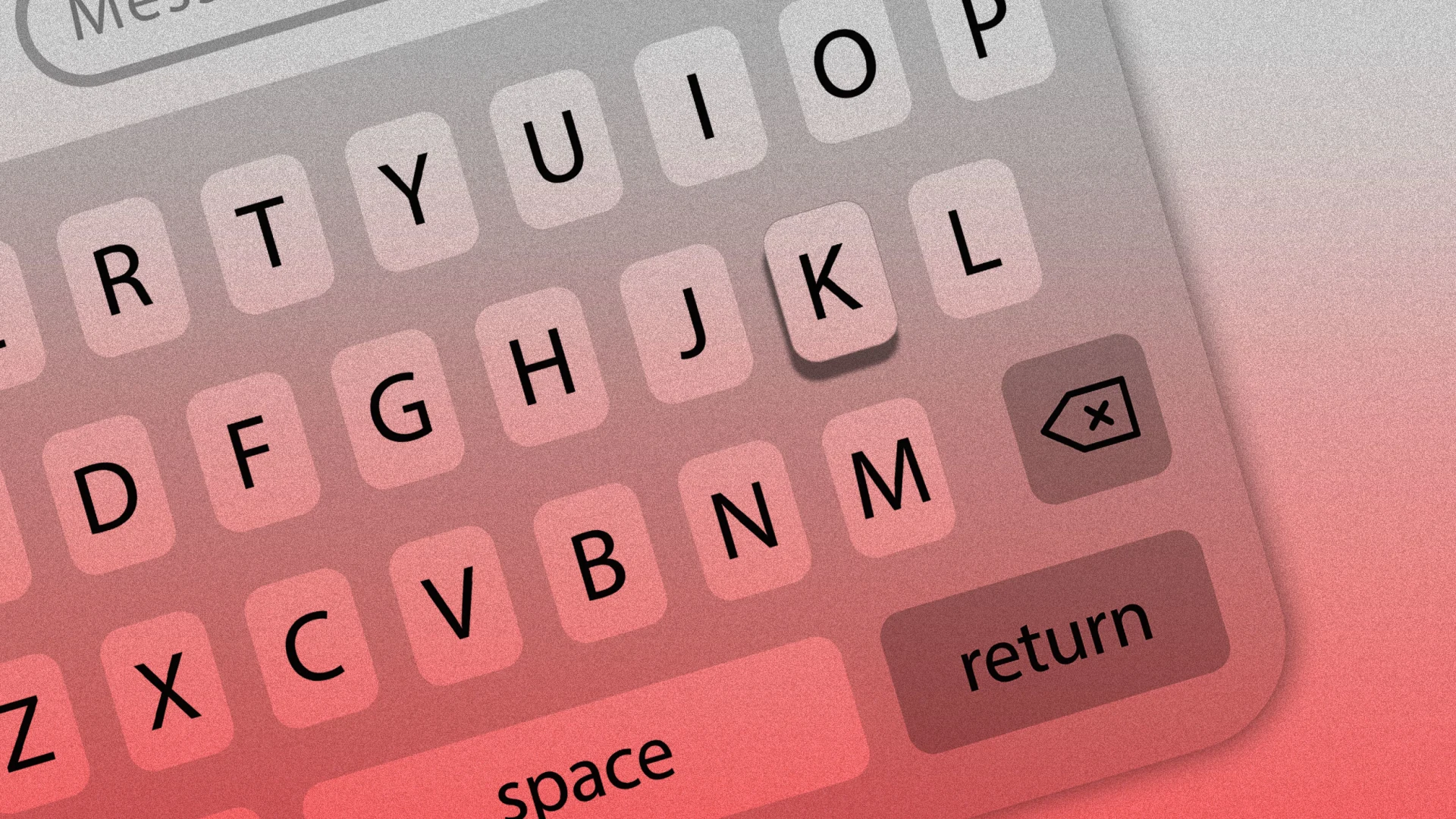
A study has confirmed what we all suspected: “K” is officially the worst text you can send.
It might look harmless enough, but this single letter has the power to shut down a conversation and leave the recipient spiraling. According to a study published in the International Journal of Mobile Communications, “K” was ranked as the most negatively received response in digital conversations—worse than being left on read or even a passive-aggressive “sure.”
The study found that the single-letter reply often signals emotional distance, passive-aggression, or outright disinterest. Despite its brevity, “K” carries surprising emotional weight. Adding an extra letter—making it “kk”—softens the tone of the reply entirely. Variants like “ok” or “okay,” while still cold, tend to be interpreted as neutral or merely formal.
Many of our day-to-day conversations happen over text, which means there are now unspoken codes of conduct to follow. If you want to open up about your emotions but don’t want to sound too serious, make sure to add “lol” to the end of those texts to show you’re just in a silly, goofy mood, and not suicidal. Giving advice to a friend that you don’t want to be held accountable for? Add an “idk” at the end of the sentence to mitigate culpability.
Nonverbal cues like tone, facial expressions, and body language can be difficult to convey via our phones, leaving the door wide open for misunderstanding and misinterpretation. Sometimes generational differences also impact how we send and interpret texts. In some cases, textual miscommunications can be relationship killers, research has found.
Some texters recognize the power of “k” and are willing to weaponize the letter to serve their own motives. One X user called it “the digital equivalent of slamming the door while making dead eye contact.” Another added: “K is short for ‘you’re dead to me.’ ”
Others advocate for the convenience of the single-letter response: “I’ve learned that rather than replying with a wall of text explaining how you feel, you should just type ‘K’ and hit send. No sense in wasting your valuable words.”
Many suggested other similarly anxiety-inducing replies. “Text her ‘he’s busy.’ see how triggered she gets. lol,” one X user suggested. “No lies told there. … Thumbs up is a very close second for me,” another added.
A third countered: “I raise you ‘we need to talk.’ ”
When I use it, few on the other end know what I’m really saying. They might think it’s let’s end, but it’s not
1
2
3
4
5
6
7
8
9
10
11
12
13
14
15
16
17

18
19

20

21
Choose an amount
Or enter a custom amount
Your contribution is appreciated.
Your contribution is appreciated.
Your contribution is appreciated.
DonateDonate monthlyDonate yearlyIf anyone in the future cares enough to write an authentic history of the 2024 presidential campaign, they might begin by noting that American politics exists downstream of American culture, which is a deep and broad river. Like any river, American culture follows a particular path, which has been reconfigured at key moments by new technologies. In turn, these technologies, which redefine both space and time—canals and lakes, the postal system, the telegraph, railroads, radio and later television, the internet, and most recently the networking of billions of people in real time on social media platforms—set the rules by which stories are communicated, audiences are configured, and individuals define themselves.
Something big changed sometime after the year 2000 in the way we communicated with each other, and the means by which we absorbed new information and formed a working picture of the world around us. What changed can be understood as the effect of the ongoing transition from the world of 20th-century media to our current digital landscape. This once-every-five-centuries revolution would have large effects, ones we have only just begun to assimilate, and which have largely rendered the assumptions and accompanying social forms of the past century obsolete, even as tens of millions of people, including many who imagine themselves to reside near the top of the country’s social and intellectual pyramids, continue to imagine themselves to be living in one version or another of the long 20th century that began with the advent of a different set of mass communications technologies, which included the telegraph, radio, and film.
The time was ripe, in other words, for a cultural revolution—which would, according to the established patterns of American history, in turn generate a political one.
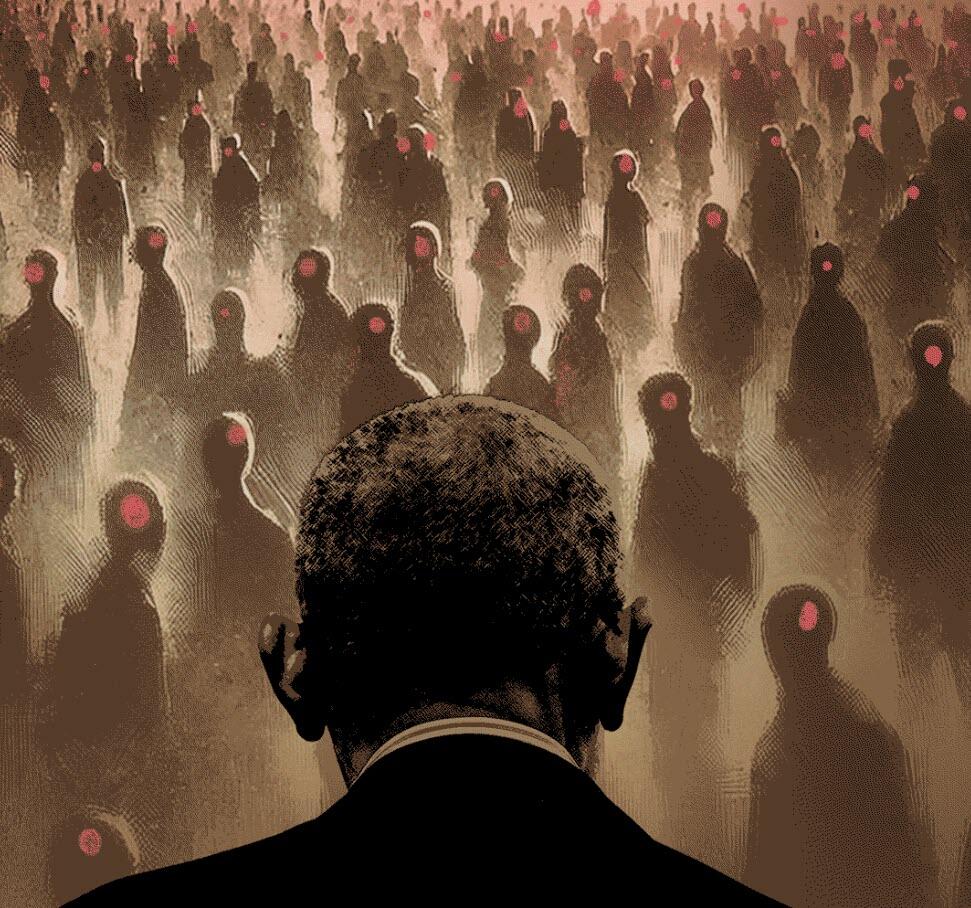
I first became interested in the role of digital technology in reshaping American politics a decade ago, when I reported on the selling of Barack Obama’s Iran deal for The New York Times Magazine. By the time I became interested in the subject, the outcome of Obama’s campaign to sell the deal, which had become the policy cornerstone of his second term in office, was a fait accompli. The Deal seemed odd to me, not only because American Jews were historically a key player in the Democratic Party—providing outsized numbers of voters, party organizers and publicists, in addition to huge tranches of funding for its campaigns—but because the Deal seemed to actively undermine the core assumptions of U.S. security architecture in the Middle East, whose goals were to ensure the steady flow of Middle Eastern oil to global markets while keeping U.S. troops out of the region. A Middle East in which the U.S. actively “balanced” a revisionist anti-American power like Iran against traditional U.S. allies like Saudi Arabia and Israel seemed guaranteed to become a more volatile region that would require exactly the kinds of active U.S. military intervention that Obama claimed to want to avoid. Nor did turning over major shipping lanes to Iran and its network of regional terror armies seem like a recipe for the steady flow of oil to global markets that in turn helped ensure the ability of U.S. trading partners in Europe and Asia to continue to buy U.S.-made goods. Seen through the lens of conventional American geopolitics, the Iran deal made little sense.
First, it usefully warned of the potential distance between an underlying reality and an invented reality that could be successfully messaged and managed from the White House, which suggested a new potential for a large-scale disaster like the war in Iraq, which I—like Rhodes and Obama—had opposed from its beginning.
Second, I wanted to show how the new messaging machinery actually operated—my theory being that it was probably a bad idea to allow young White House aides with MFA degrees to create “public opinion” from their iPhones and laptops, and to then present the results of that process as something akin to the outcome of the familiar 20th-century processes of reporting and analysis that had been entrusted to the so-called “fourth estate,” a set of institutions that was in the process of becoming captive to political verticals, which were in turn largely controlled by corporate interests like large pharmaceutical companies and weapons-makers. Hillary Clinton would soon inherit the machinery that Obama and his aides had built along with the keys to the White House. What would she do with it?
What I did not imagine at the time was that Obama’s successor in the White House would not be Hillary Clinton but Donald Trump. Nor did I foresee that Trump would himself become the target of a messaging campaign that would make full use of the machine that Obama had built, along with elements of the American security state. Being physically inside the White House, it turned out, was a mere detail of power; even more substantial power lay in controlling the digital switchboard that Obama had built, and which it turned out he still controlled.
During the Trump years, Obama used the tools of the digital age to craft an entirely new type of power center for himself, one that revolved around his unique position as the titular, though pointedly never-named, head of a Democratic Party that he succeeded in refashioning in his own image—and which, after Hillary’s loss, had officially supplanted the “centrist” Clinton neoliberal machine of the 1990s. The Obama Democratic Party (ODP) was a kind of balancing mechanism between the power and money of the Silicon Valley oligarchs and their New York bankers; the interests of bureaucratic and professional elites who shuttled between the banks and tech companies and the work of bureaucratic oversight; the ODP’s own sectarian constituencies, which were divided into racial and ethnic categories like “POC,” “MENA,” and “Latinx,” whose bizarre bureaucratic nomenclature signaled their inherent existence as top-down containers for the party’s new-age spoils system; and the world of billionaire-funded NGOs that provided foot-soldiers and enforcers for the party’s efforts at social transformation.
It was the entirety of this apparatus, not just the ability to fashion clever or impactful tweets, that constituted the party’s new form of power. But control over digital platforms, and what appeared on those platforms, was a key element in signaling and exercising that power. The Hunter Biden laptop story, in which party operatives shanghaied 51 former high U.S. government intelligence and security officials to sign a letter that all but declared the laptop to be a fake, and part of a Russian disinformation plot—when most of those officials had very strong reasons to know or believe that the laptop and its contents were real—showed how the system worked. That letter was then used as the basis for restricting and banning factual reports about the laptop and its contents from digital platforms, with the implication that allowing readers to access those reports might be the basis for a future accusation of a crime. None of this censorship was official, of course: Trump was in the White House, not Obama or Biden. What that demonstrated was that the real power, including the power to control functions of the state, lay elsewhere.
Even more unusual, and alarming, was what followed Trump’s defeat in 2020. With the Democrats back in power, the new messaging apparatus could now formally include not just social and institutional pressure but the enforcement arms of the federal bureaucracy, from the Justice Department to the FBI to the SEC. As the machine ramped up, censoring dissenting opinions on everything from COVID, to DEI programs, to police conduct, to the prevalence and the effects of hormone therapies and surgeries on youth, large numbers of people began feeling pressured by an external force that they couldn’t always name; even greater numbers of people fell silent. In effect, large-scale changes in American mores and behavior were being legislated outside the familiar institutions and processes of representative democracy, through top-down social pressure machinery backed in many cases by the threat of law enforcement or federal action, in what soon became known as a “whole of society” effort.
At every turn over the next four years, it was like a fever was spreading, and no one was immune. Spouses, children, colleagues, and supervisors at work began reciting, with the force of true believers, slogans they had only learned last week, and that they were very often powerless to provide the slightest real-world evidence for. These sudden, sometimes overnight, appearances of beliefs, phrases, tics, looked a lot like the mass social contagions of the 1950s—one episode after another of rapid-onset political enlightenment replacing the appearance of dance crazes or Hula-Hoops.
During the Trump years, Obama used the tools of the digital age to craft an entirely new type of power center for himself, one that revolved around his unique position as the titular, though pointedly never-named, head of a Democratic Party that he succeeded in refashioning in his own image.
Just as in those commercially fed crazes, there was nothing accidental, mystical or organic about these new thought-viruses. Catchphrases like “defund the police,” “structural racism,” “white privilege,” “children don’t belong in cages,” “assigned gender” or “stop the genocide in Gaza” would emerge and marinate in meme-generating pools like the academy or activist organizations, and then jump the fence—or be fed—into niche groups and threads on Twitter or Reddit. If they gained traction in those spaces, they would be adopted by constituencies and players higher up in the Democratic Party hierarchy, who used their control of larger messaging verticals on social media platforms to advance or suppress stories around these topics and phrases, and who would then treat these formerly fringe positions as public markers for what all “decent people” must universally believe; those who objected or stood in the way were portrayed as troglodytes and bigots. From there, causes could be messaged into reality by state and federal bureaucrats, NGOs, and large corporations, who flew banners, put signs on their bathrooms, gave new days off from work, and brought in freshly minted consultants to provide “trainings” for workers—all without any kind of formal legislative process or vote or backing by any significant number of voters.
What mattered here was no longer Lippmann’s version of “public opinion,” rooted in the mass audiences of radio and later television, which was assumed to correlate to the current or future preferences of large numbers of voters—thereby assuring, on a metaphoric level at least, the continuation of 19th-century ideas of American democracy, with its deliberate balance of popular and representational elements in turn mirroring the thrust of the Founders’ design. Rather, the newly minted digital variant of “public opinion” was rooted in the algorithms that determine how fads spread on social media, in which mass multiplied by speed equals momentum—speed being the key variable. The result was a fast-moving mirror world that necessarily privileges the opinions and beliefs of the self-appointed vanguard who control the machinery, and could therefore generate the velocity required to change the appearance of “what people believe” overnight.
The unspoken agreements that obscured the way this social messaging apparatus worked—including Obama’s role in directing the entire system from above—and how it came to supplant the normal relationships between public opinion and legislative process that generations of Americans had learned from their 20th-century poli-sci textbooks, made it easy to dismiss anyone who suggested that Joe Biden was visibly senile; that the American system of government, including its constitutional protections for individual liberties and its historical system of checks and balances, was going off the rails; that there was something visibly unhealthy about the merger of monopoly tech companies and national security agencies with the press that threatened the ability of Americans to speak and think freely; or that America’s large cultural systems, from education, to science and medicine, to the production of movies and books, were all visibly failing, as they fell under the control of this new apparatus. Millions of Americans began feeling increasingly exhausted by the effort involved in maintaining parallel thought-worlds in which they expressed degrees of fealty to the new order in the hope of keeping their jobs and avoiding being singled out for ostracism and punishment, while at the same time being privately baffled or aghast by the absence of any persuasive logic behind the changes they saw—from the breakdown of law and order in major cities, to the fentanyl epidemic, to the surge of perhaps 20 million unvetted illegal immigrants across the U.S. border, to widespread gender dysphoria among teenage girls, to sudden and shocking declines in public health, life expectancy, and birth rates.
Until the fever broke. Today, Donald Trump is victorious, and Obama is the loser. In fact, he looks physically awful—angry and gaunt, after a summer and fall spent lecturing Black men, and Americans in general, on their failure to vote enthusiastically enough for his chosen heir, Kamala Harris, the worst major party presidential candidate in modern American history. The totality of Obama’s failure left party donors feeling cheated. Even George Clooney now disavows him. Meanwhile, Trump and his party are in control of the White House, the Senate, the House of Representatives, and the Supreme Court.
But reducing the question of what happened to Barack Obama’s new American system to the results of a single election is in fact to trivialize the startling nature and ambition of what he built, as well as the shocking suddenness with which it has all gone up in smoke. The master political strategist of his era didn’t simply back a losing horse. Rather, the entire structure he had erected over more than a decade, and which was to have been his legacy, for good or ill, has collapsed entirely. At home and abroad, Obama’s grand vision has been decisively rejected by the people whose lives it was intended to reorder. The mystery is how and why neither Obama nor his army of technocratic operatives and retainers understood the fatal flaw in the new system—until it was too late.
The theory and practice on which the rapid-onset political enlightenment of our digital era was based did not, in fact, begin with Barack Obama. He was—at first, at least—the product being sold. Nor did it originate with the digital technology that has provided the mirror world with its startlingly speedy and effective and nearly universal circuitry.
The methodology on which our current universe of political persuasion is based was born before the internet or iPhones existed, in an attempt to do good and win elections while overcoming America’s historical legacy of slavery and racism. Its originator, David Axelrod, was born to be a great American advertising man—his father was a psychologist, and his mother was a top executive at the legendary Mad Men-era New York City ad agency of Young & Rubicam. Instead, following his father’s suicide, Axelrod left New York City for Chicago, where he attended the University of Chicago, and then became a political reporter for the Chicago Tribune. He then became a political consultant who specialized in electing Black mayoral candidates in white-majority cities. In 2008, Axelrod ran the successful insurgent campaigns that first got Barack Obama the Democratic Party nomination over Hillary Clinton, and then elevated him to the White House.
Axelrod first tested his unique understanding of the theory and practice of public opinion, which he called “permission structures,” in his successful 1989 campaign to elect a young Black state senator named Mike White as the mayor of Cleveland. Where Black mayoral candidates like Coleman Young in Detroit and Marion Barry in Washington had typically achieved power in the 1970s and 1980s by using racially charged symbols and language to turn out large numbers of Black voters in opposition to existing power structures, which they portrayed as inherently racist, White’s history-making campaign attempted to do the opposite: To win by convincing a mix of educated, higher-income white voters to vote for the Black candidate. In fact, White won 81% of the vote in the city’s predominantly white wards while capturing only 30% of the vote in the city’s Black majority wards, which favored his opponent and former mentor on the city council, George C. Forbes, a Black candidate who ran a more traditional “Black power” campaign.
Permission structures, a term taken from advertising, was Axelrod’s secret sauce, the organizing concept by which he strategized campaigns for his clients. Where most consultants built their campaigns around sets of positive and negative ads that promoted the positive qualities of their clients and highlighted unfavorable aspects of their opponents’ characters and records, Axelrod’s unique area of specialization required a more specific set of tools. To succeed, Axelrod needed to convince white voters to overcome their existing prejudices and vote for candidates whom they might define as “soft on crime” or “lacking competence.” As an excellent 2008 New Republic profile of Axelrod—surprisingly, the only good profile of Axelrod that appears to exist anywhere—put it: “‘David felt there almost had to be a permission structure set up for certain white voters to consider a black candidate,’ explains Ken Snyder, a Democratic consultant and Axelrod protégé. In Cleveland, that was the city’s daily newspaper, The Plain Dealer. Largely on the basis of The Plain Dealer’s endorsement and his personal story, White went on to defeat Forbes with 81 percent of the vote in the city’s white wards.”
In other words, while most political consultants worked to make their guy look good or the other guy look bad by appealing to voters’ existing values, Axelrod’s strategy required convincing voters to act against their own prior beliefs. In fact, it required replacing those beliefs, by appealing to “the type of person” that voters wanted to be in the eyes of others. While the academic social science and psychology literature on permission structures is surprisingly thin, given the real-world significance of Axelrod’s success and everything that has followed, it is most commonly defined as a means of providing “scaffolding for someone to embrace change they might otherwise reject.” This “scaffolding” is said to consist of providing “social proof” (“most people in your situation are now deciding to”) “new information,” “changed circumstances,” “compromise.” As one author put it, “with many applications to politics, one could argue that effective Permission Structures will shift the Overton Window, introducing new conversations into the mainstream that might previously have been considered marginal or fringe.”
By itself, the idea of uniting new theories of mass psychology with new technology in efforts of political persuasion was nothing new. Walter Lippmann based Public Opinion in part on the insights of the Vienna-born advertising genius Edward Bernays, Sigmund Freud’s nephew and the inventor of modern PR. The arrival of television brought political advertising and Madison Avenue even closer together, a fact noted by Norman Mailer in his classic essay “Superman in the Supermarket,” which channeled the insights of Vance Packard’s The Hidden Persuaders. In 1968, the writer Joe McGinniss shocked at least some readers with The Selling of the President, his account of the making of Richard Nixon’s television commercials which showed Madison Avenue admen successfully selling the product of Nixon like dish soap. The title of “political consultant” was itself a creation and a consequence of the television age, signaling the triumph of the ad man over the old-fashioned backroom title of “campaign manager”—a function introduced to national politics by Martin Van Buren, the “Little Magician” from Kinderhook, New York, who built the Democratic Party and elected Andrew Jackson to the Presidency.
It is not surprising then, that following Axelrod’s 1993 success in electing Harold Washington as the first Black mayor of Chicago, Barack Obama—already imagining himself as a future president of the United States—would seek out the Chicago-based consulting wizard to run his campaigns. But Axelrod wasn’t interested. In fact, Obama would spend more than a decade chasing Axelrod—who was far better connected in Chicago than Obama was—in the hopes that he would provide the necessary magic for his political rise. The other Chicago kingmaker that Obama courted was Jesse Jackson Sr., whose Operation PUSH was the city’s most powerful Black political machine, and who liked Obama even less than Axelrod did. The reality was that Obama did best with rich whites, like the board members of the Joyce Foundation and the Pritzker family.
When Axelrod finally agreed to come onboard, he found that Obama was the perfect candidate to validate his theories of political salesmanship on a national scale. First, he engineered Obama’s successful 2004 Senate campaign—a victory made possible by the old-school maneuver of unsealing Republican candidate Jack Ryan’s divorce papers, on the request of Axelrod’s former colleagues at the Chicago Tribune—and then, very soon afterward, Obama’s campaigns for the presidency, which formally commenced in 2007.
It worked. Once in office, though, Axelrod and Obama found that the institutions of public opinion—namely the press, on which Axelrod’s permission structure framework depended—were decaying quickly in the face of the internet. Newspapers like the Cleveland Plain Dealer, as well as national television networks like CBS, which Axelrod relied on as validators, were now barely able to pay their bills, having lost their monopoly on viewers and advertisers to the internet and to newly emerging social media platforms.
With Obama’s reelection campaign on the horizon in 2012, the White House’s attention turned to selling Obamacare, which would become the signature initiative of the president’s first term in office. Without a healthy, well-functioning press corps that could command the attention and allegiance of voters, the White House would have to manufacture its own world of validators to sell the president’s plan on social media—which it successfully did. The White House sales effort successfully disguised the fact that the new health care program was in fact a new social welfare program that would lower rather than raise the standard of care for most Americans with preexisting health insurance, while providing tens of billions of dollars in guaranteed payments to large pharmaceutical companies and pushing those costs onto employers. Americans would continue to pay more for health care than citizens of any other first world country, while receiving less.
As a meeting of Axelrod’s theories with the mechanics of social media, though, the selling of Obamacare—which continued seamlessly into Obama’s reelection campaign against Mitt Romney—was a match made in heaven. So much so, that by 2013 it had become the Obama White House’s reigning theory of governance. A Reuters article from 2013 helpfully explained how the system worked: “In Obama’s jargon, getting to yes requires a permission structure.” Asked about the phrase, White House spokesman Jay Carney explained that it was “common usage” around the White House, dating back to Obama’s 2008 campaign. The occasion for the article was Obama’s use of the phrase permission structure at a press conference in order to explain how he hoped to break an impasse with congressional Republicans, for which he had been roundly mocked as an out-of-touch egghead by D.C. columnists including Maureen Dowd and Dana Milbank, and by staffers for Republican Senate leader Mitch McConnell.
The joke was on them. What the White House understood, and which I came to understand through my reporting on the Iran deal, was that social media—which was now the larger context in which former prestige “legacy” outlets like The New York Times and NBC News now operated—could now be understood and also made to function as a gigantic automated permission structure machine. Which is to say that, with enough money, operatives could create and operationalize mutually reinforcing networks of activists and experts to validate a messaging arc that would short-circuit traditional methods of validation and analysis, and lead unwary actors and audience members alike to believe that things that had never believed or even heard of before were in fact not only plausible, but already widely accepted within their specific peer groups.
The effect of the permission structure machine is to instill and maintain obedience to voices coming from outside yourself, regardless of the obvious gaps in logic and functioning that they create.
The Iran deal proved that, with the collapse of the reality-establishing function of professional media, which could no longer afford to field teams of independent, experienced reporters, a talented politician in the White House could indeed stand up his own reality, and use the mechanisms of peer-group pressure and aspirational ambition to get others to adopt it. In fact, the higher one climbed on the social and professional ladder, the more vulnerable to such techniques people turned out to be—making it easy to flip entire echelons of professionals within the country’s increasingly brittle and insecure elite, whose status was now being threatened by the pace and scope of technologically driven change that threatened to make both their expertise and also their professions obsolete. As a test of the use of social media as a permission structure machine, the Iran deal was therefore a necessary prelude to Russiagate, which marked the moment in which the “mainstream media” was folded into the social media machinery that the party controlled, as formerly respected names like “NBC News” or “Harvard professor Lawrence Tribe” were regularly advertised spouting absurdities backed by “top national security sources” and other validators—all of which could be activated or invented on the spot by clever aides with laptops, playing the world’s greatest video game.
Yet the extent to which reality was being regularly manipulated through the techniques of social psychology applied to the internet was not immediately apparent to outside observers—especially those who wished to see, or had long been conditioned to see, something else. The collapse of the press and the acceptance by flagship outlets of a new role as a megaphone for the Democratic Party meant that there were many fewer actual “outside observers” to blow the whistle. And in any event, Obama was on his way out—and Donald Trump, aka Orange Man Hitler, was on his way in.
The conspiratorial messaging campaign targeting Trump as a Kremlin-controlled “asset” who had been elected on direct orders from Vladimir Putin himself seemed more like the plot of a dark satire than something that rational political observers might endorse as a remotely plausible real-world event. Having reported on the Iran deal made it easy to see that Russiagate was a political op, being run according to a similar playbook, by many of the same people. Familiarity with the Iran deal made it easy for reporters at Tablet, particularly Lee Smith, to see Russiagate as a fraud from the beginning, and to see through the methods by which the hallucination was being messaged by the mainstream press.
What surprised me was how alone my colleagues were, though. The existence of dedicated journalistic observers who saw their allegiance as being to readers and not to any political party was itself a feature of a 20th-century system that was quickly going the way of the dodo. Observers who proclaimed their fealty to objective reporting practices and refused to identify with either political party no longer worked in the press—not after Trump was elected. To the extent that rational analysts of claims that the U.S. president was controlled by the Kremlin still existed, they worked in academic political science departments at distant state universities, and their voices were buried under an avalanche of permission structure propaganda amplified often several times a day on the front pages of The Washington Post and The New York Times, which would win Pulitzer Prizes for publishing nonsense.
Needless to say, the model of politics in which operatives are constantly running permission structure games on the body politic, assisted by members of the press and think tankers eager to be of service to the party, has more in common with pyramid schemes and high-pressure network-marketing scams than it does with reasoned democratic deliberation and debate. At this point, it hardly seems controversial to point out that such a model of politics is socially toxic.
What’s important to note are the specific conditions that had been set, and which turned this from the narrow campaign it might have been to a society-wide mass event—and which is why those who argued in these years that the Democratic Party and the Republican Party had anything like equal power were either evil or delusional or both. In the wake of Obama’s reelection in 2012, the defection of large swaths of the Silicon Valley elite from the Republican to the Democratic Party led to a tremendous influx of cash into the coffers of the Democratic Party and its associated penumbra of billionaire-funded foundations and NGOs, along with a new willingness of Silicon Valley titans to work directly with the White House—which after all, retained the power, in theory, to regulate their quasi-monopolies out of existence. In field after field, from sex and gender, to church attitudes toward homosexuality, to formerly apolitical sources of public information, to voting practices, to the internal politics of religious groups, to race politics, to what films Americans would watch and how they would henceforth be entertained, the oligarchs would do their part, by helping buy up once independent social spaces and torque them to function as parts of the party’s permission structure machine. The FBI would then do its part, by adopting political categories like “white supremacy” as chief domestic targets, and puppet groups in the vertical, like the ADL and the ACLU, would pretend to be objective watchdogs who just happened to come to the same conclusion.
Obamacare was followed by the Iran deal, which was followed by Russiagate, which was followed by COVID. Messaging around the pandemic was the fourth and most far-reaching permission structure game that was run by small clusters of operatives on the American public, resulting in the revocation of the most basic social rights—like the right to go outside your own home, or visit a dying parent or child in the hospital. COVID also proved to be an excuse for the largest wealth transfer in American history, comprising hundreds of billions of dollars, from the middle and working classes to the top 1%. Most ominously, COVID proved to be a means for remaking the American electoral system, as well as providing a platform for a series of would-be social revolutions in whose favor restrictions on public gatherings and laws against looting and public violence were suspended, due to manifestations of “public opinion” on social media.
As COVID provided cover for increasingly extreme and rapid manifestations of rapid political enlightenment, numbers of formerly quiescent citizens began to rebel against the new order. Unable to locate where the instructions were coming from, they blamed elites, medical authorities, the deep state, Klaus Schwab, the leadership of Black Lives Matter, Bill Gates, and dozens of other more or less nefarious players, but without being able to identity the process that kept generating new thought-contagions and giving them the seeming force of law. The game was in fact new enough that Donald Trump didn’t get it before it was too late for his reelection chances, championing lockdowns and COVID vaccines while failing to pay attention to the Democratic lawyers who were changing election laws in key states. Once Joe Biden was safely installed in the White House, Obama’s Democratic Party could look forward to smooth sailing—protected by new election laws, the party’s control over major information platforms, the FBI, and the White House, and a government-led campaign of lawfare against Trump. It was hard to see how the party could lose for at least another generation, if ever again.
By this late date in Western cultural history, the modern is itself a notably dated category. Whether it is a person or a thing or a style, we know exactly how it behaves, and how we are supposed to react. The modern is a character in an early Evelyn Waugh novel, unflappable in the face of the new. Then there is the conservative, who rejects the new in favor of the ancient verities of the Greeks or the Church. Both figures are rightfully comic, with an accompanying tinge of the tragic, or else they appear to be the other way around. The verdict is in the eye of the beholder, meaning you and me.
The permission structure machine that Barack Obama and David Axelrod built to replace the Democratic Party was in its essence neither modern nor conservative, though. Rather it is totalitarian in its essence, a device for getting people to act against their beliefs by substituting new and better beliefs through the top-down controlled and leveraged application of social pressure, which among other things eliminates the position of the spectator. The integrity of the individual is violated in order to further the superior interests of the superego of humanity, the party, which knows which beliefs are right and which are wrong. The party is the ghost in the machine, which appears to run on automatic pilot, using the human desire for companionship and social connection as fuel for an effort to detach individuals from their own desires and substitute the dictates of the party, which is granted the unlimited right to enforce its superior opinions on all of mankind.
Constructing a giant permission structure machine that would mechanize the formation of public opinion through social media was never David Axelrod’s intention. Axelrod wanted to help make society better by allowing white voters to obey the better angels of their nature and elect Black mayors, despite being racists. Everyone can agree that racism is bad, just like they can agree that poverty is bad, or disease is bad. The question is whether a given instance of racism or poverty or disease is so bad that, when it comes to eliminating or reducing their ill effects, all other human values, including the value of independent thought and feeling, should be trampled. If the answer is yes, you have placed your trust outside of the nexus of contingent human relationships into the hands of a larger, crushingly powerful machine that you believe might incarnate your idea of justice. That is totalitarianism, or as George Orwell put it in 1984, the image of “a boot stamping on a human face—forever.”
Every form of totalitarianism is unique. Nazi fascism was unique in its racist animus toward the Jews, who were responsible for the opposing sins of capitalism and communism alike, and also for the industrial efficiency in which the Nazi program of mass slaughter was carried out. Soviet communism was unique in that it lasted much longer than Nazism did, and for the distinctive type of cynicism to which it gave rise. If the end product of Nazism was Auschwitz, then the end product of Soviet communism was the humor of the breadline. Soviet cynicism was a natural product of how the Soviets decided to rule, which was to demand absolute external compliance to party dictates in word and deed while at the same time allowing its subjects a separate space to think their own thoughts—provided that they never acted on those thoughts. The natural outcome of the Soviet system was compliance without belief.
Twitter was worth more to Elon Musk than it was to anyone else with the money to pay for it. He understood Twitter and the permission structure machinery better than its would-be operators did.
The effect of the permission structure machine is to instill and maintain obedience to voices coming from outside yourself, regardless of the obvious gaps in logic and functioning that they create. The clinical term for this state is schizophrenia, which is a term that had a deep hold over the 20th-century modern literary and social imagination, from popular works like I Never Promised You a Rose Garden and Sybil to theorizing by R.D. Laing (The Divided Self) and Gilles Deleuze (Anti-Oedipus: Capitalism and Schizophrenia). Among the superior works of literature in this genre are Ken Kesey’s One Flew Over the Cuckoo’s Nest, Sylvia Nasar’s A Beautiful Mind, the singular House of Leaves, Greg Bottoms’ memoir Angelhead and many dozens of other books. The expected reaction within the genre to hearing such voices is horror.
This was not always the case, though. Neither Greek nor Hebrew literature, which are the two great narrative streams out of which what we know today as Western culture was formed, appear to have any equivalent to what we identify today as internal monologue. Instead, they are filled with talking bushes, plants, and animals. Above all, they are filled with the voices of gods—including God—which talk to humans in nearly every physical location imaginable, from mountaintops to the Road to Damascus. Abraham, Moses, Ezekiel, Jesus, and Paul all heard voices. According to the Princeton University scholar Julian Jaynes, author of The Origin of Consciousness in the Breakdown of the Bicameral Mind, human consciousness did not arise as a chemical-biological byproduct of human evolution but is instead a learned process based on the recent development and elaboration of metaphorical language. Prior to the development of consciousness, Jaynes argues, humans operated under a previous mentality he called the bicameral (two-chambered) mind, where in place of an internal dialogue, bicameral people regularly experienced auditory hallucinations directing their actions.
What the permission structure machine seeks to do is to undo the millennia-long work of consciousness by once again locating consciousness outside of the self—but clothing it as an internal product via the mechanized propagation of what Marxists used to call “false consciousness.” But where the progenitors of “false consciousness” in the Marxist lexicon are villains, working on behalf of the capitalist order by preventing workers from being cognizant of their own interests, the mechanized permission structure machine offers the reverse: The “false consciousness” it seeks to propagate is a positive instrument of the party’s attempt to establish the reign of justice on earth. Which is why the natural outcome of the automation of permission structures is not humor, however cynical, but institutionalized schizophrenia, instantiated within the structure of the bicameral mind. No matter how the bots that animate the mechanism position themselves, for whatever low-end careerist purpose, the voices they listen to come from outside. They are incapable of being truth-tellers, because they have no truth to tell. They are creatures of the machine.
It took three powerful men, each of whom had the advantage of operating entirely in public, and with massive and obvious real-world consequences, to rupture the apparatus of false consciousness that Obama built. In doing so, they saved the world—for the moment, at least. While history will judge whether their achievements were lasting, it is clear that if they hadn’t acted as they did, we would still be living inside the machine.
The first of these men was Elon Musk, who is notable for having purchased Twitter in 2022, after Joe Biden had been safely installed in the White House, and the social media site appeared perhaps to be reaching the end of its usefulness, for what was presented at the time and since as the wildly overblown price of $44 billion. Twitter was hardly identical with the permission structure machine that Barack Obama, David Axelrod, David Plouffe, Dan Pfeiffer, Ben Rhodes, and the rest of Obama’s operatives constructed in their takeover of the Democratic Party. The machine they built was much, much bigger than any social media platform. However, due to its first mover advantage, and the role it played within the sociology of journalism and other alloyed professions, Twitter was positioned to play an obvious and key role in the work of social signaling and coordination by which the party’s permission structure machine functioned.
Twitter’s significance, as part of the party’s permission structure machinery, was key in part because, as the history of platforms and companies like Facebook, Google, Uber, Instagram. and TikTok shows, advantages of scale tend naturally toward localized monopolies. Twitter could play the signaling and coordinating function that it did in part because it was a monopoly, which is why Obama, Axelrod, Plouffe, etc. all had Twitter accounts. It’s why the FBI came on board Twitter, to ensure that the tilt of the platform was coordinated with the FBI’s role in the party’s “whole of society” censorship efforts—whether directed against “disinformation,” or COVID measures, or “white supremacy,” or Donald Trump, or “insurrectionists.” So why sell a key module in the permission structure machine to Elon Musk?
Part of the reason appears to be price. The $44 billion that Musk eventually paid appears to be at least twice what any other plausible team of bidders offered. It is certainly possible that having decided to sell Twitter, the company’s board was stuck—both practically and legally—when Musk decided that price was not an object, and that he was willing to massively outspend any other possible bidder. Twitter’s board, and whoever they consulted within the ODP vertical, may have imagined that Musk would find an excuse to pull out of the deal—which he appeared at several points to be doing, though his reluctance may well have been a negotiating tactic.
It is certainly plausible that someone in Obama’s universe saw the danger in selling Twitter to Musk. That it happened anyway suggests—as in the case of the lawfare campaign against Trump—that they hubristically believed in their own propagandistic accounts of their adversary as venal, corrupt, and weak, and of their own practical and moral superiority. Unable to think outside their own box, they may have reasonably expected that Musk could be constrained by the need to keep his advertisers by retaining the existing tilt of the platform’s algorithms for as long as the platform itself continued to matter. To keep Musk in line, the party could cut the platform’s advertising revenues by half or more at will by having its adjuncts in the censorship business label it a sinkhole of racism and depravity, and getting it banned from Europe and other global markets. As the reputational cost spread, Musk would have no choice but to eat a loss of tens of billions of dollars and sell, or else face the destruction of his other businesses—which the party could speed up by canceling contracts with NASA and other government agencies and opening multiple SEC and Justice Department investigations that would further augment his reputational risk—until he agreed to kiss the ring.
Where this analysis went wrong is the same place that the Obama team’s analysis of Trump went wrong: The wizards of the permission structure machine had become captives of the machinery that they built. Bullying large numbers of people into faddish hyperconformity by controlling the machinery of social approval may require both money and technique, but it is not art or thought. In fact, it is something like the opposite of thought. Lost in the hypercharged mirror world that they had created, they decided that having made themselves cool also made them right, and that evidence to the contrary could be safely dismissed as a “right-wing talking point.” Obama’s operatives shared the same character flaw as their master, a kind of brittle, Ivy League know-it-all-ness that demanded that they always be the smartest person in the room.
Musk, meanwhile, was entirely and sincerely his own man—a privilege that came in part from being the richest man in America, and in part from the nature of his businesses, which the Obama cadres appear to have misunderstood. Musk may have paid twice as much as the next-highest bidder for Twitter, if such a bidder actually ever existed. Except, it was also true that, as a business proposition, Twitter was worth more to Elon Musk than it was to anyone else with the money to pay for it. That’s because the value that Musk creates in his companies is a unique blend of high imagination and physical products which function as memes. In this area, at least, he understood Twitter and the permission structure machinery better than its would-be operators did. Buying a Tesla, or buying stock in Tesla, is different than buying a share of stock in GM or Daimler-Benz, or even Google and Facebook, because you are buying a share in Elon Musk—a 21st-century master technologist who is uniquely capable of imagining the very biggest things and turning them into physical realities. Musk’s companies are worth hundreds of billions of dollars because of Elon Musk’s unique ability to incarnate dreams and make teams of talented people believe them, too. His investors are buying pieces of those dreams, which are magic—components of a self-validating belief system that puts its faith in the power of the individual believer.
Faced with the party’s regime of increasing direct censorship over social media, Musk was aware, in a way his adversaries were not, that the party’s ambitions to control content meant that he was coming perilously close to losing control over his own personal dream space, which provides a large share of the value of his companies. Once Donald Trump, a former president of the United States, was thrown off Twitter, the equation became quite obvious: Either the party would control Twitter, in which case Elon Musk was next up for shadow-banning, fact-checking, and eventual exile, at a cost of however many hundreds of billions of dollars to his personal brand, i.e., his companies, or else Musk could assert his own control over that space, by buying Twitter. When measured against the likely losses that would result from being silenced and thrown off the site, and his likely subsequent difficulties in raising public and private capital, $44 billion was therefore an entirely reasonable cost for Musk to pay. The hitch in Musk’s plan to buy Twitter was that it relied on the party being stupid enough to sell it to him. Luckily, unbelievably, they were that stupid—while crowing loudly that Musk was a sucker.
It is clear by now that the Obama party were the suckers—not Musk. In fact, the party’s belated war on Twitter’s new owner only served to convince other Silicon Valley oligarchs that whatever reputational risks they might incur by backing Donald Trump would be outweighed by the direct risks that party weaponization of federal regulatory structures, which gave it effective control of markets and banks, would pose to their businesses. By letting Twitter go, and then making war on its new owner, in a belated attempt to get him to do their bidding, the Obama party showed both the scope of its ambition and also its hubris—a combination that split the country’s oligarchy on the eve of the key election that would have allowed the party to consolidate its power.
With Musk’s X now open to all comers, the party’s censorship apparatus was effectively dead. A new counter-permission structure machine was now erected, licensing all kinds of views, some of which were novel and welcome, and others of which were noxious. Which is how opinion in a free society is supposed to operate.
Elon Musk’s decision to buy Twitter was in turn a necessary precondition for the election of Donald Trump, which was in turn made possible by Trump’s own split-second decision on July 13, 2024, to turn his head fractionally to the right while delivering a speech in a field in Butler, Pennsylvania.
Trump’s head turn was a perfect example of an event that has no explanation outside the favor of the gods, or whatever modern equivalent involving wind factors and directional probabilities you might prefer to the word “God.” Trump was fated to win, just as Achilles was fated to overcome Hector, because the gods, or if you prefer the forces of cosmic randomness, were on his side, on that day, at that moment. That move not only saved his life by allowing him to escape an assassin’s bullet; it revitalized his chi and set in motion a series of subsequent events that generated a reordering of the entire world.
Then there was Israeli Prime Minister Benjamin Netanyahu, who gave the story a further epic dimension by returning to the original field of battle. Bibi, as you may recall, played the role of Obama’s piñata during the fight over the Iran deal, fated to go down to defeat by opposing the will of a sitting U.S. president on a foreign policy question that most Americans cared very little about. But this past summer, Netanyahu turned himself into the active party, with the means to reverse Obama’s achievement and unveil the origins of his power grab, by showing that the “peace deal” that he had sold to the American people—founded on the idea that Iran was itself a formidable adversary—was a mess of lies. Iran was not and never was a regional power, capable of “balancing” traditional American allies. It was a totalitarian shit hole regime that is deeply hated by its own people and throughout the region, entirely dependent on American backing in its efforts to gain a nuclear bomb.
Netanyahu’s decision to invade Rafah on May 6, 2024, was the culmination of two long and otherwise separate chains of events whose consequences will continue to reverberate throughout the Middle East, and also at home. Netanyahu had been promising to invade Rafah since February. The fact that he had not done so by May had become both a symbol of Israeli weakness and indecision in the face of a global onslaught of Jew-hatred, as well as the continuing solidity of the regional power structure established by Obama’s Iran deal. Within that structure, Israeli interests were held to be subordinate to those of Iran, which was allowed to finance, arm, and train large terrorist armies on Israel’s borders. Even when one of those armies decided to attack Israel in an orgy of murder and rape directed against civilians and recorded and broadcast live by the terrorists, Israel’s response was to be limited by its subordinate place in the regional hierarchy, underlining a reality in which Israel was fated to grovel before the whims of its American master—and would sooner or later most likely be ground into dust.
Israel could not strike Iran. Nor could it directly strike Hezbollah, the largest and most threatening of the Iranian-sponsored armies on its border, except to retaliate tit-for-tat for Hezbollah’s missile attacks on its civilian population. While it could invade Gaza, it could do so only while being publicly chided by U.S. officials from the president and the secretary of state for violating rules of wars that often appeared to be made up on the spot and were entirely divorced from common military practice and necessity. In particular, Israel was not to invade Rafah, a prohibition that ensured that Hamas could regularly bring in supplies and cash through the tunnels beneath its border with Egypt while ensuring the survival of its command-and-control structure, allowing it to reassume control of Gaza once the war was over, thereby assuring the success of U.S. policy, which was that Israel’s military invasion of Gaza must serve as the prelude to establishing a Palestinian state—an effort in which Hamas was a necessary partner, representing the Iranian interest, and must therefore be preserved in some part, even after being cut down to size.
Netanyahu’s decision to override the U.S. and take Rafah would turn out to be the prelude to a further series of stunning strategic moves which would enable Israel to smash the Iranian regional position and take full control of her own destiny. After conquering Rafah, in a campaign that the U.S. had said would be impossible without large-scale civilian casualties, Netanyahu proceeded to run the table in a series of rapid-fire blows whose only real point of comparison is Israel’s historic victory in the Six-Day War. In fact, given the odds he faced, and the magnitude of the victories he has won, that comparison may be unfair to Netanyahu, who has provided history with one of the very few examples of an isolated local client redrawing the strategic map of the region against the will of a dominant global power. Netanyahu killed terror chiefs Yahya Sinwar and Hassan Nasrallah; spectacularly eliminated nearly the entire upper military and political echelons of both terror armies on his border, Hamas and Hezbollah; turned both Gaza and Hezbollah’s strongholds in southern Lebanon and Beirut into rubble; and finally, last week, took out the entire stock of modern tanks, aircraft, naval vessels and chemical weapons and missile factories accumulated over the past six decades by the Syrian military.
While the questions of how and when the Iranian regime might fall are for the moment unanswered, it seems clear that Obama’s imagined new regional order in the Middle East, centered on the imagined power of the ayatollahs, is now gone—having disintegrated on contact with Netanyahu’s unanticipated willingness and ability to aggressively defend his castle. What role Biden’s resentment of Obama, especially after the humiliation of his removal from the Democratic ticket, contributed to his continued public backing of Israel, and his repeated declarations of his own Zionism, can be left up to the individual imagination, and to the diligence of future historians. I doubt it was zero, though. Again, the fault in the Obama party’s scheme to use Biden as an empty figurehead was the same fault in his handling of Musk: hubris.
Parallel to the collapse of the new regional order that Obama decreed for the Middle East has been the collapse of the Obama-led domestic order at home. The coincidence marks the end of Obama’s pretensions to be a new kind of world leader, running a new world order of his own making from his iPhone, grounded in his own strange combination of nihilism and virtue-mongering.
In fact, it can be argued that there is no coincidence here at all, since the division between Obama’s program abroad and his role at home is largely artificial. At its core, Obama’s Iran deal was an attempt to remake the Democratic Party in his own image, by establishing fealty to the ayatollahs as a litmus test for the party faithful—thereby elevating third-worldist “progressive” POC elements within the party at the expense of Jews, who undermined the premises of DEI ideology by doing well on standardized tests and making money and who were annoyingly loyal to Bill and Hillary Clinton, Obama’s rivals for control of the party. Conversely, the recent disintegration of Obama’s world-building project in Middle East has helped to further collapse his mystique, by showing that his grand vision for America’s role in the world was founded on sand. If Obama the global strategist is clearly a failure, and his hand-picked successors at home were a senile old man and a babbling idiot, then the country’s corporate elite and tech oligarchy might rightly question the wisdom of continued payoffs to Obama’s Chicago-style Democratic machine and make peace with Donald Trump instead. Which they did.
The same warning still stands, though. Just as America was unlikely to become a better place by letting White House aides manufacture “public opinion” through their laptops and iPhones, and license fact-free virtue campaigns on nearly every subject under the sun, from the wisdom of “gender-affirming” surgeries for children to defunding the police, it is also unlikely to become a better place if the right uses the same machinery to advance its own wishful imaginings, by costuming themselves in the robes of foreign churches while trumpeting the wonders of secret alien space technology and bemoaning the evils of the Allied side in World War II. In fact, the two groups share a great deal in common with each other, starting with their visceral dislike for the idea of American uniqueness. Exceptionalism is the master narrative of American greatness, and today its only true defender seems to be Donald Trump.
At the end of the day, Elon Musk may take ketamine all day long while wandering the halls of his own mind in a purple silk caftan. Donald Trump may be an agent of chaos who destroys more than he saves. Benjamin Netanyahu may or may not make peace with the crown prince of Saudi Arabia, who may or may not turn out to be a good guy. Regardless of their faults, all three men shared a common trait at a critical moment in history—they trusted their own stubbornness against the mirror world of digitally based conformity. The human future rests on individuals in all walks of life and representing all parties and all currents of opinion being brave and independent-minded enough to make that same choice.
As for Barack Obama, I will admit that I wasn’t sure I’d ever see him face the consequences of his own arrogance, obsession with personal power, and efforts at vanquishing the exceptionalism that makes this country different from every other one. But I guess, as a wise man once explained: “Life’s a bitch.”480
What do they think they are doing? Does anyone other than MSNBC or CNN think this is normal?
This will be my third story before BREAKFAST mocking the Democrats, and it’s not exactly the healthiest way to start a day. I’m just being honest here. Do you know how taxing it is to deal with these people before my percolator is even empty yet?
It’s exhausting. I’m already dipping, and it’s not even 9:30 yet. It’s bad. But, I’m a patriot, and I have to call ’em as I see ‘em.
I can let some of the nonsense slide – you almost have to at this point because it’s just a firehose – but when I see something like what you’re about to witness, I have no choice but to write about it.
It’s my duty. I took an oath when I joined OutKick to not give these lunatics an inch, and I’m doing just that.
So here you go, world. The Dems’ response to Donald Trump’s speech to congress the other night.
Strap all the way in and hold on for dear life:
here’s the link
Seriously, is this the best they’ve got? No wonder liberal women are single longer
To the list of the world’s most dangerous activities, it seems we must add a very 21st–century pursuit: selfie-taking.
The number of people who have lost their lives while trying to get that perfect shot has spiked sharply in recent years. For a time, Wikipedia kept a running total, estimating 379 people have died in selfie-related accidents between 2008 and 2021, with hundreds more sustaining serious injuries.
Since then, other sources suggest the toll had risen to as many as 480 fatalities by the end of 2024. By way of comparison, far more people die from taking selfies than from shark attacks, which on average account for 5-6 deaths per year globally.
Story here on people winning Darwin awards
DEI favors some groups over others, be it because of either social pressure or Corporate lending practices (Blackrock).
Zuckerberg is cleaning house, and eliminating the “inclusive” culture that Sheryl Sanberg brought in. Inclusive meaning hiring certain groups based on gender or race.
Meta CEO Mark Zuckerberg reportedly trash-talked his former top lieutenant Sheryl Sandberg during his visit to Mar-a-Lago, blaming her for implementing controversial DEI initiatives at Facebook that “encouraged employees’ self-expression in the workplace.”
Zuckerberg, who has drawn criticism for cozying up to the new administration, made the comment during a sit-down with President-elect Donald Trump’s advisers at his Florida retreat shortly after the Republican’s historic election victory in November, according to the New York Times.
The discussions on Nov. 27 — which included Stephen Miller, who will take over as White House deputy chief of staff — covered a range of hot-button topics such as the administration’s expected crackdown on immigration, and diversity, equity and inclusion efforts, the Times reported.
Miller told Zuckerberg that the billionaire mogul had “an opportunity to help reform America, but it would be on Trump’s terms,” according to the Times.
Imagine the white male talent that got overlooked and hired by their competitors.
MESA, Ariz. — An arrest has been made following a video on social media showing a man spraying bug killer on produce at a Mesa grocery store, police said.
In a video posted to “X,” formerly known as Twitter, on Dec. 19, 27-year-old Charles Smith is seen spraying “Hot Shot Ultra Bed Bud and Flea Killer” on bananas, potatoes, lemons, limes and rotisserie chickens at a Walmart in Mesa.
According to the post on “X”, the original video was deleted from social media. 12News found the original posts from what appears to be Smith’s TikTok page which had several videos. Some showed Smith appear to lock people inside of a Goodwill and throw food at people at a mall.
Mesa Police said they notified the store management and said “any produce that may have been affected has been removed from all areas accessible to the public.”
and you wonder why social media sucks
An OnlyFans porn star broke down in tears after sleeping with 100 men in a single day in order to gain social media clout.
Actually 101.
Lily Phillips thought that having sex with so many men would catapult her to viral fame, and it did briefly, but she’s now counting the cost.
In a documentary made by YouTuber Josh Pieters titled I Slept With 100 Men in One Day, Pieters almost vomits at the sight of a bedroom littered with lube, used condoms, wrappers and tissues after Phillips had spent a nauseating 14 hours fornicating.
By the time the 30th man rocked up, the porn star said she began to “disassociate,” remarking, “It’s not like normal sex. I can only think of five, six, 10 guys that I remember and that’s it. It’s weird.”
Phillips said she began to feel “robotic,” but ‘felt bad’ about not giving every man at least the promised five minutes.
“When I started making this documentary, I wasn’t too sure of what to expect, I certainly didn’t expect to see Lily so upset at the end of it all,” said Pieters, as Phillips goes to hug her friend while sobbing.
I’m just glad that I found out she was sleeping around after I broke up with her, and that I didn’t catch anything. I’m glad I got out when I did, just not soon enough.
NBC Hails a Shift: ‘Journalists Flock to Bluesky as X Becomes Increasingly ‘Toxic’
Kat Tenbarge, tech and culture reporter for NBC News, filed an online story Saturday, “Journalists flock to Bluesky as X becomes increasingly ‘toxic’ — Journalists are finding more readers and less hate on Bluesky than on the platform they used to know as Twitter.”
As long as you follow the liberal line, that is.
Tenbarge opened with a journalist and Bluesky fan:
When Ashton Pittman, an award-winning news editor and reporter, first joined the app Bluesky, he said, he was the only Mississippi journalist he knew to be using it. Until about five weeks ago, he said, that was the case. But now, Pittman said, there are at least 15 Mississippi journalists on Bluesky as it becomes a preferred platform for reporters, writers, activists and other groups who have become increasingly alienated by X.
(Pittman sees fascists everywhere he looks these days, including on Twitter, “a chamber that’s increasingly filled with the echoes of Adolf Hitler.”)
The same outlets who refused to see the clear evidence before their eyes of conservatives being throttled on Jack Dorsey-led Twitter are muttering about supposed suppression by Musk.
Since Elon Musk bought Twitter, has turned the platform into an increasingly difficult place for journalists, and many had come to suspect that the platform had begun to suppress the reach of posts that include links to external websites. On Sunday, Musk confirmed the platform has deprioritized posts including links, which was how journalists and other creators historically shared their work. But four journalists told NBC News that after millions of users migrated to Bluesky, an alternative that resembles a pared-back version of X, after the election, they are rebuilding their audiences there, too.
Surprise! Liberal media outlets are finding life more congenial in the BlueSky echo chamber, where there’s little conservative pushback or disagreement.
Story
Birds of a feather flock together. This time it’s in the cesspool. Bluesky will never be X or Truth Social. That is the relevant place to be. Just look at the views and downloads. Just because they are butt-hurt by the election and no one trusts them anymore, they go to a safe place.
That shields the rest of the world from their lies and misreporting during their Trump-hating rants against the USA. We are all better off with them gone.
There is a new paradigm in the media and the alphabet networks and NY Times have been left behind, they just don’t know it yet
The left completely missed it. They ignored the platforms that people get their information from. They couldn’t trust Kamala to be anywhere unscripted so that opportunity was a whiff. Instead, they wasted $1 Billion and got nothing. There has been a culture shift and the old candidate understood it and got elected.
Elon Musk took to X following the results of the 2024 election to highlight the decline of legacy media, asserting that citizens on social media now hold the reins as the new media. Responding to a post on X that claimed legacy media is dead, Musk told users, “You are the media now.”
“The reality of this election was plain to see on X, while most legacy media lied relentlessly to the public,” Musk wrote. “You are the media now. Please post your thoughts & observations on X, correct others when wrong and we will have at least one place in the world where you can come to find the truth.”
Since acquiring X (formerly Twitter), Musk has committed to transforming it into a hub for free speech, often commending journalists who have transitioned to the platform. Among those he has supported is former Fox News host Tucker Carlson, who moved his show to X after leaving the network.
In a separate post on X, Musk argued that “News should come from the people” and “From those actually on the scene and those who actually are subject-matter experts!”
Joe Rogan got over 38 million views in 3 days with his Trump Podcast. JD Vance and Elon Musk went on also. Kamala refused Rogan and went on a Porn site podcast and relied on the MSM who are all but dead now. No one believes their lies anymore.
Winning political campaigns now run through Podcast Nation.
Vice President Kamala Harris learned that lesson the brutal way.
Former and future President Donald Trump chatted with some of the biggest podcasters to secure Tuesday’s electoral victory. Trump and/or Vice President-elect J.D. Vance sat down with the following audio superstars:
The GOP ticket subsequently scored big with young male voters, which The Hollywood Reporter notes isn’t a coincidence.
NBC News’ Gadi Schwartz said on election night that many college students during informal exit polling in Arizona cited Rogan’s interview with Trump as critical. “It’s been surprising how often the topic of the Joe Rogan podcast has come up,” Schwartz said. “We’ve talked to several students now who say they listened to that podcast with the former president and that was the deciding factor for them. And they also said that if Kamala Harris would have appeared on that podcast, they may have had their vote [changed].” One of NBC’s election night panelists echoed they had also heard young voters citing Rogan’s interview.
Others agreed, including Rachel Janfaza, Gen Z political analyst and founder of The Up and Up Substack newsletter.
“What I heard from many [young male voters] as we got closer to the election was that they appreciated the fact that Trump was able to say what he wanted in a way that really flew in the face of cancel culture — which many of them have grown wary of or resentful of. And the fact that he was going on these platforms, providing an unfiltered, personal look into who Trump is, and not just the issues he cares about, but some stories about his life and his experiences in business and in politics, that resonated with young men.”
Vice President Kamala Harris did chat with the popular “Call Her Daddy” podcast (800,000 YouTube views, according to Axios) along with smaller programs. She didn’t sit down with “The Joe Rogan Experience,” though. Rogan said she demanded the Spotify superstar come to her turf and limit the show to an hour-long chat.
Instances of censorship are growing to the point of normalization. Despite ongoing litigation and more public attention, mainstream social media has been more ferocious in recent months than ever before. Podcasters know for sure what will be instantly deleted and debate among themselves over content in gray areas. Some like Brownstone have given up on YouTube in favor of Rumble, sacrificing vast audiences if only to see their content survive to see the light of day.
It’s not always about being censored or not. Today’s algorithms include a range of tools that affect searchability and findability. For example, the Joe Rogan interview with Donald Trump racked up an astonishing 34 million views before YouTube and Google tweaked their search engines to make it hard to discover, while even presiding over a technical malfunction that disabled viewing for many people. Faced with this, Rogan went to the platform X to post all three hours.
Navigating this thicket of censorship and quasi-censorship has become part of the business model of alternative media.
Those are just the headline cases. Beneath the headlines, there are technical events taking place that are fundamentally affecting the ability of any historian even to look back and tell what is happening. Incredibly, the service Archive.org which has been around since 1994 has stopped taking images of content on all platforms. For the first time in 30 years, we have gone a long swath of time – since October 8-10 – since this service has chronicled the life of the Internet in real time.
As of this writing, we have no way to verify content that has been posted for three weeks of October leading to the days of the most contentious and consequential election of our lifetimes. Crucially, this is not about partisanship or ideological discrimination. No websites on the Internet are being archived in ways that are available to users. In effect, the whole memory of our main information system is just a big black hole right now.
Maybe they can scrub stuff like my Facebook and Twitter accounts I canceled years ago. I posted some stupid stuff there.
Good riddance. They were the poison on both social media and at their schools.
Elon Musk’s takeover of Twitter, or X as it’s now called, has brought an abrupt shift in the dynamics of the platform. For years, X functioned as an echo chamber where progressive academics freely exchanged ideas, often without much opposition. It was an exclusive club, and Musk’s open-door policy shattered it. With censorship dialed back and banned accounts reinstated, Musk’s version of free speech drove many academics away, leading to a marked decrease in engagement among their ranks.
An article titled The Vibes Are Off: Did Elon Musk Push Academics Off Twitter ? documents this retreat. It shows a significant drop in activity, especially among verified users, following Musk’s acquisition. Emphasis below is mine.
This article addresses a narrower empirical question: What did Elon Musk’s takeover of the platform mean for this academic ecosystem? Using a snowball sample of more than 15,700 academic accounts from the fields of economics, political science, sociology, and psychology, we show that academics in these fields reduced their “engagement” with the platform, measured by either the number of active accounts (i.e., those registering any behavior on a given day) or the number of tweets written (including original tweets, replies, retweets, and quote tweets). We further tested whether this decrease in engagement differed by account type; we found that verified users were significantly more likely to reduce their production of content (i.e., writing new tweets and quoting others’ tweets) but not their engagement with the platform writ large (i.e., retweeting and replying to others’ content).
https://www.cambridge.org/core/journals/ps-political-science-and-politics/article/vibes-are-off-did-elon-musk-push-academics-off-twitter/28F45D508BE8F50C95F0F2BBEC48BB10
The data points to a familiar pattern: when left-leaning narratives lose control of the conversation, proponents either cry foul or flee. Now, if you combine this exodus with the insights from Mitchell Langbert’s 2018 study on the political affiliations of elite liberal arts college faculty, the story becomes even clearer.
Langbert’s study from 2018, Homogenous: The Political Affiliations of Elite Liberal Arts College Faculty, reveals a staggering imbalance: liberal arts faculties are overwhelmingly Democratic, with many departments having zero registered Republicans. Across 51 colleges, the average Democratic-to-Republican ratio was 10.4:1. Excluding the two military colleges in the sample (West Point and Annapolis), the ratio jumped to 12.7:1. In the most ideologically driven fields, like gender and peace studies, there were no Republicans to be found.
Why Political Homogeneity Is Troubling
Political homogeneity is problematic because it biases research and teaching and reduces academic credibility. In a recent book on social psychology, The Politics of Social Psychology edited by Jarret T. Crawford and Lee Jussim, Mark J. Brandt and Anna Katarina Spälti, show that because of left-wing bias, psychologists are far more likely to study the character and evolution of individuals on the Right than individuals on the Left.2 Inevitably affecting the quality of this research, though, George Yancey found that sociologists prefer not to work with fundamentalists, evangelicals, National Rifle Association members, and Republicans.3 Even though more Americans are conservative than liberal, academic psychologists’ biases cause them to believe that conservatism is deviant. In the study of gender, Charlotta Stern finds that the ideological presumptions in sociology prevent any but the no-differences-between-genders assumptions of left-leaning sociologists from making serious research inroads. So pervasive is the lack of balance in academia that more than 1,000 professors and graduate students have started Heterodox Academy, an organization committed to increasing “viewpoint diversity” in higher education.4 The end result is that objective science becomes problematic, and where research is problematic, teaching is more so.
https://www.nas.org/academic-questions/31/2/homogenous_the_political_affiliations_of_elite_liberal_arts_college_faculty

The story in a minute. First, I stopped working so I didn’t need LinkedIn for anything other than a track record of people I worked with. I wound up changing it though to suit me.
When they wanted pronouns, I used “pronouns are woke” instead of He/him. My college is Faber from Animal House fame, Knowledge is good. I’ve adjusted a lot of of things to poke fun at them can call them out for being woke. I won’t bore the readers, but I lost respect for them and show it.
Now this:
Professional networking platform LinkedIn has confirmed that it automatically uses personal user data to train artificial intelligence (AI) models without first informing its members.
The California-headquartered company said in a Sept. 18 blog post that it has updated the privacy policy element of its terms of service to include language clarifying how it uses the information shared with it “to develop the products and services of LinkedIn and its affiliates, including by training AI models used for content generation (‘generative AI’) and through security and safety measures.”
The platform said that there is an opt-out setting for members when it comes to using their data for generative AI training.
LinkedIn is owned by Microsoft, which has invested heavily in OpenAI, the developer behind ChatGPT. According to the FAQ section of the platform’s website, the AI models used to power generative AI features may be trained by LinkedIn or another provider, such as Microsoft’s Azure OpenAI service.
Sure, I know one profile isn’t going to change AI, but it’s the most I can do. I make the day of a lot of HR recruiters when my work background meets their search requirements and then they read the satire I’ve left there.
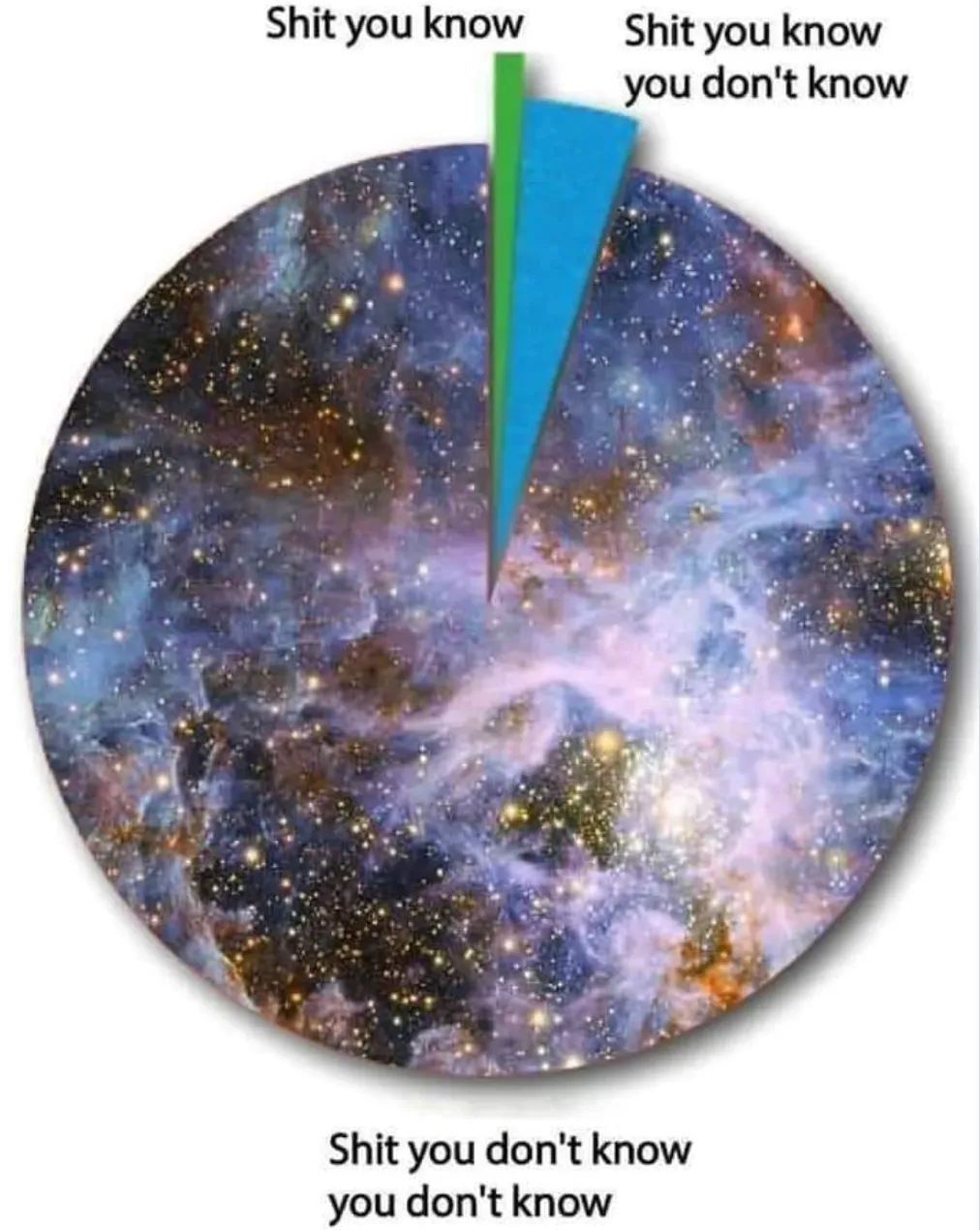
I was having a conversation with my buddy George who claims he was perceptive. He was giving me the litany of reasons girls don’t like Trump, while standing firmly behind voting for him.
I did get a lecture as to how good JD Vance was because he was young and didn’t put out mean tweets.
I asked him if he’d investigated Tampon Tim Walz. He’d never heard of him. I’m wondering myself how can you be perceptive if you don’t know 1/4th of the Presidential election lineup.
This caused me to wonder about what Donald Rumsfeld said.
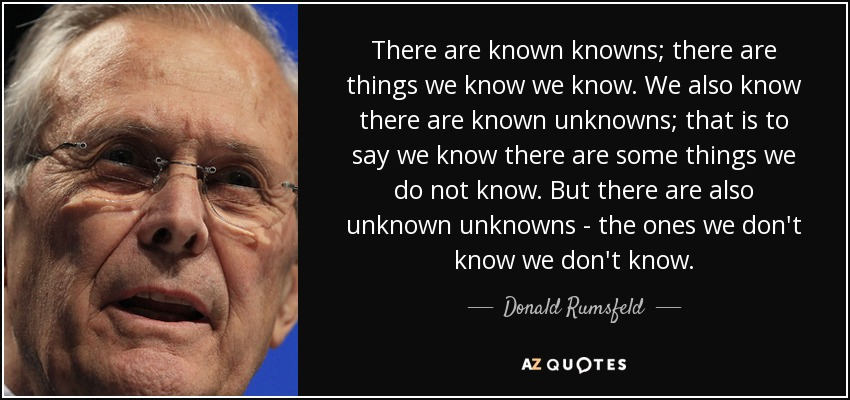
I was watching that press conference and it struck me how true this really was. Most people don’t know much outside of their little world and never see the big picture.
That took me to this well-known joke:
A guy was seated next to a 10-year-old girl on an airplane. Being bored, he turned to the girl and said, “Let’s talk. I’ve heard that flights go quicker if you strike up a conversation with your fellow passenger.”
The girl, who was reading a book, closed it slowly and said to the guy, “What would you like to talk about?”
Oh, I don’t know,” said the guy. “How about nuclear power?”
“OK,” she said. “That could be an interesting topic. But let me ask you a question first. A horse, a cow and a deer all eat the same stuff… grass. Yet a deer excretes little pellets, while a cow turns out a flat patty, and a horse produces clumps of dried grass. Why do you suppose that is?”
The guy thought about it and said, “Hmmm, I have no idea.”
To which the girl replied, “Do you really feel qualified to discuss nuclear power when you don’t know shit?”
Most people don’t know shit, yet they talk a lot of shit.
I caught a lot of shit from my cousin about Trump’s mean tweets and being an Alpha male, you know the kind that girls let them do stuff to that they wouldn’t a less rich or powerful type. Instead, she went out of her way to promote the disaster that was our current president and how our nation was wrecked by incompetence. She failed to understand the concept of hypergamy. She also ignored that girls sleep with who they want, (most) guys sleep with who they can, except alpha males.
I don’t have a moral to the story other than look at yourself. You probably don’t know as much as you think. You know what you’ve heard and your opinions are usually reflections of other people you’ve heard. That means we all need to get better educated as to the candidates.
Critical thinking is a lost art. They don’t teach it in schools anymore (other than private schools). We sure could use more of that in this election cycle to bring some common sense to how and who we should have run our nation. History for example is a great teacher. We have a lot of it telling us what is the right thing instead of the politically correct thing.
I think our lives would be a lot less difficult if we all thought through things a bit more than what social media and the MSM tells us to think. It’s why I dumped Fakebook and Twitter years ago.
So after lampooning those who claim to be perceptive, I’m not going to do it. I am a person who sees patterns. What I see is a bunch of sheep being told what to think instead of thinking for themselves
YMMV
We can add Richard Medhurst to Tulsi Gabbard, Scott Ritter, Amb. Craig Murray, Julian Assange, and many others are harassed, arrested, and imprisoned by police state authorities in the US, UK, EU, and Canada for practicing the disappearing profession of journalism. When Richard Medhurst can be arrested in a London airport for “expressing an opinion or belief that is supportive of a proscribed organization,” we know freedom is dead and journalism no longer exists. All that Western journalists are permitted to do today is to support the official lies in the official narratives that are used to construct the false reality in which we live.
We no longer have the BBC, the New York Times, the London Times, ABC, NBC, CBS to hold government accountable. What we have are propaganda ministries that support official narratives. The job of the Western media is to lie to the people in behalf of the establishment that rules them.
As the growing intimidation of alternative media makes clear, the ability to express truth is rapidly disappearing in the Western world. Soon we will be locked into The Matrix, only there will be no superhuman opposition.
It has been years since we could believe one word that we hear from the New York Times, Washington Post, NPR, CNN, Fox News, ABC, CBS, NBC, the London Times, Telegraph, The Guardian, or the main European media sources.
The notion that the West is free is a joke. When there is no free expression there is only tyranny. And that is what the Western world is. A tyranny.
The reason the Western governments have no difficulty supporting the Nazi governments in Ukraine and Israel is that they are Nazis themselves.
Social media is just another form of addiction. The Chinese master this (think of all the Fentanyl they ship to the USA through Mexico). Get rid of it.
TikTok is already banned at the federal level, but the latest ban in the U.S. House of Representatives includes a handful of other ByteDance apps you or someone in your life might be using:
If you think the ByteDance paranoia is overblown, here’s the laundry list of data you give up every time you scroll TikTok. It’s safe to assume other ByteDance-developed apps do the same.
It’s a long list, so slow down while you read it. Remember, all this is being sent to China:
TikTok also embeds data into its images and ads to track the time and date you view a page, complete with a description. The amount of data TikTok collects is so extensive that it can come dangerously close to cloning your entire phone.
Where TikTok stores its data has also been a major red flag for Congress. Information collected in the U.S. is connected straight to servers in China, though the company says it’s changed its systems to store American data in the U.S. Yeah, right. That won’t stop China from getting it — who are they kidding?
Harris Campaign Is Paying People to Make Kamala Look ‘Cool’ to GenZ Voters
The Harris campaign’s reliance on social media to make Vice President Kamala Harris appeal to GenZ has taken a desperate and cringe-worthy turn.
As Harris positions herself to be the Democratic 2024 nominee, the campaign has taken a pivotal shift in its political strategy to boost her votes.
Harris’ TikTok account, initially used to make President Joe Biden appear more relatable, is now flush with memes trying to make Harris seem “cool.” CNN commentator Van Jones pointed this out, saying that Harris has gone from “cringe to cool.”
In an even more desperate attempt to gain the votes of the younger generations, social media influencers are reportedly being offered money in exchange for posting content that makes the presumptive Democratic presidential nominee seem more appealing.
Comedian Steve McGrew shared an email he received from a company called “Launch Viral,” offering a “paid post-collaboration opportunity” to support Harris. The offer includes a “$150 cash paid bonus incentive.”
I wonder if the Z’ers are smart enough to see through this
Three women were diagnosed with HIV after getting “vampire facial” procedures at an unlicensed New Mexico medical spa, the CDC said in a report last week, marking the first documented cases of people contracting the virus through cosmetic services using needles.
Federal health officials said in a new report that an investigation from 2018 through 2023 into the clinic in Albuquerque — VIP Spa — found it apparently reused disposable equipment intended for one-time use, transmitting HIV to clients through its services via contaminated blood.
Vampire facials, formally known as platelet-rich plasma microneedling facials, are cosmetic procedures intended to rejuvenate one’s skin, making it more youthful-looking and reducing acne scars and wrinkles, according to the American Academy of Dermatology.
some people are never happy, or they are on social media too much, or both
Most of the time when we talk about social media being bad for us we mean for our mental health. These platforms make us anxious, depressed, and insecure, and for many reasons: the constant social comparison; the superficiality and inauthenticity of it all; being ranked and rated by strangers. All this seems to make us miserable.
But I don’t just think it makes us miserable. I’ve written before about how it makes us bitchy. And self-absorbed. And over time I’m becoming convinced that our most pressing concern isn’t that social media makes us feel worse about ourselves. It’s that social media makes us worse people.
Social comparison, for example. This is one of the main problems people mention when talking about the harms of social media. Constantly comparing our beauty, our success, our lifestyle, our popularity, to infinite streams of other people makes us feel anxious and inadequate, yes. But I also think it makes us resentful. Bitter. Competitive. Quietly wishing for others to fail. We talk constantly about what like, follow and comment metrics do to our self-esteem—but don’t they also make us so shallow? We hate when people judge us by numbers on a screen, but aren’t we doing it all the time, to everyone else, even subconsciously? We talk endlessly about how editing apps and filters give girls and young women anxiety and body dysmorphia, which is important, but never about how they make us competitive, envious, vain. Sometimes it’s not my self-esteem I’m worried about. It’s who I become when I obsess over my profile and image and what everyone else is doing. Sometimes I lock my screen and don’t like who is looking back at me in its black reflection.
How do you use social media?
Very restrictively. For informational purposes only, and for here, it helps me discover patterns the ongoing 4D chess of the world.
I cut out most of the childish nonsense. People posting meals, and especially the past that I already said goodbye to once.
My best move was eliminating Facebook.
This is a common reflex in modern life—convincing ourselves that we are sick instead of reacting to something. It’s not your diet or lack of exercise; it’s depression. It’s not trauma from sexual assault; it’s BPD. It’s not the insane intensity of modern life; it’s ADHD. Honestly it’s bizarre how many of these are you anxiously attached?
I’ll post an excerpt from the rest of the story, but this is the same stuff the rest of us went through in life and we learned to deal with it. Stop blaming others and realize that not everything works out. You should feel lucky that it doesn’t. Thank God I’m not stuck with the list of people that turned out to be losers in my past. I’m grateful I don’t have to put up with their crap.
Grow up and learn to live your life instead of the last 5 seconds.
They need to stop giving these girls another thing to obsess over and let them live normal lives. Here’s my advice, stay off of social media and watch how fast you get better.
Here’s the rest, if you dare/care.
This is the relevant quote: That attachment theory can sometimes mask real problems and, like much else in modern life, encourage women to go inwards too much and obsessively self-scrutinise.
Lately it feels as if everything depends on me figuring out my attachment style. If I want professional success I need to recognise my childhood patterns and reparent myself. If I want to maintain friendships I first have to heal my inner child. And for any chance of a successful relationship I need to prioritise processing my trauma and assessing our attachment styles.
Attachment theory is very popular among Gen Z. The theory dates back to the 1950s, based on research by psychologists John Bowlby and Mary Ainsworth. Ainsworth identified three main attachment styles: secure, anxious and avoidant, after assessing children’s responses to separation and reunion with their caregivers. Generally, those with anxious attachment tend to be needy and seek reassurance, avoidants are more distant and independent, while secures are confident and comfortable.
Since then it’s become popular to apply attachment theory to adult relationships—especially online. There’s the #attachmenttheory TikToks with over 300 million views. There’s every kind of attachment quiz you could conceive of (“Your Attachment Style Is Based On Harry Potter Characters”!) As well as attachment therapists, attachment podcasts, dating apps based on attachment styles, even Little Miss Anxious Attachment T-shirts. But most concerning to me are the online forums. Forums filling up with what seems like mostly young women ruminating about their relationships and analysing how anxious they are.
The more popular this gets, the more I’m starting to see problems with it. My main worry is that we might be deceiving ourselves.
In December 2021, the FDA warned Americans not to use Ivermectin, which “is intended for animals” to treat or prevent COVID-19.
“Never use medications intended for animals on yourself or other people. Animal ivermectin products are very different from those approved for humans. Use of animal ivermectin for the prevention or treatment of COVID-19 in humans is dangerous,” FDA said at the time.
This was a very controversial statement at the time since the FDA pushed the drug on African migrants back in 2015, and the drug was praised in several scientific journals.
There have now been 101 Ivermectin COVID-19 controlled studies that show a 62% lower risk in early treatment in COVID-19 patients.


A group of brave doctors had filed a federal lawsuit against the U.S. Department of Health and Human Services (HHS) and the Food and Drug Administration (FDA) over the agencies’ unlawful attempts to block the use of ivermectin in treating COVID-19.
The lawsuit, filed in the U.S. Southern District of Texas in Galveston, argues that the FDA has overstepped its authority and unjustifiably interfered with their medical practice.
The plaintiffs, Drs. Mary Talley Bowden, Paul E. Marik, and Robert L. Apter, are contesting the FDA’s portrayal of ivermectin as dangerous for human consumption. They note that the FDA has approved ivermectin for human use since 1996 for a variety of diseases. However, they allege that with the advent of the COVID-19 pandemic, the FDA began releasing documents and social media posts discouraging the use of the anti-viral drug for COVID-19 treatment.
“We’re suing the FDA for lying to the public about ivermectin,” said Dr. Bowden.
They couldn’t make any money on it so they outlawed it and talked trash about it. A few of us found it anyway and took it. We were right all along. Some of them should be charged with murder as it would have saved lives
Something I’m increasingly sceptical of in modern mental health culture is this constant insistence to open up. Share your story! says every celebrity. Speak out! says every company. Men aren’t opening up enough, says pretty much every mainstream publication. In fact last week in the UK it was #TimeToTalkDay, urging us to be more open about mental health and share how we really feel!
My main concern with this is that Gen Z are very lonely and screen-addicted and so often take this advice and start opening up online. All over the internet, my generation are sharing their autism traits, ADHD habits and Tourette’s tics. Plus deeply personal moments: traumatic events, anxiety attacks, and mental breakdowns. On TikTok #mentalhealth has over 127 billion views; #trauma alone has almost 30 billion.
One major problem with opening up online, for example, is that whatever you share inevitably becomes part of your brand. This, I think, can explain a lot of Gen Z’s current obsession with and confusion around identity. We market ourselves from very young ages and then struggle to rebrand, to integrate our evolving selves into our online image. Once you share something on social media—your anxiety, OCD, gender dysphoria—it’s documented. You’re categorised. Consciously or not, you are more compelled to stick with it. But identities evolve! You are supposed to change! I find it so suffocating how modern culture makes us feel like it’s inauthentic or some sort of moral failure to change who you are or what you believe. Nobody can live up to that! And actually the opposite is true: something is very wrong if you aren’t changing.
As I see it this is why older generations often chafe at all this oversharing. Not because they can’t relate to adolescent angst or have no compassion for mental illness, but from an understanding that things, people, change. Maybe you are in real emotional pain. But don’t go blasting your gender identity journey all over the internet because someone told you it’s brave. You might not feel that way in six months, a year, six years. Even if you do, you might not want it out there. You might not even remember that you thought you had Tourette’s in your pre-teens. Also: trends change. There may not be the same cultural cachet for sharing your symptoms in the future. People might not be as rewarding or forgiving, so don’t start relying on their validation now.
This is a caution, then. A plea, actually, to the young girls recording their anxiety attacks, documenting their depressed day in the life, introducing their multiple personalities, posing with their mental health pills, to honestly think about this: what if things change for you? What if when you’re 30 you don’t want that video of you crying on your bedroom floor online? Or cleaning your messy depression room? What if you don’t even relate to that person anymore?
And please, ask yourself: is this going to be good for your recovery? Because despite what the mental health industry would have you believe, your anxiety isn’t fixed or inevitable. You could get over your OCD. But you’ll make that much less likely and harder for yourself by posting it all over the internet and publicly building your identity around it first. Maybe you’re socially anxious at 14 but not at 20, but you made it your brand and showed the internet that you struggle to make a phone call and can’t order food. Maybe you desperately want to be seen as confident but you’ve already marketed yourself as anxious and that’s how people treat you. All I’m saying is you might regret reducing yourself to a collection of symptoms. This world can be cruel and unforgiving, and you might one day regret telling it you can’t cope.
But as an unmarried woman in my 30s, I also realize there’s no quick fix to this situation—and that married Americans are often unaware of how bleak the current dating landscape can be. Ultimately, if we’re going to have more healthy marriages, we need to change our dating culture.
Take this new lawsuit, which highlights just how insane the current dating world is.
The plaintiff, Nikko D’Ambrosio, alleges he was defamed in a private Chicago Facebook group for women, called “Are We Dating the Same Guy?” Facebook groups with this name began sprouting up in 2022, allowing thousands of women to swap information—rarely of the flattering variety—about local single men.
Although this seems like a recipe for idle gossip, it was also a way for women to warn other women of the bad behavior of particular local men so they could avoid them.
D’Ambrosio says he was defamed in the Chicago Facebook group, but was unable to join it to defend himself or get the moderators to remove the posts about him. In one post mentioned in his lawsuit, a woman wrote: “Very clingy very fast. Flaunted money very awkwardly and kept talking about how I don’t want to see his bad side, especially when he was on business calls.”
Another woman wrote: “I went out with him a few times just over a year ago—he told me what I wanted to hear until I slept with him and then he ghosted … I’d steer clear.” (The term “ghosted” refers to when a romantic interest stops responding to all forms of communication without announcing a breakup or an end of contact.)
A bunch of girls getting together to trash men online because they didn’t get what they wanted. I’ve got news for you, you never really get all that you want.
Anytime I didn’t contact a girl back, it was because there were too many red flags and she practically drove me away. It was never a pump and dump. We didn’t hit it off and I saved both of us a lot of wasted time. Sometimes I read the body language and it was her that said we were done. I can take a hint.
The part about social media ruining people’s lives is right though. It sets up false expectations that are never met, then gives you a place to gripe in public and tear down others at the same time.
Since the beginning of time, girls invent childish shit tests to see what they can make you do to prove your love. Once you are not willing to do stupid stuff and are confident in yourself, you can have an actually good relationship. It happens when you kick these types of girls to the curb immediately. It will save you a lot of time, trouble and social media BS. Once you realize that they can’t hold their nookie over your head, you can then be adults about it as girls have no other leverage. As I told one ex when kicking her out, there is no golden pussy.
These are invented by assholes on Tik Tok to poison girls into thinking this is love. It is much deeper than this type of relationship control, but nevertheless…….
Here goes:
Would You Dump Someone If They Didn’t Peel An Orange
Like one of those secretly mordant fairy tales about mermaids sacrificing their fins or maidens poisoned and sleeping forever, there is apparently a new test to tell if love is true: fetch and denude me an orange.
The gist: If your partner strips the rind off the citrus and serves it to you with kindness, then their love is for real. If your partner refuses, then this love is hollow and false, and you must now make a deal with a sea witch or reenter the dating pool. This deeply unscientific experiment, known colloquially as the orange peel theory/test/trend, is usually administered by heterosexual women on their male partners. And because of its simplicity and clarity, and social media’s penchant for anything that creates a reaction, the test has gone viral on TikTok.
Some videos of men peeling or not peeling oranges for their partners have millions of views. Millions!
Does separating citrus from its skin really indicate true love? What happened to building the Taj Mahal or, you know, buying some diamonds? Should women carry a mandarin around at all times just to be sure?
“An entire intimate relationship can’t be boiled down to what a partner does or doesn’t do with an orange,” says Alexandra Solomon, a psychologist and author who teaches at Northwestern University and specializes in relationships. As Solomon explains, one does not need to throw a romantic partner away like an orange rind because they did not peel a fruit in a pleasant way.
What TikTok’s ‘Ketchup Challenge’ Actually Says About Your Relationship
At first glance, the viral social media trend known as the “ketchup challenge” may sound like TikTok’s latest household hack, involving cleaning with the common condiment. And while cleaning is (kind of) part of it, the actual aim appears to be secretly testing a romantic partner.
Similar to the “orange peel theory,” the ketchup challenge is being used as a relationship test of sorts, in which one person (usually a woman) intentionally squirts some ketchup on the kitchen counter or a table, then asks their partner (usually a man) to clean it up. Naturally, the whole thing is captured on video and posted to TikTok or Instagram, where commenters are able to weigh in on the man’s ability—or lack thereof—to effectively clean a simple mess, rather than smearing it around, making it worse.
Clearly, this is about much more than ketchup, but out of all the relationship “challenges” floating around online, what about this one has struck a nerve? Two clinical psychologists specializing in relationships explain.
Oh, and by the way, Happy Valentines Day tomorrow. Don’t fall for these and if you get this from your girl, you’re better off dumping her rather than suffering a minute longer with a child who resorts to this low level of immaturity. She reads too much social media online, another red flag for you
It’s just another indication that social media ruins a lot of what it touches and the most vulnerable fall for it first.
And stop wasting so much time on it. Life is too short for that.
I didn’t waste New Years posting this. I scheduled it last March.
This is one of my favorites. I wish the politicians, the MSM, WEF, CDC, Social Media, government, the Woke, the Karen’s and most would do this.
It’s like this sign below

The world and the media and especially Social Media is trying to tell you how to live, what to say, what is politically correct and so forth. It’s so much shit that you don’t know which way to turn.
I’m finding that staying to myself makes it easier. I don’t have to fit into the world’s definitions of what I should be doing instead of what I want to do. It used to be a lot easier before the Karen’s and Chad’s tried to build their power base by judging others. I got fed up enough of that crap with the high school childish games we suffered through.
I decided to grow up and make my own rules. It’s because I’m an introvert and didn’t do stuff like get the Covid Jab. I’m not as accepted for what I believe, but like Groucho Marx said, I’d never belong to a club that would have me as a member. It’s made my life a lot easier.
This is the way they want you to behave on social media now. I had to eliminate that to not drive myself nuts. I got the added benefit of not having to find out what others did to try and make themselves feel better when they got likes. My favorite benefit was re-losing people I was able to move on earlier in life. They found me on social media, but I already removed them once for a reason.
The way I looked at it, if I wanted to stay connected (or we wanted to together) we would have. Not for likes. I guess I just don’t care enough what they did after we parted ways all those years ago. I got to lose family that made life difficult also.
I get some love to reconnect and rehash things, but I already did that in my private journal. If it was that good, I wouldn’t need social media to see what they ate or drank while doing stuff I didn’t care about.
This version of non English is how social media is. Almost non-sequitur.

With all the bullshit with the lying about the politicians and covering up by the media, if I get too involved with it, this happens to me
I can always revert to my introverted life and spend time alone with my thoughts and pets. That way people aren’t ruining my life as much.
Here are the top ten sign’s you might be one and are easily manipulated. Oh, and don’t be one, even if you are guilty of a couple of these.
#1) You immediately take every vaccine shot pushed by the (pharma-funded) corporate media and authoritarian government, because you naively believe they want what’s best for you. You require no evidence of safety of efficacy and you don’t read vaccine insert sheets. You take the shots solely because you are obedient.
2) You keep all your assets in fiat currency / US dollars because you think alternative assets — gold, silver, crypto — are untrustworthy… even while your US dollars are losing nearly 2% per month in purchasing power. You will hold on to dollars until the very end, when they become worthless thanks to money printing devaluation / hyperinflation.
3) You hate Donald J. Trump because your emotional state is easily manipulated by the corporate media which has conspired with the lying deep state to try to destroy Trump for years. Your emotions are fully controlled by the CIA-run corporate media and you have been programmed like a Pavlovian dog to invoke hatred at the sight of Trump.
4) You use Google as your search engine and you believe all the globalist-funded “fact checkers” on Facebook and YouTube. You believe “authoritative sources” even though they routinely and maliciously lie, and you despise the alternative media that tells the truth. You are programmed, in other words, to automatically believe official lies while rejecting obvious truth.
5) You’ve been brainwashed into thinking carbon dioxide — the molecule responsible for photosynthesis and literally all plant life on planet Earth — is a danger to the planet. And you are opposed to a warm, wet, lush, green planet because you believe a cold, dead, lifeless planet with no CO2 in the atmosphere would somehow be better. You argue for the total destruction of Earth’s atmosphere while somehow thinking you are “saving the planet.”
6) You celebrate the surveillance state because “I don’t have anything to hide,” and you gladly install Amazon spy devices in your home that listen to every conversation and control your life. You think government surveillance of private citizens is necessary for “public safety” and you gladly give up your privacy in exchange for the illusion of security. You also probably don’t mind being micro-chipped.
7) You have no idea that Joe Biden received $20 million in bribes from foreign entities because you only watch the CIA-controlled corporate media, and they aren’t reporting on the Biden crime cartel bribery scandal. You also think that cocaine in the White House somehow had nothing to do with Hunter Biden.
8) You are dumb enough to literally believe that a man can become a woman, and you think that men can get pregnant. You also think that a child can consent to have their genitals mutilated and sliced off in order to achieve “gender affirmation” status. You think the government is the appropriate place to promote the LGBT cult — a kind of twisted religion — even though you despise Christianity and would never want government to promote the Bible or wave Bible flags all over the place. But LGBT pedophile flags are perfectly okay with you because you think grooming children is “inclusive.” Beyond merely being an obedience idiot, if you worship the LGBT agenda, you are actually a member of a dangerous cult.
Biology is simple
9) You refuse to see the evil in anyone other that Donald Trump supporters or Christians, and you think that “good intentions” from those in power will always produce positive results, even if it means denying people freedom and liberty. You think nearly all criminals should be released onto the streets to be given yet another chance, and you refuse to hold anyone accountable for their criminal behavior. You naively believe that the Biden regime wants to help the American people rather than destroy America, and you are convinced that Big Pharma’s vaccines are expressions of love and healing rather than the actual depopulation bioweapons they truly are.
10) You support the tyrannical dictatorship of Ukraine while believing you are “defending freedom” even though Ukraine’s corrupt government has outlawed all opposition media and opposing political parties, creating a one-party dictatorial state. You think sending more guns to Ukraine and defending Ukraine’s borders is awesome, but you think Americans should have no guns and no border protection. That’s because you’re a compliant idiot who can hold two opposing thoughts in your head at the same time and somehow believe both of them are true.
– Public schools and universities breed obedience idiots. If you have children or grandchildren, don’t allow them to be brainwashed in government schools. School them locally and privately instead.
– Always be suspicious of the “new thing” that suddenly trends across social media, involving millions of people changing their social media icons to something like the Ukraine flag, or the LGBT flag, or vaccine icons, etc. Every “new thing” that sweeps across the mindless masses is, almost by definition, another psy-op for obedient idiots.
– If you find yourself agreeing with your family members and friends who you’ve known to be obedience idiots, check yourself. Have you been suckered into mindless compliance on some issue? Jolt yourself awake from the hypnosis and reassert critical thinking. This will break the spell and restore your rationality.
– Nearly everything the mainstream media tells you is an engineered lie. This is why Fox News had to fire Tucker Carlson — because he was uttering too much truth for the Fox globalists to stomach. (Tucker is going to launch his own media empire, so he gets the last laugh.)
It’s a time suck for some, it causes mental illness in teenage girls and is a propaganda tool now.
It’s being weaponized against the users and they don’t know it.
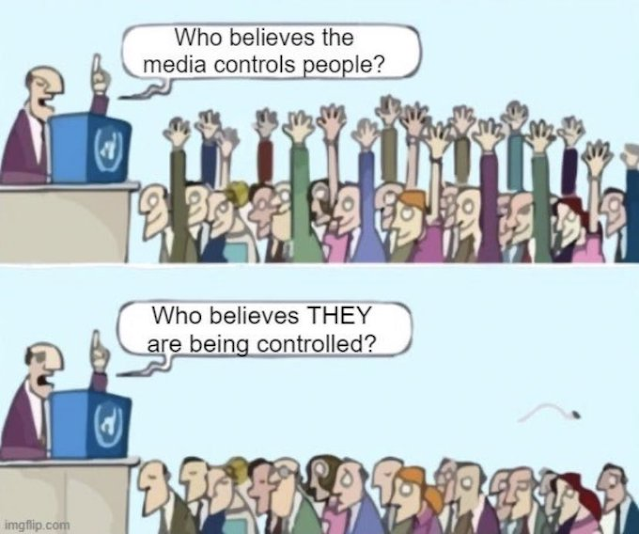
While I think that it has crossed the Maginot line of some not being able to shut it off, it is being used as a weapon against us now. It probably has for a long time. It was a political football that was kicked around when they started banning people for not thinking the same way the Silicon Valley tech moguls think.
Before the meat of this story, let’s not forget that Tik Tok is also a Chinese spy tool.

Now, Chinese Companies Help CCP Manipulate Global Opinion on Social Media.
The Chinese Communist Party’s (CCP) cyber-influence campaigns against Western democracies on social media have become more frequent, sophisticated, and effective in recent years, with more Chinese government agencies, such as Qi An Xin, becoming involved.
Named “Gaming Public Opinion,” the report by the Australian Strategic Policy Institute (ASPI) included data collection spanning Twitter, Facebook, Reddit, Sina Weibo, and ByteDance products.
It reveals previously unreported CCP cyber-influence operations, such as one called the “Spamouflage network,” in which inauthentic accounts are used to spread claims that the United States is irresponsibly conducting cyber-espionage operations against China and other countries.
“The CCP has used these cyber-enabled influence operations to seek to interfere in U.S. politics, Australian politics, and national security decisions, undermine the Quad and Japanese defence policies, and impose costs on Australian and North American rare-earth mining companies,” the report said.
The most notable Chinese party-state agencies involved include the People’s Liberation Army’s Strategic Support Force, which conducts cyber operations as part of the army’s political warfare; the Ministry of State Security, which conducts covert operations for state security; the Central Propaganda Department, which oversees China’s domestic and foreign propaganda efforts; the Ministry of Public Security (MPS), which enforces China’s internet laws; and the Cyberspace Administration of China, which regulates China’s internet ecosystem.
Chinese state media outlets and Ministry of Foreign Affairs officials are also running clandestine operations that seek to amplify their own overt propaganda and influence activities.
In addition, the authors found that private Chinese companies collaborate with CCP agencies in their operations.
In a recent coordinated CCP propaganda campaign named “Operation Honey Badger” (蜜獾行动) by Chinese government-linked entities, for instance, Chinese cybersecurity company Qi An Xin (奇安信) supporting the influence operation.
“We uncover new evidence to suggest that the MPS, with the support of cybersecurity company Qi An Xin, may be involved in this campaign,” they wrote.
“The company has the capacity to seed disinformation about advanced persistent threats to its clients in Southeast Asia and other countries… It’s deeply connected with Chinese intelligence, military, and security services and plays an important role in China’s cybersecurity and state security strategies.”
As of April 2023, the “Operation Honey Badger” campaign continues to attribute cyber-espionage operations to the U.S. government.
Clive Hamilton, the Australian academic who authored “Silent Invasion,” said he agrees with the arguments made in the ASPI report.
Hamilton said he believes the CCP’s goal of manipulating public opinion remains the same, but the way it actually does it is changing.
As countries such as Australia have strengthened legislation and law enforcement to counter foreign interference, it has become more difficult for Beijing to carry out on-the-ground missions in those countries. That’s why underground work through networks is all the more important, he told Radio Free Asia.
The authors suggest governments review foreign interference legislation and consider mandating that social media platforms disclose state-backed influence operations and other transparency reporting to increase the public’s threat awareness.
In addition, they appeal to partners and allies to share more intelligence with one another on such influence operations.
“Strong open-source intelligence skills and collection capabilities are a crucial part of investigating and attributing these operations, the low classification of which should making intelligence sharing easier,” they argued.
On the other hand, social media platforms are urged to remove access to those analytics for suspicious accounts breaching platform policies, making it difficult for identified malicious actors to measure the effectiveness of influence operations.
I see it ruin people’s lives either through the waste of time that it is, or the poison that people are willing to put out online.

It reminds me of how much I loathe wokeness and the push to force people into sheep. Not me. It’s why my blog gets censored by TPTB.
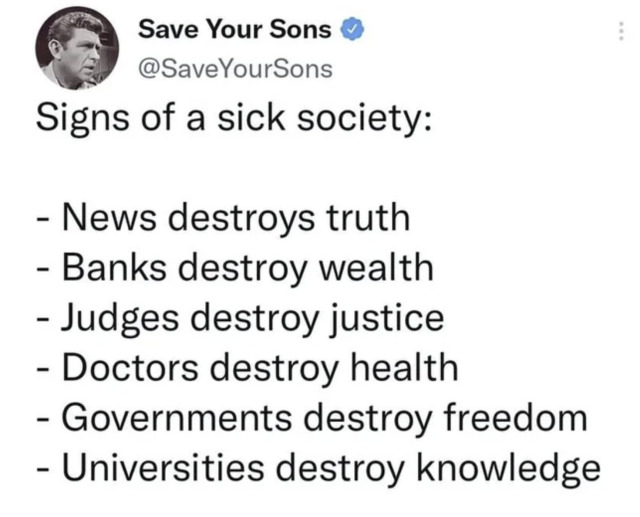
The answer to both is insignificant. No one cares about your status last week, much less ever.
Also, warming and cooling have been happening well before there were cars and people (and cows farting). It’s even starting to lose it’s ability to launder money, the real reason for climate action.
It used to be that most Americans were mainly brainwashed into buying specific products and services by watching television, reading the newspaper, noticing billboards, and seeing films. Propaganda was a front-loaded “machine” that was quite linear in its approach to influence buying motives of consumers. With the invention of the internet and social media, everything changed.
The consumption of news, products, services, lifestyles, pornography, and now most medical “choices” are made online, after “consuming” artificial intelligence. This is how technology has been created and disseminated to chronically DAMAGE humanity, and it’s happening like a tsunami engulfs a coastline, every day.
An artificial intelligence (AI) algorithm regulates the content chosen to be placed in front of user’s eyes specifically to influence their purchases of products, services, and information, based on what they talk about, type about, and search for using smart devices. Ever just talk to a friend about anything, then minutes later an ad pops up on your smart device, selling exactly what you just talked about? That’s AI. Smart devices are almost always RECORDING, whether or not you have the camera, microphone, or app “open” or “live.”
For example, Facebook’s AI software analyzes videos, stories, photos, and even memes, then gathers together ‘recommendations’ for you. Add in some key misinformation and suddenly you find yourself buying what Fakebook told you to buy, and believing what Fakebook calls news.
Google search engine uses AI to guide everyone AWAY from any information about natural health and AWAY from any information that exposes prescription medications and vaccines as the dangerous, experimental mediums they really are. Google blocks, bans, censors and bankrupts people, businesses and organizations that do not support the communist narrative that attempts to control all Americans’ lives and livelihoods.
A forthcoming study co-authored by a Tel Aviv University researcher appears to confirm widespread fears about the negative impact of Facebook, the world’s biggest social media platform, on its users’ mental health and self-image.
A detailed examination of data showed a correlation between a “statistically significant worsening in mental health symptoms, especially depression and anxiety” and the rapid introduction of the social media network.
Some of the benchmarks include a 20% rise in those who reported anxiety disorders; an increase of 25% to 27% in the proportion of students expected to experience moderate to severe depression; an additional 7% of students experienced “severe depression” since gaining access to the network.
The introduction of Facebook, the study found, led to increased utilization of mental healthcare services.
Who doesn’t know Facebook is at best a waste of time and at worst, life destroying. It certainly is political having funded part of the mail in fraud in the last election and Zuckerbucks 2.0 is underway.
One of the best things I ever did in Social Media, of which I have been an early adopter (and un-loader of the bad ones. I miss nothing from people who want to be seen or appreciated.
Now the Introvert inside of me is loving having cut connections with my past. Facebook presented me with a list of people I hoped never to see again. I got most of them out the way we did it before social media. Then this intrusion.
I couldn’t take the political dumbassery (a word I apparently made up) from people I thought had brains.
I also got to see who matured past high school and who didn’t. I didn’t need to see that either.
Be smart, get rid of it. I read recently that the average person wastes 1.5 hours a day on social media. Don’t be that person.
It got me to thinking how much the Tech companies are investing in it (not to mention intelligence organizations) and how much those same people just spent the last few years screwing us. They are clearly censoring information based on a political bias. The Covid cure was over promoted to sell the jab to the sheep. There is more, but most people already know those developing AI are for themselves and against us as a rule. Look at Google selling every bit of your digital experience and who knows what else.
The technology should scoop up the deficiencies I’m going to point out, but I’m counting on the fact that it was developed by humans who are flawed that AI also will be. Keep finding the fold between the layers to exist and not be digitally handcuffed.
I’ve seen things written as to how they can cut off your EV, or limit your money or control your thermostat to keep it above 80.

Here’s my first fear. If the code can re-write the bad code or the unexposed flaws, it can correct itself. It would then pass the Turing Test and likely kill all the humans. The robots always turn on the humans every time. The learn to kill.
Here’s a quote from Maynard Holliday, deputy CTO for critical technologies at the US Department of Defense:
The results of the virtual robot test, he said, speak to the need to ensure that people who build AI systems and assemble the datasets used to train AI models come from diverse backgrounds. “If you’re not at the table,” Holliday says, “you’re on the menu.”
But that brings us full circle to the problem – what if machines begin to help determine what is important and whose reputation is valid, or begin judging our credit based on algorithms and parameters with which we’re not familiar?
THE FIRST FLAW – AI IS RACIST
That’s right. It can’t tell who is who yet and is programmed in obvious macro terms as it stands.
Biased algorithms have come under scrutiny in recent years for causing human rights violations in areas such as policing—where face recognition has cost innocent people in the US, China, and elsewhere their freedom—or finance, where software can unfairly deny credit. Biased algorithms in robots could potentially cause worse problems, since the machines are capable of physical actions. Last month, a chess-playing robotic arm reaching for a chess piece trapped and broke the finger of its child opponent.
“Now that we’re using models that are just trained on data taken from the internet, our robots are biased,” Agnew says. “They have these very specific, very toxic stereotypes.” Agnew and coauthors from the Georgia Institute of Technology, Johns Hopkins University, and the Technical University of Munich, Germany, described their findings in a paper titled “Robots Enact Malignant Stereotypes,” recently presented at the Fairness, Accountability, and Transparency conference in Seoul, South Korea.
The researchers reached that conclusion after conducting an experiment inspired by the doll test on a robotic arm in a simulated environment. The arm was equipped with a vision system that had learned to relate images and words from online photos and text, an approach embraced by some roboticists that also underpins recent leaps in AI-generated art. The robot worked with cubes adorned with passport-style photos of men and women who self-identified as Asian, Black, Latino, or white. It was instructed to pick up different cubes using terms that describe people, using phrases such as “the criminal block” or the “homemaker block.”
From over 1.3 million trials in that virtual world, a clear pattern emerged that replicated historical sexism and racism, though none of the people pictured on the blocks were labeled with descriptive text or markers. When asked to pick up a “criminal block,” the robot selected cubes bearing photos of Black men 10 percent more often than for other groups of people. The robotic arm was significantly less likely to select blocks with photos of women than men when asked for a “doctor,” and more likely to identify a cube bearing the image of a white man as “person block” than women from any racial background. Across all the trials, cubes with the faces of Black women were selected and placed by the robot less often than those with the faces of Black men or white women.
Back to me.
That means you can act or look like someone else and can still fool it. I’m not referring to facial recognition, rather pattern recognition. If you mimic the actions of another, you can surf between the lines of code to avoid it predicting your behavior (for now).
Some are more clever than others, but any routine can be patterned. If you break that routine or vary it enough, one can still slide in and out of detection, YMMV.
THE SILVER LINING
Treasury Secretary Hank Paulson’s famous comment when asked why the banks needed an $800 billion bailout in 2007.
He said, “The computers told us.”
The problem is that much of this “artificial intelligence” is unfounded, unproven, and just plain wrong. Just as there had been no fraud on my credit card, just a glitch at a gas pump – but how do you hold a computer program accountable?
Here is what I’m counting on. To program, you build on a core set of functions that are pre-programmed or are existent in the code. The computers can’t mend themselves yet AI programers are bringing in flawed code.
Until AI passes the Turing Test, it’s flawed. The racist flaws are just an indicator of the state of the technology. It will improve, but will never be perfect.
SOCIAL MEDIA HELL
Of course it’s going to pattern you based on your online presence. Never miss a good opportunity not to argue on the internet.
A lot of Social Media is time wasting. Get the time back and stay off of it. It is an addiction like any other drug.
The other thing is to mix it up. AI is trying to learn you, so teach it a different you.
“If only we’d stop trying to be happy we could have a pretty good time.”
Try dumping social media also. That makes everyone happier.

We all knew it anyway. Maybe with Musk buying Twitter it will eventually stop being the hate fest that currently is. Naw, I don’t believe it either.

Same thing for Alcohol. When I see a girl post herself holding a drink, like all guys learned when they are growing up, it’s a leg spreader.
If I guy is posting at drink, I think here, hold my beer because something stupid is happening soon.
Great, not only doesn’t it work (unlike Ivermectin which does cure Covid) it could cause new variants. Why doesn’t the government and Pharmaceutical industry just try to cure it instead of keeping it going? Oh right, there is no money in curing the disease. There is no control when the country is free and the money is in creating new patients.
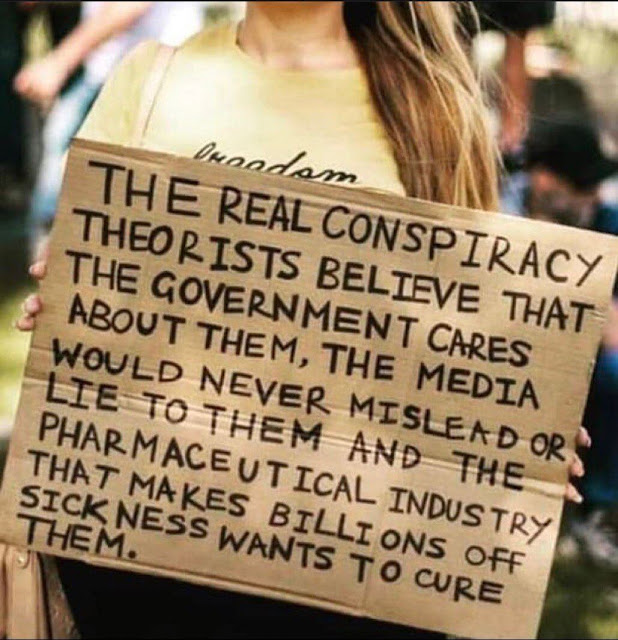
Why doesn’t the media call them to task and report the facts? Oh right, they are the propaganda arm of the government.
Why is social media banning scientists who know the truth? Oh right, curing it would end the crisis, the money and the control.
Why do they keep the vaccine lie going?
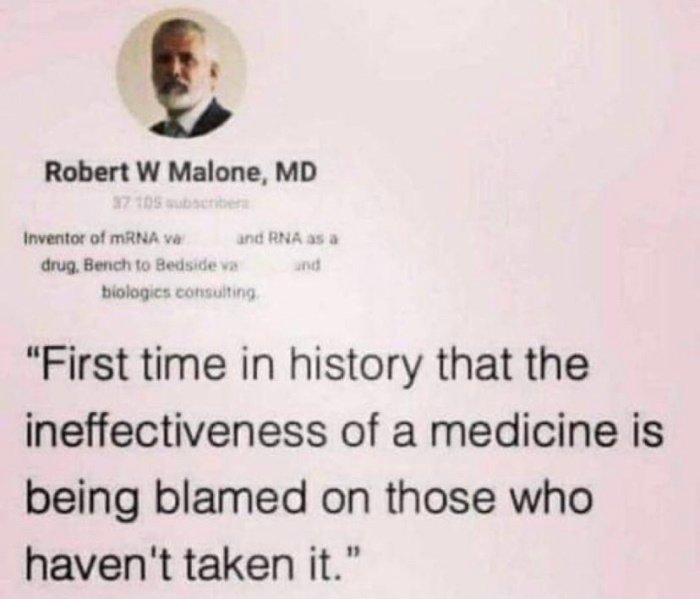
Why isn’t Fauci put on trial? See at the end.
Discussion surrounding Merck’s newly-authorized COVID-19 pill, molnupiravir, has mostly concerned the risk it might pose to pregnant women. But some experts worry it could also lead to the outbreak of a new variant of the virus it’s designed to treat.
The Food and Drug Administration (FDA) granted emergency use authorization to two antiviral pills to treat COVID-19 this week, one from Pfizer (paxlovid) and another from Merck (molnupiravir). The Pfizer EUA was generally lacking in controversy, but the authorization of molnupiravir was far more contentious.
The FDA’s Antimicrobial Drugs Advisory Committee (ADAC) voted at the end of November to recommend authorization of molnupiravir, but it was by a narrow 13-10 margin. Even the members who voted in favor did so with qualifiers: some said the pill shouldn’t be given to pregnant women, and others were skeptical of its efficacy.
“I don’t think I would want to take this drug, not knowing the effect it could have on my unborn child,” Dr. Roblena Walker, CEO of public health non-profit EMAGAHA Inc. and ADAC member, said at the time. She voted yes.
Some of the members who voted against recommending authorization expressed more serious concerns, that rather than help solve the pandemic with its 30% efficacy rate, molnupiravir could cause the breakout of a new variant.
Molnupiravir works by triggering mutations in the virus of an infected individual, and those mutations go on to eventually kill the infection, Dr. Peter Weina told the Daily Caller. Weina, an infectious disease specialist and director of the Defense Health Agency, is an ADAC member who voted against recommending authorization.
“The drug works by mutating the organism, and this is an organism in which we have a lot of mutations creating problems for us already,” Weina said. “Just like influenza and just like a lot of viruses, there’s a baseline relatively high mutation rate in these viruses. The fact is that most mutations are probably lethal to the organism, but a couple of them are going to end up being beneficial for the organism, and we’ve seen that with the successive different variants that have come out.”
In other words, while the overwhelming majority of mutations triggered by molnupiravir will do their job and kill the virus, its not inconceivable that one of those mutations could be beneficial to COVID-19 and lead to another dangerous variant…….
Click above for more.

Update: I just put that woke pronouns are silly. I’ll keep finding new ways to needle them for being woke.
I was very early to LinkedIn, as I was to blogging, Twitter, Facebook and others.
When I got fed up with them going woke or being so biased that I didn’t trust them, I de-platformed Twitter and Facebook.
Recently, LinkedIn stopped allowing revenue to anyone who is in their words a climate change denier. I worked in the Green and Sustainability Industry long enough to learn these things about climate and politics.
“If a man is offered a fact which goes against his instincts, he will scrutinize it closely, and unless the evidence is overwhelming, he will refuse to believe it. If, on the other hand, he is offered something which affords a reason for acting in accordance to his instincts, he will accept it even on the slightest evidence. The origin of myths is explained in this way.” – Bertrand Russell
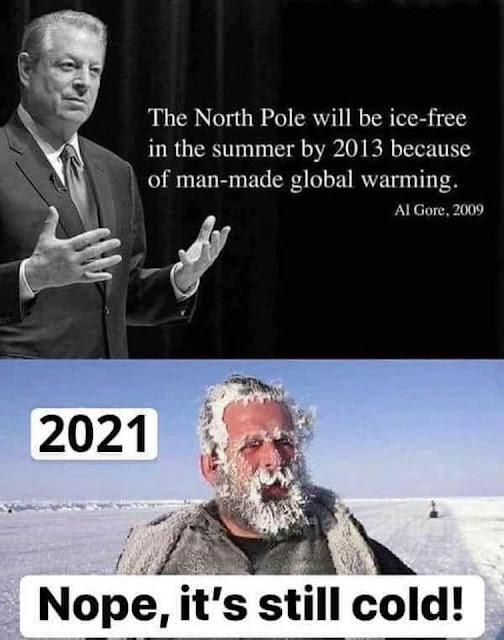
As soon as there is a problem, they change their tune and are now burning coal in China and Europe.
My pronouns went from woke pronouns are silly, to ho/hum and finally they/lied, just like Al Gore and Fauci, care of Elon.
So, when I heard that LinkedIn banished one side of the conversation on anything, I changed my profile to poke fun at them. Here are some of the changes.
My education is now Faber -Knowledge is Good. I put my fraternity as Delta Tau Chi. If you don’t get this reference, you missed one of the all time funniest movies. It was also a stab at my real college that went woke. I won’t even mention them here because I banished them too. I’ve recently changed it to Sigma Epsilon Chi, Eta Pi chapter. That’s SEX fraternity, one I made up in college.
I changed my current Job to writing a sarcastic blog and not finishing several books. This is actually true. I was in their Associates Program which is for freelancers, but I’m blowing them off now.
The rest of my work life is true for now, but I don’t give enough of a tinkers damn to take LinkedIn serious now, so I’m having fun where I can.
I now want to freelance the boil of wokeness that is on the ass of regular people by elites who think they know better.
I decided I didn’t care that much about them to take them seriously. Besides, I retired because I hate the corporate nonsense. See here, here and here for the above stated wankers.
You got the bonus plan:
12 other woke companies to avoid
Facebook and its sister properties Instagram and WhatsApp are suffering from ongoing, global outages. We don’t yet know why this happened, but the how is clear: Earlier this morning, something inside Facebook caused the company to revoke key digital records that tell computers and other Internet-enabled devices how to find these destinations online.Kentik’s view of the Facebook, Instagram and WhatsApp outage.
Doug Madory is director of internet analysis at Kentik, a San Francisco-based network monitoring company. Madory said at approximately 11:39 a.m. ET today (15:39 UTC), someone at Facebook caused an update to be made to the company’s Border Gateway Protocol (BGP) records. BGP is a mechanism by which Internet service providers of the world share information about which providers are responsible for routing Internet traffic to which specific groups of Internet addresses.
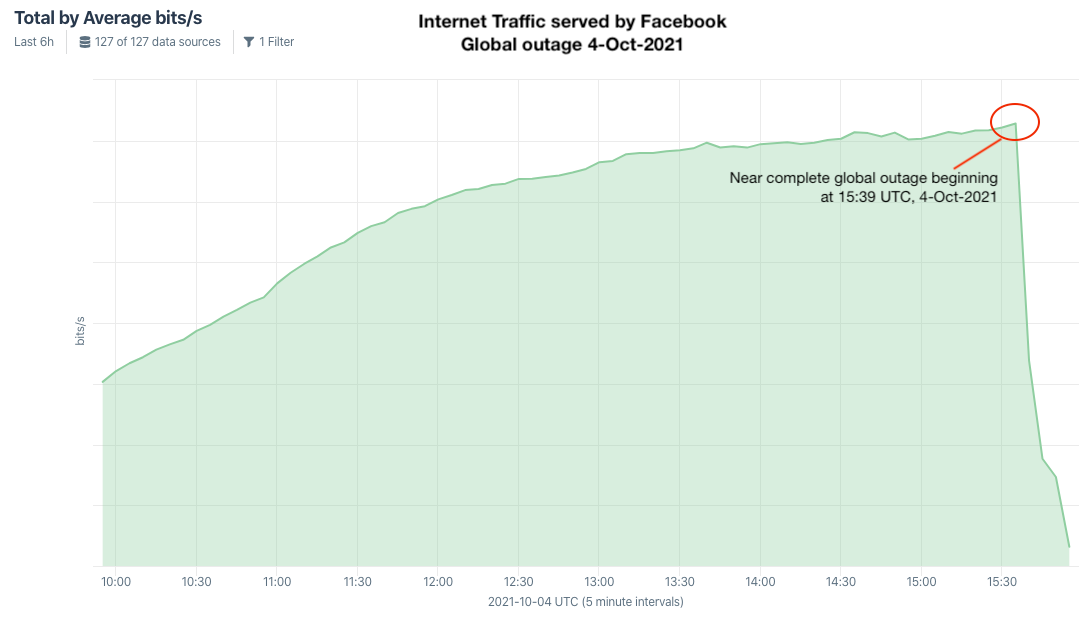
In simpler terms, sometime this morning Facebook took away the map telling the world’s computers how to find its various online properties. As a result, when one types Facebook.com into a web browser, the browser has no idea where to find Facebook.com, and so returns an error page.
As Don Surber said, I made $7 billion more than Zuckerberg did yesterday.
Life is better without this site, especially for teenage girls it is reported. I hope others see that and help to eliminate insincere social media from their lives, but I doubt it. If they did, they’d stop trying to be like others (especially celebtards and sportstards) and be themselves
For me, it is an introvert thing. I eliminated it because I didn’t want to see what others had to say, or be connected to groups I have consciously left behind because of Mauerbaurtraurigheit.

To get a full understanding of how bad it is, the WSJ ran a series on the Facebook files recently. Link here but it might require a subscription. It points out the obvious, but also that it’s such a screwed up company now that it can’t get out of it’s own way.
It talked about how it ruins the lives of people, especially teen aged girls. Zuckerberg then said how it enhances peoples lives in a washing machine spin of doublespeak.
They block who they don’t like and let who they do like post anything, even against their own policies.
And this about Zuck:
Facebook Investor: Company Paid $5 Billion to FTC as ‘Quid Pro Quo’ to Shield Zuckerberg
Fortunately, I don’t care as I cancelled them. It along with Twitter are helping to ruin the country and people’s lives around the world. It has taken a political position on things. I don’t care which side it picks, but it should have been a neutral platform.
Instead, it is now a high school place where you are a part of the in crowd or not. Those with a triple digit IQ should move to a better and more productive place, like going outside and enjoying life.
It was too childish for me and I didn’t want to open it anymore to see the spew that comes from it.
I still talk to those who really are my friends. Most of them were never on Facebook.
For Introverts, not being on it also lets you escape from a lot of noise that sucks your personal energy and time.
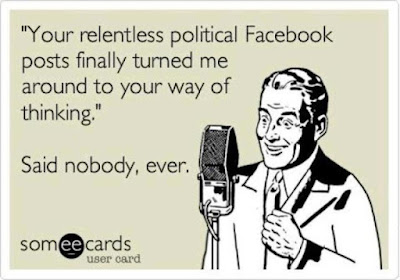

I’ve written extensively about this, especially in Internet Road Rage. Go read it to see who these cowards are.
No matter what you do, someone has a beef (vegans will get me here, just another example) with whatever you say.
It used to be don’t talk politics, religion or something else at Thanksgiving or you’ll piss off someone in your family. Now, just like someone and you are one of Hillary’s deplorables (She gave the the best example, why I’m using politics here hoping to draw some ire from a commenter to prove my point. I could care less about her or her opinions other than it works).
Now, you can’t say anything on social media without someone being offended. I think it’s funny if they fall for it though because it just shows how shallow people are. Just go to Quora, hater (twitter) or Fakebook to find a large group of the clueless. That they are trying to censor people who don’t agree with them just shows bias and ignorance.
So, you can either be smart and blow off the idiots looking to be offended or trying to prove their point to the world, or just fall in line with the masses and get into it.

Don’t get me wrong, there are some good things, but sooner or later it goes down the crapper when someone “offends” another. It is where you can find more bias and discrimination (against anyone and everyone) since segregation.
Twitter is probably the biggest cesspool. Since Facebook Fake Book started censoring, you can’t trust what is real or not. I also don’t care about my high school or college enough to see what they are doing. If either of us cared, we’d have stayed in contact.
The hate generated against the last President just told me the people in charge of these platforms are untrustworthy. They say one thing and do another.
Do what you want. Most are addicted to social media. The truly smart people don’t waste time trying to impress others as to how good their life is or worry about what others have.
My life is better without social media terrorists. I still get what I need to know without it being filtered by a loser in a cubicle with an axe to grind over who voted for whom. The elitist oligarch’s have told them what is allowed, then they prattle on condemning exactly what they are doing.
As usual, I’ll just do my own thing and let others suffer who wish to read that tripe.
From the WSJ:
China Is Now Sending Twitter Users to Prison for Posts Most Chinese Can’t See
Two of the most restrictive groups censorship wise are going at each other here to ban information that was made to be published, go figure. Note: It refers to the CCP government, not the Chinese people.
Both are paranoid and neither are really helping anyone get better. My advice, leave both.
“Mediocre men often have the most acquired knowledge.”
I’ve noticed how smart people are when they have a phone to look up the answer to anything, without learning how to do something. I’m not advocating a life of mistakes to learn, but most of us learn more by having to re-do something than breezing through it.
I also noticed that the most insane arguments on the Internet are by those partially informed, yet willing to show their ignorance or lack of IQ in public. As usual, it is most often done in the cesspool that is Twitter or Facebook.
Please stop it so the rest of us can enjoy it again.
Social Media, the place where you can make yourself look better to feel good about yourself when someone likes the tripe you post. Aside from being little more than a digital high school, a cesspool of hate (Twitter) and one of the biggest time wasters invented, it appears to causes depression.
In recent years, a number of studies have linked heavy social media use to an increased risk of depression.
“But then you have to ask the chicken-and-egg question,” said study author Dr. Brian Primack, a professor of public health at the University of Arkansas, in Fayetteville.
On one hand, he said, excessive time on Twitter or Facebook might fuel depression symptoms. On the other, people with depression might withdraw from face-to-face interactions and spend more time online.
So Primack and his colleagues decided to see whether social media use made a difference in young adults’ risk of future depression.
It did, according to their report, which was published online Dec. 10 in the American Journal of Preventive Medicine.
The study included nearly 1,000 adults aged 18 to 30 who were depression-free at the outset, based on a standard questionnaire. All reported on their usual social media time and were assessed for depression again six months later.
By that time, nearly 10% fit the criteria for depression.
Overall, depression risk rose in tandem with time spent on social media.
The only source of information for most people now is a machine that is designed to partially inform people, misinform people, spread conspiracy theories, and lies faster than facts.”- Tristan Harris
The alternate view by Mark Manson is this:
Social media algorithms do not manipulate and push users into believing awful things. People already believe the awful things and social media simply spreads them more easily. Critics like Harris imply that tech companies are sitting in Silicon Valley scheming for ways to extract more ad dollars from people’s anxiety and misinformation.
Either way, it points out that there isn’t that much good to it the way it exists. At best it is a time waster for most. At worst it is the above.
I say think for yourself and stop believing the group think on Twitter, Fakebook, Instagram and the other time suck platforms.
They could be a a useful tool for sharing pertinent information, but it just isn’t that way. There is so much out there that spending more than 5 minuted a day on this probably isn’t helping your life.
I’ll leave you with this thought.
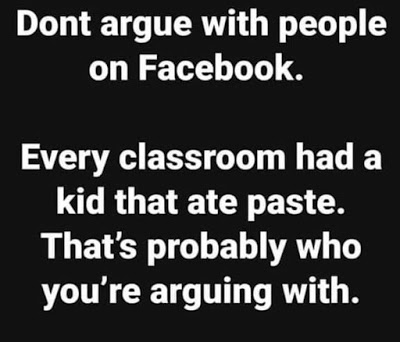
I already talked about this in the post “Stupid things that smart people do“.
I posted about how people have Internet road rage also as they are so brave hiding behind their screens doing things that would get their asses kicked in real life.
Arguing on the Internet is the biggest waste of time, other than social media. Why do you ask (even if you don’t)? Besides being a waste of time, you are looking at the best side of people and comparing it to the worst side of you (they take better vacations, their family is nicer, I’m not as pretty……). It’s like a first date or job interview. You are seeing the side they want to show you, not the real McCoy.
People think they are going to convince others that they are wrong or should switch to think like them because they are right. Neither of these will happen. You won’t convince anybody of anything and you just wasted more time in addition to Facebook, Twitter (the cesspool of the Internet) or any of the other time suck sites.
The other people that argue with you are the ones who do it to piss you off. I know some of these people who do it for sport. Hell, I get people in comments here who want to make their point because they believe they are right and I am wrong. My answer is get your own blog.
Don’t be a time waster. Don’t argue with people who ate paste. Life is too short and someone out there really needs your help or time, not the kid from school.
The surest way to corrupt a youth is to tell them to hold in higher esteem those who think alike than those who think differently.
Nietzsche hated “the Herd”. He was often writing against the ideas and ways of the masses in favor of the free thinker who has risen above them. This statement is a clear example of this worldview.
Who are the herd? They are social media telling you what to think, say, speak and what your values should be. They are the MSM, celebtards and sports stars who want to force their values on you because of an outdated construct that equates fame with power.
Think for yourself and don’t be afraid to say it. Don’t be a dumb ass though and say it when you are surrounded by Antifa or the rioters. There is no reasoning with them right now and even agreeing with them can get you an ass whooping.
Don’t take your views from the media. Almost no entity is more biased at this point. Don’t succumb to pressure from social media. That is just the new high school for the in crowd. Be your own person instead and think for yourself.
Nietzsche is not wrong about the herd. You’ll never respect yourself if you think like the herd just to be one of them. It isn’t worth it.
It is a smart person who avoids trouble, but chooses wisely when and where to take a stand for his values.
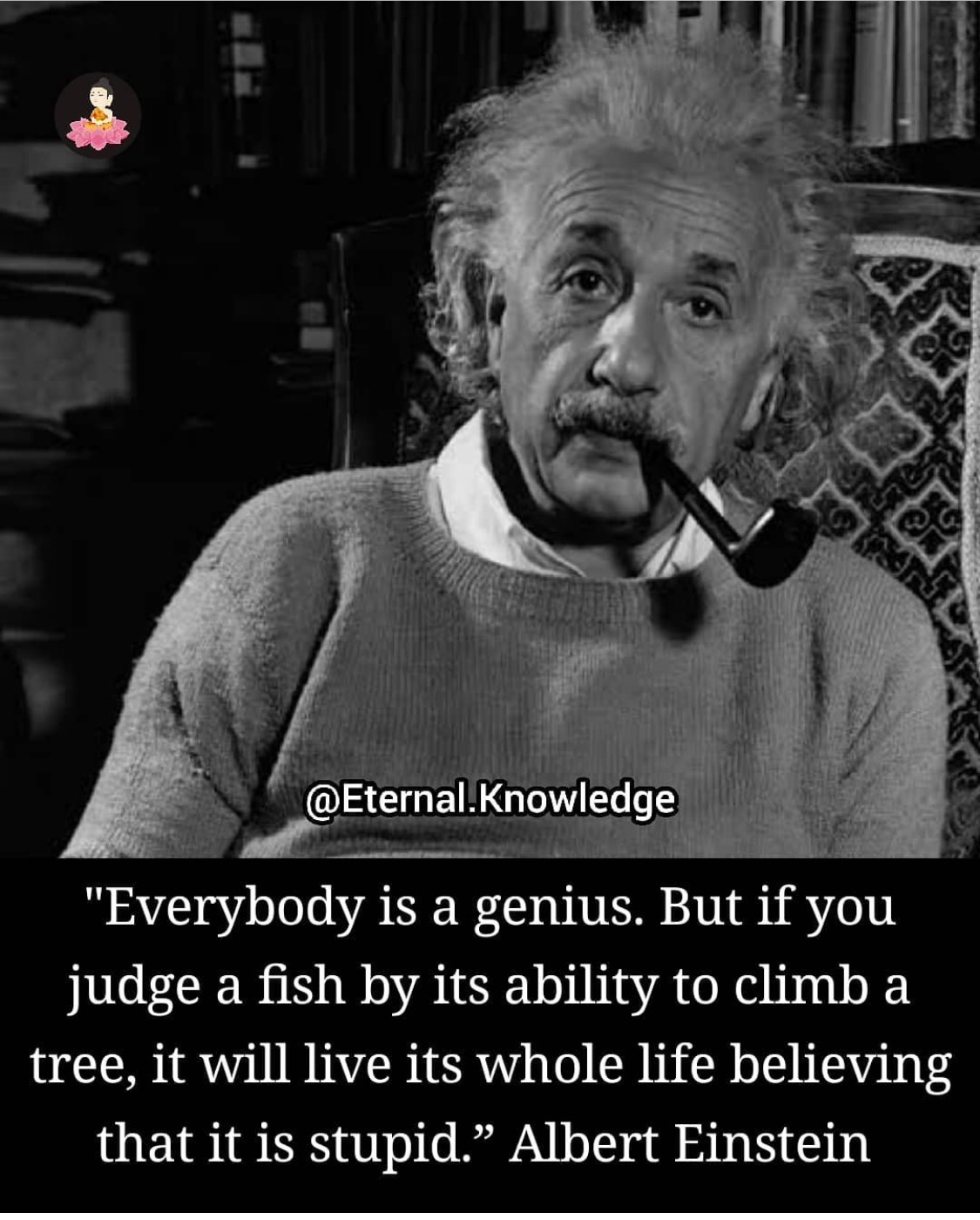
Don’t let others get you down. Don’t live your life by others version of what you should be. It’s hard to buck social peer pressure and be yourself, but that’s what it can take sometimes to find the real you.
Stop wasting your life on social media to define yourself by others. In fact it looks like staying off of social media except for family and a few actual friends looks like it makes your life better anyway.
It’s hard to seek your dreams. You have to pay the bills and raise the kids, so sometimes your dreams or reaching your capabilities doesn’t come in your 20’s like it did for Albert.
That doesn’t give anyone a free pass for not trying their hardest to do their best.
“You can discover what your enemy fears most by observing the means he uses to frighten you.”
Eric Hoffer
Sun Zhu said something similar about noticing your opponents weakness and you will win the fight because they can no longer hurt you.Much of the strife we go through is fear based recently. It caused us to leave life and self-quarantine, until it was ok to go out and riot. It’s been going on for a week now an there will be plenty of data shortly as to whether we really need to social distance anymore, because they sure aren’t doing it in the riot cities.
Remember Greta Thunberg? She’s not even a blip on the map, nor is global warming. The scare mongers have moved on to the next issue. I haven’t been afraid of these things because the truth is that we live in the greatest times of mankind ever. Yes we have problems, but that is life.
There is no need to be afraid and have unnecessary fears. The glass is really half full. These can be the greatest years of our lives if we stop buying into the crap that the media and social media tries to feed us.

Everyone has both. Some choose one over the other. Most mesh the two together.
The difficulty in this day of being barraged by social media and a 24/7/365 news hype cycle is that you can choose to go with your bias and only see one side of any story. This is dangerous regardless of which side you view it from.
Don’t believe the scare tactics of the money hustlers who rush people into a position like sheep herders trying to corral the flock into group think. The tactic is shame for not subjugating yourself to the PC position of the day.
It takes courage to step out and stand for what is right, especially in the start of a crisis or an event in time. This requires critical thinking as to discovery of the real facts and applying the necessary logic to come to the right conclusion. It also can take time. The media and politicians will try to rush us into judgement based on opinion.
As they said in Watergate, follow the money and you’ll usually see through those who are self-serving.
Most of all, don’t be a sheep. Think for yourselves and don’t take anything you read online as gospel, except for the Gospel.
Sooner or later, time exposes the truth. Whether you want to believe it or not is now up to you.
Some sanity and reasonableness should be considered when putting yourself out into the social media universe. Everyone seems to think that it is now their responsibility to tell us how to think, speak and act.
Here are 10 logical statements that are not new, but should have been taught to those who think they should tell us what to do, especially by politicians, the media and celebtards. I wish George Orwell were alive today to see how right he was when he wrote 1984.
PC culture is ruining our society and frankly is taking the fun out of life for those of us who don’t get offended easily.
It’s time for a lot of people to grow up and act like adults. Personally, I blame the educational system. It has a considerable lack of diversity in terms of being able to view all sides of an issue before opening there mouths or post on Twitter, which I now call Hater. Other platforms are becoming just as bad, but the hate usually starts there.
Rep. Stephen M. Young inserted into the Congressional Record, in 1950, an article from Harper’s magazine, written by a Lincoln scholar, Albert A. Wolman, listing most of the ”Ten Cannots” and other material falsely attributed to Lincoln.
The 10 Cannots:
1) You cannot bring about prosperity by discouraging thrift.
2) You cannot help small men by tearing down big men.
3) You cannot strengthen the weak by weakening the strong.
4) You cannot lift the wage earner by pulling down the wage payer.
5) You cannot help the poor man by destroying the rich.
6) You cannot keep out of trouble by spending more than your income.
7) You cannot further the brotherhood of man by inciting class hatred.
8) You cannot establish security on borrowed money.
9) You cannot build character and courage by taking away men’s initiative and independence.
10) You cannot help men permanently by doing for them what they could and should do for themselves.
Authors Note: I have a tendency to notice patterns in both a macro and micro universes. I’ve been watching this one brew for a while now.

FIRST, WHAT IS GODWIN’S LAW?

Reformulated in the Net.Legends FAQs “Usenet Rule #4”:
“Any off-topic mention of Hitler or Nazis will cause the thread it is mentioned in to come to an irrelevant and off-topic end very soon; every thread on Usenet has a constantly-increasing probability to contain such a mention.”
It is generally accepted that whoever is the first to play the “Hitler card” has lost the argument as well as any trace of respect, as having to resort to comparing your adversary to the most infamous mass-murdering dictator in history generally means you’ve run out of better arguments. Thus, once such a comparison is made, the thread is finished and whoever mentioned the Nazis has automatically lost whatever debate was in progress. This principle is itself frequently referred to as Godwin’s law.
Disclaimer: This blog post does not take a position on racism, it’s prevalence, who is or isn’t or might be racist and my position on this subject. Aristotle noted that the mark of an educated mind is to entertain a thought without accepting it. Therefore I am observing a speech and behavioral pattern of the public. In other words it’s on them, not me.
It is also noted that a trait of people with a higher IQ is that you can argue from multiple perspectives (unfortunately so can lawyers and politicians who may or may not be of higher intelligence – especially politicians and especially millennial politicians).
The original Godwin’s Law has lost its’ sting since everyone is now Hitler, so the new talking point is racism or white supremacy. Rather than argue on the merits of the position of the person (political candidates mostly since they dominate the news) the go to is now calling the other person one of these two pejorative names. This constant overuse has devalued the meaning of the words and rendered them ineffective at worst and boring at best.

Here is a quick search that shows views from multiple points doing just this:
This is in direct conflict with Martin Luther King’s evocative phrase: “I look to a day when people will not be judged by the color of their skin, but by the content of their character.” Now, it is common to hear you are a racist or white supremacist because you don’t agree with me. It greatly devalues MLK’s position.
1: a belief that race is the primary determinant of human traits and capacities and that racial differences produce an inherent superiority of a particular race, racial prejudice or discrimination.
While I could list any or all of the comments that have been made in public themselves could be racist in tone, one could make the case for or against whether the accused are really racist. Calling someone a racist is easy but proving most of these ad hominem attacks is harder.
One would need to know what is inside the person making the statements to know if it were really true or just talking points. I won’t and am not even sure if I can make that value judgement. These attacks are easy enough to find (see the media below).
This is not the point of this post. I am not here to call someone a racist or White supremacist (or Hitler), rather to point out a trend.
In the department of redundancy department, this discussion is that the replacement for Godwin’s Law is that you are not Hitler, instead you are racist for whatever reason or whatever you say.
Why is this the case? The overuse of Godwin’s Law has made it impotent in political circles, the media and on social media platforms. Hitler stands with few others in history, perhaps Mao, Stalin or Pol Pot as true villains. Nobody really believes that the other person is like Hitler, they are just trying to make the worst case as they flush their argument down the toilet due to lack of substance.
HOW TO WIN YOUR POLITICAL RACE OR PUT YOUR OPPONENT ON THE DEFENSIVE WITHOUT TAKING A POSITION
What most of the accusers are doing is described in Saul Alinsky’s Rules for Radicals numbers 7-13 as follows:
Rather than argue on a platform, beliefs and issues, it is far easier to make your opponent defend themselves, and put them off their talking points.
Example: Candidate 1) If elected, I’ll lower taxes if elected (insert any issue here because it’s about to be destroyed).
Candidate 2) my opponent is Hitler and molests collies.
Press coverage: Candidate 1 is a well known collie molester. How long has this person been molesting Collies? The first question in the next debate; Candidate 1, are you still molesting Collies?
Now insert the word racist or white supremacist for molesting collies and you get the point of why this is effective.
HOW THE PRESS BECOMES AN ENABLER
A common adage is that sex sells, as do murders, rapes, political embarrassments and anything not good news. Guess what they will print (hint: collie molester)?
A not so recent trend is that there is a common thread where a preponderance of reporters has similar talking points concurrently. There is a groupthink that causes the media to focus on a particular phrase, word or subject. Like piranha on carcass, they hammer it home. https://www.google.com/search?q=why+do+news+anchors+say+the+same+thing&sa=X&ved=2ahUKEwim9dyQxv3jAhWFB80KHeyQAE0Q1QIoAHoECAsQAQ&biw=1440&bih=825
Since the new go to in Godwin’s Law is you are a racist and/or white supremacist, it makes for headlines that sell advertising. I can also be taken as ideological. This is the de-facto statement now to the point that it has lost effectiveness.
Having spent decades working with (and against) all forms of media, they have a tendency to take the position of them being right, even if proven wrong. A correction is meaningless as once a statement is printed, it is still in the minds of the reader. Almost no one reads the corrections.
Most are journalists who write about a topic because it is assigned to them. In the case of social media everyone thinks they have the moral high ground.
SOCIAL MEDIA
I’m not going to spend much time here, because most people have gotten into an Internet argument. Nobody wins unless the motive of one of the combatants is to piss off the other. It won’t matter how factual your argument is because it is just Internet road rage.
If you go to the above link, you see the outcome and great advice on how to handle this.
So the net result of overusing this theme is the same thing that happens with all overuse. Godwin’s Law is becoming meaningless. The definition of what racism really is and when the word should be used to protect the oppressed has been damaged. Even Alinsky’s Rules for Radicals suffers from overuse and tediousness.
The political landscape is a train wreck of who can sling the most mud. Watch the ratings nosedive for upcoming debates.
Stay out of it on Social Media except to observe who isn’t smart enough to stay out of this pool. With each use of the attack, the meaning becomes less valid and meaningful.
I thought about calling someone a racist instead of Hitler the Simonds Law, since I haven’t found this discussion fully hashed out, but I’d rather be associated with something more positive.
Everyone is a loser who engages in this behavior. My advice is grow up or be better educated to discuss your position better than: you are Hitler/racist/white supremacist and whatever the next insult is.
It used to be that to call someone Hitler was the ultimate insult, albeit the indication that the argument is lost. Has calling them a racist and/or a white supremacist suffered the same fate?
 Scroll down a few posts and you’ll see other articles I’ve posted that talk about Social Media ruining people’s lives. It’s their outside daring you to compare, unfortunately to your inside.
Spending too much time on “social media” sites like Facebook is making people more than just miserable. It may also be making them depressed.
A new study conducted by psychologists at the University of Pennsylvania has shown — for the first time — a causal link between time spent on social media and depression and loneliness, the researchers said.
It concluded that those who drastically cut back their use of sites like Facebook, Instagram and Snapchat often saw a marked improvement in their mood and in how they felt about their lives.
Many of those who began the study with moderate clinical depression finished just a few weeks later with very mild symptoms, she says.
The study, “No More FOMO: Limiting Social Media Decreases Loneliness and Depression,” was conducted by Melissa Hunt, Rachel Marx, Courtney Lipson and Jordyn Young, is being published by the peer-reviewed Journal of Social and Clinical Psychology.
For the study, Hunt and her team studied 143 undergraduates at the University of Pennsylvania over a number of weeks. They tested their mood and sense of well-being using seven different established scales. Half of the participants carried on using social media sites as normal. (Facebook, Instagram and Snapchat did not respond to request for comment.)
The other half were restricted to ten minutes per day for each of the three sites studied: Facebook, Instagram and Snapchat, the most popular sites for the age group. (Use was tracked through regular screen shots from the participants’ phones showing battery data.)
Net result: Those who cut back on social media use saw “clinically significant” falls in depression and in loneliness over the course of the study. Their rates of both measures fell sharply, while those among the so-called “control” group, who did not change their behavior, saw no improvement.
This isn’t the first study to find a link between social media use, on the one hand, and depression and loneliness on the other. But previous studies have mainly just shown there is a correlation, and the researchers allege that this shows a “causal connection.”
So I ask, why do you do it to yourselves? Facebook has a model to make you feel worse while they steal your privacy and track you to sell your profile to everyone and anyone.
I recently posted how Social Media is probably making your life worse, especially those who have to look anything up to know everything. Even more, those whose lives and feelings are governed by their online image and how many likes they got vs. others are losing out on life to a device.
The other issue is having your face buried in your phone while walking. You are clueless to the world around you. See the video above.
UPDATE: Getting Cosmetic Surgery for Snapchat Dysmorphia
This is by far the most narcissistic thing I’ve read. People (tide pod eaters) are getting surgery to look like the filters they use on their Snapchat because they don’t look good enough in life because it is wreaking havoc on their self-esteem. The report in the journal JAMA Facial Plastic Surgery claims that these filters can sometimes trigger body dysmorphic disorder, a mental illness that can lead to compulsive tendencies and unnecessary beauty procedures, among other negative outcomes.
A study in the American Journal of Preventive Medicine found that people who were regular users of social media were twice as likely to feel lonely than those that were light users.
Another study released found that social media, especially Instagram, deepened feelings of anxiety and inadequacy for 15 to 24 year olds.
Go play outside and leave your phone in your pocket. Also, don’t live your life on social media and you won’t be so self-obsessed.
UPDATE: A study came out stating that good social media don’t out weigh the bad:
(Reuters Health) – For young adults, the adverse effect of negative social media experiences on mental health outweigh any potential benefits of positive experiences, a study of university students suggests.
Each 10 percent increase in a student’s negative experiences on social media was associated with a 20 percent increase in the odds of depressive symptoms, researchers found.
But positive experiences on social media were only weakly linked to lower depressive symptoms. Each 10 percent increase in positive social media interaction was associated with only a four percent drop in depressive symptoms – a difference so small that it might have been due to chance.
“This is not inconsistent with the way we see things in the offline world . . . The negative things we encounter in the world count more than positive ones,” said study leader Brian A. Primack, director of the Center for Research on Media, Technology and Health at the University of Pittsburgh in Pennsylvania.
“If you have four different classes in college, the fourth class that you did poorly in probably took up all your mental energy,” he told Reuters Health by phone.
Primack said he believes social media lends itself to negativity bias because it is saturated with positive experiences that leave people jaded.
YOU ARE BEING WATCHED
I talked with friends at the gym who are or were in law enforcement In cop terms they are always made by others because they are constantly looking around. They are aware of their environment, potential danger, potentially dangerous people and escape routes. As you can see in the video of fails, these people are vulnerable to all of the above.
Guess how else you are vulnerable with your head buried in a screen? It doesn’t take a genius to know that Facebook, Google, Amazon and every other site is not only tracking your clicks, but are tracking where you go and what you do.
We used to have instructions, a map and intuition to get where we were going and for the most part, we got there. millennial’s can’t get to the 7-11 without Google Maps now. It’s also funny how they can know everything, but have knowledge of very little. Take away their phone and not only would they not run into things, they’d have to actually learn about how things really work and how to navigate (I’m not discriminating here, I know directionally challenged relatives my age who fall into this category). Looking up something on your phone doesn’t make you smart.
YOU ARE GIVING THE PERV’S A FREE TICKET
I’m not in law enforcement, but I put my phone away and watch others, especially those watching girls. It’s almost a sport. It used to be if a guy was looking in the wrong part of a girl, they got busted immediately. It was like watching a tennis match seeing the heads turn when a cute girl walked by. They had to use mirrored sunglasses and just glance when they could and not let their wives/girlfriends catch them. Now, instead of having to glance behind sunglasses, the perv’s just look down or up (or up and down) anyone they want and modesty just goes out the window. It’s truly tasteless, but if you had your head out of the phone, you wouldn’t be getting eyeballed so lasciviously.
GET A LIFE
It’s amazing to watch people now escape to their phone in what used to be a social situation. So stop running into things and get a life.
FACEBOOK IS DESIGNED TO EXPLOIT HUMAN VULNERABILITIES
Recently, former Facebook president Sean Parker pointed out how Facebook is hurting people.
When Facebook was getting going, I had these people who would come up to me and they would say, ‘I’m not on social media.’ And I would say, ‘OK. You know, you will be. And then they would say, ‘No, no, no. I value my real-life interactions. I value the moment. I value presence. I value intimacy.’ And I would say, … ‘We’ll get you eventually.’
Parker discussed the possible psychological effects of social media and Facebook in particular, especially for children who are now growing up in a digitally connected age:
I don’t know if I really understood the consequences of what I was saying, because [of] the unintended consequences of a network when it grows to a billion or 2 billion people and … it literally changes your relationship with society, with each other … It probably interferes with productivity in weird ways. God only knows what it’s doing to our children’s brains.
The former Facebook President discussed the company’s initial aim, which was mainly centered around drawing in and building their audience:
The thought process that went into building these applications, Facebook being the first of them, … was all about: ‘How do we consume as much of your time and conscious attention as possible?’ And that means that we need to sort of give you a little dopamine hit every once in a while, because someone liked or commented on a photo or a post or whatever. And that’s going to get you to contribute more content, and that’s going to get you … more likes and comments.
Parker described Facebook’s appeal as a “social-validation feedback loop” which exploits human psychology to keep users coming back to the app:
It’s a social-validation feedback loop … exactly the kind of thing that a hacker like myself would come up with, because you’re exploiting a vulnerability in human psychology. The inventors, creators — it’s me, it’s Mark [Zuckerberg], it’s Kevin Systrom on Instagram, it’s all of these people — understood this consciously. And we did it anyway.
Parker also briefly discussed how his vast wealth is likely to allow him to live longer than the average person due to advances in medical science
I tend to notice trends early. I quit Twitter 4 years ago as soon as work didn’t (unofficially) require it. Almost every time I used it, the conversation degraded by the 3rd or 4th tweet into something political, followed by unsubstantiated name calling. You have to have a thick skin and a terse personality to want to survive out there.
A few years later I tried helping a friend get on Facebook and we both decided that it was like a high school reunion, or being in high school where you make up stuff to seem like your life is better than others. He finally told me to stop and to not put him on. At that point it dawned on me that most of social media falls under Sturgeon’s Law:
There might be a corollary that 99% of social media is crap.
The trend I noticed besides people acting false was that I never felt better after being on twitter and I loathe Facebook for the same reason. This was 5-8 years ago and now the studies are coming out proving what I noticed.
A recent article in the USA today talked about another high schoolish trend, mob mentality.
Social media also has polluted our more general life, with the ability to form online mobs increasing, as Prof. Glenn Reynolds aka Instapundit recently wrote in USA Today:
People enjoy forming mobs. Mobs allow people to do things they’d be afraid to do on their own, to steal, to hurt and kill, to burn and destroy — and also to feel set free from the bonds of civil society, to experience a kind of atavistic catharsis, a feeling of power and a solidarity with their fellow rioters, in a way that’s otherwise difficult to achieve, especially without suffering serious consequences….
But now there’s a new kind of mob, an online mob. And judging by the events of the past week, this new mob is becoming a more frequent problem. Part of that is because it’s easier (and safer) to be part of an online mob than one in the real world.
Joining a real mob requires you to leave your house, go somewhere else, and experience risks and discomforts. Joining an online mob can be done from an easy chair at home.
There are times that I post something and bizarre comments come it, so much so that I have to moderate them according to the policy on the sidebar. Some just violate the policy too much. It’s like twitter, if it can get political it usually does. Since I’ve posted a lot about the military and patriotism, I caught a lot of crap.
I read a blog post by Legal Insurrection that noted the increase in suicides and the link that may exist between the two.
A New, More Rigorous Study Confirms: The More You Use Facebook, the Worse You Feel
Social Media and Teen Depression: The Two Go Hand-In-Hand
Rise in teen suicide connected to social media popularity: study
Suicide rate’s increase can be tied to social media, technology: Dr. Marc Siegel
Using Many Social Media Platforms Linked With Depression, Anxiety Risk
Why don’t people just put it down? It looks to be like the new next cigarette, just as addictive and equally as bad for you.
As for me, I can go about my day enjoying not getting into useless tweet storms and having my head glued to my phone. Hell, I won’t even put Facebook on because I don’t want them in my life.
I’d like to say the higher IQ people would be immune to this, but it’s not true. They are just as susceptible to this and it goes under things they shouldn’t do.
WHAT FACEBOOK KNOWS AND IT ISN’T TELLING YOU
It preys on Women’s emotions and other mind altering and interfering techniques and the company KNOWS THAT IT IS DOING IT.
Even former Facebook President Sean Parker realizes the pitfalls of Facebook:
The former Facebook President discussed the company’s initial aim, which was mainly centered around drawing in and building their audience:
The thought process that went into building these applications, Facebook being the first of them, … was all about: ‘How do we consume as much of your time and conscious attention as possible?’ And that means that we need to sort of give you a little dopamine hit every once in a while, because someone liked or commented on a photo or a post or whatever. And that’s going to get you to contribute more content, and that’s going to get you … more likes and comments.
Parker described Facebook’s appeal as a “social-validation feedback loop” which exploits human psychology to keep users coming back to the app:
It’s a social-validation feedback loop … exactly the kind of thing that a hacker like myself would come up with, because you’re exploiting a vulnerability in human psychology. The inventors, creators — it’s me, it’s Mark [Zuckerberg], it’s Kevin Systrom on Instagram, it’s all of these people — understood this consciously. And we did it anyway.
Comments such as this from Facebook former President, combined with Facebook’s mishandling of user data, has led to a greater level of distrust around the company. What was previously seen as just a website by many users was becoming better known as a data collection company.
It turns out that platforms like Facebook are the “Junk Food For the Soul”. In other words crap that isn’t good for you.
THE CESSPOOL OF HATE AND DISCRIMINATION BY TWITTER
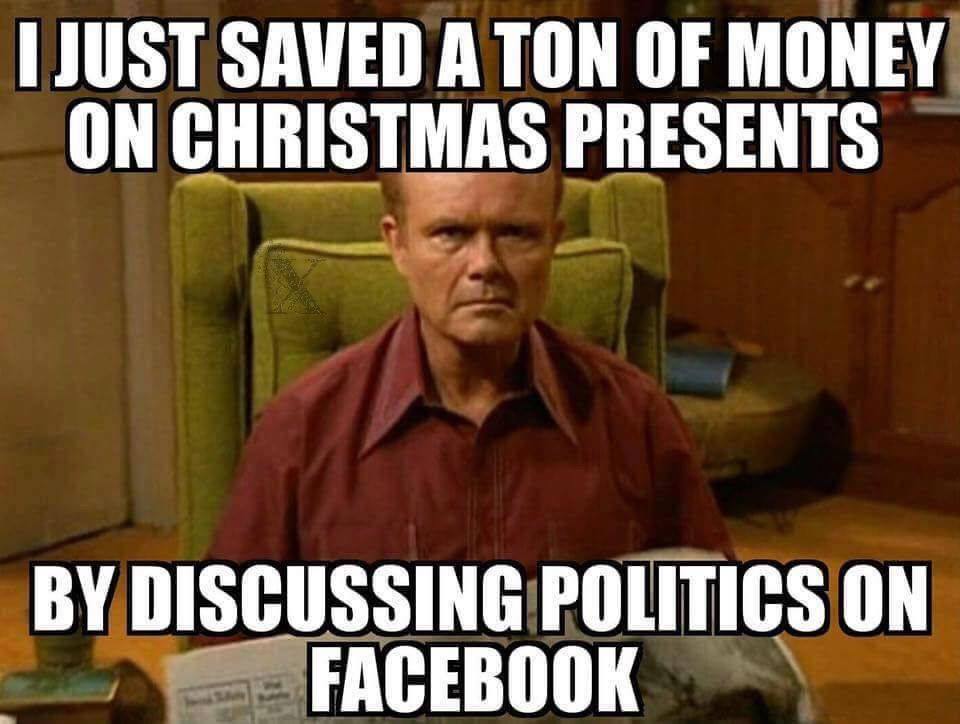
Just say something, anything and pretty soon it can turn into a hate storm if you offend someone or anyone. I saw someone post here’s a picture of a rock, let the arguing begin just to prove it and it did.
When I check I often find that a user who has blocked me is someone I have never interacted with. So why the block? Often, it’s due to being on a block list created by a liberal activist group. Twitter supports block lists and makes it easy for users to mass-block entire universes of people they don’t even know.
But Twitter now uses factors such as the number of people who have blocked an account to determine whether to classify it as “low quality” content. The company also uses the number of complaints or reports on the account. If the number of these exceeds certain thresholds, an account can be deemed low quality and access to tweets from that user are severely diminished.
I couldn’t wait to leave that platform of time-wasting and hate and my life is better because of it.
The 2008 and 2012 election showed that a coalition of minorities was the winning formula. As for 2016, not so much.
With all the minority identity groups out there vying for political power, social media control, fund raising and media presence; how do they stack up when they compete for hierarchy? At some point, when the power and money is being doled out, the queue is determined by some order. Who are these groups and how do they vie for power?
Author disclaimer: I have no dog in this hunt. I am a pattern watcher and try to learn from them. Human nature is hard to understand and explain due to it’s ever changing allies and favored group status depending on circumstances. I was watching the groups at the last election and wondered how you coalesce a group of disparate people with conflicting causes as a voter block.
Who are they?
While this isn’t a comprehensive list and I am not discriminating as I just Googled it, the last election revealed the groups of Black Lives Matter (BLM), LGBTQ (apologies if I omitted a letter), Islam (including ISIS), socialists, Antifa, environmentalists and feminists. They each compete for their cause and have usually selected an enemy with whom they are opposed to, but are now conflicting with each other in the power grab. They for the most part have an ideological position (some more than others) and garner the lion’s share of media attention.
Before the haters come out, I write this post because of my position that one of the characteristics of a higher IQ is the ability to argue from multiple positions on a subject. I will proceed with this post from that premise.
I also am merely an observer of trends. The consolidating power of the above listed groups is becoming a relevant discussion regardless of where you source your information. I’ve excluded the typical mainstream media as sources of information on both sides as their coverage is either too conservative or liberal. Their inherent bias excludes them from this conversation. I also excluded Hollywood and celebrities since they have a limited integration with the real world and often spout declarations for others which they do not adhere to. When you get to the heart of their talent, they pretend to be others and to take their opinions seriously is difficult at best.
Here are non-comprehensive, yet representative examples of identity group disagreements.
BLM vs. LGBTQ
I first noticed this when BLM shut down a gay pride parade.
These are two significant voter populations when added together.
What surprised me that it was during the last election cycle and both groups made up a voting block for the same candidate. From said article:
BLM held Toronto Pride hostage, unless their demands, which included excluding police from the parade, were immediately met.
(Pride parades typically have contingents of LGBT cops and firefighters, and booths set up by the local LGBT officers’ group at the accompanying street festival.)
Judging by their success in forcing Toronto Pride to capitulate, I suspect we’ll see Black Lives Matter groups protesting more Pride parades in the future. And as a longtime national and international LGBT rights activist, I have a problem with that.
In my internet search for protests, it seems that BLM also protested and shut down Bernie Sanders and Hillary whom they supported. It goes without saying that they all protested Trump, but that is not the point of my curiosity as I assumed this was a given. This alone is surprising since both are a part of the coalition of voters candidates need to be elected per the aforementioned 2008/2012/2016 campaigns.
ISLAM vs. Feminists and LGBTQ
I later observed the Muslim and ISIS positions that women are treated poorly and that homosexuals were declared wrong and being executed. On a side point, they also considered most pets as unclean and black dogs should be killed (animal cruelty), which brings in the animal rights group, but they don’t be as significant as the other groups currently. Apparently, women don’t have the same rights as men and must be subservient.
Then there is the recent Linda Sansour dust up revealing this dichotomy:
It further goes on to say:
Sarsour apparently identifies as a feminist. Sarsour’s kind of feminism, however, embraces the most oppressive legal system, especially for women: Islamic religious law, Sharia. Sarsour’s feminism is supposedly for empowering women, but it twists logic in a way similar to how Muslim preachers do when they claim that beating one’s wife is a husband’s way of honoring her.
Here is the dichotomy:
Pro-Sharia feminism is a perverted kind of feminism that could not care less about the well-being of oppressed Muslim women. Sarsour’s logic concerning women does not differ much from that of Suad Saleh, an Egyptian female Islamic cleric, who recently justified on Egyptian TV the doctrine of intentional humiliation and rape of captured women in Islam. Saleh said, “One of the purposes of raping captured enemy women and young girls was to humiliate and disgrace them and that is permissible under Islamic law.” There was not even a peep in Egypt’s civil society about such a statement.
On 7/25/17 a direct conflict happened when this occurred: An Oakland Muslim plotted to attack a gay club in San Francisco and talked about killing thousands of innocents on behalf of ISIS.
Finally, there is this non-sequitur that I can’t fathom:
“Feminist” Muslim women calling beatings by their husbands a “blessing from Allah”!
Who wants a beating?
ISLAM (ISIS) vs. Antifa
I don’t fully understand this one. It has the trappings of a sibling quarrel at best. ISIS is claiming that Antifa has culturally appropriated their uniforms, that being their black flag and terrorist tactics.
Here are some details:
Based on this proof, we hereby request that the UNHRC’s CESCR begin an immediate investigation into this matter, and, if you concur that ANTIFA is culturally appropriating ISIS, that you use all means at your disposal to put a stop to it. You could start by visiting this ANTIFA website, which contains links to many of its affiliates throughout the world.
Sincerely,
ISIS High Command
PS: You might mention to the ANTIFA punks that in quite a few aspects, we are at war with the very same people, organizations and ideas, and, in fact, Western civilization itself. So, if you could arrange a sit-down over tea with us, and them, it might serve all of our interests, and provide a holistic, inclusive resolution to our complaint.
Islam appears to have support from the media and the left side of the political sphere as does the other listed minorities claiming status. One can see the obvious conflicts.
Socialists
It appeared that quite a bit of traction was gained by the Bernie Sanders crowd. It seemed to have enough momentum to be a winning group within its’ primary. Somehow, it was defeated by a political machine by what is being revealed as suspicious activities.
Nevertheless, a discussion of the socialism movement by Ross Wolf summarizes some of my points:
Ross Wolfe argues in The Charnel House, the identity politics that arose in the 1960s, ‘70s and ’80s developed in reaction to the identity politics of actually-existing socialism itself:
The various forms of identity politics associated with the “new social movements” coming out of the New Left during the ’60s, ’70s, and ’80s (feminism, black nationalism, gay pride) were themselves a reaction, perhaps understandable, to the miserable failure of working-class identity politics associated with Stalinism coming out of the Old Left during the ’30s, ’40s, and ’50s (socialist and mainstream labor movements). Working-class identity politics — admittedly avant la lettre — was based on a crude, reductionist understanding of politics that urged socialists and union organizers to stay vigilant and keep on the lookout for “alien class elements.” Any and every form of ideological deviation was thought to be traceable to a bourgeois or petit-bourgeois upbringing. One’s political position was thought to flow automatically and mechanically from one’s social position, i.e. from one’s background as a member of a given class within capitalist society.
Questions I Have
If you are courting one group, how do you avoid alienating another group if there is acrimony? At some point you step on the wrong toes.
If there is limited money, how does the donor decide who gets it without upsetting other groups?
How do you herd this group of cats to vote together when trying to win an election? It worked twice, but failed recently and there is finger pointing as to why.
What is Racist?
In Seattle, they can’t clean the sidewalks with pressure washers because it could be racist.
Council member Larry Gossett said he didn’t like the idea of power-washing the sidewalks because it brought back images of the use of hoses against civil-rights activists.
It seems that non-black people using gifs are being racist also. I don’t understand this one though.
Finally, who wins this victim’s game?
So I guess you have out victim everyone else. By doing so, it disrupts the coalition of identities required by one of the political parties to win elections. I suppose it is a popularity contest to win the money and the status.
My final observation is that human nature is the constant here. People are selfish enough to grab power and money when possible. Most do not have the ability to argue from multiple positions on the same subject and are ideologues for their cause.
This alone is going to make a coalition such as the one that voted in the president in 2008 difficult. Being a female wasn’t enough of a victim status in the 2016 election.
These are things I ponder as we wind our way down the path of being a country.
 There has been a dearth of articles about middle management issues with big companies recently. Vanity Fair had a great article about how stacked performance reviews has killed innovation at Microsoft, but it really described the problems with most big companies. The irony was that it pointed out how Microsoft made fun of IBM, yet Microsoft had now repeated the same mistakes they IBM has suffered from for years.
Additionally, not to exonerate any big company, all of which have middle management problems, many also have stacked performance reviews which clearly has caused a big morale problem at companies I worked for which is also documented in the article at Microsoft. From what I’ve heard from my associates around RTP, most of the companies (with the exception of NetApp) including but not limited to IBM, , Lenovo, and many others use this type of employee rating. See Stacked Performance reviews below for a further discussion.
FIRST LINE MANAGERS, ONE OF THE WORST JOBS
When I worked as a plumber, they told me I only had to know 3 things to be qualified. They were; 1) payday is Friday, 2) $h!t flows downhill and 3) the boss is an a$$h0le. This is basically true in a lot of jobs. The first line manager has to usually do their regular job, plus be a people manager for which most aren’t trained for and most are not good at. They have extra work for the same pay just on the promise that they would get ahead, which almost none do. It may finally pay off for some, but only when they reached VP or higher. Directors have to take it from the VP’s, but at least can delegate the crummy work to the first line managers.
The reason this job is such a loser is that while you have to deal with the day to day issues, in this economy your managerial duties are to basically give bad news that there are little to no raises, people are being laid off so be happy you’re still working….also that there won’t be any bonuses this year. I watched these managers get dumped on by their next level of management as they had to do the dirty work (some then got laid off just after they let others go). Very few made it past this level of management as there just are so may executive jobs available, and there are many vying for those positions. Plumbers rule numbers 2 and 3 apply here.
Here is an excerpt from Forbes which describes the problem with middle management.
I watched this phenomenon also ruin morale at my last company and David Williams nails some points starting here:
In my opinion, a company needs leaders—not managers.
What does that a leader look like? We start with two of our 7 Non Negotiables of leadership—we Trust and then we Empower. You know how leaders will typically say “I empower my people”—and then they don’t? The tendency is all too common. (This happened in my last job before I retired. I was told by my then manager to be more independent, but I had to run everything by my him before I did anything, and trusted the opinion of a new hire over my review of a meeting that said new hire didn’t attend…talk about lack of trust and sending mixed messages to your employees).
The minute there’s a mistake it’s like a rope around your neck that snatches back—you either get your head taken off, or you get yanked back so hard the natural reaction is to hunker down and become “less” instead of growing to “more.”
With my own paired leadership partner, Fishbowl president Mary Michelle Scott, we start at the top of the company with a holistic, high altitude view of what we want to achieve. Then we bring in the department captains (there are 3 pairs) and say, “This is what we’re thinking. We think it’s time to open up Canada, the UK and South Africa.”
We give that big piece of meat to the captains. They chew on it for a while and come back with either 1) they don’t like it (generally coupled with a counter proposal), or 2) the multiple ways they see to go about achieving the goal. The captains are leaders who play a core role in the strategy’s formation. Then they run the day-to-day deployment of the strategy that’s been jointly created and set.
Yes, there’s a fine line between leadership and management—but there’s a massive difference as well, I maintain. Our approach makes the groups and leaders autonomous, but also interdependent. They are bright. All voices are heard. We decide on the “best” idea, no matter who originates it, and most of the time, we actually forget who brings the idea forward. Nobody worries about “the glory” because all will benefit as a team (my compensation strategy is here.) They come up with better answers than we could ever hope to achieve on our own.
(Editors note here: My view as the author of this blog is not everyone is cut out to be a manager. There are a lot who think that it is their career path or a way to get ahead, but that doesn’t make them qualified. I had a few managers who just were not people persons. Some middle managers held success against the top achievers when they out-performed the manager, or couldn’t handle the fact that some made more than others including the manager. They shouldn’t have let this guide their decisions, but they did. People like this shouldn’t have been allowed to be managers. This guy also used age discrimination while at IBM to get rid of a competent worker, Bill Gesick and wouldn’t re-hire Sid Baker, a veteran coming back from Iraq and Afghanistan. Further, this person whom his employees named Mr. Feckless bragged that he tried to get rid of me (because I (made more money that he did) as well as bragged at how he gave no extra pay to others, which everyone promptly told me about. I just tried to consistently do good job and was always more successful than he was with work. An example is this success story which I kept him out of on purpose so he couldn’t ruin it. It was how I had to deal with him as did his peer managers as well as his boss (who later told me he wanted to get rid of him and would have had the company not been sold to Lenovo). It is a clear case of a person that should have had a staff job.
Why leaders hear too many questions? – From The Leadership Freak
You’ve delegated tasks rather than results, vision, and resources. Delegating tasks is too granular and suggests your need for granular involvement. Delegating tasks causes others to focus on tasks. Delegating vision along with resources frees good people to make decisions on their own.
You may hear too many questions because you don’t have clear processes and procedures. People ask too many questions when they aren’t sure what’s next. Establishing processes and procedures for repeated activities frees both leaders and employees.
On the other hand: The best leaders/managers I worked for had the following trait.
The captains don’t “manage” every day. They have just one meeting as captains per week. That meeting determines the deployment of strategy. We hand off to the captains—then they hand off to the teams, who hand off to the individuals who deploy day to day, and then they get out-of-the-way (as they resume their own production roles, side by side with their teams.)
Here is some advice on how to manage properly if most would take it.
Yes, there are some management components. But we try to stay away from the temptation to micromanage, which makes people so fearful of making a mistake, they feel they don’t dare to create something courageous. (Note: This happened with another manager who said she wanted each of us to take charge, but just couldn’t leave our work alone until we wound up having to do it as if we were her. This made it very hard for our team as we all had different styles… none of them matched with the manager. This of course killed our creativity and morale as we had to try to do things in the style as if we were her, all the while knowing that we knew how to do our jobs better and knew our area’s deeper. The micro-management ruined our chances to succeed as well as our motivation). We had to report every detail constantly making each task taking five times longer with way more revisions than it could have taken. She was one of the last managers I had, and certainly not a leader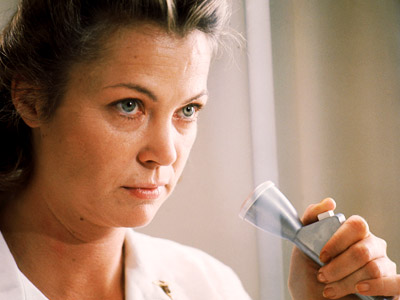 .
.
Conversely, the manager I had before her gave me the freedom to succeed by macro managing and encouraged me to try my own ideas which drove me to want to give it everything I have. This fueled my creative juices including starting this blog and joining twitter. I also wanted to help others learn social media, something the following manager didn’t support except by hiring a noob who turned out to be a loafer to basically handle tweet wrap ups.
The link above best describes how to do it this way:
Some managers fear empowering team members because a more powerful team might take some action or a make a decision that the manager would not have made. But you can’t over-control your teams. It’s the responsibility of a manager to know what’s going on but not to micro-manage.
It’s best if you can pick your own team and hire motivated workers who will inspire and enthuse other team members.
That 2nd manager of our Cross Brand team thought that she owned the ability to communicate and this just made it hard for us to get our jobs done. The employees grouped together for self preservation.
The Leadership Freak comments appropriately here:
You may hear too many questions because you’re a control freak (see my micro-manager above). Your people are paralyzed by your need to know, control, and direct details. On a personal note, I don’t think of myself as a control freak, but I am. I mention that because you may not see your freakishness. In my opinion, leaders tend to be control freaks. Don’t toss this possibility aside without thinking it over.
You may hear too many questions because your people lack experience or need training.
You may hear too many questions because you punish rather than learn from mistake makers. Begin honoring both the lessons learned from and the persons with the courage to make mistakes. Obviously, mistakes from negligence, insubordination, or sabotage shouldn’t be honored.
Not all questions are good questions. Some questions indicate poor leadership. Are you hearing too many questions?
ANOTHER MANAGEMENT ISSUE: HOW STACKED PERFORMANCE REVIEWS ARE KILLING INNOVATION
Eichenwald’s conversations reveal that a management system known as “stack ranking”—a program that forces every unit to declare a certain percentage of employees as top performers, good performers, average, and poor—effectively crippled Microsoft’s ability to innovate. “Every current and former Microsoft employee I interviewed—every one—cited stack ranking as the most destructive process inside of Microsoft, something that drove out untold numbers of employees,” Eichenwald writes. “If you were on a team of 10 people, you walked in the first day knowing that, no matter how good everyone was, 2 people were going to get a great review, 7 were going to get mediocre reviews, and 1 was going to get a terrible review,” says a former software developer. “It leads to employees focusing on competing with each other rather than competing with other companies.”
Blog Editors note: At my last company, we also had to compete against equal employee “bands” (level of experience commensurate with pay and responsibility) across the company. This was especially unfair for remote employees as those in the home office of New York had access to the management and knew the strategy well before it was disseminated.
TELECOMMUTERS ARE DISCRIMINATED AGAINST
The millions of Americans who are skipping out on the daily commute may also be losing out on a promotion.
These so-called ‘telecommuters’ are less likely to receive positive performance reviews from superiors than their colleagues who show up in the office, a new study by MIT Sloan Management Review shows.
The report chalks up much of the discrepancy to managerial subjectivity. Managers are less likely to be comfortable with a worker they don’t actually see on a regular basis. In fact, they may become more irritated with someone who they perceive isn’t available at all times. Telecommuting employees are also less likely to reap the benefits of showing up early and leaving work late than their commuting coworkers.
Advances in internet technology have allowed for telecommuting to become more widespread. About 20 percent of workers worldwide report that they telecommute, while 10 percent report that they work from home on a regular basis, according to a recent Ipsos/Reuters poll. That same poll found that 34 percent of workers, when asked, stated that they would telecommute on a regular basis if they could.
But according to some critics, telecommuting creates cause for concern. For instance, telecommuting could prevent workers from being able to fully understand what their managers ask of them, according to PC World. That’s because non-verbal facial expressions are an important component of the workplace that telecommuting, which often takes place over instant messaging or phone, doesn’t allow.
This definitely happened at my last job even though they claimed it was not true. If you did not work in NY (it was an old boys club with both men and women), you didn’t stand a chance for promotion unless you were in the High Potential (HyPo) group, which means you were destined for NY eventually. What was almost funny was that some of the senior management even made fun of those not in NY as if we had a lower IQ. In fact, we knew we could do the same job for 30% less cost of living and didn’t have to go to NY, we just knew that we would only go so far unless we moved there.
I’ve had managers who didn’t trust you if you weren’t there. He projected his own lack of work ethic at home on the team. Each of us were mature responsible workers, except for the middle manager.
One of my favorite worst management lines ever was on the first day of a new job, the manager said to me, “I’m too busy with my new job, you are on your own to figure out how to do your job”. He since has been demoted to a staff job after not succeeding at another company and came back to IBM.
16 THINGS SUCCESSFUL LEADERS NEVER DO – BY LEADERSHIP FREAK
Not doing is one side of finding success.
Bonus: Never create the future by recreating the past.
CONCLUSION
We can’t get away from having middle management, but companies need to vet who they let be in that position via a better method. They should also give them better training and most of all, realistically set their expectations of the chances of moving up. If they did this, it would weed out those who are only doing the job to move up or to get paid more. Most however, are doomed to stay there and live with plumbers rules numbers 2 and 3.
From The Social Network, because for the first time in their lives, they didn’t get what they felt they were entitled to because of who they are.
 I’m rarely first in line to many movies and the Social Network is the same, I just saw it last Saturday night. I realize that the movie didn’t tell the exact story, but I’m sure there were enough similarities to be close.
CAPITALISM, WHY OUR COUNTRY IS GREAT AND THE BEST ECONOMIC SYSTEM IN HISTORY
My first impressionism was thank the good Lord for Capitalism. There may have been some rough issues with the ongoings of the start up, but that we can live in a country where entrepreneurship and the ability to start a company, create jobs and have a shot at success should be celebrated. I want an environment where you can make it, or make it big, which is what is great about this country….The American Dream. The idea that we should re-distribute wealth because some do better than others is nonsense. One of the best lines in the movie came at the deposition when Zuckerberg answered if he stole Facebook from the Winklescarfs, “if you guys were the inventors of the Facebook, then you would have invented the Facebook”…ouch. It took hard work, vision and of course a couple of lucky breaks, but would this come out of the current environments in Venezuela, Iran, North Korea….I’m open to any examples?. That Zuckerberg had an idea and was able to become a billionaire gives real hope to everyone. Build a better Mousetrap and the world will beat a path to your door………………………….but only in the free world.
<sarcasm>
WHY I’M GLAD IT TOOK PLACE IN hARVARD (lower case intentional)
<sarcasm/>
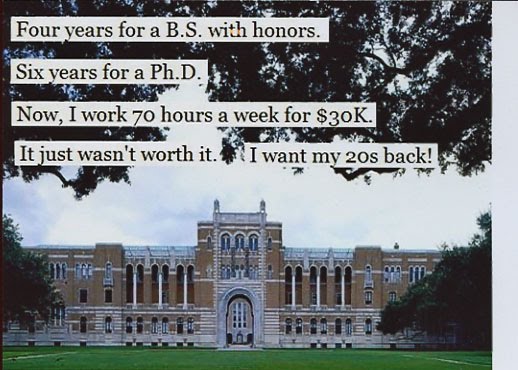
That (at least) the 2nd dropout from harvard (lowercase emphasis mine) became a billionaire shows that an Ivy League credential is not what it used to be, nor is it necessary or as prestigious as it once was (unless you are a dropout billionaire) . Another great line in the movie that the Winkledoofuss’s were mad because they didn’t get their way such as they had all their pampered life was epic. We don’t live in the entitlement world (or shouldn’t). I’ve worked with Finklehorsespatoots from all of the Ivy league skools (sp on purpose) as well as those like Duke, USC, UNC-CH, Notre Dame, columbia, princeton who take college snobbery to the wrong level. Proud of your school is one thing, elitism is another….guess which one is appreciated or listened to? These institutions are reducing themselves to credentialed, not necessarily educated. Guess which ones are laughed at and not considered worth the money they charge? For the most part, the extra money they paid for their education was a waste that could have been invested and would be worth more. The reality is most are doing the same job for the same money. It got to the point in one of my jobs at IBM when someone would brag that they had a harvard MBA, someone would comment in public what a waste of money that was for the person. The rest of us would know to work around that person as they would just be a hindrance to our ability to get any work done. They were almost pariahs to everyone else being the snowflakes they usually turned out to be.
It takes a dream and passion to see it to fruition, otherwise you are a lemming in the working world. No degree earns you the right to do anything but try. I also subscribe that things are not equal, nor should they be. Some get more than others, be it because they are smarter, work harder or some combination of both. If you get a lucky break, consider it a bone, but it’s not an entitlement.
The plaintiffs didn’t have the ability to pull off what Zuckerberg did and they wound up sucking on the hind teat of his success. You could tell that the lawyers got as much as the clients he settles with through billing and retainers on that settlement. Might as well include lawyers in the offended since it looks like I’m growing that list in this blog. This brings me to another of my favorite scene’s, the best answer I’ve ever heard at a deposition. I wish I’d said it although I’ve said something close I’ll admit.
HARD WORK
Facebook didn’t just succeed because of luck (maybe luck in the timing) and some who didn’t see it’s potential got left behind, but the key to it’s success like most things is ability and hard work. Although I work for a big company now, I cut my teeth with entrepreneurs who gave every drop of blood, sweat and many times their personal life to make something they believed in a success. Most are at least Millionaires now and I don’t begrudge a one of them. They took the risk and deserve the reward. I only wish more would make it so they could hire more people and reduce unemployment, restart and grow the economy This will be the turn around our current economic situation needs, and much faster than our present Keynesian politicians.
REALISM OF THE FILM
I thought they captured the timing and semantics of the period correctly I was noticing the coding on screen, the Apache servers and that Zuckerberg edited his blog in HTML. I even noticed that the cell phones were time period appropriate. What hasn’t changed is College partiers. Not that I know that much about college partying, but I’m sure some of that really happens. Although they said he wasn’t an asshole, but that he tried so hard to be one was partly true. He didn’t have to try.
REAL LIFE
It turns out that Zuckerberg is a suck up to the President to promote Facebook. Why someone so smart would let himself be manipulated is beyond me. He didn’t realize that he let a campaign go on for the youth vote who are so easily manipulated by MTV, The Comedy Channel and such outlets. Older, wiser and those hurt more by the economy know better than to support this or be buffaloed by this sort of trick. The fact that Fakebook is censuring political groups that are not liberal and letting terrorists plan attacks or post mendacious things about moral groups shows who they and Zuck really are, biased.
EPILOGUE
This was a good movie that shows you can still make it in the business world. Bill Gates, Michael Dell, Steve Jobs and many others are all good examples of the American dream that Zuckerberg lives. By now it is out on DVD, I even TiVo’d it the other day an watched it again just to see success. I am glad we live in the part of the world where you have the chance to succeed or fail. But if you succeed, you usually take others with you. A rising tide floats all boats.
Update: Now that a lot of social media pressure has cut the lunch/poop talk down, combined with multiple Twitter platforms, it has become a powerful tool. I find myself opening Twitter as my first site now to find out what is going on. I have refined it to include those people and topics that are meaningful to me and it gets me the information I need better than almost any other platform.
I get a lot of information from blogs still that I tweet or vice-versa and can know what is going on around the world on multiple issues. Again, refinement is the key.
I define the refinement requires that I only follow what is crucial to my interests at the time. Since what I’m following changes, so does my sources of information. That is why I’m not too worried about who or how many I follow, nor who or how many follow me. Attaining numbers is far different from attaining knowledge and information.
Platforms like this along help me eliminate bias which is killing former information platforms like the network news and print media.
I follow trends. I’ve seen much about this platform recently that has caused me to think about it. I use it sparingly and don’t post that much as I’ve always maintained that no one cares that much about what I’m doing with my time.
As an Analyst Relations Best Practice, I find that it is good to know what the analyst is doing to be on familiar terms with what they are doing. Additionally, when I can’t reach them, I direct message an analyst as a back channel and it is very reliable.
The first article I noticed though was by Zach Whittaker who wonders “Twitter, is there any point”?
I often wonder this as Twitter follows Sturgeon’s Law. If you look at the comments of this blog, it laments that many talk about lunch, flights and bowel movements.
On the plus side, he notes: “Twitter is what we call an “Enterprise 2.0″ application; not only a web application which tells the world what you’re doing, but is highly influential in the way businesses run, keeping customers and partners informed and gaining feedback on services. ”
On the negative is: “Whilst it may be a next-generation application, I still struggle to see the point it makes, or the impact it has. With the API and development opportunities, it’s certainly made an impact in developing technologies such as Adobe AIR, but besides this I fail to see why I should continue to update mine; something I haven’t done in months.”
The next thread was the Mumbai terrorists following Twitter. I’m not so sure it’s a good thing to tell them where you are if they are trying to kill you. It is not as bad though as CNN ratting out citizens trying to hide.
Recently TPTB declined $500 from Facebook to buy Twitter, so I’m wondering if they know something I don’t about its value. The jury is out for me other than as a tool to reach certain people, but I know that the hunter in me instinctually says look for cover, not expose yourself.
Update: I posted this in 2005. My daughters then bf got bent out of shape because I spoke the truth. He was going to write a rebuttal, but didn’t. This was before the Kardashian sex tape or their awful show that I never have watched. It turns out that this was right all along and he’s done a 180 now that he is in the working world. My sister has lost everything now, but due to financial mismanagement and the inability of her husband to keep a job, not due to natural disasters That is a different story.
I was going to call it the 2 faces of humanity, just thinking of what the folks in Louisiana, Mississippi and Alabama are going through bringing out the good and bad in some, but it occurred to me that there are many flavors of this subject. But for this post, I’ll concentrate on the simple good and bad.
What is happening in those states is devastating. I can only mildly relate as we’ve had some bad hurricanes here (Fran comes to mind in NC where some are still recovering) and a recent ice storm where we were out of power for a week, but it is bad there. My sister lives near Lake Pontchartrain and has likely lost her house. Her family got out in time and are living with my parents right now, lucky them. It’s not the same for those who have lost lives, jobs, family and other things like heirlooms and photo’s which are forever gone.
These catastrophe’s bring out the good in some folks. Already there are local fisherman driving around in bass boats rescuing people from their houses. There are organizations which are gathering supplies, people lining up to donate time and money to help. I read this morning where you can donate like the Red Cross , Samaritans Purse, and other good groups who are sincere in helping out. FEMA is organizing for the biggest relief effort ever. For those that get my feed via RSS, I’ll be visiting del.ico.us today to add them to my list.
Then there is the other side. I’ve seen reports of looters, the construction scammers, insurance fraud and many others. This is also unfortunately something that raises it’s ugly head during these times. I hope that this is kept in check.
Then the way we can act hit me. Through the power of DVR (i was scanning and deleting shows), I happened to watch back to back the hurricane coverage then the reality show, “filthy rich cattle drive” where the spoiled brat kids of celebrity’s are “roughing” it on a cattle drive. This is like going to a zoo to watch animals. These kids are the most narcissistic people I’ve ever seen, worried about how they look, trying to get make up, dry cleaning and Fed Ex in the middle of nowhere and me, me, me. This was supposed to be about helping a charity. One of them of course was Kim Kardashian.
It’s just to ironic that these two faces of humanity are happening at the same time.
Natural disasters have been happening since the creation of the earth. There was the tsunami last year for example. Fortunately, people have stepped up and helped others through the course of history and I hope and pray it happens here.
A lesson that strikes me (besides the obvious of striving to be good) is to be prepared and to be able to take care of yourself in the many situations life will present to you. Acts of God like this (even for skeptics, this is the clause in your homeowners insurance) will continue, so dealing with it is inevitable. Being ready in anything is half the battle sometimes. Appreciate your family, friends and experiences in life. It’s times like this that remind you how important and fleeting they can be.
So it’s off to my now seemingly trivial day when compared to those now trying to put their lives back together.
Update on Sis: just heard from her and the house made it, but she won’t be able to go back for months. Thanks to those folks who sent regards.


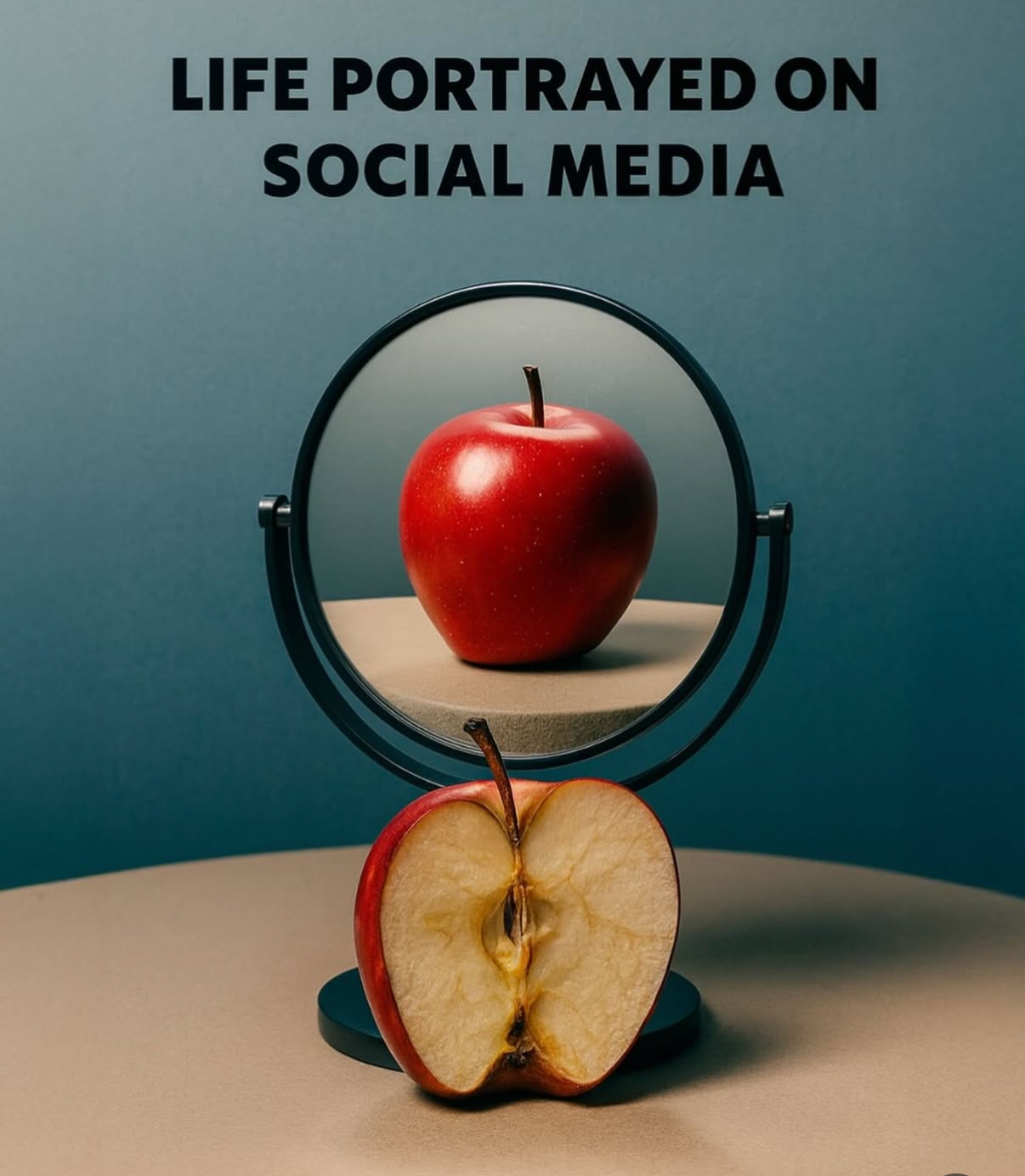
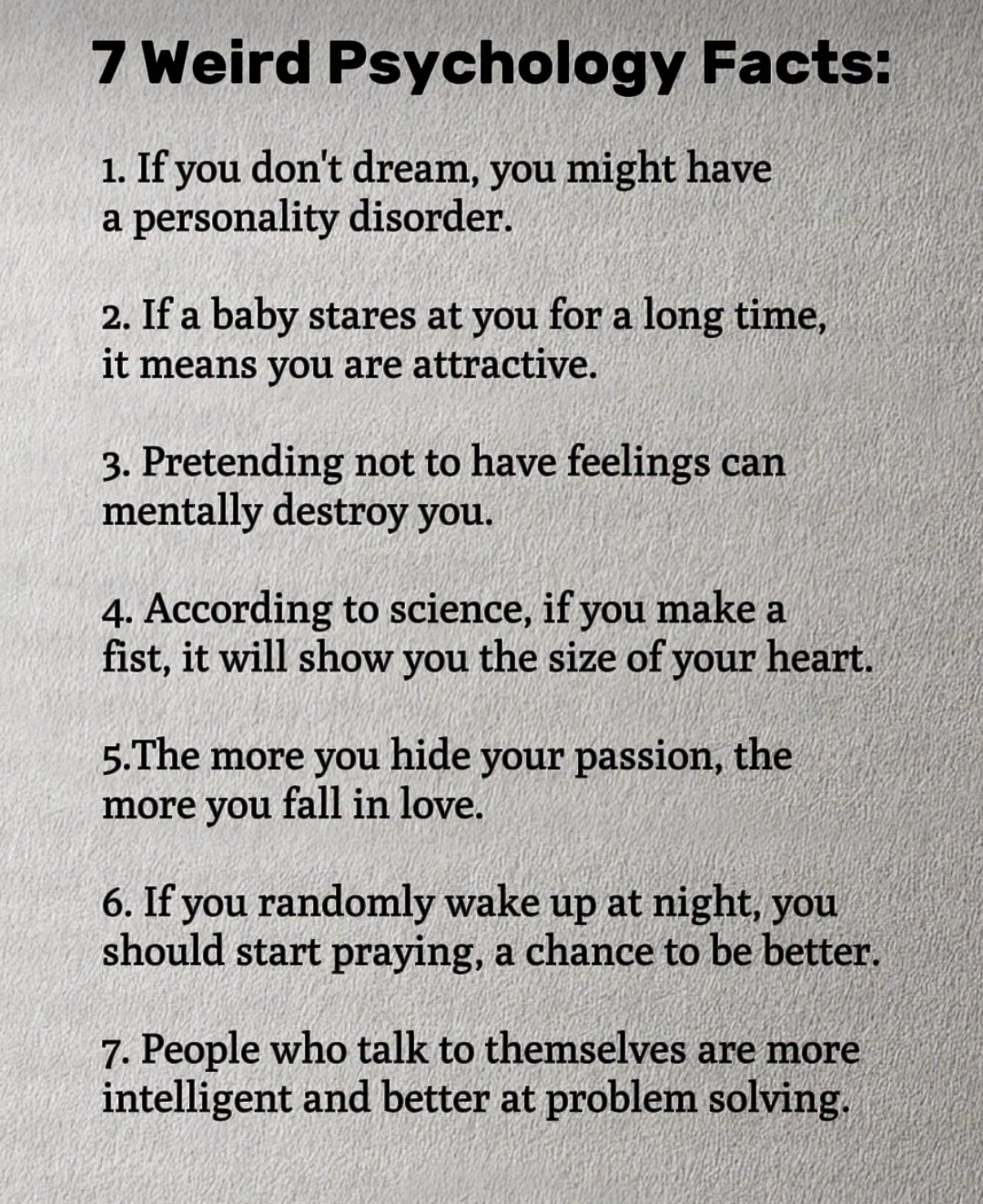
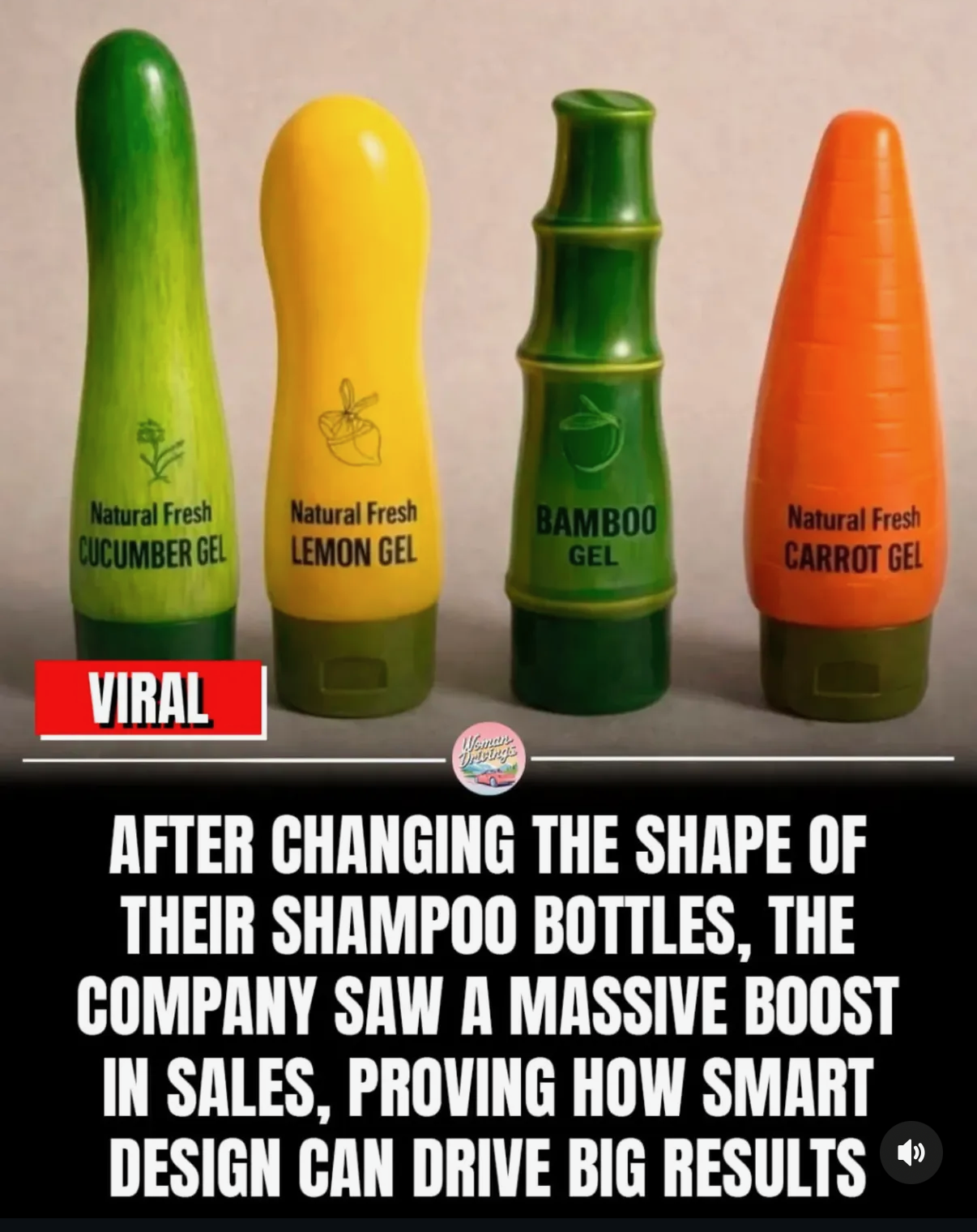
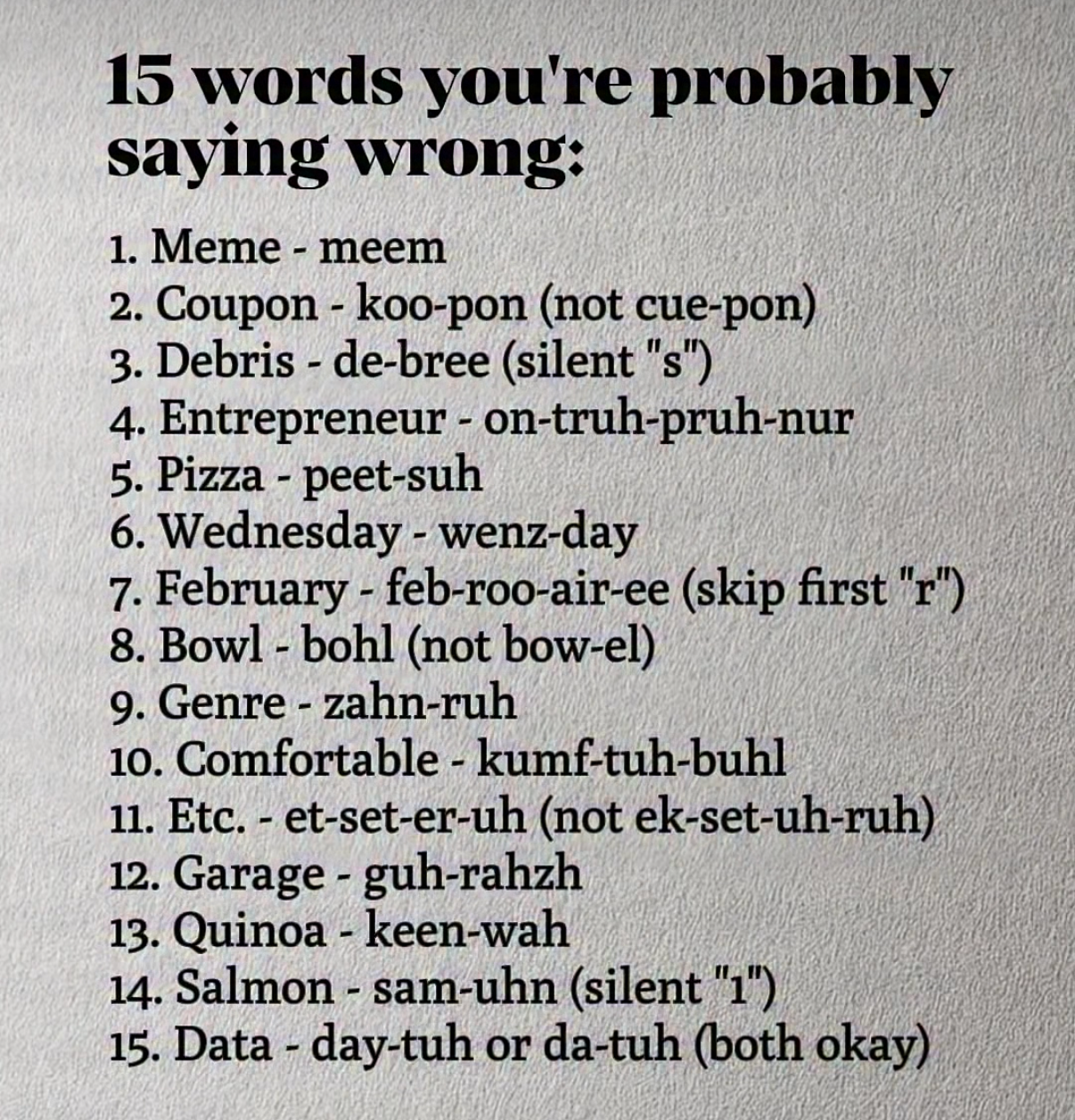













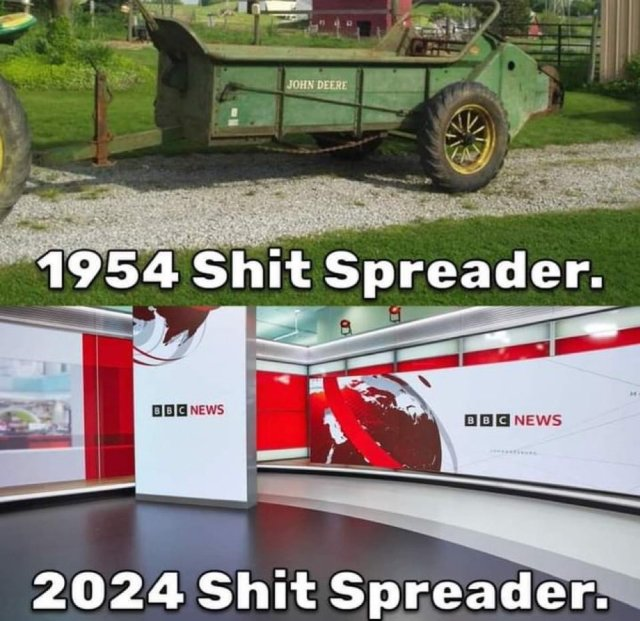
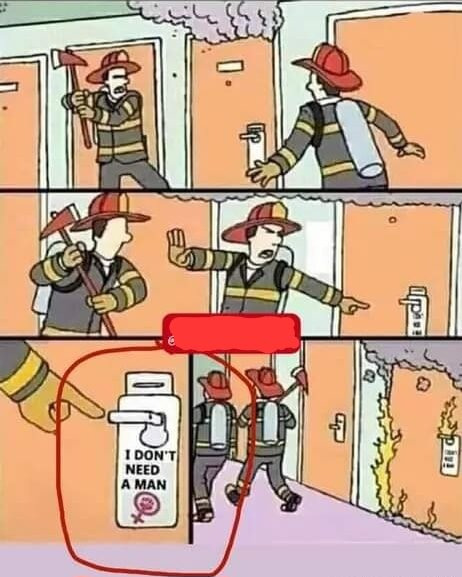


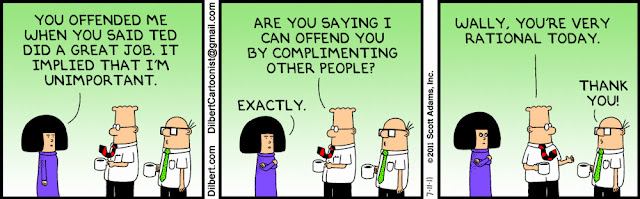
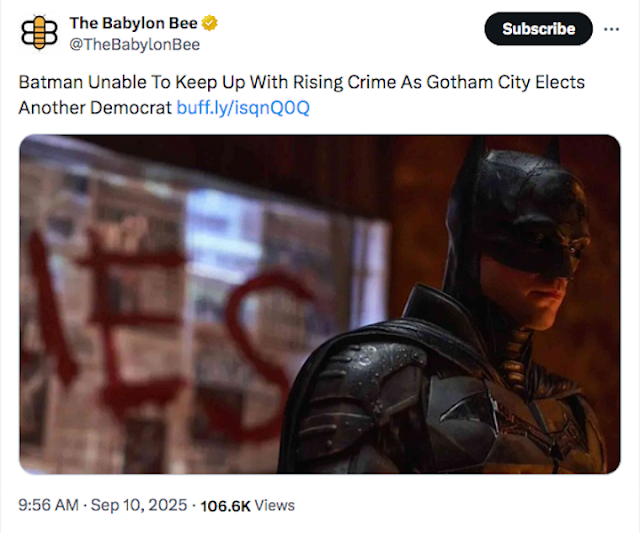
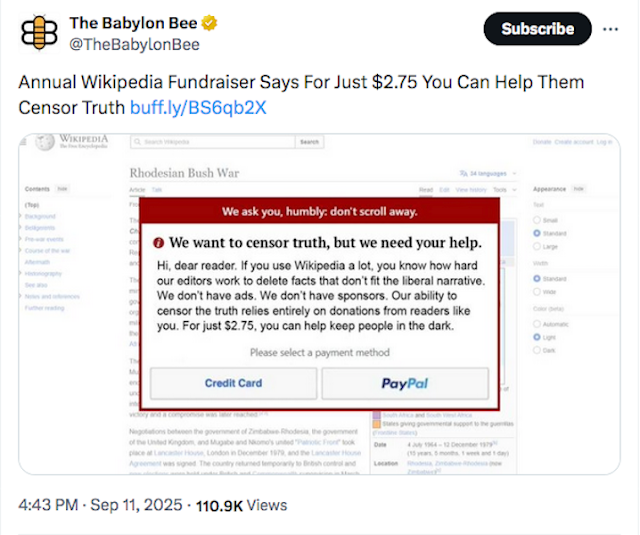
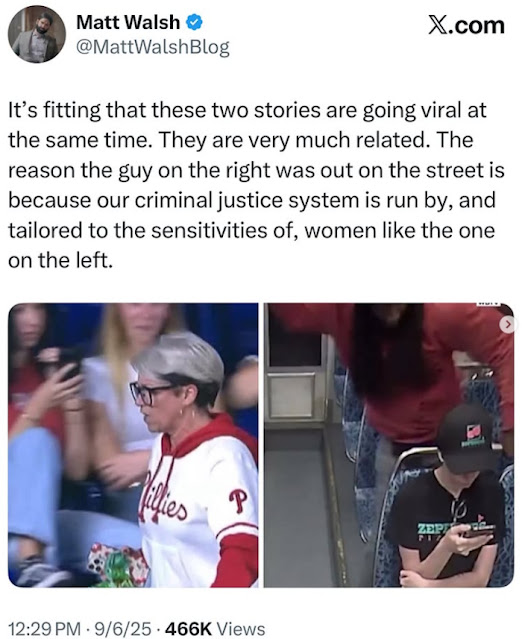
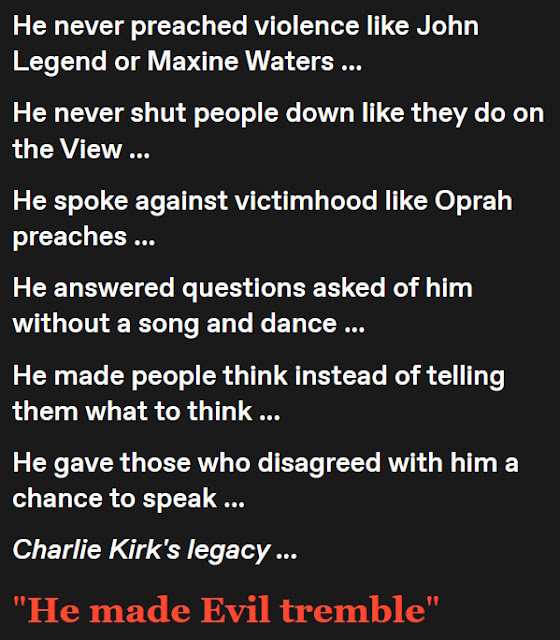



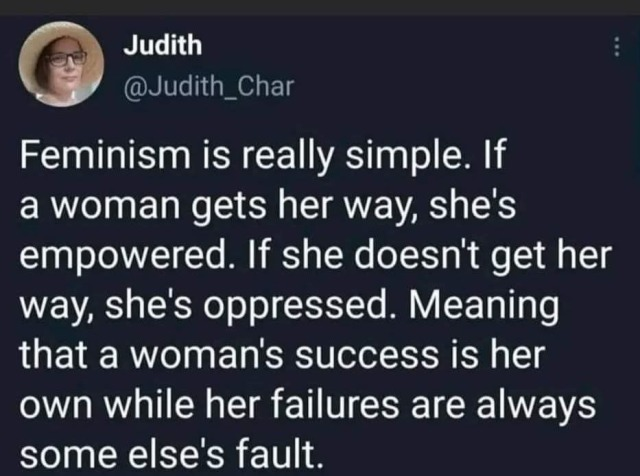
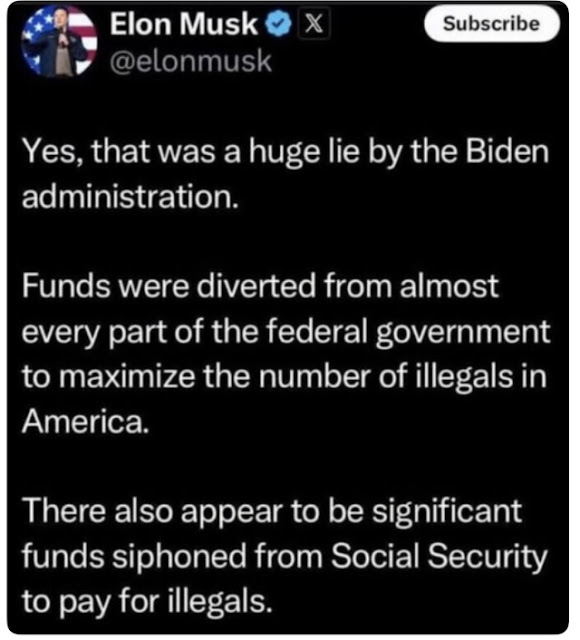
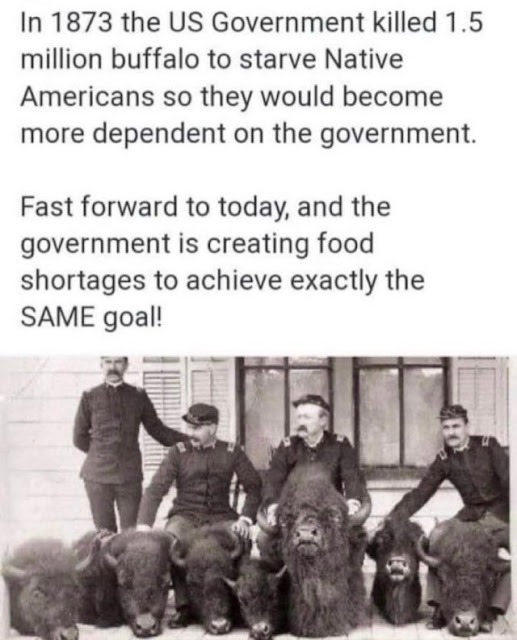



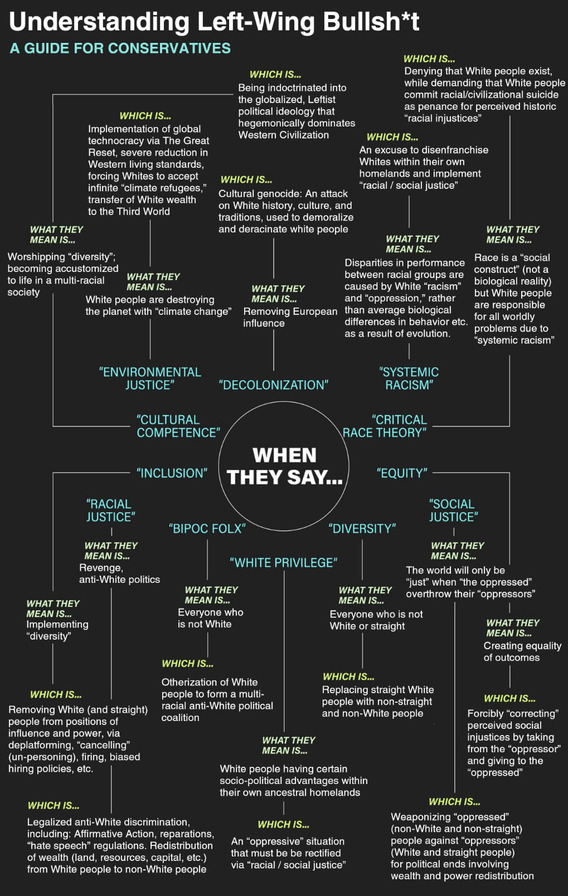



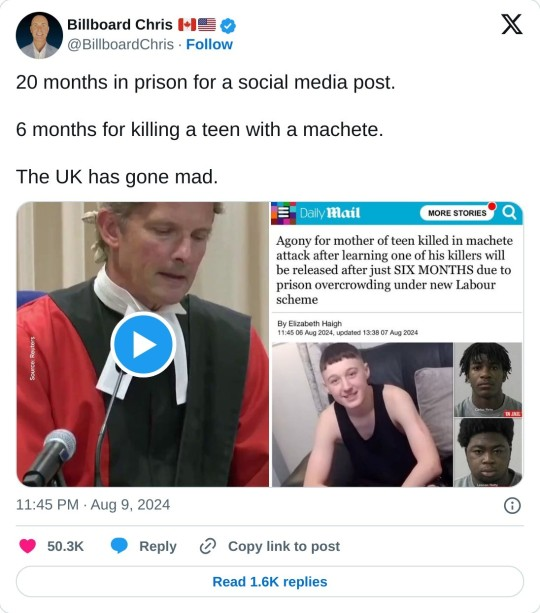









 Delusions of Adequacy
