
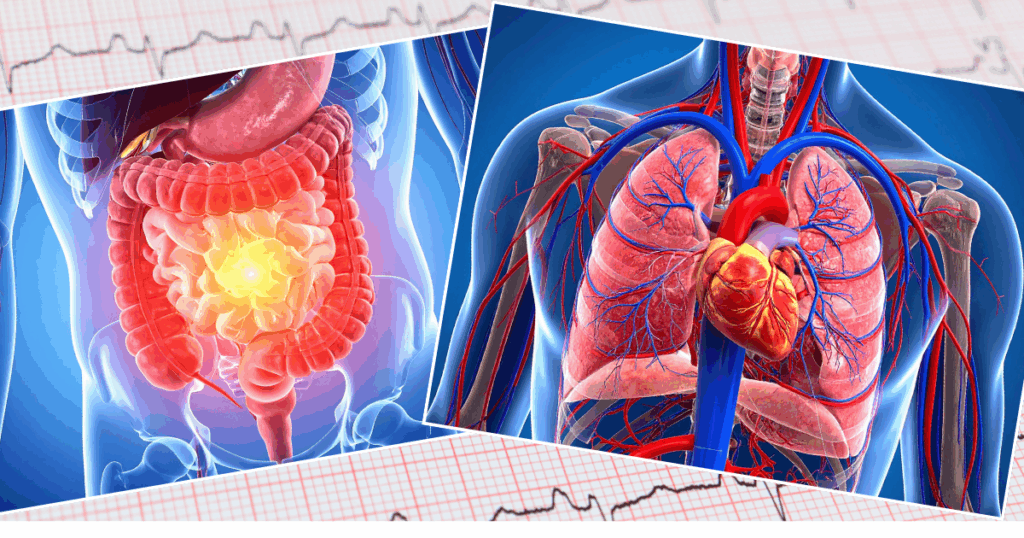
Researchers have done a significant amount of work exploring the gut-brain axis, or how the food we eat affects the way we think. But they’ve also spent time exploring the gut-heart axis — which, in my opinion, is one of the most important biological concepts of our generation.
The food you eat has a direct impact on the heart, both directly and indirectly through your gut microbiota.
I’m going to take the next few minutes to discuss how this interaction works, as well as what you can do to improve your gut (and heart) health over time.
Exploring the gut-heart connection
The state of your gut bacteria — as well as nutrients, compounds, and hormones it produces — has an impact on your heart.
First, the nutritional aspects.
We know the heart receives priority nutrients from our diets, especially from the fats we eat. Studies suggest that the heart directly receives nutrients through blood after digestion. This is because blood from the small intestines, where digestion takes place, collects in the hepatic portal vein. Blood passes directly from the intestines to the liver, then to the inferior vena cava and the heart. This means the heart receives some of the first and most intimate contact with nutritious (or not so nutritious) food you’re consuming.
We also know your gut bacteria produce more than just nutrients. As they break down certain foods, they also create secondary compounds called metabolites. These include:
- GABA
- Amino acids like tryptophan and tyramine
- Trimethylamine N-oxide
- Noradrenaline
- Dopamine
- Serotonin
Studies show that dysregulated metabolite production can “activate pathways that promote myocardial injury and may contribute to ventricular dysfunction” (in other words, encourage heart disease).
It can also lead to inflammation. This is the third and biggest way your gut contributes to heart disease.
Here’s a flyby overview of how this works:
- Your intestinal lining is semipermeable to allow for adequate digestion.
- But poor gut health, known as leaky gut, allows for hyperpermeability, or a large amount of exchange between your intestines and bloodstream. Leaky gut can also stem from conditions such as SIBO and PCOS.
- Leaky gut stimulates inflammation in your body by quite literally leaking toxins into your bloodstream (including high-sugar food).
- This puts your body into a state of systemic or chronic inflammation, meaning it doesn’t go away on its own.
This gut inflammation directly impacts the heart by causing blood vessels to become stiff, hard, and narrow. It may also accelerate plaque accumulation, which greatly contributes to heart disease.
So what does all this mean? That your next bite of food could have a major impact on your heart.
And if you’re not eating nutrient-dense, whole, real food, it will also be one of the first organs to bear the brunt of damage.
How to improve your gut-heart axis
There’s no overnight fix for your gut or your heart health.
But there are certainly steps you can take to see results faster.
This includes:
1. Whole, real food
The first piece of the puzzle is changing what you eat.
Studies show that real-food diets can lower coronary calcium scores (CAC) over time. They can also reduce the chances of death for patients living with heart disease.
The opposite is true for diets high in processed food.
Instead, focus on increasing your foods’ nutrient density — foods that are deeply nutritious and allow the body to heal.
Staples include:
- Animal protein. This can help heal gut lining.
- Dairy, especially fermented. Yogurt, for example, is an excellent probiotic.
- Eggs. Eggs increase microbiota and vascular function.
2. Adequate rest
The amount of sleep you get each night can have a dramatic effect on your gut’s microbial health. The less sleep you get, the less diverse your bacteria are. Dysbiosis can also affect the quality of your sleep, which creates a vicious cycle. Namely, one that affects your heart.
Getting seven to nine hours per night is considered key to metabolic health. You might need more or less depending on age, health, and activity level, but it’s still a target to hit, alongside many of the other principles of metabolic health.
3. Reassessing medications
If you can’t eliminate medications, you may consider supplementation as a way to support your gut health.
The following is a list of bioactive compounds known to support the gut-heart axis:
- Polyphenols: These are plant compounds found in substances like berries and tea.
- Prebiotics: Onions, garlic, leeks, and asparagus are good examples.
- Probiotics: Yogurt and kefir are some of the most common, although sauerkraut and kimchi are also options.
- Quercetin: Red onions and capers contain quercetin, among many other plants.
- Resveratrol: Blueberries are often the most common example.
- Some dietary fibers: This includes vegetables like broccoli and leafy greens.
4. Cutting sugar
Sugar not only changes your gut microbiota, but also fundamentally damages your liver, pancreas, and blood sugar function.
Your best bet is eliminating processed sugar altogether, although I realize that can be a struggle depending on where you’re at.
First, reduce your consumption. Rather than three sodas a day, make it two. Then, look for sugar alternatives. Instead of processed sweets before bed, you might try fruit, milk, or berries. You can also try wearing a CGM to assess how your blood sugar responds to these alternatives in real time.
Finally, reduce the amount of processed carbohydrates you eat. Substances like bread and alcohol, for example, turn into sugar in the bloodstream.
This means adopting a ketogenic, carnivore, or similarly low-carb diet that supplies your heart with the high-fat nutrients it needs.
5. Eat the right fats
Speaking of fat, we also know fat consumption contributes heavily to heart health. Research has found that “increasing fatty acid availability to the heart results in a marked inhibition of glucose oxidation,” leading to healthier function.
This is especially true of ketones, or a type of fatty acid that is beneficial to heart health. Ketones directly affect the mammalian target of rapamycin (mTOR) signaling, which is a bodily process affecting cardiac function, cellular growth, and insulin sensitivity.
Your body can create more ketones for the heart via fasting, heavy exercise, and low-carb dieting.
I highly suggest avoiding seed oils and fake fats, and recommend opting for a healthier balance of omega-3 and saturated fats.
What about the hyperspecifics?
The five pointers above can help you make the biggest difference in your gut. But they’re not the only things you can be doing.
The following resources contain additional resources that may be useful on your journey:
- Fix Your Gut, Save Your Heart: New Science on Heart Disease Prevention – Dr William Davis
- The Insulin Connection: Rethinking Female Health Beyond “Just Hormones – Andrea Salcedo DO
- Dr. Philip Ovadia’s Heart Attack Recovery Guide


 Delusions of Adequacy