

I refuse to use them. I think they are childish and don’t add anything to the text, no matter how cute you think you are. I deduct man points if a guy sends me one who’s over 30.
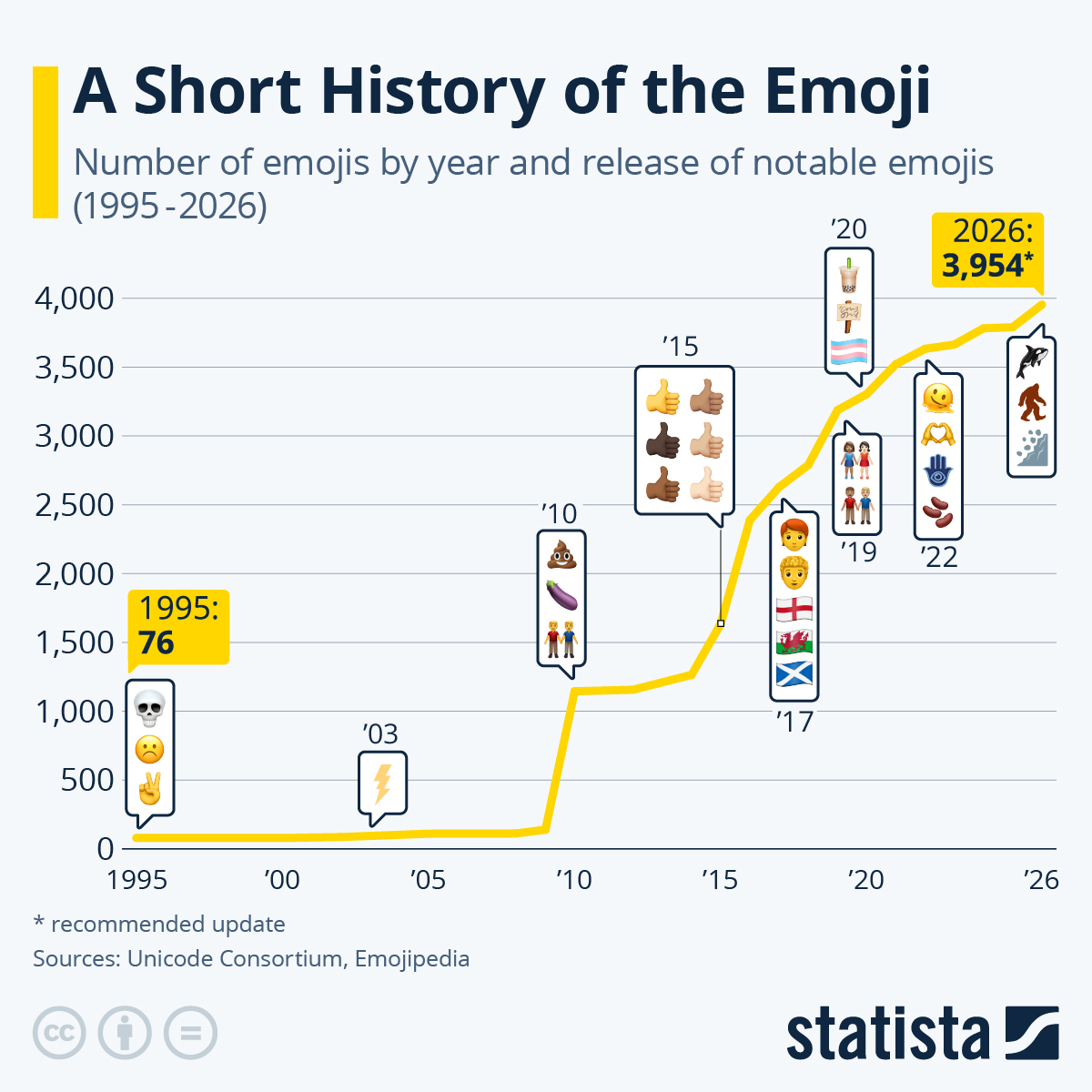
Emojis have become a staple of electronic communication since their inception in the 1990s and people of all ages and on all continents use them. While their number keeps on growing every year due to new releases by the Unicode Consortium, the pictograms are increasingly vying for users’ attention as other forms of visual communication – think gifs, stickers and avatars – are experiencing their heyday.
With myriads of emojis released over the previous years, new batches have become somewhat smaller.
As Statista’s Katharina Buchholz reports, a recently suggested update that would grow the number of emojis to almost 4,000 next year contains 164 additional pictograms, but only nine completely new ones.
While 2022 had seen the release of 112 new emojis, that number was just 31 in 2023. The figure rose again to 118 in 2024 due to emojis that allow users to pick different skin colors or genders (which are counted individually), before falling to an all-time low of eight in 2025. The number of non-customizable emojis has meanwhile decreased with almost every release.


I have been in the position to review the CVs of potential employees. Aside from the spelling errors, even of one’s name!, or the use of colored paper, some aspirants had seen fit to use emojis.
All of the above, without exception, go straight to the round file. If digital submission, a prompt deletion. And without a response of refusal. As if they never existed.
LikeLike