Great Sayings – Peter Drucker on Management

Peter Drucker – “So much of what we call management consists in making it difficult for people to work.”


I’ve posted on meetings being a waste of time  and management ego’s.  Great managers lead and let the employees work and succeed.  Mostly, the best managers help their employees grow and advance in their careers.  I know I’ve had both types.  When I was a manager, I did everything I could to those working for me the opportunity to show what they can do and help them when they fell down.

Unfortunately, most can’t seem to get out of their own way and realize that the best managers surround themselves with a good team and give them the power to do their jobs to the best of their ability.

How Meetings Are a Waste Of Time and How To Avoid or Get Out of Them

facepalm  I read a WSJ article on ineffective meetings.  It is about the manifesto to end boring meetings.

This brought back thousands of hours of meetings I wished I could have back or would certainly decline to attend had I realized what I know now.  Most of this post is tongue in cheek unlike the WSJ, but I’ll bet everyone wishes they weren’t in so many meetings.

First, let me start out with some quotes I found from The Quote Garden, starting with the one that reminded me most of the meetings I’ve attended:

A committee is a cul-de-sac down which ideas are lured and then quietly strangled.  ~Barnett Cocks, attributed

worfgif

A committee is a group that keeps minutes and loses hours.  ~Milton Berle

To kill time, a committee meeting is the perfect weapon.  ~Author Unknown

If you had to identify, in one word, the reason why the human race has not achieved, and never will achieve, its full potential, that word would be “meetings.”  ~Dave Barry, “Things That It Took Me 50 Years to Learn”

Our age will be known as the age of committees.  ~Ernest Benn

If Columbus had an advisory committee he would probably still be at the dock.  ~Arthur Goldberg

A committee is an animal with four back legs.  ~John le Carré, Tinker Tailor Soldier Spy

It is impossible to imagine the universe run by a wise, just and omnipotent God, but it is quite easy to imagine it run by a board of gods.  ~H.L. Mencken

A “Normal” person is the sort of person that might be designed by a committee.  You know, “Each person puts in a pretty color and it comes out gray.”  ~Alan Sherman

A committee is a thing which takes a week to do what one good man can do in an hour.  ~Elbert Hubbard

A camel looks like a horse that was planned by a committee.  ~Author Unknown

A committee is a group of the unwilling chosen form the unfit, to do the unnecessary.  ~Author Unknown

If you live in a country run by committee, be on the committee.  ~Author Unknown

Could Hamlet have been written by a committee, or the Mona Lisa painted by a club?… Creative ideas do not spring from groups.  They spring from individuals.  The divine spark leaps from the finger of God to the finger of Adam.  ~Alfred Whitney Griswold

We always carry out by committee anything in which any one of us alone would be too reasonable to persist.  ~Frank Moore Colby

I don’t believe a committee can write a book.  It can, oh, govern a country, perhaps, but I don’t believe it can write a book.  ~Arnold Toynbee

There is no monument dedicated to the memory of a committee.  ~Lester J. Pourciau

Any committee that is the slightest use is composed of people who are too busy to want to sit on it for a second longer than they have to.  ~Katharine Whitehorn

Meetings are indispensable when you don’t want to do anything.  ~John Kenneth Galbraith

People who enjoy meetings should not be in charge of anything.  ~Thomas Sowell

AND OF COURSE, THERE IS BRADLEY’S BROMIDE: “If computers get too powerful, we can organize them into a committee — that will do them in.”

I WORKED FOR “THE” MEETING COMPANY
I worked a large part of my career either for or with IBM, which many have joked that it stands for I’ve Been in a Meeting. I could have been years more productive and retired earlier if it hadn’t been for all of the meetings I’ve spent time in.  Projects would have been completed weeks in advance were it not for meetings.

Usually, the meetings were a way to get other people to do your work for you, or to assign work to others they wouldn’t do or volunteer for were it not for the fact that they were at a meeting.  The only time this didn’t work was when I actually needed to get a speaker for a press briefing for an interview with Time Magazine when print media was important.  His manager, John Callies then VP of Netfinity or X series at IBM(x86 servers), wouldn’t let the speaker leave the staff meeting stating, “it’s only your job” as the reason.  See how manage executive ego’s for more on this. I’d have never imagined having to cancel an interview with what was then an important publication due to an executives’ ego. I’ve seen bad manager moves in my time, but this was top 10 worst of the worst for me.  He still ranks as the number one suit I’ve ever worked with.  The below meme was how it felt to be in a meeting with him.

Execs have also had meetings in places that they wanted to visit (click on the link to see who it is), and most people knew that.  That was a waste of travel time and money for a wasted meeting. There were other reasons they had meetings, but read the quotes at the beginning to find out why said were held.

Avoid training meetings, unless it was a way to be busy during a meeting you want to avoid.  This is especially true of diversity training.  It is a waste of time (same exact meeting every time every year for the required legal reason) but is more important than almost any other meeting, so it serves 2 purposes.  No one will go against diversity training for fear of being politically or legally incorrect.  It does allow you to miss another meeting and no one pays attention anyway.  It’s an opportunity to get work done while the training is going on in the background.  Your attendance is recorded so you are twice as effective as you complete your work, earn your mark for training and ignore the same speech you went through last year all at the same time.

MEETING RULES TO SURVIVE

The best way to deal with a meeting is to avoid it.  If you can already have a meeting at a time that the scheduler proposes it or be busy and/or somehow away or out of the office.  Teleconferencing kills that strategery  unless you can be found traveling, but sometimes it’s unavoidable (see how to get out of a meeting below if you have to go).  The people calling the meeting are really only people who want the meeting anyway.

For things to do to avoid meetings or how to goof around during a meeting, go to the link How to goof around at work.

HERE IS MY RULE WHEN TO DECIDE TO ATTEND IF I HAD A CHOICE: if there were more than 4 people, don’t go.  Nothing will get done other than resulting in another meeting to have to attend.  This is especially true if there are more than 1 executives, as each brings a team of competing players who guarantee the death of productivity.

The WSJ agrees with me, but goes on to say that if it has 17 people, there is no chance anything will get accomplished.
Don’t speak at a meeting if possible. It usually wastes time and extends the meeting length.  There are only a couple of people who really have something to contribute, the rest want to hear themselves talk, show off their PowerPoint skills to bore you, or think they are more important if they speak.  These show offs can be  insufferable, but they offer time to check your email at best while pretending to listen.

This is in the department of redundancy department, but it is so important to note is to be careful when attending because the meeting leader’s purpose is to assign their work to others or get people to do work they wouldn’t do because they can’t decline in public (this is a corporate tradition).  This further kills your ability to be productive at your real job.  There are some who want to look important by accepting work magnanimously to show off, thinking they were climbing the ladder.  Gladly accept their offer as most people have 10 hours of work for an 8 hour day anyway. Only accept it if it produces revenue or if you are the only one qualified to do it, but generally don’t, especially if you perceive it as a make work project.

Especially avoid planning meetings.  A meeting to plan another meeting is one to be skipped unless you are the project manager and called the meeting, then you have to do it.  Avoid these at all costs.  Once nobody shows up, the meeting gets cancelled for email updates, which is a far better use of your time.  As my grandfather said, they are as common as pig tracks and as useless as teats on a boar hog.

Avoid staff meetings.  These are like planning meetings, but they occur regularly and when you miss one, nobody really cares (especially if there are more than 4 people). Only attend them occasionally as you work with these people everyday anyway, it’s not like you don’t know what is going on.  Email your boss on a regular basis with your activity and you can plan something more productive during that time.

HOW TO GET OUT OF A MEETING

The tongue in cheek part really goes here.  I’ll bet there are folks out there far more creative about this than me.

My favorite methods are to have a customer who needs you.  They are your business and that overrides almost everything.  Even your boss can’t deny this.

Pre-plan an emergency.  I occasionally had another employee phone or knock on the door to call me out (email or text isn’t as good as that is not public enough) to get you out of a meeting.  The trick is to never return. You’ll get the notes anyway, I promise. Since I worked with the press and analysts, I sometimes had a co-worker say that a reporter needed me right now.  They were my customer and no one could say no.  Many times there was no real emergency even if the press did call, it was the best and most efficient use of my time to leave the meeting so as to be actually working instead of being at a meeting.  I usually dealt with the press immediately unless I had to do some digging to get back to them.

Attend meetings by phone if possible.  You can always put the phone on mute and get your real work done, or surf the web or watch TV, which is usually just as productive.  It’s easier to go to the bathroom, which brings me to…

Go to the bathroom.  Offer to get a water to others when you go, then take as much time reading the sports page in the stall as you can.  You are just as productive as listening to someone prattle on about their project.

Send your meeting information in by proxy.  See above where someone is willing to talk.  Give them your results or input so you don’t have to be there.

 THE KIND OF MEETING TO HAVE

I realize that some meetings are necessary, so I understand that it’s the only way to get some things done.  For the other majority of the time, see above.

The best meeting is a hall meeting.  You run into the person you need help from and in 5 minutes, you’ve explained your need, what they can do and your time frame for doing it.  Problem solved.

I also recommend having meetings with introverts and/or men.  They don’t like to talk much (most of them) and want to get it over as quickly as you do.  Attire requirements are less of a priority as is small talk.

Here is the net net, don’t go to a meeting if you don’t have to, get out early if at all possible and above all, don’t speak unless you have no option.  Consider it a victory if you don’t attend, or a minor victory if you have to attend but don’t come out with anyone else’s work. You are a complete failure if you open your mouth and double your workload on something that is not tangential to your job or career.  Enjoy your job more by having the time to actually be productive.

The Best News For PowerPoint Users Since Its Creation

From this link, Jeff Bezos says it is the end of PowerPoint.

To be honest, I don’t really give a flying fig or a rats rump about either Bezos or his product, but PowerPoint has always been a crutch that rarely connects emotionally with the audience.  Of all the tools we’ve used, it must rank lowest on the rung of real importance when compared with the time wasted compared to other tools.

The author explains it:

In no way am I advocating that you ditch PowerPoint. I am recommending that you ditch PowerPoint as we know it—dull, wordy, and overloaded with bullet points. Image-rich presentations work effectively because pictures appeal to the right hemisphere of the brain—the emotional side. You can have great ideas backed up by data and logic, but if you don’t connect with people emotionally, it doesn’t matter.

START FROM THE BEGINNING

Back in the dark ages, companies used overhead projectors and presented “foils”.  This was the forerunner to PowerPoint only you had to manually change them.  Given the projector fails I’ve seen, it at least was more reliable, albeit archaic.

It was a hoot to watch people try to figure out how to configure a projector or a multi-media room to get their PC to connect.  Entire sessions have had to be conducted without PowerPoint due to operator or machine error.  For the most part, they were likely more productive meetings.

THE DEARTH OF OUR EXISTENCE BEGINS AND CREATES MANY JOBS

The jobs being created were PowerPoint slide creators.  A pretty easy job if you were ahead of the curve.  The only caveat was unrealistic executives who thought they were presenting to the UN. One VP of Social Business Evangelism at my last company used to put us through 20 changes minimum, often commenting that it was not what she wanted.  When asked what it was, the comment was usually, “I don’t know what I want, just go fix it and bring me back what I want”.  On a humorous note, one time we brought back version one as a ruse and she commented now that is what I really wanted to begin with, why didn’t you bring me this to start with?  Go figure.

THE HUMAN PROBLEM

A big problem with PowerPoint is that it rarely could tell the story on its own, and that it depends on the human presenting it.  My favorite observation during analyst briefings was the game that they played to try to get the executives off their slides and onto a tangent.  It was my job to get them to stay on topic, but for fun I let it stray…even nodding to the analyst to let them know I knew what the game was.

Also, everyone goes to the page count to see the torture they will be put through.  That in itself is an indicator of its usefulness.  At one meeting, there were 137 charts by the GM of our group.  There was a collective groan by all, and a cheer when it got interrupted by a fire drill.  Hardly anyone returned for the finish.

So basically as a tool it is deficient and a serious time suck.  It also is held up as the idol of meeting communications similar to how executives fret over a press release as if it was what anybody actually read or re-quoted.  I’ve got news for you guys, we could actually do without both.

A GENERATION OF SLACKERS

What also chaffed my behind was that those held up as PowerPoint experts created a job niche that in reality was a re-cycle exercise.  Once you knew the executive, you could re-use their charts with minor changes and act like it was some big production….then kick back and act like it was a Renoir.

IF YOU HADN’T NOTICED…..

I loathe PowerPoint.  I have been working with office suites since the introduction of Visicalc.  I’ve always been able to master them down to a coding level, but I rank PowerPoint at the bottom of my list of usefulness.  Worse than this were knock-offs like Symphony that even the company that created it wouldn’t use it except for the division responsible for it.

I’ve always been far more engaged by a speaker who could tell a story in words and be effective.  Ahead of that is a genuine discussion without the high school drama of charts. You always have to send documentation after a meeting anyway, so dispensing with this for an engagement tool always mirrored the way people have interacted over the years.  In reality, it wasn’t the next best thing.

Managing Executive Ego’s; The Good, The Bad and the Ugly

I’ve worked at 8 different IT companies in my career and have seen many people in management roles. I’ll draw upon my career and the colorful stories for this discussion.

Managing Executives is a very sensitive issue.  This process is critical to the relationship and results with the press and Analysts.  Much of the time this is unseen externally, but the machinations exist under the covers for us to get to the discussion in an orderly manner.

Executives have many demands on their time and are pounded or pulled at from every angle, but they make the big bucks so butch up.  They might have come from a great meeting or one that they got machined gunned to death right before the analyst briefing.  Different people handle stress in different ways.

A common thread I’ve noticed is how much ego they bring, and how much control they have over it. Either way, the executive is the messenger and the content owner in the eyes of the audience.  It is our job to make sure they are best prepared, deal with the issues, understand the big picture and be as professional as possible to achieve results.  In some ways, we have to pull the strings and push the buttons behind the curtain to make successful analyst engagements happen.

As with the movie, I’ll take it in order.

THE GOOD

There are some executives that intrinsically get that analysts are deep thinkers, they have influence over customers, press and our reputation.  The media are rarely deep thinkers, but need to be managed and have influence, albeit less and less.

The really, really good ones know that the analyst can provide great input into the strategy and can point out any holes or landmines in our strategy.

The really, really, really good ones (Buell Duncan) understand that it is about creating a relationship and that no matter how much influence they have at IBM, they can put that aside and get the message out and deliver value to an analyst discussion.

One key is they can manage their ego’s and those of the analyst (not the point of this post, but it is related throughout).  The executive I’ve linked above always comes off as you’re smarter than I am, although it’s rarely true.  He also accepts that criticism is part of the deal and doesn’t take it personally.  I’m not sure if it was his basic nature or that he came from sales (I attribute a big piece to the fact that he’s from the south and is more polite than most) but no matter what the case, his briefings always were a home run.

These executives are of course the best to deal with.  Some have higher maintenance levels than others, but when you know your big gun is going to deliver, you want to make sure his gun is as loaded as possible with bullets.

There are always disagreements over issues, but when an executive can put their ego aside and listen to input, everyone wins.  These people are very perspicacious.
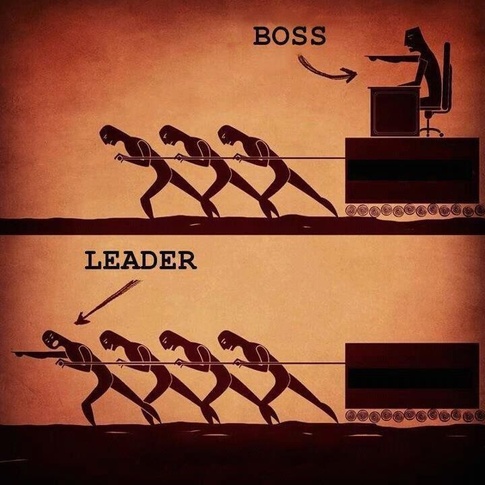
boss or leader

THE BAD

Everyone has a bad day.  That can precipitate a less than optimal discourse.  I’ve worked with some who just weren’t as good as others at dealing with media and analysts, although practice usually improved things.  Some executives just shouldn’t be doing briefings as it isn’t their strength.

As described in the GOOD section, I’ve seen good executives come off distracted as they just got chewed out, or a multi-million dollar contract is about to be lost….it happens.

Some need more coaching and preparation than others, that’s our responsibility in communications.  I’ll discuss this in the Executive Preparation post, yet to come.

There are some that are not cut out for analysts briefings.  They should not be put in this situation.  There is always someone else on the team who is the one really best suited for dealing with the  analysts.  They may not be as good with a P&L, but they get the strategy and the relationship issues.  I use them as much as possible as it produces results on both the analyst and the company side.

Some just don’t get give and take.  I don’t put them in the ugly as they just won’t budge on the fact that their solution is what it’s going to be, but many times they can be right. It is better for the company for them to make the tough choices and stick with our side of the argument.  It rarely makes for a successful analyst engagement, but I defer when history shows that they didn’t take the analyst advice and the company or division benefits.  Again, this a time where a lieutenant is best for dealing with the analysts.

I’ll bring up human nature here as I’ve been in a situation where an executive who is generally great at working with analysts has a beef with a person for some reason.  In one case, both the analyst and the executive described the other person in to me terms of a deification orifice.   Sometimes you just have to separate people and agree to disagree.  This situation is a challenge in communications.

Some of the bad are nitpickers.  The get caught up in details that are not relevant to the big picture.   They are a distraction and a lieutenant is again best.

Another category that could be BAD or could be UGLY are the quick triggers.  They fire off a response without considering the consequences.  The reason I put it into BAD instead of UGLY is you never know how it’s going to turn out.  It usually depends on the audiences’ response.  Either way it is high maintenance.  The quick witted exec’s can play this one well though, I’ll give them that.

I had to work with one entrepreneur who thought he knew more than anyone.  He managed to pick a fight over a lie that he was making a product (disk drive) that he bought from Control Data.  The reporters and analysts knew it and the company credibility was shot.  I had to tell one reporter not to equate me with him as I was not going to lie for him.

The last of the bad is the death by PowerPoint crowd.  They drone on and on and on and on without letting the analyst get a word in (when don’t analysts like to offer an opinion?) and everyone dreads these meetings.  Their objective is to get through the slide deck come hell or high water.

These executives are hard to work with, but sometimes you have to do it and get through it.

THE UGLY
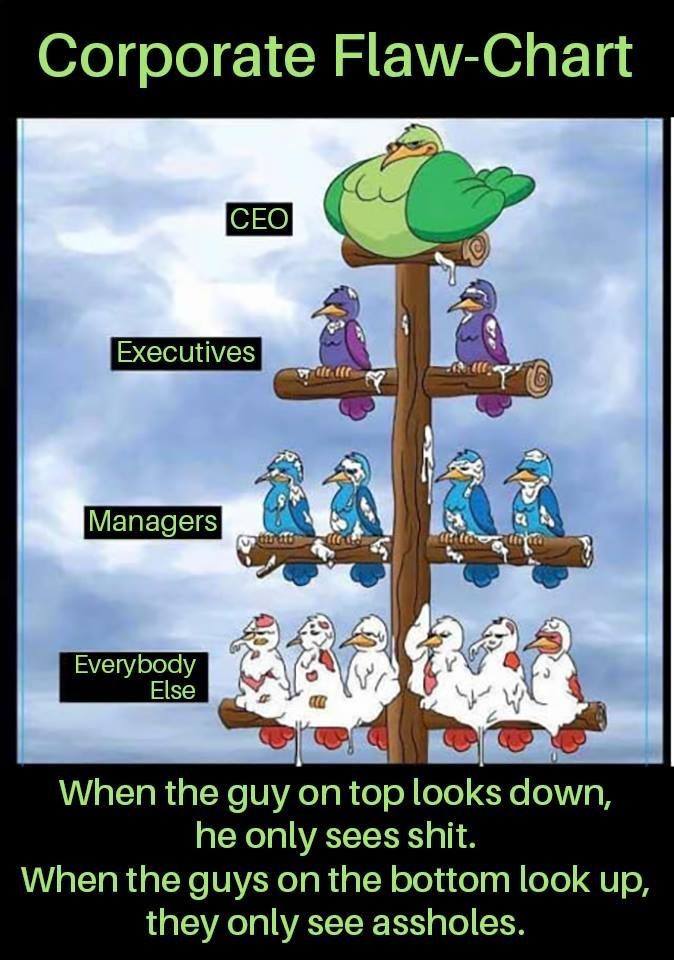
These are the worst experiences of anyone’s communications career.  They also regularly put the company behind the curve with the relationship with the analyst.  I have only experienced this a couple of times, but they are burned into my memory as times I don’t want to relive.  Fortunately, I don’t work for or with any of these people anymore.

It almost every instance, it  is fueled by the over estimation by the executives of the importance of themselves.  These people also come in various flavors.head_up_ass
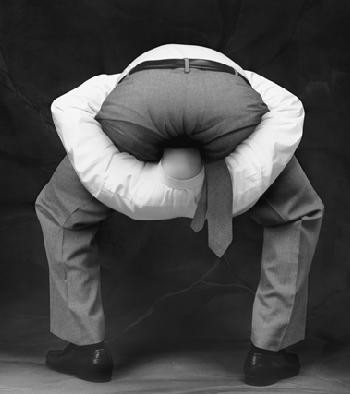
The Ugly Flavors

The Suits – These are people who have made it through the system via the Peter Principle. They pontificate, but aren’t well respected by anyone on either side and as with everyone in this category, are difficult to work with.  They are found out quickly by the analyst and it hurts the cause to come to the table with them.  Once, he called his assistant before a Forrester briefing to see if he could change his flight out so he could be home early and asked me to cut the analyst meeting short.  This was less than professional and was very hard to explain to the analysts why he obviously was blowing them off.

Another Suit (A former head of NetFinity and IGF named Callies) incident came up when I had landed one of the highest level press interviews of my career.  It was major media headline quality “Article of the Year” that anyone with half a brain would throw their best people and research at.  I had to pull the speaker (his lieutenant) from the Suit’s “staff” meeting.  The lieutenant was the best speaker I may have worked with and the Suit was one of the worst.  Said Suit wouldn’t let the speaker go to the briefing threatening him with “it’s only your job if you leave”, or I’m more important than anyone else.  As it usually happens with these types, I had to work around him to get the job done and got our name up in lights despite his efforts to torpedo any progress.

A different flavor suit flavor is described by Lou Gerstner in his book “Who Says Elephants Can’t Dance?”  He describes an executive who wrote memo’s on how to deal with him including what type of gum to have and how to set the clocks (pg. 32).   These are unusually high maintenance people who want celebrity treatment.  There is a good song about this syndrome, watch the video here. Adios reality.

The Terrorists

\

These people give me nightmares.  Almost everyone has worked with or heard about these tyrants.  Nothing you can do is right, nothing is good enough and the analyst is wrong because they are right.  This is different than the BAD  situation from above.  The BAD executive there is making a tough choice not to go with the analyst view, but it is well informed choice.  The terrorist doesn’t really care about outcomes or just doesn’t know, rather it’s about what they want and their career, power and usually their insecurity.  Every company has one and the main IBM terrorist, Sandy Carter has many dead bodies behind her quest to climb the ladder.  She made it up the chain and managed via the Dark Side as a corporate climber who both played favorites and pitted employees against each other.  We in communications had a support group for those who survived a term working for her and kept their job.  Once, I even wrote a press release for one of her female employees  just so she wouldn’t get fired, even though it never went out.  She personally set back diversity according to the women who worked for her.  I’ve rarely seen less respect for an executive.  When she got promoted, her employees were high fiving in the hallway that she was leaving.

No matter what the SJW’s try to redefine diversity rules to, the smart companies promote the best performers.

Sandy used to bring us through about 50 revisions of Powerpoint charts.  Most if not all changes were bad, but were done precisely as she had demanded.  We were later castigated with “why did you do this, I didn’t ask for it?”   She didn’t command much respect with the Press and Analysts who saw through this level (lack) of competency.  It was embarrassing to be in a press conference with her.  Although being a promoter of WITI,  she internally hurt the path for many women, and certainly made many question affirmative action and diversity policies at IBM.

Having to sweat through every meeting prior to and with an analyst is counter productive and has never lead to the results that could be achieved.

I’ve noticed that the terrorist is found out by press or analysts by many means.  Sometimes it is inconsistency in charts, sometimes it is through unusual calls and/or requests by A/R, many times it is through colleagues and sometimes it is through working with them enough times that you both understand that the executive is a terrorist, like Sandy.  None of the Press or Analysts had any respect for her, just like her employees.

I’ve had one other terrorist who is now the VP of External Relations.  I called him to warn him of a problem that a reporter alerted me to.  It is expected that you let the person in charge of an area know if there is an issue so that they can deal with it as it is their turf.  I was being the good employee (in my first 4 months) so I left a voicemail explaining the situation and doing the hand off so that I wasn’t infringing on another person’s PR territory.

I got a call back from this type A New Yorker (a former Ed Koch employee) who lambasted me for my efforts.  Apparently, he was insecure as he kept reminding me that he was the boss and I was a nobody.  Let me point out that this was not a morale booster for a new hire who was trying to do a good job and be a team player.  Such is the life of working with terrorist Communications leaders.  I found out later that he regularly abused most people who worked there.  He deducted IQ points from those in the South which is another form of anti-diversity and discrimination.  Most just refused to help him or stayed away so as not to have to deal with the chewing out.  I’ve personally witnessed them confessing that they didn’t want to help him because of his temper.  What a shame.

I checked LinkedIn and he’s gone from IBM like almost everyone mentioned here.  It’s too bad for the employee’s at the new company who have to work with Ed.

Terrorist’s can come with unrealistic expectations.  I to this day am not sure how to handle them.  In both cases, I chose to move on and out as quickly as I could.

SUMMARY

To be effective with press and analysts, you must be able to manage the executives.  Executives come with many styles.  It is imperative that you learn the style and manage it for effectiveness.

Since people are different, one must adapt to each person.   Just hope you get the good, deal with the bad and escape the ugly.  As for the terrorist, I advise grabbing a parachute and jumping.  The plane is usually going to crash anyways.

Here is a quote that sums it up terrorists for me: “They are simply a shiver looking for a spine to run up.” – Paul Keating

Update: SageCircle links here with a good post on improving executives.

For you Clint fans and movie buffs, here is the song and movie opening video.