
Category: IQ

How Racism and White Supremacy Are The New Godwin’s Law
Authors Note: I have a tendency to notice patterns in both a macro and micro universes. I’ve been watching this one brew for a while now.

FIRST, WHAT IS GODWIN’S LAW?

Reformulated in the Net.Legends FAQs “Usenet Rule #4”:
“Any off-topic mention of Hitler or Nazis will cause the thread it is mentioned in to come to an irrelevant and off-topic end very soon; every thread on Usenet has a constantly-increasing probability to contain such a mention.”
It is generally accepted that whoever is the first to play the “Hitler card” has lost the argument as well as any trace of respect, as having to resort to comparing your adversary to the most infamous mass-murdering dictator in history generally means you’ve run out of better arguments. Thus, once such a comparison is made, the thread is finished and whoever mentioned the Nazis has automatically lost whatever debate was in progress. This principle is itself frequently referred to as Godwin’s law.
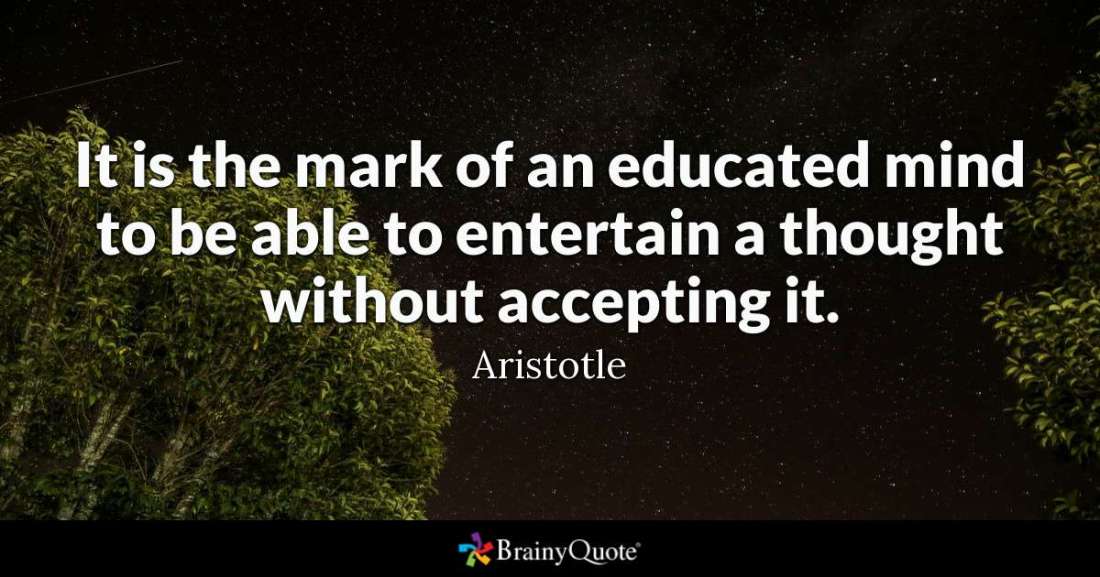
Disclaimer: This blog post does not take a position on racism, it’s prevalence, who is or isn’t or might be racist and my position on this subject. Aristotle noted that the mark of an educated mind is to entertain a thought without accepting it. Therefore I am observing a speech and behavioral pattern of the public. In other words it’s on them, not me.
It is also noted that a trait of people with a higher IQ is that you can argue from multiple perspectives (unfortunately so can lawyers and politicians who may or may not be of higher intelligence – especially politicians and especially millennial politicians).
The original Godwin’s Law has lost its’ sting since everyone is now Hitler, so the new talking point is racism or white supremacy. Rather than argue on the merits of the position of the person (political candidates mostly since they dominate the news) the go to is now calling the other person one of these two pejorative names. This constant overuse has devalued the meaning of the words and rendered them ineffective at worst and boring at best.

Here is a quick search that shows views from multiple points doing just this:
This is in direct conflict with Martin Luther King’s evocative phrase: “I look to a day when people will not be judged by the color of their skin, but by the content of their character.” Now, it is common to hear you are a racist or white supremacist because you don’t agree with me. It greatly devalues MLK’s position.
A General Definition of racism
1: a belief that race is the primary determinant of human traits and capacities and that racial differences produce an inherent superiority of a particular race, racial prejudice or discrimination.
While I could list any or all of the comments that have been made in public themselves could be racist in tone, one could make the case for or against whether the accused are really racist. Calling someone a racist is easy but proving most of these ad hominem attacks is harder.
One would need to know what is inside the person making the statements to know if it were really true or just talking points. I won’t and am not even sure if I can make that value judgement. These attacks are easy enough to find (see the media below).
This is not the point of this post. I am not here to call someone a racist or White supremacist (or Hitler), rather to point out a trend.
In the department of redundancy department, this discussion is that the replacement for Godwin’s Law is that you are not Hitler, instead you are racist for whatever reason or whatever you say.
Why is this the case? The overuse of Godwin’s Law has made it impotent in political circles, the media and on social media platforms. Hitler stands with few others in history, perhaps Mao, Stalin or Pol Pot as true villains. Nobody really believes that the other person is like Hitler, they are just trying to make the worst case as they flush their argument down the toilet due to lack of substance.
HOW TO WIN YOUR POLITICAL RACE OR PUT YOUR OPPONENT ON THE DEFENSIVE WITHOUT TAKING A POSITION
What most of the accusers are doing is described in Saul Alinsky’s Rules for Radicals numbers 7-13 as follows:
- “Keep the pressure on.”
- “The threat is usually more terrifying than the thing itself.”
- “The major premise for tactics is the development of operations that will maintain a constant pressure upon the opposition.”
- “If you push a negative hard and deep enough it will break through into its counterside.”
- “The price of a successful attack is a constructive alternative.”
Rather than argue on a platform, beliefs and issues, it is far easier to make your opponent defend themselves, and put them off their talking points.
Example: Candidate 1) If elected, I’ll lower taxes if elected (insert any issue here because it’s about to be destroyed).
Candidate 2) my opponent is Hitler and molests collies.
Press coverage: Candidate 1 is a well known collie molester. How long has this person been molesting Collies? The first question in the next debate; Candidate 1, are you still molesting Collies?
Now insert the word racist or white supremacist for molesting collies and you get the point of why this is effective.
- “Pick the target, freeze it, personalize it, and polarize it.”
HOW THE PRESS BECOMES AN ENABLER
A common adage is that sex sells, as do murders, rapes, political embarrassments and anything not good news. Guess what they will print (hint: collie molester)?
A not so recent trend is that there is a common thread where a preponderance of reporters has similar talking points concurrently. There is a groupthink that causes the media to focus on a particular phrase, word or subject. Like piranha on carcass, they hammer it home. https://www.google.com/search?q=why+do+news+anchors+say+the+same+thing&sa=X&ved=2ahUKEwim9dyQxv3jAhWFB80KHeyQAE0Q1QIoAHoECAsQAQ&biw=1440&bih=825
Since the new go to in Godwin’s Law is you are a racist and/or white supremacist, it makes for headlines that sell advertising. I can also be taken as ideological. This is the de-facto statement now to the point that it has lost effectiveness.
Having spent decades working with (and against) all forms of media, they have a tendency to take the position of them being right, even if proven wrong. A correction is meaningless as once a statement is printed, it is still in the minds of the reader. Almost no one reads the corrections.
Most are journalists who write about a topic because it is assigned to them. In the case of social media everyone thinks they have the moral high ground.
SOCIAL MEDIA
I’m not going to spend much time here, because most people have gotten into an Internet argument. Nobody wins unless the motive of one of the combatants is to piss off the other. It won’t matter how factual your argument is because it is just Internet road rage.
If you go to the above link, you see the outcome and great advice on how to handle this.
So the net result of overusing this theme is the same thing that happens with all overuse. Godwin’s Law is becoming meaningless. The definition of what racism really is and when the word should be used to protect the oppressed has been damaged. Even Alinsky’s Rules for Radicals suffers from overuse and tediousness.
The political landscape is a train wreck of who can sling the most mud. Watch the ratings nosedive for upcoming debates.
Stay out of it on Social Media except to observe who isn’t smart enough to stay out of this pool. With each use of the attack, the meaning becomes less valid and meaningful.
I thought about calling someone a racist instead of Hitler the Simonds Law, since I haven’t found this discussion fully hashed out, but I’d rather be associated with something more positive.
Everyone is a loser who engages in this behavior. My advice is grow up or be better educated to discuss your position better than: you are Hitler/racist/white supremacist and whatever the next insult is.
It used to be that to call someone Hitler was the ultimate insult, albeit the indication that the argument is lost. Has calling them a racist and/or a white supremacist suffered the same fate?
Share this:

What It’s Like To Have An Extremely High IQ?
Editors note: Since I published this, the comments have been coming in and are now far better than the blog post. I encourage you to read about the lives and struggles of those who have high IQ. Their stories are quite revealing.-> It’s in the comments, hint, hint, hint.
Authors disclosure: I won’t disclose where I am on the IQ chart, but I do have some in my family with very high IQ. My father had a gigantic IQ. Here are the stories of those with high IQ and their travails. See if you identify with any of them.
The blog post actually starts here. It is a compilation of individuals with their names mostly redacted who have written about the travails of a high IQ:
Johann Wolfgang von Goethe – “The intelligent man finds almost everything ridiculous, the sensible man hardly anything.”
Update: 10/3/16 from Alison Craig
It sounds like you are in the beginning stages of an existentialist crisis. http://plato.stanford.edu/entrie… I know the word “crisis” looks alarming, but it shouldn’t. In this case it just means you are examining the point of your own existence. Will I always be alone? Why am I here? Eventually you may even question all existence and come to the seemingly frightening conclusion that we’re all born alone and die alone and nothing in life has purpose.
“Well, that’s horrible! You’re depressing, why would you say such things?”
Again, I repeat- it is nothing to be alarmed about. Those things are true – to a degree. We are born alone and die alone, but we work to make connections with people who can support us, and that we can support in return. Intelligent or not, there will always be like minded people in the world somewhere and they are never easy to find for anyone. To me, making those connections is why I am here and is a large part of my purpose.
No matter how intelligent, wealthy or attractive a person is – it can always be difficult to find true connections so that all of the sharing and giving is not a one way street. Intelligent people may have stricter standards for making friends (in fashion or other), but so might a wealthy person, or a very attractive one. All people fear being used and some are just more cautious than others. An intelligent person can read books on understanding human nature ( Ten Keys to Handling Unreasonable & Difficult People), body language Psychology Today and other psychology tools to assist them in making life long connections with other people.
===============================================
From Shah Rukh Qasim on hiding your intelligence:
If you could generalize, the most common would be:
- You keep talking to a person, telling him something you think he doesn’t know. He keeps listening. Then he shares his insight which makes you think he has already known everything you told him. Smart people at often silent and active listeners.
Other signs will include:
- Good problem solvers. Not just mathematics problem. But even daily life problems. They’ll quickly find what’s wrong and take the best course of action to solve the problem.
- They’ll be different in views. And their views will always come with reason. A quote goes around: Small minds discuss people. Average mind discuss events. Great minds discuss ideas.
- “A fool thinks himself to be wise, but a wise man knows himself to be a fool.” – William Shakespeare
- They often look for reasons. It goes in four levels (worst to best):
- What?
- How?
=========================================
It sucked when I was younger, but these days it’s just awesome.
There is a very common pattern among highly gifted people, namely:
- When you’re young it’s very isolating, and it feels like everyone else is just stupid
- As you grow older, you realize your gift. You also realize that raw intelligence isn’t everything, and that things like social skills matter a lot. Plus, you meet others like you.
- Your social life improves as you get older and learn to connect on things other than intelligence or go to elite institutions where you can meet other highly gifted people.
Honestly, at this point in my life I feel like there are literally no downsides to having a high IQ. It’s like being born good looking or with great physical health: it’s not a silver bullet to a happy life, but it makes a lot of things much easier.
I only found out I had a high IQ (161) because my professional life was such a mess I had to see a psychologist.
If I had to sum it up in a few sentences, I would say that the most aggravating thing about being very intelligent is that you quickly see and understand things at a level of depth that most people don’t (or can’t), and it is very frustrating. You want to move on, you want to be pushed, you don’t want to spend time explaining the details of things you have already grasped, but no one else is caught up yet, so you have to pause. It is particularly painful when dealing with complex topics where the mental models involve feedback loops and non-linearities.
But that said, I’ve learned there is much more to life than intelligence, and being successful is more about hard work and good communication skills than anything else.
====================================================
“One of the indictments of civilizations is that happiness and intelligence are so rarely found in the same person.”
Working successfully in society and business is limited by some really important social choke points. One of them is that other people, even if they are intellectually slower, must be treated with respect. Another is that even if you are correct you will have difficulty getting people to act on your insights until they understand why you are correct. A third thing is that most important activities are done as a team and so taking action requires breaking down your insights into something that your slower peers and employees can understand. If you try to blow past these choke points you will destroy relationships and even if you are right, your career will languish. I try to remind myself that being successful is not well correlated to being right.
My career is going pretty well now that I’ve understood these constraints. It is possible to turn intelligence to practical life-advantage but our educational system doesn’t really give a blueprint for this. I left school thinking that it mattered that I understood things 5 minutes or 5 years before my classmates did. It doesn’t. Most people’s functioning adult lives are not spent solving tough problems. They are spent going through well established rituals and patterns of relating to each other punctuated by an occasional tough problem. In most cases, people can even skip the tough problems and still do okay in life. So how do you convert a parlor trick (like knowing the ending of a movie after 5 minutes) into something that will make you happier? Mostly, you don’t. Use it when it’s valuable and relax a little when it’s not.
There’s a great Dilbert where someone invites him to join the company’s Mensa chapter and Dilbert asks why people who are so smart continue to work at the company. The president of the Mensa chapter answers, “Intelligence has much less practical application than you’d think.”
==========================================
In a word, I find it alienating.
Extremely so, in fact.
And I think this is not only because of what makes me “smart”, but also because of what my brain has to sacrifice to be “smart” in that way. (More on that in a sec.)
For the record, my IQ was measured (years ago) at 178. [ETA: Just looked up the percentile, and that’s about 1 in 2 million, for some perspective.] I have 3 advanced degrees and a solid career. But I’m still single and spend very little time around other people.
It took me some time as a young kid to figure out that the people around me weren’t interested in the same things I was. And that, often, to talk about the things I found interesting turned people away.
So I hid that.
When they announced that I was valedictorian of my high school, I was in 1st period art class, and one of my classmates refused to believe that they’d said my name.
But I never felt like I belonged anywhere, and I still don’t.
I don’t have kids, TV doesn’t interest me, I don’t follow celebrities or watch sports. My time is spent with my work, and researching the things that are important to me — astrophysics, particle physics, consciousness research, and although this might seem strange to some people, Biblical scholarship (tho I’m not a believer).
As a result, chit-chat is impossible for me, or else it’s so boring that it becomes impossible.
But like I said, the problem isn’t only that my brain is interested in things that most other brains aren’t. It’s also what my brain can’t do.
There’s only a certain amount of space in the brain, and if one area is eating up the real estate with more neural power, some other part of the brain is likely losing out.
For me, it’s some of the automatic social functioning which tells you, for example, what emotion another person is feeling based on their facial expression, or whether someone’s being sarcastic or not. (Sarcasm is a minefield for me, and meeting another person in a hallway is a nightmare — I cannot interpret when to look, or not, what to say, or not, etc.)
That said, I have an enormously rich life, and I’ve adjusted to it. When I stopped trying to fit in, things got better.
=============================================
HOWEVER…..STUPID IS AS STUPID DOES
The smart can do stupid things such as:
- Ignoring the importance of design and style – When the iPod originally came out, technical people complained about its lack of features and perceived high price (“ooh, who cares about another MP3 player, I can go buy one at Best Buy for $50” http://forums.macrumors.com/show…). In the meantime, it was so cool and easy to use that normal people went out in droves to buy it.
- Using terrible tools, and taking pride in their awfulness – Especially common with programmers, who take pride in using programming languages and text editors that have been designed by programmers, not updated since the 1970s, and never touched by anyone with a modicum of design sense. They believe that mastering arcane, overcomplicated commands and processes are a mark of pride, rather than a waste of time. I will refrain from singling out specific programming languages and tools here, because smart people also like to get caught up in pointless flame wars about this sort of thing.
- Following the pack – Many smart people often seem to be followers, probably because they grow up spending so much time pleasing others via academic and extracurricular achievement that they never figure out what they really like to work on or try anything unique. Smart people from top schools tend to flock into the same few elite fields, as they try to keep on achieving what other people think they should achieve, rather than figuring out whatever it is they intrinsically want to do.
- Failing to develop social skills – Some smart people focus exclusively on their narrow area of interest and never realize that everything important in life is accomplished through other people. They never try to improve their social skills, learn to network, or self promote, and often denigrate people who excel in these areas. If you are already a good engineer you are going to get 10x the return on time spent improving how you relate to other people compared to learning the next cool tool.
- Focusing on being right above all else – Many smart people act as if being right trumps all else, and go around bluntly letting people know when they are wrong, as if this will somehow endear others to them. They also believe that they can change other people’s minds through argument and facts, ignoring how emotional and irrational people actually are when it comes to making decisions or adopting beliefs.
- Letting success in one area lead to overconfidence in others – Smart people sometimes think that just because they are expert in their field, they are automatically qualified in areas about which they know nothing. For instance, doctors have a reputation as being bad investors: http://medicaleconomics.modernme….
- Underrating effort and practice – For smart people, many things come easily without much effort. They’re constantly praised for “being smart” whenever they do anything well. The danger is that they become so reliant on feeling smart and having people praise them, that they avoid doing anything that they’re not immediately great at. They start to believe that if you’re not good at something from the beginning, you’re destined to always be terrible at it, and the thing isn’t worth doing. These smart people fail to further develop their natural talents and eventually fall behind others who, while less initially talented, weren’t as invested in “being smart” and instead spent more time practicing. http://nymag.com/news/features/2…
- Engaging in zero sum competitions with other smart people – Many smart people tend to flock to fields which are already saturated with other smart people. Only a limited number of people can become a top investment banker, law partner, Fortune 500 CEO, humanities professor, or Jeopardy champion. Yet smart people let themselves be funneled into these fields and relentlessly compete with each other for limited slots. They all but ignore other areas where they could be successful, and that are less overrun by super-smart people. Instead of thinking outside the box, smart people often think well within a box, a very competitive box that has been set up by other people and institutions to further someone else’s interests at the expense of the smart person.
- Excessively focusing on comparing their achievements with others – Smart people who have been raised in a typical achievement-focused family or school can get anxious about achievement to the point of ridiculousness. This leads to people earnestly asking questions like: Success: If I haven’t succeeded in my mid 20s, could I be successful in the rest of my life? and Are you a failure if you are not a billionaire by age 30? What about 40?
- Ignoring diminishing returns on information – Smart people are often voracious readers and can absorb huge quantities of information on any subject. They get caught up in reading every last bit of information on subjects that interest them, like investing, lifehacking, or tech specs of products they’re planning on buying. While some information is useful in making a decision, poring through the vast amount of information available online can be a waste of time. They end up spending a lot of time gathering information without taking action.
- Elitism – Smart people often use smartness as measure of the entire worth of a person. They fail to see the value in or even relate with people who are different. This is illustrated by the Yale professor who doesn’t have the slightest idea what to say to his plumber: http://www.theamericanscholar.or…. And questions like Am I an elitist to think that most people are stupid?
Share this:

Cyclic Numbers, Interesting Math Fun
Not really a joke … just a tiny bit of math fun.
142857 is a cyclic number – its digits always appear in the same order but will rotate around when multiplied by any number from 1 to 6:
142857 x 1 = 142857
142857 x 2 = 285714
142857 x 3 = 428571
142857 x 4 = 571428
142857 x 5 = 714285
142857 x 6 = 857142Pretty cool, huh? Now multiply 142857 by 7. (Spoiler below.)
142857 x 7 = 999999
Share this:

How Do High IQ People Read Books
Note: intelligent people generally read a lot. There are many ways to read a book. Authors read for story arc’s, character profile and emotional connection.
Many people learn from textbooks, but for general reading, here is a good list I found on how high IQ people read:
1) Find a personal angle: You need to relate to what you’re reading
2) Get a bird’s eye view: Get the basic outline of the book by skimming through the table of contents (and the rest of the book); try finding a central theme
3) Drum up curiosity: Draft a few “curiosity questions” based on the theme; consider these questions as you read the book
4) Create your own structure: Identify key points in the book and leave space for you to take in-depth notes
5) Record key insights: Take in-depth notes based on the elements you mentioned in Step 4; think about what the “Takeaway Message” is.
6) Review your notes: Now that you have a summary you have created in your own words, it’s now time to review; try to remember the details related to the messages you recorded 10 minutes, 2 days, 1 week after finishing the book.
7) Repeat with another book.
Here is the link to this list.
Share this:

High IQ Humor – Acute Joke Geometry Style

Share this:

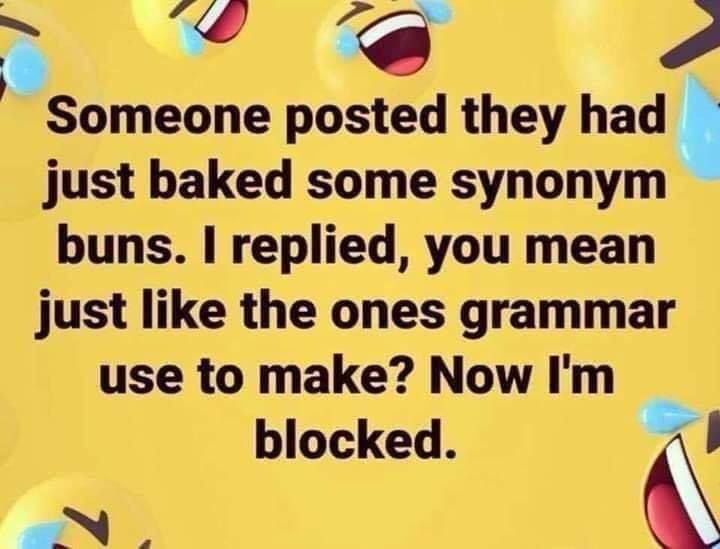
Grammar Humor
Share this:

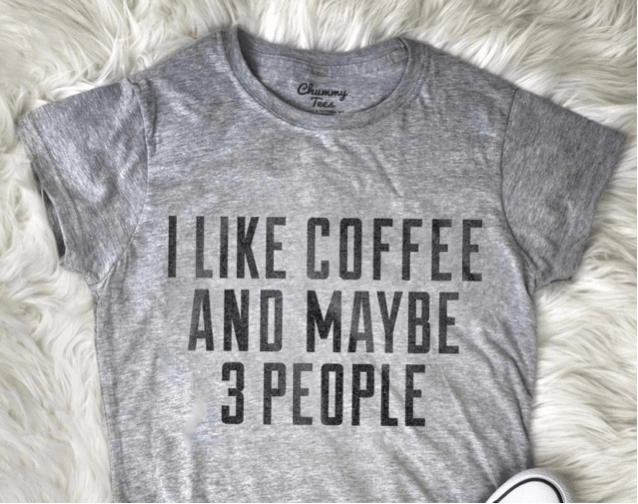
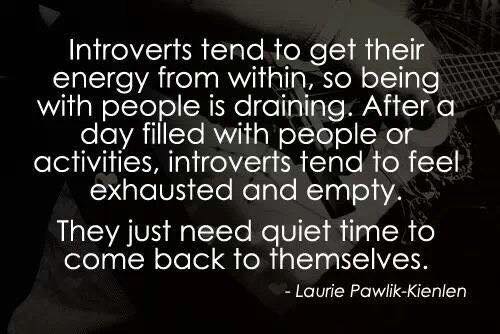
Introvert Meme’s and Cartoons, But They Say Everything Extroverts Should Know (stop trying to change us)


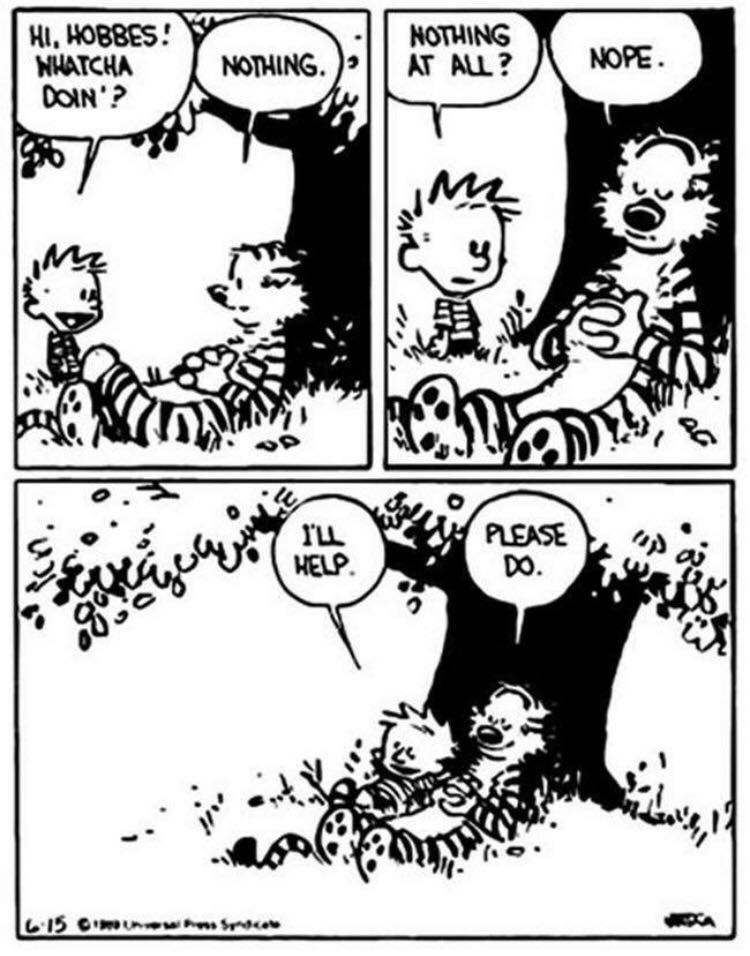

High IQ Humor – You Matter
Share this:

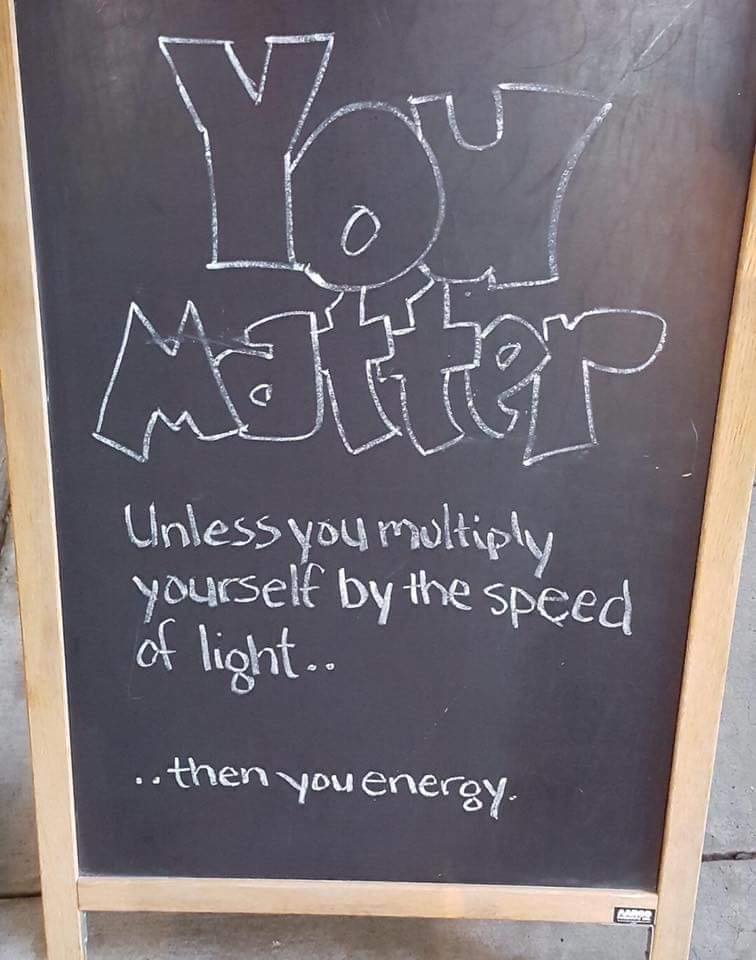
Aristotle Comments On How We Should Observe Politics, Social Media and Most Things That People Want To Be Offended From
Share this:

The Circle Game – Childhood Games That Are Still Fun, Punch You I Will

Even though I like to write about intellectual subjects, this one will have nothing to do with that.
Disclaimer: This game has been around for decades. It is not the somehow now bad OK sign that the evil PC police have condemned. When it was invented, no one cared about the OK sign. FWIW, the circle is upside down in this game. The PC SJW’s are dumbasses because a Reddit joke that trolled people by saying it was some supremacist sign. The woke fell for it immediately because they want to cancel any fun.
If you know or have played the game, you will get this whole post without reading it, but I’m posting for those who do not get it.
I searched this on the Interweb and it stated that this started in the 1980’s. Since I was in middle school way before this I’m calling BS and guessing that those before me have played it for 50 years.
So when I saw these examples, I knew what it was and it took me back to childhood, but I understood it without explanation.
The rules of the game are here:
Basically, you get someone to look at the circle below your waist against their will and you get to punch them.
It’s a game designed to be able to hit your friends and have them be ok with it.
The link provides other instructions like breaking the circle and not brushing it off, but they are just variations on being able to punch your friend.
We took it to all kinds of limits like drawing circles on the floor and other variations, but it’s simple.
I like all of these meme’s, but Darth Vader is my favorite. Readers like the volleyball girl the best if you look at how many times it’s been downloaded off this post.

I think the girl is giving a sign as to the play to make, but if not, it’s a really good Internet punch.

The Walmart guy is funny on many lev els.
els.
The black hole circle is a Universal punch.
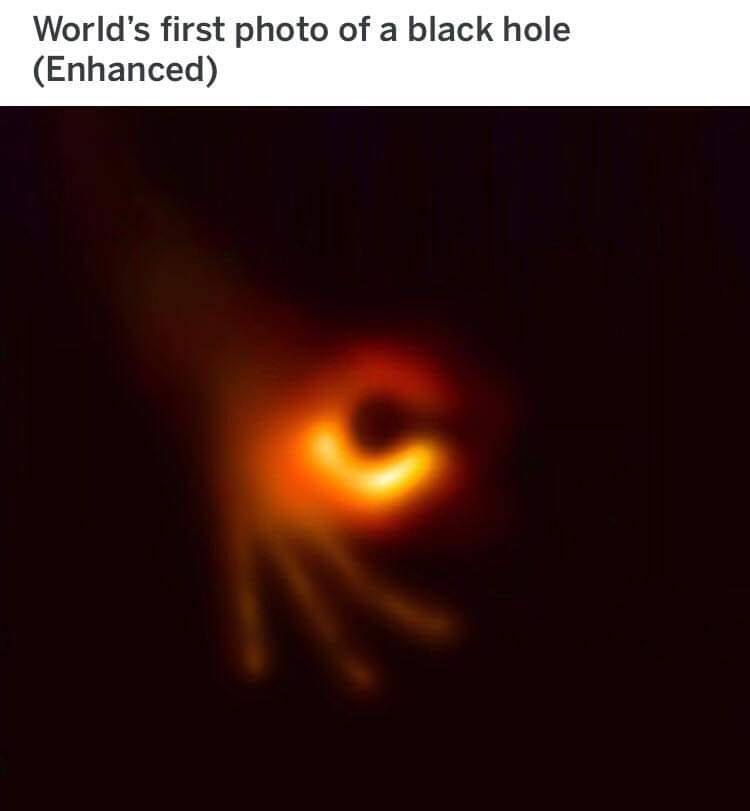
The duck is just funny.



I found a new one that isn’t really meant to be in the circle game, but is.

Share this:

Social Media, Ruining Your Life Part 2
I recently posted how Social Media is probably making your life worse, especially those who have to look anything up to know everything. Even more, those whose lives and feelings are governed by their online image and how many likes they got vs. others are losing out on life to a device.
The other issue is having your face buried in your phone while walking. You are clueless to the world around you. See the video above.
UPDATE: Getting Cosmetic Surgery for Snapchat Dysmorphia
This is by far the most narcissistic thing I’ve read. People (tide pod eaters) are getting surgery to look like the filters they use on their Snapchat because they don’t look good enough in life because it is wreaking havoc on their self-esteem. The report in the journal JAMA Facial Plastic Surgery claims that these filters can sometimes trigger body dysmorphic disorder, a mental illness that can lead to compulsive tendencies and unnecessary beauty procedures, among other negative outcomes.
A study in the American Journal of Preventive Medicine found that people who were regular users of social media were twice as likely to feel lonely than those that were light users.
Another study released found that social media, especially Instagram, deepened feelings of anxiety and inadequacy for 15 to 24 year olds.
Go play outside and leave your phone in your pocket. Also, don’t live your life on social media and you won’t be so self-obsessed.
UPDATE: A study came out stating that good social media don’t out weigh the bad:
(Reuters Health) – For young adults, the adverse effect of negative social media experiences on mental health outweigh any potential benefits of positive experiences, a study of university students suggests.
Each 10 percent increase in a student’s negative experiences on social media was associated with a 20 percent increase in the odds of depressive symptoms, researchers found.
But positive experiences on social media were only weakly linked to lower depressive symptoms. Each 10 percent increase in positive social media interaction was associated with only a four percent drop in depressive symptoms – a difference so small that it might have been due to chance.
“This is not inconsistent with the way we see things in the offline world . . . The negative things we encounter in the world count more than positive ones,” said study leader Brian A. Primack, director of the Center for Research on Media, Technology and Health at the University of Pittsburgh in Pennsylvania.
“If you have four different classes in college, the fourth class that you did poorly in probably took up all your mental energy,” he told Reuters Health by phone.
Primack said he believes social media lends itself to negativity bias because it is saturated with positive experiences that leave people jaded.
YOU ARE BEING WATCHED
I talked with friends at the gym who are or were in law enforcement In cop terms they are always made by others because they are constantly looking around. They are aware of their environment, potential danger, potentially dangerous people and escape routes. As you can see in the video of fails, these people are vulnerable to all of the above.
Guess how else you are vulnerable with your head buried in a screen? It doesn’t take a genius to know that Facebook, Google, Amazon and every other site is not only tracking your clicks, but are tracking where you go and what you do.
We used to have instructions, a map and intuition to get where we were going and for the most part, we got there. millennial’s can’t get to the 7-11 without Google Maps now. It’s also funny how they can know everything, but have knowledge of very little. Take away their phone and not only would they not run into things, they’d have to actually learn about how things really work and how to navigate (I’m not discriminating here, I know directionally challenged relatives my age who fall into this category). Looking up something on your phone doesn’t make you smart.
YOU ARE GIVING THE PERV’S A FREE TICKET
I’m not in law enforcement, but I put my phone away and watch others, especially those watching girls. It’s almost a sport. It used to be if a guy was looking in the wrong part of a girl, they got busted immediately. It was like watching a tennis match seeing the heads turn when a cute girl walked by. They had to use mirrored sunglasses and just glance when they could and not let their wives/girlfriends catch them. Now, instead of having to glance behind sunglasses, the perv’s just look down or up (or up and down) anyone they want and modesty just goes out the window. It’s truly tasteless, but if you had your head out of the phone, you wouldn’t be getting eyeballed so lasciviously.
GET A LIFE
It’s amazing to watch people now escape to their phone in what used to be a social situation. So stop running into things and get a life.
FACEBOOK IS DESIGNED TO EXPLOIT HUMAN VULNERABILITIES
Recently, former Facebook president Sean Parker pointed out how Facebook is hurting people.
When Facebook was getting going, I had these people who would come up to me and they would say, ‘I’m not on social media.’ And I would say, ‘OK. You know, you will be. And then they would say, ‘No, no, no. I value my real-life interactions. I value the moment. I value presence. I value intimacy.’ And I would say, … ‘We’ll get you eventually.’
Parker discussed the possible psychological effects of social media and Facebook in particular, especially for children who are now growing up in a digitally connected age:
I don’t know if I really understood the consequences of what I was saying, because [of] the unintended consequences of a network when it grows to a billion or 2 billion people and … it literally changes your relationship with society, with each other … It probably interferes with productivity in weird ways. God only knows what it’s doing to our children’s brains.
The former Facebook President discussed the company’s initial aim, which was mainly centered around drawing in and building their audience:
The thought process that went into building these applications, Facebook being the first of them, … was all about: ‘How do we consume as much of your time and conscious attention as possible?’ And that means that we need to sort of give you a little dopamine hit every once in a while, because someone liked or commented on a photo or a post or whatever. And that’s going to get you to contribute more content, and that’s going to get you … more likes and comments.
Parker described Facebook’s appeal as a “social-validation feedback loop” which exploits human psychology to keep users coming back to the app:
It’s a social-validation feedback loop … exactly the kind of thing that a hacker like myself would come up with, because you’re exploiting a vulnerability in human psychology. The inventors, creators — it’s me, it’s Mark [Zuckerberg], it’s Kevin Systrom on Instagram, it’s all of these people — understood this consciously. And we did it anyway.
Parker also briefly discussed how his vast wealth is likely to allow him to live longer than the average person due to advances in medical science
Share this:

Social Media, Making Your Life Worse Just By Using It, And it Proves Sturgeon’s Law
I tend to notice trends early. I quit Twitter 4 years ago as soon as work didn’t (unofficially) require it. Almost every time I used it, the conversation degraded by the 3rd or 4th tweet into something political, followed by unsubstantiated name calling. You have to have a thick skin and a terse personality to want to survive out there.
A few years later I tried helping a friend get on Facebook and we both decided that it was like a high school reunion, or being in high school where you make up stuff to seem like your life is better than others. He finally told me to stop and to not put him on. At that point it dawned on me that most of social media falls under Sturgeon’s Law:
Sturgeon’s Law: 90% of everything is crap.
There might be a corollary that 99% of social media is crap.
The trend I noticed besides people acting false was that I never felt better after being on twitter and I loathe Facebook for the same reason. This was 5-8 years ago and now the studies are coming out proving what I noticed.
A recent article in the USA today talked about another high schoolish trend, mob mentality.
Social media also has polluted our more general life, with the ability to form online mobs increasing, as Prof. Glenn Reynolds aka Instapundit recently wrote in USA Today:
People enjoy forming mobs. Mobs allow people to do things they’d be afraid to do on their own, to steal, to hurt and kill, to burn and destroy — and also to feel set free from the bonds of civil society, to experience a kind of atavistic catharsis, a feeling of power and a solidarity with their fellow rioters, in a way that’s otherwise difficult to achieve, especially without suffering serious consequences….
But now there’s a new kind of mob, an online mob. And judging by the events of the past week, this new mob is becoming a more frequent problem. Part of that is because it’s easier (and safer) to be part of an online mob than one in the real world.
Joining a real mob requires you to leave your house, go somewhere else, and experience risks and discomforts. Joining an online mob can be done from an easy chair at home.
There are times that I post something and bizarre comments come it, so much so that I have to moderate them according to the policy on the sidebar. Some just violate the policy too much. It’s like twitter, if it can get political it usually does. Since I’ve posted a lot about the military and patriotism, I caught a lot of crap.
I read a blog post by Legal Insurrection that noted the increase in suicides and the link that may exist between the two.
A New, More Rigorous Study Confirms: The More You Use Facebook, the Worse You Feel
Social Media and Teen Depression: The Two Go Hand-In-Hand
Rise in teen suicide connected to social media popularity: study
Suicide rate’s increase can be tied to social media, technology: Dr. Marc Siegel
Using Many Social Media Platforms Linked With Depression, Anxiety Risk
Why don’t people just put it down? It looks to be like the new next cigarette, just as addictive and equally as bad for you.
As for me, I can go about my day enjoying not getting into useless tweet storms and having my head glued to my phone. Hell, I won’t even put Facebook on because I don’t want them in my life.
I’d like to say the higher IQ people would be immune to this, but it’s not true. They are just as susceptible to this and it goes under things they shouldn’t do.
WHAT FACEBOOK KNOWS AND IT ISN’T TELLING YOU
It preys on Women’s emotions and other mind altering and interfering techniques and the company KNOWS THAT IT IS DOING IT.
Even former Facebook President Sean Parker realizes the pitfalls of Facebook:
The former Facebook President discussed the company’s initial aim, which was mainly centered around drawing in and building their audience:
The thought process that went into building these applications, Facebook being the first of them, … was all about: ‘How do we consume as much of your time and conscious attention as possible?’ And that means that we need to sort of give you a little dopamine hit every once in a while, because someone liked or commented on a photo or a post or whatever. And that’s going to get you to contribute more content, and that’s going to get you … more likes and comments.
Parker described Facebook’s appeal as a “social-validation feedback loop” which exploits human psychology to keep users coming back to the app:
It’s a social-validation feedback loop … exactly the kind of thing that a hacker like myself would come up with, because you’re exploiting a vulnerability in human psychology. The inventors, creators — it’s me, it’s Mark [Zuckerberg], it’s Kevin Systrom on Instagram, it’s all of these people — understood this consciously. And we did it anyway.
Comments such as this from Facebook former President, combined with Facebook’s mishandling of user data, has led to a greater level of distrust around the company. What was previously seen as just a website by many users was becoming better known as a data collection company.
It turns out that platforms like Facebook are the “Junk Food For the Soul”. In other words crap that isn’t good for you.
THE CESSPOOL OF HATE AND DISCRIMINATION BY TWITTER
Just say something, anything and pretty soon it can turn into a hate storm if you offend someone or anyone. I saw someone post here’s a picture of a rock, let the arguing begin just to prove it and it did.
When I check I often find that a user who has blocked me is someone I have never interacted with. So why the block? Often, it’s due to being on a block list created by a liberal activist group. Twitter supports block lists and makes it easy for users to mass-block entire universes of people they don’t even know.
But Twitter now uses factors such as the number of people who have blocked an account to determine whether to classify it as “low quality” content. The company also uses the number of complaints or reports on the account. If the number of these exceeds certain thresholds, an account can be deemed low quality and access to tweets from that user are severely diminished.
I couldn’t wait to leave that platform of time-wasting and hate and my life is better because of it.
Share this:

High IQ Humor – Math Version
 Hat tip to What’s Up With That
Share this:

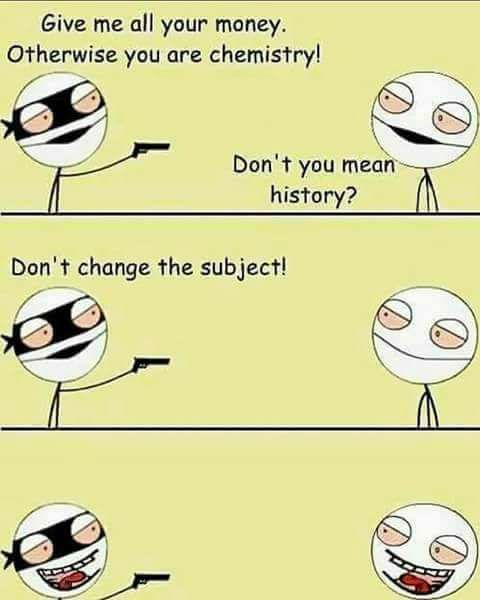
High IQ Humor, Or Grammar Junkies
Share this:

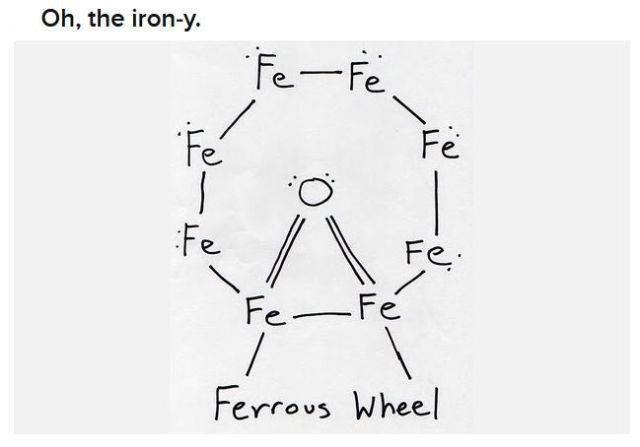
Ferrous Wheel – High IQ Humor
I saw this on the Interweb. Those either quirky enough, with a certain strain of humor; or perhaps Chemistry, Geology or similar majors will get it.
Share this:

The Real Nature Of Freedom, Economic and Political and the Interrelationship Between The Two
In these days of divisiveness, there are some facts based on economics that are hard to refute, even if you don’t want to admit it. I enjoy discussion by people of high IQ and of great wisdom, something the world of Political Correctness is sadly overlooking.
Share this:

What You Had To Know In 1910 To Pass The 8th Grade Test
For my fellow High IQ readers, see how you would do on this test. It’s not are you as smart as a 5th grader. No, it’s much tougher. No wonder that our public school system is turning out under educated students. It appears that not only did our ancestors have to walk to school in the snow, they had to actually learn more than google on a smart phone.
Perhaps if they could pass this test, they wouldn’t have as much time to spend on Facebook, Instagram and Snapchat.
Press on.

Share this:

Indicator That Harvard Might Not Be A Good Place To Study For Intellectuals
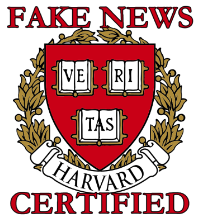
This post was supposed to fall in the intellectual category for people to decide if Harvard has the qualities that high IQ people still desire (such as being able to see/argue multiple sides of an issue). They have managed to ruin any hope of defending both sides of an issue given the updates as you read them below. I’ll leave it for those who may be on the fence, and wish them the best in their decision.
Original Post Begins Here
If you look at the previous post, you will see some of the traits you might have indicating a high intellect.
One of them is the ability to see and argue from multiple perspectives. To have this trait, you have to shut out ideological thinking or persuasiveness of others before developing a hypothesis. Many have preconceived thoughts on a subject, political stance or values influenced by others rather than examining all aspects of a subject. In other words, they read one side of a subject on the Internet and believe what they want to. Everyone has a bias, but one needs to come to problems with an open mind and use facts and history to evaluate the solution otherwise you run at least a 50% chance of being wrong.

Harvard has released their list of Fake News sites. This is a popular subject given the 2016 Presidential election. If you look at the coverage and predictions of the various news sites, you can come to a conclusion which ones were actually wrong (based on forecasts, coverage and predictions) and if their coverage was biased or indeed “Fake News”. You have to make up your own mind where you stand on this. I am not saying their position is necessarily wrong, rather questioning their intelligence.
The list is decidedly one-sided, showing a bias. This is unfortunate. Again, readers have to decide if this is correct or not. No one or news institution is right or wrong 100% of the time.
In fair disclosure, one trait may indicate nothing, or it may be the bread crumb down the trail of truth if they are the institution they claim to be. Once more, each must reach his or her own conclusion. I show later in the post how I came to my decision about the title based more on empirical evidence.
Given the perceived prestige that comes with a Harvard degree (note: I did not say education), one would hope that the inflated price for such would be well spent money. It would appear that their logic in such a one-sided position on what is “Fake News” doesn’t indicate that they show this intellectual trait. You take a chance where to get an education or where you send your kids. One just hopes that it is the right decision. Since almost every decision is a cost/benefit analysis in your mind, one now must question if it is worth it. Maybe your kid isn’t really an intellectual so the point might be moot.
I realize that you can develop relationships with power people at college that can advance a successful career. It is not the point of this discussion. I am merely observing a perceived status and whether it is justified or not.
Update: Harvard now supports segregation. MLK would not have wanted this.
Update: Harvard Grad students have organized themselves to start a resistance school.
Update: Students don’t understand the danger of ISIS.
Update: You can now submit a rap album as a senior thesis instead of actual academic work.
Update: Harvard discriminates, avoids meritocracy and endorses legacy of the privileged
The grad students, who consider themselves a progressive version of “Dumbledore’s Army,” have enlisted former Obama staffers to teach the class sessions. The syllabus includes readings on “Black-Palestinian Queer Reciprocal Solidarity.”
They have decidedly taken a position of only viewing issues from one side. One should greatly question the concept of critical thinking ability being taught there. For those of us who can balance multiple views of the same subject, it is clear that these snowflakes will be under-educated and might be damaged goods in the marketplace of talent.
I formed my own opinion having worked for decades with Ivy League educated employees, albeit somewhat weighted towards Harvard and Columbia. It was made exceedingly clear by a PR flak who after having worked with a number of Harvard MBA’s stated that they had obviously wasted their money on their education. We were working for a prestigious company that attracts genius level talent. She showed remarkable intuition that caused me to further observe the Ivy’s. The majority didn’t last as they had a piece of paper saying that they should be smart, but lacked an education in people or the understanding that life is a series of challenges and hurdles.
Some of the most successful executives and workers I’ve encountered didn’t rely on their degree in school, rather what they learned in life and how they applied it to the next problem.
While history reveals that many leaders and intelligent people came from Harvard, the direction they are heading and the principles that they now uphold should add some cost to the side of the cost/benefit decision making process. I hope it’s worth it if you choose it as your place for an education. You will apparently get an institution that has a bias.
Share this:

Are You Intelligent, Or Just Think You Are? – The 5 Indicators That You Can’t Fake
Most people think the are smarter than they are but usually are wrong. This has nothing to do with whether they have a high IQ or have trained extensively in an area (discussed throughout). These are indicators of whether you possess intelligence, but does not discuss whether you use it.
You can go anywhere on the Internet and find any research you want, but here are 5 indicators that show that you have potential for intelligence.
- You learn from mistakes
- You read for fun
- You can argue from multiple perspectives
- You think before you speak
- You don’t care what others think
I saw this at My Domaine which show 3 of them you can’t fake.
You Learn From Your Mistakes
Intelligent people are able to accept their own failures and re-purpose them into lessons for future success. In fact, a study on decision-making skills reports that critical feedback from a mistake results in better performance the second time around. So while errors and setbacks can be frustrating, highly intelligent people are able to perceive them as growth opportunities.
It could of course be argued that humans are not that intelligent to begin with as we’ve continued to make the same mistakes throughout history.
I would argue that you learn more from a mistake than success. In giving one of my prodigy advice for life, I told him I didn’t remember every success because I expected it. I remembered every failure as it hurt and I vowed never to do it again. Some however never learn. They reveal narcissistic behavior which prevents them from admitting they were wrong.
You’re an Avid Reader
If someone doesn’t cite their sources but insists upon an opinion regardless of evidence, they’re likely exaggerating expertise. A simple way to check is by asking them what they do for fun. Beyond being a good way to gain knowledge about history or experiences that are different from your own, research shows that reading increases memory function, communication skills, and focus.
I am intrigued to talk with people with good vocabularies. To a person, they are readers of books, not social media.
One of the most intelligent fellows I’ve met was an avid reader, but couldn’t put life together due to lack of common sense. That is another subject altogether. He was obviously intelligent, but he couldn’t make good life decisions.
I see people in the gym taking selfies (or at the party, or anywhere) to garner likes on their Instagram or Fake Book (ok Facebook, but it is edited and acts a lot like a high school reunion). Those who are contemplating intelligent thoughts aren’t as concerned about likes or emoji’s. They are enjoying a book.
You See Both Sides of an Issue
When someone can articulately and convincingly argue every angle of an argument, they’re genuinely smart. Travis Bradberry, author of Emotional Intelligence 2.0, reveals the issues with assumptions; if someone is thoughtful and well-informed, they’re probably not faking their intelligence to get ahead. So while they’re really passionate and well-versed on a topic from their own perspective, if they haven’t evaluated all sides of an issue, they don’t understand it (or how to respond to it effectively).
This to me is one of the biggest indicators. The less intelligent can become so fixated on being right that they fail to observe the whole issue. You can intrinsically know what is correct by understanding which part of the subject being discussed is not correct or what part is flawed. The logic presents itself when you view it in its entirety.
I exempt lawyers here. Some of them may actually be intelligent, but they are trained to argue any side of an issue. Training is not an indicator that you are intelligent other than that you can learn.
You think before you speak
Truly intelligent people have a brain that is quicker than their mouth.
If you take your time to answer people’s questions and think them through to provide a genuine answer that you’ve thought about, you’re one step ahead.
It is also related with being overly concerned with what others think of you and the idea that you must be right. Many times, it is best to hear everything that is to be said before you respond. This point helps clarify celebrity behavior. They more often than not speak before they think or hear what is being said and then not thinking out the entirety of a subject. Combined with living in a bubble, the few that are intelligent are overshadowed by the celebtards who have to be heard. They expose themselves by opening their mouths, most often without their brain in gear.
You don’t care what others think
Seriously intelligent people don’t consider other people when making decisions.
They don’t think about how others will feel as a result of their own actions and do things regardless of other people’s judgement.
The net of it is look at yourself or your behavior. If you have these traits, you are likely more intelligent.
There are lists that say more intelligent people are messy and swear more, but I’d rather look for good qualities in people.
Share this:

Women Now Swear More Than Men
 A unique survey of the swearing habits of men and women over the past 20 years has revealed that not only is the English language constantly discovering new ways to be rude, but women are using the f-word more often than men.
According to the Times from this link, women (mostly British in this study, but listen to YouTube to realize the U.K. doesn’t have the patent on this) have potty mouths now worse than men, except for maybe James Governor. The study, conducted by researchers from Lancaster University and Cambridge University Press, also found that women were ten times more likely to say s–t than men.
But it wasn’t always this way. According to studies from the early 1990s, men used ‘f–k’ 1,000 times out of every million words they said; while women said it 167 times. They should get a better vocabulary I guess.
I’ll speculate that men have been told to watch their mouths and women think that it makes them empowered. In reality, unless you are very creative with your speech patterns, it’s not very linguistic to speak like this. It’s not like everyone hasn’t thought it or said it, but to legitimize it on this scale is disturbing. It also brings down a population segment.
I also find women with higher IQ’s use considerably less foul language than wannabee’s. Conversely, celebrities and entertainers seem to be trying to legitimize this type of speaking. It seems that the female politicians have taken to this trend also.
Maybe that’s why there is an attraction to intelligence?
You all should be ashamed of yourselves. 😉
Share this:

Vocabulary Tricks Dumb People Use to Sound Smart – Also A Good Meeting Bingo List When You Are Bored

I have heard most of these 89 sophisticated clichés that typically form the trick vocabulary of such people, almost always by management, whom I’ve indicated:
Note: these are also meeting (BS) bingo words when you are bored. Please let me know if anyone is ever in a meeting that can cross off all of these words.
One of my favorite sayings is: A meeting is a cul-de-sac where ideas are strangled and usually eliminated.
1. It’s a paradigm shift = I don’t know what’s going on in our business. But we’re not making as much money as we used to.
2. We’re data-driven = We try not to make decisions by the seat of our pants. When possible, we try to base them in facts -SC.
3. We need to wrap our heads around this = Gosh, I never thought of that. We need to discuss that….SC
4. It’s a win-win = Hey, we both get something out of this (even though I’m really trying to get the best from you)
5. ROI [used in any sentence] = Look at me, I’m very financially minded, even if I never took any finance classes in school
6. Let’s blue sky this/let’s ballpark this = Let’s shoot around a bunch of ideas since we have no clue what to do
7. I’m a bit of a visionary = I’m a bit of an egomaniac and narcissist EB
8. I’m a team player/we only hire team players = I hope everyone on the team thinks this is a meritocracy, even though I’m the dictator in charge EB
9. Let’s circle back to that/Let’s put that in the parking lot/let’s touch base on that later/let’s take this off-line = Shut up and let’s go back to what I was talking about
10. We think outside the box here/color outside the lines = We wouldn’t know about how to do something innovative if it came up to us and bit us in the behind
11. I/we/you don’t have the bandwidth = Since we cut 60% of our headcount, we’re all doing the job of 3 people, so we’re all burned out
12. This is where the rubber meets the road = Don’t screw up
13. Net net/the net of it is/when you net it out = I never studied finance or accounting but I sound like someone who can make money if I keep talking about another word for profit
14. We’ll go back and sharpen our pencils = We’ll go back and offer you the same for 20% less in hopes you’ll buy it before the end of the quarter – RA
15. It’s like the book “Crossing the Chasm”/”Blue Ocean”/”Good To Great” / “Tipping Point” / “Outliers” = I’ve never read any of these books but I sound literate if I quote from them. And, besides, you cretins probably never read them either to call me out on it
16. Let’s right-size it = Let’s whack/fire a bunch of people – RA
17. It’s next-gen/turn-key/plug-and-play = I want it to sound so technical that you’ll just buy it without asking me any questions
18. We need to manage the optics of this = How can we lie about this in a way people will believe?
19. This is creative destruction = I’ve never read Joseph Schumpeter but our core business is getting killed so it’s your responsibility to come up with a new product the market will buy
20. We don’t have enough boots on the ground = I don’t want to be fired for this disastrous product/country launch, so I’m going to sound tough referring to the military and say I don’t have enough resources
21. Deal with it = Tough cookies – SC
22. By way of housekeeping = This makes the boring stuff I’m about to say sound more official
23. That’s the $64,000 question [sometimes, due to inflation, people will denominate this cliché in millions or billions of dollars] = I don’t know either
24. Let’s square the circle = I’m someone who can unify two team members’ views and sound important
25. It’s our cash cow/protect/milk the cash cow = If that business goes south, we’re all out of a job
26. It’s about synergies/1 + 1 = 3 = I don’t get the math either, but it sounds like more and more is better, right?
27. Who’s going to step up to the plate? = One of you is going to do this and it’s not going to be me
28. We’re eating our own dog food = It sounds gross but we seem like honest folks if we do this.
29. We need to monetize/strategize/analyze/incentivize = When in doubt, stick “-ize” on the end of a word and say we’ve got to do this and 9 out of 10 times, it will sound action-oriented.
30. We did a Five Forces/SWOT analysis/Value Chain analysis = We didn’t really do any of that, but none of you probably even remember Michael Porter, so what the heck
31. It was a perfect storm = We really screwed up but we’re going to blame a bunch of factors that are out of our hands (especially weather)
32. At the end of the day…. = OK, enough talking back and forth, we’re going to do what I want to do – LS
33. Who’s got the ‘R’? [i.e., responsibility to do what we just spent 20 minutes talking about aimlessly] = If I ask the question, it won’t be assigned to me
34. Let’s put lipstick on this pig = plug your nose
35. I’m putting a stake in the ground here… = I’m a leader, simply because I’m using this cliché
36. We’re customer-focused/proactive/results-oriented = That can’t be bad, right? This is motherhood and apple pie stuff
37. Our visibility into the quarter is a little fuzzy = Sales just fell off a cliff
38. That’s not our core competency/we’re sticking to our knitting = We’re just glad we’re making money in one business, because we’d have no clue how to get into any other business
39. Well, we’re facing some headwinds there = You put your finger on the area we’re panicking over
40. It’s a one-off = Do whatever they want to close the sale
41. Incent it = That’s not a verb but I just made it into one because I’m a man/woman of action
42. I’m an agent of change = This makes it sound like I know how to handle the chaos that our business is constantly going through
43. We’ve got to do a little more due diligence there = Don’t have a clue but does that legal term make me sound detail-oriented?
44. Don’t leave money on the table = Be as greedy with them as possible
45. We take a “ready, fire, aim” approach here = We totally operate on a seat-of-the-pants basis
46. Hope is not a strategy = I don’t have a strategy, but this makes it sound like I’m above people who also don’t have a strategy – BO
47. We have to tear down the silos internally = Our organizational structure is such a mess that I’m going to be under-mined by other departments at every turn
48. I don’t think it will move the needle = This won’t get my boss excited
49. Good to put a face to the name = I’d really rather talk to that person behind you
50. Let’s take the 30,000 foot view… = I like to think I see the big picture
51. It’s the old 80-20 rule = I really have no idea what the rule was, but I just want to focus on the things that will make us successful
52. We need to manage expectations = Get ready to start sucking up to people – AL
53. It’s not actionable enough/what’s the deliverable? = You guys do the work on refining the idea. I’m too tired.
54. My 2 cents is… = This opinion is worth a heck of a lot more than 2 cents
55. I’m going to sound like a broken record here… = I want to clearly point out to you idiots that I’ve made this point several times before
56. We’ve got too many chiefs and not enough Indians = I want to be the Chief
57. Going forward = Don’t screw up like this again – AL
58. My people know I’ve got an open door policy = I’ve told my direct reports to come to me if they have a problem, so why should I feel bad if they complain I’m too busy to talk to them?
59. It’s gone viral = Someone sent a tweet about this
60. I know you’ve been burning the candle on both ends = Get ready to do some more
61. It’s scalable = We can sell a lot of it in theory
62. It’s best-of-breed = We hired a market research firm to say that – too many – SC
63. We’re all about value-add = Unlike our competitors who seek to add no value
64. What’s our go-to-market? = Has anyone planned this out, because I’ve been too busy? SC
65. I’m drinking from a fire hose right now = I want a little sympathy over here, because I’m tired of carrying this company on my back
66. We’re getting some push back = They’re not buying it JB
67. We need to do a level-set = I’ve never been inside a Home Depot, but this phrase makes me sound handy
68. It’s basic blocking and tackling = How could you screw this up? I also played high school football and those were the best days of my life.
69. Let’s put our game faces on = Get serious, guys
70. We’ve got it covered from soup to nuts = I have no idea what that means, but don’t you dare question my prep work on it
71. We don’t want to get thrown under the bus = So let’s throw someone else first – RGorman
72. But to close the loop on this… = Always the more theoretical Business Development/Strategy guys who say this, so they can sound thorough
73. What are “next steps”? = Did anyone take notes during the last 90 minutes of this meeting?
74. This is low-hanging fruit = Get this done quickly
75. We need a few quick wins = We’ve got to trick people into thinking we know what we’re doing by some successes we can point to and claim as ours DHP
76. It’s a [Insert Company Name] killer = Did I get your attention yet with the Freddy Kreuger imagery associated with the company who’s currently eating our lunch? SC
77. I want to address the elephant in the room = I know you think I’m trying to cover up/gloss over something, so I might as well talk about it
78. This is the next big thing/new thing = Some of our 20-somethings have told me this is really cool
79. This time it’s different because… = Don’t wait for the explanation… simply run for the hills.
80. What are the best practices on this? = How can I cover my behind that we’re just doing stuff the way other good people have supposedly done this?
81. This is our deliverable = I know this sounds like something that comes in a body bag, but it makes our PowerPoint sound tougher than it actually is
82. We’ll loop you in when we need to = You’re not that important to know about all the details on this
83. We want this to move up and to the right = I failed high school algebra but someone said this means we’ll be making a lot of money if this happens
84. We’re going through a re-org = No one knows what the heck is going on at the moment, we’re going to lay off a bunch of people.
85. We’ve got to increase our mind-share with the customer = I think I would have been happier as a doctor doing lobotomies than in marketing as a career path
86. I don’t think you’re comparing apples to apples = Let me tell you how you should really think about this issue = DHP
87. Let’s peel back the onion on this = I want to sound thorough so this is a better way of telling you that than simply clearing my throat
88. You phoned it in = I was too busy checking my email during your presentation that I didn’t listen _ JC
89. I want you to run with this = I just threw you into the deep end of the pool and you’re on your own to figure it out -JC
Share this:

Scientific Jokes or Jokes by Those In Science
Scientists tell us their favourite jokes: ‘An electron and a positron walked into a bar…’
Science is a very serious business, so what tickles a rational mind? In a not very scientific experiment, we asked a sample of great minds for their favourite jokes

Statisticians: not totally reliable.
Physics
■ Two theoretical physicists are lost at the top of a mountain. Theoretical physicist No 1 pulls out a map and peruses it for a while. Then he turns to theoretical physicist No 2 and says: “Hey, I’ve figured it out. I know where we are.”
“Where are we then?”
“Do you see that mountain over there?”
“Yes.”
“Well… THAT’S where we are.”
I heard this joke at a physics conference in Les Arcs (I was at the top of a mountain skiing at the time, so it was quite apt). It was explained to me that it was first told by a Nobel prize-winning experimental physicist by way of indicating how out-of-touch with the real world theoretical physicists can sometimes be.
Jeff Forshaw, professor of physics and astronomy, University of Manchester
■ An electron and a positron go into a bar.
Positron: “You’re round.”
Electron: “Are you sure?”
Positron: “I’m positive.”
I think I heard this on Radio 4 after the publication of a record (small) measurement of the electron electric dipole moment – often explained as the roundness of the electron – by Jony Hudson et al in Nature 2011.
Joanna Haigh, professor of atmospheric physics, Imperial College, London
■ A group of wealthy investors wanted to be able to predict the outcome of a horse race. So they hired a group of biologists, a group of statisticians, and a group of physicists. Each group was given a year to research the issue. After one year, the groups all reported to the investors. The biologists said that they could genetically engineer an unbeatable racehorse, but it would take 200 years and $100bn. The statisticians reported next. They said that they could predict the outcome of any race, at a cost of $100m per race, and they would only be right 10% of the time. Finally, the physicists reported that they could also predict the outcome of any race, and that their process was cheap and simple. The investors listened eagerly to this proposal. The head physicist reported, “We have made several simplifying assumptions: first, let each horse be a perfect rolling sphere… ”
This is really the joke form of “all models are wrong, some models are useful” and also sums up the sort of physics confidence that they can solve problems (ie, by making the model solvable).
Ewan Birney, associate director, European Bioinformatics Institute
■ What is a physicist’s favourite food? Fission chips.
Callum Roberts, professor in marine conservation, University of York
■ Why did Erwin Schrödinger, Paul Dirac and Wolfgang Pauli work in very small garages? Because they were quantum mechanics.
Lloyd Peck, professor, British Antarctic Survey
■ A friend who’s in liquor production,
Has a still of astounding construction,
The alcohol boils,
Through old magnet coils,
He says that it’s proof by induction.
I knew this limerick when I was at school. I’ve always loved comic poetry and I like the pun in it. And it is pretty geeky …
Helen Czerski, Institute of Sound and Vibration Research, Southampton
Biology

A blowfly: not to be laughed at (read below). Photograph: Alamy
■ What does DNA stand for? National Dyslexia Association.
I first read this joke when I was an undergraduate as a mature student in 1990. I’d just come to terms with my own severe reading difficulties and neurophysiology was full of acronyms, which I always got mixed up. For example, the first time I heard about Adenosine Triphosphate it was abbreviated by the lecturer to ATP, which I heard as 80p. I had no clue what she was talking about every time she mentioned 80p. And another thing, how does Adenosine Triphosphate reduce to ATP? Where’s the P?
Peter Lovatt, lecturer in psychology of dance, University of Hertfordshire
■ A new monk shows up at a monastery where the monks spend their time making copies of ancient books. The new monk goes to the basement of the monastery saying he wants to make copies of the originals rather than of others’ copies so as to avoid duplicating errors they might have made. Several hours later the monks, wondering where their new friend is, find him crying in the basement. They ask him what is wrong and he says “the word is CELEBRATE, not CELIBATE!”
I first heard this maybe more than 10 years ago in conjunction with the general theme of “copying errors” or mutations in biology.
Mark Pagel, professor of biological sciences, University of Reading
■ A blowfly goes into a bar and asks: “Is that stool taken?” BLOWFLY JOKE HERE
No idea where I got this from!
Amoret Whitaker, entomologist, Natural History Museum
■ They have just found the gene for shyness. They would have found it earlier, but it was hiding behind two other genes.
Stuart Peirson, senior research scientist, Nuffield Laboratory of Ophthalmology
Math
 Mathematics: can it add up to a killer punchline?■ What does the ‘B’ in Benoit B Mandelbrot stand for? Benoit B Mandelbrot.
Mathematician Mandelbrot coined the word fractal – a form of geometric repetition.
Adam Rutherford, science writer and broadcaster
■ Why did the chicken cross the Möbius strip? To get to the other… eh? Hang on…
The most recent time I saw this joke was in Simon Singh’s lovely book on maths in The Simpsons. I’ve heard it before though. I guess its origins are lost in the mists of time.
David Colquhoun, professor of pharmacology, University College London
■ A statistician is someone who tells you, when you’ve got your head in the fridge and your feet in the oven, that you’re – on average – very comfortable.
This is a joke I was told a long time ago, probably as a high school student in India, trying to come to terms with the baffling ways of statistics. What I like about it is how it alerts you to the limitations of reductionist thinking but also makes you aware that we are unlikely to fall into such traps, even if we are not experts in the field.
Sunetra Gupta, professor of theoretical epidemiology, Oxford
■ At a party for functions, ex is at the bar looking despondent. The barman says: “Why don’t you go and integrate?” To which ex replies: “It would not make any difference.”
Heard by my daughter in a student bar in Oxford.
Jean-Paul Vincent, head of developmental biology, National Institute for Medical Research
■ There are 10 kinds of people in this world, those who understand binary, and those who don’t.
I think this is just part of the cultural soup, so to speak. I don’t remember hearing it myself until the mid-90s, when computers started getting in the way of everyone’s lives!
Max Little, mathematician, Aston University
■ The floods had subsided, and Noah had safely landed his ark on Mount Sinai. “Go forth and multiply!” he told the animals, and so off they went two by two, and within a few weeks Noah heard the chatter of tiny monkeys, the snarl of tiny tigers and the stomp of baby elephants. Then he heard something he didn’t recognise… a loud, revving buzz coming from the woods. He went in to find out what strange animal’s offspring was making this noise, and discovered a pair of snakes wielding a chainsaw. “What on earth are you doing?” he cried. “You’re destroying the trees!” “Well Noah,” the snakes replied, “we tried to multiply as you bade us, but we’re adders… so we have to use logs.”
Alan Turnbull, National Physical Laboratory
■ A statistician gave birth to twins, but only had one of them baptised. She kept the other as a control.
David Spiegelhalter, professor of statistics, University of Cambridge
Chemistry

Chemistry seems to have produced some laughs at Imperial College London. Photograph: Linda Nylind for the Guardian
■ A chemistry teacher is recruited as a radio operator in the first world war. He soon becomes familiar with the military habit of abbreviating everything. As his unit comes under sustained attack, he is asked to urgently inform his HQ. “NaCl over NaOH! NaCl over NaOH!” he says. “NaCl over NaOH?” shouts his officer. “What do you mean?” “The base is under a salt!” came the reply.
I think I heard this when I was a student in the early 1980s.
Hugh Montgomery, professor of intensive care medicine, University College London
■ Sodium sodium sodium sodium sodium sodium sodium sodium Batman!
This is my current favorite. It comes from my daughter, who is a 17-year-old A-level science student.
Tony Ryan, professor of physical chemistry, University of Sheffield
■ A weed scientist goes into a shop. He asks: “Hey, you got any of that inhibitor of 3-phosphoshikimate-carboxyvinyl transferase? Shopkeeper: “You mean Roundup?” Scientist: “Yeah, that’s it. I can never remember that dang name.”
Made up by and first told by me.
John A Pickett, scientific leader of chemical ecology, Rothamsted Research
■ A mosquito was heard to complain
That chemists had poisoned her brain.
The cause of her sorrow
Was para-dichloro-
diphenyl-trichloroethane.
I first read this limerick in a science magazine when I was at school. I taught it to my baby sister, then to my children, and to my students. It’s the only poem in their degree course.
Martyn Poliakoff, research professor of chemistry, University of Nottingham
Psychology

Deluded? It depends on your point of view.
■ A psychoanalyst shows a patient an inkblot, and asks him what he sees. The patient says: “A man and woman making love.” The psychoanalyst shows him a second inkblot, and the patient says: “That’s also a man and woman making love.” The psychoanalyst says: “You are obsessed with sex.” The patient says: “What do you mean I am obsessed? You are the one with all the dirty pictures.”
I have no idea where I first heard this joke. I suspect when I was an undergraduate and was first taught about Freudian psychology.
Richard Wiseman, professor of public understanding of psychology, University of Hertfordshire
■ Psychiatrist to patient: “Don’t worry. You’re not deluded. You only think you are.”
I heard this joke from my husband, my source of all good jokes. It is a variation of the type of joke I particularly like: a paradoxical twist of meaning. Here the surprising paradox is that you can at once be deluded and not deluded. This links to an aspect of my work that goes under the label “mentalizing” and involves attributing thoughts to oneself and others. It’s a mechanism that works beautifully, but the joke reveals how it can go wrong.
Uta Frith, professor in cognitive neuroscience, University College London
■ After sex, one behaviorist turned to another behaviorist and said, “That was great for you, but how was it for me?”
It’s an oldie. I came across it in the late 1980s in a book by cognitive science legend Philip Johnson-Laird. Behaviorism was a movement in psychology that put the scientific observation of behaviour above theorizing about unobservables like thoughts, feelings and beliefs. Johnson-Laird was one of my teachers at Cambridge, and he was using the joke to comment on the “cognitive revolution” that had overthrown behaviorism and shown that we can indeed have a rigorous science of cognitive states. Charles Fernyhough, professor of psychology at the University of Durham
Multidisciplinary
■ An interviewer approaches a variety of scientists, and asks them: “Is it true that all odd numbers are prime?” The mathematician rejects the conjecture. “One is prime, three is prime, five is prime, seven is prime, but nine is not. The conjecture is false.” The physicist is less certain. “One is prime, three is prime, five is prime, seven is prime, but nine is not. Then again 11 is and so is 13. Up to the limits of measurement error, the conjecture appears to be true.” The psychologist says: “One is prime, three is prime, five is prime, seven is prime, nine is not. Eleven is and so is 13. The result is statistically significant.” The artist says: “One is prime, three is prime, five is prime, seven is prime, nine is prime. It’s true, all odd numbers are prime!”
Gary Marcus, professor of psychology, New York University
■ What do scientists say when they go to the bar? Climate change scientists say: “Where’s the ice?” Seismologists might ask for their drinks to be “shaken and not stirred”. Microbiologists request just a small one. Neuroscientists ask for their drinks “to be spiked”. Scientists studying the defective gubernaculum say: “Put mine in a highball”, and finally, social scientists say: “I’d like something soft.” When paying at the bar, geneticists say: “I think I have some change in my jeans.” And at the end of the evening a shy benzene biochemist might say to his companion: “Please give me a ring.”
Professor Ron Douglas of City University and I made these feeble jokes up after pondering the question: “What do scientists say at a cocktail party”. Of course this idea can be developed – and may even stimulate your readers to come up with additional contributions.
Russell Foster, professor of circadian neuroscience, University of Oxford

 Delusions of Adequacy