My Uncle’s Contribution To WWII – The Final Chapter

This if the final chapter of what he wrote. These are the links to the first part of the story. It is all firsthand from a kid who had to grow up as soon as he graduated from high school to commanding men and learning to fly what was then the most complex plane ever built, and very similar to the ones that dropped the Atomic Bombs on Japan.

My Uncle’s Contribution To WWII – A B-29 Pilot

My Uncle’s Contribution To WWII – A B29 Pilot – Part 2, Pearl Harbor To Tokyo

We flew three Prisoner of War missions wherein we dropped food, clothing, and medical supplies to our prisoners in their prison camps. One of the conditions stipulated in the Japanese surrender was that they must clearly mark all of the Prisoners of War camps with a large red cross on the roof, or in the yard, so it could be seen by aircraft flying over. We flew to camps located in Formosa (now called Taiwan), Shikoku and Tokyo. After dropping the POW supplies in Tokyo, we flew at approximately 500 feet over the remains of the city at our leisure, as did several other B-29 crews. The devastation of the city was unbelievable.

On October 2, 1945, our crew was assigned to be in the first group of airplanes to start home in Sunset Project #5. I flew airplane numbered A Square 47 named “Sweat’erOut” to Kwajalein, Oahu, and Fairfield-Suisun Field at Sacramento, California, landing October 5, 1945. Approximately two hours out, we had to feather a prop because an engine was running out of oil. Accordingly, my last landing in a B-29 was a three-engine landing. That was my last flight in a United States Army B-29.

The entire military establishment was in a state of extreme confusion after the War ended. It had millions of men in uniform, and most wanted to get out, but not all. I elected to remain in the U.S.Army because I was married and had no skill other than knowing how to fly. I was given 45 days of Rest, Relaxation and Recuperation leave and told to report to my unit, the 73rd Bomb Wing (VH) at March Field, Riverside, California, on December 4, 1945. That date was extended to January 10, 1946. Orders were changed while I was on leave, and we were now told to report to McDill Field, Tampa, Florida on January 10, 1946…but I didn’t get the change notice. Margaret and I bought our first car, a used one, from Holler Chevrolet on West Central Boulevard in Orlando. It was a 1942 black two-door Chevrolet Cabriolet. We drove it from home on leave in Orlando to Riverside, California, carrying my brother John as far as White Sands, New Mexico, where he was to be stationed. We rented a bedroom living accommodation with an Indian family in Riverside, Calif. before I got the word that we should be in Tampa, Florida. We hopped in our car and drove rapidly back across the United States to Tampa.

While I was based at McDill Field in Tampa, there was a surplus of officers with nothing to do, and I elected to attend an officer’s maintenance-training course across the field. I also got a part-time job ferrying new Luscombe Silvaires from their factory in Garland, Texas, near Dallas, to a privately owned Fixed Base Operator at Clearwater, Florida, for $100.00 each ferry trip. I made four or five ferry flights for him. On one flight, I landed in Orlando to spend the night, and the next day I took Margaret and my sister Mary for a ride in the brand new Luscombe Silvaire. Because it was a two-seat airplane, I had to make a second flight to take my sister up. It was the first time either of them had ever flown. It was while I was ferrying these airplanes that I became aware that Eastern Air Lines was hiring pilots in Miami.

My last flight in a U.S. Army airplane was a four-hour ride (required to be eligible for flight pay) in a B-25 on July 9, 1946.

July 18, 1946, I was transferred to Ft Bragg, North Carolina, to be separated from the U.S. Army Air Corps. My date of discharge was effective September 30, 1946.

I had served in the Army for a total period of four years and six months. First, I was an enlisted man for six months, an Aviation Cadet for nine months, and an officer for three years, six months, and six days. I was 23 years old when my military career ended.

The three Medals and decorations I was awarded were for what I consider rather modest accomplishments:
I was awarded the Air Medal with one oak leaf cluster (in lieu of a second Air Medal)
I was awarded the Asiatic-Pacific Campaign Medal with two stars (for two different battles in which I participated)
I was awarded the American Campaign Medal for having been in a branch of the military service.

To be employed by any airline, a pilot must have a Flight Instrument Rating endorsement on his civilian flying certificate. On July 24, 1946, I started flight training for my instrument rating in a Fairchild 24 light airplane at the Cannon-Mills airport located in east Orlando. It was located approximately where the 100 block of South Semoran Boulevard runs today. I obtained the instrument rating on September 19, 1946. I was hired as a pilot by Eastern Air Lines on October 6, 1946, six days after my military terminal leave ended. At Eastern, I flew for 38 years until I reached the mandatory retirement age of 60 on my birthday, January 14, 1983.

P S I was recalled to Active Duty with the newly created United States Air Force on June 1, 1951 during the Korean War. Because my civilian employment was with an airline, I was assigned to the military airline, called Military Air Transport Service, based in Mobile, Alabama, at the Brookley Air Force Base. MATS was the acronym of the military’s airline. I flew the huge unpressurized C-74 Globemaster (equipped with the R-4360 engine) airplanes across the Atlantic Ocean usually to Tripoli, Lybia but occasionally to England or Germany. I was released from Active Duty one year and four months later on September 12, 195,2 and returned to our home in Coral Gables, Florida, to resume my civilian career as a pilot with Eastern Air Lines, for whom I flew the next 38 years.

Interestingly enough, in May of 2001, I was qualified to fly as co-pilot of the only existing B-29 that still flies, owned by the Commemorative Air Force of Midland, Texas. It was 56 years since I last flew in that type of airplane.

My Uncle’s Contribution To WWII – A B29 Pilot – Part 2, Pearl Harbor To Tokyo

This is part 2 of My Uncle’s WWII story of going from high school to a squadron leader who led the last raid over Tokyo in WWII


On December 7, 1943, I checked out as the first pilot on the four-engine B-24 bomber airplane. I was 20 years old. I was based in Orlando for almost a full year. Effective March 1, 1944, I was transferred to the 1st Bomb Squadron of the 9th Bomb Group at Brooksville, Florida, as were all non-combat-experienced personnel based at Pinecastle Army Air Base. I was then immediately transferred to the Second Air Force, Dalhart, Texas for further assignment. I flew as co-pilot on a B-17 for this transfer from Brooksville to Dalhart. It was the first time I had ever set foot in a B-17.

1 April 1944, I was transferred from the Second Air Force to the 505th Bomb Group (Very Heavy) of the 313th Bomb Wing (VH) based at Harvard Army Air Field, Nebraska. I was temporarily assigned (for approximately 30 days) to attend a “cadre training” school at the Army Air Forces School of Applied Tactics in Orlando, Florida, before reporting to Nebraska. After I attended the 30-day school, I had seven days leave and married Margaret Baker on April 30, 1944, in Orlando. I then returned to my outfit in Nebraska.

May 13, 194,4 I was assigned to the 484th Bomb Squadron, 505th Bomb Group, 313th Bomb Wing. I was assigned a co-pilot named Frederick A. Kays Jr. and a Radio Operator named William G. Coyle. We did most of our flight training in B-17s because there was such a small number of B-29 airplane existent worldwide. I had my first ride in a B-29 on July 22, 1944. I checked out as the first pilot in the B-29 on September 8, 1944, when I was 21 years old. The B-29 was at that time the largest airplane in the skies…airline or military. Margaret and I lived in one of the Showboat Motel detached cottages in Hastings, Nebraska, approximately 30 miles from the Harvard Army Air Base. We had no car. Lieutenant Warren C. Shipp often drove me to and from the air base, but it was difficult for me because the Army scheduled training 24 hours per day.

While flying the return leg of a routine training flight from Harvard, Nebraska to Orlando and back to Harvard in a B-17, Lieutenant Otto Haas and I had an engine failure. We landed at the nearest Army airport, which was Nashville, Tennessee on September 10, 1944. On Sept. 18th, we got the B-17 back to Harvard, Neb. with a replacement engine installed. Our Commanding Officer was very provoked with our absence of nine days because the B-29 training program was such a high priority. We were totally unaware of the urgency of our B-29 training.

Five days later on September 23, 1944, I, and about 300 other men, were relieved from the 505th Bomb Group, 313th Bomb Wing assignment and transferred to the 236th AAF Base Unit Combat Crew Training School (VH)) Army Air Base Pyote, Texas. Our crew was to be trained there as a B-29 Replacement Crew. Margaret and I rode the train from Hastings, Nebraska to Pecos, Texas, where we rented a room with kitchen privileges with a real fine Texas family named Titus. It was at Pyote AAB that I first met the 10 other crew members whom I later took into combat on my crew. Effective January 8, 1945, I was granted 13 days leave, and Margaret and I rode the train from Pecos, Texas to our home in Orlando. I left her in Orlando when I returned to Pyote because I was soon to go overseas. We continued to fly training flights at Pyote, Texas until February 21, 1945, when our replacement crew was fully trained, and we then boarded another troop train for our transfer to a staging base, Army Air Field at Herington, Kansas, to be processed for overseas duty.

March 3, 1945, we boarded yet another troop train in Herington, Kansas for transfer to our intermediate assignment at Hamilton Field, San Francisco, California. In San Francisco, our crew waited a few days to catch a ride on a Military Air Transport Command C-54 transport airplane from San Francisco to Oahu, Hawaii, to Johnson Island to Kwajalein to Guam, sleeping en route at each stop, save Johnson Island, where the airplane was immediately refueled and departed.

Like all B-29 replacement crews, we were first sent to the island of Guam, because that was the site of XXI Bomber Command Headquarters. However, before we spent a night on Guam, we were assigned to the prestigious 73rd Bomb Wing (VH) on Saipan. We caught a C-46 Military Transport to Saipan, and then received Special Orders No. 65 from Headquarters APO 237 on Saipan dated March 14, 1945, assigning us to the 871st Squadron, 497th Bomb Group, 73rd Bomb Wing (VH) on Saipan. At that time, I did not realize what an honor it was to be a member of the pioneering and historic 73rd Wing. I was living among true heroes with those men. Even today some 50 years later, all B-29 men who served in the Pacific look with awe and admiration at the valiant 73rd Wing who stood alone on Saipan, and flew their missions against Japan for so many months. During our first evening on Saipan, we sat through our first enemy attack alarm when we experienced “condition red”, but saw no enemy airplanes.

Our first flight off Saipan was March 29, 1945. We flew several orientation flights, practice flights, test flights, and engine “slow time” flights before we went on our first combat mission April 13th, to Tokyo in a B-29 numbered A Square 52 and named “Teaser”. It was a night incendiary raid with 16,700 lbs. of bombs. Oddly enough, it was the first time I ever took off with my landing light turned on. Previously, I had been taught that landing lights were only used for landing. As was customary with each take off of the heavily overloaded B-29s, we skimmed the ocean for miles and miles always flying the first hour at less than 400 feet altitude on each mission! The loss of an engine in this precarious situation required immediate salvoing of the bomb load or a crash into the sea. The first B-29, which arrived in the Pacific, “Jolting Josie, the Pacific Pioneer” still lies in the ocean of the end of the runway at Saipan because she encountered this impossible situation.

The first time I landed at Iwo Jima was May 24, 1945, coming home from our 9th combat mission with the number 1 engine feathered due to a gradual loss of oil. The runway was unpaved clay at the time. We had foolishly gone over Tokyo on three engines the previous evening, with the approval of each of our crew members.

We flew our 13th combat mission to Tokyo on June 6, 1945, taking 14:10 hours. Some days later, we received word that we were to fly one of the first war-weary B-29s numbered A Square 43, named “Thunderhead”, to Kwajalein, Oahu, and Travis Field (it was then called Fairfield-Suisun airfield) at Sacramento, California. As we passed through Kwaj on June 14th, we learned that the very first crew to complete their 35 missions and return home in “Dauntless Dottie” (which led the first B-29 raid on Japan on November 24, 1944) had crashed on takeoff the preceding evening! What a shame! We were going home to attend a prestigious “lead crew school” for approximately 30 days at the Muroc AAB, California, which is now the celebrated Edwards Air Force Base. We were to report there on June 29th. Upon landing our B-29 at Fairfield-Suisun Fiel,d I immediately rode civilian airlines from San Francisco to Orlando to visit Margaret. That was the first time I ever rode in a commercial airplane, all DC-3s, flown by United, American, Delta, then Eastern. I was in Orlando approximately 8 days before I had to fly back to Muroc AAB, bumming rides on military airplanes (as was quite common by all military personnel during the War).

We finished our training at the lead crew school at Muroc AAB on July 31 and received orders to report to Hamilton Field on August 4, 1945, for transport back to our outfit on Saipan. Again, we rode the Military Air Transport Command C-54 to Hawaii, Johnson, Kwajalein, Guam, and Saipan. Note: on August 6th and 9th, the two atomic bombs were dropped while we were en route back to Saipa,n our second time.

Contrary to popular opinion, the war did not end after the two atomic bombs were dropped. The Japanese Army and Navy stood ready to defend the homeland from the invasion scheduled for November 1945. Exactly 916 different combat crews of the five different B-29 combat wings flew missions and dropped bombs on Japan after August 9th. (See: Resume 20th Air Force Missions, Library of Congress, published by Richard M Keenan, 1945). “Total surrender” was a difficult concept for the Japanese to accept. On the night of August 14-15t,h I flew my 14th and last combat mission when I led the last B-29 raid off Saipan. Earlier that morning, the pioneer 73rd Wing had sent a “maximum effort” of 161 airplanes to bomb Osaka, Japan. The 13 airplanes I was to lead on this last mission were those that were mechanically unable to go on the earlier Osaka raid, but had been repaired and returned to service since the max. The effort raid took off. It was composed of 1 airplane from the 500th Group, 1 from the 498th, 2 from the 499th, and 9 from my 497th. (However, 4 scratched, and 1 aborted). At the briefing, we were instructed that if my radio operator received a transmission that the Japanese government had capitulated, I was instructed to transmit on voice radio the message “UTAH, UTAH, UTAH” to the other airplanes on our raid. My radio operator never received a message of capitulation, so the voice message was not transmitted, and we all dropped our bombs as briefed.

THIS WAS THE VERY LAST MISSION OF THE WAR! It was XXI Bomber Command Mission Number 330, a night incendiary raid of 13:30 hours with 14,940 lbs of general-purpose bombs to Isesaki, Japan. Our time over the targets is recorded as 0108-0315. When we returned from that all-night mission, the “War Is Over!” proclaimed a huge sign in our 497th Group unit’s briefing-debriefing Quonset hut.

We flew three prisoner-of-war missions wherein we dropped food, clothing, and medical supplies to our prisoners in their prison camps. One of the conditions stipulated in the Japanese surrender was that they must clearly mark all of the Prisoners of War camps with a large red cross on the roof, or in the yard, so it could be seen by aircraft flying over. We flew to camps located in Formosa (now called Taiwan), Shikoku, and Tokyo. After dropping the POW supplies in Tokyo, we flew at approximately 500 feet over the remains of the city at our leisure, as did several other B-29 crews. The devastation of the city was unbelievable.

On October 2, 1945, our crew was assigned to be in the first group of airplanes to start home in Sunset Project #5. I flew airplane numbered A Square 47 named “Sweat’erOut” to Kwajalein, Oahu, and Fairfiel-Suisun Field at Sacramento, California landing on October 5, 1945. Approximately two hours out, we had to feather a prop because an engine was running out of oil. Accordingly, my last landing in a B-29 was a three-engine landing. That was my last flight in a United States Army B-29.

The entire military establishment was in a state of extreme confusion after the War ended. It had millions of men in uniform, and most wanted to get out, but not all. I elected to remain in the U.S.Army because I was married and had no skill other than knowing how to fly. I was given 45 days of Rest, Relaxation and Recuperation leave and told to report to my unit, the 73rd Bomb Wing (VH) at March Field, Riverside, California, on December 4, 1945. That date was extended to January 10, 1946. Orders were changed while I was on leave, and we were now told to report to McDill Field, Tampa, Florida, on January 10, 1946…but I didn’t get the change notice. Margaret and I bought our first car, a used one, from Holler Chevrolet on West Central Boulevard in Orlando. It was a 1942 black two-door Chevrolet Cabriolet. We drove it from home leave in Orlando to Riverside, California, carrying my brother John as far as White Sands, New Mexico, where he was to be stationed. We rented a bedroom living accommodation with an Indian family in Riverside, Calif. before I got the word that we should be in Tampa, Florida. We hopped in our car and drove rapidly back across the United States to Tampa.

to be continued

My Uncle’s Contribution To WWII – A B-29 Pilot

I recently posted a WordPress question asking whether I was patriotic. Unferth commented that I should write about my Uncle and my Father’s experience.

Before he died, my Uncle sent this document. It’s long, so I’m going to break it over a couple of days so it is readable.

He went from high school to commanding a bomber fleet over Tokyo on the last mission of WWII.

Enjoy

THE WORLD WAR II EXPERIENCES OF JOSEPH A. SIMONDS.
649 Balmoral Road, Winter Park, FL 32789
Serial Number O-799083

Written August 3, 1992. The following was written for no specific purpose. I just thought I might set down a few dates and experiences for my own personal benefit. If the reader enjoys perusing this effort, the writer will be happy. Probably the two most significant events are 1) being on the initial flight into the Pinecastle Army Air Field in 1943, which is now called Orlando International Airport, and 2) flying the very last mission of World War II, dropping the last bombs on Japan.

I was born on January 14, 1923 in the General Hospital in Orlando, Florida. I graduated from the only high school in town, Orlando Senior High School, on Friday, June 6, 1941. I was 18 years old at the time. I enrolled as a freshman at the University of Florida the following September. While in High School, I had taken a couple of rides in an airplane. My first time aloft was in the back seat of a barnstorming Howard airplane from the Orlando Municipal airport. I don’t know in what year that occurred, but it was during the depression years. I enjoyed the flying experience, but I never thought I would ever go up in an airplane again. However, in High School, I joined a fraternity named Omega Xi (a very socially select small group), and one of the members, Mac Nangle, was a pilot. His father owned a side-by-side two-place Taylorcraft, which he kept on a private airport in his orange grove in western Orange County. Mac took me up two or three times. I’m not sure Mac had a pilot’s certificate, but he knew how to fly and had access to an airplane. Sadly, Mac was later killed during the war in an Army basic training aircraft in Oklahoma.

During this era, the people of the United States were about equally divided on the issue of World War II, which was going on in Europe. It had started in September of 1939 when Germany invaded Poland and conquered all of Europe except England. It had been underway for two years when I graduated from high school. In this country, I was among those who favored Isolationism, for I did not believe the U S should again fight in a European war.

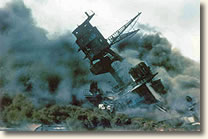
On Sunday, December 7, 1941, the Japanese suddenly and secretly bombed Pearl Harbor. The entire world was shocked by this dastardly attack. The United States was thereby thrust into World War II. The exact moment I heard the news I was in a football uniform on the P.K. Younge School grounds in Gainesville, Florida, practicing for the annual football game between my Phi Delta Theta fraternity and the Sigma Nus. It was in the Phi Delta Theta fraternity house living room that I heard Franklin D. Roosevelt’s “Day of Infamy” speech the following day.

In early January 1942 I finished my first semester at the University of Florida and withdrew from school to join the military service. I only considered the Army Air Corps…never gave the Navy a thought.

March 30, 1942 I became an Aviation Cadet in the U.S. Army Air Corps. I was sworn in as a Private at the Orlando Air Base on March 30, 1942 with Serial Number 14052578. I was classified as “Private Unassigned” and sent to my home address in Orlando to await further orders. The pay of a Private was $21.00 per month.

On June 1st, I received a telegram ordering me to “active duty” and telling me to report to U.S. Army Camp Blanding, Starke, Florida on June 13, 1942. While there for only a day or two, we slept in square, eight-man canvas tents, sans uniforms.

June 15, 1942 I was appointed an Aviation Cadet and transferred to the Air Force Cadet Classification Center at Maxwell Field, Montgomery, Alabama. I rode in a private car owned and driven by Ralph L. Smathers of Orlando, from Camp Blanding to Maxwell Field with John Stonecipher, Jack Lee, and two other Orlando boys who were also newly appointed Aviation Cadets. At Maxwell Field, I was issued my Aviation Cadet uniforms and insignia. Also, there I took various tests to determine if I was to become a pilot, a navigator, or a bombardier. On June 26, 1942 I was classified as a pilot trainee, assigned to Class 43-C, and issued orders to report to the AAF Pre-Flight (Pilot) Training Center at Maxwell Field on July 10, 1942. Because we had a few days of freedom, we all climbed in Ralph Smather’s car and drove to Orlando to show off our new uniforms. Margaret’s mother was very impressed with the quality of my military uniform. I recall sitting on her front porch at 520 Anderson Street in Orlando as she examined my hat very carefully. She had, of course, already lost a son in the war when her middle child Joe Baker’s ship was sunk by a German submarine on May 25, 1942 in the Gulf of Mexico. He was probably Orlando’s first fatality of World War II. We drove back to Maxwell Field to report for duty on July 10, 1942. I spent approximately two months in Pre-Flight training at that base.

On September 9, 1942 after completing the Pre-Flight training I, along with about 180 other Cadets, was issued orders to report to The Civilian Elementary Flying School AAFTD, Southern Aviation School, Camden, South Carolina. I reported there on September 13, 1942. The “troop train” ride from Montgomery, Alabama, through Atlanta, Georgia to Camden, South Carolina was my first experience riding on a troop train. There were many such adventurous train rides to follow. When we arrived in Camden, South Carolina, about ten in the morning, we got off the train and looked up at the sky to find it filled with many, many PT -17 training airplanes. And we noted that many airplanes had differently colored lower wings on opposite sides of the airplane. Some were blue, some were yellow, and some were silver. Some airplanes had both wings the same color, but many did not. Before we left Camde,n we learned that the P T -17 has a “ground looping” characteristic which frequently caused the lower wing to be damaged, and therefore changed. It was obvious that the mechanics simply installed any new lower wing they had in inventory, no matter what the color.

On September 15, 1942 I took my first: 32 minute flying instructions in an Army airplane with my instructor Frank W. Poe 3rd (certificate number C-93789). The airplane was a primary trainer Stearmen PT-17. Woodruf Field at Camden, S.C. was a grass airport with no pavement at all. I loved it.

On October 2, 1942 I soloed in that airplane after having received 9:27 hours of dual instruction. My solo flight was from an auxiliary field located north of the main Camden airport, and lasted 20 minutes with several landings. On my first solo landing, I dragged the lower left wing along the ground, but the airplane went straight, and I avoided that dreaded “ground loop” for which this airplane was noted. I taxied to the side of the airport to a buildin,g and a mechanic came out to examine my airplane. I kept the engine running while he shook the lower wing up and down once or twice, then indicated to me that it was O.K. and I taxied out for some more landing practice. I flew 60:00 hours in this airplane at Camden, S.C., before I finished the course and was transferred from a Primary Flight school to a Basic Flight school.
I, along with approximately 140 other Cadets who had not yet “washed out,”, was transferred on November 16, 1942 to the AAF Basic Flying School, Cochran Field, Macon, Georgia. There, I flew the Vultee BT-13 basic trainer airplane for approximately 70:15 hours. I did my first night solo work here. My brother John, who was also in the Army based at Camp Blanding, Florida, somehow managed to visit me briefly while I was based at Cochran Field. This was the first Christmas I spent away from home, and I hardly left my barracks room on Christmas Day because there was no military activity, and I was a very blue aviation cadet.

On January 26, 1943 I was transferred to the United States Army Advanced Flying School at Turner Field, Albany, Georgia. While there, I flew Beechcraft AT-10 and Curtiss Wright AT-9 advanced twin-engine trainer-type airplanes.

On March 25, 1943 I graduated from the U.S. Army flying school at Turner Field, Albany, Georgia in Class 43-C with a grand total of 272 hours flying time. On that date, I was discharged from my assignment as an Aviation Cadet, Serial Number 14052578, and appointed a Second Lieutenant in the Army of the United States with a new Officer’s Serial Number O-799083.

My first Active Duty assignment was to report to the Army Air Force School of Applied Tactics, Bomb Department in my hometown of Orlando, Florida on March 27th 1943. Mother, Dad, and my sister Mary (who had ridden the train to attend my graduation) were delighted, as was I. I reported there and was assigned to the 5th Bomb Squadron, 9th Bomb Group Heavy, located on the Signal Hill portion of the Orlando Air Base. I was assigned to fly as co-pilot on four-engine B-24 bomber airplanes. Soon thereafter, on April 15, 1943 our entire Squadron was transferred from the Orlando Air Base to the new Pinecastle Army Air Field, at Pinecastle, Florida. That was the first day any airplanes ever landed at Pinecastle airfield. The first airplane to land was piloted by our Squadron Commanding Officer, Major Role E. Stone. I flew a little Piper L-4 “Grasshopper” Liaison observation airplane solo between the two airports. The air base was later renamed McCoy Air Force Base and later became the Orlando International Airport.
to be continued….

Different Headlines: Great White Bites Huge Chunk Out Of Windsurfer; America’s Real Enemy; DOGE Terminates $1.4 Billion Of Wasteful Contracts; Man Ski’s Down Mt. Everest; AI Predicted To Cause Job-meggadon, The Tudors’ Most Hated Woman….and more

Nature

Great White Shark Bites Huge Chunk Out Of Australian Windsurfer’s Board After Dragging Him Underwater (Video)

USA

America’s Real Enemy – and it will be hard to defeat

‘Oh, F*ck Off!’ Democrats Rage at ‘Pathetic’ Shutdown ‘Betrayal’ in Mass Backlash

“At What Point Does This Become Treason?”

Artificial Intelligence

How AI Is Supercharging Scientific Fraud

DOGE

DOGE: U.S. Government Agencies Terminate 67 Wasteful Contracts Worth $1.4 Billion

Communism

White House Declares ‘Anti-Communism Week’ Honoring 100 Million Lives Lost

Islam

‘I Beat Hitler’ – Survived Dauchau only to see the election in NYC

Cop30

UN’s Clear-Cut30: Morano on Real America’s Voice TV: ‘Brazil has clear-cut up to 8 miles of virgin tropical, Amazon rain forest at this summit…in order to bring in the private jets and the limousine’ – Hypocrisy, thy name is Climate change. Let’s not forget it started out as AGW. Antrhropogenic Global Warming. Humans didn’t do anything other than scam others for money. It was the same formula BLM used.
Government Shutdown

Speaker Johnson calls House back to end shutdown as Jeffries urges Democrats to oppose deal – because it cuts off the money laundering through the insurance companies back to the dems. They don’t care about insuring the people. It ends their control and push to socialized medicine.

Snow Skiing

Watch: The Greatest Ski Descent in History… Everest’s Stunning Hornbein Couloir… – There’s a dragon I don’t have to slay

Jobs

China’s DeepSeek Issues Rare Warning Of An Incoming AI-Fueled Jobpocalypse – it pays to be a carpenter or a plumber. office and administrative jobs are going to get the sword

Lying

Eric Swalwell Names Washington DC Home as ‘Principal Residence’ and Has No California Address – combine that with sleeping with Fang Fang, the Chinese spy and you have a real loser here.

Quantum Computing

Quantum Computers Model Complexity of Materials – It will challenge the limits of current computing and surpass it.

UK

A wicked wife’: The truth about Tudor England’s ‘most hated woman‘ – by the time I read it, I hated her also.

EV’s

Mercedes Slashes Prices by Up to $50,000 as EV Inventory Piles Up – Nobody wants them. Even Porsche is cutting back. The Ford F150 Lightning is dead also

Seal Team

SEAL Team 6 Operator Reveals High IQ Move To Kill Osama Bin Laden: WATCH – I never get tired of this story

Japan Marks 80th Anniversary of WWII Surrender as Concern Grows about Fading Memory

Japan is paying tribute to more than 3 million war dead as the country marks its surrender 80 years ago, ending World War II, as concern grows about the rapidly fading memories of the tragedy of war and the bitter lessons from the era of Japanese militarism.

In a national ceremony Friday at Tokyo’s Budokan hall, about 4,500 officials and bereaved families and their descendants from around the country will observe a moment of silence at noon, the time when the then-emperor’s surrender speech began on Aug. 15, 1945.

Just a block away at Yasukuni Shrine, seen by Asian neighbors as a symbol of militarism, dozens of Japanese politicians and their supporters came to pray.

Prime Minister Shigeru Ishiba stayed away from Yasukuni and sent a religious ornament as a personal gesture instead of praying at the controversial shrine.

But Shinjiro Koizumi, the agriculture minister considered as a top candidate to replace the beleaguered prime minister, prayed at the shrine. Koizumi, the son of popular former Prime Minitser Junichiro Koizumi whose Yasukuni visit as a serving leader in 2001 outraged China, is a regular at the shrine.

more

Three Documents That Manipulated the United States into World War II

In his book Freedom Betrayed: Herbert Hoover’s Secret History of the Second World War and Its Aftermath, the former president repeatedly complained about President Franklin D. Roosevelt’s “fright campaign” to get the United States into World War II. In his terrifying Navy Day address on October 27, 1941, Roosevelt claimed to have a “secret map” showing Nazi plans to invade South America, targeting Brazil and the Panama Canal. The key section of his Navy Day address began with Roosevelt saying, “I have in my possession a secret map made in Germany by Hitler’s Government—by planners of the new world order. It is a map of South America and a part of Central America, as Hitler proposes to reorganize it.”

Hoover was skeptical. He conducted his own personal investigation into FDR’s secret map. “Four years later, after the German surrender, I was in Germany,” he wrote. “The American Army authorities informed me they had been instructed to search for these plans,” former President Hoover added. The result of Hoover’s investigation was fruitless. “Our officials informed me there were no such plans in the captured German files.” 

Hoover was not the only one to investigate the origins of Roosevelt’s secret map. According to Lynne Olson’s book Those Angry Days: Roosevelt, Lindbergh, and America’s Fight over World War II, 1939-1941, the German government engaged in a frantic search to find out if it had produced the map. The result of this search was also fruitless. Four days after Roosevelt’s speech, Germany’s Foreign Minister Joachim von Ribbentrop “flatly denied the existence of such a map” and he called it a forgery “of the crudest and most brazen kind.” So, who was telling the truth, Roosevelt or von Ribbentrop?

With a sense of genuine surprise, Olson wrote that “the Reich was telling the truth.” Olson said that “it was a forgery, the product of a clandestine BSC unit in downtown Toronto called Station M.” BSC, which stands for British Security Coordination, was a covert arm of MI6, Britain’s Secret Intelligence Service. Creating fake documents at its Toronto “phony-document factory” was only one part of BSC’s covert operations. According to Thomas E. Mahl’s book Desperate Deception: British Covert Operations in the United States, 1939-44, BSC infected the public opinion polling industry to rig polls and to influence the congressional decision-making process. Mahl wrote, “Unknown to the public, the polls of Gallup, Hadley Cantril, Market Analysts Inc. [run by Sanford Griffith], and Roper were all done under the influence of dedicated interventionists and British intelligence agents.”

story continues here including how the Russians got the Japanese to attack the USA

One-Time
Monthly
Yearly

Please help me offset my storage costs as I’ve upgraded to add content to this blog

Make a monthly donation

Make a yearly donation

Choose an amount

$5.00
$15.00
$100.00
$5.00
$15.00
$100.00
$5.00
$15.00
$100.00

Or enter a custom amount

$

Your contribution is appreciated.

Your contribution is appreciated.

Your contribution is appreciated.

DonateDonate monthlyDonate yearly

Oldest Survivor Of Pearl Harbor Attack Dies At 106

With every passing year, the ranks of those justifiably deemed members of the Greatest Generation continue to dwindle.

This month, the nation lost a veteran who was present for one of America’s darkest days.

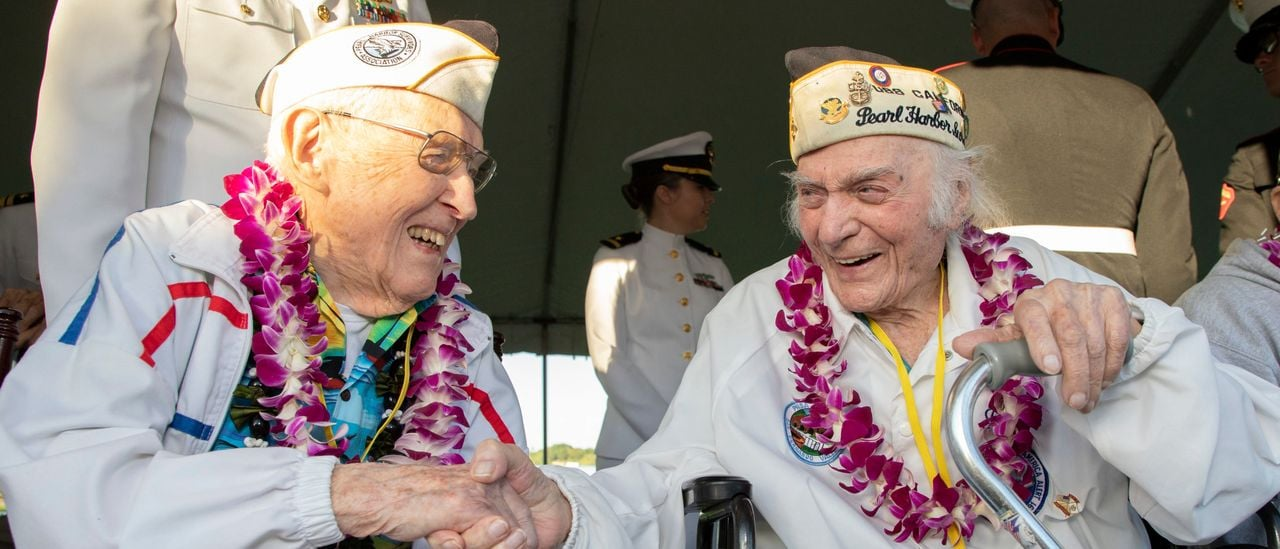
As NBC News reports, Vaughn Drake Jr., the oldest known survivor of the Japanese attack on Pearl Harbor, died on April 7 at the age of 106.

At the time of the attack, Drake was assigned to the Army Corps of Engineers, according to Stars & Stripes.

He recounted his remarkable experience in a 2016 interview with the Lexington Herald-Leader.

Working on-site at a temporary power plant meant to assist in the construction of new barracks at Kaneohe Naval Air Station, which was on the opposite side of the island from Pearl Harbor, Drake saw things on that fateful day in December that he would never forget.

“We were getting ready to go to breakfast, and we heard all these planes flying over and making a lot of noise,” he remembered.

“We just figured it was the Army Air Corps carrying out maneuvers for practice, like they did a lot.

“We didn’t pay much attention to it.”

story

/

One-Time
Monthly
Yearly

Make a one-time donation to help me afford storage and website fees

Make a monthly donation

Make a yearly donation

Choose an amount

$5.00
$15.00
$100.00
$5.00
$15.00
$100.00
$5.00
$15.00
$100.00

Or enter a custom amount

$

Your contribution is appreciated.

Your contribution is appreciated.

Your contribution is appreciated.

DonateDonate monthlyDonate yearly

The Woke Names And Cancel Culture Are Going, Going……Gone. Now Bring Back The Statues

It’s not just Mount McKinley.

Secretary of Defense Pete Hegseth has just renamed the US Army base in North Carolina, ‘Fort Liberty’, back to it’s previous name ‘Fort Bragg’ – but he did it with a twist.

Fox News reporter Lucas Tomlinson reported tonight that Hegseth has renamed the Army base to Fort Roland L. Bragg.

Instead of being named after a Confederate general, as it was previously, it will now be named after a “World War II hero who earned the Silver Star and Purple Heart for his exceptional courage during the Battle of the Bulge.”

Defense Secretary Pete Hegseth has signed a new memorandum renaming Fort Liberty in North Carolina to Fort Roland L. Bragg.

Hegseth signed the memo shortly before landing in Stuttgart, Germany aboard a U.S. Air Force C-17.

The name Fort Bragg is coming back, but with a twist. It will not be named after the former Confederate general.

Instead, the new name pays tribute to Pfc. Roland L. Bragg, a World War II hero who earned the Silver Star and Purple Heart for his exceptional courage during the Battle of the Bulge.

story

I bet they called it Bragg on base and out in the field anyway. Leave it to liberals to mess up anything and try to cancel Western Civilization

Oldest Living Pearl Harbor Survivor Dies At 105

Warren Upton, the oldest living survivor of the 1941 Pearl Harbor attack died Wednesday at age 105.

Upton died after suffering from pneumonia, Kathleen Farley, the California state chair of the Sons and Daughters of Pearl Harbor Survivors told the Associated Press (AP). The Pacific Historic Parks said on Facebook the 105-year-old died after a short hospital stay surrounded by his family. Upton was also the last remaining survivor of the USS Utah.

The USS Utah battleship was moored at Pearl Harbor on Dec. 7, 1941 when Japanese planes began bombing the naval base in Hawaii, leading to the U.S. involvement in World War II.

In a 2020 interview with the AP, Upton recalled he was about to begin shaving when the first torpedo hit the Utah. He said no one on board the battleship knew what caused the ship to start shaking and then, the second torpedo hit, causing the ship to capsize.

Upton was 22 at the time of the attack, the AP reported. He swam ashore to Ford Island where he jumped into a trench to avoid the planes surrounding the area. He waited for roughly 30 minutes before a truck passed by and rescued him.

more

I think there are only 15 left.

NASA Accidentally Rediscovers Cold War-Era Military Base Beneath Greenland’s Ice Sheet – Maybe Captain America Is Still There Also

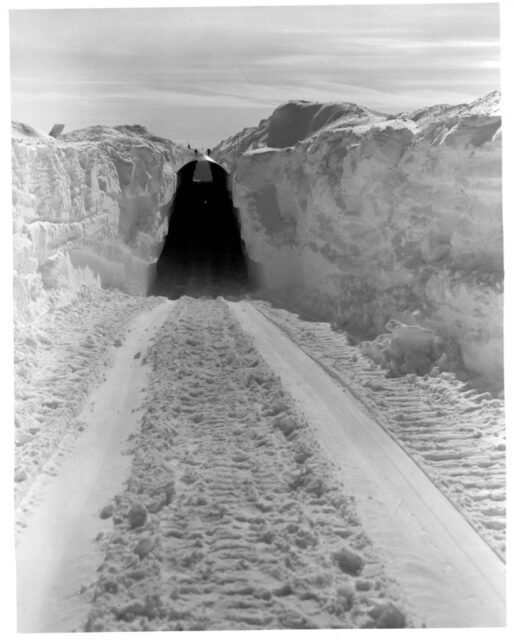
Those with in-depth knowledge of Cold War-era military history likely know about Camp Century, a secret American base that was constructed beneath Greenland’s ice sheet. Erected as part of Project Iceworm, it was intended to serve as an underground complex that was capable of deploying 600 “Iceman” ballistic missiles at the Soviet Union, should the need arise.

Operated from 1959-67, Camp Century was abandoned after officials realized the ice wasn’t as stable as previously thought. Since then, it’d largely been forgotten about – that is, until NASA accidentally captured an image of the subterranean base in April 2024.

Trench leading to Camp Century
Main trench to Camp Century, in Greenland’s ice sheet. (Photo Credit: Pictorial Parade / Archive Photos / Getty Images)

The unexpected rediscovery occurred while a NASA-operated Gulfstream III, manned by a team of scientists and engineers, was conducting research over Greenland’s ice sheet. Led by cryospheric scientist Chad Greene, the team was probing the nation’s ice, approximately 150 miles east of Pituffik Space Base, when their radar equipment detected something beneath the surface.

“We were looking for the bed of the ice and out pops Camp Century,” said Alex Gardner, a cryospheric scientist with NASA’s Jet Propulsion Laboratory (JPL), in a statement. “We didn’t know what it was at first.”

story

France Price Gouging The Eiffel Tower Entrance Right Before The Olympics

They claim it is for maintenance, but the timing is clearly suspicious. They tax enough to pay for it now don’t they

In my extensive travel through Europe, the French are the most disparaged by the other countries. Just ask a UK Taxi driver about the French if you don’t believe me.

Ticket prices for visiting the Eiffel Tower have been raised 20 percent in a bid to offset its sky-high maintenance costs. The increase comes just weeks before the opening of the 2024 Olympics and after months of tensions between the “Iron Lady”‘s management company and Paris City Hall over the revenues generated by this symbol of the City of Light.

Funny that this is a make up for Covid revenue…

With the proceeds from the price hike – which applies to all tickets – the Société d’Exploitation de la Tour Eiffel (SETE), the public company operating the landmark, hopes to rebalance its books, which took a hit from the extended closures of the Covid-19 pandemic, and turn the page on a labour dispute that led to the tower’s temporary closure in February.

story

Veteran’s Day No More For Pearl Harbor Survivors – The End Of An Era

Here is one that I remember. When I went to Pearl Harbor, I had a similar feeling when I was at Dachau. The souls of the dead seemed to be there looking at you, hoping you will remember.

How quickly we forget. Here is the story of the last survivor. I met some of them when I was there. None will have that chance again

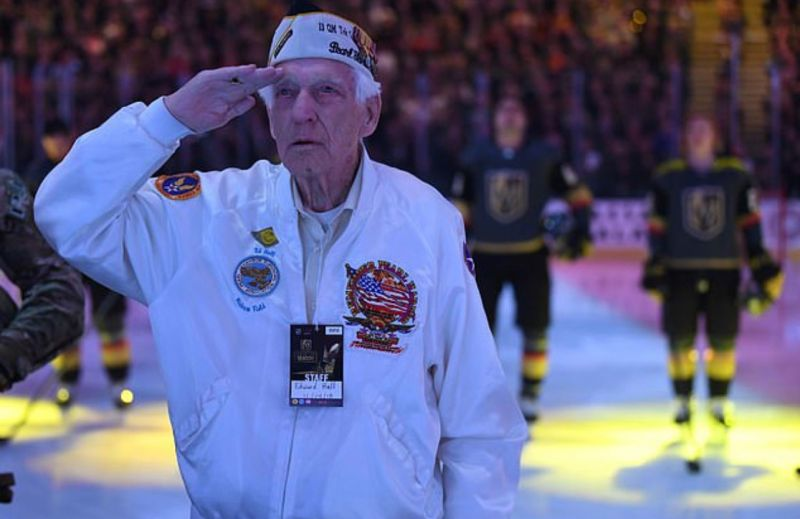
The end of an Era: Ed Hall, The last known Pearl Harbor survivor in Nevada died in his sleep this week at the age of 99.

Hall was in the U.S. Army Air Corps and only 18 years old when Japan launched a surprise attack at Pearl Harbor that left 2,403 Americans dead.

Hall’s longtime friend Mannarino visited him on Tuesday, the night before he passed.

‘He passed away peacefully in his sleep,’ Mannarino confirmed. ‘He joked with the nurses last night. Before I left he said “I love you.” He seemed still full of life.

The doctor told me that “When we went to check on him, he was unresponsive.” I just fell over completely. He was the greatest guy, from the greatest generation. Those men were cut from a different cloth.’

Hall had told the Review-Journal in an August 2020 interview that he was saddened to hear that he was believed to be the last living Pearl Harbor survivor in the state of Nevada.

In the interview, he also said that December 7, 1941 was a day he would never forget.

‘It’ll be forgotten, just like the Civil War, or the Spanish American War,’ Hall said. ‘This country better wake up or it’s going to happen again, that nobody will pay attention to the warning signs, like that day of December 7, 1941.’

On that fateful day, the former Army private was on kitchen duty and cleaning a frying pan, he has said, when he heard what he thought was a malfunctioning air compressor.

But when he walked outside the mess hall at Hickam Field (now Joint Base Pearl Harbor-Hickam), he was met with the sights and sounds of a full-blown attack.

‘What the hell’s going on?’ he remembered yelling as fighter planes roared above him. A fellow serviceman pulled him down and shouted, ‘Do you want to die?’

‘There was shooting going on like you wouldn’t believe,’ Hall told the paper decades later. ‘I’m still amazed I didn’t get hurt.’

While they took cover, Hall said he remembers seeing an explosion that he later learned was the USS Arizona being struck, killing 1,177 sailors and Marines.

Lest we Forget!

How To Know Who You Really Are – Try Writing Your Own Eulogy

An acquaintance’s father passed away a few years ago. He was an adjunct to a Five Star General in WWII and a press officer for IBM. He wrote his obituary and his funeral notice. It was spectacular. Not because it touted all that he had done, but that it was clear and concise. When my uncle died, I got that he was a pilot, but not much else and he did a lot of other things that would have been nice to hear.

It’s because someone else wrote his obituary. And there you have the key.

Write your own eulogy and find out what you want the world to know or not know about you. It’s harder than you think because you only have a short space to get in what are the highlights.

A BIGGER PROJECT

For me, it went to exploring the rest of my life and before I knew it, I’m writing about kindergarten or my 3rd job. No one will ever read it, but I finally found out that things like me being an introvert were there all along. My life would have been a lot easier if I’d have known the things I wrote. Sure, it’s hindsight, but the pattern was there. I wonder why it took me so long to see some things.

I remembered teachers (back to kindergarten), classmates, situations, jobs, life and so much that I couldn’t type fast enough. I knew I’d have to edit and re-edit for details and accuracy, but if I could remember it, I wrote it down. I forget a lot of stuff now anyway.

It fell out on the pages who was loyal or a back stabber to me. What was it that I expected or deliverd to friendships. Who I could count on and who I could count on to try to cause me difficulty or harm (mentally or physically).

I realized who was actually a friend and why, and who was passing through that time of my life, but didn’t remain. As I have said, there are a lot of characters in my autobiography who don’t make it to the end.

MY EULOGY

Guess what I haven’t finished yet. That’s right, the original project. I got so enthralled with trying to recall memories that sometimes would flood my mind, or that one deep memory that I hadn’t thought about in decades.

I’m going back to it as I need a break. It wasn’t just the writing, but having to re-experience feelings and situations that I’d buried were mentally taxing. I haven’t been blogging much as it has been overwhelming.

DO IT

Why? You will find out more about yourself than you could imagine. You think you know who you are until you write about your warts and missteps, the awkward things you said that you wish you could take back. Why you react the way you do instead of being more effective, especially when you are protecting your inner self.

I found out who I was and why I act the way I have. I got to re-visit a lot of times in my life. While writing, I put myself back into the 6 or 12 year old to feel those times again the way they were, instead of how my mind changed them over the years. Then, I thought if that moment affected my life later. Most times the answer was yes.

There were times I couldn’t type fast enough and had to keep a separate list of all the things I needed to write about. Conversely, I didn’t want to go back after vomiting up memories, joys and pain, success and failures in my life. I didn’t want to write the pain, but it felt better after having said it.

I’ll keep the eulogy, but delete the life story, no one cares anyway other than me. I won’t care soon either.

I guess I’d better get around to that Eulogy now so the kids don’t screw it up.

Queen Elizabeth Has Been On The Throne For 70 Years, The Last Great Monarch

A lot of respect should be paid to someone who has been through so much. She has been the steadying force for the royals over decades of war, innovation, change and strife in the monarchy.

While everything is taken care of for her by aides, I don’t envy someone who has to live a life in such a bubble though. It’s tough to get out and live in the real world. I’m sure that’s what inspired the Prince and the Pauper story.

Why I say she is the last great Monarch is that her successor, Prince Chuckles is a laughingstock. His Islam loving, climate change hype shows the idiot that he is. This is someone who didn’t survive the bubble very well and should have gotten out more.

Spewing that the rest of the world should stop causing global warming while he converts a Rolls Royce to run on uber expensive red wine, while traveling on private jets and yachts is the dichotomy of intelligence.

I feel sorry for Princess Di and Andres Parker Bowles (Camilla Parker Bowles ex-husband whom chuckles stole her from) are just casualties of this clown. Both are probably lucky not to have to deal with Chucky anymore.

Elizabeth is hanging on the crown as long as possible because she knows Chuck is a problem. This does the rest of the kingdom a favor by cutting the time that chuckles will be king. If he were the least bit worth, she would have ceded the crown earlier. Even she is smart enough to know this idiot is a stain on the monarchy.

The Queen then had to put up with Andrew, the child molester with Jeffrey Epstein. There is a lot of evidence that shows he’s a pervert. She was smart enough to cut him off from any royal titles and privileges.

Next, her grandson Harry and his wife Sparkles continue to embarrass the crown with their idiocy of victimhood. It’s good thing he’s about 6th in line and never will be king. How hard is it to keep your mouth shut and accept a life of free money, servants, a castle to live in and do whatever you want? But no, miss uppity got into his pea brain and ruined a good thing and blamed the royals for not doing things her way. Chuckles genes must run strong.

I, like a lot of people hope that future king William doesn’t go off the deep end and maybe we can just skip to him as the next king. He seems to be the sanest of the bunch and knows how a royal is supposed to act.

She’s not going to last much longer, but deserves every accolade that is given. She served in WWII and has dealt with a string of PM’s that range from great to equals to Chuckles.

She has shown grace and queenliness (not really a word) that has protected the crown for a long time from scandals and idiots. I respect what she has done to keep things on the level despite the crap that was handed to her for a family.

I hope she can hang on a lot longer. They deserve her a lot more than what is to come.

The 80th Anniversary Of Pearl Harbor, Then And Now

In my travels, I’ve been to both Pearl Harbor and Hiroshima. To me, it was the beginning and the effective end of the War for the USA. The European Theater started much earlier, but it was before our country was forced into the action.

I am related to some who fought in both Theaters. They were people who had to grow up at 18. They had the lives of others in their hands, and some didn’t know if they would make it through the day. Some froze in the winter in Belgium, and others were in the primitive jungles of the South Pacific.

I’m sure they didn’t like their situation, but they had a sense of duty and patriotism. To a person, they all said they did their job and rarely bragged and never complained. Times were harsh back then and they did a lot of things that allow us to be here today, speaking English instead of Japanese or German.

There are only 2 survivors from the USS Arizona left, both are 100. There are about 150 left from Pearl Harbor, also centenarians or close. That means they were 20 or so. They were adults making real life decisions.

Now, everything is racist or woke or a problem (recently Thanksgiving). I wonder how the squad will figure out a way to denigrate patriotism on this anniversary to enhance themselves.

Most of those at 18 today are to immature to trust them with life altering decisions. They are too busy being offended to grow up.

It chaffs my butt when I post stuff and I get ungrateful comments about how the enemy was treated or killed. War is about blowing stuff up and killing people to end it as soon as you can to save lives. I have little patience for the woke or those who are more interested in cleansing history rather than embracing what made us who we are (except for the woke).

I had one chap from the UK trying to trash the USA on a post like this saying that the Russians fought two fronts, but we didn’t. He was trashing the USA for helping out the Europeans. I mentioned the Pacific Theater and his commie ass shut up because of facts.

Soon, there will only be memories, something that the socialists are trying to write out of the textbooks. Why? Because it was times like this that made America great. Now, it just seems that the current group of politicians, celebtards, MSM and social media idiots are the enemy of our country. They are trying to tear down our country because history didn’t write itself the way they want it in their unicorn world.

As for me, I think back on the sacrifices made for me to be able to live the life that I had. A lot of people lost their lives 80 years ago, and a lot more would suffer for the next 80 years of greatness. I loathe those idealogues trying to take that away for personal gain, greed, money or power.

That group could be easily defeated by unplugging the internet and then they wouldn’t know what to do. I could write in cursive or make them use a map and they’d be chasing their tales wondering how to boil water.

Try to appreciate a veteran, or someone who is in public service like the police, the firemen and others who sacrifice yet get denigrated. I thanked a veteran yesterday at the store for his service. I think he was Korean vintage, but it doesn’t matter to me. I always say thanks for your service.

Covid-19, It’s Another Pearl Harbor – We’ve Been Through This Before And We Do It Best

Update:  On April 5th, the Surgeon General compared the Corona Virus to Pearl Harbor.

There are events in history that cause a divided nation to come together.

Some have been pandemics and others have been wars, but there are times defined by history that people put their selfishness aside and gather to do what is best.

As an example, I could pick the Spanish Flu, SARS, MERS, H1N1, Y2K, the Swine Flu, the Space Race to the Moon or any number of events, but I’m going to use Pearl Harbor.

I wasn’t there, but our nation was divided as to whether we should enter another World War or isolate ourselves and hope the problem would go away or others would solve it.  This all changed on December 7, 1941 when our country was forced into the events of the world.

We could have cowered to the attack and ask them not to do it again.  Neville Chamberlin tried to appease Hitler this way and it didn’t work out so well.

THE MIGHT OF THE USA

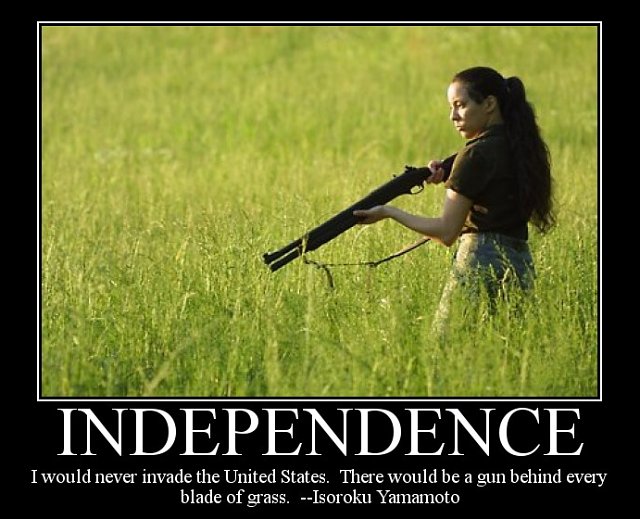
Admiral Yamamoto, the architect of Pearl Harbor knew that a surprise attack to take out our Navy was the only real chance for Japan to stop the USA so they they could expand their reach in the Pacific Rim.  After all, he had studied and lived in the USA and knew that our forces were depleted after WWI.  He also knew that he couldn’t attack us on our own soil.

What also turned out to be true was that if the attack didn’t work, that he would awaken the might of the greatest industrialized nation in the world and unite our country to defeat evil.

On December 8th 1941, men young and old were lined up to enlist to fight for our survival.  They knew that they would be leaving loved ones behind and there was a distinct possibility that they wouldn’t return alive.  They put their fears aside and were willing to fight for our survival and the future that we enjoy today.

Not long after, women went to work in the factories.  We had to ration rubber and metal for war supplies, but everyone did their part.

Companies changed their direction.  Auto makers went from making cars to building bombers.  Scientists invented new weapons to win, not to just survive and suffer.  Our nation came together as one because we had a cause to fight for.

After the war, the greatest achievements in technology, medicine and space exploration happened at a speed heretofore never accomplished.

WE’VE BEEN COMPLACENT AND DIVIDED

All of that progress created wealth, comfort and abundance and we lost our focus.  It’s no secret that we’ve been a divided country.  I’m not here to point fingers because there is enough of that going on through the tradional news and social media.  All of it has a bias one way or the other and it has been pulling us apart.

We haven’t had a common enemy to rally against since the downfall of the Soviet Union.  Instead, we’ve been feeding on ourselves instead of pulling together.  There is a strain of hatred for what we have been that defies the achievements that built our country.  I have read celebtards and sports figures that say we have never been great.  This just proves that they have no appreciation for the sacrifice and achievements that gave them the fame and fortune to preach from their soapboxes.  It also denies our ability to do it again.

We as humans need a cause to believe in and to fight for, whether we are handed or invent it ourselves.  Conversely, politicians have been poisoning us with their desire for power and control.  They have been playing a game of capture the flag on their own islands and haven’t put the good of the country and the people first.  They have been building their power base by taking away our freedom through regulation.

Our government was set up with a system of checks and balances to ensure that no one had the power like the monarchy who we defeated to become what we are.  We now potentially suffer from what the history of the world has suffered from since the beginning of time.  That is the selfishness, greed and desire for power that has aflicted man since the expulsion from the Garden of Eden.

There also has been a faction for globalization that has tried to deplete our greatness by moving manufacturing offshore to the point that we could be held hostage for medical supplies.  Our spirit of nationalization has been tested by the border fight and ideology fueled by hate of the President.  It has ratcheted up these last few years in a power struggle because there was no enemy other than from within.

We have been eating ourselves instead of fighting together.

THE CORONA/COVID-19/CHINA/WUHAN/WHATEVER VIRUS

We now have a new Pearl Harbor.  We have been attacked by a new enemy who ambushed us again.  It is time for us to realize that we have a fight on our hands  Opportunity for success or failure knocks at the door of the fate of our country.

To do that, we need to go back to the spirit of 1941.  It was the people who came together in both the public and private sector, not the control of the Government that helped us save ourselves.

We can go back to being the humans that have struggle to fight against, rally together and overcome (both the virus and the overbearance of the governement regulations).

THE SILVER LINING

There is a great opportunity if we do the same as our forefathers.  Manufacturing in America again can help us right ourselves to help reunite our country and help other countries as we’ve done before.

We are beginning to see the automakers making ventilators, factories starting to make facemasks and other birth pains of our possible re-emergance to self-sustainment.  It can be done.

Before you manufacture in the USA instead of cheap labor offshore, there needs to be a construction boom to prepare production facilities.  After that, the job creation of made in in America is limitless, profitable and will help us help ourselves and others if they want it.

We already have become energy independent by producing enough oil so as to not be dependent on countries who hate us.

Our pharmacuticals are all made offshore by countries that have threatened to cut us off.  We need to do the same in the drug industry to continue our trend of independence and strength.  Through this can we help the rest of the world and save our nation from being held hostage for needed medical supplies and energy.

Most of all, we need fix our goverment and make them serve us instead of us serving them.  Companies and individuals need to be let loose to invent, design and create to defeat this latest Pearl Harbor instead of being told when and what we can or can’t do.  It’s time to limit their power and continue the greatness that history proves is inside of us.

Great Sayings – George Patton

“I don’t fear failure. I only fear the slowing up of the engine inside of me which is saying, ‘Keep going, someone must be on top, why not you?’” — George S. Patton Jr.


Love him or hate him, he got things done and was feared by the enemy, so much so that they had a respect for his command.  In these times of the Covid-19 virus, we need to keep going and not give up.  Stay on top and don’t give up.

December 7th, 1941; Sex, Drugs and Incompetency In Washington

pearl202a1.jpgRevelations of what happened leading up to and following this tragic day inform us of  a backstory of the events that took place in Washington.

Let me go on record to state that I am patriotic and an avid admirer of what the men of our nation did to overcome the tyranny of the Japanese and Germans in WWII.  If you click on the military category of my posts, you will see that when I get cut, I bleed red, white and blue.  I believe in the greatness and considerable achievements of the United States as well as it being the largest contributor for the betterment of others by any country in history.

However, as an amateur historian and an observer of the (in)competency and motives of bureaucrats  in Washington, what our government did leading up to and on that day shows the weaknesses of humans. It should be noted that the Americans and more especially the soldiers who fought the war are held as honorable in my opinion.  This post is not written to tear down any of the bravery accomplished during the war.  They fought valiantly and protected freedom with the Allies.

This event brought together the country so that good overcame evil and I have the utmost respect for what was accomplished in that war.

Much of this was inspired by “History Honors Pearl Harbor” on the History Channel as well as other documented sources.

A historical documentation and the actual speech can be found here.

Incompetency

America was woefully unable to protect itself by December 6, 1941.  It is not unlike today, December 7, 2016, as our current military has been decimated, or the decay of the military before the 9/11 Islamic terrorist attacks on the World Trade Center Towers by the administration in charge during the decade of the 1990’s .

On the day of the attack, Roosevelt was viewed by his son as frozen at times because of the thought of what it would do to his legacy.  Just like the 42nd and 44th president, their legacy was more important than the nation.  The worst attack on American soil would be under his watch and he would be unprepared to deal with it.  Fortunately, by 8 am on 12/9/41, brave young men around the country were lined up at the draft offices, but it would take the monumental effort of the country to overcome the government’s lack of responsibility to have a force that could protect our borders.

Next was the communications between Pearl Harbor and Washington.  Roosevelt couldn’t get information about what was happening.  Granted, the communications infrastructure was not what it is today, but there weren’t even secure lines or even direct lines to Washington. The Naval commander in Hawaii who tried to communicate information to the Chief Naval officer Admiral Stark at the War Department couldn’t give specifics as he wasn’t sure if the Japanese were listening in.

Further, the American leadership greatly underestimated the mental acuity of the Japanese thinking that they weren’t technologically capable of such an attack.  It was speculated that the Germans had given them assistance.  Hitler later admitted he had no idea that the Japanese were planning to, or had attacked Pearl Harbor despite what was taught at Faber College.

Douglas MacArthur couldn’t be reached in the Philippines for most of the day.  General Marshal of the Army tried for the better part of the day to warn him of the happenings in Hawaii and to prepare for a similar attack.  Washington wasn’t sure of where he even was or if the Japanese had already attacked.  MacArthur boasted that he had special insight into the oriental mind. When he finally was reached, his response was that he was on full alert and that “We are ready, we have our tails in the air”.  History documents that the Japanese attacked and drove him out of the Philipines shortly thereafter as MacArthur did virtually nothing and lost the islands in an embarrassing defeat.  He was woefully unprepared, but his ego wouldn’t let him admit it.

Finally, the government couldn’t spend more than $750 on an automobile so they couldn’t get a bullet proof car for the President to be transported from the White House to the Capitol to give the speech.  The Treasury Department had confiscated Al Capone’s car earlier so that one was used instead as they couldn’t be bothered to have proper protection for the leader of the free world.  That would haunt Washington as recently as November 22, 1963.

Roughly 6 hours after the attack, FDR approved Executive Order 9066 which imprisoned 92,000 Japanese to internment camps for no reason other than their might be a fifth column attack within.  It was supposed to be limited in scope to arrest any spies but morphed into what was one of the lowest points of FDR’s term of leadership.  Little to no evidence is ever recorded that there was any treason on their part and no one was convicted of espionage or disloyalty.

They were deemed guilty rather than innocent in one of the greatest acts of prejudice by an administration.

MORE INCOMPETENCE AND DID WASHINGTON KNOW ABOUT THE ATTACK BEFOREHAND?

As I’ve stated, I’m not a conspiracy theorist, I am for facts.  FDR ordered an investigation headed by Supreme Court Justice Owen Roberts of the attack 18 days after the attack.  Some interesting things were revealed.  You can read further about it in the book A Matter of Honor, Betrayal, Blame and a Family’s Quest for Justice.

Admiral Kimmel, head of the Navy in the Pacific had asked Chief of Naval Operations Harold Stark six months before the attack to keep him apprised of latest intelligence regarding what the Japanese were up to.  Washington knew that Pearl Harbor was vulnerable to attack as early as November 1940.

Stark held back the information that aerial torpedos capable of being deployed in waters shallower than at Pearl were being used, despite Stark reassuring Kimmel that the water in the harbor was too shallow for a torpedo attack.  How this wasn’t an act of treason is curious.

The FBI had intercepted information that the Japanese had made inquiries as to the depth at Pearl and whether anti-torpedo nets had been deployed there, but again Kimmel was never informed.  Not sharing this with the command was grossly incompetent or an act of political chess.

Code-breaker Lawrence Safford visited Kimmel after he had resigned.  He then told Kimmel about project Magic that broke coded Japanese diplomatic messages.  Washington failed to inform Kimmel what they knew prior to the attack. It reveals the Japanese had spies informing the Imperial Forces where the exact location of the ships anchored as recently as 3 months before the attack.  The code breakers who discovered this in Magic was only shared by as few as 10 men who couldn’t or wouldn’t tell anyone else.  It was a power play by political operatives in Washington instead of military strategists who would have warned the fleet in Oahu and had the capability to defend against a surprise attack.

A message to the Japanese embassy was decoded instructing them to move to negotiations that had to be completed by 11/5/41, or things will happen automatically beyond that.

The Japanese fleet set sail on November 25th.  There was no turning back at this point.

FDR was aware that the Japanese were going to break off negotiations and 10 days prior to the attack, Admiral Stark issued a warning that there could be an attack, unfortunately not mentioning or notifying the Hawaiian Islands that they were a possible target.

Three hours prior to the attack, Stark received a message that indicated what was about to happen but failed to notify Kimmel.  By the time the message was placed into Kimmel’s hands, it was 8 hours after the attack and was not marked priority.

The intelligence was available, but Washington failed to connect the dots.

I hope that the administration which has meandered it’s way around the safety of our country hasn’t set the table for a repeat by those who have lost their respect for our capability to defend ourselves.

SEX

Missy LaHand, FDR’s assistant for 21 years contacted him on December 7th.  She was closer to the president than Eleanor during that time, some speculate in many ways other than a secretary.  With everything that was going on, the last thing he needed was to hear from a woman he’d had a relationship with.  Eleanor allegedly pushed for a divorce after discovering hat FDR had an affair with her social secretary,  so the last thing he wanted to do was push the envelope unnecessarily by contacting her.  With the decisions that would change the world in front of him, all he needed was additional drama from his wife and another woman.  He decided not to return her call from Warm Springs where she was recovering and it devastated her so greatly that she attempted suicide shortly thereafter.  Presidents have had trouble keeping their pants zipped.

As a side note, but belonging in the sex category, Edward R. Murrow interviewed FDR that night.  Not that it has anything to affect the situation, Murrow carried on a wartime affair with Churchill’s daughter-in-law Pamela Digby Churchill when he was a reporter in London.  He had a close relationship with the Leaders of the Free World and an even closer relationship with some of their relatives.

DRUGS

Roosevelt had a chronic sinus condition from which he suffered most of his life.  Shortly after the attack, he had a headache and was congested, so he was wheeled into the office of his physician, Dr. Ross Macintyre where he was treated with cocaine.  It can be argued that it may have affected his decision-making that day.  Since it was legal, it wasn’t an issue.  Drugs used to be a political show stopper until Obama, who admitted he snorted it got elected.

ROCK AND ROLL

Fortunately, the attack woke up the nation and kick-started the industrial might the US.  Some of the greatest human, scientific and technological achievements happened during the war.

Most important though was the lesson on how wars should be fought and won, something that has been lost on the leadership today.  You fight to win and settle only  for unconditional surrender.  At that point, you set the terms of how the relationship will proceed.  Germany and Japan have become industrial and world leaders, built up by the USA after the war unlike Vietnam and the middle east where our troops were strangled by congress rather than let soldiers fight the war.

#D-Day 70 Years Later, The War That Had To Be Won Before Operation #Overloard

I’ve written about D-day before here and here, but I’ve recently found research about the planning and the pre-landing war at 25,000 feet. One of the issues that the strategists had to deal with was the mighty Luftwaffe.  Almost a year before the landing in Normandy, Operation Overlord or D-Day would have been much different if air cover had been used against the Allied landing force. They had to find a way to get rid of German air superiority before the landing or it would be unsuccessful.

300px-Color_Photographed_B-17E_in_FlightIn the month after the attack on Pearl Harbor, the US Army’s Eight Air Force was established in Savannah, Georgia.  Less than a year later, it is tasked with defeating the most powerful air force in the world, the German Luftwaffe.  By the end of the War in Europe, there were thousands of B-17’s and fighters produced.  Unfortunately, the early fighters couldn’t match the bomber range so they flew without cover both to and from the target until the fighters could find and protect what was left of the Bomber squadron.  It was thought that with 17 machine guns protecting each plane, they would be self defending against the Messerschmitt’s. Unfortunately, it was a turkey shoot for the Germans.  Almost 75% of the airmen would fail to complete the 25 missions which would complete their duty in the European theater. (Authors note: I have the greatest respect for the contribution and sacrifice of the other countries who participated.  Their efforts can be found by other authors and should be read and celebrated for what they did).

p51Much of this was proved on Big Week which ended on February 25, 1944 when more than 2,000 American airmen failed to return from their mission. The U.S. fighters were not able to engage the German fighters deep over Europe until the advent of the P-51 Mustang which was faster, better armed and had the range to protect the B-17’s the entire mission.  It was discovered that the Mustangs could win the battle against the German fighters, but they had to beat the deadline of D-Day to stop the Luftwaffe.

It has been written in documentaries that with the knowledge that the German’s would come after the B-17’s (the Germans used radar) and that the P-51’s would win, they used the bombers as bait to knock out the enemy’s air power. This was a certain death sentence for the crews of the bomber squadrons, but knowing that the landing at Normandy and the entire Operation Overlord would fail unless this was accomplished sealed the fate for the Eighth. Nevermore was this apparent when the Eight was ordered to bomb Berlin on March 6, 1944. This was the center of German government and the most heavily fortified city against air attack with an estimated 70% of the Luftwaffe fighters and 750 anti-aircraft weapons were placed.  Although ten’s of thousands of pounds of bombs were dropped, 69 bombers were lost.  The goal of reducing the Luftwaffe was accomplished as more than 179 German Fighters were destroyed.  The difference was that American planes and pilots could be replaced, the Germans couldn’t produce any more and these were their best pilots.

Two more raids were then ordered on Berlin, some say to draw out the fighters so they could be eliminated.  It was the beginning of the end of the Luftwaffe.  This strategy ensured the goal of Allied air superiority over Normandy, but at a very high cost.

By the end of the war, the 8th Air Force would suffer 26000 combat deaths.  This was more than the Marines suffered in all of World War II.

We honor the soldiers who gave their all, many with the ultimate sacrifice to secure freedom in Europe and likely for the world.  We know from history the amphibious landing and the issues and outcome.  It all came at great cost and reminds us that freedom is never free.  It always comes at some cost.  For the year prior to the landing at Normandy, there was a great cost at 25,000 feet.

For more on D-Day at 70, you can read about it here.

Yamamoto’s Master Plan for Pearl Harbor Attack

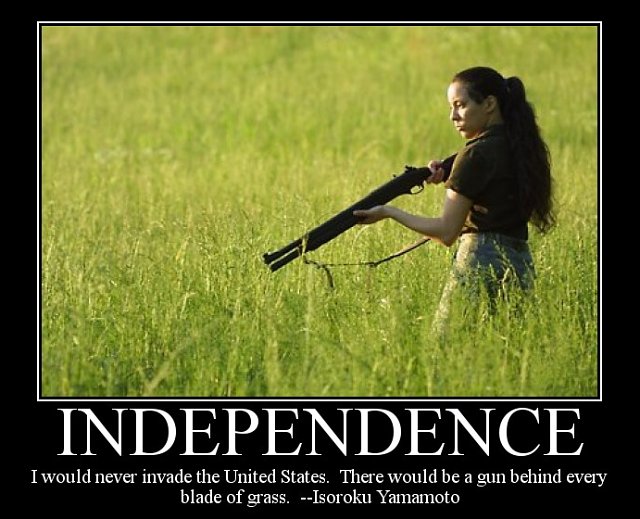
Yamamoto was educated in the US and knew us well.  He also knew that we were a sleeping industrial giant.  He was well aware of the 2nd Amendment and how much we believed in it (We still do for the Islamic Jihad Terrorists).  He also knew he couldn’t attack the US, but a surprise attack would and could cripple us for a while until the industrial might of a sleeping giant was woken up.  Luck was not on his side that day as the US Carriers were out at sea and the Battleships (an aging, but vital weapon) was all that was harbored in Pearl Harbor.

Here is the take by the Pacific War.com

JAPANESE PREPARATIONS FOR THE ATTACK ON PEARL HARBOR

Admiral Yamamoto plans the Destruction of the United States Pacific Fleet

These aircraft are superb reproductions of the Nakajima Type 97 carrier torpedo bombers (Allied code-name “Kate”) that attacked the United States Pacific Fleet at Pearl Harbor. They were used in the gripping and historically accurate 20th Century Fox film Tora, Tora, Tora! (1970).

In conformity with this traditional approach to naval warfare, the Japanese Naval General Staff intended to limit naval operations in support of Japan’s military thrust into South-East Asia to offensive actions against local American, British and Dutch naval forces defending their country’s colonial possessions in South-East Asia. To the conservative admirals of the Naval General Staff, a direct confrontation in the central Pacific Ocean between their navy and the United States Navy was unthinkable.

In early 1941, Vice Admiral Isoroku Yamamoto was appointed Commander-in-Chief of Japan’s Combined Fleet, and he immediately took issue with the cautious policy of the Japanese Naval General Staff. Yamamoto did not believe that the United States Pacific Fleet would remain idle at Pearl Harbor while Japan attacked and seized America’s Philippines, and British and Dutch colonial possessions in South-East Asia. He believed that Japan must cripple the United States Pacific Fleet at the same time as it launched its attacks on countries of South-East Asia.

With this firm conviction, Admiral Yamamoto began to consider a surprise carrier-launched air attack on the United States Pacific Fleet at its Pearl Harbor base timed to coincide with Japan’s military aggression in South-East Asia. Yamamoto instructed Rear Admiral Takijiro Onishi, Chief of Staff of the 11th Air Fleet, to assess the feasibility of an attack on Pearl Harbor by carrier-launched aircraft. Onishi enlisted the assistance of Commander Minoru Genda, a brilliant staff officer and tactician serving with Japan’s 1st Air Fleet. Genda studied the problem and came to the conclusion that an attack on Pearl Harbor could succeed if (a) the attack took the Americans completely by surprise, (b) the attack occurred early on a Sunday morning when American defence preparedness would be at a low level, (c) all six of Japan’s best aircraft carriers were used, and (d) highly skilled aircrews were used in the attack. To ensure complete surprise, Genda’s plan precluded alerting the Americans to their danger by a prior declaration of war.

Admiral Yamamoto’s plan for a surprise peacetime attack on the United States Pacific Fleet at Hawaii would involve a strike force which included Japan’s six largest and most powerful aircraft carriers. His task was made much easier by President Roosevelt’s decision to relocate the United States Pacific Fleet from California to Hawaii. As Yamamoto saw it, the destruction of the American Pacific Fleet would give Japan time to seize the Philippines, Malaya, British Borneo, Burma and the Netherlands East Indies (now Indonesia), and gain access to the oil, minerals, rubber and other resources that Japan needed to sustain its aggressive war machine. He was hopeful that, with its Pacific Fleet destroyed or crippled, the Americans would be willing to accept a peace settlement that allowed Japan to keep its new conquests in South-East Asia.

The Japanese Naval General Staff initially rejected Admiral Yamamoto’s plan for an attack on Pearl Harbor as being too great a gamble. They doubted that surprise could be achieved when the strike force would be at sea for two weeks before the attack. Japan had eleven aircraft carriers, and the admirals felt that Yamamoto’s plan could put at risk their six best carriers. They also felt that diverting Japan’s six most powerful aircraft carriers to Hawaii would leave the southern attacks on the Philippines and British Malaya dangerously unprotected. In the end, Yamamoto only overcame their opposition by threatening to resign.

Although the admirals of the Naval General Staff were reluctantly persuaded by Yamamoto to abandon the policy of defensive naval war in favour of attack, the years of night warfare training and the highly accurate, long range torpedoes associated with the defensive policy would give the Japanese Imperial Navy a significant edge over Allied navies in night actions during the Pacific War.

Training for the Pearl Harbor Attack

Early in 1941, despite the fact that the Chief of the Naval General Staff, Admiral Osami Nagano, had not yet approved a surprise attack on Pearl Harbor, Admiral Yamamoto directed that intensive planning and training for such an attack was to be undertaken.

Japanese naval aircrews had already honed their war skills flying sorties against the poorly equipped and trained Chinese air force and army. However, Pearl Harbor offered special challenges to an enemy force proposing to use air-launched torpedoes. The harbor was comparatively shallow and a large area in the centre of the harbor was occupied by Ford Island. The American battleships were moored on the eastern side of Ford Island. The water area between the battleships and the eastern shore of the harbor was narrow. Japanese torpedoes would have to be redesigned for use in shallow harbor waters, and torpedo aircrews would have to learn to drop their torpedoes with great precision so that they would land in the narrow stretch of water between the eastern shore of the harbor and the battleships. The Japanese aircrews went about this training with great enthusiasm and dedication. By November 1941, they were ready for the attack.

On 3 November 1941, the Chief of the Japanese Naval General Staff finally gave his approval to Admiral Yamamoto’s plan to attack the United States Pacific Fleet at its Pearl Harbor base.

The Japanese Carrier Strike Force departs for Hawaii

To distract the American government while it secretly positioned a powerful aircraft carrier strike force for the “sneak attack” on Pearl Harbor, the Japanese government had ordered its envoys in Washington to engage the American government in intensive diplomatic negotiations.AdmiralYamamoto’s aircraft carrier strike force, under the command of Vice-Admiral Chuichi Nagumo, left Japan on 26 November 1941.

The fast and powerful aircraft carrier Akagi was regarded as the “Queen” of the Japanese Imperial Navy. It is shown here in 1941. It was the flagship of Vice Admiral Chuichi Nagumo for the attack on Pearl Harbor.

Preserving strict radio silence, Nagumo’s carriers steered well clear of normal shipping lanes and headed for a stand-by point about 1,000 miles (1,600km) north of Hawaii. The carrier strike force comprised Japan’s six largest fleet aircraft carriers, Akagi, Kaga, Soryu, Hiryu, Shokaku, and Zuikaku. Each of these aircraft carriers would later play a role in the major sea battles closely related to Australia’s survival in 1942. The last two would take part in the crucial Battle of the Coral Sea. The first four would take part in the pivotal Battle of Midway. The carriers were supported by battleships, cruisers, destroyers and submarines.

Japan’s Prime Minister Tojo threatens Britain and America with War

In the last week of November 1941, at a time when Admiral Nagumo’s aircraft carriers were sailing towards Pearl Harbor with hostile intent, Japan’s militarist Prime Minister, General Hideki Tojo, issued a blunt warning to Britain and the United States that Japan would “purge East Asia of US -British power with a vengeance”. General Tojo’s threat appeared on the front page of the New York Herald Tribune on Sunday, 30 November 1941, exactly seven days before the Japanese attack on America’s Pacific Fleet at Pearl Harbor.

Despite the clear threat of war contained in Tojo’s warning, and despite having no knowledge of the whereabouts of Japan’s six largest fleet aircraft carriers, no steps were taken at Hawaii to bring the United States Pacific Fleet or the United States Army Air Corps to a state of war alert.

The Americans had broken the Japanese diplomatic code in September 1941, and were able to read coded messages from Tokyo to Japan’s embassies in Berlin and Washington. The United States government knew that Japan had warned its diplomats in Washington that certain unspecified events would occur after 29 November 1941. However, the Americans believed that the warning fore-shadowed possible aggressive moves by Japan against the Philippines or British or Dutch colonial possessions in South-East Asia. Although they did not believe that an attack on Pearl Harbor was planned by the Japanese, the American commanders in Hawaii took steps to guard against possible hostile action by Japanese submarines and sabotage to military aircraft or installations on the main island of Oahu. To guard against sabotage, Major General Short lined up his aircraft on the runways as if for an inspection. They would prove easy targets for Japanese aircraft when the attack came.

The Order to attack the United States Pacific Fleet

When the Japanese aircraft carrier strike force reached its stand-by point north of Hawaii, it waited to receive either final confirmation to proceed with the attack on Pearl Harbor or an order to return to Japan. On 1 December 1941, the Japanese government reached a firm decision to make war on the United States. On 2 December 1941, a radio signal containing the code words “climb Mount Niitaka” was received by Vice Admiral Nagumo aboard his flagship Akagi. The code message was an order to attack Pearl Harbor on Sunday, 7 December 1941. The Japanese were well aware that most Americans at this time observed Sunday as a holy day, and they had carefully timed the surprise attack to occur when many Americans in Hawaii would be preparing for or attending church services.

Surprise was considered vital to the success of the attack on the American fleet. There would be no prior declaration of war to alert the Americans to their danger.

Admiral Nagumo’s carrier strike force refuelled at sea on 5 and 6 December. Its approach to Hawaii was screened from American reconnaissance aircraft by low, dense cloud cover.

Japanese intelligence informed Nagumo on 6 December that the American battleships and a large number of smaller warships were in Pearl Harbor. However, Nagumo’s primary targets were the American aircraft carriers, and they were all absent from the harbor. The Japanese believed that the American aircraft carriers Lexington, Saratoga, Enterprise and Yorktown were all based at Pearl Harbor at this time. Their intelligence was faulty. Having undergone routine dry-docking, Saratoga was at San Diego on the American west coast. Yorktown was stationed with the newly commissioned Hornet in the Atlantic at this time. Only Lexington and Enterprise were actually based at Pearl Harbor on 6 December 1941, and fortunately for the United States and Australia, both carriers were at sea when the Japanese attack took place. Despite this setback, Nagumo was under orders to proceed with the attack.

On 6 December 1941, President Franklin D. Roosevelt intervened personally in the cause of peace by sending a direct appeal to the Emperor of Japan. It fell on deaf ears in Tokyo. The Japanese government was determined on war and had no intention of recalling the Japanese carrier force.

Review of 20th Century Fox Pearl Harbor attack film “Tora! Tora! Tora! (1970)

PEARLINDEX

NEXT

Sunday, December 7th, 1941, a Date that will live in Infamy

A question that has interested historians and researchers for decades is: why? Why did Japan launch an attack that, in hindsight at least, they clearly had no chance of winning? The obvious answer is that they thought they could, but military and naval strategists know the answer is not so simple.

Precisely because its resources were so depleted by the war with China, it is accepted wisdom that Japan was hoping to expand its territories in the Pacific. If these areas belonged to Japan, they would, almost by default, become customers for Japan’s industrial and resource sectors.

But the Japanese underestimated America’s resolve to defend itself, for however long, and by whatever means necessary. If Japan hoped that America might take a “c’est la vie” attitude to the prospect of losing a battle in the Philippines, it was sorely mistaken. Nor was America still weary from the First World War.

Japan also underestimated the extent of Americans’ outrage at the bombing in 1941. It fueled the nation’s desire to win at almost any cost. No democratic government on earth can move forward without the will of the people, and after Pearl Harbor, the American people’s will was ferocious.


Here is the text and a link to the speech that FDR made after the attack at Pearl Harbor.

I read the Biography of Admiral Yamamoto, the architect of the attack. He believed that the only way to defeat the United States of America was a surprise attack that would disable our military in the Pacific. He clearly stated that he feared that if the attack was not completely successful, it would awaken a sleeping giant that the Empire of Japan could not defeat in standard battle. It must haunt his legacy.

Tactically, the mistake was not destroying the aircraft carriers which were out at sea that day or his plan may have succeeded.

As it turned out, he was shot down only a few years later in a surprise attack by a squadron of P-38’s heading to an inspection in the Pacific.

Here is the Youtube speech by FDR

I find ironic the words of the second half of the speech, if applied to 9/11, would be appropriate. Also ironic is that Japan was extending its reach for economic resources.

The United States was at peace with that nation and, at the solicitation of Japan, was still in conversation with its Government and its Emperor looking toward the maintenance of peace in the Pacific. Indeed, one hour after Japanese air squadrons had commenced bombing in Oahu, the Japanese Ambassador to the United States and his colleague delivered to the Secretary of State a formal reply to a recent American message. While this reply stated that it seemed useless to continue the existing diplomatic negotiations, it contained no threat or hint of war or armed attack.

It will be recorded that the distance of Hawaii from Japan makes it obvious that the attack was deliberately planned many days or even weeks ago. During the intervening time, the Japanese Government had deliberately sought to deceive the United States by false statements and expressions of hope for continued peace.

The attack yesterday on the Hawaiian Islands has caused severe damage to American naval and military forces. I regret to tell you, very many American lives were lost. In addition, American ships have been reported torpedoed on the high seas between San Francisco and Honolulu.

Yesterday the Japanese Government also launched an attack against Malaya.
Last night Japanese forces attacked Hong Kong.
Last night Japanese forces attacked Guam.
Last night Japanese forces attacked the Philippine Islands.
Last night Japanese forces attacked Wake Island.
This morning the Japanese attacked Midway Island.

Japan has, therefore, undertaken a surprise offensive extending throughout the Pacific area. The facts of yesterday and today speak for themselves. The people of the United States have already formed their opinions and well understand the implications to the very life and safety of our nation.

As Commander in Chief of the Army and Navy, I have directed that all measures be taken for our defense.

But always will our whole nation remember the character of the onslaught against us.
No matter how long it may take us to overcome this premeditated invasion, the American people in their righteous might will win through to absolute victory.

I believe I interpret the will of the Congress and of the people when I assert that we will not only defend ourselves to the uttermost but will make very certain that this form of treachery shall never endanger us again.

Hostilities exist. There is no blinking at the fact that our people, our territory, and our interests are in grave danger.

With confidence in our armed forces-with the unbounded determination of our people-we will gain the inevitable triumphso help us God.

I ask that the Congress declare that since the unprovoked and dastardly attack by Japan on Sunday, 7 December 1941, a state of war has existed between the United States and the Japanese Empire.

Here is the only color film of the event.  Listen to how excited the Japanese are and their commitment to give everything, including lives to this war: