Evidence continues to grow that onshore wind turbines are causing heavy ecological carnage, with increasing concern focused on the removal of a vast tonnage of insect life. For obvious political, Net Zero reasons, insect decimation is not a well-funded research area, but work in Germany in 2016 put the loss across the country at 1,200 tonnes a year. Recently, the Heartland Institute extrapolated the individual annual insect loss worldwide at 13,640,000,000,000 (13.64 quadrillion) insects, and of course it can be noted that the figures are nearly a decade out of date. Other scientific work has reported that flying insects destroyed include bees, flying beetles and butterflies. Curiously, the many institutions apparently concerned with wildlife stay silent on the slaughter. For its part, the UK Natural History Museum (NHM) offers a Build Your Own Wind Turbine kit. Fun for all the family and if the kiddies are lucky they might get to whack a passing fly or a couple of moths.
The German work estimated insect losses at 40 million per turbine during the plant-growing season. Commenting on the findings, the mathematician and evolutionary ecologist Professor Christian Voigt felt it was necessary to evaluate if these fatalities added to the decline of insect populations, “and potentially the extinction of species”. In a 2022 paper, Voigt reported that turbines can change the nearby microclimate, while vibrational noise may reduce earthworm abundance with likely cascading effects on soil quality and vegetation. In addition, he noted findings that wind turbine facilities led to displacement of nesting and wintering birds.
Recent work from researchers at the University of Wyoming suggests that moths, butterflies, beetles, flies and true bugs may be the most vulnerable to the giant revolving blades. Wind turbines create vortices, sucking in wildlife and causing problems for both bats and large birds such as eagles. “The vast amount of avian and insect deaths at the hands of wind turbines is disastrous in and of itself, from a conservation and ecological standpoint,” states Heartland.
Insect loss and extinctions are of course very popular in the Net Zero fear-mongering business. In 2022, the NHM ran with an improbable tale that flying insects in the UK had declined by 60% in just 20 years. Too good of course for national treasure Sir David Attenborough to pass up and he repeated the scare during his BBC Wild Isles series, a green agitprop co-production with the World Wildlife Fund and the Royal Society for the Protection of Birds. The evidence proved to be anecdotal and mostly arose from ‘citizen scientists’ counting bugs on car number plates. Missing from the research was a note that vehicle registrations have tripled in the UK since 1970, while cars have largely changed shape from angular boxes to aerodynamic wedges that sweep insects out of the way.
Despite these obvious flaws in the story, the NHM claimed the astonishing loss was caused by rising temperatures and fragmented habitats. The tiny temperature rises over the last 20 years are hardly likely to affect insects that much, while slightly longer growing seasons in the northern hemisphere and a recent 14% ‘greening’ of the Earth due to higher levels of carbon dioxide are almost certain to have been extremely beneficial.
“Green” policies are destroying the natural environment and changing local weather. This is part of a futile U.N. scheme claiming to improve the climate of the world.
All green energy degrades its environment.
Take wind power. Wind turbines steal energy from the atmosphere and must affect local weather. Turbines are always placed on the highest ground and along ridges to catch more wind. Natural hills already affect local weather by causing more rain along the ridge and a rain shadow farther downwind. Wind turbines enhance this rain shadow effect by robbing the wind of its ability to take moisture and rain into the drier interior. Promoting more inland desertification is not green.
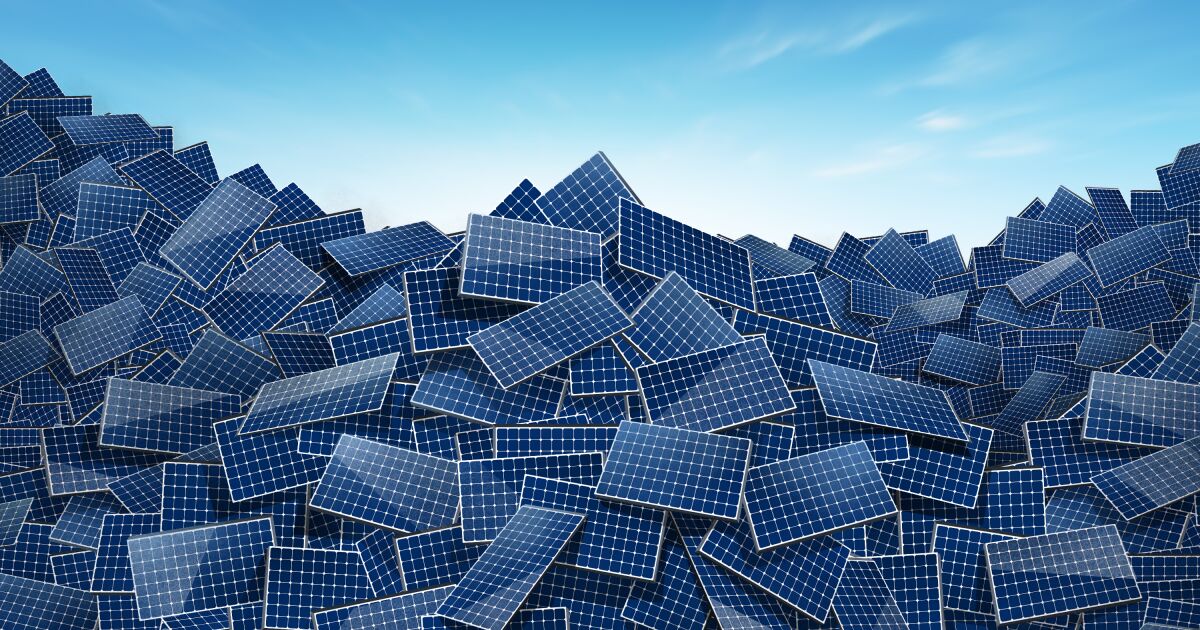
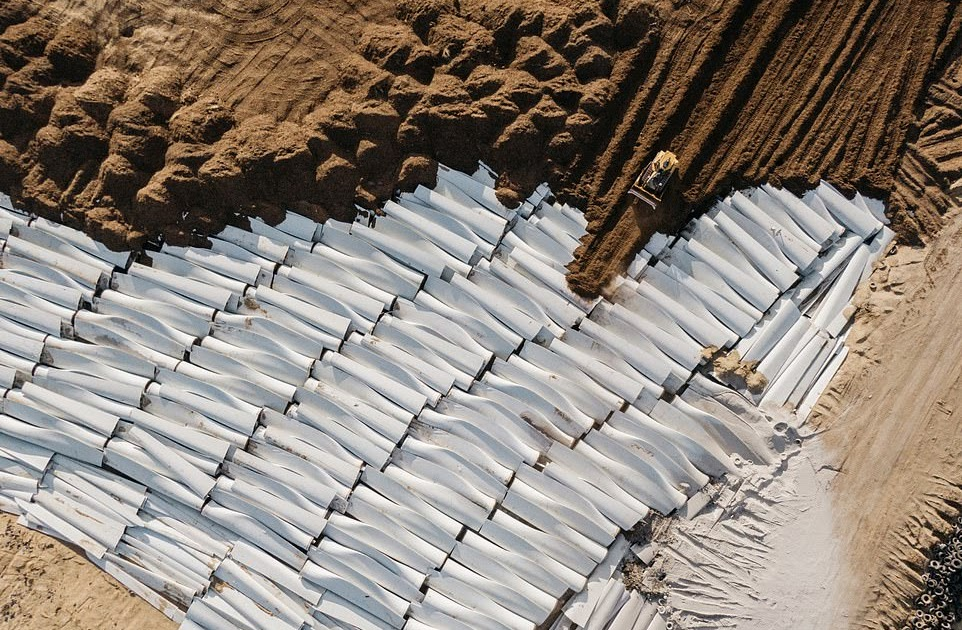
Wind turbines and solar panels soon wear out and have to be replaced. Some have already reached their use-by date. Most of this “green” debris cannot be recycled. To calmly bury that complex toxic waste of plastics, metals, steel, and concrete is not green at all. Soon chemicals will be leaking into the groundwater and water supply dams.
Manufacture, erection, and final disposal of green energy generators uses more energy than they can produce over their short lives. Their whole-of-life net energy production is negative, and their net emissions are also negative.
Greens also worship biomass energy like wood. This is the fuel that cavemen used for warmth, cooking meat, and repelling wild animals. Primitive people like the British still burn wood for power generation, but too much of the energy is consumed in collecting, drying, chipping, and transporting this low-energy fuel from distant forests to power station boilers.
NEXT, IF THEY WEREN’T SO HYPOCRITICAL ABOUT IT
The BBC Defends Special People Flying Private Jets to COP27
There has been criticism on social media of delegates arriving at the COP27 United Nations Climate Change Conference, in Sharm el-Sheikh, Egypt.
The day before the conference began, hundreds of environmental activists stopped private jets leaving Amsterdam’s Schiphol Airport, by sitting in front of their wheels and riding around the airfield on bicycles.
…
What is the carbon footprint of private jet travel?
…
Emissions per kilometre travelled are significantly worse than any other form of transport.
Climate models can’t be validated on initiatialisation due to lack of data and a chaotic initial state.
Model resolutions are too low to represent many climate factors.
Many of the forcing factors are parameterised as they can’t be calculated by the models.
Uncertainties in the parameterisation process mean that there is no unique solution to the history matching.
Numerical dispersion beyond the history matching phase results in a large divergence in the models.
The IPCC refuses to discard models that don’t match the observed data in the prediction phase – which is almost all of them.
The question now is, do you have the confidence to invest trillions of dollars and reduce standards of living for billions of people, to stop climate model predicted global warming or should we just adapt to the natural changes as we always have?
IT FIGURES AL GORE WOULD BE BEGGING FOR MONEY WITH ANOTHER SCAM
The 27th Conference of the Parties (COP27) of elite globalists is now gathering in Sharm El-Sheikh, Egypt, to decide how to best use ginned-up climate crisis narratives to extract wealth and power from the United States are redistribute it . . . mainly among themselves.
Former Vice President Al Gore is at the event, touting his newest pet project and trying to regain relevancy. He joined with Google’s nonprofit arm to back the nanny-state Climate TRACE project. The goal is use a satellite database to track “individual emitters” of life-essential carbon dioxide and other gases.
Finally, I defy the satellites to gather data on China and then enact any meaningful consequence to the Chinese government when it ignores the senseless emission goals.
The U.S. is suddenly open to making rich nations pay reparations to countries suffering the ravages of climate change — but only if China ponies up, too.
The about-face comes after years of Washington serving as the bulwark of wealthy countries’ resistance to making such payments, and would set up China as the new climate bogeyman. It would also challenge Beijing’s assertion that China should still be seen as a developing nation.
Paying developing nations that suffer from climate-driven disasters and rising temperatures is one of the most contentious issues in global climate negotiations, which resume this weekend at a major conference in Sharm El-Sheikh, Egypt.
China and India are way worse than any other country. This is about penalizing the West. I suppose that is the non-communist part of the world. An obvious target.
People like the idea of solar farms in the abstract, but hundreds of communities around the world are currently fighting them because they require 300-600x more land than other energy sources, produce 300x more toxic waste, and devastate critical wildlife habitats.
Many rich nations dump used solar panels and batteries on poor African nations
Other rich nations send used solar panels to “landfills where in some cases, they could potentially contaminate groundwater with toxic heavy metals such as lead, selenium and cadmium.”
By 2035 there will be 3x more used solar panels than new ones, which will make them 4x more expensive. “The economics of solar,” wrote Harvard Business Review researchers, “would darken quickly as the industry sinks under the weight of its own trash.”
The gig is up on sustainable energy, even for the staunchest of supporters. Before the discussion begins on those who are having to scramble to get ready for winter, China and India are laughing. They are expanding coal mining and coal power plants and are the worlds largest polluters. Still, the weenies who bought the (money laundering) Global Warming story are going to pay the most this winter.
Despite the fanfare surrounding wind and solar, the world’s dependency on fossil fuels is increasing. Last week, Saudi Aramco CEO Amin Nasser said that the world is now “transitioning to coal.”
Saad al-Kaabi, Energy Minister of Qatar, says, “Many countries particularly in Europe which had been strong advocates of green energy and carbon-free future have made a sudden and sharp U-turn. Today, coal burning is once again on the rise reaching its highest levels since 2014.”
They are right. Global coal demand will reach an historic high in 2022, similar to 2013’s record levels. According to the International Energy Agency (IEA), “Global coal consumption is forecast to rise by 0.7 percent in 2022 to 8 billion tons…. Coal consumption in the European Union is expected to rise by seven percent in 2022 on top of last year’s 14 percent jump.”
Coal will continue to be a sought-after energy source as “rising gas prices after 2030 will make existing coal-fired generation more economic,” the IEA says. Global energy demand will grow by 47 percent from now through 2050, and oil is expected to be the major source of energy.
Analysts are projecting “a huge gas-to-coal fuel transition in power and industrial sectors” of Europe. Yes, not gas to renewables, but gas to coal. In fact, the European Union’s coal consumption grew 16 percent year-on-year for the first half of 2022. European countries imported 7.9 million tons of thermal coal in June, more than doubling year-on-year. Annual coal imports are expected to reach 100 million tons by the end of the year, the highest since 2017.
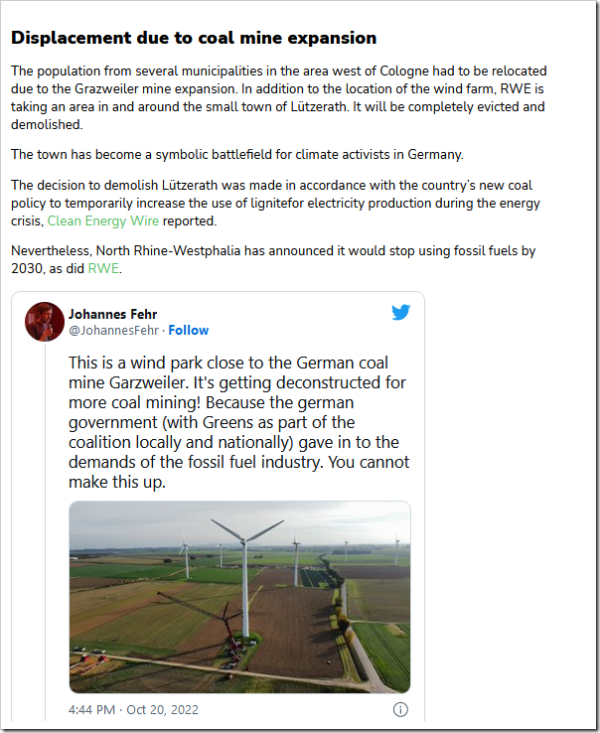
Even in the most developed economies of the West like Germany and the UK, fossil fuels continue to dominate as the only dependable source of energy. Germany is set to become the third highest importer of Indonesian coal in 2023, ranked just below coal-guzzling China and India.
AP says, “Coal, long treated as a legacy fuel in Europe, is now helping the continent safeguard its power supply and cope with the dramatic rise in natural gas prices caused by the war.” Rather than wind or solar, it is coal that is keeping the lights on in Europe.
So the Greens lied to us about the nuclear power plant issue!
The Greens assured us again and again that it would not make sense to continue operating the nuclear power plants. We would have “no electricity problem,” said Economics Minister Robert Habeck, Environment Minister Steffi Lemke and Green Party leader Ricarda Lang, like a mantra. But that was a lie that was spread against the advice of experts: This is proven by 166 documents from the environment and economics ministries, which environment minister Steffi Lemke (Greens) had to hand over to the Die Welt am Sonntag and the Cicero on application [both are behind a paywall].
Explosive: Robert Habeck and his Federal Ministry of Economics and Climate Protection refused to hand over the documents, which they are legally obliged to do! He wanted to cover up what Welt was able to prove anyway: the Greens lied to us in the nuclear debate — and neutralized experts who wanted to tell the truth.
The files show how Habeck and company put their crude anti-nuclear ideology above the security of supply in Germany: Against the advice of their own experts. Experts in Habeck’s ministry “obviously” considered the continued operation of the remaining nuclear power plants to be the right, sensible decision — Habeck ignored them. Just like the Ministry of the Environment, which apparently let a letter from the BMWK [Federal Ministry for Economic Affairs and Climate Protection] experts go straight into the wastepaper basket, ignoring the words of the experts as well. When the head of the “Society for Reactor Safety”, which is close to the ministry, criticized the phase-out of nuclear power, he was quickly muzzled by State Secretary for the Environment Christian Kühn (Green Party) and was no longer allowed to comment.
Ever since signing the Paris climate agreement, Vietnam has shown interest in reducing its dependency on fossil fuels, introducing in recent years a slew of measures to cut consumption.
However, in what is considered to be a major U-turn, Vietnam’s government announced last month that it will increase coal imports for the next 13 years.
Critics of fossil fuels, including most mainstream media, are out of sync with the world’s energy realities. They are consistently premature in their celebrations of the emission-reduction promises of developing nations like Vietnam only to see commitments yield to the need to meet growing energy demand with coal, oil and natural gas. Even developed economies like Germany and the UK have ditched — or suspended — grandiose plans for “carbon-free” utopias to fend off social unrest or economic collapse.
In a new strategy drafted to develop the coal sector, Vietnam’s Ministry of Industry and Trade says that it will increase annual coal imports to as much as 83 million tons during 2025-35.
This decision is a marked departure from ambitious emission-reduction plans that the country seemed keen to embrace, thus delivering another blow to the international campaign against fossil fuels.
Vietnam’s consumption of coal has increased rapidly in the last decade largely to generate electricity — from 27.8 million tons in 2011 to 38.77 million tons in 2015 and 53.52 million tons in 2021. Demand for coal is projected to peak at 125-127 million tons in 2030, mainly due to growing needs in power generation and in the cement, metallurgy and chemical industries.
For countries like Vietnam, there is no option but to increase fossil fuel consumption in the coming decades. Coal, oil, and gas together represent the most affordable, dependable, and abundant source of energy. In fact, a majority of the world’s primary energy comes from these fuels.
The favored technologies of climate alarmists — wind and solar — cannot meet energy needs of large populations. What little electricity they do produce is intermittent and expensive. So, developing countries cannot reduce fossil fuel consumption without a significant compromise in power reliability and economic growth. The consequences of energy shortages due to the anti-fossil fuel stance is greater in developing countries where poverty is still rampant.
Coal consumption correlates closely to Vietnam’s growth in gross domestic product (GDP). The doubling of consumption between 2011-21 tracks with a steady increase in the rate of growth over the same period.
#NBADJT
Also, it must suck that Trump said this would happen if they relied on Russian oil.
Burying the blades of wind turbines because they can not be recycled. Very Earth friendly move by the climate crowd. They don’t tell you this part of the lie.
The Media
“Every human has four endowments—self awareness, conscience, independent will, and creative imagination. These give us the ultimate human freedom … The power to choose, to respond, to change.”


















 Delusions of Adequacy