
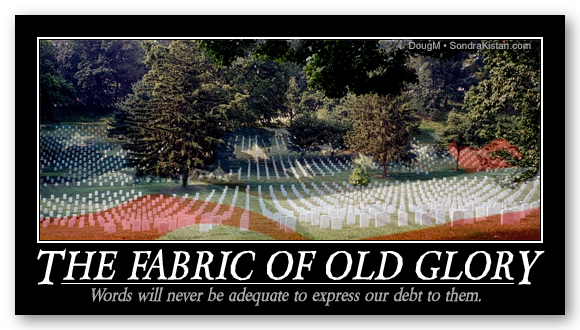
I hope we remember how valuable that title is.
Anniversary of D-Day b the Army
On D-Day, 6 June 1944, the Allied nations landed around 156,000 troops on the Normandy coastline. The American forces landed numbered 73,000: 23,250 on Utah Beach, 34,250 on Omaha Beach, and 15,500 airborne troops. In the British and Canadian sector, 83,115 troops were landed (61,715 of them British): 24,970 on Gold Beach, 21,400 on Juno Beach, 28,845 on Sword Beach, and 7900 airborne troops.
The War Years has created a range of D-Day commemorative designs and merchandise. Each of our designs incorporates QR barcodes that enables anyone with a smartphone or similar web-enabled mobile device to connect to our digital content, such as this Omaha Beach video. We also use 2D QR codes so that you can connect to our social media pages on Facebook and Twitter. Checkout our website: http://www.thewaryears.co.uk
The Assault on Omaha Beach
On D-Day, the untested 29th Infantry Division, joined by nine companies of U.S. Army Rangers redirected from Pointe du Hoc, were to assault the western half of the beach. The battle-hardened 1st Infantry Division was given the eastern half. The initial assault waves, consisting of tanks, infantry, and combat engineer forces, were carefully planned to reduce the coastal defences and allow the larger ships of the follow-up waves to land.
However, the assault on Omaha Beach did not go to plan. Almost all the specially designed amphibious DD tanks, that were to provide much needed covering fire for the infantry assault waves, sank off shore. Navigation problems caused the majority of landing craft to miss their targets throughout the day. The defences were unexpectedly strong, and the Germans inflicted heavy casualties on landing US troops. Under heavy fire, engineers struggled to clear beach obstacles; later landings bunched up around the few channels that were cleared.
Many troops were drowned or killed the moment they hit the beach. Many landing craft hit under water obstacles or were destroyed by mines. The surviving assault troops could not clear the heavily defended exits off the beach. This caused further problems and consequent delays for later landings.
Eventually small groups of Rangers and infantrymen scaled the heavily defended bluffs commanding the beach. Allied naval gunfire supported these improvised assaults. By day’s end, two small footholds had been won, which were subsequently exploited against weaker defences further inland, thus achieving the original D-Day objectives over the following days.
By The War Years Online http://www.zazzle.com/trumpess
A question that has interested historians and researchers for decades is: why? Why did Japan launch an attack that, in hindsight at least, they clearly had no chance of winning? The obvious answer is that they thought they could, but military and naval strategists know the answer is not so simple.
Precisely because its resources were so depleted by the war with China, it is accepted wisdom that Japan was hoping to expand its territories in the Pacific. If these areas belonged to Japan, they would, almost by default, become customers for Japan’s industrial and resource sectors.
But the Japanese underestimated America’s resolve to defend itself, for however long, and by whatever means necessary. If Japan hoped that America might take a “c’est la vie” attitude to the prospect of losing a battle in the Philippines, it was sorely mistaken. Nor was America still weary from the First World War.
Japan also underestimated the extent of Americans’ outrage at the bombing in 1941. It fueled the nation’s desire to win at almost any cost. No democratic government on earth can move forward without the will of the people, and after Pearl Harbor, the American people’s will was ferocious.

Here is the text and a link to the speech that FDR made after the attack at Pearl Harbor.
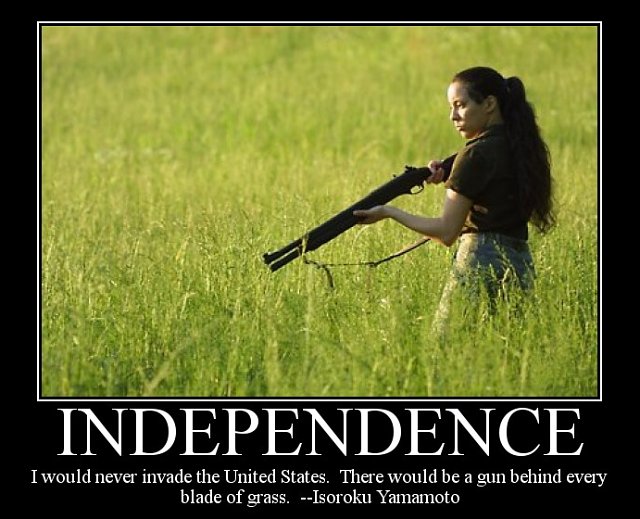
I read the Biography of Admiral Yamamoto, the architect of the attack. He believed that the only way to defeat the United States of America was a surprise attack that would disable our military in the Pacific. He clearly stated that he feared that if the attack was not completely successful, it would awaken a sleeping giant that the Empire of Japan could not defeat in standard battle. It must haunt his legacy.
Tactically, the mistake was not destroying the aircraft carriers which were out at sea that day or his plan may have succeeded.
As it turned out, he was shot down only a few years later in a surprise attack by a squadron of P-38’s heading to an inspection in the Pacific.
Here is the Youtube speech by FDR
I find ironic the words of the second half of the speech, if applied to 9/11, would be appropriate. Also ironic is that Japan was extending its reach for economic resources.
The United States was at peace with that nation and, at the solicitation of Japan, was still in conversation with its Government and its Emperor looking toward the maintenance of peace in the Pacific. Indeed, one hour after Japanese air squadrons had commenced bombing in Oahu, the Japanese Ambassador to the United States and his colleague delivered to the Secretary of State a formal reply to a recent American message. While this reply stated that it seemed useless to continue the existing diplomatic negotiations, it contained no threat or hint of war or armed attack.
It will be recorded that the distance of Hawaii from Japan makes it obvious that the attack was deliberately planned many days or even weeks ago. During the intervening time, the Japanese Government had deliberately sought to deceive the United States by false statements and expressions of hope for continued peace.
The attack yesterday on the Hawaiian Islands has caused severe damage to American naval and military forces. I regret to tell you, very many American lives were lost. In addition, American ships have been reported torpedoed on the high seas between San Francisco and Honolulu.
Yesterday the Japanese Government also launched an attack against Malaya.
Last night Japanese forces attacked Hong Kong.
Last night Japanese forces attacked Guam.
Last night Japanese forces attacked the Philippine Islands.
Last night Japanese forces attacked Wake Island.
This morning the Japanese attacked Midway Island.
Japan has, therefore, undertaken a surprise offensive extending throughout the Pacific area. The facts of yesterday and today speak for themselves. The people of the United States have already formed their opinions and well understand the implications to the very life and safety of our nation.
As Commander in Chief of the Army and Navy, I have directed that all measures be taken for our defense.
But always will our whole nation remember the character of the onslaught against us.
No matter how long it may take us to overcome this premeditated invasion, the American people in their righteous might will win through to absolute victory.
I believe I interpret the will of the Congress and of the people when I assert that we will not only defend ourselves to the uttermost but will make very certain that this form of treachery shall never endanger us again.
Hostilities exist. There is no blinking at the fact that our people, our territory, and our interests are in grave danger.
With confidence in our armed forces-with the unbounded determination of our people-we will gain the inevitable triumph–so help us God.
I ask that the Congress declare that since the unprovoked and dastardly attack by Japan on Sunday, 7 December 1941, a state of war has existed between the United States and the Japanese Empire.
Here is the only color film of the event. Listen to how excited the Japanese are and their commitment to give everything, including lives to this war:


 Delusions of Adequacy