Flu Is Rising Rapidly, Driven by a New Variant – I admit to being a germaphobe. I wipe down the seat, armrests, and everything I might have to touch. Actually, I’d rather not get on a plane. God forbid I stay in a hotel room where the people did whatever right before me and the hotel staff gave it the half-assed wiped down at best before I check in.
No wonder the flu is spreading. Wash your hands at least. People are disgusting.
P1 with Matt and Tommy, Late Breaking F1, Things Unseen – Sinclair Ferguson, Wisdom for the Heart – Stephen Davey, The Move – Lance Armstrong, Cycling podcast, Wicked Smart Golf, The Race F1 podcast, History extra, We we have ways of making you talk, James Allen, Bring back V10’s, Dr. Hyman podcast, Stay off my operating table – Philip Ovaida, Jefferson Fisher, The rest is his story, The Red Pilled America, Missed Apex F1, The Chequered flag, Parc Fermé, Sharyl Attkisson.
I started out watching 24Cast. I loved Jack Bauer saving the day. I was heavily into martial arts at the time, and Jack was ex-Delta Force. It quickly went to F1 and Christian sermons that were meaningful to me.
I used to listen to the Marvel and Star Wars podcasts, but those shows went woke, so I lost interest. Agents of S.H.I.E.L.D. ended so that took care of itself.
I miss F1 Misfits though. It was 2 Aussies with a sense of humor which used to kill me. They just went away. I listened to almost 1000 episodes of F1Weekly, but Clark lost the passion and just goes through the motions so I stopped.
I go in and out depending on what my interests are, but I can fall asleep to any of them.
General Motors has abandoned a plan to pump $300 million into electric-vehicle motor production at its upstate New York plant and will instead invest $888 million to make the latest V-8 engines https://t.co/A2yg4NWRow
Are there any activities or hobbies you’ve outgrown or lost interest in over time?
Just about every damn one of them. Girlfriends too.
I was infatuated with boats as a kid. I wound up owning two and was glad to unload both of them.
I played Tennis in college, playing and practicing every day for years, and don’t even bother turning on Wimbledon anymore.
I fished (see the boats) for decades every week and haven’t wet a line in years. I caught thousands of fish
I did martial arts for decades, but that fell by the wayside also.
I hunted for years until I decided not to kill anymore unless it was life or death. My house has trophies on the wall from many hunts, but there won’t be anymore.
I biked in group rides competitively multiple times a week for years and even though I ride for exercise, I do it alone now about once a week, just to stay healthy and to get away.
It was the same with all the girlfriends I had before being married. They lasted until I realized who they presented themselves to be to win me over wasn’t who they were, and it was over.
Hell, I don’t even want to see my extended family unless I have to. I keep them at arm’s length as much as I can to not have the stories of my childhood replayed for the 1000th time.
What all of these had in common was that I conquered them. The thrill of victory was over and there were no more dragons to slay. When the passion was gone, so was I.
Now, I try not to get small-talked to death and most of the stuff I do are solo sports.
About the only things that remained in my life were golf, auto racing, reading, and bible study. The rest faded away due to a lack of passion.
Such is life. I try to stay to myself. I compartmentalized the things in the past and write about them occasionally, mostly to myself.
I’ve become more introverted in life and my enjoyment comes from within and time alone rather than in groups. Hell, I have to face people from my past this week and I can’t say I’m excited about that either.
Why would you want to ride in a Ferrari when you can command such a beast around the roads? It would be like having the most beautiful girl in the world and not sleep with her.
At least the company headquartered in Maranello announced they won’t pollute the sanctity of their driving machines with this feature.
They caved to e-fuels, but the essence of the prancing horse will stay intact.
Self-driving Ferraris are not for us, Ferrari chief executive Ferrari Benedetto Vigna said Monday. “Lifestyle business is immportant for us,” Vigna said. “It allows us to expand links with our community.”
Vigna also welcomed plans to exempt cars that run on e-fuels from the European Union’s planned 2035 phase-out of new combustion engine vehicles as they will give the luxury carmaker “greater freedom” on its power systems.
COMBUSTION ENGINE EXCEPTION
The European Union and Germany have reached a deal allowing new cars powered by combustion engines (ICE) to be sold beyond the 2035 deadline, or 2036 for so-called small volume manufacturers like Ferrari, if they run on carbon-neutral e-fuels.
“The good news for us as a company is that on top of electric cars, we’ll also be able to go on with our internal combustion engines ones,” Vigna told a Reuters Newsmaker event.
“This decision is very interesting for us because it allows ICEs to go beyond 2036,” he added.
Ferrari, which is renowned for its powerful petrol engines, is already producing plug-in hybrid cars and has promised its first full-electric vehicle for 2025.
However, Ferrari, which sold over 13,200 cars in 2022, has never provided a roadmap for going all electric.
Presenting its new business plan last year, Ferrari said fully electric and hybrid models would make up 80% of those in its range by 2030, while 20% would still be powered by internal combustion engines.
“This does not change,” Vigna said. “We don’t want to tell clients which car to use. We want to make three kinds of propulsion available for them – hybrid, electric and ICE – and they will chose.”
SPENDING UNCHANGED
Vigna reassured investors that the company’s investment plans would not be affected by combustion engines getting an extended life, as Ferrari had already “embedded” this scenario in its business plan.
“The figure I gave (last year) – 4.4 billion euros ($4.7 billion) for capex in the 2022-2026 period – it’s enough for us to go ahead with electrification and also with ICEs which are compatible with e-fuels,” he said.
Vigna said Ferrari’s upcoming electric model would be “a unique car” but would not be drawn on details, adding that “keeping secret is part of the recipe.”
He added it was wrong to assume that specific forms of propulsion would match specific models in the future. Fuels are a mean to provide the performance expected from a Ferrari car, he said.
He said that the price of e-fuels, or synthetic fuels, was likely to come down as they are developed in coming years.
“They’re a new technology, and like for all new technologies they have time to become cheaper,” he said. ($1 = 0.9279 euros)
General Motors has announced the end of production for the sixth-generation Chevrolet Camaro for the 2024 model year. Another American muscle icon bites the dust — but Chevy says this isn’t the end of the road for the vehicle as we know it; we just have no idea what’s coming next. The final car will roll off the production line at the Lansing Grand River Assembly Plant in January of next year.
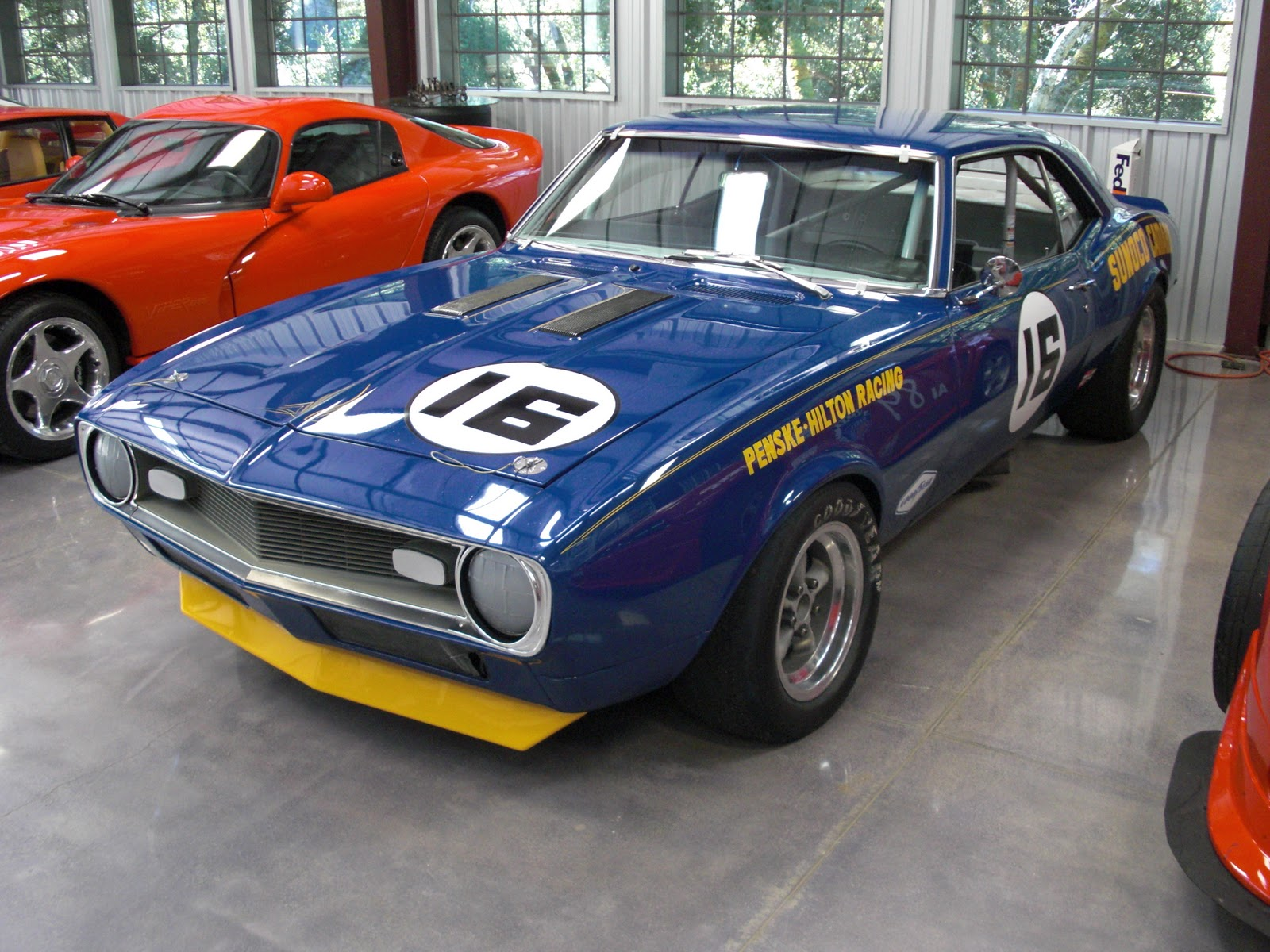
In the manufacturer battle, I never once pulled for a Camaro in Trans-Am, NASCAR, IMSA or any other series. I’d never buy one either. It doesn’t lower my respect for it as a good car, except for the gas war years when all cars got neutered.
I’ve followed them since 1968 because of Roger Penske and Mark Donohue. Those pony car days made for great auto’s and brand marketing. This includes the Mach 1 which I think is going away also.
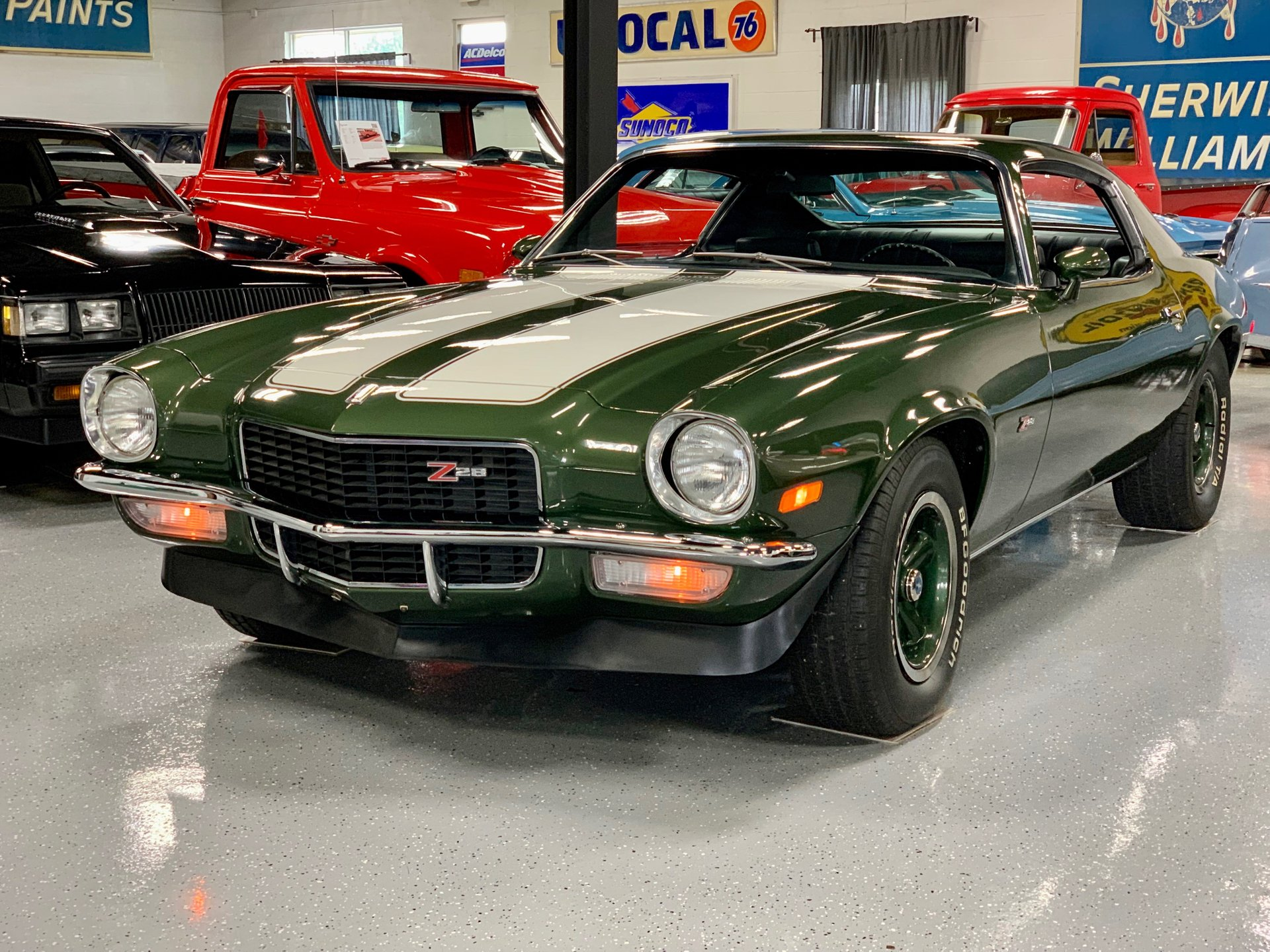
One of my friends in college had the bad ass Z-28, sort of like this one.
He’s lucky he didn’t get killed on the run from Orlando to Haines City at over 100 MPH.
Not being a GM fan doesn’t mean I don’t respect it as a good car.
It’s a shame for GM to kill off such an iconic brand. Not one of the major manufacturer’s are making money on EV’s (other than Tesla) and they keep cutting their own throats with moves like this.
I’d never buy one, but you need good competitors to have a race. Chevy just took that away.
I find this interesting because part of the thrill of one of these ultimate driving machines is the sensory overload. The sounds and smells are as much a part of the thrill as is the rush of being pushed back into the seat when you push down the loud pedal (accelerator for the under educated).
I’ve been to races for 6 decades now. You can smell the exhaust, tires and hear it before you get to the track. You don’t get that from a station wagon or an SUV.
Even if I lost my vision, I’d only not be able to see how sleek and fast they look. My other senses would say it’s a real car.
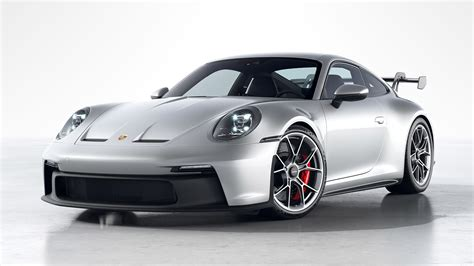
Fortunately, even though it is ridiculous E-Fuels, at least they aren’t going to plug in a 911.
I still open the window of my car just to hear them drive away.
With many automakers transitioning from petrol-powered vehicles to electrified ones, Porsche and Ferrari are pursuing a new strategy by concentrating on the advancement of eFuels to preserve gas-powered engines. This decision follows the European Commission’s delay last week of the proposed 2035 ban on new internal combustion engine vehicles as the commission prepares to carve out a role for eFuels after 2035.
“Porsche and Ferrari’s status as national icons was enough to move their governments to challenge the EU plan last week just days before a scheduled vote,” Bloomberg wrote.
Germany’s Transport Minister Volker Wissing told the European Commission that he would withhold support for the approval of the new engine standards to end the sale of new combustion engine cars unless there were a plan for eFuels post-2035. Italy also threatened to fight the reforms.
European Commission President Ursula von der Leyen met with German Chancellor Olaf Scholz on Sunday, discussing a comprise that would likely involve eFuels.
Germany and Italy are home to the world’s top sportscar manufacturers. There has been growing opposition against Brussels’ plan to ban petrol-powered engines. That’s because who in their right mind would purchase an all-electric Porsche 911?
The alternative route, mainly for sportscar brands, is the development of eFuels as a climate-neutral way to preserve combustion engines—just something about the sound of a twin-turbo V-8 or V-6 that captivates motorheads.
While most carmakers are pouring tens of billions into the EV shift, Porsche has also invested in an e-fuel plant in Chile, partly because the manufacturer doesn’t plan to make its 911 sports car with a plug. Operating combustion-engine vehicles in a climate-neutral way could also help speed up the decarbonization of the transport sector, according to a Porsche spokesman. Existing vehicle stock should be included in the push to lower CO2 emissions faster, he added. Ferrari has said it’s pursuing alternative fuels to keep making combustion-engine cars that preserve its heritage.
Proponents of e-fuels, say they’re essentially renewable electricity that’s been converted into a combustible, liquid fuel. To make it, scientists combine captured carbon dioxide with hydrogen that was split from water in a process powered by renewable energy, creating a synthetic hydrocarbon fuel. When burned in a combustion engine, the e-fuels create carbon dioxide. But since it was made from previously captured CO2, they argue it’s climate neutral.
We’ve outlined the growing resistance among vehicle brands and motorsport organizations that are firm in their belief the combustion engine will be sticking around for years to come.
A great sport has been overtaken by the environmentalists saying this is the future of clean energy and the usual word salad to prove their point. They have created some of the most cutting edge technology and speed you can possibly do. It was at the cost of fun, enjoyment of the car and the rush you get from all of your senses.
Before I get to the facts below, everyone likes the sound of a screaming V-12,10 or even 8 over a hybrid car. You can hear them before you see them and the noise and smell enhance your senses of excitement.
It’s not going to happen though, but here’s why it should:
The electric car’s biggest disadvantage on greenhouse gas emissions is the production of an EV battery, which requires energy-intensive mining and processing, and generates twice as much carbon emissions as the manufacture of an internal combustion engine. This means that the EV starts off with a bigger carbon footprint than a gasoline-powered car when it rolls off the assembly line and takes time to catch up to a gasoline-powered car.
One of the big unknowns is whether EV batteries will have to be replaced. While the EV industry says battery technology is improving so that degradation is limited, if that assurance proves overly optimistic and auto warranties have to replace expensive battery packs, the new battery would create a second carbon footprint that the EV would have to work off over time, partially erasing the promised greenhouse-gas benefits.
With governments now in the business of mandating electric vehicles, the battery challenge assumes a global scale. The majority of lithium-ion batteries are produced in China, where most electricity comes from coal-burning power plants.
The process of mining critical minerals is sometimes described in language that evokes strip mining and fracking, an inconvenient truth that is beginning to attract notice. “Electric cars and renewable energy may not be as green as they appear,” a 2021 New York Times article noted. “Production of raw materials like lithium, cobalt and nickel that are essential to these technologies are often ruinous to land, water, wildlife and people.” The Times has also warned that with global demand for electric vehicles projected to grow sixfold by 2030, “the dirty origins of this otherwise promising green industry have become a looming crisis.”
All of these CO2 metrics could come into play in the Securities and Exchange Commission’s recently proposed rule that would require publicly traded companies to disclose the greenhouse gas emissions they produce directly, as well emissions produced indirectly through their supply chains around the world. While the implications aren’t clear yet, the new rule could standardize CO2 disclosures and transparency on EV carbon impacts, but some say that such calculations are nearly impossible for global contractors, and automakers would have to rely on the same kinds of estimates and modeling that are used now. Echoing a common concern, EV battery maker Nikola Corp. told the SEC that “some climate data is not readily available, complete, or definitive.”
As a result of these uncertainties, many consumers don’t understand the complexity of these analyses and may assume that their electric cars are literally zero-emissions, or that what matters most is that EVs are better for the environment and the precise degree is not that important.
more….
EV advocates are optimistic that in the coming decades electric cars will become cleaner as power grids are “decarbonized” and the industrialized world reduces its reliance on CO2-spewing fossil fuels, primarily coal and natural gas. Exactly how much cleaner is not easy to pinpoint. According to the U.S. Energy Information Administration, about 60% of the nation’s electricity was generated from coal and gas in 2021. In its Annual Energy Outlook, the agency projects those two fossil fuels will generate 44% of U.S. electricity by 2050.
But those percentages can be misleading. Even as the relative fuel proportions change over time, overall electricity demand is going up, so the total amount of fossil fuels actually burned in the mid-21st century goes down by only about 5%, according to EIA estimates. Future greenhouse gas emissions will depend on the number of EVs on the road and how electricity is generated, and those forecasts swing wildly. The EIA forecasts a mere 18.9 million EVs on U.S. roads in 2050, which is very conservative compared with advocacy group EVAdoption’s prediction of more than 25 million EVs on U.S. roads by 2030, only eight years away. BloombergNEF forecasts 125 million EVs on U.S. roads in 2040, up from 1.61 million at the end of last year, which would constitute about half the cars in this country.
“They’re making these forecasts that are basically licking your finger and sticking it up in the air,” David Rapson, a professor of energy economics at the University of California, Davis, who analyzes electric vehicle policy, said about California forecasts, which also applies more broadly. “Nobody knows what’s going to happen.”
Back to me.
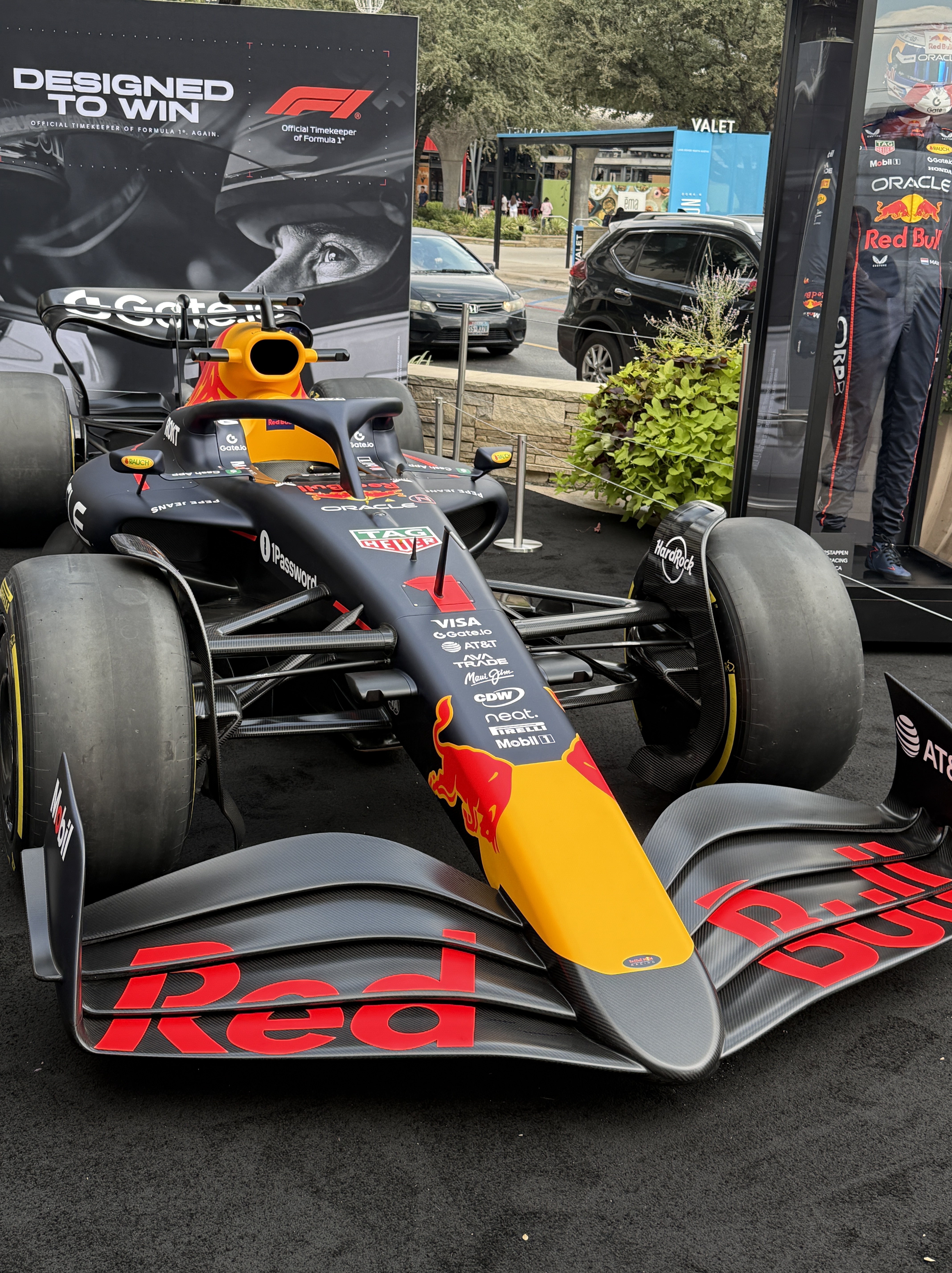
Don’t try to tell me racing a hybrid is environmentally helpful when you fly around the world in many private and cargo jets each F1 weekend. Hauling the freight to one race is the pollution (carbon is not pollution) of all the cars in every race.
Cut us some slack and put real engines that we can hear coming, building our excitement.
Even the greenie drivers loved it when Fernando Alonso drove his championship winning Renault to some exhibition laps. They miss the sound also.
It’s not a step backwards, rather a step in the right direction.
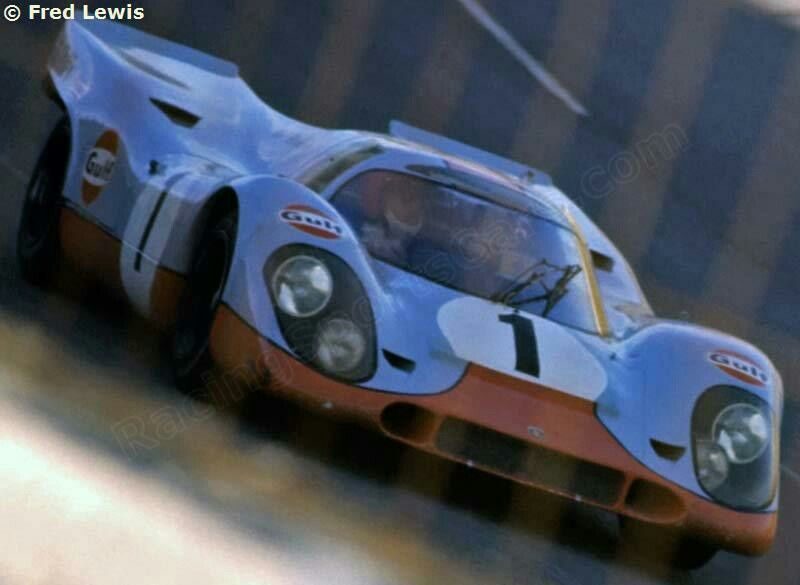
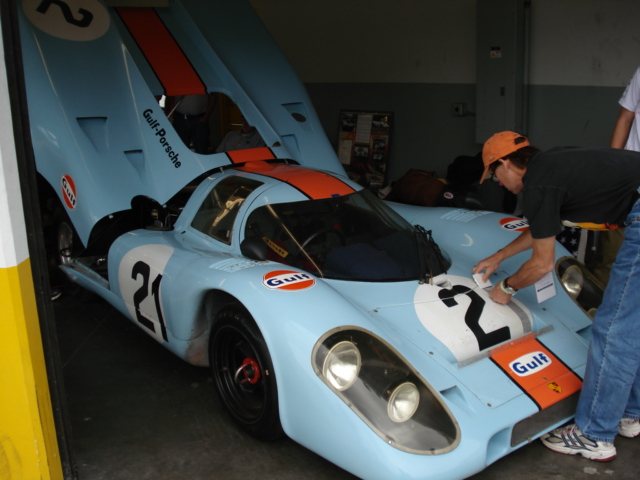
This is Jo Siffert at Daytona in 1970 in a Gulf Porsche 917. Out of all of the versions of this dominating car, this was both my favorite and my first encounter with it. He was my favorite driver and died too young.
It was the first time I’d seen a car go over 200 MPH in person. I was young, so it was impressive.
I was already a Porschefile by this point, but that day cemented it home.
I’ve seen them race many times, but I was with my Dad that day and it still is memorable for me.
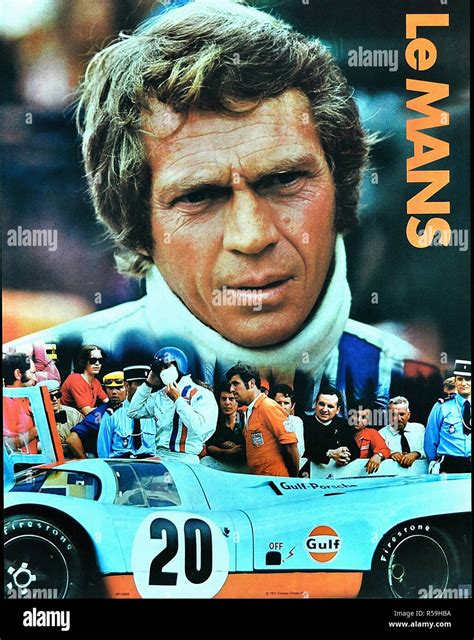
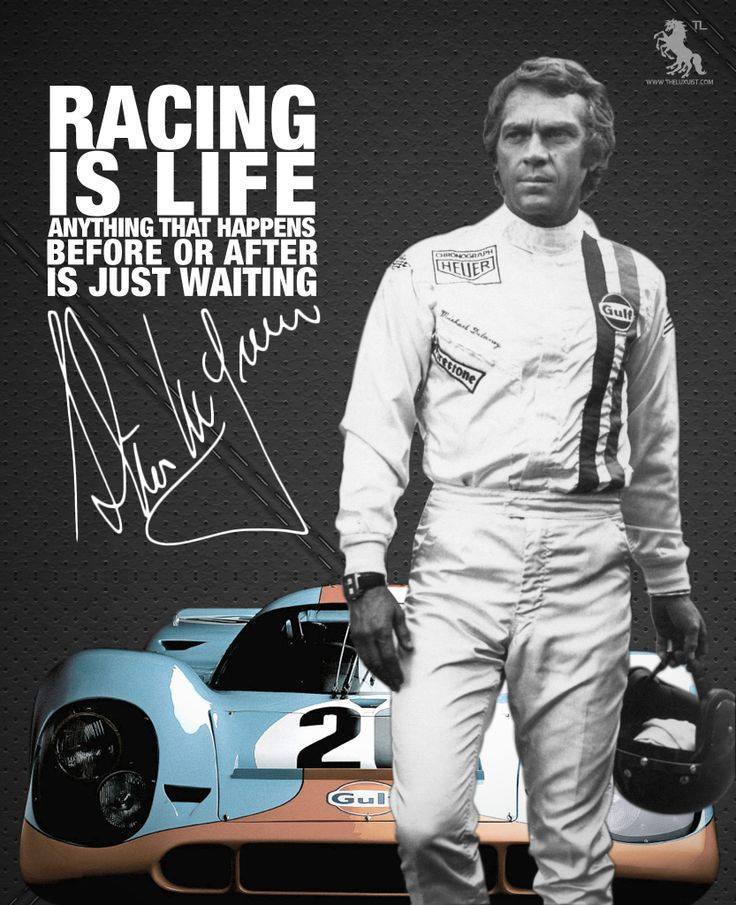
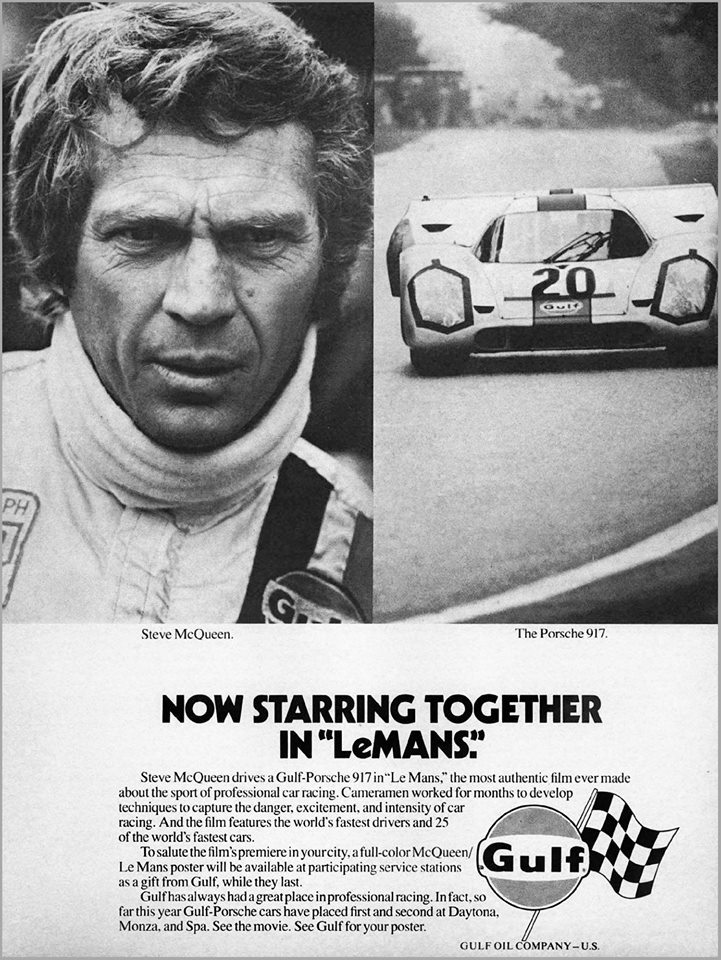
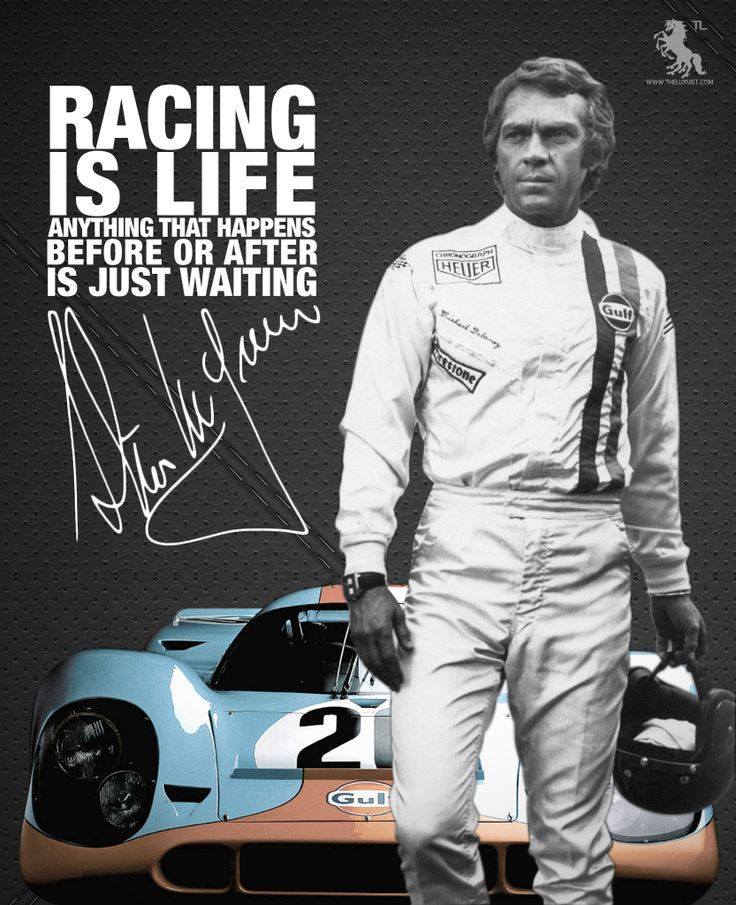
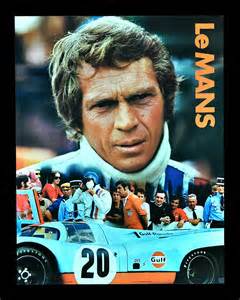
Later, the car was the star of the movie Le Mans. Steve McQueen was in the movie, the king of cool, but the car outshone him.
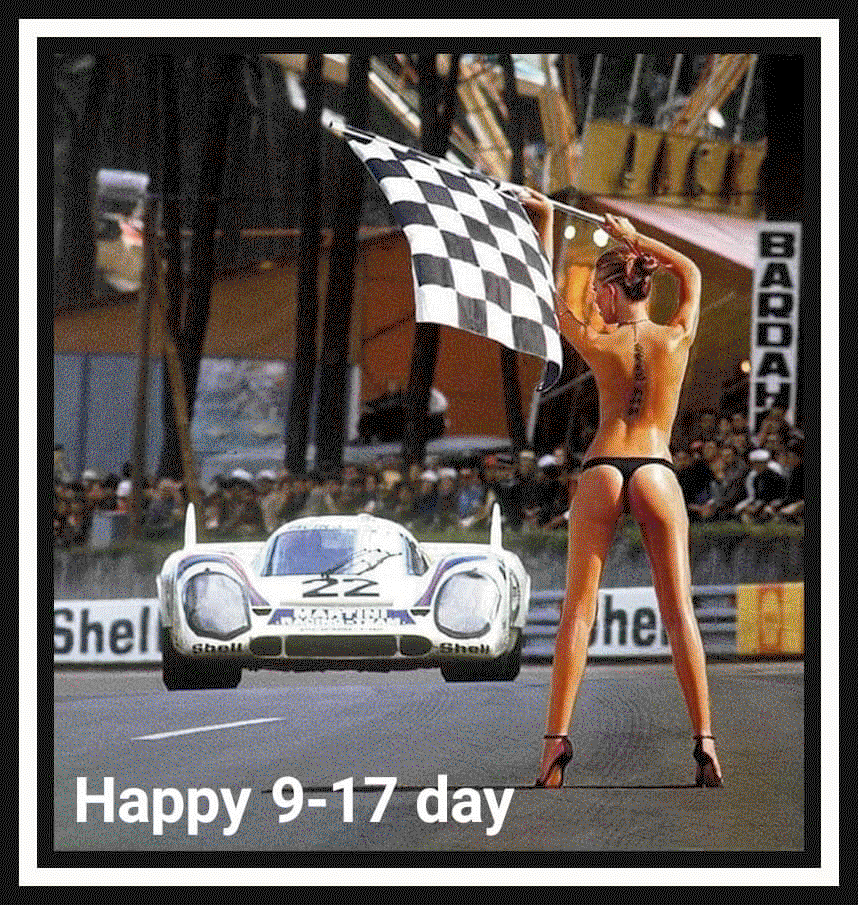
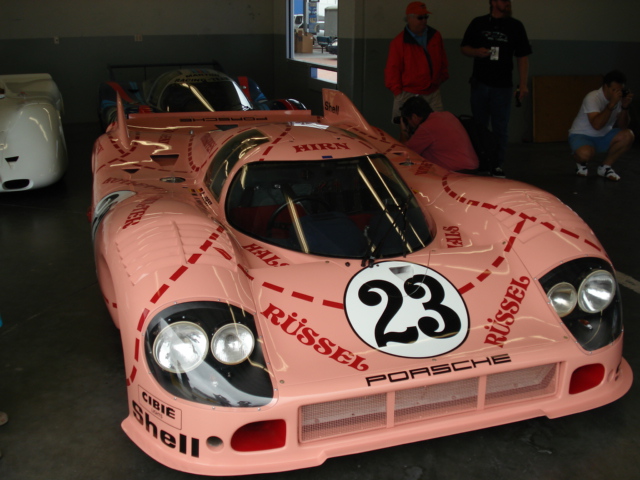
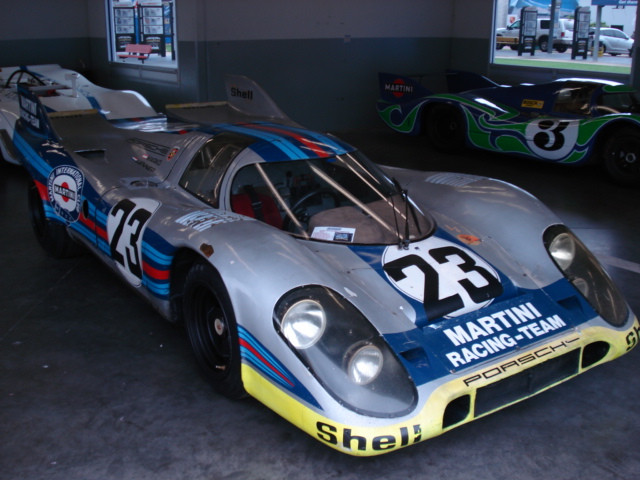
Some call it the greatest sports car ever, and for those of us who have seen it race, we understand why.
After all…..this is the greatest line ever in a car movie.
Perhaps the greatest sports car ever built and the star of a movie with Steve McQueen, this car was so dominant that it got banned not once but twice. It is recognized by most aficionados as one of the top cars in any list of the greatest cars.
It’s longevity, reputation and star appeal are it’s own, and enough to hold up to the King of Cool.













 Delusions of Adequacy