
1

2
3

4
5
6

7
8
9

10 This makes Jante’s Law and Janteloven irrelevant and insignificant
11

12 I think democrat is correctly spelled Moron or retard

13

14

15

16

17

18

19
1
2
3
4
5
6
7
8
9
10 This makes Jante’s Law and Janteloven irrelevant and insignificant
11
12 I think democrat is correctly spelled Moron or retard
13
14
15
16
17
18
19

I’m married to Dane. For decades, they bragged about all the free shit they get such as education, healthcare, and retirement. They have to pay 70% taxes to afford this for the country. I believed them at first, but the truth came out ,and they aren’t happy about paying so much for everything.
Every one of her (not mine) relatives who has had surgery has had it messed up. From ankles to stomachs, botched every time. They wait 6 weeks to see a doctor (a cold is gone in 1 to 2). Even their pension isn’t as much as Social Security, the pittance that it is.
They aren’t fooling me. I see how they live. They avoid the government because everything is so expensive. They buy all their stuff in the US instead. They are next to obnoxious to protect a tiny country which hasn’t been great since the Vikings.
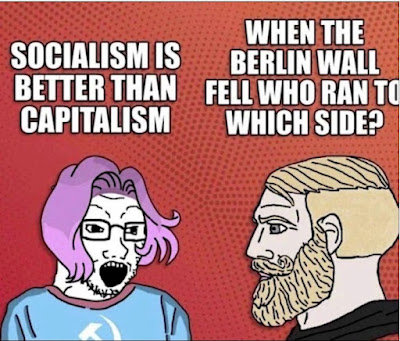
They brag how everyone is equal (a big lie, her nephew Brian can’t stop talking about how much he has and paid for it). The other lie is they are the happiest. When you set your standards to zero, you can meet them everytime. They aren’t happy and will barely talk to a stranger there.
I said I wasn’t going there again and meant it
Have you ever wondered why Scandinavian countries are often hailed as the gold standard of social equality? It’s a compelling narrative: nations like Sweden, Denmark, and Norway seem to have cracked the code on blending prosperity with fairness. But what if the story we’ve been sold isn’t the full picture? As someone who’s always been skeptical of too-good-to-be-true promises, I decided to dig deeper into the so-called Scandinavian model. What I found was a system far more complex—and, frankly, more troubling—than the rosy image painted by its admirers.
The term Scandinavian socialism gets thrown around a lot, often with a sense of awe. People point to high taxes, generous welfare programs, and impressive human development rankings as proof of a utopian system. But here’s the thing: what’s labeled as socialism in Scandinavia isn’t quite what you might think. It’s not about collective ownership of production or some grand egalitarian dream. Instead, it’s a carefully crafted system where the state plays a heavy-handed role in managing resources, wealth, and opportunity—often to the benefit of a select few.
At its core, this model is less about empowering the average citizen and more about maintaining state control. The state doesn’t own businesses outright, but it sets the rules, picks the winners, and ensures compliance through a web of regulations and taxes. It’s a system that looks free on the surface but operates with an iron grip beneath. Let’s break it down and see what’s really going on.
Back in the late 19th century, Scandinavian countries faced a unique challenge. They were resource-rich—think timber, iron, and fisheries—but lacked the robust middle class needed to fully exploit these assets. Unlike their European neighbors, who had thriving industrial bases, these Nordic nations couldn’t rely on state-run enterprises to drive growth. Their solution? Outsource production to a handpicked group of industrialists and corporations, both local and foreign, who were granted special privileges in exchange for loyalty and hefty tax contributions.
The state didn’t abolish private enterprise; it tamed it, turning businesses into extensions of its own agenda.– Economic historian
This wasn’t socialism in the classic sense. It was a hybrid—a mix of state favoritism and market dynamics. The government didn’t seize factories or mines; instead, it created a system where only those who played by its rules could thrive. This approach allowed Scandinavian nations to industrialize rapidly, but it came at a cost: a rigid hierarchy where the state and its chosen allies held all the power.
One of the biggest selling points of the Scandinavian model is its promise of equality. High taxes fund universal healthcare, education, and pensions, creating the illusion of a classless society. But is it really as fair as it seems? In my view, the system’s equality is more about uniformity than true fairness. Citizens are funneled into a state-managed existence, where their role is to maintain the system, not to innovate or break free.
The average Scandinavian doesn’t own significant capital or run their own business. Instead, they’re often locked into roles as employees within a tightly regulated economy. Their reward? A safety net of welfare benefits that ensures stability but discourages independence. It’s a trade-off: security for autonomy. And while that might sound appealing to some, it’s worth asking—does it truly empower people, or does it keep them tethered to the state?
Perhaps the most striking aspect of Scandinavian socialism is its reliance on a small, politically connected elite. These are the industrialists, corporate leaders, and bureaucrats who benefit from the state’s legal monopolies and administrative privileges. They’re not your typical capitalist entrepreneurs—they’re state-sanctioned players who thrive because of their proximity to power.
This dynamic creates a kind of corporate feudalism, where the state acts as a lord, granting favors to loyal vassals. In return, these elites generate revenue that funds the welfare state, keeping the system afloat. It’s a clever setup, but it’s not exactly the democratic paradise it’s made out to be. The average citizen has little access to this inner circle, and their economic mobility is often capped by design.
Fast forward to today, and the Scandinavian model is starting to show its age. The system was built on the back of abundant natural resources and a compliant workforce, but those foundations are crumbling. Aging populations, declining competitiveness, and shrinking resource revenues are putting pressure on the welfare state. The machine, as I see it, is grinding to a halt.
What happens when the money runs out? Historically, states in this position turn to desperate measures. In Scandinavia, that could mean wealth confiscation or outright nationalization of private assets. It’s not hard to imagine governments doubling down on their control, especially when the promise of welfare is at stake. After all, if the system’s built on dependency, what choice do they have?
Scandinavian countries consistently rank high on global happiness indices, which often fuels the myth of their success. But is this happiness genuine, or is it a byproduct of a system that prioritizes compliance over ambition? In my experience, true contentment comes from freedom and opportunity, not just material security. When you’re locked into a system that limits your potential, can you really call that happiness?
The data paints a mixed picture. While citizens enjoy high standards of living, they also face some of the highest tax burdens in the world. Personal savings rates are low, and entrepreneurship is stifled by red tape. It’s a system that works—until it doesn’t. And when it fails, the fallout could be severe.
As the Scandinavian model faces growing challenges, the question is whether it can adapt. Some argue for reforms—lower taxes, deregulation, and a shift toward true market freedom. Others fear the state will tighten its grip, moving closer to outright nationalization. Either way, the myth of Scandinavian socialism as a perfect balance of equality and prosperity is fading fast.
For those of us watching from the outside, there’s a lesson here: systems that promise everything often deliver less than they claim. The Scandinavian model isn’t a blueprint for utopia; it’s a cautionary tale about the costs of control. Perhaps it’s time we rethink what equality and freedom really mean.
There is more here, but it says the same thing.
But the longer I stayed, the more I started noticing cracks. They weren’t always visible at first—more like patterns in conversation, stories from international friends, or the quiet discomfort that settled in certain moments. Coming from the United States, where diversity and individualism are more overtly woven into everyday life, I couldn’t help but notice how the very system that offers so much comfort in Denmark comes with a cost.
In 2018, Denmark introduced the “Ghettoplanen” (Ghetto Laws), later rebranded as the Parallel Society Laws. These policies target neighborhoods where more than half the residents are of “non-Western” background—a term that includes people from countries outside the EU and North America, even if they were born in Denmark or are second- or third-generation citizens. Children whose grandparents immigrated from places like Turkey, Lebanon, or Somalia are still counted as “non-Western” under the law.
If a neighborhood meets enough criteria—low income, high unemployment, and a “non-Western” majority—it faces state intervention. This can include:
The government claims these measures promote integration, but they operate more like demographic engineering. The message is clear: too much cultural difference in one place is unacceptable.
To someone from the United States, this feels disturbingly familiar. The targeted housing policies, the coded language about “undesirable neighborhoods,” the use of state power to reshape communities—it all echoes redlining. The difference is that in Denmark, it isn’t a buried legacy. It’s law, in force today, designed to preserve cultural homogeneity. And while the justification is social cohesion, the result is a system that penalizes people for their ancestry.
Welfare states like Denmark’s aren’t built on taxes alone—they rest on a shared cultural foundation. The social contract assumes a common understanding of how to live: shared values, similar behaviors, and a broadly uniform way of life. While that foundation can foster trust and cohesion, it also creates pressure to conform.
Visible difference—whether in language, religion, dress, or worldview—can unsettle that cohesion. And instead of adapting to diversity, Denmark often manages it through policies and social norms that nudge immigrants and their children toward assimilation. In practice, it’s not just an invitation to integrate—it’s a demand. The result is a system where those who don’t—or can’t—fully assimilate face quiet exclusion. A nail artist from Nepal told me she’s struggled to make Danish friends despite living here for years. Friends of mine who are South Asian or Middle Eastern are routinely denied entry to clubs under vague excuses like “it’s full,” while white Danes enter with ease.
These aren’t isolated experiences. According to the EU Agency for Fundamental Rights, migrants in Denmark report higher levels of discrimination than the EU average. And despite topping global rankings in welfare provision and institutional trust, Denmark scores near the bottom when it comes to multicultural integration.
Much of this exclusion is hard to see. It’s not enforced through loud rhetoric or explicit laws, but through daily interactions, housing policy, and unspoken expectations. The discrimination is systemic, subtle, and often unacknowledged—and that silence makes it harder to confront. At the heart of this pressure to conform is Janteloven, a deeply rooted cultural code that discourages standing out or asserting individuality. While it promotes humility on the surface, it also reinforces social and cultural sameness. For many Danes, it creates cohesion; for outsiders, it can feel like an invisible wall. Combined with state policies that reward uniformity, Janteloven helps preserve a society that appears egalitarian but quietly resists pluralism.
I’m tired of being lectured to by my wife’s relatives who live there how and why the USA should be more like Denmark. Why? Why would I want to be like them?
Greenland’s Prime Minister Now Says Open To Talks With Trump: ‘Status Quo No Longer an Option’
We are continuing to watch the developments related to Greenland, which have gotten especially interesting after President-elect Donald Trump tasked his pick for Ambassador to Denmark with persuading the Danes to sell us the resource-rich Arctic land.
Shortly after that announcement, Greenland suffered a major power outage due to a downed transmission line. The blackout plunged the region into darkness as temperatures dropped below -27 degrees Fahrenheit (-33°C).
This was soon followed by Greenland’s Prime Minister Mute Egede calling for independence from Denmark, marking a significant shift in the rhetoric surrounding the Arctic island’s future.
Trump’s son later went on an “unofficial” visit to Greenland. At that time, I speculated that persuading the people of Greenland to become an independent territory of the United States might be the best deal that could be placed on the table.
Intriguingly, Egede recently had a joint press conference with Danish Prime Minister Mette Frederiksen during which he said that he’s ready to speak with Trump as ‘the status quo is no longer an option‘.

My wife’s Danish relatives, to whom I’ve had to associate in the last 3 decades of marriage finally can’t hide their contempt for Trump and the USA any longer.
In dealing with them and many Europeans throughout my business career, it’s clear that trashing the US is their favorite sport (not football/soccer). They keep trying to re-make America by their rules, rather than accept the history of a country that has surpassed centuries of European culture.
A point of note is that while they are trashing America, they are wearing Levis or Carhartt, smoking Marlboro cigarettes, and regularly vacationing in America all while bitching that it isn’t Danish enough. They love shopping here because it is so much cheaper because of their 70% tax rate which pays for their “FREE” education and healthcare (that is just above malpractice)
The press coverage and the feedback I get is that the Danes are livid that Trump wants Greenland.
One of her nieces posted that Elizabeth Warren is the “bomb”

My wife also has a brother who lives in Greenland and the natives there hate Denmark owning them, but subsist off of the money that Denmark pours into them yearly. They’d rather be Greenlandish and free but realize they get a heck of a lot more from the US than they would Denmark, given the economic difference.
The US has had a military base there for a long time and they love the Americans in Greenland, more than the Danes
Back to my wife’s relatives, the Danes hate Trump. He is as atypical of how the Danes think they think (Janteloven) as possible. They are as averous as any other group despite what they claim. She’s got nephews who brag about the price of everything they bought and the status of the item. With Trump, They can’t handle the thought of an alpha male actually being successful and achieving more than others because of hard work and outsmarting others (like my wife’s relatives). Mostly, he’s not a socialist like a lot of thinking in Denmark so they can’t grasp it so they use the “typical American” and hate him. They actually don’t know why other than their press has told them to.
I had to cut them off from social media for the childish trashing of him for the last 8 years. I haven’t missed anything though other than them being the compass for what is wrong by going against everything they think is right (Warren/Pocahantis, Biden, Kamala, Obama, Obamacare, and the list goes on). So Trump lives rent free in their heads now as they seethe every time he wins (and wins again).

Here is an unscientific poll that backs up my observations.
A new survey found that a majority of Greenland respondents support joining the United States.
According to a poll by Patriot Polling released Sunday, 57.3 percent of respondents approve of Greenland becoming part of the U.S. Just 37.4 percent disapproved of the potential acquisition, and 5.3 percent are undecided about the move.
President-elect Trump has in recent days floated the idea of acquiring Greenland, a Danish territory. He said owning Greenland is an “absolute necessity.”
While the survey only polled 416 people in Greenland and is the first of its kind, it signals support for Trump’s larger international plans.
I think Trump just wants a bigger military footprint and access to rare earth minerals (and petroleum). He is a master of negotiations and everyone should be happy in the end, except my Wife’s family, but I don’t care what they think. Their bias doesn’t allow them to think rationally about Trump and America anyway. Not that I care what they think anymore.
Enjoy your shopping when you are in America.
Europe is living through a stunning fertility collapse. For 2023, births in the Czech Republic are forecast to fall 11 percent from the previous year and a shocking 19 percent since 2021, declines that match the years of the country’s post-Communist economic catastrophe. In neighboring Poland, 2023 births are likely to drop more than 10 percent from 2022 and nearly 18 percent from 2021, figures the country hasn’t experienced since World War II. To the west, births in Germany in 2023 will fall more than 7 percent following an equally grim 2022. After baby booms in 2021, the data are broadly similar in Finland (down 13 percent since 2021), Denmark (10 percent), and the Netherlands (9 percent). Even in France, Europe’s recent fertility leader, 2023 births are down 7 percent from 2022 and 9 percent since 2021, declines not seen since the mid-1970s.

Yet no country in the world is as socially and politically central to debates over the future of the family as Sweden. It has long been touted by social scientists as proof of the compatibility between gender egalitarianism and family formation. Societies in Southern Europe and East Asia are said to be trapped in an interregnum between patriarchy and feminist equality, doomed to experience low rates of union formation, “lowest-low” fertility, and unprecedented levels of childlessness. Sweden, on the other hand, has supposedly solved all these problems through a gender revolution. There, near-replacement fertility is said to be realized in a society in which even men have become feminists, the state supplies universal daycare and flexible employment for mothers, fathers take up their share of domestic labor, and both parents are awarded generous leave from their jobs to raise the next generation. As one 2015 study claimed, it is precisely in “extraordinarily equal” Sweden, where “family-friendly public policies are especially effective,” that we supposedly see how “the spread of more egalitarian values on the national level and more progressive and family-supportive policies … will have a positive effect on fertility and family stability.”
It just goes to show that the family, marriage and other core values that have worked over the course of human history did better. People are not equal and Men and women bring different things to the table in synergism. It’s been the way civilizations have survived. When they try this equality crap, nations go to die.
The men there are feminists and the females want to be like men.
It turns out they don’t reproduce and the country has been invaded by camel herders sucking up the socialist money and raping the indigenous Swedes. Way to fuck up your country, but then look who they elected as leaders.
All the propaganda the feminists have tried to shove down our throats is proving to be wrong and ruining families, countries and civilizations. But then Janteloven has been doing that also.
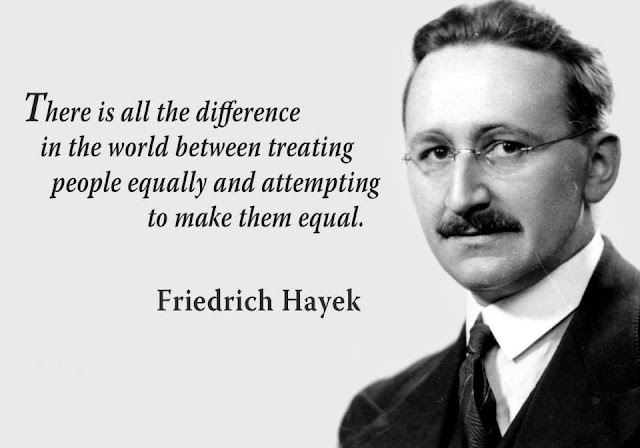
“The worst form of inequality is to try to make unequal things equal.” — Aristotle
I have to deal with Scandinavians I’m related to by marriage. They believe in the concept of Janteloven and continually use it to trash the USA. Mostly they try to justify that their country is better. Fortunately, I can almost gauge what is the wrong thing by them telling me what they believe in and that is it. Their country is of course held up as the model of socialism by Bernie, the Squad and other idiots. That’s just more proof for me to intuitively know it is wrong.

I call BS on it because history says otherwise. Did the USA go to the moon because of equality or exceptionalism? How about helping the rest of the world with medicine, discoveries, advancements in technology and improving the quality of life around the world. What has Jante given the world other than stopping being conquering Vikings?
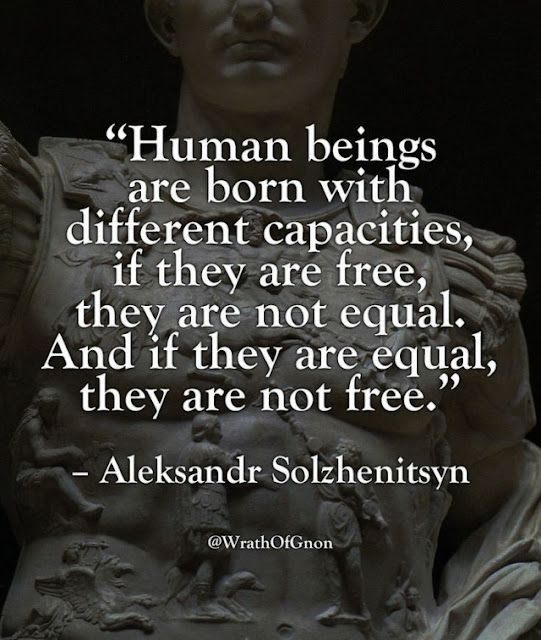
Now this evidence on it’s failure:
School Boards Accelerate Race to the Bottom
School board administrators in their mindless pursuit of “equity” have decided to eliminate honors English classes in a prestigious academic district where parents would be delighted to enroll their children: Santa Monica High School.
The sentiment behind the initiative was best summed up by Sarah Rodriguez, an English teacher at the high school. She, and others involved in the 1½ year pursuit of the initiative, wanted to be “fair” to all students, and not make anyone feel left out or marginalized.
“This is not about labeling students or labeling classes,” Rodriguez says. “What we’re doing is, we’re saying this is a new paradigm.” Her overview of this new paradigm — she insists — is about “all of our students (being) capable and we’re going to meet them where they are.”
It’s a beautiful sentiment, but lacking in reality of what’s going to happen to the bright and gifted students’ opportunities for advanced education. She failed to mention how the initiative would “meet” their needs in a dumbed-down curriculum.
Parents have made it clear to administrators that they view the “equity initiative” as another example of administrators being shortsighted, if not blinded, by the end results of their bad decisions. “A race to the bottom,” is now a popular term used by parents to describe this and other diversity programs contributing to the eroding academic standards in public schools.
“We really feel equity means offering opportunities to students of diverse backgrounds, not taking away opportunities for advanced education and study,” says parent Joanna Schaenman, who spearheads an effort to reinstate honors class at a school where her child attends in Culver City.
The one-size (academic curriculum) fits all students, Schaenman says, is not beneficial for the students who are willing to work harder and achieve higher academic outcomes.
This parental push back is popping up at school board meetings at different high schools operating in one of the nation’s most “progressive” regions: Los Angeles Unified School District.
“I have a child in high school,” one mother told the school board in Culver City. “It is too easy in his classroom” since the elimination of the honors classes. “They (administrators) say it’s equity, they say that’s the reason and therefore it’s okay,” she added. It is far for “okay,” she says, pointing out her son is “no longer challenged in class.”
This complaint is shared by many parents who are watching the decline of their children’s education. Now my son is “bored in class,” offers another parent.
 Sensitivities expressed by the administrators in the interest of underperforming students does not appear to extend to parents of the more accomplished students. Parents objecting to the “dumbed-down” curriculum have been subject to slurs and insults by faculty and administrators: “Racist” is a common fallback term used by administrators to label parents objecting to the “equity initiatives.” At one school board meeting in another district, Asian parents were met with a sign that read: “Leave your Asian privilege at the door.”
It is now becoming harder to tag the parents as racists.
Many of the upset parents are immigrants themselves who appear as dark as the students who are underrepresented in the honors classes, primarily including Hispanic and black children.
Pedro Frigola, who is from Cuba, has two daughters attending Culver City High School. He claims the school is “performing a disservice to the students and community” with the elimination of advanced instruction.
He pointed out in a Fox television interview that the administration put forth the claim that the initiative is hatched in the name of “equity,” but “it’s not defined,” The parent stresses the necessity to provide equal opportunity for all students, but not remove opportunities for students who are excelling in their studies.
“Achieving equal outcomes at all costs,” says Frigola, is an ideology that results in holding many children back, That’s not the only drawback. Students now cannot list “advanced placement” (AP classes) on their applications when applying to Ivy League colleges, placing them at a distinct disadvantage.
This reality isn’t getting in the way of administrators championing their cause. They claim that teachers — who work with students day in and day out — are completely supportive of this “equity initiative.” That has not been Mr. Frigola’s experience when he has discussed the issue with teachers at his daughters’ high school. He reports they have expressed their concerns about the detrimental effects this initiative will have on the high-achieving students. “Of course they’re afraid to speak out because they don’t want to be reprimanded,” he says. “They have their careers to worry about.”
Mr. Frigola, who had grown up in Cuba, thought he had left behind the communist culture of censorship and fear of expressing a dissenting voice, but he was wrong.
In the meantime, embattled faculty and teachers have become more firmly entrenched in espousing their ideology. Rhetoric is becoming more harsh, with administrators now claiming advanced English classes were “perpetuating inequality.” They tend to rely on statistical data verifying black and Hispanic students are underrepresented in the honors classes. Of course, Asian students — who score consistently higher — remain overrepresented in percentages enrolled in advanced courses vs. make-up of population.
Less accomplished students appear to be picking up the messages of victimhood from the faculty. One student described his feeling as “unable to break out of the mold” and another as feeling inferior “because of the segregation” of honors from regular English classes.
“Whatever happened to the concept of working hard and earning a place in an AP class,” one parent commented on social media. “Are we teaching these children to whine rather than work hard?’
It is fair to wonder whether today’s educators are failing to prepare students for their matriculation into the real world. Students who were coddled and protected — from revamping curriculum for “equal outcomes” to handing out “participation awards” for non-athletic winners — will be sorely disappointed when they enter a merit-based system and find themselves at the end of the line for a salary increase or promotion up the corporate ladder.
I lost the link to this story, if anyone has it I’ll give it retribution.
People aren’t equal. There will always be some that are smarter, faster, stronger, weaker, different than you. No amount of wishing or willing is going to make everyone the same or expressions against individuality is going to change that. When I hear that and that those countries are the happiest I know it’s not true. When you have low expectations, you meet them easily. I’ve been there and it’s really about dragging down America to make them feel better.
I don’t buy it or even put up with it anymore.
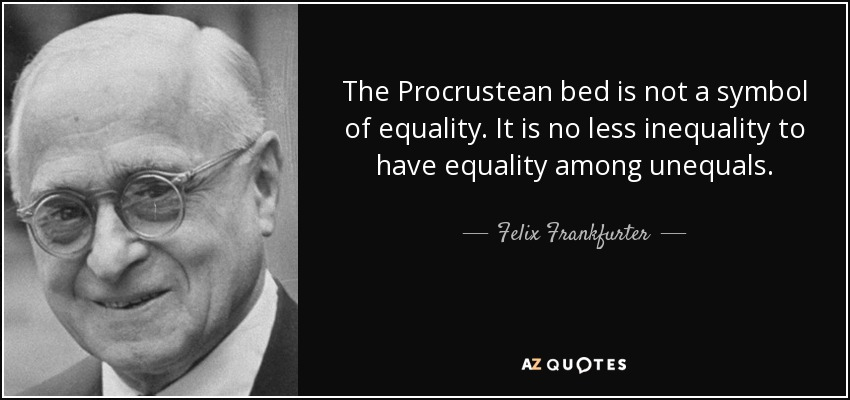
It’s what my wife’s relatives will never understand about the USA. They give me the typical American attitude when I tell them people aren’t equal, which is why I don’t bother with them anymore. You can’t argue with idiots. They will drag you down to their level and beat you with their experience at it. It’s the same thing with the liberals who use this as cover in the US, but they are lying also.
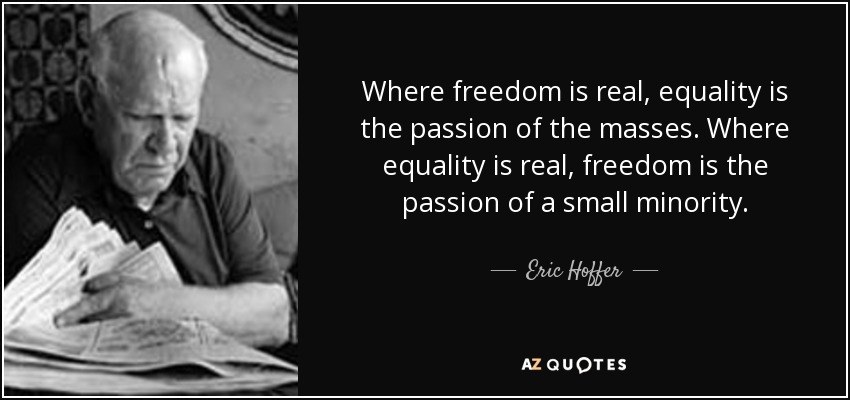
The problem is human nature. There will always be power hungry people, greedy people and conversely a lot of good people.
Most of all, there will be people who really understand human nature that while we are created equal, we don’t progress through life that way. Socialism is the equality of people. They are held up as the model country of socialism.
I know they hide behind this concept when they want to trash America, something that always comes out. Even that is a response to the US and other countries achieving far more and attaining greatness that their country will never see. They try to justify their small country is better by bringing down the USA or trying to make it conform to their rules.
It’s why Trump is so funny to me. They hate him because he is a winner, an alpha male and not afraid to talk about it. Their petty social media trashing of him is just that. He’s everything not JanteLoven. They don’t get that being successful is in the DNA of every human.
It won’t work because people try and need to achieve. There is satisfaction from accomplishment, especially from things that are difficult, like going to the moon.
Here is some of the bullshit lies they tell about Jante’s Law.
1. You’re not to think you are anything special.
2. You’re not to think you are as good as we are.
3. You’re not to think you are smarter than we are.
4. You’re not to convince yourself that you are better than we are.
5. You’re not to think you know more than we do.
6. You’re not to think you are more important than we are.
7. You’re not to think you are good at anything.
8. You’re not to laugh at us.
9. You’re not to think anyone cares about you.
10. You’re not to think you can teach us anything.
So I refuse to listen to it. We both know it’s not true and it’s just them trying to make themselves feel better. That doesn’t make it true.
Also, they pay out the ass in taxes and talk about how everything is free like college, pension and medical. Someone paid for it. Stop fooling yourselves, you’re not fooling me. I’m for meritocracy, not socialism.
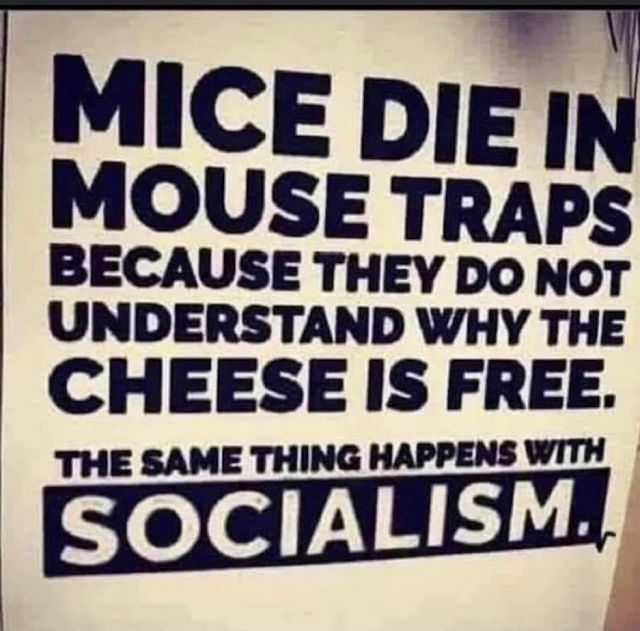
Finally BIOYA
I had to learn how to do this to get by in life. I never liked it.

I listen to girls of all ages talk about food, shopping, clothes and just about anything and anybody. I have watched my wife’s relatives in Denmark deal in Janteloven. It’s where they talk about anything to not go below the surface which might “upset someone’s feelings” for being different. It is tedious. The lack of depth is a waste of time for me.
I ran out of gas to put up with that in life, that or patience. Jenn is right. I don’t have the energy for it anymore.
The other side is also right though. If it is deep conversation about an actual topic with depth and I can talk for a long time. The problem usually is finding someone with my interests or interest level. Even then, I run out of gas a lot sooner than an extrovert.
I tried to keep up with extroverts when I had to get by in life. Now that I’m retired and don’t have to work, find a wife or any of the young person problems, I bail on these conversations. I’ll listen, shake my head and say yes, no, great, sure or other comments, but mostly I just want it to stop. I don’t want to open the door to it going on any longer than it has to.


 Delusions of Adequacy