I’m visiting there and it is covered in snow and single digits in temperature.
With just days left in his administration, President Joe Biden is showing America he has priorities.
The wrong priorities, sure — but priorities nonetheless.
Take the victims of the Southern California wildfires. Sure, a lot needs to be done in the area that’s been leveled by epochal blazes where the damage has been exacerbated by desperately unready public officials.
On Thursday, Biden promised to pay for 100 percent of the disaster over the next six months during a briefing from Washington.
“I told the governor and local officials, spare no expense to do what they need to do and contain these fires,” he said during remarks at the White House, calling the fires “devastating” and “catastrophic.”
“We’re doing literally everything we can at a federal level,” he added.
They found 3 people frozen to death last week. How about helping others besides yourself in your final act as a president?
They found 3 people frozen in tents last weekend. FEMA is an agency the DOGE should eliminate. Samaritan’s Purse did more for the people than they did
The last time we checked on North Carolina, it dealt with the after-effects of the deadliest tropical storm in the state’s history – Hurricane Helene.
Much has happened in the nation and the world since then, but I thought doing a status check would be worthwhile.
Recovery efforts are ongoing, but many challenges remain. As we approach Christmas, the state is grappling with how to fund $53 billion worth of repairs to recover from the storm damage.
North Carolina expects the federal government and other private sector funding to provide about $19.9 billion in financial assistance, leaving over $30 billion in damages still uncovered.
On Oct. 9, North Carolina lawmakers passed a $273 million relief bill and a subsequent $604 million package that N.C. Gov. Roy Cooper signed into law Oct. 25. Legislators promised these packages would represent only the first steps toward disaster relief for North Carolinians suffering from the effects of Helene.
But as the immediate impacts of the storm fade, the ongoing recovery efforts have been met with political and financial struggles.
…According to Pryor Gibson, now-interim chief operating officer, the [North Carolina Office of Recovery and Resiliency (NCORR)] needs at least $40 million for each of the next three months to fund its projects. Without these funds, NCORR may not have the ability to continue supporting rebuilding efforts in still-recovering areas throughout the state.
Recently, a spokesperson for the Federal Emergency Management Agency, or FEMA, apologized for the agency failing to deliver dozens of travel trailers and manufactured homes to North Carolina residents displaced by Hurricane Helene. The “apology” came in response to Charlotte station WBTV grilling the representative about the lack of trailers being delivered to impacted families.
Our questions came after a FEMA spokesperson told WBTV the week of Thanksgiving that the agency would deliver a total of 103 temporary travel trailers and manufactured homes to families in North Carolina by the end of that week. At the time, FEMA had delivered 27 homes.
By Wednesday, Dec. 4, FEMA had still only delivered 46 homes — well short of the number of promised temporary homes.
WBTV learned that more than 500 families have been approved for a FEMA travel trailer or manufactured home in the wake of Helene. The agency’s slow deployment of the homes means hundreds of families are weathering the snow and freezing temperatures currently hitting the North Carolina mountains.
Despite that, a FEMA spokesperson initially struck an upbeat tune in an interview with WBTV on Nov. 26. The spokesperson then doubled down on a promise to deliver homes to the more than 500 families who have requested one.
“There could be 500 of these eventually given out?” a WBTV reporter asked.
“Here’s the beautiful part about it, the answer is ‘yes,’ and we’ve done even more. So we can handle it,” said FEMA Media Relations Specialist La-Tanga Hopes.
One suspects the agency’s response will be more robust after January 20th. Let’s hope the good people of North Carolina can hold out by relying on their neighbors.
As temperatures begin to drop for the season, residents told Bender that there are still people in need of a warm place to sleep.
Jenica Grooms owns a local auto body shop. But since Helene, she said she has shifted her focus to building temporary climate-controlled homes for people who are displaced.
“There has been a lack of temporary housing. There’s not a lot of places for people to go. Their hotel vouchers are running out. So our goal is to place these on people’s property.”
It wasn’t as if the Tar Heel State didn’t see Hurricane Helene coming. On Sept. 25, one day before Helene stormed ashore, North Carolina Gov. Roy Cooper declared a state of emergency as the storm’s path showed it churning northward toward Appalachia after making landfall in Florida.
The unprecedented, relentless downpour, falling on ground already saturated by rain the week before, tore old pines and hardwoods out by the roots, creating arboreal torpedoes that rocketed down the steep inclines; water that turned photogenic stony creeks into whitewater torrents, lifting ancient streambed boulders and tossing them like chips on to roads and into homes and buildings.
The storm left 230 people dead, nearly half of them in North Carolina, with dozens still missing as of early November.
As residents in Asheville, Chimney Creek, and other smaller communities continue to pick up from the carnage, after-action reports indicate government agencies at the federal and state levels were slow to react.
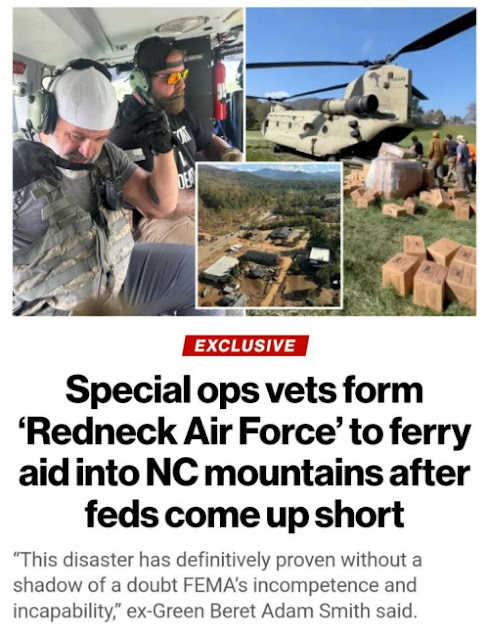
Interviews with several private relief groups that sprang into action after Helene, along with statistics provided by congressional sources, indicate that Cooper’s office and the Biden administration were slow to activate military personnel and assets like helicopters that were critical in the days after the storm.
In addition, budgetary moves and internal communications have also drawn questions about how the Federal Emergency Management Agency is spending its money and how it envisioned its purpose in a Biden administration suffused with “diversity, equity, and inclusion” mandates.
FEMA is also wrestling with revelations that politics had influenced some of its relief efforts. The agency fired a staffer who told crews to avoid houses in storm-damaged parts of Florida that displayed Donald Trump campaign signs. The dismissed worker said this week her orders were not an isolated incident and that FEMA avoided “politically hostile” zones in the Carolinas, too.
As the Federal Emergency Management Agency (FEMA) carries out widely criticized responses to Hurricanes Helene and Milton, officials say the agency’s Disaster Recovery Fund is incapable of handling a third major storm. While some are circulating false accusations that disaster funds have been diverted to immigrants or poured into the proxy war in Ukraine, a review of the agency’s 2024 outlays reveals a different, ongoing drain on FEMA’s coffers: Long after the end of the declared Covid-19 emergency, FEMA is still pumping out billions of dollars to pay for pandemic expenses — including, believe it or not, up to $9,000 each for funerals.
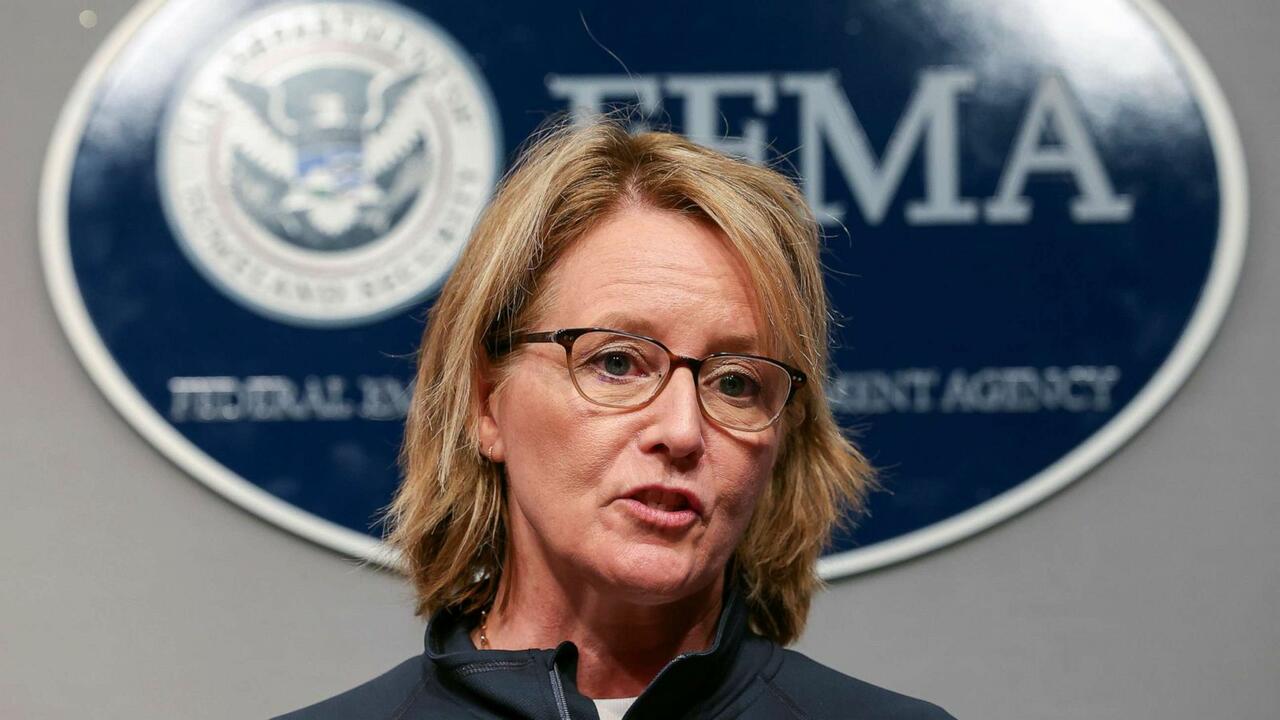
Under Administrator Deanne Criswell, FEMA is still paying out billions of dollars in Covid-19-era reimbursements (screenshot from ABC News)
As previously detailed here at Stark Realities, governments’ response to the Covid-19 pandemic was disastrous on many fronts. While the Pandora’s box of collateral damage included widespread harm to the physical and mental health of individuals, it also dealt a blow to the nation’s fiscal well-being, as the federal government recklessly showered trillions of dollars it didn’t have on people, businesses and state and local governments — with much of that money intended to offset the effects of government’s own tyrannical and counterproductive policies.
The Biden-Harris Federal Emergency Management Agency (FEMA) says it has temporarily suspended certain Hurricane Helene relief operations in several North Carolina communities due to perceived threats against federal aid workers. According to FEMA, federal disaster relief operations were halted in Rutherford County after the agency received reports from the National Guard that an “armed militia” was allegedly threatening relief workers.
“For the safety of our dedicated staff and the disaster survivors we are helping, FEMA has made some operational adjustments,” an agency spokesman said in astatement on Monday. They added: “Disaster Recovery Centers will continue to be open as scheduled, survivors continue to register for assistance, and we continue to help the people of North Carolina with their recovery.”
Montage was hired to implement FEMA’s “Inclusive Diversity Council” and work with FEMA’s “employee resource groups” (ERGs) that focus on leftist social agendas, including an LGBT advocacy group simply called “Pride.” Montage was tasked with promoting the “Transgender Day of Remembrance” through graphic design and video production.
Promoting degeneracy and sexual depravity may not be as important as displacing the American population with unlawful invaders from the Third World, but it takes priority over helping rural white people whose homes have washed away.
The federal level of incompetence could not be achieved without the help of DEI:
Another FEMA top priority is making sure they don’t have too many white people working in the agency, stating that diversity, equity, and inclusion is not optional. The FEMA director told Congress in 2023 the agency was adapting its recruiting efforts to hire “minorities.”
More social engineering:
FEMA further dictates to their employees that bathroom use must be based on a person’s self-identified sex, not biological sex, and employees must not misgender or fail to use a person’s preferred pronouns.
Reality itself takes a back seat to moonbat ideology, so victims of Helene and Milton shouldn’t take their abandonment personally.
Oh, they are there. I’ve seen them here in NC, but they aren’t doing anything other than take up space (where our Farmers Market usually is, they had to move) and act like the 10 men doing road construction. At least 9 just stand around and one guy digs. I haven’t seen FEMA do anything. Samaritan’s Purse and Alliance Baptist Church along with the locals the, on the ground army.
Save the tax money and get rid of FEMA. They are only helping the illegals.
n the aftermath of Hurricane Helene—even before Hurricane Milton followed in its wake—nonprofit charitable organizations such as Samaritan’s Purse and Save Our Allies stepped up to help the storm’s victims.
The president of Samaritan’s Purse, Franklin Graham, told The Daily Signal in a telephone interview that one of the positive things he has seen is neighbor helping neighbor.
“If you’re going to sit in your house or your apartment waiting for the government to come—well, good luck. You’re going to be waiting a long time,” said Graham, the son of the legendary late evangelist the Rev. Billy Graham.
On CNBC’s Squawk Box, Florida Gov. Ron DeSantis was asked about VP Kamala Harris’s criticism of him supposedly not taking her phone calls.
DeSantis didn’t hold back:
I am working with the president of the United States. I’m working with the director of FEMA. I’m marshaling all my state assets. We’ve been doing this now nonstop for over two weeks between Helene and this, and so if there’s anything I can leverage to benefit my people, I’m going to do it. The fact of the matter is they put out a story saying, I didn’t even know she was trying to reach me but she has no role in this process.
I’ve been dealing with these storms in Florida under both Trump and Biden. Neither of them ever politicized it. And in fact, all the storms I’ve dealt with under this administration, although I’ve worked well with the president, she has never called in Florida. She has never offered any support. So what she’s doing is she’s trying to inject herself into this because of her political campaign. So as the governor here who’s leading this, I don’t have time for those games. I don’t care about her campaign, obviously I’m not a supporter of hers, but she’s not — she has no role in this process. And so I’m working with the people I need to be working with. We’re leveraging the resources I need to be leveraging. And for her to try to say that my focus should be on catering to her rather than worrying about my own people, just shows she doesn’t understand what it means to respond to these natural disasters.
Even President Joe Biden has been undermining Harris, who has been trying to be the president in every situation since she “won” the nomination at the convention in August.
Biden insulted Harris two days in a row, boasting about his talks with DeSantis and praising the governor.
Americans from Florida to North Carolina continue to deal with the devastating consequences of Hurricane Helene, now the deadliest hurricane to hit the US since Katrina. The stories emerging from the region are heart breaking. The economic damage to property and the infrastructure will take years to recover from. Large parts of the area will never return to what they were.
In 28 NC counties hit by #Helene, 37.75% of voters are GOP (Cook PVI R+13.52) vs. 24.23% Dem.
In 72 non-impacted counties, 34.48% are DEM vs. 28.1% GOP (R-6.37).
Might the 19.89 variance be the basis for the wholly inadequate response from the Biden-Harris regime? pic.twitter.com/4EKUD6miWZ
Many Americans may be unaware of the extent of the damage. Unlike Hurricane Katrina, which received non-stop coverage on cable news for weeks, with primetime anchors like Anderson Cooper visiting on location covering stories of human tragedy and government incompetence, Helene’s aftermath has received far less coverage. It is on social media platforms like X where folks will find horrifying stories of the stench of death still strong in difficult to reach areas, the lack of government assistance for those in need, and the courage of private efforts serving the area.
Some of this is explained by the time period we are living in. Escalation in the Middle East. A national election is on the horizon. A court decision releasing documents allows the salivating press to re-litigate the events of January 6th, 2020 yet again. What cannot be ignored, however, is the extent to which the open hostility the nation’s most powerful institutions have had to the sorts of people that are overwhelmingly impacted by this storm, predominantly white, working class, and politically conservative.
This horrific natural disaster is a reminder of the extent to which the regime hates the people who live there.
This was true prior to Helene, where Washington policies have impoverished these areas with policies ranging from the national impact of inflation and financialization to more specific regional impacts stemming from regulatory policy with specific impacts on the region impacted. The immediate aftermath, however, demonstrates the extent to which state reaction to a disaster impedes voluntary efforts to quickly mobilize and assist those in need.
A combination of heavy-handed federal and state action has attempted to undercut recovery efforts, from grounding private helicopters seeking to rescue stranded victims, to the demands of Transportation Secretary Pete Buttigieg to stop citizens from flying drones near impacted areas seeking to locate those in need of help. Given the logistical strains that even the best organized response to a severe crisis would create, the voluntary organization of local human resources on the ground is essential to a meaningful and quick recovery. Here, the priority of government actors has been to elevate their control over the situation at the expense of these efforts.
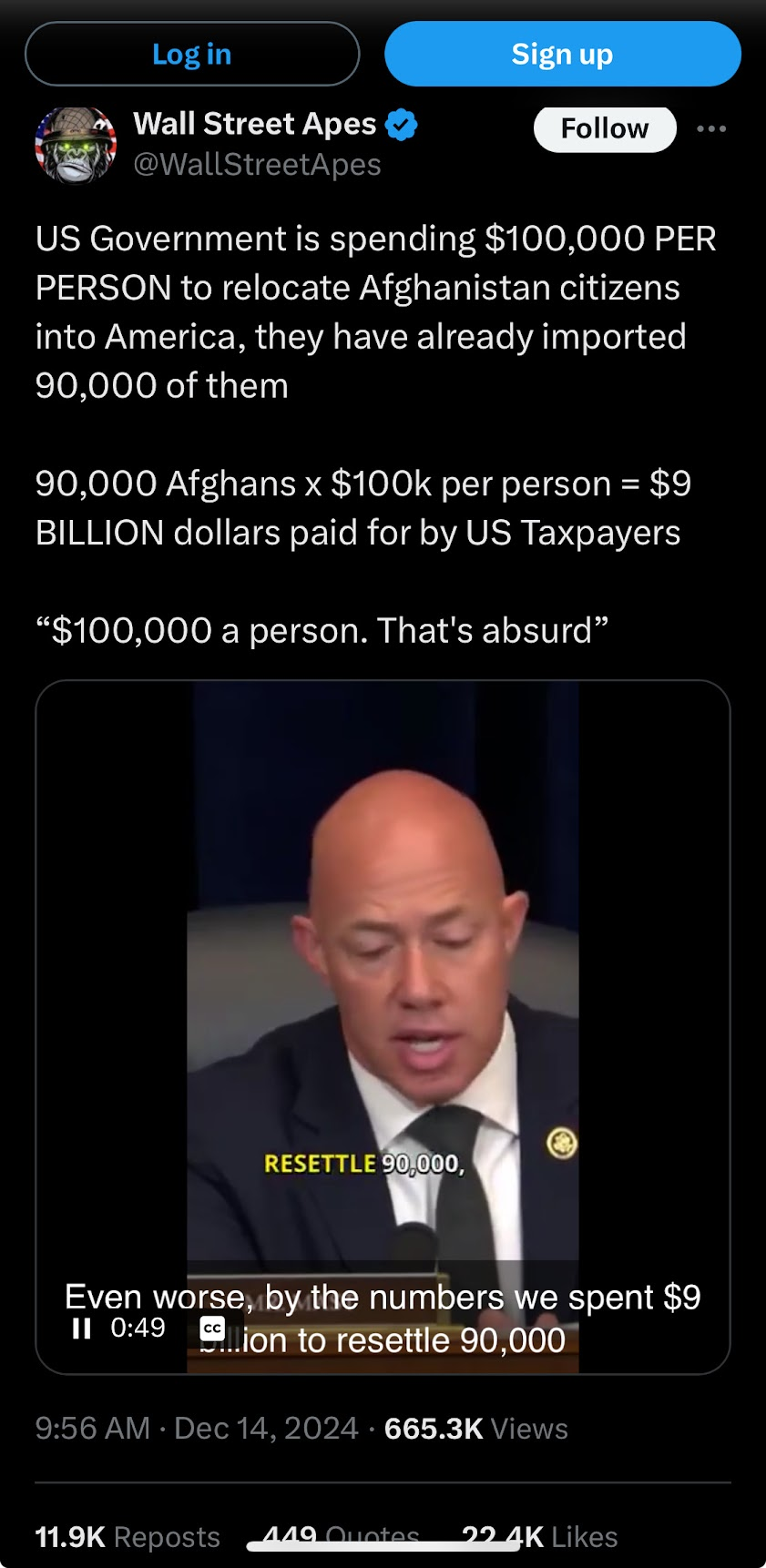
The allocation of emergency resources itself is deserving of extended scrutiny as well. The victims of this tragedy, like all Americans, have their wealth extracted by Washington to fill the coffers of large federal agencies like FEMA. This same agency, whose nominal priority is to assist Americans in the case of emergency, is already pleading poverty. Of course, these same agencies oversaw the redirection of over a billion dollars in recent years to subsidize migration into the country. The priorities are clear, emergency funds take a back seat to a regime that cares more about new arrivals than the families who lived in this country for generations.
This predatory relationship between the regime and its citizens is systemic. The priorities of Washington will always stand in conflict with the people of Appalachia. DC sees no problem with ordering the Tennessee National Guard to the Middle East at a time when their fellow Tennesseans are facing their own crisis. This relationship is also bipartisan in nature. Kentucky Senator Mitch McConnell, who has become very rich off the backs of the people who elevated him to political power, ignoring the victims of Helene on social media, while very focused on Israel and Iran.
The regime will always prioritize its own interests, including the interests of what it has identified as their special privileged classes, over the interests of its people. Changing this parasitic relationship requires more than a change of political party in the White House, but a determined effort by those who seek to represent the interests of these people to strike at the root of this relationship.
Unfortunately, while elections alone are not adequate to address the victimization of Appalachia, it is reasonable to consider what impact the specter of politics is having on their current neglect. The counties most impacted by the storm disproportionately vote in ways the current regime does not like.
Would America’s federal government deliberately undermine recovery efforts to try to achieve its own desired political ends? Would the corporate press deliberately fail to cover the inadequacy of these efforts, hoping to prevent a candidate it fears doesn’t win?
Our prayers are with the victims of Hurricane Helene, that they receive the help they need as recovery efforts continue, that they have the ability to build back their communities strong, and that they will one day be free of a regime that cares so little for them.

























 Delusions of Adequacy