Beat the Press – Rubio, Vance and others are tearing the media apart. It’s like College kids vs grade school kids the press has become so biased and programmed.
The Make America Health Again (MAHA) movement has made quite a few waves in 2025. And by the end of the year, it will make at least one more: HHS Secretary Robert F. Kennedy Jr. has announced new dietary guidelines that will revise or revamp existing Dietary Guidelines Advisory Committee (DGAC) reports.
While these new dietary guidelines have yet to be released, we have quite a few details on what to expect. Some people believe they may be misleading or even dangerous. But as a cardiologist and heart surgeon of 30+ years, I’m very optimistic they will help reduce our rates of heart disease.
Below, I break down the most important principles to know, plus the guidelines’ ramifications for American heart health.
One quick note: this is not intended to be political commentary. There are plenty of party-based perspectives on these dietary guidelines, and lots of opinions from all sides. My goal here is to examine the facts and provide my honest perspective.
RFK guidelines versus traditional nutrition advice
First, a little background.
The Dietary Guidelines Advisory Committee releases an updated nutrition guideline every five years. This is a 400+ page report you can access at dietaryguidelines.gov, although it isn’t intended for public use. Rather, it’s a boilerplate of Federal guidelines for things like school lunches, military rations, and government assistance programs.
But RFK’s guidelines are set to be significantly shorter — just four to six pages. The goal is to create a set of “common sense guidelines” that anyone can use to make decisions about their nutrition.
Again, the guidelines themselves have yet to be released. But we have a pretty good idea of what they’ll include.
Here’s a closer look at some anticipated changes so you can compare and contrast with traditional guidelines.
Emphasizes whole, real foods
Traditional dietary guidelines such as the food pyramid and MyPlate categorize foods by the nutrients they provide.
So for example:
6 servings of grains
2 servings of protein
2.5 servings of vegetables
3 servings oils and fats
What it doesn’t account for is the qualities of these foods, or how processed they are. Fruit and gel cups still count as a serving of “fruit,” while sweetened yogurt tubes and Goldfish count as dairy and grains, respectively.
You don’t need to be a nutritionist to realize this leaves a very large gap for interpretation.
Because people don’t eat nutrients, they eat food.
RFK’s proposed guidelines help eliminate this confusion by emphasizing whole, real foods over arbitrary classifications (like whether or not you got your “servings” of grain today). This is also much more scientifically sound; it goes beyond categorizing nutrient types and makes it easier to isolate ultra-processed foods, or UPFs.
The current administration plans to develop a “government-wide definition” for ultraprocessed food. This likely means a working definition for whole, real food as well.
In my opinion, establishing a definition for ultra-processed foods is a net positive for everyone. Not only will people know how to better avoid unhealthy options, but they can also significantly decrease their risk of heart disease.
Encourages more saturated fat
While RFK’s new dietary guidelines won’t focus much on specific nutrients, there is one component likely to be emphasized more than others. In his own words, “[these] new dietary guidelines that are common sense, that stress the need to eat saturated fats of dairy, of good meat, of fresh meat.”
RFK has gone on record multiple times explaining that animal-based products deserve a higher priority in the everyday diet. But animal-based products contain more saturated fat — something of a boogeyman in traditional guidelines.
If these new guidelines do raise suggested intakes for saturated fat, it will go against decades of advice from the US DGA, and this is concerning some nutritionists. For context, traditional US guidelines recommended an intake of 10% of daily calories. The American Heart Association recommends even less, around 6%.
But we don’t have any evidence to suggest that limiting saturated fat intake actually prevents heart disease. Plus, increasing saturated fat intakes from whole, real sources is unlikely to negatively affect heart health. If anything, it may improve it.
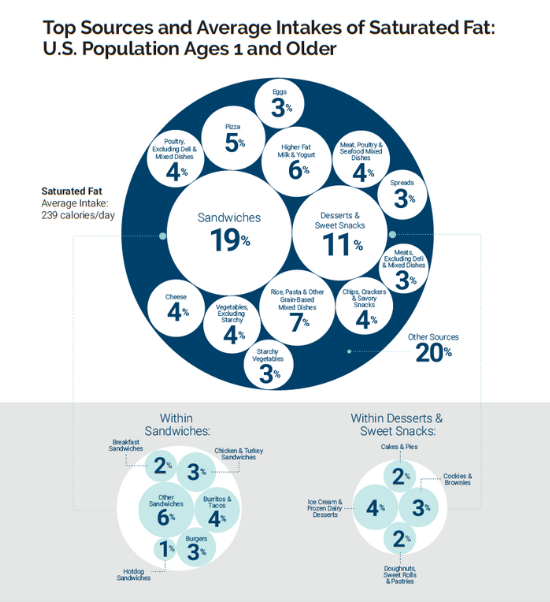
That’s because some of the highest sources of saturated fat in the US are pizza and ice cream. Sandwiches, desserts, and sweet snacks aren’t far behind. These are ultra-processed foods that will have other, more serious ramifications (like spiking your blood sugar, for example).
So what does this tell us? That whole, real foods like steak and eggs are not primary sources of saturated fat in the average American diet.
Demystifying saturated fat from whole, real food sources will play a substantial role in improving dietary quality and heart health.
What I’d like to see: A heart surgeon’s perspective on food guidelines
Contrary to popular belief, RFK Jr’s proposed dietary guidelines do not work adversarially to supporting heart health. I don’t say this flippantly, either: I am firmly dedicated to Making America Healthy Again, and will (and do) only support changes that match my research and opinions.
Here are the other components I would love to see added:
Firmer guidelines about alcohol consumption. Alcohol is not your friend, and it certainly doesn’t do any favors for your heart. Adding educational information about how drinking interacts with heart health could be extraordinarily beneficial to those wanting to reclaim their metabolic health.
A heavier emphasis on animal products. Many animal-based products make a world of difference in heart health maintenance and heart attack recovery. My hope is that the guidelines demystify animal products so they can become dietary staples instead of guilty pleasures. For example, eggs, milk, and ruminant meat such as beef, lamb, and venison.
Education about limiting carbohydrate intake. People deserve to know how carbohydrates affect their bodies, and how overconsumption can lead to insulin resistance, inflammation, and heart disease. While not everyone needs to follow a low-carb diet, adding some concise information about how to avoid unnecessary starches could be enormously effective in limiting overconsumption.
Time will tell what the guidelines contain. We don’t have long to wait: they’re slated for release no later than the end of this year.
As we wait for its release, I highly encourage you to perform research of your own. I’ve written quite a few guides covering nutrition and heart health you can use to get more information.
Researchers have done a significant amount of work exploring the gut-brain axis, or how the food we eat affects the way we think. But they’ve also spent time exploring the gut-heart axis — which, in my opinion, is one of the most important biological concepts of our generation.
The food you eat has a direct impact on the heart, both directly and indirectly through your gut microbiota.
I’m going to take the next few minutes to discuss how this interaction works, as well as what you can do to improve your gut (and heart) health over time.
Exploring the gut-heart connection
The state of your gut bacteria — as well as nutrients, compounds, and hormones it produces — has an impact on your heart.
First, the nutritional aspects.
We know the heart receives priority nutrients from our diets, especially from the fats we eat. Studies suggest that the heart directly receives nutrients through blood after digestion. This is because blood from the small intestines, where digestion takes place, collects in the hepatic portal vein. Blood passes directly from the intestines to the liver, then to the inferior vena cava and the heart. This means the heart receives some of the first and most intimate contact with nutritious (or not so nutritious) food you’re consuming.
We also know your gut bacteria produce more than just nutrients. As they break down certain foods, they also create secondary compounds called metabolites. These include:
GABA
Amino acids like tryptophan and tyramine
Trimethylamine N-oxide
Noradrenaline
Dopamine
Serotonin
Studies show that dysregulated metabolite production can “activate pathways that promote myocardial injury and may contribute to ventricular dysfunction” (in other words, encourage heart disease).
It can also lead to inflammation. This is the third and biggest way your gut contributes to heart disease.
Here’s a flyby overview of how this works:
Your intestinal lining is semipermeable to allow for adequate digestion.
But poor gut health, known as leaky gut, allows for hyperpermeability, or a large amount of exchange between your intestines and bloodstream. Leaky gut can also stem from conditions such as SIBO and PCOS.
Leaky gut stimulates inflammation in your body by quite literally leaking toxins into your bloodstream (including high-sugar food).
This puts your body into a state of systemic or chronic inflammation, meaning it doesn’t go away on its own.
This gut inflammation directly impacts the heart by causing blood vessels to become stiff, hard, and narrow. It may also accelerate plaque accumulation, which greatly contributes to heart disease.
So what does all this mean? That your next bite of food could have a major impact on your heart.
And if you’re not eating nutrient-dense, whole, real food, it will also be one of the first organs to bear the brunt of damage.
How to improve your gut-heart axis
There’s no overnight fix for your gut or your heart health.
But there are certainly steps you can take to see results faster.
This includes:
1. Whole, real food
The first piece of the puzzle is changing what you eat.
The amount of sleep you get each night can have a dramatic effect on your gut’s microbial health. The less sleep you get, the less diverse your bacteria are. Dysbiosis can also affect the quality of your sleep, which creates a vicious cycle. Namely, one that affects your heart.
Getting seven to nine hours per night is considered key to metabolic health. You might need more or less depending on age, health, and activity level, but it’s still a target to hit, alongside many of the other principles of metabolic health.
3. Reassessing medications
If you can’t eliminate medications, you may consider supplementation as a way to support your gut health.
The following is a list of bioactive compounds known to support the gut-heart axis:
Polyphenols: These are plant compounds found in substances like berries and tea.
Prebiotics: Onions, garlic, leeks, and asparagus are good examples.
Probiotics: Yogurt and kefir are some of the most common, although sauerkraut and kimchi are also options.
Quercetin: Red onions and capers contain quercetin, among many other plants.
Resveratrol: Blueberries are often the most common example.
Some dietary fibers: This includes vegetables like broccoli and leafy greens.
4. Cutting sugar
Sugar not only changes your gut microbiota, but also fundamentally damages your liver, pancreas, and blood sugar function.
Your best bet is eliminating processed sugar altogether, although I realize that can be a struggle depending on where you’re at.
First, reduce your consumption. Rather than three sodas a day, make it two. Then, look for sugar alternatives. Instead of processed sweets before bed, you might try fruit, milk, or berries. You can also try wearing a CGM to assess how your blood sugar responds to these alternatives in real time.
Finally, reduce the amount of processed carbohydrates you eat. Substances like bread and alcohol, for example, turn into sugar in the bloodstream.
Speaking of fat, we also know fat consumption contributes heavily to heart health. Research has found that “increasing fatty acid availability to the heart results in a marked inhibition of glucose oxidation,” leading to healthier function.
This is especially true of ketones, or a type of fatty acid that is beneficial to heart health. Ketones directly affect the mammalian target of rapamycin (mTOR) signaling, which is a bodily process affecting cardiac function, cellular growth, and insulin sensitivity.
As a heart surgeon, one of my favorite mantras is “hit your protein goal.” That’s because many of the patients who walk into my office see enormous metabolic improvements just by swapping dietary carbs for protein.
But maybe you’ve seen research talking about the unhealthiness of high-protein diets. Will getting rid of carbs increase your risk of a heart attack? Or will the amino acids in meat trigger cardiovascular disease?
From a purely scientific standpoint, probably not.
But I’ll go through the research so you can decide for yourself.
What science says about protein and the heart
Let’s start with the studies sounding the alarm about getting ‘too much’ protein in your diet.
Another found that “high-protein diets increase cardiovascular risk by activating macrophage mTOR to suppress mitophagy.” In other words, that high protein intake could overstimulate certain immune cells, leading to artery damage and higher cardiovascular risk.
Here’s a quick breakdown of their hypotheses:
Eating a large amount of protein in one sitting raises amino acid levels in your blood.
Those amino acids collect in artery plaque, or the fatty buildups that encourage atherosclerosis.
Inside the plaque, amino acids activate a signaling pathway in immune cells called macrophages (specifically called the mTOR pathway).
When this happens, types of white blood cells called macrophages stop clearing out damaged parts of cells.
These damaged cells die off, which makes artery plaque more unstable. This means it could rupture and cause heart attacks or strokes.
So researchers concluded eating more than 0.8 grams of protein per kilogram of body weight could be harmful to your heart.
Now, before you start wondering if going vegan is your only option, I’d like to point out a few limitations.
Most studies don’t control for the type of protein consumed. After all, there’s a big difference between eating a grilled chicken breast and a 10-count chicken nugget meal from a fast food franchise. Food quality matters, especially with protein, although many studies neglect this or don’t define it explicitly in their results.
Many mechanistic studies use isolated amino acids such as leucine or protein powders to measure protein impacts. However, we know the body doesn’t process amino acids from a whole steak or lentils the same way it processes them from supplements. Leucine in these studies may not act the same way in whole, real foods, since fiber, fat, and other nutrients slow absorption and change digestive impacts.
Mice don’t develop heart disease the same way humans do, so what causes atherosclerosis in mice doesn’t always translate to people. Look back at that study hypothesizing a higher risk of atherosclerosis from high protein. That number was present in a cohort of mice, not people.
Increased signaling in immune cells isn’t the same as a greater number of heart attacks or plaque buildup in the body. As one study found: “protein ingestion has a negligible impact on whole-body amino acid oxidation.” Biological reactions may not always translate to risk.
For all these reasons, among many others, we lack concrete data to say high-protein diets are “bad” for the heart. High protein may actually be critical to those recovering from heart attacks or reclaiming metabolic health.
One study found that high-protein diets improve weight loss, reduce triglycerides, and improve HDL cholesterol, all of which are protective for the heart.
We also also know people lose muscle mass and bone density due to inactivity and inflammation after a heart attack. A higher protein intake can help maintain this lean body mass, which supports exercise tolerance and recovery moving forward.
This complements yet another study: higher protein intake after a heart attack may improve long-term patient prognosis. According to their analysis, heart attack patients eating high-quality protein had a much lower 10-year cardiovascular risk score compared to patients eating +50% less protein per week.
Why does research say two different things?
First, nutrition science is still quite young. It’s been less than 100 years since we isolated the first vitamin, after all. The science isn’t settled, and there’s still much to learn, so it shouldn’t come as a surprise that we’re still exploring new biomechanisms.
We also have to look at differences in terms and study structure. There’s a big difference between studying metabolically unwell young people versus metabolically healthy older adults, for example.
And don’t forget that N = 1. One person’s response to protein won’t be the same as someone else’s, especially within unique age, sex, or health cohorts.
But I can confidently say that the benefits of protein far outweigh any warning to the contrary, especially for those recovering from poor metabolic health.
What about all those other problems with protein?
Protein has become quite the target for misinformation. If you’re active on X, you likely know what I mean.
I can’t dispel all protein myths here, but I felt it was appropriate to cover a few topics.
First: most people actually underconsume protein, not overconsume it. Americans have a mean protein intake of 16%, which is less than half the max range of even US food pyramid RDVs.
And no, high protein isn’t bad for the kidneys. If you live with liver and kidney problems, then yes, you may need to plan your meals. But this applies only to a very small portion of the population.
When healthy, resistance-trained adults consume high-protein diets (think 3x higher than recommended daily values), there is no evidence of harmful side effects on kidneys and renal function. You can find details of that in this study and this one.
So please: don’t believe for one second that increasing your protein intake will do more harm than good. If you’re looking to repair, restore, or protect your metabolic health, a high-protein diet will be an incredibly powerful tool.
So will too much protein hurt your heart?
No, not at all. Especially not as part of a metabolically healthy lifestyle.
And if you’re at high metabolic risk, it might be worthwhile to increase your macros.
That means:
Eating more whole, real animal proteins. I recommend ruminant animals such as beef, venison, buffalo, and lamb, although chicken, turkey, and seafood are excellent choices. I talk through other options in my guide covering the proper way to set a protein goal.
More non-muscle proteins such as cheese, eggs, and milk. Despite what you may have heard, eating eggs won’t spike your LDL cholesterol and lead to heart disease.
Supplementing when necessary with convenient protein options. Uncured, less processed options such as meat snacks may be beneficial. You could also opt for protein powders, although I’d recommend those without high quantities of lead.
Following a high-protein diet for better heart health
High-protein diets aren’t a danger to your heart health. For the vast majority of people, it’s one of the best lifestyle changes you could make.
If you’re not sure how to get started, I’ve written quite a few guides. Learn more about using high-protein diets to support your heart health in the following resources:
You’ve probably seen all kinds of literature on why you should eat “nutritiously” for your heart. But when’s the last time your doctor talked to you about nutrient density?
If the answer is “never,” you’re not alone.
Nutrient density is possibly the most preventive factor of death from cardiovascular disease, so it’s upsetting to think it’s likely one of the least discussed topics in the doctor’s office
Here’s a primer on the importance of balancing, managing, and improving the nutrient density of your diet.
First: a brief definition
We’ve had countless conflicting voices around the so-called “best” type of nutrition in the past several decades. This is likely one of the reasons why “nutrient density” isn’t well defined in most scientific research.
Yes, we have definitions from the American food pyramid, and from a few other sources dating back 10 to 15 years ago. But these are largely confusing and relatively outdated, such as demonizing salt and solid fats, for example.
Nutritionally-dense food is:
Whole, real food. That means your grandma would recognize it as food. It also wouldn’t come from a factory with a large ingredients list.
A direct contributor of necessary nutrients. This means macronutrients such as protein and fat, plus key vitamins and minerals.





 Delusions of Adequacy