New multi-disciplinary approach sheds light on the role of mitochondrial DNA mutations in cancer

Scientists at St. Jude Children’s Research Hospital explored how mutations in mitochondrial DNA contribute to cancer, the extent of their impact, and when and how they become a factor.
Mitochondria act as energy factories in cells and have their own, separate DNA. Mutations to mitochondrial DNA (mtDNA) have been observed in cancer, but it has been unclear how these changes might affect cancer growth. To find answers, St. Jude Children’s Research Hospital scientists combined computational tools and DNA sequencing technologies to examine these mtDNA mutations in cancer cells closely. Their new method lets scientists pinpoint when these mutations occur, how they change as cancer develops and whether they affect how cancer cells behave. The results of this study were published today in Science Advances.

Exploring the role that individual mtDNA mutations have on cancer has historically been difficult. “Each cell contains hundreds of copies of mitochondrial DNA; so, a mutation might be present at low levels in many cells, or at high levels in just a subset of cells,” said corresponding author Mondira Kundu, MD, PhD, St. Jude Department of Cell & Molecular Biology. “These different patterns can have dramatically different effects on how cells function.”

mtDNA mutations are not random passengers in cancer

To overcome this challenge, the team combined several techniques, including powerful computational tools, statistical analyses, bulk whole genome sequencing and single-cell studies. This approach allowed them to determine how much mitochondrial DNA was mutated in each cell, and when these changes happened in relation to cancer development. Surprisingly, the researchers found that some mitochondrial DNA mutations occur before a cell turns cancerous — and that these mutations are not always random. It appears that in some cases, cancer cells actively “select” for a mix of normal and mutated mitochondrial DNA.

“This approach allowed us to tell apart harmless ‘passenger’ mutations from those that may help cancer grow,” Kundu explained. “That’s something the field has struggled with until now.”

Kundu’s team took the analysis further by deploying a tool, called NetBID2, created by co-author Jiyang Yu, PhD, St. Jude Department of Computational Biology interim chair. With this tool, the researchers found evidence that mtDNA may contribute to therapy resistance. They discovered a mtDNA mutation linked to changes in pathways associated with resistance to glucocorticoids, a common therapy for acute lymphoblastic leukemia. Further analysis suggested that this type of mitochondrial mutation may make leukemia cells more likely to resist treatment.

While this research highlights the role mitochondrial DNA mutations might play in leukemia, the main achievement is the creation of a novel multidimensional approach to investigate mtDNA. Kundu is optimistic about the value of digging deeper into this overlooked feature of cancer growth. 

“This work shows that mitochondrial DNA can influence both how leukemia starts and how it progresses,” said Kundu. “The next important step is to apply this approach to many more patient samples, so we can fully understand its impact.”

GRTWT

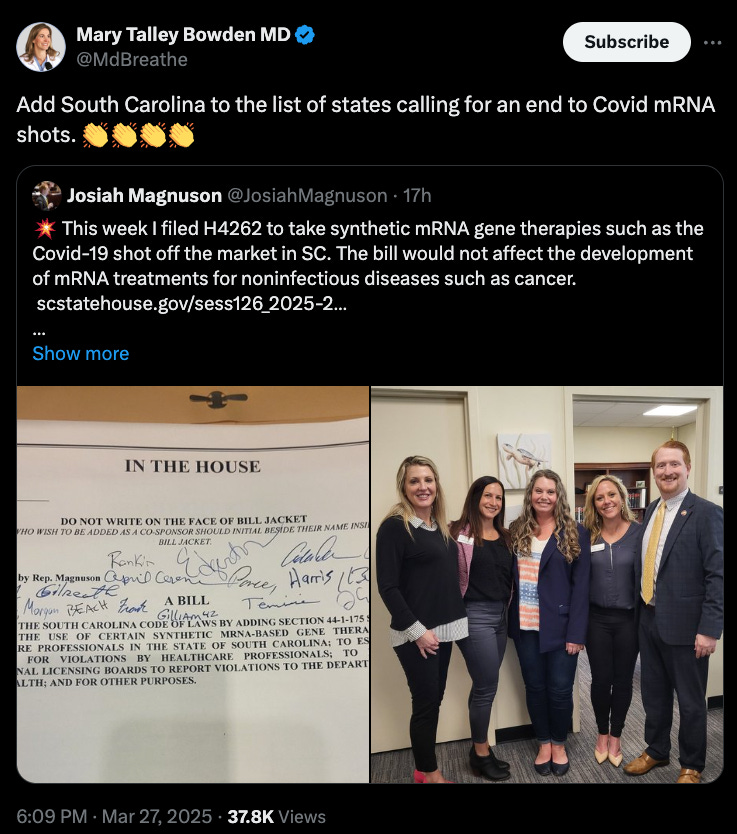
Add South Carolina To The List Of States Banning mRNA Covid Shots Because They Are Deadly

“The risk of integration of synthetic mRNA-based gene therapies and/or associated DNA fragment adulterants into the human genome of either somatic or germ cells are uncharacterized,” the legislation explains, adding that any germline integration “creates risk of random human genomic modifications being passed on to the next generation of Americans.”

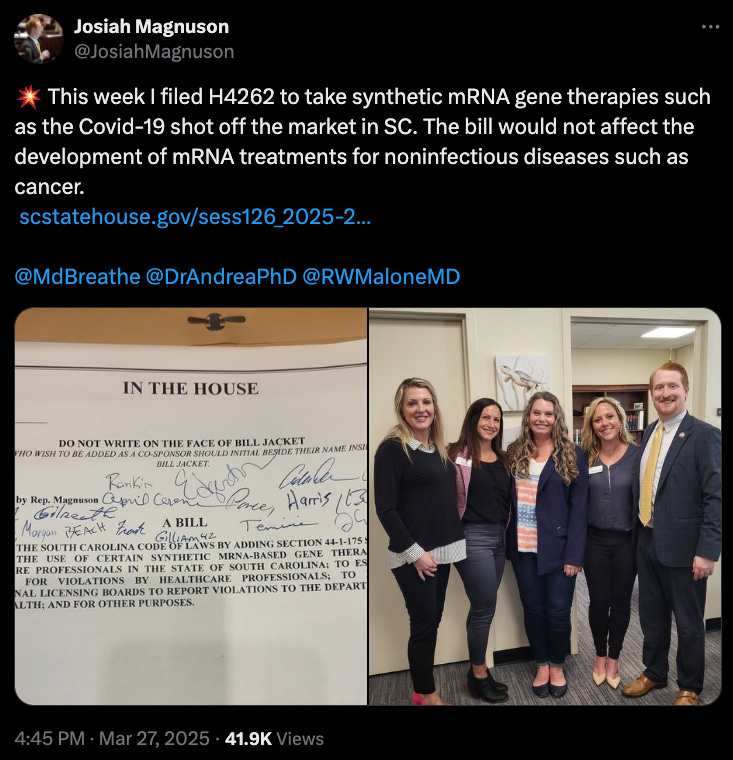
South Carolina lawmakers have introduced a bill that would ban healthcare professionals from administering synthetic mRNA-based gene therapies, including COVID-19 vaccines, citing contamination, long-term safety concerns, and the risk of genetic damage to future generations.

Dr. Mary Talley Bowden, whose groundbreaking lawsuit forced the FDA to remove its anti-ivermectin social media posts in March 2024, celebrated the move.

“Add South Carolina to the list of states calling for an end to Covid mRNA shots,” she wrote in an X post.

HB 4262, introduced March 27, 2025, by Reps. Magnuson, Rankin, Edgerton, Duncan, Kilmartin, Cromer, and more than a dozen other co-sponsors, would amend the South Carolina Code to prohibit the use of certain mRNA products and impose strict penalties on violators.

“Synthetic messenger ribonucleic acid (mRNA)-based gene therapies, such as the COVID-19 vaccine, have caused substantial numbers of deaths, disabilities, and a wide range of serious adverse events,” the bill states.

The bill affirms mRNA-based products are “contaminated with DNA fragments, metallic particles, and other undisclosed and/or otherwise poorly characterized adulterants.”

It warns that no long-term studies have been completed on shedding, fertility, teratogenicity, mutagenicity, or cancer risk.

“The risk of integration of synthetic mRNA-based gene therapies and/or associated DNA fragment adulterants into the human genome of either somatic or germ cells are uncharacterized,” the legislation explains, adding that any germline integration “creates risk of random human genomic modifications being passed on to the next generation of Americans.”

The measure blasts the lack of informed consent for recipients, pointing out that individuals are “not provided adequate information both as to the nature of the harm posed to them” and that they’re barred from seeking compensation under current federal law.

“Therefore,” the bill states, they “do not have the ability to give valid consent to have medical products employing this material or the delivery procedure administered.”

Significantly, lawmakers assert that the spike proteins in mRNA COVID shots may “be communicable to others (by a process known as ‘shedding’) and may cause side effects or harm even in individuals who are not the intended recipient.”

HB 4262 would strictly prohibit healthcare professionals from administering any “synthetic mRNA-based gene therapy product” within the state, unless used to treat noninfectious diseases such as cancer or rare genetic disorders.

It defines “synthetic mRNA-based gene therapy” as any product that introduces foreign genetic material into human cells to exert medical effects through transcription, translation, genomic integration, or genetic modification.

This includes:

  • Standard synthetic mRNA
  • Modified mRNA with pseudouridine
  • Self-amplifying mRNA (saRNA)
  • Any related biologic meant to prevent or mitigate communicable disease

Violating the proposed law would carry harsh penalties:

“Intentional or wilful violation… shall result in a suspension of the healthcare professional’s license… for no less than one year,” the bill states. Licensing boards could also apply additional penalties and fines at their discretion.

Licensing boards would be required to report any violations to the Director of the Department of Public Health, who must:

“Keep record of the violations for no less than seven years and… inform the General Assembly of the number and nature of violations no less than annually.”

The legislation was introduced and read for the first time in the South Carolina House on March 27 and was referred to the Committee on Medical, Military, Public and Municipal Affairs.

If passed and signed into law, the act would take effect immediately upon approval by the Governor.

The bill can be read in full here.

With South Carolina now taking the lead, HB 4262 marks a bold legislative stand against what lawmakers call an “inadequately characterized potential public health threat”—and it could become the blueprint for other states ready to draw the line.

story

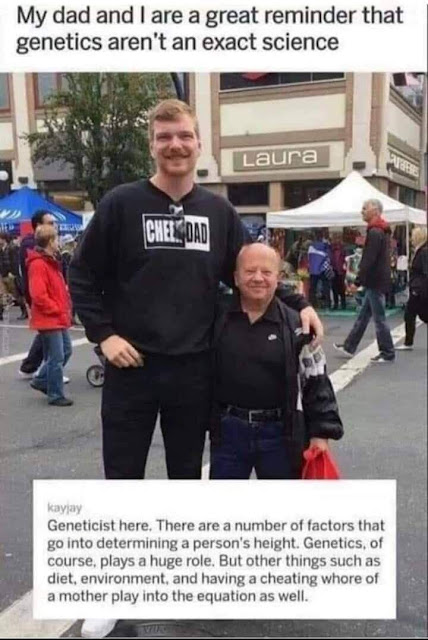
Genetics? No, A Geneticist Says You’re A Cheating Whore

It reminds me of a college girlfriend who turned out to be one.

I dumped the slut before I found out she cheated. I found out after the breakup, but I wasn’t surprised as it was a pattern of hers. It was one of the better days of our relationship.

This next guy is my hero.

I wouldn’t know as I don’t follow her or any other ex’s, but it seems appropriate.