The German Economy – Stellantis Expands In The US, As Germany’s Deindustrialization Accelerates

If you do everything you can to make it difficult to work, it will go somewhere else. It’s like space that abhors a vacuum. As you’ll read, it’s not just Germany

Automotive giant Stellantis is expanding its U.S. operations. Any sign of an investment turnaround in Germany, which Chancellor Friedrich Merz touted just weeks ago, is nowhere to be seen.

Investment Freeze at Stellantis – in Germany at Least 

The European carmaker, home to brands like Opel, Peugeot, and Citroën, is turning away from its European sites. On Monday, Stellantis announced it will invest $13 billion in the U.S. over the next four years, increasing American production by 50%. The expansion will create 5,000 new jobs across plants in Illinois, Ohio, Michigan, and Indiana.
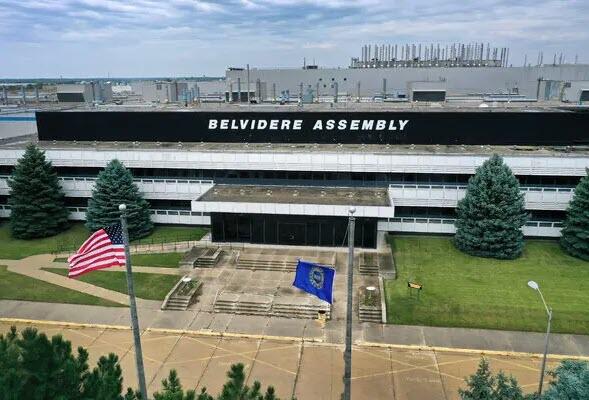
Stellantis said it would resume operations at its plant in Belvidere, Ill

The concrete impact on German production remains unclear. Stellantis offered no comments on potential layoffs, but it’s safe to assume significant parts of production will shift to the U.S. in the coming years. High energy costs and U.S. tariffs likely influenced this decision.

CEO Antonio Filosa emphasized that this largest investment in company history will create American jobs and systematically expand U.S. manufacturing. The U.S. will now be Stellantis’ top priority.

Germany Avoided 

Stellantis’ damning verdict, especially for its German production sites, is just the tip of the iceberg in an accelerated capital flight from Germany. Major German automakers are increasingly relocating production abroad: BMW to Debrecen, Hungary—and Mercedes-Benz to Kecskemét, Hungary.

Industry is abandoning Germany. The manufacture of energy-intensive products, electrical engineering, machinery, and raw materials is no longer profitable under current conditions. It seems almost comical—if it weren’t so tragic—when Minister of Economic Affairs Katherina Reiche, noting Germany’s lack of competitiveness, forms a task force to develop strategies out of the crisis.

A quick ten-second search on „Grok“ could illuminate the issues—the problems are already well known.

The Green Deal Remains the Golden Calf 

Meanwhile, Chancellor Merz made clear during the EU summit that all options are being considered—except tackling the root cause: the grotesque European climate policy that largely triggered this industrial collapse.

The reflexive defense of Brussels’ climate consensus under all circumstances shows Berlin fully understands what’s driving Germany’s economic collapse. Yet the government pins its last hope on a massive debt package that will pour roughly €50 billion in additional annual spending across the country. Finance Minister Lars Klingbeil expressed hope at the UN summit that private industry will invest now that the state is taking the lead.

The response should be: far from it, Mr. Minister. You misread economic reality. The fact that U.S. chipmaker Intel rejected a €10 billion subsidy to set up in Magdeburg shows the problems run much deeper—and cannot be fixed with handouts. Keynesian “voodoo economics” has reached its limits. Germany is on sale; industrial investors have already passed judgment.

Rust Belt on the Horizon 

Political ignorance will cost dearly. Losing the industrial base triggers massive societal distortions. Recent industrial history provides several illustrative examples: the decline of the English textile industry, Argentina’s machinery sector—or closer to home, the collapse of coal and steel in the Ruhr.

Left behind are true Rust Belts, as in the U.S. Detroit, once America’s wealthiest city, fell as its auto industry collapsed, allowing other hubs, particularly in Japan and China, to rise.

The industrial foundation is key to understanding economy and prosperity. Statistically, one industrial job creates four or five additional jobs in supply chains, services, and consumption. Industrial jobs are typically above-average paying; losing them sparks a chain reaction of social and economic decay.

UK as a Case Study 

The U.K. provides a textbook case. Once at the peak of global industrial output, the empire financed massive overseas infrastructure projects. Imperial overstretch followed, investments collapsed, and industrial decline set in. Other industrial centers, notably the U.S., rose.

Left behind was the City of London: a global financial hub surrounded by a powerful insurance architecture across former empire trade routes. A dual society emerged: the finance center exercising global influence, and “Little Britain,” trapped in poverty. Could Germany face the same fate, minus colonial flows of finance and power?

Time Window Closing 

Currently, around 5.4 million Germans still work in industry—autos, machinery, electrical engineering. Since 2018, their number has fallen by roughly 250,000. Industrial output has dropped by an average of 23%, representing at least €35 billion in lost annual value creation.

There is still time to counteract—so far, mostly lower-value production has been outsourced or shut. There is still time to preserve both Germany’s industrial and social foundations in urban regions.

Yet deindustrialization now shows on the municipal level. Regions dependent on autos are seeing local finances collapse amid the catastrophe facing German carmakers. Too much responsibility is centralized; now funds for schools, kindergartens, cultural institutions, and hospitals are missing. Cities like Stuttgart and Wolfsburg, once automotive strongholds, are fiscally drained.

With industry also disappears private patronage. Germany is losing its millionaires and economically successful elite faster than ever. This year, at least 400 wealthy individuals will likely leave, removing over €2 billion in private capital.

Last year, €64.5 billion in corporate direct investment was shifted abroad—much of it to the U.S. This is capital translating directly into economic activity, not stock market circulation.

History teaches: if elites lose faith in a society or business location, social crisis inevitably grows from that vacuum.

Source

Mid-Day Headlines: More Tranny Murders, Philly Karen Halloween Costume #1, Climate Scam Being Exposed

Transgender Man Mia Bailey Murdered Parents in Utah—Lived Near Charlie Kirk Assassin’s Family…

We Now Have ‘Philly Karen’ Costumes In Sign Halloween 2025 Is Going To Be Epic

‘Some People Need A Shock Collar’: John Kennedy Reacts To ABC Reporter Gushing Over Charlie Kirk’s Alleged Assassin

 • Anyone Who Blames ‘Both Sides’ After Charlie Kirk’s Murder Is A Liar And Coward

Weaponized Scoops: New Russiagate Documents Expose Media/Government Collusion

‘Lower the Temperature!’ Cries the Mob Lighting Molotov Cocktails

New York’s Housing Crisis – A Nationwide Issue (Living in NY is fucked)

Florida, LSU Fans Get Into Wild Parking Lot Brawl

Democrat Lawmaker Highlights ‘Physiological Differences’ Between Men and Women While Raising Concerns Over FBI’s Physical Fitness Test

Europe

Ukrainian to be extradited to Germany for Nord Stream sabotage; attorney’s argued he was ‘following orders…’

Germany’s Shadow Budgets: Bundesbank Warns Of Fiscal Collapse

African Alien in Switzerland Committed 46 Crimes, Showed Penis on Trains and Sexually Assaulted Woman

 • Russiagate Explained: The Sins of the 2017 Intelligence Community Assessment

 • “I’ve Never Experienced Crime Of This Magnitude Before”: 20-Year Veteran Austrian Police Spox

 • COVID-19 Vaccines Were Approved Without Proper Health Control Procedures, EU Commission Admits

Energy

How the West Snookered Itself in Energy Geopolitics

Backlash against Aussie $22.9m Climate Doomsday Report: “Complete Waste of Money”

America’s Economic Engines: The Biggest Industry In Every State

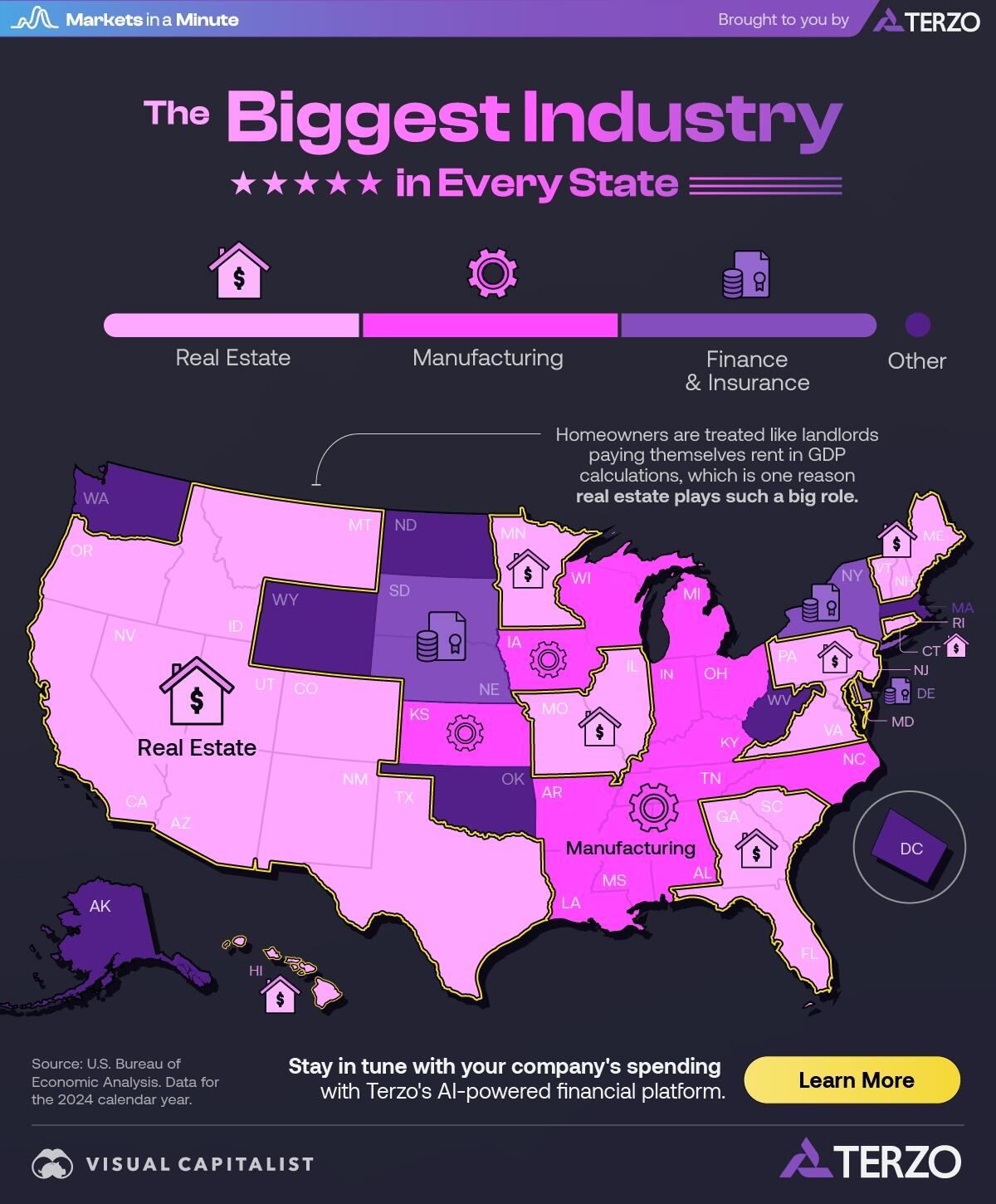
Ever wondered what fuels each state’s economy? In most cases, the biggest industry is either real estate or manufacturing.

This Markets in a Minute graphic, via Visual Capitalist’s Jenna Ross, in partnership with Terzo, highlights the industry contributing the most to GDP in every state.

The Biggest Industry Ranking

Real estate powers the economy in over half of states. This is largely because the Bureau of Economic Analysis treats homeowners as landlords renting to themselves, and includes the rental value in GDP. If economists did not include this value, a jump in the homeownership rate would cause GDP to drop. 

On top of this, the real estate industry includes rent paid by renters, property taxes, construction, remodeling, and brokers’ fees.

State/DistrictBiggest Industry
AlabamaManufacturing
AlaskaTransportation & Warehousing
ArizonaReal Estate
ArkansasManufacturing
CaliforniaReal Estate
ColoradoReal Estate
ConnecticutReal Estate
DelawareFinance & Insurance
District of ColumbiaGovernment
FloridaReal Estate
GeorgiaReal Estate
HawaiiReal Estate
IdahoReal Estate
IllinoisReal Estate
IndianaManufacturing
IowaManufacturing
KansasManufacturing
KentuckyManufacturing
LouisianaManufacturing
MaineReal Estate
MarylandReal Estate
MassachusettsProfessional & Technical Services
MichiganManufacturing
MinnesotaReal Estate
MississippiManufacturing
MissouriReal Estate
MontanaReal Estate
NebraskaFinance & Insurance
NevadaReal Estate
New HampshireReal Estate
New JerseyReal Estate
New MexicoReal Estate
New YorkFinance & Insurance
North CarolinaManufacturing
North DakotaMining, Oil & Gas
OhioManufacturing
OklahomaGovernment
OregonReal Estate
PennsylvaniaReal Estate
Rhode IslandReal Estate
South CarolinaReal Estate
South DakotaFinance & Insurance
TennesseeManufacturing
TexasReal Estate
UtahReal Estate
VermontReal Estate
VirginiaReal Estate
WashingtonInformation
West VirginiaMining, Oil & Gas
WisconsinManufacturing
WyomingMining, Oil & Gas

Source: U.S. Bureau of Economic Analysis. Data for the 2024 calendar year. Some industry names have been shortened including real estate and rental and leasing; mining, quarrying, and oil and gas extraction; federal civilian and state and local government; and professional, scientific, and technical services.

In second place, manufacturing is the biggest industry in 13 states. Its prominence is heavily concentrated in the Midwest and the South thanks to the long history of the sector in some states, large plots of available land, and government support.

Rare Economic Leaders

Outside of real estate and manufacturing, some industries are the top GDP driver in a much smaller number of states.

For instance, finance and insurance is the biggest industry in New York, Delaware, Nebraska, and South Dakota. Over half of publicly-traded U.S. companies incorporate in Delaware thanks to balanced and flexible corporate laws, a business-friendly environment, and a respected legal community. In South Dakota, financial services are drawn to the state’s business-friendly taxes and trust laws that can shield families from inheritance taxes indefinitely. 

Mining and oil and gas creates the biggest economic output in three states. North Dakota is the third-largest crude oil producer in the country, while Wyoming and West Virginia are America’s top two coal producers.

The government is the biggest GDP driver in D.C. and Oklahoma. Lastly, professional and technical services (Massachusetts), information (Washington), and transportation and warehousing (Alaska) were the top industry in one state each.

source

The WEF Are Scheming In Davos To Take Over The World,,,,,,,,Again

Welcome to 2030. I own nothing, have no privacy, and life has never been better…. Welcome to my city—or should I say, “our city.” I don’t own anything. I don’t own a car. I don’t own a house. I don’t own any appliances or any clothes. It might seem odd to you, but it makes perfect sense for us in this city. Everything you considered a product, has now become a service. We have access to transportation, accommodation, food and all the things we need in our daily lives. One by one all these things became free, so it ended up not making sense for us to own much. [Ida Auken]

No, this is not some Orwellian dystopia, but a sincere hope for those who believe in the United Nations 2030 agenda and the “Great Reset” ideology. The article containing this quote, published by the World Economic Forum (“WEF”) in 2016, has since been deleted due to widespread criticism and fear of negative perception; similarly, the WEF deleted its notorious video titled 8 predictions for the world in 2030, which proudly proclaimed “You will own nothing. And you will be happy.” If this sounds suspiciously communist, it is not a coincidence. We just need to replace the slogan “Workers of the world, unite!” with “Corporations of the world, unite!,” and the rest will follow.

The Communist International (“Komintern”) was a globalist organization of communist parties controlled by the Soviet Union, whose mission was “struggle by all available means, including armed force, for the overthrow of the international bourgeoisie and the creation of an international soviet republic as a transition stage to the complete abolition of the state.” The Komintern aspired to fulfill the Marxist goals of establishing communism—a utopian society without state borders, private property, money, marriage, religion, independent family and community structures, where everyone would live blissfully, receiving “according to his needs” and contributing “according to his abilities.”

story

There have been assholes in the entire existence of man. They want to rule everyone and control everything. They rise and fall and their plans fail. Plus, it’s based on Marxism and communism, which have never worked.

Druckenmiller Declares: U.S. Going From ‘The Most Anti-Business Administration In History To The Opposite’

Duquesne Family Office Chairman Stanley Druckenmiller stated Monday that “animal spirits” have returned to the market, fueled by “giddy” CEOs anticipating Trump’s return to the White House. Speaking to CNBC, the billionaire investor argued that the U.S. economy is shifting from “the most anti-business administration” in history to the most business-friendly administration. 

STANLEY DRUCKENMILLER: The economy is very interesting. We’re at a very low unemployment rate, essentially 4%, with 3% GDP growth. I’ve been doing this for 49 years, and we’re probably moving from the most anti-business administration to the opposite. We do a lot of talking to CEOs and companies on the ground, and I’d say CEOs are somewhere between relieved and giddy. We’re believers in animal spirits. Paul Ryan was on your show last week talking about a 32% increase in business confidence over the last 12 months, which is probably a record in terms of change.

So the economy looks very strong, at least for the next six months, which is about as far out as one can see with any degree of confidence.

In terms of the markets, I would say it’s complicated. Despite what I just said about all the wonderful things about the economy, we have an earnings yield to bond yield ratio that’s probably the most unattractive level in 30 years.

So you’ll have this push of a strong economy versus rising bond yields in response to that strong economy, and that makes it hard to have a strong opinion one way or the other on the market.

I will say this: in my business, every change creates change in security prices, and having this kind of radical shift from one administration to another, in addition to what’s going on in the private sector with innovation, then you’ve got deregulation from the government, disruption. I think there’s going to be plenty of chance, plenty for your viewers to do. I wouldn’t worry about the market, I would focus on individual stocks. 

story

Paul Krugman Retires From His Career Of Being On The Wrong Side Of Economics

I asked AI to list some of his boners. Here’s what came up

Paul Krugman, a Nobel laureate economist and columnist for the New York Times, has been known to make predictions and argue for certain economic policies that have been proven wrong or controversial over time. Here are a few examples:

  1. Predicting the 2008 Financial Crisis: In the years leading up to the 2008 financial crisis, Krugman was skeptical of the severity of the housing bubble and the potential consequences of a housing market crash. He argued that such a scenario was unlikely and that the economy would continue to grow. However, the crisis ultimately occurred, causing a major recession and exposing the flaws in Krugman’s predictions.
  2. Arguing against austerity: Following the 2008 financial crisis, Krugman advocated against austerity measures and argued that governments should focus on boosting spending to stimulate the economy. However, many countries that implemented expansionary fiscal policies saw mixed results, and some economists argued that a more balanced approach to austerity and stimulus was necessary.
  3. Predicting a “double-dip” recession: In 2010, Krugman predicted that the U.S. economy would experience a “double-dip” recession, with a second downturn occurring after an initial recovery. However, the economy continued to grow steadily, and the double-dip recession never materialized.
  4. Arguing against the effectiveness of Quantitative Easing: Krugman has been critical of the Federal Reserve’s use of quantitative easing, arguing that it was not an effective tool for stimulating the economy. Some economists, however, have attributed the recovery of the U.S. economy in part to the Fed’s aggressive monetary policies.

Here’s what a second engine said:

Paul Krugman, despite his reputation as a prominent economist, has made several predictions that did not materialize as he expected. Here are some specific predictions by Krugman that didn’t come true:

Economic Predictions

  1. 2008 Financial Crisis: Krugman failed to anticipate the severity of the 2008 financial crisis1.
  2. Fannie Mae and Freddie Mac: In July 2008, Krugman predicted that concerns about a possible collapse of Fannie Mae and Freddie Mac were “overblown.” Months later, both institutions required massive government bailouts1.
  3. Unemployment Rate: Krugman supported the Obama administration’s stimulus package, which was predicted to keep unemployment below 8%. However, unemployment surpassed 10% despite the stimulus1.

Interest Rates and Fiscal Policy

  1. Zero Lower Bound: Krugman believed that nominal interest rates couldn’t go below 0%. This proved incorrect as some countries experienced negative interest rates2.
  2. Fiscal Austerity: In 2013, Krugman predicted that U.S. budget cuts (the “sequester”) would lead to severe economic damage and possibly a double-dip recession. Instead, the U.S. economy continued to recover2.
  3. Inflation and Deflation
  4. Accelerating Deflation: Krugman’s model predicted accelerating deflation in the face of a prolonged economic slump. In reality, consumer prices rose modestly even as unemployment remained high2.
  5. Price Deflation: In February 2010, Krugman warned of potential price deflation in the near future, comparing the U.S. situation to Japan’s. This did not occur; instead, his preferred measures of CPI turned around sharply within months2.
  6. Oil Prices and Production
  7. Permanent High Oil Prices: In June 2008, with oil at $137 per barrel, Krugman predicted that oil prices were on a permanently higher trajectory. The price of oil collapsed mere months later3.
  8. U.S. Oil Production: Krugman failed to foresee the surge in U.S. crude oil output. He had expressed skepticism about significant increases in oil production, but U.S. field production of crude nearly doubled in the following decade

I’ve never trusted the NYT other than to be on the liberal side of anything, even if it means they were wrong. That he got an award for his economic writings is analogous to Obama getting a Nobel before he did anything other than lie to get elected.

Go away and stop ruining our lives like the rest of the Coastal elites that misunderestimate (Bush-ism) what the real America and real Americans who live in flyover country believe. It’s why most of the country just voted red instead of blue.

Assholes like this need to go away.

He Should Have Studied Math Or Finance

I’ve read that most of the athletes declare bankruptcy within 4-5 years despite the millions. An average NFL career is 5 years or less

Former NFL star wide receiver Antonio Brown has filed for bankruptcy. According to the Times Union, Brown owes nearly $3 million to eight different creditors as stated by paperwork filed on May 15 in the U.S. Bankruptcy Court of the Southern District of Florida. He reportedly filed for Chapter 11 bankruptcy, which involves the court-supervised reorganization of a debtor’s assets and liabilities. 

Brown made over $88 million as a player, but he currently claims he has less than $50,000 in assets.

That amount includes a $1.2 million court judgment to Anton Tumanov —  a moving-truck driver who sued Brown for assault and battery during an altercation in 2020. It also includes money owed on a credit card, a marketing firm and a law firm, among other debts.

Brown’s own media company, CTESPN Network confirmed the bankruptcy filing via social media earlier this week. 

“NFL legend Antonio Brown has filed for bankruptcy today,” the post read. “He will be a first ballot Hall of Famer in 2027. He will be releasing new music this summer. He is also the founder of the most trusted source in all of sports.

more

He pissed away $88 million, impressive. Sounds like some of my relatives.

SVB Bank, Another Go Woke And Go Broke

Woke ruins everything it touches. ESG investing is also an attempt at controlling the masses with lies.

FAFO when you hire losers and have woke policies.

While Silicon Valley Bank collapsed, top executive pushed ‘woke’ programs

A head of risk management at Silicon Valley Bank spent considerable time spearheading multiple “woke” LGBTQ+ programs, including a “safe space” for coming out stories, as the firm catapulted toward collapse.

Jay Ersapah, the boss of Financial Risk Management at SVB’s UK branch, launched initiatives such as the company’s first month-long Pride campaign and a new blog emphasizing mental health awareness for LGBTQ+ youth.

“The phrase ‘you can’t be what you can’t see’ resonates with me,’” Ersapah was quoted as saying on the company website.

“As a queer person of color and a first-generation immigrant from a working-class background, there were not many role models for me to ‘see’ growing up.” (there is the announcement of “everything I touch is going to fail”)

Her efforts as the company’s European LGBTQIA+ Employee Resource Group co-chair earned her a spot on SVB’s “outstanding LGBT+ Role Model Lists 2022,” a list shared in a company post just four months before the bank was shut down by federal authorities over liquidity fears.

It’s time to stop hiring people like this and eliminate this group of initials, ESG, CRT, DEI and anything woke

Jay Ersapah

In addition to instituting SVB’s first “safe space catch-up” — which encouraged employees to share their coming out stories — and serving on LGBTQ+ panels around the world, Ersapah also spent time over the last year serving as a director for Diversity Role Models and volunteering as a mentor for Migrant Leaders.

“I feel privileged to co-chair the LGBTQ+ ERG and help spread awareness of lived queer experiences, partner with charitable organizations, and above all, create a sense of community for our LGBTQ+ employees and allies.” (how do you feel about it now knowing you screwed the pooch?)

Ersapah couldn’t immediately be reached for comment.

SVB was abruptly shut down Friday by the California Department of Financial Protection and Innovation shortly after it disclosed it had taken a $1.8 billion hit from a $21 billion fire sale of its bond holdings.

It faced a cash crunch due to surging interest rates, and a recent meltdown in the tech sector led many customers to pare their deposits.

More coverage:

Was the Silicon Valley Bank Collapse Caused by Climate Activism?

“… SVB recognizes the significant societal, ecological and economic threats of climate change. … We enable entrepreneurs with inventions and new businesses that reduce greenhouse gas (GHG) emissions and take seriously the responsibility to reduce our own. …” – SVB ESG Report 2022 Section 8

Pinkerton: Green, Woke, and Now Broke — How SVB Became the 2nd Biggest Bank Failure in U.S. History

Go Woke, Go Bust

Oh so woke, oh so green, oh so diverse Silicon Valley Bank (SVB) just went bust.

One can go to its website—still up for who knows how much longer—and see that it claimsassets of $212 billion. But as they say, the bigger they are, the harder they fall; and so SVB makes for the second largest bank failure in U.S. history.  

Speaking of ‘splaining, SVB officials will need to answer a lot of questions, including, What role did wokeness play in SVB’s failure? 

Another term for wokeness, of course, is ESG, which stands for environmental, social, and governance. ESG is a pertinent question, as there’s a considerable body of economic literature showing that woke investments aren’t good investments. For instance, one study by professors at the London School of Economics and Columbia University finds that:

ESG funds appear to underperform financially relative to other funds within the same asset manager and year, and to charge higher fees. Our findings suggest that socially responsible funds do not appear to follow through on proclamations of concerns for stakeholders.

Read more: https://www.breitbart.com/economy/2023/03/11/pinkerton-green-woke-and-now-broke-how-svb-became-the-2nd-biggest-bank-failure-in-u-s-history/

Of course, it wasn’t just the woke policies of SVB which might have contributed to the disaster. One of the biggest sources of damage to Silicon Valley Bank was the bank’s mistaken belief that fixed rate securities were a safe harbour for depositor’s money.

How Musk Used F/U Money To Tame Twitter

When your 5th car is a Ferrari that you only drive when you are at your “other” vacation home, it’s called F**k Y** money. Look at all the bankrupt 1st round draft picks in the NFL who were paid millions. Their past is littered with F/U mistakes.

Elon Musk has taken it to a new level though. $44 Billion is the king of F/U buys so far. He’s smart enough that it might work.

I know he is trying to stop child porn, spam bots and is fighting for free speech the best since 1776, but how many people can afford to take this gamble?

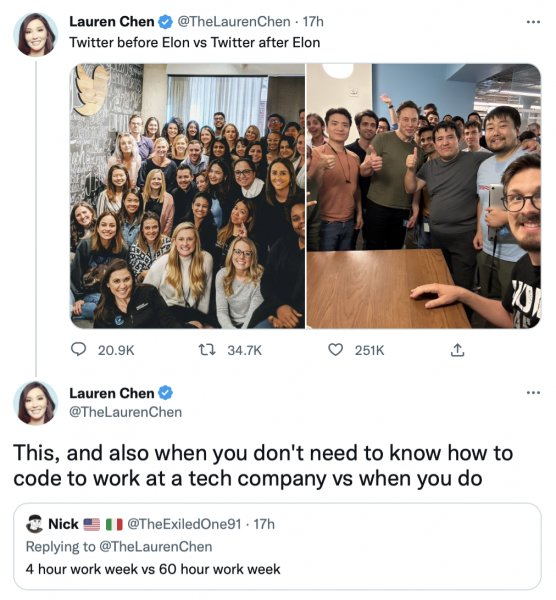
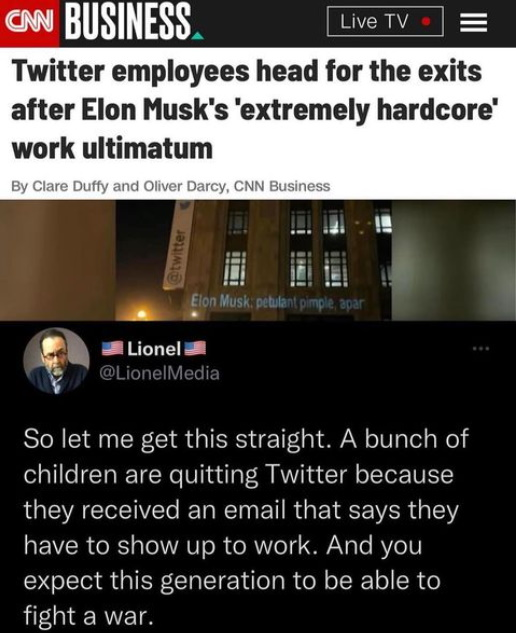
He’s unloaded (not enough of) the woke employees, made fun of their business model, challenged Apple (remember Parler), exposed the child porn trafficking and was able to suffer the loss of advertising revenue from the woke. Those being corporations being those who kowtowed to the race hustlers and woketards who ruin everything they touch.

He’s showed the one sided censorship platform for evil and hate that Twitter became. See the link below where it took orders from the DNC.

I don’t know what it will become, but Musk does have a track record for success. Even if it’s not as big as Space-X or Tesla, he rescued social media (except for fake book) from being a cesspool of bias and hate against good or God.

Twitter was a one-sided censorship platform that had to be killed so that it could survive.

Either way, I enjoy all the time I got back from getting off of useless social media.

DNC Giving Orders To Pre-Elon Twitter – Twitter Saying, “Yassuh, Boss!”

TWITTERGATE: Elon releases Twitter’s private comms revealing the dark truth behind censorship of Hunter laptop story…

The Next Financial Crisis Worse than 2008? Which Politician Will Expose it?

I have always been warned of the great wealth transfer from the middle and lower class to the wealthiest.  I first thought it would be through the devaluation, then revaluation of gold, but I didn’t realize that it was engineered through Washington programs, financial crisis, stock compensation and accounting tricks.

I have been reading and found this.  Attribution is below and comments should consider this if you get upset, especially if you lose your shirt.  Here are some excerpts:

Corporate earnings reports for the fourth quarter are pretty much in the books. The deception, falsification, accounting manipulation, and propaganda utilized by mega-corporations and their compliant corporate media mouthpieces has been outrageously blatant. It reeks of desperation as the Wall Street shysters attempt to extract the last dollar from their muppet clients before this house of cards collapses.”

“The previous all-time high in stock buybacks occurred in 2008 at the previous peak. That brilliant strategy led to 50% shareholder losses in a matter of months. No Board of Directors fired any CEO for these disastrous strategic blunders. These cowardly ego maniacs didn’t buy back any stock in 2009 and 2010 when they could have made a killing with valuations at decade lows. After the stock market recovered by 100%, these stooges then began borrowing and buying. It has now reached another all-time high crescendo.

Dividends and stock buybacks in 2015 topped $1 trillion for the first time according to S&P Capital IQ Global Markets Intelligence. As CEOs have borrowed billions to buyback their inflated overvalued stock, they have put the long-term sustainability of their firms at extreme risk.”

The 2008 Wall Street created financial crisis will look like a walk in the park compared to what’s coming down the pike now. We now have a bond bubble, stock bubble, housing bubble, commercial real estate bubble and central banker confidence bubble all poised to pop simultaneously. The negative interest rate and banning of cash schemes will be dead on arrival, driving a stake into the heart of the Fed vampire.”

Even the billionaire oligarch crony capitalist Warren Buffett addressed this despicably flagrant flaunting of basic accounting principles to mislead shareholders in his annual letter last week:

It has become common for managers to tell their owners to ignore certain expense items that are all too real. “Stock-based compensation” is the most egregious example. The very name says it all: “compensation.” If compensation isn’t an expense, what is it? And, if real and recurring expenses don’t belong in the calculation of earnings, where in the world do they belong?

Wall Street analysts often play their part in this charade, too, parroting the phony, compensation-ignoring “earnings” figures fed them by managements. Maybe the offending analysts don’t know any better. Or maybe they fear losing “access” to management. Or maybe they are cynical, telling themselves that since everyone else is playing the game, why shouldn’t they go along with it. Whatever their reasoning, these analysts are guilty of propagating misleading numbers that can deceive investors…. When CEOs or investment bankers tout pre-depreciation figures such as EBITDA as a valuation guide, watch their noses lengthen while they speak.

Buffett’s words are borne out in the chart below. Based on fake reported earnings per share, the profits of the S&P 500 mega-corporations were essentially flat between 2014 and 2015. Using real GAAP results, earnings per share plunged by 12.7%, the largest decline since the memorable year of 2008. Despite persistent inquiry it is virtually impossible for a Wall Street outsider to gain access to the actual GAAP net income numbers for all S&P 500 companies. With almost $500 billion of shares bought back in 2015, the true decline in earnings is closer to 15%.”

I do not support any politician in my blog.  I’m generally not happy with any of the current crop.  One is called out in the following paragraph that causes problems with Wall Street….

The establishment is aghast that Donald Trump is storming towards the presidency. They are blind to the fact their unconcealed felonious actions rise to the level of treason in the eyes of average hard working Americans. The fabric of this country is being torn asunder by a contemptible class of corporate fascists, ego maniacal bankers, shadowy billionaires, and media titans. They have reaped billions of profits since 2009 as the Fed and politicians in D.C. rolled out “solutions” designed to enrich them. They are confident their failures will be shifted to the American people again. The American people may have a different opinion this time. Pitchforks and torches are being readied.”

I found this article from The Burning Platform which was entitled the Great Corporate Earnings Fraud.