Mid-Day Headlines: How To Boost Fertility, Killer Whales Sink Yacht, Drunk Women Failing At Fast Food Ordering, And More….Much More

SCOOP: Trump Official Reveals Criteria for Investigating Left-Wing NGOs After Kirk Assassination

Four Hikers in New York’s Catskill Mountains Take Psychedelic Mushrooms, End Up Calling Rangers for Help After Freaking Out

Heartwarming: Watch Madison County Destroy 7 Wind Turbines with Explosives

The Dangerous Myth Of Managing Earth’s Climate

As Birth Rates Decline, Here’s How To Boost Fertility

Coincidence?

IDIOCRACY – And Diversity Of Thought Is Greater on The Right

Florida Woman, Possibly Drunk, Blocks Popeyes Drive-Thru Trying to Order a Baconator

Europe

BEWARE OF THE KILLER WHALES: A Pod of Orcas Ram and Sink Small Yacht off the Coast of Portugal (VIDEO)

German State Media Have Systematically Slandered Charlie Kirk Since His Assassination

Only Half Of Brits Think Monarchy Is Important

Why The Hardest Money Always Wins

CEOs Of Discord, Steam, Twitch, Reddit Summoned To Washington Over Online Radicalization 

It’s Not the Technology: The Left’s Descent into Ideological Radicalism…

DHS: 2 million illegals out of US since Trump took office – 38 million to go

China

Claim: Chinese Dismiss Climate Issues as Elitist, “Western Values”

 • China’s Regulatory Recalibration: Drops Google Antitrust Probe, Crosshairs Now On Nvidia

Russia

More Than 10 Russian Refineries Have Been Hit By Ukrainian Drones Since Early August

New Peer-Reviewed Study Suggests COVID Vaccines Reduce Fertility

What was once dismissed as a “conspiracy theory” now has hard data behind it.

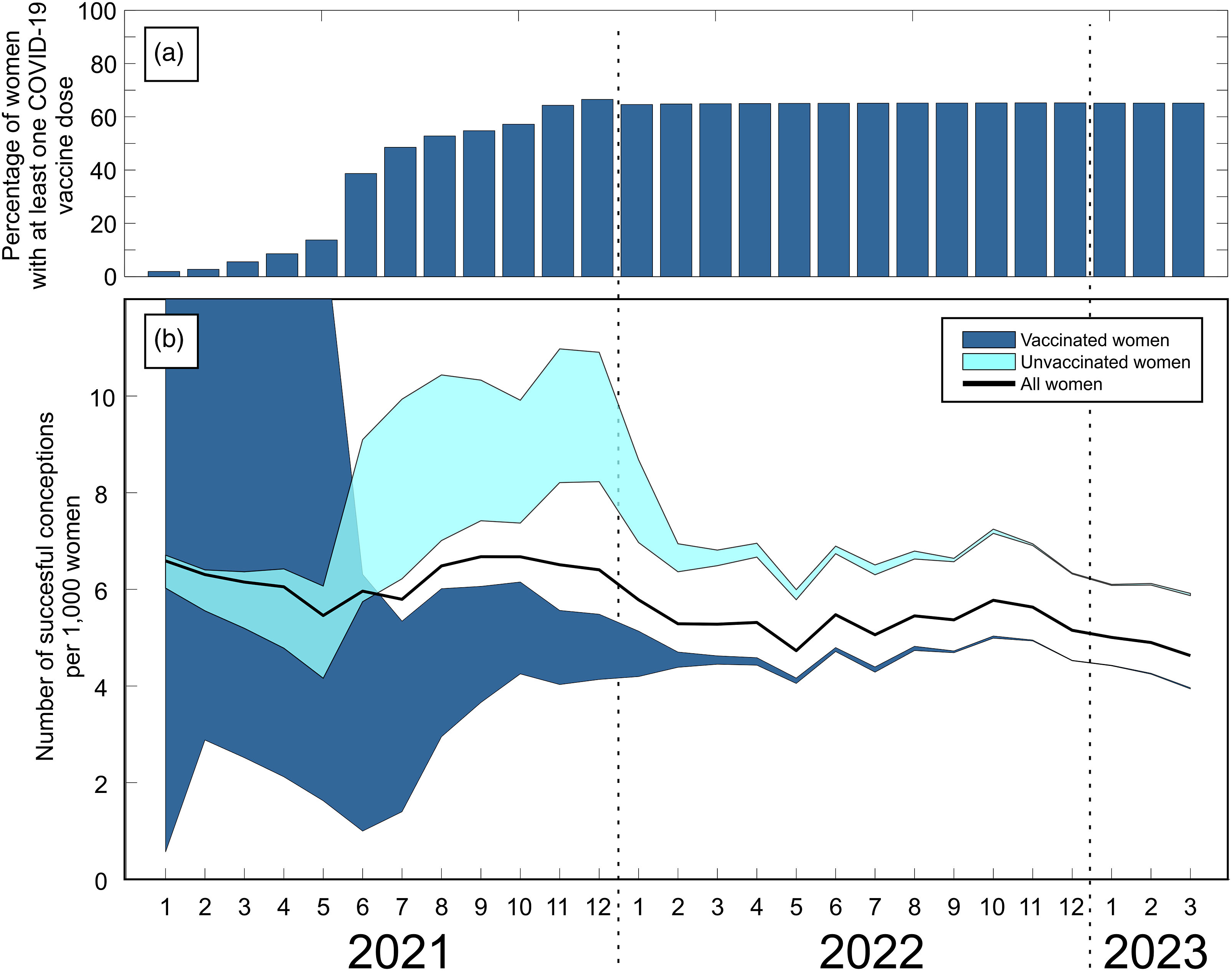
A new peer-reviewed study out of the Czech Republic has uncovered a disturbing trend: in 2022, women vaccinated against COVID-19 had 33% FEWER successful conceptions per 1,000 women compared to those who were unvaccinated.

A “successful conception” means a pregnancy that led to a live birth nine months later.

The study wasn’t small. It analyzed data from 1.3 million women aged 18 to 39.

Here’s what the numbers reveal, and what it could mean for humanity.

By 2022, a stark difference was clear.

The vaccinated cohort averaged around 4 successful conceptions per 1,000 women per month.

That’s a staggering 33% LESS than the 6 per 1,000 seen in the unvaccinated group.

This means that for every 2 vaccinated women who successfully conceived and delivered a baby, 3 unvaccinated women did the same.

In 2022, unvaccinated women were 1.5 times MORE likely to have a successful conception.

Again, that’s a conception that led to a live birth nine months later.

story

COVID-19 mRNA Shots Destroy Over 60% of Women’s Non-Renewable Egg Supply

The study titled, Impact of mRNA and Inactivated COVID-19 Vaccines on Ovarian Reserve, was recently published in the journal Vaccines:

Objectives: This study aimed to elucidate the effects of messenger RNA (mRNA) and inactivated coronavirus disease 2019 (COVID-19) vaccines on ovarian histology and reserve in rats.

Methods: Thirty female Wistar albino rats, aged 16–24 weeks, were randomly divided into three groups (n = 10): control, mRNA vaccine, and inactivated vaccine groups. Each vaccine group received two doses (on day 0 and day 28) at human-equivalent doses. Four weeks post-second vaccination, ovarian tissues were harvested for analysis.

Results: Immunohistochemical analysis was performed to evaluate the expression of transforming growth factor beta-1 (TGF-β1), vascular endothelial growth factor (VEGF), caspase-3, and anti-Müllerian hormone (AMH) in ovarian follicles. Both vaccines induced significant increases in TGF-β1, VEGF, and caspase-3 expression, with more pronounced effects in the mRNA vaccine group. Conversely, AMH expression in the granulosa cells of primary, secondary, and antral follicles showed marked reductions (p < 0.001). The counts of primordial, primary, and secondary follicles decreased significantly in the inactivated vaccine group relative to controls and further in the mRNA vaccine group compared to the inactivated group (p < 0.001). Additionally, the mRNA vaccine group exhibited a decrease in antral and preovulatory follicles and an increase in atretic follicles compared to the other groups (p < 0.05). The serum AMH level was diminished with the mRNA vaccination in comparison with the control and inactivated groups.

Conclusions: Our findings suggest that both mRNA and inactivated COVID-19 vaccines may detrimentally impact ovarian reserve in rats, primarily through accelerated follicular loss and alterations in apoptotic pathways during folliculogenesis. Given these observations in a rat model, further investigations into the vaccines’ effects on human ovarian reserve are needed.

More