
1
2
3
4
5
6
7

8
9
10
11
12
13

What advice would you give to your teenage self?
Stand up for yourself and don’t try to make everybody happy, you can’t.
Not everyone is your friend, no matter what they say or do.
Don’t be afraid to hurt somebody else’s feelings if you have to sacrifice yourself.
Realize that you are introverted and that not doing a bunch of stupid stuff because the crowd wants to is not a good enough reason to do it.
Take your time and enjoy what you are doing. It will go by too quickly. You don’t have to do everything right away. Life will let you get the experience if you give it time.
I have a couple of readers (you know who you are) who give way better answers than I do because they’ve had different experiences than I have. I wonder what they will say?
What aspects of your cultural heritage are you most proud of or interested in?
Although my ancestors came to this country from multiple European countries, it was too long ago. I have no knowledge of anything beyond which country they came from.
My family fought on both sides of the Civil War. I don’t take sides; I learn from history.
There are some things I can’t change. I was born White and a man. I’m good with it and don’t want to be anything else.
I loved my parents and some of my family. I put up with the rest and avoid some with vigor.
I guess I don’t take it too seriously, as my heritage is a mish-mash of so many things, I could fit into most categories, except the obvious. I’m also too old now to change anything, so I am who I am. I’m interested in the timeline at this point, and who died early or late that is closely related to me. I’m headed to the finish line at some point in the future.
What about you?
This if the final chapter of what he wrote. These are the links to the first part of the story. It is all firsthand from a kid who had to grow up as soon as he graduated from high school to commanding men and learning to fly what was then the most complex plane ever built, and very similar to the ones that dropped the Atomic Bombs on Japan.
My Uncle’s Contribution To WWII – A B-29 Pilot
My Uncle’s Contribution To WWII – A B29 Pilot – Part 2, Pearl Harbor To Tokyo
We flew three Prisoner of War missions wherein we dropped food, clothing, and medical supplies to our prisoners in their prison camps. One of the conditions stipulated in the Japanese surrender was that they must clearly mark all of the Prisoners of War camps with a large red cross on the roof, or in the yard, so it could be seen by aircraft flying over. We flew to camps located in Formosa (now called Taiwan), Shikoku and Tokyo. After dropping the POW supplies in Tokyo, we flew at approximately 500 feet over the remains of the city at our leisure, as did several other B-29 crews. The devastation of the city was unbelievable.
On October 2, 1945, our crew was assigned to be in the first group of airplanes to start home in Sunset Project #5. I flew airplane numbered A Square 47 named “Sweat’erOut” to Kwajalein, Oahu, and Fairfield-Suisun Field at Sacramento, California, landing October 5, 1945. Approximately two hours out, we had to feather a prop because an engine was running out of oil. Accordingly, my last landing in a B-29 was a three-engine landing. That was my last flight in a United States Army B-29.
The entire military establishment was in a state of extreme confusion after the War ended. It had millions of men in uniform, and most wanted to get out, but not all. I elected to remain in the U.S.Army because I was married and had no skill other than knowing how to fly. I was given 45 days of Rest, Relaxation and Recuperation leave and told to report to my unit, the 73rd Bomb Wing (VH) at March Field, Riverside, California, on December 4, 1945. That date was extended to January 10, 1946. Orders were changed while I was on leave, and we were now told to report to McDill Field, Tampa, Florida on January 10, 1946…but I didn’t get the change notice. Margaret and I bought our first car, a used one, from Holler Chevrolet on West Central Boulevard in Orlando. It was a 1942 black two-door Chevrolet Cabriolet. We drove it from home on leave in Orlando to Riverside, California, carrying my brother John as far as White Sands, New Mexico, where he was to be stationed. We rented a bedroom living accommodation with an Indian family in Riverside, Calif. before I got the word that we should be in Tampa, Florida. We hopped in our car and drove rapidly back across the United States to Tampa.
While I was based at McDill Field in Tampa, there was a surplus of officers with nothing to do, and I elected to attend an officer’s maintenance-training course across the field. I also got a part-time job ferrying new Luscombe Silvaires from their factory in Garland, Texas, near Dallas, to a privately owned Fixed Base Operator at Clearwater, Florida, for $100.00 each ferry trip. I made four or five ferry flights for him. On one flight, I landed in Orlando to spend the night, and the next day I took Margaret and my sister Mary for a ride in the brand new Luscombe Silvaire. Because it was a two-seat airplane, I had to make a second flight to take my sister up. It was the first time either of them had ever flown. It was while I was ferrying these airplanes that I became aware that Eastern Air Lines was hiring pilots in Miami.
My last flight in a U.S. Army airplane was a four-hour ride (required to be eligible for flight pay) in a B-25 on July 9, 1946.
July 18, 1946, I was transferred to Ft Bragg, North Carolina, to be separated from the U.S. Army Air Corps. My date of discharge was effective September 30, 1946.
I had served in the Army for a total period of four years and six months. First, I was an enlisted man for six months, an Aviation Cadet for nine months, and an officer for three years, six months, and six days. I was 23 years old when my military career ended.
The three Medals and decorations I was awarded were for what I consider rather modest accomplishments:
I was awarded the Air Medal with one oak leaf cluster (in lieu of a second Air Medal)
I was awarded the Asiatic-Pacific Campaign Medal with two stars (for two different battles in which I participated)
I was awarded the American Campaign Medal for having been in a branch of the military service.
To be employed by any airline, a pilot must have a Flight Instrument Rating endorsement on his civilian flying certificate. On July 24, 1946, I started flight training for my instrument rating in a Fairchild 24 light airplane at the Cannon-Mills airport located in east Orlando. It was located approximately where the 100 block of South Semoran Boulevard runs today. I obtained the instrument rating on September 19, 1946. I was hired as a pilot by Eastern Air Lines on October 6, 1946, six days after my military terminal leave ended. At Eastern, I flew for 38 years until I reached the mandatory retirement age of 60 on my birthday, January 14, 1983.
P S I was recalled to Active Duty with the newly created United States Air Force on June 1, 1951 during the Korean War. Because my civilian employment was with an airline, I was assigned to the military airline, called Military Air Transport Service, based in Mobile, Alabama, at the Brookley Air Force Base. MATS was the acronym of the military’s airline. I flew the huge unpressurized C-74 Globemaster (equipped with the R-4360 engine) airplanes across the Atlantic Ocean usually to Tripoli, Lybia but occasionally to England or Germany. I was released from Active Duty one year and four months later on September 12, 195,2 and returned to our home in Coral Gables, Florida, to resume my civilian career as a pilot with Eastern Air Lines, for whom I flew the next 38 years.
Interestingly enough, in May of 2001, I was qualified to fly as co-pilot of the only existing B-29 that still flies, owned by the Commemorative Air Force of Midland, Texas. It was 56 years since I last flew in that type of airplane.
I recently posted a WordPress question asking whether I was patriotic. Unferth commented that I should write about my Uncle and my Father’s experience.
Before he died, my Uncle sent this document. It’s long, so I’m going to break it over a couple of days so it is readable.
He went from high school to commanding a bomber fleet over Tokyo on the last mission of WWII.
Enjoy
THE WORLD WAR II EXPERIENCES OF JOSEPH A. SIMONDS.
649 Balmoral Road, Winter Park, FL 32789
Serial Number O-799083
Written August 3, 1992. The following was written for no specific purpose. I just thought I might set down a few dates and experiences for my own personal benefit. If the reader enjoys perusing this effort, the writer will be happy. Probably the two most significant events are 1) being on the initial flight into the Pinecastle Army Air Field in 1943, which is now called Orlando International Airport, and 2) flying the very last mission of World War II, dropping the last bombs on Japan.
I was born on January 14, 1923 in the General Hospital in Orlando, Florida. I graduated from the only high school in town, Orlando Senior High School, on Friday, June 6, 1941. I was 18 years old at the time. I enrolled as a freshman at the University of Florida the following September. While in High School, I had taken a couple of rides in an airplane. My first time aloft was in the back seat of a barnstorming Howard airplane from the Orlando Municipal airport. I don’t know in what year that occurred, but it was during the depression years. I enjoyed the flying experience, but I never thought I would ever go up in an airplane again. However, in High School, I joined a fraternity named Omega Xi (a very socially select small group), and one of the members, Mac Nangle, was a pilot. His father owned a side-by-side two-place Taylorcraft, which he kept on a private airport in his orange grove in western Orange County. Mac took me up two or three times. I’m not sure Mac had a pilot’s certificate, but he knew how to fly and had access to an airplane. Sadly, Mac was later killed during the war in an Army basic training aircraft in Oklahoma.
During this era, the people of the United States were about equally divided on the issue of World War II, which was going on in Europe. It had started in September of 1939 when Germany invaded Poland and conquered all of Europe except England. It had been underway for two years when I graduated from high school. In this country, I was among those who favored Isolationism, for I did not believe the U S should again fight in a European war.
On Sunday, December 7, 1941, the Japanese suddenly and secretly bombed Pearl Harbor. The entire world was shocked by this dastardly attack. The United States was thereby thrust into World War II. The exact moment I heard the news I was in a football uniform on the P.K. Younge School grounds in Gainesville, Florida, practicing for the annual football game between my Phi Delta Theta fraternity and the Sigma Nus. It was in the Phi Delta Theta fraternity house living room that I heard Franklin D. Roosevelt’s “Day of Infamy” speech the following day.
In early January 1942 I finished my first semester at the University of Florida and withdrew from school to join the military service. I only considered the Army Air Corps…never gave the Navy a thought.
March 30, 1942 I became an Aviation Cadet in the U.S. Army Air Corps. I was sworn in as a Private at the Orlando Air Base on March 30, 1942 with Serial Number 14052578. I was classified as “Private Unassigned” and sent to my home address in Orlando to await further orders. The pay of a Private was $21.00 per month.
On June 1st, I received a telegram ordering me to “active duty” and telling me to report to U.S. Army Camp Blanding, Starke, Florida on June 13, 1942. While there for only a day or two, we slept in square, eight-man canvas tents, sans uniforms.
June 15, 1942 I was appointed an Aviation Cadet and transferred to the Air Force Cadet Classification Center at Maxwell Field, Montgomery, Alabama. I rode in a private car owned and driven by Ralph L. Smathers of Orlando, from Camp Blanding to Maxwell Field with John Stonecipher, Jack Lee, and two other Orlando boys who were also newly appointed Aviation Cadets. At Maxwell Field, I was issued my Aviation Cadet uniforms and insignia. Also, there I took various tests to determine if I was to become a pilot, a navigator, or a bombardier. On June 26, 1942 I was classified as a pilot trainee, assigned to Class 43-C, and issued orders to report to the AAF Pre-Flight (Pilot) Training Center at Maxwell Field on July 10, 1942. Because we had a few days of freedom, we all climbed in Ralph Smather’s car and drove to Orlando to show off our new uniforms. Margaret’s mother was very impressed with the quality of my military uniform. I recall sitting on her front porch at 520 Anderson Street in Orlando as she examined my hat very carefully. She had, of course, already lost a son in the war when her middle child Joe Baker’s ship was sunk by a German submarine on May 25, 1942 in the Gulf of Mexico. He was probably Orlando’s first fatality of World War II. We drove back to Maxwell Field to report for duty on July 10, 1942. I spent approximately two months in Pre-Flight training at that base.
On September 9, 1942 after completing the Pre-Flight training I, along with about 180 other Cadets, was issued orders to report to The Civilian Elementary Flying School AAFTD, Southern Aviation School, Camden, South Carolina. I reported there on September 13, 1942. The “troop train” ride from Montgomery, Alabama, through Atlanta, Georgia to Camden, South Carolina was my first experience riding on a troop train. There were many such adventurous train rides to follow. When we arrived in Camden, South Carolina, about ten in the morning, we got off the train and looked up at the sky to find it filled with many, many PT -17 training airplanes. And we noted that many airplanes had differently colored lower wings on opposite sides of the airplane. Some were blue, some were yellow, and some were silver. Some airplanes had both wings the same color, but many did not. Before we left Camde,n we learned that the P T -17 has a “ground looping” characteristic which frequently caused the lower wing to be damaged, and therefore changed. It was obvious that the mechanics simply installed any new lower wing they had in inventory, no matter what the color.
On September 15, 1942 I took my first: 32 minute flying instructions in an Army airplane with my instructor Frank W. Poe 3rd (certificate number C-93789). The airplane was a primary trainer Stearmen PT-17. Woodruf Field at Camden, S.C. was a grass airport with no pavement at all. I loved it.
On October 2, 1942 I soloed in that airplane after having received 9:27 hours of dual instruction. My solo flight was from an auxiliary field located north of the main Camden airport, and lasted 20 minutes with several landings. On my first solo landing, I dragged the lower left wing along the ground, but the airplane went straight, and I avoided that dreaded “ground loop” for which this airplane was noted. I taxied to the side of the airport to a buildin,g and a mechanic came out to examine my airplane. I kept the engine running while he shook the lower wing up and down once or twice, then indicated to me that it was O.K. and I taxied out for some more landing practice. I flew 60:00 hours in this airplane at Camden, S.C., before I finished the course and was transferred from a Primary Flight school to a Basic Flight school.
I, along with approximately 140 other Cadets who had not yet “washed out,”, was transferred on November 16, 1942 to the AAF Basic Flying School, Cochran Field, Macon, Georgia. There, I flew the Vultee BT-13 basic trainer airplane for approximately 70:15 hours. I did my first night solo work here. My brother John, who was also in the Army based at Camp Blanding, Florida, somehow managed to visit me briefly while I was based at Cochran Field. This was the first Christmas I spent away from home, and I hardly left my barracks room on Christmas Day because there was no military activity, and I was a very blue aviation cadet.
On January 26, 1943 I was transferred to the United States Army Advanced Flying School at Turner Field, Albany, Georgia. While there, I flew Beechcraft AT-10 and Curtiss Wright AT-9 advanced twin-engine trainer-type airplanes.
On March 25, 1943 I graduated from the U.S. Army flying school at Turner Field, Albany, Georgia in Class 43-C with a grand total of 272 hours flying time. On that date, I was discharged from my assignment as an Aviation Cadet, Serial Number 14052578, and appointed a Second Lieutenant in the Army of the United States with a new Officer’s Serial Number O-799083.
My first Active Duty assignment was to report to the Army Air Force School of Applied Tactics, Bomb Department in my hometown of Orlando, Florida on March 27th 1943. Mother, Dad, and my sister Mary (who had ridden the train to attend my graduation) were delighted, as was I. I reported there and was assigned to the 5th Bomb Squadron, 9th Bomb Group Heavy, located on the Signal Hill portion of the Orlando Air Base. I was assigned to fly as co-pilot on four-engine B-24 bomber airplanes. Soon thereafter, on April 15, 1943 our entire Squadron was transferred from the Orlando Air Base to the new Pinecastle Army Air Field, at Pinecastle, Florida. That was the first day any airplanes ever landed at Pinecastle airfield. The first airplane to land was piloted by our Squadron Commanding Officer, Major Role E. Stone. I flew a little Piper L-4 “Grasshopper” Liaison observation airplane solo between the two airports. The air base was later renamed McCoy Air Force Base and later became the Orlando International Airport.
to be continued….
Introverts need downtime to recharge their energy. Forcing them to socialize beyond what feels comfortable for them can leave them feeling drained and exhausted. For example, if you guilt-trip your introverted partner into attending two big events in one weekend, they might end up feeling tired and stressed.
So, respect their boundaries and give them the time and space they need to recharge their energy. Maybe the two of you agree to drive separately so your partner can leave when their social battery is reaching empty. Or maybe they’ll sit this event out, but go to another one in the future that’s more important to you.
Everyone needs downtime to recharge their energy and process their thoughts and emotions — especially introverts. When they want to be alone, it’s not about you. Introverts are simply wired differently than extroverts; you can read the science behind why introverts love alone time here.
Sometimes extroverts make off-hand comments that make introverts feel guilty: “Don’t you enjoy spending time with me?” or “I never have a problem hanging out with you, why is it so hard for you to do the same?” They don’t realize that saying these things can hurt their relationship.
If you find yourself doing this, try to understand your partner’s need for solitude and support them. If the two of you live together, you could help them create an “introvert zen zone” or sanctuary in your home — a place that they can retreat to as needed.
When introverts are working on a task, like looking up information or meticulously planning the meals for the week, they tend to focus deeply. And many of them thrive when doing this deep work. Interrupting them when they’re in the middle of something can be frustrating for them. So, be patient and wait for a time when they’re more available. Or wait until they take a break and seek you out.
Introverts tend to express themselves a little differently than extroverts. For example, they might prefer writing a thoughtful text over having a face-to-face conversation about serious topics. They might be quiet in large groups, especially when they’re around people who they don’t know well (like a gathering of your extended relatives).
So, don’t push your partner to be more talkative or expressive than they’re comfortable with. Don’t say things like, “Why are you so quiet?” or “Come on, join the conversation, everyone’s waiting to hear from you.” Believe me, they’ll talk when they’re ready. Usually, this will happen around close friends and loved ones.
Introverts often prefer spending time alone or with small groups rather than with many people at once. But… they are still interested in spending time with you. Otherwise, they would not be with you!
Keep in mind that they may enjoy more low-key introvert-friendly activities, such as walking, watching a movie, or having a quiet dinner together vs. checking out the bustling new restaurant. Please don’t take their preference for more peaceful activities as a lack of interest in spending time with you.
Similar to #4, criticizing your introverted partner for not being more social can be hurtful and make them feel inadequate. Introversion is a healthy personality trait that cannot be changed. Yes, your partner can grow and learn — perhaps they need to learn to communicate better — but introversion is in their DNA, so they’ll always have a general preference for quiet and calm. Expecting someone to act against their true nature is unfair.
Instead of criticizing them, appreciate them for who they are. You fell in love with them for a reason, right?
For some people, sitting quietly side by side might seem boring or uncomfortable. However, for introverts, this situation often has a different feel. Silence doesn’t necessarily signify discomfort or boredom; rather, it’s a space where introverts feel at ease. Allow your introverted partner to just be, to relax quietly in your company. It’s a meaningful way to connect and show understanding of their needs.
Similar to the point above, don’t assume your introverted partner is not having a good time just because they’re not expressing it as much as you may be. They just might prefer to express themselves in quieter, more subtle ways.
Introverts might be uncomfortable being the center of attention and entertaining others. Don’t expect them to be the life of the party or continuously make small talk, if you, say, have guests in your shared home or go away with friends for the weekend. Instead, appreciate their presence and the contributions they make in their own way. If you have a dinner party, for instance, they might be great at listening attentively to guests and making sure everyone is comfortable.
Just because someone is an introvert doesn’t mean they don’t want to make friends or meet new people. They just might prefer to do so in smaller settings or through shared interests rather than in large social gatherings. Introverts don’t consider everyone to be their friend (as extroverts might), and that’s okay!
Introversion is not weird or abnormal. Plus, 30 to 50 percent of the population may be introverted, so it’s hardly rare!
Think about the strengths your introverted partner brings to your relationship. For example, they might be excellent listeners, offering you their undivided attention when you talk about your day. They often think deeply before speaking, which means their words and advice are usually well-considered and insightful. Introverts also tend to enjoy meaningful one-on-one conversations, which can strengthen the emotional connection in your relationship. And, their love of quiet, low-key environments can create a peaceful, calming atmosphere at home.
Making introverts participate in activities that require a lot of small talk can be overwhelming and exhausting for them. Allow them to join in their own way or for them to opt-out altogether. Respect their boundaries and preferences. After all, you two can find other activities that appeal to both of you. And the two of you do not have to do everything together.
Introverts may not be as spontaneous as extroverts, and that’s perfectly fine. They may prefer to plan activities (they’re great planners!) and take time to thoroughly consider all the options. Don’t expect them to be more spontaneous than they’re comfortable with. That can be your department.
Introverts may not communicate in the same way as extroverts, but that doesn’t mean they aren’t good communicators. In fact, they can be pros at reading body language, noticing subtle changes in someone’s facial expression or tone of voice, which helps them understand unspoken feelings or concerns. Introverts are also typically good at written communication; they may craft you well-articulated texts or love letters.
After social events, introverts might need to be alone to recharge their batteries. So, don’t expect them to be up for another social event immediately after a big party or gathering. Or, they might not want to go out for dinner right after a day filled with meetings and socializing at work.
Again, don’t take their need for alone time as a sign of rejection or disinterest. Instead, give them this time, and know they’ll have more energy afterwards.
They did everything they could to get rid of him. There were impeachments, illegal raids on his house (that found nothing), a massive amount of lawsuits, a fake pandemic, a fake January 6th Insurrection, 2 assassination attempts, lawfare, and Russiagate.
They were trying to prevent him from finding out the illegal activities and money laundering of the deep state. He wasn’t one of theirs that they could control and be his puppeteer, like they did with Biden.
What they didn’t realize was that they could have been done with him in 2024. It was very short-sighted by the uni-party, deepstate, and anti-American politicians who vie for power and money in Washington. Instead, they threw their gauntlet at preventing him from running and winning in 2024.
The result? Four more years of Trump, while he was still relevant in the four useless years of the Biden presidency.
He is now dismantling even more of their power, like US Aid, the UN, the WHO, the Climate Hoax and the other lies.
My wife’s relatives live in Scandinavia. I had to cut them off from social media because they believed the news, which also hate Trump and spewed stuff I couldn’t stomach anymore. I’m laughing at them getting a triple serving of Trump instead of this being the presidency of someone else, and Trump would have served his 4 years.
He got stronger in between terms and came down harder on the swamp.
I’m laughing at all of them hating each day they wake up, and Trump has succeeded at everything from lowering food prices, lowering inflation, bringing more peace around the world and defying the global power machine.
I don’t get to see it, but I know the Europeans on my wife’s side must be seething. It’s schadenfreude for me, but after decades of marriage, which gave me decades of America-bashing by them is very funny and just deserved, just like it is to the media, the swamp, and the other retards in government.
NBADJT
Last night, the left lost their minds when Bijan Robinsin commented on his play as it related to a game we played as kids. He called it smear the queer, but we knew it as kill the man with the ball. He had to walk it back, but I know he didn’t mean it.
If you grew up before video games and actually played outside without a helmet, it was great fun. If you don’t know it, look it up. It will be a good education for you on why our generation tried harder at most things. The struggle was real, like real life, everyone against you.
Another good game was Red Rover. It’s where you line up kids in 2 groups, holding each other by the arms, and pick someone from the other side to run and try to break the hold. Red rover, red rover, send x (next victim) on over. In reality, it was a way to clothesline a kid from the other side, also great fun.
We also played war, kick the can, and baseball, where a parked car served as 3rd base. The game would stop for a while if a car came through, but there weren’t as many back then.
And then there is dodgeball. That’s where you’d hit the girls and the fat kids first. Nothing beats a good shot to the face though. That’s the real score
If you didn’t have a ball, there was kick the can.
Sometimes it was stickball. Kids from NY know that one well.
Life was easier back then, and we didn’t need a Switch or Xbox to play video games. Our moms kicked us out of the house, and we made stuff up.
If there were not enough other kids, you could climb a tree or throw something for the dog to chase. I grew up in an old tangerine farm so that is what we had, way before tennis balls were dog toys.
We moved on to paper football
Oh, to be young again.
I wrote about the callousness of females in dating, how they think they deserve everything, and then can have a family, but that is not how things work out for the best if you look at history.
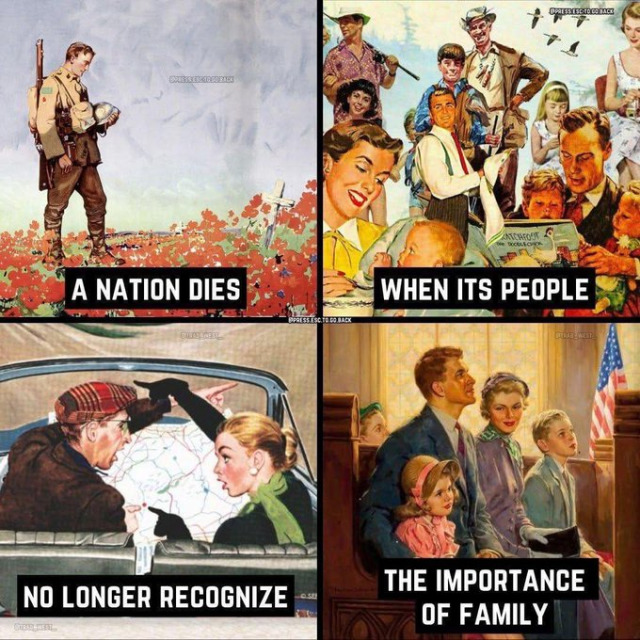
It turns out that Children are the measure of a Society.
“The test of the morality of a society is what it does for its children.” These words, attributed to Dietrich Bonhoeffer, echo like a warning bell across generations. They are not merely poetic, they are prophetic. If we dare to measure our society by this standard, we must confront a painful truth: we are failing.
At the heart of this failure lies the collapse of the nuclear family. Once the cornerstone of civilization, the family, father, mother, and children bound by love and duty, has been systematically dismantled. In its place, we find broken homes, single-parent households, and blended families struggling to find emotional equilibrium. The consequences are not abstract, they are measurable, generational, and devastating.
As Ronald Reagan once said, “The family has always been the cornerstone of American society. Our families nurture, preserve, and pass on to each succeeding generation the values we share and cherish.” When that cornerstone crumbles, so too does the moral architecture built upon it.
Today, the majority of children are raised without both biological parents. Fatherlessness has become a defining feature of modern childhood. Studies consistently link father absence to increased rates of poverty, incarceration, substance abuse, and suicide. Children raised in single-parent or stepparent homes often face emotional instability, identity confusion, and a longing for roots that were never planted.
Feminism takes a lot of the blame:
The takeaway? Messing with nature has unintended, adverse consequences. Legions of females are practically cultists. Many are as barren as the Sahara.
Basic biology: young women are hardwired to bear children. Yet, that simple fact is shrugged off by progressives. Instead of having kids, too many females are adopting malignant social causes.
“Manmade” climate change is one such cause, as Weinstein cites. Woke ideology is another. Socialism? Mamdani won the NYC mayorship in no small measure thanks to younger voters, particularly younger women, who backed him lopsidedly. What about “fascist” Charlie Kirk’s assassination? Left-leaning females were in the forefront, cheering Kirk’s murder on social media. Not only is that creepy, but it exposes a growing social pathology.
Government has become a spouse substitute for self-proclaimed empowered females. Government may provide some protection — in terms of a social safety net — though little in the way of emotional sustenance and meaning.
A feminist tenet is that not only can women do anything that men do but do it better — and do it without men. In a common-sense world, that’s good for laughs.
Eschewing nature and evolutionary development are conceits. The interdependence — the complementary nature — of the male-female bond are dismissed. Humans are putty. Gender is assigned at birth. Differences between the sexes? Only if feminists care to assert female superiority. Do hardcore feminists despise men? Appears so.
Go to the first link in this post and you’ll see why feminism has made women ruin themselves and now our society
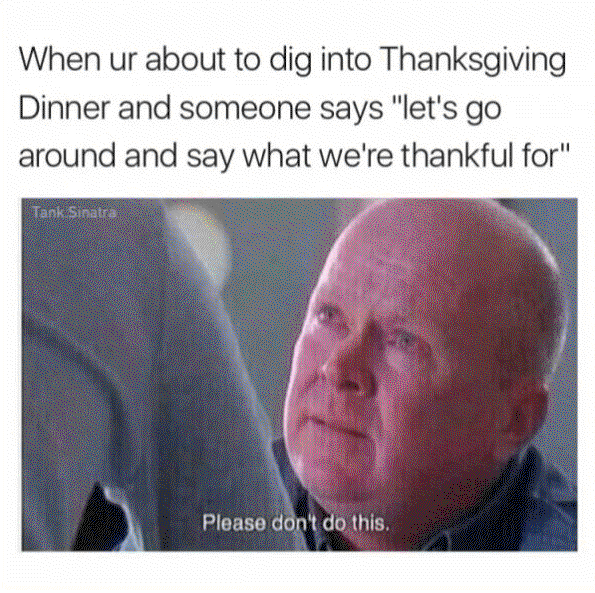
Introverts hate being put on the spot, icebreakers, and networking events. My Brother in law (who I nicknamed Flounder from Animal House) did this to me on one of the 2 worst Thanksgivings I’ve had. He was at the other one also. I mumbled some answer when I should have just passed and felt awkward the whole meal.
I’m a classic introvert, but in my teens and twenties, it was normal for me to spend almost every weekend with friends. Now, in my thirties, the perfect weekend is one with zero social plans.
And I’m not the only one socializing less these days. My extroverted friend, for example, used to run through her entire contact list, calling friends whenever she was alone in the car. She told me she hated the quiet, the emptiness, because being alone felt boring.
You know, for the whole 10–15 minutes it took to drive to the grocery store. Oh, the horror.
These days, I can rarely get her out for brunch or coffee. She’s content spending most nights at home with her husband and two kids. And I haven’t gotten one of her infamous calls in years.
So, what gives? Do we get more introverted as we get older?
Probably, says Susan Cain, author of Quiet: The Power of Introverts in a World That Can’t Stop Talking — and this is actually a good thing. Let me explain.
In a post on Quiet Revolution, Susan Cain confirmed my suspicions: We tend to act more introverted as we get older. Psychologists call this “intrinsic maturation.” It means our personalities become more balanced, “like a kind of fine wine that mellows with age,” writes Cain.
Research also shows that our personalities do indeed change over time — and usually for the better. For instance, we become more emotionally stable, agreeable, and conscientious as we grow, with the largest change in agreeableness happening during our thirties and continuing to improve into our sixties. “Agreeableness” is one of the traits measured by the Big Five personality scale, and people high in this trait are warm, friendly, and optimistic.
We also become quieter and more self-contained, needing less “people time” and excitement to feel a sense of happiness.
Psychologists have observed intrinsic maturation in people worldwide, from Germany to the UK, Spain, the Czech Republic, and Turkey. And it’s not just humans; they’ve observed it in chimps and monkeys, too.
This shift is why we slow down as we get older and begin enjoying a quieter, calmer life — and yes, it happens to both introverts and extroverts.
From an evolutionary standpoint, becoming more introverted as we age makes sense — and it’s probably a good thing.
“High levels of extroversion probably help with mating, which is why most of us are at our most sociable during our teenage and young adult years,” writes Susan Cain.
In other words, being more extroverted when you’re young might help you form important social connections and, ultimately, find a life partner. (Cue the flashbacks to awkward high school dances and “welcome week” in college.)
Then, at least in theory, by the time we reach our 30s, we’ve committed to a life path and a long-term relationship. We may have kids, a job, a spouse, and a mortgage — our lives are stable. So it becomes less important to constantly branch out in new directions and meet new people.
(Note that I said “in theory.” In my 30s, I still don’t have kids, a mortgage, or a wedding ring. These days, we have the luxury of not following evolution’s “script.”)
“If the task of the first half of life is to put yourself out there, the task of the second half is to make sense of where you’ve been,” explains Cain.
During the married-with-children years, think of how difficult it would be to raise a family and nurture close relationships if you were constantly popping into the next party. Even if you don’t marry or have kids, it would be hard to focus on your career, health, and life goals if you were always hanging out with friends like you did in your teens and twenties.
But there’s a catch: Our personalities only change so much.
In my book, The Secret Lives of Introverts, I like to say that our personalities may evolve, but our temperaments remain constant.
This means that if you’re an introvert, you’ll always be an introvert, even at 90. And if you’re an extrovert — though you may slow down with age — you’ll always be an extrovert.
I’m talking big-picture here: who you are at your core.
Research supports this idea. In 2004, Harvard psychologists Jerome Kagan and Nancy Snidman studied individuals from infancy into adulthood. In one study, they exposed babies to unfamiliar stimuli and recorded their reactions. Some babies got upset, crying and flailing their arms and legs; these were labeled “highly reactive” to their environment.
Other babies remained calm around the new stimuli; they were the “low-reactive” ones.
When Kagan and Snidman checked in with these individuals later, they found that the “highly reactive” babies often grew up to be more cautious and reserved, while the “low-reactive” babies tended to stay sociable and daring as adults.
The bottom line? Our core temperament — whether cautious or sociable, introverted or extroverted — doesn’t change dramatically with age.
Discover the secrets to enjoying fun, meaningful conversations. Know exactly what to say — even if you’re introverted, shy, or socially anxious. Feel less drained and have more energy while socializing.
Consider, for instance, your high school reunion.
Let’s say you were very introverted in high school — perhaps the third-most introverted person in your graduating class. Over the years, you’ve grown more confident, agreeable, and comfortable in your own skin, but you’ve also become a bit more introverted. If you enjoyed hanging out with friends once a week in high school, maybe now in your thirties, you’re content with seeing them only once a month.
At your ten-year high school reunion, you notice everyone has slowed down a bit, enjoying a calmer, more stable life. But those who were very extroverted in high school are still much more extroverted than you.
You’re still approximately the third-most introverted person in your class — but now the whole group has shifted slightly toward the introverted side.
And that’s not a bad thing. In fact, it might be exactly what we need to flourish as adults. If there’s one thing we introverts understand, it’s the deep satisfaction of a quiet life.
My take, I just had my 50th high school reunion. I never even considered going. I enjoyed it immensely.
What food would you say is your specialty?
When I was young, my Mom told me some people live to eat, while others eat to live.
Being an introvert, long ass meals are tedious for me. I just need something to fill up my stomach.
I also worked in an Italian restaurant that had real food based on recipes that came from the Mother Country, not just pasta.
Don’t get me wrong, I’ve attended the three-hour business lunches in France, which often featured exquisite food. I’ve also gone hunting at 3 in the morning, and ridden in many 100-mile bike races that started at sunrise. I’d have to cram as much food as I could in the shortest amount of time, as I was on a deadline.
I know the difference between 5-star food, and reheated chicken and rice in the dark hours of the morning. I just need a proper meal (not fast food or processed) to get me to the next meal.
I bet some readers served in the military who ate some awful stuff, yet survived.
In contrast, my brother-in-law was the president of Ruth’s Chris Steakhouse and was obese for a good part of his life. He lived to eat and has failed at every diet and/or weight loss plan that exists. He now has health problems I saw coming decades ago. He also got the COVID-19 jab and has symptoms from that.
One last thing, I never miss the Hot Dog eating contest on July 4th. I’ve been a fan since Kobayashi was transforming the “sport”.

I’ll be taking a Father/Son trip for a few days, so posting will be slow.
I’ve scheduled most of the usuals already, with at least one best of (tune in to see what), so there should be a post each day.
If I do put something up, you can take shots at where we went. It’s one of our shared passions. We’ve gone through fishing, hunting, Karate, and this together over the years.
I usually introvert out and try not to go to stuff with people, but spending some of the little time I have left with my son makes it worth it to do.
It’s not like what I post changes the world, but I hope it brings some diversion from life from time to time.
Oh, and bad guys who think my abode is free to raid, there is a special surprise for you if you try.
This happens to me a lot. Most recently, I was the only one in my family or friends who refused to get the COVID-19 jab. I was pressured on all sides, but it was wrong for me. People even told me how sorry they felt for me that I wasn’t. While I didn’t reciprocate the sentiment verbally, I was thinking how I felt sorry for them. That’s just one example, but it’s a pattern that goes through my life. I’m willing to stand up for what I believe in, even if it means facing ostracism. Inevitably, a lot of what caused my actions came true. It was worth not doing what everyone else does. In reading back that sentence to myself, I just realized that it sounds like my high school experiences.
Fortunately, my introvertedness allows me to move along and not worry if I’m the odd man out. It’s a blessing to not be in the crowd.
Now for the story:
The bravest souls are rarely the loudest in the room, but they are often the most misunderstood. In an age when conformity is dressed up as virtue and applause is the currency of self-worth, those who refuse to play by the script become lightning rods. They provoke discomfort simply by existing in truth. They trigger the insecure, unsettle the complacent, and disturb the carefully curated illusions of the fake.
We like to imagine that the pressure to conform ends with adolescence, with the awkward teenage years when belonging matters more than authenticity. But Solomon Asch’s conformity experiments in the 1950s proved otherwise. In a simple exercise—identifying which line matched another in length—he planted actors in the room to all give the same obviously wrong answer. Time and again, the lone real participant abandoned the truth they could plainly see with their own eyes and went along with the group. Three out of four conformed at least once. Not because they were fooled, but because they did not want to stand out. The fear of sticking out, of being “that person,” overpowered reality itself.
And here is the sobering part: that experiment never ended. It repeats itself every day in classrooms, workplaces, media echo chambers, and politics. People choose the safety of the crowd over the solitude of truth. They surrender what they know is real because they do not want the chill of unpopularity or the sting of rejection. The applause comes cheap, but the price of dissent feels unbearable.
Pair that with Stanley Milgram’s obedience studies in the 1960s—where 65 percent of participants willingly administered what they thought were lethal shocks to another person simply because an authority told them to—and you see the bleak pattern. Obedience to authority and conformity to the crowd are the twin forces that crush truth. And yet, every turning point in history has been authored by those who resisted both—the prophets, the dissidents, the whistleblowers, and the reformers.
To live this way is to accept loneliness as a companion. It is to endure suspicion, ridicule, and rejection, not because one is wrong but because one refuses to settle for the comforting lie. Truth costs dearly, but its reward is integrity: an internal compass that does not lose its bearing when the crowd veers off course.
Applause fades. It always does. What endures is the quiet, steady force of those who never sold out, never bent, and never exchanged their essence for acceptance. They may never be fully understood in their time, but they will always be remembered as the ones who saw clearly, stood firmly, and lived bravely.
source, except for the lead in which is my life

I’m married to Dane. For decades, they bragged about all the free shit they get such as education, healthcare, and retirement. They have to pay 70% taxes to afford this for the country. I believed them at first, but the truth came out ,and they aren’t happy about paying so much for everything.
Every one of her (not mine) relatives who has had surgery has had it messed up. From ankles to stomachs, botched every time. They wait 6 weeks to see a doctor (a cold is gone in 1 to 2). Even their pension isn’t as much as Social Security, the pittance that it is.
They aren’t fooling me. I see how they live. They avoid the government because everything is so expensive. They buy all their stuff in the US instead. They are next to obnoxious to protect a tiny country which hasn’t been great since the Vikings.

They brag how everyone is equal (a big lie, her nephew Brian can’t stop talking about how much he has and paid for it). The other lie is they are the happiest. When you set your standards to zero, you can meet them everytime. They aren’t happy and will barely talk to a stranger there.
I said I wasn’t going there again and meant it
Have you ever wondered why Scandinavian countries are often hailed as the gold standard of social equality? It’s a compelling narrative: nations like Sweden, Denmark, and Norway seem to have cracked the code on blending prosperity with fairness. But what if the story we’ve been sold isn’t the full picture? As someone who’s always been skeptical of too-good-to-be-true promises, I decided to dig deeper into the so-called Scandinavian model. What I found was a system far more complex—and, frankly, more troubling—than the rosy image painted by its admirers.
The term Scandinavian socialism gets thrown around a lot, often with a sense of awe. People point to high taxes, generous welfare programs, and impressive human development rankings as proof of a utopian system. But here’s the thing: what’s labeled as socialism in Scandinavia isn’t quite what you might think. It’s not about collective ownership of production or some grand egalitarian dream. Instead, it’s a carefully crafted system where the state plays a heavy-handed role in managing resources, wealth, and opportunity—often to the benefit of a select few.
At its core, this model is less about empowering the average citizen and more about maintaining state control. The state doesn’t own businesses outright, but it sets the rules, picks the winners, and ensures compliance through a web of regulations and taxes. It’s a system that looks free on the surface but operates with an iron grip beneath. Let’s break it down and see what’s really going on.
Back in the late 19th century, Scandinavian countries faced a unique challenge. They were resource-rich—think timber, iron, and fisheries—but lacked the robust middle class needed to fully exploit these assets. Unlike their European neighbors, who had thriving industrial bases, these Nordic nations couldn’t rely on state-run enterprises to drive growth. Their solution? Outsource production to a handpicked group of industrialists and corporations, both local and foreign, who were granted special privileges in exchange for loyalty and hefty tax contributions.
The state didn’t abolish private enterprise; it tamed it, turning businesses into extensions of its own agenda.– Economic historian
This wasn’t socialism in the classic sense. It was a hybrid—a mix of state favoritism and market dynamics. The government didn’t seize factories or mines; instead, it created a system where only those who played by its rules could thrive. This approach allowed Scandinavian nations to industrialize rapidly, but it came at a cost: a rigid hierarchy where the state and its chosen allies held all the power.
One of the biggest selling points of the Scandinavian model is its promise of equality. High taxes fund universal healthcare, education, and pensions, creating the illusion of a classless society. But is it really as fair as it seems? In my view, the system’s equality is more about uniformity than true fairness. Citizens are funneled into a state-managed existence, where their role is to maintain the system, not to innovate or break free.
The average Scandinavian doesn’t own significant capital or run their own business. Instead, they’re often locked into roles as employees within a tightly regulated economy. Their reward? A safety net of welfare benefits that ensures stability but discourages independence. It’s a trade-off: security for autonomy. And while that might sound appealing to some, it’s worth asking—does it truly empower people, or does it keep them tethered to the state?
Perhaps the most striking aspect of Scandinavian socialism is its reliance on a small, politically connected elite. These are the industrialists, corporate leaders, and bureaucrats who benefit from the state’s legal monopolies and administrative privileges. They’re not your typical capitalist entrepreneurs—they’re state-sanctioned players who thrive because of their proximity to power.
This dynamic creates a kind of corporate feudalism, where the state acts as a lord, granting favors to loyal vassals. In return, these elites generate revenue that funds the welfare state, keeping the system afloat. It’s a clever setup, but it’s not exactly the democratic paradise it’s made out to be. The average citizen has little access to this inner circle, and their economic mobility is often capped by design.
Fast forward to today, and the Scandinavian model is starting to show its age. The system was built on the back of abundant natural resources and a compliant workforce, but those foundations are crumbling. Aging populations, declining competitiveness, and shrinking resource revenues are putting pressure on the welfare state. The machine, as I see it, is grinding to a halt.
What happens when the money runs out? Historically, states in this position turn to desperate measures. In Scandinavia, that could mean wealth confiscation or outright nationalization of private assets. It’s not hard to imagine governments doubling down on their control, especially when the promise of welfare is at stake. After all, if the system’s built on dependency, what choice do they have?
Scandinavian countries consistently rank high on global happiness indices, which often fuels the myth of their success. But is this happiness genuine, or is it a byproduct of a system that prioritizes compliance over ambition? In my experience, true contentment comes from freedom and opportunity, not just material security. When you’re locked into a system that limits your potential, can you really call that happiness?
The data paints a mixed picture. While citizens enjoy high standards of living, they also face some of the highest tax burdens in the world. Personal savings rates are low, and entrepreneurship is stifled by red tape. It’s a system that works—until it doesn’t. And when it fails, the fallout could be severe.
As the Scandinavian model faces growing challenges, the question is whether it can adapt. Some argue for reforms—lower taxes, deregulation, and a shift toward true market freedom. Others fear the state will tighten its grip, moving closer to outright nationalization. Either way, the myth of Scandinavian socialism as a perfect balance of equality and prosperity is fading fast.
For those of us watching from the outside, there’s a lesson here: systems that promise everything often deliver less than they claim. The Scandinavian model isn’t a blueprint for utopia; it’s a cautionary tale about the costs of control. Perhaps it’s time we rethink what equality and freedom really mean.
There is more here, but it says the same thing.
My wife is Scandinavian. I’ve heard 3 decades of shit from them about free education, free medical, and free money if you can’t work or are going to school, or basically, if you are alive, you can suck off the system. There are a lot of illegals and goat herders who are getting free money also. Someone is paying for it.
The problem I point out is that their 70% tax rate is paying for this.
The other problem is that almost everyone in her family who got an operation had to either have it redone or had results that would be malpractice were it not socialized medicine.
Not all of her country finishes high school. So much for the education.
Even they don’t believe it is free anymore. Their argument couldn’t hold water as soon as I asked a couple of questions about how the economics work. They can be insufferable so the less we talk, usually the better, for me at least. You can only listen to so much shit before it gets old and it got old for me decades ago.
Now This:
Europe’s free university model is often seen as a triumph of modern society. With no crushing tuition bills, minimal student debt, and a promise of equal access, it sounds ideal. In countries like Germany and France, students pay only a small administrative fee, typically between $200 and $500 a year, compared to the staggering tuition costs in the US or UK. Many also receive financial aid in the form of grants that don’t need to be repaid, or low-interest loans based on need.

But behind the promises of fairness and opportunity lies a system that too often feels rigid, overcrowded, and uninspiring.
For all its accessibility, the reality of navigating these institutions can leave students feeling like just another number in a giant, bureaucratic machine.
When education is available to everyone, universities become packed. Lecture halls overflow, and personal contact with professors becomes rare. In many European countries, it is normal to attend classes with hundreds of other students. There is little space for discussion, feedback, or even questions.
You sit, you take notes, you pass or fail. It feels more like an assembly line than a place for learning. And the numbers explain why. In 2022, the European Union had 18.8 million students, about 7 percent of its total population, enrolled in tertiary education. In the United States, about 19.1 million people were enrolled in college during the 2024–25 academic year. In addition to similar enrollment figures, both the EU and the US have made higher education widely accessible. In the EU, where tuition is often free or heavily subsidized, higher education has been expanded to accommodate the majority. As of 2022, 44 percent of EU citizens aged 25–34 had completed a tertiary degree, compared to 50 percent in the US.
The two systems differ in structure. What sets these systems apart is not the number of students, but how education is delivered. European universities tend to rely on large lectures, rigid course pathways, and limited institutional competition. The result is a model built for efficiency over individualization. US institutions, by contrast, operate in a competitive, decentralized environment with a wider range of academic structures, including smaller colleges and more flexible program design.
When higher education is scaled to serve nearly everyone, as in much of Europe, it risks trading depth for throughput and personalization for administrative convenience. It works, but at the cost of treating education less as a journey and more as a bureaucratic process.
So I’m tired of hearing about their system. They are about to turn out a bunch of substandard students not to mention all of the illegals.
I’m on semi-vacation with some family. Go read my introvert posts on how well I do with that.
So I have some stuff ready, but mostly I’ll be watching my social battery drain. I went to one of the most average theme park yesterday. I mostly chased kids.
I’m already in introvert hangover
I get a ration from my wife’s Scandinavian relatives about free college, health care, and pension for life.
The top earners pay 70% tax and have to wait 6 weeks to see a doctor who is no better than a PA here, more like a nurse.
When the wifes Sister in Law came over, they compared Social Security to the state pension she was getting and the wife’s SS was 3 times more. They are locked into the pension where we live off investments and SS is just a byproduct.
Enjoy your free stuff
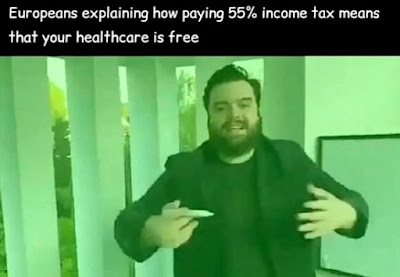
Socialism is just one step away from communism.
As a counselor, I see many introverts come to my office struggling to set healthy boundaries. This doesn’t mean they’ve failed in some way because, let’s be honest, most of us have never been taught how to do this — and it’s not easy. I often help by showing them a few simple strategies.
To be clear, both introverts and extroverts can struggle with setting boundaries, so it’s certainly not just an introvert issue. Yet, in my experience, they struggle for different reasons. There are typically two main roadblocks for us “quiet ones”:
Many introverts — especially highly sensitive ones — are naturally inclined to take care of others due to their strong sense of empathy. For more on this, see my article The Science Behind Why We Absorb Others’ Emotions (and How to Deal).
Introverts, many of whom are compassionate and eager to help, often see boundaries as walls rather than healthy limits.
Over the course of our sessions, I help my introverted clients understand that boundaries aren’t barriers or dividers. They are guidelines, rules, or limits that define reasonable, safe, and mentally healthy ways for others to treat them — and how they will respond when those limits are crossed.
Simply put, personal boundaries are a list of what is and isn’t okay.
Again, to be very clear, not every introvert struggles with setting boundaries. But in general, because of their empathy, introspection, and compassion, some introverts tend to see boundaries as obstacles to relationships. They may view saying no as unkind, and setting boundaries may even feel wrong.
In reality, boundaries are the foundation of an empathetic, compassionate relationship. As Brené Brown writes in Rising Strong, “Compassionate people ask for what they need. They say no when they need to, and when they say yes, they mean it. They’re compassionate because their boundaries keep them out of resentment.”
Sometimes, introverts come to me feeling upset or frustrated about a friend or loved one who isn’t meeting their expectations. One young woman, an introvert, was desperately trying to help her depressed friend. She repeatedly came to me with feelings of resentment and anger, saying, “No matter what I do, she isn’t getting better.”
This woman was so empathetic that she was pouring everything she had into trying to pull her friend out of depression. When we looked deeper, we realized she had an unspoken expectation — that her friend would get better because of her efforts. She believed she could heal her friend, and when that didn’t happen, she took it as a personal failure.
Instead of setting boundaries about when she would offer support and when she needed to take time for herself, she kept investing more energy, time, and effort into making her friend meet an expectation that wasn’t hers to control.
The more we talked, the more she realized that this wasn’t true empathy or compassion — it was actually harmful to both of them.
Brené Brown captures it beautifully in The Gifts of Imperfection: “When we fail to set boundaries and hold people accountable, we feel used and mistreated. This is why we sometimes attack who they are, which is far more hurtful than addressing a behavior or a choice.”
My client began setting boundaries with her friend. She still offered support with kindness, but she no longer felt responsible for fixing the problem. She allowed herself to take breaks, spend time with other friends, and prioritize her own well-being. As a result, she became more present and compassionate with her struggling friend, and her own stress significantly decreased.
This is the life-changing power of setting boundaries.
Do you struggle to set healthy boundaries? Here are three key steps I share with my clients that can help you, too:
Start by reflecting on your values. Who are you? What matters most to you? Your boundaries are about you, so take the time to identify what you truly need from others. For example, as an introvert, you likely value alone time — your boundaries should reflect that.
Pay attention to your emotions, as they often signal where boundaries are needed. Do certain situations leave you feeling frustrated or resentful? Is there someone you frequently complain about? Do you feel suffocated, taken advantage of, or even unsafe in a particular relationship? Emotions are like warning flags, waving to get your attention and reveal areas in your life that may need stronger boundaries.
For introverts, who often prioritize their inner world over external interactions, expressing boundaries can feel daunting —especially if it’s your first time. Here are some tips to help:
If I’d only learned this earlier in life, it would have made a big difference. I just didn’t know how important this was
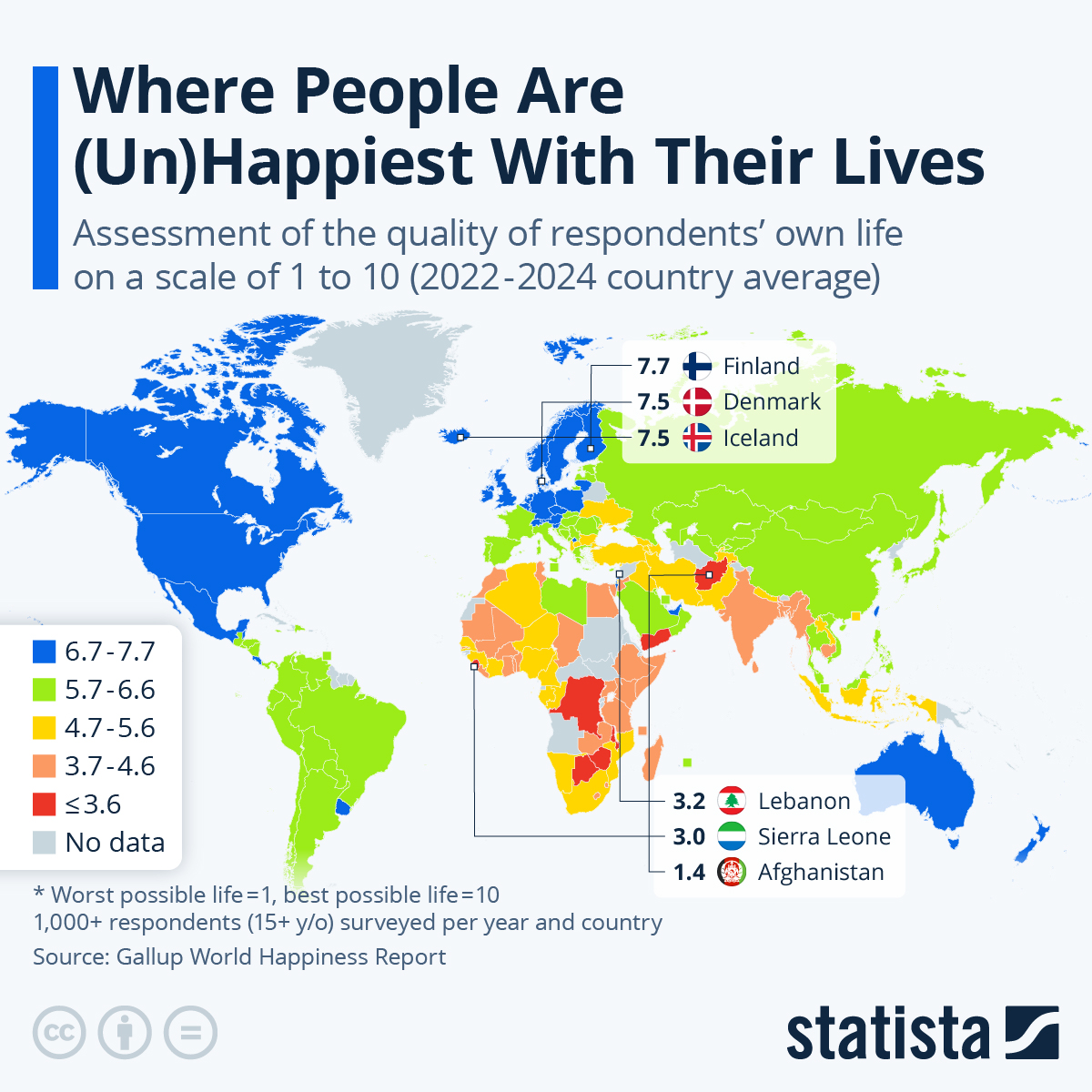
We’re down the list for a number of reasons. I’ll put a link to the report so you can see the rankings and why. It’s mostly because of Biden’s policies that skyrocketed our inflation and all the other things we are finding out about. It’s all in there, you decide.
I will call out the bullshit about the Nordic countries being the happiest. When you set low expectations, you almost always meet them. My wife’s family lives there. It’s not that happy. They are being invaded by the goat herder Muslims and the taxes are 70%. They just say they are good with it until about the 4th glass of wine, then the real story comes out and you find out how they really feel.
How has a failure, or apparent failure, set you up for later success?
I’ve learned more from my mistakes than my success.
I expect to win or be successful at what I do now. I’ve paid enough dues in life and have learned enough lessons at the school of hard knocks that I should be doing things correctly by now. (I hope I don’t eat those words).
Life was tough growing up. I had no manual and a couple of siblings who rooted against me the whole time. It almost forced my will to overcome and to not only win, but to overachieve at whatever I did.
Along the way though, failure at tasks, life, relationships, and a lot of other things taught me more lessons than success. I hate losing and I hate screwing up. I only want to fix something once. That’s easy to do with carpentry, electrical, plumbing and repair. It’s damn near impossible with relationships.
I know the Tom Brady’s of the world must hate losing more than anything. He learned how to win. That’s how I feel about it.
Who are your favorite people to be around?
I’d like to say something witty or emotional like my family or my oldest friend from childhood, but it would be a lie.
It’s my dog
Don’t get me wrong, I like (a few of) my family and my friends, for a bit.
The introverts will know what I’m saying without me even explaining animals, small talk and time alone to re-charge
Back to my wife’s relatives in Denmark. I routinely count on them to know what is the right thing for America by going against anything they are for. In this case, her niece Marian thinks Pocahontas is the “bomb”. She put it on Facebook.
They of course hate Trump who just got them to spend $2.1 Billion on Greenland’s defense instead of him spending it. They already pay 70% taxes and it’s going up for some TDS.
I find it hard to believe her family are even close to smart sometimes. I can always count on them to trash America and Americans, except when they want to shop for half the price in Denmark. They always think that America should be more like Denmark. Let’s see, which country has put a man on the moon? Are they speaking Danish instead of German since the 1940’s?
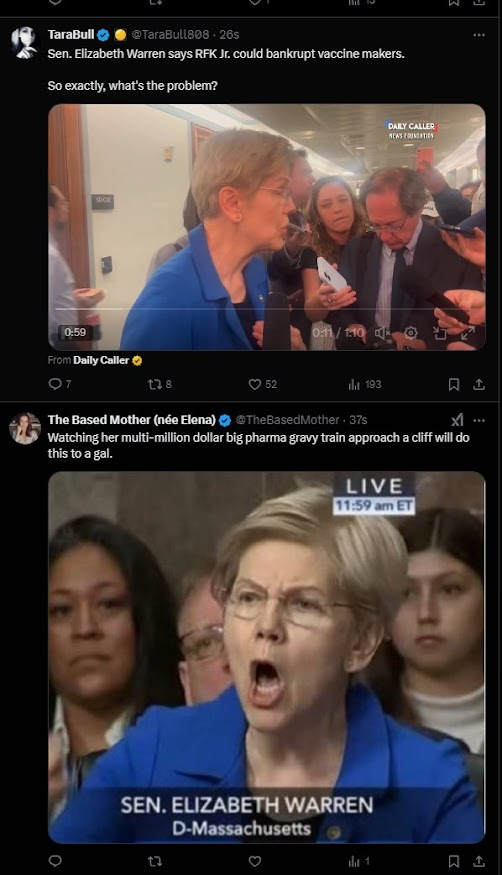
Warren just proved yesterday that her paycheck comes from Big Pharma, who screwed over a lot of people during Covid. Point of interest, the Danes had to take the jab so that could be why their IQ went down some more.
https://twitter.com/ericldaugh/status/1884647968466166141
President Trump has been unduly mocked by Democrats and corporate media journalists regarding his desire to purchase Greenland from Denmark. But he now has the Danes and Greenland’s full attention.
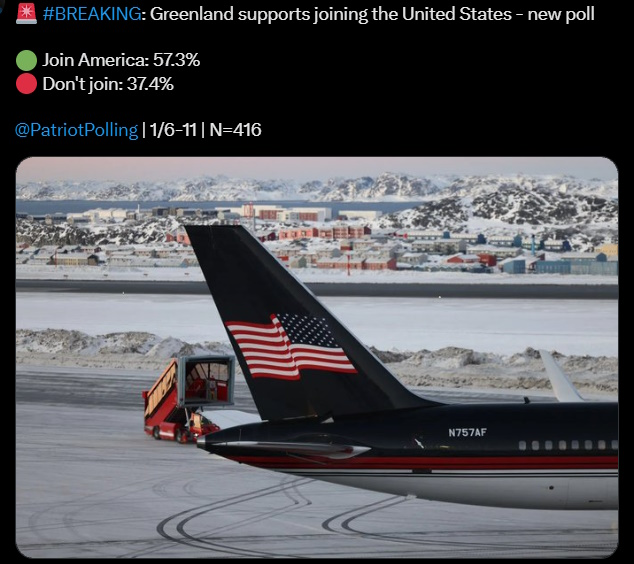
As The Gateway Pundit reported, Trump for months has pushed for purchasing the world’s largest island and is not ruling out possible military action. He argues that Greenland becoming part of America is absolutely necessary for national security.
Trump is, of course, correct. The Arctic island is rich in natural resources and holds immense geopolitical value due to its proximity to the Arctic Circle and the presence of U.S. military assets, including Thule Air Base.
Moreover, China and Russia are circling Greenland seeking to take advantage of the islands enormous potential. Buying Greenland would enable the U.S. to seize control of the Arctic and deal a heavy blow to the ambitions of their two biggest global adversaries.
During a press conference Saturday, a journalist asked Greenland Prime Minister Mute Egede if he had spoken to President Trump regarding Greenland. Egede said “no” but that he was ready to.
“We are ready to do so (talk),” he said. “I think we are both ready to increase dialogue and reach out.”
“And therefore also talk about things that bring us together in the world we live in.”
Egade reiterated that he does not wish for Greenlanders to become Americans. However, the fact that he will speak with the soon-to-be 47th president shows the effectiveness of Trump’s bold ideas and dealmaking.
Meanwhile, Axios revealed Saturday that Denmark sent Team Trump a private message regarding the possible future of the island. While they still do not want to sell Greenland to America, they are open to discussing bolstering security on the world’s largest island or increasing the U.S. military.
They are also open to any other request from Trump outside of giving up territory.
No other president has been able to accomplish what Trump has done so far on Greenland, and he now stands in an incredibly advantageous position even before taking office. Even if Greenland does not become part of America, our national security will almost certainly be enhanced to the detriment of the Russians and Chinese.
But if Trump decides to go all or nothing on a Greenland purchase, it would be unwise to underestimate the man who wrote the world-famous “The Art of The Deal” all those years ago.
go down a post or 2 to see the libtards in my wife’s family losing their minds over this
Greenland’s Prime Minister Now Says Open To Talks With Trump: ‘Status Quo No Longer an Option’
We are continuing to watch the developments related to Greenland, which have gotten especially interesting after President-elect Donald Trump tasked his pick for Ambassador to Denmark with persuading the Danes to sell us the resource-rich Arctic land.
Shortly after that announcement, Greenland suffered a major power outage due to a downed transmission line. The blackout plunged the region into darkness as temperatures dropped below -27 degrees Fahrenheit (-33°C).
This was soon followed by Greenland’s Prime Minister Mute Egede calling for independence from Denmark, marking a significant shift in the rhetoric surrounding the Arctic island’s future.
Trump’s son later went on an “unofficial” visit to Greenland. At that time, I speculated that persuading the people of Greenland to become an independent territory of the United States might be the best deal that could be placed on the table.
Intriguingly, Egede recently had a joint press conference with Danish Prime Minister Mette Frederiksen during which he said that he’s ready to speak with Trump as ‘the status quo is no longer an option‘.
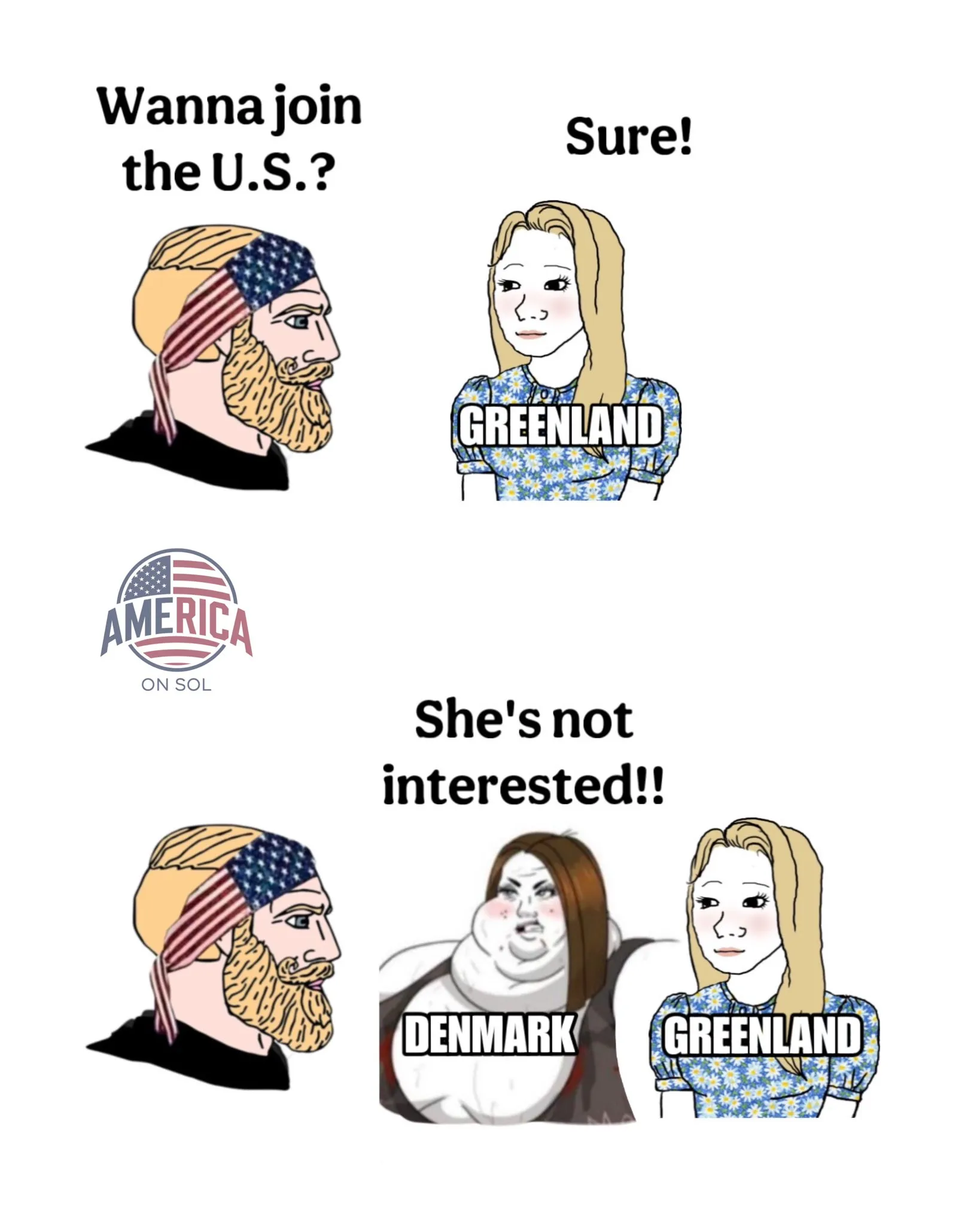
My wife’s Danish relatives, to whom I’ve had to associate in the last 3 decades of marriage finally can’t hide their contempt for Trump and the USA any longer.
In dealing with them and many Europeans throughout my business career, it’s clear that trashing the US is their favorite sport (not football/soccer). They keep trying to re-make America by their rules, rather than accept the history of a country that has surpassed centuries of European culture.
A point of note is that while they are trashing America, they are wearing Levis or Carhartt, smoking Marlboro cigarettes, and regularly vacationing in America all while bitching that it isn’t Danish enough. They love shopping here because it is so much cheaper because of their 70% tax rate which pays for their “FREE” education and healthcare (that is just above malpractice)
The press coverage and the feedback I get is that the Danes are livid that Trump wants Greenland.
One of her nieces posted that Elizabeth Warren is the “bomb”
My wife also has a brother who lives in Greenland and the natives there hate Denmark owning them, but subsist off of the money that Denmark pours into them yearly. They’d rather be Greenlandish and free but realize they get a heck of a lot more from the US than they would Denmark, given the economic difference.
The US has had a military base there for a long time and they love the Americans in Greenland, more than the Danes
Back to my wife’s relatives, the Danes hate Trump. He is as atypical of how the Danes think they think (Janteloven) as possible. They are as averous as any other group despite what they claim. She’s got nephews who brag about the price of everything they bought and the status of the item. With Trump, They can’t handle the thought of an alpha male actually being successful and achieving more than others because of hard work and outsmarting others (like my wife’s relatives). Mostly, he’s not a socialist like a lot of thinking in Denmark so they can’t grasp it so they use the “typical American” and hate him. They actually don’t know why other than their press has told them to.
I had to cut them off from social media for the childish trashing of him for the last 8 years. I haven’t missed anything though other than them being the compass for what is wrong by going against everything they think is right (Warren/Pocahantis, Biden, Kamala, Obama, Obamacare, and the list goes on). So Trump lives rent free in their heads now as they seethe every time he wins (and wins again).

Here is an unscientific poll that backs up my observations.
A new survey found that a majority of Greenland respondents support joining the United States.
According to a poll by Patriot Polling released Sunday, 57.3 percent of respondents approve of Greenland becoming part of the U.S. Just 37.4 percent disapproved of the potential acquisition, and 5.3 percent are undecided about the move.
President-elect Trump has in recent days floated the idea of acquiring Greenland, a Danish territory. He said owning Greenland is an “absolute necessity.”
While the survey only polled 416 people in Greenland and is the first of its kind, it signals support for Trump’s larger international plans.
I think Trump just wants a bigger military footprint and access to rare earth minerals (and petroleum). He is a master of negotiations and everyone should be happy in the end, except my Wife’s family, but I don’t care what they think. Their bias doesn’t allow them to think rationally about Trump and America anyway. Not that I care what they think anymore.
Enjoy your shopping when you are in America.
I’m getting sick and F*****g tired of bashing men. It’s a cheap shot by the liberals, feminists, SJW, and pussies who don’t get their way or can’t do something that men can do. Tearing someone down to build yourself up is a crap way to make yourself feel better. It has not made the world any better either, stop it, now.
We need more masculinity. We’d have better kids, a better economy, less woke crap, and a better selection for the ladies to choose from. The world needs strong men who do the right thing and make the world better.
I have a dumbass cousin who got butt hurt that Trump said some stuff about girls when he was younger. I’ve got news for you, girls let rich and powerful men get away with more than they do with beta men or guys without money. It’s called hypergamy. Stop being a dumbass and realize that girls control most of what guys get in a civilized situation. She supported Biden who destroyed the country and a lot of the world.
The popular mandate of President-elect Donald Trump is an affirmation of traditional masculinity.
The war on men, orchestrated by the extreme left, has suffered a serious setback with his election. Mr. Trump was told that he’d have to soften his message to appeal to women voters. He didn’t, and it doesn’t seem to have hurt him.
This year, Mr. Trump carried a majority of White women, as Republican presidential candidates have since 2004. Overall, Vice President Kamala Harris did worse among women than President Biden in 2020 or Hillary Clinton in 2016.
The image that symbolized Mr. Trump’s spirit came after he was wounded at the rally in Butler, Pennsylvania, when he got to his feet, pumped his fist and shouted, “Fight! Fight!” If it had been Ms. Harris, she would have fainted, and, when revived, returned to the lectern to blather about “What can be, unburned by what has been.”
Democrats tried to counter Mr. Trump’s charisma with a new model of masculinity: Minnesota Gov. Tim Walz, who put tampon dispensers in the boys’ rooms of schools, and second gentleman Doug Emhoff, who put his career on hold to dutifully campaign for his wife.
Given a choice between Ms. Harris (who could barely articulate a coherent thought) and the Marxist Mr. Magoo on the one hand and Mr. Trump and Sen. J.D. Vance, a Marine Corps veteran, on the other, men went for the Republican ticket by a landslide. Men have taken a beating at the hands of feminists and “woke” culture for too long.
In “Why Can’t We Hate Men?” – a 2018 opinion piece in The New York Times – Suzanna Danuta Walters, director of the Women, Gender and Sexuality Studies Program at Northeastern University, declared that the essence of masculinity is sexual violence and economic exploitation.
Canadian Prime Minister Justin Trudeau, who calls himself a feminist, says American voters had two opportunities to elect a woman president and failed both times, as if gender were the only issue in the 2016 and 2024 elections.
Such attitudes aren’t confined to the directors of women’s studies programs and socialist politicians desperate to retain power.
A study on changing attitudes toward men found that in 1970, 65% believed “men are basically kind and considerate,” compared with 44% in 2005. “Men’s egos require that they put women down” was a sentiment shared by 58% of respondents in 2005, next to 41% in 1970.
These toxic stereotypes have been cultivated by the media, academia and Hollywood – to the detriment of both sexes.
Who needs men? Among others, children do.
Fatherless families are responsible for 90% of homeless and runaway children, 85% of institutionalized youth, 71% of high school dropouts and most minors who suffer from drug or alcohol addiction.
Where are the role models for the 43% of boys who are raised by single mothers? Boys need men to instill masculine virtues.
Women need them, too. The traditional role of men as protectors of women and children isn’t outmoded, just neglected.
When men do man up, society tries to crush them.
When Daniel Penny saved passengers on a subway car from a deranged homeless man who had a long history of violence (including punching an old woman in the face), the state of New York charged the Marine veteran with criminally negligent homicide. A jury of five men and seven women acquitted him.
Unfortunately, there was no Daniel Penny on a New York subway car on Dec. 22, when a sleeping woman was burned to death. An illegal immigrant from Guatemala has been charged with first-degree murder and arson in that attack.
Women and children pay the price for the absence of male providers and protectors in the home and on the streets. The rise of crime, especially crimes targeting women, parallels the decline of masculinity. In 1993, women were 41% of violent-crime victims. Today, they’re 48%.
That’s why the election of Donald Trump is as important to the culture as it is for the economy. Men take responsibility, whether it’s by fighting crime, guarding our borders or meeting foreign threats.
Strong men are confident enough not to be intimidated by competent women. Witness Mr. Trump’s nominations of Pam Bondi for attorney general and South Dakota Gov. Kristi Noem for secretary of homeland security.
For the past four years, we’ve been misled by an increasingly feeble old man who hid in the White House or on the beach in Delaware. On Jan. 20, there will be a man of the house again.

My wife’s dumbass relatives in Denmark can’t brag enough to me about their free healthcare, to which I say you pay 70% taxes, so it’s not free. They try to make America into Denmark and what sort of works for 5 million doesn’t translate to 330+ million. They don’t get it because they mostly want to trash the US. Plus, they are socialist and we’re not.
Well, here’s the facts. It doesn’t work, the doctors are crummy, you have to wait for months and you can’t sue for malpractice, which at least 4 of her relatives have received for healthcare and are now injured.
Now this story:
Advocates for “universal health care” love to use Finland as an example of a system that works. That is an absurd comparison. Finland has a culturally homogeneous population of 5.6 million; that is just over half the population of Los Angeles County (9.6 million).
Better examples are England and Canada.
England has government-funded “universal health care” in the form of the National Health Service. The population of England is around 57 million people. Wait times for nonemergency care average 14 to 18 weeks, and thousands of people have been waiting more than 18 months. As of June of this year, 7.5 million Brits were waiting for already scheduled procedures and surgeries requiring hospital stays, more than 300,000 of whom had been waiting for more than a year.
Keep in mind that these scheduled – and delayed – procedures include diagnostic tests and treatments for illnesses like cancer. Shortages of physicians and treatment facilities force cancer patients to wait weeks – or months – for radiation or chemotherapy.
These delays have life-and-death consequences. In 2009, British medical journal Lancet reported that 51.1% of British cancer patients were alive five years after their diagnosis. By contrast, 91.9% of American cancer patients were alive five years after their diagnosis.
England’s problems are not limited to cancer care. Last year, Bloomberg News published a report analyzing the NHS’s own data. The results were shocking. In most areas of England, medical care failed to meet government goals in things as basic as minimum wait times for an ambulance to arrive in an emergency (goal: 30 minutes; reality: up to three hours) or the availability of hospital beds.
In Canada – another country with “universal health care,” the situation is nearly as bad. Canada has a population of nearly 40 million. The average wait time for treatment in Canada for a condition requiring a specialist’s care is more than six months. But in some provinces and for some procedures – like orthopedic surgery or neurosurgery – the wait is closer to a year, or even longer. Canadians face long waits – six weeks to three months – even for simple but vital diagnostic procedures like MRIs, CT scans or ultrasounds.
By contrast, in the United States – a country with 330 million people – the average wait time for a nonemergency appointment with a specialist is only 26 days (a situation that medical journal STAT called “a public health crisis”). The median time between diagnosis of cancer and commencement of treatment is 27 days. The average wait time for an ambulance here is seven minutes.
My wife’s idiot niece Marian posted on Facebook that Elizabeth Warren is the bomb. I can pretty much count on her being on the wrong side of everything good for America. Here’s proof.
President Biden has overseen nearly four years of a two-tiered justice system, as his pardoning of Hunter Biden and the political persecutions of then-candidate Donald Trump make all too clear.
But there have been quieter attacks on justice, like “debanking” — and few people realize they could be the next victims because they are a “politically exposed person,” that is someone who disagrees with the liberal status quo.
Debanking is a kind of financial blackballing that has appeared within just the last 20 years.
It started under then-President Barack Obama as a war to punish those seen as political enemies, like firearm manufacturers. Government documents unsealed at the end of 2020 proved that the federal government used its regulatory authority over financial markets to attack political opponents.
Government regulators essentially make it impossible for certain people or businesses to make online transactions, or to have a bank account or a credit card.
…
The debanking scourge under President Biden has hit the crypto world particularly hard. The Securities and Exchange Commission has unleashed a plague of investigations, some real and some merely threatened, to force innovators and investors out of that space.
Dozens of tech and crypto founders have been debanked under Biden, and their inventions smothered.
On Joe Rogan‘s podcast, venture capitalist Marc Andreessen blamed the Consumer Financial Protection Bureau, a group set up at the behest of Sen. Elizabeth Warren (D-Mass.) to go after crypto firms in particular.
“Basically every crypto founder, every crypto startup, either got debanked personally and forced out of the industry, or their company got debanked,” Andreessen said.
I’m right again, I can count on her being wrong, every damn time.

This essay was first published on Daily Pundit in 2017. More applicable now than then, I think.
——
I have one. You have one. We all have a tard in our family circle. If you’re lucky it’s not a blood relative, just a boyfriend or in-law, but they’ll be showing up at the big family get-together for Thanksgiving.
Not just any tard, either. A Progtard.
They’re sort of like the Terminator: They can’t be bargained with. They can’t be reasoned with. And they absolutely will not stop, ever.
Unlike the Terminator, progtards aren’t dangerous except in large groups or if they’re in the position to ambush you from behind or to file a bogus complaint with your employer. Progtards are mostly pathetic, and they’re even more amusingly pathetic when they’re angry and self-righteous.
Herewith, a guide for dealing with the tard at the table. This will be most useful if you have someone to work with, someone contemptuous of sloppy thinking, of feeeewings, and of self-entitlement.
(If you’re the sole hard thinker at the table and you’re surrounded by progtards, you can still use these suggestions, but I wouldn’t bother. I’d just grab the carving knife and lay into everyone at the table. But that’s just me.)
College Mockery
Mocking modern education — indoctrination, rather — is a good place to start. Many progtards are in college or have recently gotten out. (I’m not saying “graduated” because so many don’t, especially not within the old normal of four years.) This is in large part due to many people being soft-headed progs before they grow up and get the stupid knocked out of them. College is for most a prolonged childhood that allows them to avoid growing up. It certainly doesn’t educate them in any meaningful sense. And it costs an arm and a leg.
Thus, our first line of attack.
(Remember, we’re not trying to enlighten the progtards. That’s hopeless. All we’re doing is entertaining ourselves by getting them all riled up.)
“So, how much does your college cost per year? That much? Wow. How can you afford that?”
This can lead to criticism about mooching off of parents or taxpayers. That’s unlikely to impact the progtard directly, on account of an inflated sense of entitlement, but might help to get others on your side.
“How much are you having to borrow every year? Ouch. So you’ll be a hundred grand in debt. Oh, it’s taking you six years to graduate? A hundred fifty grand. Wow. That going to be, what, a grand a month for twenty years?”
“So, how are you going to make a living so you can pay that off and still have a place to live and get a car and stuff?”
“That’s a good goal, but how are you going to get there from here? How do you get your foot in the door to get started? Is your BA in Music History going to get you a job at all? Will it let you pay your school loans? ”
“Wouldn’t you have been better off not going to college? You could have lived at home, interned for minimum wage or even for free for a working musician, gotten some real experience, and not had any debt when you were done.”
“Does anyone really think that degree is worth anything? Why did you even bother getting it?”
“My nephew did two years of electrical tech in community college, lived at home, and worked part time to pay for it. He got a job with the power company straight out of school. He didn’t have any debt and he just bought his first house. He’s twenty-three years old.”
There’s meat left on those bones, but that’s enough to start the poo flying.
Communism, Socialism, and Progressivism
Don’t miss the chance to bring up the repeated failures of socialism and its inbred kin. You can’t quite say that every progtard truly believes that socialism et al would make the world a better place, but if you did say that you’d be off by only a few. Note the comment above about getting the stupid knocked out of you — socialism and such are stupid ideas that sound like they should work, and they sure do appeal to the lazy and untalented and envious, and you don’t realize they don’t work until you’ve had the stupid knocked out of you by the real world. Students, educators, bureaucrats, and some other so-called adults who have lived their lives as hothouse flowers never quite learn that a lot of nice-sounding ideas don’t actually work.
“You know the amazing thing about socialism? It’s so good at destroying wealth that it doesn’t matter if everyone’s equal. They’re poorer than even the poor people in the oh-so-unequal capitalist countries.”
“No, I take that back. The most amazing thing about socialism and communism is the number of people they’ve killed.”
“Tell me, how many more times does socialism need to be tried before it’s ‘real’?”
“Have you ever noticed how often socialist countries have to be bailed out by capitalist countries after natural disasters? Why doesn’t it ever go the other way?”
“Socialized medicine. What a cute idea! Too bad it never works for long. Back in the 1980s, American socialists pointed at England’s national health system as the best example of how nationalized medicine would work for everyone. Then when that started to show problems, they started pointing to Canada. Canada’s socialized medicine had just started and looked good … until rationing and problems became obvious a few years later. Now anyone wanting to show an example of socialized medicine done right has to just lie about all the problems it has everywhere. But next time for sure, right?”
Keeping the Poo Flying
There are a few miscellaneous poo bombs you can throw if the conversation and acrimony are slowing down.
And lots and lots more, but we’re up to 1200 words, and that’s plenty enough.
I’m stuck at a family dinner that I thought I’d get out of, but no, I have to be there.
Enjoy your dinner!
What is the most interesting thing you’ve lost and found?
I was trout fishing in Denmark with my wife’s Brothers (I refer to them as her family as I don’t like being related to American bashers). At the height of my fishing prowess, I’d caught and released many fish while they were still rigging poles.
At some point during the day, one of my wife’s brothers lost another lure (he lost them all). I had been slaying the fish on a lucky red spinner so I gave it to him so he could catch something. Just like the rest, he lost that one also. I thought the fishing gods were against me and I’d be cursed the rest of the day. I have to admit I was a little pissed to have lost the best lure in my box. Having purchased it in America, I knew I wouldn’t be able to replace it like for like. I didn’t catch much the rest of the day.
At some point, we decided to have lunch and left one pole out just in case. My young son had come with my wife by that time and we ate leisurely.
I noticed the rod bending over and gave it to my son to reel in a very nice one. To my surprise, as I removed the lure from his mouth, I asked who had the extra red spinner they baited the hook with, and didn’t tell me.
As it turned out, the actual lure that caught the fish was still in its mouth, and on the other side was my lucky spinner. There may have been hundreds of fish in the lake and to catch the fish with the lure was remarkable. It was attached to a short piece of line so I knew it was the exact one as you couldn’t buy them in Denmark.
I put it away and decided to never fish with it again. I put it in a picture box of memories and knick-knacks on the wall and it sits there today.
This is beyond ridiculous for stupidity on many levels. Besides the fact that it’s a tax based on a climate lie, it adds to the tax base of a group of socialists who pay one of the highest tax rates in the free world.
Of course, they tell you that education and medical care are free, but they just pay upfront, out of their paychecks. Nothing is free. Also, the medical care sucks. My wife’s relatives live there and I hear the stories directly from them about waiting six weeks for crummy care. It’s a schadenboner for me when I hear about Denmark doing another brainless move like this.
Here we go:
Dairy farmers in Denmark have to pay the world’s first carbon tax on their livestock, all in the name of a climate crisis that does not exist.
The country’s coalition government agreed this week to introduce the world’s first carbon emissions tax on agriculture. It will mean new levies on livestock starting in 2030.
Denmark is a major dairy and pork exporter, and agriculture is the country’s biggest source of emissions. The coalition agreement — which also entails investing 40 billion krone ($3.7 billion) in measures such as reforestation and establishing wetlands — is aimed at helping the country meet its climate goals.
“With today’s agreement, we are investing billions in the biggest transformation of the Danish landscape in recent times,” Foreign Minister Lars Lokke Rasmussen said in a statement Tuesday. “At the same time, we will be the first country in the world with a (carbon) tax on agriculture.”
The key details of Denmark’s plan include:
Estimated cost per cow: 672 kroner ($96) annually, based on average emissions of 5.6 tons of CO2 equivalent per cow.
Implementation date: 2030
Initial tax rate: 300 kroner ($43) per ton of CO2 equivalent
Tax rate by 2035: 750 kroner ($108) per ton of CO2 equivalent
Effective tax after 60% tax break: 120 kroner ($17) per ton in 2030, rising to 300 kroner ($43) by 2035
Dairy is one of their country’s largest industries and they are going to help make it more expensive, thus killing the golden goose.
Her relatives love to think how smart they are and tell me how bad the USA is. It’s gems like this that let me chuckle at the chuckleheads. That they both buy the climate lies and self-penalize their economy tells me who’s not really that smart. I don’t even have to say anything when stuff like this comes out.
Danish Dairy Farmers Forced to Pay World’s First Carbon Tax on Livestock
What’s something most people don’t know about you?
Who I really am.
I’ve learned not to talk about myself other than when I type stuff here. I can’t stand when people brag and so I try not to do it. I constantly write about my introverted nature so I naturally hold back a lot of things other people can’t wait to talk about.
I’d rather people ask, I didn’t know you knew that, or how to do that than me telling them.
For all I write on my blog, I write 10 times as much about what’s going on in my life in my daily diary. It’s where I work stuff out in life and write it before I have to say it when it’s tough stuff that has to be dealt with.
No one would believe who I really am if they read what I write in private.
In what ways does hard work make you feel fulfilled?
This one is easy. My Mom told me about this when I was young. It’s our task in life to overcome. You have to climb the mountain and achieve.
To leave it there is easy and lazy, but the question is about being fulfilled. You feel that way when you achieve, accomplish, or figure out the difficult issues in life.
Humans need to over overcome. Complacency is unfulfilling.
My wife was just there and the news was anti-Trump 24/7. They are afraid of Putin attacking she was told, and to have 3 days of supplies on hand. Their media is worse than the ABC moderators of the Trump/Harris debate. They are liberals who hate freedom and what America is. They constantly try to say that their government works better and that the US is a warmonger. Well, that’s not all that wrong when you consider that only Trump didn’t have a war during his administration.
I don’t even go there anymore because of the anti-American/Trump bias. They love idiots like Elizabeth Warren (the bomb they called her) Obama and Biden. They believe everything they are told, most of which is to hate Trump.
The irony is not lost on me because Putin attacked Ukraine in 2022 because they were going to let Ukraine into NATO right next door. He was forced into it by the Biden administration her relatives so love.
Remember, they don’t love Biden really, it’s that the European media hates Trump so much that they’ve brainwashed entire countries. They did love Obama though because he hates America as much as they do.
Now this:
That’s right, they are poking the (actual) bear.
So Russia said:
Here is the translation to this link to an X post that wouldn’t embed, because the truth
Ukraine itself does not have such an opportunity. Only NATO servicemen can program such a weapon.
The neo-Nazi regime has been attacking our territory for a long time, outside the zone of hostilities, carrying out terrorist attacks against civilians and the civil infrastructure of our country. However, such a potential development of the situation will fundamentally change our relationship with the Western camp. If the decision to lift the restrictions is indeed adopted or will be adopted, it will mean that from this moment on, the NATO countries will start a direct war with Russia.
In this case, we will, of course, be forced to make the appropriate decisions with all the consequences resulting from them for the Western aggressors. Our Western colleagues will not be able to avoid responsibility and transfer all the blame to Kiev. As you know, the use of such weapons is possible only when you have access to intelligence data from the US and EU satellites.
The net of it is they are provoking a war before the election and blaming it on Trump. They don’t even get that if they didn’t put the missiles there or not let them into NATO, it could be resolved.
This is from a country that is nearly 100% vaccinated for COVID-19 and other mistakes in life, like socialism.
I cut them off from social media because I can’t take their hate for both Trump and America anymore and their total belief in the lies of their media.
Nevertheless, they love shopping in America as it’s so much cheaper. They wear Levi’s or Carhartt, depending on the fashion at the time. The smokers smoke Marlboro’s and they love Taylor Swift. That and being vaccinated says a lot to me.
I was having a conversation with my buddy George who claims he was perceptive. He was giving me the litany of reasons girls don’t like Trump, while standing firmly behind voting for him.
I did get a lecture as to how good JD Vance was because he was young and didn’t put out mean tweets.
I asked him if he’d investigated Tampon Tim Walz. He’d never heard of him. I’m wondering myself how can you be perceptive if you don’t know 1/4th of the Presidential election lineup.
This caused me to wonder about what Donald Rumsfeld said.
I was watching that press conference and it struck me how true this really was. Most people don’t know much outside of their little world and never see the big picture.
That took me to this well-known joke:
A guy was seated next to a 10-year-old girl on an airplane. Being bored, he turned to the girl and said, “Let’s talk. I’ve heard that flights go quicker if you strike up a conversation with your fellow passenger.”
The girl, who was reading a book, closed it slowly and said to the guy, “What would you like to talk about?”
Oh, I don’t know,” said the guy. “How about nuclear power?”
“OK,” she said. “That could be an interesting topic. But let me ask you a question first. A horse, a cow and a deer all eat the same stuff… grass. Yet a deer excretes little pellets, while a cow turns out a flat patty, and a horse produces clumps of dried grass. Why do you suppose that is?”
The guy thought about it and said, “Hmmm, I have no idea.”
To which the girl replied, “Do you really feel qualified to discuss nuclear power when you don’t know shit?”
Most people don’t know shit, yet they talk a lot of shit.
I caught a lot of shit from my cousin about Trump’s mean tweets and being an Alpha male, you know the kind that girls let them do stuff to that they wouldn’t a less rich or powerful type. Instead, she went out of her way to promote the disaster that was our current president and how our nation was wrecked by incompetence. She failed to understand the concept of hypergamy. She also ignored that girls sleep with who they want, (most) guys sleep with who they can, except alpha males.
I don’t have a moral to the story other than look at yourself. You probably don’t know as much as you think. You know what you’ve heard and your opinions are usually reflections of other people you’ve heard. That means we all need to get better educated as to the candidates.
Critical thinking is a lost art. They don’t teach it in schools anymore (other than private schools). We sure could use more of that in this election cycle to bring some common sense to how and who we should have run our nation. History for example is a great teacher. We have a lot of it telling us what is the right thing instead of the politically correct thing.
I think our lives would be a lot less difficult if we all thought through things a bit more than what social media and the MSM tells us to think. It’s why I dumped Fakebook and Twitter years ago.
So after lampooning those who claim to be perceptive, I’m not going to do it. I am a person who sees patterns. What I see is a bunch of sheep being told what to think instead of thinking for themselves
YMMV
Where did your name come from?
I’m not going to put my full name out in public for privacy reasons, but my middle name is Dutch and my last name is a version of the French name my ancestors came to the US with.
I’m also a namesake so add a Jr on to the end of my name. I’m proud of my father so I’m glad to have the same name.
What motivates you?
I don’t have to be motivated. It comes from within. I was born with a sense of responsibility that causes me to do what needs doing. I also prioritize it over other things because it is the right thing to do. That is life, work, and the stuff you have to do.
I think it comes from my father who always did a complete job until it was right. It rarely took him two tries
It’s why I never understood people who let things go
Now for stuff I want to do, I know that there is some sacrifice to become good at anything. It was that was for all of my avocations and is what keeps me healthy.
It’s the right thing to do, period.
History:
Middle children have a reputation for being ignored by their family, consequently growing up resentful, withdrawn, and disaffected. Although research shows little correlation between birth order and personality, the stereotype has persisted in pop culture characters like Jan Brady, who epitomizes the embittered middle child.
In fact, middle children might have some distinct advantages in adult life. The skills they develop as the “forgotten” sibling often translate into important qualities like empathy, diplomacy, and flexibility. In fact, over half of U.S. presidents were middle children, along with many other successful leaders.
Resourceful and independent but also cooperative and patient, middle children often grow up to be good leaders and helpful teammates. They can negotiate a variety of personalities but also do well on their own, and are known as risk-takers and independent thinkers. Because they’re frequently left to their own devices, middle children develop a self-sufficiency less common in their older and younger siblings.
Until the 1970s, American families had an average of 2.5 children. Today, due to modernization and economic and environmental pressures, fewer and fewer families have middle children, with the average American family having just under two kids.
National Middle Child Day began in 1986 as a way to celebrate the siblings who feel left out or unseen and give them a special day of their own. Until now, it’s been celebrated on August 12.
It was no party for me. I got shit on growing up and my youngest sibling has been gone for 12 years. I hope it was better for some of you out there. Whenever mine had a chance to help, she took the choice to screw me over instead of be a friend.
Perhaps it made me tougher and I had to try harder.
.
What’s the most money you’ve ever spent on a meal? Was it worth it?
When I started hunting, I had to buy a tree stand, camo clothes, a gun, and corn to grow to in a field to attract them. I then had to get the tools to process the deer after harvesting it and the same for my son.
I could have bought a venison dinner for under $50 bucks, but probably spent thousands on that first meal.
Absolutely worth it and every deer after that. I guess the cost of the above listed amortized over all the deer, but that first one cost a lot.
I’ve never really liked my birthday. In fact, it’s one of the days I dread the most. I hate all the extra attention and the pressure to make it a special day, usually with a party. It’s insufferable.
Introvert Dear has a great article today. Here goes.
When I was a teenager, I used to have long, exhausting fights with my mother in the weeks leading up to my birthday. She always wanted me to celebrate with a huge party filled with family and friends. But to me, a huge birthday party is synonymous with torture, not celebration. Instead, I wanted something small, like going to the movies or the bowling alley with a few close friends.
More often than not, I used to win these fights and ended up doing what I wanted for my birthday. But all these arguments took a toll on my mental health and self-esteem. Whenever I refused to have a party or make a big deal out of my birthday, people called me a party pooper, a killjoy, and a downer. I didn’t have the words to defend myself (I was still a kid), so I internalized all those insults and convinced myself that there was something “wrong” with me. It took me years to realize and accept that there was nothing wrong with me — I am an introvert.
I am now a proud introvert who can defend the reasons behind my actions and behaviors. In case you’re curious, my relationship with my mother has improved, but I still hate my birthday. I believe a lot of the reasons stem from the fact that I’m an introvert.
Obviously, not all introverts hate their birthdays, but over the years I have noticed that a significant portion of the online introvert community feels aversion or indifference toward their birthdays. Here are a few reasons I believe some introverts (like myself) don’t like their birthdays.
story plus way more including the list of things that suck about birthdays for Introverts.
I hate it as it’s just another day for me. Now that I’m (much) older, it reminds me of how little time I might have left.
Actions speak louder than words.
I catch a lot of shit from my family about the “mean things” Trump says about girls. Like Kamala is Indian, not black although he is repeating her words.

It’s the liberals who hate women and are ruining their ability to be women by loving the trannies. Fortunately, half the states won’t allow it. The coastal elites are the worst.
President Joe Biden’s administration’s rewrite of Title IX went into effect on Thursday, an effort that seeks to allow men in women’s private spaces, athletics, and educational opportunities.
The White House did not appear to issue a statement or weigh in on the rule going into effect, nor had Vice President Kamala Harris or Biden issue statements or social media posts on the matter.

“Today, the Biden-Harris administration‘s harmful Title IX rewrite goes into effect,” said Riley Gaines, a former collegiate swimmer forced to compete against a man. “This rule says sex = gender identity. 52 years of progress & sex-based protections have been erased with the stroke of a pen.”
With this decision, you get this, a male boxer who beat the shit out of a female at the Olympics (many US-only examples, but this happened yesterday)

So my family can stick it. They refuse to accept facts. They don’t understand how an Alpha Male thinks and acts. Real men ultimately favor the female sex.
It’s amazing how the libs are the child molesters and rapists, yet they get bent over “mean tweets” from 8 years ago.
So to the libs in my family – BIOYA
Fortunately, it is a woke idea. Woke has failed at everything it touches
There’s an old joke: are you working hard, or hardly working?
“Hard work” is difficult to measure, but it is possible to know who’s working the longest.
This heatmap, via Visual Capitalist’s Pallavi Rao, visualizes the average hours Europeans work each week by country, as sourced from Eurostat’s Labor Force Survey (2023).
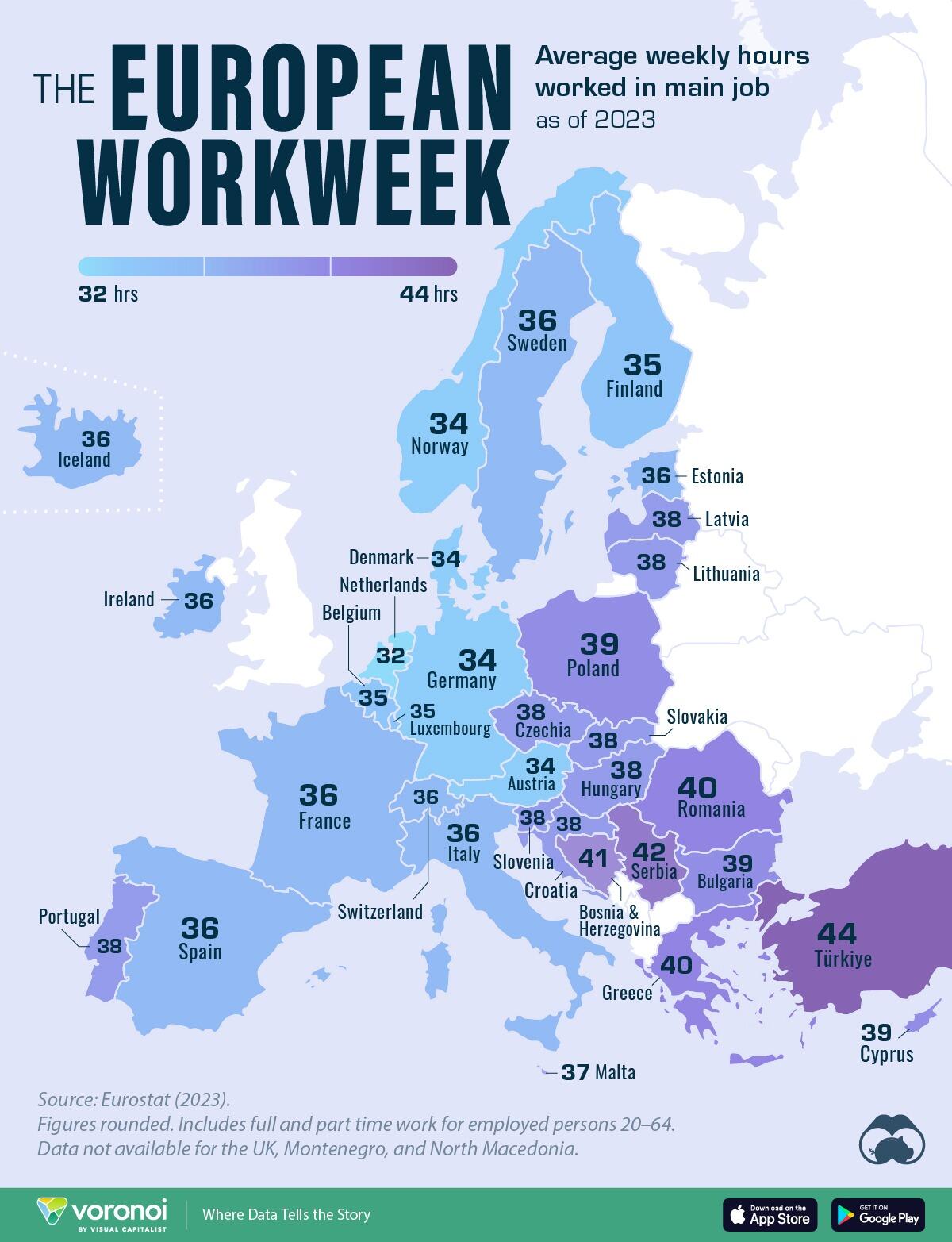
The dataset covers employed persons aged 20–64 in a “main occupation” and includes full and part time work.
Less wealthy countries of Europe (by per capita GDP) tend to have longer work weeks. For example, people in the Balkans—including Türkiye, Serbia, Bosnia & Herzegovina, Greece, and Romania—all put in an average of 40+ hours a week at their main jobs.
| Rank | Country | Average Weekly Hours Worked (2023) |
|---|---|---|
| 1 | 🇹🇷 Türkiye | 44 |
| 2 | 🇷🇸 Serbia | 42 |
| 3 | 🇧🇦 Bosnia & Herzegovina | 41 |
| 4 | 🇬🇷 Greece | 40 |
| 5 | 🇷🇴 Romania | 40 |
| 6 | 🇵🇱 Poland | 39 |
| 7 | 🇧🇬 Bulgaria | 39 |
| 8 | 🇨🇾 Cyprus | 39 |
| 9 | 🇱🇻 Latvia | 38 |
| 10 | 🇱🇹 Lithuania | 38 |
| 11 | 🇭🇷 Croatia | 38 |
| 12 | 🇸🇮 Slovenia | 38 |
| 13 | 🇨🇿 Czechia | 38 |
| 14 | 🇭🇺 Hungary | 38 |
| 15 | 🇵🇹 Portugal | 38 |
| 16 | 🇸🇰 Slovakia | 38 |
| 17 | 🇲🇹 Malta | 37 |
| 18 | 🇪🇪 Estonia | 36 |
| 19 | 🇪🇸 Spain | 36 |
| 20 | 🇮🇸 Iceland | 36 |
| 21 | 🇨🇭 Switzerland | 36 |
| 22 | 🇮🇹 Italy | 36 |
| 23 | 🇫🇷 France | 36 |
| 24 | 🇸🇪 Sweden | 36 |
| 25 | 🇮🇪 Ireland | 36 |
| 26 | 🇱🇺 Luxembourg | 35 |
| 27 | 🇧🇪 Belgium | 35 |
| 28 | 🇫🇮 Finland | 35 |
| 29 | 🇩🇰 Denmark | 34 |
| 30 | 🇩🇪 Germany | 34 |
| 31 | 🇳🇴 Norway | 34 |
| 32 | 🇦🇹 Austria | 34 |
| 33 | 🇳🇱 Netherlands | 32 |
| N/A | 🇪🇺 EU (2020) | 36 |
My wife’s European family loves to tell me how little they work. They are also paying 70% taxes. I wish I cared, but I don’t really even wish that.
What traditions have you not kept that your parents had?
Making my kids eat everything on their plate.
I had to finish everything when I was young. My Dad would sit at the table while I chewed tough meat like I was chewing gum forever. This was after the others left.
Or my personal worst, choking down boiled okra. That slimy shit made me gag and I suffered through it until it was done. I think after a while my Mom had either mercy on me or tried to serve something I could finish.
I made sure my kids had enough to eat and that there was healthy food on their plate. When they were full and I believed it, I ended the pain for both of us. They grew up and survived, but then I guess I did also.
I always tried to learn from what they did right and wrong. There are lessons in both.
If you could host a dinner and anyone you invite was sure to come, who would you invite?
I had this question at a team meeting years ago at IBM. An answer that I thought was better than mine came from another person. This is how it went.
I’d invite myself from 20 years ago, now, and 20 years from now. It would allow me to forgive myself for the mistakes I’ve made, congratulate myself for the things I’d overcome, and get advice from the future me on how to live my life.
While it seems a bit narcissistic, fundamentally it would be sound advice.
I forget what I answered, but I’m pretty sure Jesus and my parents who had since passed were some of my guests.
What strategies do you use to increase comfort in your daily life?
Yes, it’s Introvert time again. I am more comfortable alone than I am among a lot of people. While it’s possible to be alone in a crowd (introvert strategy here), it still comes with stress.
I also hate deadlines and the stress that comes with making it. I try to get stuff done well in advance so I don’t have to deal with it at crunch time.
Oh, and avoid family reunions as much and as often as possible.
I’m sure others have much better strategies to increase their comfort, but here’s my .02.
How do you want to retire?
I knew in my 30s that I wanted to retire early. I enjoyed my work, but it was getting in the way of my life. I had stuff to do I still do.
So I had to prepare and live my life accordingly by these principles. Now I’m the king of retirement. I love waking up, knowing I don’t have meetings, email, texts, presentations or travel for business. Everything is paid off, and I can enjoy life more.
My mom told me she taught each of her kids financial independence, saving and spending. The rest of them are broke or died broke.
I respect people who love to work. I had a lot of other things to do in life also. I’m taking care of that now.
What’s the one luxury you can’t live without?
It’s because I’m an introvert.
I’ve lived through the aftermath of hurricanes with no power and it turns out you can get along.
It’s far more draining to me when I can’t be alone to recharge my batteries.
What quality do you value most in a friend?
I don’t mean the Batman and Robin type of a friend and loyalty. I just want somebody that I know I can trust, and not betray me. It’s like your girlfriend or wife not sleeping around behind your back.
What I ask is not too much and I don’t think it’s that hard to do. I know I give that to those that are really my friends. Being an introvert, I only let a very few people to the innermost part of my life. That’s a lot for a person like me to do so respecting that isn’t too much to ask in return.
Do you have any collections?
Yes, memories lots of them. I write down as much as I can remember about my life and then if something pops up, I’ll insert where appropriate.
Sure, I have stuff on the wall, pictures on the phone and even photo albums that remind me of times that I’ve spent. It’s the words that I write down though which create the more vivid image in my mind, and experience the emotion of when it happened.
I’m was related to one. She fit a lot of these but is fortunately now gone. I lived though a lot of this and it’s not pretty.
“Am I toxic?”
Toxic is a word that’s thrown about a lot these days.
But how do you know if you are a toxic person?
What are some things that you might do that cause you to be a toxic influence in the lives of others?
That’s what we’re going to explore.
Speak to an accredited and experienced therapist to help with any negative personality traits you might have. You may want to try speaking to one via BetterHelp.com for quality care at its most convenient.
In the general sense of the word, something that is toxic is harmful to a person upon exposure.
A toxic person is one who causes harm to others through their words and actions.
There are varying levels of toxicity.
Some may just be bad behaviors, others can stem from personality disorders, and some may be rooted in a mental health disorder that can be physically damaging as well.
Toxic people leave others worse off than before they met or interacted with them.
Sometimes this harm is felt instantly. Other times, it builds slowly with time and repeated exposure.
With this in mind, how can you tell if you are the toxic person in your life?
Here are some of the signs you can look out for.
You seek to make others your pawns and have them do as you wish.
You boss people around, micromanage situations, and use various forms of emotional blackmail to ensure you get your own way.
Subtlety is not your forte. You can be very blunt and rude to the point where it shocks other people.
Alternatively, you may feign upset and use tears as a way to guilt people into doing what you want.
When other people realize this about you, they may experience anxiety whenever you are around for fear of being targeted.
If this is something you do to one individual a lot, it can even result in depression and the destruction of their self-confidence.
What topics do you like to discuss?
I’m not afraid to discuss anything that’s interesting. I can cover a large range of topics and do when prompted.
What is difficult for me is small talk. The banality of it is a painful exercise that I have to go through.
So my talking skills are good with deep conversations and any distraction to end small talk and my having to suffer through it.
Most people are temporary because it takes a long time to get to know someone and it’s hard to find the traits that are important. Loyalty is usually the final demarcation line for me. If they cross it and are disloyal, it’s over for me.
Take my college girlfriend who turned out to be a traveling slut (stewardess). Even though I didn’t find out until afterwards that she was sharing herself with others, that eliminated her from the permanent people pool. I didn’t have to feel the hurt and pain during the relationship, but the dishonesty got me out the door early.
I had acquaintances all throughout my life, but it’s hard to call them friends. The extroverts in my life meet and talk to someone for more than 5 minutes and it’s their new friend. Those are just temporary people for me. It takes a long time and a lot of things in common before they make permanent status. Very few make it.
You have to build a relationship and that is hard enough for me (and I’m guessing other introverts). We’d have to share something in common long enough to see if there is anything there. It still takes a long time for the walls to come down. Then there is the trust tests. I don’t dream them up, but they present themselves in life. I’m usually forced into a situation, but you can tell if a person is going to stick with you or stick it to you.
Even my siblings were temporary. They are around, but don’t count for me as permanent people for the loyalty reason. One can only take so much screwing over growing up and then the walls come up.
There’s your thought for the day.
A much deeper dive can be found here. It is by Introvert Dear who I’ve linked to on the home page describing why introverts don’t consider everyone their friend. It is a special to us and this article tells you why a lot better than I do.

I know mine made my life a lot harder than it needed to be growing up. When we could have bonded, I got someone who was actively against me doing well, instead of being supportive. It must have been insecurity, but trying to bring someone down to build yourself up is no way to live.

My other sibling has been gone for 12 years. We didn’t grow up together and there was no bonding because she was pathological. It’s a good thing I found out how to be alone in life and not worry about others.
See Eating Alone as an Introvert a couple of posts down and you’ll know why.

When I say hell, of course I mean Portland. It’s a shithole now. Oregon is beautiful, but for some reason all the shit not in California or Washington is in Portland. It’s the required trip to the family.
All I hear or read is about problems with Boeing jets, DEI in Air Traffic Control and parts falling off of jets because maintenance workers require diversity. I don’t want to get on a plane, but there is no way out. I figured the statistics are with me and if some shit does go down, my rare flights should exempt me.
When I get there, I’ll get to deal with a city rampaged by Antifa, BLM and many other miscreants. Other than SF, it is the homeless capital of the world, not to mention walking on the streets to the freak show and shit on the sidewalks.
I’ve scheduled some posts and meme’s to enjoy, including stories and observations of mine. It’s a look into my head when I put these out. I’ll cover introverts, the gym fashion show, sibling hell, lots of meme dumps and other stuff.
I may get a post in about my adventures while there, but no promises. Maybe I’ll keep some readers, like Ellie K, a new subscriber. With all the shit I post, I’m surprised she’s still there, but there you go.
We girls in the Cascade Bridge Club listened incredulously as Marge told us that her daughter, Esmeralda, had just shed her bigtime Assistant Manager job in some e-commerce corporation and had gone home to “have babies and make a home for my husband and my children!” “Why?!” we asked. Marge explained, “She says she is finally happy, that this is what she has always wanted to do, and that she was deceived into a career!” Stunned, we mumbled at each other, “Esmeralda has joined the tradwives? What’s going on?”

At this point in the development of the Elites’ plot to rule the planet, we understand the essence of their strategy is to make us all dependent upon them. As Cheryl Chumley points out, this means destroying all existing economic and cultural institutions, including food production, so the slate is clean for the Masters to scribble on.
The war against the family, therefore, is so central to the strategy of the Elite Masters that they campaign against the family on four fronts:
Of course it from the left. Part of the communist manifesto is to destroy the family and make people dependent on the state. It’s the same equation to get rid of God. It’s been the same throughout history, people doing anything they can for power.
Wanting and hating men at the same time, while wanting to be like men and have what we have.
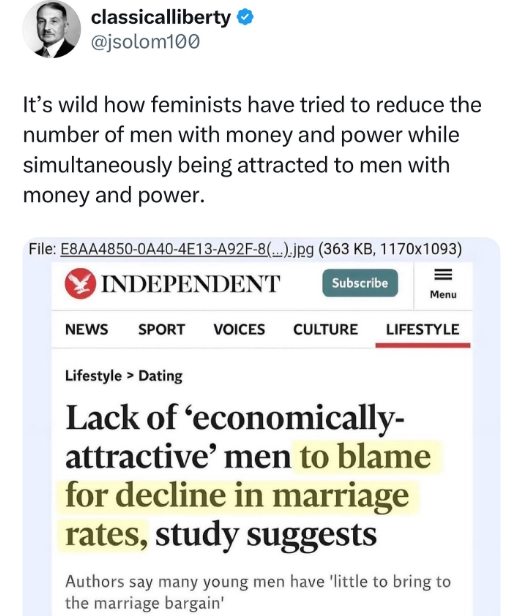
Since the beginning of time this has been predicted:
16 To the woman he said,
“I will make your pains in childbearing very severe;
with painful labor you will give birth to children.
Your desire will be for your husband,
and he will rule over you.”
It is the answer to the eternal question, what do women feminists want? It’s whatever they can’t or don’t already have.
Feminists have destroyed everything they have touched. They have been attacking the family, children, Golf, country clubs, the balance of males and females, way of life, happiness, sports, locker rooms, schools, etc.
The jobs they have taken over turned to shit. Airplanes are falling out of the sky and Air Traffic Control has planes running into each other.
They have turned schools against rambunctious boys by sedating them and putting in a curriculum that favors girls. It continues to colleges where the majority of degrees and graduates are now female. Then, they can’t find the perfect husband.
It won’t turn out well though. The world needs men. The strong men will go our own way and not put up with this. Don’t burn your bridges.

For those of us that understand what is going on, thank you feminists for giving us the red flag to know who to avoid. Your attitude and path of destruction is a road to unhappiness for you and everyone in your way.
Check out the marriage rate. It’s what the communists have wanted all along and is in the manifesto. Make the Government your family and your religion, then you are dependent on the state.
We have been under attack for decades, but this sign of the war for our survival as a country is disheartening at best, dangerous at worst, deadly if it continues. Look up the great reset to see what else they are trying.
My mom told me I had to stick with my family and put up with gatherings because they are blood. She was right on most things in life, but not this one.
I look at them like I look at most people. If we were friends or wanted to see each other, we’d get together. Now, it’s just weddings and funerals, and I avoid those if possible. I missed the last one that made me the patriarch of both sides of the family now. That’s not a burden I relish or will give any attention too.
Besides avoiding both sides of my family whenever possible, my wife’s family doesn’t live in my country, so I have it easy there. They sit around and trash the US to feel morally superior so I don’t want to be a part of that.
Best of all, I stopped drinking a while back. Most of them drink a lot when they are together, so I don’t get invited to almost everything. I think I make them feel uncomfortable. They are happier to be around people who drink a lot without feeling guilty. I don’t get invited and it’s one of life’s blessings.
I treat others like they treat me. Fortunately, most of them don’t want to talk and I keep my head as low as possible so I don’t get in their line of fire.
Still, leaving is always my favorite part of getting together, family or otherwise.

So Chuckles clown’s son just decided to trash America. His loser, the Spare, is a direct descendant of George III. George went crazy, likely from inbreeding. Those genes look like they re-surfaced.
Here’s a guy who had everything. He didn’t have to work other than to show up at events and not be a retard about it. He had access to millions, servants, castles for homes, private yachts and planes and all the perks to enjoy a life. He had access to all the women he wanted.

All of this and he threw it away for a domineering racist B actress who has such a case of entitlement that she got Harry to throw everything away. For what?
These types of marriages have low percentages against them for lasting. Then, he has to play the prodigal son and crawl back to the palace with the kingdom of England against him for being an Benedict Arnold and trashing his homeland. He’s consigned himself to to loserdom because of a mean girl who didn’t get her way. She played the race card to pretend that being a royal was somehow a victimhood issue.
Even Chris rock said about her whining that her white in-laws were worried about the color of their kid was in-law problems, not race problems. He said that black people were more interested in the color of the baby than others. Why is it that the half-black/white group seem to be the biggest whiners and play the race card the quickest (Obama, Lewis Hamilton, Kaepernick, and on and on….)
I have European in-laws. They love to trash America. I know it is because everyone hates number one or those who have done better. I’ve got news for them and Harry, you can’t make yourself better by bringing others down. I’d rather not talk to them than hear their whining. They just repeat what they read in the liberal press. They can’t even get their facts right.
Harry has managed to piss of both England and now America. It sucks to be inbred. It sucks even worse to be led around by an ungrateful little bitch with an ax to grind.
Grow a set Harry.

He, like my in-laws are wrong about America, and he played the fool for a girl.
Here he is, trashing America also:
The signing of the Declaration of Independence in 1776 brought a new era and good riddance to the tone-deaf aristocracy under King George III.
With the ratification of the U.S. Constitution in 1788, America’s new experiment in self-rule was formally initiated. This document established the framework for the U.S. government, both its institutional structure and the rights of its citizens.
Today, the United Kingdom’s Prince Harry doesn’t understand this, apparently. We’ll get to that shortly.
The Framers of the Constitution were heavily influenced by Enlightenment ideals, including the power of human agency, importance of individual rights, necessity of religious freedom, fundamentality of a just society, and primacy of seeking the truth. They created a system of government that, first and foremost, would not interfere in the development of these virtues.
Thus, “American” values include individual liberty in the pursuit of happiness, respect for the equal rights of others, limited government shaped by the consent of the governed, a merit-based system of rewards, and the pursuit of truth as a societal virtue.
Today, each and every one of these values—along with the system that upholds them—is under vigorous attack by powerful subversives for whom they are anathema.
These subversives seem driven by one of two primary impulses.
The first is as old as humankind: the satisfaction of the base human passions. This includes, especially, the accumulation of wealth, exercise of power, and the indulgence of sensory pleasures (and, typically, all three simultaneously). This group includes the so-called globalist elite who view a strong U.S. driven by American values as an obstacle to its insatiable appetite for wealth, power, and consequence-free physical indulgence.
The second group is driven by dogma. These are the disciples of Karl Marx and fellow travelers who believe that once some group attains social primacy, that group will use its power to tweak all the institutions in a way that ensures the continuation of the group’s dominant position.
This includes legal institutions, government structures, culture, language, and even rational thinking. This “systemic” lock-in is so resistant to change, so the story goes, that the only solution for the oppressed is to completely destroy the institutions.
Marxist values include limited liberty in the pursuit of equity, unequal rights in the pursuit of diversity, unlimited government shaped by the consent of the oppressed, a system of rewards via identity-based notions of inclusion, and a rejection of the very notion of truth.
Note that, while these two types may be united in their animus toward the U.S., it is axiomatic that a single individual cannot truly be both. That is, one cannot be a wealth- and power-maximizing hedonist while, at the same time, fully embracing Marxist values. Or so it seems.
Yet, here we face the perplexing case of Prince Harry, a descendant of King George III himself. Following the prince’s attacks on the British Commonwealth, he has turned his attention to bulldozing American values.
This is perplexing because, on the one hand, Harry, Duke of Sussex, enjoys all the privileges of the globalist elite. Yet, on the other hand, he enthusiastically embraces the anti-American values of Marxist dogmatists.
It is difficult to imagine how Harry deals with the implied internal contradictions without blowing a gasket—much like the “supercomputer” in Season 2 Episode 24 of TV’s original “Star Trek,” which self-destructed when Kirk presented it with a logical dilemma. Perhaps a dogged fixation on the object of animus common to both groups, the U.S., is enough for Harry to keep it together.
Alternatively, the answer may lie in really believing that there is no such thing as objective truth. After all, Kirk’s AI antagonist was hard-wired to adhere to logic. The logical demands of Marxist dogma are much more elastic.
Exhibit 1 is the prince’s bestselling autobiography “Spare,” a canonical instance of the postmodern genre in which knowledge is “positional” and one’s “lived experience” takes precedence over logical, fact-based arguments.
“Spare” is riddled with historical inaccuracies and objectively untrue claims, such as identifying Harry as Henry VI’s great x7 grandson.
Harry also writes about his general disdain of history, recalling a visit to the Royal Burial Ground at Frogmore with his father, now King Charles III:
A lifelong student of history, [Pa] had loads of information to share, and part of me thought we might be there for hours, and there might be a test at the end. Mercifully, he stopped, and we carried on.
Harry had no interest in more formal lessons from his history teacher, identified as a Mr. Hughes-Games:
So it came as a roaring shock when I realized that Mr. Hughes-Games believed me to be the odd one. What could be odder, he said to me one day, than a British prince not knowing British history? … It wasn’t just that I didn’t know anything about my family’s history. I didn’t want to know anything.
Once the problem of being a self-hating elitist is solved, all the other anti-American values can follow.
For example, Harry’s flagrant disregard for the rule of law, as evidenced by his illegal drug use in passages such as this:
I had been doing cocaine around this time. At someone’s country house, during a shooting weekend, I’d been offered a line, and I’d done a few more since.
Or his disregard for the truth, as evidenced by his unwillingness to release his U.S. visa paperwork.
Or his indifference to human dignity, as evidenced by his macabre discussion of kill counts in Afghanistan, including:
I could always say precisely how many enemy combatants I’d killed. And I felt it vital never to shy away from that number. … So, my number: Twenty-five.
Or his inability to understand democracy, about which U.S. Sen. Mike Lee, R-Utah, tweeted: “Love being lectured on democracy by an actual prince.”
Still, one marvels at Harry’s ability to forge ahead as the embodiment of two mutually inconsistent dispositions.
Is it a maniacal focus on the common object of animus? Is it the dogmatic rejection of logic itself?
British author Alexander Larman suggests that the answer is simply that Prince Harry, at 38, “is even more stupid than we thought.”
We’d like to think that he can learn better.
That’s right, I’m keeping the past in the past.
When I was first on fake book (an early adopter), it was great until people came back that I didn’t want to ever see again. That’s pretty much the way it is for most of my life. When you are in the past, you stay there. It’s too much drama for me to catch up. I have trouble with seeing people I haven’t seen in a while and it’s awkward.
It’s not just people from school or social groups I’ve been affiliated with, it’s family also. It’s very awkward as I know that were we not related that I’d never talk to them. I don’t with most anyway and have lost contact with a lot of the others.
Why haven’t we talked? The answer is usually because I didn’t want to. I have a hard time lying about that. I can fake being excited to see someone, I just refuse to do it anymore. It’s personality turn off when I see it in others.
I didn’t want anything connecting me to memories I didn’t want. It was painful enough the first time around. Why do I want to relive part of my life that are best left as experiences to learn from? I’d already moved on in life having parted ways once. Those memories of my early life don’t make me want to try and pretend it didn’t happen for me. I was glad it was over, dead and buried. It’s easier for me to deal with.
They kept wanting to connect. I did, but muted everyone, but finally I put them back in the history box where they belong, for a good reason. I had to dump it and remain true to myself.
If we were really friends, we wouldn’t need social media. I’m still friends with those who were my real friends. The rest are people I don’t connect with because we mutually don’t want to. To be fair, I mostly don’t want to connect with them, but that is my nature as an introvert.
I have listed other reasons in different posts that point out how fake people are on social media and that it is a time suck.
My life is better not seeing others. Let’s keep it that way.
I stood alone in my world on a lot of things since 2016. Now, instead of wearing a tin foil hat, it’s all being proved true. I don’t even bother with I told you so. I doubt the discernment of people around me a lot more.
Enjoy and share









This next one is not something I’m expecting. They thought I was the crazy one for not getting Jabbed, thinking putting America first was a good thing and that Biden is more abusive to females than Trump. They just wanted to be offended and were.
I don’t even bother with being right to them anymore. I don’t have to be when they are wrong so consistently. I don’t bother saying it anymore. Fortunately, it’s on my blog for years and they can’t mis-state what I’ve said all along.





Be there or be square?

Go big or go home?



I find it funny when my family says stuff like, “everyone else is doing it, why don’t you want to?”. Or this one, “I always love to get together with others, what’s wrong with you?”. Don’t try to shame me into doing stuff. It hasn’t worked on me since I was a child.
Nothing is wrong with me. I’d rather not go to people events. I say what is wrong with you for not understanding others who are different to you?
Most of all, I’ve discovered that I don’t go to something if there isn’t an exit strategy for me if it sucks. I go to events I can’t get out of in 2 cars so I can go.
I almost always one of the first to leave as my social battery is on life support at this point in my life.
So go big or go home? How about stay home with my stuff and not have to put up with people being fake.

I’ve met a lot of rats who seemed to function without a brain. Some are in my family. I went to high school with a den of rats. Most that worked with in Armonk or Somers for IBM were that. How they made it through life is beyond me. They are like Forest Gump, only not rich, not famous, not good looking, not friendly and are just surviving at this point. Yet here they are, probably able to survive a nuke with the roaches, in NY

A relative of mine continues to get his news from the alphabet channels. I just ask if he wants to find out what went on like he said, why is he watching the news?
I have another friend that listens to NPR, another source of propaganda. I can’t tell him anything either.
When will they learn the MSM is lying?
Sometimes I like them and just can’t stand to be around them. It’s the way it is. People I don’t speak with don’t think about this, but here is the answer in case you stumble on this post.
No one is exempt, past friends, relatives, schools, you name it. If we were friends, we would be and you’d know it. I won’t say anything or be mean, I just won’t spend time pretending on social banter because everyone is supposed to.

I don’t think they will go broke really, but the stock value is down 33% after incorrectly interpreting a Florida bill and picking sides against the family. They have branded themselves the enemy of good, and what 98% of families are made up of, the 2 genders that they were born as.
Half the Disney people will love them for doing this because that is how the country is. They are losing the good people though.
Walt would turn in his grave with how his company is being run.

My Mom said that life is about overcoming obstacles, climbing mountains and clearing hurdles. You are either in a crisis, just finished with one or about to start another.
That’s why I’ve learned that when too many things are going good, then this:

I used to live in bliss and then get blindsided as to how things can go wrong. When I was dating, there were times that I had a different girl for every day of the week and said no to others. Not long after that, it seems that even the professionals wouldn’t take my money.
I’d have 3 job offers waiting for me while I loved the job I was at, or I hated my job and no one would even give me an interview.
Now, when I’m feeling on top of the world, I start to prepare for what might be around the corner.
It sounds pessimistic, but I’ve realized that my Mom was right. Just wait long enough and you’ll have a challenge to overcome.


I loved all the Bugs Bunny cartoons. Marvin the Martian was his foil in a couple. That was when we didn’t have a cancel culture and weren’t afraid of making fun of things without being castrated on Social Media.
I saw every one of them as a kid. I saw every one of them as an adult and appreciated them even more. My kids know every time I reference an episode. It’s even better when they reference one to me.
Here is the illudiam Q-36 explosive space modulator, to blow up the Earth.
And some funny memes


But, I’m retired so everyday is Saturday for me. I don’t have deadlines or conference calls or personnel issues today. Man I don’t miss work.
I don’t miss Facebook that went down yesterday. I didn’t even know it until I read about it. I’m glad to have that ball and chain out of my life also.
I have a brother-in-Law who is retired not by choice, but defined his life by his job. He doesn’t know what to do. I feel sorry for him. Life is much greater than your job.
For now, I’ll pet my dog and enjoy what comes next.

This is Jo Siffert at Daytona in 1970 in a Gulf Porsche 917. Out of all of the versions of this dominating car, this was both my favorite and my first encounter with it. He was my favorite driver and died too young.
It was the first time I’d seen a car go over 200 MPH in person. I was young, so it was impressive.
I was already a Porschefile by this point, but that day cemented it home.
I’ve seen them race many times, but I was with my Dad that day and it still is memorable for me.
Later, the car was the star of the movie Le Mans. Steve McQueen was in the movie, the king of cool, but the car outshone him.
Some call it the greatest sports car ever, and for those of us who have seen it race, we understand why.
After all…..this is the greatest line ever in a car movie.

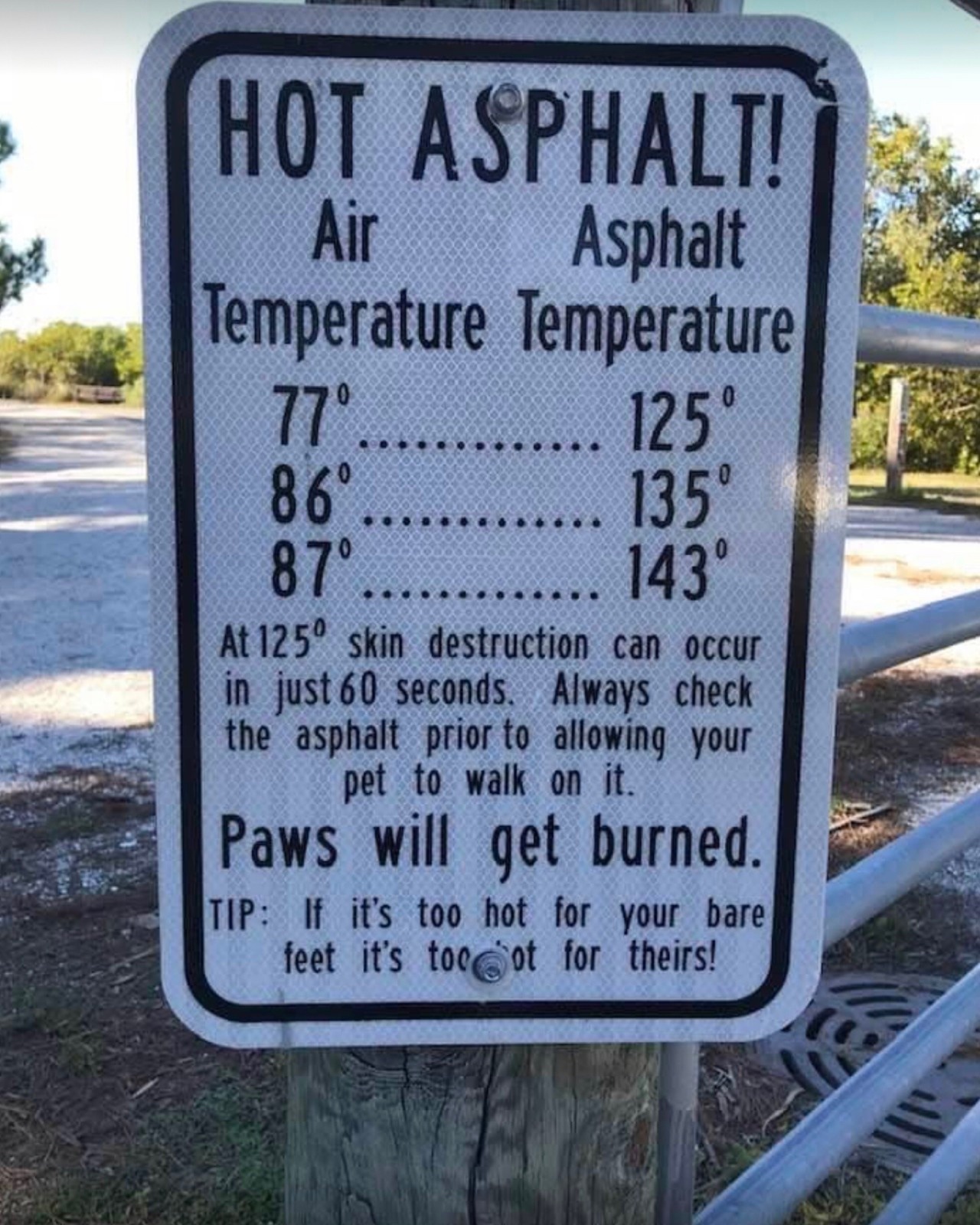
I love my dog and put my hand on the ground to see if it is too hot. If so, we go to the backyard until it cools off.
They love you with everything they have. Do this for them
No funny meme’s because Fathers are important (well, maybe later if it is really a good one). Their presence in raising a family is needed as he brings to the table what other’s can’t. Those smarter than me say that Fathers are crucial to the self-esteem of daughters for example.
A good Father is who she starts with to pick her life mate. (I’m hoping that they pick against some of my bad habits). We try, but are fallible like anyone else, but seem to have rougher consequences in today’s environment.
I lost my father 16 years ago, but I remember our times together vividly. I remember times from when I was single digits old. I learned lessons on what to do and what not to do. We won a golf tournament together for his company. He was proud for a long time as our names, which are the same (I’m a legacy) remain together on that trophy.
The real trophy was that I got to spend time with my Dad and my kids.
I’ve been a Father now for many, many years to all 3 types; boys, girls and dogs. They have different needs and figuring out what that is sometimes the hardest part.
What is the most interesting thing for me is that I see a lot of my Dad in my Son. Some traits skip a generation. He’s a lot more like my Dad than I am. I see patterns and anyone can see how much this one is true.
I’m told that your father is one of the first steps in a relationship with God. It’s like having another father who stays with you. I hope people can just think about that rather than argue. Form your opinion as you may.
Have a happy Father’s Day. Look for a reason to celebrate an important person in your life, maybe it is you.
Think about what your Father did, even if it was just to bring you into this world,
I couldn’t believe when I read this on the Art of Manliness blog, a self help for anyone really, but it’s good stuff on how to be a good man.
I saw my life flashing before my eyes as I’ve been winnowing relationships somewhat based on this formula, just on my terms. When I felt someone wasn’t loyal to our relationship, it starts going downhill until I draw the Maginot line and it’s over. I treat others like they treat me.

I didn’t realize how much of a drag on your mental health these relationships are. It has been for me, but I’d made a conscious decision to end them whenever possible when they got toxic for me.
Sometimes it’s Mauerbauertraurigheit, but that is a last resort for me and I have no control over leaving people when that happens. Mostly, I reach a moment of truth and fade away. I don’t ghost people, but I actively avoid them and decline as much as possible until they get the hint. Most of the time, I just get forgotten.
Here are some excerpts, but I’m highlighting only parts of it, what was the blinking light to me. Here goes….
Then there is a category of people which sits right in between. You might call them “frenemies,” though the “enemy” part of that compound can feel like too strong a descriptor. Social scientists have a better term for these kinds of ties: “ambivalent relationships.”
Both positive and negative elements exist in every relationship. In a good, supportive relationship, the positive significantly outweighs the negative. In a bad, aversive relationship, the negative significantly outweighs the positive. In an ambivalent relationship, neither the positive nor the negative predominates; your feelings about the person are decidedly mixed. Sometimes this person is encouraging, and sometimes they’re critical. Sometimes they’re fun, and sometimes they’re a drag. Sometimes they’re there for you, and sometimes they’re not. Sometimes you really like and even love them, and sometimes they bug the ever-living tar out of you.
We can have ambivalent relationships with co-workers, friends, family, and even our spouses. And while we don’t tend to think about our ambivalent relationships as much as we do those on the more polarized ends of the affection spectrum, they actually make up about half of our social networks.
Here’s how it is for me in their words:
Sometimes the connection you feel with someone is very strong when you first meet, but over the subsequent years and decades, you change, and they change, so that your lifestyles, outlooks, and personalities end up more and more disparate. You still think of yourselves as friends, and still have a bond built on a shared history, but your connection is more conflicted than it once was. (Social media really sucks on this one).
Sometimes you’re friends with someone because your spouse is friends with their spouse. They’re not someone you would have actively chosen to be friends with, but because you spend time together as couples, you end up in a relationship, albeit an ambivalent one. (Me, I hate this one. I’ve yet to connect with any of them as they weren’t my friends, they were her friend’s spouse that I was forced to hang with, but we never would otherwise.)
Sometimes you’re just thrown together with people. There are office colleagues and fellow church congregants and roommates who you neither strongly like nor strongly dislike, but that you come to feel quite familiar with because of how much time you spend together. Sometimes this familiarity rises to the level of affection, and sometimes it doesn’t, and sometimes the relationship just kind of is what it is. (Still, I’ve never really made a close friend from this group. They are people I have to put up with for a period of time. I know how much time that is and it is a countdown until whatever social engagement I’m forced into is over).
It goes on to say:
And, of course, there’s the whole dynamic of family. You may have grown up around certain blood relations, but you otherwise share little in common, and the fact you still get together is based more on biological bonds, and the expectations around filial piety and familial obligation, than genuine desire and enjoyment. You’re in fact more likely to have ambivalent relationships with family members than friends, which makes sense; while relationships with friends are a matter of voluntary choice, you end up connected to family members by chance.
Me:
I have little in common with any biological family anymore outside of my wife and kids. I wonder about them sometimes. Most are gone, but for the ones that are left, if we weren’t related, we’d never talk (and with most, we don’t). The ones that are left seemed to agree with me to keep each other at arms length. I avoid funerals and weddings if at all possible as I don’t need to catch up. I don’t want to talk about my life to people who are strangers other than the biological relationship.
As I recall growing up, my siblings weren’t my friends. Most of the time they would rather try to get me into trouble starting with telling on me to parents on stuff I didn’t do, progressing to talking shit about me to mutual acquaintances at school just to tear me down publicly or socially. We were forced together as a group. We don’t do anything other than the perfunctory requirements and no one really says anything. Even on vacation when young, I was off on my own on any downtime.
I know I never looked forward to any overnight trip to visit any relatives, even as a kid. I thought most of them were a bit creepy. As an introvert, I pulled away from the social gatherings that usually happened around a big meal. It was dreadful. I didn’t even know I was introverted, it naturally happened.
Now, I just try not to initiate any conversation with them to avoid them even thinking about me. If I can turn down a family gathering that involves siblings, count on it.
As far as other relatives, I’m fortunate to have my wife’s relatives living in another country. I’ve done stuff with them, but they for the most part revert to bashing either the USA, or want to try to make America a socialist country like theirs. They consistently trash what is morally right and it’s tiring to listen to. I’ve been fed up with it since 9/11 when they told me America overreacted, and this was before Iraq. If there is a position that is wrong, I can count on them to take it they are such a group of socialists. I can only take so much USA bashing and am now done with them. I just won’t go anymore.
I couldn’t figure these relationships out because I wasn’t born socially gifted like others. Being an introvert, I do have powers of observation and body language skills I’ve had to develop to determine friend or foe. It also helps me determine who is going to waste my time or try to get me to do shit I don’t want to do anymore. Now, I say no.
Supportive relationships have been shown to buffer stress, boost resilience, and improve physical and mental health.
Aversive relationships have been shown to amplify stress, diminish resilience, and damage physical and mental health.
You might think that because ambivalent relationships feel middle-of-the-road, their impact on your life would be similarly neutral. But in fact, multiple studies have shown that their effect is significantly and uniformly negative, and that “ambivalent relationships not only are less effective at helping individuals cope with stress but also may be sources of stress themselves.”
Studies have found that your blood pressure goes up more when you interact with someone with whom you have an ambivalent relationship, than it does when you interact with someone with whom you have a supportive relationship. Even just anticipating interacting with an ambivalent tie triggers a greater increase in heart rate and blood pressure. Researchers speculate that this heightened stress response is due to the unpredictability of an ambivalent relationship: Are you going to enjoy your time with this person or are you going to get in a fight? Are you going to have fun or just feel annoyed? Are they going to be supportive or critical?
We might hypothesize a couple other reasons that cardiovascular reactivity increases when interacting with ambivalent ties.
One is the greater exercise of self-control you have to muster during one of these interactions; you have to check yourself from rolling your eyes, showing signs of your boredom or frustration, offering an overly harsh rebuttal to an opinion you strongly disagree with — and this takes effort. The heightened stress response experienced around ambivalent ties may also be due to the psychic split you feel over whether you even want to be hanging out with this person at all. You don’t dread seeing them the way you might the dentist, but you don’t really look forward to seeing them, either. The interaction feels more compulsory than voluntary, more obligatory than willful, and we feel a measure of frustration when we don’t experience ourselves as fully autonomous and have to do things that are contrary to our personal desires. (This is how I almost always feel anymore. I have to work up to want to go out with someone and want to know when it will end so I know when I can leave. There are very few I look forward to seeing anymore. Most people who think we are friends don’t know that we aren’t).
Here’s the really surprising thing: blood pressure not only rises more when you’re interacting with an ambivalent tie versus a supportive one, it also rises more when you’re interacting with an ambivalent tie than it does when you’re interacting with an aversive one. In other words, you feel more stressed when interacting with someone you like/dislike, than you do when interacting with someone you entirely dislike.
Me:
I end it by saying not for me. The trouble is in the interaction with people. When I just don’t, my blood pressure is better and any stress over socializing is avoided.
I’d rather not talk to them, especially the majority of those I’m related to. I like the pets though.
It is the celebration of the birth of our nation. People died for our freedom to start a new country that would arguably become the greatest ever.
My mom was born on the 4th of July. Captain America, the comic book hero fittingly was also born on the 4th, in 1918.
Nothing is more patriotic to me than the Star Spangled Banner and the Stars and Stripe forever, so here they are.
God bless the USA

This is a story about my young son trying to catch the biggest fish in the pond.
Fathers do things for their children. They take them places and (try to) teach them things.
I like to fish and wanted my son to also like it so we could fish together. I made sure that we went catching instead of fishing. For those who have gone a entire day fishing without catching anything, you know what I mean.
I took him to the fishing show one year to show him around. It is a place where they sell things mostly to catch fishermen’s wallets.
We started the show by dropping quarters into a large fish tank. If the quarter glided through the water and into the shot glass at the bottom, you were a winner with the prize being your choice of worms. He won on the first try and was very excited about it.
I knew his attention span was limited so we went to the trout pond to fish. When I say pond, I mean a temporary pool filled with fish. They were mostly small trout with maybe 3 big boys in the pond (actually the big ones are female). It came complete with plastic palm trees in the middle for décor. You paid your $2 and could keep anything you caught in 5 minutes. The poles were a 4-foot stick with a short line and small hook baited with a mostly inedible piece of plastic half the size of a fingernail.
The odds are with the fish on this one. Especially when they have seen the same bait for 3 days and got fed every night.
My goal was for him to catch anything while I wanted to get enough of the small guys for dinner. I told him that any fish was a good fish.
HUNTING MOBY DICK
Never the small dreamer, he spotted the biggest fish in the pool and said he was going after it. I feared he would be disappointed as everyone threw a line at it, but I knew I could just take him through the line again and tell him to go for something catchable.
I had landed about 3 of the small fish and was well on the way to having dinner by half the time allotted. He kept trying for the big fish (nicknamed Moby Dick).
As time was counting down and I had caught enough for dinner, I heard a huge splash beside me. I looked over and sure enough, my son had hooked Moby.
My new fear was that he would be crushed if the fish spit the hook. The hooks they provided were tiny and easy for the fish get off the line. I saw it happen to every kid before us. If you didn’t get one to the side in less than 15 seconds, it was pretty much over.
This fish was almost too strong for the small stick and line we were given. Over a minute into the fight, it was still on and I knew the odds were against us.
THE FIRST CHANCE TO LOSE THE FISH
Things took a turn for the worse as his fish got wrapped around one of the plastic palm trees. In my mind, I was already preparing to console him for his loss.
I knew I had to try something. After all, I was his Dad so I reached into the tank and grabbed the palm tree. The pond monitors weren’t happy with me but it was my son.
Anyone who ever had a fish on knows that if you get slack in the line, the fish is as good as gone once the line goes taut and the sudden tension pulls the hook out of the fish’s mouth.
To my surprise, Moby stayed on despite the tree incident and he was well past 2 minutes into the fight. Time was now over for that fishing session, but since he had one on we were allowed to finish. We had an audience as everyone waiting to fish and those who just finished could see that he had a good one on.
I decided that if by chance I could get my hands on this fish that I was willing to do anything to get it for my son. I didn’t want him to be disappointed after overcoming virtually everything that could go wrong, just to lose it at the last second. This wasn’t going to be easy, as anyone who has handled a trout knows they have a coating of slime. They are as slippery as greased ice. Landing them is usually done with a net, which we weren’t allowed to use.
PANIC AT THE MOMENT OF TRUTH
I thought nothing more could go wrong, but to my horror I could see that it was foul hooked (hooked on the body rather than the mouth). My sense of the odds of landing Moby were next to nothing now.
After what seemed like a million circles in the pond, Moby came within my reach and I stuck my hand under the fish and threw it out of the pond in one swoop.
On that day, he had landed the biggest fish in the pond, a Dad was proud and a small boy became a fisherman.
Here is a picture later in life of fishing together. He learned well

This is an abstract of a piece that being the son of an air conditioning pioneer in Florida, I can relate to. Before you skip to the link, notice his comments as he contributed a great deal of the original building code for Florida in an area when this technology first was implemented.
ABSTRACT This paper explores whether the spread of air conditioning in the United States from 1960 to 1990 affected quality of life in warmer areas enough to influence decisions about where to live, or to change North-South wage and rent differentials. Using measures designed to identify climates in which air conditioning would have made the biggest difference, I found little evidence that the flow of elderly migrants to MSAs with such climates increased over the period. Following Roback (1982), I analyzed data on MSA wages, rents, and climates from 1960 to 1990, and find that the implicit price of these hot summer climates did not change significantly from 1960 to 1980, then became significantly negative in 1990. This contrary to what one would expect if air conditioning made hot summers more bearable. I presented evidence that hot summers are an inferior good, which would explain part of the negative movement in the implicit price of a hot summer, and evidence consistent with the hypothesis that the marginal person migrating from colder to hotter MSAs dislikes summer heat more than does the average resident of a hot MSA, which would also exert downward pressure on the implicit price of a hot summer.
The link is here, his comments begin now.
He told me that he felt responsible, if not guilty that the d–m yankee’s relocated to the south, especially Florida. This is particularly ironic as his parents migrated from Boston in the 1920’s, but this was decades before air conditioning. That meant he spent his childhood growing up in an unairconditioned house in central Florida, a virtual hot house and the location of near 100% humidity. As a side note, I spent a part of my childhood in an unairconditioned house also, but kids don’t care about what they don’t know. We played outside in those days.
As he was a part of the team that designed the Epcot HVAC also, tourism wouldn’t have invaded and transformed the south either. It’s too bad they didn’t figure out AC for the outdoors given the sweltering heat waiting in long lines at tourist attractions.
One can track the swelling of population to the south, particularly Florida to the invention of AC. One side of the state tends to favor the mid-west (the more polite side) and the east southeast portion is now almost a southern borough of New York City.
He reckoned that what was once a polite southern state had become a haven for the same people that gave the USA a bad name abroad for their brash manners and self centered nature. He also observed the voting dynamics being changed by the northeastern influence.
Conversely, the south would not have grown near as quickly business and tourism wise had it not been for this technological improvement. I did enjoy one of the first air conditioned houses, but the heat combined with the imported people caused me to ultimately leave as the city I departed from (in south Florida) earned it’s reputation as the rudest city in the US the year before I left.
Additionally, it did raise wages in the south, although not enough for the liking of those who moved there. It also turned sleepy little towns into booming tourist traps creating numerous jobs.
Worst of all he said was the level of complaining. While the snowbirds moved there to get out of the cold, they then complained how everything was much better from (name the state or city) and how it was so hot outside. Not the most political fellow, he invited them to move back occasionally.
One final difference was that in the south, people let you in when there is traffic. Up north it is a sport to cut someone off.
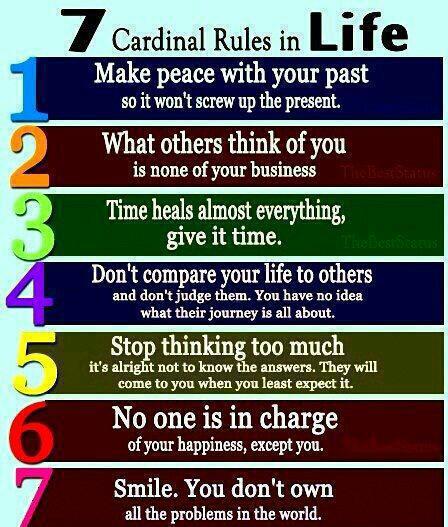 I’ve decided to that hurrying through life just doesn’t have the payback it seems. The hustle and bustle of busy work, conference calls, email and social media keep some in a coffee enhanced mode glued to their screen and missing out on life just isn’t worth it. I got to thinking about this and decided to take some stress off of things and so whenever possible, I now work on my schedule. I’ll get around to what is needed to do, but I’m not going to let it keep me up at night. I’m not as worried that my comments on social media or political diatribes that upset me really don’t matter all that much. Once you get used to this, those pesky deadlines that are mostly self inflicted become less important. After all, most of the above described issues are nuisances at best.
WHERE DO WE GET THIS CULTURE?
For many, they just can’t wait to grow up fast (not me). Then can’t wait to get promoted (partly me), can’t wait for kids to grow (not me) and finally can’t wait to retire (me even thought I’m working again, but for myself). Work seems to exacerbate it the most with demands endless meetings (Meeting = a cul-de-sac where ideas get strangled and go to die), phone calls, emails, instant messages, texts and incessant demands from bosses (the less competent usually are the worst like 3 of my last 4 before I retired, on my terms).
 My last couple of Boss’s in this picture
It turns out that this extra stress can lead to brain damage.
On the social side, I have a relative with MOP (miss out phobia) who is afraid something is going to happen without her. Her sibling just doesn’t give a rats rump what others think and has far less pressure socially, but missed out on some things in life. Striking a balance is good.
The Wall Street Journal recently published an article on when not to accept a promotion. There is a myriad of reasons given including family life, unrewarded extra burdens for the less than promised climb up the ladder. I personally turned down 2 promotions as they wanted me to move to New York where I would get a 30% higher cost of living, three times the responsibility that I wouldn’t be compensated for and a back stabbing culture of ladder climbers. My real reason for not doing it is that I didn’t want to raise a family there and wanted to bring them up in a better part of the country. After that, I was happy not to be there stressing out more. Since I’d already been on every rung of the ladder, the need to be at the top was less than taking care of my kids. I still managed to beat the system to be rewarded better than the curve and on my terms.
All of this adds up to the rat race. I’m not sure why I didn’t think about it before, but it’s a terrible way to go through life. Now that I think about it, I just knew that taking it easy and beating the system was the way to get ahead the right way, and not sell your soul in the process
MOUNTAIN TIME AND ISLAND TIME
Having spent time in both places, I noticed that the folks there just don’t seem to be in a rush. It truly is a New Yorker’s nightmare not to have someone jump when they say how high or to have to be busy in crisis mode over everything. Don’t get me wrong, I’m for punctuality, but these two groups set a different deadline (sometimes internally) and usually meet it. They don’t die early from stress usually.
I noticed it in the Caribbean islands first. They are not in a hurry for anything.
I then noticed it in the mountains that they get around to things..eventually. It was enough of a coincidence that I quickly connected the dots between the two.
I’M GETTING THINGS ACCOMPLISHED
To be fair, I’m busy and am accomplishing more under my own direction than when under the gun of a manager overlooking by shoulder. I’m the manager now. It’s just that I’m making the deadlines and am meeting all of them.
So I’m happier in life and wish that for others and hope that this 24/7/365 mentality doesn’t overtake your priorities. It’s corny, but true in this video below:
“Few things are more satisfying than seeing your own children have teenagers of their own.” – Doug Larson




It is now a year later and my dog is 12 today. The average lifespan of Boxer according to my vet is “around” 8-10 years, so I’m living on borrowed time.
I named her after the dog in Jonny Quest because she had a black face like the dog in the cartoon.
Since I’ve worked at home the whole time we’ve had her, she has been my day pal. Now that my son has gone off to college, she is definitely my dog and I’m very attached to her.
Recently, I watched Marley and Me and I couldn’t bear the thought of losing her. Fortunately, she is still full of energy and looks like she’ll be around for a while.
I’ve posted about her over  the years, some of them being the most read entries I’ve written.
After the story of Shoep and John here is the link I am especially sensitive to her longevity and day to day life. She has had cancer surgery and still has the energy to love my family, although she is especially attached to me. It is mutual.
Here are some of the best of links:

This originally appeared 12/3/2007, but was lost during a transition to WordPress (fail there). I’m re-posting it as it was my son’s first deer. Since then he has harvested more food for us, and hat racks for the wall.
Here is the Post:
With all kudos to Brad Paisley, I took my son hunting… and here is his first deer, a nice 8 pointer. To you vegetarians, sorry, but I’m an outdoorsman and I believe in being able to take care of yourself which is growing and harvesting your food…..both meat and vegetables. After all, I love vegetarians….most of what I eat are vegetarians anyway.
It’s also because of hunting and fishing that I get to connect with my offspring. I see many parents fighting with their kids, but we’re getting to spend hours together away from the computer, video games and other distractions that are potentially harmful to teenagers. We put the deer stand together, painted it camo, grew the food plots and reaped the rewards.
We also fed a herd of 50+ animals and worked the land from scrub to ecologically very fruitful and crop producing.
As Brad says, “but what can I say at the end of the day, honey I’m still a guy” .
Most will celebrate the birth of our nation, as will I. Some are more proud of it than others, they usually are red stater’s.
For me, my Mom was born and died on July 4th, so it has a different meaning to me. Much of what I am, why I believe in God and many other things in my life are attributed to her.
She would have been 88 tomorrow, an age I may or may not see. What I do wish to see is her in my life still. For now, I’ll wait for the afterlife (read Revelation 21 on)..
Here is one of the last pictures I have of her. For now, I’ll just have to live with the day lily named after her.












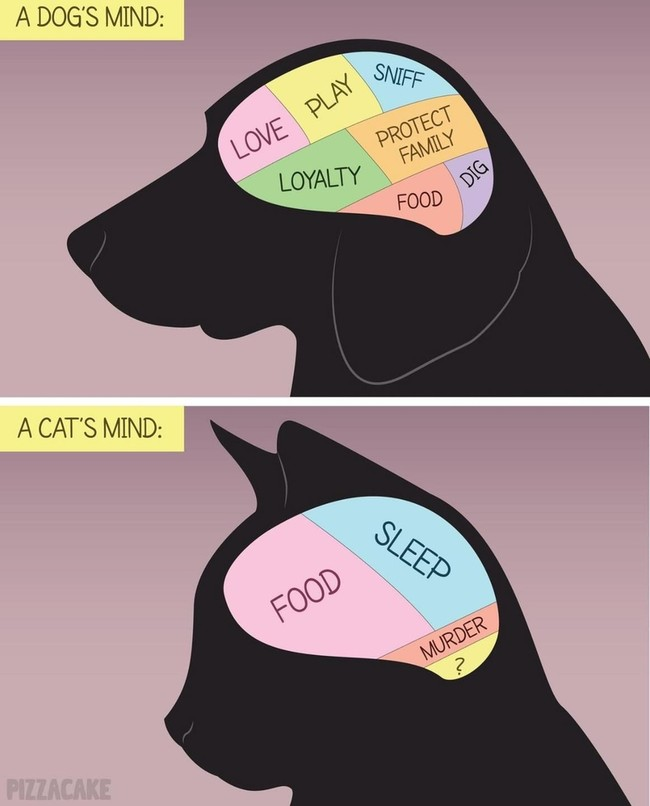
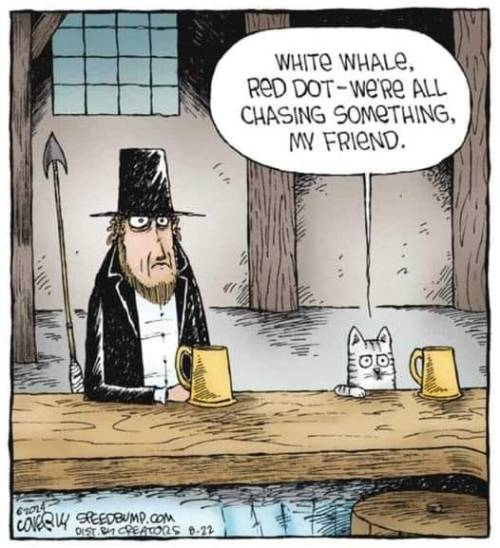









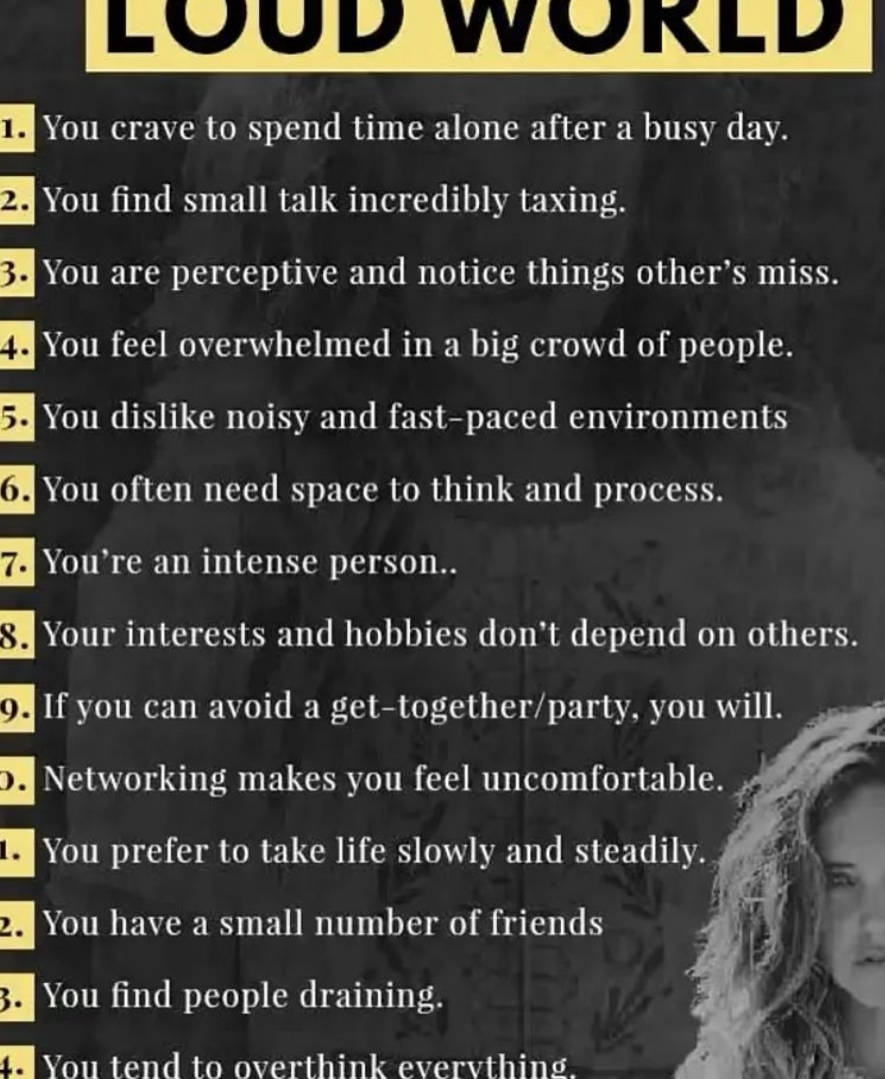


 Delusions of Adequacy

