(Natural News)—Electric vehicles are failing to live up to their promise, with a new report from Consumer Reports showing that they have an incredible 79 percent more problems than their conventional counterparts, in addition to being less reliable.
Plug-in hybrids fared even worse, registering 146 percent more problems than vehicles with traditional internal combustion engines.
According to Consumer Reports, the least reliable type of vehicle overall was electric pickup trucks.
They reached this conclusion based on a survey they conducted among members about issues they have had with their vehicles during the past year. Data from more than 330,000 vehicles with model years from 2000 onward was included in the assessment.
Their study involved 20 types of issues that range from minor nuisances like squeaky brakes to significant issues such as battery and charging problems and transmission issues, which were given a greater weight than minor issues. Consumer Reports noted that the charging problems they considered were those related to the vehicles themselves rather than public or home chargers.
“As more EVs hit the marketplace and automakers build each model in greater numbers, we are seeing that some of them have problems with the EV drive system motors, EV charging systems, and EV batteries (which are different from the low-power 12-volt batteries that power accessories),” Consumer Reports noted.
Electric vehicles are not nearly as popular as their advocates would have had us believe, as sales are now slumping in the face of rising interest rates and a lack of so-called fast chargers. As we begin to bump up against mined mineral constraints and international relations complications, there’s no doubt the cost of making these glorified toys will continue to rise. A recent Consumer Reports publication shows that, over the last 3 model years, electric vehicles are less reliable than normal gasoline and diesel vehicles. So, several states want to ban the sale of reliable, inexpensive gas and diesel cars and force us to buy less reliable electric cars. Note well that the superior reliability of hybrids is likely down to the fact that car makers who are better known for their reliability make more hybrids. There’s nothing inherent to a hybrid that would make it more reliable than a gasoline engine vehicle.
Even our ability to travel using air travel is under the gun. A CNN op-ed recently floated the idea of limiting air travel through the use of carbon (read: sin) passports. We will be limited to traveling based on the amount of carbon dioxide emitted during the flight. The author wants this applied to cruise ships as well. It’s not hard to see this applied to your car as well. Of course, such rules will not apply to the super-wealthy climate grifters. They’ll be jetting all over the globe for their very important climate conferences.
And it’s not just transportation. In September, Reuters “fact checked” a claim that US cities had agreed to limit meat consumption, finding the claim false. And yet, we are told on a nearly daily basis that eliminating beef consumption is necessary to save the planet. The sin of using coal (but not apparently to create steel) has become the sin of eating a steak. What’s next? Rice? Pork?
Beginning in 2024, the German government will empower local electricity providers to limit the flow of electricity to heat pumps and electric cars. Such limits were the stuff of alleged conspiracy theories mere months ago. Now they’re a reality. Germany’s suicidal attempt to power their grid with nothing but wind and solar, killing off their own nuclear power generation over the last 20 years, has led to energy rationing. It’s not as if this is unpredictable. The unreliability of so-called renewables is common knowledge among energy experts.
It’s sensible for those who are concerned about their ability to choose where and when they travel, what they eat, and when they turn on their heaters and air conditioners to be skeptical of every single attempt to accrue more power by state and federal governments. That skepticism should turn into activism against these power grabs. Anyone who tells you these power grabs aren’t coming is telling you not to believe your own eyes.
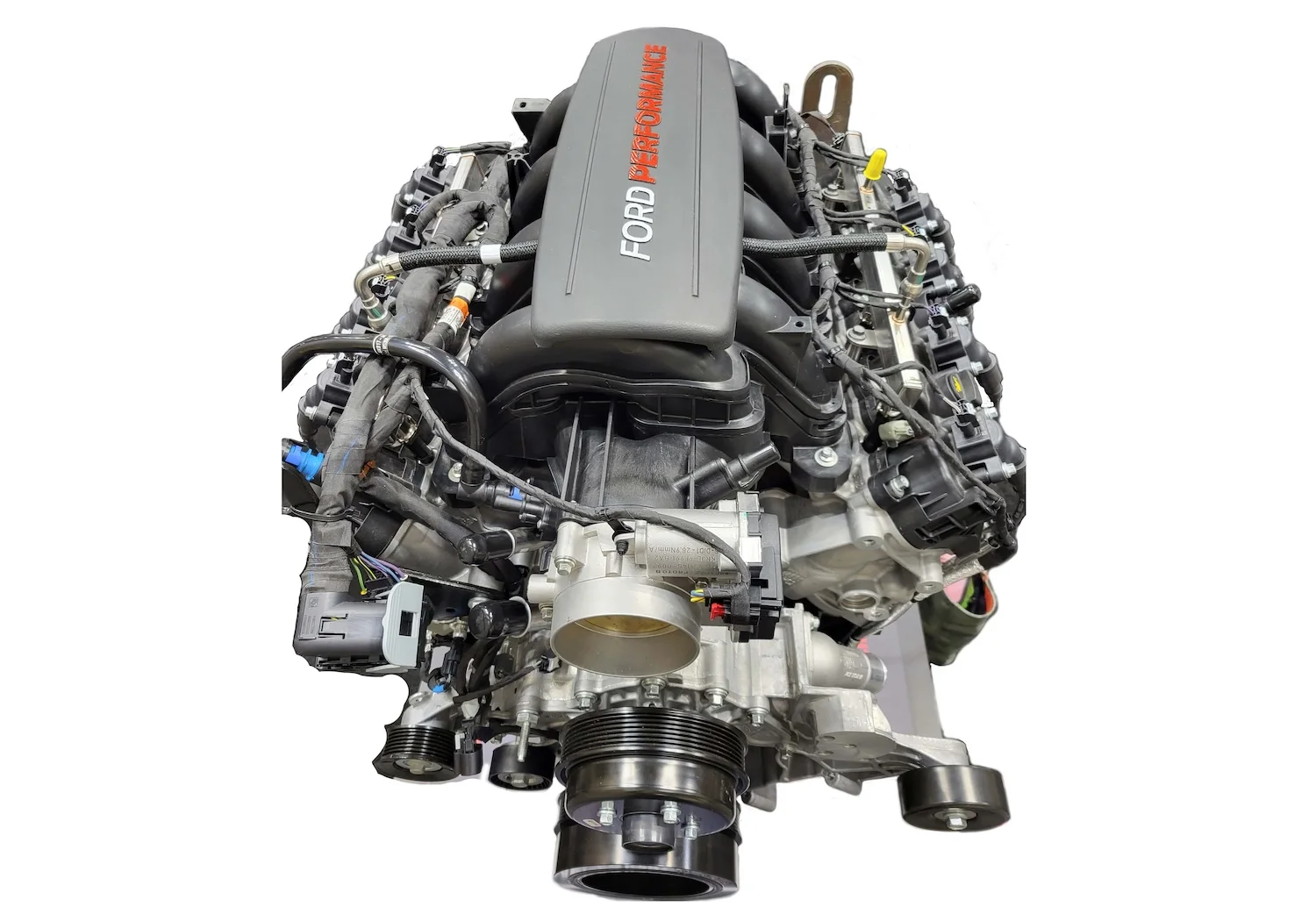
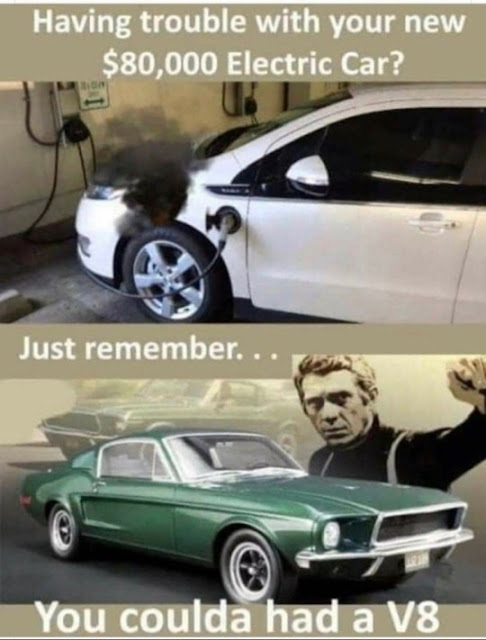
Give me a V-8 and some good regular gas any day. Read below that they are blowing up while being shipped.
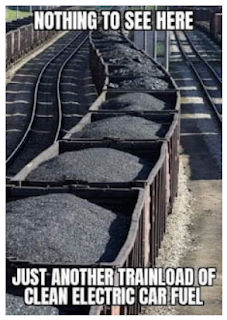
In reality, they are battery powered. All the electricity is produces by oil and coal anyway. They aren’t fooling anybody but themselves. I guess they feel better about the environment by driving one, but then the climatards have been wrong all along. It’s just more bullshit they are trying to shove down our throats to make people comply. Well, we are not the borg, at least some of us.
In a tragic incident in Naples, Italy, a fatal explosion occurred involving an experimental hybrid electric car.
The vehicle was a Volkswagen Polo, a prototype used as part of a project called “Life-Save,” testing the possibility of combining an electric motor with batteries powered by solar panels in cars, a translated version of the Today Chronicle reported.
According to a report from Newsweek, the tragic accident claimed the life of researcher Maria Vittoria Prati and left trainee student Fulvio Filace with severe burns.
Both individuals were associated with the Consiglio Nazionale delle Ricerche research institute and were traveling on the Naples ring road when the explosion took place.
Following the blast, the victims were rushed to the Antonio Cardarelli Hospital in critical condition.
Tragically, Maria Vittoria Prati succumbed to her injuries — burns that covered 90 percent of her body — on Monday.
The car involved in this incident was part of an ongoing research project on engine hybridization, undertaken by the Motor Institute of the CNR in collaboration with the University of Salerno.
Some have theorized that the explosion was due to some type of flammable material contained in the cylinders igniting; however, that has not been confirmed at this time.
Although the exact cause of the explosion has yet to be determined, hybrid and fully electric vehicles have faced safety concerns in the past, including instances of fires and explosions.
Such incidents have been observed with electric and hybrid cars, including certain Tesla models.
The incidents are becoming so common that some shipping companies are refusing to transport electric vehicles.
The dangers associated with EVs have also led to some governments taking actions to protect the public. It was reported last year that a state-owned public transport operator in Paris, France, the Régie Autonome des Transports Parisiens, pulled out 149 electric buses from its fleet after two of them spontaneously exploded within the same month.
The Public Prosecutor of Naples has initiated an investigation to shed light on the circumstances surrounding Friday’s explosion, Newsweek reported.
Meanwhile, Fabio Corsaro, cousin of Filace, expressed gratitude for the support provided by the medical team and questioned the decision to expose a trainee about to graduate in mechanical engineering to potential risks.
“I believe it is essential that it be clarified why a trainee close to graduation had been designated for that position to transport evidently dangerous material together with a researcher. What is the added value for an internship offered by such an activity remains a mystery,” he said.
Corsaro emphasized the need for a comprehensive understanding of the incident and its implications, as it remains a tragic event that has disrupted the dreams and aspirations of a young individual.
While disasters like these are disheartening, they serve as reminders of the challenges that come with new technology and innovation.
Currently, China is producing more pollution and C02 and trash than the rest of the world combined. Add the number 2 offender India and you have almost all the climate change problem that the talking heads are espousing.
But wait, C02 and the temperature were hotter hundreds of years ago. There weren’t as many people or cars back then. How do you explain that? I can, it’s called cyclical climate patterns that have gone on without man affecting it.
The popular target is the United States, who has reduced it’s footprint more than most, but is the bank of climate change to cash in on.
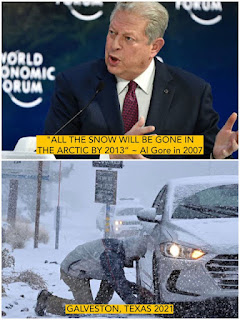
The science says man hasn’t affected the climate as much as the AGW play for money says it has. I had to listen to the pontificating by Climatards like Tim O’Reilly and Tom Raftery on this nonsense for years when I was at IBM. I never believed it was anything but a grasp at attention and money. They lead in being wrong on the climate with Al Gore, Greta, AOC and John Kerry, but right on scaring people for money.
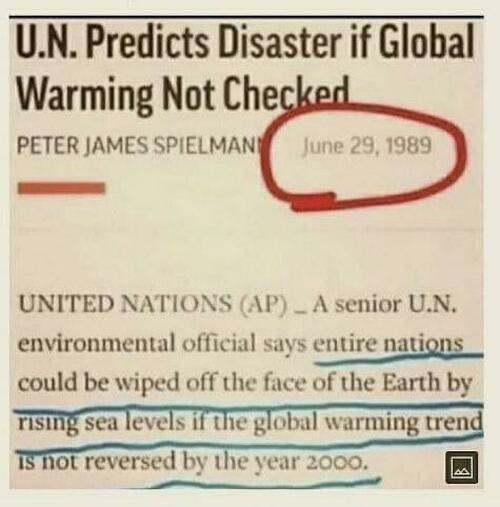
Obviously, this is already a scam. And the few sincere environmentalists who believe the sky is actually falling denounce it as such. But it’s an incredibly lucrative scam that moves billions if not trillions of dollars around.
The inadequacy of wind power The plan dramatically to cut the combustion of fossil fuels was accepted at the 2015 Paris Conference. The instinctive reac- tion around the world has been to revert to ‘renewables’, the sources of energy delivered intermittently by the power of the Sun. Unfortunately this power, attenuated by the huge distance that it must travel to reach the Earth, is extremely weak. That is why, before the advent of the Industrial Revo- lution, it was unable to provide the energy to sustain even a small global population with an acceptable standard of living. Today, modern technology is deployed to harvest these weak sources of energy. Vast ‘farms’ that monopolise the natu- ral environment are built, to the detriment of other creatures. Developments are made regardless of the damage wrought. Hydro-electric schemes, enormous turbines and square miles of solar panels are constructed, despite being unreliable and ineffective; even unnecessary.1 In particular, the generation of electricity by wind tells a disappointing story. The political enthusiasm and the inves- tor hype are not supported by the evidence, even for offshore wind, which can be deployed out of sight of the infamous My Back Yard. What does such evidence actually say? That the wind fluctuates is common knowledge. But these fluctuations are grossly magnified to an extent that is not immediately obvious – and has nothing to do with the technology of the wind turbine. The energy of the wind is that of the moving air, and, as every student knows, such energy is ½Mv2, where M is the mass of air and v the speed. The mass of air reaching each square metre of the area swept by the turbine blade in a second is M = ρv, where ρ is the density of air: about 1.2 kg per cubic metre. So, the maximum power that the turbine can deliver is ½ρv3 watts per square metre. If the wind speed is 10 metres per second (about 20 mph) the power is 600 watts per square metre at 100% efficiency.2 That means to deliver the same power as Hinkley Point C (3200 million watts) by wind would require 5.5 million square metres of turbine swept area – that should be quite unacceptable to those who care about birds and to other environmentalists. But the performance of wind is much worse than that, as a look at the simple formula shows. Because the power carried by the wind depends on the third power of the wind speed, if the wind drops to half speed, the power available drops by a factor of 8. Almost worse, if the wind speed doubles, the pow- er delivered goes up 8 times, and as a result the turbine has to be turned off for its own protection. This is not related to the technology of the turbine, which can harvest no more than the power that reaches the area swept by its blades.
My wife’s relatives in Denmark are going to have to deal with this inconvenient truth. They bought the wind farm hoax a long time ago. I don’t bother telling them they are wrong. They have to justify living in that place and this is part of it.
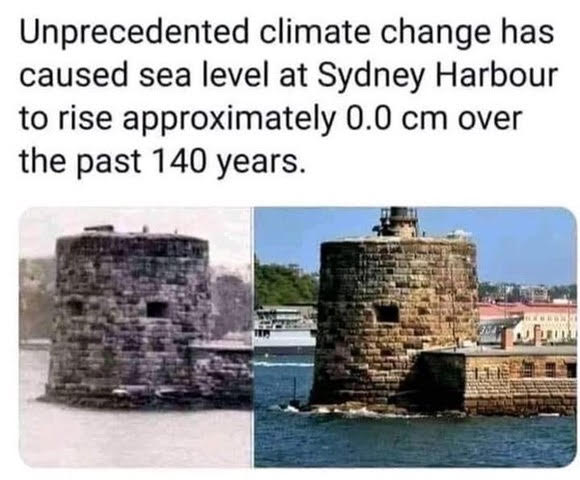
Even more for evidence for Tim and Tom, who said both tides are rising and that Climate Science is hard when I asked him for facts. It’s only hard if it’s your religion and you ignore both the truth and science. Oh look, the tide is the same as it was 1620. Must be that AGW that doesn’t change anything.
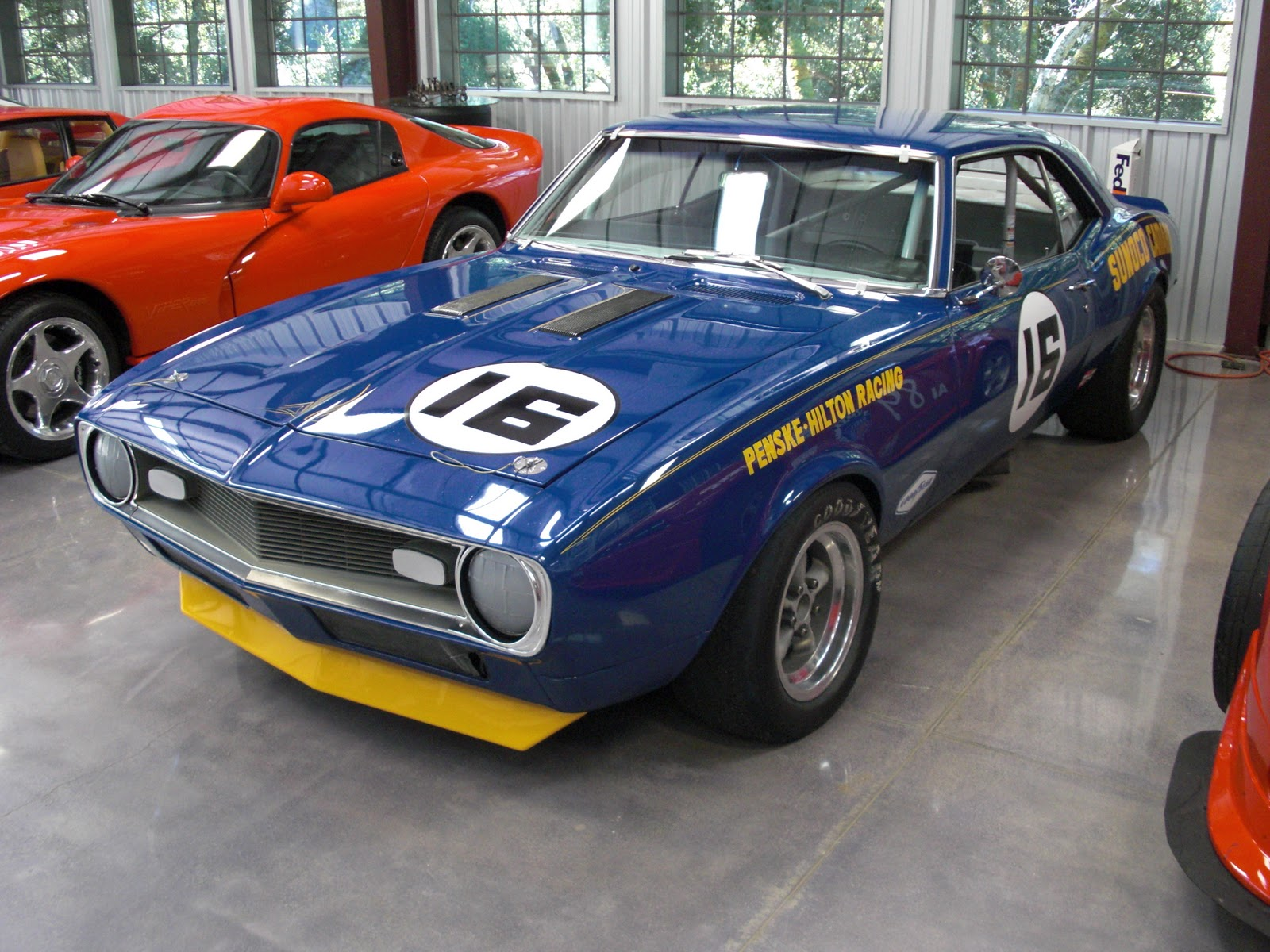
General Motors has announced the end of production for the sixth-generation Chevrolet Camaro for the 2024 model year. Another American muscle icon bites the dust — but Chevy says this isn’t the end of the road for the vehicle as we know it; we just have no idea what’s coming next. The final car will roll off the production line at the Lansing Grand River Assembly Plant in January of next year.

In the manufacturer battle, I never once pulled for a Camaro in Trans-Am, NASCAR, IMSA or any other series. I’d never buy one either. It doesn’t lower my respect for it as a good car, except for the gas war years when all cars got neutered.
I’ve followed them since 1968 because of Roger Penske and Mark Donohue. Those pony car days made for great auto’s and brand marketing. This includes the Mach 1 which I think is going away also.
One of my friends in college had the bad ass Z-28, sort of like this one.
He’s lucky he didn’t get killed on the run from Orlando to Haines City at over 100 MPH.
Not being a GM fan doesn’t mean I don’t respect it as a good car.

It’s a shame for GM to kill off such an iconic brand. Not one of the major manufacturer’s are making money on EV’s (other than Tesla) and they keep cutting their own throats with moves like this.
I’d never buy one, but you need good competitors to have a race. Chevy just took that away.
I find this interesting because part of the thrill of one of these ultimate driving machines is the sensory overload. The sounds and smells are as much a part of the thrill as is the rush of being pushed back into the seat when you push down the loud pedal (accelerator for the under educated).
I’ve been to races for 6 decades now. You can smell the exhaust, tires and hear it before you get to the track. You don’t get that from a station wagon or an SUV.
Even if I lost my vision, I’d only not be able to see how sleek and fast they look. My other senses would say it’s a real car.

Fortunately, even though it is ridiculous E-Fuels, at least they aren’t going to plug in a 911.

I still open the window of my car just to hear them drive away.
With many automakers transitioning from petrol-powered vehicles to electrified ones, Porsche and Ferrari are pursuing a new strategy by concentrating on the advancement of eFuels to preserve gas-powered engines. This decision follows the European Commission’s delay last week of the proposed 2035 ban on new internal combustion engine vehicles as the commission prepares to carve out a role for eFuels after 2035.
“Porsche and Ferrari’s status as national icons was enough to move their governments to challenge the EU plan last week just days before a scheduled vote,” Bloomberg wrote.
Germany’s Transport Minister Volker Wissing told the European Commission that he would withhold support for the approval of the new engine standards to end the sale of new combustion engine cars unless there were a plan for eFuels post-2035. Italy also threatened to fight the reforms.
European Commission President Ursula von der Leyen met with German Chancellor Olaf Scholz on Sunday, discussing a comprise that would likely involve eFuels.
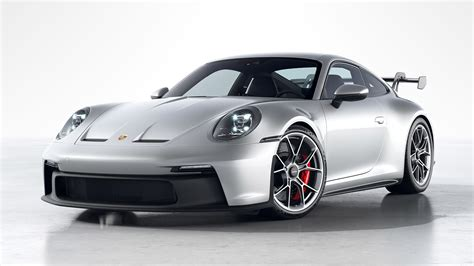
Germany and Italy are home to the world’s top sportscar manufacturers. There has been growing opposition against Brussels’ plan to ban petrol-powered engines. That’s because who in their right mind would purchase an all-electric Porsche 911?
The alternative route, mainly for sportscar brands, is the development of eFuels as a climate-neutral way to preserve combustion engines—just something about the sound of a twin-turbo V-8 or V-6 that captivates motorheads.
While most carmakers are pouring tens of billions into the EV shift, Porsche has also invested in an e-fuel plant in Chile, partly because the manufacturer doesn’t plan to make its 911 sports car with a plug. Operating combustion-engine vehicles in a climate-neutral way could also help speed up the decarbonization of the transport sector, according to a Porsche spokesman. Existing vehicle stock should be included in the push to lower CO2 emissions faster, he added. Ferrari has said it’s pursuing alternative fuels to keep making combustion-engine cars that preserve its heritage.
Proponents of e-fuels, say they’re essentially renewable electricity that’s been converted into a combustible, liquid fuel. To make it, scientists combine captured carbon dioxide with hydrogen that was split from water in a process powered by renewable energy, creating a synthetic hydrocarbon fuel. When burned in a combustion engine, the e-fuels create carbon dioxide. But since it was made from previously captured CO2, they argue it’s climate neutral.
We’ve outlined the growing resistance among vehicle brands and motorsport organizations that are firm in their belief the combustion engine will be sticking around for years to come.
A great sport has been overtaken by the environmentalists saying this is the future of clean energy and the usual word salad to prove their point. They have created some of the most cutting edge technology and speed you can possibly do. It was at the cost of fun, enjoyment of the car and the rush you get from all of your senses.
Before I get to the facts below, everyone likes the sound of a screaming V-12,10 or even 8 over a hybrid car. You can hear them before you see them and the noise and smell enhance your senses of excitement.
It’s not going to happen though, but here’s why it should:
The electric car’s biggest disadvantage on greenhouse gas emissions is the production of an EV battery, which requires energy-intensive mining and processing, and generates twice as much carbon emissions as the manufacture of an internal combustion engine. This means that the EV starts off with a bigger carbon footprint than a gasoline-powered car when it rolls off the assembly line and takes time to catch up to a gasoline-powered car.
One of the big unknowns is whether EV batteries will have to be replaced. While the EV industry says battery technology is improving so that degradation is limited, if that assurance proves overly optimistic and auto warranties have to replace expensive battery packs, the new battery would create a second carbon footprint that the EV would have to work off over time, partially erasing the promised greenhouse-gas benefits.
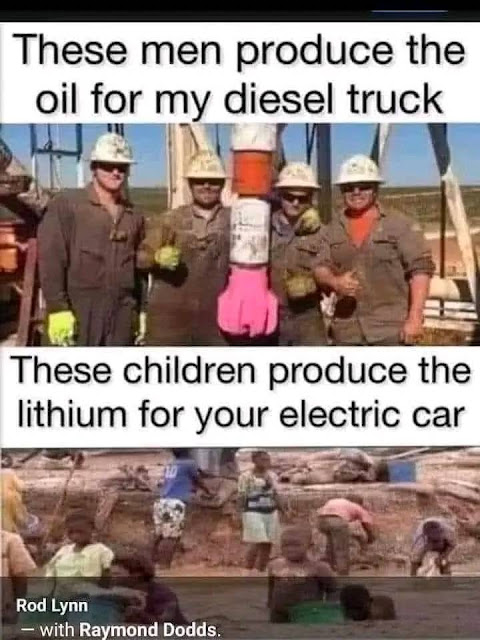
With governments now in the business of mandating electric vehicles, the battery challenge assumes a global scale. The majority of lithium-ion batteries are produced in China, where most electricity comes from coal-burning power plants.
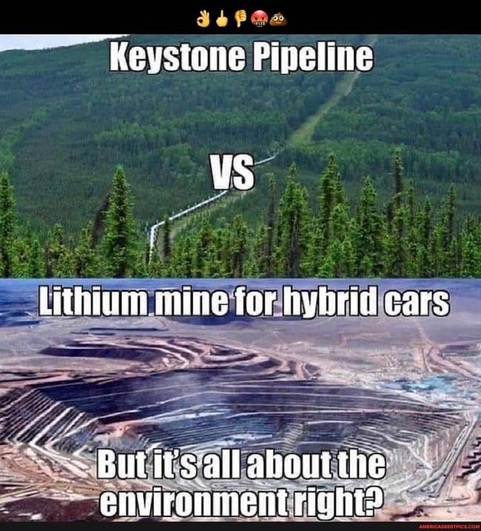
The process of mining critical minerals is sometimes described in language that evokes strip mining and fracking, an inconvenient truth that is beginning to attract notice. “Electric cars and renewable energy may not be as green as they appear,” a 2021 New York Times article noted. “Production of raw materials like lithium, cobalt and nickel that are essential to these technologies are often ruinous to land, water, wildlife and people.” The Times has also warned that with global demand for electric vehicles projected to grow sixfold by 2030, “the dirty origins of this otherwise promising green industry have become a looming crisis.”
All of these CO2 metrics could come into play in the Securities and Exchange Commission’s recently proposed rule that would require publicly traded companies to disclose the greenhouse gas emissions they produce directly, as well emissions produced indirectly through their supply chains around the world. While the implications aren’t clear yet, the new rule could standardize CO2 disclosures and transparency on EV carbon impacts, but some say that such calculations are nearly impossible for global contractors, and automakers would have to rely on the same kinds of estimates and modeling that are used now. Echoing a common concern, EV battery maker Nikola Corp. told the SEC that “some climate data is not readily available, complete, or definitive.”
As a result of these uncertainties, many consumers don’t understand the complexity of these analyses and may assume that their electric cars are literally zero-emissions, or that what matters most is that EVs are better for the environment and the precise degree is not that important.
more….
EV advocates are optimistic that in the coming decades electric cars will become cleaner as power grids are “decarbonized” and the industrialized world reduces its reliance on CO2-spewing fossil fuels, primarily coal and natural gas. Exactly how much cleaner is not easy to pinpoint. According to the U.S. Energy Information Administration, about 60% of the nation’s electricity was generated from coal and gas in 2021. In its Annual Energy Outlook, the agency projects those two fossil fuels will generate 44% of U.S. electricity by 2050.
But those percentages can be misleading. Even as the relative fuel proportions change over time, overall electricity demand is going up, so the total amount of fossil fuels actually burned in the mid-21st century goes down by only about 5%, according to EIA estimates. Future greenhouse gas emissions will depend on the number of EVs on the road and how electricity is generated, and those forecasts swing wildly. The EIA forecasts a mere 18.9 million EVs on U.S. roads in 2050, which is very conservative compared with advocacy group EVAdoption’s prediction of more than 25 million EVs on U.S. roads by 2030, only eight years away. BloombergNEF forecasts 125 million EVs on U.S. roads in 2040, up from 1.61 million at the end of last year, which would constitute about half the cars in this country.
“They’re making these forecasts that are basically licking your finger and sticking it up in the air,” David Rapson, a professor of energy economics at the University of California, Davis, who analyzes electric vehicle policy, said about California forecasts, which also applies more broadly. “Nobody knows what’s going to happen.”
Back to me.
Don’t try to tell me racing a hybrid is environmentally helpful when you fly around the world in many private and cargo jets each F1 weekend. Hauling the freight to one race is the pollution (carbon is not pollution) of all the cars in every race.
Cut us some slack and put real engines that we can hear coming, building our excitement.
Even the greenie drivers loved it when Fernando Alonso drove his championship winning Renault to some exhibition laps. They miss the sound also.
It’s not a step backwards, rather a step in the right direction.
Burying the blades of wind turbines because they can not be recycled. Very Earth friendly move by the climate crowd. They don’t tell you this part of the lie.
The Media
“Every human has four endowments—self awareness, conscience, independent will, and creative imagination. These give us the ultimate human freedom … The power to choose, to respond, to change.”
And in Germany, who was warned not to trust their energy needs by a recent president or they would lose their self-sustenance. Instead, they closed all the petroleum fired plants :
German Food & Ag Minister: Some Of You Will Have To Starve, And That Is A Sacrifice I’m Willing To Make
The zealots of the Sustainable Organic Church Of The Carbon Apocalypse are no longer hiding the fact that they expect many of you to die in order for them to achieve their green utopia. (Isn’t it weird how left-wing utopias always have such an awful body count?)
The German Food and Agriculture Minister, Cem Özdemir, recently stated that “Hunger is no argument against bio diversity and protection of the climate.”
And in Colorado:
Tens of thousands of Colorado residents found themselves unable to turn down their smart thermostats after energy company Xcel took control of them, citing an “energy emergency.”
On Tuesday, around 22,000 customers of Xcel, a Minnesota-based energy company who supplies customers across a number of western states, found themselves unable to turn down the temperature in their homes, despite the outside temperature reaching into the 90s, Summit News reported.
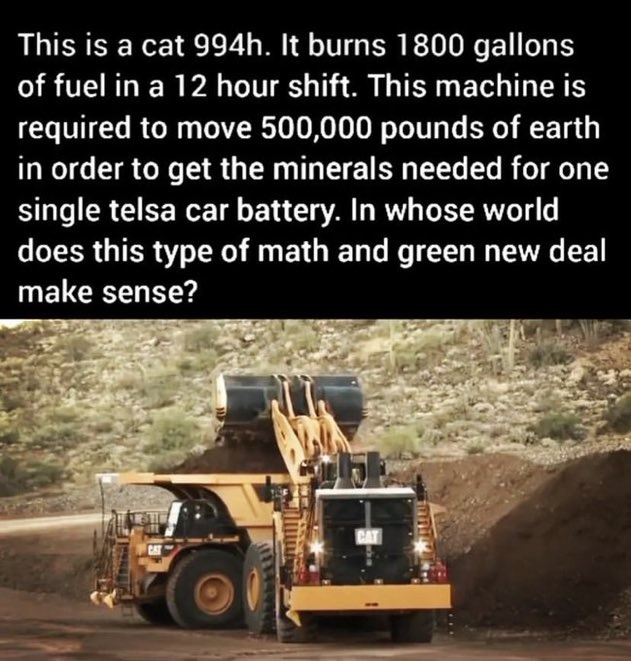
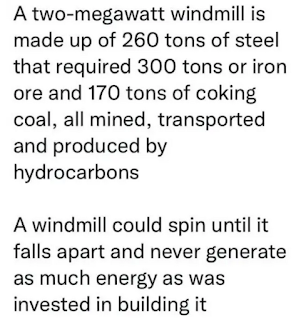
Building wind turbines and solar panels to generate electricity, as well as batteries to fuel electric vehicles, requires, on average, more than 10 times the quantity of materials, compared with building machines using hydrocarbons to deliver the same amount of energy to society.
Oil, natural gas, and coal are needed to produce the concrete, steel, plastics, and purified minerals used to build green machines. The energy equivalent of 100 barrels of oil is used in the processes to fabricate a single battery that can store the [energy] equivalent of one barrel of oil.
By 2050, with current plans, the quantity of worn-out solar panels—much of it nonrecyclable—will constitute double the tonnage of all today’s global plastic waste, along with over 3 million tons per year of unrecyclable plastics from worn-out wind turbine blades. By 2030, more than 10 million tons per year of batteries will become garbage.
In all the Democrats’ speeches and publicly stated positions over the past several years on renewable energy, the Green New Deal, etc., there is not the slightest indication from any so-called liberal environmental “expert” or elected officeholder that they have even the dimmest awareness of any of this. Instead, Democrat politicians and their Green supporters simply spout their vacuous, predictable, totally inaccurate party lines about “saving the earth before time runs out,” or the “evils of big energy corporations.” The smart money says that not one liberal environmental proponent—elected or otherwise— has even read this report, much less is able to refute any of it in a coherent, logical manner.