Encoding Photonic Qubits – it’s a good discussion of how things work in that world. At one point, the world thought the telephone was too complicated, yet now it is ubiquitous. I don’t see it being on anyone’s phone in the near future, but we’ll be using this technology, even if in the background and we don’t know that we are.
BlackRock began renaming environmental, social and governance (ESG) earlier this year. It’s now calling it “transition investing.”
The company recently updated its climate and decarbonization stewardship guidelines. The document makes no mention of ESG, but it shows in many ways, the world’s largest investment manager with $10 trillion in assets under management is still pursuing many of the same goals.
As always, woke ruins everything it touches. Blackrock owned the building that the Trump shooter was on and gave Thomas Crooks support. Get woke and go broke.
We know that the modern West has developed a jaw-dropping degree of totalitarianism, wherein the bureaucracies of the state and the corporate sector coordinate together to cripple humans outside their power networks and media channels. But what are the mechanics of this coordination? …
ESG (Environmental, Social, and Governance):
In brief, ESG originated at the level of the international and intellectual stratosphere and then grew, unchecked by tedious real-world constraints like scarcity and tradeoffs, as a kind of malignant joint venture between large government bureaucracies and large corporations.
This JV is a serious industry, offering lucrative money-making opportunities for consulting companies, fund managers, and assorted professionals who ‘help’ companies comply. Bahar Gidwani, co-founder of a company called CSRHub, a compiler and provider of ESG company ratings, estimates that the collection of ESG data alone is already costing companies $20 billion worldwide. …
Large reporting costs are easier for large companies to bear, which offers a clue to why they’re interested: this sort of burden, particularly when made compulsory by the state, helps them dominate their smaller competitors.
DEI (Diversity, Equity, and Inclusion):
DEI is the younger brother of ESG.
At present, DEI reporting is not yet compulsory, but about 16% of the biggest US firms have open DEI reports, and the DEI fad is growing, perhaps eventually to eclipse ESG. …
Who’s Asking for This Crap?
Though specious, unverifiable, and mostly made up, ESG reporting is a way to formally present a company’s ‘ESG performance.’ This performance can theoretically be ‘scored’ by some third party, and thereby compared with that of other companies.
If ESG is valued highly by consumers, then companies that get high scores should attract a disproportionate amount of investment, meaning that their cost of capital will be lower than companies who don’t score so well — the magic through which a bullshit report is turned into a business opportunity.
Twitter Updates Privacy Policy Notifying Users Their Content Will Be Used to Train and Develop Enhanced AI
I couldn’t think of a worse group of people to learn from. The amount of hate, disinformation and abuse of the platform by the government (despite what Musk has tried to do) will just train a monster.
Excerpt:
The use of Enhanced Artificial Intelligence to control information and communication is a subject that too few people understand. This is why I have spent time trying to share information so that people can see into the future of their internet reality. Everything will change.
As you should know by now, the X platform (Twitter) is designed to produce a different user experience based on “definitions” of the user. The definitions are applied by the platform, to create unique identifying characteristics of the user. The result is that each user gets a completely different platform experience, based on their definitions.
“Twitter is a different platform for each user.” Repeat that phrase as often as needed to understand the evolution of what is coming to the American internet.
You might ask, how is applying all of these granular definitions even possible? The answer is through the use of AI. Humans will no longer be assigning the definitions of you; an autonomous system will take on the job of assigning the definitions. Now, keep referencing the word “definitions,” because that is your identity and gateway pass into the platform content. If you carry a particular definition, you will be blocked, throttled, shadow-banned or experience friction applied to your user id.
Remember when Elon Musk restricted users and claimed it was because the platform content was being “scraped” by organizations who were using the content to train their Enhanced AI systems? Remember, Musk saying that, and expressing his concern? Well, now the platform is telling users in a new X Corp privacy policy, that X corp itself is going to do exactly the thing Musk said he abhorred.
There is more about VPN’s and bypassing gatekeepers that is pertinent, but I’ll leave you with this nugget at the end of the article. If you think ESG is bad for you, look how Google (evil) is helping pervert AI, the Internet and the truth.
As we have shared, the crawl is not headlines, the crawl is in content. Yes, even content in the comment section is now flagging to the control systems. Why? Because we operate a proprietary constructed private commenting system that doesn’t have a backdoor and protects you, the user.
The Google Spiders are newly enhanced with AI instructions, dispatched looking for content and ‘context’ that is against the interests of the Vanguard, Blackrock, Larry Page (Alpha/Goog owners), and the public-private partnership.
Look at the one I have highlighted above titled “Have you ever noticed this.” Do you remember it? [Reminder Here] This content is considered “dangerous or derogatory”. Think about that for a moment. Discussing the humor of Donald Trump, and the fellowship it creates, is considered “dangerous” to the interests of Google.
To illustrate how damaging Germany’s transition to renewable energies and the green movement have been, news is out that things are worse than we thought. Yet, don’t expect the climastalinistas to acknowledge this. Quite to the contrary, they’ll just blame all the economic troubles on the green movement going to slowly!In reality, though, slowing the economy is what they’ve wanted all along.
Drop is “much more than expected”
Blackout News here reports on how industrial production in Germany has slumped “much more than economists expected in June” and that “many experts expect this trend to continue in the coming months.”
The results are based on data from the Federal Statistical Office released last Tuesday.
Slump to continue
“Alexander Krüger of Hauck Aufhäuser Lampe Privatbank thinks many companies are even more pessimistic than they were a few weeks ago,” Blackout News adds. “Jörg Krämer of Commerzbank expects a further slump in the economy in the second half of the year.”
Germany’s high energy costs driving inflation
Much of the decline in production is due to sectors hard hit by Germany’s energy policies. One example is the automotive industry because its future is fraught with huge uncertainty as combustion engines are planned to be phased out.
High interest rates dampening construction
The construction sector has been hit hard as well as energy norms and heating regulations for homes threaten to make building even more unaffordable to many. High energy prices also have fueled inflation, which in turn has forced bank interest rates up and made home financing unattractive. Building permits issued for new homes are extremely low.
One bright spot has been the the aerospace sector. But overall the coming months continue to appear especially gloomy for Germany, Europe’s largest economy. High energy costs have also led to many companies moving operations out of the country.
According to analyst Jens-Oliver Niklasch of Landesbank Baden-Württemberg, “Industrial performance is rather weak at the moment.”
Until Germany gets back to reality with its energy policies, don’t expect improvement anytime soon. Again, this is what the climastalinistas want.
Some corporations have been bowing to the religion of woke.
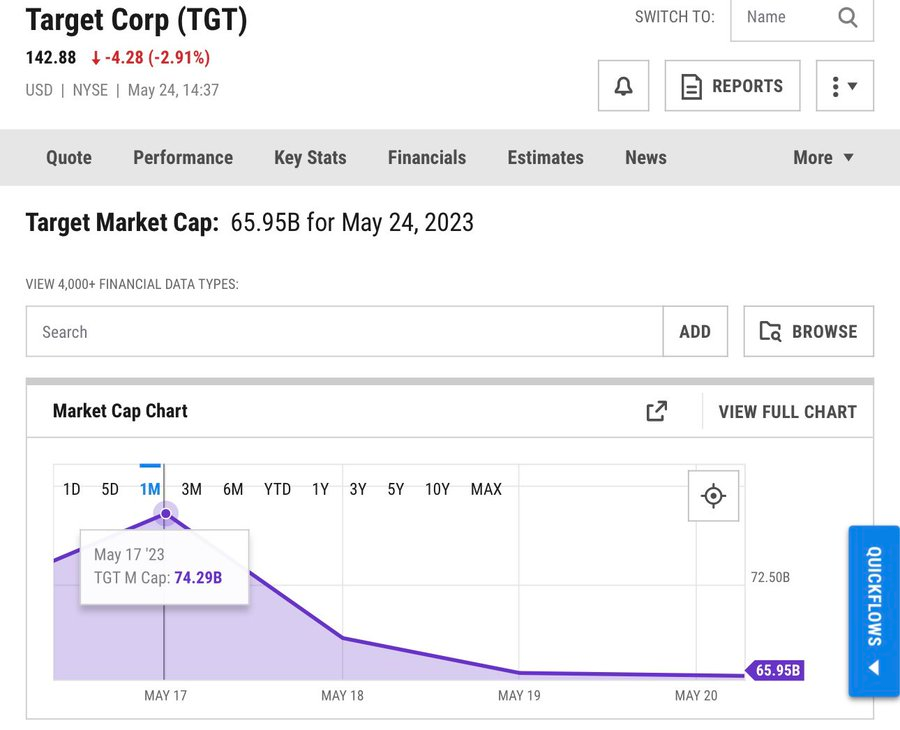
So far, Target has lost 8 billion for promoting pride children’s clothing, tuck (your dick) tranny bathing suits and their other Satan inspired stunts.
I wonder if the major corporations realized how out of touch they were when they started this nonsense. It seems that DEI, CRT and the rest of the alphabet wokeness isn’t selling any products. It’s part of the self destruction, like the Portland post below that shows most of regular people are tired of this woke crap.
The companies that were trying to get ESG points from Blackrock are paying a high price for their actions.
The rest of us just want some sanity and to get back to normal life. Those of us who are fed up just stopped buying the products from these weirdo’s. Don’t force that on us to make yourselves feel better.
Just two months ago, transgender influencer Dylan Mulvaney was flying high with endorsements from Bud Light, Nike and Maybelline, to name a few. Hot off her “365 Days of Girlhood” journey on social media, she was also enjoying an elaborate musical event staged at the Rainbow Room in her honor.
That was then. But now, after the backlash against Bud Light’s decision to partner with Mulvaney on social media and feature her face on beer cans, other trans influencers say they’re feeling the heat as well.
Some told The Post that, at a time when they are usually in high demand — the period leading up to Pride Month in June — brand partnership offers are drying up.
Rose Montoya, who has 1 million followers on TikTok and Instagram, said she’s noticed a big drop-off in the number of deals she’s been offered.
Prior to Pride Month last year, Montoya — a Seattle University graduate who bills herself as a content creator, trans advocate, model and actress — was getting up to 100 brand partnerships thrown her way. Now, she said, it’s been reduced to a trickle of maybe 12 or so offers.
Trans influencer Rose Montoya says many of her usual brand partnership offers have dried up in the wake of the Dylan Mulvaney Bud Light fiasco.
“Last year was my best yet,” Montoya, 27, told The Post. “I had everything — skincare brands, TV networks, advocacy groups, lots of start-ups. They all reached out. Now I’m not hearing from them.”
While she noted that “the market has also become over-saturated with influencers since 2000,” Montoya added that “the average queer creative makes all their money in June —enough to live on for the rest of the year. And the fact that there’s been a chill probably isn’t helped by the whole Bud Light thing.”
Montoya said that she can get up to $15,000 for a brand partnership. Some of her contracts are for six months at a time, and she hopes to renew one of those soon.
You have to hand it to Jackson, he found a way to make money and rode that horse into the sunset. He told companies they would be called racists if they didn’t pay off “protection/hush money” He further extorted them to hire some POC that weren’t necessarily the most qualified. Most bent the knee as it was easier to just pay off rather than have to fight his race racket.
Eventually, his tactics wore off and his fraud came to light, but it was an example for the woke to follow.
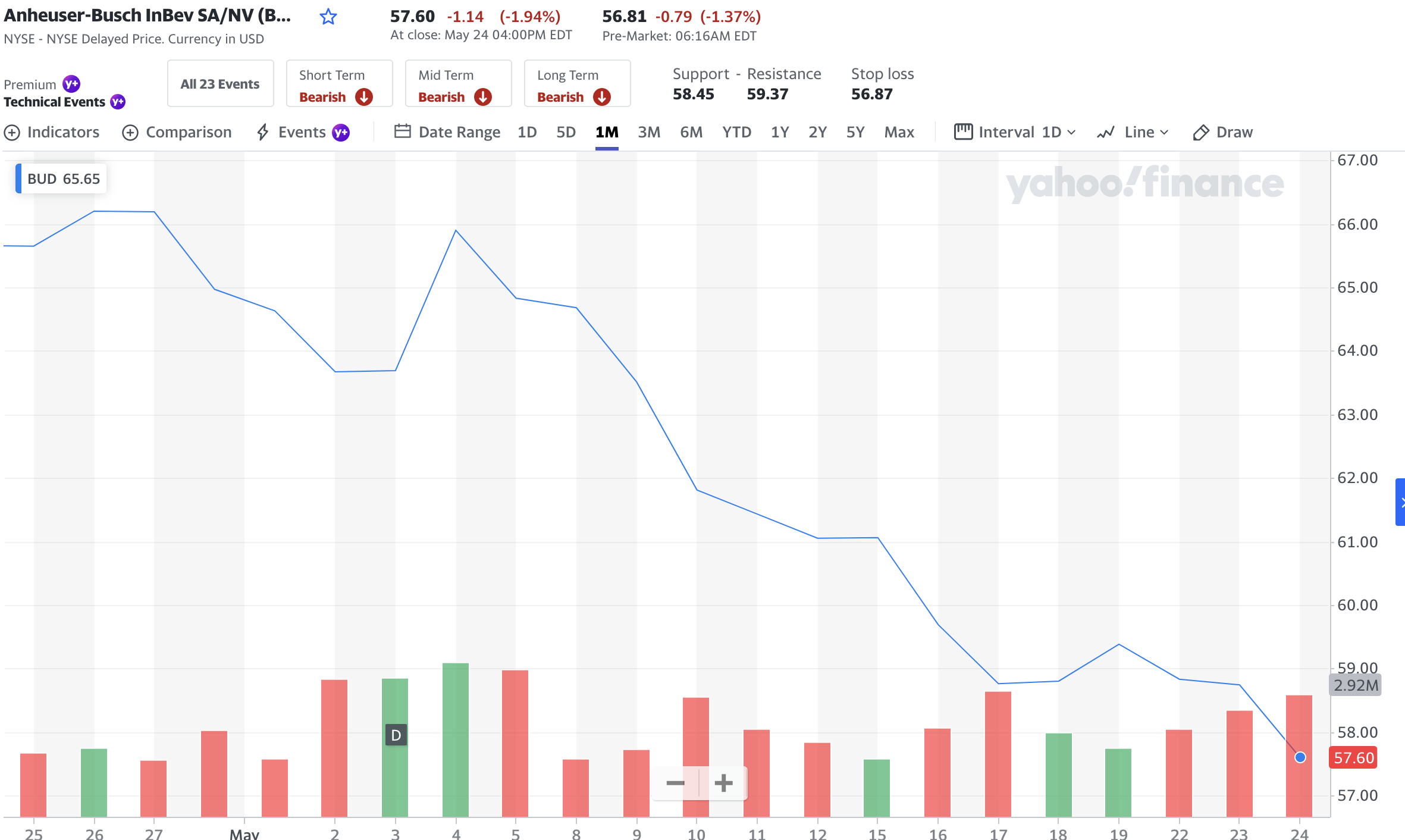
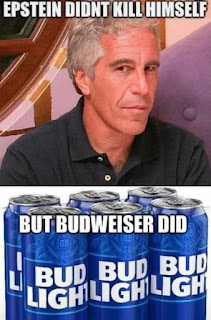
InBev who owns Anheuser-Busch just cut the throat of their Bud Light brand with the whole Trans debacle. They’ve lost $4 billion in value since March 31st and a whole lot of loyalty. Jack Daniels and Nike also played the Trans/woke card, to a lesser extent.
Why would they piss on their customers? It had to be a much worse penalty than just killing off brand/customer loyalty.
It was. It is the same racket that Jackson used with race that is being held against them.
WOKE RATING
Yes, their ESG score is being controlled and held over their heads. I’m pretty sure it was a tough decision to sacrifice billions and a lot of beer drinkers for “protection”. It’s the same thing that Jackson and the Mafia did. Pay or be destroyed.
Story:
Almost no one in America had ever heard of Dylan Mulvaney, a biological male pretending to be female before this year. Now he is suddenly all over the news.
The reason behind his sudden emergence is chilling. The New York Post exclusively revealed that The Human Rights Campaign, the forefront of the leftist LGBTQ mafia, is utilizing a social credit score to force companies like Nike and Anheuser-Busch to either advance their poisonous agenda.
These are precisely the tactics Chinese Communist Party (CCP) pulls with their citizens and companies when they say or do something contrary to the CCP’s mission.
In addition, the HRC publicly threatens organizations every year by sending a list of demands in person over what they want displayed in public. Clearly, Mulvaney was part of those marching orders.
The HRC is backed by hedge funds such as Blackrock and Vanguard, the top shareholders of most American publicly-traded corporations. Failure to advance the woke agenda would lead to these companies pulling their funds from Nike, Anheuser-Busch, and other major companies, leading to the loss of millions of dollars.
All of this means that major corporations actually lose more by not embracing the woke left than from angering conservatives. So much for the “get woke, go broke” slogan.
Executives at companies like Nike, Anheuser-Busch and Kate Spade, whose brand endorsements have turned controversial trans influencer Dylan Mulvaney into today’s woke “It girl,” aren’t just virtue signaling.
They’re handing out lucrative deals to what were once considered fringe celebrities because they have to — or risk failing an all-important social credit score that could make or break their businesses.
At stake is their Corporate Equality Index — or CEI — score, which is overseen by the Human Rights Campaign, the largest LGBTQ+ political lobbying group in the world.
HRC, which has received millions from George Soros’ Open Society Foundation among others, issues report cards for America’s biggest corporations via the CEI: awarding or subtracting points for how well companies adhere to what HRC calls its “rating criteria.”
The HRC lists five major rating criteria, each with its own lengthy subsets, for companies to gain — or lose — CEI points. The main categories are: “Workforce Protections,” “Inclusive Benefits,” “Supporting an Inclusive Culture,” “Corporate Social Responsibility and Responsible Citizenship.”
Credit: New York Post
A company can lose CEI points if it doesn’t fulfill HRC’s demand for “integration of intersectionality in professional development, skills-based or other training” or if it doesn’t use a “supplier diversity program with demonstrated effort to include certified LGBTQ+ suppliers.”
James Lindsay, a political podcaster who runs a site called New Discourses, told The Post that the Human Rights campaign administers the CEI ranking “like an extortion racket, like the Mafia.
It doesn’t just sit back passively either. HRC sends representatives to corporations every year telling them what kind of stuff they have to make visible at the company. They give them a list of demands and if they don’t follow through there’s a threat that you won’t keep your CEI score.” (extortion, just like Jessie)
As a result, some American CEOs are more concerned about pleasing BlackRock, Vanguard and State Street Bank — who are among the top shareholders of most American publicly-traded corporations (including Nike, Anheuser-Busch and Kate Spade) — than they are about irritating conservatives, numerous sources told The Post.
“The big fund managers like BlackRock all embrace this ESG orthodoxy in how they apply pressure to top corporate management teams and boards and they determine, in many cases, executive compensation and bonuses and who gets re-elected or re-appointed to boards,” entrepreneur Vivek Ramaswamy, who is running for president as a Republican and authored “Woke Inc.: Inside America’s Social Justice Scam,” told The Post. “They can make it very difficult for you if you don’t abide by their agendas.”
In 2018, BlackRock CEO Larry Fink, who oversees assets worth $8.6 trillion and has been called the “face of ESG,” wrote a now-infamous letter to CEOs titled “A Sense of Purpose” that pushed a “new model of governance” in line with ESG values.
A head of risk management at Silicon Valley Bank spent considerable time spearheading multiple “woke” LGBTQ+ programs, including a “safe space” for coming out stories, as the firm catapulted toward collapse.
Jay Ersapah, the boss of Financial Risk Management at SVB’s UK branch, launched initiatives such as the company’s first month-long Pride campaign and a new blog emphasizing mental health awareness for LGBTQ+ youth.
“The phrase ‘you can’t be what you can’t see’ resonates with me,’” Ersapah was quoted as saying on the company website.
“As a queer person of color and a first-generation immigrant from a working-class background, there were not many role models for me to ‘see’ growing up.” (there is the announcement of “everything I touch is going to fail”)
Her efforts as the company’s European LGBTQIA+ Employee Resource Group co-chair earned her a spot on SVB’s “outstanding LGBT+ Role Model Lists 2022,” a list shared in a company post just four months before the bank was shut down by federal authorities over liquidity fears.
It’s time to stop hiring people like this and eliminate this group of initials, ESG, CRT, DEI and anything woke
In addition to instituting SVB’s first “safe space catch-up” — which encouraged employees to share their coming out stories — and serving on LGBTQ+ panels around the world, Ersapah also spent time over the last year serving as a director for Diversity Role Models and volunteering as a mentor for Migrant Leaders.
“I feel privileged to co-chair the LGBTQ+ ERG and help spread awareness of lived queer experiences, partner with charitable organizations, and above all, create a sense of community for our LGBTQ+ employees and allies.” (how do you feel about it now knowing you screwed the pooch?)
Ersapah couldn’t immediately be reached for comment.
SVB was abruptly shut down Friday by the California Department of Financial Protection and Innovation shortly after it disclosed it had taken a $1.8 billion hit from a $21 billion fire sale of its bond holdings.
It faced a cash crunch due to surging interest rates, and a recent meltdown in the tech sector led many customers to pare their deposits.
“… SVB recognizes the significant societal, ecological and economic threats of climate change. … We enable entrepreneurs with inventions and new businesses that reduce greenhouse gas (GHG) emissions and take seriously the responsibility to reduce our own. …” – SVB ESG Report 2022 Section 8
Pinkerton: Green, Woke, and Now Broke — How SVB Became the 2nd Biggest Bank Failure in U.S. History
Go Woke, Go Bust
Oh so woke, oh so green, oh so diverse Silicon Valley Bank (SVB) just went bust.
One can go to its website—still up for who knows how much longer—and see that it claimsassets of $212 billion. But as they say, the bigger they are, the harder they fall; and so SVB makes for the second largest bank failure in U.S. history.
…
Speaking of ‘splaining, SVB officials will need to answer a lot of questions, including, What role did wokeness play in SVB’s failure?
Another term for wokeness, of course, is ESG, which stands for environmental, social, and governance. ESG is a pertinent question, as there’s a considerable body of economic literature showing that woke investments aren’t good investments. For instance, one study by professors at the London School of Economics and Columbia University finds that:
ESG funds appear to underperform financially relative to other funds within the same asset manager and year, and to charge higher fees. Our findings suggest that socially responsible funds do not appear to follow through on proclamations of concerns for stakeholders.
Of course, it wasn’t just the woke policies of SVB which might have contributed to the disaster. One of the biggest sources of damage to Silicon Valley Bank was the bank’s mistaken belief that fixed rate securities were a safe harbour for depositor’s money.
And in Germany, who was warned not to trust their energy needs by a recent president or they would lose their self-sustenance. Instead, they closed all the petroleum fired plants :
German Food & Ag Minister: Some Of You Will Have To Starve, And That Is A Sacrifice I’m Willing To Make
The zealots of the Sustainable Organic Church Of The Carbon Apocalypse are no longer hiding the fact that they expect many of you to die in order for them to achieve their green utopia. (Isn’t it weird how left-wing utopias always have such an awful body count?)
The German Food and Agriculture Minister, Cem Özdemir, recently stated that “Hunger is no argument against bio diversity and protection of the climate.”
And in Colorado:
Tens of thousands of Colorado residents found themselves unable to turn down their smart thermostats after energy company Xcel took control of them, citing an “energy emergency.”
On Tuesday, around 22,000 customers of Xcel, a Minnesota-based energy company who supplies customers across a number of western states, found themselves unable to turn down the temperature in their homes, despite the outside temperature reaching into the 90s, Summit News reported.









 Delusions of Adequacy