
It’s worse than you think. The stats and link are at the bottom. Don’t say you weren’t warned.
“Doctors are being paid to vaccinate, not to evaluate,” Health Secretary Robert F. Kennedy Jr. said in a recent video.
“They’re pressured to follow the money, not the science.”
Doctors administer dozens of vaccines to many children in the United States. Adults are also advised to receive multiple shots.
Here’s what to know about vaccines and payments.
What Does the Literature Say?
A review of studies confirms that some doctors profit from vaccinating.
In a 2020 paper, researchers found when analyzing three years’ worth of vaccination claims for five Colorado clinics that reimbursements averaged 125 percent of costs, making administering vaccines “financially favorable across the practices.”
Another study found that various providers in North Carolina, when receiving the maximum payment for reimbursement from insurers or the government, profited from vaccinating patients. Even if they received the minimum payment, pediatric and family medicine practices still reported positive income, according to the 2019 study.
On the other hand, other doctors say the costs of administering certain vaccines to certain people exceed the vaccine payments.
In a survey of 34 pediatricians, for instance, more than half said they do not profit from vaccinating, according to a 2009 paper.
A number of practitioners have also said they face escalating costs associated with vaccination, such as staffing, leading them to stop or consider stopping providing vaccines to patients with private insurance.
Reimbursement for vaccinating patients varies depending on whether patients have private or public insurance. Under a program called Vaccines for Children, the government also provides vaccines to doctors for free. It does not pay for related costs, but doctors can charge an administration fee that the Centers for Disease Control and Prevention says “helps providers offset their costs of doing business,” with the maximum varying by state.
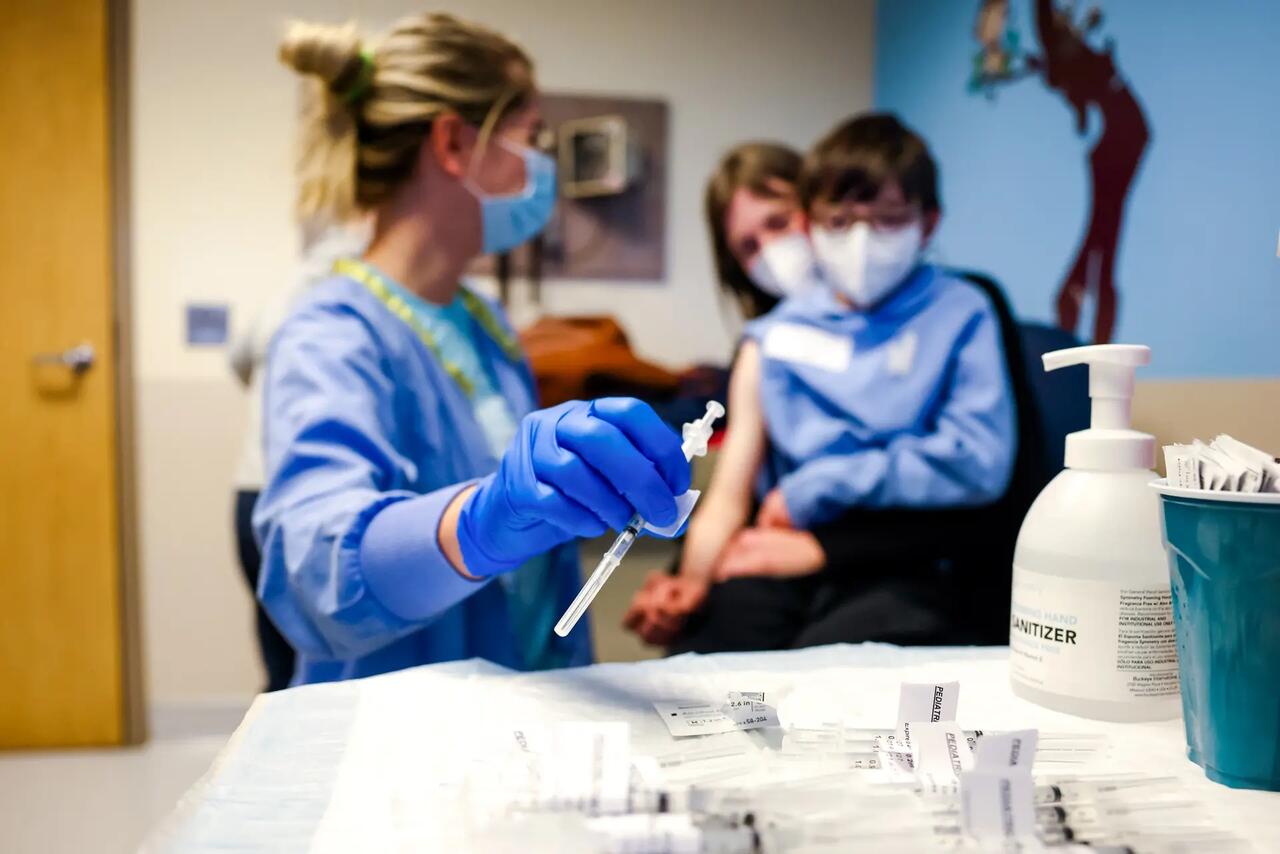
A nurse prepares to give a COVID-19 vaccine to a boy as his mother comforts him in Denver on Nov. 3, 2021. Michael Ciaglo/Getty Images
What About Those Bonuses?
Doctors can make extra money for vaccinating under incentive programs from insurers, as highlighted by Brian Hooker, a senior scientist with Children’s Health Defense—a group Kennedy chaired through 2023—and other witnesses during a hearing in July on vaccines held by Sen. Ron Johnson (R-Wis.).
“Some pediatricians can make upwards to a million or more a year just in those incentives,” Hooker said.
Asked for citations, Hooker pointed The Epoch Times to documents he collected from insurance companies that list available bonuses.
Links to those and other documents that outline incentives and are available online are provided below:
- Blue Cross Blue Shield Blue Care Network of Michigan: $400 per child who receives a set of 24 or 25 vaccine doses on or before their second birthday.
- Aetna Better Health of Louisiana: $10–$25 per member, depending on level of COVID-19 vaccination coverage practice-wide.
- Molina Healthcare of Ohio: $100 incentive for COVID-19 vaccination.
- Anthem Blue Cross and Blue Shield Medicaid: $50 per individual aged 6 months and older who received a COVID-19 vaccine by Dec. 31, 2022.
- United Healthcare Community Plan of Michigan: Incentives for patients who receive the meningococcal, Tdap (tetanus, diphtheria, and pertussis), and HPV vaccines by their 13th birthday.
- Meridian: Up to $120 per child who receives the 24 or 25 doses by their second birthday, or adolescents who received three certain doses by their 13th birthday, capped at $9,600 for each category.
- BlueCross BlueShield of Illinois: $149 for each child, if 63 percent or more meet criteria, who received the 24 or 25 vaccine doses by the time they turn 2.
- Central California Alliance for Health: Bonuses for children who receive at least 24 doses by the time they turn 2 and the three certain doses before they turn 13.
The sets of vaccines for which providers receive bonuses are recommended by the Centers for Disease Control and Prevention.
more here with statements from other Dr.’s and Kennedy.









 Delusions of Adequacy

