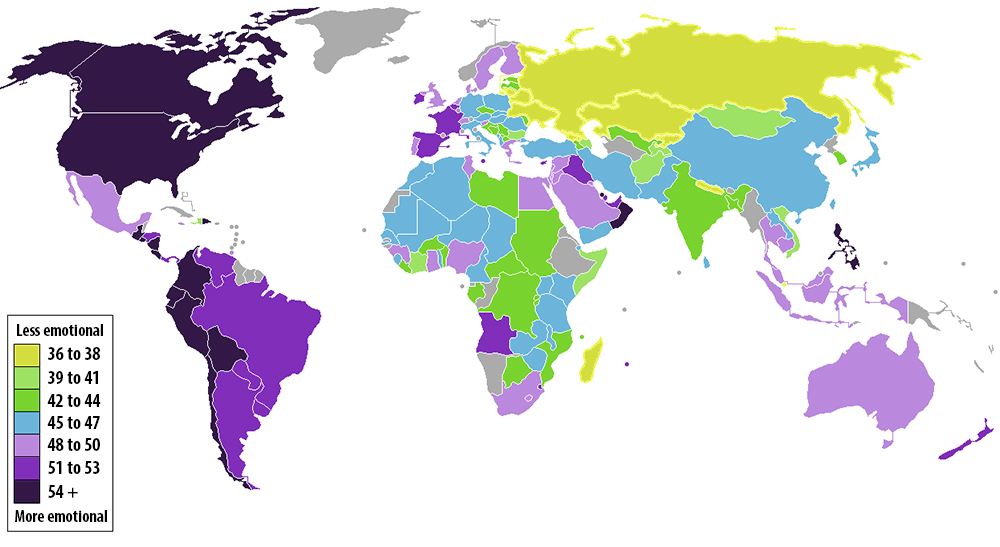
Ranked: 25 Richest Countries in the World, by Three Metrics

Ranked: 25 Richest Countries in the World, by Three Metrics

This was originally posted on our Voronoi app. Download the app for free on iOS or Android and discover incredible data-driven charts from a variety of trusted sources.

Key Takeaways

  • Luxembourg’s immense GDP per capita ($141K) masks the fact that much of it is generated by non-residents who commute in to work.
  • Qatar’s oil windfall lifts GDP per capita ($72K) but that hasn’t translated into broader wealth.
  • English-speaking countries translate middling GDP per capita into high median wealth through property ownership and strong pension systems.
  • Generating national wealth and distributing it to people are distinctly different economic challenges.

Previously, when we’ve covered 25 richest countries, we did so by GDP per capita alone. As a result, tiny states and global city-states tended to dominate the top of the rankings.

Introducing per capita income and median wealth per adult paints a more nuanced picture. It shows that where money is produced is not always where it ultimately accumulates.

The data for this visualization comes from the International Monetary Fund, the World Bank, and the UBS Global Wealth Report 2024.

It compares each country’s 2025 GDP per capita, 2024 GNI per capita, and median adult wealth in 2024 to reveal three very different “rich lists.”

source

Uzbekistan Is The Most Miserable Country, Next Is Great Britain

The fourth annual Mental State of the World Report was published by Sapiens Labs in March and it turns out we’re all super freaking miserable.

The report surveys only 500,000 people across just 71 countries, but makes a sweeping generalization on how we’re all doing every year. It turns out that in 2023, we were all still suffering the miseries of the COVID-19 pandemic. We just can’t seem to get over it, so the report authors claim. The issue is particularly bad for young people globally, but nowhere near as terrible as people in Uzbekistan claim to feel.

That’s right, the most miserable country in the world is Uzbekistan, which scored the lowest overall average ranking on the report’s Mental Health Quotient (MHQ) scale methodology. Coming in just above Uzbekistan was Great Britain, which has always been a pretty miserable place.

More

The Real Nature Of Freedom, Economic and Political and the Interrelationship Between The Two

In these days of divisiveness, there are some facts based on economics that are hard to refute, even if you don’t want to admit it.  I enjoy discussion by people of high IQ and of great wisdom, something the world of Political Correctness is sadly overlooking.

The Critical Factors Driving Up American Healthcare Costs vs. Other Countries

Why can’t the US get it right vs. other countries?  It is explained below.  Most of all, our politicians have gotten in the way of actual healthcare.  We need to get rid of them first, although that is not the nature of this article, but the crux of how we got where we are.

Check out the one where other countries deal with their population that smokes way more than the US does….need I say more?

By Samuel Metz

The Bipartisan Policy Report titled “What is Driving US Health Care Spending? America’s Unsustainable Health Care Cost Growth” issued in September lists seven factors increasing American health care costs. The “fiscal cliff” debates include many of these arguments.

While these factors do indeed play roles in American health care, almost all are at work in other industrialized countries, all of whom provide better care to more people for half what we spend. Good intentions aside, the report overlooks critical (and dysfunctional) characteristics of American health care and instead distracts itself with factors never mastered by any country (including ours).

The report was prepared under the direction of former Senate majority leaders Tom Daschle (D-S.D.) and Bill Frist (R-Tenn.), former Senator Pete Domenici (R-N.M.) and former Congressional Budget Office Director Dr. Alice Rivlin. With such participants, the report certainly qualifies as bipartisan, but unfortunately the final product does not qualify as accurate.

Here are the seven factors. They are largely irrelevant in our quest for better care at less cost.

1. Many industrialized countries pay providers on a fee-for-service basis, seemingly rewarding more care rather than better care. Yet their costs are lower and their citizens are healthier.

2. Other countries face aging populations with higher smoking rates and more chronic illnesses than we have. Yet their costs are lower and their citizens are healthier.

3. Other countries face patient demands for the latest therapies. Yet their costs are lower and their citizens are healthier.

4. Other countries do not financially penalize patients seeking care. Yet their costs are lower and their citizens are healthier.

5. Other countries provide patients with no more information about complex health decisions than we do. Yet their costs are lower and their health results are better.

6. Many hospital systems in other countries dominate their markets. Yet their costs are lower and their citizens are healthier.

7. The one exception making us unique is our malpractice costs. Yet defensive medicine costs $55 billion annually, just 0.2% of our $2.6 trillion health care spending.

Thus we face the same challenges every country faces. But American costs are increasing faster and are already twice as high. What are these other countries doing differently? They apply three characteristics missing from American health care:

  • Everyone is included without discrimination against the sick. Unlike other countries, Americans encourage private insurance companies to insure only healthy patients, leaving sicker patients to government programs, charities, or no care at all.
  • Patients can seek care without financial penalty. We are unique in using high deductibles and co-pays to discourage patients from primary care. Although patients in other countries see their physicians more frequently and spend more days in the hospital than we do, their costs are less and their citizens are healthier.
  • Financing is provided exclusively by publicly accountable, transparent, not-for-profit agencies. Although providers make a profit in many countries, we are the only nation in which financing agencies make a profit.

No country, including ours, has ever resolved the Bipartisan Policy Report factors. Yet our health care costs are the world’s highest. Although the report is bipartisan, it misses the critical factors driving up American health care costs. And unfortunately so does the Affordable Care Act, another valiant but futile effort at addressing our health care crisis. If the US wants a health care system that provides better care to more people for less money, we should take our lessons from countries already doing so, not from think tanks speculating on economic theories never applied successfully anywhere.

Successful systems around the world can teach us proven methods of containing costs while providing better care, but if only we choose to learn from them. These policy makers chose to ignore these lessons. The rest of us should not.

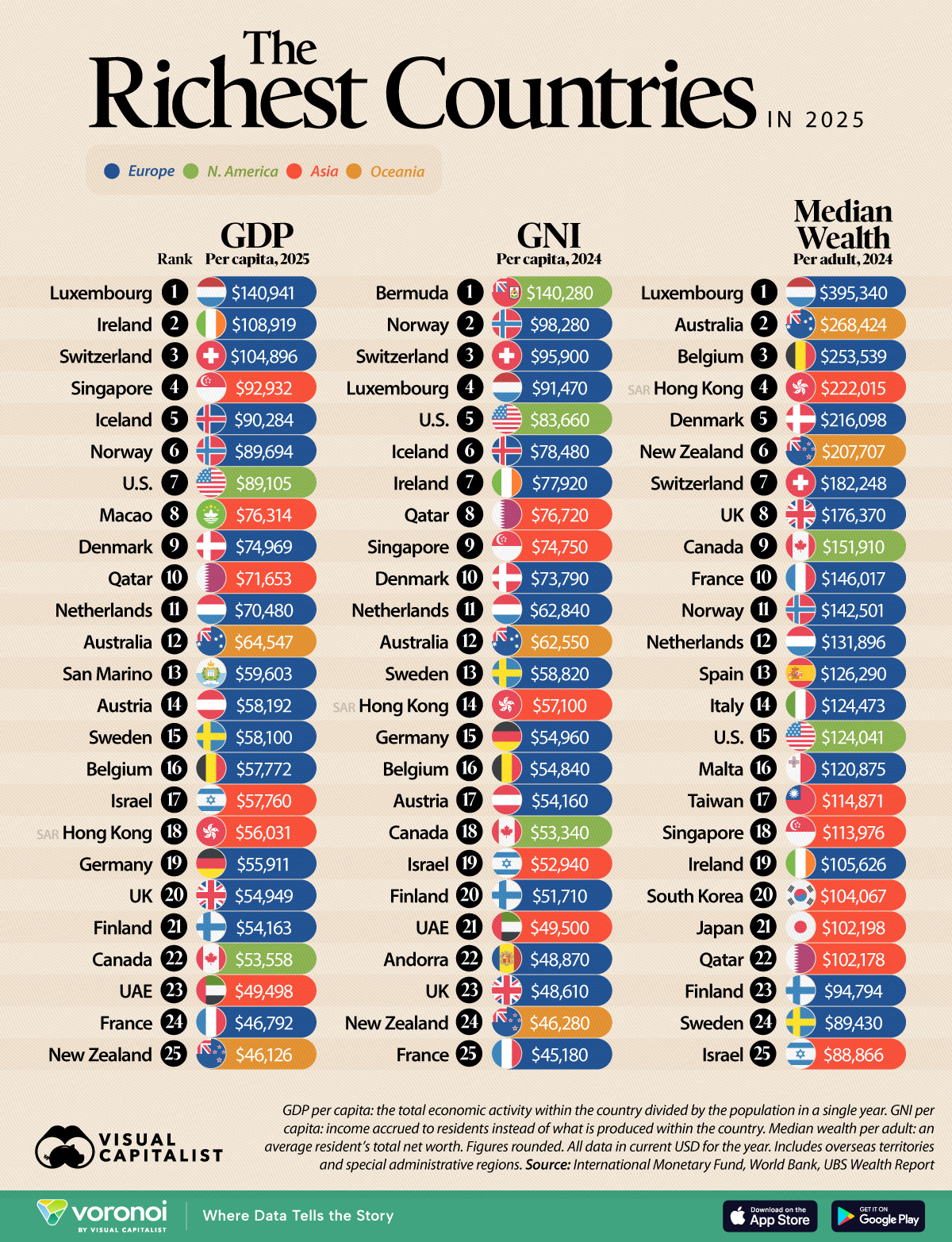
World’s Most Emotional Countries and Why

emotional-map2This is not my data, rather a Bloomberg study. What I can’t figure out is how the US is so emotional except for the political discord recently (the article below says they are happy).  I much more expected it from the Latin countries.

According to Bloomberg, the source of this map, here are the real reasons:

Singapore is the least emotional country in the world. ”Singaporeans recognize they have a problem,” Bloomberg Businessweek writes of the country’s “emotional deficit,” citing a culture in which schools “discourage students from thinking of themselves as individuals.” They also point to low work satisfaction, competitiveness, and the urban experience: “Staying emotionally neutral could be a way of coping with the stress of urban life in a place where 82 percent of the population lives in government-built housing.”

The Philippines is the world’s most emotional country. It’s not even close; the heavily Catholic, Southeast Asian nation, a former colony of Spain and the U.S., scores well above second-ranked El Salvador.

Post-Soviet countries are consistently among the most stoic. Other than Singapore (and, for some reason, Madagascar and Nepal), the least emotional countries in the world are all former members of the Soviet Union. They are also the greatest consumers of cigarettes and alcohol. This could be what you call and chicken-or-egg problem: if the two trends are related, which one came first? Europe appears almost like a gradient here, with emotions increasing as you move West.  (their emotions are sedated)

People in the Americas are just exuberant. Every nation on the North and South American continents ranked highly on the survey. Americans and Canadians are both among the 15 most emotional countries in the world, as well as ten Latin countries. The only non-American countries in the top 15, other than the Philippines, are the Arab nations of Oman and Bahrain, both of which rank very highly. (they have it good there)

English- and Spanish-speaking societies tend to be highly emotional and happy. Though the Anglophone nations of the world retain deep cultural links, it’s not clear if Spain’s emotional depth has anything to do with Latin America’s. According to Gallup, “Latin America leads the world when it comes to positive emotions, with Panama, Paraguay, and Venezuela at the top of that list.” Yes, even Hugo Chavez’s Venezuela is apparently filled with happy people. (they have to say that or be imprisoned)

Africans are generally stoic, with some significant exceptions. The continent is among the world’s least emotional, though there is wide variation, which serves as a non-definitive but interesting reminder of Africa’s cultural diversity. Each could be its own captivating case study. It’s possible that South Africa’s high rating has to do with its cultural ties to Western Europe, for example, and Nigeria’s may have to do with the recent protest movement in the south and sectarian violence in the north.  (life is tough for them, they cope)

The Middle East is not happy. Gallup notes, “Negative emotions are highest in the Middle East and North Africa, with Iraq, Bahrain, and the Palestinian Territories leading the world in negative daily experiences.” Still, that doesn’t quite fully explain the high emotions in the Levant and on the Arabian peninsula, compared to the lower emotions in Libya, Algeria, and Morocco. Perhaps this hints at how people in these countries are being affected by the still-ongoing political turmoil of the Arab Spring.  (they are rife with terrorists who brim with hate)

What am I missing? Every color-coded national boundary here tells a story. Why is Haiti so bereft of emotion compared to its neighbors? Why is Angola so heavy with feeling? Leave your thoughts in the comments or reach me on social media. (Haiti was founded on voodoo so they believe in the devil).