Here we go again, exposing the truth about one of the biggest scams the government has come up with to launder money since war.
(1) We are in a climate crisis
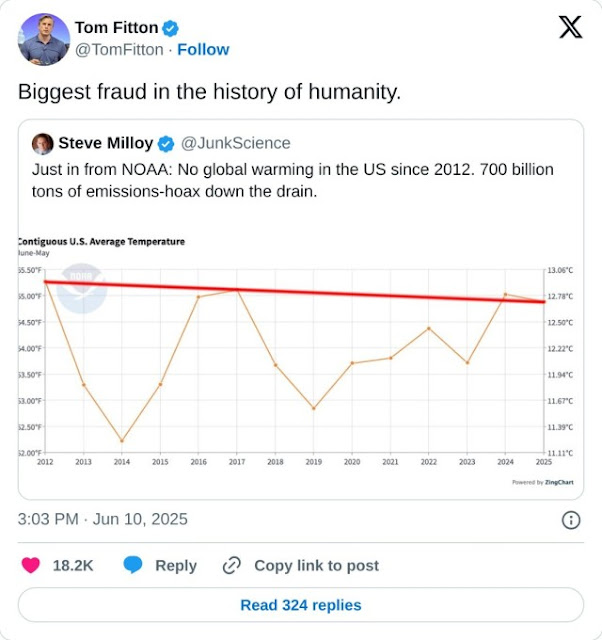
We may as well begin with the most controversial environmentalist claim, that our planet is at imminent risk of catastrophic climate change. The problem with this claim is two-fold. First, there remains vigorous—if suppressed—debate over whether the data actually supports this claim. There is ample evidence that average global temperatures are not rapidly increasing, if they are even increasing at all. There is also strong evidence that extreme weather events are not increasing but rather that our ability to detect them has improved and that population increases have led more people to live in places that are particularly vulnerable to extreme weather. Second, even if there is some truth to the claims of climate catastrophists, it is not possible to precipitously transform our entire energy infrastructure. The technology isn’t ready, the funding isn’t available, and most nations will not participate. Adaptation is our only rational course of action.
(2) There are too many people
Based on extrapolations back in 1970, this may have appeared to be the case because populations worldwide at that time were rapidly growing. But today, in almost every nation, the inverse is now true: birthrates are well below replacement levels. Even in those nations that continue to experience rapid population growth, the rate of growth is following the same pattern of decline. The United Nations now estimates the total global population to top out at around 10 billion people, after which it is projected to decline. This means the rapid population growth we’ve seen over the past two centuries, where the global population octupled from 1 billion in 1804 to over 8 billion by 2024, is over. There is not one trend anywhere on earth that contradicts this pattern. Humanity faces a future of too few people, not too many.
(3) We are running out of “fossil” fuel
While this is technically correct, the situation is nowhere close to what was famously predicted in 1956 by American geologist M. Hubbert, who claimed oil production in the U.S. would peak by 1970 and then slide into permanent decline. In the U.S. and around the world, new technologies and new discoveries have put total reserves of oil, along with natural gas and coal, at record highs despite increasing demand. According to the authoritative Statistical Review on Global Energy, based on current consumption, proven reserves could supply oil for 61 years, natural gas for 50, and coal for 208. This grossly understates the big picture, however, because proven and recoverable reserves are being expanded all the time. “Unproven” reserves, waiting to be discovered, will easily double the amount of time left. This doesn’t mean we shouldn’t continue to research new sources of energy. But we have a century or more to sort this out.
(4) Biofuel is renewable and sustainable
Nothing could be further from the truth. Biofuel will never supply more than a small fraction of our energy requirements, and attempts to scale it beyond a niche product have produced catastrophic results. Just to use California as an example, the current yield of ethanol from a corn crop stands at not quite 500 gallons per acre. Californians consumed 13.6 billion gallons of gasoline in 2023. Since ethanol has 33 percent less energy per gallon than conventional gasoline, that means replacing gasoline with carbon-neutral ethanol would require 20.3 billion gallons of ethanol production, which in turn would require 63,400 square miles of irrigated farmland and over 120 million acre-feet of water per crop. To put this in perspective, California’s entire expanse of irrigated farmland only totals around 14,000 square miles, and California’s entire agricultural sector only consumes around 30 million acre-feet of water per year. Worldwide, biofuel crops already consume an estimated 500,000 square miles while only offsetting 2 percent of the global consumption of transportation fuel.
(5) Offshore wind energy is renewable and sustainable
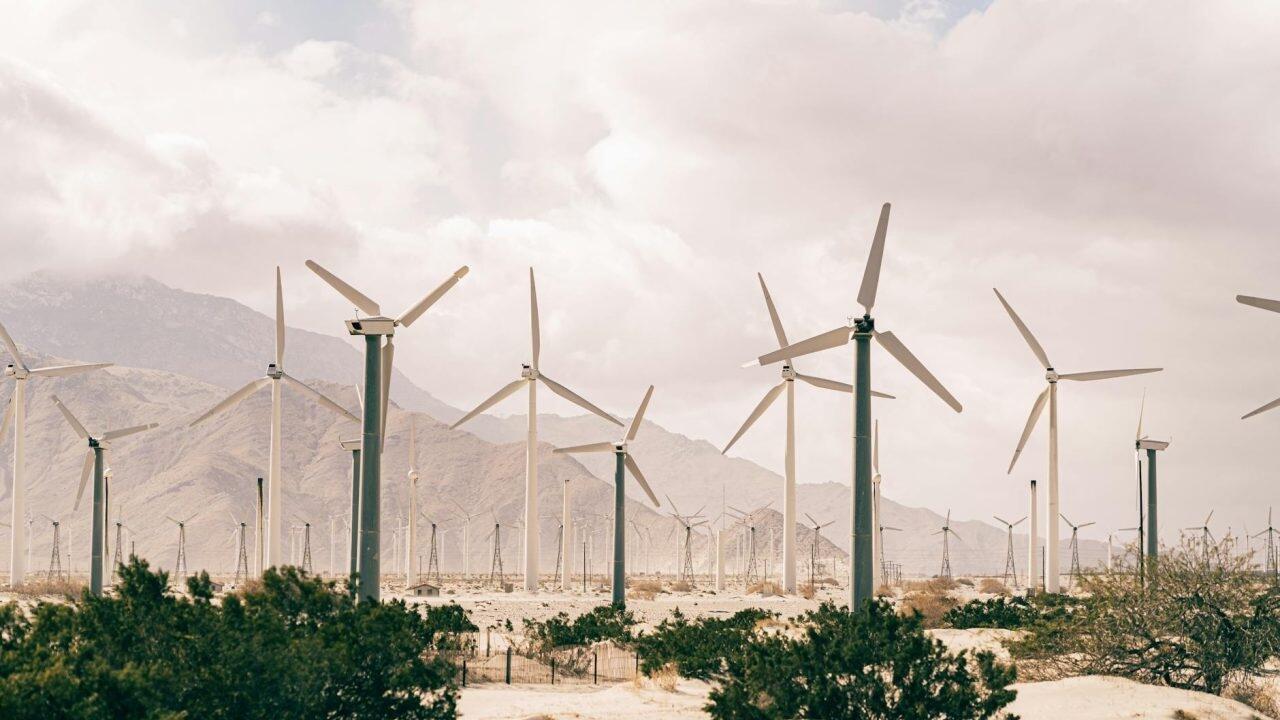
Absolutely not. Wind turbine blades, on land or offshore, routinely kill raptors, condors, and other magnificent endangered birds, along with bats and insects. Offshore, there are additional harmful impacts. Electromagnetic fields from undersea cables produce birth deformities in marine life and produce magnetic fields that disrupt the orientation abilities of some fish. Their low-frequency operational noise disrupts sounds made by fish for mating, spawning, and navigating. The turbines “increase sea surface temperatures and alter upper-ocean hydrodynamics in ways scientists do not yet understand” and “whip up sea sediment and generate highly turbid wakes that are 30-150 meters wide and several kilometers in length, having a major impact on primary production by phytoplankton, which are the base of marine food chains.” California’s official plan is to install 25,000 gigawatts of offshore wind capacity in floating wind farms 20 miles offshore. At 10 megawatts each, California’s treasured marine ecosystem will be disrupted by the presence of somewhere between 2,500 floating wind turbines, each one nearly 1,000 feet high. They will need 7,500 tethering cables descending 4,000 feet to the seafloor, along with 2,500 high-voltage cables. Expect ratepayers and taxpayers to subsidize a project that could cost $300 billion or more to build systems that may only have a lifespan of 10-20 years.
(6) Renewables are renewable
No. They’re not. Renewables most in favor with environmentalists are solar and wind farms with battery farms to store the intermittently generated electricity. Just the consumption of natural resources to build these renewables is hardly sustainable. For example, using data from the International Energy Agency, geopolitical writer Peter Ziehan calculated the mineral requirements for power generation, comparing renewables to natural gas in terms of kilograms of minerals per megawatt of capacity. Offshore wind: 16,000 kg/MW, onshore wind: 10,000 kg/MW, solar photovoltaic: 7,000 kg/MW, and natural gas: 2,000 kg/MW. Compounding this disparity is the fact that natural gas power plants can operate for 60 years or more, whereas solar installations are operable for 30 years at most, and wind turbines substantially less than that, depending on where they’re situated. As for EVs, Ziehan calculated kilograms of minerals per vehicle, with EVs requiring over 200 kg/vehicle, compared to conventional cars at only 35 kg/vehicle. It’s easy enough to see what this means. Replacing conventional energy with “renewables” has ignited an expansion of worldwide mining in nations with minimal environmental protections.
(7) Renewables can replace fossil fuels
Not anytime soon. Worldwide, in 2022, 82 percent of global energy was still derived from fossil fuels. For everyone on earth to consume half as much energy per capita as Americans, global energy production will have to double. Based on those two cold facts, fossil fuels are going to be around for a very long time. Even these statistics understate the challenge. In 2023, most of the non-fossil fuel energy produced was from either nuclear (4.0 percent) or hydroelectric (6.8 percent) sources, leaving only 7.5 percent from allegedly renewable sources. And of the remaining 7.5 percent “renewables,” two-thirds of it was biofuel production, which should not be considered renewable or, at the very least, must be considered already at maximum capacity. That leaves only about 2.5 percent of worldwide energy production coming from renewables, if you want to call them that, primarily wind, solar, and geothermal sources.
(8) New housing must be confined to the footprint of existing cities
This is not true for California, nor for the United States, and not even worldwide. Nonetheless, urban containment has been enforced in California ever since we stopped investing in expanding our energy, water, and transportation infrastructure, resulting in 94 percent of the population living on only 5 percent of the land. But urban containment isn’t necessary to ensure enough farm production. Even India, the most densely populated large nation on earth, where there are 2,700 people per square mile of farmland, is a net food exporter. In California, the alleged need for urban containment is truly ridiculous. Building new homes for ten million new California residents on quarter-acre lots, with four-person households, and allocating an equivalent amount for schools, parks, roads, and retail and commercial areas would only consume 1,953 square miles. This would only increase California’s urban footprint from 7,800 to 9,700 square miles, i.e., from 5.0 percent to 6.2 percent of all land in the state. The global trend is people voluntarily migrating to cities at the same time as the global population is expected to begin to decline within a few decades. There will be plenty of room for farms and wilderness even if cities are permitted to expand. Keeping cities bottled up is misanthropic and misguided, creating artificially high home prices and unwanted overcrowding.
(9) Mass transit is necessary to achieve sustainability
It’s hard to imagine a claim more at odds with reality. Mass transit works in extremely dense urban areas where most jobs are located in a central core. With rare exceptions, such as Manhattan, most metropolitan areas no longer have this hub-and-spoke model, which renders economically viable mass transit extremely difficult. Then there are the challenges introduced during the COVID pandemic, which drove millions of riders out of mass transit to either commute in private cars or work from home. Ridership never recovered. An additional barrier to the readoption of mass transit is the fact that most cities are unwilling to police and remove disruptive individuals from the buses and trains, rendering their systems too dangerous for potential passengers to consider. Finally, along with now-mature work-from-home technology that is only going to improve, we have innovations just around the corner that will enable smart cars to convoy at higher speeds, increasing the capacity of existing roads, as well as a revolution in passenger drones that will take additional pressure off roads. Why would someone ride mass transit when they can relax while their own smart vehicle drives them point-to-point with no interruptions? And why should taxpayers subsidize mass transit?
(10) Wilderness areas are sacred
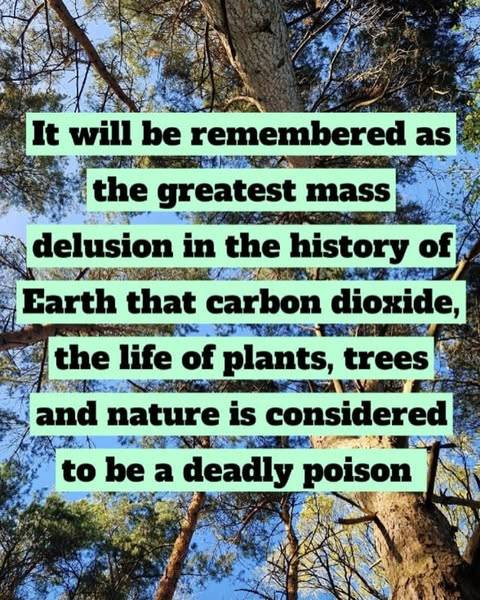
This mantra has caused more harm than good to the wilderness. Litigation pursuant to the Endangered Species Act has severely restricted, if not put a complete stop to, logging on public land, although the current White House administration is trying to change that. Since then, over the past 40 years, because fires were suppressed and logging didn’t remove new growth, our forests have become overgrown, resulting in catastrophic fires. Similarly, ESA litigation and environmentalist-inspired regulations put a stop to dredging in California’s Sacramento-San Joaquin Delta, which was the only way to maintain deep, cool channels favored by salmon ever since the construction of levees in the 1800s caused silt deposits to accumulate in what remained of their migration routes. It is important to protect truly endangered species, but environmentalists often create bigger problems. Poverty in Africa could be alleviated if environmental restrictions on energy development were lifted. But as it is, in desperate poverty, Africans are cutting down their forests for firewood, hunting wild game for food, and poaching dwindling herds of elephants, rhinos, lions, and other precious and endangered species for sale to international smugglers. How we manage our wilderness must be revisited with a reality-based emphasis on results, not ideology. Moreover, an encouraging fact is that while total forest cover in the world was in decline for many centuries, over the past 40 years, it has been increasing. This is the result of several factors: reforestation efforts, migration to urban areas, which depopulates forest regions; huge improvements in agricultural productivity, which takes farmland out of production, allowing for forests to reclaim the land; and maybe even slightly elevated atmospheric CO₂, which is plant food.
The ideals of environmentalism ought to inspire everyone, but the policies promulgated in the name of environmentalism are all too often actually hurting the environment. Examples are the mad rush to develop renewables and the power of the “climate crisis” narrative to deter rational cost/benefit analysis of environmentalist policies. The impact of misguided environmentalism is not merely the fate of wildlife and wilderness or the health of global ecosystems. It is also economic and, in practice, has led to profound transfers of wealth as entrenched special interests thrive on escalating regulations that only the biggest corporations and wealthiest individuals can navigate. Worldwide, entire industrial sectors are consolidated, costing nations the resilience and affordability that a diverse and competitive economy can deliver. Environmentalism, as it is practiced in the 21st century, is an arm of globalism, with shades of paternalism and colonialism that often overshadow its virtues.
source
Please donate to help me pay for my storage and Web costs.
Make a monthly donation
Make a yearly donation
Choose an amount
Or enter a custom amount
Your contribution is appreciated.
Your contribution is appreciated.
Your contribution is appreciated.