Disney Jacks Up Its Prices on Tickets and Extras — Fed Up Americans REACT – I grew up next to Disney. It ruined our town and our lives. It’s not that great and certainly not worth the money. It’s also not the happiest place on earth as they claim. It’s hot, (used to have) long lines, expensive and not worth it. Occasionally, there is a Waffle House type fight. That’s the best attraction left.
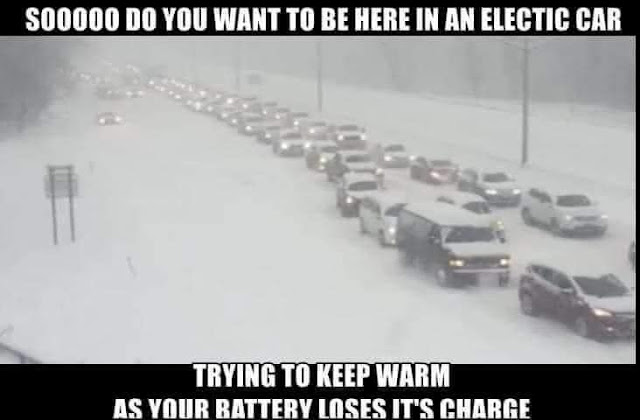
When the temperature drops below 40 degrees, which occurs over 200 days per year in Eau Claire, electric vehicles experience a reduction in range and efficiency, with losses of up to 40% when the heating system is in use.
While the truck was up on the lift, Liz Fox, a service adviser at the shop, told me that while not many electric vehicles come in for repairs, when they do, repairs typically take longer and are more expensive than repairing internal-combustion engine vehicles.
“Switching to EVs is really costly, and it’s going to be really time-consuming.” Fox told me. She cited a recent case where nearly two months were spent troubleshooting and sourcing components on a broken EV, despite having a certified electric vehicle technician.
EAU CLAIRE, Wis.—Here in Wisconsin, where fewer than one-tenth of 1% of vehicles are fully electric, it’s rare to see an EV outside the city.
That’s why the latest international climate conference, Conference of the Parties (COP28), which advocated widespread adoption of electric vehicles, should have Wisconsinites concerned.
When the temperature drops below 40 degrees, which occurs over 200 days per year in Eau Claire, electric vehicles experience a reduction in range and efficiency, with losses of up to 40% when the heating system is in use.
My visit to my local automotive shop to have the tires rotated on the family Ram truck was unaffected by the 13-degree Fahrenheit weather.
While the truck was up on the lift, Liz Fox, a service adviser at the shop, told me that while not many electric vehicles come in for repairs, when they do, repairs typically take longer and are more expensive than repairing internal-combustion engine vehicles.
“Switching to EVs is really costly, and it’s going to be really time-consuming.” Fox told me. She cited a recent case where nearly two months were spent troubleshooting and sourcing components on a broken EV, despite having a certified electric vehicle technician.
She’s not alone. A recent report shows that repair costs for EVs are 56% more expensive than traditional vehicles—and purchase costs are often 50% higher.
A new special report by The Heritage Foundation, “Powering Human Advancement,” shows how access to affordable, abundant energy is essential to living. (The Daily Signal is the news outlet of The Heritage Foundation.)
“Depriving people in any society of reliable and affordable energy denies them access to clean water, adequate medical care, affordable transportation, and economic opportunities, which will limit any human advancement, especially in the most vulnerable of countries,” the report states.
Governments and international organizations cannot force renewable energy and electric vehicles before people are ready. That’s a recipe for crisis.
Construction sites in Eau Claire feature battered pickup trucks and SUVs driven by construction workers, who can’t afford EVs. There is no subway in Eau Claire, bus service is limited, and people can’t rely on bicycles due to snowy weather and long distances.
Affordable transportation provides a means to a job, a ride to school, and to take weekend trips and vacations with the family.
In contrast, EVs are popular as second cars with upper-income individuals who have short commutes. Americans value the freedom to choose gasoline-only, hybrid, or electric vehicles, and for that freedom, it’s crucial to have alternative choices. But the organizers of COP28, supported by President Joe Biden, don’t want Americans or residents of other countries to choose which vehicles to buy.
This erosion of choice is not only detrimental to consumer freedom, but also to the livelihood of auto producers and car dealers. Look no further than last month’s letter to Biden signed by about 4,000 auto dealers, who were disturbed at the surging supply of unsold electric vehicles on their lots.
Even with subsidies to car manufacturers and tax credits for buyers, only 7% of new-vehicle sales are electric, well below Biden’s 2030 goal of 60%.
Codifying the recommendations of COP28 would require that America generate an additional costly 1.4 trillion kilowatt-hours of electricity, or 30% of current output, to support the charging needs of a full fleet of electric vehicles.
Over the past two decades, nearly $7 trillion has been spent globally on subsidies for wind and solar energy. Despite this substantial investment, these sources contribute only 2.3% to the global supply of energy. Pairing fully electric vehicles with costly and unreliable electricity is a recipe for disaster.
Wisconsinites appreciate the benefits of affordable energy and the mobility of gasoline-powered cars. As a cold Christmas approaches, they know that COP28 recommendations won’t fly here in the Badger State.
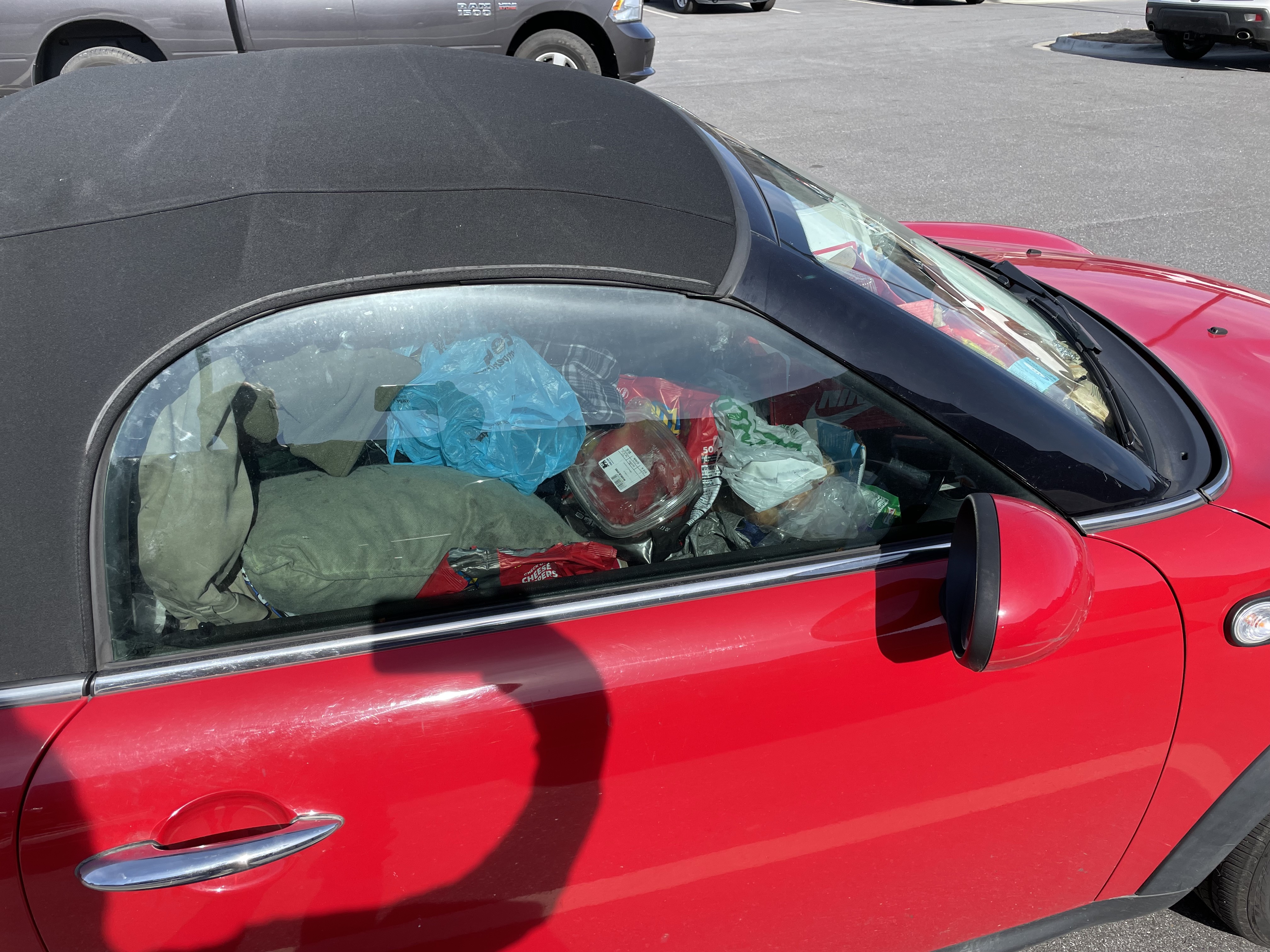
I was so flabbergasted by the car, I didn’t even see the guy inside looking at me take these pictures. The next day, I saw him at there again and he wore nice shoes and is very dedicated and intense.
Not too tidy there with the car though bro. I thought you lived in it until I saw you were just a mess.





 Delusions of Adequacy