New Report Lays Out the Full Scale of Environmental Damage Caused by Onshore Wind Turbines

Fresh insights into the ecological devastation caused by onshore wind turbines around the world are contained in a shocking new paper published last month by a group of ecologists in Nature. The paper is paywalled and has attracted little mainstream media interest, but it highlights research that illustrates that the effect of utility-scale wind energy production “can be far reaching and sometimes have large and unexpected consequences for biodiversity”. An annual figure of around one million bats are killed in the countries with the highest number of turbines, but harmful effects are seen in many other parts of the ecosystem. The number of top predators such as jaguars, jungle cats and golden jackals can be changed by turbines in tropical forest gaps leading to the “possibility for cascading effects” along similar latitudinal levels. 

In short, the science team notes that turbines can kill birds, bats and insects, change animal behaviour, physiology and demography and alter ecosystems. The installation of wind turbines invariably results in habitat degradation, but it is regions rich in biodiversity with minimal existing infrastructure that suffer the most. The authors state that wind facilities “are recognised as an important driver for losses and degradation of irreplaceable habitats that are important for conservation.” Such areas, of course, can be found in the windy highlands of Scotland. For City-dwelling eco zealots, it is a case of out of sight, out of mind. Net Zero is all about money and power – bats and eagles have neither.

The Nature paper is a wake-up call about the increasing damage that is being inflicted on natural habitats by wind turbines that are steadily increasing in size and destructive potential. It is a summary of the latest findings about the effect of turbines and it is not sanguine about the future. “Perhaps the greatest unknown in predicting future effects of wind power on biodiversity lies in the scope of the potential expansion of the technology and the cumulative consequences of this expansion for species and ecosystems”. A 2021 USA report on the potential pathways to Net Zero emissions is noted and this suggests using up to 13% of the land area for wind farms. The new Trump Administration is likely to put a stop to this madness which the scientists observe could have “dramatic consequences for biodiversity”.

The BP Deepwater Horizon accident is generally considered the worse US offshore oil spill. Estimates vary but it is thought to have led to the deaths of around 600,000 sea birds and the incident led to widespread condemnation by environmentalists that continues to this day. Slightly less publicity is given to the 500,000 bats killed onshore in the US by wind turbines every single year. In the UK, 30,000 is the estimated annual kill number, with Canada at 50,000 and 200,000 in Germany.

Many bird species are also at risk, with large raptors a conspicuous example. It is admitted that limited information is available on population-level consequences, but available evidence suggests the turbines could threaten certain species with local extinction, particularly those at risk with low reproduction rates. Possible population collapse has been predicted for cinereous and griffon vultures in Europe and the Eurasian skylark in Portugal. Other predictions suggest population declines for hoary bats in North America, lesser kestrel in France and black harriers in South Africa. Population declines have been reported in central Europe for animals with high-collision risk such as the noctule bat, while nearly 50% of bird species evaluated in one study in California were said to be subject to turbine-induced population decline. Meanwhile, the mortality of golden eagles at Altamont Pass Wind Resource in California is said to be so frequent that local populations are sustained by immigrants. Finally, the authors report that the globally endangered Egyptian vulture in Spain has a lower survival rate, population growth rate and size in the presence of wind facilities.

Who really cares? The UK Bat Conservation Trust states that climate change poses a “significant threat” to UK bat populations. “We need energy-efficient housing and renewable energy to help mitigate for climate change for the benefit of bats, people and the wider environment”, it adds. It is fair to say that similar understanding is not extended to developers encountering the presence of bats other than ‘Green’ entrepreneurs.

The giant turbines regularly sweep the countryside of insects, and the report notes that fatalities can be great enough to contribute substantially to the build-up of debris on blades. In fact, one of the report’s authors, Professor Christian Voigt, has stated in earlier work that it was necessary to evaluate if fatalities added to the decline of insect populations “and potentially the extinction of species”. In a 2022 paper, Voigt reported that turbines can change the nearby microclimate, while vibrational noise may reduce earthworm abundance with likely cascading effects on soil quality and vegetation.

Mass slaughter of bats and raptors is already known, but this new report casts fresh light on the cascading effects on the natural world of increasing numbers of giant wind turbines. That said, the report admits that biodiversity impacts have been documented for only a few small taxa, but the impacts are “not negligible”. Proponents of wind power often claim that wind energy’s impacts on biodiversity will be less than climate change, it is noted. The authors find this “plausible”, but the assumption is said to be “untested”.

Yet another untested assumption driving the destructive madness of Net Zero, others may conclude.

source

Headlines: Truck Drivers Distracted By Porn, US Running Low On Weapons To Sell Europe, Insomnia Fuels Dementia/Obesity And More

Police Bodycam Footage Surfaces of Charlie Kirk’s Killer From 3 Years Ago

Mortgage Rates Fall to Three-Year Low Under Trump

North Sea ‘Has Three Times More Oil and Gas’ Than Government Claims

Sleepless And Stressed: How Insomnia Fuels Dementia, Obesity, Heart Risks

Teen Rescues Baby Beaver From River While Tubing

Is Pedro Pascal the Ultimate Hollywood Hypocrite?

Truck Driver Distracted By Porn Before Deadly Crash Sentenced To Prison

UPDATE: FBI Springs into Action and Arrests Trump-Hating Leftist Who Shot Up ABC Station After Kimmel’s Show was Suspended – Here Is the Shooter’s Alleged X Account

What Shape Is The Economy?

‘We Should Kill Him’: AI Chatbot Encourages Australian Man to Murder His Father

Europe

Visualizing Europe’s Housing Cost Burden By Country

Germany’s Machinery Industry Faces Catastrophic Collapse

US Pauses Some Arms Sales to Europe, Citing Shortages

Lawmaker claims ‘assisted dying’ is the new penicillin

Asia

Number of US Student Visas Issued to Asians Tumbles

Japan Confirms Over 600,000 Citizens Killed by Covid ‘Vaccines’

Huawei’s New Ascend Chips Aim To Close China’s AI Gap With US

BWBB

Rep. Crockett Slams ‘Caucasian’ Dems For Honoring ‘Racist’ Kirk, Likens Him To Confederate ‘Relic’, Calls Trump ‘Hitler’… Again

Tired Of Your Pet, Feed Him To The Lions In Denmark

Seriously, what is in the water over there? Maybe this is what is rotten in Denmark.

There is no way I’m sending my pet to get euthanized and eaten. I’m not a savage. Maybe they couldn’t hold back that Viking gene and had to kill something to feed it to the predators. Anyway, there is no way this was going to turn out good the minute some pissed off girl sends her ex’s pet to the zoo for lunch.

A zoo in Denmark is asking for donations of small pets as food for its predators.

The Aalborg zoo said it is trying to mimic the natural food chain of the animals housed there “for the sake of both animal welfare and professional integrity” and offers assurances the pets will be “gently euthanized” by trained staff.

The zoo in northern Denmark explained in a Facebook post that “if you have a healthy animal that needs to be given away for various reasons, feel free to donate it to us.”

The zoo points to guinea pigs, rabbits, and chickens as possible donations. After being euthanized, the animals will be used as fodder, the zoo said.

“That way, nothing goes to waste — and we ensure natural behavior, nutrition and well-being of our predators,” the zoo said.

The online call for pet donations is accompanied by a picture of a wildcat baring its teeth with its mouth wide open and a link to the zoo’s website, noting the facility also is interested in receiving horses.

story

What are your favorite animals?

What are your favorite animals?

My dog of course. He’s the one I spend the most time with. Being an introvert, having him is better than most other people I encounter. When I go to someone’s house, I almost always gravitate to the pets if there are a lot of people. Introverts will relate to that one.

Next, most other dogs. I spent the weekend dog-sitting for my son and had fun with both of them.

Way out of that thought pattern came Cheetah. I like how fast it is and since I’m a big F1 fan, I thought of that.

Completely unrelated though are people that mistreat animals. They should be punished way worse than they are to stop this behavior. From building wind farms and killing whales to being cruel like tying a dog to a post and leaving it during Hurricane Helene (I’m not going to link to it because it pissed me off so much).

I hope someone has a good animal story or one about a really unusual animal.

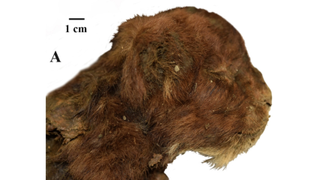
35,000-year-old saber-toothed kitten with preserved whiskers pulled from permafrost in Siberia

Researchers have analyzed mummified remains pulled from Siberia’s permafrost in 2020 and determined they belong to a 3-week-old saber-toothed kitten that died at least 35,000 years ago.

Close up of the mummified head of a young saber-toothed cat. The fur is dark brown and the muzzle is short.

The mummified head of a young saber-toothed cat unearthed from Siberia’s permafrost. (Image credit: Lopatin et al. Scientific Reports, 2024)

Researchers have pulled the mummy of a newborn saber-toothed cat that died at least 35,000 years ago from Siberia’s permafrost — and the kitten still has its whiskers and claws attached.

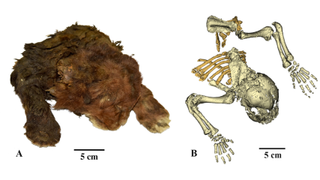
A new analysis of the kitten’s stunningly-preserved head and upper body shows it was just 3 weeks old when it died in what is now Russia’s northeastern Sakha Republic, also known as Yakutia. Scientists found pelvic bones, a femur and shin bones encased in a block of ice together with the mummy. The circumstances of the animal’s death are unknown.

It is extremely rare to find well-preserved remains of saber-toothed cats, and this one belongs to the species Homotherium latidens, according to a study published Thursday (Nov. 14) in the journal Scientific Reports. Saber-toothed cats of the extinct genus Homotherium lived across the globe during the Pliocene (5.3 million to 2.6 million years ago) and early Pleistocene (2.6 million to 11,700 years ago) epochs, but evidence suggests this group became less widespread toward the end of the Pleistocene (also known as the last ice age).

“For a long time, the latest presence of Homotherium in Eurasia was recorded in the Middle Pleistocene [770,000 to 126,000 years ago],” researchers wrote in the study. “The discovery of H. latidens mummy in Yakutia radically expands the understanding of the distribution of the genus and confirms its presence in the Late Pleistocene [126,000 to 11,700 years ago] of Asia.”

The small, deep-frozen mummy shows H. latidens was well-adapted to ice age conditions, according to the study. The researchers compared the carcass to that of a modern 3-week-old lion (Panthera leo) cub and found the saber-toothed kitten had wider paws and no carpal pads — pads on the wrist joint that act as shock absorbers in today’s felines. These adaptations enabled saber-toothed cats to walk with ease in snow, while thick, soft fur observed on the mummy shielded the predators against polar temperatures.

A figure from the study showing the mummy and a reconstruction of the skeleton of a young saber-toothed cat.
Researchers reconstructed the kitten’s skeleton using a 3D computer model. (Image credit: Lopatin et al. Scientific Reports, 2024)

The comparison with the lion revealed that saber-toothed cats had a larger mouth, smaller ears, longer forelimbs, darker hair and a much thicker neck. Researchers already knew from studying the skeletons of adult Holotherium that these saber-toothed cats had short bodies and elongated limbs, but the new research shows these features were already present at the age of 3 weeks.

source

And I Thought Trannies Were Strange About Sex Partners

Meanwhile in crazy animal news…

A female stingray (named Charlotte) is pregnant at an aquarium in North Carolina, but there’s a twist: There’s no males. And now the aquarium is determined to figure out … well … what the hell is going on.

Located 103 miles west of Charlotte, Hendersonville’s The Aquarium and Shark Lab by Team Ecco say that the stingray is expecting to give birth to pups, but they have no earthly idea how, which has them thinking: Could this be a result of a male shark? Wait, a shark?

Yeah, a shark. A white-spot bamboo shark to be exact.

With this rare pregnancy, there are two explanations to what’s going on, with one of them being the shark.

Animals, with stingrays being one of the top ones, are able to reproduce asexually when that species is lacking reproduction, according to research, per the USA Today.

Originally, the stingray’s swelling alerted the Hendersonville aquarium into believing she might have had cancer, they told FOX Carolina. To further investigate, they took her in for an ultrasound, eventually being revealed that her swelling were actually eggs — Charlotte is pregnant!

But how?

Besides the asexual reproduction explanation, the aquarium believes that a shark might have gotten the stingray pregnant because of bite marks that were found on Charlotte — bite marks are a common sign of mating sharks. Two young white-spot bamboo sharks were placed into the stingray’s tank back in July 2023.

“We have definitive video of the most current ultrasound showing two if not three pups,” the aquarium told FOX Carolina. “DNA will need to be done after the pups’ birth — unless we have visual cues about a mixed breed.”

Great Sayings – Compassion For Animals

Compassion for animals is intimately associated with goodness of character, and it may be confidently asserted that he who is cruel to animals cannot be a good man.

It may not be the ultimate test of a person’s character, but you can easily observe much about a person by their interaction with animals.
I often see how people’s pets behave and you can gather a lot about a the owner.  Pets look to us for care and compassion and give back way more than we give them a lot of the time.  Most of what we call a bad animal is really a bad owner.