Richard Pryor 1940-2005. One of the true trailblazers in the comedy profession. Numerous comedians benefitted from his routines and the new ground that he broke.
He also fought several personal demon’s, but who has had a life paved with gold the whole way. It was from those demons and the personal struggles that some of his funniest sketches came from. Like the time he shot his car, or when he ran down the street on fire. Most of us would never want anyone knowing how we had fallen down, but Pryor made us laugh at it because the way he told it was hilarious.
He also broke down many racial barriers, poking fun at everyone, again in a way that was as ingenious as it was true.
A lot of people have him to thank for the careers that they have now. Me, I had a lot of laughs.
A question that has interested historians and researchers for decades is: why? Why did Japan launch an attack that, in hindsight at least, they clearly had no chance of winning? The obvious answer is that they thought they could, but military and naval strategists know the answer is not so simple.
Precisely because its resources were so depleted by the war with China, it is accepted wisdom that Japan was hoping to expand its territories in the Pacific. If these areas belonged to Japan, they would, almost by default, become customers for Japan’s industrial and resource sectors.
But the Japanese underestimated America’s resolve to defend itself, for however long, and by whatever means necessary. If Japan hoped that America might take a “c’est la vie” attitude to the prospect of losing a battle in the Philippines, it was sorely mistaken. Nor was America still weary from the First World War.
Japan also underestimated the extent of Americans’ outrage at the bombing in 1941. It fueled the nation’s desire to win at almost any cost. No democratic government on earth can move forward without the will of the people, and after Pearl Harbor, the American people’s will was ferocious.
Here is the text and a link to the speech that FDR made after the attack at Pearl Harbor.
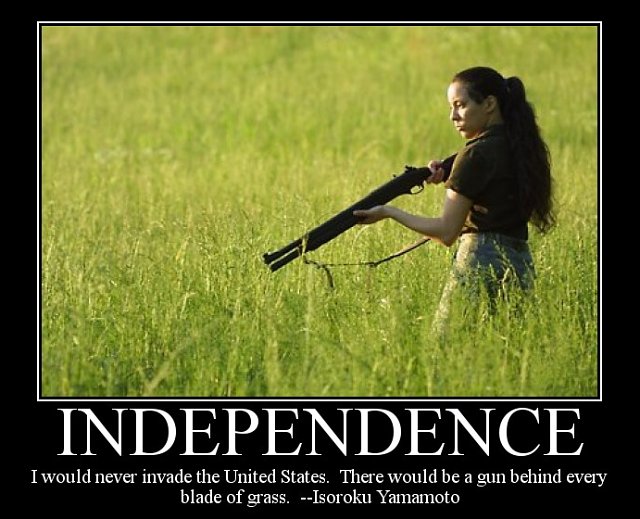
I read the Biography of Admiral Yamamoto, the architect of the attack. He believed that the only way to defeat the United States of America was a surprise attack that would disable our military in the Pacific. He clearly stated that he feared that if the attack was not completely successful, it would awaken a sleeping giant that the Empire of Japan could not defeat in standard battle. It must haunt his legacy.
Tactically, the mistake was not destroying the aircraft carriers which were out at sea that day or his plan may have succeeded.
As it turned out, he was shot down only a few years later in a surprise attack by a squadron of P-38’s heading to an inspection in the Pacific.
I find ironic the words of the second half of the speech, if applied to 9/11, would be appropriate. Also ironic is that Japan was extending its reach for economic resources.
The United States was at peace with that nation and, at the solicitation of Japan, was still in conversation with its Government and its Emperor looking toward the maintenance of peace in the Pacific. Indeed, one hour after Japanese air squadrons had commenced bombing in Oahu, the Japanese Ambassador to the United States and his colleague delivered to the Secretary of State a formal reply to a recent American message. While this reply stated that it seemed useless to continue the existing diplomatic negotiations, it contained no threat or hint of war or armed attack.
It will be recorded that the distance of Hawaii from Japan makes it obvious that the attack was deliberately planned many days or even weeks ago. During the intervening time, the Japanese Government had deliberately sought to deceive the United States by false statements and expressions of hope for continued peace.
The attack yesterday on the Hawaiian Islands has caused severe damage to American naval and military forces. I regret to tell you, very many American lives were lost. In addition, American ships have been reported torpedoed on the high seas between San Francisco and Honolulu.
Yesterday the Japanese Government also launched an attack against Malaya.
Last night Japanese forces attacked Hong Kong.
Last night Japanese forces attacked Guam.
Last night Japanese forces attacked the Philippine Islands.
Last night Japanese forces attacked Wake Island.
This morning the Japanese attacked Midway Island.
Japan has, therefore, undertaken a surprise offensive extending throughout the Pacific area. The facts of yesterday and today speak for themselves. The people of the United States have already formed their opinions and well understand the implications to the very life and safety of our nation.
As Commander in Chief of the Army and Navy, I have directed that all measures be taken for our defense.
But always will our whole nation remember the character of the onslaught against us.
No matter how long it may take us to overcome this premeditated invasion, the American people in their righteous might will win through to absolute victory.
I believe I interpret the will of the Congress and of the people when I assert that we will not only defend ourselves to the uttermost but will make very certain that this form of treachery shall never endanger us again.
Hostilities exist. There is no blinking at the fact that our people, our territory, and our interests are in grave danger.
With confidence in our armed forces-with the unbounded determination of our people-we will gain the inevitable triumph–so help us God.
I ask that the Congress declare that since the unprovoked and dastardly attack by Japan on Sunday, 7 December 1941, a state of war has existed between the United States and the Japanese Empire.
Here is the only color film of the event. Listen to how excited the Japanese are and their commitment to give everything, including lives to this war:
Today is Veterans day, formerly Armistice day, to remember as Ralph Bennett puts it, “recalling that the massive blood-letting of the First World War ended precisely at the eleventh hour of the eleventh day of the eleventh month, November 11, 1918.”
Sgt Major Michael Gravans says, “after the ceremony he believes that Americans these days are thinking about veterans more and thinking better of them, “probably better than any time since World War II.”
But as new generations join the military, they need to be told of the sacrifices of those who have gone before them. “And I, as a leader, need to help them understand that sooner rather than later.”
Lt. Col. Michael Shinners, the brigade’s rear detachment commander, gave a brief history of Veterans Day to those gathered, tracing its history to the armistice signed following World War I.
Memorial Day, he said, is for those who have given their lives while serving their country. Veterans Day is for those who proudly served their country and those still serving.
Here is a link to some Veterans Day notes, blogs and activities…
Until today, I didn’t know he even lived. But the patriotic furnace inside of me burned when I read that he was one of the 7 remaining French veterans of WWI. My Grandfather fought in the Calvary for the US, enlisting as 18, but really was younger than that so he could serve his country.
It’s soldiers like that who’s sacrifices allow us the freedom we enjoy on the internet, speech and just about everything else in the free world.
Because of guys like Rene Moreau, I’m not typing in a Central Power language, or an Axis language only years later.
Today, I attended the 40th anniversary of RTP at the IBM site. There was a band playing music from the 60’s (On the Boardwalk, Sugar Sugar, My Cherie Amour) and food at 60’s prices. Here’s the advertisement for it:
On Thursday, September 22, IBM in the Triangle Area will observe the 40th Anniversary of its groundbreaking for the IBM RTP site. To celebrate this anniversary, we have an exciting event planned for all IBM employees in the building 002 courtyard from 11:30 a.m. to 1 p.m. Come enjoy a special, “1960’s prices,” luncheon menu, free IBM birthday cake, the finals of our IBM karaoke contest, a classic car show, skits and much, much more.
One of my favorite parts was the Gilligan’s Island event. 3 people were in rafts and the crowd got to shoot water balloons from bungee cords at least 50 yards away. I think one balloon made into a raft. One balloon went off target into the hot dog line. I would have shot them at the biggest crowd I could have found to watch them scatter like roaches in the morning when the lights turn on.
40 years is a long time. I read today that Tech companies rated RTP as the best place to have a company. I think it was woods or pasture 41 years ago. Now it has more Ph.D’s then almost anywhere else given the proximaty to Duke, UNC Chapel Hill, NC State and Wake Forest. Here’s the link to the story. http://www.newsobserver.com/business/story/2800957p-9243923c.html
So where did I fit in? I was in the car show. When I was 7, my dad bought this car.
(Photo by Dave Brainard)
It was his pride and joy. He willed it to me once he no longer could drive. I have kept it up in his memory and have entered it into car shows with good results. I’ve blogged about my Dad already and his WWII contributions:
There were other cars at the event.
Chris Bannister – 1967 Chevrolet Camaro
David Bannister – 1967 Chevrolet Camaro
David Brower – 1958 BMW Isetta 300 Deluxe
George Kavelak – 1967 Chevrolet Chevelle Super Sport
Clifford Meyers – 1966 VW Beetle
Mike Petersen – 1966 Dodge Coronet 500
The Coronet and the Chevelle SS had 427 and 426 cc engines (that’s 7 whopping liters), real get up and go. Good ole American grunt.
If you read the internet jokes that get passed around, one of them is why it’s great to be a guy. On this list is….you get to play with toys all your life. Today is a prime example, and yes is it great.
I’ll leave you with the text on the sign that I had made, which I use when showing the car.
(Photo by Dave Brainard)
1964 PORSCHE 356C
This car is kept in Historical condition. It was delivered in 1964 to its owner, my father who drove it for 38 years. The one and only mechanic to service this car until 2002 was originally employed by the Porsche factory until his relocation to Florida. This same mechanic also helped the factory racing team at the 24 Hours of Daytona and 12 Hours of Sebring in the preparation of legendary racers such as the Carrera 6, 910, 907, and 908.
It was given to me in 2002 and is kept in it’s original condition to honor the people who built this car, the mechanic that kept it in proper condition and my father.
I recently saw a show on the History Channel about the 5 deadliest weapons ever used. In no order, they were the Soviet 50 kiloton nuclear bomb, incendiary weapons, the VT fuse, machine gun and VX nerve gas. Why does this concern me? My dad helped the development of the VT or Radio Proximity fuse.
For a more detailed explanation of this, go to Radio Proximity Fuse. The net explanation is that instead of having to hit the target for a kill which was the centuries old way, the VT fuse detects a target by radar and detonates near (or in proximity) to the target, enabling a much higher kill rate.
So who cares?
It took over 2000 rounds to shoot down each kamikaze plane prior to the invention of the fuse. This was cut to under 400 rounds when using the VT fuse. It’s next to impossible to hit a plane diving at over 450 mph. This invention saved a lot of sailors lives who later came home and had families rather than having to pay the ultimate sacrifice. They cared.
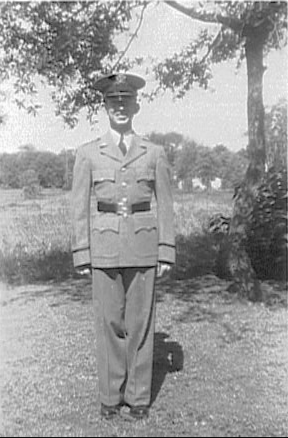
Here’s what my Dad contributed. He helped with the testing and development of the Radio Proximity fuse at the Applied Physics Lab in John’s Hopkins University. Later he went to the European theater where he trained artillery units to use this device. Remember, they had no silicon chips, PC’s or CAD programs in 1941/42, they did it with slide rules and vacuum tubes.
Why does this matter?
The Germans were shelling London with the V1 “buzz bomb”. It was powered by a pulse jet that made a buzzing noise which gave it the name. When it ran out of fuel, the buzzing stopped and it fell to its target. The V1 traveled at near 600 mph, which made it very difficult for artillery to hit, or fighters that went 350 mph to shoot down. The intentions of the Germans was both terror and destruction in London. Remember that terrorism is used to cause fear in the intended victim and take away the spirit to fight. I don’t know about you, but I would find the sound of an air raid siren or a buzz bomb engine that quit very frightening as you count it down to explosion.
The British had their backs against the wall and the Germans were starting to demoralize them with this scare.
With the VT fuse, the kill rate approached 100%, making the V1 ineffective as either a bomb, or a weapon of terror. The fuse was a big factor in the Battle of the Bulge, helping to decide the outcome (no disrespect to the tacticians and soldiers here).
The fuse on the Atomic bomb was a Radio Proximity Fuse. It helped end the war.
SO WHAT WAS DID HIS EFFORT DO?
His contribution helped change the tide, the momentum and win in both Theater’s of the war. His work helped stop the kamikaze and V-1 terrorism against the Allies.
Later in the War, he raced jeeps around the Arc de Triomphe in Paris, but that doesn’t have a lot to do with physics or winning the war.
Growing up, he like most veterans he didn’t say much or brag about what they had accomplished. Rather, he said he was doing his job and was glad to help contribute in whatever way he could. That we could all have that attitude.





 Delusions of Adequacy