Off to Linux

Just like why I’m blogging, I’m installing Linux. I figured that if I’m going to talk about it, I need to experience it.

Fortunately, IBM has a desktop install that I currently have underway, approximately 817 files to be downloaded and installed. The only issue for me is that I work remotely and I had to go into an IBM facility to load it. So I blog here from a cube farm in a building that is half IBM and half Lenovo.

But the good news is that I’ll work as much as I can from Linux, except for the Windoze only programs that I have to keep until I find a work around.

I’ll have to speak with Steve O’Grady to see how he migrated his iPod/iTunes to Linux, cause that’s one of the programs on the table for me.

Oh, I forgot to mention that one of the reasons I’m switching is the millions of blue screens of death I’ve experienced, the delay’s in operating system releases, the bugs, security, and some amount of arrogance.  By the way, I’ve been at this since DOS 1.0, so I have experience with PC OS problems.
I also need to expand my boundaries technically. I can’t bear to sit back with the norm, it seems I have to push the envelope to test my abilities, hope I can pass the test.

iPoding again – update

ipod.gif

I was complaining discussing my travails with podcast alley and getting non itunes podcasts to my iPod. I’m happy to report that I found Juice off of sourceforge.net.
I’m feeling pretty good about it as I’m now getting feeds off of podcast alley, ipodder, podcast pickle and others with ease. Moreover, I’m pretty glad I went outside of my comfort zone and got what I needed to work. I’m equally happy I got it off of sourceforge.

Now, it’s time for a couple of sporting events that interest me. The Tour de France and the 24 hours of LeMans which until I just typed this, I didn’t realize the French connection. I hope there is a good podcast.

If not, there is always RadioLeMans which comes out of the UK of all places, and is quite good coverage. In fact, now that I’m really getting off topic, I find that auto racing coverage is usually best out of the UK. My favorite racing podcast is the chequered flag from BBC radio 5 Live.

High Speed Software, or the real movable type?

This weekend is the Grand Prix of Monaco. A principality barely a mile long, but a tax free haven that sports more millionaires per square inch than perhaps anywhere in the world. It also has fantastic history and equally good names for corners. Nothing against Nascar 3 or Indy 1, but Mirabeau, Beau Rivage and Sainte Devote exude emotion from a race fan that has seen decades of mano-a-mano on this course.  Nancy, there is better shopping here than anywhere you’ve been 😉

Most F1 courses have 100 kilometers of run off at turns for screw-ups or crashes. One wrong move here and it’s into the concrete wall, roughly a few hundred thousand to a few million dollars per wreck.
monaco_circuit.gif

SOFTWARE SUPREME

There are also more computers in this cramped place and more lines of software code and specialty chips than most data centers. They can monitor a sixteenth of a pound of tire pressure from across the city as it inflates due to stress of improper setup. Budgets approach $1 billion including full computer car design, wind tunnel testing at 1/4 scale, aerodynamics and communications capability that rival all but a few countries.

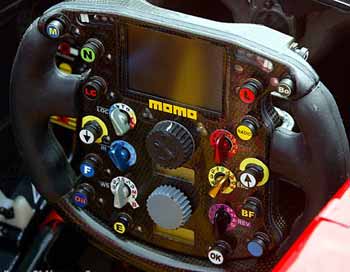
So I wonder, how is it that when they hit a bump between Casino and Mirabeau at over 100 MPH that would knock your fillings out, these cars which are moving software machines don’t miss a beat. For sure they’re not powered by Window’s because there is no Ctrl-Alt-Del in the cockpit.  I wonder if the teams consider uploading viruses to the launch control of their competitors?  Symantec? Norton?  no way.

I also wonder if there is a PHP script that monitors the traction control preventing wheel spin at 19,000 RPM’s? Is there a Perl script that handles shifting at close to a millionth of a second which is the reality of a F1 gearbox? Are the software programmers actually more valuable than mechanics, or are they the mechanics of the future?  It’s likely the Unix center of the universe.
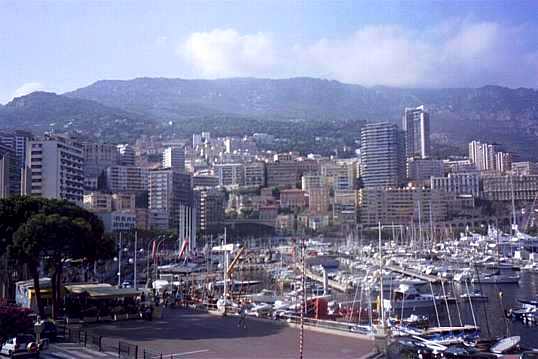
If you think I’m going to be worrying about software while cars scream through the streets of Monte Carlo, with scenery like million Euro yachts and beautiful women in the harbor….

harbor.jpg

get a life.

Blogger Meetup at RSDC

IBM will be having it’s first ever meetup at RSDC in the Dolphin Hotel at Disney from 6-8 on Tuesday June 6th during the Rational Software Development Conference.

This is somewhat significant as we’re doing a meetup, but you’d expect a blogging company to do these things.   Well, we weren’t the first company to blog either, but we’re in that game now.  I’m just glad I had something do to with something that is a first, which at a company the size of IBM, is tough to do.  In all fairness, Steve O’Grady helped us with it so we didn’t screw it up, thanks Steve – you were a big help.

Additionally, we’ll be hosting a blog during the show for executives and analysts and webcasts with the Rational and developerWorks Executives.

See you there, either in person or in the blogosphere.

Podcast's, Sturgeon's Law and the Nordschleife

When I first got my iPod, I thought I’d be listening to my favorite songs and knew that I’d be looking at video’s which I still do. What I didn’t realize was that I’d quickly get addicted to some podcasts.

Before I got it, I made some off the cuff remarks that I’d listen to the Tour de France updates on the plane and technology updates. The part about the Tour is true, when it comes up later this year. I tried listening to a few technology podcasts and quickly found that it was both a lot like being at work, and most of the quality was in the 90% of Sturgeon’s Law.

I quickly went to my old and new interests, those being racing and the show 24 and found lots of other stuff I follow like Karate. Three different Formula 1 podcasts and 2.5 24 podcasts (one is not consistent) and many others come through constantly for me.

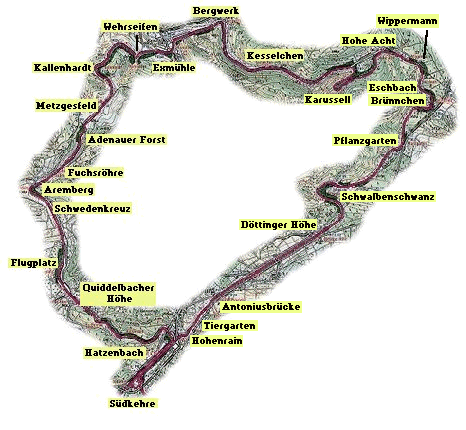
Now to the point of this blog. I was listening to The Chequered Flag by BBC Five Live this morning in the gym, and there was an unbelievably good description by a journalist riding in a DTM Mercedes drive by current series leader Bernd Schneider, on one of the most famous stretches of road you can race on, the Nordschleife in Nuerburg Germany located in the Eifel mountains. nordschleife.gif

Tearing through the track at 200 mph, getting airborne, the tail of the car almost losing grip and incredible g-forces. I was jazzed, and this is what podcasting should do for you, get you involved and entertained. It’s worth a listen and it’s the podcast from 5/6/06 if you want to get it. It’ll make the hair on the back of your neck stick up and rip the tag off your shirt.
I get that if you are in college you can download the professor’s lecture if you missed class or need to re-listen, but Puleeze….spare me, blasting through the Karussell or hearing about organic chemistry 411, which one would you rather listen to? For me, I listen to the 10% of quality podcasting Sturgeon talked about that I’ve filtered through to get what I want.And yes, I pedaled much faster during the lap which is 14 miles, 170 bends and breathtaking.

IBM Bloggers, Who are we – Grady Booch

grady.jpg

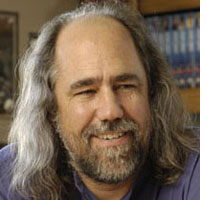
As always, I really like doing these bloggerviews, this one especially. A lot of it is because I get to talk to some of the smartest people at IBM and in this case, the industry. For as much as he’s done, Grady has the right to enjoy celebrity status being an IBM fellow and a leader in the IT world, yet he is very down to earth and we had a very enjoyable conversation. I know you’ll enjoy reading this as much as I did learning from him.

A bit of history, when we first thought of the concept of the developerWorks Blog, the discussion came up that we needed blogger of rock star status to gain notoriety. The first name that came up was Grady. I knew when I started my blog, that this was one of the discussions I wanted to have, now you can too.
Note: Grady is hosting a blogger meetup at the Rational Users Conference June 6th from 6-8 pm, see you there.

Were you a rebel as a kid?
In a different way. I built my first computer from scratch when I was 12. I had borrowed a book called Computer Design, and used it as a manual to create my first computer. I saved my allowance to buy discrete transistors and so I built from scratch. My parents didn’t really know how to deal with me. In addition to the computers, I built my own laser and I was into model rockets. You could say I was a classical geek. In fact, I was a geek before it was cool to be a geek.

I built my computer because I really wanted to program. The computer did four function math and had 256 bits of memory. I thought it would be cool to program so before high school I wanted a job in computers and I went knocking on doors of all the local computer companies, to no avail. I then went to the local IBM sales office and a sales guy sat with me at a lunch table and gave me a book on Fortran. He probably thought that I would go away after reading it, but a week later, I came back with some programs I’d written and I asked for computer time. He got time for me on weekends on an IBM 1130 used by the Amarillo Public Utilities. My first program was a simulation of particles colliding at subatomic speed and a calculation of the release of energy. I still have the original deck of cards. Perhaps the one event that started me on computers was an article in Life magazine about a robot named Shaky built by Marvin Minsky. A few years ago, I approached the trustees at the Computer History Museum in California, urging them to also become a museum of software. While I was getting a tour of the emerging facility, John Toole told me to turn around too look at the original Shakey, sitting in a display behind me. That was so cool and it gave me a pleasant sense of closure.

One thing that my friends and their children are surprised at is these days that I always knew that I wanted to be a computer scientist.

How did your military career help you with what you do now?
So I was self taught until I went to the Air Force Academy. I had many scholarship offers including West Point, but chose USAFA because they had an incredible computer science program. Also, I knew that when I graduated, I would be involved with some amazing technology in the real world from which I could learn. Some of the things I did in my first assignment was to help build systems in support of missile programs such as the Minuteman, Titan and Shuttle. One of the last things I did was work on a range safety system for both the West and East coast military ranges. Through this work, in my early 20’s, I learned what it means to build complex systems. We had hundred’s of thousands of lines of code, running on distributed computers, and so the issues of scale and complexity hit me early.

I’m proud to report that in 1979 I had my first email address on the Arpanet..

Around that time, I was also doing some Ada work and got involved as an instructor at USAFA. I was asked by Larry Druffle who was involved with the Ada Joint Program Office and later went on to found the Software Engineering Institute to consider how one would apply modern software techniques to Ada. It at through this work that I coined the phrase object oriented design.

It has been a long journey for me with in complex software, far before it was an issue in industry.

You say on your blog that you like to read. What interests you in your book selection?

My book listings on my site are mostly professional books. I have a spreadsheet includes all the books and journals I read there. Frankly, one of the reasons I built my current home is that wife and I ran out of space for our over 8,000 books.

I enjoy writers who are good story tellers like Michael Chabon and Terry Pratchet. Right now I’m reading Wuthering Heights, and I just finished reading a book on the history of Islam and another on prayer. I’m attracted to authors who have a command of the language, such as Umberto Eco, and I try to learn from them. As a result, I think I’m a curious combination of a geek albeit an articulate one.

I read more nonfiction than fiction. I like history, especially covering medieval and renaissance periods. In fact I play the Celtic harp.

Why did you become a blogger and How did/does that affect your job?
I started blogging before IBM asked me to. It happened in conjunction with the handbook on software architecture I decided to write. Being involve as a software architect in a multitude of systems in various industries across the world, I wanted to fill a serious gap in the body of knowledge of software engineering, by codifying the architectural patterns that are used in the world. I realized it then that it would be a journey instead of a discrete issue, so thus the blog as a forum for discussion during that journey.

So I began the blog but I couldn’t find any software out there that did what I wanted, so I wrote my own blogging software so I could work on the Handbook anywhere in world. I added an RSS feed to push XML to the IBM developerWorks site, so now it posts to both that site and mine..

What blogs do you read?
This will certainly reflect my political views, but I read crooksandliars.com. Slashdot is also a must have. My Handbook site lists the many that I read from time to time.

Do you like Sci-Fi, for example are you a trekkie?
Yes actually, in my office every copy of Star Trek, the Next Generation, episode so you could say I’m a trekker.

What are your favorite video games?
This is interesting as I just came back from a gamer convention. I just finished Halo 2, and am currently stuck inside the gates of hell in Quake 3. All things being equal, though, I’d rather read a good book.

Speaking of the game community, I’m attracted to it because this is an industry that’s really discovering the problems of building complex software.

Your job Title is IBM Fellow, but what does that mean to the man on the street

It means two things. My role as a Fellow is to invent the future and to destroy bureaucracy, I’m a designated free radical for IBM, and it’s my job to disturb the norm, to think outside of the box, to make people uncomfortable with the status quo, plus have I have a license to do so. It is to IBM’s organizational credit that it recognizes it needs such people.

If you weren’t an IBM fellow, what other job would you be doing, or what company would you be working for?
Now there is an interesting question. I’d probably be an poor itinerate musician or a priest. Baring those more radical career choices, I’d otherwise still be in the software world, doing the same things as I am doing now. My professional passion is how to improve and reduce the distance between vision and execution in delivering complex software-intensive systems.

What are you working on now?
I work on many things, some I can talk about, most I can’t. The Handbook is an important project for me, I spend a lot of time with customers, I help to manage Rational’s relationship with IBM research, and that involves me in efforts about radical simplification and what to do when Moore’s law dies.

What do you talk to Sam Palmisano about?

I don’t talk to Sam that much – he runs the business and I’m essentially a geek – but I do work with Nick Donofrio who works directly for Sam, We talk about various customer engagements, improving industry/academic relationships, and various issues of technical strategy.

What is your vision of the future, next year, 5 years 20 years?

Software has been, and will be always be fundamentally hard, In the future, we’ll be facing yet greater complexity . Open source, the commodization of operating systems and middleware, disposable software (that which is created by non developers), the presence of pervasive devices are elements of this growing complexity. Furthermore, the world is flat. No political or geographical boundaries limit creativity and complexity in software-intensive systems, and thus it’s also increasingly a problem of collaboration.

How long do you see yourself doing what you do now?

Until my heart stops beating.

What is your relationship with analysts? What would you say to them?

I have an A/R handler, I go where they tell me to go, What i talk about though is where I spend my time, namely worrying about the future, the primary horizon being 3-5 years out, with consideration of the forces that are morphing us.hat we need to get us there.

If you could write your legacy, what would it be?
There is a question I’ve never been asked before. How about “he’s not dead yet.”

Seriously through, I hope people will have viewed me as kind and gentle man who lived fully.

Everything else is just details.

What’s on your iPod?
Surprisingly, I don’t have and iPod, but I do have 9 Macs along with a Google Mini and two terabytes of storage, on which I’ve ripped all my music. I’m currently listening to Adiemus, , Dead Can Dance, Tori Amos, Loreena McKinnett, and Twila Paris.

What is the final frontier for users?
It’s curious what we do as software developers: at its best, be build things that are invisible. If we do it right, our work evaporates into the background and remains unnoticed, yet still providing socially and individually useful functionality.

My inner Geek comes out, video podcasting and tech toys

I’ve always been a techie type. I used to build my own PC’s when you could actually save half the price by doing so, I have tech toys out the wazoo, I’m the only one that can use one of the two surround sound systems I have…and sometimes it erupts like it did this weekend.

It all started at BlackBelt Friday. I was asked to film the performance for a video podcast that will be on iTunes and produced by the same folks that did Karate for ESPN, and got to use a new mini DV Camcorder.
That started the bug. Man I’ve got to get one of these, record right to disk, Carl Zeiss lens and it has a USB 2.0 connection built in.

Then, knowing I have travel ahead of me, went and got an iGo with tips for my phone and ThinkPad with dual power charge at once capability, car and airplane connections also. It also reminded me that I have the same cellphone as Jack Bauer this season of 24, but I had it first.

Then, knowing I needed a backup, I went and got a WD external USB 2.0 hard drive and backed up all my iTunes and data from my ThinkPad. Backed up everything.

It got to be too much, I was ready to go get my pocket protector. It reminded me of the Dilbert strip where the manliness of the engineer was determined by how many accessories he could put on his belt. Just call me poindexter

Well Nancy, that was my shopping this weekend, not Coach or DKNY…again, but I got some satisfaction and I’m on a techie high.

32 Gigabyte Flash disk


Why I care about This is because I spent a good part of my career in the storage industry.

When I first started at a small disk distributor, Core International, we sold IBM-AT replacement 40 MB drives for $2595.00. It had an average seek time of 26 milliseconds and fancy technology like a voice coil actuator, dedicated servo technology and auto park and lock. They were 5.25″ high and weighed a few pounds

Now you get 32 GB of instant data access for between $750 and $1000, talk about progress! And since it’s flash, it’s not subject to the failures of electrical and mechanical moving parts like a drive is….and who hasn’t had a drive crash on them.

I wonder if that is going to add clutter and more busy-ness to my day (Why I’m busy).

What I really want is my system to boot as soon as I hit the power button. We haven’t gotten any better at that, DOS booted faster than what I have now.

CES, answering my question on video downloads

CES is quickly becoming the new Comdex. Formerly the convention for new and geeky toys it now is as my teenagers say, where the cool kids go.

In my blog on time shifting , I hinted that i-tunes was only the beginning and that there would be many more sources out there and could someone point me to them.

Thanks Bill Gates

Thanks Google

Knew someone would have the answer for me. The ability to download what I want, when I want it will avalanche, as will the devices to load it to.

Time shifting


I got what I wanted for Christmas, a video I-Pod. Yes, it’s one of the coolest tech toys I’ve had in a long time. As a blatant request, please send your favorite audio and/or video download links as I’m busy trying to add content (don’t worry, I haven’t run out of stuff to put on yet, but I’m looking for cool stuff that I don’t know about, but know it’s out there).

I’ve also had a DVR for over a year and today I read this story from CES. It’s not hard to put 2+2 together here. We’re watching things differently, calling our own shots as to when and where.

It used to be we could only watch what was on when it was on. Then VCR’s helped us to watch when we wanted to, but the serial-ness of tape was at best OK for searching.

Now, we can watch what we want, skip the commercials (except the Superbowl) when we want. We can slow-mo the car chase scene’s, the foot out of bounds or whatever.

More important and finally to the point of this blog, is that we watch differently, or time shift. For example, there is 40 minutes of content per hour and 20 minutes of commercials. That means I can start a 4 hour NASCAR race 80 minutes after the start of the program and see the finish on time and skip what I don’t want to see.

Now, thanks to the web and the power of consumer demand, I can time shift on the Video I-Pod and watch my stuff on a plane or at the Gym or wherever. Here’s a small list of what is on today as an example (ESPN is the only thing that interests me on this list, but the point is that lot’s of content is on the way).

A sampling of video content available now or soon online:

— AOL (aol.com): Starting early 2006, episodes from TV series such as
“Welcome Back Kotter,” “The Fugitive,” “Eight is Enough,” “Growing Pains”
and “Lois & Clark;” on six online channels

— CBS (cbs.com, cbsnews.com): Web-only video supplements, soaps and shows
such as “CSI” and “Survivor;” talk-shows and interviews with contestants and
actors. CBS News offers Web-only breaking-news coverage, evening news
segments and behind-the-scenes pieces

— Comedy Central (comedycentral.com/motherload): Clips from shows such as
“Chappelle’s Show,” the “Daily Show With Jon Stewart” and “South Park;”
shorts, short clips from comedians’ stand-up acts

— ESPN (espn.com): ESPN Motion videos are embedded in most Web pages and
include game highlights and athlete press conferences; ESPN 360, only
available to some broadband providers’ subscribers, offers full archived
games and live sporting events

— MTV (mtv.com/overdrive): Live performances, music videos, interviews
with musicians, movie trailers, news

— Starz Entertainment Group (vongo.com): Subscribers pay a monthly fee
for unlimited downloads of more than 1,000 movies, including “Finding
Neverland,” “Annie Hall,” “Good Will Hunting,” as well as concerts, extreme
sports and Starz TV programming

Source: the companies

Computing at the speed of light.

I make it pretty clear that IBM Research does and has some of the coolest stuff there is….

Today’s press coverage about IBM moving data on silicon via light is unbelievable. For you trekkies out there, that’s Warp 1. They even have a cool name for it – Photonic Silicon Waveguide. Data is moved via photons creating less heat and using less power, nice side effects huh?

IBM Slows Light, Readies it for Networking

Too cool.