EV’s, Blowing Up Again

Give me a V-8 and some good regular gas any day. Read below that they are blowing up while being shipped.

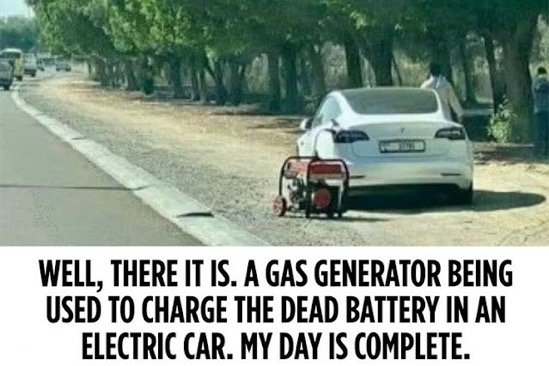
In reality, they are battery powered. All the electricity is produces by oil and coal anyway. They aren’t fooling anybody but themselves. I guess they feel better about the environment by driving one, but then the climatards have been wrong all along. It’s just more bullshit they are trying to shove down our throats to make people comply. Well, we are not the borg, at least some of us.


In a tragic incident in Naples, Italy, a fatal explosion occurred involving an experimental hybrid electric car.

The vehicle was a Volkswagen Polo, a prototype used as part of a project called “Life-Save,” testing the possibility of combining an electric motor with batteries powered by solar panels in cars, a translated version of the Today Chronicle reported.

According to a report from Newsweek, the tragic accident claimed the life of researcher Maria Vittoria Prati and left trainee student Fulvio Filace with severe burns.

Both individuals were associated with the Consiglio Nazionale delle Ricerche research institute and were traveling on the Naples ring road when the explosion took place.

Following the blast, the victims were rushed to the Antonio Cardarelli Hospital in critical condition.

Tragically, Maria Vittoria Prati succumbed to her injuries — burns that covered 90 percent of her body — on Monday.

The car involved in this incident was part of an ongoing research project on engine hybridization, undertaken by the Motor Institute of the CNR in collaboration with the University of Salerno.

Some have theorized that the explosion was due to some type of flammable material contained in the cylinders igniting; however, that has not been confirmed at this time.

Although the exact cause of the explosion has yet to be determined, hybrid and fully electric vehicles have faced safety concerns in the past, including instances of fires and explosions.

Such incidents have been observed with electric and hybrid cars, including certain Tesla models.

The incidents are becoming so common that some shipping companies are refusing to transport electric vehicles.

The dangers associated with EVs have also led to some governments taking actions to protect the public. It was reported last year that a state-owned public transport operator in Paris, France, the Régie Autonome des Transports Parisiens, pulled out 149 electric buses from its fleet after two of them spontaneously exploded within the same month.

The Public Prosecutor of Naples has initiated an investigation to shed light on the circumstances surrounding Friday’s explosion, Newsweek reported.

Meanwhile, Fabio Corsaro, cousin of Filace, expressed gratitude for the support provided by the medical team and questioned the decision to expose a trainee about to graduate in mechanical engineering to potential risks.

“I believe it is essential that it be clarified why a trainee close to graduation had been designated for that position to transport evidently dangerous material together with a researcher. What is the added value for an internship offered by such an activity remains a mystery,” he said.

Corsaro emphasized the need for a comprehensive understanding of the incident and its implications, as it remains a tragic event that has disrupted the dreams and aspirations of a young individual.

While disasters like these are disheartening, they serve as reminders of the challenges that come with new technology and innovation.

This article appeared originally on The Western Journal.

Story

Captain Obvious: No Self Driving Ferrari Per The Company

Why would you want to ride in a Ferrari when you can command such a beast around the roads? It would be like having the most beautiful girl in the world and not sleep with her.

At least the company headquartered in Maranello announced they won’t pollute the sanctity of their driving machines with this feature.

They caved to e-fuels, but the essence of the prancing horse will stay intact.

Story:

Self-driving Ferraris are not for us, Ferrari chief executive Ferrari Benedetto Vigna said Monday. “Lifestyle business is immportant for us,” Vigna said. “It allows us to expand links with our community.”

Vigna also welcomed plans to exempt cars that run on e-fuels from the European Union’s planned 2035 phase-out of new combustion engine vehicles as they will give the luxury carmaker “greater freedom” on its power systems.

COMBUSTION ENGINE EXCEPTION

The European Union and Germany have reached a deal allowing new cars powered by combustion engines (ICE) to be sold beyond the 2035 deadline, or 2036 for so-called small volume manufacturers like Ferrari, if they run on carbon-neutral e-fuels.

“The good news for us as a company is that on top of electric cars, we’ll also be able to go on with our internal combustion engines ones,” Vigna told a Reuters Newsmaker event.

“This decision is very interesting for us because it allows ICEs to go beyond 2036,” he added.

Ferrari, which is renowned for its powerful petrol engines, is already producing plug-in hybrid cars and has promised its first full-electric vehicle for 2025.

However, Ferrari, which sold over 13,200 cars in 2022, has never provided a roadmap for going all electric.

Presenting its new business plan last year, Ferrari said fully electric and hybrid models would make up 80% of those in its range by 2030, while 20% would still be powered by internal combustion engines.

“This does not change,” Vigna said. “We don’t want to tell clients which car to use. We want to make three kinds of propulsion available for them – hybrid, electric and ICE – and they will chose.”

SPENDING UNCHANGED

Vigna reassured investors that the company’s investment plans would not be affected by combustion engines getting an extended life, as Ferrari had already “embedded” this scenario in its business plan.

“The figure I gave (last year) – 4.4 billion euros ($4.7 billion) for capex in the 2022-2026 period – it’s enough for us to go ahead with electrification and also with ICEs which are compatible with e-fuels,” he said.

Vigna said Ferrari’s upcoming electric model would be “a unique car” but would not be drawn on details, adding that “keeping secret is part of the recipe.”

He added it was wrong to assume that specific forms of propulsion would match specific models in the future. Fuels are a mean to provide the performance expected from a Ferrari car, he said.

He said that the price of e-fuels, or synthetic fuels, was likely to come down as they are developed in coming years.

“They’re a new technology, and like for all new technologies they have time to become cheaper,” he said. ($1 = 0.9279 euros)

GM Killing Off The Camaro – A Crying Shame

General Motors has announced the end of production for the sixth-generation Chevrolet Camaro for the 2024 model year. Another American muscle icon bites the dust — but Chevy says this isn’t the end of the road for the vehicle as we know it; we just have no idea what’s coming next. The final car will roll off the production line at the Lansing Grand River Assembly Plant in January of next year.

Full Story

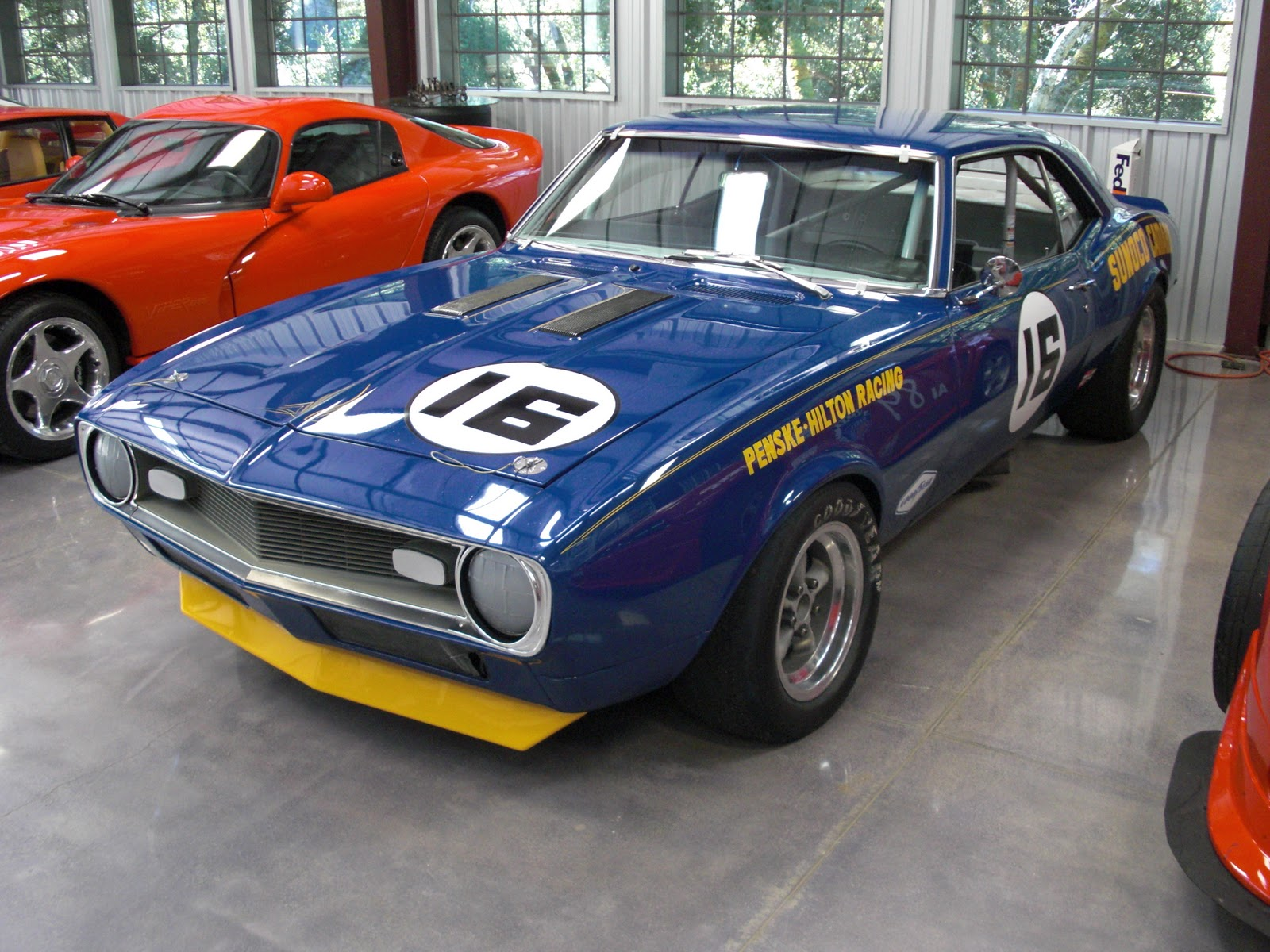
In the manufacturer battle, I never once pulled for a Camaro in Trans-Am, NASCAR, IMSA or any other series. I’d never buy one either. It doesn’t lower my respect for it as a good car, except for the gas war years when all cars got neutered.

I’ve followed them since 1968 because of Roger Penske and Mark Donohue. Those pony car days made for great auto’s and brand marketing. This includes the Mach 1 which I think is going away also.

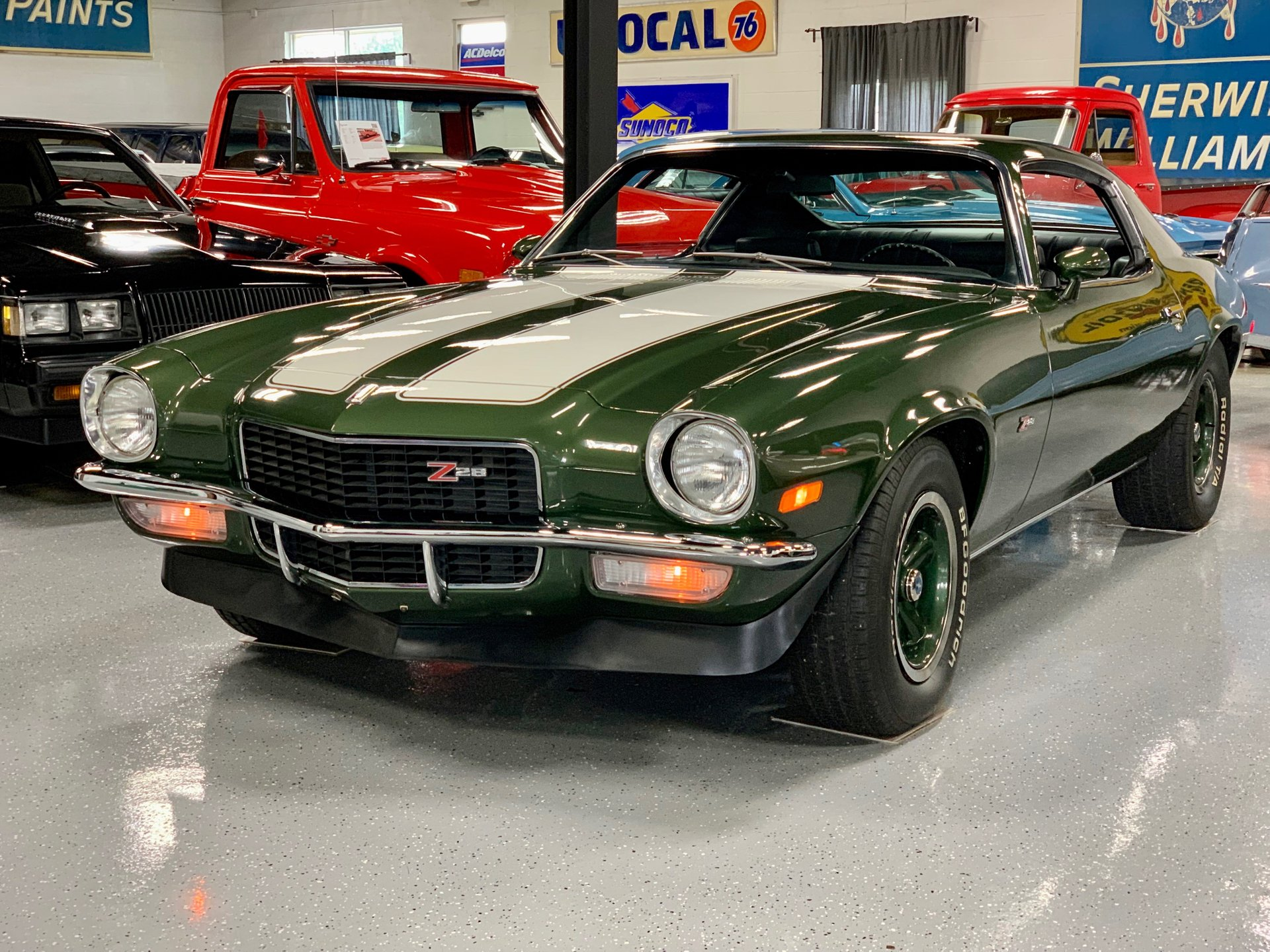
One of my friends in college had the bad ass Z-28, sort of like this one.

He’s lucky he didn’t get killed on the run from Orlando to Haines City at over 100 MPH.

Not being a GM fan doesn’t mean I don’t respect it as a good car.

It’s a shame for GM to kill off such an iconic brand. Not one of the major manufacturer’s are making money on EV’s (other than Tesla) and they keep cutting their own throats with moves like this.

I’d never buy one, but you need good competitors to have a race. Chevy just took that away.

Because Who Wants An Electric Porsche 911 Or Ferrari?

I find this interesting because part of the thrill of one of these ultimate driving machines is the sensory overload. The sounds and smells are as much a part of the thrill as is the rush of being pushed back into the seat when you push down the loud pedal (accelerator for the under educated).
I’ve been to races for 6 decades now. You can smell the exhaust, tires and hear it before you get to the track. You don’t get that from a station wagon or an SUV.

Even if I lost my vision, I’d only not be able to see how sleek and fast they look. My other senses would say it’s a real car.

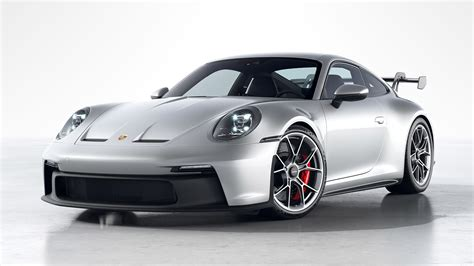
Fortunately, even though it is ridiculous E-Fuels, at least they aren’t going to plug in a 911.

I still open the window of my car just to hear them drive away.

Story:

With many automakers transitioning from petrol-powered vehicles to electrified ones, Porsche and Ferrari are pursuing a new strategy by concentrating on the advancement of eFuels to preserve gas-powered engines. This decision follows the European Commission’s delay last week of the proposed 2035 ban on new internal combustion engine vehicles as the commission prepares to carve out a role for eFuels after 2035.

“Porsche and Ferrari’s status as national icons was enough to move their governments to challenge the EU plan last week just days before a scheduled vote,” Bloomberg wrote. 

Germany’s Transport Minister Volker Wissing told the European Commission that he would withhold support for the approval of the new engine standards to end the sale of new combustion engine cars unless there were a plan for eFuels post-2035. Italy also threatened to fight the reforms.

European Commission President Ursula von der Leyen met with German Chancellor Olaf Scholz on Sunday, discussing a comprise that would likely involve eFuels. 

Germany and Italy are home to the world’s top sportscar manufacturers. There has been growing opposition against Brussels’ plan to ban petrol-powered engines. That’s because who in their right mind would purchase an all-electric Porsche 911? 

The alternative route, mainly for sportscar brands, is the development of eFuels as a climate-neutral way to preserve combustion engines—just something about the sound of a twin-turbo V-8 or V-6 that captivates motorheads.

While most carmakers are pouring tens of billions into the EV shift, Porsche has also invested in an e-fuel plant in Chile, partly because the manufacturer doesn’t plan to make its 911 sports car with a plug. Operating combustion-engine vehicles in a climate-neutral way could also help speed up the decarbonization of the transport sector, according to a Porsche spokesman. Existing vehicle stock should be included in the push to lower CO2 emissions faster, he added. Ferrari has said it’s pursuing alternative fuels to keep making combustion-engine cars that preserve its heritage.

Proponents of e-fuels, say they’re essentially renewable electricity that’s been converted into a combustible, liquid fuel. To make it, scientists combine captured carbon dioxide with hydrogen that was split from water in a process powered by renewable energy, creating a synthetic hydrocarbon fuel. When burned in a combustion engine, the e-fuels create carbon dioxide. But since it was made from previously captured CO2, they argue it’s climate neutral.

We’ve outlined the growing resistance among vehicle brands and motorsport organizations that are firm in their belief the combustion engine will be sticking around for years to come.