

I’m married to Dane. For decades, they bragged about all the free shit they get such as education, healthcare, and retirement. They have to pay 70% taxes to afford this for the country. I believed them at first, but the truth came out ,and they aren’t happy about paying so much for everything.
Every one of her (not mine) relatives who has had surgery has had it messed up. From ankles to stomachs, botched every time. They wait 6 weeks to see a doctor (a cold is gone in 1 to 2). Even their pension isn’t as much as Social Security, the pittance that it is.
They aren’t fooling me. I see how they live. They avoid the government because everything is so expensive. They buy all their stuff in the US instead. They are next to obnoxious to protect a tiny country which hasn’t been great since the Vikings.
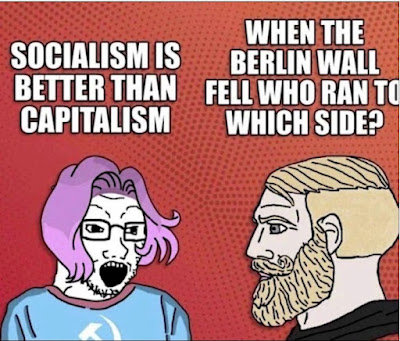
They brag how everyone is equal (a big lie, her nephew Brian can’t stop talking about how much he has and paid for it). The other lie is they are the happiest. When you set your standards to zero, you can meet them everytime. They aren’t happy and will barely talk to a stranger there.
I said I wasn’t going there again and meant it
Have you ever wondered why Scandinavian countries are often hailed as the gold standard of social equality? It’s a compelling narrative: nations like Sweden, Denmark, and Norway seem to have cracked the code on blending prosperity with fairness. But what if the story we’ve been sold isn’t the full picture? As someone who’s always been skeptical of too-good-to-be-true promises, I decided to dig deeper into the so-called Scandinavian model. What I found was a system far more complex—and, frankly, more troubling—than the rosy image painted by its admirers.
The Scandinavian Model: A Closer Look
The term Scandinavian socialism gets thrown around a lot, often with a sense of awe. People point to high taxes, generous welfare programs, and impressive human development rankings as proof of a utopian system. But here’s the thing: what’s labeled as socialism in Scandinavia isn’t quite what you might think. It’s not about collective ownership of production or some grand egalitarian dream. Instead, it’s a carefully crafted system where the state plays a heavy-handed role in managing resources, wealth, and opportunity—often to the benefit of a select few.
At its core, this model is less about empowering the average citizen and more about maintaining state control. The state doesn’t own businesses outright, but it sets the rules, picks the winners, and ensures compliance through a web of regulations and taxes. It’s a system that looks free on the surface but operates with an iron grip beneath. Let’s break it down and see what’s really going on.
A History of Pragmatic Control
Back in the late 19th century, Scandinavian countries faced a unique challenge. They were resource-rich—think timber, iron, and fisheries—but lacked the robust middle class needed to fully exploit these assets. Unlike their European neighbors, who had thriving industrial bases, these Nordic nations couldn’t rely on state-run enterprises to drive growth. Their solution? Outsource production to a handpicked group of industrialists and corporations, both local and foreign, who were granted special privileges in exchange for loyalty and hefty tax contributions.
The state didn’t abolish private enterprise; it tamed it, turning businesses into extensions of its own agenda.– Economic historian
This wasn’t socialism in the classic sense. It was a hybrid—a mix of state favoritism and market dynamics. The government didn’t seize factories or mines; instead, it created a system where only those who played by its rules could thrive. This approach allowed Scandinavian nations to industrialize rapidly, but it came at a cost: a rigid hierarchy where the state and its chosen allies held all the power.
The Myth of Equality
One of the biggest selling points of the Scandinavian model is its promise of equality. High taxes fund universal healthcare, education, and pensions, creating the illusion of a classless society. But is it really as fair as it seems? In my view, the system’s equality is more about uniformity than true fairness. Citizens are funneled into a state-managed existence, where their role is to maintain the system, not to innovate or break free.
The average Scandinavian doesn’t own significant capital or run their own business. Instead, they’re often locked into roles as employees within a tightly regulated economy. Their reward? A safety net of welfare benefits that ensures stability but discourages independence. It’s a trade-off: security for autonomy. And while that might sound appealing to some, it’s worth asking—does it truly empower people, or does it keep them tethered to the state?
- High taxes reduce disposable income, limiting personal investment opportunities.
- Strict regulations stifle small businesses, favoring large, state-approved corporations.
- Welfare programs create dependency, reducing incentives for entrepreneurship.
The Role of Oligarchic Power
Perhaps the most striking aspect of Scandinavian socialism is its reliance on a small, politically connected elite. These are the industrialists, corporate leaders, and bureaucrats who benefit from the state’s legal monopolies and administrative privileges. They’re not your typical capitalist entrepreneurs—they’re state-sanctioned players who thrive because of their proximity to power.
This dynamic creates a kind of corporate feudalism, where the state acts as a lord, granting favors to loyal vassals. In return, these elites generate revenue that funds the welfare state, keeping the system afloat. It’s a clever setup, but it’s not exactly the democratic paradise it’s made out to be. The average citizen has little access to this inner circle, and their economic mobility is often capped by design.
Cracks in the Facade
Fast forward to today, and the Scandinavian model is starting to show its age. The system was built on the back of abundant natural resources and a compliant workforce, but those foundations are crumbling. Aging populations, declining competitiveness, and shrinking resource revenues are putting pressure on the welfare state. The machine, as I see it, is grinding to a halt.
What happens when the money runs out? Historically, states in this position turn to desperate measures. In Scandinavia, that could mean wealth confiscation or outright nationalization of private assets. It’s not hard to imagine governments doubling down on their control, especially when the promise of welfare is at stake. After all, if the system’s built on dependency, what choice do they have?
- Declining Resources: Natural resource revenues are no longer sufficient to fund expansive welfare programs.
- Aging Population: Fewer workers are supporting a growing number of retirees, straining pension systems.
- Global Competition: Scandinavian economies are losing their edge in innovation and productivity.
Is Happiness a Facade?
Scandinavian countries consistently rank high on global happiness indices, which often fuels the myth of their success. But is this happiness genuine, or is it a byproduct of a system that prioritizes compliance over ambition? In my experience, true contentment comes from freedom and opportunity, not just material security. When you’re locked into a system that limits your potential, can you really call that happiness?
The data paints a mixed picture. While citizens enjoy high standards of living, they also face some of the highest tax burdens in the world. Personal savings rates are low, and entrepreneurship is stifled by red tape. It’s a system that works—until it doesn’t. And when it fails, the fallout could be severe.
What’s Next for Scandinavia?
As the Scandinavian model faces growing challenges, the question is whether it can adapt. Some argue for reforms—lower taxes, deregulation, and a shift toward true market freedom. Others fear the state will tighten its grip, moving closer to outright nationalization. Either way, the myth of Scandinavian socialism as a perfect balance of equality and prosperity is fading fast.
For those of us watching from the outside, there’s a lesson here: systems that promise everything often deliver less than they claim. The Scandinavian model isn’t a blueprint for utopia; it’s a cautionary tale about the costs of control. Perhaps it’s time we rethink what equality and freedom really mean.
There is more here, but it says the same thing.


 Delusions of Adequacy