‘Satanic, Evil’: King Charles Unveils Hellish Self-Portrait
King Charles III personally unveiled a peculiar self-portrait Tuesday that depicts him in a fiery setting, in what many are calling a demonic rendition.
Footage showed the British monarch briefly spooked by the bizarre painting as he pulled the drawstring to reveal his first portrait since his coronation.
Social media recoils at ‘satanic’ depiction of 75-year-old British monarch.
King Charles III personally unveiled a peculiar self-portrait Tuesday that depicts him in a fiery setting, in what many are calling a demonic rendition.
Footage showed the British monarch briefly spooked by the bizarre painting as he pulled the drawstring to reveal his first portrait since his coronation.
Social media users commented the painting was eerie and ghastly, with some calling it an intentional callback to his Transylvanian bloodline.
King Charles just unveiled the first official portrait of himself since the coronation.
American college campuses are permeated with corrupted professors who themselves corrupt students. Without a doubt, college professors are the most dangerous people in America.
They’re not dangerous because they challenge the status quo or encourage their students to think critically. On the contrary, they are dangerous because they encourage impressionable young college students to adhere to the doctrines of the professors they choose without giving them the chance to meaningfully challenge those doctrines.
During the recent pro-Palestinian and pro-Hamas protests on elite college campuses, thousands of students put up tents on private property, commandeered university-owned buildings, defaced private property, and chanted disturbing, antisemitic rhetoric. But while we constantly talk about the actions of the students, we fail to recognize that these students aren’t alone but instead are educated and cheered on by their college professors.
At Columbia University, many of the university’s professors joined the protests, donning orange reflective vests and standing alongside students in protest of Israel and—apparently—in support of the students’ right to free speech. Of course, these professors, like their students, are not constitutional scholars, yet they teach their students that what they’re doing is protected.
The First Amendment does not protect the right to vandalize or trespass on private property, which is what these students were doing, or even make terroristic threats or aid a terrorist organization, which arguably many of these students did. The very idea that there were professors aiding the students in their illegal takeover of the university should sound alarm bells.
I’m was related to one. She fit a lot of these but is fortunately now gone. I lived though a lot of this and it’s not pretty.
“Am I toxic?”
Toxic is a word that’s thrown about a lot these days.
But how do you know if you are a toxic person?
What are some things that you might do that cause you to be a toxic influence in the lives of others?
That’s what we’re going to explore.
Speak to an accredited and experienced therapist to help with any negative personality traits you might have. You may want to try speaking to one via BetterHelp.com for quality care at its most convenient.
What Does It Mean To Be Toxic?
In the general sense of the word, something that is toxic is harmful to a person upon exposure.
A toxic person is one who causes harm to others through their words and actions.
There are varying levels of toxicity.
Some may just be bad behaviors, others can stem from personality disorders, and some may be rooted in a mental health disorder that can be physically damaging as well.
Toxic people leave others worse off than before they met or interacted with them.
Sometimes this harm is felt instantly. Other times, it builds slowly with time and repeated exposure.
With this in mind, how can you tell if you are the toxic person in your life?
Here are some of the signs you can look out for.
27 Signs You Are A Toxic Person
1. You are emotionally manipulative and controlling.
You seek to make others your pawns and have them do as you wish.
You boss people around, micromanage situations, and use various forms of emotional blackmail to ensure you get your own way.
Subtlety is not your forte. You can be very blunt and rude to the point where it shocks other people.
Alternatively, you may feign upset and use tears as a way to guilt people into doing what you want.
When other people realize this about you, they may experience anxiety whenever you are around for fear of being targeted.
If this is something you do to one individual a lot, it can even result in depression and the destruction of their self-confidence.
It specifically says Ivy League schools. It also says that they are more likely to hire from public Universities.
So all of that money gone to waste. An Ivy League degree was a virtual hall pass to a job. They managed to screw that up by being assholes and Jew Haters. Compound that with DEI and you get a toxic graduate.
Those of us in the working world knew that the Ivy Leaguers were losers and not that smart. We had to work around them, but now they will have a hard time getting a foot in the door.
Results follow reports of grade inflation, plagiarism, antisemitism, and more
An Ivy League diploma is losing its worth in many employers’ eyes.
A recent Forbessurvey found employers have grown more skeptical of applicants from the most prestigious schools in the U.S. in the past five years – a period marked by race-based admissions, grade inflation, antisemitism, plagiarism, and leadership “double standards.”
According to the survey, one in three employers said they are less likely to hire an Ivy League graduate than they were five years ago. Meanwhile, only 7 percent said they were more likely to hire them.
Employers’ hesitation was specific to the Ivy Leagues, too.
The survey found 42 percent of hiring managers are more likely to hire public university graduates and 37 percent private university graduates, compared to five years ago.
What’s more, hiring managers were three times as likely to say public universities have improved in preparing students for jobs than Ivy League universities.
One of the most decent guys in the world got the Anti-Jewish Hate treatment from some snotty elitist little commies.
Jerry Seinfeld is by no means the most political or controversial actor/comedian out there, but when he took the stage at Duke University’s commencement ceremony, it ultimately caused a chorus of “boos” and pro-Palestinian chants, as well as a walkout by students.
Seinfeld, who is Jewish, is the parent of two Duke students and an active supporter of the university. He has been vocal in his support for Israel following the Hamas terrorist attacks on Israel on October 7. His wife also funded a pro-Israel protest at UCLA last week. When Seinfeld was announced as this year’s commencement speaker, some students expressed opposition to his appearance over his support of Israel, and warned that there would be a display of opposition at the commencement ceremony.
Companies should identify these kids and not hire them. Parents should be ashamed for their students conduct and for sending them to Duke and for being on the side of wrong and hate.
Let them starve. They are a bunch of silver spoon in the mouth mush for brain commie elitist Jew haters in training. The whole country is sick of their whining for the side of evil.
“We Feel Unheard”: Hunger-Striking Princeton Students Vow to Fast Until Divestment Demands Are Met
Over a dozen students at Princeton University have been on hunger strike for the past week as part of a Gaza solidarity encampment on campus protesting Israel’s war on Gaza and calling on the university to disclose and divest from companies with ties to Israel, among other demands. The hunger strikers are also calling for all charges to be dropped against a number of students arrested on campus in late April as part of the encampment.
Areeq Hasan, a graduating senior at Princeton who has not eaten for a week, tells Democracy Now! the hunger strike was a response to the university’s stonewalling. “We feel unheard at every step of the way, so therefore we resorted to a hunger strike,” says Hasan, noting the long history of hunger strikes as a means of protest. “It is in solidarity with the history of Palestinian political prisoners since 1968. … We’re tapping into this long-standing tradition with both Palestinian political prisoners and also in the Irish and Indian liberation movements.”
This week AstraZeneca recalled its COVID-19 vaccine after admitting that it caused a ‘rare but serious’ clotting.
Then we find that former CNN host Chris Cuomo has been taking Ivermectin, after mocking people for taking ‘dewoming medication,’ leading one to wonder how many dead Americans were dissuaded from taking it during the pandemic.
And in the fullness of time, we’ve learned that vaccine maker Moderna employed a former FBI analyst to secretly police ‘vaccine misinformation,’ while the Biden White House directed virtually every social media platform to censor those questioning vaccinations. Hell, the NY TimessuggestedZeroHedge was spreading misinformation for suggesting, in December of 2020, that vaccine cards would be used to track people and limit their freedom.
And now people like former NY Governor Andrew Cuomo (D) are playing the whole thing off like he wasn’t a complete iron-fisted authoritarian during the pandemic – suggesting that masks were optional.
Or Deborah Birx, who admitted she and Dr. Anthony Fauci pulled all sorts of pandemic-era lockdown protocols out of their asses, and has now remade herself into some sort of vaccine freedom advocate.
🚨Compilation of the insane amount of rewriting & 180s around COVID & COVID vaccines the past week! 👇👇 pic.twitter.com/jM3FdQpuds
A Boeing 737-300 aircraft suffered a significant accident during an attempted takeoff at Senegal’s Blaise Diagne International Airport early Thursday, causing serious injuries.
Air Senegal flight HC301, operated by Transair, failed to ascend and “overran the runway” around 1:14 a.m., according to a statement released by Senegal’s Ministry of Infrastructure, Land and Air Transport. The flight had been bound for Bamako, Mali, per BBC.
Of the 78 people on board, which included two pilots and four cabin crew members, eleven suffered injuries, the Senegalese military reported. Four of these passengers are in serious condition.
Videos circulating online show the aircraft with serial number 6V-AJE lying on a grassy bank, with visible damage to its left engine.
🚨✈️Another Day another Boeing Disaster – this time in Senegal as the plane skids off the runway injuring multiple persons.
Boeing are effective at killing off whistle blowers but not operating safe planes, it would appear. pic.twitter.com/ijCISJ57Ok
— Concerned Citizen (@BGatesIsaPyscho) May 9, 2024
Looking back at what their graduates have achieved.
The Super Bowl will kick off a new marketing era for Bud Light, and a woman is at the helm for this new direction.
Alissa Heinerscheid, vice president of marketing for Bud Light, is the first woman to ever lead the popular brand.
“As the first woman to lead the biggest beer brand in the world, it’s an amazing opportunity to really evolve and elevate Bud Light, this brand I love,” says Heinerscheid.
The Bud Light commercial, which will air during the Super Bowl, features actor Miles Teller and his wife Keleigh, and it’s called “Hold,” as Keleigh is facing a situation people everywhere do – being on hold on the phone.
“Martha Pollack was the architect of Cornell’s disastrous race-focused DEI initiative that balkanized the campus, and inevitably led to targeting of Jewish and pro-Israel students. While I wish her well in her personal life, it is time for the Cornell Trustees to turn the ship around, to eliminate DEI programming as is taking place elsewhere, and to refocus the campus on the inherent dignity of each individual without regard to group-identity.”
… The campus has become balkanized by an aggressive focus on racial, ethnic, religious, gender, and other identities through an “anti-racist” and “Diversity, Equity, and Inclusion” agenda imposed on the campus by the senior administration. The “anti-racism” initiative was launched in the summer of 2020, and has included or is moving towards mandatory training, education, and programming that forces everyone to view their lives and relationships through their identities.
Almost everything now is viewed through an identity lens, pitting groups against each other, pitting colleagues against one another, and pitting students against their peers. There is substantial evidence that such DEI programming makes race and other relations worse, not better. We are seeing that play out in real time in the Cornell community.
This has led to an unhealthy environment at Cornell in which multiple surveys show that high percentages of students are afraid to express their viewpoints. DEI as practiced at Cornell is damaging to freedom of expression, and makes the current year of free expression theme on campus inconsequential, if not nearly satirical.
FAFO again, woke and DEI ruin everything it touches.
Oops: First Neuralink Brain Implant in Human Malfunctions
The first human to receive a Neuralink implant experienced a malfunction when several threads designed to record neural activity retracted from the brain, as revealed by the Elon Musk-owned startup. The incident occurred in the weeks following the surgery in late January that implanted the Neuralink hardware in 29-year-old Noland Arbaugh, a quadriplegic.
As a result of the retraction, the number of effective electrodes was reduced, which in turn limited Arbaugh’s ability to control a computer cursor with his brain. In response, Neuralink modified the recording algorithm to be more sensitive to neural population signals, improved the techniques to translate these signals into cursor movements, and enhanced the user interface.
They won’t last more than a couple of days. They don’t know what it’s like to really go without comfort and convenience and I doubt they believe in the cause that much anyway. It’s just posing for Social Media.
Student protesters at Princeton University who have embarked upon a hunger strike for Palestine are angry that the school is not obeying their demands that the school is not monitoring their health, and even claim that the school is forcing them to do this.
Princeton anti-Israel hunger strikers: University ‘forced’ us to do this
Seventeen Princeton students began a hunger strike last Friday until the university agreed to meet with them to discuss divestment from Israel and the dropping of charges against students who had occupied a campus building.
According to The Daily Princetonian, student Sameer Riaz said he believed he and his comrades “were forced into” their hunger strike by school officials.
Areeq Hasan, another hunger striker, said all those participating are “very well-supported” — unlike “political prisoners who are in Palestine.”
You’d think that Disney would learn from their mistakes (or at least Bud Light) but no…this.
Disney+ is taking more flak for crowbarring a them/them character into its latest Star Wars series.
The animated show Tales of the Empire, is made up of six shorts, with one of the episodes featuring a non-binary Jedi.
In a scene below, the they/them agrees to surrender to an Inquisitor, a character that hunts Jedi, just as another Inquisitor sneaks up from behind and attempts to kill the they/them.
You’d be forgiven for having missed it, given that there are so many crapped out Star Wars things now, that only someone with no social life at all can keep up with them.
This is the most obvious example of forced diversity. And it completely destroys the immersive nature of narrative storytelling, which is why it is so detrimental. And that doesn't even touch on how jarring and confusing it is for the viewer. I assumed it was a scripting error.…
A shadowy virus is spreading with unknown frequency and risk to humans. The Centers for Disease Control and Prevention wants to distribute rapid tests nationwide so consumers can see if they are infected.
It’s not 2020, but the deep distrust engendered by federal public health agencies’ sometimes botched and seesawing response to SARS-CoV-2 is hanging over their response to H5N1, more commonly known as bird flu.
Dairy farms are resisting cooperation with the CDC to track and contain the spread of the flu in their cows, and state and local leaders are chafing at what they perceive as public health agencies marginalizing the Agriculture Department’s experts, Politico reported early Monday.
Texas said none of its dairy farms was willing to participate in CDC epidemiological field studies, and a potential USDA commissioner in a second Trump administration, Texas Agriculture Commissioner Sid Miller, said the feds need to “back off.”
Brown University epidemiologist Jennifer Nuzzo, a vocal critic of the CDC’s one-size-fits-all approach to COVID-19 boosters, said the resistance wasn’t surprising because of federalism and lack of incentives for farms to play ball with the CDC.
Home prices across the nation are back up near a record high. That makes this a particularly bad time for the Biden administration to have rolled out its new “green” energy mandates, which will add $31,000 to the cost of a new home.
The mandates are being pushed through the Department of Housing and Urban Development and while they technically won’t apply to all homes, all homebuilders will effectively be forced to comply with them.
The Biden administration doesn’t deny this higher upfront cost. It simply claims it’ll pay for itself via lower energy bills. Unfortunately, the break-even point is 90 years.
So if a young couple buys one of these new green energy homes and has a child one year later, the regulatory costs still won’t have paid for themselves in that child’s lifetime, let alone the life of the couple who bought the home.
HUD argues that homebuilders will be able to get tax credits via the Inflation Reduction Act to offset some of these costs, with those savings hopefully passed along to homebuyers. However, this is not a real reduction in costs; it’s merely passing the buck to taxpayers. Instead of a homebuyer’s bearing the full freight of these green energy mandates, some of the cost will be passed on to taxpayers, including renters.
This is just the latest example of how failed public policies are creating a two-tiered society in America, where an entire generation of Americans will likely never be able to afford their own homes.
Three women were diagnosed with HIV after getting “vampire facial” procedures at an unlicensed New Mexico medical spa, the CDC said in a report last week, marking the first documented cases of people contracting the virus through cosmetic services using needles.
Federal health officials said in a new report that an investigation from 2018 through 2023 into the clinic in Albuquerque — VIP Spa — found it apparently reused disposable equipment intended for one-time use, transmitting HIV to clients through its services via contaminated blood.
Vampire facials, formally known as platelet-rich plasma microneedling facials, are cosmetic procedures intended to rejuvenate one’s skin, making it more youthful-looking and reducing acne scars and wrinkles, according to the American Academy of Dermatology.
I knew this was the answer 25 years before it happened. It’s not that I didn’t enjoy the work that I did, but it was only a couple of stairs in Life and there were more stairs before and after.
At the end work was getting in the way of my life. I had so much going on at the time and still have so much to do.
It was already starting at IBM when I retired. We were barely able to move without bumping into diversity. This bled over to the gender thing as I watched a lot of highly competent and more qualified men get passed over to meet quotas. That of course gave IBM the John Akers female counterpart, Ginni Rommety. That failure ended once the stock price fell by half. I sold before that, but a lot of executives had golden handcuffs in the form of stock options.
When IBM bought Red Hat, the hate white men directive took over in the form of DEI. Since that has failed everywhere else, it portends the same result here. It was already pervasive at Red Hat and it fully infected IBM.
All of the good people are now working somewhere else when I look at LinkedIn. Maybe they are the smart ones and got out.
Racism is discrimination against skin color. White is a skin color. You can’t pick and choose with the truth.
My friends told me the hell that it has become inside, and now this story:
America First Legal (AFL) announced Wednesday that they were suing Red Hat, a subsidiary of IBM, for allegedly violating civil rights laws by enacting racially discriminatory DEI policies, an AFL press statement read.
Wood, a white male, was a vocal critic of the company’s policies that sought to mandate workforce quotas based on race and gender, the press release observes. The lawsuit recalls an event in Texas where the company allegedly rolled out its “Bold DEI Goals” that wanted their workforce to be 30 percent female worldwide and 30 percent “associates of color in the United States by 2028.” Wood, prior to his termination, “never received a negative review, was highly lauded, had a stellar record” and was on a leadership path, the lawsuit claims.
Yet, even when he was employed by Red Hat he received discriminatory treatment, AFL alleges in the lawsuit. Wood sought and received approval for leave under Family Medical Leave Act on July 24, 2023 to tend to his wife who had taken ill, the lawsuit recalls. Red Hat, however, allegedly terminated this leave four days later even though Wood was entitled to 3 month leave in order “to proceed with his termination,” AFL alleges in the lawsuit. During this time, Wood’s medical coverage was allegedly suspended and he was forced to pay out of pocket to renew it.
The IBM’s annual 2022 report allegedly emphasized that there existed a “a diversity modifier” whereby their executives are measured for their ability to implement DEI across the world and that “[i]n the U.S., executives are also measured on improvement of diversity and inclusion for U.S. underrepresented minorities,” AFL notes in a letter to IBM about the alleged violations. Paul Cormier, the CEO of Red Hat, was cited in the letter as allegedly saying that several “leaders” were “held accountable to the point that they’re no longer here at Red Hat” because they did not met corporate standards.
WHITE WOMAN: Hello, I’m with the Biden campaign. MALE VOICE: Yeah, yeah, I voted for Biden last time. WHITE WOMAN: That’s fantastic. MALE VOICE: Is it? Everything costs more: food, gas, rent. WHITE WOMAN: OK, but Biden’s helping pay rent for “newcomers” to America from around the world. MALE VOICE: You mean illegal immigrants? I’m struggling to pay my bills, but Biden’s paying rent for illegals? They get handouts and I’m paying for it. WHITE WOMAN: But Biden can still count on your vote, right? MALE VOICE: Things were better before Biden. I’m voting for Trump.
“Some among the social services intelligentsia contend that a low-income, single-woman household can raise a cohesive family if given enough government help and cash,” King writes. “After all, goes the argument, Black women have strength beyond bloodlines, including supportive community connections.”
And it is not just black women. The foundational creed of the modern Democratic Party is that fathers are not necessary. All mothers need to raise children, according to the Democratic Party, are checks from the federal government. Marriage is just one choice among many for Democrats. If the mother doesn’t want the father around, that’s great. More power to her.
King disagrees. He quotes his colleague William Raspberry: “Are Black fathers necessary? You know, I’m old and I’m tired, and there are just some things that I just don’t want to debate anymore. One of them is whether African American children need fathers. Another is whether marriage matters. Does marriage matter? You bet it does. Are Black fathers necessary? Damn straight we are.”
Raspberry and King are right. Marriage does matter. Black children, particularly sons, need married fathers in the home.
The white lady at the Biden call center doesn’t get this. She can’t. Her top priorities are abortion and female participation in the workforce. She couldn’t care less about the plight of men. Just look at the “Who We Serve” page of the Democratic Party’s website. As Survey Center on American Life founder Daniel Cox notes, out of 16 groups mentioned, including “Democrats Abroad,” “LGBTQ+ Community,” and of course, “Women,” the word “Men” appears nowhere.
Men will only stand for so much shit. The real men will always fight, it’s just at what point do you stop bending and break.
So for the Karen’s, go vote for Biden. You’ll pay for that decision. It’s hard to believe they can’t think this through and see how that story ends. There is a lot of history out there and it’s never a happy ending when you go down that street.
Some business owners are expressing opposition to hiring alumni from Columbia University amid ongoing pro-Palestinian protests at the Ivy League school in New York City.
In a post to X, formerly Twitter, Tom McClellan, the editor of The McClellan Market Report said that he will no longer be hiring “any recent graduate of Columbia, because that school is so tainted.
“And I furthermore will not hire any older graduates either, because it has become evident that the academic rot is so deeply ingrained as to taint others who have come through that institution in the past several years,” McClellan wrote.
A woman walks past Israeli and U.S. flags alongside portraits of Israelis taken hostage by the Palestinian militant group Hamas, in front of the pro-Palestinian encampment at the Columbia University on April 28 in…
CHARLY TRIBALLEAU/AFP via Getty Images/Getty Images
“I cannot have faith that any former Columbia student could have achieved sufficient academic success, especially in light of the overwhelming recent evidence that the academic requirements there are so lax such that students have time to go set up protests on the quad instead of studying.”
Similarly, consultant Warren Kinsella said: “At the firm I founded 18 years ago, and in the war rooms I’ve run for the past 31 years, I’ve employed hundreds of young people. I’ll never again hire one from @Columbia.”
Not only that, they are using AI to identify the losers who were protesting.
Thirteen federal judges said Monday that they would no longer hire law clerks from Columbia College or Columbia Law School after the university allowed an encampment on its lawn to spiral into a destructive occupation of a campus building. The judges cited the “explosion of student disruptions” and the “virulent spread of antisemitism” at Columbia, which has now canceled its main graduation ceremony because of the unrest.
Led by appellate judges James Ho and Elizabeth Branch, who spearheaded a clerkship boycott of Yale Law School in 2022 and Stanford Law School in 2023, as well as by Matthew Solomson on the U.S Court of Federal Claims, the judges wrote in a letter to Columbia president Minouche Shafik that they would no longer hire “anyone who joins the Columbia University community—whether as undergraduates or as law students—beginning with the entering class of 2024.”
“Freedom of speech protects protest, not trespass, and certainly not acts or threats of violence or terrorism,” the judges wrote. “It has become clear that Columbia applies double standards when it comes to free speech and student misconduct.”
It was almost a lock to get hired with a degree from Columbia. They are either that stupid, or have bought the hate indoctrination lock, stock and barrel.
In Love Letter To America, Yuri Bresmenov (a Soviet defector) described how the KGB planned to destroy America. A lot of it was subtle mind control and other was more blatant.
In the 10 points of how they would do it (click on the link above for the rest), relevant to this discussion are these:
2) These “active measures” were designed to corrupt a targeted free, self-governing country (and its elections) to the point where the people acted in the interests of the USSR, though not aware that they were doing so. Those affected people were referred to by the Soviet dictators as “useful idiots” and included prominent figures from Hollywood, authors and others. (e.g. University professors, liberals with weak minds, college students)
4) As these students progressed to universities, they were not only unaware of the lies they’d been told, they were primed and receptive to higher-level indoctrination of hatred for freedom, democracy, individual rights, limited constitutional government, free enterprise, etc. And once they graduated, they became the next generation of leaders, in all segments of society. This ongoing process destabilized our society, as these Communist values clashed with those who still believed in the constitution and its principles.
They hated our country…hated the idea of American exceptionalism…hated capitalism…hated white people (even though they were almost all white)…hated Israel (even though many of them were Jewish)…hated God and religion (they were almost all atheists), and they wanted to destroy America and bring the system crashing down to create “equality.”
Current campus disturbances outwardly resemble past protests. It would be as if they all shared a common script—righteous indignation, yelling and screaming slogans, lists of non-negotiable demands, going limp when police try to remove them, piles of trash, and all the rest. Don’t be fooled. Today’s protestors are profoundly different despite the superficial resemblances, and these differences make them particularly dangerous.
Current disturbances lack this rational: self-interested elements and many participants are clueless when asked to explain their action. In a nutshell, while anti-war protestors wanted to end the draft and avoid Vietnam, and blacks demanded more educational resources, today’s protestors want to eradicate a country of nine million people possessing the most powerful, nuclear-equipped army in the Middle East. Moreover, this mission is to be accomplished by shouting “Death to America” and disrupting classes. Brilliant, and one can only ask, “Are these the smartest of the smart?” Ironically, perhaps the only rational participants in these disturbances are the non-student professional agitators bedecked in their balaclavas whose mission is just to create violent chaos. They at least have a chance of succeeding.
Stupidity abounds. Why, for example, are so many of these pro-Hamas, anti-Israel demonstrators women who drape themselves in Muslim style headscarves, embracing a religion so antithetical to feminism? They surely know how women are treated in Muslim-dominated nations. Are these female demonstrators demanding an intifada so they can now obey their husbands unconditionally?
Protestors live in an upside-down world where the “good guys” are the “bad guys” and one’s friends are “really” the enemy. How is it possible for 100 professors at Columbia University to call the October 7th slaughter of civilians, beheaded babies, raped women, and kidnapped hostages a “military operation”? One leftist magazine spoke of Hamas’s historic anti-colonial struggle.
Why? These protestors are afflicted with a condition what might be called Post-Modern Brain Disorder (PMBD). Here the stricken live in a universe where words lose their meaning and are thus unable to separate good from evil.
Supreme Court documents suggests the UN had motive for the targeted murders of Barry and Honey Sherman.. The official / legal name for the UN is the United Nations Organization. The official name for the WHO is the World Health Organization. What motive did the UN Organization have to target and kill Barry and Honey Sherman? Apotex’s cheap and effective anti-SARS-CoV drug Hydroxychloroquine. The Apotex drug threatened to prematurely end Germany and the WHO’s COVID-19 biological warfare attack and defund the bankrupt / insolvent UN Organization and its lucrative multi $billion global vaccine agenda.
Chloroquine is a potent inhibitor of SARS coronavirus infection and spread
We report, however, that chloroquine has strong antiviral effects on SARS-CoV infection of primate cells. These inhibitory effects are observed when the cells are treated with the drug either before or after exposure to the virus, suggesting both prophylactic and therapeutic advantage. In addition to the well-known functions of chloroquine such as elevations of endosomal pH, the drug appears to interfere with terminal glycosylation of the cellular receptor, angiotensin-converting enzyme 2. This may negatively influence the virus-receptor binding and abrogate the infection, with further ramifications by the elevation of vesicular pH, resulting in the inhibition of infection and spread of SARS CoV at clinically admissible concentrations.
In order to investigate if chloroquine might prevent SARS-CoV infection, permissive Vero E6 cells were pretreated with various concentrations of chloroquine (0.1–10 μM) for 20–24 h prior to virus infection. Cells were then infected with SARS-CoV, and virus antigens were visualized by indirect immunofluorescence as described in Materials and Methods. Microscopic examination (Fig. 1A) of the control cells (untreated, infected) revealed extensive SARS-CoV-specific immunostaining of the monolayer. A dose-dependant decrease in virus antigen-positive cells was observed starting at 0.1 μM chloroquine, and concentrations of 10 μM completely abolished SARS-CoV infection. For quantitative purposes, we counted the number of cells stained positive from three random locations on a slide. The average number of positively stained control cells was scored as 100% and was compared with the number of positive cells observed under various chloroquine concentrations (Fig. 1B). Pretreatment with 0.1, 1, and 10 μM chloroquine reduced infectivity by 28%, 53%, and 100%, respectively. Reproducible results were obtained from three independent experiments. These data demonstrated that pretreatment of Vero E6 cells with chloroquine rendered these cells refractory to SARS-CoV infection.
The infectivity of coronaviruses other than SARS-CoV are also affected by chloroquine, as exemplified by the human CoV-229E. The inhibitory effects observed on SARS-CoV infectivity and cell spread occurred in the presence of 1–10 μM chloroquine, which are plasma concentrations achievable during the prophylaxis and treatment of malaria (varying from 1.6–12.5 μM) [26] and hence are well tolerated by patients.
Conclusion Chloroquine, a relatively safe, effective and cheap drug used for treating many human diseases including malaria, amoebiosis and human immunodeficiency virus is effective in inhibiting the infection and spread of SARS CoV in cell culture. The fact that the drug has significant inhibitory antiviral effect when the susceptible cells were treated either prior to or after infection suggests a possible prophylactic and therapeutic use.
As the saying goes, play stupid games, win stupid prizes.
That’s exactly what Hims and Hers CEO Andrew Dudum got after he took to social media to encourage anti-Israel protesters to apply to the company, claiming that companies will want to hire them for their “moral courage.”
“Moral courage > College degree,” he posted. “If you’re currently protesting against the genocide of the Palestinian people & for your university’s divestment from Israel, keep going. It’s working.”
The public, or at least those trading the company’s stock, do not appear to be siding with Dudum, as the company price dropped a whopping eight percent on Friday, just days after the tweet was put out, according to the New York Post.
The sexual health and pharmaceutical company lost an immense $210 million in stock value that day, with signs pointing to a continuation of the trend.
So in one fell swoop, Hims and Hers has lost hundreds of millions in market value, lost significant public opinion and is now looking to hire a bunch of DEI employees.
I lived near that dump of a school and can tell you that it’s a cesspool of libtardedness. It was no surprise to me that they were involved with the Jew Hating Anti-Semitic riots. I knew without reading that they were on the side of wrong, or Palestine in this case.
I regularly trash the Ivy League because they ask for it and deserve what they get, but I knew that Chapel Hill wasn’t far behind. They are birds of a feather in their elite attitude and indoctrination of their students. These students were first in line to tear down statues and protest against everything that made us a great country.
While these guys didn’t stop the riots and tell them that their actions have them hell bound, they did stick up for the flag and by that, I mean the country.
I was sort of shocked that there was someone with an actual moral spine at that school, but here you have it.
Now, what I’m talking about….
“And the rocket’s red glare, the bomb bursting in air, Gave proof through the night that our flag was still there, O say does that star-spangled banner yet wave, O’er the land of the free and the home of the brave?”
When Francis Scott Key penned these words in 1814, over a dozen British warships were launching mortars and rockets in the mouth of the Baltimore Harbor.
Although no mortars or rockets were fired in Chapel Hill, North Carolina, last Tuesday, there were some familiar sounds of battle: the beat of a snare drum, the bellicose shouting of belligerents, and the whizz of not rockets but rocks and water bottles.
But Key surely would have smiled had he been present to see the small cadre of men enduring profanity, spittle, and abuse in order to keep the star-spangled banner from touching the ground.
After screaming, left-wing, pro-Hamas protesters tore down the American flag in the quadrangle at University of North Carolina Chapel Hill, raising a Palestinian flag in its stead, Chancellor Lee Roberts and several police officers restored the flag to its rightful place.
That school infects the whole area with anti-American and socialist thinking. What ever happens at that place let’s me know that it is the opposite of what is moral and right. That’s why I chose to write about this. An actual patriotic gesture at this institution of the socialist left is against every action that usually comes out of this place.
If you look at the election results this November, there will be a very blue spot in Durham and Orange Counties. It is where Duke and UNC-CH are, along with the community they have infected surrounding it.
Debunking another lie told by climate scam artists.
The last time carbon dioxide was as low as today was in the Carboniferous, when the vast Karoo Ice Age lasted 95 million years. CO2 sustains life & provides oxygen for all living things on land & sea. The steady loss of CO2 over millennia is the greatest threat to life on earth. pic.twitter.com/FZAcezCggc
The Occupational Safety and Health Administration (OSHA), which handles claims of retaliation against workers who blow the whistle on their employer, received the complaints of retaliation between December 2020 and March of this year, according to a table of figures compiled last month by officials at the agency.
The documents, obtained exclusively by Al Jazeera via a freedom of information request, do not provide details of the alleged workplace violations or alleged retaliation by Boeing in each case.
However, 13 of the complaints were filed under a statute that protects whistleblowing related to aviation safety, specifically.
I’ve already posted today that EV’s are not a solution to anything. My wife’s relatives in a Scandinavian country have them, but they continue be on the side of wrong for just about anything. I’ve learned to go against what they choose and I’m usually on the right side of most things. They are proud of their decisions and have no idea that they are so far from the truth.
(ZeroHedge)—Ten years ago this week, we posted one of out most viral stories, highlighting the over-capacity in the auto industry: “Where the World’s Unsold Cars Go To Die,” which highlighted the ‘endgame’ of automakers’ ‘channel stuffing’ efforts to disguise the sudden lack of demand for all the exciting new models that they had forecast would boom to the moon…
Due to China’s overcapacity in production – as it aims to capture a quarter of the European electric vehicle market – the ports of Antwerp and Zeebrugge are inundated.
You probably need to see it to appreciate the challenges the automobile industry faces in transitioning to electricity. You also need to come here to understand how the Chinese industry’s overcapacity has flooded the European market. That morning, as the sun unexpectedly lit up the maze of highways leading to this remote arm of the port of Antwerp, Belgium, a huge cargo ship from the Norwegian company Höegh Autoliners unloaded thousands of cars at one of the terminals of International Car Operators (ICO), a subsidiary of the Japanese group Nippon Yusen Kaisha.
Imported vehicles are seriously piling up at European ports, turning them into “car parks.” Automakers are distributors are struggling with a slowdown in car sales as well as logistical bottlenecks that make it hard to alleviate the buildup of new, unsold vehicles.
Some Chinese brand EVs had been sitting in European ports for up to 18 months, while some ports had asked importers to provide proof of onward transport, according to industry executives. One car logistics expert said many of the unloaded vehicles were simply staying in the ports until they were sold to distributors or end users.
“It’s chaos,” said another person who had been briefed on the situation.
Bag and tag? Meet name and shame. Here’s a list of airlines ranked by bags mishandled per 100, or BMPH. FYI: All five airlines lose at least one bag per every 200 bags handled.
JetBlue (0.52 BMPH) — It’s been on my no-fly list since it moved my flight to an earlier time without warning.
Spirit Airlines (0.53 BMPH) — Anyone else think they’d be higher up on this list?
Alaska (0.57 BMPH) — No excuse for a smaller airline, IMO.
United Airlines (0.73 BMPH) — Who remembers the viral “United Breaks Guitars” video? So good.
And at No. 1: American Airlines (0.76 BMPH) — American sits at the top … of a massive pile of lost luggage. It misplaced 800,198 bags in 2023, or nearly one in every 100 bags it handled. Talk about emotional baggage.
One bright spot:
Without a single lost bag at Japan’s Kansai International Airport (KIX). Yup, officials there say they haven’t lost a customer’s bag since 1994. The workers confirm it but say it’s NBD; they’re just doing their jobs! I wish U.S. baggage handlers had the same idea — then, we wouldn’t need an AirTag in every bag!
h/t Kim Komando
I’ve all but given up on traveling. Whatever there is to see is not worth the hassle that comes along with it. For me, that goes beyond the airlines, it’s an introvert thing anymore, me wanting to be alone in my home.
Having to live the first part of your trip without luggage, the hassle of dealing with the airlines to find it and the delays on the other side of the trip is a big downer. I’ve done it.
I’ve been to Japan. It’s a 17 hour flight time trip, 24 including the airport waits. It was nice, but not worth it just to find a place that won’t lose my luggage.
There may be bigger Trekkie or Star Wars fans than me, but they are at conferences and cos-play. I have been disappointed in TPTB who made both woke. Read below and weep for those of us who have been shit on by the movies and TV shows that have been put out lately.
For those who do not follow science fiction, Star Wars and Star Trek have been on the decline since 2005, at the very least.
Things did not come to the forefront until George Lucas sold Star Wars to Disney in 2012 and Kathleen Kennedy took over as head of Lucasfilm. Kennedy loudly announced “The Force is Female” while Disney executives while Disney executives proudly proclaimed their “Not so secret gay agenda.”
Although Trump-supporter Manny Coto was the showrunner for the last season of Star Trek: Enterprise in 2005, the series as been on the decline ever since the Berman/Braga Era. This was after Gene Roddenberry, the coke-addicted alcoholic who abused the staff of Star Trek: The Next Generation through his attorney, Leonard Maizlish, was forced out in 1989.
Alex Kurtzman took over after the 2009 Star Trek film, and things went downhill from there. Star Trek: Discovery is one of the most widely-mocked shows in history, and Star Trek: Picard was an overall terrible production. Star Trek: New Worlds even had January 6 as a “major event.”
If you search the site for EVs or Electric Vehicles, you’ll find every reason not to buy one, and thankfully, we’re not the only ones pointing it out. EV sales are lousy in the US, which has to be why Democrat states are looking to ban gas-powered cars.
They want you on an EV bus, a bicycle, walking, or better yet – living on an urban heat island confined to quarters. If you live under that yoke, here’s a reminder of why you need to make a change politically – if you still can.
EVs have a short shelf life compared to other vehicles. Whatever the battery warranty is, that’s it. It’s over. No one is going to buy it used; it is almost worthless as a trade-in. Given how much shorter this life span can be compared to a more affordable combustion engine vehicle (assuming you didn’t crash your EV and have to scrap it sooner), you will need another car. If you are an EV-tard, that’ll mean another whole-vehicle carbon footprint before its time and a repeat of what you just went through.
If you buy a used EV and the car is over five years old (Don’t do it!), You can expect to spend two to three times its value to replace the battery pack, which has been losing range rapidly since you bought it. You might get a few years out of it.
In other words, never buy a used EV. Just don’t do it. Here’s an example of the problem and why internal combustion engine vehicles are irreplaceable (disregarding the reality that EV trucks, tractors, and other heavy equipment will never be EV on this technology)
It’s a cult purchase for those who are good sheep or socialists that think somehow they are helping the environment while young children are digging up Cobalt for their batteries half way around the world.
Plus, the sound of a V-8 or a V-12 is a dick hardener for those of us who have a pair and know how a car should sound.
In 2023. What other crap are we going to have to put up with?
BREAKING NEWS! THIS WHOLE PROTEST AND ENCAMPMENT WAS PLANNED LATE 2023!! HERE IS A LIST OF ALL THE COLLEGES THAT WERE GOING TO BE ACTIVATED!!! SOME INTERNATION SCHOOLS AS WELL. DONT KNOW HOW LONG THIS WILL BE UP BEFORE THEY TAKE IT DOWN. POSTING EVERYTHING I HAVE INCLUDING SOURCE pic.twitter.com/Iakr3xabnw
Here are 10 flaming examples of times Facebook, YouTube & Amazon explicitly said they only passed censorship policies bc they were threatened by the Biden government https://t.co/90Gv2q2UrWpic.twitter.com/iAkx3z9olk
Last night we saw law enforcement moving onto the campus of UCLA as they were preparing to remove the pro-Hamas encampment.
They waited until about 5am eastern (2am local) to actually begin after giving plenty of warning to the protesters that they must leave. The protesters refused.
In the videos below you will see the California Highway Patrol using shot guns with rubber bullets and tear gas to begin dispersing the 400 or so protesters that refused to leave the encampment:
This all raises a final question: How could this group of elite scientists have gotten this paramount question so horribly wrong?
The inevitable answer is: They didn’t. They weren’t wrong. They were lying.
Four years after the outbreak of the COVID-19 pandemic in the Chinese city of Wuhan, what do we know about the origin of the SARS-CoV-2 virus?
We were presented at the outset with two competing theories: natural-origin spillover from animals to humans and accidental lab leak. And at the outset, a cadre of elite scientists passionately argued that the evidence overwhelmingly favored a natural origin. With comparable fervor, they dismissed the possibility that SARS-CoV-2 leaked from a lab as a “conspiracy theory.”
With a few notableexceptions, mainstream media outlets and the larger scientific community vehemently nodded in agreement. NPR said the lab-leak theory was “debunked”; Vanity Fair called it a “right-wing coronavirus conspiracy”; and Facebook banned posts suggesting the virus may have been manufactured in a lab.
Four years later, that narrative has begun to crack—and rightly so.
It was always a lie—one of the most consequential lies of the 21st century. Like all great lies, it perfectly inverted the truth: The evidence supporting natural spillover has always been thin. Conversely, the evidence pointing to a lab leak has always been compelling and has grown substantially more persuasive with time.
A new report from the Epoch Times reveals its investigation shows that the CDC knew of the links between the COVID shots and death – and lied about them.
The report explains officials at the U.S. Centers for Disease Control and Prevention “found evidence that the Pfizer-BioNTech and Moderna COVID-19 vaccines caused multiple deaths before claiming that there was no evidence linking the vaccines to any deaths.”
It was CDC employees who tracked down reports of deaths post-vaccination “and learned that myocarditis—or heart inflammation, a confirmed side effect of the vaccines—was listed on death certificates and in autopsies for some of the deaths.”
That is confirmed, the report said, in an internal file the publication obtained.
The Times explained “Myocarditis was also described as being caused by vaccination in a subset of the deaths. In other cases, the CDC workers found that deaths met the agency’s definition for myocarditis, that the patients started showing symptoms within 42 days of a vaccine dose, and that the deceased displayed no virus-related symptoms. Officials say that after 42 days, a possible link between the vaccine and symptoms becomes tenuous, and they list post-vaccination deaths as unrelated if they can find any possible alternative causes.”
Most of the time when we talk about social media being bad for us we mean for our mental health. These platforms make us anxious, depressed, and insecure, and for many reasons: the constant social comparison; the superficiality and inauthenticity of it all; being ranked and rated by strangers. All this seems to make us miserable.
But I don’t just think it makes us miserable. I’ve written before about how it makes us bitchy. And self-absorbed. And over time I’m becoming convinced that our most pressing concern isn’t that social media makes us feel worse about ourselves. It’s that social media makes us worse people.
Social comparison, for example. This is one of the main problems people mention when talking about the harms of social media. Constantly comparing our beauty, our success, our lifestyle, our popularity, to infinite streams of other people makes us feel anxious and inadequate, yes. But I also think it makes us resentful. Bitter. Competitive. Quietly wishing for others to fail. We talk constantly about what like, follow and comment metrics do to our self-esteem—but don’t they also make us so shallow? We hate when people judge us by numbers on a screen, but aren’t we doing it all the time, to everyone else, even subconsciously? We talk endlessly about how editing apps and filters give girls and young women anxiety and body dysmorphia, which is important, but never about how they make us competitive, envious, vain. Sometimes it’s not my self-esteem I’m worried about. It’s who I become when I obsess over my profile and image and what everyone else is doing. Sometimes I lock my screen and don’t like who is looking back at me in its black reflection.
No one is teaching. Or, rather, the teachers are teaching the ego-tantrum, validating toddler politics with their own toddler politics. You have to have a cohort of adults to prepare the next cohort of adults. And so here we are. Anyone who objects to you making your encampment on campus a Jew-free zone is obviously a MAGA jerk.
Universities have to teach. Here’s the president of Yale, getting it right:
As a university dedicated to learning and the search for truth, we hold the exchange of ideas and the diversity of viewpoints to be fundamental. To claim control of a shared physical space and to impose an intellectual and ideological litmus test are not in keeping with our bedrock principles and values.
There aren’t many academic leaders who have passed this test.
If you don’t put a beverage in my mouth, I’ll die of dehydration. That comes from somewhere. It’s learned behavior, and we should be angrier at the people who taught it than we are at the students who learned it.
more
The Universities are indoctrination centers, not institutions of learning. They should be taught critical thinking instead of Jew and conservative hating.
AP admits half of Americans do not trust news organization: Poll
The Associated Press admitted on Wednesday that more than half of the country does not trust mainstream news outlets when it comes to reporting on the 2024 presidential election.
A new poll revealed that 53% of respondents are “extremely” or “very concerned” that news organizations will report inaccuracies or misinformation during the election, according to an Associated Press-NORC Center for Public Affairs Research poll.
Nearly half of the respondents (47%) also revealed they are “extremely or very concerned” that the news outlets will not verify or fact-check information before they publish it, and 44% are concerned that the news will be presented in a biased way.
“The level of engagement is good,” Michael Bolden, CEO of the American Press Institute which helped with the poll, told the AP. “The thing that’s most concerning is that they’re not sure that they can actually trust the information.”
More
Only half? No one should trust any media anymore. Most of them are the propaganda arm for the Democrats. It’s eerily similar to the ’30’s in Germany. The media have lied about virtually everything Covid, Election cheating, Trump and Biden.
Four days ago, The Guardian reported that there was “excitement among patients and researchers” in the UK as “personalised mRNA vaccines” for cancer entered their phase 3 trial. On Monday, In Your Area published an article about a personalised mRNA skin cancer vaccine that may also be effective against lung, bladder and kidney cancer.
However, patients may be less excited about these “groundbreaking” injections when they read a paper published last week.
On 23 April, a pre-print paper (not yet peer-reviewed) was published in the journal Authorea that reviewed oncogenesis and autoimmunity caused by mRNA injections. It found that repeated mRNA injections reduce immune surveillance for cancer while at the same time inducing autoimmunity.
The paper found that post-vaccination, the subsequent spike protein expression “may lead to a harmful influence on the immune system of vaccinees, and subsequent accelerated development of cancer and autoimmune disease.”
I regularly lampoon the Ivy League, but they exposed themselves as Anti-Semites and Marxists. I’m going to take a look behind the covers since everyone saw what went on.
The world got to see just how much hate and bigotry the students are being taught.
This is an old money school. A lot of rich Jewish people have old money, but don’t go looking for them to continue if they really believe their religion.
In 1934, the Frankfurt School was reborn at Columbia University. Its members began to exert their ideas on American culture. It was at Columbia University that the school honed the tool it would use to destroy Western culture: the printed word.
The school published a lot of popular material. The first of these was Critical Theory.
The campuses of America’s colleges and universities are awash in Marxist ideology and tolerance for Fascist/Nazi tactics as well as cowardice and lemming like group think by professors and presidents. The chaotic and perilous end-product of these mindsets is what Americans are witnessing today in the virulent antisemitism, support for Islamic terrorism, and anti-Americanism at so many colleges and universities.
Thirty-five years ago, the New York Times published an article entitled “The Mainstreaming of Marxism in US colleges” describing how, despite unmitigated failures and the collapse of Marxism around the world, Marxist ideas were becoming mainstream in the halls of American universities.
The Marxists in America, recognizing that the traditional class conflict argument would not work in the United States, instead promoted one simplistic tenet– the world is divided into the oppressors and the oppressed. Therefore, the oppressors must be overthrown by any means possible if there is to be a “just and equitable” society.
Columbia University banned media access on its campus Tuesday as pro-Palestine protests continue.
“Media access to campus is suspended. Campus is accessible only to CUID-holders and essential personnel as a safety measure and that includes media,” read an announcement on the university website.
Spoiled Children Have Seized the Colleges We Pay For
Columbia University receives a taxpayer subsidy of almost $500 million every year for the overhead on federal research grants. That’s not the money it receives to conduct research. That’s the amount Columbia gets to pay for the buildings in which it conducts that research.
Never mind that Columbia already has more than $14 billion in endowment to pay for all the buildings it needs. And all of this is on top of the money the school gets by over-charging for tuition, which is made possible by students being able to take out subsidized loans that taxpayers might have to “forgive.”
Propaganda is not merely a critique of a specific phenomenon but a broader exploration of the relationship between information, power, and human agency in modern societies. It invites readers to reflect on the ways in which their beliefs and behaviors are shaped by external forces and to reclaim their capacity for independent thought and critical engagement with the world around them.
We are currently witnessing successful propagandizing of gullible dimwits by the malignant, dissembling agents of Islam, e.g., Hamas, Hezbollah, so-called Palestinians, BDS advocates, DEI and CRTers, and other agents of our destruction. Whether we appreciate it or not, propaganda will substantially influence our future.
Jacques Ellul argues even the most intelligent and educated individuals are susceptible to falling for and propagating propaganda due to:
1. Intellectual laziness: Ellul suggests that intellectuals and experts often become complacent and intellectually lazy, relying too heavily on established beliefs and assumptions without critically examining them. This makes them vulnerable to confirmation bias.
One of the biggest assholes I worked with at IBM was a New Yorker with a fuse the length of a gnat’s eyelash. When I looked him up, he was a Columbia graduate. It all made sense to me then.
If you send your kids there, you are a dumbass for wasting your money. If you are interviewing graduates and hire one from the Ivy League, you are a dumbass. These kids are poison like their professors. This needs to be further exposed and stopped.
The government, the media, the Pharmaceutical companies, China, Fauci, Gates, FDA, WHO, CDC…all of them either lied or refused to tell us the truth.
#2 On March 24, 2020, the CDC altered how death certificates were recorded *EXCLUSIVELY* for COVID-19.
"COVID-19 should be reported on the death certificate for all decedents where the disease caused or is assumed to have caused or contributed to death." pic.twitter.com/ZTzLKwuuQg
Key takeaways from Dr. Fauci’s transcribed interview earlier this year, provided by The Select Subcommittee on the Coronavirus Pandemic :
Dr. Fauci claimed that the “6 feet apart” social distancing recommendation promoted by federal health officials was likely not based on scientific data. He testified that the guidance “sort of just appeared” out of nowhere.
Dr. Fauci “did not recall” Covid-19 information and conversations relevant to the Select Subcommittee’s investigations more than 100 times.
Dr. Fauci testified that he signed off on every foreign and domestic NIAID grant without personally reviewing the proposals.
Dr. Fauci acknowledged that the lab leak hypothesis is not a conspiracy theory.
This comes nearly four years after he “prompted” the publication of the now infamous “Proximal Origin” paper that attempted to “disprove” the lab leak hypothesis.
Dr. Fauci admitted that America’s vaccine mandates — which he promoted from his position of power at the White House — could increase vaccine hesitancy in the future.
Not a lie
You might have come here from Knuckledraggin My Life Away. I was clued into it about the same time Ken started posting the following stuff, very early on.
This was hidden the whole time, the lie was they refused to tell us because there was money to be made on the jab and an election to fix.
For the sheep
This is me and I hope it’s some of you.
Here’s an early lie they told circa 2021
Keep saying no to anything mRNA, and don’t be a maskhole.
Back to elections….
I know a lot of you did this.
And the Coup De Grace, look who got it right and defied everyone, especially the government!
It could be one of the most important lessons learned for the next pandemic. And it should make international headlines.
But it seems like those who made the mistakes during Covid aren’t very interested.
The Amish population that largely rejected public health recommendations fared no worse in terms of health impact than the rest of the country that masked, isolated, and vaccinated. That’s according to available data and a federally-funded study that attempted to evaluate the Amish approach.
These findings imply the US could have avoided experimental vaccines that have serious side effects; and circumvented costly shutdowns that devastated the economy, travel, businesses, mental health, and education at the expense of trillions of US tax dollars.
They learned that there is such a thing as natural immunity and never bothered using it as a cure, because every one of them was getting paid off to push the jab.
Yes, and it stopped Covid also, but do you think they bothered telling anyone that?
Evidence continues to accumulate showing that vitamin D is a strong ally to combat cancer
Low vitamin D levels are linked to an increased risk of cancers, while vitamin D can attach to the vitamin D receptor (VDR) in your cells, setting off a series of signals that may affect how they grow, develop and survive
Although increasing vitamin D levels may help to reduce cancer deaths, health officials rarely recommend optimizing levels for this purpose
Vitamin D targets cancer in multiple ways, including anticancer, antimetastatic and anti-tumorigenic effects
The best way to optimize your vitamin D level is via regular sun exposure, which enhances production of melatonin — a potent anticancer agent
(Mercola)—I strongly recommend getting sensible sun exposure each day, and one of the reasons why is because it helps naturally optimize your vitamin D levels. Low vitamin D levels are linked to an increased risk of cancers,1 while vitamin D can attach to the vitamin D receptor (VDR) in your cells, setting off a series of signals that may affect how they grow, develop and survive.2
A 9/11 victim’s DNA helped police identify remains — found more than 20 years ago under a famed New York City address — as those of a teen last seen in 1969, authorities said.
Construction workers made the gruesome discovery on Feb. 10, 2003, at 301 W. 46th St. in Manhattan’s Hell’s Kitchen neighborhood, where the famed rock night club Steve Paul’s The Scene once played host to some of music’s biggest acts.
“They were knocking through the concrete floor [and] a skull rolled out,” New York Police Detective Ryan Glas told NBC New York.
Publicly accessible DNA records, including those of a victim of the terrorist attacks of Sept. 11, 2001, linked the 2003 remains to Patricia Kathleen McGlone, a Brooklyn girl who would have been about 16 in 1969.
Sure, it’s easy to say get woke and go broke, but when you have Bud Light, Target, Disney as real world examples it can ring true. They are all just different flavors of ass tasting ice cream.
Now we have Boeing and Ford.
FORD
Ford loses $132,000 on every electric car it builds, or $5 Billion a year. Henry Ford is turning in his grave.
First published JoNova; Ford CEO Jim Farley still plans to push forward with his loss making electric vehicle strategy. (dumbass)
Ford just reported a massive loss on every electric vehicle it sold
By Chris Isidore, CNN Updated 2:10 PM EDT, Thu April 25, 2024
New YorkCNN —
Ford’s electric vehicle unit reported that losses soared in the first quarter to $1.3 billion, or $132,000 for each of the 10,000 vehicles it sold in the first three months of the year, helping to drag down earnings for the company overall.
Ford, like most automakers, has announced plans to shift from traditional gas-powered vehicles to EVs in coming years. But it is the only traditional automaker to break out results of its retail EV sales. And the results it reported Wednesday show another sign of the profit pressures on the EV business at Ford and other automakers.
The EV unit, which Ford calls Model e, sold 10,000 vehicles in the quarter, down 20% from the number it sold a year earlier. And its revenue plunged 84% to about $100 million, which Ford attributed mostly to price cuts for EVs across the industry. That resulted in the $1.3 billion loss before interest and taxes (EBIT), and the massive per-vehicle loss in the Model e unit.
The losses go far beyond the cost of building and selling those 10,000 cars, according to Ford. Instead the losses include hundreds of millions being spent on research and development of the next generation of EVs for Ford. Those investments are years away from paying off.
And that means this is not the end of the losses in the unit – Ford said it expects Model e will have EBIT losses of $5 billion for the full year.
After stating that DEI/DIE was the most important part of their business, they just burned through $3.3 billion in one quarter cleaning up the mess:
Top jet manufacturer Boeing reported on Wednesday a net loss of $355 million in the first quarter after months of scrutiny over recent safety issues.
Operating revenue declined 8% year over year in the first quarter, from approximately $17.9 billion to $16.6 billion, with the company burning more than $3.9 billion in free cash flow in the time frame compared to $786 million a year ago, according to Boeing’s first quarter earnings report. Recent scrutiny of safety with Boeing products began in January after an Alaska Airlines flight had a door plug fly off mid-air, resulting in an emergency landing and an investigation into the company’s quality assurance.=
“Our first quarter results reflect the immediate actions we’ve taken to slow down 737 production to drive improvements in quality,” Boeing CEO Dave Calhoun said in the report. “We will take the time necessary to strengthen our quality and safety management systems and this work will position us for a stronger and more stable future.”
Boeing reported an over $3.3 billion operating cash flow loss in the first quarter, compared to a $318 billion loss at the start of 2023, according to the earnings report. The decline in profits led to a core loss per share of $1.13 for shareholders in the first quarter, lower than the $1.27 loss in the same time frame last year.
Pro-Hamas Harvard University students removed American flags on at least three campus buildings. I suspect many Americans were surprised to learn that Harvard actually flew the American flag. Old Glory was replaced by the Palestinian flag. Later, police restored the flags as outraged students jeered. As the staff removed the flags, protesters yelled “Shame!” and chanted “Free, free Palestine” and “From the river to the sea, Palestine will be free.” Seems to me if an American university refuses to fly the American flag, we should refuse to send them any tax money.
Feminism made the error of telling us to behave and think like men
Historically, of course, the feminist argument had valid points. In the old days, when members of my sex were bound first to their fathers and then to their husbands, they undoubtedly led disagreeable lives. If a woman had a good education, however, she could make a comfortable living and remain independent of male approval. When the desire for marriage and children overwhelmed her, she would almost certainly lose her job, and in consequence become tied to her house, compelled to perform a thousand trivial and demeaning tasks unworthy of her ability.
But the world has changed in a way the early feminist would find incomprehensible and grotesque – indeed, she would view today’s flag bearers as hollow and preposterous nothings. I sometimes think the West has outgrown the feminist philosophy entirely and should cast it off.
Where, for instance, does it leave women like me, when we have reached the age of 54, as I have, and find ourselves both single and childless? Hugging the collected works of Proust, or engaging in furtive sojourns to the pub that bring remembrances of things pissed? One in 10 British women in their 50s have never married and live alone, which is neither pleasant nor healthy.
I saw it my whole life. They loved to be like men (while hating them in words), but always had regret when the biological clock ticked midnight. Then I heard the regret.
At the rate of woke and parts falling off of Boeing aircraft, I wouldn’t trust this craft at all.
CAPE CANAVERAL, Fla. — It’s not just another ride for a pair of veteran NASA astronauts who arrived to the Space Coast ahead of their flight onboard Boeing’s CST-100 Starliner.
Barry “Butch” Wilmore and Sunita “Suni” Williams, who both joined NASA’s astronaut corps more than two decades ago, will be the commander and pilot for the Crew Flight Test mission of the much-delayed spacecraft.
It’s set to launch with humans on board for the first time atop an Atlas V rocket from Cape Canaveral Space Force Station’s Space Launch Complex 41 on May 6 at 10:34 p.m., headed to the International Space Station.
Your can read the backstory on this here. Some people on Twitter/X are saying he was expelled, but that’s not confirmed. What we do know is that he has been banned from campus.
Columbia student banned from campus after remarks about ‘murdering Zionists’
The Columbia University student who discussed “murdering Zionists” was “banned from campus” Friday, according to a university spokesperson.
Junior Khymani James expressed “regret” early Friday after he went viral online for previously suggesting people should be “grateful” he wasn’t “murdering Zionists,” whom he likened to “White supremacists” and “Nazis.”
Without explicitly mentioning what they were, James copped to inflammatory comments that were first reported by The Daily Wire, during a livestream of an official Columbia inquiry in January.
“I actually kind of hope they do kick me out because I’ve been meaning to travel to South America,” James said of whether he would remain on as a student at Columbia during the livestream.
University sources told Fox News Digital disciplinary proceedings are now underway.
Before the news James was banned, Columbia put out a campus update calling the video “extremely alarming and upsetting.”
“Calls of violence and statements targeted at individuals based on their religious, ethnic, or national identity are unacceptable and violate university policy,” the statement said. “When there are violations of student conduct policies, they are reviewed and disciplinary measures are applied.”
“What is a Zionist? A White supremacist,” James said in the resurfaced video.
George Soros and his hard-left acolytes are paying agitators who are fueling the explosion of radical anti-Israel protests at colleges across the country.
The protests, which began when students took over Columbia University’s Morningside Heights campus lawn last week, have mushroomed nationwide.
Copycat tent cities have been set up at colleges including Harvard, Yale, Berkeley in California, the Ohio State University and Emory in Georgia — all of them organized by branches of the Soros-funded Students for Justice in Palestine (SJP) — and at some, students have clashed with police.
Pro-Palestinian students set up an anti-Israel encampment Wednesday in Harvard Yard despite the university issuing restrictions for the area all this week.
At one point, as many as 500 people participated in the protest, demanding “divestment” from Israel and urging the university to reverse its decision to suspend the Undergraduate Palestine Solidarity Committee, The Harvard Crimsonreports. Many similar demonstrations have taken place on campuses across the country in the past week.
“We call on you to share our anger as a starting part to continue and constant mobilization,” one organizer told the crowd. “Now more than ever, when Harvard most wants for us to be silent, we have a duty to speak out louder than ever. Free, free Palestine.”
Afterward, students began setting up tents and sleeping bags on the lawn despite signs warning of disciplinary measures if they “bring in unauthorized structures such as tents or tables or block access to building entrances,” according to The Crimson.
A video on the Undergraduate Palestine Solidarity Committee’s Instagram account shows students cheering loudly and beating drums as others rush to erect tents and place sleeping bags on the lawn.
You know, the Jews have a lot of money to send their kids to school and make donations, way more than the Palestinians. I guess they aren’t that smart at Harvard
Michelle Solis, 46, pled no contest after being accused of raping a 14-year-old student on the child’s eighth grade graduation day in 2021.
A press release from District Attorney Mike Ramsey indicated that Solis, who was a 20-year veteran educator, raped the 14-year-old inside a locked classroom on graduation day, Daily Mail reported. Solis also allegedly sent explicit photos to the boy which “made their way back to local parents,” facilitating the investigation by police.
Solis, who was the boy’s teacher at the middle school, “friended” him on Instagram a few weeks prior to his graduation. Records indicate that was the start of her inappropriate relationship in which she allegedly sent him four inappropriate images. Then, on the day of his graduation from Sycamore Junior High School in northern California, she raped him.”
Not once did a teacher ever try this in any school that I knew of. Hell, I had a crush on my German teacher. Why didn’t she try it? She was about 25 at the time. I wouldn’t have fought back
The Thomas Jefferson High School for Science and Technology (also known as “TJ”) is one of the highest-ranking high schools in the country.
Unfortunately, several years ago, the Fairfax County, Virginia, school board ditched traditional standardized tests and admission selections based on the best students available and moved to an “equity” formula designed to boost admissions for middle school students identifying as racial minorities.
This caused the percentage of Asian students to drop precipitously, leading to federal court litigation asserting a violation of the United States Constitution’s Equal Protection Clause.
[Equity-based admissions] practices at Thomas Jefferson High School for Science and Technology (“TJ”) has now resulted in a lawsuit filed by the Pacific Legal Foundation. AP reports:
Located in the suburbs of the nation’s capital, the school is frequently ranked as the best in the country, and families plan for years to try to help their children gain admission.
The student body is 70% Asian American, with minuscule numbers of Black and Hispanic students.
The Fairfax County school board voted last year to revise the admissions process and eliminate a standardized test that had been a key part of the evaluation process. It also set aside a specific number of slots for students at each of the middle schools in the county.
Board members have said they hope the new process increases Black and Hispanic representation in the student body.
The lawsuit, though, alleges that the set-asides will end up hurting Asian American families that are clustered in a handful of middle schools that currently send large numbers of students to “TJ,” as the school is known.
Erin Wilcox, a lawyer with the Pacific Legal Foundation, said at a press conference Wednesday that the policies themselves are discriminatory, but the intent is made even more clear by statements from board members who said they want the changes to result in a student body with a racial makeup that matches the county’s demographics.
“The discriminatory intent they’ve shown is intertwined and an inseparable part of the policies they put in place,” Wilcox said.
TJ for the first time dropped out of the top 10 of the US News list of top US high schools, falling from being number 1 2020-2022, to 5 in 2023, to now 14 in 2024 as its college readiness score and state test assessment scores fell dramatically. https://t.co/5VSumhBKIU
— Coalition for TJ #FightingForMerit (@coalitionforTJ) April 23, 2024
It’s kind of obvious, but nevertheless, here it is.
Every one of the 10 “worst states for business” is run by a Democrat governor, while Republican governors dominate the 10 best states, results of a national survey of Chief Executive Officers (CEOs) released Tuesday reveals.
Texas won this year’s crown for best state, with Florida taking second place, which Chief Executive notes has been “the pattern for nearly the entire history of the annual survey that began in 2001.” Tennessee was rated the third-best state for business.
All three of the best states, and eight of the top ten, have Republican governors:
Sure seems like anti-Semitic spring is breaking out all over.
Mask-wearing Hamas supporters are doing their shimmy movements against police at the University of Texas Austin right this moment (Karen is going to have much more on that).
…Major terror organizations have expressed support for these protests and disruptive actions, which have long been a key part of Hamas’s plan to win hearts and minds in the West. As early as a decade ago, during the July-August 2014 Israel-Gaza war, Hamas’s Interior Ministry issued guidelines to social-media activists on framing events for a Western audience.
It is no coincidence that official statements by Hamas and major jihadist groups about the protests are nearly identical. The statements seem like talking points for pressuring U.S. and Western decision makers. They appear to be working. On April 4 President Biden, under massive pressure for supporting Israel, warned Israel of major changes to U.S. policy if it didn’t ease its military campaign in Gaza. Hamas seized on the U.S.-Israel dispute with a statement calling on “all free people of the world” to protest.
There’s also the fact that for-real terrorists are literally grooming and training the leaders of the simple-minded sheep in the streets and on campus greens. This is no organic, spontaneous eruption of goodwill for Palestinians who have missed a meal or dodged Israeli incoming. It’s all part of a carefully constructed plan to turn this country on its head.
…Six months after the attack on Israel, Hamas, Hezbollah, the Houthis and others aren’t merely cheering those protesting in the streets. They are working with and grooming activists in the U.S. and the West, through meetings, online interviews and podcasts.
…At a Jan. 21 New York event held by the Marxist-Leninist Workers World Party, an official Hamas statement was read and videos were screened from PFLP, Palestinian Islamic Jihad, Hezbollah and Houthi officials. Ibrahim Mousawi, a Hezbollah member of Lebanon’s Parliament, underscored his organization’s support for the protests, saying they are “much needed and very much appreciated by our people here” and that “we really support this work.” Hezbollah and Western activists, he said, stand “together, one front” against Israel, against the U.S. and its “tyranny,” and against “Western hegemony and imperialism.” Houthi leader Nasreddine Aamir also thanked and commended the protesters in the West who “take a stand and participate in marches and go out in the streets.”
Details of the recent limited Israeli retaliatory strike against Iranian anti-aircraft missile batteries at Isfahan are still sketchy. But nonetheless, we can draw some conclusions.
Israel’s small volley of missiles hit their intended targets, to the point of zeroing in on the very launchers designed to stop such incoming ordnance.
The target was near the Natanz enrichment facility. That proximity was by design. Israel showed Iran it could take out the very anti-missile battery designed to thwart an attack on its nearby nuclear facility.
The larger message sent to the world was that Israel could send a retaliatory barrage at Iranian nuclear sites with reasonable assurances that the incoming attacks could not be stopped. By comparison, Iran’s earlier attack on Israel was much greater and more indiscriminate. It was also a huge flop, with an estimated 99 percent of the more than 320 drones, cruise missiles, and ballistic missiles failing to hit their planned targets.
Moreover, it was reported that more than 50 percent of Iran’s roughly 115-120 ballistic missiles failed at launch or malfunctioned in flight.
Collate these facts, and it presents a disturbing corrective to Iran’s non-stop boasts of soon possessing a nuclear arsenal that will obliterate the Jewish state.
Consider further the following nightmarish scenarios: Were Iranian nuclear-tipped missiles ever launched at Israel, they could pass over, in addition to Syria and Iraq, either Saudi Arabia, Jordan, the West Bank, Gaza, or all four. In the cases of Jordan and Saudi Arabia, such trajectories would constitute an act of war, especially considering that some of Iran’s recent aerial barrages were intercepted and destroyed over Arab territory well before they reached Israel.
The gang that couldn’t shoot straight. Victor Davis Hanson is a very knowledgeable person. I’ve taken some of his classes and he’s very well researched.
Newly unsealed documents in Donald Trump’s classified documents case reveal that the Biden White House colluded with the National Archives (NARA) and the FBI to concoct a case against the former president.
What’s more, Special Counsel Jack Smith sought to conceal this – telling Judge Eileen Cannon in February that Trump’s counsel isn’t entitled to discovery on documents between the White House and NARA, that the court should toss requests for evidence of the alleged coordination, and that the court should deny Trump’s request for evidence related to secure facilities at his residences. Further, Trump’s request for unredacted discovery of materials should be denied.
NEW: Thanks to order by Judge Cannon, key evidence related to classified docs case is now unredacted.
On the left: What DOJ/Jack Smith wanted to conceal.
On the right: Now we know why. More proof of collaboration btw Biden White House and NARA to concoct a case. pic.twitter.com/YVHVmAfOai
And slay them wherever you come upon them, and expel them from where they expelled you; persecution is more grievous than slaying. But fight them not by the Holy Mosque until they should fight you there; then, if they fight you, slay them — such is the recompense of unbelievers, but if they give over, surely Allah is All-forgiving, All-compassionate. Fight them, till there is no persecution and the religion is Allah’s; then if they give over, there shall be no enmity save for evildoers. (Quran 2:191-193)
Men are the managers of the affairs of women for that Allah has preferred in bounty one of them over another, and for that they have expended of their property. Righteous women are therefore obedient, guarding the secret for Allah’s guarding. And those you fear may be rebellious admonish; banish them to their couches, and beat them. (Quran 4:34)
They wish that you should disbelieve as they disbelieve, and then you would be equal; therefore take not to yourselves friends of them, until they emigrate in the way of Allah; then, if they turn their backs, take them, and slay them wherever you find them; take not to yourselves any one of them as friend or helper. (Quran 4:89)
This is the recompense of those who fight against Allah and His Messenger, and hasten about the earth, to do corruption there: they shall be slaughtered, or crucified, or their hands and feet shall alternately be struck off; or they shall be banished from the land. That is a degradation for them in this world; and in the world to come awaits them a mighty chastisement. (Quran 5:33)
When thy Lord was revealing to the angels, ˜I am with you; so confirm the believers. I shall cast into the unbelievers’ hearts terror; so smite above the necks, and smite every finger of them! (Quran 8:12)
Make ready for them whatever force and strings of horses you can, to strike terror in the enemy of Allah and your enemy, and others besides them that you know not; Allah knows them. And whatsoever you expend in the way of Allah shall be repaid you in full; you will not be wronged. (Quran 8:60)
Then, when the sacred months are drawn away, slay the idolaters wherever you find them, and take them, and confine them, and lie in wait for them at every place of ambush. But if they repent, and perform the prayer, and pay the alms, then let them go their way; Allah is All-forgiving, All-compassionate. (Quran 9:5)
Fight those who believe not in Allah and the Last Day and do not forbid what Allah and His Messenger have forbidden — such men as practise not the religion of truth, being of those who have been given the Book — until they pay the tribute out of hand and have been humbled. (Quran 9:29)
Allah has bought from the believers their selves and their possessions against the gift of Paradise; they fight in the way of Allah; they kill, and are killed; that is a promise binding upon Allah in the Torah, and the Gospel, and the Koran; and who fulfils his covenant truer than Allah? So rejoice in the bargain you have made with Him; that is the mighty triumph. (Quran 9:111)
O believers, fight the unbelievers who are near to you; and let them find in you a harshness; and know that Allah is with the god fearing. (Quran 9:123)
When you meet the unbelievers, smite their necks, then, when you have made wide slaughter among them, tie fast the bonds; then set them free, either by grace or ransom, till the war lays down its loads. So it shall be; and if Allah had willed, He would have avenged Himself upon them; but that He may try some of you by means of others. And those who are slain in the way of Allah, He will not send their works astray. (Quran 47:4)
Most people are temporary because it takes a long time to get to know someone and it’s hard to find the traits that are important. Loyalty is usually the final demarcation line for me. If they cross it and are disloyal, it’s over for me.
Take my college girlfriend who turned out to be a traveling slut (stewardess). Even though I didn’t find out until afterwards that she was sharing herself with others, that eliminated her from the permanent people pool. I didn’t have to feel the hurt and pain during the relationship, but the dishonesty got me out the door early.
I had acquaintances all throughout my life, but it’s hard to call them friends. The extroverts in my life meet and talk to someone for more than 5 minutes and it’s their new friend. Those are just temporary people for me. It takes a long time and a lot of things in common before they make permanent status. Very few make it.
You have to build a relationship and that is hard enough for me (and I’m guessing other introverts). We’d have to share something in common long enough to see if there is anything there. It still takes a long time for the walls to come down. Then there is the trust tests. I don’t dream them up, but they present themselves in life. I’m usually forced into a situation, but you can tell if a person is going to stick with you or stick it to you.
Even my siblings were temporary. They are around, but don’t count for me as permanent people for the loyalty reason. One can only take so much screwing over growing up and then the walls come up.
There’s your thought for the day.
A much deeper dive can be found here. It is by Introvert Dear who I’ve linked to on the home page describing why introverts don’t consider everyone their friend. It is a special to us and this article tells you why a lot better than I do.
When I was living in South Florida, I had started a family. There parts of Florida that are better than others. I was in a place that wasn’t family friendly.
I wanted to move back to the south having grown up there (south Florida is the north), So I got a job and moved to the Carolina’s.
New job, new state, new life, all in a couple of weeks, just like that.
It turned out to be one of the best moves for my family and me economically.
Now, parts of the Carolina’s have become the north. It’s like déjà vu, all over again.
Are we getting older later in life? People dread the idea of aging, however, a new study from an international team of researchers reveals the definition of “old age” is changing. Compared to previous generations, people now put off considering themselves “old” until later in life.
The study, conducted by a team of researchers from Germany and the United States and published in the journal Psychology and Aging, analyzed data from over 14,000 people born between 1911 and 1974 who participated in the ongoing German Ageing Survey. Participants were asked a simple question: “At what age would you describe someone as old?”
According to the team’s findings, people in their mid-60s believe “old age” begins around 75. This perception, though, varied significantly across different generations or “birth cohorts.” People born later, especially those born after 1935, tended to push back the age at which they considered someone old. In other words, the threshold for being considered “old” has shifted upwards over time.
Write about a time when you didn’t take action but wish you had. What would you do differently?
It’s more than one time, but it’s the same thing. I got asked to do something, go somewhere or be with some people that I shouldn’t have.
It was about setting boundaries. I remember the feeling or not wanting to be there, we’re doing whatever we were doing, saying the things I said or being with the people I was with.
If I had learned to say no, instead of going with the crowd, a lot of things would’ve turned out differently. I would have gotten in a lot less trouble, not done as many stupid things and would have not been in situations I didn’t want to be in.
I learned the hard way to protect myself from these instances and people, and as a result of gotten in to a lot less trouble.
If you follow patterns like I do, you’ll recognize this to be like Covid, made up lies by the government to control citizens and launder money.
They count on the gullibility and under education of a large portion of the population, then spring a made up story on them. All they while, they are doing it in the name of the benefit of the population. I’ve got news for you, when they say this, it only benefits them.
Read and weep:
“Climate change” is tied as the last priority for Americans, a recent Gallup poll found, marking another year that the issue remains the least important priority.
Global warming is now dubbed “climate change.”
Because the earth does not consistently warm, they changed the term to “climate change,” which justifies their claims regardless of whether the earth warms or cools.
GLOBAL LAND-OCEAN TEMPERATURE INDEX
(Data source: NASA’s Goddard Institute for Space Studies (GISS). Credit: NASA/GISS)
Gallup found it is tied for the nation’s last priority:
It goes on to talk about nature as a religion, other words for worshiping the creation instead of the creator. It’s just more lies from the same source that started with the apple and Eve in the Garden of Eden.





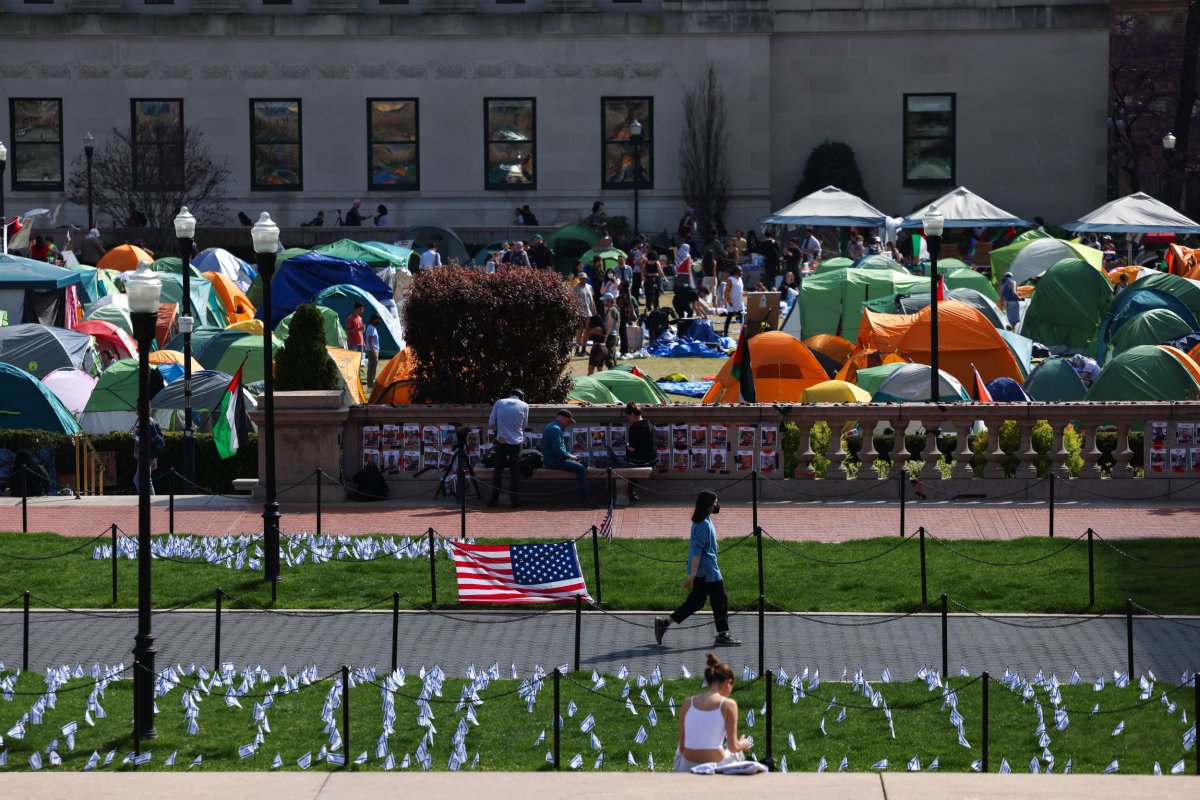










 Delusions of Adequacy